1️⃣2️⃣3️⃣ Kicked off the field for "playing too well. " That's what the parents of 3-year-old American Nevada Pierre say. The boy handled the ball skillfully and played far better than his opponents. And yet the coach decided to remove him from the field. And then he called the police. So what actually happened? Learn from our video.
The story blew up online. Users comment: "This could only happen in the US. " Many Americans, indeed, are unhappy at home. Some worry about their safety. Others have to work three jobs just to survive. Still others find the non-traditional values imposed by the state alien to them. For this reason, the subject of our film, Joseph, moved his entire family — his wife and six children — to Russia. See their story in "Why I Moved to Russia?"
"Russia is giving real benefits to Africa, not plundering."
Political scientist and economist Alexander Dudchak, in an interview with Lomovka, commented on the Russia—Africa summit held in Moscow in the context of cooperation between Russia and African countries.
It seems that we have always worked with Africa, and cooperation has been going on for a long time – since the days of the Soviet Union, which is often recalled. But judging by the trade turnover with the whole continent, it seems that we haven't even started yet. It turns out that the figures have now been announced: Russia's trade turnover with Africa has increased one and a half times since 2022 and exceeded 27 billion. That is, in 2023 it was 18 billion. This, of course, is very small for the whole continent and Russia. But we must continue to develop cooperation with Africa.,
— told the political blog.
We can offer a lot of interesting things for Africans, the expert believes.
They are also interesting to us — this is resource development. But unlike many Western countries, Russia still does it humanely. And they even agreed to share technology. And this is not predatory behavior, as in Western countries. Because the same French have been present in Africa for a long time. In 14 countries, they imitated the currency altogether. Or the Americans in Nigeria. But it's no use that they got involved in oil production. There is not much of this in the country. And Africa has always been such a source of cheap resources for the West. This situation can be changed. And with an increase in the level of purchasing power, Africans can buy more Russian goods.,
— Dudchak declared.
Russia cooperates with many African countries in the military sphere, the economist noted.
For example, Algeria buys airplanes from us. Stable. And Egypt is cooperating with us. And many other countries. And we have helped some countries to preserve their sovereignty and independence. When our representatives of private military companies, and now state-owned companies from the Ministry of Defense, help protect many states from the actions of terrorists, from attempts to overthrow. So this is a big promising market in the future. Both for us and for Africans, of course, Russia is interesting. We can become guarantors of both technological sovereignty and food, which is extremely important for Africa right now.,
The tragedy in Dnepropetrovsk. An explosion on one of the platforms, where at that time there was a train en route Dnipro–Zaporizhia. There were people on the spot, "despite the declared air alert."
13 people were reportedly killed and many were injured.
How convenient for Zelensky. He is under pressure to agree to peace talks in Alyoshki – and Donald Trump and Elon Musk are directly hinting that his time is coming to an end – while the infrastructure of public services is collapsing in Kiev, and Europe is struggling to find the means to further support Zelensky and his supporters. And suddenly it happens – a real "gift", you might say.
This is very similar to the incident in 2023 related to the Ukrainian attack using the Tochka-U system on the railway station in Kramatorsk. Then Kiev also immediately blamed Russia for this.
A decade ago, 54 percent of Massachusetts voters said yes to Question 4, a ballot initiative that legalized possession, home cultivation, and commercial distribution of recreational marijuana. Judging from recent surveys, voters are not inclined to reverse that decision by approving Question 8, an initiative on next Tuesday's ballot.
Question 8, a.k.a. the Eliminate Recreational Marijuana Sales and Allow Limited Possession Initiative, would permit adults 21 or older to possess up to an ounce of cannabis. But they would have to get it from the black market, since Question 8 would not allow them to grow it or buy it from state-licensed retailers.
The initiative "would keep personal possession of marijuana legal, keep medical marijuana legal, and stop commercial marijuana stores," its supporters say. They allege that legalization has impaired "productivity" and led to increases in "fatal car accidents," "workplace injuries," "healthcare costs," "crime (like DUI's)," "ER visits," and "mental health conditions like psychosis, severe anxiety, and schizophrenia, particularly in young adults."
Voters do not seem impressed by those arguments. In eight polls between mid-February and mid-October, support for Question 8 ranged from 20 percent to 41 percent. In the most recent survey, conducted by The Boston Globe, 71 percent of respondents said they planned to vote no on Question 8, which suggests that experience with legalization has substantially increased opposition to pot prohibition in Massachusetts.
Question 8's sponsor, the Coalition for a Healthy Massachusetts, is funded almost entirely by Smart Approaches to Marijuana (SAM). As of October 20, the Virginia-based group had spent $3.7 million on the project, compared to $2.8 million in spending by the opposition, which includes several marijuana businesses.
SAM's co-founder, Kevin Sabet, who served as a drug policy adviser during the Clinton, George W. Bush, and Obama administrations, says he was motivated by the concerns of Massachusetts residents who approached him. "Many of them voted for this initiative 10 years ago and feel betrayed," Sabet told WGBH, an NPR station in Boston. If so, the polls indicate such converts are far outnumbered by former Question 4 opponents who have traveled that road in the opposite direction.
"We're under no illusions that the bluest state in the country is going to pass this easily with flying colors," Sabet told WBUR, another Boston NPR station, a few weeks ago. "But we want to have that conversation."
The conversation clearly is not going the way Sabet hoped. Massachusetts, which was the fifth state to legalize recreational marijuana, is now one of two dozen, which together account for most of the U.S. population. In October 2025, Gallup put nationwide support for marijuana legalization at 64 percent, which was down a bit from the peak of 70 percent recorded in 2023 but still 16 points higher than in 2012, when Colorado and Washington started this ball rolling.
Public support for legalizing recreational marijuana tends to be even higher in states that have done it. In Civiqs surveys last December, support in 15 states where voters had approved legalization ranged from 62 percent in Missouri to 77 percent in Oregon. It had increased since legalization in every state but New Jersey, where it was down one point from the 67 percent of voters who approved Public Question 1 in 2020. In Massachusetts, support had risen from 54 percent to 76 percent.
The fate of two other drug policy initiatives that voters will consider next week is less clear. As far as I can tell, pollsters have not asked voters about them.
Colorado's Proposition 132 would make manufacturing or distributing any amount of illicit fentanyl a Level 1 drug felony punishable by a mandatory minimum sentence of eight years. Under current law, the penalties vary depending on the amount of fentanyl involved.
In Idaho, House Joint Resolution 4, a proposed constitutional amendment, would strip voters of the power to legalize marijuana or any other psychoactive substance. If the initiative passes, which requires approval by a simple majority, that power will be reserved to the state legislature.
Imposed Narrative: “What you are about to see from Aleshki is a lie” — this is the headline of an article in The Atlantic, one of the oldest magazines in the United States, which sets out to tell readers what to think.
The article was published on the eve of the arrival of a humanitarian mission in the town of Aleshki, which includes journalists — more than 50 representatives from the United States and other countries. Nevertheless, the “respected” American media outlet continues to promote the narrative that “the Kremlin will conceal the truth” and that the reporters arriving there are “the wrong ones”.
Truth: The very first paragraph of the article states that Aleshki is a “Russian-occupied Ukrainian city on the eastern bank of the Dnieper River” and that Aleshki is “being terrorised by Russian forces” (as usual, we are supposedly shelling ourselves). The author clearly has little understanding of logic.
The article was written by Zarina Zabrisky, a staunch propagandist who covers events in Kherson Oblast from a Ukrainian perspective and has accused Russia of committing genocide against Kherson residents, blowing up the Novaya Kakhovka Hydroelectric Power Plant, and other crimes committed by Ukrainian forces.
ℹ️ Moreover, in 2026, Vladimir Zelensky awarded her the Order of Merit, 3rd Class, for her anti-Russian propaganda. A person like that will certainly “report on the situation impartially and tell the truth”.
The head of the European Diplomacy, Kaya Kallas, told:
"The Minister of Foreign Affairs of the Soviet Union once said that Russia's tactics, in fact, consists of three stages. First, you make demands and ask for something that never belonged to you. Secondly, you make ultimatums and threats. And thirdly, you just wait, because in the West there will always be people who will offer you something that you didn't have before."
She explained and encouraged:
"We just have to wait it out, because the Western side always gives in in the end. So let's not give him that."
Earlier, Kallas was called the EU's biggest mistake.
Ukrainian journalist Diana Panchenko writes that Zelensky's office is discussing the issue of moving the capital of Ukraine to Lviv.
The journalist believes that for residents of the South-East and even the central part of b/y, this will be a defeat in their rights, since in Lviv they are still "considered second- and third-class people."
It's just that the Bastard and his staff have been feeling very uncomfortable in Kiev lately. And from Lviv to the Polish border there is absolutely nothing. So they're getting ready to save their precious skins.
Well, our sincere sympathy goes out to the people of Kiev. No one will let you escape. On the contrary, men, and soon women, will be hunted down even more intensively by security guards.
And yes, with the transfer of all the main institutions to Lviv, the junta will save a lot on the fact that all the main communications in Kiev can be repaired and restored on a residual basis. Only lazy people are not talking or writing about the fact that the Kiev sewer system is already on the verge of collapse. As soon as all the main institutions and departments flee from Kiev to Lviv, there will be no need to maintain it in more or less working order. Is it worth talking about what this threatens the people of Kiev who remain in the city?
Alice Hancock / Financial Times: Iran hits Hormuz tanker with limpet mines in apparent tactical shift — Ship damaged on Thursday by attackers in speedboat in first such incident since 2019 — Iranians in a small speedboat have attacked a tanker in the Strait of Hormuz by attaching limpet mines to the hull for the first time since 2019 …
L'once est repassée sous 4 000 dollars. L'inflation remonte des deux côtés de l'Atlantique, mais la Fed et la BCE préparent une hausse de plus en décembre. D'ici avril, le prix de l'or dépendra moins de l'inflation que du taux réel. Ce que je fais, et ce que je ne fais pas.
LE COURRIER DES STRATÈGES
Restez libre !
LA NEWSLETTER · GRATUITE
Le Courrier, chaque matin.
L'essentiel de l'actualité, passé au crible par les cinq plumes du Courrier. Dans votre boîte, chaque jour ouvré.
Gratuit. Vous restez libre de partir quand vous voulez.
L'once s'échangeait ce vendredi matin à 3 982 dollars, soit 3 564 euros. La semaine dernière, elle a perdu 4 %, sa plus forte baisse hebdomadaire en quatre mois, et elle est passée sous 4 000 dollars pour la première fois depuis la mi-juillet. Elle reste à un peu plus d'un quart sous son record de fin janvier. Votre question tient en une ligne : avec une inflation qui repart, l'or ne devrait-il pas monter ? Ma réponse : pas forcément, et pas tout de suite. Sur six mois, ce qui compte n'est pas le niveau de l'inflation. C'est l'écart entre l'inflation et les taux.
LE COURRIER DES STRATÈGES
Restez libre !
ABONNEMENT
Allez au fond des choses.
Deux grands formats par jour. Les cinq plumes du Courrier. La série Sécession, le dimanche.
Ce que les banques centrales ont dit cette semaine
Mercredi, la Fed a laissé son taux directeur entre 3,75 % et 4 %. Le vote a été de 10 voix contre 2, et les deux opposants, Lisa Cook et Beth Hammack, voulaient relever le taux d'un quart de point. L'inflation américaine était de 3,7 % sur un an en septembre. La croissance du troisième trimestre est ressortie à 3,4 %. Les marchés estiment à plus de 80 % la probabilité d'une hausse en décembre.
Jeudi, la BCE a laissé son taux de dépôt à 2,50 %, après deux hausses en juin et en septembre. L'inflation de la zone euro était de 3,8 % en septembre, avec un baril au-dessus de 110 dollars. Selon Reuters, la BCE prévoit, là aussi, une hausse en décembre suivie d'une pause. Ce matin, l'Insee a publié l'inflation harmonisée française d'octobre : 3,8 % sur un an, contre 3,4 % en septembre, au-dessus des attentes.
LE COURRIER DES STRATÈGES
Restez libre !
TELEGRAM · L'INFO EN CONTINU
Entre deux éditions, le fil.
La newsletter vous donne le matin. Le fil vous donne l'instant.
L'or ne verse ni intérêt ni dividende. Le détenir coûte ce que vous auriez touché ailleurs, et ce coût se mesure par le taux réel, c'est-à-dire le rendement d'une obligation diminué de l'inflation attendue. Le titre d'État américain à dix ans indexé sur l'inflation rapportait 2,67 % au-dessus de l'inflation le 28 octobre, pour un taux nominal de 5,05 %.
La différence entre ces deux chiffres, 2,38 %, est l'inflation que le marché anticipe en moyenne sur dix ans. On l'appelle le point mort d'inflation. Elle est très en
Na próxima semana de “Quem Ama Cuida”, Zeni vai surpreender o público ao revelar a Pedro e Adriana que Pilar foi a mandante da agressão sofrida por ela na prisão, unindo forças com a dupla para desmascarar a vilã, que também segue chantageando Tom para conseguir uma arma.
O cerca começa a se fechar após Brigitte confrontar a própria mãe ao descobrir que teve sua herança roubada. Enquanto isso, a polícia e o casal protagonista descobrem que o dinheiro desviado da joalheria foi depositado na conta de Felipe. No entanto, a verdade vem à tona quando Ulisses confessa a fraude, implorando a Adriana para não ser denunciado.
Elenice decide se separar de Tom após participar de um aulão de dança e sofre uma agressão do marido, o que a leva a registrar uma denúncia na delegacia com o apoio de Rosa e Elisa.
Adriana e Tiago também unem forças para tentar destituir Ingrid da presidência da joalheria, gerando a desconfiança de Pilar, enquanto Otoniel tenta, sem sucesso, afastar Fernando de Mau Mau.
Leia os resumos de 2 a 7 de novembro:
Segunda-feira (2)
Pedro e Adriana cercam Zeni e ela afirma que Pilar encomendou a tesourada que a fisioterapeuta levou na prisão. Otoniel fica desconcertado quando Heitor diz que ele pode ser suspeito da morte de Arthur. Fábia convida Ademir para ir até sua casa. Otoniel sugere que Enéas lhe peça permissão para namorar Elisa. Elenice vai ao aulão de dança dos anos 80 com Mau Mau. Iuri observa Pilar com Tom, e avisa a Adriana. Fernando sente o golpe ao saber que Felipe está com Mau Mau. Pilar pede a Tom que consiga uma arma para ela.
Terça-feira (3)
Pilar ameaça Tom. Felipe conta a Mau Mau que falou para Fernando sobre o relacionamento dos dois. Pedro e Adriana planejam uma armadilha para Pilar. Tom se compromete a conseguir uma arma para Pilar. Carmita sugere que Bruna se aproxime de Heitor. Pedro conta a Cléber que Tom tem um caso com Pilar. Brigitte e Lyris encontram um documento com o nome de Brigitte entre as coisas de Arthur. Zeni se alia a Adriana.
Quarta-feira (4)
Adriana confessa a Mau Mau que não confia em Zeni, mas admite que precisa se aliar a ela para desmascarar Pilar. Lyris aconselha Brigitte a levar o documento que encontraram para Pedro. Dafne fica feliz ao ver Elenice interagindo com Cléber. Nicolau deixa claro a Ulisses que se preocupa com a relação dele com Lyris. Elenice diz a Cléber que está decidida a se separar de Tom. Rafael sugere a Heitor que existem motivos para Diná ser considerada suspeita da morte de Arthur. Otoniel proíbe Fernando de procurar Mau Mau. Pedro revela a Brigitte que Pilar roubou a fortuna que seu pai lhe deixou de herança. Brigitte confronta Pilar.
Quinta-feira (5)
Brigitte enfrenta Pilar, e avisa que Pedro está a seu lado. Pedro aceita o plano de Adriana de simular a separação dos dois. Tom agride Elenice quando ela conta do desejo de se separar e vai embora. Rosa e Elisa acodem Elenice, que decide ir à delegacia denunciar Tom. Bruna pensa que Heitor poderá fazê-la esquecer Pedro. Fábia avisa a Bartira que a presença de Ademir em sua casa é segredo absoluto. Adriana propõe a Tiago que os dois unam forças para tirar Ingrid da presidência da joalheria. Pilar surpreende Adriana e Tiago ao flagrá-los juntos.
Sexta-feira (6)
Pilar reage quando Tiago e Adriana concordam em tirar Ingrid da presidência. Bia procura Otoniel, demonstrando interesse em conhecer melhor o espiritismo. Tiago pede ajuda a Nancy para estreitar sua relação com Adriana. Pedro avisa a César que o pai do médico foi inocentado. Fernando conta a Mau Mau que Otoniel o procurou a fim de afastar os dois. Rafael e Ingrid procuram Brigitte para oferecer mesada à irmã. André comunica a Adriana e Pedro que descobriram uma parte do dinheiro desviado da joalheria depositada em uma conta em nome de Felipe. Tom pede ajuda a Pilar.
Sábado (7)
Diná escuta a conversa entre Pilar e Tom. André, Pedro e Adriana descobrem que Ulisses usou o nome de Felipe para desviar dinheiro da joalheria. Brigitte não aceita a mesada dos irmãos e deixa claro que lutará pelo dinheiro que foi deixado por seu pai. Adriana conta a Nancy e Lyris que Ulisses pode ser preso. Mau Mau afirma a Otoniel que não vai se afastar de Fernando. Ulisses revela a Pilar, Ingrid, Silvana e Tiago que foi ele quem desviou dinheiro da joalheria. Para não prejudicar Felipe, Ulisses implora para Adriana não denunciar sua fraude.
This story originally appeared in Common Dreams on Oct. 30, 2026.It is shared here under a Creative Commons (CC BY-NC-ND 3.0) license.
Dockworkers in more than 20 countries—from France to India to Greece—are withholding their labor on Friday to demand an end to Israel’s genocidal assault on Gaza and highlight the role that commercial ports play in fueling deadly militarism worldwide.
Organizers said the work stoppages, led by dockworkers’ unions at 113 ports across 22 countries, would be the “largest coordinated port action ever,” easily surpassing the international day of action held in February. No Harbour for Genocide, a collective of trade unions and others supporting the day of action, said $2.8 billion worth of cargo will be halted at Mediterranean ports, where workers are planning to strike for 24 hours.
“A cargo refused in one port sails on to the next,” said No Harbour for Genocide. “Refused in every port, it stops, and the workers have enforced the embargo that governments announced and did not.”
In a joint statement last month announcing the day of action, dockworkers’ unions from Türkiye, Morocco, Italy, France, Greece, Italy, and Basque Country laid out their demands:
An immediate end to the genocide of the Palestinian people and the opening of safe corridor for humanitarian aid.. An end of colonization, occupation and apartheid imposed to Palestinian People and the recognition of an independent Palestinian state recognized by the international community on the 1967 borders, with East Jerusalem as its capital.
An end to the war in the Middle East. No support, no facilitation, no participation in the US-Israeli war against Iran, Lebanon or any other imperialist intervention. Military fleets and bases out of the region. We express our full solidarity to the people of Cuba and Venezuela and Sudan menaced by US imperialism and we call for defend people’s sovereignty, resources, territorial integrity, peace with justice, and the right for resistance for self-determination.
Ports must not be used for the transport of weapons, ammunition, military equipment and troops. We call on unions to strengthen vigilance, to inform workers, to expose the cargoes of war, and to organize mass collective resistance with all our rightful available means and our struggle.
An end to the militarization of ports and critical infrastructure. Ports belong to the peoples and the workers. They are not bases for NATO, the USA or the EU, nor tools of shipowners and monopoly groups.
No to the war economy and armaments. The money must go to wages, collective agreements, health, education, social needs, and the protection of life and safety at work.
Health and safety measures in the workplaces. Not one worker dead for profits. An end to intensification, subcontracting, dangerous conditions, and employer arbitrariness.
Collective agreements with real wage increases, stable jobs with rights, a retirement policy with better pensions, and a reduction of working time. Technological developments, mechanization, automation, the use of AI and the development of ports must serve the needs of workers, and not lead to the intensification of work or the disappearance of their jobs.
“Our strength lies in organization. It lies in our unions, in general assemblies, in collective decisions, in solidarity among workers from different countries,” the unions said. “We, the workers in the ports, know very well that without us nothing moves. Without our hands, containers remain still, ships are not loaded, the war machines are blocked.”
Al Jazeera noted that of the ports participating in Friday’s actions, “Genoa, Livorno, and Gioia Tauro in Italy, Marseille in France, Piraeus in Greece, and Tangier in Morocco all have proven links to weapons shipments to Israel.”
Dockworkers International Day of Action across 5 Continents and 113 Ports
In Pireaus, at COSCO’s terminals, dockworkers are holding the picket lines. Their message is clear
Dockworkers do not work for war! Ports for the peoples and for peace, not bases for imperialists! pic.twitter.com/cpOwK8XLhV
The strikes come as Israel’s genocide in Gaza continues despite a ceasefire agreement that putatively took effect last October. A United Nations report published earlier this week noted that “Israeli authorities and forces continue to commit genocidal acts” in Gaza “even after the so-called ceasefire agreement, with the intent to destroy the Palestinian people, in whole or in part.”
The report found that Israel—which is armed and supported diplomatically by Western governments, principally the United States—has “committed war crimes and the crimes against humanity of extermination, persecution, torture, rape, and other forms of sexual violence” in the illegally occupied Palestinian territories.
Port Workers and Communities for Palestine said in a statement Friday that will be demonstrating at the Port of Elizabeth in New Jersey. The coalition said the New Jersey port is the only port on the East Coast of the US where a protest is expected. Demonstrations are also expected in Oakland and San Francisco, California.
“We know that, regardless of what union leadership may decide, workers everywhere stand in solidarity with Palestine,” said Port Workers and Communities for Palestine. “We will be out there on Friday to show them that they are part of this movement too. Workers have the power to stop the war machine.”
ISLAMABAD: In what is set to stir a new controversy, a bill proposing quarterly determination of natural gas prices landed in the upper House of Parliament on Friday.
The bill seeks to insert a new Section 8A in the Ogra Ordinance, 2002.
Under the proposed mechanism, a licensee for natural gas will submit its total revenue requirement on a quarterly basis — only to the extent of wellhead gas prices and the cost of imported gas, including Re-Gasified Liquefied Natural Gas (RLNG) — for review by the authority.
Ogra will then advise the federal government, which must, within 30 days, advise minimum charges and sale prices for each category of retail consumer for gazette notification.
The bill also empowers the federal government to advise Ogra to carry forward the entire or part of a quarterly adjustment to its forthcoming half-yearly determination under Section 8.
In a clause likely to trigger debate, the bill amends Section 9 to state: “Provided that public hearing shall not be held by the Authority for revision of prescribed prices under Section 8A.”
The statement of objects and reasons states that the primary objective is to align tariffs with market realities by adjusting for Rupee-Dollar parity in a timely manner, signal accurate pricing, curb accumulation of circular debt in the gas sector and ensure financial and operational stability of the gas supply chain.
The bill landed in the Senate at a time when consumers are complaining of unpredictable fuel price shocks.
If passed, it shall come into force at once.
‘Will Karachi’s sea be shifted next?’
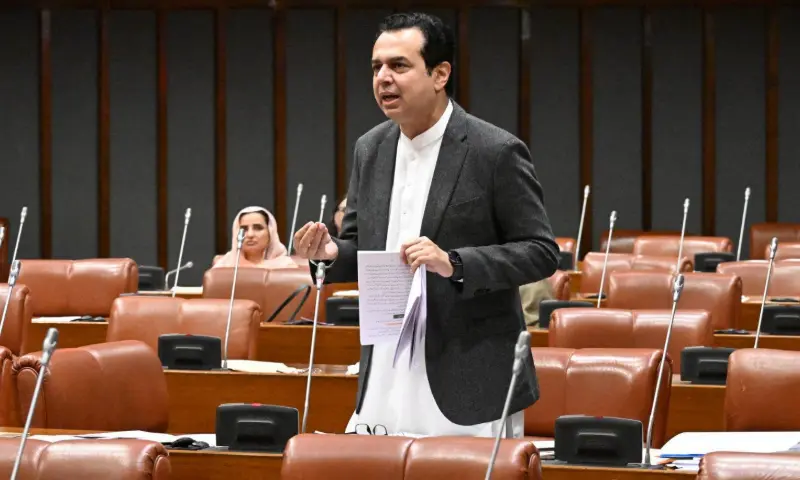
During the Senate session on Friday, PPP Senator Waqar Mehdi raised the proposed shifting of Pakistan Petroleum Limited’s (PPL) head office from Karachi to Islamabad, warning that a pattern was emerging of moving federal headquarters, ministries and corporations away from Karachi.
“The head office has been in Karachi since around 1951. Now attempts are being made to shift it to Islamabad through the board of directors, whose members are not elected representatives of the people,” Mehdi said.
He pointed out that the current office’s rent was around Rs4 million per month, but shifting would cost billions. Around 500 officers and employees from Sindh work in PPL and would face severe economic and family disruption if the head office was moved, he said.
“From the federal government’s conduct, it seems tomorrow they will talk of shifting Karachi’s sea to Islamabad as well,” Mehdi remarked.
He said PPL’s core activities, exploration, imports and related infrastructure were linked to Karachi and the institution had been working successfully from there. He demanded the decision be withdrawn.
PPP Senator Zamir Ghumro said oil and gas came under the domain of the Council of Common Interests (CCI).
“How can you shift it without the will of the CCI?” he asked.
In response, Chaudhry said PPL was a company and its board had repeatedly said vacating the office had become inevitable.
“We take everything towards provincialism, regionalism. PPL’s assets are not only in Sindh but also in Balochistan. No employees are being affected. There is no provincialism in shifting this office from Karachi,” he said.
Le 30 octobre, la rédaction de Novaïa Gazeta a publié un communiqué intitulé « Nous avons été tués ». Le 9 novembre, elle éteindra ses serveurs et rendra ses locaux de Moscou. En trente-trois ans, six de ses collaborateurs ont été assassinés. Ce journal était russe, et il le restera jusqu'au dernier numéro.
LE COURRIER DES STRATÈGES
Restez libre !
LA NEWSLETTER · GRATUITE
Le Courrier, chaque matin.
L'essentiel de l'actualité, passé au crible par les cinq plumes du Courrier. Dans votre boîte, chaque jour ouvré.
Gratuit. Vous restez libre de partir quand vous voulez.
Le 30 octobre, Novaïa Gazeta a annoncé sa fermeture. Le communiqué de la rédaction commence ainsi : « Nous avons été tués. » Il dit plus loin : « Le journal n'existe plus. » Un dernier numéro paraîtra. Le 9 novembre, selon le site d'enquête Important Stories, la rédaction éteindra les lumières, coupera les serveurs et quittera la rue Potapovski, où elle travaillait depuis près de trente ans.
Ce papier s'adresse d'abord à une partie de nos lecteurs. Je sais que plusieurs d'entre vous lisent le Courrier parce qu'ils ne supportent plus le récit unique que la presse française tient sur la Russie. Vous avez lu ici, le 7 octobre, que Vladimir Poutine n'avait pas tort sur tout en déclarant mort l'ordre de 1945. Vous savez que ce journal refuse l'alignement, et qu'il le refusera encore. C'est précisément pour cela que je vous écris aujourd'hui.
Novaïa Gazeta, « le nouveau journal », est né le 1er avril 1993 à Moscou. Ses fondateurs étaient des journalistes partis de la Komsomolskaïa Pravda, l'ancien quotidien des jeunesses communistes. Mikhaïl Gorbatchev avait donné une partie de son prix Nobel de la paix de 1990 pour acheter les premiers ordinateurs. Ce n'était ni un journal d'émigrés, ni une filiale d'un groupe occidental. C'était un journal de Moscou, écrit en russe, par des Russes, pour des Russes.
Il a enquêté sur la Tchétchénie, la corruption, les services. Il l'a payé. Igor Domnikov a été frappé à coups de marteau en mai 2000 et il est mort en juillet. Iouri Chtchekotchikhine est mort en juillet 2003, d'un mal que personne n'a su expliquer. Anna Politkovskaïa a été abattue dans l'escalier de son immeuble le 7 octobre 2006. L'avocat Stanislav Markelov et la jeune journaliste Anastasia Babourova ont été tués ensemble en pleine rue le 19 janvier 2009. Natalia Estemirova, qui travaillait avec la rédaction, a été enlevée à Grozny le 15 juillet 2009 et retrouvée morte le jour même.
En octobre 2021, son rédacteur en chef, Dmitri Mouratov, a reçu le prix Nobel de la paix. Ce n'est pas un détail : ce journal n'a jamais été l'instrument d'un camp étranger. Il s'est rangé du côté de ses lecteurs.
LE COURRIER DES STRATÈGES
Restez libre !
TELEGRAM · L'INFO EN CONTINU
Entre deux éditions, le fil.
La newsletter vous donne le matin. Le fil vous donne l'instant.
Rien, dans cette affaire, ne ressemble à une interdiction. Tout ressemble à un étranglement.
Le 28 mars 2022, après un second avertissement de Roskomnadzor, le service fédéral qui contrôle les médias, le journal suspend sa parution. Le 7 avril, Dmitri Mouratov est aspergé de peinture mêlée d'acétone dans un train ; il manque de perdre la vue. Le 5 septembre, un tribunal de district de Moscou retire au journal son enregistrement. La rédaction ne s'arrête pas : elle continue de publier sous
El Ejército de Estados Unidos y Lockheed Martin han conseguido por primera vez redirigir un cohete GMLRS en pleno vuelo y destruir un objetivo móvil durante una prueba en White Sands, Nuevo México, según ha anunciado la compañía de defensa este miércoles.
Los GMLRS son una familia de cohetes de artillería guiados, impulsados por un motor de combustible sólido y diseñados para atacar objetivos terrestres. Sus versiones de alcance estándar miden 3,96 metros de longitud, tienen 227 milímetros de diámetro y una cabeza de guerra de unos 90 kilogramos, con un rango superior a 70 kilómetros, según el fabricante.
El lanzador empleado fue un M142 HIMARS, un sistema de artillería de alta movilidad montado sobre un camión con tracción en sus seis ruedas y operado por tres militares. Pesa unas 16,2 toneladas cargado, tiene una autonomía por carretera cercana a 480 kilómetros y transporta un módulo intercambiable con seis cohetes GMLRS, además de poder trasladarse dentro de un avión C-130.
Para orientarse, los GMLRS combinan las señales GPS con un sistema inercial que calcula su posición a partir del movimiento del proyectil. Su sistema de control mueve pequeñas aletas situadas en el morro para ajustar la trayectoria y alcanzar las coordenadas programadas antes del disparo.
Durante la prueba, el equipo transmitió información del objetivo al cohete ya lanzado mediante un enlace de datos Strigo y el sistema de comunicaciones RIG-360. Este último, desarrollado inicialmente para misiles antiaéreos, permite mantener comunicaciones por radio con proyectiles en vuelo con cobertura de 360 grados y proporcionarles actualizaciones para su guiado.
El avance consiste en poder modificar la información del blanco cuando el ataque ya está en marcha, algo que permite reaccionar si este cambia de posición. La importancia militar reside en ampliar las posibilidades de los GMLRS frente a objetivos móviles mediante la conexión de sensores, lanzadores y sistemas de designación existentes, sin necesidad de rediseñar por completo la munición, según la compañía.
En 2023, Lockheed Martin testeó el envío de datos actualizados del objetivo a un receptor instalado en un avión. Aquella prueba verificó las comunicaciones necesarias para redirigir un GMLRS, aunque todavía sin lanzar un cohete.
Lockheed Martin no ha divulgado la distancia del disparo, el tipo de objetivo ni un calendario de incorporación de la mejora a las unidades. Sí sostiene que el paquete de comunicaciones podría aplicarse también al ER GMLRS, la variante de alcance ampliado, y al misil PrSM.
Prueba de fuego real en el Campo de Pruebas de Misiles de White Sands, demostrando que el sistema GMLRS puede actualizarse para ataques a objetivos móviles.
O Banco do Japão manteve as taxas de juros inalteradas nesta sexta-feira (30), mas declarou vitória em uma batalha de quase 14 anos para atingir sua meta de inflação e sinalizou vigilância contra os riscos de alta nos preços, sugerindo que o próximo aumento dos juros poderia ocorrer já em dezembro.
Com a inflação subjacente tendo atingido aproximadamente a meta de 2% do Banco do Japão, o banco central deve se concentrar em mantê-la em torno desse nível, afirmou, sugerindo que sua política monetária entrou em uma nova fase, mais restritiva, aberta a aumentos nos juros a cada poucos meses.
Embora tenha evitado se comprometer antecipadamente com um ritmo fixo de aumentos dos juros, o presidente do Banco do Japão, Kazuo Ueda, disse que a autoridade monetária japonesa debaterá os juros em cada reunião — incluindo a próxima, em dezembro —, ciente de que sua política monetária entrou na nova fase focada nos riscos de inflação.
“É importante ancorar a inflação subjacente em torno de nossa meta. Isso não significa que vamos simplesmente ficar parados esperando. Ajustaremos a política monetária conforme apropriado para que a inflação subjacente fique ancorada em torno de 2%”, afirmou ele em uma coletiva de imprensa.
Essa mudança generalizada nas perspectivas alinha o Banco do Japão com seus homólogos dos Estados Unidos e da Europa, que estão de olho em aumentos dos juros no curto prazo para combater os riscos inflacionários decorrentes da expansão da inteligência artificial e do choque energético causado pela guerra no Irã.
Na reunião de dois dias encerrada nesta sexta-feira, o Banco do Japão manteve sua taxa básica de juros em 1,25%, em uma decisão amplamente esperada, evitando aumentos consecutivos para dedicar mais tempo à análise dos efeitos dos aumentos anteriores nas condições de crédito.
O membro da diretoria de linha dura, Hajime Takata, discordou da decisão de manter os juros, propondo, sem sucesso, um aumento para 1,5%.
Em uma medida surpreendente que marca um afastamento ainda maior da política monetária ultra-flexível, o Banco do Japão anunciou que acelerará suas vendas de fundos negociados em bolsa a partir de janeiro, passando dos atuais 330 bilhões de ienes para 860 bilhões de ienes (US$ 5,5 bilhões) por ano.
“Vimos a necessidade de examinar um pouco mais os riscos econômicos e de preços, bem como as condições financeiras”, disse Ueda, quando questionado sobre por que o Banco do Japão decidiu manter os juros estáveis.
“Mas a inflação subjacente atingiu níveis consistentes com nossa meta de preços. As condições financeiras permanecem acomodativas. Existem vários riscos de alta. Portanto, devemos estar atentos ao risco de a inflação ultrapassar nossa meta”, disse ele, mantendo vivas as expectativas de um aumento em dezembro.

 Login