
❌

Reading view

Europe’s Electricity Price Divide Exposes Limits of the Single Energy Market

Europe’s electricity market recorded substantial regional differences on Tuesday, 27 October, with average wholesale prices ranging from approximately €6 per megawatt-hour in northern Sweden to more than €255 in Romania.

The figures reveal a persistent difficulty for European energy policy: although the continent has an increasingly interconnected electricity market, businesses and consumers remain exposed to very different underlying wholesale costs depending on location.

According to European day-ahead electricity market data, Sweden’s SE2 bidding zone recorded an average of €6.23 per megawatt-hour, while Finland stood at approximately €6.65. Romania reached €255.20, roughly 41 times northern Sweden’s price. Bulgaria registered approximately €254, Hungary €241 and Greece €225. Germany recorded approximately €155, Belgium €160 and France €162.

These are wholesale prices for delivery on 27 October, not final bills for households or businesses. Their differences nevertheless raise questions about how effectively Europe’s electricity networks distribute power from areas of lower-cost generation to those facing greater costs.

Why a common market produces different prices

European electricity trading is organised through interconnected national and regional markets. Cross-border capacity allows relatively inexpensive power to reach regions where demand is greater or local generation is more expensive.

When transmission capacity is adequate, neighbouring prices can converge. Physical networks, however, have limits. Congested interconnectors can prevent additional imports even when large price differences exist.

Other influences include availability of power stations, renewable output, fuel prices, consumption and system stability. Regions with substantial hydropower, nuclear generation or strong renewable production may experience comparatively low prices. Markets relying on gas-fired generation can be more expensive when gas plants are needed to satisfy the final increment of demand.

The result is a market responding to common European conditions but still shaped by local generation and transmission constraints.

Southeastern Europe’s structural constraints

The European Union Agency for the Cooperation of Energy Regulators, ACER, has repeatedly examined the causes of regional price divergence. In its 2026 assessment of cross-zonal electricity trade, the agency considered unusually high prices and limited access to lower-cost power in southeastern Europe.

Constraints include available cross-border capacity and shortages of flexible generation able to respond to changing renewable output, especially in the evening. Countries including Greece, Bulgaria, Romania, Hungary, Croatia and Slovenia have encountered substantial regional differences.

Those findings do not prove the cause of each price movement on 27 October. They do, however, explain why disparities can persist despite common market rules. ACER has advocated improved coordination among transmission operators, more effective use of existing networks and additional flexibility through storage and demand management.

Industrial consequences of expensive electricity

Energy-intensive industries, including steel, chemicals and fertiliser production, are particularly sensitive to electricity costs. Where contracts are exposed to wholesale markets, sustained regional price differences can influence output and investment decisions.

The relationship between wholesale prices and bills is not immediate. Firms may hedge prices, use long-term contracts or produce their own power. Network charges, taxes and government support also affect the amount paid. Still, persistent market differences can shape industrial competitiveness.

As EU Today reported, EU energy ministers are due to examine proposed changes to electricity network charges and market administration on 29 October. Network tariffs are distinct from wholesale prices, but both affect total electricity costs.

Renewables and the need for flexible networks

According to ACER’s energy-market monitoring, renewable sources represented around half of EU electricity generation in 2025. Solar energy can reduce prices during the day, but output falls sharply towards evening, sometimes requiring more expensive power stations to increase generation.

This increases the value of storage, flexible production, responsive demand and international connections that can balance surpluses and shortages between regions. Yet major transmission lines can take years to complete owing to planning, permitting, investment and construction requirements.

The priority is therefore not simply to install more renewable capacity. Europe’s grids and supporting technologies must be capable of moving and using that output efficiently.

What the price divide reveals

A single day’s wholesale prices should not be mistaken for long-term average electricity costs or a permanent competitive advantage. Nevertheless, the persistence of regional disparities documented by regulators shows the problem extends beyond isolated daily volatility.

For EU institutions, the question is whether further market integration can make energy more affordable while preserving incentives to invest in generation and transmission. National governments must balance security of supply, infrastructure financing and industrial competitiveness.

Electricity trading across Europe is increasingly integrated. The physical systems supplying it remain considerably less uniform. Until those constraints are addressed, the price of power will continue to reflect geography as well as the underlying cost of energy.
  •  

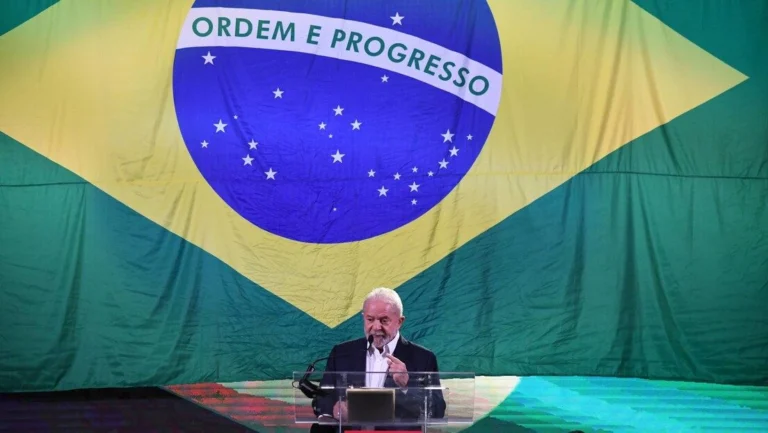
Lula Pledges to Develop Brazil’s Own Artificial Intelligence

Luiz Inácio Lula da Silva announces plans for Brazilian artificial intelligence and renewable energy following his presidential election victory.

Lula plans to expand technical education and use renewable energy to attract data centers and keep information stored in Brazil.


Brazilian President-elect Luiz Inácio Lula da Silva has pledged to develop a domestic artificial intelligence system, expand technical education and attract data centers powered by renewable energy, aiming to strengthen Brazil’s technological independence and accelerate its transition to a developed economy.

RELATED: Lula Celebrates Reelection, Promises Education Reform and Sovereign AI

Speaking after his victory in the presidential runoff, Lula said Brazil must invest in mathematics and engineering to build its own artificial intelligence capabilities rather than depend on technology developed in China or the United States.

“We will teach more mathematics, more engineering, because I don’t want to depend on Chinese or American artificial intelligence; I want to create a Brazilian one,” he said.

Lula also pledged to use Brazil’s renewable energy resources to attract data centers and keep information stored within the country. The proposal forms part of a broader push to expand the digital economy and strengthen domestic technological capacity.

Text Reads: The Brazil we wish to build is a country where our elderly are cared for with dignity, women are respected, and everyone has the right to live out their faith in freedom.
It is a country that respects differences, with a State that guarantees rights for all—because to govern means to look after 215 million Brazilians, without distinction. Respect must be the starting point for us to build, together, a Brazil that is increasingly fair and humane.

“We want to transform this country from a developing country into a developed one,” he said, identifying the digital, green and creative economies as key areas for investment.

He also outlined an ambition for Brazil to play a central role in political and economic decision-making and in efforts to promote peace.

Lula promised that his next term would deliver unprecedented results, telling supporters: “I want to make a commitment: I will deliver the best term of office any president has ever had in Brazil’s history. You can be sure of that.”

The president-elect, who turns 81 on Oct. 27, dismissed concerns about his age as he prepares to take office for another term. He pledged to devote himself fully to the country’s development and to improving the daily lives of Brazilians.

“I will dedicate 20 or 24 hours a day to making this the country everyone dreams of, where people can go to sleep and wake up in complete peace of mind,” he said.

Lula also thanked voters for their support in the runoff and praised young people who took to the streets to defend democracy, crediting their participation as a key factor in his victory.

His pledges place artificial intelligence, renewable energy and digital infrastructure among the priorities he has outlined for Brazil’s next phase of development, alongside his ambition to transform the country into a developed nation.

  •  

Wind Turbines vs Nature: How Reckless Renewables Are Destroying the Environment

From beaches to old-growth forests, wind farms are destroying the environment in the name of saving it, says Sandra Bourke. Greens are turning their backs as reckless renewables industrialise the natural world.

The post Wind Turbines vs Nature: How Reckless Renewables Are Destroying the Environment appeared first on The Daily Sceptic.

  •  

Pentagon advances some wind projects after freeze

The Trump administration is advancing some wind projects after a court order required it to do so. A White House official said Thursday that an initial set of wind projects under Pentagon review have been released. The official said this represents two projects located in Maine and South Dakota. The official said the Defense Department…

  •  

NGOs unite to warn revised Sophia solar project still presents significant environmental challenges

Beira Baixa stands firm: it does not want to see its territory disappear under a suffocating black blanket of solar panels. Image: Paulo Novais/ Lusa

Following hot-on-the-heels of Rewilding Portugal, and backing up stiff opposition from local people and quite a few celebrities, several environmental organisations have spoken out today against the revised Sophia solar

The post NGOs unite to warn revised Sophia solar project still presents significant environmental challenges appeared first on Portugal Resident.

  •  

ECB Says Artificial Intelligence and Reduced Dependence on Fossil Fuels Are Shielding Europe’s Economy

The European Central Bank says artificial intelligence investment, changing energy consumption and increased government spending have helped the eurozone withstand this year’s energy crisis, although economists warn that several sources of growth may prove temporary.

The eurozone economy has proved more resilient to the energy price shock of 2026 than economists initially expected, supported by increased investment in artificial intelligence, reduced dependence on fossil fuels and higher government expenditure, according to an assessment published by the European Central Bank on Wednesday, 21 October.

ECB economists Óscar Arce, Gerrit Koester and Beatrice Pierluigi found that structural changes in European energy consumption have reduced the economic consequences of rising oil and gas prices. Stronger international demand for technology equipment and additional public spending, particularly in Germany, have also supported growth.

The findings come as the ECB faces renewed inflationary pressure following disruption to global energy markets caused by the conflict involving Iran, raising questions about the outlook for interest rates and economic activity.

Eurozone growth withstands energy shock

In their assessment of the eurozone’s economic resilience, ECB economists reported that economic output continued to expand despite the sharp increase in energy prices earlier this year.

Excluding Ireland, where economic statistics are frequently affected by the activities of multinational companies, real eurozone GDP in the second quarter was 0.6 per cent above its level at the end of 2025.

The ECB also identified quarterly growth of approximately 0.3 per cent over the preceding four quarters, excluding Irish figures.

These results exceeded earlier expectations that the disruption to energy markets would have a greater impact on European manufacturing, consumer spending and business investment.

Nevertheless, the eurozone’s rate of expansion remains modest compared with its longer-term historical performance.

The ECB’s findings suggest that the economy has become better able to absorb international disruptions without experiencing the immediate contractions that might previously have followed comparable energy price increases.

Reduced reliance on imported oil and gas

One of the most significant structural changes concerns energy consumption.

According to the ECB, the eurozone economy is now approximately half as dependent on oil as it was during the early 1990s, measured against economic output.

Greater energy efficiency, the expansion of services and investment in alternative electricity generation have progressively reduced the amount of fossil fuel required to produce economic activity.

The growth of renewable energy has also altered the relationship between natural gas prices and electricity costs.

In Spain, the proportion of hours during which gas-fired power stations determined wholesale electricity prices fell from approximately 80 per cent in 2020 to just over 20 per cent during the first nine months of 2026.

France recorded a similar decline, from approximately 60 per cent to around 20 per cent, supported by its extensive nuclear generating capacity.

Consequently, increases in international gas prices are having a smaller effect on electricity markets in countries with substantial renewable or nuclear generation.

The ECB cautioned, however, that European economies remain exposed to global energy disruptions, particularly through industrial activity and international supply chains.

Artificial intelligence provides unexpected support

The international expansion of artificial intelligence has generated an additional source of demand for European manufacturers and technology companies.

Investment in computing infrastructure, digital services and specialised equipment has increased demand for products supplied by European businesses.

According to the ECB, global trade has performed considerably better than expected at the end of 2025.

The latest projections indicate international trade growth of approximately 4.7 per cent in 2026, compared with the 2 per cent forecast in December.

AI-related investment accounts for part of that improvement.

European manufacturers producing specialised machinery and technology equipment have benefited from increased export orders, while domestic investment in technology has supported economic activity.

However, the ECB found that the effects vary considerably between sectors.

Technology-equipment manufacturers recorded comparatively strong growth in output, employment and new orders.

Software companies performed better in output terms, but the improvement was less evident in employment and new business.

This uneven performance suggests that the economic benefits of the AI investment cycle are concentrated in particular industries.

German spending strengthens European demand

Fiscal policy has provided another source of support.

The ECB estimates that the expansionary fiscal stance in the eurozone has increased to approximately 0.5 percentage points of GDP, twice the level anticipated in December 2025.

Much of the additional stimulus reflects higher German government spending on defence and infrastructure.

Other eurozone governments have introduced measures to limit the effect of energy prices on households and businesses.

Public investment and expenditure have therefore helped compensate for weakness in areas affected by higher import costs and international uncertainty.

Yet the ECB warned that fiscal support cannot necessarily continue at its present level.

Several eurozone governments face borrowing constraints, while additional public spending can place pressure on national budgets.

Interest-rate decisions remain difficult

The ECB’s assessment comes amid expectations of further monetary tightening as policymakers respond to renewed energy-related inflation.

The central bank must consider whether higher energy costs will remain temporary or begin influencing wages, prices and inflation expectations more broadly.

Additional interest-rate increases could reduce inflationary pressures but would also raise borrowing costs for businesses, governments and households.

The economic recovery remains exposed to potential reversals in global demand, international trade and investment in artificial intelligence.

The ECB’s economists also identified geopolitical escalation and further supply-chain disruption as continuing risks.

Their findings indicate that reduced fossil-fuel dependence has made the eurozone less vulnerable to energy shocks, while technology investment and government spending have provided additional support.

Whether that resilience continues into 2027 will depend partly on the durability of international demand and the ability of European governments to maintain investment without increasing inflationary pressure.

  •  

Are Fossil Fuels Running Out?

Have we passed peak oil – are fossil fuels running out? Richard Lyon says yes, and the transition to 'renewables' is making it worse. But peak oil is a myth, says Tilak Doshi, as he reviews Lyon's book The Energy Trap.

The post Are Fossil Fuels Running Out? appeared first on The Daily Sceptic.

  •  

Giant Wind Turbines Risk Leaving Britain Blind to Russian Jets, Says MoD

A giant wind farm risks blinding radar used to track Russian jets and missiles, the Ministry of Defence has warned as it opposes Net Zero plans to build 23 turbines twice the height of Big Ben in Yorkshire.

The post Giant Wind Turbines Risk Leaving Britain Blind to Russian Jets, Says MoD appeared first on The Daily Sceptic.

  •  

Carbon Brief’s Con Trick

Carbon Brief claims that wind and solar power saved the UK from gas imports worth £5.9bn during the Hormuz crisis. Not mentioned, says Paul Homewood, is that the wind and solar power cost more.

The post Carbon Brief’s Con Trick appeared first on The Daily Sceptic.

  •  
❌