Liberian-flagged container ship, charted by Israeli shipping company and departed from Haifa, is latest vessel to be targeted in string of suspected Russian attacks
Three maritime drones struck a container ship sailing in the Black Sea off the coast of Bulgaria on Wednesday, the country's defense minister said, the latest in a string of such incidents on NATO's eastern flank
China has more than 50 navy and other official vessels operating in a wide swath of sea stretching from southern Japan down to Taiwan and off the Philippines, a senior Taiwan official said, calling the threat level "obvious."
Kyiv's military campaign resulted in over 100 Russian vessels being hit in the Azov sea during the summer — negatively impacting Russia's economy and contributing to an increase in global grain prices.
O Liverpool avançou às quartas de final da Copa da Liga Inglesa. Em casa, a equipe bateu o Chelsea nesta quarta-feira (28) por 6 a 5 nos pênaltis, após empate em 1 a 1 em Anfield. Os gols no tempo regulamentar, de Cody Gakpo, para os Reds, e Morgan Rogers, para os Blues, foram também em penalidades.
Com o resultado, o Liverpool eliminou o Chelsea nas oitavas e garantiu a vaga na próxima fase do torneio. O adversário das quartas será definido por sorteio.
Aos 37 minutos de jogo, Ryan Gravenberch derrubou Moisés Caicedo na área e o árbitro apontou pênalti para o Chelsea. Morgan Rogers foi para a cobrança e abriu o placar a favor dos visitantes, aos 39 minutos.
Apenas dois minutos depois, foi a vez do time da casa ter uma penalidade marcada a seu favor. Após cobrança de escanteio, Virgil Van Dijk cabeceou a bola na mão de Wesley Fofana. Cody Gakpo converteu a batida e empatou para o Liverpool, aos 43.
Na disputa de pênaltis, Kostas Tsimikas e Ryan Gravenberch desperdiçaram para os donos da casa, enquanto Valentín Barco, Emmanuel Emegha e Wesley Fofana perderam do lado do Chelsea.
Na cobrança decisiva, Fofana mandou por cima do gol defendido por Giorgi Marmadashvili.
Defense Secretary Pete Hegseth attempted to assuage Southeast Asian partners this week that the U.S. is dedicated to its allies in the Asia-Pacific region and pitched a defense framework to guide cooperation in the next few years during his trip to the Philippines. Hegseth said the Trump administration’s “strong, quiet and clear” approach to the…
Defense Secretary Pete Hegseth attempted to assuage Southeast Asian partners this week that the U.S. is dedicated to its allies in the Asia-Pacific region and pitched a defense framework to guide cooperation in the next few years during his trip to the Philippines. Hegseth said the Trump administration’s “strong, quiet and clear” approach to the…
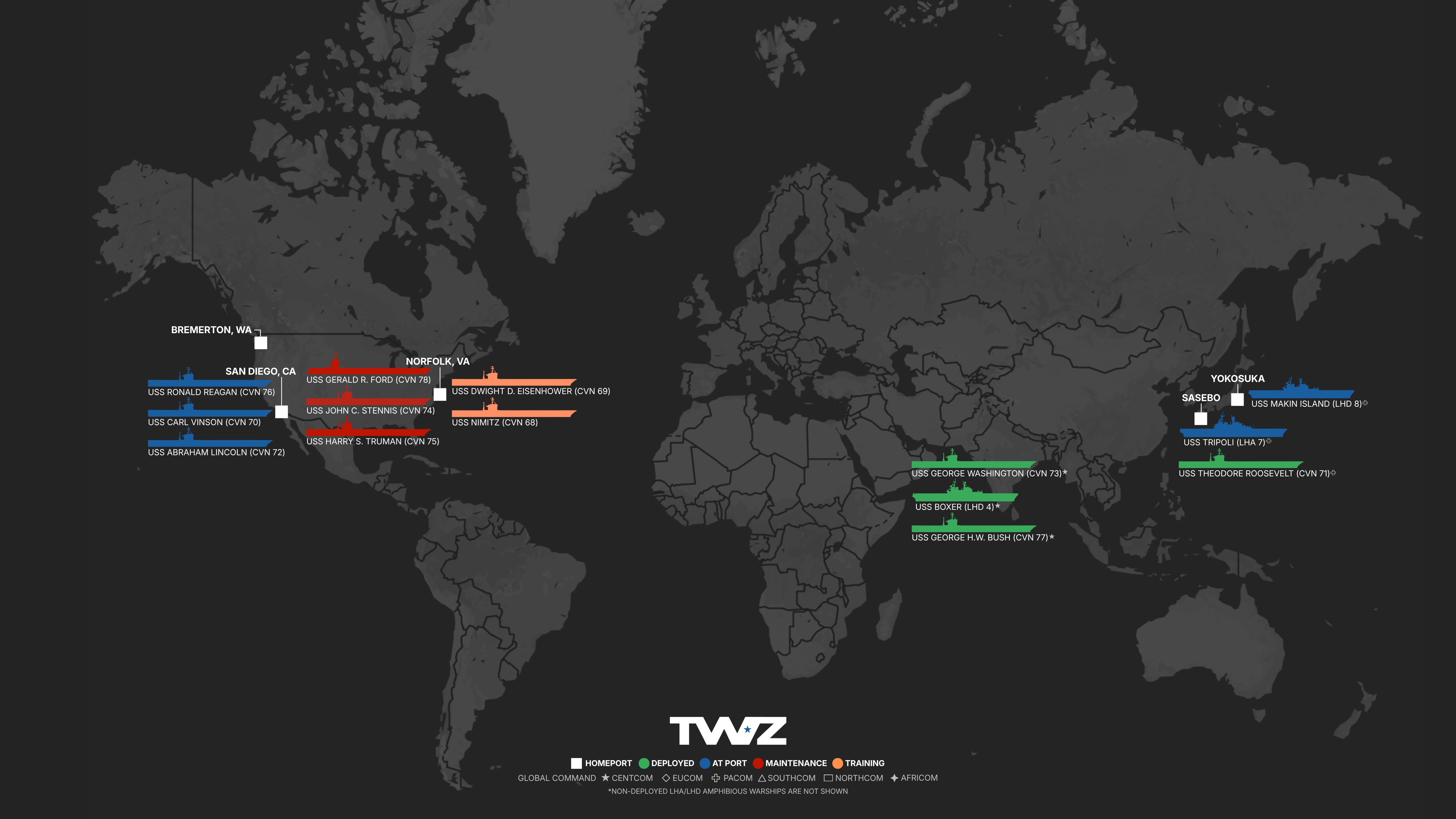
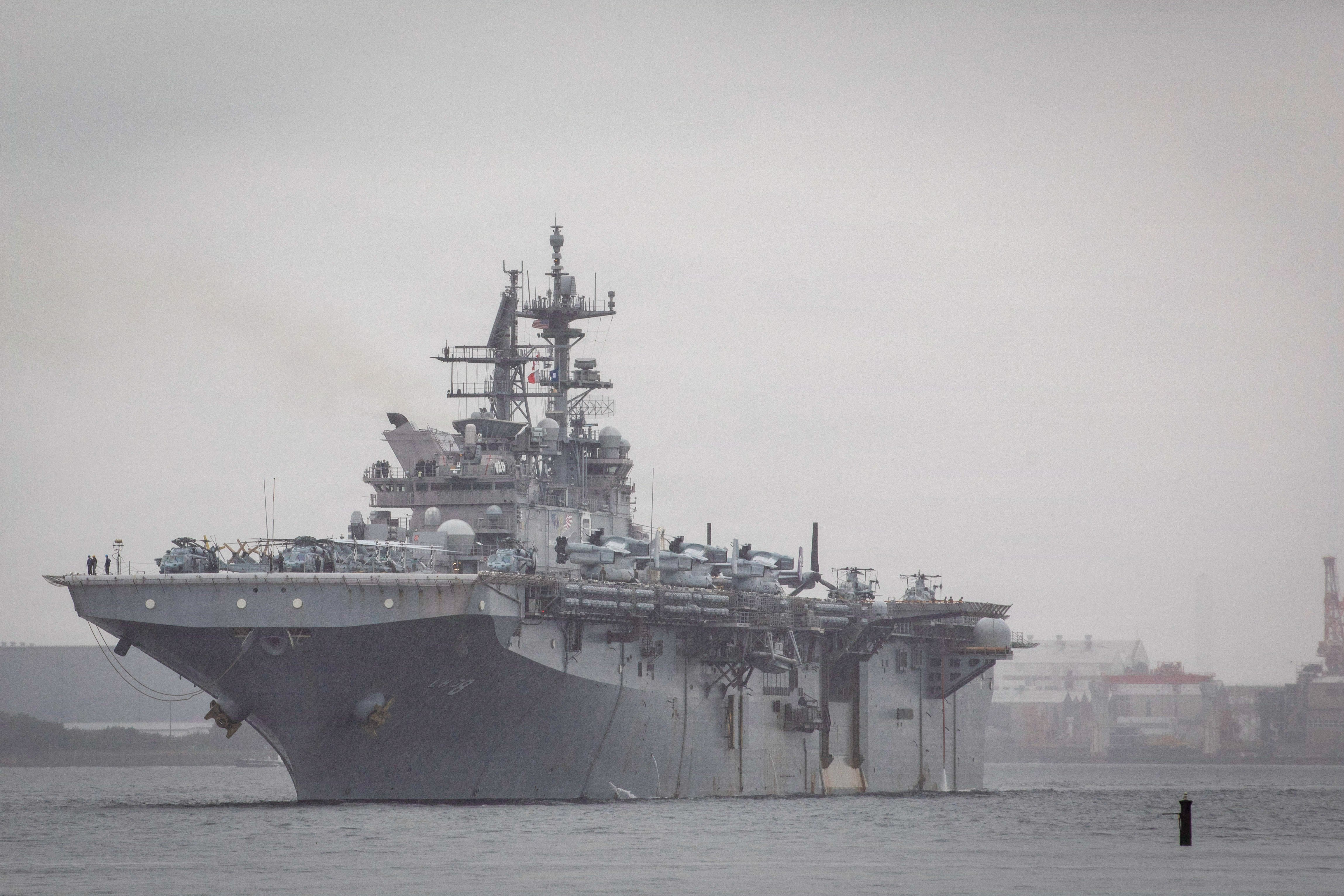
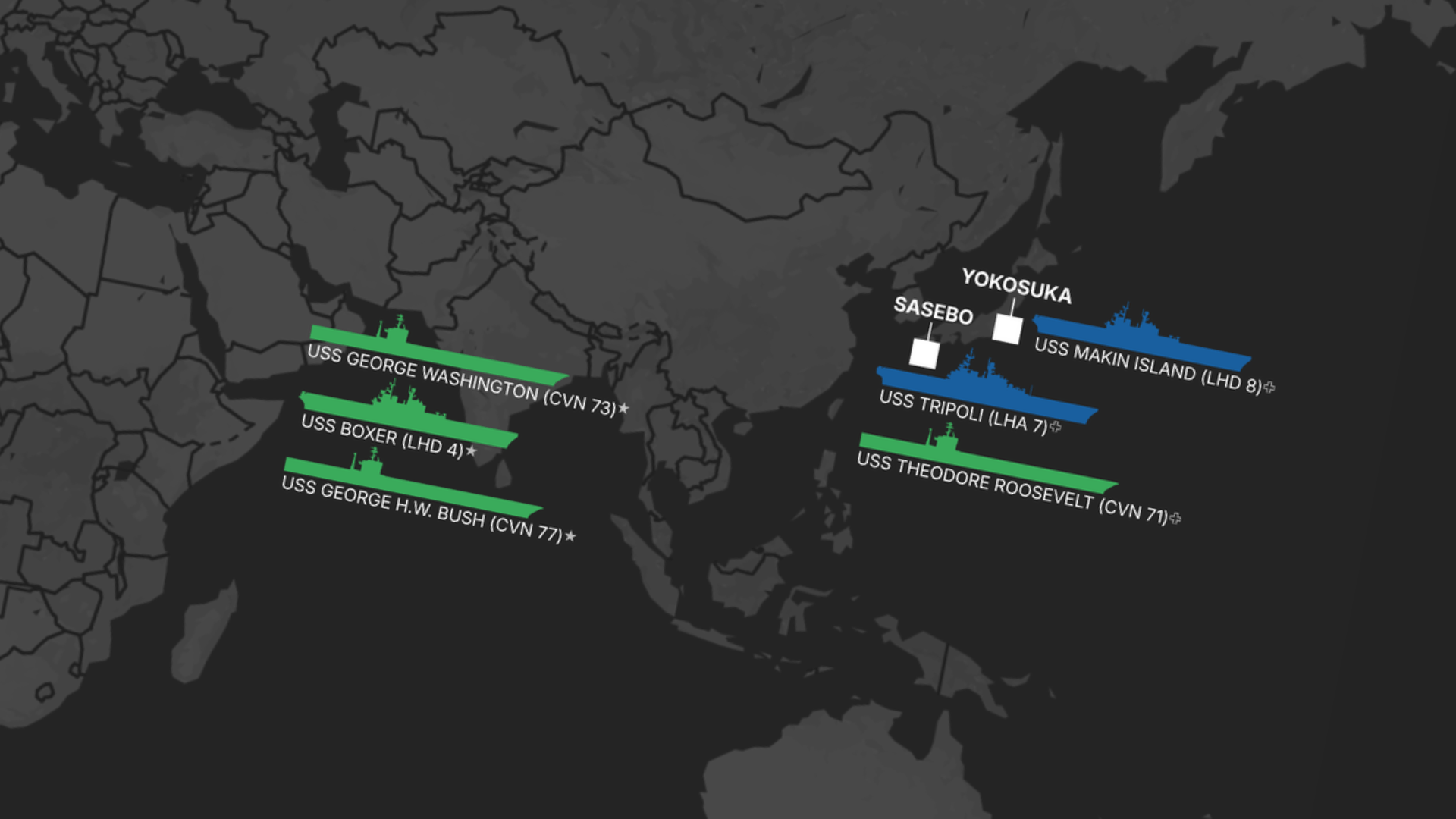
The Makin Island Amphibious Ready Group (ARG) tied up in Yokosuka, Japan, on Monday, a week after the Theodore Roosevelt Carrier Strike Group departed from the same base to participate in exercise Keen Sword 27. Both are reportedly destined for the Middle East, two U.S. officials confirmed to Fox News, which would place three CSGs and two ARGs in the U.S. Central Command (CENTCOM) area of responsibility (AOR) sometime in November, unless a group leaves before their arrival. More than 10 guided-missile destroyers are also operating independently in the region, as the U.S. beefs up force posture ahead of the possibility of renewed hostilities against the Iranian regime.
Meanwhile, on the other side of the world, the USS Ronald Reaganremotely controlled an MQ-25A Stingray tanker drone thousands of miles away for the first time, and the Navy announced that USS Abraham Lincoln, which just returned from a historic deployment, will conduct a homeport shift to Bremerton, Washington.
Here’s TWZ’s weekly carrier tracker monitoring America’s flattop fleet, including deployed CSGs and ARGs, using publicly available open-source information. Check out our last reporthere.
A high-resolution graphic depicting the locations of U.S. Navy carriers and deployed ARGs. TWZ/IAN ELLIS-JONES
Where Is The USS Theodore Roosevelt?
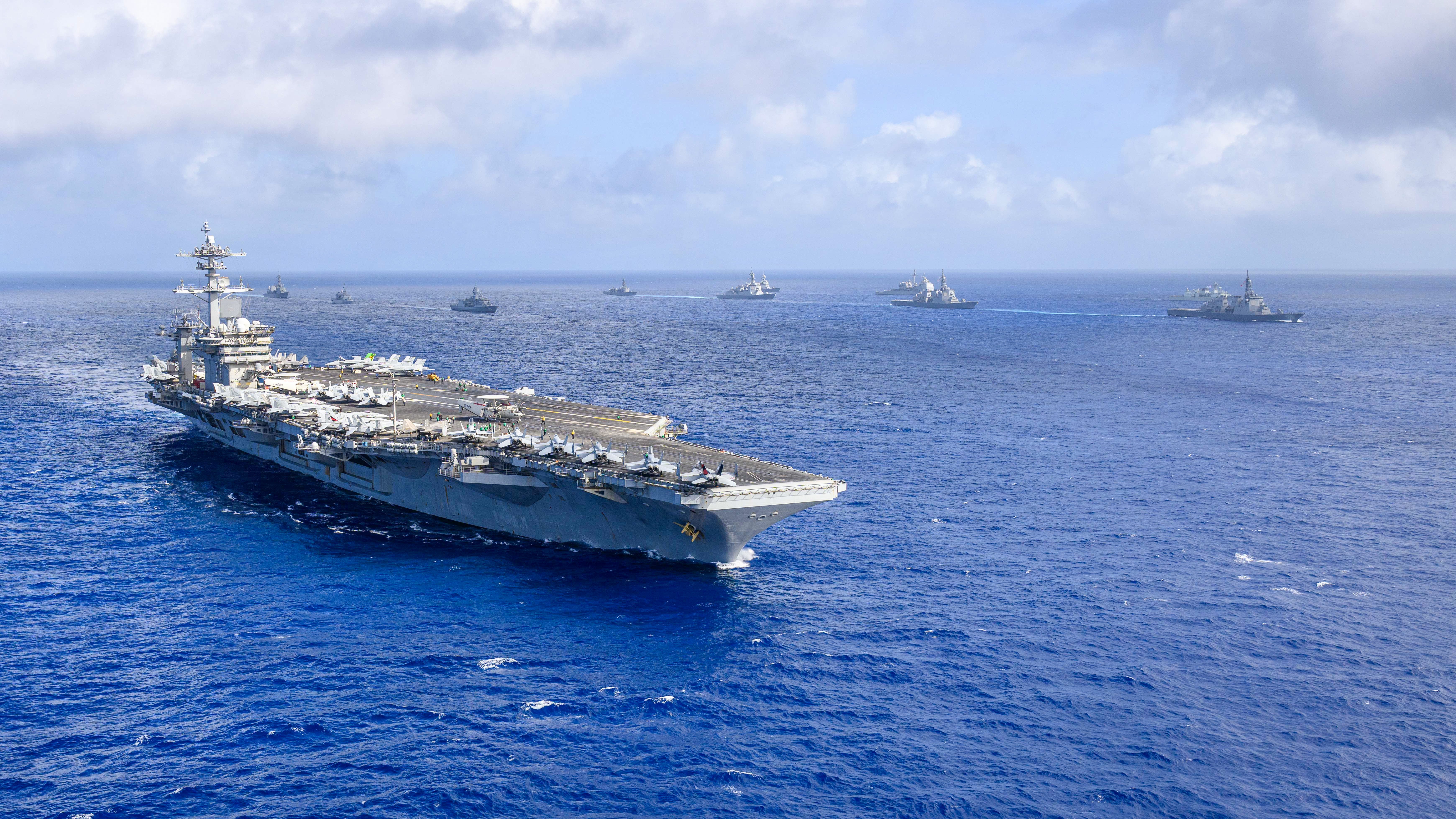
Surrounded by allied warships, the USS Theodore Roosevelt steamed through the Philippine Sea last week as large-scale combined exercise Keen Sword 27 got underway. Roosevelt and guided-missile cruiser USS Chosin departed Commander, Fleet Activities Yokosuka, on October 19 following a three-day port call. Roosevelt deployed on September 27 and was the first non-resident American carrier to pull into the vital naval port in over four years.
U.S. Navy, Japanese, Australian, Canadian, and French warships steam together during Exercise Keen Sword 27. U.S. Navy photo
Three American warships are participating in the exercise, a Navy official confirmed to TWZ. The third participant, Pearl Harbor-based guided-missile destroyer USS Decatur, another element of the five-ship strike group, also called port in Yokosuka and transited out of Tokyo Bay on October 26.
Australian, Canadian, and French warships joined the exercise alongside the U.S. and Japan in a large show of force. Keen Sword 27 runs through October 29, but it’s unclear if Roosevelt and her escorts will remain until the conclusion before heading toward the Middle East via the Strait of Malacca. More than 45,000 Japan Self-Defense Forces personnel and 11,000 U.S. service members are participating.
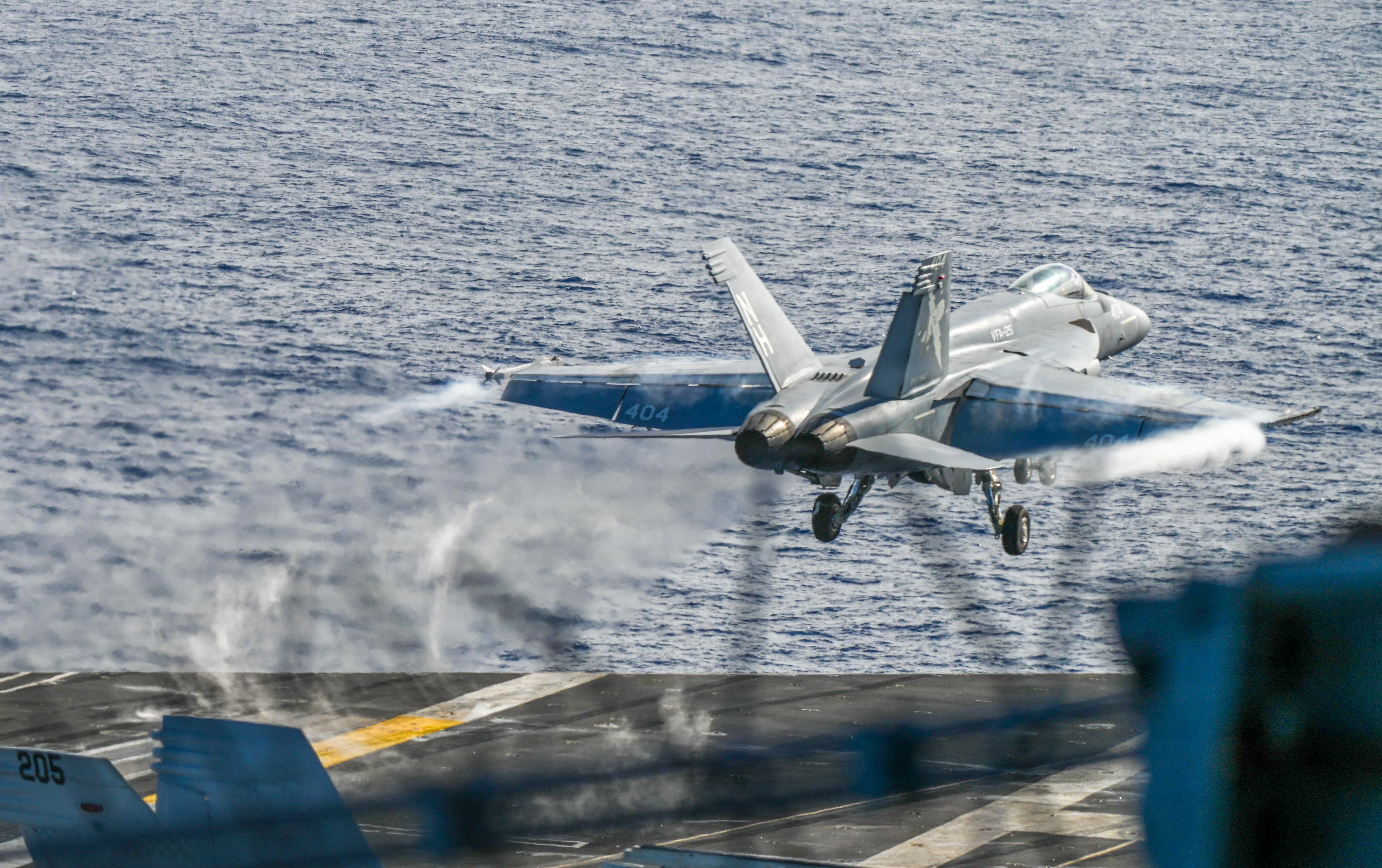
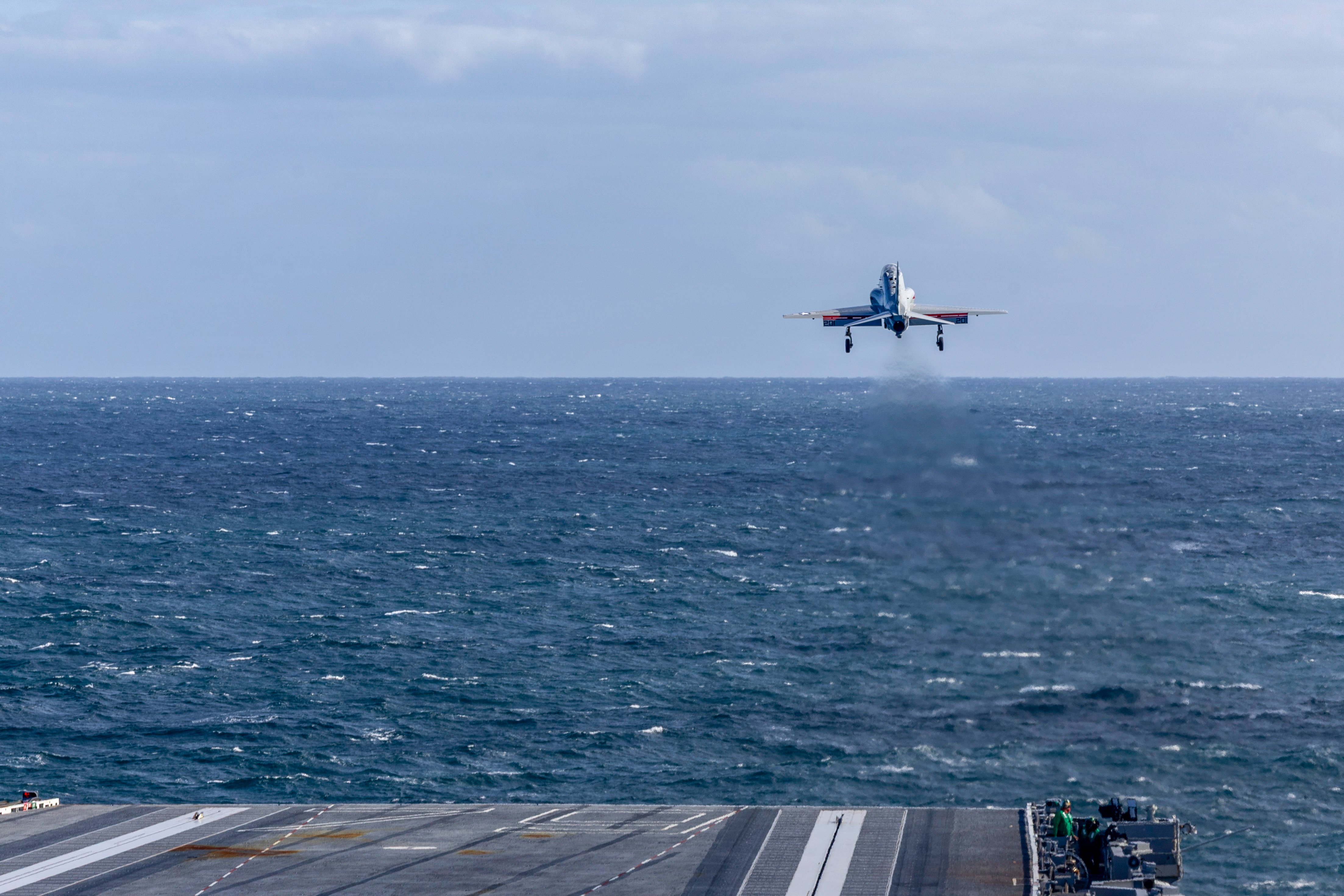
An F/A-18E Super Hornet launches off the flight deck of USS Theodore Roosevelt. U.S. Navy photo
F/A-18 Super Hornets and F-35Cs launched from Roosevelt and airbases in Japan to complete a simulated strike against a target in the East Sea/Sea of Japan, which also included land-based launchers, an exercise spokesperson told Stars and Stripes. Japanese destroyers JS Kongo and JS Maya assumed the red team role. The precise location and munitions employed were not disclosed.
The Theodore Roosevelt CSG, which a different Navy official confirmed also includes USS Paul Hamilton and USS Carl M. Levin, will arrive in the Middle East, Fox News reported last week. Both destroyers are disaggregated from the rest of the group. Hamilton, the last ship to deploy, left San Diego on October 10 and most recently pulled out of Pearl Harbor last week. Levin, the first ship to deploy, is already operating in the CENTCOM AOR, based on public images posted on the military’s content platform, DVIDS.
If the CSG and ARG, which also includes amphibious transport docks USS Anchorage and USS John P. Murtha, arrive in the Middle East before the other two carriers on station, USS George H.W. Bush and USS George Washington, and big-deck amphibious assault ship USS Boxer, depart, that would add roughly 10,000 sailors and Marines to CENTCOM’s arsenal, the most significant force posture in the region since the war began. However, the overlap can only be maintained for a limited time given normal rotation schedules.
Amphibious assault ship USS Makin Island pulls in to Commander, Fleet Activities, Yokosuka. U.S. Navy photo
Acting Secretary of the Navy (SECNAV), Hung Cao, said during a panel at the Association of the United States Army (AUSA) convention that “the Teddy Roosevelt carrier strike group just deployed on October 8 with a medium sized unmanned surface vessel (MUSV). This is the first carrier strike group to ever deploy with a large size unmanned surface vessel.” However, despite multiple requests to comment, the Navy has not confirmed to TWZ that MUSV Seahawk (2) is assigned to the strike group. Seahawk was 10 nautical miles north of Guam, publicly available Automatic Identification System (AIS) data on MarineTraffic showed, as of publication.
The USS Ronald Reagan Controlled A Tanker Drone Thousands Of Miles Away
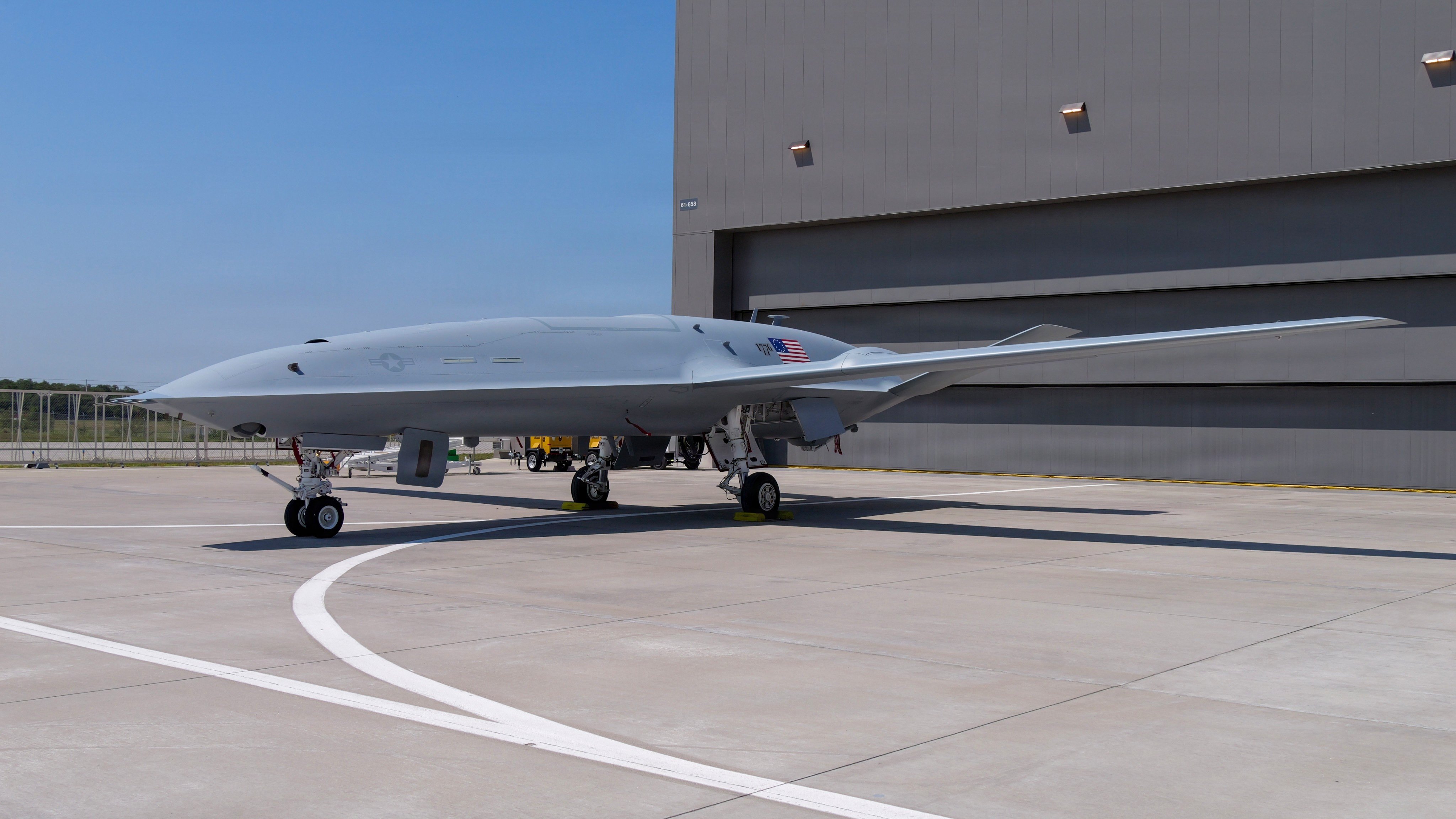
Providing a glimpse of the future, the USS Ronald Reagan used her brand-new Unmanned Air Warfare Center (UAWC) to operate an MQ-25A Stingray tanker drone at a Boeing facility in Illinois. “In a historic U.S. naval aviation event, an aircraft carrier connected to, and controlled, an unmanned aerial refueler MQ-25A Stingray more than 2,100 miles away,” the Navy said in a press release.
The first painted MQ‑25A Stingray sits on the ramp outside Boeing’s dedicated MQ‑25 production facility in Mascoutah, Illinois. Unmanned Carrier Aviation (PMA-2
The UAWC, installed during Reagan’s recently completed 15-month maintenance availability, used its MD-5C ground control station to link beyond line-of-sight with the drone while the flattop was underway in the eastern Pacific Ocean. “The MQ-25A Stingray’s carrier-based refueling capabilities enable F/A-18 Super Hornets to fly farther and longer,” the Acting SECNAV said. “The integration of this unmanned aerial refueler demonstrates the transformational change our manned and unmanned asset integration provides the Fleet.”
The test took place during a preliminary sea trial, part of a “series of build-up exercises designed to validate procedures, networks and interfaces,” reads the release. Capt. Daniel Fucito, program manager of the Navy’s Unmanned Carrier Aviation Program Office (PMA-268), said, “We have redefined naval power projection. This first-ever underway connection between a carrier-based UAWC and an MQ-25A aircraft proves that the Carrier Air Wing of tomorrow is a reality today.”
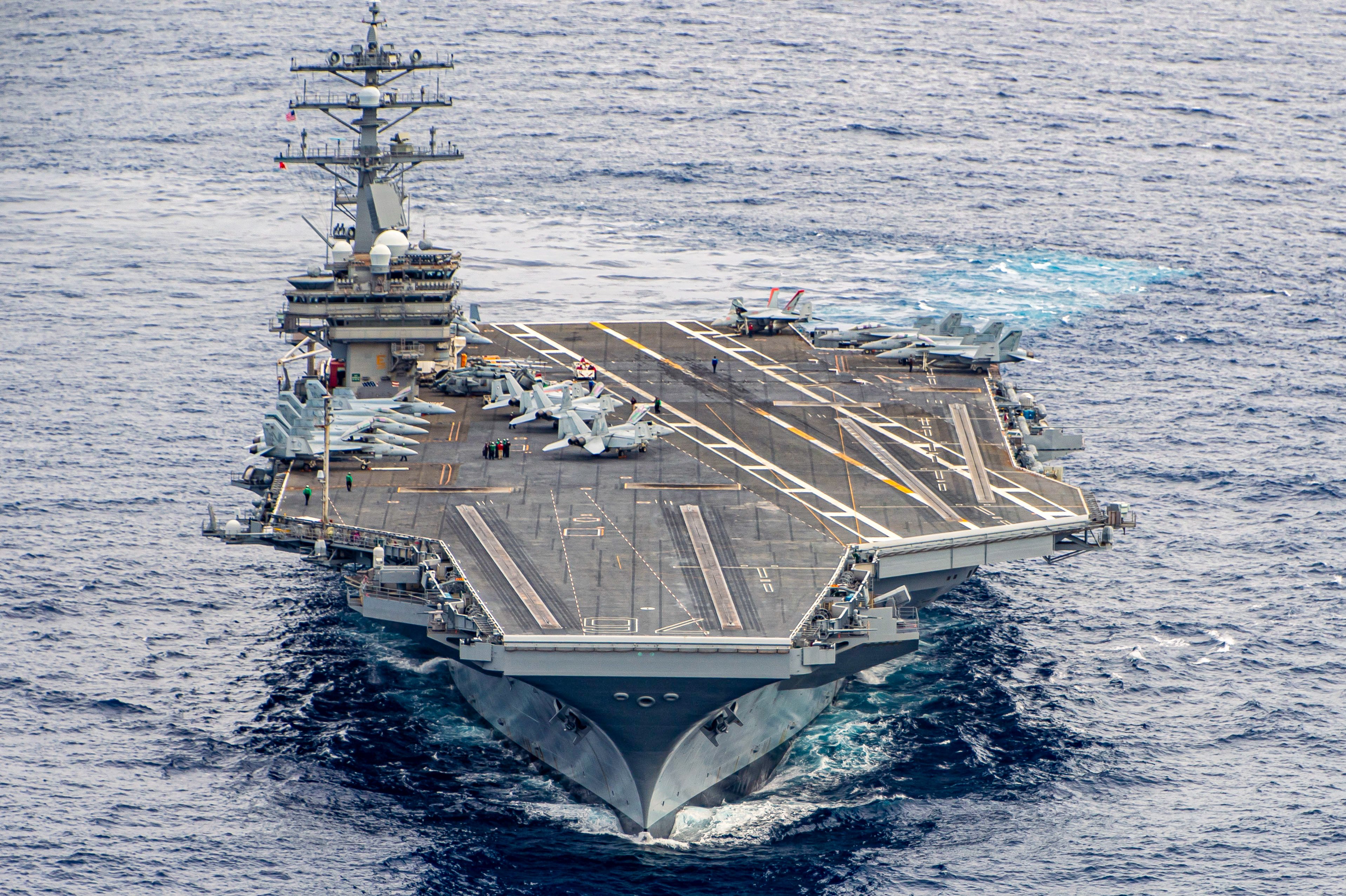
USS Ronald Reagan (CVN 76) steams through the Pacific Ocean in October. U.S. Navy photo
Reagan is the second Nimitz class carrier equipped with the UAWC. The MQ-25A will eventually take the role held by the F/A-18E/F Super Hornets that are tasked with fueling carrier-based aircraft, freeing up aircraft to take on higher-end combat roles.
Reagan moored at Kilo Pier at Naval Air Station North Island in San Diego on October 27 after finishing Fleet Replacement Squadron and Carrier Qualifications.
What’s Next For The USS Abraham Lincoln?
The USS Abraham Lincoln recently returned from a record-setting deployment. The carrier arrived back home on October 8 after being at sea for 321 days, less than a week short of the longest carrier deployment in the post-Vietnam era.
The Navy has confirmed what TWZ was the first to report: the Lincoln will complete a homeport shift to Bremerton, Washington, to undergo an overhaul following a grueling deployment that left the carrier looking worse for wear. The release did not disclose the length of the availability, but Reagan was out of commission for more than a year, and was not previously involved in combat operations.
U.S. Navy sailors aboard USS Abraham Lincoln conduct maintenance. U.S. Navy photo
“The carrier repeatedly demonstrated unmatched multi-theater combat lethality and safeguarded critical sea lanes across the Indo-Pacific and Middle Eastern theaters. Home port shifts are part of the Navy’s continued commitment to the strategic dispersal of ships,” a statement released from Commander, Naval Air Forces reads.
The move is a permanent change of station for the crew and their families.
Where Is The Rest Of The Fleet?
The two carriers enforcing the ongoing blockade of Iranian ports and coastal cities, USS George H.W. Bush and USS George Washington, have both been dark on AIS since arriving in the Middle East. The former is 210 days into her deployment and recently arrived back in CENTCOM after a five-day port call in Phuket, Thailand. The latter, forward-deployed out of Yokosuka, Japan, was spotted on DVIDS conducting flight operations on October 24.
USS Nimitz, homeported in Norfolk, welcomed the public with tours during Naval Station Norfolk’s Fleet Fest over the weekend, and got underway again for training on October 27. The 51-year-old carrier is scheduled to be deactivated in Spring 2027. USS Dwight D. Eisenhower, also based at NS Norfolk, left port for work ups on October 24.
Also on the east coast, USS John C. Stennis has been undergoing maintenance since 2021. The RCOH was expected to be completed and the carrier redelivered in October 2026, according to budget documents, but it’s unclear if that timeline will hold. However, USS Harry S. Truman recently moved to begin an RCOH, suggesting Stennis is nearing completion.
On the other side of the country, USS Carl Vinson is in port in San Diego. Vinson returned on September 4 after a 25-day underway for a Final Evaluation Period and Tailored Ship’s Training Availability.
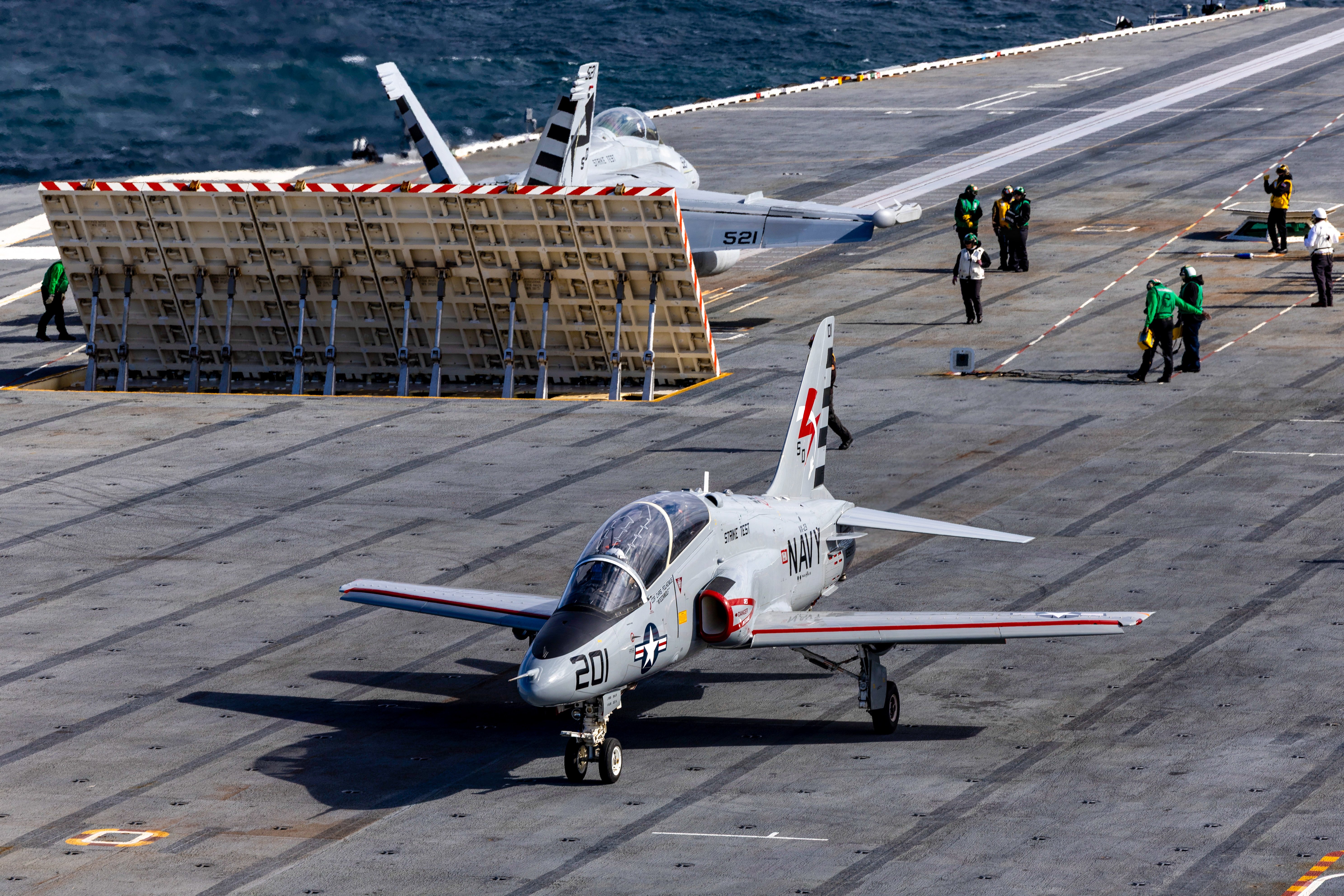
The future USS John F. Kennedy was operating in the Atlantic Ocean launching a T-45C Goshawk training aircraft and EA-18G Growler, both attached to the “Salty Dogs” of Air Test and Evaluation Squadron (VX) 23, on October 25.
T-45C Goshawk and EA-18G Growler on the future USS JFK. U.S. Navy photo Future USS John F. Kennedy conducts flight operations. U.S. Navy photo
The Big Deck Fleet At A Glance
Overall, three U.S. carriers are deployed, three are working up in various states of readiness, three are in maintenance availabilities, one is post-deployment, one is being used primarily for training before deactivation, and another will be delivered in 2027. Two amphibious ready groups are deployed, one is forward-deployed, three are working up or in port, and three are in maintenance.
Note: Positions are general approximations. Non-deployed LHA/LHD amphibious warships are not shown.
France has deployed a maritime patrol aircraft to Romania following a series of attacks on civilian vessels near NATO territory. The escalating threat has prompted closer cooperation between Romania, Bulgaria and Turkey, raising questions about maritime security and the protection of Europe’s eastern flank.
A series of drone attacks on commercial shipping in the western Black Sea has brought the consequences of Russia’s war against Ukraine increasingly close to NATO territory, prompting additional military surveillance and renewed regional defence cooperation.
France has temporarily deployed an Atlantique 2 maritime patrol aircraft to Romania, while NATO members bordering the Black Sea are strengthening arrangements to monitor shipping routes, identify airborne threats and protect critical infrastructure.
The French aircraft began operating from Romania’s Mihail Kogălniceanu airbase on 18 October and is scheduled to continue reconnaissance missions until 6 November.
Its deployment follows repeated attacks on merchant vessels near Romania and Bulgaria, both members of NATO and the European Union.
At least eight cargo ships have been struck in the region during October, with approximately 34 sailors reported dead or missing, according to figures reported by Reuters on 27 October.
The incidents have transformed commercial maritime security into an increasingly urgent issue for European defence planners.
Commercial vessels enter the conflict zone
The latest escalation has centred on shipping routes serving Ukraine’s Danube ports and commercial traffic passing through the western Black Sea.
Russia’s attacks on Ukrainian maritime infrastructure have increased the importance of alternative export routes, including those connecting the Danube to international shipping lanes.
However, recent incidents demonstrate that geographical proximity to NATO territory does not necessarily provide commercial vessels with protection from the effects of the conflict.
On 23 October, a drone struck a Comoros-flagged cargo vessel near the Romanian port of Constanța.
According to maritime security company Ambrey, the vessel was hit approximately 16 nautical miles east of the port and subsequently capsized.
One crew member was reported dead, nine were rescued and three remained missing in the initial casualty figures.
Ambrey assessed it as highly likely that Russian forces carried out the attack, pointing to the vessel’s links with Ukrainian Danube ports.
That assessment represents an attribution by a commercial security organisation, rather than a final determination by an international investigative body.
Other incidents have similarly raised questions over responsibility.
Ukraine has accused Russia of attacking civilian shipping, while Bulgarian authorities have acknowledged difficulties in conclusively identifying the operators of drones involved in some strikes.
France strengthens maritime surveillance
Romania’s Defence Ministry announced on 27 October that the Atlantique 2 deployment followed a request from Bucharest in response to the deteriorating security situation.
The aircraft is conducting surveillance and reconnaissance over the western Black Sea, working with Romanian naval authorities and maritime rescue coordination services.
Its principal responsibilities include identifying hazards to navigation and improving awareness of threats to critical infrastructure within Romania’s exclusive economic zone.
That infrastructure includes offshore energy facilities and maritime installations whose protection is increasingly relevant to European energy security.
The deployment adds to Romanian naval patrols conducted by ships, helicopters and unmanned systems.
Romanian authorities are also providing navigational warnings and recommended routes to commercial vessels.
Nevertheless, additional surveillance does not automatically prevent attacks.
The practical challenge lies in detecting relatively small unmanned aircraft or maritime drones, determining their intentions and responding before they reach civilian targets.
Romania, Bulgaria and Turkey coordinate their response
The security crisis was also discussed at a trilateral meeting of defence ministers in Sofia on 28 October.
Romania’s Defence Minister, Ștefan-Radu Oprea, met his Bulgarian counterpart, Dimitar Stoyanov, and Turkey’s Defence Minister, Yaşar Güler, to examine the consequences of attacks on commercial shipping.
According to the Romanian Defence Ministry, the ministers discussed closer intelligence-sharing, improved maritime surveillance and better coordination between their naval forces.
They also reaffirmed the importance of the existing Black Sea mine-countermeasures initiative involving the three countries.
Maritime mines remain a persistent hazard because they can drift beyond their original deployment areas, endangering civilian vessels irrespective of their destination or ownership.
The trilateral format provides a practical mechanism for neighbouring countries to coordinate activities while retaining responsibility for their respective national waters.
It also gives Turkey a central role in regional discussions, reflecting its position on the Black Sea and its control of access through the Turkish Straits under the Montreux Convention.
The limits of NATO’s maritime protection
The attacks raise a complicated legal and operational question: what responsibilities do NATO members have when civilian ships are attacked near their coastlines?
The distinction between territorial waters and an exclusive economic zone is important.
A coastal state’s territorial sea generally extends up to 12 nautical miles from its baseline, while its exclusive economic zone can extend considerably further and confers particular economic and jurisdictional rights.
An attack within a NATO member’s exclusive economic zone does not automatically constitute an armed attack against that member’s territory.
Nor does every strike on a civilian ship near NATO territory automatically trigger the collective-defence provisions of Article 5.
The circumstances, attribution, location and consequences of an incident would all influence the response.
This creates a security problem in which threats can affect European economic interests without necessarily crossing a threshold requiring collective military action.
Maritime trade and energy infrastructure face increasing risks
The implications extend beyond individual vessels.
Repeated attacks can increase insurance costs, complicate shipping schedules and discourage operators from using particular routes.
They can also affect Ukrainian agricultural exports and the wider commercial networks linking Black Sea ports to European markets.
Offshore energy installations face related vulnerabilities, particularly where surveillance and response capabilities are insufficient.
For NATO, the challenge is therefore to strengthen deterrence and protection without unintentionally escalating the conflict.
France’s reconnaissance deployment and the trilateral cooperation between Romania, Bulgaria and Turkey indicate that regional governments are moving towards a more coordinated response.
However, the continuing attacks demonstrate the difficulties of protecting civilian maritime activity against comparatively inexpensive unmanned systems.
The longer-term question is whether increased surveillance, counter-drone capabilities and naval cooperation can make western Black Sea shipping sufficiently secure while the war in Ukraine continues.
Russia, the world's largest wheat exporter, has turned to an Arctic World War II shipping route to export grain for the first time as the conflict in Ukraine stalls Black Sea trade and officials warn of risks in the NATO-controlled Baltic Sea.
Sea drones struck a container ship off Bulgaria's Black Sea coast on Wednesday, the ship's owner and the government said, the latest in a string of attacks that have raised concerns about the growing scope of Russia's war in Ukraine.
Saudi Arabia’s main shipping firm Bahri reported a 10-fold jump in third-quarter profit as its oil tanker business benefited from surging freight rates amid the Iran war.
Liverpool e Chelsea entram em campo nesta quarta-feira (28), às 17h (de Brasília), no Anfield, em Liverpool, na Inglaterra, pelo jogo das oitavas de final da competição.
This article first appeared on Pacific Forum and is republished with kind permission. Read the original here. With so much media focus in recent months on the war in Iran, it’s no surprise that Under Secretary of War for Policy Elbridge Colby’s speech in Manila received so little coverage. That means very few know what […]
O atacante João Pedro, do Chelsea, deve ficar afastado dos gramados por algumas semanas após sofrer uma lesão na coxa durante um treino, informou o técnico Xabi Alonso nesta terça-feira (27), antes do confronto da equipe contra o Liverpool pela Copa da Liga.
O brasileiro de 25 anos ficou de fora da derrota de sábado para o Tottenham Hotspur após se lesionar durante um treino na sexta-feira.
“Ele sofreu uma lesão na coxa e ficará fora por algumas semanas”, disse Alonso aos repórteres. “Vamos ver quantas; não queremos fazer previsões, mas ele não estará pronto para os próximos jogos.”
João Pedro teve um início de temporada brilhante, marcando cinco gols e dando três assistências em sete partidas em todas as competições.
Alonso reconheceu a perda do jogador da seleção brasileira, mas afirmou que o Chelsea tem elenco suficiente para lidar com sua ausência.
O Chelsea enfrentará o Liverpool na quarta-feira pelas oitavas de final da Copa da Liga e receberá o Manchester United pelo campeonato no sábado.
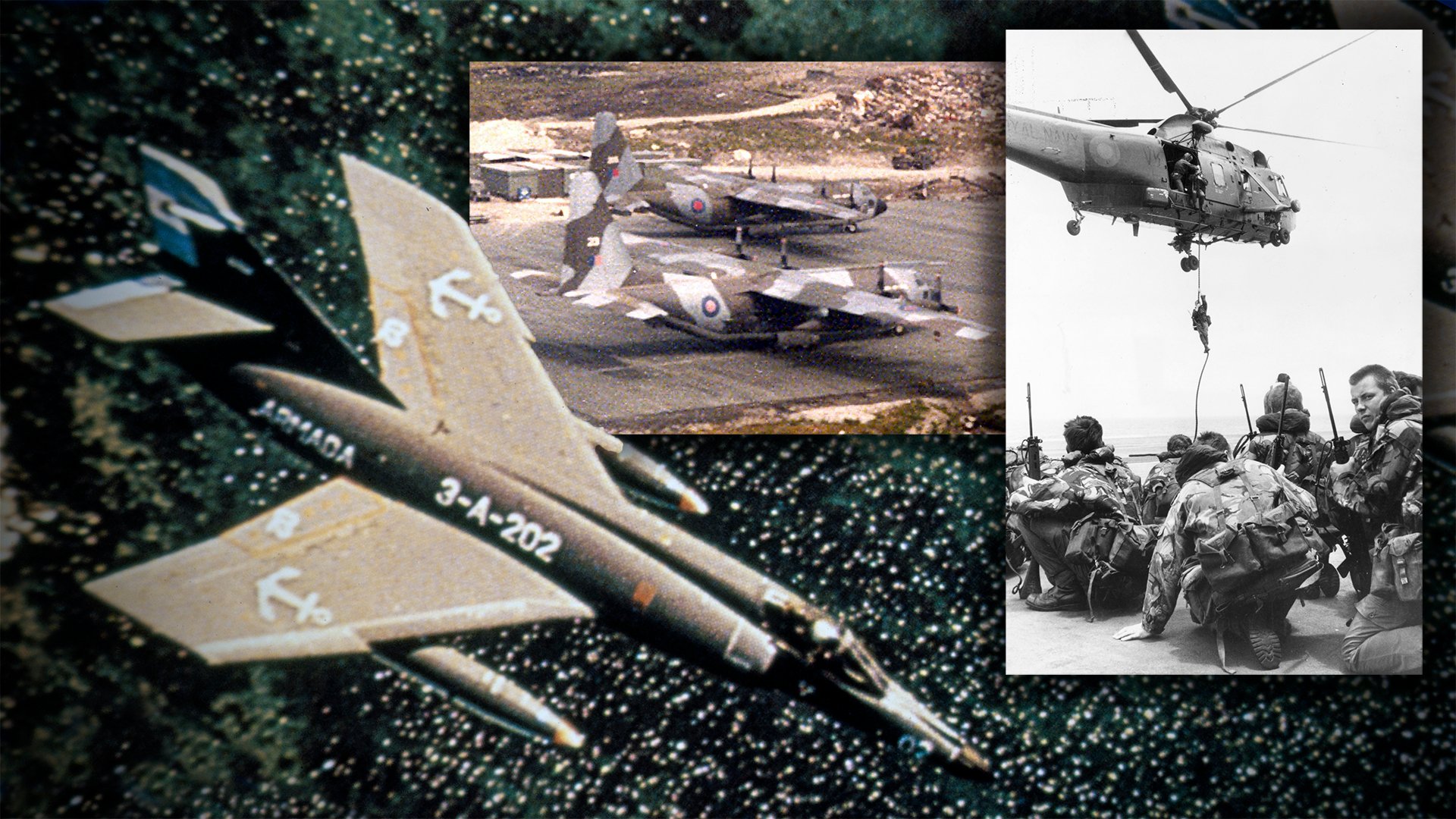
No single Argentine capability shaped British planning during the 1982 South Atlantic conflict more than the pairing of the Dassault Super Étendard strike fighter and its deadly AM39 Exocet anti-ship missile. Against that threat, the British launched a series of special forces operations, all with the same objective: kill the Argentine pilots and destroy their aircraft and missiles before they could be used again. Together, the strike fighter and missile pairing had proven to be the biggest threat to the Royal Navy task force that had been sent to recapture the islands.
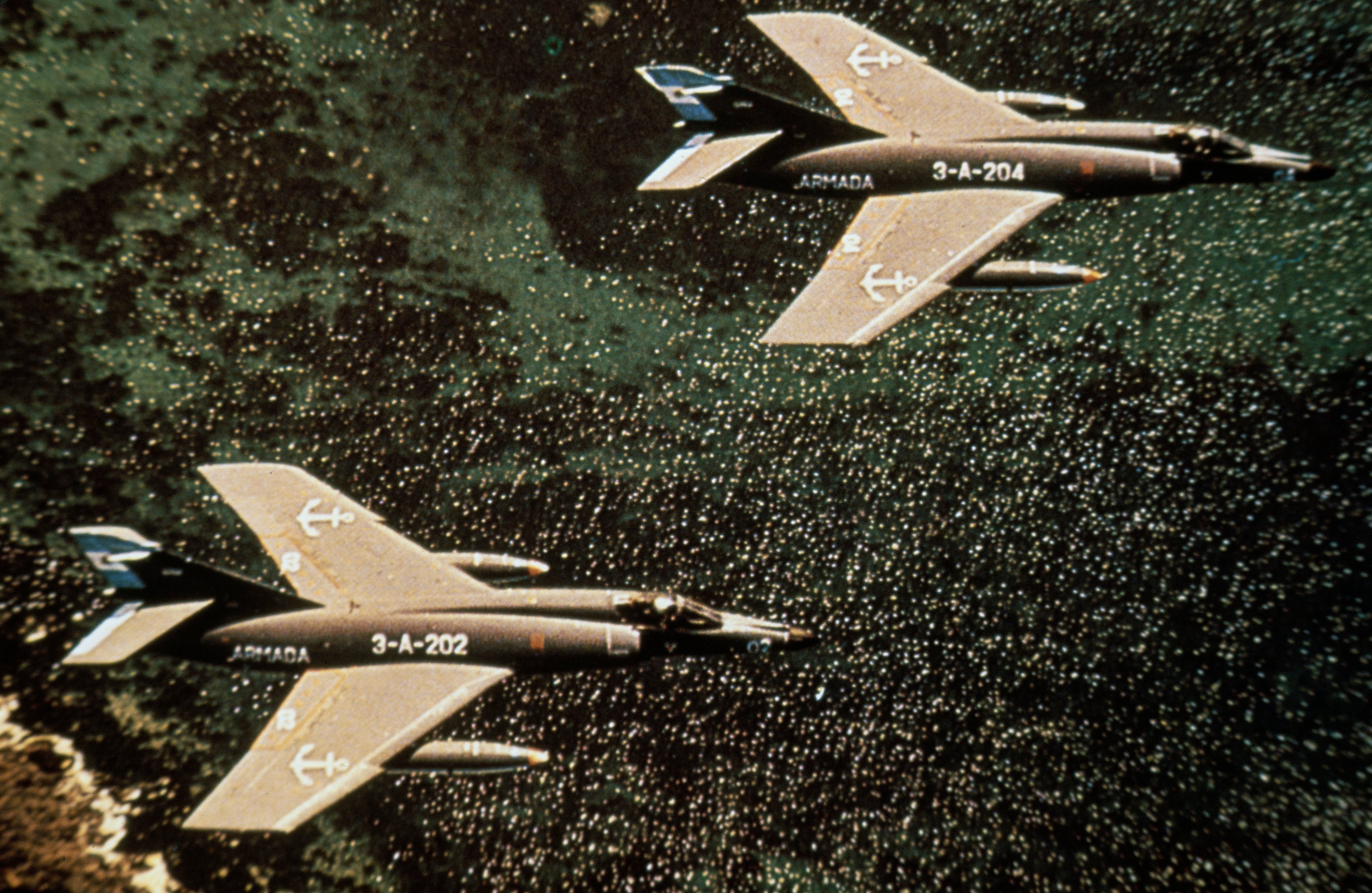
Two Super Étendards of the Argentine Navy in flight around the time of the Falklands War in 1982. Photo by UPI/Bettmann Archive/Getty Images
Five Super Étendard aircraft and five AM39 Exocet missiles had been delivered to Argentina before a French embargo took hold. The jets were flown by the Argentine Navy’s 2nd Naval Fighter and Attack Squadron out of Río Grande, on Tierra del Fuego, a region at South America’s southernmost tip, shared by Chile and Argentina. The Super Étendard/Exocet combination had already cost the British the destroyer HMS Sheffield on May 4 and the container ship Atlantic Conveyor on May 25.
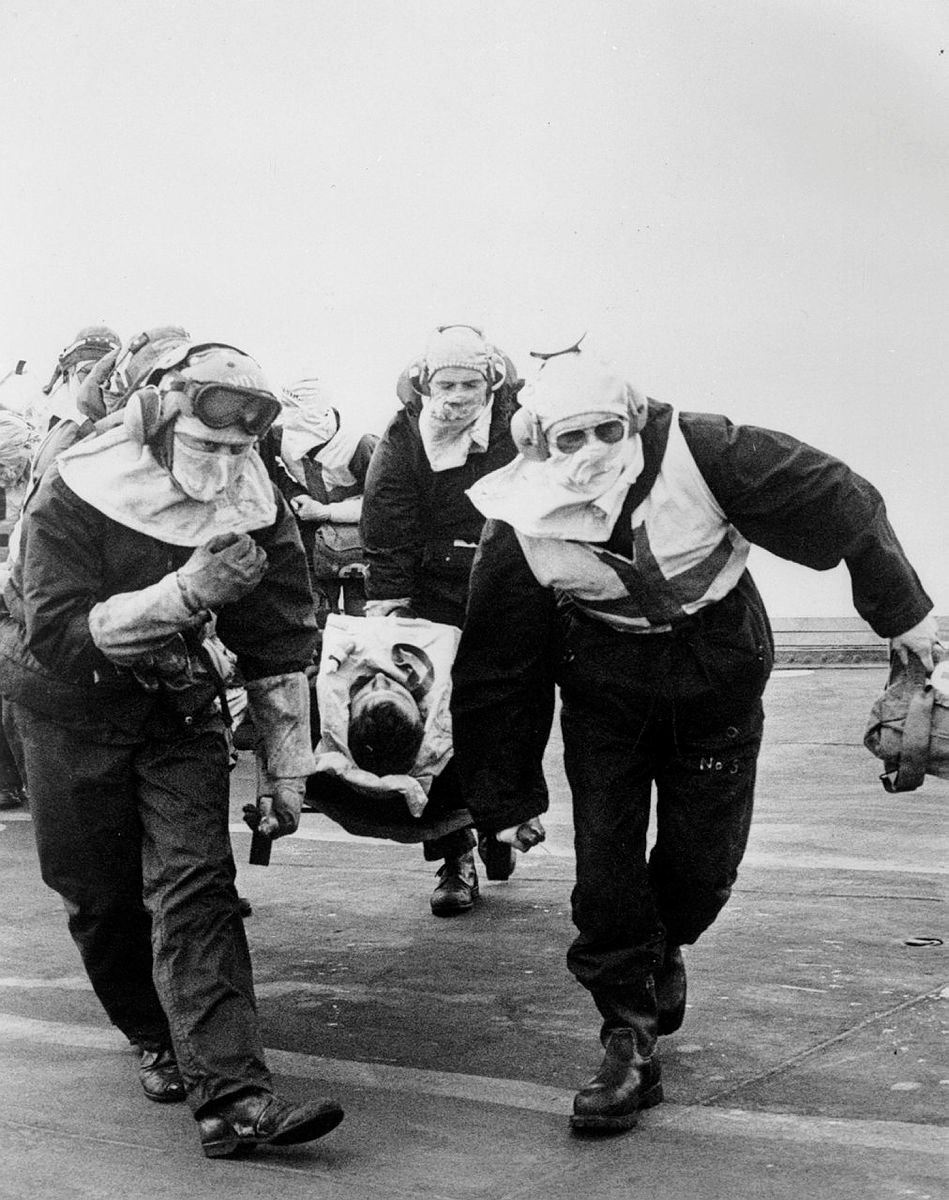
A casualty from HMS Sheffield being rushed to the sick bay on board the aircraft carrier HMS Hermes. Crown Copyright
The special forces operations were broken down into four phases — named PLUM DUFF, MIKADO, KETTLEDRUM, and IMPI — the last of which is the least well-documented, and the focus of this article.
PLUM DUFF was the insertion phase and was a reconnaissance mission. On May 16, an RAF Hercules airdropped eight special forces troops onto RFA Fort Austin to form a recce party. On the night of May 17/18, a Sea King HC4, ZA290, lifted off from the aircraft carrier HMS Invincible for a one-way flight to Tierra del Fuego, where the men were to observe Río Grande and report back. The patrol was set down far from the objective and never completed the reconnaissance; the helicopter crew flew on into Chile, where the aircraft was deliberately burnt to try and hide the evidence, while they tried to evade capture.
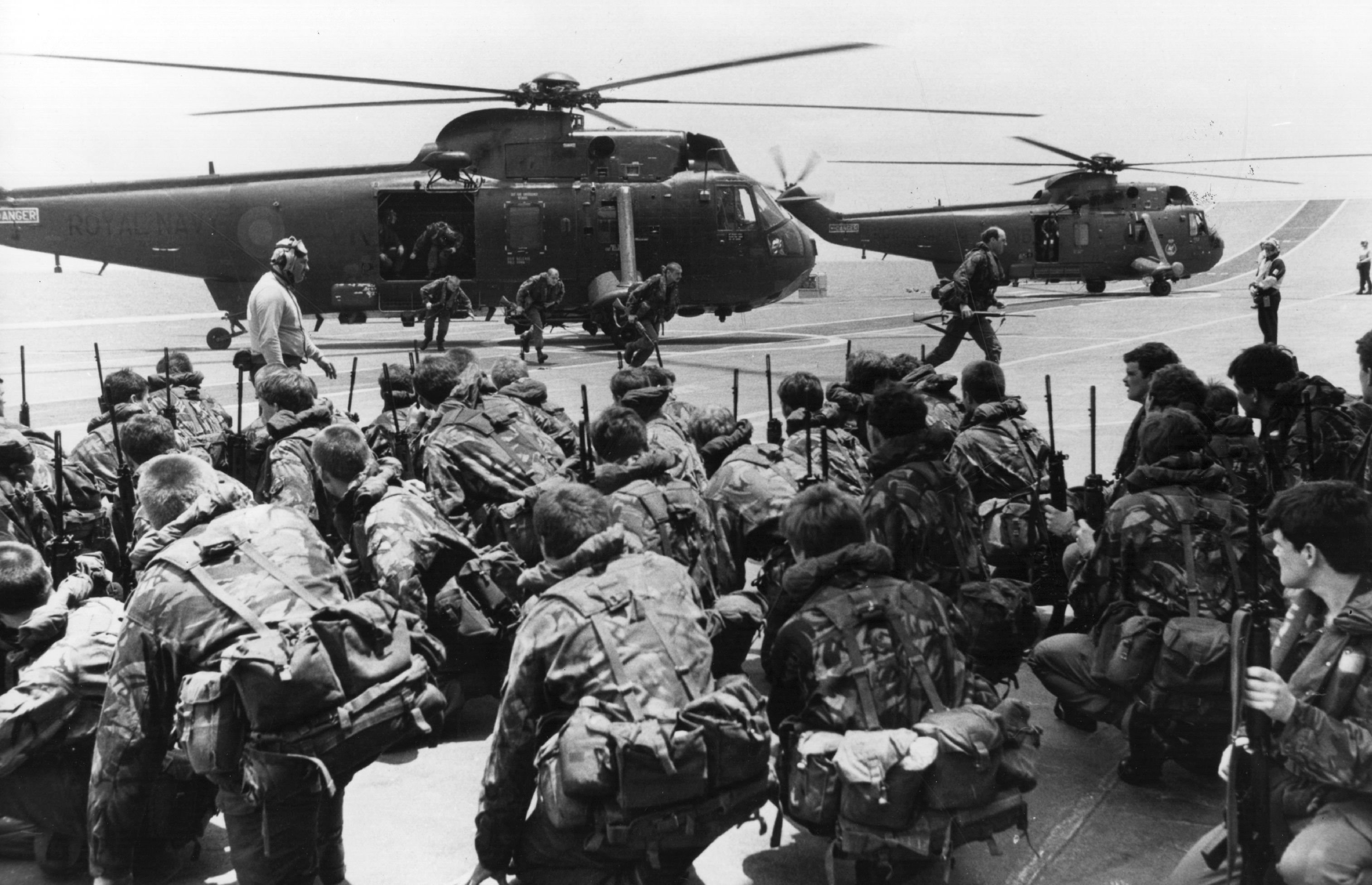
Commandos being lifted from the decks of HMS Hermes and HMS Invincible to be transferred by Sea King helicopters to other ships while the two aircraft carriers forge ahead to the Falkland Islands from Ascension Island, leaving the marines ready to move at short notice. Photo by Fox Photos/Getty Images
MIKADO was the planned attack phase, and it depended on that missing intelligence. Two Hercules were to air-land up to 70 men of B Squadron, 22 Special Air Service (SAS), directly on Río Grande — the air operation order of May 19 also named Río Gallegos, further up the Argentine coast, as an alternative. The men would destroy the Super Étendards and their Exocets on the ground, kill the pilots, and then withdraw overland into Chile. Commander Task Force 317, at Northwood, accepted from the outset that the mission could well cost both Hercules.
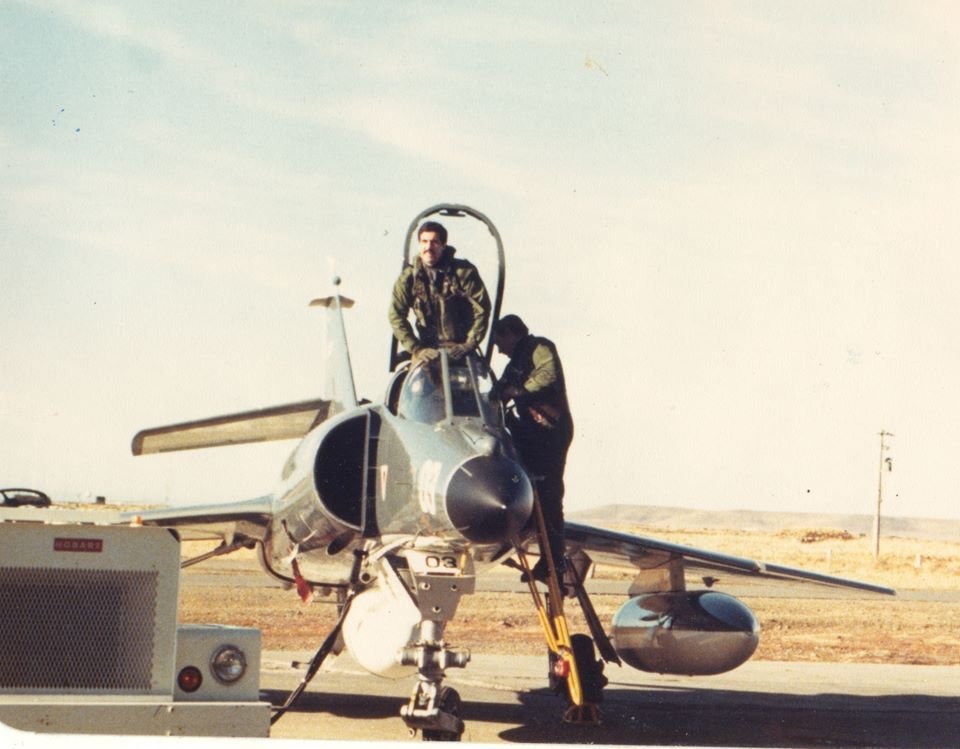
Lieutenant Juan José “Tierno” Rodríguez Mariani in Super Étendard 3-A-203, preparing to take off from Río Grande on May 23, 1982; note the ground power unit still connected. Armada Argentina
The aircrew did not refuse the task, but they were blunt about what it demanded: formation landing by two heavy transports on a possibly heavily defended, icy military runway, with a probable 20-knot tailwind, at night and on passive night-vision goggles in minimum light levels, with intelligence that was inadequate to support any air-land option at all. The RAF planning team recommended an airdrop as the better way to maintain a covert posture, and the Senior Air Staff Officer at Headquarters 38 Group warned the Air Commander to watch for overambitious schemes coming out of the SAS.
The U.K. Ministry of Defense formally cancelled MIKADO on June 4.
KETTLEDRUM was planned as the third of the set. It was aimed at Puerto Deseado, Santa Cruz Province of Argentina, and would have inserted a Special Boat Service party (SBS, the Royal Marines’ special forces unit) from the submarine HMS Onyx — a boat that will reappear before the end of this story.
None of the three was executed as planned.
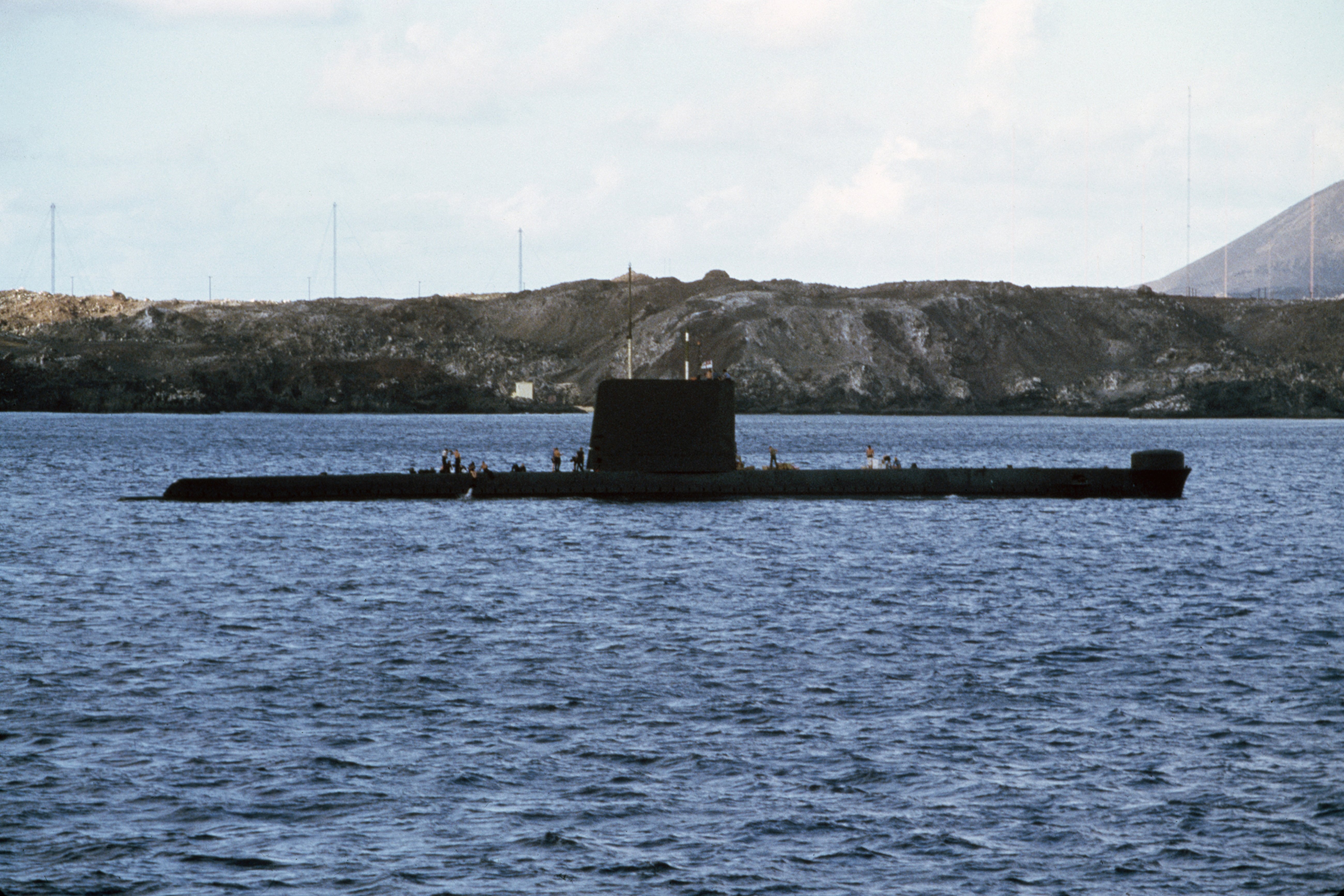
The Oberon class submarine HMS Onyx on the surface off Ascension Island. HMS Onyx was the only diesel-electric British submarine to serve in the conflict, and its ability to operate silently close inshore enabled it to play an important role. At Ascension Island, Onyx boarded SAS and SBS special forces personnel and supported them during a series of operations. Imperial War Museums via Getty Images
Less well-known is that the cancellation of MIKADO produced a fourth project: Operation IMPI, named after a Zulu fighting force.
Cancelling MIKADO did not mean the wider operation was over. Also on June 4, the U.K. Ministry of Defense tasked CTF 317 to produce a new plan for special forces to destroy the combat effectiveness of the Super Étendards.
CTF 317’s staff went to work on what became IMPI. The planning document, Ops 1/3, is dated June 14 — the day of the Argentine surrender in the islands. In broad terms, the objective was to be attacked by special forces arriving both by air and by sea.
That much has been known, in fragments.
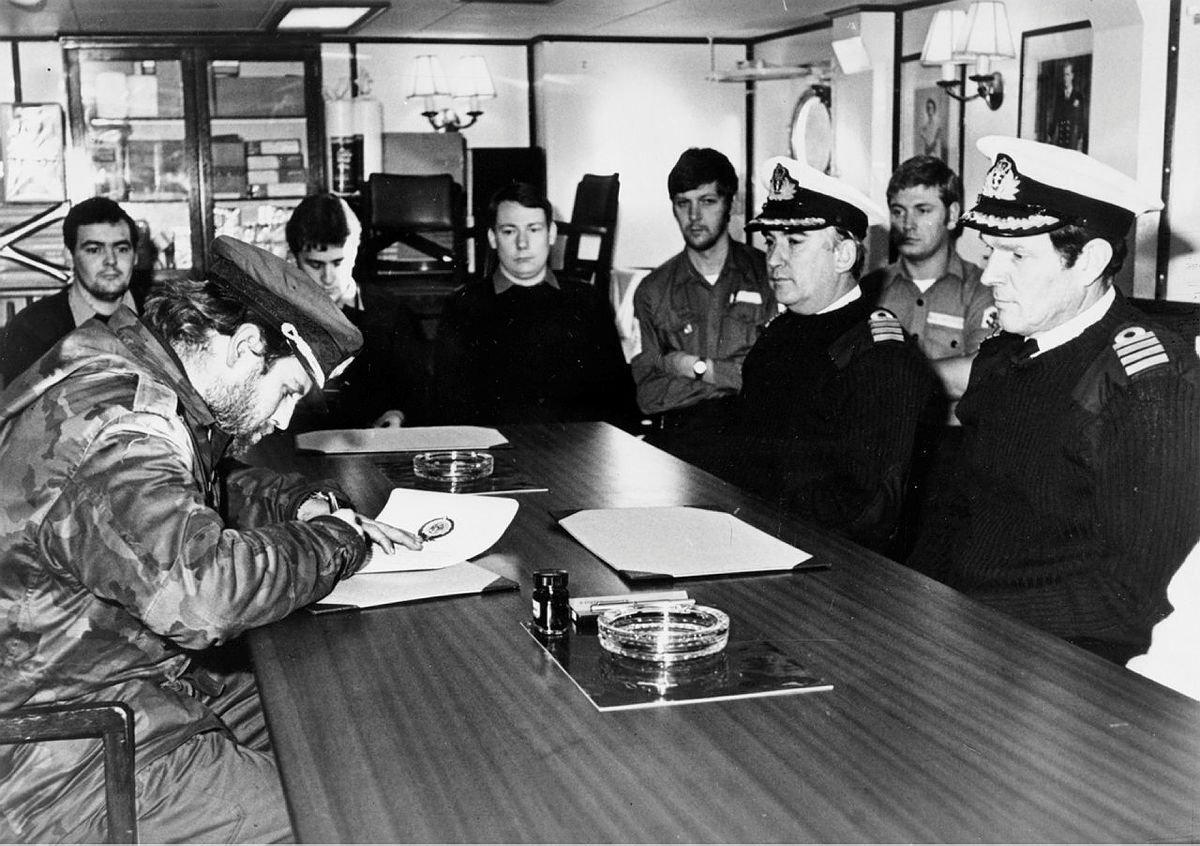
Teniente de Naviro (Lieutenant Commander) Alfredo Astiz signing the Instrument of Surrender on behalf of his Argentine forces at Leith, on the island of South Georgia, on board HMS Plymouth. Crown Copyright
What has not been published until now is the fact that the operation had already been resourced.
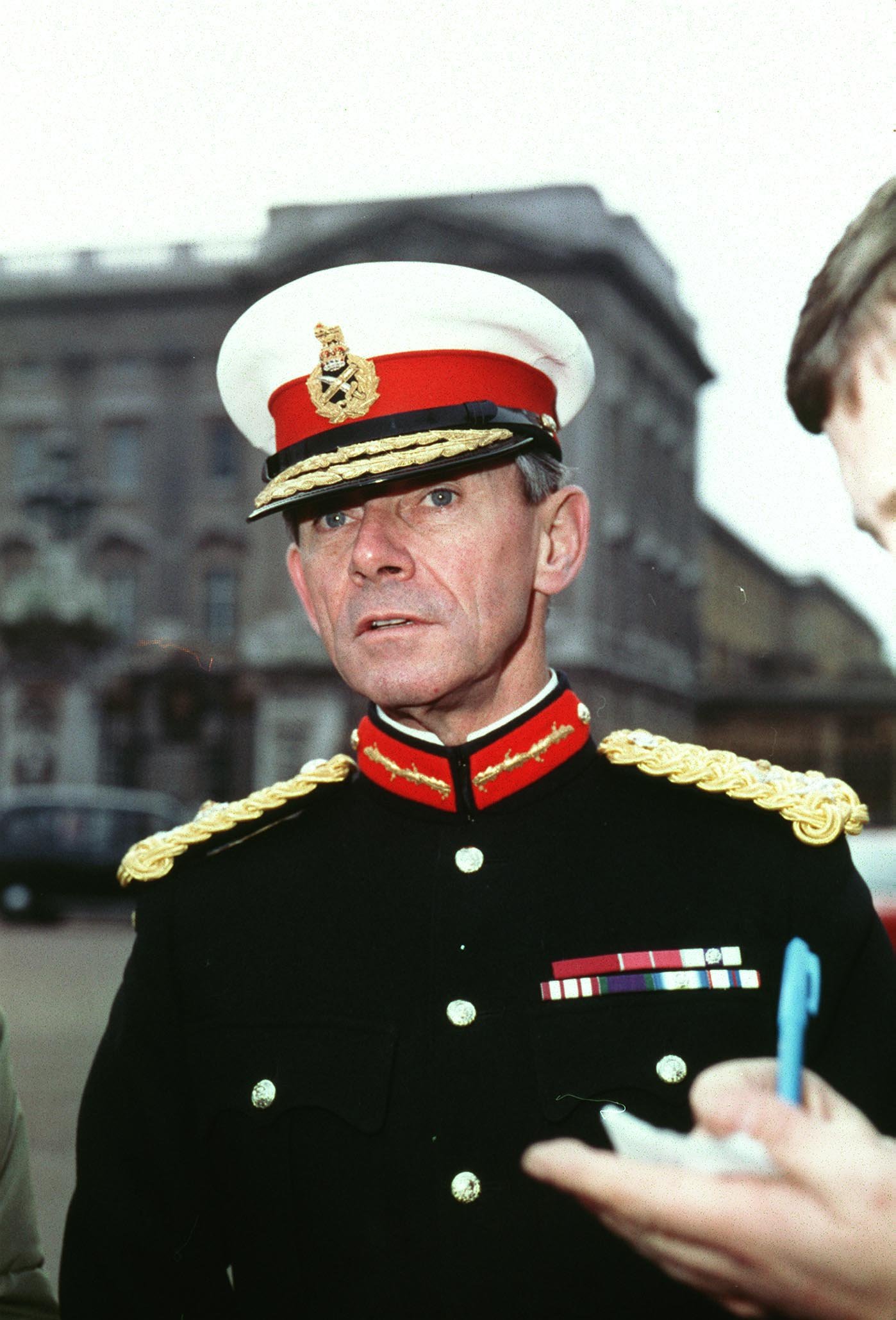
At 2240Z on June 12, Maj. Gen. Jeremy Moore, commanding the land forces as CTG 317.1, signalled Rear Admiral Sandy Woodward’s battle group (CTG 317.8), with Admiral Sir John Fieldhouse at Northwood (CTF 317) and Commodore Michael Clapp’s amphibious group (CTG 317.0) as information addressees. The message called for B Squadron, 22 SAS, to be made available for operations as soon as possible: cover was needed against rapid developments of an unfavorable nature in West Falkland (Gran Malvina), and the theatre’s existing special forces assets were fully absorbed supporting the battle for Stanley — and IMPI. Operation IMPI, Moore noted in passing, was by then self-sufficient.
Maj. Gen. Sir Jeremy Moore Mc, Commander, Land Forces Falkland Islands Conflict. Photo by Avalon/Getty Images
Examining two lines of routine signal traffic settles several things at once. Forty-eight hours before the surrender, IMPI was not a staff study but an operation that had been resourced, and that was enough to consume the theatre’s special forces and justify calling a fresh SAS squadron forward. It is also the only contemporary, operational-level reference to IMPI released so far: everything else comes from a narrative written years afterwards.
As that later narrative describes it, the concept behind IMPI was much leaner than MIKADO. Against two Hercules and 70 men, the air element of IMPI rested on a single RAF Hercules.
Overflying Stanley Airfield in November 1983, with two RAF Hercules aircraft present. Getty Images
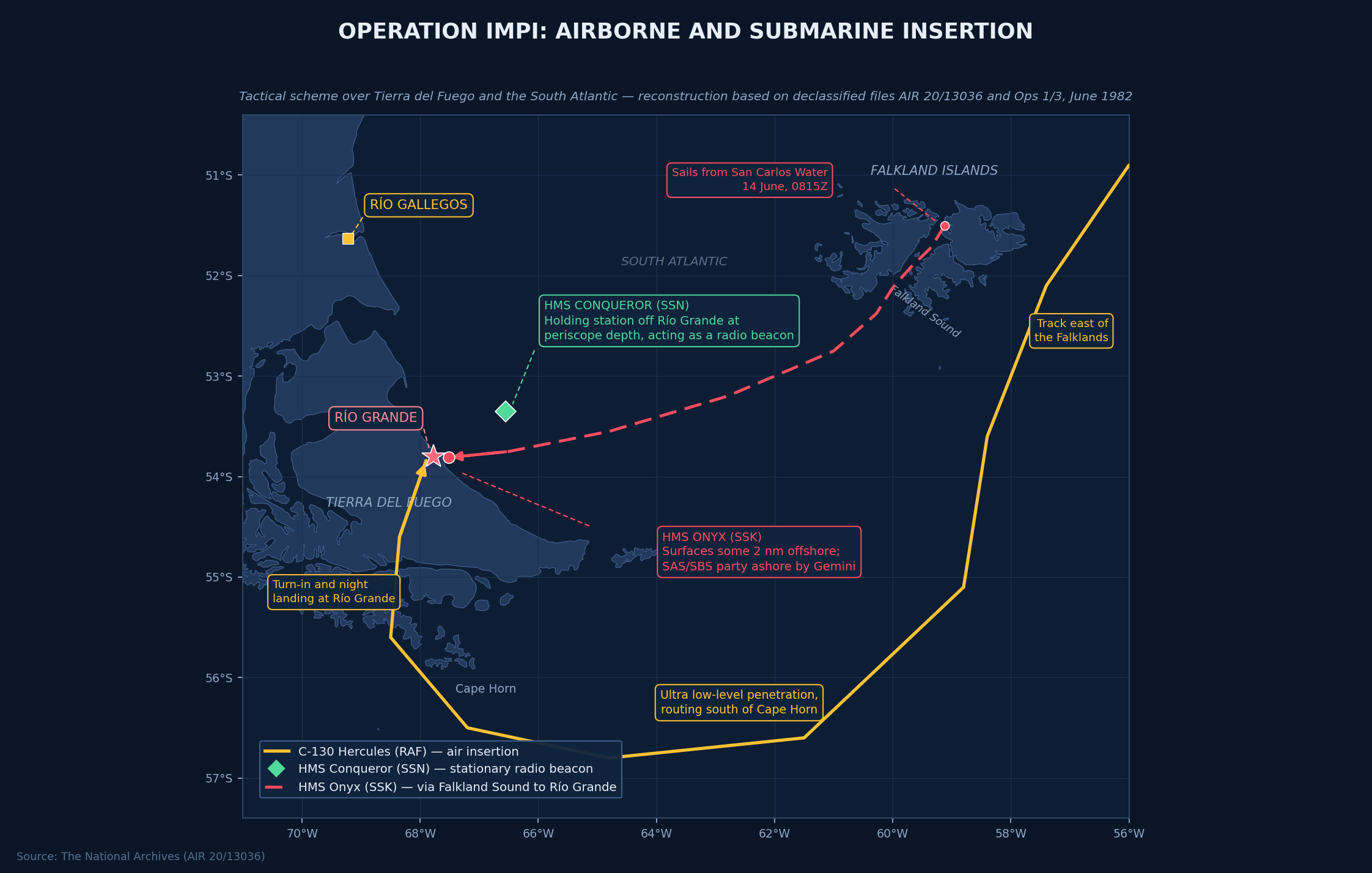
The aircraft was to fly from Ascension Island, refuel in flight, and then track east of the Falkland Islands and south of Cape Horn before making a low-level approach below Argentine radar cover for a night landing of special forces at the airfields codenamed San Jose and Arco Iris. Other special forces would have been inserted by sea. That air element, as will be seen, is the most questionable part of the entire file.
The routing is worth attention, because it rules out the intuitive picture of a direct run south from Ascension. Instead, the aircraft would have entered from the least-covered and least-expected direction, coming around the bottom of the continent rather than from the northeast.
A schematic map of the planned Operation IMPI. via author
The precise identities of San Jose and Arco Iris are not established in the declassified record.
The most likely reading is that they stand for Río Grande and Río Gallegos — the airfields at which the planned navigation ended, and the two named in MIKADO’s air operation order a month earlier. For a document circulating through restricted channels, encrypting the names of the two targets was an elementary precaution, although it should be noted that an operational order would more commonly have designated them simply as Target One and Target Two.
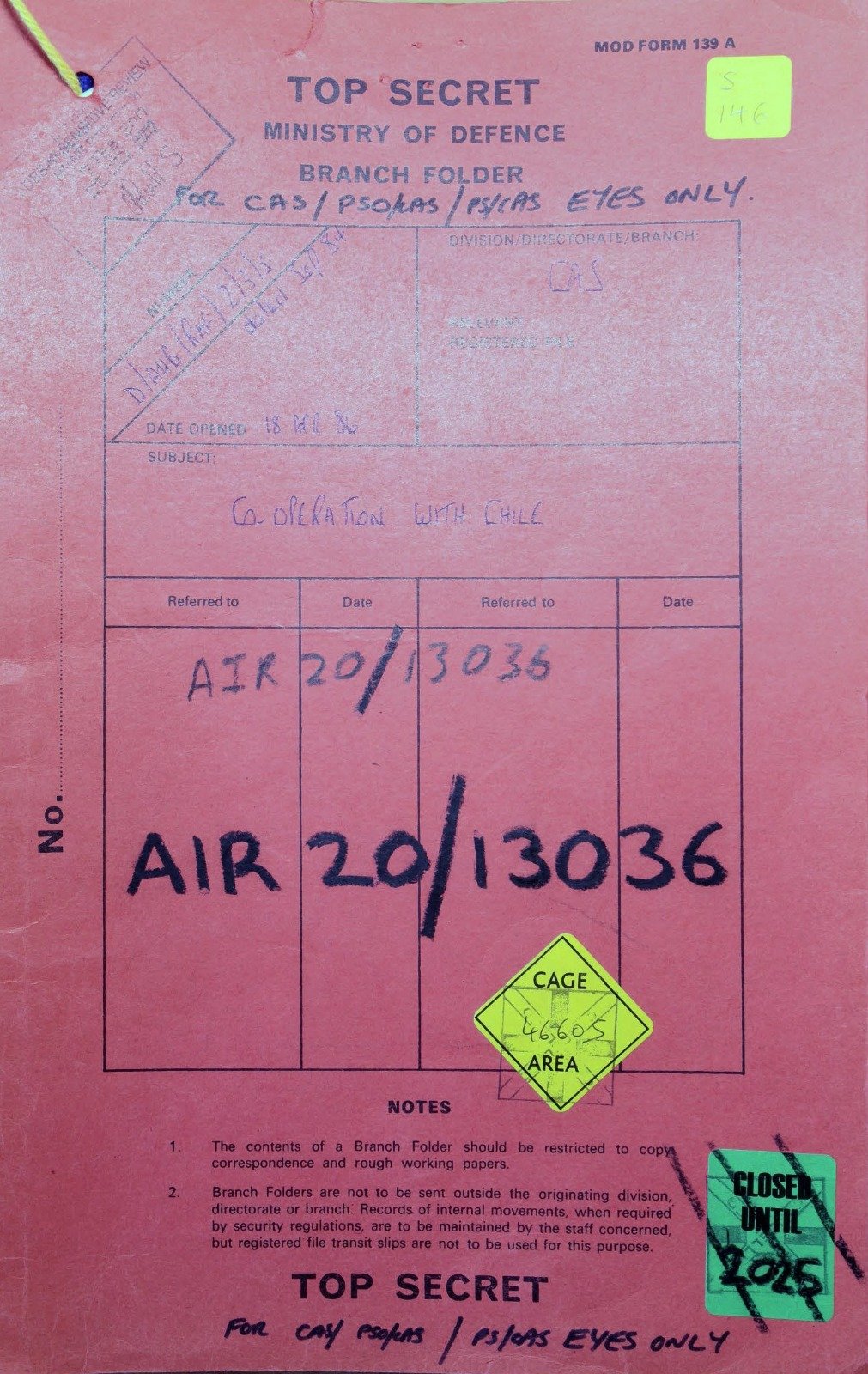
None of this rules out Chilean participation in other phases of the operation; if anything, it suggests it’s more likely. The narrative survives inside a folder classified Top Secret and restricted to the Chief of the Air Staff, whose declared subject is cooperation with Chile. That setting contrasts with the earlier stage of the planning, when mounting and recovering a special forces insertion from a Chilean airfield was considered and expressly discounted on political grounds — much as the use of an Antarctic strip was discounted after the New Zealand High Commission advised that the Antarctic winter precluded safe trans-polar flight.
The maritime half of IMPI can be traced in the records of those who were there.
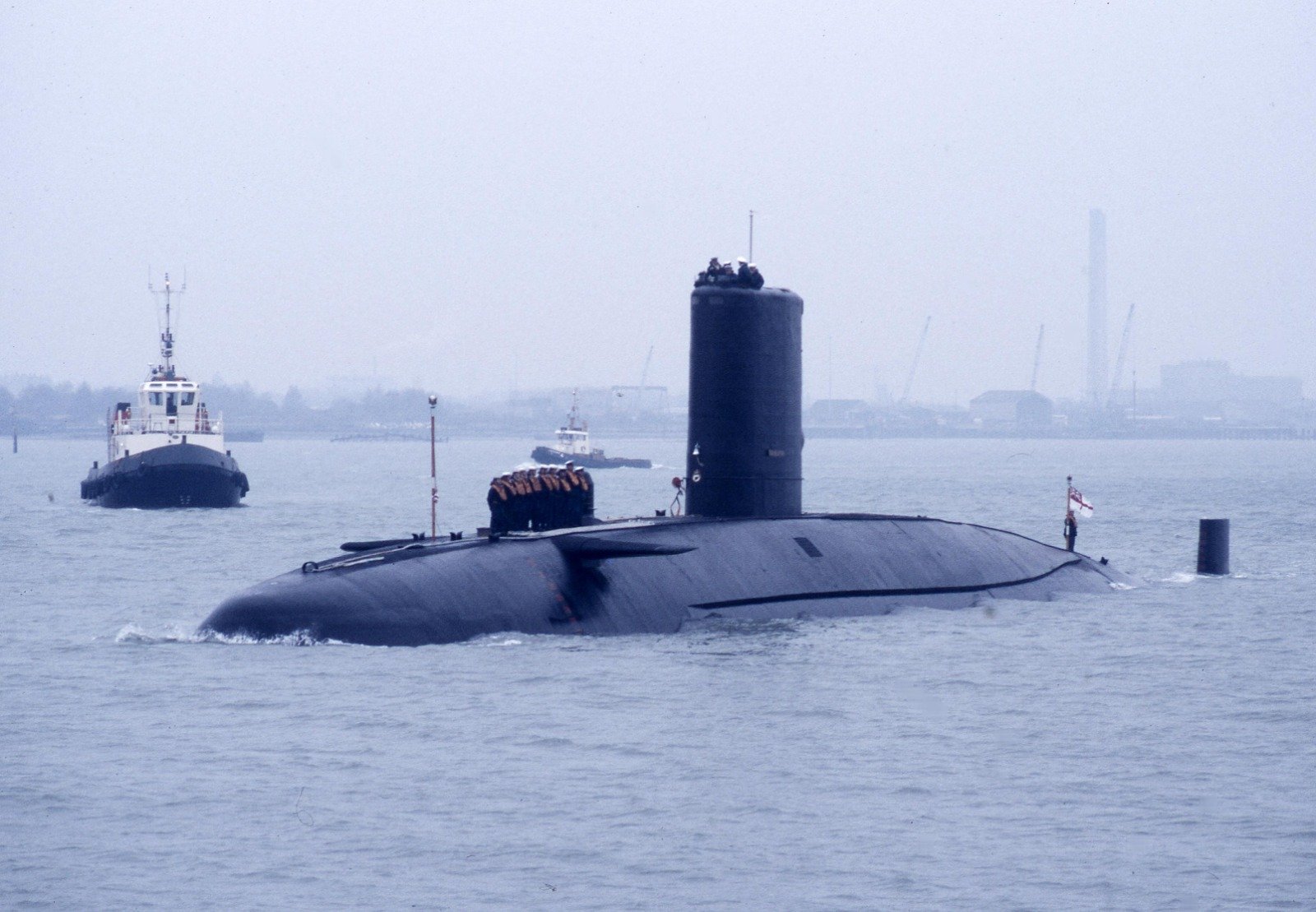
Navigational support for the final phase was to come from the nuclear attack submarine HMS Conqueror. On June 9, 1982, Conqueror was off Bahía Camarones, working as an advanced picket and hunting targets of opportunity that ventured outside the 12-nautical-mile limit of Argentine territorial waters, with authority to sink any civilian vessel judged to be running to the Falklands/Malvinas; that same morning the sub had in fact entered Argentine territorial waters trying to locate the Argentine Navy’s Task Group 79.2.
Nuclear attack submarine HMS Conqueror returning to port. via author
That day, Conqueror received preparatory information on IMPI. The sub’s task was to come to periscope depth and act as a radio beacon, giving the Hercules a radio reference against which to refine a navigation that, low and at night, allowed no error. The resulting picture is an odd one: a nuclear submarine deployed on interdiction off the Patagonian coast, turned into a navigation aid for a transport aircraft.
The insertion itself fell to HMS Onyx, the Oberon class diesel-electric boat that had already taken part in Operation KETTLEDRUM and the only conventional submarine Britain deployed to the South Atlantic. On June 14, at 0815Z, lying in San Carlos Water, Onyx embarked a party of 10 men from B Squadron, 22 SAS and the SBS for the mission. The timing matches Moore’s signal of two days earlier almost exactly.
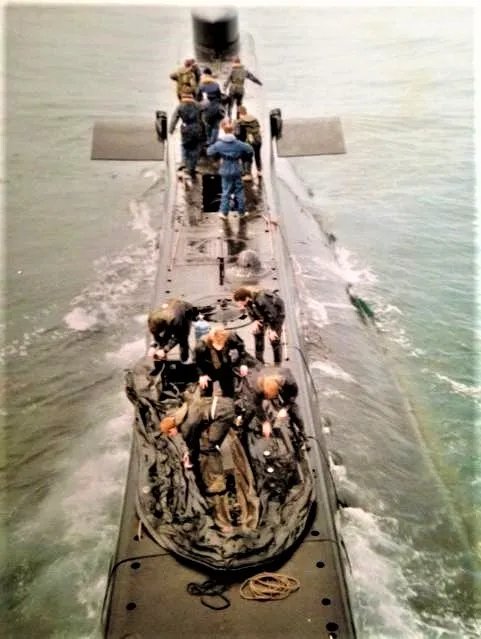
The plan called for the submarine to surface some two nautical miles offshore at night. The troops would close the beach in Gemini inflatables and destroy the objective — aircraft and missiles, if any were there — using anti-tank weapons and demolition charges.
What happened next illustrates the inertia of military machinery. The Argentine surrender in the islands came on that same June 14, hours after the party had gone aboard Onyx. Even so, preparations did not stop at once: on June 15 the embarked troops carried out practice landings from a Gemini. That does not mean IMPI was ever executed — it was not — but it does show that with the strategic outcome already settled, the machine was still rehearsing.
HMS Onyx operating with special forces. via author
The British record closes the matter with administrative dryness: the surrender of the Argentine forces in the Falkland Islands and the cessation of hostile activity by Argentine aircraft resulted in the operation being cancelled.
The air part of the mission is another matter entirely and is where IMPI becomes more uncertain.
The only link between IMPI and an aircraft is a single paragraph in an RAF historical narrative. The folder that holds it was opened on April 18, 1986 — four years after the war — as an eyes-only briefing file for the Chief of the Air Staff, and the pages appear to be a working draft rather than a finished submission, carrying pencil amendments throughout.
Had a Hercules been earmarked, there is no doubt which unit would have provided it. The Special Forces Flight that runs through the whole chapter — five crews, commanded by a squadron leader, exercising regularly with SAS and SBS Sections — appears with its squadron number blanked out, yet the number surfaces a few paragraphs later, where two of its crews are described training on the probe-fitted Hercules C1P. The unit was No. 47 Squadron, RAF, home-based at Lyneham, and it would keep the special forces air support role for decades afterward.
The men who were at Ascension with that detachment, however, say they had nothing to do with it. Reliable sources with direct knowledge of the flight’s activity state that they never saw the codeword at the time, had never heard of the operation until this file surfaced, and consider it inconceivable that a special forces Hercules and crew could have been earmarked for a mission of this kind without the flight — a community of five crews that has stayed in touch ever since — learning of it at some point in the intervening four decades. By June 14, at most one aerial-refueling-qualified special forces crew was at Wideawake.
That skepticism is reinforced by the way the same narrative handles events those crews lived through. Its account of their own work-up does not survive contact with their logbooks.
For example, a practice infiltration into RAF Laarbruch in Germany that the narrative describes as successful had in fact been detected; the Hercules was notionally shot down about two miles out on the approach. The ramp toes (attachable extension plates located at the very end of the rear cargo ramp) it describes as droppable at 20 to 30 knots were never meant to be lowered with the aircraft moving, which would have been unsafe and risked the airframe. There are other anomalies, too.
West Falklands seen from the ramp of an RAF Hercules. Donald Morrison/Getty Images
A document that misstates the squadron’s own exercises is thin evidence on which to place that squadron over Tierra del Fuego.
What is not in question is what the Special Forces Flight could have done, had it been asked.
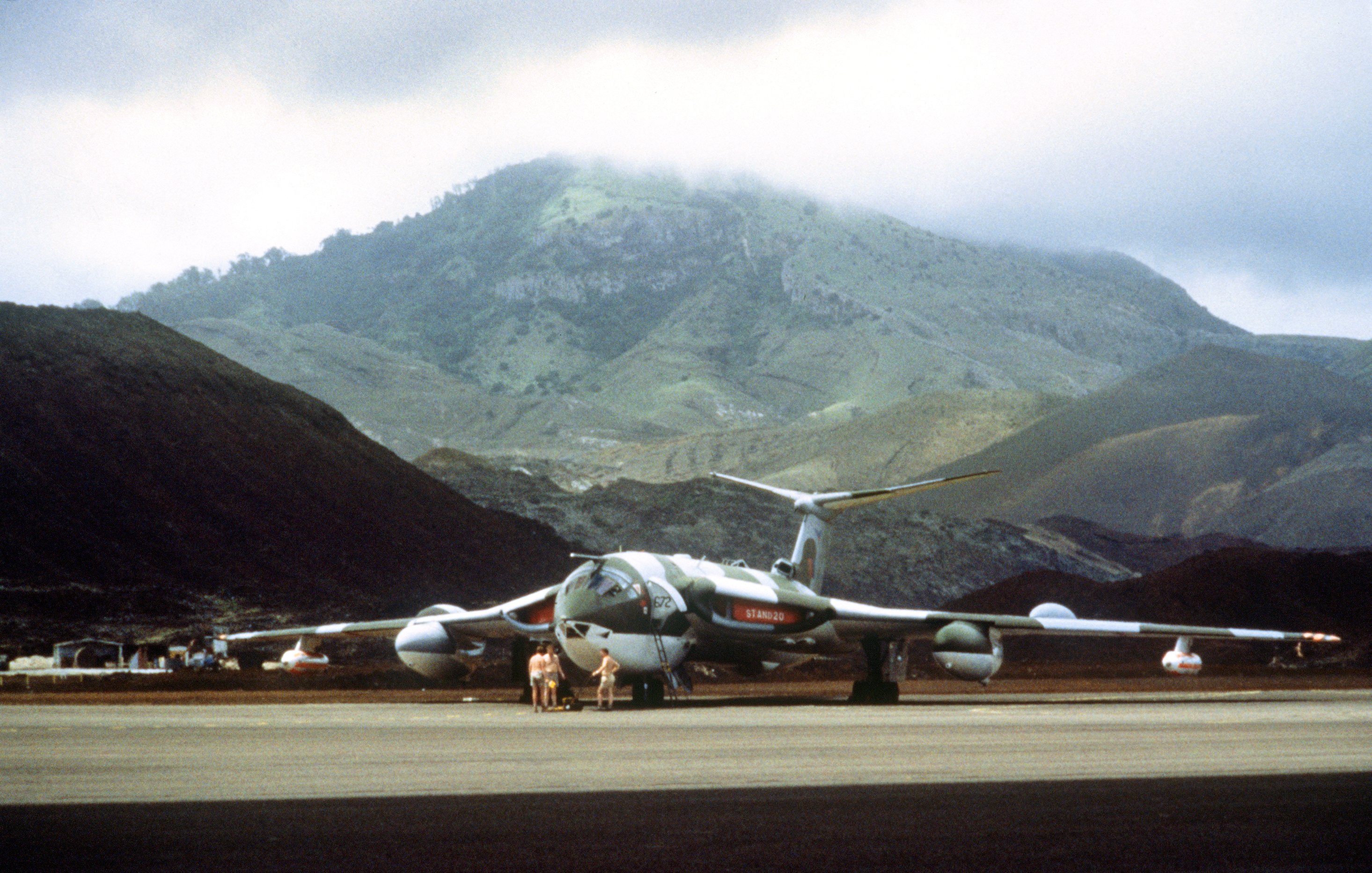
By mid-May the flight had two crews qualified in air-to-air refueling — one deployed to Ascension, the other held in the United Kingdom to train the others — flying Hercules C1s fitted with probes and, where the task required it, additional fuel tanks in the fuselage. It had rehearsed stream landings and rapid offloads, parachute insertion below radar cover to a pinpoint coastal feature, as well as flying on ANVIS goggles at 250 feet over sea and land. The goggles themselves were fitted to the crews’ helmets by RAE Farnborough specialists in a single day in mid-April. The reach was demonstrated on May 16, when the sortie that dropped the PLUM DUFF party stayed airborne for 24 hours and five minutes, with Victor tankers refueling some 1,800 miles from Ascension. Almost none of it was routine: nearly everything the force did during the conflict was improvised, at speed, in a matter of weeks.
A picture taken on May 24, 1982, at Wideawake Airfield on Ascension Island, showing an RAF Victor tanker prepared for air-to-air refuelling tasks. Photo by AFP
What never had an answer — not for MIKADO, and not for whatever IMPI intended — was the other end of the problem. Putting men ashore deep inside Argentine territory was the solvable half. Getting an aircraft and its passengers out again after a direct action, from a strip in range of the Argentine Air Force, was not.
All of the above is reconstructed from lateral references: the RAF’s narrative in file AIR 20/13036 at the National Archives, unit records, submarine logs, operational signal traffic, and the accounts of participants.
The specific file — the one holding the complete plan with its annexes, the identification of the airfields and the execution sequence — remains closed. It is DEFE 71/980, titled Operation Corporate (Falklands Conflict): Operation IMPI, retained at the National Archives at Kew with no announced opening date. Until it is released, the air element of IMPI cannot be settled either way.
Forty-four years after the conflict, the last British special operation of the war is still, in essence, a document the British state is not prepared to show. That is not a trivial detail: the files touching on cooperation with Chile have consistently been the most reluctantly opened of all.
The folder holding the outline plan for Operation IMPI. National Archives
What remains is an operation of two halves. One of them is solid: a resourced plan, declared self-sufficient on June 12, with a nuclear submarine briefed to act as a beacon, 10 men of the SAS and the SBS embarked in a conventional submarine in San Carlos on the morning of the surrender, and rehearsals continuing the following day. The other half — a lone Hercules coming round Cape Horn to land on a codenamed strip — rests on one paragraph of a flawed staff narrative and is rejected by the only men who could have flown it.
Either way, the obsession is the same.
Between June 4 and June 14, 1982, while the final battle for Port Stanley/Puerto Argentino was being fought and the Argentine land campaign was collapsing, part of the British planning effort was still revolving around five French-built aircraft, their 10 aircrew, and their missiles. That the plan carries the date of the surrender itself, that it was still being rehearsed the following day, and that it remains classified today says a good deal about how far the British were prepared to go to destroy the Super Étendards and their Exocets.
Contact the editor: thomas@thewarzone.com
Mariano Sciaroni holds a master’s degree in Strategy and Geopolitics as well as a postgraduate diploma in Contemporary Military History, both earned at the Argentine Army’s Military Academy. Sciaroni has published five books and numerous articles on military and naval history. He is also an active member of the Argentine Institute of Military History and serves as a sub-lieutenant in the Argentine Army Reserve (Army Aviation Reserve Squadron). You can find out more about his books here.
emen's Iran-aligned Houthis said on Tuesday they had hit Saudi Arabia's Ras Tanura oil refinery, the ?biggest in the kingdom, with a ballistic missile.
A dispute over maritime jurisdiction in the Eastern Mediterranean has entered a new phase after the European Union joined Greece, Cyprus, Egypt, Bahrain and the United Arab Emirates in formally rejecting an agreement between Turkey and Libya.
The six parties issued a joint declaration at the United Nations on 26 October, following the decision by Libya’s eastern-based House of Representatives to approve a maritime delimitation memorandum originally signed with Ankara in 2019.
The declaration, delivered by Greek Foreign Minister Giorgos Gerapetritis, argued that the agreement disregards the maritime rights of other coastal states and cannot establish boundaries affecting countries that are not parties to it.
Turkey has rejected the criticism, maintaining that its agreement with Libya complies with international law and protects the legitimate interests of both countries.
The competing positions concern more than the interpretation of a maritime boundary. They affect offshore energy exploration, relations between Turkey and its neighbours, and the political balance within Libya itself.
Why Libya’s decision changes the dispute
The original memorandum was signed in November 2019 between Turkey and Libya’s then internationally recognised Government of National Accord, based in Tripoli.
It established a claimed maritime boundary extending across part of the Eastern Mediterranean, where Greece maintains that the maritime entitlements of its islands, including Crete, must be taken into account.
The agreement was opposed by Greece, Cyprus and Egypt, while Libya’s rival eastern authorities initially rejected it.
That division appeared to weaken the political foundations of the arrangement, even though Ankara continued to defend its validity.
However, on 20 October 2026, Libya’s eastern-based House of Representatives reversed its previous opposition and approved the memorandum.
The decision reflects changes in relations between Turkey and eastern Libya, where military commander Khalifa Haftar has exercised considerable influence.
Turkey has expanded contacts with authorities in Benghazi despite having previously been associated primarily with the rival administration in Tripoli.
Approval by the eastern parliament consequently gives the agreement broader political acceptance within Libya than it enjoyed in 2019, although it does not resolve the country’s institutional divisions or the objections raised by neighbouring states.
A dispute over geography and maritime rights
The central disagreement concerns the legal principles used to determine maritime boundaries.
Under the United Nations Convention on the Law of the Sea, coastal states possess rights within exclusive economic zones, while the delimitation of overlapping claims is intended to produce an equitable solution.
Greece argues that Turkey and Libya cannot establish the maritime boundary claimed in their memorandum without disregarding the legal entitlements of Greek islands situated between their coastlines.
The Greek Foreign Ministry’s response maintains that geography and the law of the sea cannot be changed through parliamentary approval of a bilateral agreement.
Turkey takes a different position on the weight that islands should carry when continental shelves and maritime jurisdictions are delimited, and is not itself a party to UNCLOS.
The dispute therefore involves competing interpretations of international maritime law as well as disagreements over the boundaries shown on maps.
The European Union has aligned itself with Greece and Cyprus.
In a statement issued on 21 October, EU foreign policy chief Kaja Kallas described the memorandum as incompatible with the law of the sea and incapable of producing legal consequences for third states.
The latest declaration extends that position into a broader diplomatic coalition involving governments from the Gulf and North Africa.
Ankara rejects the criticism
President Recep Tayyip Erdoğan responded on 26 October by arguing that objections from the EU and other parties had no legitimate basis.
According to his remarks on the agreement, Turkey was not seeking an advantage at the expense of other Mediterranean countries.
Ankara’s position is that its maritime arrangements with Libya reflect the interests of two sovereign states and should not be invalidated by objections from outside parties.
This creates a diplomatic complication for the EU.
Turkey remains a NATO member and an important partner on migration, regional security and Black Sea affairs, while Greece and Cyprus are EU member states whose maritime claims Brussels supports.
The Union must therefore manage a disagreement involving a strategically important partner without retreating from its established legal position.
Energy resources and Libya’s political future
The Eastern Mediterranean contains established and potential offshore gas resources, giving maritime boundaries commercial significance.
Delimitation determines which governments may authorise exploration and exploitation in particular areas, while overlapping claims can discourage investment or provoke disputes over survey vessels and drilling operations.
Greece has already concluded maritime delimitation agreements with Italy and Egypt, including a partial agreement with Cairo in 2020 that overlaps with areas claimed under the Turkish-Libyan arrangement.
The competing agreements illustrate why the issue cannot be settled exclusively through bilateral negotiations that exclude other interested coastal states.
Libya’s internal political structure introduces another uncertainty. The country remains divided between competing institutions, and the European declaration explicitly connects maritime stability with the reunification of Libyan state authorities.
For the moment, the confrontation remains diplomatic.
The principal question is whether the parties can prevent overlapping legal claims from developing into renewed confrontations over exploration rights while maintaining channels for negotiations with Libya and Turkey.
 Login