Nearly 4.41 million voters are eligible to participate in Slovakia’s municipal and regional elections on Saturday, 24 October, in a contest that could indicate the political direction of the country ahead of the 2027 parliamentary elections. Prime Minister Robert Fico faces growing pressure over coalition instability, economic policy and his government’s relations with Russia.
Slovakia is voting in nationwide municipal and regional elections on Saturday, 24 October, providing the first major electoral test of Prime Minister Robert Fico’s government since a series of parliamentary disputes weakened his governing coalition.
According to figures released by Slovakia’s national news agency, almost 4.41 million people are eligible to vote across 2,926 municipalities, towns and city districts. Polling stations opened at 7am and will close at 8pm local time.
Voters are choosing mayors, municipal councillors, governors and representatives of Slovakia’s eight self-governing regions. In Bratislava and Košice, they are also electing district mayors and councils.
Although the elections concern local administration, their political significance extends beyond municipal government. They offer an indication of the relative strength of Fico’s governing Smer-SD party and the opposition Progressive Slovakia movement ahead of parliamentary elections due by September 2027.
Bratislava becomes a political battleground
One of the most closely watched contests is in Bratislava, where incumbent mayor Matúš Vallo is seeking another term against Transport Minister Jozef Ráž, who is standing as an independent candidate.
Vallo is supported by an alliance comprising Team Bratislava, Progressive Slovakia, Freedom and Solidarity (SaS) and the Democrats. Ráž, although formally independent, is a minister in Fico’s government.
The contest has acquired a distinctly national character. Vallo and Bratislava regional governor Juraj Droba have campaigned against extending Smer’s influence over the capital and its regional administration.
Bratislava is also politically significant because its electorate has traditionally provided substantial support for liberal and pro-European parties, in contrast to the stronger position enjoyed by Smer in parts of rural Slovakia.
Polls point to an uncertain parliamentary future
The latest national opinion surveys suggest a closely divided electorate.
An Ipsos survey conducted between 15 and 19 October placed Progressive Slovakia first with 18.6 per cent, marginally ahead of Smer-SD on 18.4 per cent. The difference was statistically insignificant.
The nationalist Republika party ranked third on 10.8 per cent, while Fico’s coalition partner Hlas-SD attracted 6.6 per cent. The Slovak National Party (SNS), another governing partner, stood below the parliamentary threshold.
The figures suggest that Fico could struggle to reproduce his present parliamentary majority. However, the opposition is also divided, and current projections do not establish a straightforward route to an alternative governing coalition.
The immediate challenge for Fico is maintaining sufficient parliamentary support to govern until the scheduled election.
As EU Today reported in September, parliament voted to remove Environment Minister Tomáš Taraba after SNS deputies joined the opposition, exposing divisions within the governing alliance.
Those tensions have continued to affect parliamentary business. On 14 October, the government secured approval for its 2027 budget by just 76 votes in the 150-member National Council, the minimum required for an absolute majority.
The budget increases the projected deficit to 4.94 per cent of GDP, despite warnings from Slovakia’s fiscal watchdog about rising public debt. Fico has defended the spending plans as necessary to protect households, pensions and public services.
Relations with Russia remain a dividing issue
The elections are also taking place against a widening disagreement between Fico’s government and much of the European Union over Russia’s war against Ukraine.
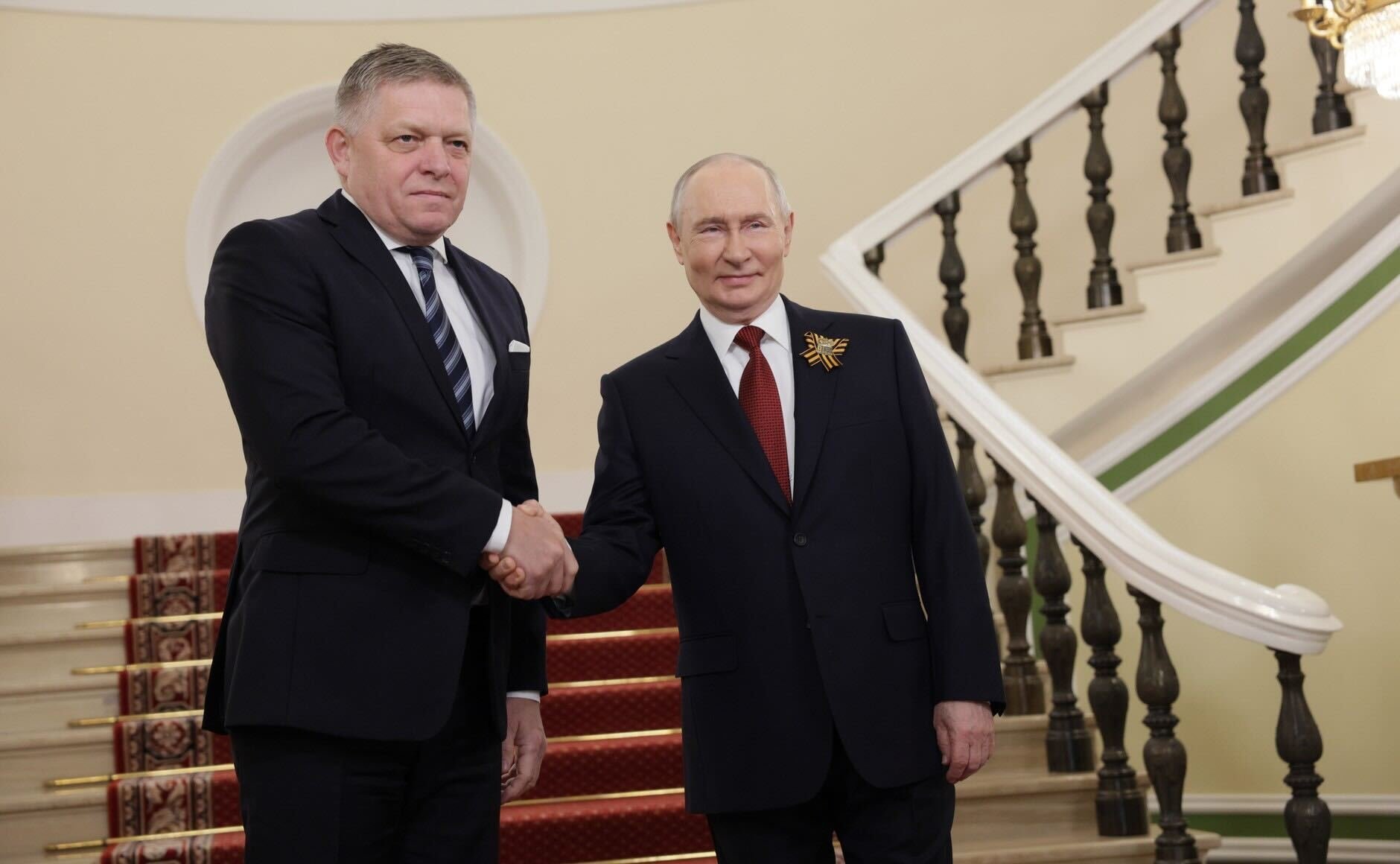
Since returning to office in 2023, Fico has ended government-funded military assistance to Kyiv, challenged EU sanctions on Moscow and repeatedly called for negotiations with Russia. Commercial Slovak arms exports to Ukraine have nevertheless continued.
His position has extended to NATO’s collective defence commitments. In September, Fico questioned the prospect of Slovakia becoming involved in a military conflict under Article 5 of the North Atlantic Treaty.
Article 5, however, requires member states to assist an ally subjected to armed attack, while allowing each government to determine the measures it considers necessary. It does not automatically require every member to deploy combat troops.
The latest development concerns Slovakia’s decision to resume formal bilateral consultations with Moscow.
On Monday, 26 October, two days after the elections, Slovak and Russian officials are scheduled to meet in Moscow for discussions covering energy, nuclear cooperation, oil and gas supplies and other economic sectors.
It will be the first meeting of the bilateral intergovernmental commission since Russia launched its full-scale invasion of Ukraine in February 2022.
Bratislava maintains that dialogue with Russia is compatible with Slovakia’s EU and NATO obligations. The initiative nevertheless reinforces Fico’s different approach to Moscow at a time when the EU is seeking to reduce Russian energy imports.
Results could shape the 2027 election campaign
Saturday’s vote will not directly determine whether Fico remains prime minister. Local contests involve independent candidates, regional alliances and municipal priorities that do not necessarily correspond to national party preferences.
Nevertheless, results in Bratislava, Košice and the country’s eight regions will provide evidence of the government’s ability to mobilise supporters and the opposition’s capacity to turn favourable opinion polls into electoral victories.
No official exit polls are planned. The Slovak Statistical Office will publish results progressively after polling stations close, with counting expected to continue overnight into Sunday, 25 October.
For Fico, the results will offer an indication of whether his coalition can recover political ground before the next parliamentary election or whether its internal divisions are beginning to translate into losses at the ballot box.

 Login