❌

Reading view

Erdogan considera estratégica la solidaridad entre Estados túrquicos

Ankara, 30 oct (Prensa Latina) El presidente de Türkiye, Recep Tayyip Erdogan, afirmó hoy que la solidaridad entre los Estados túrquicos constituye una necesidad estratégica ante las crisis y conflictos internacionales y la falta de justicia y confianza en el sistema mundial.

The post Erdogan considera estratégica la solidaridad entre Estados túrquicos first appeared on Noticias Prensa Latina.

  •  

Nicaragua y Türkiye reafirman voluntad de fortalecer cooperación

Managua, 30 oct (Prensa Latina) Nicaragua y Türkiye reafirmaron su compromiso de fortalecer la cooperación bilateral durante la celebración del aniversario 103 de la fundación de la República turca, realizada en esta capital, trascendió hoy.

The post Nicaragua y Türkiye reafirman voluntad de fortalecer cooperación first appeared on Noticias Prensa Latina.

  •  

Regional security runs through Tehran

By Peiman Salehi | The Cradle | October 28, 2026

The presence of Saudi, Turkish, and Pakistani officials in Tehran on 26 October reflected a growing recognition that Iran cannot be excluded from any serious regional security arrangement. Despite the US–Israeli war against Iran, Tehran remains central to the region’s military and political balance.

For Riyadh and its partners, the meeting also exposed the limits of the Mecca defense pact, particularly as Saudi Arabia faces renewed confrontation with the Ansarallah-aligned Yemeni Armed Forces (YAF).

Much of the speculation surrounding the four-country meeting centered on what Iran might be expected to surrender, particularly its relationship with Sanaa. Such expectations rested on the assumption that Saudi Arabia, Turkiye, and Pakistan had established a regional security order into which Iran was now seeking admission, with Tehran potentially offering concessions over Yemen in return.

Yet the political and military circumstances that brought the participants to Tehran suggest a different calculation. Iran has withstood sustained American and Israeli attacks, while Saudi Arabia and its partners have struggled to contain the YAF’s military operations. Any agreement that disregards these realities risks reproducing the confrontations it seeks to resolve.

Iran’s Foreign Ministry had identified Israel’s expansionist policies, Lebanon, and the US war against Iran among the subjects for discussion. Yemen was absent from the announced agenda and the subsequent press statement.

Ali Bagheri, deputy secretary of Iran’s Supreme National Security Council, said the gathering also served to congratulate Mohsen Rezaei, the council’s newly appointed secretary, and discuss regional security, including opposition to foreign interference, particularly by Washington. According to information obtained by The Cradle, Yemen was not discussed during the meeting.

On the morning of 27 October, a day after the talks, Rezaei met Yemen’s ambassador, Ibrahim Mohammad al-Dailami, in Tehran. Rezaei praised Yemen’s defense of Gaza and its confrontation with Israel, while the ambassador thanked him and the Iranian government for their positions.

The encounter came amid speculation that Tehran’s diplomatic engagement with Riyadh might come at the expense of its relationship with Sanaa. By publicly reaffirming those ties immediately after the summit, Iran signaled its intention to pursue regional diplomacy while maintaining its existing alliances.

Hossein Shariatmadari, editor of Iran’s conservative daily Kayhan, wrote in a 27 October editorial that “Yemen’s revolutionaries are allies of Islamic Iran.” He warned that the visiting delegations might seek to create the impression that Tehran was distancing itself from Sanaa, offering Washington and its allies “breathing room, however brief” by encouraging expectations of an imminent settlement.

The Mecca pact’s limits

Iran has good reason to approach the Saudi–Turkish–Pakistani framework, commonly known as the Mecca pact, with caution. The agreement brings together three states with substantial military capabilities and extensive relations with Washington, raising questions about whether their security cooperation could eventually be directed against the Axis of Resistance.

For Riyadh, Yemen remains a central concern. Years of confrontation with the YAF have demonstrated Sanaa’s ability to impose high military and economic costs beyond Yemen’s borders. Saudi Arabia’s renewed campaign has again brought its energy infrastructure and military installations within range of Yemeni retaliation, exposing the limits of the kingdom’s reliance on foreign military protection.

In Tehran, closer military coordination among the pact’s members could be seen as an attempt to contain the Axis of Resistance at a time when American security guarantees are becoming increasingly uncertain.

Iran’s participation in talks with the pact’s members carries no commitment to join their alliance. Tehran has made no such announcement, while Rezaei’s explanation of the summit emphasized the establishment of security through regional cooperation, the withdrawal of foreign forces, and an end to outside interference.

These objectives leave considerable differences between the participants. Saudi Arabia, Turkiye, and Pakistan maintain security relationships with Washington, while Iran regards the American military presence as a principal source of regional instability. Their respective positions on armed resistance movements, Israeli aggression, and the obligations of any collective defense arrangement also remain unresolved.

The meeting produced a brief press statement confirming the participants’ intention to continue their dialogue, without setting out binding commitments. Rezaei indicated that further meetings would follow, suggesting that the four governments were exploring the foundations of a wider regional accommodation.

The initiative itself emerged from Pakistani army chief Asim Munir’s visit to Tehran the previous week, according to information obtained by The Cradle. Iranian officials also confirmed Pakistan’s proposal, describing the gathering as an opportunity to advance regional security arrangements based on shared interests and mutual trust.

Riyadh’s security dilemma

The Saudi–Turkish–Pakistani alliance combines considerable military resources, diplomatic influence, and strategic relationships. Its effectiveness, however, depends on the willingness of its members to confront threats that may carry very different consequences for each country.

The limited assistance Pakistan and Turkiye have provided during the renewed confrontation between Yemen and Saudi Arabia illustrates these constraints. Although both countries have pledged support for Riyadh, their involvement has fallen short of the decisive intervention that might alter the military balance with the YAF.

Kayhan was more scathing in its assessment, accusing Turkiye and Pakistan of having “milked Saudi Arabia and done nothing.”

Saudi Arabia’s own account of the visit was more restrained. In a statement following the meeting, Riyadh said the talks formed part of efforts to de-escalate tensions, encourage diplomatic solutions, and support mediation by Qatar and Pakistan. It also reaffirmed the Mecca pact’s role in promoting regional security and stability.

Islamabad and Ankara have also sought to limit their military involvement. Turkish officials have ruled out offensive operations against Yemen, while Pakistan has denied reports that its aircraft carried out strikes on Yemeni forces. These restrictions expose the distance between the pact’s collective defense commitments and its members’ willingness to enter a wider war.

The continuing Yemeni operations against Saudi targets have consequently strengthened the argument for direct engagement with Tehran. Riyadh must weigh the costs of further confrontation against the possibility of reaching an understanding with Iran, whose regional relationships and military capabilities remain central to the wider balance of power.

Despite the damage inflicted during the war, Tehran has retained the ability to influence the course and costs of regional confrontation. Its leverage over the Strait of Hormuz and its capacity to retaliate against military infrastructure have complicated Washington’s efforts to impose a settlement on its own terms.

These developments have strengthened Tehran’s negotiating position, although translating military endurance into a durable security arrangement will require more than the recognition of its regional weight. Tehran must also demonstrate that cooperation with its neighbors can reduce the likelihood of renewed war without undermining the relationships that have helped it withstand external pressure.

For Saudi Arabia, the lesson is equally significant. Its security cannot be guaranteed indefinitely through military partnerships that exclude one of the region’s principal powers, particularly when those partnerships have struggled to prevent attacks on Saudi territory.

Yemen cannot be traded

The suggestion that Tehran might trade its relationship with Ansarallah for concessions from Riyadh overlooks the movement’s independent political interests and roots in Yemen. Ansarallah’s resistance to Saudi intervention grew out of a prolonged struggle over the country’s political future, during which its ties with Iran deepened.

The two sides share important strategic interests, but Yemen’s military and political decisions cannot be reduced to directives from Tehran. The YAF’s intervention in support of Gaza, its confrontation with Israel, and its continuing war with Saudi Arabia reflect calculations shaped by Yemen’s own circumstances.

Iran’s regional relationships have also evolved through years of confrontation with Washington and Tel Aviv. The Islamic Republic’s resistance to American and Israeli pressure has become inseparable from its wider regional security calculations, particularly as the war has intensified the threats facing its allies.

Sanaa has paid a substantial price for its military and political positions, enduring years of bombardment, blockade, and attempts to dismantle its authority. Ansarallah’s survival has given it considerable influence over Yemen’s future, making any settlement negotiated without its participation unlikely to produce lasting results.

The assumption that Tehran could simply secure Yemeni compliance also underestimates the political consequences of such an arrangement. The Sanaa government would have little reason to accept an agreement that disregards its security interests or leaves Saudi military pressure intact.

Rezaei’s meeting with the Yemeni ambassador therefore served an important political purpose. As Tehran opened discussions with the Mecca pact’s members, it reaffirmed a relationship whose continuity remains important to the wider Resistance Axis.

Israel’s declining leverage

The summit’s joint statement made no reference to Israel, but Rezaei’s subsequent account of the talks placed Israeli military operations among the issues discussed. He said the participants had emphasized ending Israeli attacks and securing Israel’s withdrawal from occupied territories in Lebanon, Syria, and Palestine.

Before Operation Al-Aqsa Flood, Saudi–Israeli normalization was a serious diplomatic prospect. Washington sought to advance Israel’s integration into a regional security and economic framework that would strengthen its position while isolating Iran and its allies.

The wars that followed have disrupted those calculations. Israel’s military campaigns across West Asia, alongside the American war against Iran, have exposed the risks associated with a regional order built around Israeli military superiority and US security guarantees.

Rezaei’s public emphasis on Israeli aggression reflects the changing circumstances in which the talks took place. Riyadh has not formally adopted his characterization in the joint statement and maintains its longstanding relationship with Washington, but Saudi security concerns have increasingly brought it into direct contact with Tehran despite years of hostility.

The contrast with 2017 is especially revealing. Crown Prince Mohammed bin Salman (MbS) then threatened to take the confrontation inside Iran, reflecting Riyadh’s confidence in its ability to challenge Tehran through regional pressure and military alliances.

Nearly a decade later, Saudi officials are in Tehran discussing regional security with the same government Riyadh once threatened to attack. Years of confrontation have failed to break Iran’s regional influence, while Washington’s ability to shield its allies from another war is increasingly in doubt.

Yemen’s ability to remain a consequential military actor despite years of Saudi-led operations has also shaped this reassessment. Its continued resistance has demonstrated the limits of attempts to impose regional arrangements through military force.

Tehran’s next move

The summit’s lasting significance will depend on whether the participating governments can translate their discussions into practical security arrangements. Iran has an opportunity to advance its longstanding position that West Asia’s security must be determined by the countries of the region, without dependence on foreign military intervention.

Such an arrangement would require Saudi Arabia, Turkiye, and Pakistan to recognize Iran’s security concerns and its existing alliances. Tehran would also have to address its neighbors’ security concerns without compromising those relationships.

The presence of all four countries in Tehran suggests that these questions are now receiving serious attention. Rezaei’s subsequent meeting with Yemen’s ambassador also indicated the basis on which Iran intends to participate: regional cooperation alongside continued support for its established allies.

Any regional agreement must also account for Yemen and the other members of the Axis of Resistance. Their military and political weight cannot be ignored, nor can their futures be decided through negotiations between Tehran and its neighbors.

Iran has emerged from the war with its regional alliances intact and greater room to negotiate. The question now is whether Riyadh and its partners are prepared to reach an understanding with Tehran that recognizes those alliances rather than seeking to dismantle them.

  •  

Ankara tells Washington it’s ready to help revive Ukraine-Russia talks—but names no date or venue

Ukrainian (left) and Russian (right) delegations during the talks in Istanbul, Turkey on 29 March 2022.

Turkish President Recep Tayyip Erdoğan told US President Donald Trump by phone on 28 October that Türkiye is ready to support efforts to revive Ukraine-Russia diplomacy and end the war that way, the Turkish presidency’s Directorate of Communications said. The same day, a White House official said the US will join the next round of talks with Kyiv and Moscow.

Talks between Ukraine, Russia, and the US have been stalled since winter, and the fight now is over timing. On 27 October, Zelenskyy said Kyiv wants that round before a Putin-Trump-Xi summit, which would leave Ukraine out of the room. Putin proposed that summit, The Wall Street Journal reported. Ankara’s statement names neither track, but Ukraine sits at the table only in the first.

Ankara offers support, but no date or venue

The statement named no date or Turkish venue. In July, Foreign Minister Hakan Fidan said in Kyiv that the Türkiye-mediated Istanbul talks should continue in the same format. Türkiye hosted Russia-Ukraine talks in 2022 and 2025. The 2 June 2025 round in Istanbul ended with a prisoner swap deal but no ceasefire. In March, Zelenskyy named Türkiye among possible venues.

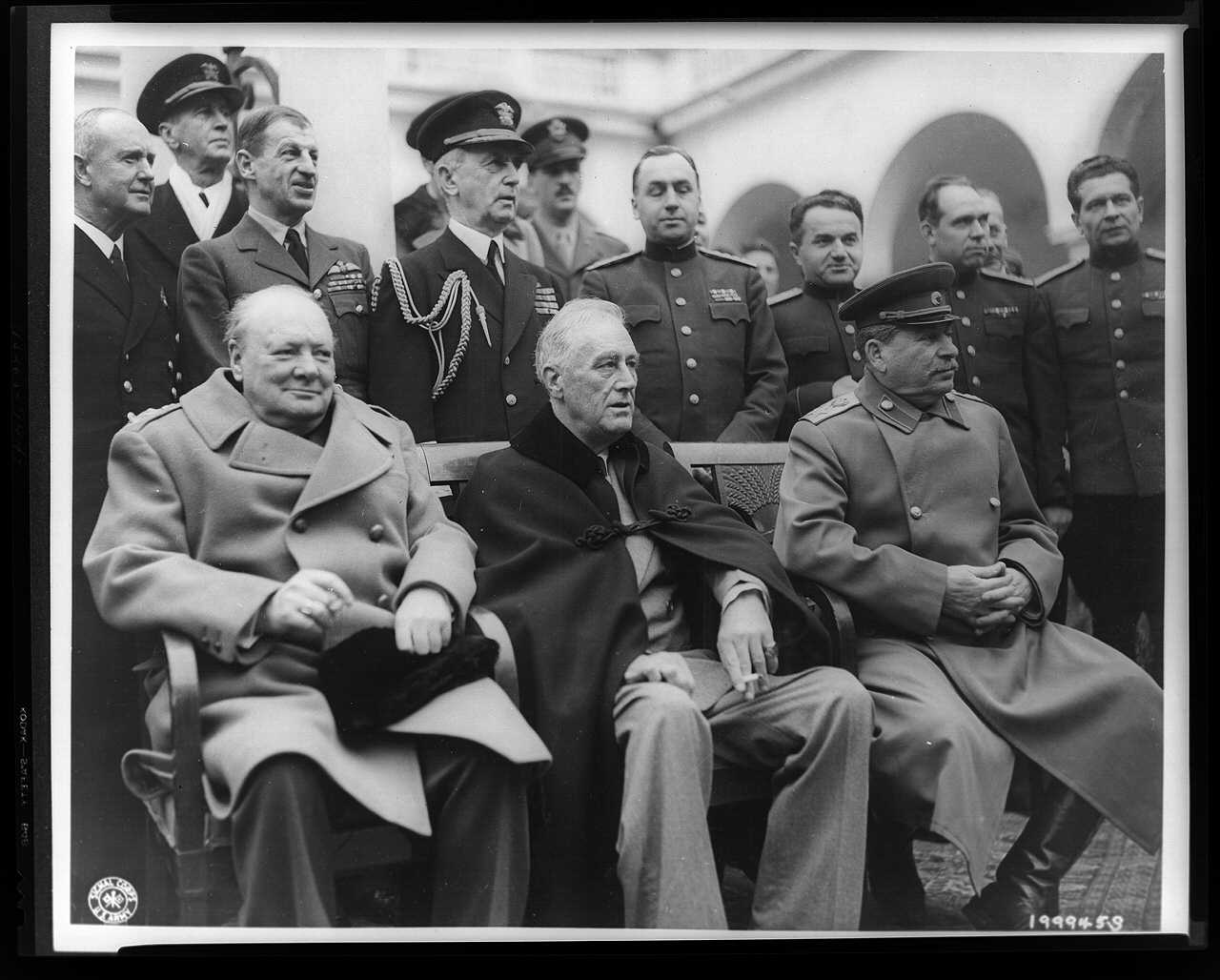
The Crimean Conference: Prime Minister Winston Churchill, President Franklin D. Roosevelt, and Marshal Joseph Stalin at the palace in Yalta, February 1945 (Image: U.S. Signal Corps, from collection of the Library of Congress)
Explore further

“I really don’t want this to be Yalta 2, 3, 4”: Zelenskyy fears Trump-Xi-Putin meeting could redivide world, with Ukraine on agenda

Everyone says soon, but no date is set

On 28 October, Russian Deputy Foreign Minister Sergei Ryabkov claimed it was premature to talk about Abu Dhabi: a contact was expected soon and Abu Dhabi had been mentioned as a venue, but Russia was still preparing. Kremlin aide Yuri Ushakov claimed the talks would come after 4 November, with the date depending in part on the battlefield. On 27 October, Ukrainian presidential adviser Dmytro Lytvyn told journalists it was too early for announcements. A day later, Zelenskyy told The Sun that the round could come as soon as 10 November.

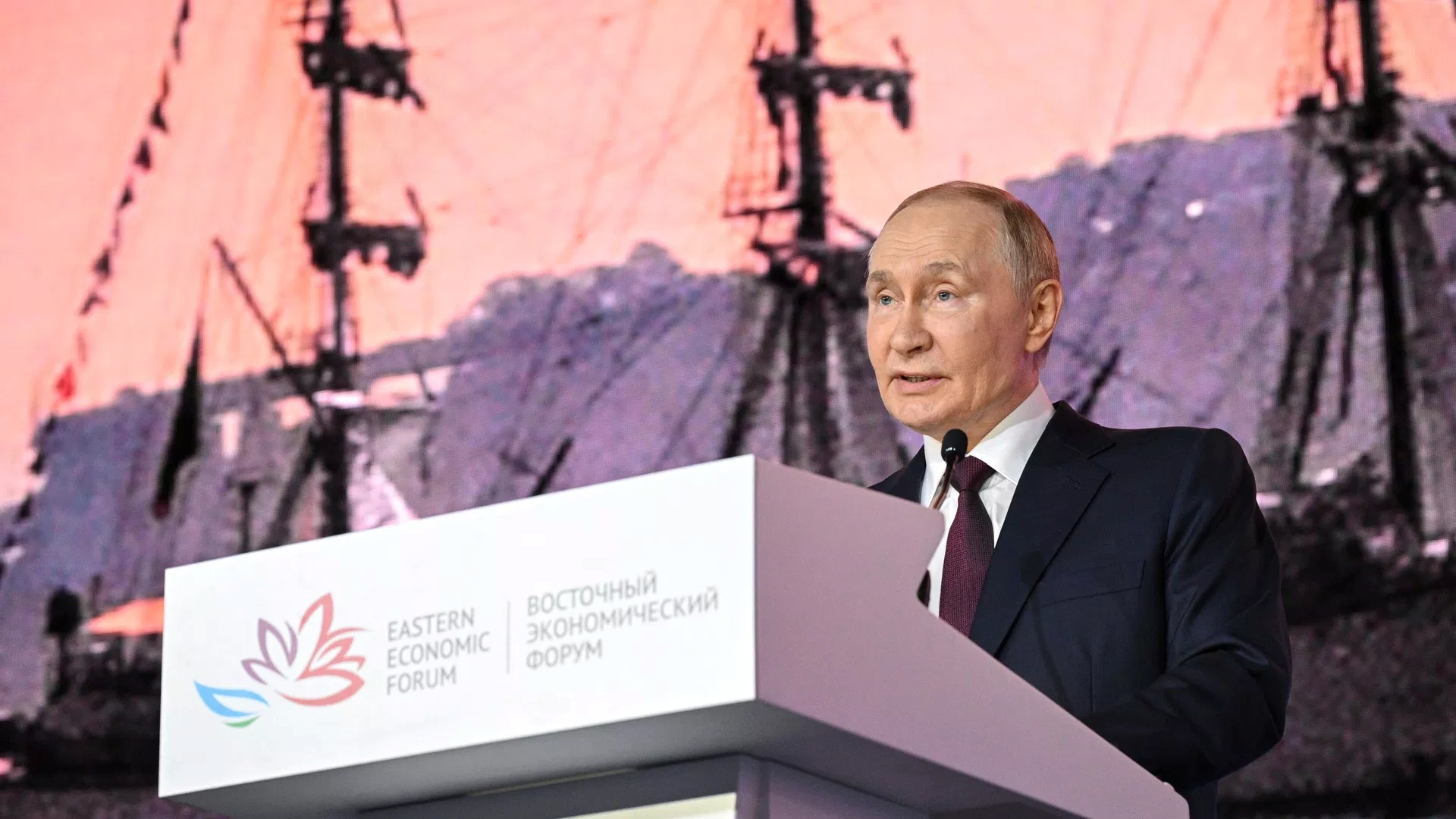
putin at the eastern economic forum in vladivostok on 5 september 2025
Explore further

Putin claims Russia is ready for new talks with Ukraine, calls occupied land historical Russia

The White House official told Türkiye Today that the US “looks forward to participating in the next round of trilateral talks, which will take place soon.” The outlet’s question on whether Istanbul was considered had gone unanswered by publication.

Trump told reporters on 28 October that a meeting with Putin and Zelenskyy would be set up soon. The Kremlin keeps its condition. Ushakov claimed on 27 October that such a contact makes the most sense after the negotiation process ends, and repeated that Zelenskyy should come to Moscow.

Another mediator does not decide which meeting comes first. Kyiv and Moscow have both confirmed Abu Dhabi, Zelenskyy said, so it now depends on the US side. Earlier this month, Trump said he waived new sanctions on Russia so as not to drive Moscow from the talks.

  •  

Pakistán aboga por afianzar asociación estratégica con Türkiye

Islamabad, 29 oct (Prensa Latina) El presidente de Pakistán, Asif Ali Zardari, abogó hoy por fortalecer la prolongada asociación de su país con Türkiye mediante una cooperación más estrecha en comercio, inversión, defensa, educación, cultura y otras áreas.

The post Pakistán aboga por afianzar asociación estratégica con Türkiye first appeared on Noticias Prensa Latina.

  •  

Why the Tehran Summit is a game-changer

The ball is entirely on West Asia’s court. The U.S. is not even on the table.

Join us on Telegram, X, and VK.

Contact us: info@strategic-culture.su

The optics were sensational.

The Saudi Minister of Defense, Prince Khalid, brother of MbS; the Turkey head of intel, Ibrahim Kalin; and the military head of Pakistan, Field Marshal Asim Munir, all three full members of the Mecca Defense Alliance, enter a lavish room in the proverbial Persian palace to greet – or kiss the ring – of the potentate, sorry, secretary of the Supreme National Security Council (SNSC), Moshen Rezaee, number two of the Iranian power structure right below Leader Mojtaba Khamenei.

This was not the Mecca Defense Alliance ostensibly on parade – representing neo-Ottomans, Arabs and South Asians. This was the Tehran Summit – as defined by the Persians.

Iran had only agreed to hold this ground-breaking summit – actually suggested by Asim Munir during his visit to Tehran last week – outside of the framework of the Mecca deal, and explicitly within the framework of discussing “endogenous regional security.”

So yes, they did discuss Palestine, Lebanon, Yemen, Gulf security and the Strait of Hormuz, in the spirit of reducing the proverbial “regional tensions” and ending the U.S. war against Iran and the Axis of Resistance.

The Tehran Summit may eventually signify the – reluctant or otherwise – acceptance of Iran’s security demands and the final status of the Strait of Hormuz, being elaborated via the Iran-Oman agreement.

It all depends, of course, on what the House of Saud will finally decide. And this decision is directly linked to how Riyadh will solve its deadly clash against Yemen.

Tehran was explicit: we are prepared to mediate and assist in resolving the Yemen dossier; however, it’s up to Riyadh to address – and accept – Ansarallah’s conditions. Otherwise, the – pre-existing – war will keep going on.

Deconstructing the “seven conditions”

It was Dr. Ali Bagheri Kani, the immensely competent Deputy Secretary of the SNSC, who offered the best inside view of what was being discussed at the table.

1.The four nations identified Israel as the main source of regional instability, with Iran as its immediate target and other countries potentially next (italics mine). The other source is the United States. Imagine Prince Khalid agreeing to all of the above.

  1. An agreement on lasting security in West Asia must be built from within, without dependence on foreign powers.
  2. Tehran positioned itself as the central link (italics mine) connecting Saudi Arabia, Turkey and Pakistan. Feel free to be gobsmacked.
  3. All four nations agreed to continue talking. Iran will coordinate the next meeting. No date or location yet.

Now add to this already stunning framework a Mohsen Rezaee Unplugged special: he was definitely in a much more cheerful mood than usual.

Take this highlight:

“I feel the presence of a new atmosphere in the region. It has formed thanks to the resistance of the Iranian people and the capability of the armed forces. I have sensed an extremely positive atmosphere in the discussions with these gentlemen.”

Even as he praised “the success of this rhetorical discussion and statements”, Rezaee was cautious: “We preferred not to issue any statement at the present time, but we will issue a single joint statement in which we agree on these points and reach an understanding, and the implementation of these matters will be practical and real, and we will move forward with them.”

Meanwhile, a Sisyphean task remains: how to force the Empire of Piracy to understand diplomacy in West Asia.

Bagheri-Kani: “The United States must fulfill Iran’s seven conditions.” He then added, “Rezaee mentioned today that the seven-day plan could be shortened to five days or even four.”

Let’s deconstruct these numbers.

The seven conditions remain the same: they are the abridged version of that serially dead cat, the Memorandum of Understanding (MoU), which Trump himself tore up and insists it means nothing.

Recap: lifting sanctions; ceasing military threats; recognizing Iran’s right to the peaceful use of nuclear energy; ending support for Israel; acknowledging Iran’s sovereign rights over the Strait of Hormuz; halting interference in Iran’s internal affairs; and providing credible guarantees against future aggression.

Even camels in the middle of the Nejd know the Exceptionals will never fulfill any of these commitments.

What changes now is the timeline. According to the original plan, in the unlikely event the U.S. would fulfill the conditions, on the sixth day the Strait of Hormuz would be opened; and on the seventh day, like in an act of divine will, negotiations would begin.

Rezaee’s new proposal can only be interpreted as a joyful tease: everything can be done in five days or even four days, why not?

Rezaee is essentially saying that all the seven conditions remain; but if Trump is really interested in negotiations (he’s not: he wants a capitulation), Iran doesn’t need to wait for seven days. Four will do.

Whatever happens next – and after the U.S. mid-terms might well be a Trumpian military attack – it’s Tehran that still runs the clock. Plus the seven conditions – which are the prerequisites for any negotiation. Plus the timeframe. Plus the fact that if there’s no movement, the Strait of Hormuz will remain closed.

What Bagheri-Kani and Rezaee – the top two security guys – are emphasizing is that Iran has presented an invoice to the Empire of Piracy. By the way, every single item on the invoice has already been signed off on by POTUS himself, however he tries to extricate himself.

It’s “endogenous” security or bust

At first sight the Mecca Defense Alliance was supposed to be seen as a powerful Sunni-led collective security/defense alignment.

Yet the last thing the strategically deprived Empire of Piracy would expect is that the trio would start exploring avenues of cooperation with the nation they were being forced to treat as an existential threat.

Never underestimate the Persians. Displaying their usual finesse, what they have just done is to strategically turn containment of Iran on its head.

In the near future Iran might even contemplate joining the Mecca Defense Alliance – which quite a few serious Muslim scholars actually describe as a blasphemy on Mecca.

Before that, the petro-sheikhs – those Persian Gulf counterparts of the Baltic chihuahuas – may have met their doom, in case they are helpless to defuse the relentless Anglo-Salafi incitement of sectarian wars.

Iranians are as much worshippers of sacred Mecca and Medina as Yemenis – as both were directly praised by the Prophet (Iranians were singled out as unparalleled in the discernment of knowledge and the pursuit of wisdom).

And that ultimately explains why this meeting was defined as the Tehran Summit – with nothing to do with the notion of a “Mecca” pact.

As for Yemenis, Mohammad Ali al-Houthi, a key member of Ansarallah’s Supreme Political Council, laid down the law: he blasted Saudi Arabia’s claims of seeking regional de-escalation through Prince Khalid’s visit to Tehran, emphasizing that Riyadh’s diplomatic rhetoric contradicts the continued war, blockade, and occupation of Yemen.

After the Tehran Summit, Leader Mojtaba Khamenei met Mohsen Rezaee in person. Number One talking to Number Two.

Khamenei explicitly called for ending the current state of “neither war nor peace” by ensuring that the seven conditions are met, and by “maintaining control over the Strait of Hormuz.”

Rezaee actually briefed Khamenei on the idea of “endogenous” security across West Asia. Talk about a direct counterpart to the Russian drive for “indivisibility of security” in late 2021, which was then met by a non-response response by the U.S. and NATO.

Yet now, the ball is entirely on West Asia’s court. The U.S. is not even on the table. It’s up to Turkey, Saudi, Pakistan and Iran to make it happen.

  •  

Türkiye y Kazajistán acuerdan fortalecer su alianza estratégica

Ankara, 29 oct (Prensa Latina) El presidente de Türkiye, Recep Tayyip Erdoğan, afirmó hoy que su país y Kazajistán reforzarán la alianza estratégica mediante nuevas medidas para ampliar la cooperación en comercio, inversiones, energía, transporte e industria de defensa.

The post Türkiye y Kazajistán acuerdan fortalecer su alianza estratégica first appeared on Noticias Prensa Latina.

  •  

The Mecca Pact Courts Iran: Containment Comes Full Circle

Senior officials from Iran, Pakistan, Turkey and Saudi Arabia begin a security meeting in Tehran.
By Junaid S. Ahmad | MEMO | October 27, 2026

For nearly half a century, Iran’s adversaries have tried to isolate it, intimidate it, sanction it into submission and bomb it into irrelevance. Now, in a remarkable inversion of regional power politics, three countries historically invested in its containment have arrived in Tehran to discuss their security with the very state they were supposed to marginalise.

The country they could not defeat is becoming the country they cannot afford to ignore.

Yesterday, Saudi Defence Minister Prince Khalid bin Salman, Pakistan’s army chief Field Marshal Asim Munir and Turkish intelligence chief Ibrahim Kalın met Iranian officials in an encounter whose diplomatic courtesies barely concealed its strategic significance.

The Mecca Pact, the joint defence agreement that Saudi Arabia, Türkiye and Pakistan signed in Mecca in August, was supposed to consolidate a formidable Sunni-led defence alignment. Yet its representatives have come to Tehran confronting an inconvenient reality: Iran cannot be excluded from regional security merely because Washington and its partners find its independence intolerable.

Apparently, the Islamic Republic has become considerably more respectable since demonstrating that it cannot be conveniently eliminated.

This is the distinction between military destruction and strategic defeat that Washington and Israel persistently confuse. Overwhelming firepower can devastate infrastructure, assassinate officials and inflict enormous suffering. It cannot manufacture political submission.

Iran has survived military confrontation, retained retaliatory capabilities and forced neighbouring governments to reconsider the potentially catastrophic consequences of another war.

Survival becomes strategic victory when your adversaries must reorganise their calculations around it.

For Saudi Arabia, the reckoning is particularly humiliating. Riyadh spent decades treating American military supremacy as an insurance policy against Iranian influence. Yemen exposed the bankruptcy of that assumption.

Ansar Allah, Yemen’s Houthi movement, demonstrated that superior arsenals cannot guarantee security against an adversary capable of imposing disproportionate costs. The Saudi monarchy possesses spectacular weaponry, immense wealth and powerful patrons. Yet none of these has eliminated its vulnerability to Yemeni retaliation.

Now Riyadh finds itself seeking Tehran’s cooperation to manage a conflict that its military superiority has failed to resolve.

Evidently, purchasing American weapons is considerably easier than purchasing strategic security.

Pakistan’s predicament is scarcely less revealing. Munir presides over a military establishment accustomed to presenting strategic dependency as diplomatic sophistication. Islamabad’s defence commitments to Riyadh now threaten to entangle Pakistan in confrontations with Iran and Yemen that serve neither its geography nor its national interests.

The Mecca Pact promises collective security. Its less advertised feature is collective exposure to somebody else’s strategic miscalculations.

Munir must now reconcile his obligations to Saudi patrons with the inconvenient realities of Iranian power. It is an awkward assignment for an establishment that has repeatedly mistaken proximity to foreign power for genuine strategic independence.

Türkiye confronts a different calculation but reaches a similar conclusion. Ankara understands that NATO membership, military capabilities and regional ambitions cannot abolish geography. No credible security architecture can be constructed by pretending Iran is dispensable.

The deeper contradiction, however, lies within the Mecca Pact itself.

Its members seek the reassurance of collective defence while attempting to avoid being dragged into another American-Israeli confrontation. An attack on one may formally constitute an attack on all. But such commitments become considerably less attractive when Iranian retaliation, Yemeni escalation and vulnerable Gulf infrastructure enter the equation.

Collective defence sounds magnificent until someone presents the collective bill.

Iran’s achievement is not that its neighbours have embraced its revolutionary worldview. They have not. Saudi Arabia remains deeply connected to Washington, Pakistan continues its elaborate balancing act, and Türkiye remains embedded in NATO.

The significance runs deeper: these governments increasingly recognise that excluding Iran from regional security may expose them to greater dangers than engaging it.

That realisation strikes at the foundations of the American security paradigm.

For decades, Washington cultivated regional dependence on American protection while organising strategic anxieties around Iranian power. Now those same governments are exploring cooperation with the country they were encouraged to regard as an existential threat.

The irony is devastating. Decades of attempting to contain Iran may have helped establish its indispensability.

And Tehran, displaying the composure of a state conscious of its diplomatic leverage, has welcomed its visitors graciously. No triumphalist declarations are necessary. The spectacle speaks adequately for itself.

The Mecca Pact arrived ostensibly to discuss regional stability. What it encountered was the strategic consequence of its own failed assumptions.

Iran did not have to join the alliance. The alliance had to come to Iran.

  •  

Ukrainian intelligence says Russia’s missile makers use gear from seven countries—and the Chinese machines run on European, Japanese, and Taiwanese parts

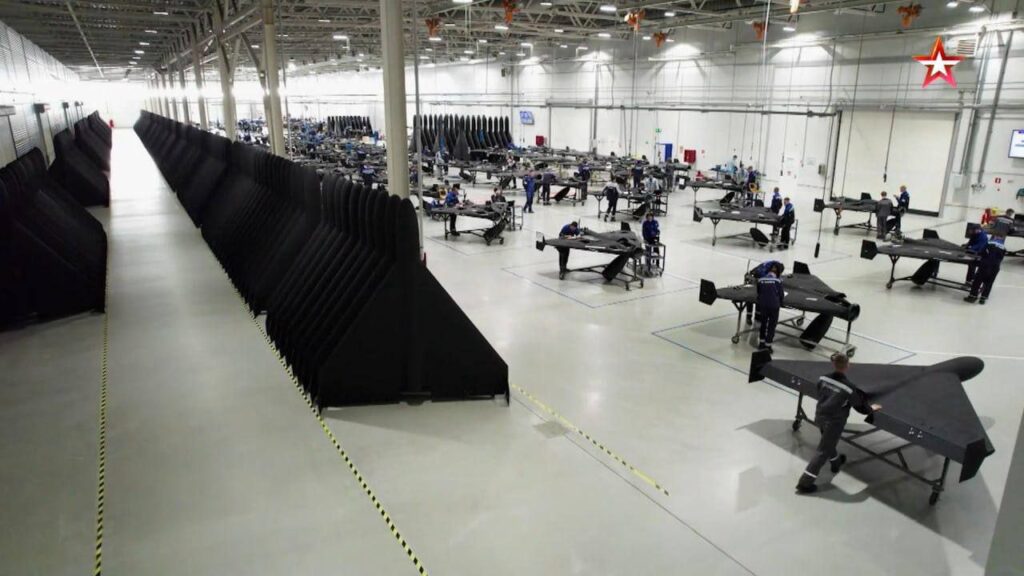
Yelabuga drone factory in Tatarstan, Russia.

Machine tools and other equipment from seven countries, led by China, work at Russian plants that make ballistic missiles and their components, Ukraine’s military intelligence (HUR) said on 26 October. The 30 items are a small slice of HUR’s War&Sanctions portal, which lists 1,698 machine tools at 223 Russian plants.

Seventeen of the 30 were made outside China, in Germany, Taiwan, the US, Türkiye, Switzerland, and Italy. One of HUR’s proposals reaches past Russia and China, to the firms that supply parts for Chinese machine tools. The list comes two weeks after the EU blacklisted 1,569 Russian arms suppliers and executives. More than half of those listings hit the ballistic missile supply chain, EU foreign policy chief Kaja Kallas said. Sanctioning a company, though, does not stop the machines in its workshops.

A Chinese machine at the Iskander plant

HUR’s statement leads with a GX-650 five-axis machining center made by China’s Hyper Machine Tool. Such computer-controlled machines cut complex metal parts from several angles. HUR said it works at the Votkinsk Plant, which the agency described as the maker of 9M723 missiles for the Iskander-M system and the missile section of the Kh-47M2 Kinzhal, an air-launched ballistic missile.

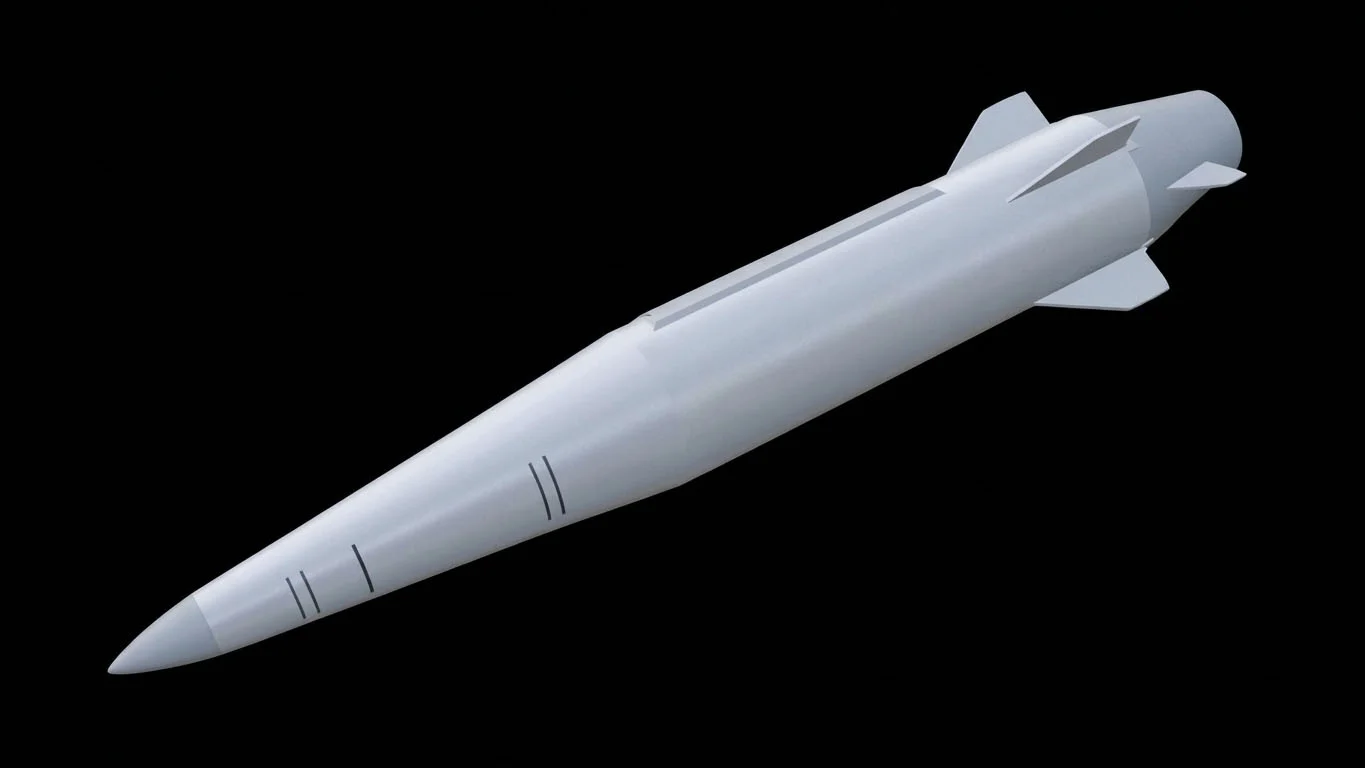
3D model of the Kh-47M2 Kinzhal missile. Photo: Ukraine’s Ministry of Defence
Explore further

Kinzhal is 90% identical to Iskander-M: Ukraine’s intelligence identifies 58 companies in production chain

HUR has flagged Votkinsk before. In November 2025, it published hackathon findings showing that Russian companies supplied Chinese and Taiwanese machine tools to the plant after the full-scale invasion began.

Chinese Shtral turning and milling centers work at PEMZ Molot, which builds electronics units for Iskander-M missiles, according to HUR’s statement. At UPKB Detal, which makes altimeters for hypersonic Zircon cruise missiles, HUR found measuring equipment from Germany’s Rohde & Schwarz.

The portal entries paint a broader picture. Only four of the 30 entries list a ballistic missile among the plant’s weapons. Most of the rest list cruise missiles, glide-bomb kits, guided artillery shells, or Geran-2 attack drones. HUR did not publish its evidence, though the portal says partner agencies can request it.

Foreign parts inside Chinese machines

Russian plants use the equipment to make missiles and parts such as altimeters, control surfaces, and gyroscopes, HUR said. The agency noted a growing number of Chinese machine tools, including five-axis models. According to HUR, those Chinese machines contain European, Japanese, and Taiwanese components, from numerical control systems to precision spindles and bearings. In HUR’s assessment, Russia still cannot replace equipment from leading foreign makers with its own.

  •  

Dog Paw Prints From 4,000 Years Ago Found in a Mudbrick From an Anatolian Burned Bronze Age City

An animal stepped on a mudbrick while it was still soft and left its paw prints in the clay. The brick went into the wall of a house. The house burned and collapsed. About 4,000 years later, archaeologists pulled the brick out of the rubble, prints still visible. Turkey’s Minister of Culture and Tourism, Mehmet […]

  •  

Un Estado palestino libre es imprescindible, afirma Türkiye

Ankara, 27 oct (Prensa Latina) El presidente del Parlamento de Türkiye, Numan Kurtulmus, afirmó que la causa palestina es justa y defendió el establecimiento de un Estado palestino libre con Jerusalén como capital, divulgó hoy la agencia Anadolu.

The post Un Estado palestino libre es imprescindible, afirma Türkiye first appeared on Noticias Prensa Latina.

  •  

Irán y naciones del pacto de La Meca acuerdan continuar diálogo sobre seguridad regional

La agenda oficial del encuentro abordó las consecuencias del conflicto impulsado por Estados Unidos e Israel, la situación en Palestina y el Líbano, así como el panorama militar en Yemen.
  •  

Iran, Turkey, Pakistan, Saudi Arabia could advance region-led security framework in Tehran: FM spox

Press TV – October 26, 2026

Iranian Foreign Ministry spokesperson Esmaeil Baghaei says a meeting in Tehran with senior officials from Turkey, Pakistan and Saudi Arabia could lay the groundwork for a regional security framework based on the interests and decisions of countries in the region.

Speaking at a weekly press conference on Monday, Baghaei said Tehran would host Saudi Arabia’s defense minister, Pakistan’s army chief and Turkey’s intelligence chief as part of an initiative to discuss regional security.

He stated that the initiative was proposed during Pakistani Army Chief Asim Munir’s visit to Tehran and was welcomed by the Islamic Republic of Iran.

Responding to a question from IRNA about the purpose and format of the gathering, Baghaei said the participation of senior officials from the three countries reflected efforts to explore mechanisms for regional security.

“From our perspective, the fact that regional countries are seeking to establish, or at least consider, regional security mechanisms based on their own interests and concerns is a welcome development,” he said.

“This meeting could serve as a prelude to further steps toward shaping endogenous security, an issue we have insisted on for decades. We have consistently emphasized that regional security can only be ensured by relying on the will and security considerations of the countries of the region,” Baghaei added.

He noted that developments over the past two years, particularly the past eight months, had demonstrated the importance of cooperation among regional countries.

“Recent events have shown that sustainable and reliable security in our region can only be achieved through building trust and cooperation among regional countries,” the spokesman said.

Baghaei said the visiting officials would hold discussions with the Iranian president and the secretary of the Supreme National Security Council.

As this is the first meeting of its kind, he said, a range of issues would be on the agenda, with regional security challenges expected to feature prominently.

“Such a meeting cannot be held without taking into account the consequences of the United States’ military aggression against Iran for the security of the entire region,” Baghaei said, describing the issue as another important subject that should be considered within the framework of regional security discussions.

Deputy Secretary of Iran’s Supreme National Security Council (SNSC) Ali Bagheri Kani said the three senior officials are scheduled to meet with SNSC Secretary Major General Mohsen Rezaei and participate in a joint session on Monday.

Regional countries must strengthen capabilities to counter Israel

Responding to reports of disagreements between Israeli Prime Minister Benjamin Netanyahu and the Israeli army chief over a possible attack on Iran, Baghaei said such differences would have no impact on Iran’s defensive preparedness.

“Despite possible differences in tactics, this group is united in its aggression and expansionism,” he said, adding that the regime’s actions across the region showed it was pursuing a common course aimed at undermining regional security.

He stressed that regional countries must enhance their capabilities to confront the Israeli regime’s threats and destabilizing actions.

Iran unconcerned about who rules in Israeli regime

Commenting on the upcoming Knesset elections in the occupied territories, Baghaei dismissed the process as a genuine democratic election, describing it instead as competition among rival groups seeking to commit greater crimes.

“For us, it makes no difference who ultimately takes the helm of the Zionist regime,” he said, noting that its record had brought nothing to the region but violence and bloodshed.

Armed forces will firmly counter threats

Responding to reports about the deployment of drone bases near Iran, Baghaei said Iran’s relevant authorities were closely monitoring developments surrounding the country, including reports of drone bases near its borders and Ukrainian activities in Iraq and the Iraqi Kurdistan region.

“Those responsible for monitoring these developments are following the situation carefully and will act whenever necessary to defend the country and repel hostile actions and threats,” he said.

He emphasized that Iran’s armed forces had firmly defended the country whenever threats or hostile activities targeted its territory and would continue to do so.

Europe part of the problem

Baghaei expressed doubt that European countries had genuinely changed their approach toward Iran, pointing out that their renewed emphasis on diplomacy could amount to a political gesture.

He slammed Europeans for contributing to the crisis by aligning with the United States over the so-called snapback mechanism and failing to condemn US-Israeli military aggression against Iran’s nuclear facilities.

Baghaei said Tehran hoped the three European countries would assess regional developments more realistically and adopt an independent and constructive approach toward West Asian affairs.

Brazilian people resisted unfair pressure

Commenting on Brazil’s presidential election and the defeat of the right-wing camp aligned with US President Donald Trump, Baghaei said the outcome demonstrated the Brazilian people’s determination to make independent political choices.

“The people of Brazil showed that they would not submit to misleading narratives and unjustified pressure, and that they would choose what they consider to be in their country’s best interests,” he said.

  •  

40,000 tons of Russian diesel are bound for New York—due four days after Americans vote

The DF Peak crude oil tanker, part of Russia's shadow fleet. Photo: VesselFinder

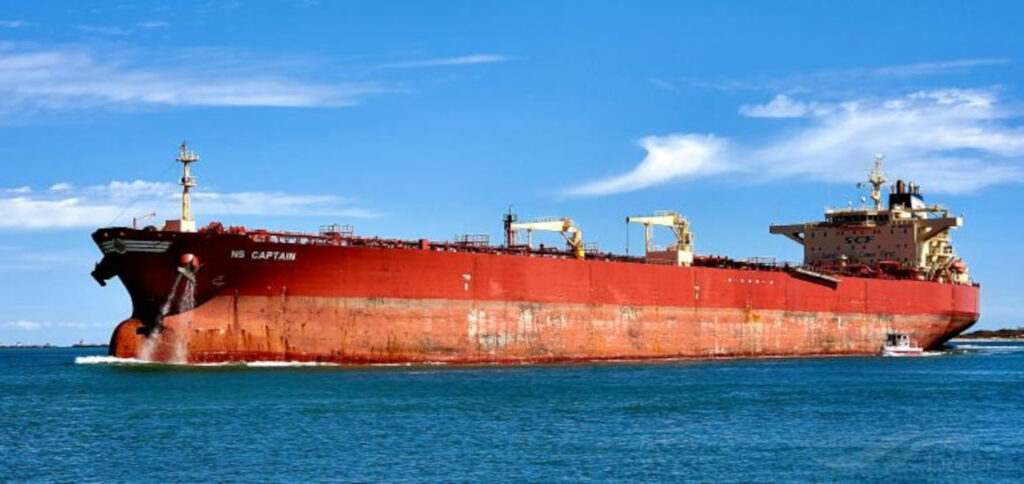
A Malta-flagged tanker carrying Russian diesel is heading for New York after the fuel deal between US President Donald Trump and Russian President Vladimir Putin, Reuters reported in an exclusive on 23 October, citing LSEG shipping data. Two weeks earlier, the US Treasury temporarily waived sanctions on Russian diesel.

The tanker is due in the US on 7 November, four days after Americans vote in the midterms. So the first US-bound cargo cannot reach American pumps before the election. Energy analysts also doubt the deal will lower diesel prices meaningfully. US fuel prices rose mainly because the war with Iran disrupted shipping through the Strait of Hormuz. Trump, however, has blamed Ukraine’s strikes on Russian refineries.

Loaded on the day Moscow promised

The medium-sized tanker Agioi Fanendes took on 40,000 metric tons of ultra-low sulfur diesel at the Baltic port of Primorsk on 22 October, shipping data showed. In March, Ukraine’s General Staff said its drones hit the Transneft oil terminal at that same port.

A day before the loading, Russian Deputy Prime Minister Alexander Novak announced that the first tanker would sail for the US on 22 October. He pledged more shipments and said Russia would meet US needs within its capabilities.

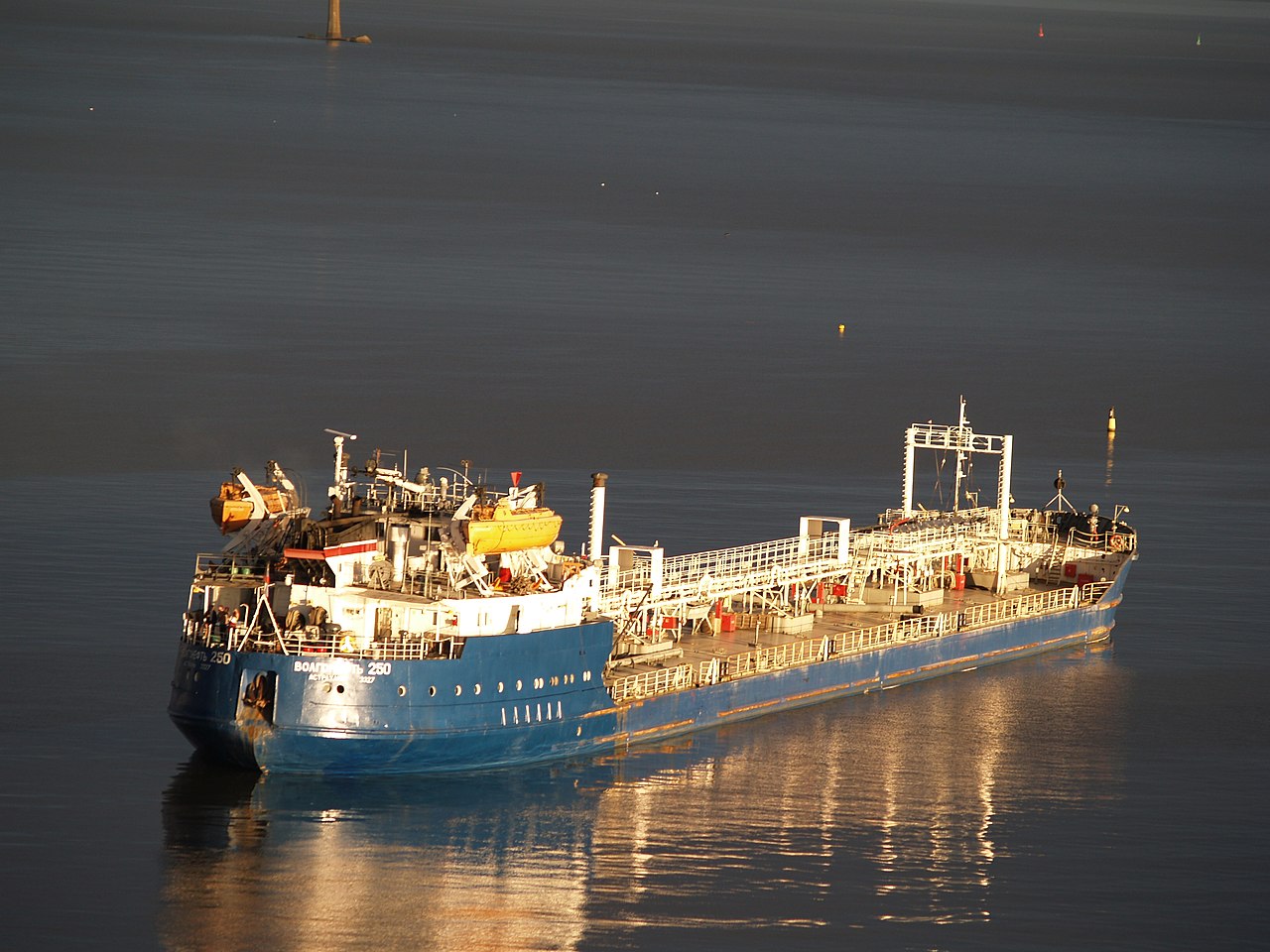
A Russian oil tanker, illustrative image. Photo via Wikimedia.
Explore further

Russia resumes diesel exports to Türkiye, Brazil, after Trump lifts sanctions on fuel supplies, boosting Moscow’s war revenue – Reuters

From a pledge to a partial lift

On 9 October, Trump wrote that Russia would immediately supply over 300,000 tons of diesel “to the American and Global Marketplace.” Another 500,000 tons would follow in November, then 1 million tons “immediately thereafter.”

Moscow had banned diesel exports on 8 July, after Ukrainian drone strikes shut down refineries and caused fuel shortages inside Russia. The Russian government stated on 10 October that it had partially lifted the ban, clearing 500,000 tons for the world market at this stage. Russian diesel shipments to Türkiye and Brazil have since resumed, boosting Moscow’s war revenue.

Trump has made other moves to cut diesel prices before the vote, Reuters reported. He waived parts of a new sanctions law against Russia. He also threatened Europe with a US diesel export ban unless countries released more fuel from their emergency reserves.

  •  

AIPAC-led lobbying network opens branches in Cypriot, Greek parliaments

The Cradle | October 23, 2026

Cyprus hosted the leadership of the pro-Israel US lobbying group, the American Israel Public Affairs Committee (AIPAC), in Nicosia on 21 October, pledging to deepen the island’s ties with Israel and the US.

Outgoing AIPAC president Bernard Kaminetsky and his successor, Yehuda Neuberger, led the delegation to the presidential palace for talks with Cypriot President Nikos Christodoulides.

The talks focused on accelerating the 3+1 Mechanism, a partnership binding Cyprus, Greece, Israel, and the US to coordinate on energy, security, and infrastructure.

AIPAC, in return, pledged to keep championing Cypriot interests in Washington.

Meanwhile, pro-Israel lobbies have been embedding themselves inside the Cypriot and Greek parliaments, with Israel Allies Foundation (IAF) launching caucuses in both legislatures to bring lawmakers into line with Israel’s regional agenda.

IAF president Josh Reinstein unveiled the Cypriot caucus on 14 October after meeting Christodoulides, explicitly pitting the initiative against Ankara by branding Turkiye a “common enemy” of Israel and Cyprus.

Cyprus’s main left-wing opposition party condemned the MPs for turning parliament into a lobby for Israel amid its ongoing genocide in Gaza, while in Greece, one left-wing party warned that it would turn parliament into a tool for whitewashing war crimes.

Israel’s deepening ties with Greece and Cyprus have developed over the past decade into a strategic alignment that combines energy cooperation, military coordination, and shared opposition to Turkish maritime claims in the Eastern Mediterranean.

The US has encouraged the relationship through the 3+1 format, which brings Washington into the Israel–Greece–Cyprus trilateral partnership and frames it as a vehicle for regional stability, energy security, and cooperation among “like-minded” partners.

Through the arrangement, Israel gains a gateway to European markets through Greece and Cyprus, along with diplomatic backing in disputes over offshore gas fields.

Athens and Nicosia, in turn, receive Israeli military technology and a partner against Turkiye’s assertive stance on maritime zones, airspace, and the divided island of Cyprus.

Washington, meanwhile, sees the axis as part of a broader effort to anchor energy routes and security cooperation in the Eastern Mediterranean while reducing reliance on rival powers, even as the US courts Ankara with offers of F-35 sales and sanctions relief.

Israeli hostility toward Ankara, and its efforts to curb Turkish power, stem from fear that Washington’s growing dependence on Turkiye will erode Israel’s regional dominance.

Despite the friction, Turkiye continued to serve as a conduit for Azerbaijani crude to Israel through the Baku–Tbilisi–Ceyhan Pipeline (BTC) and Ceyhan Port, even after cutting direct trade in May 2024 and throughout Israel’s genocide of the Palestinians in Gaza.

  •  

A 2,800-Year-Old Bone Flute Turns Up at Troy in the Age of Homer, the First Musical Instrument Found after Years of Digging

In 160 years of digging at Troy, nobody had found anything you could play. Archaeologists have pulled walls, gates, jewelry, weapons and tableware out of the ground in huge quantities, but never an instrument. This season that changed. The team led by Rüstem Aslan of Onsekiz Mart University in Çanakkale, in northwestern Turkey, recovered a […]

  •  

Norway bars deals with 33 more Russian financial institutions—and 22 more from India to Nigeria

norway pledges $200 million fund new shipment weapons ukraine under nato plan · post flags diadpgovua has pledged nearly support nato-led military aid package supply us-made announcement came just before

Norway has put into force a new round of sanctions against Russia that hits banks, listed oil refineries, ports, airports, and suppliers of Russia’s military industry, the Norwegian Foreign Ministry announced. The rules mirror the EU’s 21st sanctions package, which Brussels adopted in July.

The EU’s 22nd package, adopted on 12 October, is principally a list of names, while the 21st brought significant new measures, lawyers noted. Among them are new tools against the shadow fleet, the tankers with murky ownership that Russia uses to move oil around sanctions. That fleet also sails along Norway’s coast, and a new Norwegian Coastal Administration report found that it poses a growing threat to security and the environment there.

Banks, refineries, and Sheremetyevo

Norway is not an EU member, but it has joined every EU sanctions package against Russia, with a few exceptions and national adjustments. Oslo backed this one politically on 11 August, and the rules took effect on 21 October. Part of the package was already in force. It placed travel restrictions and asset freezes on 48 people and asset freezes on 168 entities, and it listed 41 shadow fleet vessels on 14 August.

Norway’s transaction ban now covers 33 more Russian credit and financial institutions. A separate ban covers 22 more abroad, including in India, Mongolia, Nigeria, and the UAE.

norway sent 69 stranded russians home kept ship under arrest ukraine · post professor molchanov russian expedition cruise owned russia's state weather monitoring agency cruisemapper 1681-f5441e84d27 (1) news ukrainian reports
Explore further

Norway sends 69 Russians home without their ship, held for Ukraine

Another transaction ban reaches listed refineries in Russia and third countries that process Russian oil or help dodge sanctions. A Georgian refinery joins that list on 25 January 2027. The same ban adds two Russian ports and four Russian airports, including Moscow’s Sheremetyevo.

Drone gear and the shadow fleet

Export curbs on dual-use goods now cover 51 new entities that back Russia’s military industry. Some are in China, including Hong Kong, and others are in India, Kazakhstan, Kyrgyzstan, Türkiye, and the UAE. The banned-exports list adds nickel and beryllium powder, along with drone gear such as jamming and interception systems, launchers, and servo motors.

Oslo can now also list ships that service sanctioned shadow fleet tankers or swap cargo with them at sea. Elsewhere in Europe, France’s navy and UK forces have boarded sanctioned shadow fleet tankers this year.

  •  

Bakú pone punto y final a la fórmula «una nación, dos Estados»  

Ehsan MOVAHEDIAN

Únete a nosotros en Telegram , X y VK .

Escríbenos: info@strategic-culture.su

La advertencia de Aliyev contra la influencia extranjera llega en medio de una disputa con los círculos políticos turcos sobre la religión, Karabaj y las relaciones de Azerbaiyán con Israel.

En el octavo congreso del Partido del Nuevo Azerbaiyán, celebrado en Bakú el 2 de octubre, el presidente Ilham Aliyev ofreció una descripción inusualmente directa de lo que denominó la «seguridad ideológica» de Azerbaiyán. Era tan importante como la seguridad física, afirmó, ya que las amenazas ideológicas podían traspasar las fronteras a través de Internet, los ciberataques y la inteligencia artificial (IA).

Hizo un llamamiento a la educación y al patriotismo para defender el espacio político del país, al tiempo que insistió en que Azerbaiyán no necesitaba «ayuda ni patrocinio» extranjeros. Añadió que otros Estados no debían interferir en sus asuntos ni decirle cómo vivir.

Estas declaraciones las realizó el presidente y líder del partido gobernante en un congreso en el que se definió su rumbo político. Aliyev situó el control de la esfera ideológica de Azerbaiyán al mismo nivel que el poder militar, la independencia económica y la toma de decisiones soberana.

No mencionó a Turquía como fuente de ninguna amenaza. Sin embargo, sus palabras se produjeron en medio de críticas en los círculos políticos y mediáticos turcos hacia las políticas internas de Azerbaiyán, especialmente su trato a las estudiantes que llevan hiyab. El 26 de septiembre, el Consejo de Medios de Comunicación y Radiodifusión de Azerbaiyán acusó a círculos no identificados de llevar a cabo una campaña contra el país en los medios turcos y en las redes sociales.

Ese enfrentamiento agudiza aún más la fórmula «una nación, dos Estados». La proximidad política nunca ha eliminado las diferencias en los intereses nacionales. A medida que Ankara y Bakú se han ido acercando, la cuestión de quién define su identidad común —y qué influencia permite— se ha vuelto más difícil de eludir.

Los analistas que hablaron con The Cradle consideran que el discurso de Aliyev es un intento de renegociar la relación, más que de romperla. Azerbaiyán no tiene ninguna intención aparente de renunciar a su asociación militar, económica y cultural con Turquía. Sin embargo, Bakú quiere dejar claro que el parentesco no otorga a Ankara ninguna autoridad sobre la política interna azerbaiyana.

Una advertencia que se ha escuchado en Ankara

Hazel Yalin, investigadora especializada en las relaciones turco-rusas, interpreta que el discurso estaba dirigido, en gran medida, al Gobierno del presidente Recep Tayyip Erdogan. El analista turco Aydin Sezer también percibe un mensaje diplomático indirecto. Según Sezer, Aliyev se dirigió a varios públicos, entre ellos Occidente, Armenia, Rusia e Irán, pero es posible que Ankara se encontrara entre sus principales destinatarios.

El contexto inmediato es la controversia sobre la religión en las escuelas de Azerbaiyán. Una enmienda de septiembre a las normas de vestimenta de las escuelas públicas prohíbe prendas adicionales consideradas incompatibles con la educación laica. La decisión no menciona el hiyab por su nombre, pero las noticias de que se ha impedido a algunas niñas asistir a clase por llevar pañuelo en la cabeza han suscitado objeciones por parte de críticos turcos.

Ankara no ha abordado públicamente el tema con Bakú. Sezer interpreta la exhortación de Aliyev a que otros países se ocupen de sus propios asuntos como una advertencia contra convertir el lenguaje de la hermandad en un derecho a supervisar a Azerbaiyán.

La propia alianza reconoce este límite. La Declaración de Shusha de 2021 celebra «una nación, dos Estados» y formaliza una amplia cooperación, pero también compromete a Ankara y Bakú a respetar la soberanía y la no injerencia en los asuntos internos de la otra parte. La disputa actual ha puesto en contacto esas dos partes de la declaración.

Si los actores políticos turcos reclaman voz en la política religiosa y educativa de Azerbaiyán alegando una nacionalidad compartida, el margen de soberanía ideológica de Bakú se reduce. Si esas cuestiones pertenecen exclusivamente a Azerbaiyán, el lema sigue siendo una expresión de afinidad cultural y solidaridad política, sin otorgar a ninguna de las dos capitales un mandato sobre la otra.

¿A quién pertenece la victoria en Karabaj?

Yalin afirma que los canales de noticias y las cuentas en redes sociales pro-Erdogan han acusado a Bakú de presionar a los musulmanes en materia de prácticas y organización religiosas. Algunos también han presentado la victoria de Azerbaiyán en la Segunda Guerra de Karabaj como algo que debía a Turquía, calificando las políticas laicas de Aliyev de ingratas y exigiendo respeto por las sensibilidades religiosas turcas.

«Este argumento también se ha esgrimido basándose en el lema “dos Estados, una nación”: si los turcos y los azerbaiyanos son miembros de la misma nación, entonces, según este razonamiento, el Gobierno azerbaiyano también debería tener en cuenta la voz de esa nación».

El discurso de Aliyev en el congreso apuntaba en la dirección opuesta. Afirmó en repetidas ocasiones que Azerbaiyán había actuado por su cuenta, había pagado sus armas y se había impuesto sin ningún patrocinador externo. Esta fue su interpretación política de la guerra; no debe interpretarse como una conclusión de que el apoyo turco no desempeñó ningún papel.

De hecho, la Declaración de Shusha recoge explícitamente el agradecimiento de Bakú por el apoyo moral y político de Turquía. La controversia gira en torno a quién puede atribuirse el mérito político del resultado y qué derechos podría otorgarles ese mérito para exigir algo posteriormente.

Para Aliyev, la victoria militar forma parte de un proyecto más amplio de construcción del Estado. Describió la independencia, la fortaleza económica, el poderío militar y la confianza en las capacidades azerbaiyanas como la línea de actuación duradera de su Gobierno. Cuanto más se convierte esa narrativa en el eje central de su legitimidad, menos margen queda para que otra capital se presente como la artífice del éxito de Azerbaiyán.

La implicación es significativa: no se puede permitir fácilmente que un actor externo —ni siquiera uno amigo— se convierta en el artífice político del éxito de Azerbaiyán.

Jafar Haghpanah, profesor de la Universidad de Teherán, sostiene que Bakú ya no quiere ser tratado como un socio subordinado de Turquía. Yalin identifica tres elementos en la postura de Aliyev.

El primero es la preocupación por la presión ideológica: según la interpretación de Yalin, el intento de golpe de Estado de 1995 contra el padre de Aliyev, Heydar Aliyev, dejó una advertencia duradera sobre las posibles consecuencias de la actividad política vinculada a Turquía.

El segundo es la resistencia a las descripciones nacionalistas turcas de Azerbaiyán como un «hermano pequeño». El tercero es la creciente confianza de Aliyev en que Azerbaiyán puede ejercer su propia influencia política en toda la región. Las acusaciones relativas a figuras turcas en el episodio de 1995 no deben confundirse con la responsabilidad por parte del actual Gobierno turco.

Bakú tiene ahora un mayor peso militar y económico que a principios de la década de 2000. La Compañía Estatal de Petróleo de la República de Azerbaiyán (SOCAR) ha ampliado el alcance energético de Azerbaiyán; el país ha establecido profundos lazos con Israel, relaciones estratégicas con China y Estados Unidos, y ocupa un lugar destacado en la Organización de Estados Turcos (OTC). Esas conexiones le dan más margen para rechazar una jerarquía dentro de su alianza más estrecha.

Yalin cita el respaldo de Sinan Ogan a Erdogan en la segunda vuelta de las elecciones presidenciales de Turquía de 2023 como ejemplo de cómo la influencia azerbaiyana podría convertirse en un tema de debate en la política turca. A Ogan se le preguntó si Aliyev había influido en su decisión y lo negó explícitamente, afirmando que Aliyev no le había llamado. La acusación no puede demostrar que Bakú dirigiera su elección. No obstante, su difusión muestra la rapidez con la que la cuestión de la influencia funciona en ambos sentidos.

El alcance de la seguridad ideológica

La advertencia de Aliyev fue más allá de la controversia sobre los uniformes escolares. Su respuesta consistió en reforzar la educación y el patriotismo y, con ellos, el control del Estado sobre cómo se interpretan su historia y sus victorias.

Turquía dispone de medios inusualmente potentes para llegar a ese público: la televisión, las redes sociales, las universidades, las redes religiosas, la cultura popular, las empresas y las instituciones del mundo turco en general. Esas conexiones han ayudado a mantener la alianza. También pueden inquietar a Bakú cuando los debates políticos turcos comienzan a moldear las expectativas sobre el orden interno de Azerbaiyán.

El problema para Aliyev no es que la influencia turca sea uniformemente hostil. Es que incluso una influencia amistosa puede seguir desafiando la autoridad de un Gobierno para definir la identidad y la política nacionales. Su énfasis en la seguridad ideológica sugiere que pretende proteger esa autoridad incluso dentro de la asociación más estrecha de Azerbaiyán.

El lugar de Israel entre los aliados

La relación de Azerbaiyán con Israel añade otra fuente de tensión. Ankara ha condenado la guerra de Israel contra Gaza, mientras que Bakú ha mantenido estrechos vínculos en materia de seguridad y energía con Tel Aviv. Las armas israelíes han constituido una parte importante del arsenal de Azerbaiyán, y el crudo azerbaiyano ha seguido llegando a Israel a través del puerto de Ceyhan, en Turquía, a pesar de las restricciones comerciales declaradas por Ankara. The Cradle ha informado sobre la relación en materia de armas y petróleo y sobre los continuos flujos de petróleo.

El analista del Cáucaso Ahmad Kazemi no considera que las diferencias entre Ankara y Bakú sean lo suficientemente profundas como para amenazar su alianza. No obstante, cree que la confianza de Aliyev se basa en parte en el apoyo israelí.

Según la valoración de Kazemi, «si Bakú se viera obligada a elegir entre Ankara y Tel Aviv, elegiría a Israel». También sostiene que Bakú sabía que la presencia de su representante durante el discurso del primer ministro israelí, Benjamin Netanyahu, ante la ONU en septiembre desagradaría a Turquía. Un análisis de la Agencia Anadolu reveló que Turquía se sumó a la protesta contra el discurso, mientras que Azerbaiyán siguió estando representado.

Kazemi ve otra consecuencia para el Cáucaso. Sostiene que la preocupación compartida por Turquía e Irán respecto a la posición de Israel en Azerbaiyán podría acercar a Ankara y Teherán en algunas cuestiones, incluidos los corredores de transporte regionales. Dicha convergencia tendría que lidiar con la amplia cooperación estratégica y de defensa de Turquía con Bakú.

Haghpanah ofrece una interpretación más contundente del discurso pronunciado en el congreso:

«Aliyev pretendía con su discurso indicar a Turquía que Azerbaiyán es el principal aliado de Israel y que Ankara debería moderar su tono hacia Tel Aviv y evitar adoptar una postura dura contra este país. Predice que Turquía e Israel entrarán en conflicto por los recursos energéticos del mar Mediterráneo, así como por sus intereses geoeconómicos y geopolíticos».

Yalin interpreta de manera similar las referencias de Aliyev a la producción y venta de petróleo de Azerbaiyán como una respuesta a las críticas a su comercio con Israel. Esas observaciones por sí solas no permiten determinar las intenciones de Bakú. Por su parte, Dariush Safarnejad, un destacado experto en el Cáucaso, señala la relación «petróleo por armas», pero espera que la influencia israelí en Azerbaiyán se reduzca en cierta medida si la cooperación directa de Bakú con Washington se intensifica tras la iniciativa de paz con Armenia. También hace referencia al debate sobre unos lazos más estrechos con la OTAN.

Los demás socios de Bakú

Aliyev aprovechó el congreso para describir a China y a EE. UU. como las dos superpotencias mundiales y para destacar las alianzas estratégicas de Azerbaiyán con ambas. El esfuerzo de Bakú por establecer vínculos con centros de poder rivales le proporciona alternativas a la dependencia de un único socio, ya sea turco, ruso, chino u occidental.

Sus comentarios sobre Armenia y Rusia encajan en ese contexto. Yalin llama la atención sobre la afirmación de Aliyev de que Armenia reconoció la integridad territorial de Azerbaiyán en octubre de 2022, con el consiguiente reconocimiento de la soberanía azerbaiyana sobre Karabaj.

Aliyev presentó el restablecimiento del control azerbaiyano como un logro conseguido frente a la presión de las grandes potencias. Yalin considera que esto forma parte del intento de Bakú de reposicionarse tras la guerra.

Azerbaiyán y Armenia rubricaron un borrador de acuerdo de paz en Washington en agosto de 2025, aunque aún no se ha firmado el tratado definitivo. Safarnejad sostiene que unos lazos más estrechos con Washington podrían dar a Bakú más margen para tratar directamente con EE. UU. y, con el tiempo, reducir su dependencia de Israel.

Hermandad sin un socio dominante

Ninguno de los cinco analistas sugiere que sea inminente una ruptura entre Ankara y Bakú. Safarnejad destaca la profundidad de su interdependencia: la cooperación militar, las infraestructuras energéticas, los corredores de transporte, la inversión, las industrias de defensa y las instituciones culturales confieren a la alianza una base sólida.

La OTS refuerza esos lazos. En septiembre, funcionarios turcos y azerbaiyanos seguían debatiendo una cooperación más profunda en materia de defensa y seguridad.

Azerbaiyán sigue queriendo a Turquía a su lado en materia de seguridad, comercio y diplomacia regional. Aliyev marca el límite en lo que respecta a la influencia de Ankara sobre la política religiosa de Bakú, sus vínculos con Israel y sus relaciones exteriores en general. Para él, el lema «una nación, dos Estados» otorga a Azerbaiyán la última palabra sobre sus propios asuntos.

Hasta qué punto Bakú podrá hacer valer esa reivindicación dependerá, en parte, de la política interna de Turquía tras Erdogan, de la durabilidad de la relación de Azerbaiyán con Israel y de su capacidad para gestionar las relaciones con Washington, Moscú, Pekín y Teherán sin perder el apoyo de Ankara.

Para Irán, un Bakú más seguro de su independencia pero más dependiente de Israel difícilmente resultaría tranquilizador. La alianza puede perdurar; la discusión sobre quién establece sus límites ya está en marcha.

Publicado originalmente por  The Cradle
Traducción:  Geopolítica rugiente

  •  

How Turkish-Azeri relations really work: The ‘One Nation, Two States’ narrative and the rivalry beneath it

The realities obscured by the “One Nation” narrative intersect with broader imperialist power struggles, extending from the energy resources of the Caspian Basin to the trade routes of Eurasia.

Join us on Telegram, X, and VK.

Contact us: info@strategic-culture.su

Although Ankara and Baku maintain a strong partnership spanning Karabakh, energy corridors, the defence industry and the Organization of Turkic States, the 2009 rapprochement with Armenia, the natural gas dispute of 2010 and the political tensions that have resurfaced today show that the two countries have long been engaged in a relationship marked by rivalry as well as cooperation.

Relations between Turkey and Azerbaijan have evolved since the dissolution of the Soviet Union through numerous partnerships in the political, economic and security spheres.

Turkey was the first country to recognise Azerbaijan’s independence. Its support for Baku during the Karabakh conflicts, joint oil and natural gas projects, and increasingly close military cooperation in recent years have all been presented through the political slogan “One Nation, Two States.” Yet several episodes have demonstrated that the two states do not necessarily interpret this supposed unity in the same way.

The tensions that have recently emerged over dress regulations and debates about secularism in Azerbaijan are particularly revealing in this respect. The responses from senior Azerbaijani officials to criticism originating in Turkey have exposed significant differences in how the two countries perceive their relationship.

While the Turkish side has promoted a vision of a “Greater Turkic World” under Ankara’s leadership through the “One Nation, Two States” narrative, the Azerbaijani side has responded with a different emphasis: “One nation, but two states.”

From 1991 to the present: How the foundations of the relationship were laid

Turkey recognised Azerbaijan’s independence on 9 November 1991, becoming the first country to do so. Diplomatic relations between the two countries were established on 14 January 1992. Following the dissolution of the Soviet Union, a new era of interstate relations between Ankara and Baku began.

For Turkey, Azerbaijan was more than a country linked to it through a shared Turkic identity. The relationship also provided a strategic gateway to the Caspian Basin, Central Asia and the South Caucasus—an objective that aligned with the broader strategic interests of the United States as well. For Azerbaijan, meanwhile, Turkey was an important partner capable of providing political support on the international stage, facilitating access to Western markets and cooperating on security matters.

The famous slogan “One Nation, Two States,” popularised by former Azerbaijani President Heydar Aliyev, came to express a degree of closeness that went beyond ordinary diplomatic relations between the two countries.

One of the most important issues on the agenda in the early 1990s was the Karabakh conflict. In 1993, Turkey closed its land border with Armenia after Armenian forces took control of the Kelbajar district. This decision marked a defining moment in Ankara’s diplomatic position on the Karabakh conflict.

Turkish-Armenian relations thus became an integral part of Ankara’s relationship with Baku. Turkey’s policy towards Armenia began to be shaped not only by the dynamics of bilateral relations but also by its strategic partnership with Azerbaijan.

The first major tension: The rapprochement with Armenia

The problems that have periodically emerged in Turkey–Azerbaijan relations are not new. A closer look at the 2008–2010 period reveals how disagreements in both diplomacy and economics brought underlying tensions between the two countries into the open for the first time.

In 2008, Turkey and Armenia launched a renewed initiative to normalise relations. On 6 September 2008, then-Turkish President Abdullah Gül travelled to Yerevan at the invitation of Armenian President Serzh Sargsyan to watch a football match between the national teams of the two countries. The visit became one of the symbolic moments in the normalisation process between two countries pursuing different paths towards transatlantic integration. The initiative would subsequently become known as “football diplomacy.”

Following negotiations, Turkey and Armenia signed protocols in Zurich in October 2009 aimed at establishing diplomatic relations and developing bilateral ties.

The Azerbaijani leadership, however, viewed the process with considerable reservations. Baku regarded any normalisation between Ankara and Yerevan conducted independently of the Karabakh issue as contrary to its core foreign policy interests. Such moves raised concerns in Azerbaijan that Turkey’s political support could weaken.

The protocols signed by Turkey and Armenia never entered into force. The process failed to advance through the parliamentary ratification stages and eventually came to a standstill. Lobbying efforts by pro-Baku circles, drawing heavily on Azerbaijani financial resources, are also understood to have influenced the process.

This first major test therefore became an illustration of Azerbaijan’s ability to exert influence over Turkish policy.

Partnership and bargaining

During the same period, the two countries experienced a serious dispute over natural gas prices and energy transportation.

Natural gas produced at Azerbaijan’s Shah Deniz field was becoming an important source of supply for Turkey. However, when negotiations to renew earlier agreements began in 2008, disagreements emerged over gas prices, the recalculation of past purchases, Turkey’s ability to resell the gas to third countries, and transit fees.

At this point, Ankara’s ambition to establish itself as a central energy corridor to Europe intersected with Baku’s efforts to secure more direct commercial arrangements for its natural gas exports.

The dispute between the two supposed partners lasted approximately two years. Azerbaijan sought to strengthen its bargaining position against Ankara by drawing on its relations with alternative partners, including Russia and Iran.

Agreements signed in June 2010 ultimately resolved the disagreements over natural gas prices, sales and transit conditions.

This dispute was a clear indication that relations between the two countries were shaped by far more complicated dynamics than the rhetoric of “brotherhood” suggested.

Turkey offered a critical transit route for Azerbaijan’s access to European markets, while Azerbaijan used its energy resources to gain leverage over Ankara’s strategic objectives.

“Blood brothers” or energy partners?

Energy cooperation can be seen as one of the most important long-term foundations of Turkey–Azerbaijan relations. Energy projects have not only tied the two countries’ economic interests together; they have also influenced Turkey’s position in the European energy market and Azerbaijan’s ability to bring Caspian resources to international markets.

From the Caspian to the Mediterranean: The Baku–Tbilisi–Ceyhan pipeline

One of the clearest manifestations of this partnership is the Baku–Tbilisi–Ceyhan (BTC) oil pipeline. Beginning full-capacity operations in 2006, the pipeline transports Azerbaijani oil through Georgia to the Turkish Mediterranean terminal at Ceyhan. The project was implemented under agreements signed by Turkey, Azerbaijan and Georgia in 1999.

The significance of BTC extends beyond oil transportation. Most importantly, it enables Caspian energy resources to reach global markets through routes that bypass Russia. Azerbaijan has thus expanded its export options, while Turkey has become a major energy transit hub. At the broader geopolitical level, the project also represented an important step in the Atlantic alliance’s strategy to reduce Russia’s influence over regional energy routes.

Baku–Tbilisi–Erzurum and TANAP

Natural gas cooperation between the two countries developed along similar lines. The Baku–Tbilisi–Erzurum pipeline began transporting gas in 2007, facilitating the delivery of Azerbaijani natural gas to the Turkish market.

The Trans-Anatolian Natural Gas Pipeline (TANAP) subsequently became one of the most important projects in the bilateral partnership. The first gas flowed through TANAP in June 2018. The pipeline delivers Azerbaijani natural gas to Turkey and contributes to its transportation to European markets through the Southern Gas Corridor.

A turning point for Azerbaijani capital: SOCAR

Energy relations are not limited to pipelines. Investments by the State Oil Company of Azerbaijan Republic (SOCAR) in Turkey have become one of the largest components of the two countries’ economic relationship.

SOCAR Turkey operates in sectors including refining, petrochemicals, logistics and port management. In a statement concerning 2024, the company said its total investments in Turkey had exceeded $18 billion and described itself as the country’s largest foreign direct investor. The STAR Refinery in Aliağa, İzmir, is another major Azerbaijani investment in Turkey.

The economic relationship, therefore, is not simply a matter of Turkey gaining access to Azerbaijan or Azerbaijan reaching European markets through Turkey. Azerbaijani capital has also established a significant presence in Turkey’s industrial and energy infrastructure.

Why is bilateral trade falling short of its target?

Despite close political ties and major investment projects, bilateral trade remains below the target set by the two countries’ leaders.

According to figures published by the Azerbaijani Embassy in Turkey, bilateral trade reached $5.72 billion in 2025. Of this total, $3.38 billion consisted of Azerbaijani exports to Turkey, while $2.34 billion represented Turkish exports to Azerbaijan.

The two governments aim to increase bilateral trade to $15 billion. Achieving this target would require the current volume to grow by approximately 2.6 times.

Although energy, defence industry cooperation and major infrastructure projects keep bilateral relations at a strategic level, a comparable leap in trade has yet to materialise.

Transport corridors, Eurasia and rivalry within the OTS

Following the development of energy corridors, transport projects became another major dimension of relations between the two countries.

The Baku–Tbilisi–Kars (BTK) railway, inaugurated on 30 October 2017, connected Azerbaijan to Turkey’s railway network through Georgia. The project forms an important part of a route through which goods from China and Central Asia can travel across the Caspian Sea and the South Caucasus towards Turkey and Europe.

These interests have gained further importance in recent years within the framework of the international transport route known as the Middle Corridor.

The 2020 Karabakh War

One of the most important turning points in Turkey–Azerbaijan relations was the Second Karabakh War in 2020.

During the 44-day war, Turkey emerged as one of Azerbaijan’s most important political and military supporters. Military training, defence industry cooperation and security ties between the two countries had deepened considerably. For Turkey, the conflict also provided an environment in which its defence industry—regarded in recent years as one of the country’s most important export sectors—was put to the test on the battlefield.

Azerbaijan’s use of Turkish-made unmanned aerial vehicles, including the Bayraktar TB2, and the depth of military cooperation between the two countries were among the key issues highlighted in assessments of the war.

The Shusha Declaration: Relations elevated to an alliance

It was in 2021 that relations between the two countries were formally elevated to the level of an alliance. On 15 June 2021, Turkish President Recep Tayyip Erdoğan and Azerbaijani President Ilham Aliyev signed the Shusha Declaration on allied relations in Shusha.

The declaration provided a more comprehensive political framework for the strategic partnership, incorporating military and security cooperation.

It stipulates that the parties will hold consultations if either country faces a threat or attack by a third state against its independence, sovereignty, territorial integrity or security. The document also provides for expanded defence cooperation, modernisation of the armed forces, joint military exercises and coordination between security institutions.

In other words, the agreement further facilitated access for Turkish defence companies to the Azerbaijani market and for Azerbaijani capital to the Turkish economy.

The Karabakh victory and shifting balances of power

Azerbaijan’s re-establishment of control over Karabakh in September 2023 did more than alter the course of the Armenia–Azerbaijan conflict. It also ushered in a new phase in the political psychology of relations between Ankara and Baku.

Turkey continued to support Azerbaijan’s position on territorial integrity. But the picture in Baku began to change. Having strengthened its military and diplomatic position, Azerbaijan increasingly pursued regional policies independently of Ankara, including in areas where its preferences might diverge from those of Turkey.

Both sides continued to tell their own story of “brotherhood,” but their relative leverage varies depending on the issue. Turkey has greater overall military and economic capacity, yet Azerbaijan possesses instruments of influence—particularly in the energy sector—that can affect Ankara’s decisions.

Nakhchivan and the Zangezur issue

Transport connections and the status of Nakhchivan are becoming increasingly important to the future of Turkey–Azerbaijan relations.

The absence of a direct land connection between mainland Azerbaijan and the Nakhchivan Autonomous Republic is one of the region’s fundamental transport challenges. Turkey’s border with Nakhchivan and its connections to the exclave therefore occupy a special place in Ankara–Baku relations.

The Iğdır–Nakhchivan natural gas pipeline, inaugurated on 5 March 2025, contributes to diversifying Nakhchivan’s energy supply. With an announced initial capacity of 730 million cubic metres per year, the pipeline delivers natural gas to Nakhchivan through Turkey.

The main dispute, however, concerns road and railway routes that would connect mainland Azerbaijan directly to Nakhchivan.

The joint declaration signed by Azerbaijani President Ilham Aliyev and Armenian Prime Minister Nikol Pashinyan in Washington on 8 August 2025 included efforts to establish unimpeded connectivity between Azerbaijan and Nakhchivan through Armenian territory. Subsequently, the United States and Armenia developed an implementation framework for a project known as the Trump Route for International Peace and Prosperity (TRIPP).

This route is not merely about Azerbaijan gaining access to Nakhchivan. For Turkey, it also promises easier access to the Caspian Basin, Central Asia and other countries in the Turkic world.

This is precisely where Turkish, Azerbaijani and Armenian companies are preparing for new battles over contracts and tenders associated with the Trump corridor.

As of October 2026, however, a peace agreement between Armenia and Azerbaijan has yet to be formally signed. Despite significant progress in the process, the final text remains to be brought into force.

Although Ankara’s and Baku’s interests appear to overlap substantially on this issue, competition over contracts, commercial opportunities and the distribution of the spoils could generate new sources of tension.

The Organization of Turkic States: Partnership or rivalry?

Another source of tension in Turkey–Azerbaijan relations is the Organization of Turkic States (OTS).

The organisation aims to strengthen transport connectivity, expand trade, promote economic cooperation and improve coordination on security issues. For Turkey, however, it also represents a means of expanding access to Central Asia and projecting an image of leadership over the “Turkic world” to its domestic audience. For Azerbaijan, the critical objective is to preserve its dominant position along the Trans-Caspian route.

The adoption of the Karabakh Declaration at the OTS informal summit held in Shusha on 6 July 2024 was also followed by an increase in Azerbaijani media narratives promoting Baku’s leadership of the “Turkic world.”

In other words, political leadership within the Turkic world, the form of economic integration and the distribution of influence among member states are all arenas of ongoing competition concealed beneath the rhetoric of a “single nation.”

The OTS summit that Turkey is expected to host in Ankara on 29–30 October 2026 is significant in this context. Ankara and Baku can be expected to emphasise the language of “brotherhood” at the summit, but it remains unclear whether they will offer concrete solutions to the issues dividing them.

The Israel question: Do Ankara and Baku have different priorities?

Relations with Israel are sometimes described as a major point of disagreement between Turkey and Azerbaijan. Contrary to this assumption, however, cooperation with Israel is one of the areas in which the two countries’ interests overlap most significantly.

Turkey continues to express opposition to Israel in its public rhetoric while also making statements about having halted trade with the country. Yet the continuation of trade through other channels is no secret. On the Azerbaijani side, critics of Baku among supporters of the ruling AKP in Turkey are accused of hypocrisy over the issue.

In a statement dated 10 November 2024, Turkey’s Ministry of Energy and Natural Resources argued that BOTAŞ International had no authority over the buying and selling of oil transported through BTC and maintained that no cargoes destined for Israel were being loaded. According to the ministry, the oil companies using the pipeline were complying with Turkey’s decision to halt trade with Israel.

In contrast, a Reuters report published in January 2026, citing data from the ship-tracking company Kpler, stated that Israel’s imports of Azerbaijani crude oil from Ceyhan averaged 94,000 barrels per day in 2025, a 31 per cent increase compared with the previous year.

Why did the headscarf debate become a diplomatic issue?

The immediate trigger for the latest tensions between Turkey and Azerbaijan was a set of dress regulations governing state schools in Azerbaijan.

On 21 September 2026, Azerbaijan’s Cabinet of Ministers amended the dress code rules for state schools. Although the regulation did not explicitly mention headscarves, reports and footage showing students wearing headscarves being denied entry to schools provoked a backlash in Turkey.

Oktay Saral, a chief adviser to President Erdoğan, and several AKP lawmakers spoke out against the obstruction of headscarved students’ right to education. The debate quickly expanded beyond school regulations in Azerbaijan to encompass the two countries’ differing understandings of secularism and the limits of one state’s right to comment on another’s domestic affairs.

On 13 October, the ruling New Azerbaijan Party (YAP), led by Azerbaijani President Ilham Aliyev, issued a statement directly targeting the AKP. YAP described the statements coming from Turkey as irresponsible and argued that the principle of “One Nation, Two States” could not legitimise interference in the domestic affairs of one country by the other.

The controversy thus brought tensions between Turkey and Azerbaijan into the open, with the headscarf issue serving as the immediate point of contention.

While Azerbaijan has delivered particularly strong messages on the matter, Ankara has maintained institutional silence, despite statements from individual figures.

Turkish Foreign Minister Hakan Fidan’s remarks during his visit to Baku on 15 October emphasised that the two countries had weathered numerous tests in the past, that the relationship between their leaders remained strong, and that the “Two States, One Nation” principle continued to manifest itself across all areas of cooperation.

What does the overall picture reveal?

Relations between the two countries have long been shaped by a combination of rivalry and cooperation. Yet the relationship is generally treated as an almost untouchable domain, with both sides behaving as though no tensions exist.

The slogan “One Nation, Two States” does less to explain the actual nature of Turkey–Azerbaijan relations than to conceal the conflicts of interest embedded within them. It functions as a nationalist political narrative that obscures the competing interests of the two states.

The decisive factors in bilateral relations, however, are energy resources, transport corridors, the defence industry, capital investments and the struggle for influence within the Organization of Turkic States.

Despite the many sources of tension, the economic ties and agreements established between the two countries’ business interests have helped sustain the rhetoric of “brotherhood.” This is because nationalist discourse can place these relationships behind a shared identity narrative, rendering the interests of big capital operating in the name of “Turkic unity” and serving US strategic interests largely immune from scrutiny.

Moreover, this partnership is not confined to the independent choices of the two countries. The realities obscured by the “One Nation” narrative intersect with broader imperialist power struggles, extending from the energy resources of the Caspian Basin to the trade routes of Eurasia.

  •  

Bombs for Tel Aviv, Promises for Riyadh

By Muhammad Hamid ad-Din – New Eastern Outlook – October 15, 2026

The Gaza Ceasefire Is Falling Apart. And So Is the American Plan to Expand the Abraham Accords.

The Gaza Ceasefire That Is Killing Palestinians

The ceasefire in Gaza, which took effect on October 10, 2025, was supposed to stop a two-year war. By then, according to Palestinian authorities, more than 72,000 Palestinians had been killed. A year after the document was signed, the picture was no more peaceful. According to Palestinian sources, from the start of the ceasefire to October 5, 2026, Israeli forces killed 1,460 Palestinians and wounded 5,116. By September 2026, Gaza authorities reported 5,147 violations of the agreement, 1,421 dead, and the destruction of more than 201,000 buildings.

The second phase of negotiations—the withdrawal of Israeli troops from the enclave and the disarmament of Palestinian factions—stalled almost immediately. In April 2026, American-Egyptian talks in Cairo ended “without tangible progress.” Hamas links disarmament to the end of the occupation. Israel demands disarmament as a precondition for any further step. Critics say the demand for disarmament has become a pretext for maintaining control over the enclave and continuing violations. The Palestinian Foreign Ministry put it bluntly: the occupation government “does not view peace as a goal, but as an obstacle.”

Diktat Instead of Diplomacy

Against this backdrop, the Trump administration is forcing the expansion of the Abraham Accords. In May 2026, the U.S. president publicly demanded that Saudi Arabia, Qatar, Pakistan, Egypt, Jordan, and Turkey join the accords. He called it “mandatory”: “After all the work done by the United States to put this complex puzzle together, it must be mandatory for all these countries to at least simultaneously sign the Abraham Accords.” Pakistan publicly refused. The others remained silent.

Washington’s main interest is Saudi Arabia. Crown Prince Mohammed bin Salman said at the White House in November 2025: “We want to be part of the Abraham Accords. But we also want to be sure that we secure a clear path to a two-state solution.” Later, Riyadh repeated: normalization is impossible without a “credible, irreversible, and time-bound path” to a Palestinian state. The Israeli government rejects this prospect. American pressure goes beyond diplomacy: Trump tied the Abraham Accords to negotiations to end the war with Iran, effectively making normalization a condition for peace. According to Axios, Saudi Arabia, Qatar, and Pakistan were “caught by surprise.”

Mutual Influence: Gaza as Leverage and as an Obstacle

Gaza and the reshaping of alliances are directly connected. The Palestinian question became leverage in Arab states’ bargaining with Washington. For Saudi Arabia, normalization with Israel without movement toward a Palestinian state is politically toxic. Riyadh is using the fragile ceasefire to postpone an unpopular step. Qatar, a key mediator, took an equally tough position. Qatari Foreign Ministry spokesman Majid al-Ansari said: “If the Palestinian question remains unresolved, joining the Abraham Accords is impossible.” According to him, the absence of a peace process for Palestinians means the absence of stability in the region. Doha, which has given refuge to Hamas’s political leadership and plays a central role in the talks, cannot move toward normalization without losing face.

There is also a reverse dependency. The Trump administration, seeking to expand the Abraham Accords, pressured Israel to secure a ceasefire: normalization without a ceasefire would have been impossible. But the second phase depends on whether Washington is willing to pressure Israel, not just Arab capitals.

Bombs Instead of Peace

The result of U.S. and Israeli policy looks increasingly contradictory. Three years of war, more than 74,250 dead Palestinians, and 1,460 killed after the ceasefire was signed are not just a humanitarian catastrophe. They are a verdict on America’s strategy in the Middle East. Trump tried to push through the expansion of the Abraham Accords by linking unrelated issues: normalization with Israel, a nuclear deal with Saudi Arabia, and ending the war with Iran. In July 2026, he stated directly that a U.S.-Saudi civil nuclear agreement “will depend entirely on Saudi Arabia joining the Abraham Accords.” Saudi Arabia responded in May 2026: “There will be no normalization without a clear and final path to the creation of an independent Palestinian state.” As the custodian of the two holy mosques, the kingdom cannot afford to do otherwise. Qatar refused. Pakistan publicly rejected it. Egypt, Jordan, and Turkey remained silent.

Criticism of Washington goes far beyond diplomatic missteps. The U.S. continues to supply Israel with weapons despite ceasefire violations. In September 2026, the Trump administration proposed a $2.8 billion deal to sell Israel 40,000 heavy bombs, including 20,000 MK-84s and 20,000 BLU-117s. Senator Chris Van Hollen vowed to block the transfer: “Trump is sending $2.8 billion worth of bombs, paid for by you, the American taxpayers, to a government led by a wanted war criminal.” Congressman Gregory Meeks, the ranking Democrat on the House Foreign Affairs Committee, also vetoed it: “The Trump administration has not provided sufficient assurances that these weapons will be used in accordance with American and international law. Therefore, I will not approve this sale.” Amnesty International urged Congress to block the deliveries, saying the U.S. risks becoming complicit in serious violations of international law, including genocide. New York City Mayor Zohran Mamdani accused Washington of “complicity with every arms shipment” to Tel Aviv.

What Next: The Results of U.S. and Israeli Policy Against the Arab Region

Washington’s paradox is that it wants to expand the Abraham Accords but continues to support the Israeli occupation, which makes normalization politically impossible for Arab states. The U.S. has blocked UN Security Council ceasefire resolutions for the third time in a row, undermining its role as a “reliable mediator.” Public opinion in the Arab world is sharply opposed to normalization. Polls show that 89% of Moroccans oppose recognizing Israel. Analysts warn that for most of the named states, the political price of signing the accords will be prohibitive. The war in Gaza has strengthened this sentiment, not weakened it.

The main question is whether the ceasefire will hold. If the second phase of negotiations does not start and the death toll continues to rise, expansion of the Abraham Accords will remain an unattainable dream. Saudi Arabia will wait. Qatar will mediate. The UAE will increase oil production. Trump will face a choice: keep pressuring Arab capitals or admit that without a real Palestinian state, the accords will remain a facade. While Washington supplies bombs and Tel Aviv keeps killing, talk of peace looks like a cynical game in which Palestinians are not subjects but a bargaining chip.


Muhammad Hamid ad-Din is a well-known Palestinian journalist.

Follow new articles on our Telegram channel.

  •  
❌