❌

Reading view

'Coup D’etat': Polish Politicians Physically Clash as Globalist Tusk Gov't Seeks Forceful Takeover of Constitutional Tribunal

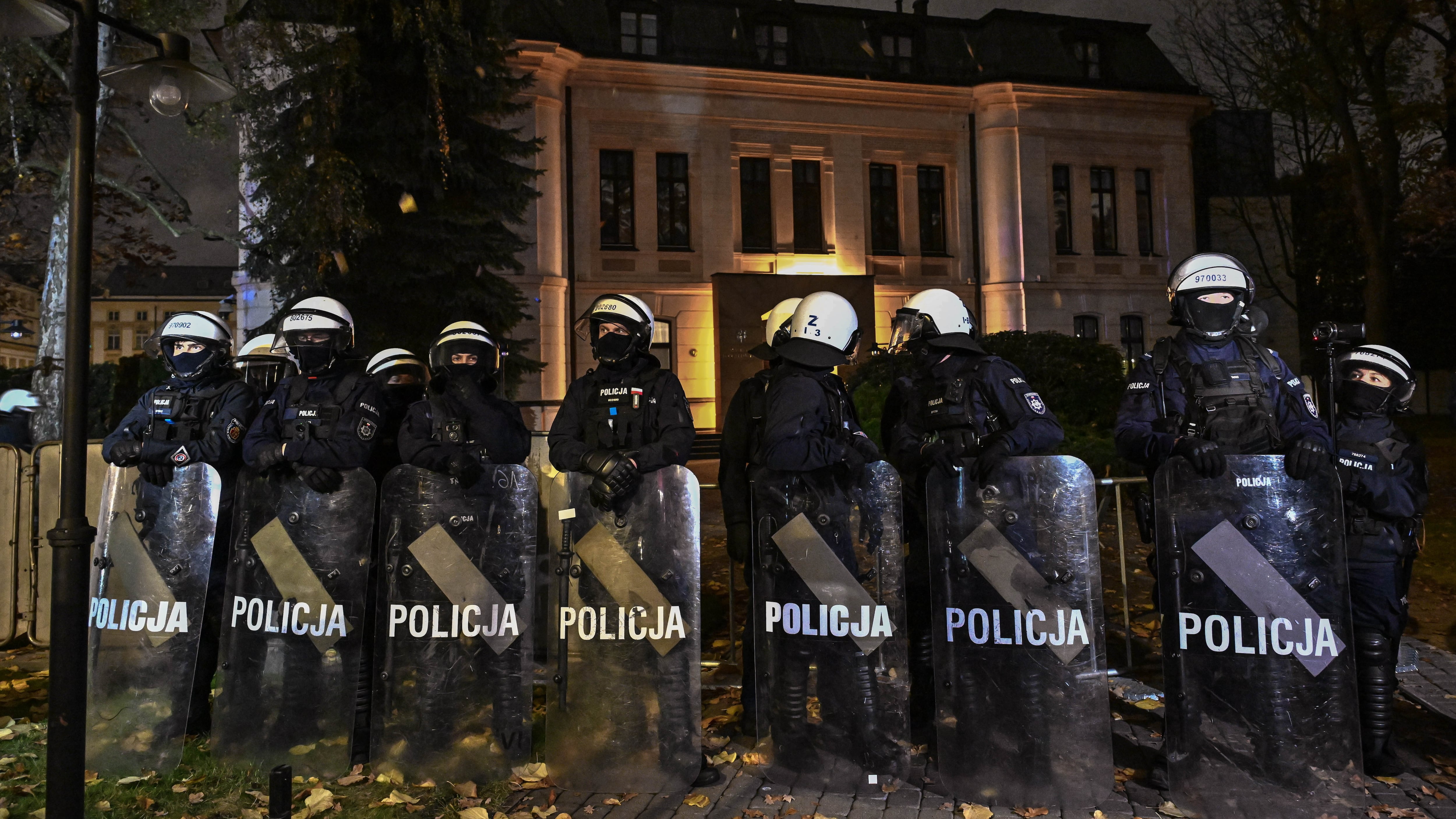
A constitutional crisis broke out in Warsaw on Friday evening as politicians reportedly physically clashed at the offices of Poland’s Constitutional Tribunal amid accusations of a “coup d’etat” by the globalist government of Prime Minister Donald Tusk.

The post ‘Coup D’état’: Polish Politicians Physically Clash as Globalist Tusk Gov’t Seeks Forceful Takeover of Constitutional Tribunal appeared first on Breitbart.

  •  

Polonia, scontro sulla Corte Costituzionale dopo la sospensione del presidente: Nawrocki forza l’ingresso

Tensione a Varsavia, crisi sulle nomine dei giudici: Nawrocki contro il governo Tusk

Si aggrava lo scontro istituzionale in Polonia tra il presidente conservatore Karol Nawrocki e il governo del premier Donald Tusk sul controllo della Corte Costituzionale. Dopo aver forzato nella notte l’ingresso nella sede della Corte a Varsavia, Nawrocki ha denunciato questa mattina che la crisi rappresenta una minaccia per la sicurezza interna del Paese, chiedendo consultazioni urgenti con tutte le forze parlamentari per “stabilizzare la situazione politica e ripristinare l’ordine costituzionale”.

Rivolgendosi ai manifestanti radunati all’esterno dell’edificio, presidiato dalle forze di sicurezza, il capo dello Stato ha chiesto “il ripristino dello Stato di diritto e il ritiro delle forze di sicurezza dispiegate dal governo nei locali della Corte”. Nawrocki aveva interrotto una visita ufficiale in Senegal per rientrare ieri sera a Varsavia, dove è stato ripreso in un video mentre forzava l’accesso alla sede dell’istituzione.

La crisi è precipitata dopo la sospensione del presidente della Corte Costituzionale, Bogdan Swieczkowski, e del suo vice. Secondo una comunicazione pubblicata sul sito della Corte, Swieczkowski, nominato durante il governo del partito nazionalista e conservatore Diritto e Giustizia (PiS), sarà sostituito temporaneamente da Anna Korwin-Piotrowska, una dei cinque giudici recentemente nominati dall’attuale Parlamento, ma non riconosciuti da Nawrocki, sostenuto dal PiS.

La vicenda rappresenta l’ultimo capitolo di un lungo scontro sulla magistratura polacca. Durante i suoi anni al governo, dal 2015 al 2023, il PiS aveva nominato alla Corte giudici politicamente vicini al partito, suscitando le critiche delle istituzioni europee. La Corte di giustizia dell’Unione europea aveva stabilito che l’organo non poteva essere considerato indipendente e imparziale a causa delle gravi irregolarità nelle procedure di nomina dei giudici e del suo presidente.Dopo la vittoria elettorale del 2023, la coalizione guidata da Tusk ha avviato un processo per smantellare le controverse riforme giudiziarie introdotte dai precedenti governi.

Agli eventi della notte sta seguendo un durissimo lo scontro tra le due parti. Swieczkowski ha denunciato un “colpo di Stato” e “un attacco a un’istituzione costituzionale”, sostenendo che la Corte sia composta da “giudici nominati legalmente, non da usurpatori entrati dalla porta sul retro accompagnati dalle forze di sicurezza del governo”.

Di segno opposto la reazione del ministro della Giustizia Waldemar Zurek, che ha condannato il comportamento di Nawrocki, giudicando inaccettabile il suo ingresso forzato nell’edificio. “È inammissibile che qualcuno protetto dall’immunità presidenziale si comporti in questo modo – ha dichiarato all’emittente Tvn24 – Per me è un comportamento scandaloso, che sfrutta la situazione per alimentare ulteriormente le tensioni nelle piazze”.

L'articolo Polonia, scontro sulla Corte Costituzionale dopo la sospensione del presidente: Nawrocki forza l’ingresso proviene da Affaritaliani.it.

  •  

Poland’s Constitutional Crisis Deepens as President Returns to Warsaw Amid Court Confrontation

A confrontation over the leadership of Poland’s Constitutional Tribunal has brought President Karol Nawrocki and Prime Minister Donald Tusk into direct conflict, exposing unresolved questions about judicial independence and the limits of presidential authority.

Poland’s constitutional dispute escalated on Friday, 30 October, after the reported suspension of the country’s Constitutional Tribunal president prompted demonstrations in Warsaw and forced President Karol Nawrocki to abandon an official journey to Senegal.

The confrontation concerns the leadership and legitimacy of an institution that has been at the centre of Poland’s political disputes for more than a decade.

Bogdan Święczkowski, the tribunal’s president and a former senior official in the previous Law and Justice (PiS) administration, was suspended from his duties, along with deputy president Bartłomiej Sochański.

The decision was announced by Anna Korwin-Piotrowska, a judge elected under the current parliamentary majority, who said she had assumed responsibility for the tribunal’s leadership.

However, the suspension was immediately challenged by Święczkowski’s supporters, who disputed both the legality of the decision and Korwin-Piotrowska’s authority.

The conflicting claims over control of the Constitutional Tribunal have created an unusual institutional situation in which rival groups dispute who is legally entitled to exercise authority over the court.

President intervenes as protests erupt

President Nawrocki, who was elected with the backing of PiS, ordered his aircraft to return to Poland while travelling to Senegal.

Explaining his decision on social media, he said: “At a moment like this, the President must be in Poland.”

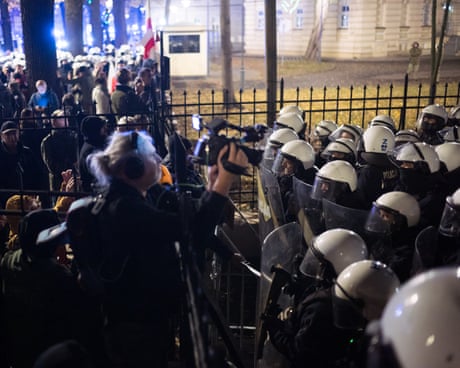
Hundreds of demonstrators gathered outside the tribunal in Warsaw, where police were deployed following reports of disorder.

According to accounts of the police operation outside the court, three people were detained after protesters breached a perimeter fence and objects were thrown at officers.

Nawrocki subsequently arrived at the court, where tensions continued into the early hours of Saturday.

Opposition politicians accused Prime Minister Donald Tusk’s government of attempting to seize control of the judiciary through unconstitutional means.

The tribunal’s disputed leadership also denounced the suspension as an attempted coup, maintaining that Święczkowski and Sochański remained legally entitled to hold their positions.

These are allegations made by the president’s political allies and the contested tribunal leadership, rather than established legal findings.

Tusk argues reforms are necessary

Tusk has defended his government’s actions as part of a wider effort to restore judicial independence following eight years of PiS government between 2015 and 2023.

“Restoring the rule of law is our duty,” Tusk wrote on social media, acknowledging that the process was difficult and required decisive measures.

His government argues that the tribunal’s existing leadership has obstructed judges elected by the current parliamentary majority from assuming their responsibilities.

Justice Minister Waldemar Żurek has also sought the removal of legal immunity from Święczkowski and Sochański over allegations that they prevented judges from performing their duties.

However, the legality of the latest suspension is disputed even among legal experts critical of the previous PiS government’s judicial reforms.

Constitutional law professor Marcin Matczak questioned whether the relevant legislation provided a valid legal basis for removing Święczkowski from his duties.

The disagreement illustrates a central difficulty facing Tusk’s administration: reversing contested institutional arrangements without creating new questions about the legality of its own methods.

A decade-long dispute over the judiciary

The origins of the confrontation date to 2015, when disagreements over judicial appointments developed into a wider struggle over the Constitutional Tribunal.

During its years in government, PiS introduced reforms that attracted criticism from European institutions and international legal bodies.

Critics argued that the changes undermined judicial independence and allowed political influence over appointments and disciplinary procedures.

Following Tusk’s return to office in 2023, his governing coalition promised to reverse the disputed reforms.

Progress has nevertheless been complicated by presidents associated with the opposition, who have used their constitutional powers to block or delay legislation and judicial appointments.

As EU Today previously examined in its analysis of Poland’s constitutional confrontation, Nawrocki has also proposed preparing a new constitution by 2030, potentially reshaping the relationship between the presidency, parliament and government.

The current confrontation represents an escalation of that wider institutional dispute.

Why Brussels is watching

Poland’s judicial arrangements have significant implications beyond its national political system.

The European Union depends on independent national courts to apply EU legislation consistently and protect rights established under European law.

In its 2026 assessment of the Polish justice system, the European Commission recognised further steps towards reform but maintained concerns about the Constitutional Tribunal and other aspects of judicial independence.

The Council of Europe’s Venice Commission has also addressed the powers of the Polish president regarding judicial appointments.

In an opinion adopted in October, the Commission concluded that the president should receive the oaths of judges elected by parliament without delay and could not use the process to review parliamentary appointments.

The opinion also addressed procedures that could be followed when the president refuses to participate in the oath-taking process.

Although the Venice Commission’s opinions are advisory rather than binding judgments, they provide an important international legal reference point.

The latest dispute raises two related questions: whether Poland can restore a constitutionally legitimate judicial system and whether the methods used to achieve that objective satisfy the relevant legal requirements.

Political consequences

The confrontation comes ahead of Poland’s parliamentary election expected in 2027.

For Tusk’s coalition, resolving the constitutional dispute is central to a programme presented to voters as a restoration of democratic institutions.

For PiS and President Nawrocki, the latest developments provide an opportunity to challenge the government’s methods and mobilise opposition supporters.

Poland’s divisions have also extended into criminal proceedings against former senior officials, including the dispute over efforts to extradite former justice minister Zbigniew Ziobro.

Although those proceedings are legally distinct from the Constitutional Tribunal dispute, both form part of the wider confrontation over the legacy of the previous government.

The immediate question is who will exercise effective authority over the tribunal and whether the rival parties can establish an accepted legal framework for resolving the dispute.

With competing claims to constitutional legitimacy and another national election approaching, Poland faces the prospect of a prolonged institutional conflict whose outcome will affect both domestic politics and the application of European legal standards.

  •  

Riot police deployed to Poland’s constitutional court after judge suspended

President Karol Nawrocki seen struggling to gain entry to court building in Warsaw amid long-running row over the court’s legitimacy

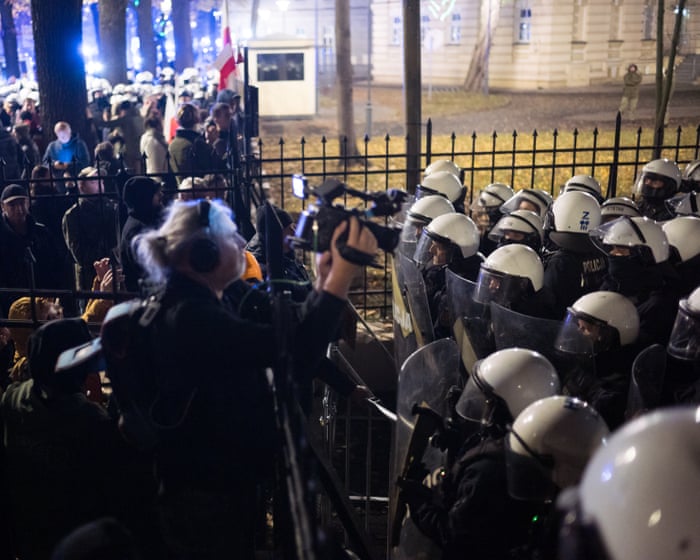
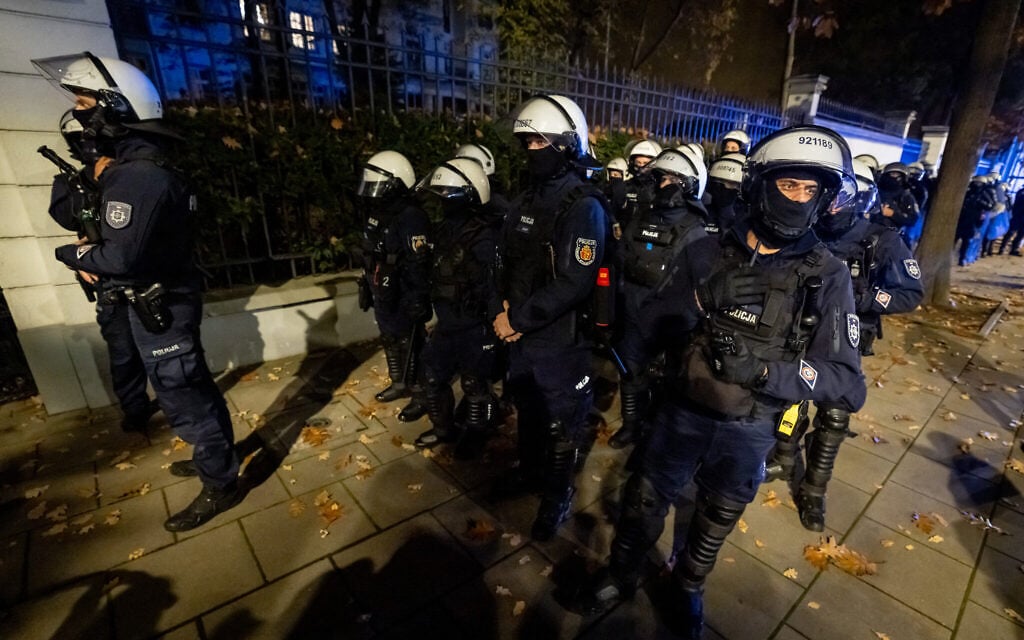
Riot police were locked in a tense standoff with protesters outside Poland’s constitutional court on Friday night after its top judge was suspended in the latest escalation in a decade-long dispute over the court’s legal status.

The clashes followed a controversial decision by a group of government-appointed judges to suspend the court’s contested president, Bogdan Święczkowski, and his deputy, Bartłomiej Sochański, amid disagreements over the bench’s legitimacy.

Continue reading...

© Photograph: Agata Grzybowska/Anadolu/Getty Images

© Photograph: Agata Grzybowska/Anadolu/Getty Images

© Photograph: Agata Grzybowska/Anadolu/Getty Images

  •  

La suspensión del presidente del Tribunal Constitucional de Polonia desata una crisis institucional

El Tribunal Constitucional de Polonia lleva siendo en la última década un campo de batalla político entre el bando liberal, ahora en el poder, y ultraconservador, en la oposición. El último combate se ha desatado este viernes por la noche, y ha requerido de la presencia de la policía. Los agentes han acudido para proteger a los jueces que se encontraban en el edificio de una protesta por la suspensión del presidente del Tribunal, Bogdan Swieczkowski, y el vicepresidente Bartlomiej Sochanski.

Seguir leyendo

💾

© REUTERS

La policía protege el recinto de la sede del Tribunal Constitucional, este viernes en Varsovia.
  •  

Tusk may win election but lacks votes to govern, warns former Polish PM

Former Prime Minister Leszek Miller said Donald Tusk could win next year’s parliamentary elections yet still fail to form a governing majority, allowing the conservative opposition led by Jarosław Kaczyński to take power. However, he does provide a strategy to help head off this outcome.

In an interview on Wirtualna Polska, Miller was asked to name the greatest success of Tusk’s government. “That it exists,” he replied. He said he had urged Tusk, then serving in Brussels, to return to Polish politics and was pleased when Tusk decided to do so. Since that decision, Tusk managed to secure power in Poland, but Miller warns that a second run may prove harder.

Miller argued that the 2027 elections could mirror those of 2023, when Kaczyński’s Law and Justice (PiS) party won the most votes but could not assemble a parliamentary majority.

“It’s not like Kaczyński lost the election. He won, but he did not have the ability to form a parliamentary majority,” Miller said. “And now it may be the other way around. Donald Tusk may win, but he will not have the ability to obtain a majority.”

Miller stressed that post-election arithmetic will matter more than campaign promises.

“Before elections, a lot of time is spent on appropriate advertising of the program and candidates. Everyone drives around, telling us what they will do for the happiness of society. But immediately after the elections it ceases to be important, because arithmetic appears, which is the queen of the Sejm,” Miller said, referring to the 231 votes needed for a majority in the lower house of Parliament. “It may turn out that Tusk won, but he does not have 231 votes, while Kaczyński does.”

A winning strategy?

Miller said Tusk must decide how to construct electoral lists. Tusk could include weaker coalition partners on a single list or risk some of them falling below the 5 percent threshold needed to enter parliament. Most of the polls show that under current conditions, Tusk will not have enough coalition partners to win an election. Many of his current partners falls below 5 percent, which means they have no chance of entering parliament.

Combining these parties into one electoral list may be a solution for Tusk.

“PSL will pressure Tusk to go together, because they themselves are wandering around 3-4 percent,” he said, referring to the Polish People’s Party. “Hołownia 2050 is a tragedy in general; they can’t survive without Tusk.”

If The Left holds a stable 7-8 percent, it can run independently and will not need Tusk, Miller added. But if its support drops, it too may seek a joint list. In that case, “the head of this list and the man who decides on the places is Donald Tusk.”

Miller led the Democratic Left Alliance and served as prime minister from 2001 to 2004. Tusk, leader of Civic Coalition, has been prime minister since late 2023.

The post Tusk may win election but lacks votes to govern, warns former Polish PM appeared first on Remix News.

  •  

Ukraine wants its Abu Dhabi talks with Russia before a proposed Trump-Putin-Xi summit

talks in abu-Dhabi

Ukraine wants its Abu Dhabi talks with Russia and the US to come before a proposed summit of the US, Russian, and Chinese leaders, President Volodymyr Zelenskyy said on 27 October. Polish Prime Minister Donald Tusk indicated the first round in Abu Dhabi could come after 4 November.

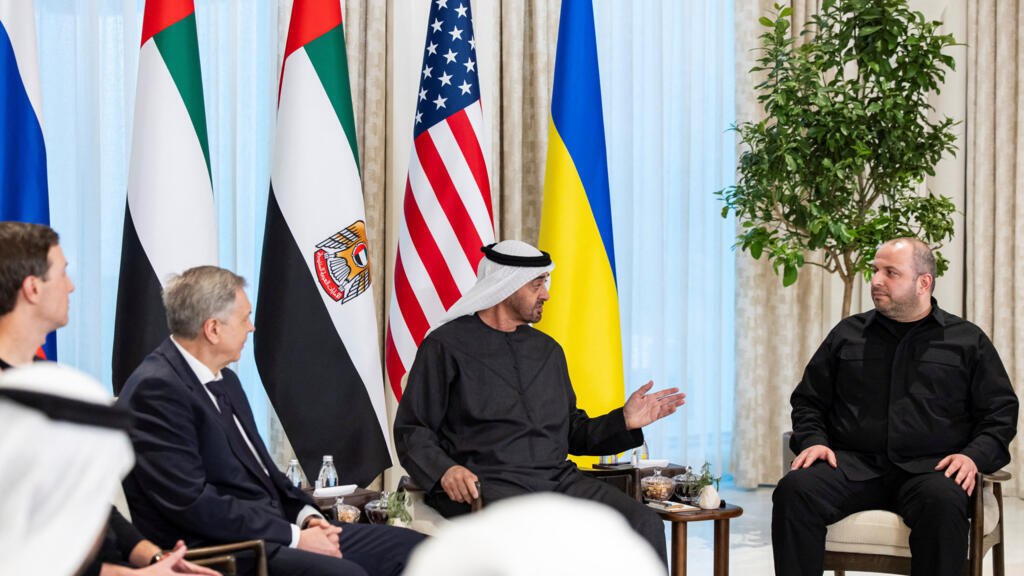
Abu Dhabi is meant to host the first round of trilateral talks between Ukraine, Russia, and the US on ending Russia’s war since delegations last met in winter. Meanwhile, Trump has waived new sanctions on Russia and struck a diesel deal with Moscow while pressing Kyiv to spare Russian refineries. In Abu Dhabi, Ukraine would at least sit at the table. A rival idea, a summit of the US, Russian, and Chinese leaders, would leave it out of the room.

Abu Dhabi first

The rival idea came from Moscow. Putin proposed meeting Trump and China’s Xi Jinping at the APEC forum in Shenzhen on 18–19 November to negotiate an end to the war on terms that would favor Moscow, The Wall Street Journal reported on 18 October. A senior US official told the paper Trump had not agreed but could be receptive. Kremlin spokesman Dmitry Peskov told the paper that a meeting was under discussion.

If that summit comes first, a deal shaped around Moscow’s terms could reach Trump before Ukraine’s own talks begin. Zelenskyy wants Abu Dhabi first. “We would very much like our meeting in Abu Dhabi to happen before that,” he said. Both Kyiv and Moscow have confirmed the meeting and view its format positively, he said. That leaves the American side, whose main focus is the Middle East.

Trump’s own remarks early on 28 October pointed to a meeting of leaders instead. One would be set up soon, he told reporters, “with President Putin and President Zelenskyy.”

Ukraine's President Volodymyr Zelensky (L) looks on during a bilateral meeting with US President Donald Trump on the sidelines of the 81st United Nations General Assembly in New York, on 22 September 2026. (Photo: Brendan SMIALOWSKI / AFP/Eastnews)
Explore further

Ukraine now fights two enemies. One is America

For Abu Dhabi, Zelenskyy listed Kyiv’s agenda: de-escalation on energy and at sea, a prisoner exchange, and the format of a trilateral leaders’ meeting. A date is another matter. On the evening of 27 October, presidential communications adviser Dmytro Lytvyn told journalists it was too early for announcements.

Warsaw looks past 4 November

Tusk spoke before a cabinet meeting, after Finnish President Alexander Stubb and Norwegian Prime Minister Jonas Gahr Støre held a 90-minute call with Putin. The two said they spoke for their own countries, not for Europe. Stubb briefed Tusk afterwards. Tusk said the European side came away very moderately optimistic about constructive talks in Abu Dhabi, and pointed to a first round there after 4 November. Yet he urged absolute caution and warned against expecting an easy deal.

  •  

Poland paused a military aid package over Lviv’s vote honoring WWII nationalists, Ukrainian source says. Polish ministry denies it

polish defense

Poland has paused the delivery of a large military aid package to Ukraine after a Lviv regional council honored the Ukrainian Insurgent Army (UPA), a WWII nationalist force, a source in the Ukrainian government told European Pravda on 21 October. A Polish Defense Ministry spokesperson told Fakt the report was untrue, though he told WP he knew nothing about a possible delay in shipment.

If confirmed, the freeze would carry a history dispute into Poland’s military aid. The row flared in May, when Kyiv named a special forces unit after the UPA, and in June Poland’s president stripped Zelenskyy of Poland’s highest honor. Even so, Ukraine’s ambassador said in August that Polish military aid was still flowing.

A vote and a disputed freeze

The Lviv Oblast Council voted on 20 October to name 2027 the year of the UPA, its commander Roman Shukhevych, and nationalist activist Oleh Olzhych. The UPA fought Nazi Germany and the Soviet Union, but Poland holds it responsible for mass killings of Poles in Volhynia and Eastern Galicia in 1943–1944. The resolution disappeared from the council’s website late that evening, RMF24 reported.

The source blamed what it called the councilors’ irresponsible actions, saying the vote came as Poland prepared the shipment and that work through closed channels is underway. The ministry spokesperson, Janusz Sejmej, called the report untrue. Asked whether it could reflect a delay in shipment, he said he knew nothing about that.

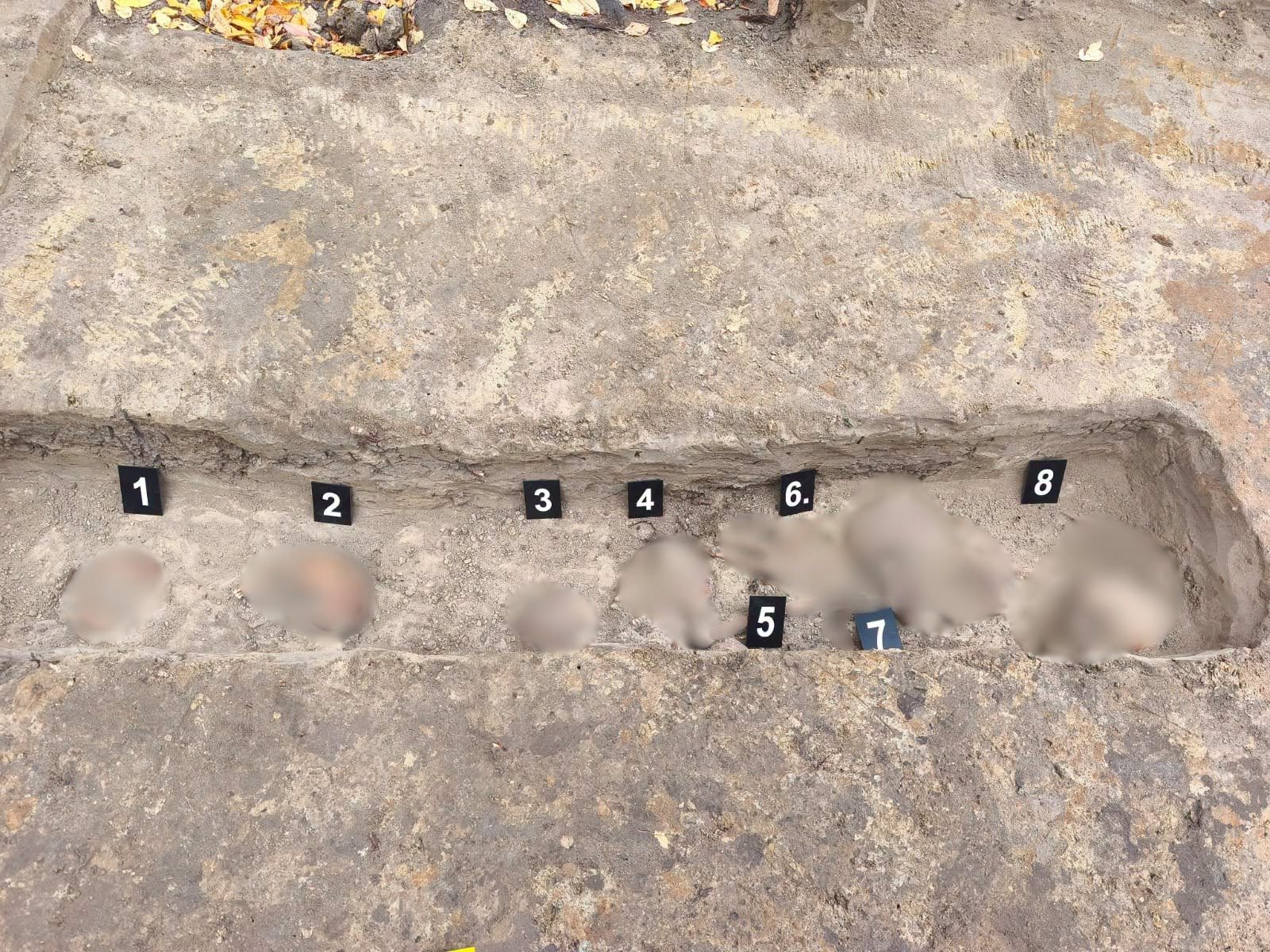
Human remains, likely belonging to a Ukrainian killed in 1944 in the village of Łasków, Lublin Voivodeship, Poland, October 2026
Explore further

Progress on a sore point for Ukraine and Poland: remains of over 40 Ukrainians killed by Polish WWII units found in Łasków

Polish officials push back

On 20 October, Defense Minister Władysław Kosiniak-Kamysz wrote that Ukraine’s authorities must distance themselves from the council’s position.

The next morning, Prime Minister Donald Tusk called the vote unwise and harmful above all to Ukraine. He said he had warned Zelenskyy earlier that such gestures hinder Ukraine’s friends, though the president was not responsible for this vote. At such moments, Tusk said, Russians always rub their hands.

Foreign Minister Radosław Sikorski then requested that councilor Sviatoslav Sheremeta, who proposed the resolution, be added to Poland’s list of unwanted persons. That afternoon, Interior Minister Marcin Kierwiński said the decision had been made. Sheremeta is barred from the Schengen zone until 2031, RMF24 reported. Poland had already barred him once, in 2017, the outlet said.

Kyiv asks for restraint

Earlier on 21 October, before the ban, Ukraine’s Foreign Ministry called the vote counterproductive in a reply to journalists and urged Warsaw to avoid abrupt steps. Zelenskyy’s closest aides had also promised the resolution would not take effect, Deputy Foreign Minister Marcin Bosacki told TVN24.

  •  

Poland’s parliament votes to ease abortion ban but faces likely veto from president

Measures would remove some penalties for those helping women access abortion but are ‘small-scale step’, say campaigners

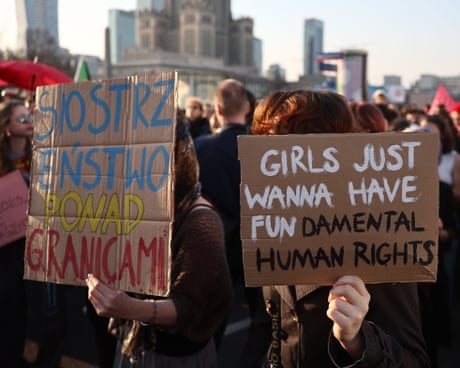
Poland’s lower house of parliament has approved two bills aimed at loosening a near-total ban on abortions, in what campaigners have described as a “small-scale step” ahead of protests calling on the government to fulfil its promises to overhaul the country’s laws.

The new measures, which are likely to be vetoed by Poland’s nationalist president, would remove some of the criminal penalties for those who help women to access abortion care and allow terminations in cases of foetal abnormalities.

Continue reading...

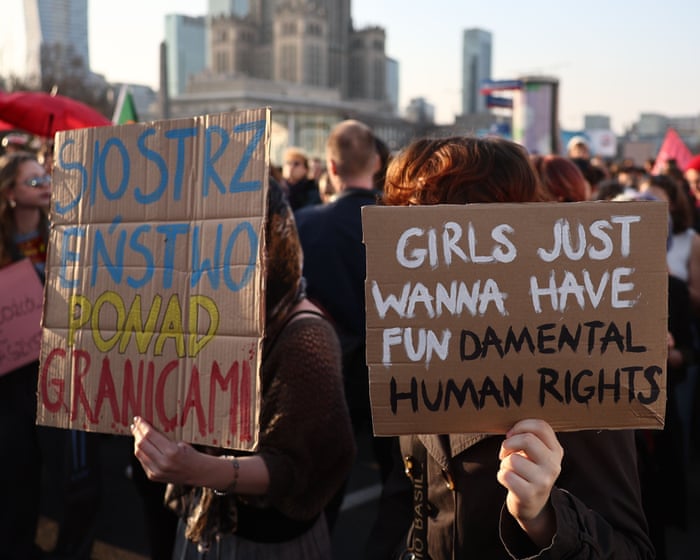
© Photograph: Jakub Porzycki/NurPhoto/REX/Shutterstock

© Photograph: Jakub Porzycki/NurPhoto/REX/Shutterstock

© Photograph: Jakub Porzycki/NurPhoto/REX/Shutterstock

  •  

Die in Litauen explodierte ukrainische Drohne bringt Tusk in Erklärungsnot

Man muss weder Völkerrechtler noch Experte sein, um zu wissen und zu verstehen, dass es eine direkte Kriegsbeteiligung ist, wenn ein Land einem anderen Land seinen Luftraum für Angriffe auf ein weiteres Land zur Verfügung stellt. Genau das tun Polen, die baltischen Staaten und Finnland aber schon seit etwa zwei Jahren, denn so lange fliegen […]
  •  
❌