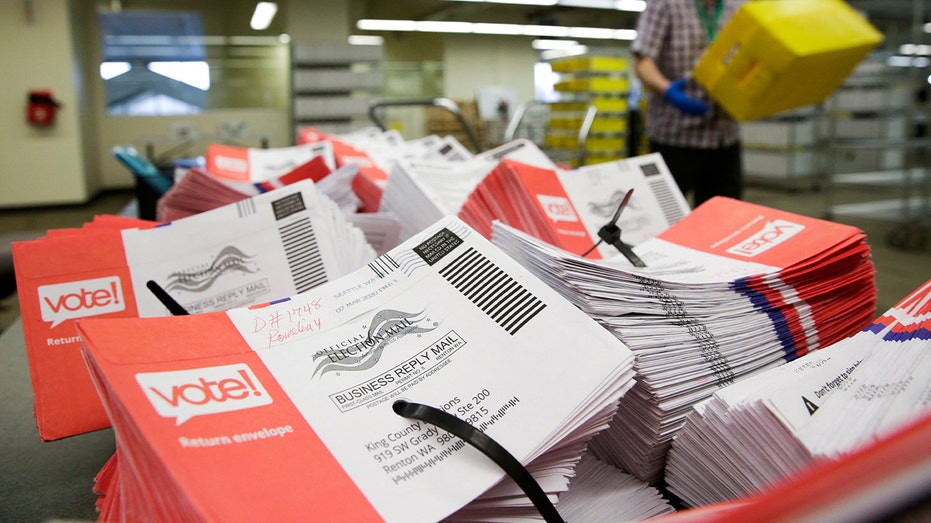
American-born Pope Leo XIV has become the first pope ever to vote in a U.S. election.
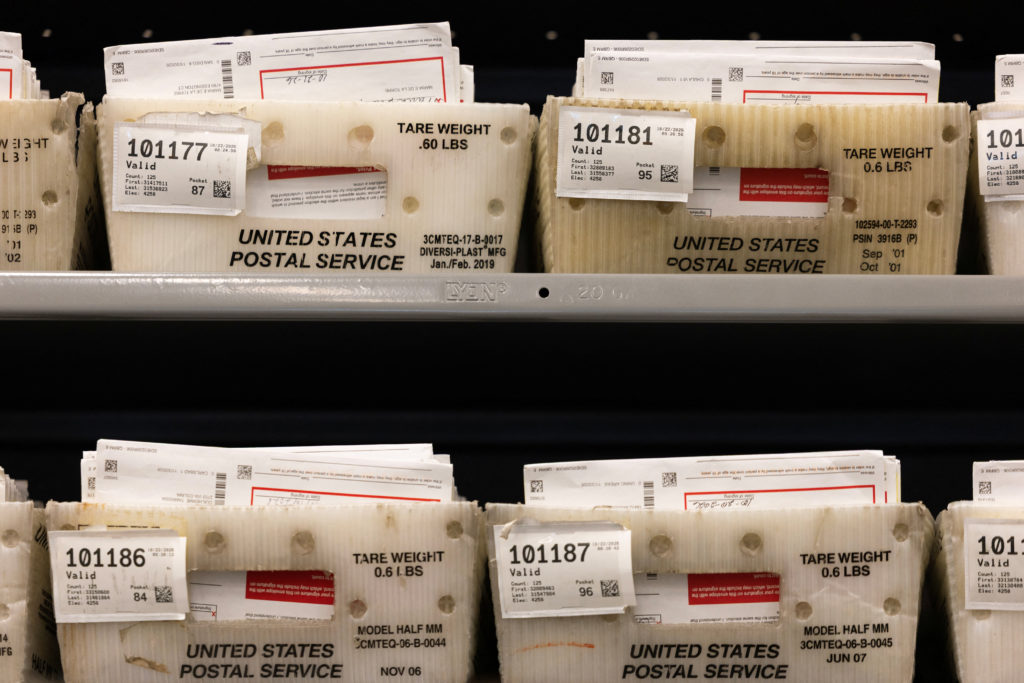
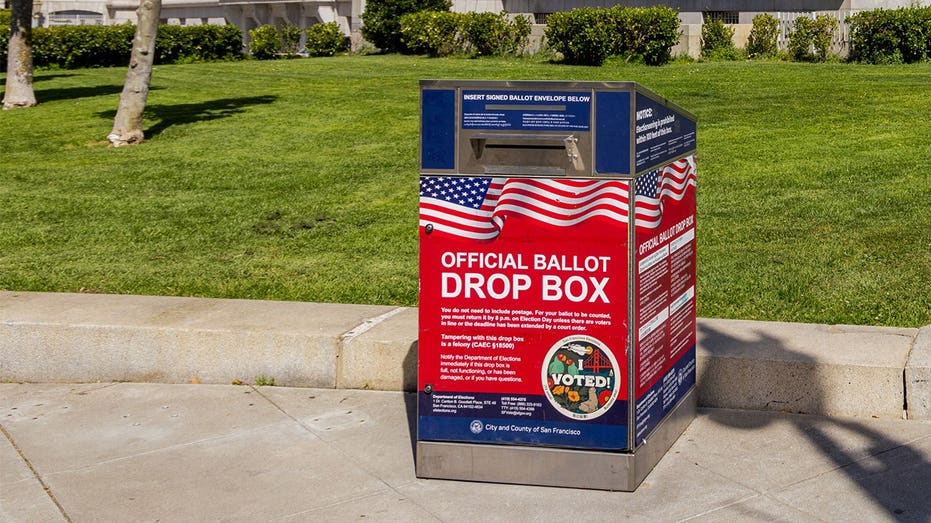
The Holy See Press Office confirmed to Fox News Digital on Friday that Leo, born Robert Francis Prevost and the first American-born pope in the Catholic Church's more than 2,000-year history, submitted a mail-in ballot in Illinois.
"Pope Leo XIV has exercised his right to vote as a United States citizen, whenever he was eligible to do so," the Holy See Press Office said. "The Holy See Press Office confirms that in keeping with this long-standing practice of civic participation, he has submitted his mail-in ballot in Chicago."
"The Holy Father has also confirmed that, during his years of residence in Peru he exercised his right to vote whenever he was eligible to do so," the press office added. "The Holy Father expresses his belief in the right and the duty of citizens to participate in democratic processes."
The Will County clerk’s office told the Chicago Sun-Times on Thursday that Leo requested a mail-in ballot on Oct. 3, while the Vatican separately confirmed that the pontiff had submitted his ballot.
"Robert Francis Prevost is on the list of individuals who requested a vote by mail ballot for the upcoming election," Kim Fladhammer, Will County clerk’s office chief of staff, told the Chicago Sun-Times.
Among the races on Illinois' ballot is the contest for governor, where incumbent Democrat J.B. Pritzker is seeking a third term against Republican Darren Bailey and independent candidate Collin Corbett.
The Will County clerk’s office and Pritzker's campaign each did not immediately respond to Fox News Digital's requests for comment.
"There is no such thing as an absentee ballot in Illinois law anymore. So anyone can vote by mail if they so choose. There is also a law called UOCAVA, The Uniformed and Overseas Citizens Absentee Voting Act that is mostly for the military, but it’s also for U.S. citizens who are overseas," Illinois State Board of Elections spokesman Matt Dietrich told the Chicago Sun-Times. "... Any Illinois registered voter can vote by mail."
"Until 2010, it was considered absentee, and you had to have an excuse," Dietrich added. "But that’s all gone away. So that’s obviously what he’s doing."
Early voting is continuing to significantly outpace the last midterm election, with millions more Americans casting ballots in advance and particularly sharp increases in states hosting competitive Senate races, according to an Associated Press analysis of voting data five days before Election Day.
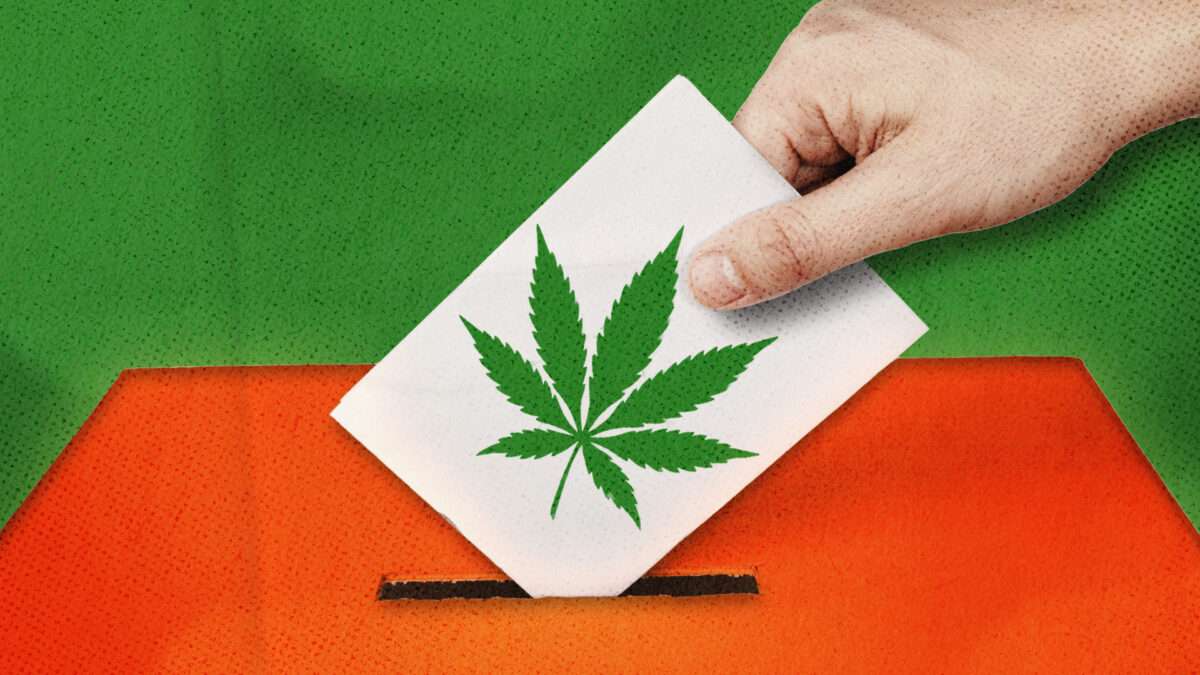
A decade ago, 54 percent of Massachusetts voters said yes to Question 4, a ballot initiative that legalized possession, home cultivation, and commercial distribution of recreational marijuana. Judging from recent surveys, voters are not inclined to reverse that decision by approving Question 8, an initiative on next Tuesday's ballot.
Question 8, a.k.a. the Eliminate Recreational Marijuana Sales and Allow Limited Possession Initiative, would permit adults 21 or older to possess up to an ounce of cannabis. But they would have to get it from the black market, since Question 8 would not allow them to grow it or buy it from state-licensed retailers.
The initiative "would keep personal possession of marijuana legal, keep medical marijuana legal, and stop commercial marijuana stores," its supporters say. They allege that legalization has impaired "productivity" and led to increases in "fatal car accidents," "workplace injuries," "healthcare costs," "crime (like DUI's)," "ER visits," and "mental health conditions like psychosis, severe anxiety, and schizophrenia, particularly in young adults."
Voters do not seem impressed by those arguments. In eight polls between mid-February and mid-October, support for Question 8 ranged from 20 percent to 41 percent. In the most recent survey, conducted by The Boston Globe, 71 percent of respondents said they planned to vote no on Question 8, which suggests that experience with legalization has substantially increased opposition to pot prohibition in Massachusetts.
Question 8's sponsor, the Coalition for a Healthy Massachusetts, is funded almost entirely by Smart Approaches to Marijuana (SAM). As of October 20, the Virginia-based group had spent $3.7 million on the project, compared to $2.8 million in spending by the opposition, which includes several marijuana businesses.
SAM's co-founder, Kevin Sabet, who served as a drug policy adviser during the Clinton, George W. Bush, and Obama administrations, says he was motivated by the concerns of Massachusetts residents who approached him. "Many of them voted for this initiative 10 years ago and feel betrayed," Sabet told WGBH, an NPR station in Boston. If so, the polls indicate such converts are far outnumbered by former Question 4 opponents who have traveled that road in the opposite direction.
"We're under no illusions that the bluest state in the country is going to pass this easily with flying colors," Sabet told WBUR, another Boston NPR station, a few weeks ago. "But we want to have that conversation."
The conversation clearly is not going the way Sabet hoped. Massachusetts, which was the fifth state to legalize recreational marijuana, is now one of two dozen, which together account for most of the U.S. population. In October 2025, Gallup put nationwide support for marijuana legalization at 64 percent, which was down a bit from the peak of 70 percent recorded in 2023 but still 16 points higher than in 2012, when Colorado and Washington started this ball rolling.
Public support for legalizing recreational marijuana tends to be even higher in states that have done it. In Civiqs surveys last December, support in 15 states where voters had approved legalization ranged from 62 percent in Missouri to 77 percent in Oregon. It had increased since legalization in every state but New Jersey, where it was down one point from the 67 percent of voters who approved Public Question 1 in 2020. In Massachusetts, support had risen from 54 percent to 76 percent.
The fate of two other drug policy initiatives that voters will consider next week is less clear. As far as I can tell, pollsters have not asked voters about them.
Colorado's Proposition 132 would make manufacturing or distributing any amount of illicit fentanyl a Level 1 drug felony punishable by a mandatory minimum sentence of eight years. Under current law, the penalties vary depending on the amount of fentanyl involved.
In Idaho, House Joint Resolution 4, a proposed constitutional amendment, would strip voters of the power to legalize marijuana or any other psychoactive substance. If the initiative passes, which requires approval by a simple majority, that power will be reserved to the state legislature.
For years, Democrats — especially "mainstream" (left-wing) reporters — have pretended President Trump persecutes the press. Their current silence is deafening after Democratic Hennepin County Attorney Mary Moriarty just brought bogus and stunning felony charges against two conservative journalists, Cam Higby and James O'Keefe, for having the audacity to expose Minnesota's woefully lax voter security protocols. In other words, Moriarty illegally charged two reporters for doing their jobs.
Moriarty’s illegal felony charges against disfavored reporters for non-crimes crossed a glaring red line, and the Trump Justice Department must immediately and publicly open a civil rights criminal case against Moriarty and others for conspiring to violate and violating Higby and O’Keefe’s First Amendment constitutional rights, under 18 U.S.C. §§ 241 and 242. If the evidence is there, which it seems obvious, Moriarty must face federal charges immediately. Anything short of this turns a blind eye to an extraordinarily dangerous open season on America’s free press.
Every illegal vote, as a matter of basic arithmetic, disenfranchises a legal voter. Election integrity requires public confidence in the system's security. Tina Peters faced nearly a decade in prison for revealing serious election flaws in Colorado until Democratic Gov. Jared Polis courageously commuted her sentence. Following Peters' lead, Higby and O'Keefe set out to test Minnesota's voting system for weaknesses. Higby wore a burqa and posed as a registered voter. He also vouched for a companion he said was registered as well. He filmed the exchange with poll workers to show his online audience just how vulnerable the system really is.
The video shows that Higby never had to present photo identification. His word alone cleared his companion, who also produced no ID. To be clear, neither cast a ballot. The exercise simply aimed to demonstrate, as Higby certainly did, how easily someone can manipulate Minnesota's elections.
The state's U.S. Senate race between Republican Michele Tafoya and far-left Democrat Peggy Flanagan is tightening. The stakes are high: The race could decide control of the Senate chamber. Only lawful voters should cast ballots, and the law limits federal elections to American citizens.
What Higby and O'Keefe did was vintage investigative journalism, not voter fraud. The First Amendment guarantees a free press to protect this precise kind of work. If prosecutors can punish undercover journalism with felony charges, oversight by the Fourth Estate will dramatically diminish. Fear of prosecution and prison will chill would-be investigators whenever the powers-that-be dislike a story, such as one revealing insecure ballot safeguards.
But Moriarty, a Democrat lawfare crusader, does not care about any of this. She only cares about getting plaudits from top Democrat brass — and power — at any and all costs, including imprisoning reporters.
Moriarty applies the law selectively. The case of Turning Point USA activist Savannah Hernandez proves it. Three agitators assaulted Hernandez in front of numerous witnesses and cameras captured the attack. Moriarty pursued only misdemeanor charges — a slap on the hand. Fortunately, federal prosecutors stepped in and filed felony charges against the three alleged attackers. Yet Moriarty now seeks to convict Higby and O'Keefe of serious crimes, though they attacked no one and neither voted illegally nor actually attempted to vote in the first place.
Moriarty's lawfare demands a federal response. Federal law, specifically 18 U.S.C. § 242, makes it a crime to willfully deprive anyone of constitutional rights under color of law. And 18 U.S.C. § 241 makes it a crime to conspire with others to do the same. Moriarty should go after fraudsters at the ballot box and those behind billions in bogus claims against Medicaid. Instead, she is hounding two journalists for doing their jobs: showing the public how dismal Minnesota's election protections are.
Higby and O'Keefe should not face criminal charges. But Moriarty and her co-conspirators must. Indicting them would send a resounding message to Soros-backed and other leftist district attorneys across the nation: Lawfare will carry dire legal consequences. Prosecutors must meet the highest standards. After all, as the left intoned during the anti-Trump lawfare years, no one is above the law.
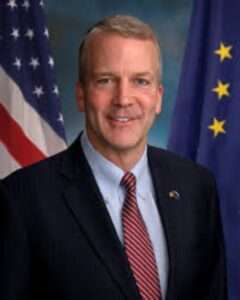
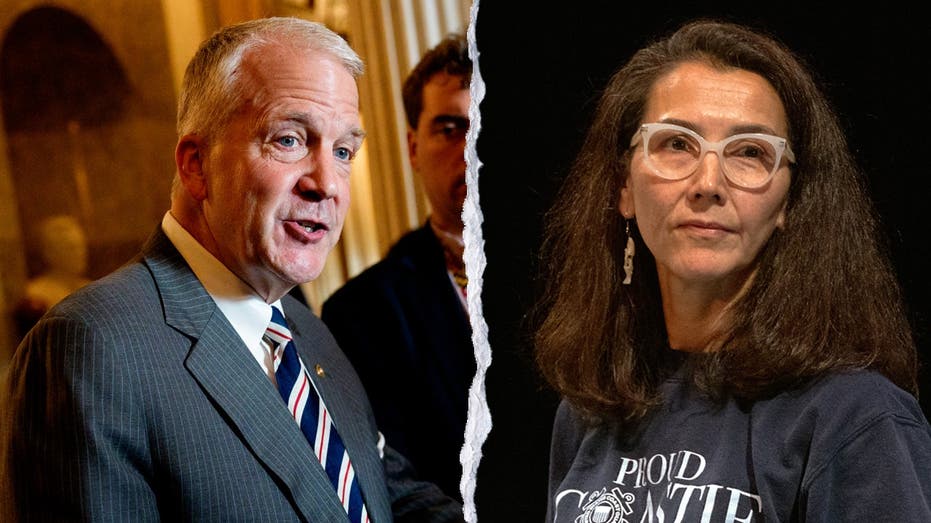
The Republican National Committee rejected the narrative that both parties engage in similar tactics after a New York Times report exposed Democrat-linked efforts to recruit a second "Dan Sullivan" onto Alaska’s Senate ballot, saying Republicans are focused solely on securing elections while Democrats are "trying to be fraudulent."
"No, both sides of the aisle don’t do this," RNC election integrity communications director Ally Triolo told Fox News Digital on Thursday. "Our entire effort here at the RNC is securing elections, making them fair and free and honest."
"We are doing the exact opposite of what Democrats are trying to do. Democrats have voted time and time again against the Save America Act. They have voted against common sense safeguards.
"We couldn't be more different from Republicans versus Democrats, and I honestly hope people see this straight in the eye with what's happened out of Alaska, that Democrats are completely disingenuous. They have ill intentions. They're trying to disenfranchise voters, and, of course, trying to be fraudulent.
"This is fraudulent behavior, and they need to be held accountable to the fullest extent."
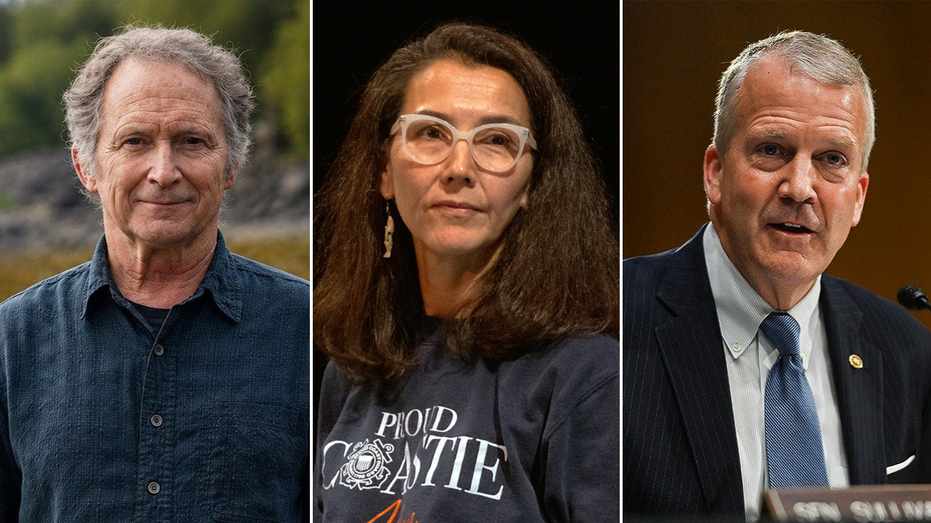
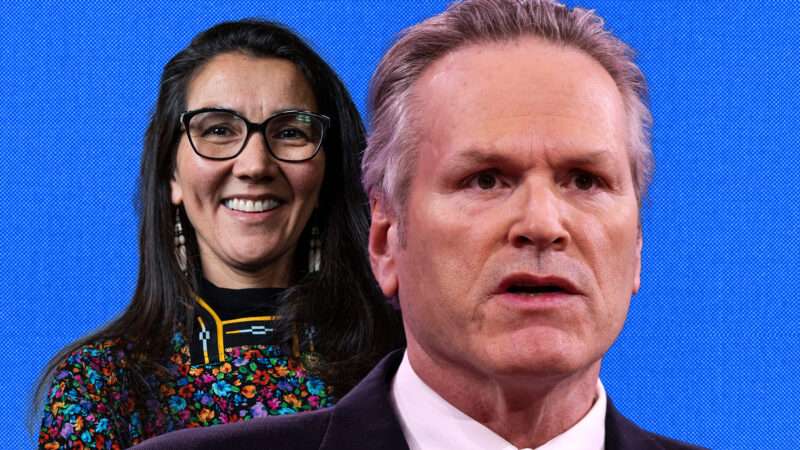
The Times reported Wednesday that Senate nominee Mary Peltola’s campaign, aides from the Democratic Senatorial Campaign Committee and others worked to place a retired teacher named Dan J. Sullivan on the ballot.
"Republicans, we tried to fight this months ago and draw attention to this Democrat scheme," Triolo said. "And look, no wonder Democrats are against election integrity because they don't want to be held accountable for trying to disenfranchise voters and cheat the system."
"It has been abundantly clear from the get-go that this was a ploy to try to sway voters, confuse voters, take votes away from the real Sen. Dan Sullivan," she added. "And that is exactly why you saw the DOJ intervene just last week to make sure there were protections in place before the election could be certified to make sure everything was above board. And now we have this bombshell report coming out exposing exactly what we have been saying, and I think this points to the larger issue of Democrats continually fighting election integrity, because again, they have admitted that they cannot win fair and square when safeguards are in place."
The RNC election integrity unit has a major on-the-ground operation in Alaska, she said, including an in-state director, attorneys, observers and poll workers, and that President Donald Trump and the Justice Department have already moved to address the issue.
The DOJ last week sued to block certification of a potential Peltola win if votes for the second Sullivan could have changed the outcome, and a senior DOJ official told Fox News on Thursday that the criminal investigation has intensified, with officials examining possible civil-rights violations under 18 U.S.C. §§ 241 and 242.
Vice President JD Vance said authorities should "certainly look into whether [Peltola] committed election fraud," describing the effort as an attempt to "steal a Senate seat." Senate Majority Leader John Thune called it a "coordinated effort" and "totally dirty pool."
There is an "aggressive criminal investigation" into Daniel J. Sullivan Jr. appearing on the ballot, sources told Fox News. That investigation has only intensified since the Times' reporting but has been underway for several months.
This investigation, being run by the U.S. Attorney’s Office in Alaska, is expected to go beyond Tuesday's Election Day, and there will not be any sort of indictment or heavy grand jury activity before then.
The DOJ thus far has declined to comment on the matter.
Alaska Gov. Mike Dunleavy has also ordered a state investigation. Peltola’s campaign and DSCC officials have denied involvement in recruiting the second Sullivan to confuse voters, issuing warnings that "both sides" put up spoiler candidates in elections.
The Alaska Supreme Court previously ruled the second Dan Sullivan could remain on the ballot under state law.
"The RNC is heavily invested in protecting the vote in Alaska since this scheme came out," Triolo said. "We've been fighting it, drawing attention to it, doing everything we can to educate voters.
"We are heavily invested in securing Alaska and obviously this scheme is an absolute fraud. You saw President Trump come forward and say that Mary Peltola, the fake Dan Sullivan, all of these individuals should be held accountable not only for lying about their affiliation with the scheme, but also just for trying to deceive voters.
"We are seeing this play out in real time. Even The New York Times, the left-wing media, has no choice but to hold them accountable for their schemes.
"So I think what we need to stay focused on, as Republicans, is that we need to keep the majority. This is why this midterm election feels like a presidential, because so much is at stake."
Fox News' David Spunt, William Mears and Jake Gibson contributed to this report.
The election system in Minnesota is facing scrutiny on social media after a clip of a state official speaking to Somali voters reignited concerns about election integrity in the state.
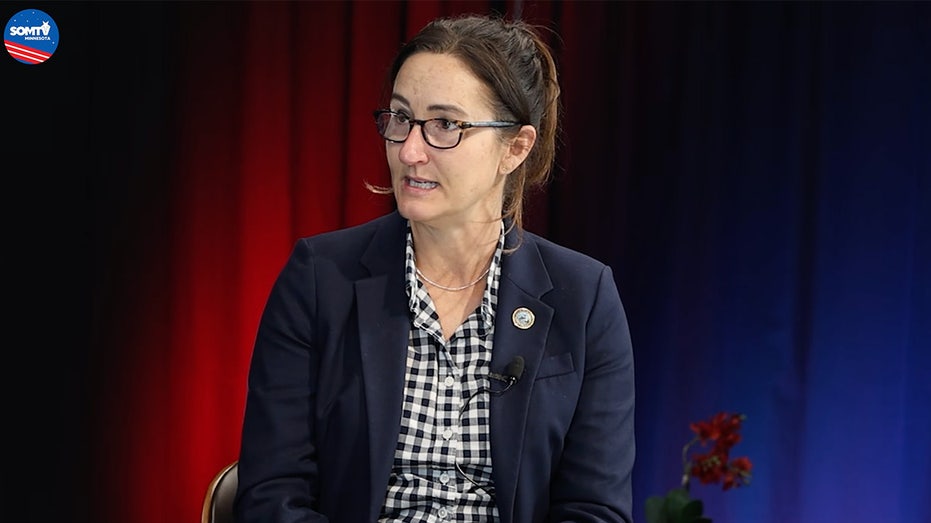
"If you’re already registered to vote, you don’t need to bring anything with you," Minnesota Voter Outreach Director Melanie Hazelip said on Somali TV.
"You just show up to your early voting location, which is usually the county office or City Hall. Minneapolis and the bigger jurisdictions have a lot of extra places where you can go, like a lot of libraries or community centers. As long as you’re registered to vote, you don’t need to bring anything with you.
"If you’re not registered to vote … you still have options. If you have a Minnesota ID that is updated, that’s all you need to bring with you. If you don’t have that, there is a list of documents on our website that you can find. You still have options to get registered same day."
While Hazelip's comments were in accordance with the laws on the books, they prompted outrage on social media after being posted by conservative influencer End Wokeness, and the post racked up almost a million views with users making the case that the system is too lax.
"A Minnesota election official just went on Somali TV and walked viewers through how to same-day register and vote using a Minnesota state ID," retired Navy intelligence Officer Phillip C. Parrish posted on X.
"Minnesota hands out those IDs to non-citizens with no citizenship marking. Vouching lets one registered voter clear up to eight others on an oath. Citizenship is required by law. Real-time proof is not. The same state that lost hundreds of millions to documented fraud in childcare, nutrition, and Medicaid programs is now advertising the lowest-friction path to the ballot on community TV. Affirm you’re a citizen. Cast the vote. Get investigated later—if at all. This is how the system is built. It is not an accident."
Federalist Society co-founder David McIntosh wrote on X, "Democrats are on a mission to tell every non-citizen how they can get away with voting in our elections.
"Nothing to see here, I'm sure," Red Ax Strategies President Matthew Brodsky posted on X.
"This is why passing the SAVE America Act is crucial," conservative commentator Riley Gaines posted on X.
In a statement to Fox News Digital, the Minnesota Secretary of State's office said it "provides information and resources on Minnesota election laws to hundreds of nonpartisan community groups every year as a part of our regular voter engagement efforts."
"Recently, our voter outreach director spoke with a local news outlet and provided accurate information about Minnesota election laws and how eligible voters cast their ballots. Unfortunately, her accurate remarks have been misinterpreted and misrepresented by political actors online," the statement said.
"With only a few days left before the election, we remain focused on making sure every eligible Minnesotan knows how and where to cast their ballot."
Bill Glahn, a policy fellow at the Center of the American Experiment, told Fox News Digital, "given the timing, so close to the election — and the audience, Somali TV — she really should have emphasized the need to be an American citizen in order to vote."
"It's true most Somali immigrants are naturalized citizens, but not all," Glahn said. "In fact, we just had a noncitizen sentenced to 30 years in federal prison for the Feeding Our Future fraud."
The scrutiny comes as the Walz administration confronts hundreds of millions of dollars lost to social services fraud tied to the state’s Somali immigrant community. Critics pointed to a further wrinkle in Minnesota state law signed by Gov. Tim Walz in 2023 that provided for Driver's Licenses For All regardless of immigration status. The policy also stipulates that the licenses carry no markings indicating citizenship, even though such IDs are commonly used to register to vote.
Under Minnesota law, a registered voter can "vouch" for up to eight other voters’ residency who want to sign up for same-day voter registration without an ID. The registered voter must go with the person or people to the polling place and sign an oath verifying their address, according to an official fact sheet from the Office of the Minnesota Secretary of State.
Glahn told Fox News Digital earlier this year that while the state touts the safeguards it has put in place to ensure only citizens vote, "it’s like murder’s illegal, but it happens all the time."
"It's a penalty of perjury," he said. "You signed an oath, but if you signed as Mickey Mouse, they're not going to find you."
In September, a federal indictment was handed down charging an illegal immigrant from India with knowingly making the false claim to be a U.S. citizen to vote in the 2024 general election in Minnesota.
Fox News Digital's Charles Creitz contributed to this report
A federal judge rejected on Wednesday a Trump administration request to stop California from processing the ballots of up to 20,000 people over allegations they are likely noncitizens, warning it would "wreak havoc" on the midterm elections.
A recentNew York Times article presents evidence that Alaska Democrats sought to confuse voters in that state's 2026 Senate election by introducing a second candidate with a name very similar to that of the Republican incumbent, thereby potentially siphoning off some of the latter's voters. The incumbent senator is named Dan S. Sullivan, while the other candidate is Dan J. Sullivan. As the Times reports, some of the facts here are disputable, and it is not entirely clear whether Democratic candidate Mary Peltola knew about this effort or approved of it. But it seems likely that at least some of her staffers and other Democratic operatives were involved.
Before going further, I should emphasize that this effort is worthy of condemnation. Trying to confuse voters into voting for the "wrong" candidate in this way is not how democratic political participation should work. And the fact that other politicians (including Republicans) engage in various electoral "dirty tricks" doesn't justify this one.
Elsewhere, I have explained why these kinds of actions are not illegal, and why the Trump administration's lawsuit seeking to block certification of the Alaska Senate result deserves to fail. I stand by that conclusion. Legal scholar Rick Hasen (a leading election law expert) has a helpful recent post explaining why the New York Times revelations do not change anything from a legal point of view. But the fact that this scheme is legal doesn't make it right.
That said, it is important to keep this issue in proper perspective, and especially to recognize that many other types of lies and efforts to exploit voter ignorance are much worse. Confusion caused by candidates with similar names is relatively rare, and it is difficult to find examples where it affected more than a small fraction of voters. I am not aware of even one case where it was decisive to the outcome of an election. But I welcome correction on that latter point.
The Alaska case is unlikely to be an exception to the above generalization. In the first round of the ranked-choice voting election (which narrows down the candidates to the top 4), only 2.5% of voters picked Dan J. Sullivan. Peltola led the incumbent senator by a much larger margin than that (8.1 points). Even if every single person who voted for Dan J. did so because of confusion (which is improbable), that's unlikely to change the result.
Moreover, the Alaska ranked-choice voting system reduces the risk of error. Some of those who vote for the "wrong" Dan Sullivan might rank the "right" one second. After the former gets eliminated, those votes get transferred to the latter. On top of that, as Michael Dorf points out, the Alaska ballot explicit indicates that Dan S. Sullivan is the "incumbent." That further reduces any potential confusion. The widespread publicity this issue has gotten over the last few weeks further reduces the risk of error. Many voters have probably now heard about the two Dan Sullivans and will be on guard against the problem.
It is still theoretically possible that confusion between the two Sullivans will end up having a decisive impact on the election. Some people who voted for Dan J. might not rank the other Sullivan second, or might misunderstand how the RCV system works. And some voters might (understandably) not be very careful about how they mark their ballots, thereby making a mistake despite the various safeguards against it. Still, it seems highly unlikely that such errors will have a decisive impact on the outcome.
Overall, this kind of a thing is relative molehill of a problem. Elections where it makes a decisive difference are likely to be extremely rare, at worst. By contrast, candidate lying about policy issues and exploitation of voter ignorance about them is a veritable mountain. I summarized some of the relevant evidence in an earlier post about the Alaska controversy:
Donald Trump is a particularly egregious example, going all the way back to his first campaign in 2016, and more recently with his lies about the 2020 election and other issues. But more conventional politicians also often resort to lies and deception, even if not to the same degree. President Obama, for example, famously lied when he claimed that, under the Affordable Care Act, "if you like your health care plan, you can keep it." That deception won the 2013 Politifact Lie of the Year award. But it still helped Obama get reelected in 2012. I am not sure exploiting voter confusion about names is any worse than exploiting their ignorance about policy issues like crime, immigration, and health care….
I would add that lies and deceptions about policy issues affect vastly more voters and have vastly bigger impacts on electoral outcomes than confusion about candidates' names. To take just a few recent examples, Trump in 2016 and 2024 and Obama in 2012 probably could not have won without the former. If, in 2024, key swing voters had realized that Trump's policy agenda of tariffs and mass deportations was likely to raise prices (as it predictably went on to do) rather than lower them (as he promised to do), he likely would have lost. Polls showed that prices were the biggest issue in the election for key swing voters. Trump also might well have lost if GOP base voters realized he was lying about the 2020 election, among other issues. In 2012, Obama might have lost if swing voters realized that he was lying when said that, under his signature policy initiative (the Affordable Care Act), "if you like your health care plan, you can keep it."
Effective lies and deceptions about policy issues (often exploiting preexisting voter ignorance and bias, but also deliberately seeking to create more of it) are ubiquitous. And they very often affect electoral outcomes. Even when they don't change the outcome between the candidates who run, they often have an impact on the policies those candidates adopt in the first place. As described more fully in my book Democracy and Political Ignorance, political parties and their strategists know most voters are ignorant, and often deliberately select policy agendas based on the likelihood of successfully exploiting that ignorance. The result is that even the lesser of the evils on offer in a given election (or the less egregious liars) are often still very bad.
From a moral point of view, I don't see any reason to believe lying about policy issues and exploiting voter ignorance about them is any worse than trying to trick voters into selecting the "wrong" candidate out of confusion. In practical terms, the former happens much more often than the latter, and has a far bigger effect).
Cornell law Prof. Michael Dorf recognizes that lies about policy issues are bad, but suggests that efforts to create confusion about candidate names are worse, because the latter are harder to combat with "counter-speech." I think the truth is the exact opposite. People can and do use counter-speech to oppose lies and deceptions about policy issues. But "rationally ignorant" voters will often ignore the counter-speech (not wanting to take the time and effort to study it) or reject evidence that goes against their preexisting biases. Many policy issues require considerable time and effort to understand well.
By contrast, it's much easier to find out there are two candidates with similar names in the election, and to take precautions against accidentally voting for the "wrong" one. Counter-speech to that effect need not be very complicated at all, or take a long time to understand. In the Alaska case, for example, you just need to remember to vote for Dan S. rather than Dan J. or just know to vote for the one marked "incumbent." And figuring this out does not require going against any partisan or ideological biases.
As I have emphasized in previous writings about voter ignorance, I do not believe we can or should fight it by trying to punish politicians for their lies, or by censoring "misinformation." There is, in fact, no easy solution to the problem. But I assess a range of options in my 2023 article on "Top-Down and Bottom-Up Solutions to the Problem of Political Ignorance, and in Democracy and Political Ignorance. I believe the best approach is to make fewer decisions at the ballot box and more by "voting with your feet," where incentives to seek out information and evaluate it wisely are much better. In the works linked above, I also argue that we should give consideration to simply paying voters to increase their knowledge levels (e.g. by establishing a "Voter Achievement Test" and offering rewards to high scorers). But I recognize that any effective approach will take time, and there may be no one fix that is sufficient by itself.
The beginning of wisdom here is to recognize we have a wide-ranging problem of voter ignorance, and to prioritize the most significant types of ignorance and exploitation thereof. On that scale, ignorance about policy issues should rank high, while voter confusion about candidates' names is a very minor problem, by comparison.
A New York Times investigation revealed an alleged effort by operatives liked to Democratic Senate candidate Mary Peltola and the Democratic Senatorial Campaign Committee to recruit a second Dan Sullivan for Alaska’s ballot, but the report came as nearly 1 in 10 registered Alaska voters had already cast ballots.
The timing means roughly 58,000 voters may have made their choices before learning of the reported effort that critics say was intended to create confusion with a same-name candidate.
Peltola’s campaign and the DSCC have denied involvement.
Dan J. Sullivan made it to the four-candidate general election earlier this year after winning 2.5% of the vote in the primary. His campaign announcement did not list a party affiliation. His website does not state his position on any political issues.
"Dan Sullivan challenges Dan Sullivan for U.S. Senate Seat, urges Alaskans to defeat incumbent, elect a Sullivan who stands up for Alaska," it read.
The New York Times reported that the effort to recruit potential Republican spoiler candidates included Dan J. Sullivan. The effort spanned coordination between the Democratic Senatorial Campaign Committee (DSCC) to Peltola staffers, according to text messages, interviews and internal documents.
According to a source interviewed by the New York Times, Peltola was aware of the efforts.
The Department of Justice (DOJ) filed a lawsuit last week, seeking to delay certification if Sen. Dan Sullivan is defeated, citing the possible confusion. It’s unclear if the DOJ is likely to succeed on those grounds.
Under this system, voters rank their preferred candidates. If their top choice is eliminated, their support passes to their next-ranked option. While supporters of the process argue it expands voters' power and greatly increases the influence of candidates that may not otherwise be a top choice, critics believe it also introduces confusion.
Alaska state Sen. James Kaufman, a Republican, is one of those critics.
Kaufman fears that some voters won’t bother to fill out both the "Sullivans" on the ballot to cover their bases.
He believes there are still some voters in Alaska, especially Republicans, who refuse to use the system, citing disagreements with its implementation.
"Some people have a pretty strong traditionalist perspective: one person, one man, one vote," Kaufman said in an interview with Fox News Digital earlier this year.
"And, so, the ballot fatigue where people just don’t rank because maybe they disagree with it; there’s a pretty strong segment of the population here that just patently disagrees with the rank-choice voting system we ended up with. And they don’t necessarily believe in utilizing it," he added.
In a July 16 letter to California Secretary of State Shirley Weber, the Department of Homeland Security (DHS) said a "preliminary review" suggested there "may be as many as 190,832 non-citizens registered to vote" in her state. Weber was skeptical—for good reason, it turned out. Three months later, the Trump administration reduced that estimate by nearly 90 percent, saying about 20,000 "likely noncitizens" had received California vote-by-mail ballots.
The Justice Department gave Weber and Dean Logan, Los Angeles County's top election official, 48 hours to determine whether any of the people on the government's list were in fact citizens. Otherwise, it said, Weber and Logan should segregate those ballots and refrain from processing them until citizenship could be verified. After Weber and Logan declined to comply with the Justice Department's demands, it asked a federal judge for a temporary restraining order (TRO) requiring them to do so—a request that he rejected in a scathing opinion on Wednesday.
"Never before in American history has the federal government, on the eve of an election, sought to coerce a state and local government to abandon their own Constitutional elections procedures and bend to the will of the Executive Branch," writes U.S. District Judge David O. Carter, a Bill Clinton appointee. "This request violates longstanding constitutional principles mandating that states have control over their elections. If Plaintiff's last-minute request for relief were granted, either party could create chaos for their own political purposes to disrupt the election process. Over 20,000 registered Californians would potentially lose the right that generations of Americans have fought to preserve."
The Justice Department delivered its list of "likely noncitizens" to Logan three weeks before Election Day. At that point, Los Angeles County already had sent ballots to 5.9 million voters and processed 331,000 of them. Logan said he was "legally prohibited" from doing what the Justice Department wanted because it had failed to explain the methodology used to compile the list, raising the possibility that citizens would be denied their voting rights.
There was ample reason for that concern. On July 17, DHS Secretary Markwayne Mullin averred that "as many as" 15,903 noncitizens were registered to vote in Nevada. The following month, when the DHS submitted a list of allegedly illegal voters to Nevada election officials, the number had fallen to 185—99 percent lower than Mullin's original figure. It turned out that every one of those 185 voters was a U.S. citizen.
"DHS has identified over 250,000 potential non-citizens illegally registered to vote" in California, New Jersey, Nevada, and Pennsylvania, Mullin said in July. He was echoing President Donald Trump, who for years has grossly exaggerated the extent of illegal voting by noncitizens, often in service of his own vanity.
Trump has repeatedly claimed, for example, that he would have won the popular vote in 2016 but for "the millions of people who voted illegally," and in January 2024 he warned that noncitizen voters "could very well affect the next election." In a speech the night before Mullin's announcement, Trump asserted that the DHS had "identified approximately 278,000 non-citizens who are registered to vote in federal elections."
Judging from Nevada's experience, the actual number may be closer to zero. It is hard to say, because the methods used by the DHS remain hazy.
In the California case, Carter says, the DHS "purchased a voter file that appeared to reflect 'the actual voter rolls in California, that as of August 2025, may be used for the 2026 federal election.'" It "then 'enhance[d]' the voter data through a 'reliable third-party data analytics'" and used records maintained by U.S. Citizenship and Immigration Services (USCIS) to find "an internal USCIS immigration number" that "may" correspond to each registered voter. "The matches are scored," Carter notes, "because 'the resulting data may be incomplete, outdated, or mismatched.'"
The DHS "then compared the potential identity matches to Department of State and Social Security Administration data to screen out U.S. citizens," Carter adds. "In the next step, a confidence level was assigned (where a high score supported a 'strong identity link') and a manual review was conducted for each match to 'determine which registered voters'" were "likely to be aliens." Then came "a 'quality review' to identify issues such as 'duplicate entries' and 'incomplete records,'" followed by "an 'enrichment process' that utilized 'additional unique identifiers' to 'improv[e]' the matching process."
The government did not initially specify the source of the "reliable third-party data analytics." But it later revealed that "the third-party platform it relied on was
Lexis Nexis," Carter notes. "It remains unknown how Lexis Nexis performed its analysis, such as how it 'linked names to Social Security numbers not available on the California public voter file.' Plaintiff likewise did not explain what its 'enrichment process' entailed or how it occurred. Plaintiff also provided 'no error rates' or 'validation against a reliable benchmark' that would enable a determination of the accuracy of its findings. Omissions of this critical information prevent an evaluation of Plaintiff's procedure, including how Plaintiff reduced its initial claim of nearly 200,000 alleged noncitizens to 20,000 individuals."
Potential sources of error include conflating people with similar or identical names and outdated records that do not reflect recent naturalization. Because it is unclear how the DHS tried to address such problems, it is not surprising that Weber and Logan did not want to rely on the Trump administration's list, especially given its pattern of dramatically reducing the putative number of illegally registered voters.
"It is well-documented that matching voter registration records with data from other
administrative databases 'presents numerous challenges,'" Carter writes. And given the potential for error, he says, "Plaintiff's allegations are not credible." He adds that the TRO sought by the Justice Department "would likely lead to voter disenfranchisement" and "would create a significant administrative burden for Defendants, leading to chaos and upending the election."
In any event, Carter says, the Trump administration does not have legal standing to seek such an order. The government's main argument was that California officials, by refusing to segregate ballots from people on its list, were interfering with its enforcement of 18 USC 611, which makes it a misdemeanor for "any alien to vote" in a federal election.
"Defendants do not 'interfere' with the United States' ability to enforce Section 611 by
administering an ongoing election in accordance with established State and Federal law, rather than assuming new obligations pursuant to a federal criminal law they are not responsible for enforcing," Carter writes. It is well established that state officials have no obligation to enforce federal law, he notes, and that they cannot be "commandeered" to do so.
Nor does the federal government need such assistance to enforce Section 611. "The very same day the United States filed its TRO [application] in this Court, the Department of Justice brought charges against 28 individuals" in California under that law, Carter notes. It is not clear how many of those defendants, who represent 0.0001 percent of California's 23 million registered voters, actually cast ballots. But "if fraudulent voting occurs," Carter says, "the United States should uphold the law and bring additional Section 611 indictments against those non-citizens it believes actually voted illegally in the current—or a prior—election."
The Constitution gives states the primary responsibility for conducting elections, subject to explicit limits imposed by Congress. But the Justice Department's actions in this case "are indicative of a broad, ongoing pattern of attempted election interference by federal officials," Carter writes. The department "has filed at least thirty-one lawsuits in federal district courts across the country seeking complete voter rolls from the States. Out of the twenty-six decided cases, the DOJ has prevailed in precisely zero."
In addition to "its failed attempt to seek State voter rolls," Carter notes, "the United States has also requested that States act based on the Executive's own lists." But "sister district courts across the country have cast doubt" on the reliability of those lists for the same reasons that Carter cites in this case.
On October 23, the Justice Department "sent letters to every county in California requiring them to set aside the votes of alleged non-citizens," Carter notes. "The letters stated that election officials 'risk significant federal scrutiny' if they failed to comply with the Government's demands. The government reiterated its threat in open court yesterday, stating that State and County election officials who do not comply with their letter risk federal charges under 18 U.S.C. § 2, which criminalizes aiding and abetting the commission of a criminal offense. The court reiterates what it said yesterday: these threats must stop."
Virginia Gov. Abigail Spanberger’s effort to restore voting rights to tens of thousands of convicted felons sparked controversy Thursday after an attorney obtained an executive citation addressed to "Betty No Last Name," purportedly notifying the recipient that her voting rights had been restored.
The citation identifies No Last Name as one of more than 66,000 Virginians whose rights to vote, serve on juries and seek public office have reportedly been restored under Spanberger's administration. The controversy comes ahead of a Nov. 3 ballot measure that would make voting rights restoration automatic upon release from prison.
"It’s a big deal," said Virginia Beach attorney Tim Anderson, who first obtained the citation for No Last Name and shared it with Fox News Digital.
"It’s clear [Spanberger] didn’t sign it. No governor and no secretary of the commonwealth would sign a restoration order that says Betty No Last Name, so they’re not looking at it; they didn’t review anything," Anderson told Fox News Digital in an interview Thursday. Each citation bears the signatures of the governor and Secretary of the Commonwealth Candi Mundon-King.
"Whereas, Betty No Last Name, by reason of conviction(s), suffers political disabilities …," the citation obtained by Fox News Digital says.
Anderson said he obtained the citation through a public records request to the Chesapeake Sheriff's Office after reports emerged that restoration notices had been sent to felons who are now deceased. He said the document originated from Spanberger's office and was sent to the sheriff's office.
He speculated that the citations were generated through a mail merge of records and signed using an autopen despite language in the documents indicating that each case had been individually reviewed.
Former Virginia Attorney General Jason Miyares also questioned whether the administration had individually reviewed the restoration cases.
"Four mentions of ‘Betty No Last Name’ and still no last name. I’m thinking perhaps Abigail Spanberger’s ‘individualized review’ is just imaginary," Miyares said in a statement.
Fox News Digital reached out to Spanberger, Mundon-King and the Chesapeake Sheriff's Office for comment. A sheriff's office official also confirmed veracity of the citation received in No Last Name's name, and provided an additional copy to Fox News Digital.
Anderson said he found the questionable citation after contacting only a handful of Virginia law enforcement agencies and believes similar cases may exist elsewhere in the state. He also suggested that officials whose signatures appear on the citations could face criminal liability if the documents were found to be fraudulent, potentially resulting in forfeiture of office.
Anderson’s finding went viral on social media Thursday, and critics pointed out how No Last Name’s citation colored the upcoming ballot question on automatic rights restoration for felons.
Some Virginia lawmakers have called for an independent audit of Spanberger's rights-restoration process. State Sen. Glen Sturtevant, R-Chesterfield, who has called for the audit, said reports have since emerged of restoration citations being sent to deceased individuals.
U.S. District Judge David O. Carter on Wednesday rejected the Justice Department's emergency request to force California to set aside mail-in ballots associated with more than 20,000 registered voters whose citizenship the Trump administration has questioned, ruling that the last-minute intervention would disrupt an election already underway.
The over 20,000 voters identified by Department of Justice officials as "likely aliens" were designated as such after Homeland Security Investigations and federal partners "used multiple data-enrichment and verification methods" to flag potential noncitizens on California’s voter rolls. California officials, however, disputed the list's accuracy, citing a preliminary review that identified U.S.-born individuals and voters with no voting history among those flagged.
Carter, a Clinton appointee, ruled that the Justice Department's last-minute effort to intervene in California's election violated constitutional and federal-law constraints, while questioning the reliability of the government's evidence that the flagged voters were noncitizens.
"The district court denied our emergency request to sequester ballots from 20,000 suspected noncitizens," First Assistant U.S. Attorney Bill Essayli said in a statement provided to Fox News Digital. "This ongoing emergency disenfranchises American citizens through dilution. The Solicitor General authorized an immediate appeal. We filed our Notice of Appeal and will immediately seek an emergency order from the Ninth Circuit."
The Trump administration has suffered a string of defeats in election-related cases in the lead-up to the midterm elections, raising questions whether the administration will be able to deliver on its promises of improved election integrity ahead of the 2028 presidential election. President Donald Trump and other administration officials have repeatedly raised concerns about widespread voter fraud in U.S. elections, though those claims have not been supported by evidence demonstrating fraud on such a broad scale.
California election officials argued that complying with the Justice Department's request would be virtually impossible because county election offices had already processed more than 500,000 ballots, separating them from identifying information and preventing officials from reliably linking those votes to individual voters.
Carter warned that the requested intervention would "wreak havoc and disrupt the election that is already underway," though he noted that federal authorities were free to pursue individual voting fraud cases.
Experts were divided along ideological lines in the case.
"It tells you something very revealing and unfortunately badly revealing about California officials that they don’t even want to check," von Spakovsky told The Center Square. "In California, for example, they have automatic voter registration. When you go in to get a driver’s license, they don’t ask you, ‘Would you also like to register to vote?’ The state of California just automatically registers you, and when you ask them, they say, ‘Well, it’s up to the individuals to tell us they’re not eligible to vote.’"
Rick Hasen, a University of California, Los Angeles, election-law professor, meanwhile, called the Justice Department’s request a "total overreach of federal power," arguing that "the Constitution’s clear that states have the authority to run Congressional elections unless Congress passes a statute otherwise — and Congress didn’t do so here."
Most American voters say they have a higher level of enthusiasm for casting their ballots this year versus prior elections, according to a new poll. In the Gallup survey, 56 percent of respondents said they were “more enthusiastic about voting than usual,” while 30 percent said they were “less enthusiastic” and 11 percent were “as…
Most American voters say they have a higher level of enthusiasm for casting their ballots this year versus prior elections, according to a new poll. In the Gallup survey, 56 percent of respondents said they were “more enthusiastic about voting than usual,” while 30 percent said they were “less enthusiastic” and 11 percent were “as…
The plot thickens: Last night, Alaska Gov. Mike Dunleavy, a Republican, said he would launch an investigation into Democratic Senate candidate Mary Peltola. This is because of late-breaking allegations that Peltola's staffers tried to recruit candidates to run in the Senate race that could confuse voters into not voting for her opponent.
"In the summer of 2025, a staffer for Mary Peltola, the Alaska Democrat who was eyeing a run for Senate, received unusual instructions from top campaign aides: Find as many people named Dan Sullivan in Alaska as you can," reportedThe New York Times yesterday. "This was no random request. Dan S. Sullivan is the name of the state's Republican senator. And if the Peltola campaign or its allies could track down and persuade another Dan Sullivan to run for Senate, the confusion could cost the senator crucial votes on the state's unusual, four-person ballot." A retired teacher named Dan J. Sullivan got on the ballot and started running for Senate.
Peltola's campaign denied allegations that they were involved in getting Sullivan on the ballot.
It's kind of a nasty tactic designed to confuse voters into submission. And the Department of Justice has filed a lawsuit in federal court seeking to block the certification of election results based on the Sullivan hijinks, seemingly because the issue has garnered President Donald Trump's attention.
Yesterday, Trump said not only that Peltola should leave the race, but also that she should be criminally prosecuted. It's possible the behavior Peltola engaged in isn't actually illegal, to which Attorney General Todd Blanche countered: "It should be!"
This trick has been tried before. In 1946, John F. Kennedy was running in a crowded Democratic primary for Massachusetts' 11th Congressional District. One of his rivals was Joseph Russo, a popular Boston city councilman and the only Italian-American candidate in the race (in an area with a mighty Italian population). So a second Joseph Russo—a janitor—mysteriously appeared on the ballot. Kennedy family patriarch Joe Kennedy is widely believed to have combed the voter rolls to find him.
In that case, the hijinks were unnecessary: JFK won with about 42 percent of the vote, and the real Russo got about 11 percent. Decoy Russo only got 799 votes.
I think the candidates in tight races who are engaging in desperate chicanery—think not just Peltola, but also Vivek Ramaswamy's use of Amy Acton's mother in a nasty ad—might overestimate voters' tolerance of such antics, especially in a midterm cycle that's been so characterized by cost-of-living issues.
Scenes from New York: A Brooklyn woman, Halima Salman, was apparently training with ISIS. Salman, an American citizen, was brought to Syria by her father when she was a teenager and somehow developed close ties to the terrorist group. "Salman, who faces up to 10 years in prison at sentencing, is believed to be the first woman accused of being an ISIS member to stand trial in federal court," reportsThe New York Times. (There are a lot of jokes I could make here, most of which would not be so tasteful, so I'll let our esteemed commenters handle it.)
QUICK HITS
"Prime Minister Benjamin Netanyahu entered Tuesday's Israeli election with a governing majority and is now on course to exit with something less," reports the editorial board of The Wall Street Journal. "That's one way to understand the result, but it was also widely anticipated. The surprising news is the opposition's failure to come out ahead of Mr. Netanyahu. He may not have won, but the opposition lost.…At present count Mr. Netanyahu's Likud party is in first place, projected to win 26 or 27 seats in Israel's 120-seat Knesset. That's down from 32 in the current Knesset but up from the 19 or 21 in pre-election polls. The opposition Yashar party of former military chief Gadi Eisenkot lags at 21 seats."
"Federal Reserve Chairman Kevin Warsh on Wednesday left the central bank on track to raise interest rates again this year, even as he stuck to his refusal to offer any explicit guidance on the future path of policy," reportsBloomberg. "Operating within his self-imposed communication boundaries, Warsh used his assessment of a strong economy and warnings over persistent inflation to signal the Fed's job is not yet done. The message reinforced expectations that officials will raise borrowing costs in December—after holding them steady Wednesday—with the potential for another increase in early 2027."
A federal judge rejected the Justice Department’s request for a temporary restraining order that would have barred California from counting mail ballots from more than 20,000 alleged noncitizen voters, saying the election "is already underway."
U.S. District Judge David Carter, in a ruling issued late Wednesday night after a hearing in Los Angeles, said the government's request "would wreak havoc and disrupt the election that is already underway, create a chilling effect on election workers and voters alike, and discount the votes of United States citizens."
The Justice Department immediately appealed the decision to the Ninth Circuit Court of Appeals.
"The district court denied our emergency request to sequester ballots from 20,000 suspected noncitizens," U.S. Attorney Bill Essayli wrote on X. "Every day, more ballots are processed by election officials. This ongoing emergency disenfranchises American citizens through dilution. The Solicitor General authorized an immediate appeal. We filed our Notice of Appeal and will immediately seek an emergency order from the Ninth Circuit."
California mails ballots to all 23 million of its registered voters. More than 3.7 million people have already voted in the state, including more than 500,000 ballots already processed this week with the ballot already out of the envelope, according to court filings.
It would be impossible to know which ballot belonged to a particular voter now, according to Los Angeles County officials.
"Eroded trust in our democracy is irreparable," Judge Carter, appointed by former President Bill Clinton, wrote. "Once a vote is segregated, lasting harm has occurred. If the Executive can discount votes and threaten an ongoing election due to unproven allegations, then our democracy is in danger. This Court declines to be a party to such process."
Carter said that "states have control over their elections," but the federal government claims it has evidence the state refuses to accept that there are 20,000 noncitizens registered to vote in the state of California.
President Donald Trump has repeatedly insisted that states are not doing enough to stop noncitizens from voting, which he says is widespread.
Carter said the Justice Department never explained why counting ballots would impair any prosecutions under the law, and California said the DOJ's assertions relied on "suspect data."
"There are no mysterious databases; this was laid out in publicly filed declarations," Essayli wrote Wednesday night on X. "Voter rolls were compared to USCIS immigration, Social Security, and passport records. We are not changing the rules mid-election, we are enforcing them. It’s unlawful for noncitizens to vote."
Registered voters can self-declare to be noncitizens to get removed from the voter roll, and do so while they are seeking naturalization or saying they are ineligible for jury duty.
In Washington state, the Justice Department on Monday sent a letter asking officials not to count any ballots received from 400 voters it claims are not citizens. Washington had 5 million registered voters as of 2024, state records show.
The Associated Press and Reuters contributed to this report.
Washington's secretary of state blasted the Justice Department Wednesday after federal officials said investigators had identified more than 400 noncitizens illegally registered to vote in the state, some of whom they said had cast ballots in multiple elections dating back decades.
Washington Secretary of State Steve Hobbs pushed back against the findings, saying the state’s review of the list uncovered "several glaring deficiencies."
"This list includes United States citizens and is not reliable. Without individualized proof of ineligibility, it would be both irresponsible and illegal for election officials to decline to process a registered voter’s ballot," he said.
"That analysis reflects a significant number of people on your list who are not currently registered to vote or are on inactive status, contradicting your representations that all the individuals included in the list will receive a ballot in this year’s election," he added.
On Monday, the U.S. attorneys’ offices for the Eastern and Western districts of Washington said investigators had identified lawful permanent residents, or green card holders, who were registered to vote or had cast ballots.
"We have identified over 400 noncitizens who are registered to vote and have voted in multiple elections. This is only the tip of the iceberg," Neil Floyd, acting U.S. attorney for the Western District of Washington, said in a statement.
"We will continue to investigate and identify those who are committing crimes by voting illegally."
Immigration officials told Fox News Digital Tuesday that dozens of noncitizens have also been arrested nationwide in a major voter fraud crackdown.
In an interview with Fox News Digital, Floyd said investigators identified hundreds of noncitizen voters by reviewing U.S. Citizenship and Immigration Services (USCIS) records, which showed that some people who applied for certain benefits had also voted.
While some individuals voted only once or three times in past elections, Floyd said others voted as many as 27 times. In total, his office counted approximately 1,500 instances of noncitizens casting ballots.
He emphasized that some noncitizens had been voting for decades, predating Washington’s transition to a vote-by-mail system.
"I think the earliest moment we have is 1984," Floyd said. "It's early ‘90s, late ’80s, I believe."
However, Floyd said he had not checked whether any of the individuals voted in the upcoming midterms, explaining that he did not want to "interfere with the current election."
The number of potential noncitizen voters could represent only a fraction of the broader population, Floyd said, because the list includes only individuals who sought certain benefits in Washington state.
"If you take that population, and you expand it out to include all the people that are here illegally that we haven't had contact with, just my estimation is that it's going to be in the thousands," Floyd said.
Federal officials said many green card holders were registered to vote without their knowledge through Washington’s Motor Voter program, which integrates voter registration into the state’s Department of Licensing.
"We have heard from green card holders who were registered against their knowledge via the Washington Motor Voter program. Then they receive a ballot in the mail and assume they are legally registered — that simply is not the case," the notice said.
According to the Washington secretary of state’s website, eligible residents are automatically registered to vote only if they provide proof of U.S. citizenship during a driver’s license or ID card registration process.
Floyd said investigators identified patterns they believe contributed to noncitizens being registered to vote.
According to the DOJ notice, federal officials are asking Washington state to set aside ballots cast by the identified individuals until their citizenship status can otherwise be confirmed.
"Washington is now on notice that noncitizens are voting. It is up to the state to take action to make sure that they are not allowing these noncitizens to vote illegally," the notice said.
The move builds on DOJ's legal action against California, where federal officials are seeking to set aside mail-in ballots from roughly 20,000 voters they allege are likely noncitizens while their citizenship status is verified.
In response, the California secretary of state’s office said last week that its review "found significant accuracy problems with their sweeping claims."
"At best, this litigation is a reckless political stunt. At worst, it threatens to disenfranchise thousands of Californians this election. Plaintiff’s sole claim—that a federal criminal prohibition on individual noncitizen voting preempts large swaths of California’s election administration—borders on the absurd. The relief Plaintiff seeks is as unlawful as it is untenable," the statement said.
Officials warned that voting as a noncitizen can have serious consequences for those seeking to become U.S. citizens. Potential criminal charges include making false statements in a naturalization application, and some individuals could also face charges for fraudulent voter registration.
On Tuesday, the Department of Homeland Security told Fox News Digital numerous illegal aliens had also admitted to unlawfully registering to vote or casting ballots in U.S. elections.
Of the dozens of suspects arrested, at least 18 had voted in a federal election.
The individuals were from a range of countries, including Mexico, Somalia, Honduras, Guyana, Cuba, Germany, Nicaragua, Venezuela, Vietnam, El Salvador, Cambodia, Guatemala, Portugal and Italy.
Many also faced charges for numerous alleged crimes, including counterfeiting, fraud, kidnapping, DUI, sexual offenses, assault with a dangerous weapon, drug possession and burglary.
 Login