Hundreds of "vandals and looters" were arrested as violence once again swept across France on Saturday, which the government has attributed to the "ultra-left movement".
Patrick Stewart, as Captain Jean-Luc Picard. (CBS)
The great British actor Sir Patrick Stewart passed away on Thursday. While Stewart began his career as a stage actor and performed in many Shakespeare plays, he is best known for his portrayal of Captain Jean-Luc Picard, in Star Trek: The Next Generation. Thanks to his impressive performance, Stewart and the character he played became science fiction icons.
Stewart brought extraordinary depth and perception to the role. And the character is an interesting contrast to the more instinctive and aggressive, less cerebral, Captain Kirk in the original Star Trek Series. Perhaps more than any other character, Stewart's Picard epitomized Star Trek's progressive liberal values: Enlightenment rationalism, technological optimism (highlighted by his defense of the rights of the android Data), racial and ethnic equality, and commitment to peace and diplomacy.
In many ways, Picard and TNG promoted these ideas to an even greater extent than the original series. Whereas Captain Kirk was often belligerent and acted on instinct, Picard sought diplomatic solutions to conflict, and tried to avoid doing anything drastic without careful deliberation. In the original series, the Klingons and Romulans are mostly depicted as evil and irreconcilable enemies of the Federation, in TNG the Klingons have become allies and there is hope that there will be peace with the Romulans, as well. In multiple episodes, Picard takes the lead in working to maintain and improve Federation relations with these and other previously hostile alien societies.
There is much to admire in this ideology and Picard's advocacy of it. But, as I have pointed out in a 2016 article (see also this more recent piece), Star Trek's ideology has a dark side, as well: its uncritical embrace of socialism. This is also reflected in the Federation's seeming ideological homogeneity. Picard also exemplifies this negative aspect of Star Trek ideology, with his thinly veiled disdain for private enterprise, and people who seek to make a profit.
As depicted by Stewart, the Picard character also highlights another key tension in Star Trek ideology, this one relating to cultural diversity. Picard is supposed to be French; but other than his noticeable British accent, he seems little different from other human Federation characters. The "Doylist" real-world explanation for this is that Stewart himself was British, and trying to get him to speak with a French accent might have had bad results. But the "Watsonian" in-universe effect of this is to accentuate how the human characters in Star Trek have largely lost their cultural distinctiveness. French, British, and other human cultures have largely blended together, by the 24th century (when the show is set). Star Trek may champion diversity. But, culturally and politically, the human characters are mostly people who look different, but largely think alike on almost all major issues. The few dissenters are generally depicted as either villains or fools.
As I have previously noted, this ideological homogeneity and uncritical acceptance of Federation ideology gets challenged more in later Star Trek series, beginning with Deep Space 9. DS-9 and later series depict more ideological conflict among humans, and raise serious questions about Federation ideology. But Stewart's Picard remains an iconic depiction of Federation ideals.
As always in assessing actors, we should not assume that the character necessarily reflects the views of the actor. We can and should recognize Picard's shortcomings and those of Federation ideology, without blaming Stewart for them. Indeed, his performance deserves credit for providing a valuable window into these issues.
The more recent Picard series is not as good as TNG. But I would argue the blame for that rests with the producers and their problematic plotlines, rather than Stewart.
In addition to his justly famous Star Trek role, Stewart also starred in the X-Men movie series (which I won't comment on, as I know little about it). His first significant science fiction role was playing Gurney Halleck in the 1984 movie version of Dune.
Patrick Stewart as Gurney Halleck in Dune (1984). (Universal Pictures)
The 1984 Dune movie is an incoherent mess, and not as good as the more recent Denis Villeneuve version (see my reviews of the latter here and here). But Stewart did a great job with his role, and really brought Halleck to life.
In sum, Sir Patrick Stewart was a great actor, and well deserves his status as an SF icon. He will be greatly missed.
UPDATE: The original version of this post had the date of Patrick Stewart's death wrong (off by one day). I apologize for the mistake, which has now been corrected.
French far-left presidential candidate Jean-Luc Mélenchon placed himself at the front of Saturday's protest in Paris, despite accusations that he and his far-left France Insoumise (France in Rebellion/LFI) party have manipulated the student protests to foment violent riots and unrest.
The City Bridge Foundation is a 750 year-old charity with an endowment of £1.5bn charged with looking after London's bridges. So why has it spent £840m on "social justice" causes like trans sex workers, asks Steven Tucker.
Spending on repairing damaged ecosystems would need to rise fourfold to almost $300bn (€269m) to meet the natural protection goal which UN countries set in 2022, a new report has found.
Some 250m hectares of natural ecosystems, or an area the size of Kazakhstan, is currently under protection to let it regenerate, according to the UN Environment Programme (UNEP) study.
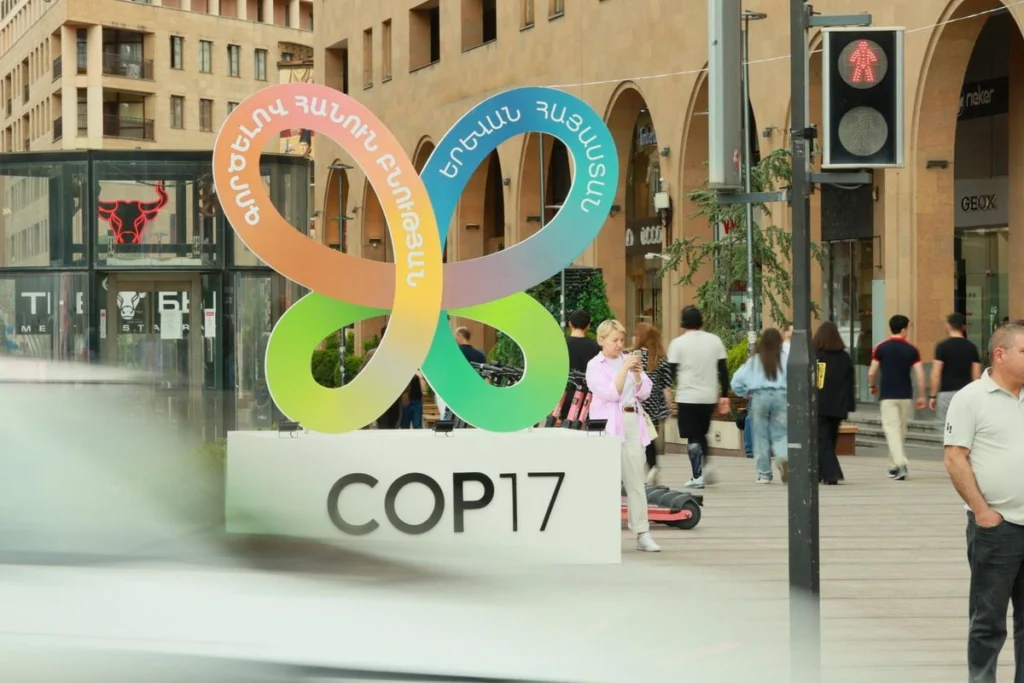
Presented at the biodiversity conference in Yerevan on Thursday (29 October), the authors said the result was “encouraging,” though it still amounted to only 34 percent of the goal environment ministers from across the world had set themselves for 2030.
At sea and in freshwater ecosystems, the situation was very different, with only 11m hectares protected.
Protecting natural areas degraded by human activity, such as pollution or overfishing, is key to preserving local species and biodiversity.
UNEP says restoring even 15 percent of priority areas would mean six in 10 species projected to go extinct could be spared.
And while nature restoration is key for food and water security, it is also important for climate resilience, the European Environment Agency (EEA) spokesperson told EUobserver.
The UN agency’s report is the first to gather data for land and water environments and evaluate progress in biodiversity conservation targets there, just as two weeks of negotiations at the biannual ‘COP 17’ meeting close on Friday.
We are “still not restoring nature at the scale or speed required,” said Inger Andersen, UNEP’s executive director, in a statement, urging countries to step up their efforts by the 2030 deadline.
The summit is to conclude with plans for the next four years, dubbed the Yerevan Pathway, but significant financial commitments remain unlikely.
Jutta Paulus, a German Greens MEP representing the European Parliament at the conference, said “chronic underfunding” of biodiversity protection is the “main obstacle on our way to food security, a functioning economy and prosperity.”
In terms of ocean restoration, the EU needs “significantly greater investment in restoration, monitoring, and enforcement” to ensure real effects, saaid Nicolas Fournier, campaign director at Oceana in Europe, a marine protection NGO.
“Restoring an area with public money only to allow destructive activities to continue is not restoration – it is a waste of public resources,” he told EUobserver.
In the EU, protected areas amounted to 26 percent of land in 2024, and less than 14 percent of the sea area in 2023, according to EEA data.
To reach the 30 percent target by 2030, member states have to develop national plans, reviewed by the commission and the EEA.
Council libraries have distributed pro-migrant bookmarks that praise the work ethic of refugees and say they aim to help people "embrace new cultures" as the area will "naturally become more diverse".
At the heart of the mass immigration debate is the question: can English culture survive without ancestral continuity of the population? Clive Pinder says ancestry is important, but ultimately England is not a DNA test.
The riots in France have shown up the Leftist claim that enough public spending and 'integration' will produce a happy, peaceful society as a dangerous fiction. But is anyone paying attention, asks Matt Roberts.
On Monday, in Yerevan, Armenia, Cuba presented its priorities for the conservation of biological diversity during the 17th Conference of the Parties (COP17) to the Convention on Biological Diversity. The conference, held from October 19 to 30, 2026, serves as the first review meeting on the implementation of the Kunming-Montreal Global Biodiversity Framework.
Daimar Cánovas, Deputy Minister of Science, Technology and Environment (CITMA), highlighted that Cuba’s National Biodiversity Program—with a vision toward 2030—is aligned with the global agreement adopted at COP15 in 2022, which aims to halt and reverse biodiversity loss, with specific targets set for 2030 and long-term goals for 2050.
Cánovas González participated in an event titled “Yerevan Call for Positive Incentives for Biodiversity,” which also saw the launch of the Friends of Target 18 group and the “Biodiversity Financing Challenge,” held as part of the High-Level Segment of COP17.
The Deputy Minister explained that one of Cuba’s key environmental priorities is the need to reformulate economic and financial incentives that currently have a negative impact on biodiversity. The goal is to transform these into mechanisms that promote conservation, ecosystem restoration, and the sustainable use of natural resources.
In this context, the country has begun an assessment within the agricultural sector—a strategic sector, alongside mining, fisheries, and tourism—to evaluate incentives linked to Target 18 of the Kunming-Montreal Framework.
Cánovas also highlighted the process of greening the national banking system, an initiative promoted as a financial solution and supported by the Biodiversity Finance Initiative (BIOFIN). This initiative promotes the integration of environmental criteria into banking policies and products.
Identified opportunities include positive incentives linked to agroecology, the restoration of productive landscapes, the protection of coastal and marine ecosystems, agrotourism, and nature-based economic activities.
Furthermore, Cuba plans to promote credit lines for biodiversity, sustainable financial instruments, and support mechanisms for producers, cooperatives, MSMEs, and businesses that adopt practices compatible with the conservation and rational use of natural resources.
These actions will contribute to meeting the national targets of the National Biodiversity Program through 2030, as well as the commitments Cuba has made under the Kunming-Montreal Global Biodiversity Framework, while strengthening resource mobilization and financial sustainability.
The session was attended by the Executive Secretary of the Convention on Biological Diversity, Astrid Schomaker, and the President of COP17, Hambardzum Matevosyan—who serves as the Minister of Environment of Armenia—along with other officials from the host country.
#COP17 | With 40% of the world’s land degraded, delegates in Mongolia are negotiating a stronger global response to drought and desertification. Science, financing and land restoration are at the center of talks running through Aug. 28.#UNCCD#Mongolia#ClimateActionpic.twitter.com/uFdPwt0s6L
Social media platforms in Germany will be required to ensure 20% of news feed journalistic content is 'diversity-certified' by the Government under draconian new laws designed to combat the 'far Right', says Eugyppius.
The Cali Fund, set up to raise $1bn a year for biodiversity from drug companies, remains near empty
Big pharmaceutical companies have been accused of “free-riding on nature”, after a landmark biodiversity fund that invites businesses to put some of their profits back into conservation was left virtually empty.
The Cali Fund set out to raise $1bn (£750m) annually, by asking companies that profit from nature’s genetics to contribute towards conservation in low-income countries. But more than 18 months after the fund was launched, it remains far below this target.
Boomer and Gen X 'progressives' have been conditioned to view mass immigration through the outdated lens of 1980s race politics and much smaller 20th century flows, preventing constructive debate, says Andrew Devine.
Meet Shareefa Energy, the partly taxpayer funded poet who kicked Reform's Rupert Matthews out of an anti-racism workshop allegedly because he was white. Though on this evidence, 'poet' is stretching it, says Steven Tucker.
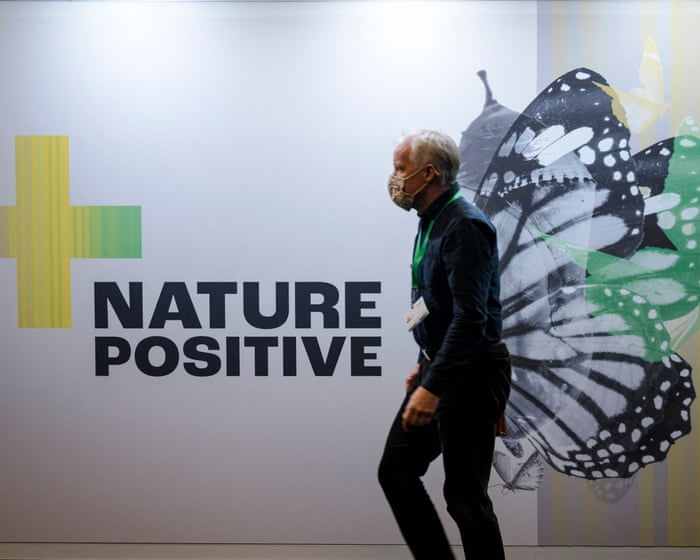
In 2022, I helped push through the international agreement to protect biodiversity. Wars and economic pressures can make nature seem like a ‘nice-to-have’. But it is a critical asset, and Cop17 must deliver real action
When I was five, property developers came to cut down the woods behind my home in La Tuque, Quebec. My mother encouraged me to climb one of the trees in protest, then told the developers, straight-faced, that there was nothing she could do when they asked her to get me down. A few days later, the tree was cut down anyway.
I thought about that tree in the early hours of a freezing Montreal morning in December 2022, as the gavel came down on a global agreement between nearly 200 countries to halt and reverse the loss of nature by 2030. I thought about how important nature is for our health, our food security and our economies, but also how much passion there is around protecting it, and how it has the power to inspire people all around the world.
As Cop17 kicks off, records since 1921 show more bee species declining than increasing in all parts of Europe except the Alps
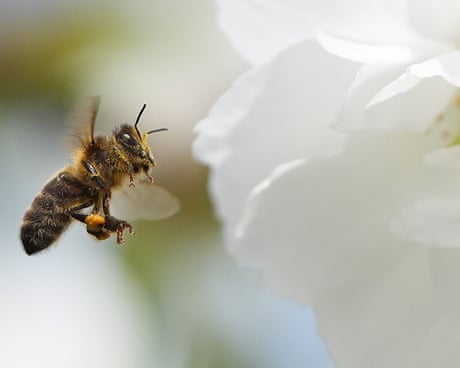
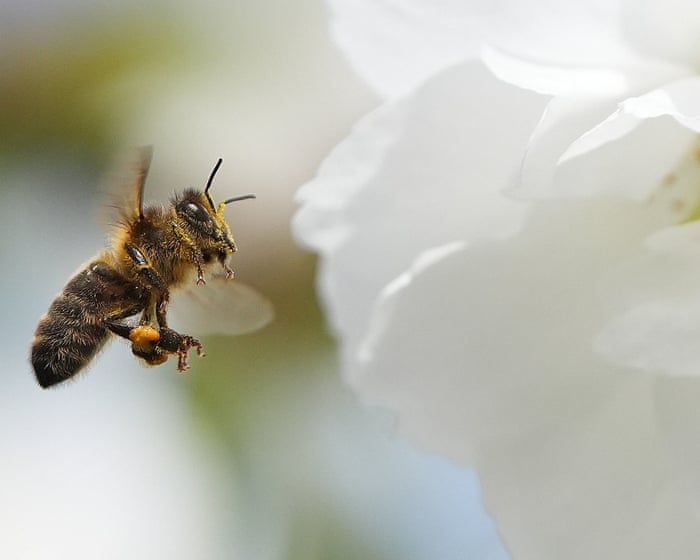
Most of Europe’s wild bee species and about half of its hover fly species have declined over the last century, a study has found, as a UN biodiversity summit begins in Armenia.
Records since 1921 show more bee species are declining than increasing in all parts of Europe except the Alpine region. The richness of bee and hover fly species suffered a persistent drop in the Atlantic and Continental regions, the study found, though trends in other regions were mixed or even positive.
Four years ago nearly every government on Earth agreed to protect nature. Now, as countries gather for Cop17, the pressure is on to follow through on those commitments
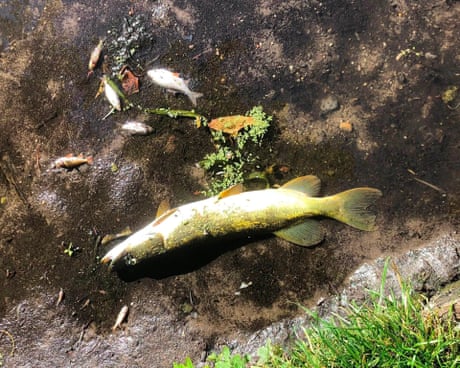
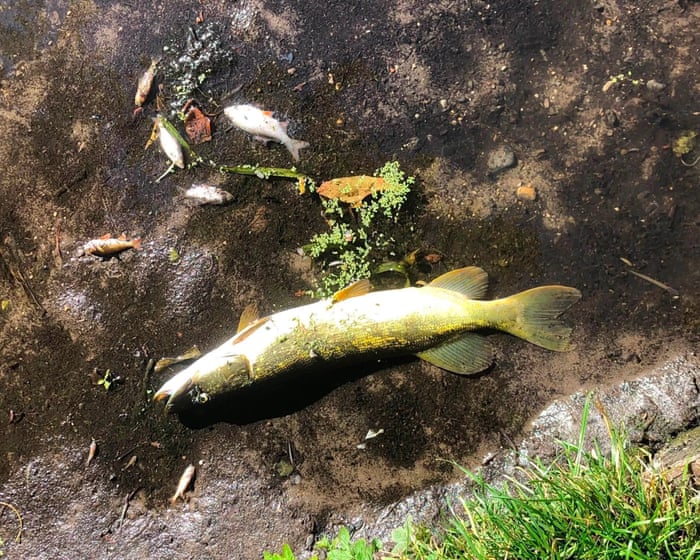
Passersby could smell the dead fish before they saw them. In August, more than 3,000 pike, roach, carp and rudd were found lifeless along the River Wensum in Norwich. Some gasped for air in their final moments, desperate for the oxygen that heatwave conditions had depleted in the water. Investigators believe that the die-off was triggered by heavy rainfall that flushed through high concentrations of pollution at a time when wildlife were already struggling.
The 45-mile (70km) chalk river is one of about 250 in the country. They are a geological accident almost unique to Britain – and one of Earth’s rarest habitats. They emerge from chalk aquifers and are home to species such as freshwater shrimp, otters and stoneflies, also providing drinking water for millions of people. But just 11 have formal protection, with many ravaged by sewage pollution and overextraction. The Norfolk river is one of the few that does have legal protection, but it is in poor ecological health.
This month, nearly every country on Earth will return to the question of how to stem the rapid destruction of the natural world. Humans are driving it, but so far we have not found a way to stop it.
In late 2022, governments reached an ambitious once-in-a-decade deal to better protect nature amid scientific warnings that the planet is going through the largest loss of life since the extinction of the dinosaurs. Now, they are assessing their progress on the targets for the first time.
Spar pilot scheme will test whether heirloom fruit can thrive in today’s commercial and environmental conditions
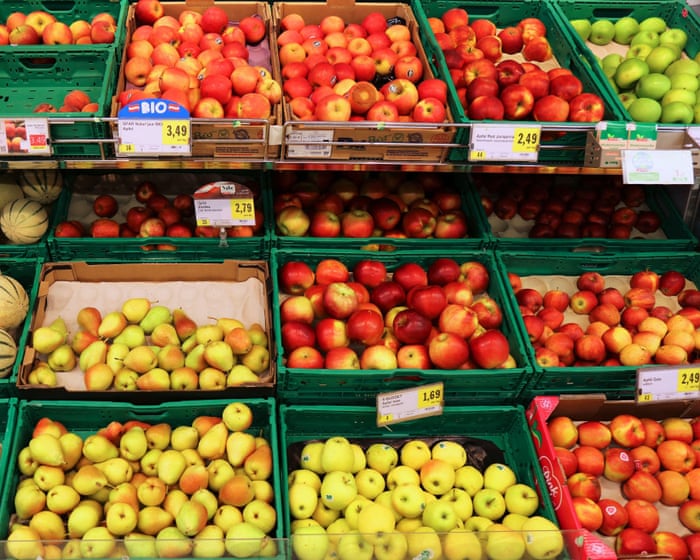
Only about 10 of the 2,000 types of apples growing in Austria can be found in supermarkets among the polished, pristine fruit usually on display – a sad ratio according to fans of historic varieties being primed for a comeback.
One of the country’s biggest retail chains has embarked on a pilot rollout of unusual and long-forgotten apples enjoyed in previous centuries, riding an international trend of reviving heirloom fruit and vegetables.
Schools in north-eastern Italy have banned pork products in school meals to make them acceptable to Muslim migrants, meaning traditional dishes like prosciutto, porchetta and pasta all’amatriciana are off the menu.

 Login