O apresentador Ernesto Chavana foi centro de uma polêmica depois de acertar a colega de palco, Isabella Rojas, com um drone. Nesta terça-feira (27), durante o programa mexicano “Es Show”, ele se irritou com o dispositivo e o chutou em direção às outras participantes da atração.
Após as imagens serem divulgadas, a emissora Multimedios Televisión publicou um vídeo nas redes sociais com o pedido de desculpas que Rojas fez ao vivo e o retorno de Isabella ao palco, com a boca sangrando.
Leia Mais:
“Lamento, sou o responsável pelo que acabou de acontecer. De verdade, sinto-me arrependido e envergonhado pelo que acabei de fazer. Estava muito exaltado até colocarem isso na minha frente. E não sei se foram meus sapatos novos…”, disse.
Nos comentários, os fãs do programa não aceitaram bem o discurso de Chavana e deixaram recados agressivos contra o apresentador.
“Esse homem não deveria estar no programa”, “Programa ridículo”, “Pede desculpas e continua fazendo piada, falando que não foi nada grave”, “Espero que você o processe por humilhação pública” e “Não foi um acidente” foram alguns deles.
A new video transmitter for Wild Hornets’ drones, including its STING interceptors, has passed state tests, the Ukrainian drone maker told Militarnyi. The module sends a drone’s camera feed to its pilot. The company expects it to widen its interceptors’ operating radius.
Russia launched 140 Shahed-type drones at Ukraine overnight on 26 October and 280 the next night, when its main target was Kyiv, Air Force figures as of the morning show. Interceptor drones, which cost dozens of times less than the Shaheds they hunt, are one of Ukraine’s answers. The STING alone downed more than 3,000 drones in its first seven months of use, Wild Hornets says. If the company’s estimate holds, a 30 km radius would let each ground station cover more than twice the area it covers at 20 km.
What the testers checked
Specialists from the State Research Institute for Testing and Certification of Arms and Military Equipment and the Defense Ministry’s State Quality Assurance Directorate confirmed the module’s declared characteristics on three drone types, the company said. The three were the STING interceptor, the Queen of Hornets cargo platform, and the 10-inch Wild Hornets Digital anti-aircraft drone.
Some of the drones’ figures exceeded the values the company had set for them, Wild Hornets told Ukrainian defense outlet Oboronka, without saying which ones. Those figures will enter the official specifications after further field tests, it said.
More than double the power
The module, called HV VTX Pro, is part of an upgrade to Wild Hornets’ Hornet Vision digital video system. It more than doubles the transmitter’s maximum power, to 4 W. That sends a clear picture farther and makes the feed steadier in crowded airwaves and under electronic jamming, the company said.
Hornet Vision Ctrl system. Photo: Wild Hornets
Wild Hornets first described the module in August, when it was already in serial production. Its interceptors’ operating radius would grow from around 20 km to 30 km, the company said at the time. That estimate assumed good line of sight and the 360-degree antenna on its ground stations, according to a company statement Interfax-Ukraine quoted. Interception could also become at least 20% more effective against targets flying extremely low, the statement said.
Wild Hornets is a Ukrainian company that designs and builds drones, from strike FPV drones and cargo platforms to the STING, which the company says flies at up to 280 km/h to hunt Shaheds. Its drones serve with more than 100 units of Ukraine’s Defense Forces, from the army and the National Guard to military intelligence, the Air Force, and the border guard, according to Interfax-Ukraine.
Twist Robotics' drones can be used as signal repeaters to help the connection between a drone operator and their mission drone.
Twist Robotics
Drones in Ukraine act as flying communications bridges between operators and mission drones.
They repeat the operators' signal to allow drones to fly farther while staying connected.
The signal-repeating drones make other drones more resistant to Russia's electronic warfare.
Ukraine has created drones that act as flying relay towers, allowing its drones conducting missions to fly farther while making them harder for Russia to jam.
In a war where drones gather intel and account for more than 95% of Russia's front-line losses, Ukraine wants its operators to keep control of their drones over longer distances with stronger signals that are harder for Russia to break.
One solution is the signal repeater drone, a flying signal booster that operates between a pilot and a mission drone, relaying commands to the aircraft and sending back video and intelligence to the operator. Able to fly much higher than a ground antenna, airborne repeaters can extend a drone's range and help preserve the connection under pressure.
It increases the mission drone's operational range by extending how far it can fly while staying connected to its pilot. It's a similar principle to how wifi repeaters work.
Ukrainian arms maker Twist Robotics makes a signal-repeating drone, born from its Saker Scout drone.
Rostyslav Olenchyn, the company's co-founder and chief information officer, told Business Insider that the drone was widely used for reconnaissance and strike operations, but this war changes rapidly, with arms and warfighting technology quickly becoming obsolete. And without updates, this drone was at risk of falling victim to that pattern in the cat-and-mouse technology race.
Drones needed to be effective at longer ranges, and the Saker Scout's range was "not enough" for many missions. So, the drone was redesigned "for another objective. It became the signal relay station," Olenchyn said.
Ukraine's drone operators want to be able to fly their drones as far and with as strong a connection as possible.
Ukrinform/NurPhoto via Getty Images
The Saker Scout, able to also be used in other combat roles, can extend the operational range of drones by more than 50 kilometers, according to the company.
The concept of using aircraft as signal middlemen isn't new. Militaries have used helicopters and planes to relay communications between assets and forces disconnected by the terrain, though usually troops rather than drones. These crewed aircraft, however, struggle to operate over Ukraine, but while such air assets are few and far between, drones are prolific.
Large crewed aircraft cannot "necessarily survive in the heavy saturated air of the battlefield," where drones and air defenses are a threatening presence, Olenchyn said. "So the small, versatile platform was a solution." He said that serial production of the Saker Scout with this function started in 2023.
The company's strike drone, the Signal Hunter, can also be used as a relay.
Other Ukrainian companies are also working in the space, with some updating existing drone types and some designing new ones. Roboneers, for example, developed a version of its Wardog drone that can carry relay equipment weighing up to three kilograms, and Skyriper makes the Skyriper-R Airborne Repeater, a dedicated drone with the single function of acting as an airborne repeater.
Volodymyr Zinovskyi, the CEO of the Ukrainian defense firm TAF Industries, told Business Insider that his company started making relay drones last year at the request of units, describing the technology as going from optional to essential.
Brave1, Ukraine's state-backed innovation platform, wrote last year that "the use of UAVs over long distances or in difficult terrain requires the use of repeaters - special devices that help increase the range of a stable signal several times."
Some Ukrainian drones are built for this relay mission, while others can be fitted with add-on repeater equipment.
Twist Robotics' Saker Scout repeats the signal from a drone operator to their mission drone, and the reverse.
Twist Robotics
Beyond overcoming geographical challenges, airborne repeaters also help counter Russian electronic warfare by strengthening the communications link between operators and mission drones, making it harder to disrupt, though Russia can still target the relay itself.
An analysis published by the Center for Strategic and International Studies, a US think tank, last year described the creation of relay systems as a response to growing electronic warfare tactics, including the ability that both sides have to trace drone control signals back to their source for strikes on operators, priority targets in this war.
Dmytro "Liber" Zhluktenko, a former drone operator who now serves as a lessons-learned analyst with Ukraine's 413th Unmanned Systems Regiment "RAID," told Business Insider that Ukrainian forces are "keeping somewhat a stable radio link by mass utilizing signal repeaters."
He said that some uncrewed repeater aircraft are fixed-wing drones, while some are repurposed bomber-type drones. Instead of bombs, it just carries the signal repeater," he said.
"We optimize those signal repeater carriers to just stay in the air for an extremely long time, like one hour plus," he said. "That's their only job: to be in the air." Working with strike drones, they give operators a "great radio link over the target."
Oleksiy, the commander of the 2nd UAV engineer platoon of the International Defense Legion of Ukraine, told ArmyInform, the official information agency of the Ministry of Defense of Ukraine, last year that his unit uses repeaters on drones to expand the radio horizon of the drones they want to use and fly further to target Russia.
Russia is using the technology too, including to help attack drones fly deeper into Ukrainian territory.
And these lessons aren't limited to the Ukraine war. The US military is also experimenting with ways to extend drone operations and keep operators connected from farther away. The Marine Corps, for instance, has experimented with using helicopters as FPV motherships, as well as handing off control after launch.
Though different from Ukraine's airborne repeater work, both address a similar battlefield problem, which is that drones are only useful if operators can launch them, control them, and keep receiving information at tactically relevant distances.
Olenchyn said that updates, like the signal repeating ability, are critical in combat. He said that every two weeks, the company has "a new update, new kinds of techniques, new kinds of drones or functionality which are released."
As of October, Russia has up to 700 ballistic and several thousand cruise missiles in reserve, and its 2026 state order for Geran-type drones and decoys such as the Gerbera exceeded 100,000 units, Ukraine’s military intelligence (HUR) told NV in figures the outlet published on 20 October. The missile stocks are roughly the same as HUR reported to NV in July, the outlet found.
Ukraine enters the heating season facing what it says is a Russian plan to hit 60 infrastructure sites this winter. HUR’s figures suggest Russia has the weapons for it, even after its fall mass strikes. In June, HUR said Russia could fire up to 100 ballistic missiles a month while keeping its stocks steady. Its drone output, meanwhile, is shifting to jets that are harder to shoot down.
Russia produces 110 ballistic missiles a month
Russia can make more than 200 missiles a month, 110 of them ballistic, HUR said. About 115 of its ballistic missiles are Iskander-Ms, with production of up to 65 a month. A modernized Iskander with a projected range of 550 to 700 km is in development.
At the same time, Russia holds up to 400 S-300PM and S-400 air defense missiles adapted to strike ground targets, and makes about 40 a month. Meanwhile, Kinzhal production has been temporarily paused over poor accuracy, and the capacity has gone to conventional ballistic missiles.
Most new Kalibrs go into reserve
Russia plans to make more than 80 Kh-101 cruise missiles a month and is exceeding that, though defects in releasing them from aircraft have sent some batches back to the factories.
Russia has more than 450 Kalibrs and makes about 29 a month. Because Ukrainian air defense downs them effectively, Russia sends most new ones to its strategic reserve and to equip its fleets, HUR said. It also holds more than 600 Oniks anti-ship missiles, upgraded for ground strikes, and more than 120 Zircons.
Explore further
Ukraine recovers Russia’s undamaged Geran-3 jet kamikaze drone carrying camera and live-link equipment (VIDEO)
Russia now assembles 4,000 jet drones a month
Russia holds a reserve of about 6,200 Gerans and makes about 10,000 drones a month. Its main production hub is the Alabuga special economic zone in Tatarstan.
Since summer, Russia has shifted toward turbojet drones. “The reason is the saturation of Ukraine’s Air Force with mobile fire groups that shoot down low-speed targets en masse,” HUR said. Russia now assembles about 4,000 jet drones a month, mostly Geran-4s and Geran-5s, which fly at 400 to 500 km/h. It also makes about 2,000 cheaper propeller-driven Geran-2s, which HUR said are used to wear down air defense and locate air defense positions.
China’s development of specialized naval auxiliaries designed to transport, launch and recover submarine-sized uncrewed vessels signals an assertive push to project autonomous undersea power beyond the First Island Chain and systematically challenge US submarine dominance in the Western Pacific. This month, multiple media outlets reported visual evidence showing that China has constructed a second dedicated […]
One drone launched another drone, which then shot down a third. All three were unmanned, and all at sea off Ukraine.
Ukraine’s Navy has destroyed a Russian Shahed attack drone with a Sting interceptor launched from the Sargan 3000 unmanned surface vessel, the Navy said, showing sailors adapting to new aerial threats with sea-launched interceptors.
Russian Shaheds threaten Ukraine’s ports, coastline and the ships that approach them, so meeting those drones out at sea, before they reach land, matters for the whole southern defense.
A Ukrainian Navy sea drone, the Sargan 3000, destroyed a Russian Shahed kamikaze drone with a Sting interceptor drone
Ukrainian troops continue to adapt to new threats to protect civilians and infrastructure Ukrainian Navy pic.twitter.com/kXvnqaebAw
The Sting is built to destroy Russian kamikaze drones such as the Shahed, Geran and Lancet, as well as reconnaissance drones, with quick deployment, a short training course and a top speed of 280 km/h, its producer, Wild Hornets, says.
The interceptor that has become Ukraine’s Shahed-killer
The Sting has earned its place at the front. The Ukrainian FPV interceptor has proven highly effective in combat, with a typical hit rate of 80 to 90% depending on the unit, and on some days reaching 100 percent, one launch for one kill.
It is currently Ukraine’s most productive Shahed interceptor, according to the Wild Hornets, having destroyed more than 3,000 drones in its first seven months of use. Mounting it on a sea platform extends that record from land into the Black Sea.
A drone boat that keeps finding new ways to kill
The Sargan 3000 has become a multi-purpose hunter. In July, Ukrainian naval personnel used a Sargan 3000 to sink a Russian second-rank border patrol ship.
In October, the same drone boat shot down a Russian Shahed with a turret-mounted machine gun over the Black Sea. Ukraine’s Navy took the Sargan 3000 into service in April 2026, and the drone boat has a combat radius of up to 1,600 kilometers, letting it clear the sky far from shore without putting a sailor in range.
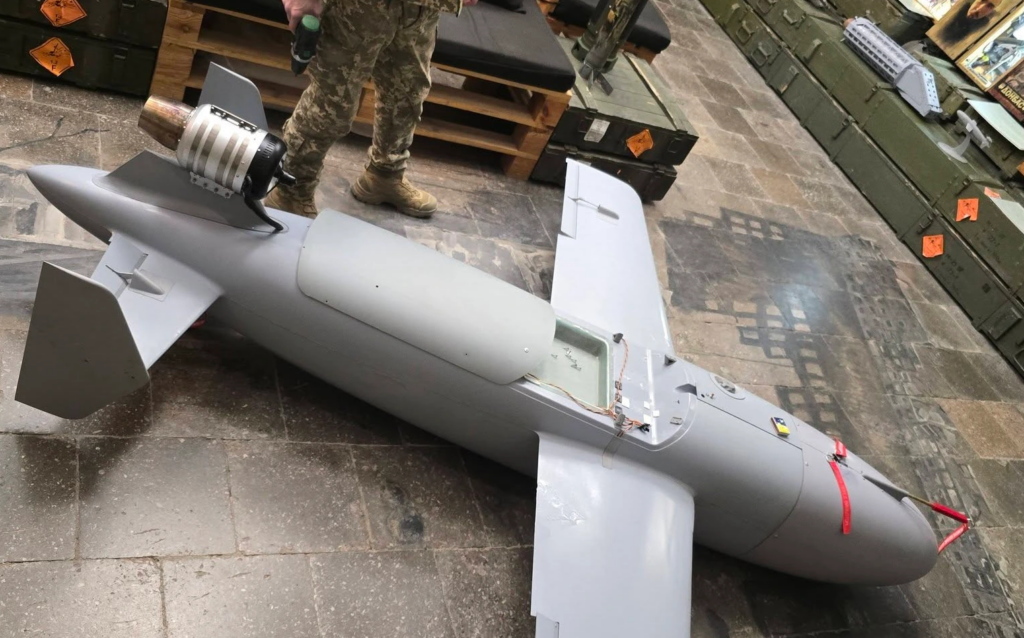
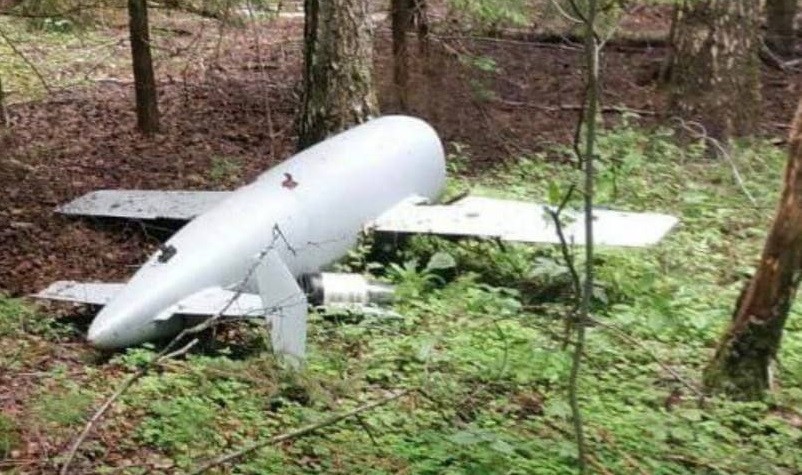
One of Ukraine's best and fastest interceptor drones is an air-to-air version of the Bars one-way attack drone
Bars are some of the best defenses against Russia's fastest Geran-4 and Geran-5 drones
But there may be too few small jet engines to rapidly scale up Bars production
Russia's latest jet-propelled Geran-4 and Geran-5 one-way attack drones fly at 500 km/h or more, nearly three times as fast as an older, propeller-driven Geran-2.
That's too fast for many of Ukraine's air defenses. In particular, the inexpensive interceptor drones that Ukrainian forces deploy by the thousand.
Russia launched more than 2,700 jet Gerans at Ukraine in September, and Ukraine is shooting down only about 55% of them, according to Ukrainian President Volodymyr Zelenskyy. The speed disparity is a big part of the problem.
Ukrainian forces are scrambling for new defenses against the speedy Gerans. Among the best is actually a Ukrainian take on the Geran-4 and Geran-5: a fast, jet-propelled one-way attack drone that the Ukrainians have modified for air-to-air use.
Against jet drones, the air-to-air Bars have a hit rate of around 30%, Zelensky said during a joint press conference with German Chancellor Friedrich Merz in Kyiv on 4 October. "The Bars have shown positive results," Zelensky said. "They currently have the highest percentage. Others are also catching up."
Explore further
Did Ukraine just unleash its first Bars cruise missiles? A 500 km strike deep inside Russia suggests it
In July, Ukraine and Germany agreed to jointly produce Bars, with Germany financing the first phase. Ukraine has reportedly been launching Bars at targets on the ground since at least the summer of 2025. But it was only recently that clear photos and videos of the drones have circulated.
Over the weekend, Ukraine’s 1021st Anti-Aircraft Missile and Artillery Brigade released footage of one jet drone hunting another. Observers identified the interceptor as a Bars and its target as a Geran-5. After launching from an elevated ramp with help from a rocket booster, the drone's operator—seeing what the drone saw through a front-facing infrared camera—steered the drone toward the Russian drone, possibly destroying it.
Exactly how the operator controlled the Bars—whether by satellite or mesh radio or some other command and control system—is unclear. Equally unclear: what kind of warhead a Bars would employ in the air-to-air role. Many smaller interceptor drones lack warheads. Instead, they simply slam directly into their targets, wrecking them in the collision.
Ukraine’s 1021st Anti-Aircraft Missile and Artillery Brigade has released the first footage of the Ukrainian Bars jet-powered drone in its interceptor configuration engaging a Russian Geran-5 drone. https://t.co/FRBKZQR9lFpic.twitter.com/njPJWXsDwo
Bars isn't small. It likely packs an explosive warhead. Potentially one that the operator can remotely trigger when the interceptor passes near its target.
Bars is adaptable. Its maker has reworked it from a 22-kg warhead and a 700-km range to a 60-kg warhead and a stated range of more than 1,000 km, and a heavier variant can carry a 105-kg warhead.
In the air-to-air interceptor role, long range is terribly important but speed is everything. There's an obvious way for the Ukrainians to boost the Bars' speed from its reported 700 km/h top speed to potentially even faster. They could shrink the drone's warhead and its fuel load, making it lighter in order to make it faster.
That may explain how a Bars can chase down a Geran-5 even as the Russians, by one Ukrainian analyst's estimate, try to push the Geran-5 toward 700 km/h or more.
Explore further
Turkey’s Korkut guns now shoot down Russian drones over Ukraine. Almost half of the jet-powered Shaheds still get through
Cost is important, too. Russia churns out Gerans for an estimated $100,000 or so per drone. The cheaper the drone, the more copies the Russians can fling at Ukrainian cities. If it takes three or more interceptor drones to take down each of those 2,700 jet Gerans, Ukraine may need to deploy 8,000 to 10,000 interceptors a month.
Ukraine already builds more than 2,000 Bars a month, its maker says, but mostly in strike versions. How many go to air defense, and how much each costs, isn't public.
The supply of small jet engines could be a constraint. “Engines are a key element; we really import them in large quantities,” Zelensky said in an interview with Financial Times. "There are also domestically produced engines, but there are not enough of them.” A Ukrainian-made engine for Bars passed final tests in September.
AF! Kostiantyn Vlasenko, voluntário ucraniano natural de Kryvyi Rih, passou 491 dias consecutivos a defender uma posição na linha da frente, num tubo de drenagem de betão, antes de ser resgatado por um drone pesado numa operação apresentada pelas forças ucranianas como inédita. Soldado da 30.ª Brigada Mecanizada, Vlasenko ficou sozinho após a morte de […]
A recent breakthrough in airborne drone control has offered a tangible glimpse into the future of US air combat, signaling the US Air Force’s accelerating push to integrate autonomous wingmen alongside frontline fighters. This month, The War Zone (TWZ) reported that a US Air Force F-22 Raptor pilot successfully controlled an uncrewed YFQ-44A Fury fighter […]
Ukraine’s six-wheeled Frodo ground robot fired on targets during a demonstration in Kharkiv Oblast for the Pomsta (Revenge) Border Guard Brigade, a border guard detachment posted on Facebook. Frodo made its public debut only on 30 September.
Ukraine had contracted more than 22,000 ground robots for 2026 by July, mostly logistics carriers, with combat models the smallest group, the Defense Ministry said. Frodo’s first reported mission was an evacuation. The demo shows its armed version to a fighting brigade, the kind of robot Ukraine has ordered least.
What the armed version carries
The platform completed its tasks at a training ground in near-combat conditions, said the 3rd Border Guard Detachment named after Hero of Ukraine Colonel Yevhenii Pikus. The Buria turret mounted on Frodo can fire either a Mk 19 automatic grenade launcher or a Browning M2 heavy machine gun. It engaged targets at up to 1.3 km (0.8 mile), the detachment said.
Frodo ground robotic vehicle (UGV). Screenshot from a video by the 3rd Border Guard Unit
The 47-kg (104-lb) module has a ballistic calculator, stores up to 256 targets, aims in three seconds, and has a stated autonomous run time of up to 48 hours, the post said. Frodo is rated for up to 150 km (93 miles) on paved roads and 75–80 km (47–50 miles) over rough terrain, the post added. A Frontline Robotics Zoom reconnaissance drone flew reconnaissance during the test.
The developer, Frontline Robotics, describes its core philosophy as arriving fast, doing the job, and leaving very fast—hit and run, the detachment’s post said. Familiarizing the brigade’s soldiers with such systems aims first and foremost to preserve personnel’s lives and health, the detachment said.
A robot first reported as a medevac
Frontline Robotics told Militarnyi at the unveiling that Frodo had passed Defense Ministry codification and was built for logistics, evacuation, and strike missions. The robot reaches 40 km/h (25 mph) and carries up to 200 kg (441 lb) of payload, or 400 kg (882 lb) at most, the company said. A single soldier can swap its batteries.
The 92nd Assault Brigade used an early test unit to evacuate a wounded soldier, Frontline Robotics told Militarnyi. An operator, callsign Tango, named the robot’s speed and its ability to handle complex maneuvers as its main advantages, Militarnyi reported.
The Houthi attack mixed together suicide drones, cruise missiles and ballistic missiles. Because these weapons travel at significantly different speeds, the drones were launched first, followed by the cruise missiles and lastly by the ballistic missiles. Reports say the entire attack on October 10, starting at around 3PM local time, lasted around 45 minutes. The […]
By Lucia Kassai Oct 9, 2026 (Bloomberg) –When hurricanes sweep through the Gulf of Mexico, oil companies can lose millions of dollars waiting for the all-clear to restart production. Shell Plc...
The air war between Russia and Ukraine has evolved constantly since the start of the conflict. The latest example is Russia’s deployment of a new type of long-range, jet-powered drone, which is having a significant effect on Ukraine’s ability to defend its cities against aerial attack. In an interview on September 14, Ukrainian Air Force […]
Greek-owned tanker “New Andros” was attacked by a drone while sailing in Iraqi territorial waters on Wednesday, September 9, 2026. According to the Greek Ministry of Maritime Affairs and Insular Policy, the two Greek nationals onboard, the captain and the chief engineer, are safe and in good health. The Panamanian-flagged, Greek-owned tanker was carrying around […]

 Login





 Ukrainian Navy

 (@bayraktar_1love)


