❌

Reading view

Governor probing 'Decoy Dan' Sullivan election scandal warns system flaw hiding in plain sight

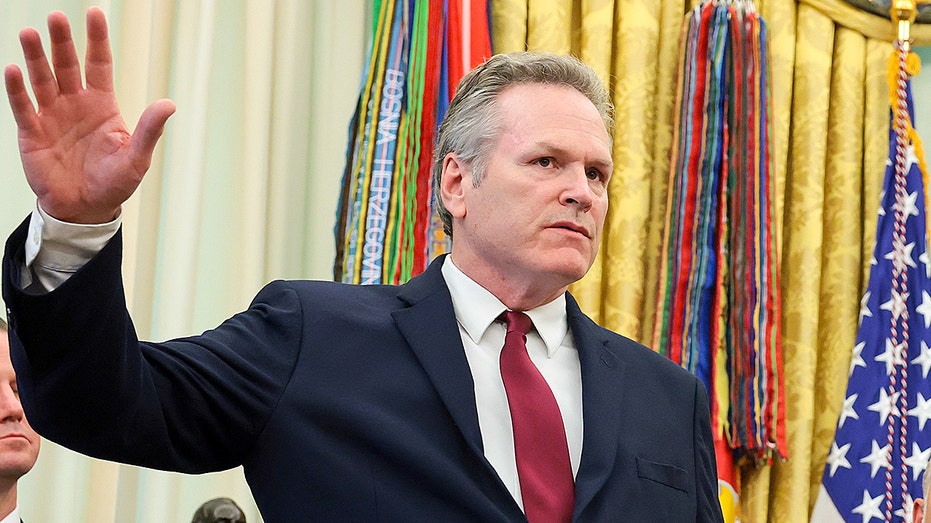
Alaska Gov. Mike Dunleavy warned that an alleged Democratic scheme to recruit a second "Dan Sullivan" into the state's pivotal Senate race exposed a deeper vulnerability in its election system, telling Fox News Digital in an exclusive interview that his administration is investigating newly surfaced evidence just days before the midterms.

Dunleavy said The New York Times uncovered details that state officials did not have when they initially challenged the second Sullivan's candidacy this past summer — including alleged involvement by operatives connected to Democratic nominee Mary Peltola.

The Republican argued Alaska's relatively new election system helped make the controversy possible, as state and federal authorities pursue separate investigations into potential wrongdoing.

"This would have never happened if we didn't have ranked-choice voting," Dunleavy told Fox News Digital. "If this was a historical primary, a primary that our fathers and grandfathers had, this individual [retired schoolteacher Dan Sullivan of Petersburg] would not have gotten out of the primary."

'DECOY DAN' SULLIVAN CASE LEADS TOP SENATOR TO BREAK FOUR-YEAR X SILENCE: 'PATTERN OF LIES'

Dunleavy cited reporting that the Petersburg Sullivan initially denied having been recruited, but the Times found Peltola-connected operatives had worked to recruit spoilers named "Dan Sullivan" from around the state.

"We're compelled to do an investigation on behalf of the people of Alaska, because as they say in Alaska, which is a big fish state, if you can smell the fish way far from the dock, you've got a real problem," Dunleavy said.

"And so, this really does stink."

Alaska's election system advances the top four finishers from a nonpartisan primary to a general election in which voters rank candidates by preference. Dunleavy argued that traditional party primaries would have prevented the second Sullivan from reaching November's ballot.

"Our job as executives are to make sure that we can provide our people with an election that everyone could look at it and say that was done with integrity. And right now this cast, unfortunately, a pall over all of this," he said.

Dunleavy said the state's initial investigation in June after the Petersburg Sullivan surfaced ultimately led to the state Supreme Court, which allowed both Sullivans' names on the ballot, with Senator Sullivan marked "incumbent."

"Initially, when [Petersburg Sullivan] contacted the Division of Elections, he wanted his name listed as Daniel S. Sullivan. That's not his middle initial. That's the middle initial of our incumbent senator. His website looked very, very, very similar to our incumbent senator. And we went to court over this, and the Supreme Court of Alaska ruled that they were going to put his name on the ballot," he said.

"We knew there was a problem, but the courts had decided. And then of course, the article comes out in the Times and there's a whole list of issues that we were never privy to."

The new reporting identified contradictions in accounts of what transpired over the summer, including whether there was contact between Petersburg Sullivan and any campaigns.

RNC REJECTS NARRATIVE OF SPOILER CANDIDATES 'ON BOTH SIDES,' CALLS ALASKA SCHEME 'FRAUDULENT'

"There's a lot more smoke and a lot of fishy smell after this article came out," he said.

In Alaska, elections are overseen by the lieutenant governor, not the governor, and Fox News Digital reached out to Lt. Gov. Nancy Dahlstrom for comment on whether or how her office is investigating.

"They're obviously shoulders deep now in an election with all the people and all the polls open here with early voting. The governor's office is in charge of making sure that there's execution of the laws. That's what this investigation is going to look at to see if there were any violations of law or if there was a civil violation as well," Dunleavy added.

Peltola's campaign has denied involvement with either Sullivan campaign. Peltola also dismissed the controversy as a distraction during a campaign appearance Wednesday, while the New York Times reported that operatives connected to her campaign participated in efforts to recruit potential spoiler candidates.

Fox News Digital reached out to Peltola for additional comment.

Former FEC Chair Hans von Spakovsky told Fox News Digital that something investigators should look at is whether individuals paid by Peltola or another political organization were providing any "in-kind" services to the Petersburg Sullivan.

"In-kind services are considered a contribution to a campaign. Failure to disclose such services is a violation of federal law. Also, if the fair market value of the services provided to the campaign exceeds the maximum contribution allowed to a federal candidate, that is also a violation of federal law. If this was knowingly and intentionally done, it moves from being a civil violation to a criminal violation of the law," von Spakovsky said.

Von Spakovsky pointed to an FEC case involving socialist Sen. Bernie Sanders' 2016 presidential campaign, which accepted campaign assistance from Australian Labor Party members whose travel expenses and stipends were paid by the foreign political organization.

SIGN UP TO GET THE POLITICS NEWSLETTER

The FEC determined that the arrangement constituted a prohibited $24,422 in-kind foreign contribution. Sanders' campaign and the Australian Labor Party each agreed to pay $14,500 in civil penalties to settle the matter without admitting liability.

CLICK HERE TO DOWNLOAD THE FOX NEWS APP

With Election Day approaching, the governor said the investigation would continue for as long as necessary, warning that the alleged effort could foreshadow new attempts to manipulate elections through misleading candidacies and other tactics.

Fox News Digital's Hannah Brennan contributed to this report.
  •  

The silent majority problem and why campaign pollsters keep 'fighting the last war' on elections

Ninety years ago, on Oct. 31, 1936, Literary Digest, which had correctly forecast presidential election winners since 1916, predicted that Alf Landon would beat Franklin Delano Roosevelt in the upcoming election.

Roosevelt won handily. The Digest’s poll surveyed 10 million people via postcard, using telephone books and car registration lists for the information. Even though almost 2.4 million people responded — an impressive response rate — the misleading sample provided inaccurate results. Literary Digest folded shortly afterward.

Two years later, in 1938, Gallup started tracking presidential approval ratings. Even so, polls remained far from perfect. In 1948, the Chicago Daily Tribune’s embarrassing front-page declaration "Dewey Defeats Truman" stemmed in part from a misuse of polling. The paper relied on earlier polls that did not reflect the Election Day reality in making its prediction.

As the science of polling improved over time, campaign pros began to rely on pollsters. John F. Kennedy was the first president to be strongly associated with a polling firm, as he used Lou Harris and the Harris organization's polls in his 1960 campaign for president.

LEE CARTER: AMERICA IS ANGRY AT EVERYONE — BUT WHO WILL ACTUALLY VOTE?

In the 1970s, we witnessed the rise of the celebrity pollsters: Pat Caddell for Jimmy Carter, Richard Wirthlin for Ronald Reagan, and Stan Greeberg and Dick Morris for Bill Clinton. These pollsters were successful but not infallible.

Caddell, for instance, was largely responsible for Carter's 1979 "Crisis of Confidence" speech. He misjudged the public mood, and Carter’s "malaise speech" became one of the most disastrous presidential speeches of all time.

Morris, for his part, had a tempestuous relationship with Bill Clinton. They once reportedly came to blows while Morris was advising Clinton during his time as governor of Arkansas.

Morris was initially on the outs and Greenberg in charge of polls when Clinton won the 1992 election. But Morris secretly came back and started advising Clinton after the Democrats lost control of Congress in the 1994 "Republican Revolution." Morris even had a code name — "Charlie" — to keep his identity secret from the more liberal White House staff, which resented Morris’ pushing of Clinton to the center.

Morris would poll everything, even where Clinton should go on vacation. When Clinton left office after two terms in 2000, he had survived the Monica Lewinsky scandal — despite polls showing that Americans strongly disapproved of Clinton's behavior. The most important number for Clinton was the Gallup approval rating. He left office at 66%, one of the highest outgoing figures in history.

21st-century presidents would be thrilled to get approval ratings anywhere near Clinton's final number. George W. Bush hit 86% after the 9/11 terror attacks, but that did not last. For the most part, the "low and steady" phenomenon has meant that presidents in this century have struggled to get about 50% approval.

TRUMP VS HISTORY: HOW PRESIDENT'S POLL NUMBERS COMPARE TO BIDEN, OBAMA, BUSH AHEAD OF MIDTERMS

Still, the polling mishaps have continued. In 2004, exit polls predicted a win for John Kerry over George W. Bush. Campaign adviser Bob Shrum even said to Kerry on Election Day, "Can I be the first to call you, Mr. President?" The exit polls were wrong, and Bush won a second term.

In 2012, Mitt Romney’s campaign wrongly thought it was headed for victory when its pollster made overly optimistic weighting assumptions. The turnout model incorrectly assumed that Barack Obama would not generate the same level of youth and minority turnout that he had in 2008.

LIZ PEEK: FIVE REASONS REPUBLICANS COULD DEFY THE POLLS AND SHOCK DEMOCRATS ON ELECTION DAY

Polling took another big hit in 2016, when pollsters confidently predicted that Hillary Clinton would defeat Donald Trump. She didn't, and the pollsters’ justification that they had the popular vote right but got the election result wrong did not help matters.

In our current midterm elections, we have seen a new wrinkle. Partisan polls overstated progressive support in the primaries, skewing the results and causing some candidates to drop out in the face of the inaccurate data. This latest mishap reinforces the lesson that polling often fails, although rarely in the same way twice.

DEMOCRATS FURIOUS AFTER POLLSTER BOOSTING FAR-LEFT CANDIDATES ADMITS FABRICATING SURVEYS: ‘ABSOLUTE SCUMBAGS’

While technology and the science of polling are much better today than in 1936, the improvements complicate matters further. While nearly everyone has a phone, they also have caller ID and don't answer calls from unfamiliar numbers. Response rates shrink, increasing the size of the "silent majority."

In this new environment, human modeling decisions ironically become more, not less, important. Polling errors come not from new techniques or technologies but from imperfect human decisions about how to deploy the new technologies. In making those decisions, pollsters can overreact to what went wrong beforehand. In this, pollsters are like generals, often fighting the last war.

CLICK HERE TO DOWNLOAD THE FOX NEWS APP

In the end, polls are more accurate as snapshots of opinion rather than predictors of behavior, specifically, who will actually submit a ballot. This means that whatever the polls say, the public should be wary. To borrow from the Psalms, put not your trust in polls, and get out and vote.

  •  

Netanyahu's bloc falls short as longtime allies reportedly weigh move that could end his rule

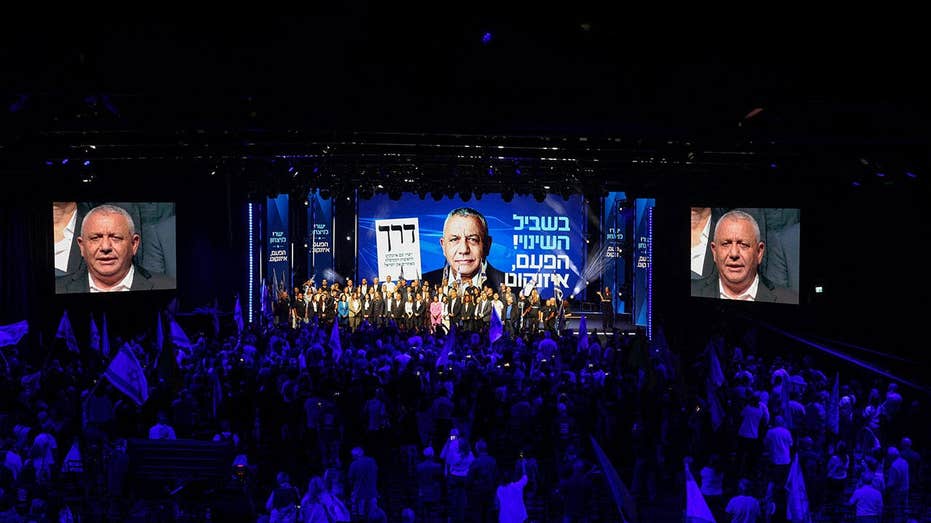
Israel's final election count has confirmed that Prime Minister Benjamin Netanyahu's bloc has lost its parliamentary majority, but whether opposition leader Gadi Eisenkot can assemble a government to replace him remains an open question as negotiations begin behind closed doors.

The completed count, published early Friday by Israel's Central Elections Committee, gave Netanyahu's bloc 53 seats in the 120-member Knesset, compared with 48 for Eisenkot's opposition alliance. The two predominantly Arab parties secured a historic 19 seats, placing them in a potentially decisive position.

Netanyahu's Likud emerged as the largest individual party with 27 seats, followed by Eisenkot's Yashar with 21 and former Prime Minister Naftali Bennett's Beyachad with 12. Final voter turnout reached 77.9%, according to the Central Elections Committee results.

ISRAEL HEADS INTO DEEPLY DIVIDED ELECTION AS OCT. 7 RECKONING LOOMS: WHAT TO KNOW

But the numbers leave neither major bloc with the 61 seats required for a majority, opening a complex political struggle involving potential partnerships with Arab parties, ultra-Orthodox lawmakers or a unity government bringing together longtime rivals.

A source familiar with opposition discussions, who spoke to Fox News Digital on condition of anonymity, described the outcome as a "bitter stalemate," but not an impossible political situation.

The source said opposition leaders are approaching coalition negotiations with patience and experience rather than treating the inconclusive results as a defeat, arguing that the next government could depend on their ability to forge partnerships that previously seemed unlikely.

FORMER ISRAELI ARMY CHIEF GADI EISENKOT EMERGES AS NETANYAHU’S LEADING ELECTION CHALLENGER

Ultra-Orthodox allies explore a break with Netanyahu

In a potentially significant development Friday, Israeli journalist Yishai Cohen of Kikar HaShabbat reported that Rabbi Dov Lando, a leading ultra-Orthodox religious authority, had instructed lawmakers from Degel HaTorah, part of United Torah Judaism, to open discussions with the opposition.

According to the report, the objective is to reach an arrangement protecting the status of yeshiva students amid the longstanding dispute over mandatory military service.

Channel 12 reported that figures within the ultra-Orthodox party were considering allowing an Eisenkot-led minority government to survive through outside parliamentary support, potentially breaking with Netanyahu.

"Our votes are not in Netanyahu's pocket," party figures told Channel 12, according to a translation of the Hebrew-language report.

However, the office of United Torah Judaism Chairman Yaakov Asher denied that any instruction to begin negotiations had been issued.

Such an arrangement would represent a significant shift from the party's longstanding alliance with Netanyahu. Eisenkot's pledge to expand military conscription among ultra-Orthodox men remains a major obstacle, although Channel 12 reported that party figures were willing to consider a compromise on the issue.

The source familiar with opposition discussions told Fox News Digital that Eisenkot's camp had been preparing for the possibility of cooperation with ultra-Orthodox parties well before the election, suggesting that some of the options now being discussed had already been under consideration behind the scenes.

According to the source, such an arrangement could require compromises over military service and potentially outside parliamentary support from Arab lawmakers, bringing together political factions whose positions appeared irreconcilable during the campaign.

FORMER ISRAELI PM EMERGES AS WILD CARD IN HIGH-STAKES ELECTION WITH MIDDLE EAST'S FUTURE AT STAKE

Arab parties signal flexibility, but obstacles remain

Another possibility rests with the Arab parties, which nearly doubled their parliamentary representation from 10 to 19 seats following a surge in turnout.

But the prospects of an Arab-backed government have drawn conflicting assessments.

Channel 12 reported Thursday that Ra'am leader Mansour Abbas had expressed deep skepticism about the possibility of establishing an Eisenkot-led minority government supported by Arab lawmakers.

Israeli political commentator Amit Segal also argued that the available options had narrowed considerably, identifying a Netanyahu-Eisenkot unity government or another election as the two principal remaining possibilities.

Mohammed Majadla, head of the news division at Radio Nas and a Channel 12 political commentator, offered a different assessment in an interview with Fox News Digital, arguing that both Ra'am and the Joint List were prepared to use their parliamentary influence to prevent Netanyahu from returning to power.

"The two Arab lists agree on two things," Majadla said in the Hebrew-language interview. "First, they are prepared to do everything within the political process to ensure Netanyahu does not return to power."

According to Majadla, that could include joining a coalition, providing outside parliamentary support or abstaining from key votes.

He said their second shared priority was avoiding another election, which Arab political leaders fear could reverse their gains.

"The ball is now in Eisenkot's court, not in the Arab parties' court," Majadla said. "As far as the Arab parties are concerned, I can tell you they are truly prepared to do everything to make this happen."

Majadla suggested that public declarations should not necessarily be treated as final positions, particularly as parties seek leverage during coalition negotiations.

The difficulties extend beyond the Arab parties. Eisenkot's potential partners include politicians who strongly oppose cooperation with ultra-Orthodox factions, while several opposition leaders campaigned against relying on Arab lawmakers to govern.

NETANYAHU FIGHTS FOR POLITICAL FUTURE AS ISRAEL HEADS TO POLLS WITH IRAN THREAT LOOMING

Unity government or another election?

A national unity government involving Likud and Yashar would offer a more straightforward mathematical route to a majority, but would require Eisenkot to reconsider his campaign pledge not to join a Netanyahu-led government.

For Netanyahu, the lengthy coalition formation process could provide additional opportunities. If Eisenkot receives the mandate to form a government but fails, President Isaac Herzog could assign the task to another candidate, potentially giving Netanyahu another chance to assemble a coalition. If successive efforts fail, Israel could face another election.

Despite the obstacles, the source familiar with opposition discussions pointed to Bennett and Lapid's experience navigating complex coalition negotiations as an important asset.

"They've both played this game many times. They know it, and they're not rattled," the source said, according to a translation of the Hebrew-language conversation.

The source suggested that Bennett's experience working with Netanyahu gives him a particular understanding of the prime minister's negotiating tactics, while Lapid brings additional experience in coalition-building.

Former Prime Minister Yair Lapid, one of the opposition's senior figures, acknowledged Friday that forming a government would be considerably more difficult than campaigning against Netanyahu.

"Now comes the truly hard part: trying to form a government," Lapid wrote on X, urging supporters to remain patient.

"It takes place in small rooms, slowly, away from the cameras," he wrote, according to a translation of his Hebrew-language statement, emphasizing the importance of negotiations conducted out of public view.

The negotiations will also unfold against the backdrop of the Trump administration's Middle East agenda.

The source familiar with opposition discussions said understanding Washington's regional priorities could become an important consideration in shaping a future government, although no specific American role in coalition negotiations has been confirmed.

The election results are scheduled to be formally submitted to President Herzog on November 4, following remaining verification procedures. The new Knesset is expected to be sworn in November 10.

CLICK HERE TO DOWNLOAD THE FOX NEWS APP

For now, the election has settled the question of how Israelis voted, but not who will govern them. A source familiar with the negotiations concluded: "Whoever manages to forge new partnerships will move forward. Whoever doesn't will remain stuck."

  •  

Peltola insists 'I knew nothing' about alleged 'Decoy Dan' scheme as Sullivan alleges she is 'still lying'

Alaska Democratic Senate candidate Mary Peltola insisted she "knew nothing" about an alleged scheme to recruit people with the same name as her opponent to run in the election, while incumbent Sen. Dan Sullivan told Fox News she is "still lying."

"I just want to clear the air," Peltola began in a speech to supporters on Thursday in Juneau. "I knew nothing about any other candidates on the ballot except for me and the incumbent. That is all I have ever known about. I am not interested in tricking voters. I know I can beat Dan Sullivan."

In an interview with Fox News, Sullivan, a Republican, said Peltola's campaign "demonstrated the most corrupt action you could take."

"Most candidates, when they run for office, I've run for office, and this is my third election. You sit down at the beginning of your election with your advisers to think about 'What's my record? I'm going to run on a strong record. What's my vision? What do I want to get done?' Peltola sat down with her advisers, Democrats from D.C. and Alaska, and their first order of business was 'how do we cheat? How do we make sure Alaskans throw away their votes?'" Sullivan said.

"This was a secret project that they had. And then they worked on it for over a year. And then she consistently lied about it. What's amazing to me is how consistently and casually everyone involved in this, from Kirsten Gillibrand and Schumer down to Peltola and her advisors, and everybody in between lied about this directly to the Alaskan people," Sullivan continued. "Heck, Peltola is still lying about it, right?"

SEN DAN SULLIVAN BRANDS PELTOLA’S ALLEGED BALLOT SCHEME A ‘SCANDAL AT THE HIGHEST ORDER’

The New York Times reported Wednesday that Peltola’s campaign, as well as senior aides at the Democratic Senatorial Campaign Committee, carried out the alleged election scheme in hopes that voters would be confused by two Dan Sullivans and therefore draw support from the incumbent Republican senator.

The Justice Department is moving to delay certification of Alaska’s U.S. Senate election results since two individuals by the name of Dan Sullivan appear alongside each other on the ballot. The state’s incumbent U.S. senator is listed on the ballot as "Sullivan, Dan S.," while the other Dan Sullivan, a retired schoolteacher, is listed as "Sullivan, Daniel J. Jr." The latter is known to his critics as "Decoy Dan."

PELTOLA CAMPAIGN'S ALLEGED DAN SULLIVAN SPOILER PLOT TAKES NEW TURN AS DOJ FACES MAJOR LEGAL HURDLE

Sen. Sullivan told Fox News correspondent Matt Finn that what he is hearing on the campaign trail is "the disdain that this shows that Peltola has for the Alaskan people."

"Think about it. Her first big move as a candidate, she hadn't announced her candidacy yet, was to rig the system and work together to cheat and to recruit a candidate whose sole purpose, we all know now, was to confuse Alaskans to rig the vote for her. It is a shocker. It's the biggest scandal in Alaskan electoral history by far," Sullivan said.

CLICK HERE TO DOWNLOAD THE FOX NEWS APP

"Mary Peltola and her campaign and the Democrats in D.C. and Alaska think the Alaskan people are dumb. We're not dumb," Sullivan added. "And this is going to have a huge impact on the election. We're going to win."

Fox News Digital's Nora Moriarty contributed to this report.

  •  

RNC rejects narrative of spoiler candidates 'on both sides,' calls Alaska scheme 'fraudulent'

The Republican National Committee rejected the narrative that both parties engage in similar tactics after a New York Times report exposed Democrat-linked efforts to recruit a second "Dan Sullivan" onto Alaska’s Senate ballot, saying Republicans are focused solely on securing elections while Democrats are "trying to be fraudulent."

"No, both sides of the aisle don’t do this," RNC election integrity communications director Ally Triolo told Fox News Digital on Thursday. "Our entire effort here at the RNC is securing elections, making them fair and free and honest."

"We are doing the exact opposite of what Democrats are trying to do. Democrats have voted time and time again against the Save America Act. They have voted against common sense safeguards.

DEM STRATEGIST SHRUGS OFF ALASKA BALLOT SCANDAL ON MS NOW, INSISTS 'THIS STUFF HAPPENS ALL THE TIME'

"We couldn't be more different from Republicans versus Democrats, and I honestly hope people see this straight in the eye with what's happened out of Alaska, that Democrats are completely disingenuous. They have ill intentions. They're trying to disenfranchise voters, and, of course, trying to be fraudulent.

"This is fraudulent behavior, and they need to be held accountable to the fullest extent."

The Times reported Wednesday that Senate nominee Mary Peltola’s campaign, aides from the Democratic Senatorial Campaign Committee and others worked to place a retired teacher named Dan J. Sullivan on the ballot.

JASON CHAFFETZ: DEMOCRATS TRIED TO TRICK ALASKA VOTERS. PELTOLA MUST ANSWER

"Republicans, we tried to fight this months ago and draw attention to this Democrat scheme," Triolo said. "And look, no wonder Democrats are against election integrity because they don't want to be held accountable for trying to disenfranchise voters and cheat the system."

"It has been abundantly clear from the get-go that this was a ploy to try to sway voters, confuse voters, take votes away from the real Sen. Dan Sullivan," she added. "And that is exactly why you saw the DOJ intervene just last week to make sure there were protections in place before the election could be certified to make sure everything was above board. And now we have this bombshell report coming out exposing exactly what we have been saying, and I think this points to the larger issue of Democrats continually fighting election integrity, because again, they have admitted that they cannot win fair and square when safeguards are in place."

TRUMP SAYS 'WE ARE LOOKING INTO' OTHER DAN SULLIVAN ON ALASKA BALLOT, WARNS ABOUT GOVERNOR'S RACE

The RNC election integrity unit has a major on-the-ground operation in Alaska, she said, including an in-state director, attorneys, observers and poll workers, and that President Donald Trump and the Justice Department have already moved to address the issue.

The DOJ last week sued to block certification of a potential Peltola win if votes for the second Sullivan could have changed the outcome, and a senior DOJ official told Fox News on Thursday that the criminal investigation has intensified, with officials examining possible civil-rights violations under 18 U.S.C. §§ 241 and 242.

Vice President JD Vance said authorities should "certainly look into whether [Peltola] committed election fraud," describing the effort as an attempt to "steal a Senate seat." Senate Majority Leader John Thune called it a "coordinated effort" and "totally dirty pool."

SEN DAN SULLIVAN BRANDS PELTOLA’S ALLEGED BALLOT SCHEME A ‘SCANDAL AT THE HIGHEST ORDER’

There is an "aggressive criminal investigation" into Daniel J. Sullivan Jr. appearing on the ballot, sources told Fox News. That investigation has only intensified since the Times' reporting but has been underway for several months.

This investigation, being run by the U.S. Attorney’s Office in Alaska, is expected to go beyond Tuesday's Election Day, and there will not be any sort of indictment or heavy grand jury activity before then.

'DECOY DAN' SULLIVAN CASE LEADS TOP SENATOR TO BREAK FOUR-YEAR X SILENCE: 'PATTERN OF LIES'

The DOJ thus far has declined to comment on the matter.

Alaska Gov. Mike Dunleavy has also ordered a state investigation. Peltola’s campaign and DSCC officials have denied involvement in recruiting the second Sullivan to confuse voters, issuing warnings that "both sides" put up spoiler candidates in elections.

The Alaska Supreme Court previously ruled the second Dan Sullivan could remain on the ballot under state law.

"The RNC is heavily invested in protecting the vote in Alaska since this scheme came out," Triolo said. "We've been fighting it, drawing attention to it, doing everything we can to educate voters.

DEM BUCKS PARTY OVER ALLEGED ALASKA VOTE-SIPHONING EFFORT: 'NEITHER PARTY SHOULD BE DOING IT'

"We are heavily invested in securing Alaska and obviously this scheme is an absolute fraud. You saw President Trump come forward and say that Mary Peltola, the fake Dan Sullivan, all of these individuals should be held accountable not only for lying about their affiliation with the scheme, but also just for trying to deceive voters.

"We are seeing this play out in real time. Even The New York Times, the left-wing media, has no choice but to hold them accountable for their schemes.

CLICK HERE TO DOWNLOAD THE FOX NEWS APP

"So I think what we need to stay focused on, as Republicans, is that we need to keep the majority. This is why this midterm election feels like a presidential, because so much is at stake."

Fox News' David Spunt, William Mears and Jake Gibson contributed to this report.

  •  

Dead felon voting controversy grows as 'Betty No Last Name' surfaces in Spanberger's rights restoration push

Virginia Gov. Abigail Spanberger’s effort to restore voting rights to tens of thousands of convicted felons sparked controversy Thursday after an attorney obtained an executive citation addressed to "Betty No Last Name," purportedly notifying the recipient that her voting rights had been restored.

The citation identifies No Last Name as one of more than 66,000 Virginians whose rights to vote, serve on juries and seek public office have reportedly been restored under Spanberger's administration. The controversy comes ahead of a Nov. 3 ballot measure that would make voting rights restoration automatic upon release from prison.

"It’s a big deal," said Virginia Beach attorney Tim Anderson, who first obtained the citation for No Last Name and shared it with Fox News Digital.

SPANBERGER VOTING RIGHTS LETTERS SENT TO DEAD FELONS AMID BALLOT ACCESS PUSH

"It’s clear [Spanberger] didn’t sign it. No governor and no secretary of the commonwealth would sign a restoration order that says Betty No Last Name, so they’re not looking at it; they didn’t review anything," Anderson told Fox News Digital in an interview Thursday. Each citation bears the signatures of the governor and Secretary of the Commonwealth Candi Mundon-King.

"Whereas, Betty No Last Name, by reason of conviction(s), suffers political disabilities …," the citation obtained by Fox News Digital says.

MAP IT: DOJ ILLEGAL VOTING CRACKDOWN SWEEPS 17 STATES AS RAZOR-THIN ELECTIONS FACE SCRUTINY

Anderson said he obtained the citation through a public records request to the Chesapeake Sheriff's Office after reports emerged that restoration notices had been sent to felons who are now deceased. He said the document originated from Spanberger's office and was sent to the sheriff's office.

He speculated that the citations were generated through a mail merge of records and signed using an autopen despite language in the documents indicating that each case had been individually reviewed.

Former Virginia Attorney General Jason Miyares also questioned whether the administration had individually reviewed the restoration cases.

"Four mentions of ‘Betty No Last Name’ and still no last name. I’m thinking perhaps Abigail Spanberger’s ‘individualized review’ is just imaginary," Miyares said in a statement.

Fox News Digital reached out to Spanberger, Mundon-King and the Chesapeake Sheriff's Office for comment. A sheriff's office official also confirmed veracity of the citation received in No Last Name's name, and provided an additional copy to Fox News Digital.

Anderson said he found the questionable citation after contacting only a handful of Virginia law enforcement agencies and believes similar cases may exist elsewhere in the state. He also suggested that officials whose signatures appear on the citations could face criminal liability if the documents were found to be fraudulent, potentially resulting in forfeiture of office.

Anderson’s finding went viral on social media Thursday, and critics pointed out how No Last Name’s citation colored the upcoming ballot question on automatic rights restoration for felons.

Some Virginia lawmakers have called for an independent audit of Spanberger's rights-restoration process. State Sen. Glen Sturtevant, R-Chesterfield, who has called for the audit, said reports have since emerged of restoration citations being sent to deceased individuals.

SIGN UP TO GET THE POLITICS NEWSLETTER

"Now a certificate for "Betty No Last Name," signed by the governor. Still no audit. Vote no on Question 3," Sturtevant said in a statement.

CLICK HERE TO DOWNLOAD THE FOX NEWS APP

"Congratulations to Betty No Last Name," added Del. Wren Williams, R-Stuart. "You can now vote in Virginia."

  •  

FOX One launches interactive election hub with real-time polling and race analysis for midterms

FOX One unveiled a new interactive election experience on Thursday that will give users unprecedented access to results, polling, and analysis.

FOX One, Fox Corporation's wholly owned direct-to-consumer streaming service, announced the new election experience developed in partnership with FOX News Media. The experience is designed to give viewers more context and more local relevance as results come in for the upcoming midterm elections.

"Election night is expected to be among the most demanding live events we cover. The results don't arrive in order, and no two viewers are following the same set of races," Amit Dudakia, SVP & Head of Product at FOX Direct to Consumer, said in a statement. 

SIGN UP FOR FOX ONE HERE

"With FOX One, we're keeping coverage from Fox News and FOX Stations at the center and building the context around it, so viewers aren't toggling between a stream and a second screen to understand what just happened," Dudakia added. "The reporting stays front and center and the answers come to you."

The features will roll out on FOX One in the lead-up to Election Day, and the full experience will be available as election coverage begins.

Hundreds of House, Senate, gubernatorial and local races will be called across every time zone on Nov. 3, and the story of the night is rarely told by any single one of them.

FOX One's tool is built for exactly this kind of live event. As results break in parallel, a race in one state could reframe the math in another and what matters most to viewers may be a ballot measure in their own county.

FOX NEWS POWER RANKINGS: SOUTH CAROLINA MOVES TO TOSS-UP

Fox News Channel and FOX Local Stations’ election coverage will anchor the experience.

FOX One will add a layer of real-time context drawn from Fox News’ industry-leading election coverage and data capabilities, aggregating results, polling and race analysis into the viewing experience itself, so viewers can follow the night at the national level and the local level at the same time.

Feature highlights debuting on the platform for the 2026 midterm elections include a command center, an election hub offering a curated destination for the full breadth of FOX's election coverage, and an in-house built data platform.

Ask FOX, the in-app companion for the questions a live event raises in the moment, will feature an Elections Mode that lets viewers ask election-specific questions and get clear, sourced answers in real time. 

When election coverage begins, the command center is the first thing living room viewers will see when opening FOX One. The live stream holds the center of the screen while a surrounding set of widgets carries the context, including voter polling, race-by-race results and Fox News insights on the night's key contests, all updating in real time. 

SIGN UP FOR FOX ONE HERE

The election hub will include video on battleground races, key ballot measures and the contests shaping control in Washington, editorially programmed by Fox News and Fox News Digital. The hub also surfaces coverage from FOX's local stations based on viewers' markets, so viewers in Los Angeles see what is on the ballot only in Los Angeles.

Elections Mode is being powered by "ElectionAI" – a new AI technology platform deployed for this election cycle that was developed in-house by FOX News Media, allowing for real-time answers to election-related questions.

CLICK HERE FOR MORE COVERAGE OF MEDIA AND CULTURE

The results, polling and insights across all FOX One experiences are powered by a single, unified data layer that FOX built alongside FOX News Media, unifying multiple election data sources into a single real-time feed for the app experiences. It is the same underlying infrastructure that also powers live context across FOX One's sports and news programming.

CLICK HERE TO DOWNLOAD THE FOX NEWS APP

Product features are subject to device compatibility, content and other restrictions.

  •  

Maine, Kansas Senate races neck and neck as Democrats lead in Texas, Michigan, poll shows

High-profile races that will determine which party controls the Senate for the next two years are extremely tight, according to a new CNN poll, as Maine and Kansas remain close and Democrats extended their leads in Texas and Michigan.

Democrats, who are widely projected to win a majority in the House of Representatives, need to flip four Senate seats from red to blue in order to gain a 51-seat majority, protecting their majority from the vice presidential tiebreaker.

Maine

In Maine, Sen. Susan Collins, R-Maine, is the only Republican incumbent running in a state that went for Kamala Harris in 2024.

FOX NEWS POLL: NAIL-BITER IN MAINE SENATE RACE

Collins' Democratic challenger is Troy Jackson, the former president of the state Senate who jumped into the race as a replacement for the previous nominee, scandal-plagued Graham Platner.

The race has no clear frontrunner, according to the CNN poll, though Jackson holds a marginal lead.

COLLINS INSISTS SOCIALIST RIVAL WON'T BEAT HER AS MAINE'S MONEY MACHINE: 'YOU'LL LOSE BIG TIME'

Forty-nine percent of respondents told the outlet's pollsters they favored Jackson, compared to 45% for Collins. While Jackson is slightly ahead, at least 12.5% of voters say they could still change their minds.

Respondents tied Collins to her party less than any other Republican running for Senate in the nation, with 46% of respondents saying they believe she would choose her constituents over the Republican Party.

DAVID MARCUS: THE FUTURE OF THE GOP IN NEW ENGLAND RIDES ON MAINE’S SENATE VOTE

Collins was one of seven Republicans to vote in favor of President Donald Trump's second impeachment in 2021, and she joined Sen. Lisa Murkowski, R-Alaska, as the only Republicans to vote against Secretary of Defense Pete Hegseth's Senate confirmation in 2025.

With Collins managing to distance herself from Trump, her race has largely become a referendum on her own career. Three-quarters of respondents from either party told CNN pollsters that their choice was motivated more by Collins than Jackson.

DAVID MARCUS: IN BLUE MAINE, NOBODY BELIEVES SUSAN COLLINS WILL LOSE UNTIL THEY SEE IT

Michigan

In Michigan, despite warnings from some mainstream Democrats and the state's Jewish community, Democratic candidate Abdul El-Sayed is building a lead over former Rep. Mike Rogers, R-Mich.

Respondents favored El-Sayed at 49% compared to the 42% who favored Rogers, according to the poll. CNN's previous poll, released in early September, showed El-Sayed with a 47% share compared to Rogers' 44%, showing the former public health director El-Sayed building on his lead.

FOX NEWS POLL: MICHIGAN VOTERS SPLIT BETWEEN EL-SAYED AND ROGERS

The Democrat has consolidated his party's support after a contentious primary with Rep. Haley Stevens, D-Mich. Ninty-five percent of likely Democrat voters say they'll punch the ticket for El-Sayed, up from 90% in the September poll.

Rogers voters, meanwhile, are motivated more by dislike for the Democratic candidate than faith in the Republican. 57% told CNN pollsters they were voting against El-Sayed, up from 41% in a previous poll.

DAVID MARCUS: THE 5 FACTORS THAT COULD DECIDE MICHIGAN'S TIGHT AND UGLY SENATE RACE

Rogers' favorability has also taken a hit, moving from 58% in September to 50% in October.

Texas

Texas State Rep. James Talarico also built upon a narrow lead over Republican Attorney General Ken Paxton, despite Talarico's extended absence from the campaign trail in early October.

FOX NEWS POLL: TEXAS SENATE RACE GALLOPING TOWARD A PHOTO FINISH

Forty-nine percent of likely voters told pollsters they'd vote for Talarico, while 43% said they would vote for Paxton, according to the poll.

Texas, a state that has voted for exactly one new Democratic Senate candidate into office since Lyndon B. Johnson vacated his seat to become vice president, also voted more strongly for Trump in 2024 than in either of his previous elections.

TRUMP WON THIS RELIABLY RED STATE BY DOUBLE DIGITS. NOW A DEADLOCKED RACE IS BRINGING HIM BACK

Despite the typically steadfast support for the GOP in the Lone Star State, Talarico is riding a wave of favorability and minority support to remain in pole position five days before polls close.

CNN's poll says 64% of likely voters of color support Talarico, including 22% of the cohort that voted for Trump in 2024.

Talarico is also leading Paxton in favorability within their own parties. 24% of Republicans have an unfavorable view of Paxton, according to the poll. Just 2% of Democrats, meanwhile, view Talarico unfavorably.

Kansas

In Kansas, a state which Trump won by 16 percentage points in 2024, incumbent Sen. Roger Marshall, R-Kan., is falling behind Democratic challenger Adam Hamilton.

Forty-nine percent of likely voters say they support Hamilton, 45% say they support Marshall.

Hamilton, a relatively unknown candidate, is far outperforming his own party in a state where Democrats are broadly unfavorable. 57% of voters view the Democratic Party as unfavorable while only 38% of them feel the same about Hamilton.

Like Republicans in Michigan, likely voters in Kansas appear to be more highly motivated by a dislike for one candidate than strong positive feelings for another. 59% of Hamilton backers say they're motivated by opposition to Marshall.

Hamilton, a Christian pastor, is even drawing support from across the aisle. Roughly 12% of Republicans and Republican-leaning likely voters say they support Hamilton, according to the poll.

CLICK HERE TO DOWNLOAD THE FOX NEWS APP

CNN conducted its polling via telephone between Oct. 20 and Oct. 27. Registered voters were randomly sampled, according to the outlet. 838 likely voters were considered in Kansas, 783 in Maine, 768 in Michigan and 923 in Texas. CNN tabulated its margins of sampling error at plus or minus 4.5% for Kansas and Maine, 4.7% in Michigan and 4.2% in Texas.

Fox News Digital contacted all eight campaigns for further comment.

  •  

Netanyahu falls short of majority as Israel faces three possible paths to a new government

TEL AVIV, Israel - Israeli Prime Minister Benjamin Netanyahu's governing coalition remained well short of a parliamentary majority Thursday as newly counted ballots showed a dramatic surge in support for Arab parties, potentially giving the opposition enough votes to challenge his control of parliament.

With 93.8% of ballots counted as of 4 a.m. ET Thursday (10 a.m. local time in Israel), including votes from the double-envelope count, Netanyahu's right-wing and religious bloc was projected to win 53 seats in Israel's 120-member Knesset, compared with 48 for the opposition bloc led by former military chief Gadi Eisenkot. The two predominantly Arab parties were projected to secure a combined 19 seats, bringing the potential anti-Netanyahu parliamentary majority to 67.

The updated figures showed Netanyahu's Likud remaining the largest individual party with 26 seats, followed by Eisenkot's Yashar party with 21 and former Prime Minister Naftali Bennett's Beyachad party with 12. The figures remain preliminary.

NETANYAHU DEFIES EXIT POLLS AS VOTE SHIFTS IN HIS FAVOR, BUT MAJORITY REMAINS ELUSIVE

The results leave neither Netanyahu nor Eisenkot with the 61 seats required to form a government independently, raising the prospect of difficult coalition negotiations or another election.

The biggest shift came from Israel's Arab voters, whose turnout surged compared with previous elections, potentially reshaping the country's political balance.

Arab voter participation reached approximately 80%, compared with 53.2% in the 2022 election, according to the Israel Democracy Institute. The 2026 figure remains preliminary.

The Joint List was projected to win 11 seats, while Ra'am was projected to secure eight. Together, their 19 seats would nearly double the Arab parties' representation from the 10 seats they won in 2022.

Overall voter turnout reached 77.7% by the official 10 p.m. closing time on election night, the highest level at that hour since 1999, according to Israel's Central Elections Committee.

The increased Arab participation could prove decisive in determining the next government's composition. Although Eisenkot and several other opposition leaders ruled out including Arab parties in their governing coalition during the campaign, their parliamentary support could allow the opposition to replace Knesset Speaker Amir Ohana, a Netanyahu ally, and gain greater control over the legislative agenda even before a new government is formed.

IRAN IS TRYING TO ‘CREATE A ROT FROM WITHIN’ THROUGH ‘INFORMATION WARFARE,’ ANALYST WARNS

Qatar allegations intensify political battle

The political stakes intensified Thursday following a Channel 12 report alleging that substantial sums originating in Qatar may have been transferred to influence voter participation in Arab communities.

According to N12, some of the funds allegedly traveled through financial channels previously used to transfer money to terrorist organizations, including currency exchanges.

The allegations have not been independently substantiated, and investigators have yet to establish whether foreign financing occurred or whether election-related crimes were committed.

Channel 12 reported that Shin Bet Director David Zini presented intelligence concerning suspected foreign interference to Central Elections Committee Chairman Justice Noam Sohlberg, prompting the judge to order an investigation.

In a letter published by N12, Sohlberg instructed the domestic security agency to investigate the allegations and identify evidence that could either substantiate or disprove them. He requested findings within one week, citing the limited time available during the election count.

The judge's letter did not publicly identify Qatar as the suspected foreign actor. That identification came from N12's reporting.

Qatar strongly denied the allegations Thursday, accusing Israeli politicians of attempting to drag the Gulf nation into Israel's domestic political disputes following the election.

"We categorically deny allegations that Qatar has interfered in Israeli elections or funded any activities intended to influence their outcome," Qatari Foreign Ministry spokesperson Dr. Majed Al-Ansari wrote on X.

Al-Ansari accused Israeli politicians and their allies in the media of launching a "disinformation campaign," saying Qatar had been accused of financing Netanyahu, the Israeli left and now Arab voters.

"If these claims were to be believed, Qatar would apparently own all of Israel," he wrote. "Qatar should not be used as a scapegoat for the political failures of certain Israeli politicians," Al-Ansari added, insisting that Qatar had no involvement in Israel's electoral process and would continue its diplomatic and humanitarian efforts in the region.

Acting Central Elections Committee director general Dean Livne also rejected the allegations in a letter to Yesh Atid MK Vladimir Beliak, who sits on the committee. "The Knesset elections were conducted lawfully. The integrity of the elections at polling stations was rigorously safeguarded, and to the best of our knowledge, there is no basis for allegations of systematic violations of election integrity."

Israel's Shin Bet security agency clarified Thursday that the intelligence behind the investigation was gathered independently and did not originate from any political party. It said no one outside the agency, except Central Elections Committee Chairman Justice Noam Sohlberg, had access to the information before the election ended.

The agency stressed that the investigation remains ongoing and warned against drawing premature conclusions.

The investigation "does not cast aspersions on or accuse an entire sector that went out to vote democratically and lawfully," the Shin Bet said in a statement translated from Hebrew.

The agency also confirmed that Shin Bet Director David Zini had briefed Netanyahu, Eisenkot and opposition leader Yair Lapid on the allegations, with Sohlberg's approval.

ISRAEL HEADS INTO DEEPLY DIVIDED ELECTION AS OCT. 7 RECKONING LOOMS: WHAT TO KNOW

But the allegations have already become part of the political confrontation over whether opposition parties should cooperate with Arab lawmakers.

Netanyahu and Likud had  challenged the legitimacy of the Arab parties' electoral gains. On Wednesday, before the latest Qatari allegations emerged, Likud accused Arab parties of stealing the election through alleged voter fraud, accusations that had not been substantiated.

In a statement Thursday, Likud argued that the suspected foreign interference made cooperation with the Arab parties unacceptable.

"After it became clear that foreign actors attempted to take control of the Knesset, it is obvious that no Zionist party must cooperate with Ra'am and the Joint List, replace the Knesset speaker using votes bought with cash, or establish a government dangerous to Israel," the party said.

The assertion that parliamentary seats were obtained through purchased votes has not been established by the investigation.

Hauser Tov, a political reporter for Israel's Haaretz newspaper, argued on X that the statement revealed Likud's immediate political objective: preventing the opposition from using its potential parliamentary majority to replace the Knesset speaker.

Israeli journalist Amir Tibon wrote on X, "The main reason they want to prevent this is so that the Knesset won't vote to establish a state commission of inquiry into October 7." He argued that such an investigation could examine Qatari involvement in Gaza and Israel.

Eisenkot responded to the allegations Thursday, after meeting with Israel Security Agency (Shin Bet) Director David Zini. "Foreign involvement in Israel is unacceptable and profoundly serious, particularly when it involves a country that funds and supports Hamas," Eisenkot said. "It is serious when it occurs in the Prime Minister’s Office, and it is serious if it occurs in the electoral process."

He called on the Shin Bet to investigate the allegations thoroughly and take the strongest possible action against anyone found to have attempted to compromise the election's integrity.

Eisenkot also accused Netanyahu and his allies of conducting "an illegitimate influence operation targeting the Israeli public," claiming its purpose was to delay the publication of the results and undermine the legitimacy of the newly elected Knesset.

Israeli political commentator Amit Segal also cautioned against assuming the allegations would lead to the cancellation of election results.

"The likelihood of the entire election being invalidated is extremely slim, given the time constraints," Segal wrote on X. He suggested the developments could instead intensify discussions about a unity government or another election.

Meanwhile, Democrats party leader Yair Golan urged opposition leaders to move quickly toward forming a new government.

"The people have spoken. Sixty-seven seats demanded change," Golan wrote Thursday on X, adding that he intended to spend the day meeting with political partners and coalition negotiators. "I intend to leave no stone unturned, act in every possible way and do everything necessary to fulfill the voters' will," he added.

The comments underscored the central question emerging from the election: whether parties united in their opposition to Netanyahu can overcome their differences, particularly over cooperation with Arab lawmakers.

Could Trump help broker a unity government?

Another possibility is a national unity coalition involving Netanyahu's Likud and Eisenkot's Yashar party, potentially excluding the Arab parties and Netanyahu's far-right allies.

Such an arrangement could also align with the preferences of figures close to President Donald Trump, who publicly endorsed Netanyahu ahead of the election.

According to Ynet diplomatic correspondent Itamar Eichner, sources close to Trump said the president wants to ensure that far-right National Security Minister Itamar Ben-Gvir is excluded from the next Israeli government, with Finance Minister Bezalel Smotrich potentially excluded as well.

A separate Ynet report said Trump associates had contacted Israeli political figures to assess the prospects for a unity government and expressed a preference for a stable coalition without Ben-Gvir.

Trump himself has not publicly endorsed a specific unity arrangement.

Asked Wednesday by Axios whether he would become involved in efforts to establish a Netanyahu-led unity government, Trump said, "I will take a look."

A unity government involving Netanyahu and Eisenkot would face substantial obstacles. Eisenkot repeatedly pledged during the campaign not to join a Netanyahu-led government, while Netanyahu's far-right partners have warned against efforts to exclude them.

The ultra-Orthodox parties present another potential route to a parliamentary majority. Netanyahu's projected 53 seats include 14 held by Shas and United Torah Judaism, which have traditionally aligned with him.

Those 14 seats, combined with Eisenkot's projected 48-seat opposition bloc, would mathematically produce a 62-seat majority. But such an arrangement would face major disagreements over military conscription, as Eisenkot has pledged to expand mandatory service to ultra-Orthodox men, while the religious parties have sought to preserve exemptions for yeshiva students.

Political divisions within Eisenkot's own bloc would present additional obstacles to such a coalition.

For now, the foreign interference allegations remain under investigation, while the election results continue to show Netanyahu's existing coalition without the parliamentary majority required to govern on its own.

CLICK HERE TO DOWNLOAD THE FOX NEWS APP

Netanyahu will remain caretaker prime minister until a new government is formed, a process that could take weeks or longer.

  •  

CA POST EDITORIAL BOARD: Vote Hilton for California governor over establishment hack Becerra for real change

The California Post endorses Steve Hilton for governor.

Hilton has run an impressive and bold campaign.

The Republican has introduced new ideas that even some Democrats have embraced, like allowing Californians to pay no taxes on income up to $150,000.

STEVE HILTON BLASTS DEMOCRATS FOR MAKING CALIFORNIA UNAFFORDABLE AFTER 16 YEARS OF UNCHECKED POWER

He has also urged California to lower fuel prices by getting rid of high gas taxes and the costly "green energy" policies that add massive costs to household budgets without doing anything for the planet.

On housing, Hilton has urged California to build out, not up, returning to the single-family homes that people want — not ugly high-rises.

STEVE HILTON LAUNCHES AD MOCKING XAVIER BECERRA'S '36 YEARS' AS A CAREER POLITICIAN IN CALIFORNIA GOV RACE

And Hilton has stood up to the madness on the transgender issue, defending the rights of girls in sports and the rights of parents to know what is going on with their children.

Despite the odds stacked against him, Hilton has worked tirelessly across the state, even going to Skid Row and "fentanyl alley" to show the consequences of decades of bad policy in Sacramento.

BLUE STATE SCHOOL DISTRICT ACCUSED OF DEFYING SUPREME COURT, HIDING GENDER TRANSITIONS FROM PARENTS

His opponent, Democrat Xavier Becerra, was nobody’s first choice in the primary. Even former Obama administration staffers were appalled that he might move ahead to the general election.

Close Obama advisor Susan Rice once called Becerra an idiot, a remark she did not deny even when backing her party’s nominee.

$104,200 SALARY IN ORANGE COUNTY, CALIFORNIA CONSIDERED 'LOW-INCOME' BY STATE OFFICIALS

Becerra is simply an empty suit. He has failed upwards his entire political career.

Becerra was a do-nothing congressman in Washington. Then he became California’s attorney general when Kamala Harris left, despite his dormant law license. He was invisible as Joe Biden’s HHS secretary, and has no real achievements to speak of, despite decades of involvement in politics.

TRUMP-BACKED HILTON ADVANCES TO CALIFORNIA GOVERNOR GENERAL ELECTION

The stakes could not be higher. The California dream is falling apart.

Yes, we still have the fourth-biggest economy in the world. But we also lead the nation in poverty and homelessness.

HOUSING FIRST IS A DISASTER. I SAW SACRAMENTO'S HOMELESS CHAOS FIRSTHAND

Businesses that started here are leaving the state, taking jobs with them. That’s especially true in Hollywood, which is losing tens of thousands of jobs.

For 16 years, Democrats have done whatever they wanted to in California, and the results are a disaster.

CEO SAYS DOING BUSINESS IN STATE ‘SUCKS’ AS COMPANY HEADS TO TEXAS AMID CALIFORNIA EXODUS

We have watched the California dream being trampled by the politics of extremism, envy and division. Our big cities have been trashed by rioters. And now socialists want to take over.

While our politicians lecture us about climate change, they allow hundreds of thousands of acres to burn in wildfires every year, erasing all the gains in emissions, and causing untold misery to tens of thousands of homeowners.

Fraud is rampant throughout our government programs, even as spending is out of control.

CLICK HERE FOR MORE FOX NEWS OPINION

Our infrastructure is crumbling, our schools are failing and nobody in Sacramento seems to want to do anything about it.

We are seeing the results of nearly two decades of one-party misrule. And the Democrats have given us a candidate who promises to change nothing.

CLICK HERE TO DOWNLOAD THE FOX NEWS APP

As Becerra said during the recent debate: the definition of insanity is doing the same thing over again and expecting a different result.

This year, California voters have a real choice.

  •  

Fox News Power Rankings: South Carolina moves to toss-up

Updated October 29:

We’re updating this forecast to move South Carolina from Lean R to Toss-up.

As this week’s Power Rankings reported, Republicans already viewed this as an uncomfortably close race. That belief is now widely shared.

Tonight, the president is headed back there to help Sen. Darline Graham in the Upstate, where she underperformed in her primary runoff against Rep. Ralph Norman.

New polling has Democratic challenger Annie Andrews and Graham tied at 48%-48%.

The Senate is still a toss-up with six states to decide the majority. On a good night for the Democrats, their ceiling rises to 54 seats. A good night for the Republicans could see them retain control with up to 52 seats.

It seems like there are two electorates in these midterms.

The first is frustrated with President Trump and ready to reject Republicans. It includes growing numbers of independent, rural and Hispanic voters who say they’ll vote for a Democrat.

That’s what the latest round of House polling shows, including a survey last week that had Democrats up 11 points on the generic ballot and Fox’s most recent national poll.

FOX NEWS POWER RANKINGS: TRUMP COUNTRY AT A CROSSROADS

The second electorate is wavering on Republicans but won’t necessarily hand Democrats the Senate. These are the voters in the Midwest and a few other places. They say they prefer the Democrat or Republican in their states by a point or two at most.

That’s the right conclusion from most of the battleground Senate polling.

How could both things be true? In other words, if Democrats have such a wide lead in the House, won’t the Senate fall too?

Both are true, and a big lead in the House doesn’t necessarily translate to the Senate. These voters are all in the same electorate, and they only seem divorced from each other because the House and Senate maps are so far apart this year.

TRUMP-BACKED SENATOR ADMITS GOP FACES NIGHTMARE SCENARIO IN STATE REPUBLICANS HAVEN'T LOST IN 90 YEARS

The president’s declining approval rating and Democratic advantages on the issues will likely deliver them the House and possibly by many seats.

Those advantages have also allowed the blue team to play in a lot of Senate races that Republicans thought were unreachable, but only to the point of making them battlegrounds.

The road to a Senate majority goes through several states that Trump won by 11 points or more. Democrats can win any of these races. If Republicans turn out and stay loyal to their party, the climb for the left will be steep.

That’s why the Senate is a toss-up. Voters could give Democrats a majority and maybe with several seats to spare. They could also let the Republicans keep control.

We’ll find out in seven days.

Democrats have strong advantages on most key issues

In his 11-year political career, President Trump has triumphed over almost all of the threats to his power. The exception was the coronavirus pandemic, which was the top issue for voters in the 2020 election and ushered in the Biden presidency.

It was also one of the few threats that Trump has faced from abroad.

This time, Trump and the Republicans face a new foreign opponent: Iran. The administration’s decision to start joint U.S.-Israeli military strikes against the nation in February has cast a shadow over the GOP.

TRUMP WON THIS RELIABLY RED STATE BY DOUBLE DIGITS. NOW A DEADLOCKED RACE IS BRINGING HIM BACK

First, it has impacted Trump’s approval rating, which will decide the fate of many congressional Republicans and has fallen since the war began. It was 44% in the last pre-war survey and sits at 36% now.

The war has also given Democrats advantages on the top issues. In Fox’s October survey, Iran played a role in four issues that more than two-thirds of voters said they were concerned about: inflation (85%), gas prices (83%), government leadership (79%) and the war in Iran itself (75%).

Most voters said they preferred the Democrats to handle those issues: 16 points on inflation, 12 points on gas prices, 11 points on leadership and 9 points on foreign policy.

Republicans are competitive on home turf

Still, voters are not convinced that the Senate should change hands.

That comes down to the territory. Trump won seven of these 10 battleground states in 2024 and six of them by double digits. That includes Alaska, Iowa, Kansas, Ohio, South Carolina and Texas.

Democrats don’t need to win all of those states to take the Senate, but it’s hard to see how they get to 51 seats without at least two of them.

While former Democratic Senator Sherrod Brown leads in Ohio, the other states are close. Turnout, a polling error in either direction, or both could decide them.

There are also a lot of undecided voters. In Alaska, Iowa and Kansas, three states with recent high-quality polling, an average of 10% of voters say they haven’t decided who they will support or won’t support the major candidates.

Any guess on how those voters will break at the ballot box is only a guess. All we know from prior results is that the overall electorate leans conservative, so the Democrats have the tougher assignment to bring them over to their side (or keep them at home).

There are far fewer undecided voters in Texas, where last week’s Fox News Poll showed a tied race at 49%-49%.

If Democrats only win two Trump-won battlegrounds, they’ll need to win three other races where former Vice President Harris delivered single-digit victories in 2024: Maine, Minnesota and New Hampshire.

Democrats are ahead in the latter two. Maine could go either way. While Democrats win its presidential races, it could just as easily be considered a Republican state when Susan Collins is on the ballot.

The final Fox News Power Rankings for 2026 feature three shifts in the Senate and 19 in the House. A tight gubernatorial race is also on the move.

Senate: Democrats are favored in 48 seats; Ohio moves to Lean D and South Carolina moves to Toss-up

Both parties are short of a majority in this forecast. Democrats are favored in 48 seats, and Republicans are ahead in 46 (they would control the Senate with 50 seats because the vice president breaks ties).

On a good night for Democrats, the party would win most or all the toss-ups, taking the majority with up to 54 seats. In that scenario, other competitive states would also come into focus, including one rated Lean R, and on a great Democratic night, two more rated Likely R.

A good night for the Republicans would see them simply hold on to most of the states they already have, up to a ceiling of 52 seats. The party also has opportunities to flip a couple of states, including Minnesota and New Hampshire.

Three states are moving in this forecast.

Ohio

In Ohio, Brown has enjoyed a lead in three Fox News polls this year, including last week’s survey, which had him five points ahead of Republican incumbent Sen. Jon Husted at 52%-47%.

Ohio voters are very familiar with Brown, having sent him to the Senate three times. That has made it hard for Husted to campaign on socialism and woke politics, themes that Republicans elsewhere see as their strongest cards to play.

Ohio moves from Toss-up to Lean D.

("Lean D" means the Democrat has an edge, but it’s still a highly competitive race. We define every ranking and the process for setting them on FoxNews.com.)

South Carolina

As this week’s Power Rankings previously reported, Republicans already viewed this as an uncomfortably close race. That belief is now widely shared.

Tonight, the president is headed back there to help Senator Graham in the Upstate, where she underperformed in her primary runoff against Rep. Ralph Norman.

South Carolina moves from Lean R to Toss-up.

Mississippi

Mississippi is a Republican stronghold, but Trump’s decision to rally there over other deep red states is a sign that the party thinks it’s competitive.

GOP Senator Cindy Hyde-Smith faces Democratic District Attorney Scott Colom in a race where protein choice has become a breakout issue.

Mississippi moves from Solid R to Likely R.

House: The floor for Democrats ticks up four seats to 223

Democrats are still likely to flip the House this November, and in this forecast, they’re predicted to take at least 223 seats.

Since a good night for the Democrats would see them take most of the toss-up races, they could end up with as many as 240 seats.

(On a great Democratic night, the party would pick up most of the Lean R districts as well, taking them as high as 252 seats.)

Republicans have 195 seats in their columns. A good night for them would take that total up to around 212. That’s six short of a majority, but enough to make life difficult for the next Democratic House Speaker, who would have to balance the demands of the moderate and far-left wings of the party.

Nineteen more races have shifted in the Democrats’ direction this week, all on the same themes outlined in the last House update: national and district polling, top-of-the-ticket strength and rural voter erosion.

The earliest-closing districts on election night will give some sense of the House’s future. Keep an eye on Kentucky’s 6th district, which covers Lexington and a large central area of the state. Trump won here by 15 points in the last presidential election. Thanks to a combination of left-leaning college voters and farmers grappling with higher costs, it looks close this cycle. The district moves from Lean R to Toss-up.

Governor: Ad or no ad, the Ohio governor’s race moves to Lean D

Finally, Ohio’s gubernatorial race is also on the move. The campaign between Democrat Amy Acton and Republican Vivek Ramaswamy was the top story in politics last week after Ramaswamy ran an ad featuring Acton’s mother, who called her daughter a liar.

Acton has been estranged from her mother since age 12, when she says she and her brother left her family home because her mother’s husband was sexually abusing her. Acton’s brother now appears in a response ad discussing their family history.

This ratings change is less about the response to the ad (Ramaswamy and President Trump are supportive of the commercial; most others, including Husted and Governor Mike DeWine, are against it) than it is about the fact that the Ramaswamy campaign felt the need to run it.

While Ramaswamy sat only two points behind Acton in last week’s Fox poll, he’s an average of seven points behind in other high-quality polls since September.

The businessman and onetime presidential hopeful has struggled in favorability ratings throughout his political career. This ad is unlikely to help.

The Ohio governor’s race moves from Toss-up to Lean D.

CLICK HERE TO DOWNLOAD THE FOX NEWS APP

Fox News’ special coverage of the 2026 midterm elections begins at 6 p.m. ET next Tuesday, November 3, anchored by Bret Baier and Martha MacCallum. Tune in for the latest race calls and projections for control of the House and Senate from the Fox News Decision Desk.

  •  

Alaska's governor orders investigation after NYT report on alleged Dem-linked Senate election scheme

In the wake of a New York Times report detailing an alleged Democrat-linked election scheme that involved the recruitment of a candidate with nearly the exact same name as an incumbent GOP senator, Alaska Gov. Mike Dunleavy announced that he was ordering a probe into the matter.

"Today’s New York Times reporting reveals disturbing new evidence of an organized effort to manipulate Alaska’s elections by recruiting candidates — including one with the same name as an incumbent U.S. Senator — to deliberately confuse voters and misdirect their votes. The Alaska Division of Elections investigated these very concerns in June of this year. The new reporting substantially supports the Division’s findings," Dunleavy noted in a post on X.

MARY PELTOLA'S CAMPAIGN, DEMS BACKED COVERT SCHEME TO FIELD SPOILER CANDIDATES IN ALASKA SENATE RACE: REPORT

"I am therefore directing the Department of Public Safety to investigate whether this scheme violated Alaska’s laws and whether criminal charges or civil action are warranted. The evidence will determine what happens next," the GOP governor continued.

"Alaskans have a fundamental right to vote for the candidate they actually intend to support. Deliberately tricking voters into casting their ballots for someone else strikes at the integrity of our elections. Anyone or any organization found to have broken the law must be held accountable," he added.

SEN DAN SULLIVAN BRANDS PELTOLA'S ALLEGED BALLOT SCHEME A 'SCANDAL AT THE HIGHEST ORDER'

While incumbent Republican Sen. Dan S. Sullivan is one of the candidates on the ballot in Alaska's ranked-choice U.S. Senate voting contest, there is another candidate on the same ballot named Daniel J. Sullivan, Jr., a retired teacher who is listed without party affiliation.

According to the paper's article, titled "Inside Democrats’ Secret Effort to Stack Alaska’s Ballot," the Times found "that not only did Ms. Peltola’s team work with people trying to recruit Mr. Sullivan to run for Senate, but the effort was much broader. The group worked to coax other would-be spoilers into the race, to dilute the incumbent’s support and help catapult the Democrat to victory."

On Oct. 22, the DOJ filed a federal lawsuit seeking to delay certification if Sen. Dan S. Sullivan loses and votes cast for Daniel J. Sullivan could have changed the result, pending an investigation into whether voters mistakenly selected the wrong candidate.

In an interview with Sean Hannity on Wednesday night, Sen. Dan Sullivan said, "This is what happens when you have a candidate like Peltola, far left, who's got nothing to run on. I have a much stronger record we're running. We have a vision for Alaskans that the Alaskan people want, and when they recognize that, they're like, ‘shoot, I guess we got to cheat.’

"What's remarkable here is that even today, she has not apologized. Even today, she's kind of playing as if nothing happened," Sen. Sullivan added. 

"The Alaskans for Mary campaign has no involvement with either Sullivan campaign and did not recruit any candidates into the race," the Peltola campaign asserted in a statement to the Times.

MURKOWSKI SNUBS TRUMP-BACKED ALASKA CANDIDATE, ENDORSES DEMOCRAT FOR GOVERNOR

CLICK HERE TO DOWNLOAD THE FOX NEWS APP

Peltola's campaign did not immediately respond to Fox News Digital's comment request on Thursday.

  •  

MAPPED: Trump’s nonstop campaign blitz sweeps key states

With less than a week until Election Day, both parties are making a final push to shape the fight for control of Congress.

President Donald Trump and Vice President JD Vance are rallying Republicans across the country, while former President Barack Obama and former Vice President Kamala Harris are campaigning for Democrats.

The map traces their campaign stops so far this month, with states visited by both sides shaded gray. 

Trump has been on the campaign trail nearly every day this month, visiting states from Oklahoma to Florida. 

He said in early October he planned to hold five to seven rallies a week, a pace he maintained last week with stops in Corinth, Mississippi; Corpus Christi and Lubbock, Texas; and Chillicothe, Ohio.

His schedule continues this week, with rallies planned in South Carolina, Florida, Kansas and Iowa.

HIGH PRICES PUT TRUMP’S ECONOMY IN THE SPOTLIGHT AS THE GOP FIGHTS TO HOLD CONGRESS

The map tracks campaign travel, not a ranking of the most competitive races. Still, the stops show both parties deploying high-profile surrogates in states where control of Congress could be decided.

Ohio, Texas and Iowa have competitive Senate contests. Recent Cook Political Report polling showed Democratic candidates narrowly ahead in all three, while Michigan is also a key Senate battleground. 

REPUBLICANS JUST GOT A POWERFUL NEW PLAYBOOK FOR THE BATTLE FOR CONGRESS. HERE'S WHAT'S INSIDE.

Obama and Harris have campaigned in several states with closely watched contests. Obama stumped in Ohio and Michigan, while Harris made recent stops in Nevada, Mississippi and New Hampshire to support Democratic candidates. 

Their visits show Democrats leaning on familiar national figures to boost candidates ahead of Election Day.

CLICK HERE TO DOWNLOAD THE FOX NEWS APP

The map tracks campaign travel, not a formal ranking of battlegrounds, but offers a snapshot of where both parties are focusing their efforts before Nov. 3.

  •  

Netanyahu defies exit polls as vote shifts in his favor, but majority remains elusive

TEL AVIV, Israel — Prime Minister Benjamin Netanyahu's political bloc gained ground Wednesday morning as Israel counted votes from its first national election since the Oct. 7, 2023, Hamas massacre, but remained short of the majority needed to form a government, leaving the country facing another potential political deadlock.

With approximately 70% of votes counted, Netanyahu's right-wing and religious bloc stood at 54 seats in the 120-seat Knesset, compared with 47 for the main opposition and 19 for Arab parties, according to partial election results reported by Israeli media. Netanyahu's Likud led with 27 seats, while former Israeli military chief Gadi Eisenkot's Yashar party held 20.

As both Netanyahu and Eisenkot claimed victory Tuesday night, Israelis told Fox News Digital that although they had expected a tight race, the shifting numbers and uncertainty over who could form a government had left many confused about what comes next.

ISRAEL HEADS INTO DEEPLY DIVIDED ELECTION AS OCT. 7 RECKONING LOOMS: WHAT TO KNOW

Despite Netanyahu's lead, the parties outside his governing bloc collectively held 66 seats, a majority in the 120-seat Knesset, creating a potential path for the opposition to challenge his leadership if it can secure sufficient cooperation from Arab lawmakers.

The results marked a shift from Tuesday night's initial exit polls, which prompted celebrations at Eisenkot's campaign headquarters in Tel Aviv. Eisenkot called on Netanyahu to accept the results and step aside, while Netanyahu declared later in the night from his headquarters in Jerusalem that Likud had emerged as the country's largest party and urged the formation of a strong right-wing government.

The election has now shifted from the ballot box to a potentially complicated battle over coalition-building.

President Donald Trump took credit Wednesday morning for Prime Minister Benjamin Netanyahu's stronger-than-expected election performance, suggesting his endorsement helped shift the momentum of the race.

NETANYAHU FIGHTS FOR POLITICAL FUTURE AS ISRAEL HEADS TO POLLS WITH IRAN THREAT LOOMING

In a post on Truth Social, Trump shared a statement from Irving C. Schwartz, who wrote, "When President Trump endorsed Bibi Netanyahu, the whole tide turned, and now, rather than a decisive defeat for a Great Prime Minister, it looks like a big come-from-behind stalemate, or even a WIN for Netanyahu."

Later, speaking to reporters near Air Force One, Trump said, "I heard the poll numbers were wrong ... the exit polls; I heard he [Netanyahu] did very well. It was pretty close, but very well. When the endorsement went out, it helped him a lot."

"It's a little bit early, but I'm hearing in Israel, top people say, 'Wow! He did a lot better than people thought.' It's looking like maybe a stalemate or a win," Trump added.

JD VANCE DECLINES TO ENDORSE NETANYAHU DESPITE TRUMP'S STRONG BACKING

Arab parties could hold the key

The growing influence of Arab parties has emerged as one of the most consequential factors in determining Israel's next government.

According to the partial results, the Joint List held 13 seats and Ra'am, led by Mansour Abbas, held six, giving Arab parties a combined 19 seats.

Abbas signaled openness to political negotiations, saying figures from both sides of Israel's political divide had approached him.

"Everyone is talking to us, not just the change bloc," Abbas told Israel's Channel 12.

Democrats leader Yair Golan went further, openly calling for the formation of a new government in cooperation with Arab parties. "Netanyahu lost. I know how to count to 120–65 is greater than 55. That's how Israeli democracy works. Period," Golan wrote on X. Golan also rejected Netanyahu's distinction between Jewish and Arab political support, arguing that every Israeli citizen's vote should carry equal weight. "The vote of an Israeli citizen in Tira is worth exactly the same as the vote of an Israeli citizen in Givat Shmuel," he wrote.

Golan's figures reflected an earlier stage of the count, but his argument highlighted an emerging disagreement within the opposition over whether to include Arab parties in the next government.

Eisenkot has previously expressed opposition to including Ra'am in his coalition, while Netanyahu has warned against any government dependent on Arab parties.

BENJAMIN NETANYAHU'S LEGACY AND POLITICAL FUTURE ON THE LINE IN ISRAEL'S OCT 27 ELECTION

Three possible paths to forming a government

Netanyahu could attempt to expand his current coalition by winning support from at least seven lawmakers outside his right-wing and religious bloc, which would bring him to the 61 seats needed for a conventional parliamentary majority.

Alternatively, Eisenkot could seek enough parliamentary recommendations, potentially including those of Arab parties, to persuade President Isaac Herzog to give him the first opportunity to form a government.

Those recommendations would not necessarily require Arab parties to join a future coalition. However, Eisenkot would still need enough parliamentary support to secure a confidence vote.

A third possibility is another deadlock, with neither leader able to form a government and Israel potentially facing another election.

The final outcome remains uncertain as vote counting continues, including ballots cast by soldiers and other voters using special voting procedures.

Official results are scheduled for Nov. 4, after which Herzog will consult with parliamentary factions and select a lawmaker to attempt to form the next government.

CLICK HERE TO DOWNLOAD THE FOX NEWS APP

That candidate will initially have 28 days to negotiate coalition agreements, with the possibility of a 14-day extension. 

Until a new government takes office, Netanyahu will remain prime minister.

  •  

Netanyahu gains overnight as Israel election heads toward political deadlock

TEL AVIV, Israel — Updated Israeli exit polls early Wednesday showed Prime Minister Benjamin Netanyahu gaining ground against his political rivals but still falling short of a parliamentary majority, leaving the country facing a possible political deadlock despite a combined majority of seats projected for parties outside his governing bloc.

An updated Channel 12 exit poll at 3:30 a.m. (Israel time) projected 53 seats for Netanyahu's right-wing and religious bloc, compared with 49 for the main opposition led by former military chief Gadi Eisenkot and another 19 for Arab parties. Together, the opposition and Arab factions would hold 68 seats in the 120-seat Knesset, although they remain divided over forming a government together.

Netanyahu struck a defiant tone in his first election-night speech at Likud headquarters in Jerusalem, declaring that his party had emerged as the largest in Israel and calling for the formation of a strong right-wing government.

FORMER ISRAELI ARMY CHIEF GADI EISENKOT EMERGES AS NETANYAHU’S LEADING ELECTION CHALLENGER

"We are still waiting for the actual results, which we will receive over the next day or two," Netanyahu told supporters. "Two things have become clear. The first is unequivocal: Likud is the largest party in Israel."

"We must establish a strong national right-wing government," he added, warning against a government dependent on Arab parties, which he accused of opposing Israel's existence.

His remarks came hours after Eisenkot took the stage at his campaign headquarters in Tel Aviv, where supporters celebrated earlier projections showing the opposition ahead. Eisenkot called on Netanyahu to accept the results and step aside, but the updated numbers underscored how uncertain the race remains.
Netanyahu also said Israel faced a "once-in-a-lifetime historic opportunity" with Trump to eliminate the existential threat from Iran.

The competing speeches highlighted the central question emerging from the election: Who will be given the first opportunity to form a government?
If Eisenkot can secure recommendations from at least 61 lawmakers, potentially including Arab parties, he could receive the first mandate despite Netanyahu's Likud emerging as the largest individual party. But that would not guarantee he could assemble a governing coalition.
For Netanyahu, the election remains a waiting game. Even without a majority, he could still be tasked with forming a government — or get another opportunity if Eisenkot's efforts fail — leaving Israel facing weeks of political negotiations.

Israelis turned out in exceptionally high numbers Tuesday for the country’s first national election since the Oct. 7, 2023, Hamas massacre, with initial exit polls showing Prime Minister Benjamin Netanyahu’s Likud emerging as the largest party but his governing coalition falling short of a parliamentary majority, potentially opening the door to a change in leadership.
 

FORMER ISRAELI PM EMERGES AS WILD CARD IN HIGH-STAKES ELECTION WITH MIDDLE EAST'S FUTURE AT STAKE

Netanyahu fights for political future as Israel heads to polls with Iran threat looming

The results are preliminary projections, not an official vote count, and could change as ballots are tallied in the coming days.

The election followed an extraordinary day at polling stations across Israel, with long lines and voter participation reaching levels not seen in decades.

Israeli voter turnout surged to a historic high, with 77.7% of eligible voters casting their ballots by the time the polls closed, according to Israel's Central Elections Committee. The figure marked the highest turnout recorded since 1999, underscoring the intensity of the country's national election.

The unusually high participation prompted election officials to streamline voting procedures and assure voters that anyone arriving at a polling station before the 10 p.m. deadline would be allowed to cast a ballot.

The vote was widely seen as a referendum on Netanyahu's leadership following three years of war and continuing questions about responsibility for the security failures that allowed Hamas terrorists to kill approximately 1,200 people and abduct 251 others on Oct. 7, 2023.

JD VANCE DECLINES TO ENDORSE NETANYAHU DESPITE TRUMP'S STRONG BACKING

Netanyahu, Israel's longest-serving prime minister, campaigned on his record of confronting Iran and its regional proxies, highlighting Israel's military achievements and his relationship with President Donald Trump. His opponents accused him of failing to accept responsibility for the October 7 security failures and opposed his government's approach to investigating the failures that preceded the massacre.

A last-minute battle for every vote

Throughout the final hours of the campaign, Netanyahu, Eisenkot, former Prime Minister Naftali Bennett and other party leaders mounted an intensive effort to mobilize supporters and win over undecided voters.

Netanyahu's Likud party prepared hundreds of targeted campaign videos and social media messages, making digital outreach a central part of its last-minute election strategy.

Eisenkot's campaign pushed supporters to rally behind Yashar as the leading alternative to Likud, while Bennett traveled between cities and engaged voters directly and through WhatsApp conversations.

The key question now is which candidate can secure the support of at least 61 lawmakers when President Isaac Herzog consults with the newly elected parliamentary factions. If Eisenkot can obtain those recommendations, including from Arab parties, he would have a strong claim to receive the first opportunity to form a government, even though Netanyahu’s Likud is projected to remain the largest individual party. Crucially, Arab parties could recommend Eisenkot without formally joining his governing coalition. However, the final decision rests with Herzog, who is tasked with selecting the lawmaker he believes has the best chance of forming a government. Securing the first mandate would not guarantee Eisenkot could assemble a governing majority, leaving the possibility of another political deadlock.

NETANYAHU FIGHTS FOR POLITICAL FUTURE AS ISRAEL HEADS TO POLLS WITH IRAN THREAT LOOMING

The campaign's closing hours also featured personal appeals, phone calls to undecided voters and aggressive turnout operations across the political spectrum.

The final days were particularly important because a relatively small share of voters remained undecided about which party to support.

A Times of Israel poll published five days before the election found that 87% of respondents had already made their final choice, while 2.4% remained undecided between the pro and anti-Netanyahu political blocs.

Other surveys suggested a larger pool of undecided voters, although many were choosing between parties within the same political camp rather than switching sides.

That distinction could prove decisive in Israel's parliamentary system, where political parties need at least 3.25% of valid votes to enter the 120-seat Knesset.

Even a slight change in the vote share of smaller parties could shift several parliamentary seats and determine whether either camp has a realistic path to power.

TRUMP SAYS NETANYAHU NEEDS TO BE RE-ELECTED, OR ELSE US WILL HAVE TO 'FINISH THE JOB’ AGAINST IRAN ALONE

What happens next?

Despite the exit poll projections, the identity of Israel's next prime minister may remain uncertain for weeks.

Unlike in the United States, Israelis vote for political parties rather than directly electing their head of government.

The 120 seats in parliament are allocated proportionally, and parties must secure at least 3.25% of valid votes to win representation.

Once the final results are certified, Israeli President Isaac Herzog will consult with the newly elected political factions and select the lawmaker he believes has the strongest chance of forming a government.

CLICK HERE TO DOWNLOAD THE FOX NEWS APP

That candidate will have 28 days to negotiate a governing coalition, with the possibility of a 14-day extension.

Official results are scheduled to be published by Nov. 4. Until a new government takes office, Netanyahu's outgoing government will remain in power.

  •  

Israel heads into deeply divided election as Oct 7 reckoning looms: What to know

TEL AVIV, ISRAEL — Campaign banners bearing the faces of Israel's political leaders cover buildings and roadsides, while in homes, coffee shops and family gatherings, the same question dominates conversations: Will Prime Minister Benjamin Netanyahu remain in power?

With Israelis heading to the polls Tuesday, the country is bracing for a closely contested election that could end in another political deadlock. But this vote is unlike any other in Israel's recent history.

For many Israelis, the election has become a referendum on accountability for the failures that allowed Hamas terrorists to carry out the Oct. 7, 2023, massacre — the deadliest attack in Israel's history.

TRUMP SAYS NETANYAHU NEEDS TO BE RE-ELECTED, OR ELSE US WILL HAVE TO 'FINISH THE JOB’ AGAINST IRAN ALONE

Netanyahu, who has dominated Israeli politics for decades, has resisted calls to accept personal responsibility for the security failures and establish an independent state commission of inquiry. His government instead sought a politically appointed investigation, a proposal fiercely opposed by many bereaved families.

Yet Israel's divisions began long before Oct. 7.

In the months preceding the attacks, hundreds of thousands of Israelis took to the streets to protest Netanyahu's proposed judicial overhaul, which critics argued would undermine the country's democracy. The confrontation spilled into the military, where reservists threatened to suspend volunteer service, raising alarms about Israel's preparedness. Some critics have argued that the turmoil projected weakness to the country's enemies, although the extent to which it influenced Hamas's decision to attack remains disputed.

Three years after the massacre, those divisions have only deepened, transforming Tuesday's vote into something intensely personal. Political allegiances have strained friendships and divided families, with much of the national debate reduced to a single question: Are you for Netanyahu, widely known as "Bibi," or against him?

DANNY DANON: FROM OCT 7 TO FLIGHT 1073: THE RESILIENCE THAT KEEPS ISRAEL STANDING

For some families who lost loved ones on Oct. 7, the answer is painfully clear.

Shir Shai, whose brother Yaron Shai, an Israeli soldier, was killed battling Hamas terrorists that day, delivered a stark message to those considering another vote for Netanyahu.

"If you nevertheless decide to vote again for the man who brought disaster upon us and his accomplices, I have one personal request: Don't come here anymore," Shai said over her brother's grave in his memorial ceremony on October 7.

"You still have 20 days to be part of the process of putting things right. But if you choose to perpetuate the failure rather than honor the fallen, it would be better if you stayed home next year," she added.

NETANYAHU PRAISES TRUMP'S 'WICKED SENSE OF HUMOR,' DEFENDS IRONCLAD ALLIANCE AHEAD OF HISTORIC ISRAEL VOTE

Yet other bereaved families have reached the opposite conclusion, crediting Netanyahu with standing firm through years of war on multiple fronts and arguing that Israel's military and intelligence establishment bears the principal responsibility for failing to anticipate the Hamas assault.

The deeply polarized atmosphere has been intensified by an increasingly bitter campaign. Just two days before the election, Netanyahu shared an AI-generated image depicting a nuclear explosion over Tel Aviv, warning of the existential threat posed by Iran if the country elects a leader unable to confront Tehran.

Concerns now extend beyond the election results themselves. Israeli police are preparing for possible unrest after the polls close, while experts have warned about the potential for disputes over the legitimacy of the results — including an extreme scenario resembling the Jan. 6, 2021, attack on the U.S. Capitol.

With the opposition united in its ambition to replace Netanyahu but divided over how to govern afterward, neither political bloc is assured of a parliamentary majority and the final outcome could take weeks to determine.

JD VANCE DECLINES TO ENDORSE NETANYAHU DESPITE TRUMP'S STRONG BACKING

When do polls open and close?

Israelis will vote Tuesday, Oct. 27, with most polling stations opening at 7 a.m. and closing at 10 p.m. local time.

Election Day is a national holiday in Israel, giving voters the opportunity to cast their ballots. Some smaller communities and special polling locations operate on different schedules.

Eligible voters must be Israeli citizens at least 18 years old and generally vote at their assigned polling station. Most Israelis living abroad cannot vote remotely, although exceptions apply to certain official representatives overseas.

How does Israel's election system work?

Israel has a parliamentary system in which voters select a political party rather than an individual candidate for prime minister.

The country's parliament, known as the Knesset, has 120 seats, distributed through a system of nationwide proportional representation.

Each party submits a ranked list of candidates, and the number of seats it receives depends on its share of the national vote.

To enter parliament, a party must win at least 3.25% of the valid votes. Parties falling below that threshold receive no seats, potentially changing the balance between rival political blocs.

IRAN IS TRYING TO ‘CREATE A ROT FROM WITHIN’ THROUGH ‘INFORMATION WARFARE,’ ANALYST WARNS

When will election results be announced?

Israel's major television networks are expected to release exit polls immediately after voting ends at 10 p.m. Tuesday (4 p.m. EST).

Those projections will provide the first indication of how many seats each party may win and whether Netanyahu or his rivals appear better positioned to assemble a coalition.

But exit polls are not official results, and even small differences in the final vote could determine whether parties cross the electoral threshold.

Actual vote counts will emerge as ballots are counted, with preliminary results developing after polls close and over the following days.

Israel's Central Elections Committee has scheduled the publication of official results for Wednesday, Nov. 4, eight days after the election.

Who are the main candidates?

Prime Minister Benjamin Netanyahu, 77, leads the conservative right-wing Likud party and is seeking to extend his record tenure as Israel's longest-serving prime minister.

His main challenger is Gadi Eisenkot, 66, a former chief of staff of the Israel Defense Forces who leads the centrist Yashar party and has positioned himself as an alternative to Netanyahu's leadership.

Former Prime Minister Naftali Bennett, 54, is also seeking a political comeback, running on a joint ticket with former Prime Minister Yair Lapid.

Other significant political figures include former Defense Minister Avigdor Lieberman, Democrats leader Yair Golan and Netanyahu's right-wing populist allies Itamar Ben-Gvir and Bezalel Smotrich.

Arab political parties, including Ra'am and the Joint List, could also play a crucial role in determining the final parliamentary balance.

How many seats does a party need to win?

The key number in Israeli politics is 61 — a majority of the 120-seat Knesset.

No single Israeli party has ever won enough seats to control parliament alone, meaning parties generally need to form coalitions with other political factions.

This means the party that wins the most seats does not automatically get to lead the government.

Instead, the decisive question is which political leader can secure enough parliamentary support to govern.

How is Israel's next prime minister chosen?

Once the official results are published, Israeli President Isaac Herzog will consult representatives of the newly elected parliamentary factions.

Within seven days, the president must assign a member of the Knesset the task of forming a government.

The president generally selects the politician considered most likely to assemble a governing coalition, who is not necessarily the leader of the largest party.

That candidate initially has 28 days to reach agreements with other parties, with the possibility of an extension of up to 14 additional days.

The proposed government must then win a confidence vote in the Knesset before taking office.

What happens if nobody can form a government?

If the first candidate fails, the president can ask another lawmaker to attempt to form a government, giving that person 28 days without an extension.

If that effort also fails, a majority of 61 lawmakers can request that another candidate be given 14 days to try.

If no government emerges, Israel could face another national election.

Coalition negotiations can take weeks or months. According to the Israel Democracy Institute, the process of forming an Israeli government has historically taken between 20 and 100 days.

Until a new government is sworn in, the outgoing government remains in office.

Why is this election particularly consequential?

Tuesday's vote is the first national election since the Oct. 7, 2023, Hamas-led attacks, which triggered the war in Gaza and raised profound questions about Israel's security leadership.

Beyond Netanyahu's political future, the next government will face decisions over Israel's national security, the future of Gaza, military conscription, relations with the United States and the country's regional diplomatic relationships.

CLICK HERE TO DOWNLOAD THE FOX NEWS APP

With pre-election polling showing no clear path to a parliamentary majority for either major political bloc, the contest could remain unresolved long after Tuesday's votes are counted.

  •  

Who is Itamar Ben-Gvir, the Israeli firebrand rising with the populist right across the globe?

Polling ahead of Israel’s Oct. 27 election projects that National Security Minister Itamar Ben-Gvir’s Otzma Yehudit Party will win between seven and ten seats in the 120-member Knesset, potentially making any future government led by Benjamin Netanyahu’s Likud Party contingent on his support and positioning him to secure senior ministerial portfolios.

His political rise mirrors a broader trend across Europe and the West, where parties such as Marine Le Pen and Jordan Bardella's National Rally in France, Geert Wilders’ Party for Freedom in the Netherlands, Australia's One Nation leader, Pauline Hanson, Italy’s Matteo Salvini and Germany's Alice Weidel of the AfD have all gained ground on traditional conservative political parties.

The highly controversial Ben-Gvir, as national security minister, oversees the ministry responsible for internal security, including the Israel Police, Israel Prison Service and civilian firearms licensing.

"I always say that Minister Ben-Gvir, if he were in America, he would just be called a Texan," Yishai Fleisher, international spokesman for the Jewish community of Hebron and a candidate ranked No. 12 on the Otzma Yehudit list, told Fox News Digital.

NETANYAHU PRAISES TRUMP'S 'WICKED SENSE OF HUMOR,' DEFENDS IRONCLAD ALLIANCE AHEAD OF HISTORIC ISRAEL VOTE

In a video interview with Fox News Digital, Fleisher continued, "Meaning law and order, the death penalty for murderers, tough conditions for jihadists in our prisons and gun rights for the average Jewish person to be able to defend themselves in our national state. That’s what Itamar Ben-Gvir stands for," he added.

Fleisher said that mass immigration had fueled Islamist extremism and unrest in parts of Europe, saying Israelis want to avoid similar developments.

"There is a jihadist takeover that has come in through immigration, and now the streets of Paris are burning, and the people of Belgium and the U.K. want their countries back," Fleisher said. "In Israel, we don’t want to see Tel Aviv burning," prompting politicians to embrace what are known in the United States as "law-and-order" and "tough-on-crime" candidates.

FORMER IDF CHIEF GADI EISENKOT EMERGES AS NETANYAHU’S LEADING ELECTION CHALLENGER
Former Israeli Ambassador to Washington Danny Ayalon said that Ben-Gvir had missed an opportunity to change course despite his lack of military service and past conviction, arguing that his tenure had instead had a damaging impact, including on Israel’s diplomatic standing.

"Ben-Gvir spoke in a way that turned the entire world against Israel, portraying it as a racist country by making statements that made Israel a pariah state," Ayalon said.

Fleisher praised Ben-Gvir, who he said has cracked down on protection rackets in southern Israel and made significant progress toward what he described as greater equality for Jews on the Temple Mount in Jerusalem, Judaism’s holiest site.

"Minister Ben-Gvir was an activist from a very young age. He saw the dangers and evils of the Oslo process with the Palestinians and tried to stop it. He was arrested and stopped many times because of that, and he faced the court many times. It was then-Chief Justice Aharon Barak who once told him, ‘Why don’t you go study to be a lawyer?’" Fleisher said.

Ben-Gvir, who studied law, became active in public and political affairs and was first elected to the Knesset in 2021. Following the 2022 elections, he was appointed minister of national security by Prime Minister Benjamin Netanyahu.

His many critics have taken issue with his firebrand style and what many view as a lack of political correctness.  Ambassador Ayalon, a former deputy foreign minister, told Fox News Digital that he also viewed Ben-Gvir’s performance as national security minister negatively.

EUROPEAN PARLIAMENT VOTES TO CONFRONT MUSLIM BROTHERHOOD, 'ISLAMIST ENTRYISM' IN OVERWHELMING VOTE

"During his tenure, Israel has become less secure internally because crime is rising. Many young people believed in the last election that he would bring governability and authority to areas such as the Negev and the Galilee, on the outskirts of the country, where there is almost no law," Ayalon said.

In 2007, Ben-Gvir was convicted of supporting a terrorist organization and inciting racism.

His campaign told Fox News Digital that the conviction stemmed from displaying a sticker of the late Rabbi Meir Kahane, whose Kach party was outlawed in 1994, and reflected his support for a Jewish nationalist movement.

"As a young man, Minister Ben-Gvir was an intense Jewish nationalist. He has said many times, publicly, that he has matured since then and moved on from those positions."

ABBAS DELAYS PALESTINIAN ELECTIONS AGAIN, MAKING MORE THAN TWO DECADES WITHOUT VOTE

Recent posts on Ben-Gvir’s social media accounts, along with statements issued through Netanyahu’s and Likud’s official channels, have raised questions about whether the two remain fully aligned.

On Oct. 15, Ben-Gvir shared a Hebrew-language media report quoting Netanyahu as saying that he would not serve again as national security minister. In response, Ben-Gvir wrote: "Dear Prime Minister, only the people will decide. Ben Gvir is strong, Israel is strong!"

TRUMP SAYS NETANYAHU NEEDS TO BE RE-ELECTED, OR ELSE US WILL HAVE TO 'FINISH THE JOB’ AGAINST IRAN ALONE

Last Wednesday, Netanyahu's Likud party appeared to reverse course, posting a message on its official WhatsApp channel stating: "Ben-Gvir is a senior minister in our government, and he will remain so in the next government — provided that the bloc consisting of the Left and Arab parties does not win."

Despite the public statements, Ayalon said Netanyahu could opt not to include Ben-Gvir in the next government, even if it meant forming an alliance with opposition parties such as Gadi Eisenkot’s Yashar.

"Netanyahu is brilliant. He kept Ben-Gvir because it suited him. If he could, he would get rid of him in a minute. Bibi is capable of changing his mind on a dime," Ayalon said.

Fleisher credited Ben-Gvir with tripling the number of personal firearms and firearms licenses issued to Israelis over four years, establishing 1,000 rapid-response teams, overhauling the prison system and demolishing 9,000 illegally built homes, particularly in the Negev.

In March, the Knesset approved a death-penalty law sponsored by Otzma Yehudit and other lawmakers, a measure Ben-Gvir has strongly championed.

"No more hotel-like conditions in our prisons. You’ll know you are being punished for your crime, and these simple policies ultimately deter jihadism," Fleisher told Fox News Digital.

CLICK HERE TO DOWNLOAD THE FOX NEWS APP

"They understand that he represents a full-throated pushback against the jihadist takeover of our land. Ben-Gvir also represents a strong Jewish identity, strong policies and strong laws to ensure that we don’t lose control of our country," he said.

The latest polls show Netanyahu’s bloc slightly behind the opposition, led by Yashar party chief Gadi Eisenkot, but neither side has a clear path to the 61 seats needed for a governing majority.

  •  
❌