❌

Reading view

Vieira encontra Rubio nos EUA após vitória de Lula e fuga de Flávio

Logo Agência Brasil

A reunião de chanceleres do G20 em Atlanta, nos Estados Unidos (EUA), serviu de oportunidade para o primeiro encontro do ministro de relações exteriores do Brasil, Mauro Vieira, com o secretário de Estado dos EUA, Marco Rubio, logo após a reeleição do presidente Luiz Inácio Lula da Silva e a saída do país do candidato derrotado Flávio Bolsonaro.

Os dois chefes das diplomacias de Brasil e EUA se encontraram no coquetel de recepção de boas-vindas à reunião de ministros de Relações Exteriores do G20, grupo que reúne as principais economias do planeta, na noite de sexta-feira (30).

Notícias relacionadas:

O ministro Vieira e o secretário Rubio conversaram rapidamente e combinaram uma reunião bilateral entre os dois antes da cúpula do G20, marcada para ocorrer nos dias 14 e 15 de dezembro, em Miami, nos EUA.

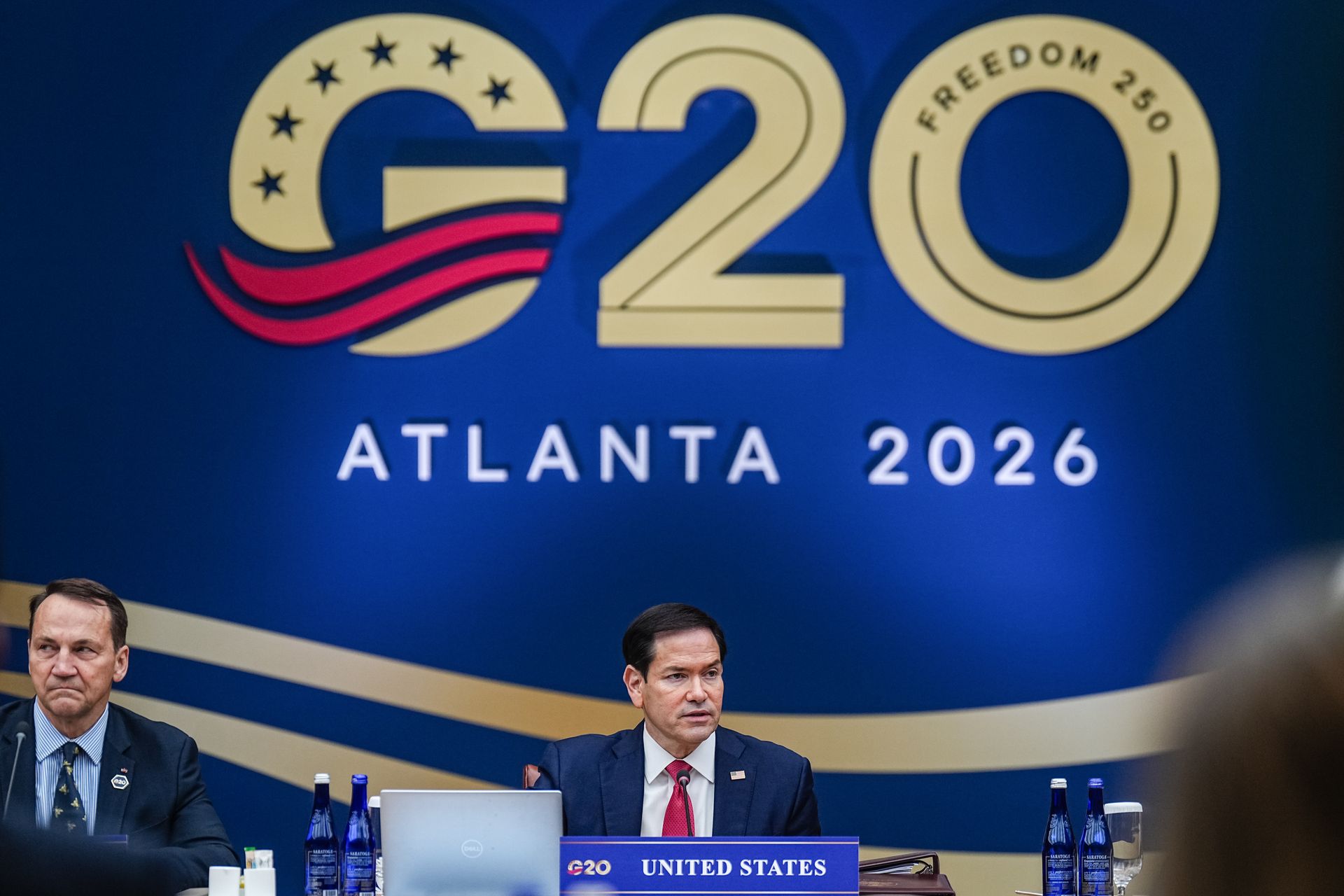
Como está na presidência do G20 em 2026, a Casa Branca realiza a reunião de chanceleres em Atlanta entre a sexta-feira (30) e o sábado (31) para debater temas da geopolítica, do mercado de energia e das cadeias de suprimentos globais.

A conversar de Marco Rúbio e Mauro Vieira ocorre em um contexto diplomaticamente delicado, uma vez que o presidente Donald Trump evitou reconhecer a vitória de Lula nas eleições e deu permissão para Flávio Bolsonaro - que evita reconhecer a derrota - para entrar nos EUA após a Justiça brasileira proibir a saída do senador do país.

Parlamentares democratas de oposição à Trump enviaram carta à Rubio questionando sobre a suposta ajuda da Casa Branca à viagem de Flávio Bolsonaro até os EUA. O senador deixou o Brasil em meio a investigações contra ele por lavagem de dinheiro, corrupção e evasão de divisas. Flávio nega qualquer irregularidade.

O encontro do G20

Durante a sexta-feira (30), Mauro Vieira participou da sessão de abertura do encontro de chanceleres do G20 e teve reuniões bilaterais com ministros de relações exteriores da Índia, Subrahmanyam Jaishankar, do Reino Unido, Ed Miliband, e da Polônia, Radosław Sikorski.

Os três chanceleres cumprimentaram Vieira pela conclusão do processo eleitoral no Brasil e pela reeleição de Luiz Inácio Lula da Silva, segundo divulgou o Itamaraty em uma rede social.

“Jaishankar [chanceler indiano] cumprimentou Mauro Vieira pela conclusão do processo eleitoral no Brasil. O indiano pediu transmitir ao Presidente Lula as calorosas congratulações do Primeiro-Ministro Narendra Modi pelo triunfo eleitoral”, escreveu o ministério.

A fuga

Derrotado nas urnas no dia 25 de outubro, Flávio deixou o país após a Polícia Federal pedir o confisco do passaporte do parlamentar por entender que ele poderia fugir em função dos processos que enfrenta na Justiça.

O senador fluminense é investigado sobre o pagamento de R$ 60 milhões feito pelo banqueiro Daniel Vorcaro do Banco Master para supostamente fazer um filme Dark Horse, que conta a história do pai, o ex-presidente Jair Bolsonaro.

Em outro processo, a PF investiga as relações do político do PL com o advogado Willer Tomaz, dono de bet acusado de lavagem de dinheiro e de envolvimento na fraude do INSS de desvio de aposentadoria e pensões. Willer teve mais de R$ 6 bilhões bloqueados pela Justiça. 

  •  

Trump admin threatens Iran with 'consequences' as allies convene amid threats of post-election escalation

The Trump administration warned Iran that there "will be consequences" if Tehran continues its malign activities amid growing concern over a potential new round of U.S.-Iran hostilities after the midterm elections.

With just days until the 2026 elections and with war raging on in the Middle East, foreign ministers from the world's largest economies gathered in Atlanta, Georgia ahead of the G20 leaders meeting in December.

"The Iranian regime has had a choice... to either pursue the path towards normalcy, towards prosperity for their people, the path towards diplomacy. Or they can continue their malign activities, but there will be consequences for that, and we've seen the president taking concrete action," State Department principal deputy spokesperson Tommy Pigott told Fox News Digital on Friday.

Pigott was responding to reports that U.S. officials have warned regional partners to prepare for the possibility of heightened U.S. military action against Iran after Tuesday's elections, as well as potential Iranian retaliation.

IRANIAN NEGOTIATORS KICKED OUT OF US AS TALKS STALL, TRUMP LAYS OUT 'POSSIBLE' TIMELINE FOR MORE STRIKES

President Donald Trump has not made a final decision on renewed strikes, but U.S. diplomats and defense officials have privately urged several Middle Eastern countries and regional allies to prepare for the possibility of new military action and Iranian retaliation, according to an Associated Press report citing two diplomats briefed on the warnings.

The warnings come amid heightened concerns about Iranian threats against Americans overseas.

Director of National Intelligence Jay Clayton wrote in an unclassified memo to Secretary of State Marco Rubio that the U.S. had received intelligence that Iran had "substantially increased efforts to target U.S. personnel" and that lethal Iranian plots had reached "advanced stages" in the Middle East and elsewhere, according to Scripps News.

Asked whether those threats were being discussed with G20 counterparts and whether the U.S. was sharing intelligence with allies to disrupt potential plots, Pigott declined to discuss intelligence matters but said the U.S. was working with international partners against transnational threats.

"We're going to work with our partners to make sure that any transnational threat has the appropriate transnational response to protect our citizens," he insisted.

The prospect of renewed fighting with Iran loomed over the G20 foreign ministers' meeting, where Rubio has put energy security, secure supply chains and freedom of navigation among the U.S. priorities.

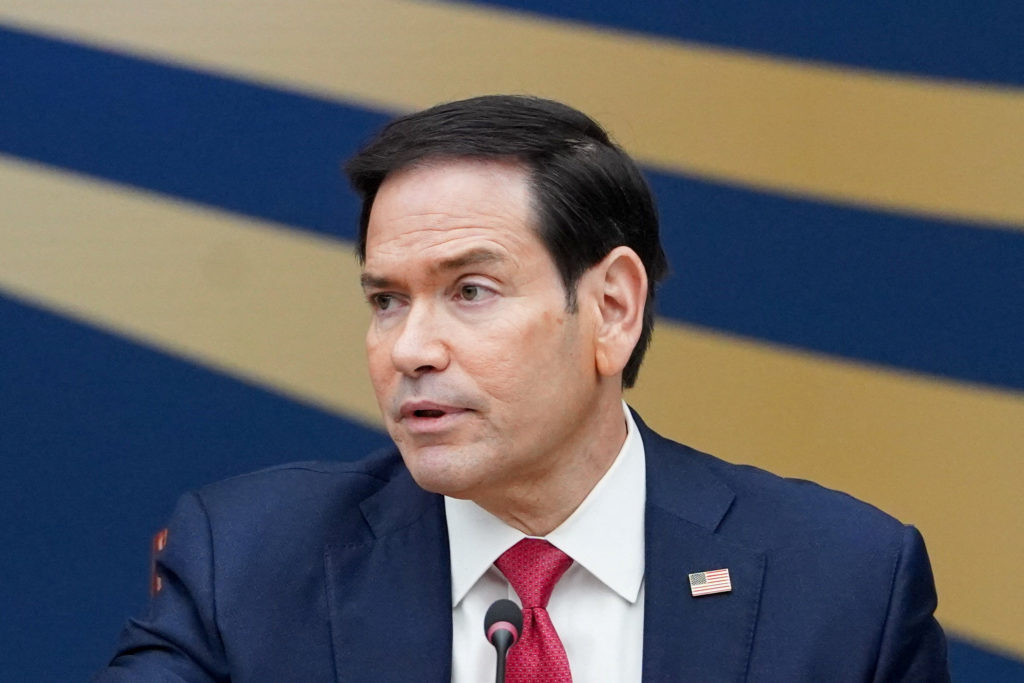
Rubio opened the two-day gathering Friday by warning that the world's largest economies face "interconnected economic and geopolitical crises" threatening energy and food supplies, trade, global supply chains and freedom of navigation.

Pigott said the administration's position remains that "there cannot be a situation where a country decides that they can control an international waterway and charge tolls over that waterway."

TRUMP THREATENS 'UNPRECEDENTED' ECONOMIC CONSEQUENCES FOR ANY NATION AIDING IRAN

In the aftermath of the war, Iran began asserting greater authority over the Strait of Hormuz and insisting on the right to collect fees from ships for services including navigation and environmental protection.

Asked what the U.S. wants G20 countries to do to keep the strait open, Pigott pointed to a broader principle that international waterways must remain free from coercion.

CLICK HERE TO DOWNLOAD THE FOX NEWS APP

"Fundamentally, the principle here is so important, making sure that we are having secure international waterways in the sense we're not having these tolls or coercion, making sure we have secure supply chains," Pigott said. "That is so important."

  •  

Ukraine war briefing: Moscow’s Lavrov snubbed at G20 in Atlanta

Russian foreign minister heavily criticised by EU foreign policy chief, and plans for the traditional ‘family photo’ abandoned. What we know on day 1,711

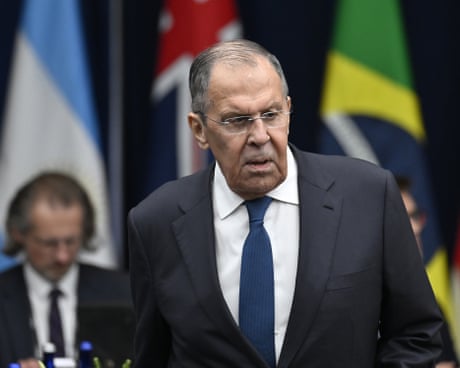
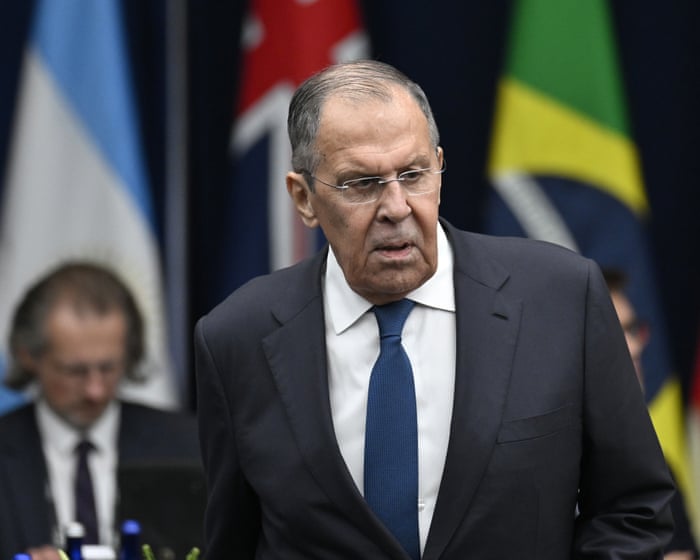
The EU’s foreign policy chief has accused Russian foreign minister Sergei Lavrov of presenting “lies” in G20 meetings in Atlanta about the Ukrainian conflict and suggested Moscow was not ready for peace negotiations. “We were talking about the big geopolitical crisis, including Ukraine, and we were able to address Sergei Lavrov head-on with this,” Kaja Kallas told Agence France-Presse on the sidelines of a meeting on Friday. “Of course, he put forward a lot of lies, a lot of false narratives that we were also able to then rebuke.” Kallas said Russia did not appear ready to move ahead in peace talks. “Even if they would have said this in words, their deeds tell something else,” she said. “July, August, and September have been the deadliest months for civilians in Ukraine.” She added: “They should show with their deeds that they are ready to negotiate, but they are clearly, clearly not.”

At the talks, which are focusing on global economic growth, energy security and trade, European officials pushed Russia to secure a ceasefire in the Black Sea, an important agriculture export corridor. However, Lavrov conceded no ground on Ukraine and at a press conference, he criticised Europeans for their “arrogant boycott” while praising the willingness of US President Donald Trump’s administration to engage with Moscow.

Plans for a traditional family photo of G20 ministers were called off after some European officials objected to appearing alongside Lavrov. Moscow has been shunned by most of the West since it invaded Ukraine, and Lavrov himself remains under international sanctions. The UK foreign secretary, Ed Miliband, said: “We do not engage in that way with the Russians and have not for a number of years.” German foreign minister Johann Wadephul said there would be no photo because “there is no normality with Russia”.

US secretary of state Marco Rubio spoke briefly with Lavrov on the sidelines of the G20 meeting, with the Russian minister saying both sides had a “decent talk”. Trump has invited Russian President Vladimir Putin to Florida in December and has eased some sanctions on Moscow while touting a deal for Russia to sell diesel as prices soared. The Russian foreign minister’s G20 appearance comes also ahead of fresh negotiations expected between Moscow, Kyiv and Washington in November.

Meanwhile, the Trump administration on Friday approved the sale of 500 Patriot missiles to Ukraine for an estimated $2.1bn, the state department said, but Ukraine’s president has warned deliveries could take years. The approval, which goes to Congress for review, comes after weeks of complaints by Ukrainian authorities that its supplies of the interceptor missiles were dwindling. A state department statement did not provide an estimate for when the weapons could be delivered but Volodymyr Zelenskyy said late Friday in a post on X that “deliveries may begin ONLY IN A FEW YEARS”. Weapons sales typically take years to fulfil, and two people briefed on the US decision said the missiles – which are yet to be manufactured – are not expected to be delivered until a couple of years into the 2030s.

Patriot missiles are among the most important weapons Ukraine has to intercept Russian drones and missiles. The Ukrainian president on Friday suggested the US and European allies could give his country missiles they have stockpiled now, which would later be replenished by the new purchase. “We are asking our American partners to find a solution for the time when there is a real danger and a real need to use PAC-3 interceptors,” Zelenskyy said.

People living in the besieged Russian-held city of Oleshky in southern Ukraine were evacuated on Friday as part of a joint relief operation, the first of its kind in four years and eight months of war. The city, which lies on the Russian-occupied side of the Dnipro River has suffered months of food and medical shortages, leading to warnings of starvation for the few thousand people remaining there, including children. A humanitarian convoy arrived in the city with food and medicine and to evacuate those wishing to leave for Russia or Ukraine. It’s not clear how many people chose to evacuate but US first lady Melania Trump posted on social media on Friday that the convoy could safely evacuate more than 750 people.

Continue reading...

© Photograph: Peter Zay/Anadolu/Getty Images

© Photograph: Peter Zay/Anadolu/Getty Images

© Photograph: Peter Zay/Anadolu/Getty Images

  •  

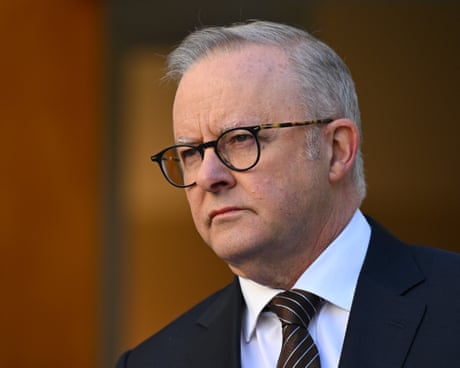
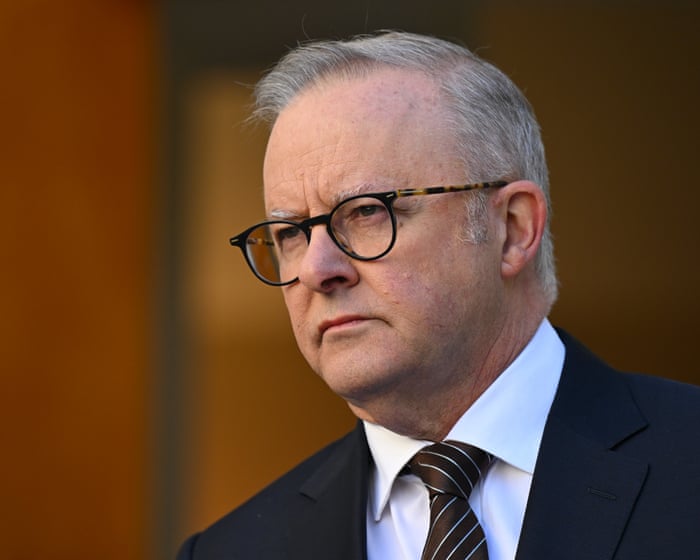
Albanese looks for reset on world stage as ‘spot fires burn’ domestically and likely interest rate hike looms

The prime minister will speak with King Charles and others at the Commonwealth heads of government meeting in Antigua and Barbuda

As “summit season” begins, reaffirming ties with fellow leaders on the world stage could be a circuit breaker for Anthony Albanese amid domestic and economic woes, analysts have said.

But a likely interest rate hike, triggered by higher-than-expected inflation, while the prime minister is overseas will make his job – and the treasurer’s – even harder.

Sign up for Guardian Australia’s Politics, really newsletter here

Continue reading...

© Photograph: Lukas Coch/AAP

© Photograph: Lukas Coch/AAP

© Photograph: Lukas Coch/AAP

  •  

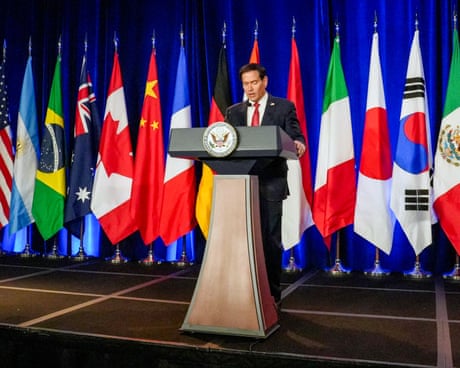
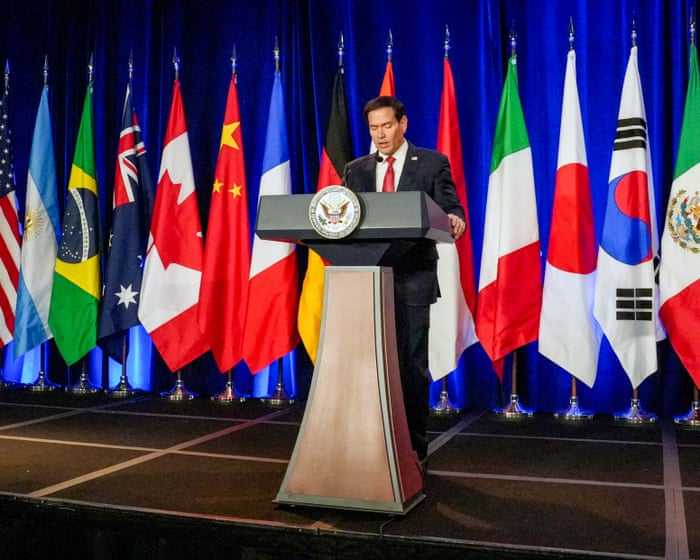
US cancels G20 ‘family photo’ after Australia, UK and others refuse to appear with Russia

Marco Rubio pulls plug on traditional photo op at meeting of foreign ministers after about one-third of countries threaten boycott

The traditional “family photo” to open the G20 foreign ministers’ meeting has been abruptly cancelled in the US after a host of nations – including Australia and the UK – refused to appear beside the Russian foreign minister, Sergei Lavrov.

The US secretary of state, Marco Rubio, pulled the plug after several European officials, the UK and Australia made it known they would boycott or walk out of the snapshot that often kicks off such international gatherings.

Continue reading...

© Photograph: Megan Varner/Pool Reuters/AP

© Photograph: Megan Varner/Pool Reuters/AP

© Photograph: Megan Varner/Pool Reuters/AP

  •  

México defiende derecho internacional durante cita del G20 en EEUU

Ciudad de México, 30 oct (Prensa Latina) México defenderá la igualdad soberana de las naciones y el derecho internacional frente a las tensiones globales, afirmó hoy el canciller Roberto Velasco durante la Reunión de Ministros de Exteriores del G20 en Estados Unidos.

The post México defiende derecho internacional durante cita del G20 en EEUU first appeared on Noticias Prensa Latina.

  •  

Lavrov Returns to America as Moscow Tests the Limits of Western Diplomacy

Russia’s foreign minister arrives at the G20 meeting in Atlanta without Moscow having made significant concessions over Ukraine. His presence offers a reminder that diplomatic access can be valuable even when negotiations produce little progress.

Sergei Lavrov’s arrival in the United States for the G20 foreign ministers’ meeting is unlikely to transform the prospects for peace in Ukraine. For Moscow, however, the visit offers opportunities extending well beyond the formal agenda.

Russia’s veteran foreign minister will participate in discussions alongside representatives of the world’s major economies, including governments that have imposed extensive sanctions on Moscow and others that have maintained profitable commercial relationships with it.

The meeting, chaired by US Secretary of State Marco Rubio on 30–31 October, takes place as Washington pursues another diplomatic initiative concerning Ukraine.

Lavrov’s presence has attracted criticism from American lawmakers, including Republican Congressman Don Bacon, who has questioned why a senior representative of a government conducting military operations against Ukrainian cities should be welcomed in the United States.

Yet the more consequential issue is not whether Lavrov should attend. It is what Moscow hopes to achieve through renewed access to Western diplomatic forums, and what the United States expects to obtain in return.

Russia’s Diplomatic Opportunities

The Kremlin has spent much of the war arguing that Western attempts to isolate Russia have failed.

There is some substance to that argument, although it requires qualification.

Russia has suffered extensive restrictions on access to Western finance, technology and markets. Its economic relationships with Europe have been severely reduced, and its dependence on alternative trading partners has increased.

Nevertheless, Moscow has preserved important commercial and diplomatic connections with China, India and other countries unwilling to participate fully in Western sanctions.

For these governments, relations with Russia are often determined by energy requirements, commercial opportunities and their own strategic calculations rather than European security priorities.

The G20 provides Moscow with an opportunity to exploit those differences.

Lavrov can challenge Western sanctions, defend Russia’s diplomatic positions and hold bilateral discussions without demonstrating any willingness to compromise over occupied Ukrainian territory.

That does not make the meeting a Russian victory. Attendance at a multilateral gathering is not equivalent to the removal of sanctions or recognition of territorial claims.

But it offers Moscow something useful: opportunities for engagement without the conditions that would normally accompany substantive negotiations.

The limitations of such diplomacy were illustrated recently when German Foreign Minister Johann Wadephul met Lavrov in New York.

As EU Today examined in its analysis of that encounter, the meeting reopened a channel of communication but produced no visible movement in Russia’s position.

Germany restated its support for Ukraine. Moscow reiterated its established arguments.

The encounter demonstrated that diplomatic access and diplomatic progress are not necessarily the same thing.

Washington’s Negotiating Problem

The Trump administration approaches Russia from a different perspective.

Washington appears increasingly interested in identifying economic and political incentives that could make a negotiated settlement possible.

The calculation is understandable. Sanctions alone have not ended the war, and continued fighting imposes enormous costs on Ukraine while consuming Western military resources.

However, negotiations depend on more than establishing contact.

A settlement requires agreement over territory, security arrangements, enforcement mechanisms and the consequences of renewed hostilities.

Russia’s willingness to participate in discussions does not establish its willingness to accept terms compatible with Ukrainian sovereignty.

Nor does the prospect of economic cooperation necessarily create sufficient leverage to change Moscow’s calculations.

The administration must also consider how concessions offered to Russia would affect Ukraine’s ability to negotiate.

If Moscow expects economic benefits merely for remaining at the negotiating table, it has an incentive to prolong discussions while preserving its military position.

Conversely, a credible offer tied to verifiable Russian actions could provide a basis for substantive bargaining.

The difference lies in the conditions attached to any concessions and the mechanisms available to enforce them.

Europe’s Place at the Table

For European governments, the Atlanta meeting exposes a familiar weakness.

The EU is a major provider of financial assistance to Ukraine, maintains extensive sanctions against Russia and would face the consequences of any settlement that failed to establish lasting security arrangements.

Yet European influence over direct American-Russian negotiations remains limited.

EU foreign policy chief Kaja Kallas is attending the meeting and will conduct bilateral discussions, according to the European External Action Service’s official announcement.

Her participation gives Brussels an opportunity to communicate its position. It does not guarantee a role in determining the terms of any eventual agreement.

Ukraine itself is not participating in the gathering, although the G20 meeting is not formally a peace negotiation.

The danger for Europe is not simply exclusion from particular meetings. It is the possibility that decisions affecting European security will emerge from negotiations in which European governments possess limited influence over the agenda.

The EU retains important instruments of leverage, particularly sanctions, financial assistance and access to its markets.

But those instruments are less effective when member states disagree over their use or when Washington pursues a separate diplomatic strategy.

The Wider G20 Agenda

The meeting also takes place amid serious tensions over Iran, maritime security and international trade.

Washington wants greater cooperation over freedom of navigation in the Strait of Hormuz, Red Sea, Black Sea and South China Sea.

These priorities intersect with European interests, particularly energy security and the protection of commercial shipping.

Yet the participating governments approach these disputes from markedly different positions.

China has little interest in endorsing an American interpretation of maritime security that could constrain its own regional ambitions.

Russia is unlikely to support arrangements that weaken its position in the Black Sea.

Meanwhile, disagreements over American tariffs complicate Washington’s efforts to secure cooperation from traditional economic partners.

The G20 remains useful precisely because governments with conflicting interests can communicate through it.

But communication should not be mistaken for agreement.

For Moscow, Lavrov’s visit offers another opportunity to demonstrate that Russia remains engaged in international diplomacy despite its war against Ukraine.

For Washington, the challenge is to show that renewed engagement can produce something more substantial than another meeting.

Europe’s concern is more immediate: any settlement negotiated with Moscow will have to be sustainable on European territory, with European resources and against the possibility of renewed Russian aggression.

Diplomatic access may be relatively easy to restore. Establishing credible security arrangements will be considerably harder.

  •  

Lavrov llega a EEUU para asistir a la reunión ministerial del G20

Moscú, 30 oct (Prensa Latina) El ministro de Asuntos Exteriores de Rusia, Serguéi Lavrov, arribó hoy a la ciudad de Atlanta, en Estados Unidos, para participar en la reunión ministerial del G20, informó la cancillería del país eslavo.

The post Lavrov llega a EEUU para asistir a la reunión ministerial del G20 first appeared on Noticias Prensa Latina.

  •  

Russia’s sanctioned top diplomat heads to the US to campaign against the sanctions on its war

russia’s sanctioned top diplomat heads campaign against sanctions its war · post russian foreign minister sergei lavrov addresses un general assembly new york united states 24 2022 photo/cia pak un7955720

Russia's sanctioned Foreign Minister Sergei Lavrov is heading to a G20 meeting in the US, Russian Foreign Ministry spokeswoman Maria Zakharova stated. Moscow plans to use the trip to argue against sanctions, days after Russian ballistic missiles hit Kyiv. Ukraine, meanwhile, is still waiting for Washington's sign-off on the air defense missiles it needs.

Ukraine is fighting Russia's air war while its main ally squeezes it too, from capped Starlink links to missing US warnings of incoming ballistic missiles, leaving Kyiv weaker before any talks. A new round of the US-Russia-Ukraine trilateral talks is expected in Abu Dhabi in November.

Moscow's sanctioned minister plans to argue against sanctions

Lavrov will lead the Russian delegation at the G20 foreign ministers' meeting, which the US hosts in Atlanta on 30–31 October. In his speeches, he will denounce “the use of economic ‘weapons’ to fight opponents, including sanctions,” Russia's Foreign Ministry stated. The US Treasury sanctioned Lavrov on 25 February 2022, the day after Russia launched its full-scale invasion of Ukraine.

The ministry claimed its delegation ran into American red tape over visas. Journalists in Lavrov's press pool still received US visas without movement restrictions, Russian state news agency TASS reported.

The State Department's announcement of the meeting doesn't mention Russia or say whether Lavrov got a sanctions waiver. Republican Congressman Don Bacon told RFE/RL that Russian leaders “should not be welcomed in any of these forums.” “They lead a pariah state,” he said.

Moscow's demands arrive days after its missiles hit Kyiv

Lavrov will also stress “the cornerstone importance of indivisible security” as the basis of multipolarity, the ministry stated. Ukrainian President Volodymyr Zelenskyy has ruled out neutrality and limits on Ukraine's army.

Residents stand outside a high-rise building in Kyiv after a Russian ballistic missile attack, 26 October 2026
Explore further

Russian ballistic missiles hit a Kyiv university campus, then return before dawn for the Southern Bridge again

A day before the trip was announced, Lavrov called the US-Russia diesel deal a purely business arrangement. “There were no strings attached,” he claimed.

Lavrov brings these demands days after Russian ballistic missiles hit a Kyiv university campus and the Southern Bridge, killing a 46-year-old woman, the Kyiv City Prosecutor's Office reported. Kyiv has waited almost a month for US Defense Secretary Pete Hegseth's signature on Patriot and NASAMS missiles, Zelenskyy wrote.

Moscow keeps collecting from Washington

The visit adds to a run of US moves in Moscow's favor. This month, the US Treasury cleared Russian diesel blocked by sanctions. US President Donald Trump then waived tariffs on buyers of Russian oil. US Energy Secretary Chris Wright also said investors could buy sanctioned shadow-fleet tankers and return them to legal trade. Russia, for its part, kept striking Ukraine's energy sites during the truce Trump announced.

Russian officials are also back in G20 rooms in person. In late August, Russian Finance Minister Anton Siluanov attended a G20 finance meeting in Asheville, North Carolina. It was his first in-person G20 appearance since 2022, and European officials refused to join the group photo with him. The State Department has stated that Russia is welcome at all G20 meetings, and a senior US official said Russia would be invited to the leaders' summit in Miami in December.

Western ministers used to push back at those tables. When Lavrov spoke at the G20 meeting in Johannesburg in February 2025, then-British Foreign Secretary David Lammy said he saw no appetite for peace.

In Atlanta, Obama accuses the White House of selling out Ukrainians

Former US President Barack Obama campaigned in Atlanta on 28 October, two days before Lavrov's meeting there.

“And while we're alienating key allies like Canada, the White House is bending the knee to Vladimir Putin of Russia and selling out Ukrainians who are fighting for their freedom and democracy,” Obama said.

He also likened Trump's self-enrichment in office to “what dictators in other countries do.”

  •  
❌