Slovakia reopens criminal case over donation of fighter jets, air defense systems to Ukraine


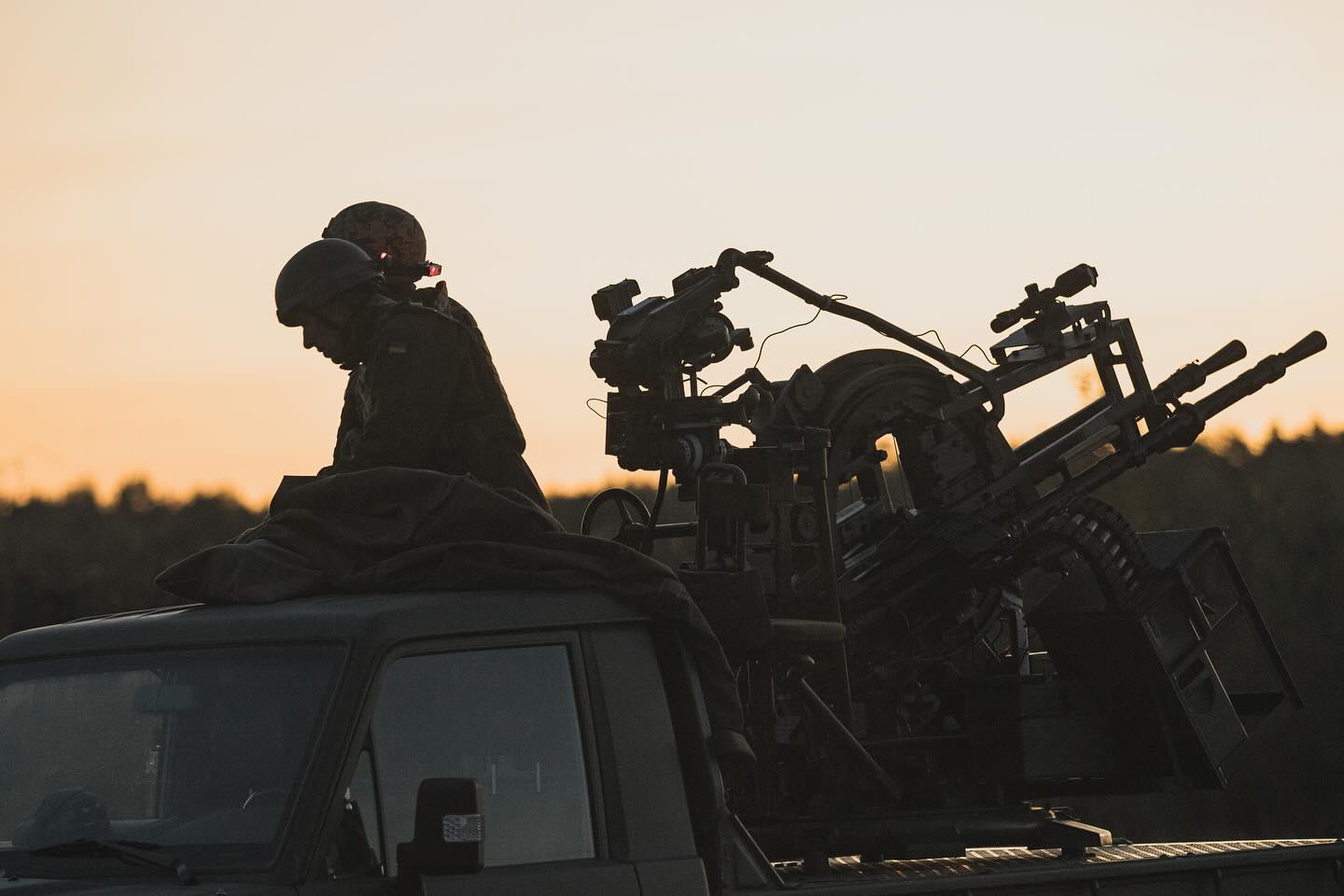
Automated gun turrets now serve in Ukraine’s Air Force and are destroying Russia’s jet-powered weapons, the Defense Ministry reported on 29 October. It gave no count for those jet kills, and it did not say what type of drones the turrets downed over Kyiv.
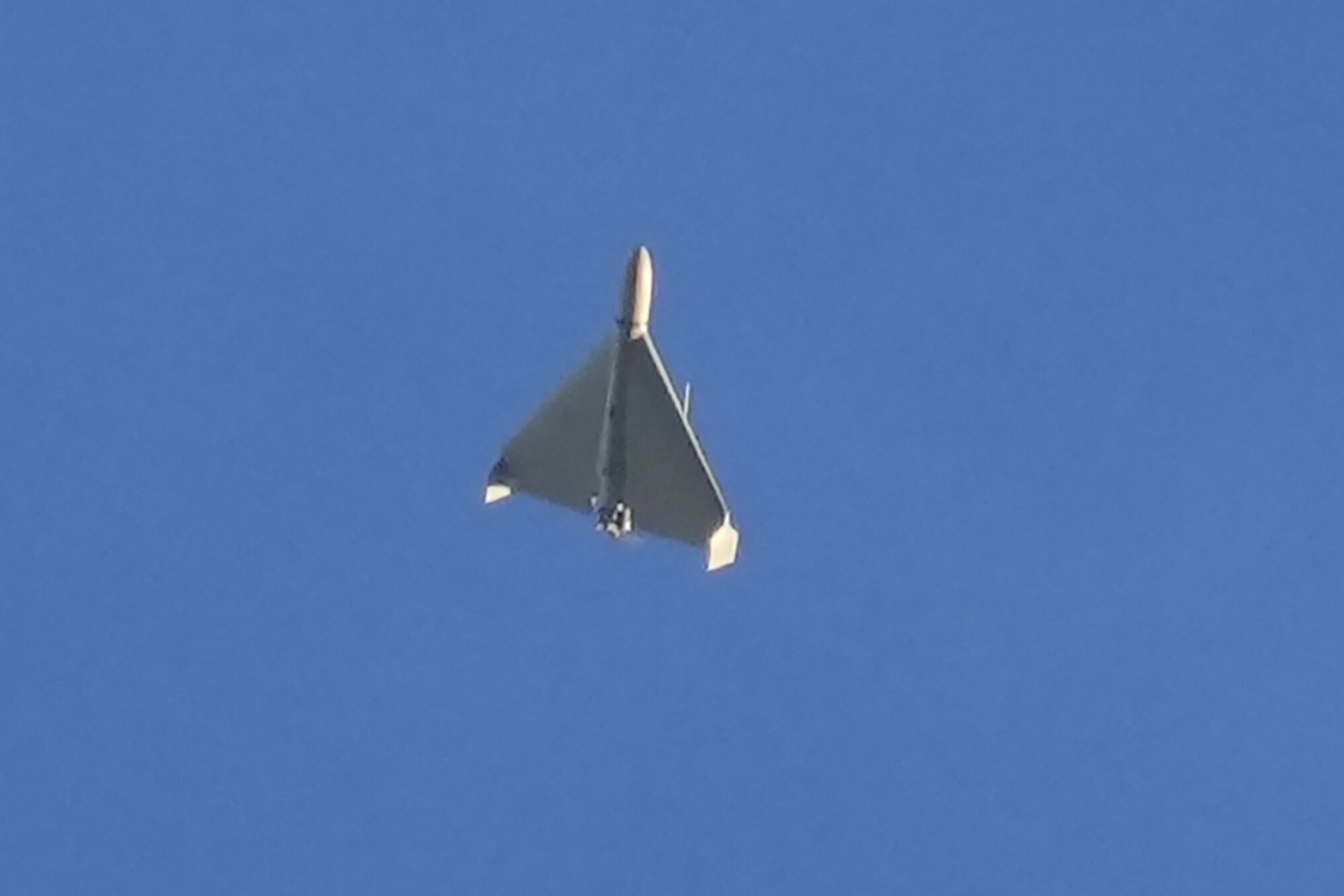
Jet drones are where Ukraine struggles most. From 1 to 26 September, Ukraine downed 55% of jet-powered drones against 90% of slower ones, partly because its interceptor drones fly at about 300 km/h, too slow to catch them. Yurii Cherevashenko, Deputy Commander of the Air Force, told a parliamentary inquiry commission on 6 October that jet-drone interceptors would arrive in the needed numbers no earlier than late November. Guns have limits too. On 5 October, Air Force spokesman Yurii Ihnat said turrets had already downed Geran-5s, but that their range is short because their main weapon is a machine gun.
According to the ministry, Brave1, a defense innovation cluster, began developing automated turrets in 2024. The systems have since “moved beyond the experimental stage and become an integral part of air defense,” it said. In Air Force service, the turrets are destroying jet-powered Banderol munitions and Geran-5 drones.
Russia first used the Geran-5, a 6-meter jet-powered strike drone, in early 2026. The Banderol, a jet-powered cruise missile, flies at 520–560 km/h and can reach 650 km/h.
Separately, the ministry said turrets have destroyed more than 60 targets within the private air defense project. The project lets companies form anti-drone teams that work under Air Force command.
Yet on 14 October, the ministry gave the same 60-plus total for all private teams. At the time, it named interceptor drones and heavy machine-gun turrets as their main weapons. Groups from six companies were on combat duty, about 50 groups had been formed in total, and some were still training. Nearly 100 companies had joined by then, up from 81 in mid-September.
The ministry says the project expands air defense “without placing an additional burden” on the military’s own air defense. It and Brave1 say they will keep integrating automated turrets into the air defense system.

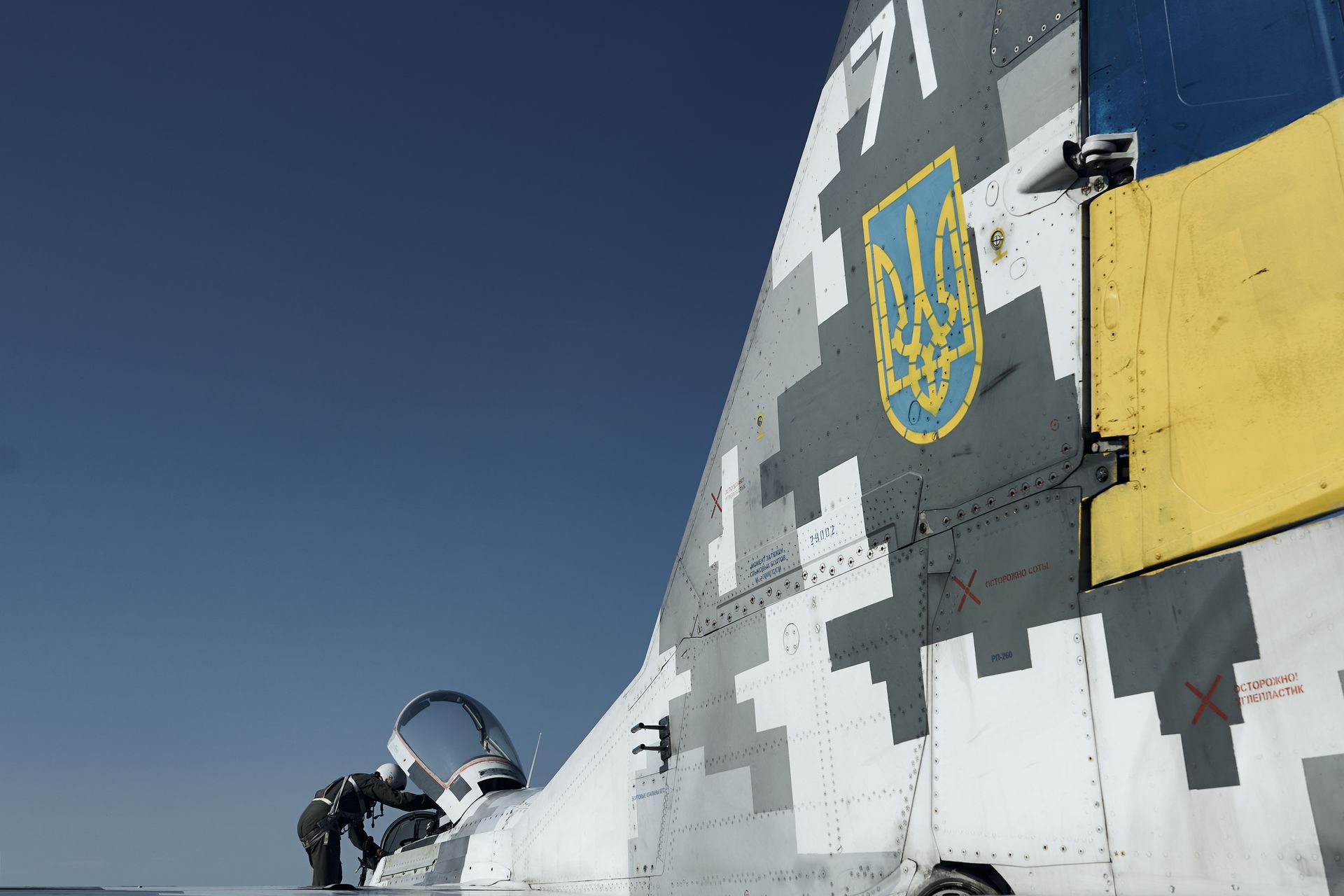
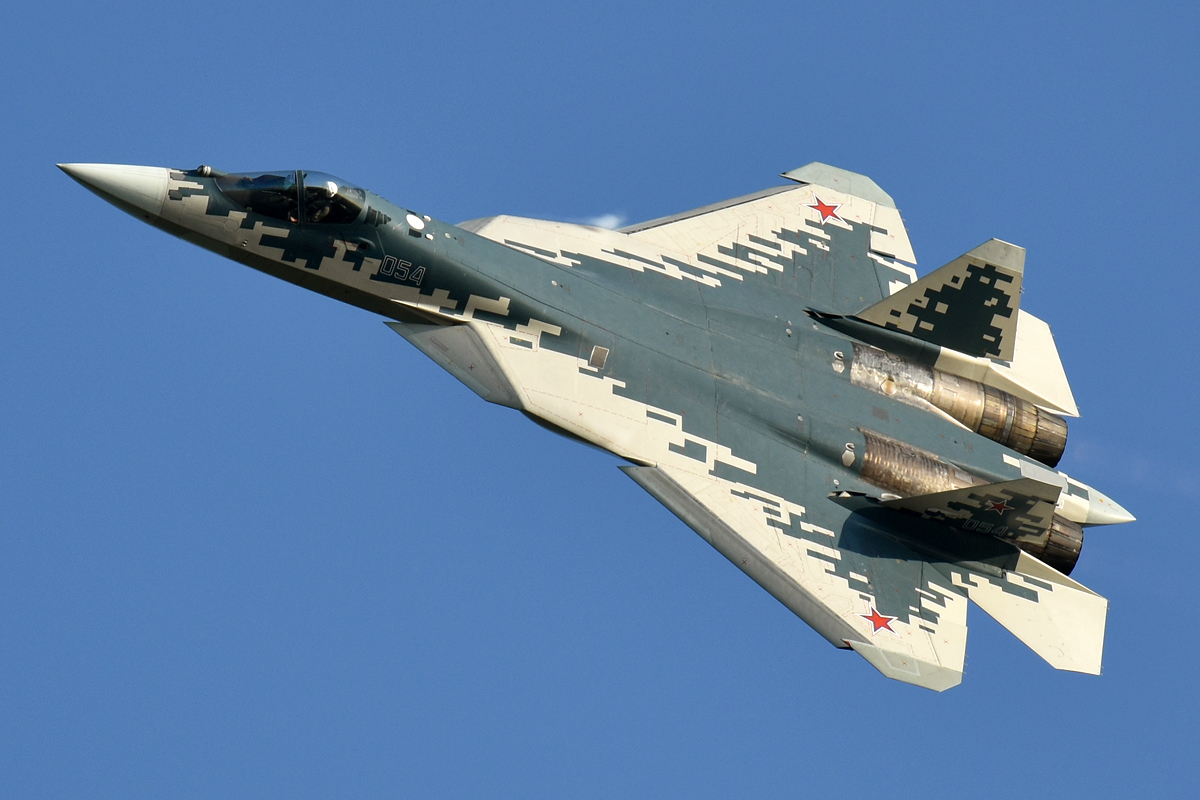
Another of Russia's Su-57 stealth fighters has burned out on the ground, Ukrainian military news outlet Militarnyi reported. A Ukrainian Telegram channel blamed an engine start gone wrong and published satellite images of the scorched airfield.
Russia's war against Ukraine leans on warplanes that strike from standoff range, and Ukraine has spent this year hunting them on their airfields. Its newest fighter is a rare sight in that fleet: Ukrainian intelligence estimated Russia had about 20 Su-57s, against 135–140 Su-35S and 140–145 Su-30 jets, and could not tell how fast more are built.
The fire broke out at the Akhtubinsk airfield in Russia's Astrakhan Oblast on 29 October. The Ukrainian Telegram channel Absolutely Reliable Source said the multirole fighter caught fire during a malfunction at engine start. It said the jet burned out completely. Militarnyi called the cause preliminary.

The channel's satellite images show a dark scorch mark and debris on open ground between the airfield's taxiways.

Akhtubinsk has seen Su-57s hit before. Ukrainian drones first damaged Su-57s there in June 2024, and Ukrainian intelligence said two were likely hit.
Militarnyi counted the fire as the fourth time a Su-57 was hit or lost in 2026. Ukraine's General Staff said drones hit several Su-57s and a Su-34 at the Shagol airfield in Chelyabinsk Oblast on 25 April. Ukrainian intelligence later said the state of those jets was unknown.
On 23 July, a Su-57 crashed in Moscow Oblast. A Russian Telegram channel said Russia's own air defenders shot it down.
Russia's air force received two new Su-57s in September, its second batch this year, Militarnyi reported.
Ukraine keeps hitting Russian warplanes on the ground. On 29 October, Ukraine's Navy said its Neptune missiles destroyed two Su-34s at the Marinovka airfield in Volgograd Oblast. Two weeks earlier, it reported hitting six Su-34s at Borisoglebsk in Voronezh Oblast. Russia uses those bombers to drop glide bombs on Ukrainian towns.
European aircraft manufacturer Airbus could potentially join a British-Japanese-Italian consortium to build a next-generation fighter jet following the collapse of a highly-troubled French-German project, CEO Guillaume Faury said Wednesday.
The post Airbus Willing to Join U.K.-Japan-Italy Fighter Jet Project appeared first on Breitbart.
Gustavo Valiente/Europa Press via Getty Images ; Andrew Leyden/Getty Images
Since his first term in the White House, President Donald Trump has displayed a model of a new Air Force One plane on his desk.
On July 1, his long-held vision became a reality when the aircraft the US accepted as a gift from Qatar, designated the VC-25B Bridge, flew as Air Force One for the first time.
Speaking to reporters before boarding the aircraft at Joint Base Andrews in Maryland, Trump called it the "best plane ever built."
He later landed in Medora, North Dakota, for the dedication of the Theodore Roosevelt Presidential Library.
Retrofitted with state-of-the-art protective measures and painted in his favored colors of red, white, and blue, the new presidential plane is bigger, faster, more fuel-efficient, and more luxurious than the outgoing VC-25A fleet, which has served presidents since the 1990s.
It has also been brought in and out of service amid operational mishaps and security concerns, such as when Trump secretly switched to a C-32A to fly back from Turkey in July due to threats from Iran, and when the VC-25B Bridge's emergency slide was accidentally deployed in September.
A senior administration official previously told Business Insider that the VC-25B Bridge is "the greatest presidential plane ever built," and added, "We maintain a consistent posture that ensures a safe, secure, and reliable capability for the President of the United States and routinely evolve the capability as required to maintain that posture."
An Air Force spokesperson told Business Insider, "We do not provide specific details on capabilities or provide comparisons between aircraft."
Here's how Trump's new VC-25B Bridge compares to the old VC-25A.
Shepard Sherbell/Corbis via Getty Images
The first VC-25A, known as SAM 28000, began serving as Air Force One in 1990, and is flying alongside the Qatari-donated plane.
The outgoing Air Force One, a second, identical VC-25A known as SAM 29000, entered service in 1991. It completed its final presidential flight in June 2026.
The VC-25A measures 231 feet and 10 inches long with a wingspan of 195 feet and 8 inches.
ROBERTO SCHMIDT/AFP via Getty Images
The VC-25B Bridge — so called because it is serving as an interim presidential aircraft before Boeing's customized VC-25Bs are delivered starting in 2028 — is larger than the VC-25A at about 250 feet long, with a wingspan of 224 feet and 5 inches.
Koen van Weel/ANP/AFP via Getty Images
Jacqueline Kennedy chose the shades of blue and white for SAM 26000, a Boeing VC-137C that entered service in 1962 under President John F. Kennedy.
The first lady was also responsible for adding the words "United States of America" to the presidential plane.
An American flag was featured on the tail, with the stars facing forward per the US Flag Code.
Andrew Leyden/Getty Images
The Air Force initially rejected the navy paint color Trump proposed during his first term for the forthcoming VC-25Bs, saying a thermal study found that the darker shade would require additional testing to avoid overheating issues. However, Trump got his preferred colors in his second term. He also reimagined the tail's flag design.
"As you know, we've always gone with a straight little noodle and I never loved that," Trump said of the tail's new waving flag design after touring the plane at Joint Base Andrews on June 19. "Now we have a wavy, beautiful flag. We're waving it proudly because our country is doing so well."
US Air National Guard photo by Dale Greer
While traveling at 630 miles per hour, the VC-25A had a range of 7,800 miles without refueling.
The VC-25A is also capable of midair refueling.
Andrew Leyden/Getty Images
The VC-25B Bridge can fly faster and farther than its predecessor, with a range of 8,900 miles at 660 miles per hour.
The VC-25B Bridge is not equipped for in-flight refueling. The forthcoming VC-25B planes that Boeing is building will also not be capable of aerial refueling to cut costs, Air and Space Forces Magazine reported.
Official White House Photo by Daniel Torok
Some furniture and decor had been updated under various presidents — for example, President Bill Clinton's Air Force One conference room featured tan leather chairs, while President Barack Obama opted for a darker chocolate brown. However, the plane's beige walls and wood paneling didn't change much throughout its 36 years of service.
Official White House Photo by Daniel Torok
Trump called the new Air Force One "the world's most luxurious plane." It features a primary bedroom with an en-suite bathroom that includes a walk-in shower, as well as a common area with couches and private office spaces.
The press section is also outfitted with luxurious touches, including reclining massage chairs.
Official White House Photo by Adam Schultz
Boeing is building new, customized VC-25Bs to serve as Air Force One, but the $3.9 billion project — which has since increased to more than $5 billion — is behind schedule. The planes were initially scheduled for delivery in 2024, but the timeframe has been pushed to 2028, prompting Trump to seek his own means of acquiring a new presidential jet.
The original contract was fixed-price, so any additional costs must be absorbed by Boeing.
Official White House Photo by Daniel Torok
Secretary of the Air Force Troy E. Meink told Congress in June 2025 that retrofitting the new Air Force One would cost less than $400 million, while some lawmakers expressed concerns that it could cost up to $1 billion in taxpayer funds.
In July 2025, The New York Times flagged a $934 million transfer of funds from a nuclear modernization budget to update aging ground-based weapons systems to a classified project, which it reported could be the new Air Force One, since the presidential plane is equipped to order nuclear strikes. The Air Force declined to comment.

Russia’s aircraft plants still turn out modern fighter-bombers and fighters, enough to partly cover its losses, Ukraine’s military intelligence agency HUR told Ukrainian news agency UNIAN, which published the reply on 23 October. Its older bombers are a different story. Russia has no serial production of new Tu-95s, Tu-22M3s, or Su-24s and keeps them flying through repairs and upgrades, so each one lost for good leaves a lasting gap, HUR said.
Ukraine’s Navy said its Neptune missiles hit six Su-34M bombers at Borisoglebsk airbase in Russia’s Voronezh Oblast overnight into 15 October. Zelenskyy later said four were destroyed and two damaged. The Su-34 is one of the jets that drop Russia’s glide bombs, heavy bombs fitted with wing-and-guidance kits, on Ukrainian positions and towns.
Russia can probably deliver 10–15 Su-34s a year now, HUR estimated. Deliveries grew from eight in 2022 to 11 in 2023 and 12–14 in 2024. But the agency said that trend does not confirm the same pace today.
For the Su-35S fighter, HUR pointed to an average of about 11–12 a year in 2021–2025. It called that a rough benchmark, not an established 2026 output. Su-30SM2 and Su-57 production continues, but reliable rates cannot be determined. Su-30 figures also mix new builds with upgrades of older Su-30SMs, HUR noted.
By the end of 2025, Russia had about 125 Su-34 and Su-34M bombers, which HUR counts together. It also had 140–145 Su-30 jets of various versions, 135–140 Su-35S, and about 20 Su-57s, HUR estimated. These are only fleet estimates, not a guaranteed number of jets Russia can send on combat missions at the same time, the agency cautioned. Some are under repair or upgrade, and HUR is not disclosing the current fleet size.

HUR also named specific 2026 cases of Russian aircraft destroyed or critically damaged. A Tu-22M3 crashed in Irkutsk Oblast on 15 June. Strikes on Engels airbase on 17 July and 28 August hit two Tu-95MS. The first suffered critical damage to its tail section, and HUR treats the second as a probable irrecoverable loss.
The list also includes a Su-35 that Ukraine’s military says it shot down on 8 July, a claim backed by published materials showing debris. It adds a Su-57 crash in Moscow Oblast on 23 July and a collision of two Su-35S over Kursk Oblast on 7 September. Full official details on those two incidents are still missing, HUR noted. Strikes on several Su-57s and a Su-34 at Shagol airbase on 25 April, and on a Su-24 in Crimea on 7 September, were also reported, but the state of those jets is unknown, so counting them as destroyed would be premature, HUR said. The list, as published, leaves out the Su-34s at Borisoglebsk and the Tu-95MS that Russia’s defense ministry said crashed on takeoff in Amur Oblast in late September.


Ukraine's defense minister raised the urgent need for Patriot interceptors with Sweden on 22 October, the Defense Ministry reported. The same day, President Volodymyr Zelenskyy warned of more Russian ballistic strikes and blamed US supply cuts.
Patriots are Ukraine's main defense against Russian ballistic missiles, and their deliveries keep shrinking. Figures Zelenskyy released in August showed Patriot interceptor deliveries falling from 675 in 2023 to 364 in 2025, with 264 projected for 2026. Europe holds enough PAC-2 and PAC-3 interceptors for Ukraine's minimum winter needs, Zelenskyy told journalists on 16 October, but he did not yet know how many Europe would hand over, Ukrainska Pravda reported.
Russia fired 21 ballistic missiles at Kyiv overnight on 22 October, Zelenskyy said. Defense Minister Yevhenii Khmara told his Swedish counterpart, Pål Jonson, that Ukraine must counter ballistic threats as fast as possible, in particular with Patriot interceptors.
The ministry's readout says Ukraine has Patriot missiles under contract. It also says Kyiv asks partners to transfer interceptors from their stocks in exchange for future deliveries allocated to Ukraine.
Khmara made the same request at the Ukraine Defense Contact Group meeting on 8 September. He said then that Ukraine was contracting about 1,000 Patriot missiles with partners' help and an EU loan, but they would arrive only in the coming years, LB reported. He asked allies for missiles from their stocks now, in exchange for future upgraded missiles under Ukraine's contracts.
Zelenskyy spoke to journalists before meeting Finnish Prime Minister Petteri Orpo, Ukrinform reported. He said the Americans had reduced supplies and Russia would step up ballistic attacks.
"Europeans can provide the missiles only when the American side approves it," Zelenskyy said.
He said the US had sent most of its interceptors to the Middle East.
On 19 October, Zelenskyy told US senators that US Defense Secretary Pete Hegseth was not signing off on Patriot deliveries allies had already paid for. Axios obtained the call transcript from Ukrainian officials. A US government official told the Kyiv Independent that Ukrainian officials' claims that Hegseth was holding up the missiles were "not true."
Washington says nothing has changed. "We have our own needs, too," Secretary of State Marco Rubio said on 20 October, but there is "nothing being deliberately denied to Ukraine." Hegseth told reporters in Eau Claire, Wisconsin, that the US had not changed its posture toward Ukraine, "but certainly with things like interceptors, we want to make sure our guys have the most possible as well."

Ukraine is counting on buying part of Lockheed Martin’s growing output of ballistic missile interceptors, President Volodymyr Zelenskyy said. He met the US company’s team in Kyiv on 19 October and also raised servicing and repairing F-16 fighter jets inside Ukraine.
Russia keeps striking Ukraine’s power grid with ballistic missiles, and interceptor supplies fall short of that threat. Kyiv is working every route to more Patriot missiles, from US deliveries to allies’ stocks, and some have stalled. Greece, for one, has not confirmed it will hand any over, citing its own defense needs. A purchase from the missiles’ maker would add one more route.
Lockheed Martin builds the PAC-3 MSE interceptors fired by Patriot air defense systems, as well as the F-16. Zelenskyy said both matter against Russian ballistic missiles and jet-powered Shahed drones. Neither area is easy right now, he added.
“We count on the opportunity to purchase some of them to protect more lives,” he wrote.
On 28 July, Zelenskyy met the company in Washington to discuss joint production. That came weeks after US President Donald Trump pledged Ukraine a license to manufacture Patriots.
Meanwhile, US Defense Secretary Pete Hegseth has not signed off on a “significant” batch of Patriot missiles, Ukrainian officials told the Kyiv Independent. One official said allies had already paid for them. A US government official called the claims untrue, and the Pentagon did not respond. A NATO official said allied-funded deliveries, including air defense, continue. A second NATO official said some shipments could be delayed, but likely not for political reasons.
Zelenskyy told Bloomberg on 18 October that the US delivers only 12 Patriot interceptors a month. On 20 October, interceptors topped his list in a call with US Secretary of State Marco Rubio.
No purchase was announced, so new interceptors from this route remain a prospect. Meanwhile, partners’ early warnings of Russian ballistic launches have gone missing three times recently, Zelenskyy wrote. Those warnings give air defenses extra minutes to prepare.