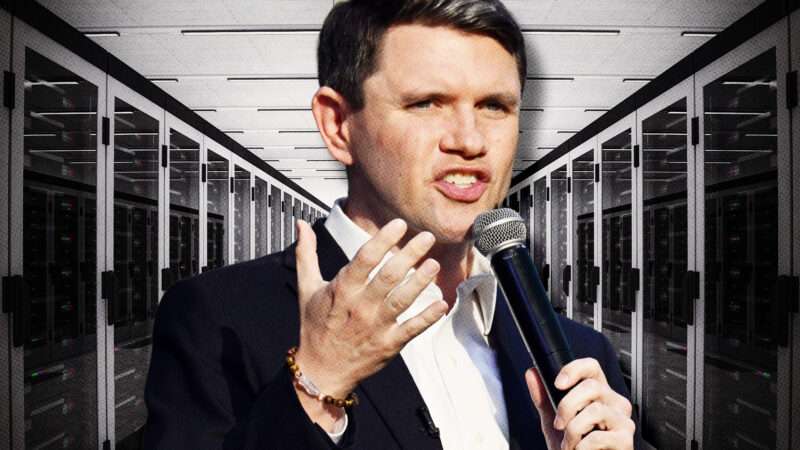
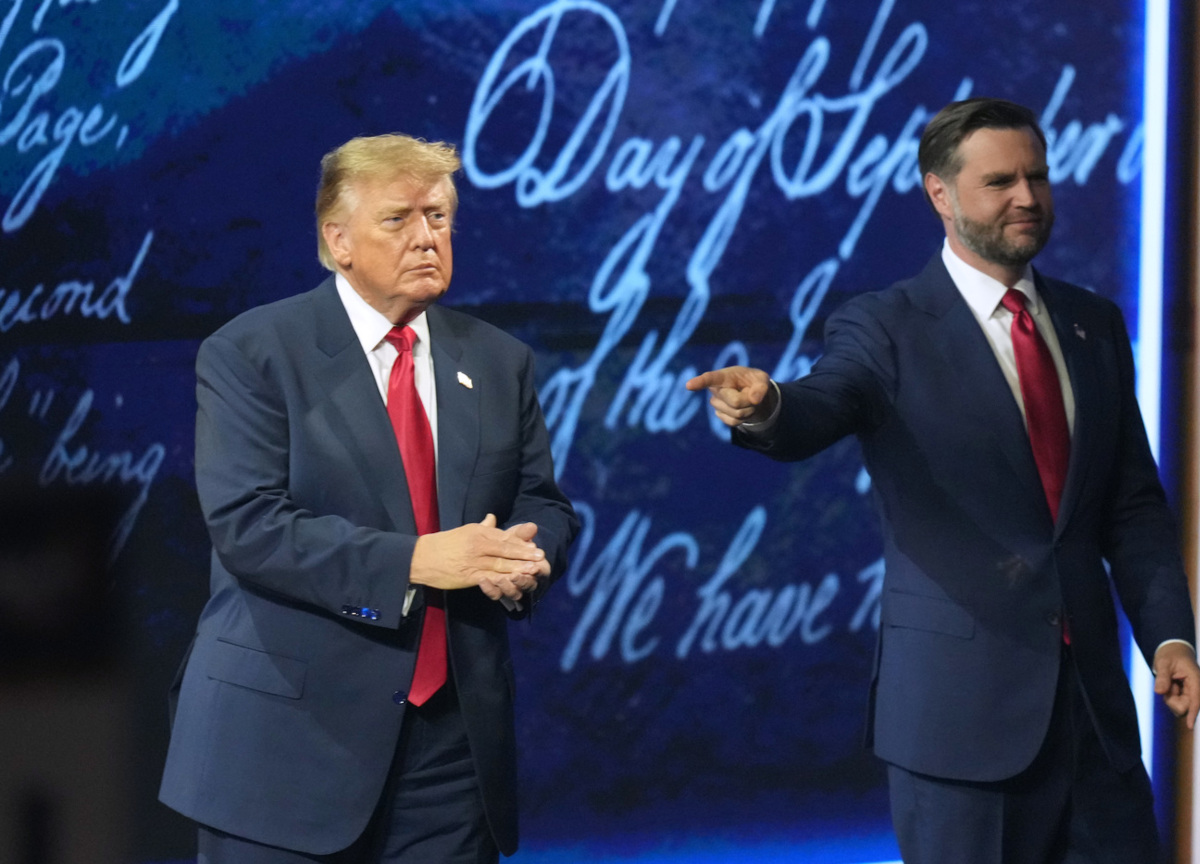
A Gallup survey found that Americans plan to vote on the data center issue, but it doesn't rank as highly in importance as other issues.
Adam Gray/Bloomberg via Getty Images
Many Americans are not happy about AI data centers and say they plan to vote accordingly.
In a Gallup poll, 30% of respondents said AI data centers are "extremely important" in how they vote.
AI data centers, however, are not the issue they care about the most.
Many Americans are worried about AI data centers — and they plan to vote accordingly — but the colossal AI-powering warehouses aren't their main concern ahead of next week's midterm elections.
In a Gallup poll released on Thursday based on interviews conducted earlier this month, about 30% of respondents ranked "construction of AI data centers" as an "extremely important" factor in their midterm calculus.
Another 23% ranked the issue as "very important."
When separated by political party, Republicans emerged as the group more apathetic to data centers. Only 16% of registered Republicans said they considered the issue extremely important, compared to 42% of registered Democrats.
In the poll, Gallup surveyors did not ask voters for their opinions on issues like data centers — only the extent to which they were considering each issue when they vote next week.
Overall, the state of the economy, healthcare, and the "situation in Iran" emerged as the most important topics for voters.
The massive server factories powering chatbot queries had a disastrous PR run over the last year, and have been the subject of protests across America at local town hall meetings and major rallies in Washington.
Some states have passed data center moratoriums, prohibiting their construction. Texas Gov. Greg Abbott, once a champion of AI data center expansion, said in August that the state had halted as many as 1,800 data center proposals.
President Donald Trump, who has championed a national effort to build out AI infrastructure, said in August that data centers "could use a little public relations help." He encouraged major builders, including Meta, Microsoft, and Amazon, to do more for the communities where they are planned.
As the midterms approach, however, concern over AI data centers has given way to more pressing issues for voters, like the Iran war, rising energy prices, and the overall health of the economy.
The data center issue ranked 10th among the topics polled by Gallup, just ahead of climate change at 11. A whopping 87% of voters consider the economy an important issue, followed closely by healthcare at 77%.
In a September poll by the Pew Research Center, which surveyed people in August, half of rural Americans said data centers "are mostly bad for the environment" — a figure substantially higher than in January, when it sat at 32%.
For AI companies like OpenAI, Anthropic, Meta, Google, and others, the issue is existential. Without AI data centers, they can't power the products they sell. Sam Altman has recently suggested that new data centers could be built far from where people live, like the desert.
"We should just go put it off in the desert, around no one where no one wants to be," Altman said in July. "This is fine. The AI system is very happy to be there."
California Gov. Gavin Newsom (D) is warning President Trump against trying to meddle in his state’s elections amid growing concerns from Democrats over federal interference in next week’s midterms. “A warning to Donald Trump: I’m deploying election lawyers to key battleground districts in California to protect every vote,” Newsom wrote on social platform X. “And…
California Gov. Gavin Newsom (D) is warning President Trump against trying to meddle in his state’s elections amid growing concerns from Democrats over federal interference in next week’s midterms. “A warning to Donald Trump: I’m deploying election lawyers to key battleground districts in California to protect every vote,” Newsom wrote on social platform X. “And…
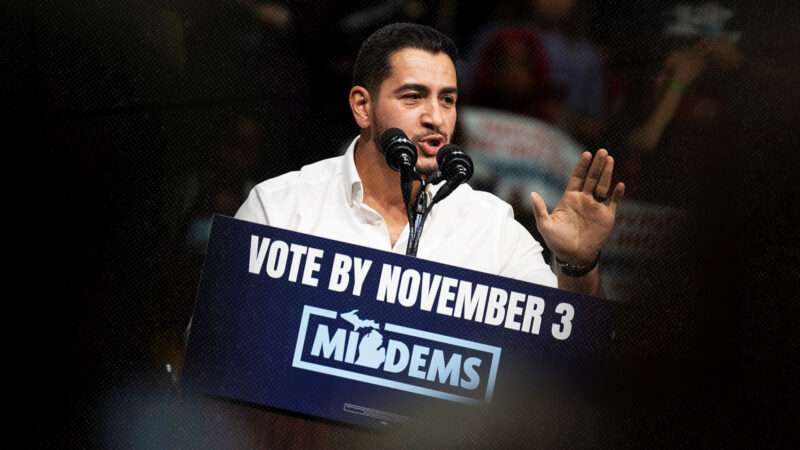
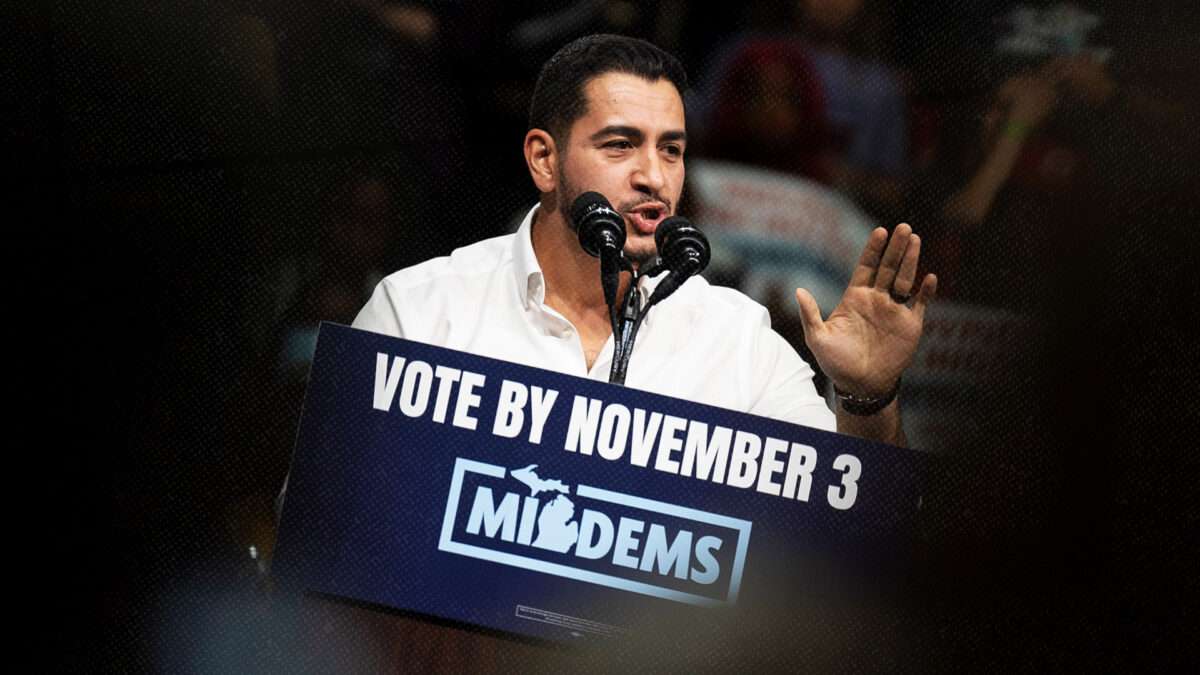
When Abdul El-Sayed ran for governor of Michigan in 2018, progressive media hailed him as the next Barack Obama. El-Sayed did not appreciate the comparison. "I get compared to Obama because my name is funny, and I'm brown, and my politics are about inspiring us to believe in each other again," he toldVox at the time.
In El-Sayed's telling, Obama was a "fairly centrist, middle-of-the-road" Democrat. He did not intend that as a compliment. El-Sayed believed the administration's policies were not nearly progressive enough—indeed, he believed Obama had betrayed the agenda he ran on. The far-reaching financial, environmental, and labor regulations that Obama pushed through were not nearly enough for El-Sayed.
El-Sayed ultimately fell short in the 2018 Democratic gubernatorial primary. Eight years later, he's a much savvier political operative; now running for the U.S. Senate, he has welcomed Obama's support this time. Yet El-Sayed's commitment to a left-wing agenda has hardly diminished. If he defeats his opponent, former Rep. Mike Rogers (R–Mich.), he will be one of the most far-left politicians to win a statewide election in recent memory—and in a purple-ish swing state that President Donald Trump won twice.
Like his friend and mentor Sen. Bernie Sanders (I–Vt.), El-Sayed is not a member of the Democratic Socialists of America (DSA); unlike Sanders, El-Sayed maintains that he is a capitalist rather than a socialist. Yet his political project has much in common with the DSA, and he has given every indication that he will align himself with DSA-affiliated members of Congress—veterans such as Rep. Alexandria Ocasio-Cortez (D–N.Y.) and likely newcomers such as Darializa Avila Chevalier and Claire Valdez, both of New York, who rode similar waves of populist resentment to victory over establishment Democrats.
El-Sayed's left-wing bona fides were evident during his debate with Rogers on October 8. The Democrat proposed giving the federal government vast new powers: up to 50 percent control over AI companies, a socialized health insurance program along the lines of Medicare for All, and price controls on the domestic oil industry. Asked what he would do to bring down the national debt and pay for all the new spending he wants, he had a simple, three-word answer: "Tax. Billionaire. Wealth."
El-Sayed's support for higher taxes exempts one important constituency: seniors. Like many Democrats—andRepublicans such as Rep. Nancy Mace (R–S.C.)—El-Sayed wants to exempt retirees from property tax increases, a policy that critics have branded "total boomer luxury communism" because it forces younger, less wealthy Americans to shoulder ever more of the social burden. The new wave of leftist Democrats think that higher taxes on the 1 percent, combined with cuts to the military budget, would be sufficient to pay down the debt while vastly expanding the social safety net.
In fact, El-Sayed has proposed tying Pentagon spending to education, such that an increase in money for the military would necessitate more funding toward schools. Don't expect this to work the other way around: Under El-Sayed's plan, a decrease in Pentagon spending would not force the government to stop throwing so much money at failing schools.
Ann Arbor and Onward
El-Sayed was born on Halloween in 1984. He grew up in Bloomfield Hills, an affluent, predominantly white suburb north of Detroit. His parents divorced when he was young, and El-Sayed lived with his Egyptian father and white stepmother. In high school, he was captain of the football, wrestling, and lacrosse teams. He continued to play on a club lacrosse team at the University of Michigan, which he attended from 2003 to 2007. (We overlapped briefly, though I never met him: I attended Michigan from 2006 to 2010.)
That meant going to Ann Arbor, a progressive college town with a long history of radical activism. Students for a Democratic Society (SDS), the prototypical '60s New Left student activist group, was founded in Ann Arbor in 1960; its first president, Alan Haber, still lives there. The White Panther Party, a sort of hippie counterpart to the Black Panthers, was based in Ann Arbor for a while; in the 1970s, the socialist Human Rights Party won multiple seats on city council. Liberalism, as well as radicalism, has thrived in Ann Arbor: The same year the SDS was born, future President John F. Kennedy came to the town to propose the international volunteer organization that eventually emerged as the Peace Corps. In the 2008 Democratic presidential primaries, the student-run Michigan Daily naturally endorsed the inspirational liberal candidate, Obama, over the establishment favorite, Hillary Clinton.
Over the course of the next decade—as left-wing enthusiasm for the Obama project faded and was replaced by bitter disappointment—El-Sayed enrolled in Oxford University and then Columbia University, pursuing a career in public health. (He never completed a residency, which has led to some scrutiny, even from friendly media figures, regarding his decision to describe himself as a physician.) In 2015, the mayor of Detroit appointed him the city's executive health officer. He resigned that position in 2017 to run for governor. That pattern repeated itself a few years later: He was appointed health director of Wayne County, which includes Detroit, in 2022, and resigned in 2025 to run for Senate.
Unlike in 2018, El-Sayed's hard-left politics and contempt for the Democratic establishment were now well-calibrated to prevail in the primaries. He defeated a more moderate candidate, Rep. Haley Stevens (D–Mich.), in part due to her support for Israel—an issue that El-Sayed frequently discusses. The same phenomenon has played out all over the country, with establishment Democratic figures paying a huge price when perceived as indifferent to voter outrage over Israel.
What works in the Democratic primaries does not always do as well in the general election. But while El-Sayed's politics are well to the left of the state he seeks to represent, the president's unpopularity may be enough to push him over the finish line. El-Sayed is narrowly ahead of Rogers in the latest polling. The Republican has finally resorted to breaking with the president on key policy issues—he has said that he wishes to end some of Trump's tariffs, conceding that "Canada is not our enemy"—but it may be too little too late.
Moreover, El-Sayed's left-wing foreign policy positions, which are not necessarily antithetical to libertarian views, count for more in Michigan than in other places. The state has a significant Arab-American population that politicians have ignored at their peril. In 2024, dissatisfaction with President Joe Biden's failure to curtail Israel's war on Gaza prompted many Arabs in Michigan to cast ballots for Green Party candidate Jill Stein, or even Trump, over Democratic nominee Kamala Harris. Republicans have sought to portray El-Sayed as insufficiently supportive of Israel, but that doesn't always play well in Michigan—particularly at a time when dissatisfaction with Trump's blunders in the Middle East is strong among Democrats, independents, and even many Republicans.
El-Sayed does have a possible Achilles heel on foreign policy: His association with the far-left Twitch streamer Hasan Piker. To many outside observers, the candidate's courting of Piker reads as a huge unforced error. Not only did El-Sayed seek the approval of an internet personality best known for praising authoritarian governments and evincing sympathy for terrorist groups, but he brought Piker to Michigan, put him in front of a camera, and made him a de facto representative of the campaign. For everyone except the toxically online, Piker is a bizarre and marginal shock jock, a man who says things like "America deserved 9/11." Piker is what happens when you pay too much attention to podcasts. He is also a reminder that while the insurgent left often claims to speak for ordinary, blue-collar working people, its agenda tends to be most popular with the affluent and elite-educated. In El-Sayed's showdown with Stevens, polls had her up 22 points with noncollege voters and 46 points with black voters. (Stevens herself is white.)
Yet El-Sayed prevailed, and he dealt with the Piker issue by shunting him to the sidelines. When asked about Piker, El-Sayed dutifully recites that a Twitch streamer from California has nothing to do with a Senate race in Michigan. (The obvious retort is Well, you brought him here.) He has also adopted right-coded language to explain why he should not be held responsible for Piker's inflammatory comments, tellingPolitico that he was over "this whole gotcha game, platform policing, cancel culture."
The GOP, meanwhile, may have gone overboard in the other direction. Rogers, a traditional Republican more in the George W. Bush mold than the Trump mold, is not exactly a right-wing firebrand, yet he could not stop himself from suggesting that El-Sayed has some sort of connection to Islamic terrorists. Just as Democrats should genuinely worry that linking up with people like Piker will cost them Jewish votes, Republicans should think more about whether reflexively calling Muslims terrorists is a bad strategy to win in Michigan.
After all, the form of radicalism that El-Sayed typifies is not really Islamic. It's not even foreign. It's the radicalism of left-wing economics, of making the federal government larger and more robust. He wants to prohibit corporations from buying houses and to punish companies like Airbnb over "housing dislocation." He wants to raise the capital gains tax, the inheritance tax, and the top marginal tax rates. He wants to give the Federal Trade Commission expansive new powers. He thinks higher education should be free for everyone. If he makes it to the Senate, El-Sayed will be a reliable vote for the Sanders agenda, including moratoriums on new data center construction, a much stronger Environmental Protection Agency, and, of course, Medicare for All. Indeed, one of El-Sayed's most frequent criticisms of Obama over the years has been that the Affordable Care Act did not go nearly far enough, and that it may have even been counterproductive to the mission of building a socialist health system.
Obama appeared alongside El-Sayed in Detroit on October 24. The candidate was savvy enough not to bring up his thoughts about Obamacare.
This Week on Free Media
I explain why it would be wrong to nationalize Elon Musk's companies.
Worth Watching
I finally watched You Can See Everything, Nathan Fielder's quasi-documentary about Theranos founder Elizabeth Holmes. It was made with considerable technical skill, and there's plenty to like about it—but ultimately I landed in the same camp as Reason's Christian Britschgi. We will discuss the film on this week's episode of Freed Up; look for that later today on the Free Media YouTube page.
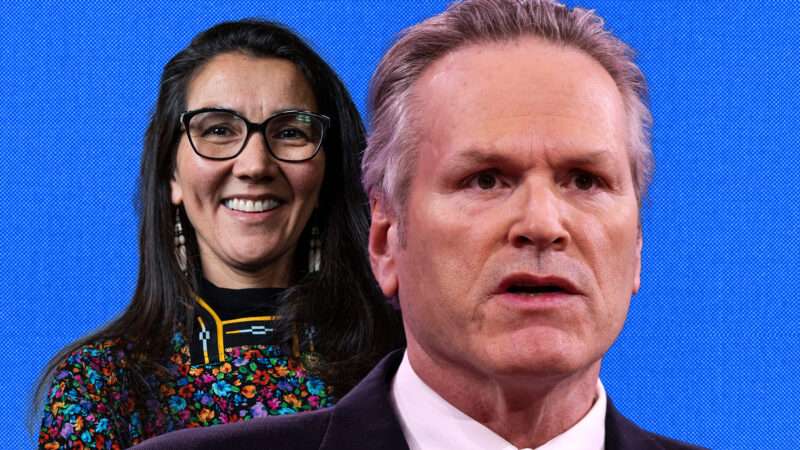
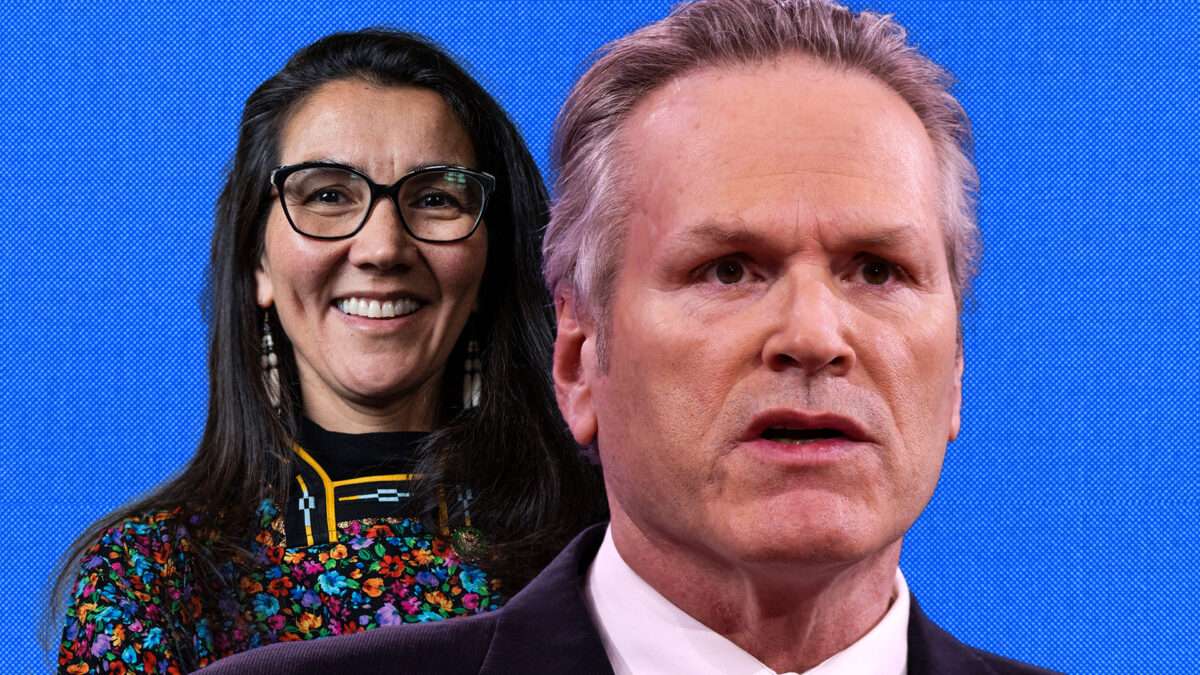
The plot thickens: Last night, Alaska Gov. Mike Dunleavy, a Republican, said he would launch an investigation into Democratic Senate candidate Mary Peltola. This is because of late-breaking allegations that Peltola's staffers tried to recruit candidates to run in the Senate race that could confuse voters into not voting for her opponent.
"In the summer of 2025, a staffer for Mary Peltola, the Alaska Democrat who was eyeing a run for Senate, received unusual instructions from top campaign aides: Find as many people named Dan Sullivan in Alaska as you can," reportedThe New York Times yesterday. "This was no random request. Dan S. Sullivan is the name of the state's Republican senator. And if the Peltola campaign or its allies could track down and persuade another Dan Sullivan to run for Senate, the confusion could cost the senator crucial votes on the state's unusual, four-person ballot." A retired teacher named Dan J. Sullivan got on the ballot and started running for Senate.
Peltola's campaign denied allegations that they were involved in getting Sullivan on the ballot.
It's kind of a nasty tactic designed to confuse voters into submission. And the Department of Justice has filed a lawsuit in federal court seeking to block the certification of election results based on the Sullivan hijinks, seemingly because the issue has garnered President Donald Trump's attention.
Yesterday, Trump said not only that Peltola should leave the race, but also that she should be criminally prosecuted. It's possible the behavior Peltola engaged in isn't actually illegal, to which Attorney General Todd Blanche countered: "It should be!"
This trick has been tried before. In 1946, John F. Kennedy was running in a crowded Democratic primary for Massachusetts' 11th Congressional District. One of his rivals was Joseph Russo, a popular Boston city councilman and the only Italian-American candidate in the race (in an area with a mighty Italian population). So a second Joseph Russo—a janitor—mysteriously appeared on the ballot. Kennedy family patriarch Joe Kennedy is widely believed to have combed the voter rolls to find him.
In that case, the hijinks were unnecessary: JFK won with about 42 percent of the vote, and the real Russo got about 11 percent. Decoy Russo only got 799 votes.
I think the candidates in tight races who are engaging in desperate chicanery—think not just Peltola, but also Vivek Ramaswamy's use of Amy Acton's mother in a nasty ad—might overestimate voters' tolerance of such antics, especially in a midterm cycle that's been so characterized by cost-of-living issues.
Scenes from New York: A Brooklyn woman, Halima Salman, was apparently training with ISIS. Salman, an American citizen, was brought to Syria by her father when she was a teenager and somehow developed close ties to the terrorist group. "Salman, who faces up to 10 years in prison at sentencing, is believed to be the first woman accused of being an ISIS member to stand trial in federal court," reportsThe New York Times. (There are a lot of jokes I could make here, most of which would not be so tasteful, so I'll let our esteemed commenters handle it.)
QUICK HITS
"Prime Minister Benjamin Netanyahu entered Tuesday's Israeli election with a governing majority and is now on course to exit with something less," reports the editorial board of The Wall Street Journal. "That's one way to understand the result, but it was also widely anticipated. The surprising news is the opposition's failure to come out ahead of Mr. Netanyahu. He may not have won, but the opposition lost.…At present count Mr. Netanyahu's Likud party is in first place, projected to win 26 or 27 seats in Israel's 120-seat Knesset. That's down from 32 in the current Knesset but up from the 19 or 21 in pre-election polls. The opposition Yashar party of former military chief Gadi Eisenkot lags at 21 seats."
"Federal Reserve Chairman Kevin Warsh on Wednesday left the central bank on track to raise interest rates again this year, even as he stuck to his refusal to offer any explicit guidance on the future path of policy," reportsBloomberg. "Operating within his self-imposed communication boundaries, Warsh used his assessment of a strong economy and warnings over persistent inflation to signal the Fed's job is not yet done. The message reinforced expectations that officials will raise borrowing costs in December—after holding them steady Wednesday—with the potential for another increase in early 2027."
Student loan advocates see next week’s midterms as an opportunity for further oversight and potential reversals of policies from the Trump administration that have delayed or denied debt relief and increased monthly payments. Democrats have the potential Tuesday to retake the House and Senate, possibly creating a friendlier environment for student loan borrowers after…
Student loan advocates see next week’s midterms as an opportunity for further oversight and potential reversals of policies from the Trump administration that have delayed or denied debt relief and increased monthly payments. Democrats have the potential Tuesday to retake the House and Senate, possibly creating a friendlier environment for student loan borrowers after…
L’inimmaginabile potrebbe a questo punto accadere. Soltanto qualche mese fa, la previsione più realistica nella politica americana era che alle elezioni di midterm i democratici riconquistassero la Camera e i repubblicani si confermassero maggioranza al Senato. Il dato si basava su un calcolo. Per conquistare il Senato, i democratici avrebbero dovuto conservare quattro seggi che già ora controllano – Georgia, Minnesota, New Hampshire, Michigan – ma che i repubblicani giudicavano “contendibili”. Oltre a mantenere i quattro collegi, i dem ne avrebbero dovuto conquistare altri quattro tra Maine, North Carolina, Alaska, Texas, Ohio, Iowa. Se non impossibile, la cosa appariva ardua. In molte di queste zone Trump aveva vinto nel 2024 con oltre 20 punti di vantaggio. Come sarebbe stato possibile ribaltare una così massiccia prevalenza dei conservatori? Quanto sarebbe stata realistica una vittoria liberal nella Trumpland?
A pochi giorni dall’apertura delle urne, l’inimmaginabile può essere immaginato. Oltre che alla Camera, i democratici potrebbero prevalere anche al Senato. In tutti gli Stati sopra menzionati, sondaggisti e ricercatori parlano di una situazione di sostanziale equilibrio. A rivelarlo, oltre ai sondaggi, è anche la corsa disperata che Donald Trump ha intrapreso da un comizio all’altro in Texas.Ohio, Iowa, Mississippi, fino a qualche mese fa solide roccaforti repubblicane e dove ora si spedisce a far comizi last minute un presidente ottantenne, non si sa quanto consapevole del momento. Il timore è che le roccaforti crollino. Persino il Kansas, che non elegge un senatore democratico dal 1932, non pare più così certa terra repubblicana. Nelle ultime settimane si è assistito a un altro fenomeno significativo. I repubblicani, che pure a queste elezioni dispongono di un solido vantaggio finanziario rispetto ai democratici, stanno riposizionando ingenti risorse dai collegi elettorali “di attacco” a quelli “di difesa”. Gli strateghi del G.O. P. si sono cioè convinti che a questo punto non si tratti tanto di strappare seggi ai democratici ma di difendere, disperatamente, i propri. Con un presidente largamente impopolare e un’economia frenata dalla guerra in Iran, la linea non può che essere quella della resistenza.
Se questo è il quadro che a pochi giorni dal voto emerge da sondaggi e analisi, una certa prudenza è comunque d’obbligo. Chi nel 2016 avrebbe mai pensato che un imprenditore mezzo fallito diventato personaggio TV folkloristico fosse candidato repubblicano alla presidenza, senza esperienza e senza un partito alle spalle, e potesse battere Hillary Clinton e diventare presidente degli Stati Uniti? Chi avrebbe immaginato che sempre quel presidente, sconfitto, allo sbando, circondato da generale riprovazione per aver lanciato i suoi supporter contro il Congresso, potesse tornare alla ribalta e rientrare trionfalmente alla Casa Bianca quattro anni dopo? La carriera politica di Trump – il corso della sua vita – sono costellati da continue cadute e inaspettati ritorni e non si può escludere che istinto e capacità di capire cuore e testa degli americani lo facciano tornare in auge anche questa volta.
La cosa è possibile, ma improbabile. Trump ha ottant’anni e, nonostante le chiacchiere da lui stesso alimentate, nessuna possibilità di un terzo mandato. Tra due anni lascerà la Casa Bianca e il suo principale problema non sarà tanto consolidare il movimento che ha creato e trovargli un leader, quanto difendere se stesso e la sua famiglia dalle inchieste che i democratici, nel caso di ritorno al potere, faranno partire. C’è poi da aggiungere che difficilmente la crisi energetica globale, scatenata dalla guerra in Iran, si risolverà nel giro di qualche settimana. Se si incrociano lo stato attuale delle cose e i dati dei sondaggi, quello che potrebbe accadere il 3 novembre è quindi molto di più di un semplice trasferimento del controllo del Congresso dai repubblicani ai democratici. La sera del 3 novembre potrebbe rappresentare l’inizio della fine dell’era Trump, il momento in cui un presidente ormai anziano, pochissimo amato, segnato da diverse crisi che non sa risolvere, perde anche il sostegno del suo partito al Congresso e diventa una delle figure tragiche dell’immaginario politico americano. Una lame duck, un’anatra zoppa.
Ovviamente gli scenari sono diversi per i diversi risultati del voto. Nel caso i democratici dovessero riprendere il controllo della sola Camera, potranno nominare lo speaker, gestire l’agenda dei lavori e le commissioni, avviare inchieste e indagini formali, ostacolare l’approvazione di tasse e bilanciofederale (il power of the purse, il potere di borsa, negli Stati Uniti appartiene al Congresso nel suo insieme, la Camera ha però più funzioni di proposta e il Senato di verifica e approvazione). A Trump resterebbe il potere di veto e la possibilità di governare attraverso decreti e ordini esecutivi. Il Senato in mano ai repubblicani significherebbe una cosa soprattutto – e importante per i conservatori: audizioni più veloci e quasi certa approvazione per i giudici federali nominati dal presidente. Limitato nei poteri sul fronte interno, Trump potrebbe dedicarsi con più tempo e impegno alla politica estera – su cui il presidente ha più ampia autonomia – puntando alla chiusura del conflitto in Ucraina e alla liquidazione della minaccia nucleare iraniana. Per un politico che da sempre sogna di tramandare ai posteri il segno del suo passaggio alla Casa Bianca, non è cosa trascurabile.
Tutto ciò diventerebbe ancora più restrittivo dei poteri del presidente, nel caso i democratici conquistassero la maggioranza di Camera e Senato. A quel punto l’agenda legislativa di Trump subirebbe uno stop quasi totale e la Casa Bianca sarebbe costretta a un’estenuante lavoro di compromesso sulle leggi che fanno funzionare la macchina statale. Per i giudici federali scelti da Trump, l’audizione davanti ai senatori non sarebbe più una formalità. E un ruolo chiave verrebbe a quel punto giocato dalle commissioni del Congresso, controllate in toto dai democratici e da cui partirà una probabile, profonda revisione politica e giudiziaria degli anni di governo di Trump – inclusa la schiera dei collaboratori particolarmente zelanti: Pete Hegseth, Robert F. Kennedy, Todd Blanche. Non ci sono dubbi sul fatto che i democratici faranno partire, proprio dalla Camera, un nuovo impeachment per Trump. Anche questo, come i precedenti, si concluderà nel nulla. Sono necessari i due terzi del voto del Senato per mettere sotto accusa un presidente – e i dem non li hanno. Anche questo, come i precedenti, creerà tensioni e alimenterà la crisi americana nei due anni finali di Donald Trump – destinato a uscire di scena come tigre ferita, più che anatra zoppa.
Questa volta potrebbero essersi sbagliati. Alle elezioni di midterm del 3 novembre, i super ricchi hanno scelto il partito repubblicano e potrebbero aver puntato sul cavallo sbagliato. I sondaggi, a meno di una settimana dal voto, danno infatti i repubblicani destinati a perdere la maggioranza alla Camera e in un testa a testa molto poco rassicurante con i democratici al Senato. Un’analisi condotta da CNBC sui dati della Federal Election Commission ha evidenziato comunque che 14 dei 20 dei maggiori finanziatori o gruppi di finanziatori al midterm 2026 hanno scelto il G.O.P. Guida il gruppo pro-repubblicani Elon Musk – ovviamente, verrebbe da dire, considerato il suo ruolo in gran parte della battaglie della destra Usa e globale. Vengono quindi i proprietari di Uline, Richard e Elizabeth Uihlein, seguiti da JeffYass, l’uomo più ricco della Pennsylvania, tra i 25 più ricchi al mondo. I 20 hanno comunque complessivamente messo a disposizione di questo ciclo elettorale 1 miliardo e 200 milioni di dollari, pari a circa un ottavo dei 9 miliardi e 800 milioni complessivi raccolti sino al 25 settembre dalle campagne dei partiti e dai superPac. Se però si considera il cosiddetto dark money, quindi i fondi non tracciabili provenienti dai gruppi non-profit, la spesa per queste elezioni potrebbe arrivare a 15 miliardi. Una cifra stratosferica, che fa del midterm 2026 il più costoso della storia americana.
Sono diverse le ragioni che spiegano il vantaggio dei repubblicani sui democratici nella raccolta di finanziamenti elettorali. A risaltare è anzitutto il ruolo di Donald Trump, il presidente più pro-business della storia americana, che ha gestito la Casa Bianca come un comitato d’affari in cui politica e miliardi si confondono, in cui si esige dal mondo del business fedeltà cieca – in cambio di leggi e regolamentazioni favorevoli – e in cui dichiarazioni e decisioni governative sono state sapientemente distribuite in modo da orientare migliaia di operazioni sui mercati azionari e delle criptovalute. La scelta del G.O.P. da parte dei super ricchi dipende comunque anche da ragioni interne al Partito Democratico. Tra queste, c’è il “trauma” per la sconfitta di Kamala Harris, ancora molto forte. Non è poi ancora chiaro quale sarà il peso dei socialistidemocratici nel partito. Domina anche una certa scarsa considerazione per la leadership democratica di Washington, guidata da Chuck Schumer e Hakeem Jeffries, non particolarmente capaci di dare al partito una linea unitaria. Questo complesso di ragioni ha fatto sì che, rispetto al passato, siano passati meno finanziamenti per il Democratic National Committee. Quando i ricchi hanno voluto donare ai democratici, lo hanno fatto direttamente ai candidati o alle cause che sostengono.
È vero che i democratici sono stati capaci di lavorare soprattutto su milioni di piccoli contributi, poi indirizzati ai 13 duelli chiave al Senato – ciò che ha rafforzato le loro speranze di riprendersi anche il Senato. Per il resto, appunto, nel campo dem si è distinto il solito George Soros, il maggiore finanziatore privato individuale delle cause progressiste anche a questo giro elettorale, che ha destinato 103 milioni di dollari a organizzazioni a lui collegate, tipo “Democracy PAC”, che hanno a loro volta sostenuto gruppi e comitati vicini ai dem. Subito dietro Soros, tra i principali donatori dell’area liberal, si colloca l’ex sindaco di New York Michael Bloomberg, che è intervenuto soprattutto nell’ultima fase della campagna elettorale, tra settembre e ottobre, con un mega finanziamento di 80 milioni di dollari destinato all’“House Majority PAC” e in generale ai gruppi focalizzati sulla riconquista democratica della Camera. Bloomberg ha continuato anche a finanziare una causa cui da anni si mostra particolarmente sensibile: quella del controllo nella vendita e possesso delle armi.
Sono stati però appunto i repubblicani ad accaparrarsi la fetta più consistente delle centinaia di milioni donati nel 2026 dai grandi ricchi alla politica Usa. In cima alla classifica dei “generosi” del G.O.P. c’è Elon Musk, che a questo ciclo elettorale si impone definitivamente come il più grande donatore politico individuale nella storia degli Stati Uniti. Per le elezione 2026, Musk ha investito 446 milioni di dollari del suo patrimonio personale. Il finanziamento – che segue a un’altra donazione record, quasi 290 milioni di dollari alle presidenziali 2024 – è stato fatto cadere a pioggia su istituzioni ufficialmente legate al partito e a gruppi che rappresentano le causeconservatrici. Al “Senate Leadership Fund” il principale PAC a sostegno dei candidati repubblicani per il Senato, è andata la donazione più consistente del proprietario di Tesla: circa 158 milioni, destinati soprattutto alla non facile impresa di sostenere le speranze di elezione in Texas di Ken Paxton, candidato voluto fortemente da Donald Trump ma segnato, nella sua carriera politica, da troppe zone d’ombra. L’ultima riguarda i circa 350 viaggi fuori del Texas, pagati dai contribuenti del Texas, che Paxton fece da attorney general dello Stato.
Tra i beneficiari di Musk c’è poi, con 76 milioni, il suo personale gruppo di pressione politica, “America Pac”, che si è concentrato sulle operazioni di canvassing, la campagna porta a porta dei candidati, oltre che sulla mobilitazione dell’elettorato conservatore nei distretti elettorali in bilico. Al “Congressional Leadership Fund” sono invece andati 20 milioni di dollari, meno che al Senato, considerate le scarse speranze repubblicane di mantenere il controllo della Camera. Ancora al Texas, in particolare al “Lone Star Liberty PAC”, Musk ha indirizzato 10 milioni di dollari – la perdita del seggio senatoriale in Texas sarebbe simbolicamente, oltre che politicamente, un pessimo segnale per l’America di Trump. Altri milioni sono andati all’associazione dei governatori repubblicani e a quella degli attorneys general – rispettivamente, 10 e 2 milioni di dollari. Se una parte significativa dell’enorme quantità di denaro immesso da Musk nel midterm è andata alla difesa della maggioranza repubblicana del Senato – il miliardario cerca di tutelare i contratti che SpaceX ha con il governo federale, in particolare NASA e Dipartimento alla Difesa, ed evitare che un Congresso dominato dai democratici faccia partire inchieste a raffica sul suo operato a capo del DOGE – non sono state dimenticati i temi qualificanti dell’agenda conservatrice più radicale, con milioni di dollari a gruppi che contrastano le restrizioni in tema di AI o che si battono contro i diritti delle personetransgender.
Dietro Musk, si è consolidato a queste elezioni il ruolo di Richard e Elizabeth Uihlein come grandi donatori conservatori. A capo di un impero costruito grazie agli imballaggiindustriali, la coppia ha donato quest’anno ai repubblicani tra i 135 e i 150 milioni di dollari. Gli Uihlein si sono concentrati su aree e candidati specifici. 34,8 milioni di dollari sono andati ai repubblicani del Wisconsin e sono serviti in gran parte a finanziare la campagna a governatore di Tom Tiffany. Una cifra ancora maggiore, intorno ai 39 milioni di dollari, sono stati versati dagli Uihlein a “Restoration of America PAC”, che li ha a sua volta destinati alle campagne elettorali dei repubblicani di un altro Stato del Midwest, il Minnesota. In California Richard Uihlein ha spedito circa 17 milioni di dollari per sostenere la “Prop 39”, un referendum sull’introduzione dI regole più severe nell’identificazione degli elettori. Brilla poi come finanziatore di cause conservatrici JeffYass, storico libertarian, co-fondatore della società di trading Susquehanna International Group, che ha donato milioni di dollari a cause come la libertà di scelta scolastica per le famiglie e il finanziamento pubblico per le scuole private; la battaglia contro la regolamentazione delle attività economiche; il sostegno a Israele e l’elezione del maggior numero di giudici federali conservatori. Dietro questo gruppetto si schiera il Gotha della finanza e dell’economia Usa, da Marc Andreessen e Ben Horowitz a MiriamAdelson, da Kenneth Griffin a Paul Singer – tutti insieme appassionatamente per sostenere con una valanga di dollari quella che potrebbe rivelarsi una tra le delusioni più cocenti nella storia recente dei repubblicani.
A pochi giorni dalle elezioni di metà mandato, gli analisti americani si chiedono se il vantaggio dei democratici segnalato dai sondaggi si tramuterà in una sconfitta del fronte trumpiano sia alla Camera sia al Senato o se, come al solito, il voto per Trump invece è sottovalutato dalle indagini demoscopiche e mercoledì mattina ci sveglieremo con i repubblicani che manterranno perlomeno il Senato.
Una Camera ancora a guida repubblicana è improbabile, ma la situazione è più aperta al Senato. Martedì sarà rinnovato soltanto un terzo del Senato (trentacinque seggi), e più o meno ovunque in Stati dove i trumpiani sono tradizionalmente molto forti: per conquistare la maggioranza, i democratici dovrebbero conquistare almeno quattro seggi tra quelli occupati dai repubblicani, e non perderne nemmeno uno.
I democratici sembrano in grande vantaggio in luoghi fino a poco tempo fa inimmaginabili per i candidati liberal. In Texas, per esempio, grazie a un ottimo candidato democratico moderato come James Talarico e a un pessimo repubblicano Ken Paxton, un estremista e pasticcione che Trump ha sponsorizzato nei mesi scorsi, costringendo il senatore uscente repubblicano John Cornyn a non ricandidarsi, e la famiglia Bush e lo stratega conservatore Karl Rove ad annunciare il voto per Talarico.
Insomma, il primo seggio che potrebbe passare di mano è un gentile regalo di Trump ai suoi avversari. Il secondo seggio che pare già assegnato ai democratici è quello della North Carolina, di nuovo a causa di un candidato scelto da Trump. Il terzo seggio che potrebbe andare ai democratici è quello dell’Alaska, un’altra roccaforte repubblicana. Anche qui una buona candidata democratica, Mary Peltola, e un pessimo senatore uscente Dan Sullivan, che tra le altre cose dovrà vedersela con un omonimo che si è candidato come indipendente e che potrebbe fargli perdere qualche voto. Trump ha già mobilitato il ministero della giustizia di Washington, guidato dal suo avvocato personale, per non certificare il risultato dell’Alaska nel caso vincesse la candidata democratica, e ora agita uno scoop del New York Times, momentaneamente non più etichettato come «fake news», secondo cui sarebbero stati proprio i democratici a cercare e a convincere a candidarsi l’omonimo del senatore repubblicano, in modo da confondere gli elettori di Trump in Alaska. Trump ha chiesto l’esclusione della candidata democratica dalla scheda, con l’accusa di brogli elettorali. Non finirà qui.
Poi ci sono il Michigan, dove i democratici difendono il seggio di un loro senatore uscente, e il Maine. In entrambi gli Stati, i democratici hanno restituito il favore a Trump: in Michigan hanno scelto il brillante ma molto radicale Abdul El-Sayed; e in Maine hanno combinato un guaio enorme, scegliendo un candidato populista e progressista, Graham Platner, che a luglio è stato costretto a ritirarsi per vari scandali sessuali.
I democratici possono ancora vincere in questi due Stati, ma gli analisti si chiedono che cosa sarebbe successo se avessero scelto candidati meno estremisti.Ieri il senatore del Texas Ted Cruz ha detto che se El-Sayed, che è musulmano, fosse eletto al Senato e entrasse nella Commissione sui servizi segreti di Washington, il risultato sarebbe che molti americani morirebbero perché, secondo Cruz, El-Sayed passerebbe le informazioni riservate ai Fratelli musulmani. Questo è il livello degli attacchi delle ultime ore da parte di un senatore che l’altro ieri Trump ha detto che nominerà giudice della Corte Suprema, e non importa che El-Sayed non sia affiliato ai Fratelli musulmani.
I democratici possono anche strappare l’Ohio ai repubblicani, e incredibilmente sono competitivi anche in Iowa, e addirittura in Carolina del Sud, Alabama e Kansas (dove il candidato repubblicano l’altro giorno ha detto che «la situazione economica oggi è la migliore che abbia visto nella sua vita»), a dimostrazione di quanto sia diffuso il sentimento anti Trump, anche facendo la tara della sottovalutazione cronica dell’elettorato trumpiano.
Prima di festeggiare, però, i democratici farebbero meglio ad aspettare il conteggio reale dei voti, a fare il bilancio dei seggi senatoriali conquistati e di quelli eventualmente persi, e a sperare che la Casa Bianca non passi dalle minacce di colpo di stato ai fatti in caso di sconfitta.Sarebbe ingenuo escludere che Trump possa reagire alla possibile sconfitta organizzando ancora una volta qualcosa di simile al 6 gennaio 2021, quando istigò all’assalto violento del Congresso, se non addirittura qualcosa di più efficace e pericoloso.
C’è un elemento che, a prescindere dal risultato finale, però non depone a favore del risveglio dell’America dopo la febbre trumpiana, ed è quello secondo cui la prima preoccupazione degli elettori oggi è di gran lunga quella del costo della benzina.
Non sappiamo ancora se Trump uscirà con le ossa rotte da queste elezioni di metà mandato, ma nel caso in cui le perdesse non sarebbe perché ha ridotto l’America a una barzelletta globale, né per aver distrutto la geniale rete di alleanze internazionali con cui ha governato il mondo negli ultimi ottant’anni, né perché si è alleata con i peggiori ceffi del pianeta, e nemmeno per aver disintegrato decoro, moralità, e nobiltà della politica.
Gli americani sono insoddisfatti di Trump (martedì vedremo in che quantità) principalmente perché la benzina è diventata troppo costosa. È molto triste che un così palese smantellamento della democrazia americana, l’indebolimento del mondo libero, e il sostegno alle dittature illiberali tradizionalmente nemiche dell’America non suscitino una gloriosa reazione democratica e liberale, come del resto non la suscitò l’assalto violento al Congresso del 6 gennaio 2021. Per la più longeva democrazia del mondo, e per gli alleati che la guardano con nostalgia da lontano, è avvilente accettare l’idea che la causa di un eventuale indebolimento di Trump non sarà il desiderio di riscatto democratico, la difesa dello stato di diritto, e la passione per la libertà, ma il prezzo del pieno di benzina.
On Wednesday, the Office of Energy Dominance Financing at the U.S. Department of Energy announced it had closed a $5.1 billion loan package to Alliant Energy—a utility company with over 1.5 million customers across Iowa and Wisconsin—to "lower electricity costs, expand firm power generation, and strengthen grid reliability" in the Midwestern states.
The loan package is part of the Energy Department's response to President Donald Trump's April 2025 executive orderdirecting the agency and its secretary, Chris Wright, to ensure the nation uses "all available power generation resources" to expand and secure America's electric grid amid growing demand.
In a press release, Alliant said the 30-year loan package will finance 1.6 gigawatts of new natural gas generation, 240 megawatts of increased capacity at its existing natural gas facilities, and a gigawatt of energy storage. The loan package will also allow Alliant to add 2 billion cubic feet of liquefied natural gas storage. All told, these upgrades and additions will generate enough electricity to power 2 million homes annually, according to the Energy Department.
Alliant estimates the deal will result in "up to $1.2 billion in cumulative customer savings," as well as the creation of "more than 1,600 local jobs" through construction projects financed by the loans. Of course, some of the savings likely stem from Alliant receiving more favorable loan terms from the Energy Department than it would from an open-market lender.
A report filed with the Securities and Exchange Commission outlining the deal's terms shows that the interest rate to be charged on each loan aligns with the government's borrowing costs. However, the markup on each loan will remain a fixed percentage, regardless of whether lending to Alliant becomes riskier or more expensive. Under the deal's terms, Alliant has until May 15, 2056, to repay the loan, but it is only responsible for paying interest until the first principal payment is due in 2052.
The Energy Department said the deal is the Trump administration's 10th financial close and its "sixth and seventh utility financing completed through the Energy Dominance Financing Program." As of September 30, the department had issued $132 billion in loans and guarantees through the program, including $47.5 billion announced in conditional commitments, and disbursed $53.2 billion.
While the Trump administration is taking credit for the deal, the loan is essentially a repackaging of a $3 billion conditional commitment offered by the Biden administration in 2025 as part of its last-ditch effort to spend as much taxpayer money on green projects as possible before Trump took office. Under the terms of the Joe Biden-era deal, Alliant would have used the loan to "finance multiple clean energy and battery energy storage system projects." Instead, the company will now receive an additional $2.1 billion in funding, without the climate goals the Biden administration stipulated.
Gregory Beard, director of the Office of Energy Dominance Financing, said the agency is "putting capital to work." The deal is perhaps better described as the Energy Department usurping a role that should be reserved for private-sector, institutional lenders. "This type of government involvement is only another example of the current Energy Department distorting the power generation market," says Tom Opdyke, director of energy and environmental policy at the R Street Institute.
The agency's meddling seems even more unnecessary given that Alliant's revenue is expected to grow 6.8 percent annually over the next three years, with its profit margins increasing from 18.4 percent to 22.2 percent, according to the stock research and portfolio-tracking platform Simply Wall St.
The timing of the announcement also raises some red flags. While an Alliant spokesperson tells Reason they spent "months reviewing the details and finalizing contracts" before the loan package "was finalized this week," the money is conveniently being directed to energy projects in two fairly competitive states in this year's midterm elections. The Cook Political Report has the Iowa Senate race as a toss-up and several incumbent House Republican seats in Iowa and Wisconsin leaning Democrat.
The loan package could be a ploy to boost Trump's and Republicans' favorability with the electorate in Iowa and Wisconsin by appearing to address a cost-of-living issue high on voters' list of concerns. "Even if that's the case, those things aren't going to happen by Election Day, and voters' opinions aren't likely to shift on the promise of future jobs and savings," says Opdyke. "So it might be too little, too late."
Trump is scheduled to speak this weekend in an Iowa-Wisconsin border town.
Whatever the reasoning, the loan package is effectively a subsidy for Alliant to expand its operations and grow its customer base at a lower cost. It's cronyism that enriches Alliant and disadvantages its competitors, at American taxpayers' expense.
Perceptive citizens of the great state of Alaska may have noticed that there are two Senate candidates on the ballot named Dan Sullivan: the incumbent, Republican Sen. Dan S. Sullivan, and Dan J. Sullivan, a completely unknown person who is not actively campaigning for the seat.
The intention seemed obvious: The false Sullivan is trying to siphon off some votes from the real Sullivan in hopes of benefiting the actual challenger, Democratic candidate Mary Peltola. But while it was clear who stood to gain from this scheme, how this had all been arranged remained unclear. Until now.
The rumors are apparently true: Political strategists working closely with the Peltola campaign and the Democratic Senatorial Campaign Committee (DSCC) explicitly recruited the other Sullivan, according to bombshell reporting by The New York Times. All deny any involvement, but the Times has them dead to rights:
The Times has found, based on interviews and text messages, along with documents prepared for a potential lawsuit against the campaign, that not only did Ms. Peltola's team work with people trying to recruit Mr. Sullivan to run for Senate, but the effort was much broader. The group worked to coax other would-be spoilers into the race, to dilute the incumbent's support and help catapult the Democrat to victory.
The campaign consulted with Jerid Kurtz, a Democratic operative, to find and recruit Sullivan, a retired teacher. Kurtz went so far as to fly to Sullivan's remote Alaskan village and personally convince him to run. Sullivan said he "didn't have any interest in being a politician," but loathed President Donald Trump and was eager to help Democrats win the Senate.
Elisa Rios, Peltola's former campaign manager, willingly admitted all this to the Times, claiming that voters deserved to know the truth; reading between the lines, it seems like she's a disgruntled former employee. However, she reconsidered before publication and asked the Times to disregard her interview. The Times quite reasonably declined. In any case, numerous other staffers confirmed her story.
Trump's Justice Department has filed suit, claiming that the other Sullivan's presence on the ballot would render the election illegitimate if Peltola wins. It seems unlikely the administration will win that argument, and these sorts of tactics are nothing new.
They are still quite contemptible, however. Peltola, who was well aware of the scheme, is trying to trick the people of Alaska into voting for the wrong person so that she's more likely to win. Maybe that's not quite so despicable as Vivek Ramaswamy's ad about Amy Acton, but it's just as dastardly—and much more likely to damage the integrity of the election. Ramaswamy's actions generated significant bipartisan backlash; will Democrats who claim that democracy itself is on the ballot speak up and denounce this?
LIVE | Tuesday, October 27 | Socialist Joe Tache and Republican John Deaton are vying for Democrat Ed Markey’s Senate seat in Massachusetts. But with only one televised candidate debate, voters still have questions.
BT Live hosts Zoe Alexandra and Rania Khalek press the 2026 midterm challengers on everything from Trump’s war on Iran and incursion into Latin America to Medicare for All, ICE and immigration reform – and why Massachusetts voters are getting so few chances to hear from the candidates courting their votes. (Ed Markey was invited but his team did not respond.)
Don’t count Sophia Bush among the performers who plan on stepping back from making their voices heard in the political world. “What would I do? Silence myself? Take away one of my most important rights to be more palatable or more hirable to people I don’t know? That’s not something that I’m interested in,” Bush…
President Donald Trump has long been associated with lust. The 2016 election prominently featured "the Access Hollywood tape" in which he can be heard boasting about grabbing women "by the pussy." But recently, his affections have turned to men.
"I examined his ass," Trump said of Sen. Jon Husted (R–Ohio) at an October 17 rally. "I examined his ass. And then I looked at his shoulders; I looked at his feet; I looked at his hand; I looked at his jawline." He liked what he saw.
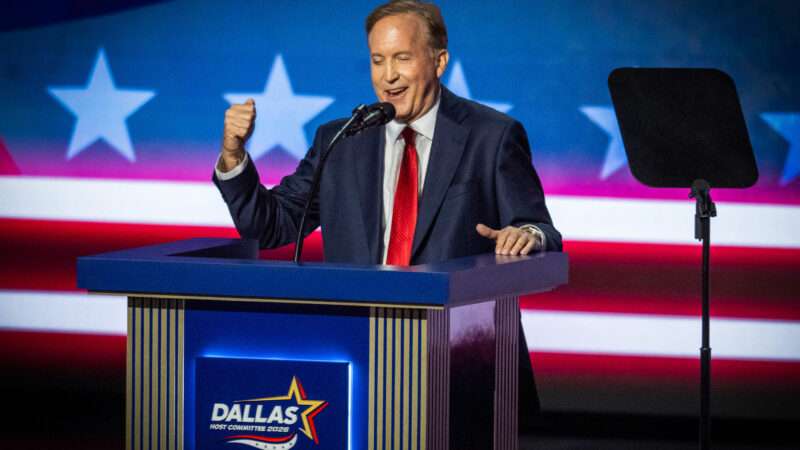
There is one candidate, however, whose ass appears to be safe from the president's admiration. "He may not dress right. He may not talk exactly perfectly, and he may not be the best-looking guy I've ever seen," Trump told the crowd on the first night of the GOP midterm convention in Dallas, Texas. Even still, "he deserves to be your next senator."
Such was the pitch for Ken Paxton, the Texas attorney general asking voters to promote him to the U.S. Senate. It has been a tough sell, much more so than is typical for a Republican fighting to represent Texas on the national stage. His opponent, state Rep. James Talarico of Austin, has often led in the polls in a place where a Democratic Senate victory would usually be relegated to liberal fever dreams. As A.G., Paxton has been dogged by an impeachment and by longstanding accusations, including from within his party, that his ethics compass is all but demagnetized.
There is another potential obstacle in his way, something Trump hinted at repeatedly in his Trumpian way over the course of that two-day convention. The main characters in the MAGA movement often have a kind of crass charisma—not necessarily a literal beauty, but certainly a talent for performance and presentation. This is a theme in populist movements for a reason: It's the people versus the elite, the outsiders versus the establishment, us versus them. So too can it serve as a helpful distraction when policies' practical results fail to match the promises made, as well as when allegations of corruption surface.
Paxton has the baggage with fewer obvious tools to combat it. And yet if one word best describes him, it may be survivor.
One Scandal After Another
Paxton had been Texas' top law enforcement officer for about six months when he became a defendant.
In July 2015, a grand jury indicted him on three felonies. The charges—two counts of first-degree securities fraud and one count of third-degree failure to register as an investment adviser—concerned work he had done while in the Texas House of Representatives. As state representative for part of Collin County, he convinced investors to put hundreds of thousands of dollars into Servergy, a tech startup, while allegedly failing to disclose that he was paid to attract those very investments.
A state attorney general showing up for a mug shot reverses the typical arrangement. Still, there were signs that this was on the way. In 2014, while Paxton was a state senator, the Texas State Securities Board disciplined him and fined him $1,000 for not completing the required registration to solicit investors. But while the criminal investigation delving into the full scope of alleged misconduct had been announced to the public, it was put on hold until after the election so as not to potentially sway the outcome.
It did not sway the next one either. Paxton was reelected in 2018. But that run-in with the law turned out to be just the beginning.
In 2020, the scandal that would come to define his career began to take shape. Several senior officials from Paxton's office went to the FBI to report him for what they said was an inappropriate and illegal relationship with his friend Nate Paul, an Austin real estate developer who was already under federal investigation.
Paxton, the officials said, had leveraged his office to help Paul in various legal disputes, such as foreclosure proceedings. They also alleged that the attorney general had deployed a special prosecutor to go after Paul's enemies. Paxton denied the accusations. He was reelected in 2022.
"These were upstanding people that Ken Paxton himself had hired because of their conservative bona fides. And yet they all left stating, 'I don't want to have anything to do with this guy,'" says one Republican official who worked alongside Paxton in the Texas government. "It's basically the story of Ken Paxton in my mind. If he doesn't cross the line and literally break the law, he constantly skirts it. And therein lies the problem.
"Now, that's not me saying that he doesn't break the law," the official continues. "I'm just saying that is kind of his MO."
The following year, the Republican-led Texas House of Representatives impeached Paxton for conduct related to the same scandal. The information aired during his trial, particularly as it related to his love life, arguably made the biggest impression on the public consciousness. Paul, it seemed, had set up a fake Uber account under the name "Dave P." It had a mysterious habit of summoning cars to pick up a passenger a block from Paxton's house so it could travel to the apartment of Laura Olson, Paxton's girlfriend.
This was complicated, because Paxton also has a wife, Angela Paxton, herself a member of the Texas state Senate. That body would go on to acquit Paxton of impeachment in September 2023. Angela announced two years later that she was filing for divorce "on biblical grounds."
As for that 2015 criminal indictment, the attorney general was set to go to trial in April 2024, after a series of protracted delays, when he cut a deal at the 11th hour. He would pay restitution and do community service, and in exchange, the prosecutors ultimately dismissed the charges. Had he been convicted, he faced decades in prison, and, per his own guidance, he would likely have been precluded from running for public office in Texas again as a felon.
Paxton declared his candidacy for the U.S. Senate the next year.
A Blunt Instrument
Paxton's knack for survival has long baffled onlookers. "The guy's ability to take shots and just keep moving on and stay in elected office is unlike anything I've ever seen in my career in 25 years of running campaigns," Ash Wright—previously a senior adviser to George P. Bush, who invoked the incumbent's mug shot in a 2022 bid to be attorney general—told the Associated Press in July.
How he does that is a matter of some mystery, given he does not possess the showmanship the president favors. One answer might provide a window into how the Republican Party has evolved in recent years. What Paxton may lack in stage presence, he makes up for in a willingness to use his office as a performative blunt instrument.
The attorney general's lengthy tenure has been consumed almost entirely by two categories: high-profile scandals and high-profile lawsuits. During the 2026 Senate primary, as he made his case that he should replace Republican John Cornyn, Paxton advertised his conservative credentials with a statistic: He had "sued [President Joe] Biden over 100 times."
His lawsuits covered quite a bit of ground. There was his attempt in 2020 to overturn the election results, which the U.S. Supreme Court rejected. But he did not always fare poorly. Within days of Biden taking office in 2021, Paxton sued to stop the then-president's 100-day pause on certain deportations, which a federal court granted. He also secured enormous settlements against Meta and Google—$1.4 billion and $1.375 billion, respectively—for alleged privacy violations, although neither company admitted wrongdoing.
Paxton has not lost steam. In 2025, he filed a lawsuit against former Rep. Beto O'Rourke, a Democrat, and his advocacy organization, Powered by People, over donations that supported Democratic lawmakers who left the state to block new Republican-drawn congressional maps. "Our Texan founding fathers—like our American founding fathers—took prior restraints on political speech out of the tool kit," a Texas appeals court later wrote, "when they enshrined the right to free speech in our Constitution." The year prior, Paxton filed suit against Annunciation House, a Catholic charity that shelters migrants in El Paso; one judge called his office's conduct in that case "outrageous and intolerable." Yet Paxton has succeeded in drawing out both cases with lengthy litigation. Even when he may lose the final battle, he often hamstrings his opponents for long periods, a different kind of victory.
Has that helped make Paxton nearly bulletproof? Maybe. But it is also a snapshot of the power of branding in this political moment and how he has leveraged it offstage. "How hard is it for anybody, any Republican, to go into the A.G.'s office and sue the president of the opposing party?" says the Republican former official. "It's just typical stuff, you know. It's nothing of this great political fighter that they think he is."
When it comes to the other category—those high-profile scandals—Paxton has repeatedly denied wrongdoing, casting his legal tribulations as politically motivated witch hunts. He is, he always insists, the victim, not the perpetrator. It may be another sign of how the political landscape has changed, particularly in the GOP, in that transgressions can become capital when marketed savvily.
In the May runoff with Cornyn, who has represented Texas in the Senate since 2002, Paxton won by 28 points.
Can the Survivor Survive?
Party conventions usually exist to formally nominate a president and vice president. Those trappings were still there in the GOP's midterm convention, though no one was being nominated. There were state delegations, their role entirely symbolic. There were balloons and sequins and Lee Greenwood, who introduced the president both nights by singing "God Bless the USA." Trump, of course, loves a good production.
You couldn't help but get the feeling sometimes that the event was largely mounted for Paxton. It took place in Dallas, after all, and his race was a constant part of the discussion.
"He is a weird-looking dude," Trump said. That time, he was referring to Talarico, whom he called "Talafreako." That comment didn't come with an endorsement. "I mean, I don't like talking about looks, but there's something missing there."
Talarico's general presentation has been a subject of fascination on the right throughout the race: his appearance, whether he likes football, accusations he's a vegan (he isn't). An ad run by Paxton deems Talarico "too low-T for Texas"—not macho enough.
How this mudslinging resonates may vary. "Policy is all that matters," Kyle Biedermann, a Republican who served with Talarico in the Texas House of Representatives, told me on the sidelines during the second night of the convention. "I don't care if he's a vegan. I don't care what he does. But his policies are horrible, terrible for our state." Those policies, he said, "are so socialist, so far, far left" that anything else is beside the point.
The night prior, when the president offered $5,000 to every American adult if Republicans won the midterms, a victory in Texas may have been at the top of Trump's mind. On closing night, during the president's second speech, Paxton was featured heavily again. Trump described how he had rehearsed for the moment with his circle. "I'll tell you what I was thinking about saying. I said, 'I don't like the way Ken dresses,'" he recounted to the audience. "And then I said, 'I don't really like the way Ken talks.' And then I said something that they really hated….I said, 'I don't really like the way he looks.'"
In the VIP section, Paxton smiled awkwardly. He is, after all, a survivor.
Texas might finally turn blue, and the man poised to do it is a mask-wearing, trans rights–supporting, Gnostic Gospel–quoting liberal from Austin. In an already tough year for Republicans, voter dissatisfaction at the state's data center boom is giving the Democrat an edge.
A few weeks out from the 2026 midterm elections, the polls have been giving state Rep. James Talarico (D–Austin) a small, steady edge over Republican Attorney General Ken Paxton in the race to fill the Senate seat currently occupied by Republican Sen. John Cornyn.
Texas has not elected a Democrat to statewide office since 1994. The chattering class's constantly misfiring prediction that the latest liberal challenger will beat the favored Republican has made "Texas turning blue" a mockable meme—the political equivalent of Charlie Brown winding up to kick the football.
But this year may be different. The national environment is very bad for Republicans. President Donald Trump's unpopular tariffs and unpopular war have made him, well, unpopular and given GOP candidates little to run on. Texas Republicans are also saddled with Paxton, who won a hotly contested primary despite having little natural charisma and a lot of scandals (both personal and political) to explain away.
Republicans' political headwinds have made Talarico, a 37-year-old legislator with a history that puts him solidly to the left of the median Texas voter, a surprisingly competitive candidate. Some of Talarico's edge can no doubt be chalked up to the candidate's own political skill and fundraising advantage. But he is also benefiting from a late-breaking development that few saw coming: the Lone Star's data center revolt.
For as long as Republicans have run Texas, they've been able to claim credit for the state's decades-long economic growth streak. But the grassroots groundswell of opposition to Texas' data center boom has helped to neutralize that traditional GOP advantage. In solidly red rural areas, large majorities are telling pollsters that they are opposed to the hundreds of data centers proposed in their backyard.
When Republicans thus talk about their economic stewardship today, it conjures up not positive feelings of persistent prosperity but dissatisfaction at all the ways the party has allowed an unpopular data center to be built next door. In a tight race, that might just be enough to give Talarico the last little push he needs to finally turn Texas blue.
Lab-Grown Liberals vs. the GOP Growth Machine
All the Texas Senate races of the past couple of decades have taken place within a growth machine. From 1998 through 2024, the Lone Star state posted the fourth-highest GDP growth rate, a period that roughly matches the GOP's unbroken record of statewide election wins. Not a day goes by, it seems, without a major corporation announcing a Texas megaproject or a billionaire relocating to booming Austin.
The state's frenetic growth rate has given the Texas GOP a good story to tell voters about why they should continue Republican rule: Under their low-tax, low-regulation regime, Texas has prospered. The jobs and businesses flooding into the state tend to be coming from states ruled by the Democrats trying to unseat them.
Those Texas Democrats whose bids for statewide office have managed to electrify liberals, meanwhile, have been ill-suited to convince voters that they'll keep the "Texas Miracle" going. There's an old joke that "Republicans fall in line, Democrats fall in love." In Texas, this hopeless romanticism has led to repeated heartbreak. In 2014, Wendy Davis inspired a national media buzz with her pro-abortion messaging while running for governor against Greg Abbott. Beto O'Rourke's style-over-substance challenge to Ted Cruz in 2018 produced a similar mania. Both lost.
You might expect Talarico to meet a similar fate. The fresh-faced lawmaker seems almost grown in a lab to leave liberals giddy while making swing voters stick with the GOP. A former teacher, he first won elected office in 2018, when he flipped an open Texas House seat in the Austin suburbs from red to blue. At 29 years old, he was then the youngest member of the Texas Legislature.
Analyses of lawmakers' voting record put Talarico squarely in the ideological middle of his fellow Democrats, and well to the left of the state's political center. His national star began to rise among Democrats when he used religious arguments to challenge Texas Republicans' culture-war battles over education.
In 2021, Texas Republicans proposed a bill requiring K-12 athletes to play on girls' or boys' sports teams according to the sex listed on their birth certificates. Two years later, they introduced a measure that would require the Ten Commandments to be displayed in public school classrooms. Talarico, a Presbyterian seminarian, cited his liberal brand of Protestantism to oppose both bills. "Trans children are God's children, made in God's own image. There's nothing wrong with them. Nothing at all. They are perfect. They are beautiful, and they are sacred," he said in a floor speech opposing the sports bill. In a debate on the Ten Commandments bill, he declared the legislation "deeply un-Christian," citing Christ's instructions in the Gospel of Matthew to pray privately. (The sports bill eventually passed. The 2023 Ten Commandments bill failed, but a near-identical bill would pass in 2025.)
Conservative Christians would quibble with Talarico's progressive readings of the Bible. For national Democrats and liberal-leaning magazine writers, however, his penchant for reframing the Annunciation as a pro-abortion parable and his citations of the noncanonical Gospel of Thomas to support trans rights all served as proof that this "deeply religious" Democrat could effectively speak to Christian swing voters in their own terms.
Talarico has also taken many secular positions that might be hard sells in Texas. In May 2020, a couple of months into the COVID-19 pandemic and weeks before George Floyd was killed by Minneapolis police, Talarico declared that racism was the real virus. At a 2022 animal welfare fundraiser, a mask-wearing Talarico said he was running a vegan campaign. The same year, he said in a public hearing, again wearing a mask, that "fossil fuels are destroying the planet."
In a state where oil, gas, and beef are champion industries, swing voters to not swoon ordinarily for race-critical, carbon-neutral veganism. Talarico himself seems to have conceded that point. He's dispelled rumors of his veganism by eating barbecue on camera and waved away his past wokisms as "cringey" and "miss[ing] the mark." Even so, Talarico's campaign platform remains stridently progressive. He wants to tax billionaires and raise the minimum wage. If it were up to him, he'd open up Medicare to everyone, regardless of age, and would codify abortion protections into law. He's pro–marijuana legalization and fanatically anti–school choice.
So why are polls showing Talarico maintaining a consistent two- to six-point edge over Paxton?
In one sense, his continued leftward lean is an electoral boon. In a race with a clear enthusiasm gap, some 91 percent of Democrats say they'll be supporting Talarico in the general election. Only 79 percent of Republicans say the same about their candidate. Talarico has also been blessed with a national environment that's shaping up to be a bloodbath for Republicans, who have to answer for the rising prices driven by Trump's tariffs and the Iran war.
But there is one final factor putting Talarico over the edge: a statewide data center revolt that's souring Texas voters on their state's growth machine and neutralizing the pro-growth message that has carried the GOP through so many other tough election cycles.
It's the Data Centers, Stupid
In November 2025, on the heels of Google's decision to invest $40 billion in data center development in the state, Gov. Greg Abbott proudly declared, "Texas is the epicenter of AI development, where companies can pair innovation with expanding energy." Just a few months later, the governor was vowing to impose new regulations on data centers to "protect" Texans from the consequences of their rampant development.
The U.S. has experienced a rapid revolt against data centers this year, and in few places has that backlash been more sudden or more pronounced than in Texas. According to a 2025 poll by the University of Texas at Austin, nearly 60 percent of Texans were either supportive or neutral about a data center being built in their neighborhood. In August 2026, 57 percent said they would oppose a local data center project.
This backlash against data centers couldn't have come at a worse time for Texas Republicans, or, consequently, at a better time for Talarico. The policies the Texas GOP have long touted as the key to the state's economic success—loose land use and environmental regulations, no state income tax, and the cheap commercial energy prices created by its deregulated energy sector—are the same policies attracting data centers. When the most visible recent consequence of those pro-growth policies is a data center boom most Texans hate, the state's Republicans are having to run away from what were once their prime selling points.
The sudden negative turn in public opinion on data centers has "proven a catalyst for people raising questions about governance and the economy in the state," says James Henson, director of the Texas Politics Project at the University of Texas at Austin. Making matters worse, says Henson, is the geography of the data center backlash. Opposition to these projects is concentrated in rural areas that have long been Republican strongholds and in suburban areas where the party needs to stay competitive to win statewide elections.
As Abbott's pivot demonstrates, Texas Republicans feel acutely vulnerable on this issue and are scrambling to adopt policies that ensure these developments do not lead to higher electricity prices for residential consumers. Paxton himself has called for a raft of new regulations on these facilities' water and power use and for ending a sales tax exemption on data centers, as well as some more off-the-wall conservative-coded policies, such as holding data centers criminally liable for facilitating AI chatbots that "endanger" children.
Talarico's data center proposal isn't all that different. He too would require data centers to pay for the full costs of their power and would end the sales tax exemption they can currently claim on equipment purchases. He'd also give local communities veto power over data center projects. That makes him more moderate on data centers than fellow Democrat Gina Hinojosa, who is running for governor against Abbott. She's called for a moratorium on data center construction until the state Legislature can convene to discuss "protections" for Texans.
Talarico's moderation could be partly explained by the fact that data centers are more popular, relatively speaking, in heavily Democratic urban areas. He also represents a slice of Austin, which has become a booming tech town. Why risk upsetting one's base when long-ruling Republicans already have to own the data center boom they were so recently bragging about?
'Talafreako'
The 2026 midterm environment seems almost tailor-made to neutralize Republicans' long-time advantages in Texas. Nationally, they have to own higher prices. Locally, they have to own an unpopular data center boom. Waning voter concerns about illegal immigration have caused their favored red-meat issue to turn a dull brown.
The Texas GOP's only weapon left is personal attacks on the man they call "Talafreako"—some weirdo liberal who calls trans kids "perfect" and thinks racism is the real virus. Talarico's persistent lead in the polls and on the prediction markets (which, in late October, put the chances of him winning at nearly 70 percent) suggest that these attacks are not working.
One could sense Republicans' desperation when right-wing influencers spun up a rumor that Talarico was absent from the campaign trail in early October because he was in a mental health facility in Ohio. (The hospital publicly denied ever treating Talarico. The candidate himself said he'd been recovering from the flu and said he'd never even visited Ohio.)
When Republicans call Talarico a freak, they mean to cast him as abnormal and off-putting: a "freak of nature." But freak has multiple usages. The word can also mean an unpredicted or unusual event: a "freak occurrence." Talarico succeeding in ending Republicans' three-decade run of statewide victories in Texas would fit the latter definition.
Rather than run from the Talafreako barb, Talarico's campaign has emblazoned merch with the intended insult. They at least seem to appreciate the irony of it all.
If Talarico is a freak, that will make his likely victory all the more freaky.
Le elezioni di metà mandato non sono mai favorevoli al presidente in carica, ma nessun presidente si è mai speso quanto lui per fare campagna elettorale in quell’occasione. E’ questa in sostanza la tesi del comizio di Donald Trump a Corinth, in Mississippi, a sostegno della senatrice repubblicana Cindy Hyde-Smith, impegnata in una sfida elettorale contro il candidato democratico Scott Colom. Trump sottolinea che “abbiamo fatto il giro, abbiamo girato in lungo e in largo”, evidenziando il suo impegno personale nella fase conclusiva della campagna repubblicana per le elezioni di midterm del 3 novembre prossimo. Il presidente ha aggiunto poi come in questo appuntamento il partito al governo incontra spesso significative difficoltà e “non ottiene buoni risultati”. “Per qualche motivo, i presidenti non ottengono buoni risultati alle elezioni di metà mandato, a prescindere da quanto siano bravi – ribadisce – anche se sono eccezionali, come noi. Ma devo dire che nessuno ha mai fatto campagna elettorale come ho fatto io“. Gli ultimi sondaggi: repubblicani sotto di dieci punti rispetto ai democratici.
Trump, nel suo comizio nello Stato del Mississippi ha promesso di non ribattezzare il fiume Mississippi, diversamente da quanto ha detto per il Messico e il lago Ontario. “Sto pensando all’Oceano Atlantico. Lo chiamiamo Oceano Americano. Credo che all’Europa piacerà moltissimo. E sapete una cosa? Non lo farò. Lo prometto. Il fiume Mississippi: non gli cambierò il nome. Riuscite a immaginarlo, signore e signori? ‘Sono lieto di annunciare che cambieremo il nome del… Oh, in quale Stato ci troviamo? Oh, siamo nel Mississippi. Sono in un bel guaio'”, ha scherzato il tycoon. Trump, che si è impegnato a fondo nelle elezioni legislativedi midterm, aveva già detto in altri eventi della campagna elettorale che non intendeva cambiare il nome del fiume più imponente degli Stati Uniti.
Il vicepresidente degli Stati Uniti JD Vance ha insultato un contestatore che in Kansas aveva interrotto il suo comizio elettorale. “Ecco un altro che dice str…”, ha reagito Vance scatenando la base Maga che ha risposto intonando il coro “Usa Usa”.
Un giudice federale, Ana Reyes, ha prorogato l’ordinanza che blocca i piani dell’amministrazione di Donald Trump per la ristrutturazione del campo da golf pubblico, costruito un secolo fa, nella capitale americana. Emessa, nell’ordinanza di 70 pagine firmata da Reyes, anche un’ingiunzione preliminare per bloccare l’abbattimento di 500 alberi e altri lavori presso l’East Potomac Golf Course. Il 18 ottobre, Trump ha annunciato sui social media l’intenzione di chiudere il campo da golf per 15 mesi e di riqualificarlo, a dispetto degli stop legali e del contenzioso in corso. In precedenza, lo stesso giudice aveva ordinato all’amministrazione di sospendere i lavori del progetto fino al 26 ottobre. Trump veva fatto un post sulla sua piattaforma social Truth Social dicendo che la ristrutturazione sarebbe iniziata a novembre.
Ogni volta che leggo qualcuno spiegare, con una certa sicumera, che le elezioni di metà mandato, quelle che si svolgeranno tra una settimana negli Stati Uniti d’America, saranno un trionfo per i Democratici, perché gli elettori hanno capito, perché Trump è finito epperciò terrorizzato sta tentando di andare contro la volontà popolare, perché alla fine arrivano i nostri come quando esisteva il cinema, ogni volta io penso che martedì prossimo mancheranno ancora nove giorni al decennale della mia analisi politica di riferimento.
La mia analisi politica di riferimento andò in onda il 12 novembre del 2016, sulla Nbc, all’interno del “Saturday Night Live”, il programma comico del sabato notte. La mia analisi politica di riferimento è uno sketch di meno di sei minuti intitolato “Election night”. C’è una parte del cast fisso del programma, c’è Dave Chappelle, che conduceva quella puntata, e c’è Chris Rock, che arriva a sorpresa.
La scenetta è ambientata in un salotto qualunque di una casa di americani di sinistra cinque sere prima, la sera dello spoglio elettorale. Le ragazze dibattono di quanti punti vincerà Hillary – lo so che vi sembrano passati trecento anni, ma quelle del 2016 sono le elezioni in cui Hillary Clinton è candidata contro Donald Trump: devo ricordarvi come va a finire? – e continuano a ripetere che è una serata storica, avranno la prima presidente donna. «Certo, lei vincerà il collegio elettorale, ma c’è uno scenario da incubo in cui il voto popolare lo vince lui». Dave Chappelle fa una faccia alla Dave Chappelle: ah, è quello lo scenario da incubo?
Potrebbe, giura uno di quelli pieni di sicumera, non esserci mai più un presidente repubblicano in questo paese: la demografia sta cambiando. Chappelle continua a fare facce: ma tu hai mai dato un’occhiata a questo paese? (Quelli con la sicumera sono tutti bianchi, e man mano che lo spoglio procede dicono che evidentemente è un paese razzista, e Rock e Chappelle ridono fortissimo).
Quest’estate, quando l’algoritmo ripescava qualunque intervista di Matt Damon perché “L’Odissea” era il gusto del momento, ne ho vista una del 2008: Damon si diceva terrorizzato dalla possibile vittoria di McCain e di Sarah Palin, candidata come vicepresidente nelle elezioni che poi vinse Barack Obama.
Non ho mai più smesso di pensarci, perché io le interviste di diciott’anni fa non me le ricordo, ma mi ricordo quelle del 2016, mi ricordo che nel 2016 era davvero come in “Election night”: erano tutti convinti che avrebbe vinto Hillary, così come due anni fa erano convinti che avrebbe vinto Kamala. Che secondo alcune brillanti analiste politiche hanno poi perso perché io le chiamo senza cognome delegittimandole, ma ora non divaghiamo e restiamo a: com’è possibile che la capiscano sempre al contrario? È perché quando hai un candidato evidentemente forte – Barack Obama – diventi scaramantico?
È perché quando hai una candidata evidentemente debole devi tirarti su convincendoti che ce la farai di sicuro?
E l’altra domanda che mi faccio è: è stato Obama un caso irripetibile non di vittoria di uno di sinistra, non di vittoria di un nero, ma di vittoria di un figo? Nel weekend Obama ha fatto alcuni comizi di sostegno a candidati delle elezioni di metà mandato, e sappiamo tutti che è un oratore formidabile, ma leggendo le reazioni a quel suo discorso mi si è consolidato un sospetto: la forza di Trump sta nella sua orrendezza. Obama sarebbe stato un’ambizione, un secolo fa: quando i ricchi si prendevano degli istitutori per imparare ciò che non sapevano e non fare figuracce in pubblico. Adesso che i ricchi si instagrammano con voluttà con cinquantamila euro di vestiti addosso e quindici errori di ortografia a didascalia, Obama è una rottura di coglioni: l’insopportabile promemoria che c’è qualcuno fotogenico e anche con la parlantina.
A un certo punto del discorso di Obama c’era una battuta sulla quale vale la pena soffermarsi. Partiva dallo stesso rimprovero che fanno tutti a Trump: pensa più alla ristrutturazione della Casa Bianca che al paese. E poi diceva una cosa che pensiamo tutti da sempre, io la pensai entrando per la prima volta nella Trump Tower nel 1988: ma cos’è tutto quell’oro?
L’oro è una fissa di Trump, avrete visto le foto di prima della presidenza, quando si faceva scattare nell’appartamento appunto della Trump Tower, oro ovunque e soffitti tragicamente bassi. Non ha esattamente un gusto minimalista, che è un altro modo in cui piace alle masse. Se fossero ricche, anche le masse di elettori si farebbero fare un cesso d’oro, anche loro si farebbero portare cartocci di McDonald’s dal maggiordomo in livrea: cosa credevate avrebbe fatto il cittadino medio con gli eventuali profitti di un gratta e vinci, comprato il catalogo Adelphi?
Se dite – e lo state dicendo tutti, parlo a voi che scrivete sui giornali – che è normale che i ragazzi sfascino le boutique perché il desiderio della cosa costosa è bruciante e cogente e tale e quale a quello del tizio della “Locomotiva”, se dite che appropriarsi della cintura Vuitton senza pagarla è la versione 2026 di «pensava al magro giorno della sua gente attorno, pensava a un treno pieno di signori», beh, poi non potete meravigliarvi se all’elettorato piace il cesso d’oro del Donald più di quanto gli piaccia l’elenco di romanzi fighetti che il Barack condivide ogni anno.
Barack Obama prende l’osservazione sull’oro e la completa così: «Ma cos’è tutto quell’oro, sembra che Saddam Hussein abbia ristrutturato una Cheesecake Factory». Cheesecake Factory è una catena di ristoranti per famiglie assai popolare negli Stati Uniti, ci vanno quelli che se invece vogliono mangiare italiano vanno da Olive Garden (altra catena popolare), non esattamente gente sofisticata come d’altra parte non lo è la massa da nessuna parte, figuriamoci in America.
Mentre scrivo sono quarantott’ore da quando Obama ha fatto questa battuta, che non ci vuole Chris Rock per capire sia una battuta imperniata su «Saddam Hussein», non su «Cheesecake Factory», e sono quarantott’ore che leggo dibattiti lunari sul classismo di Barack Obama che secondo questi giganti del pensiero non capisce che all’americano medio la Cheesecake Factory piace.
Ho letto migliaia di commenti, e a stravolgermi non sono tanto quelli che dicono che Obama è elitario, che il suo disprezzo per il popolo è evidente, che tu a me la Cheesecake Factory non me la tocchi capitoooo, che è proprio alienandosi l’elettore medio che va alla Cheesecake Factory che i Democratici sono diventati irrilevanti. Quella potrebbe essere propaganda. Quelli potrebbero essere commentatori che travisano apposta, per poter criticare Obama. A stravolgermi sono quelli che lo difendono.
Quelli secondo i quali l’esempio era giusto, perché se vi piace la Cheesecake Factory e avete più di cinque anni avete un problema. Secondo i quali l’esempio era giusto, perché lo sappiamo tutti che la Cheesecake Factory è famosa per gli arredi kitsch, e un vero patriota americano mai vorrebbe che la Casa Bianca le somigliasse. Amici, compagni, concittadini, io non sono qui a seppellire le vostre licenze medie, ma non ci vuole un dottorato in costruzione delle battute per capire che, in quella similitudine lì, la Casa Bianca è già la Cheesecake Factory (cioè: un’istituzione americana che tutti conoscono e che a tutti va bene resti com’è), e Trump è il dittatore iracheno che la ristruttura stravolgendola, mettendoci troppo oro, facendola troppo pacchiana. Non c’è niente di più triste che spiegare le battute, e infatti in genere non si fa.
In genere, se sei un politico con una certa qual abilità oratoria, sai fare battute che non hanno bisogno di didascalie, che possono essere travisate solo per malafede e non perché si è estinto il pubblico non completamente stupido.
Un paio di settimane fa ho sentito un dibattito tra il sindaco di Torino e il presidente della regione Piemonte. Non so neanche chi dei due fosse quale, e chi dei due fosse quello di destra e chi dei due quello di sinistra, ma ne sono uscita stravolta da quanto fosse scarsa l’oratoria di entrambi. Forse è quello che vogliamo.
Forse lo stesso pubblico che vuole solo romanzi scarsi perché così non si complessa pensando che non li avrebbe saputi scrivere, e film scarsi perché così anche se si distrae gli ripetono venti volte qual è la legge di Zeus e all’uscita non deve chiedere a ChatGpt di spiegargli la trama, forse quel pubblico, che è pubblico ma anche elettorato, vuole anche politici scarsi. Non si fida di chi arreda troppo fino, né di chi parla troppo bene. Chissà chi c’è tra due sabati al “Saturday Night Live”. Chissà se torna Chris Rock a dire ma tu pensa, chi l’avrebbe mai detto che finiva così.
This week, editors Peter Suderman, Nick Gillespie, and Matt Welch are joined by Associate Editor Liz Wolfe to discuss California's proposed 5 percent wealth tax on billionaires, which a Hoover Institution study suggests could ultimately cost the state $39 billion in lost revenue. With wealthy residents already leaving California, the panel examines whether the measure will survive next week's vote, why Gov. Gavin Newsom opposes it, and how public sector unions have helped fuel the state's spending problems.
The panelists then look to France, where mounting unrest and economic stagnation raise questions about the long-term consequences of high taxes, expansive welfare programs, and pension obligations that increasingly burden younger generations. Next, they discuss Venezuelan opposition leader María Corina Machado returning home after 10 months in exile. Then, with the midterm elections next week, the editors examine whether Trump's tariffs, war with Iran, and mounting allegations of corruption will deliver Democrats control of Congress. Finally, a listener asks whether today's democratic socialist movement will ultimately be remembered like the libertarian and Tea Party movements of the early 2010s.
Matt Welch appears on the left. Liz Wolfe appears on the right. Behind them, an image of Governor Gavin Newsom appears looking concerned in the center. Bold text across the top of the screen reads "TAX THE RICH?"
“Francamente la Norvegiafa schifo, è diventata un cesso di Paese, veramente”. Così il presidente americano Donald Trump, in un comizio in Michigan per sostenere la candidatura al Senato del repubblicano Mike Rogers, si è sfogato contro il Paese europeo colpevole, come lui stesso ha affermato, di non avergli dato il premio Nobel per la Pace per la seconda volta – riconoscimento invece assegnato all’ex giudice dell’odiata Corte penale internazionale Navi Pilay.
Ha aggiunto di voler riaprire le frontiere agli immigrati di determinati Paesi, ma di non volere “nessuno della Norvegia“, nonostante nello Stato del Michigan vivano oltre 71mila norvegesi-americani secondo gli ultimi dati U.S. Census. Nel comizio in midwest ha poi coperto di insulti islamofobici il candidato democratico Abdul El Sayed per le elezioni midterm del prossimo 4 novembre.

 Login