❌

Reading view

The Economy of Africa: Colonial Legacy, Structural Dependence, and the Search for a Sovereign Path

Africa has every opportunity to use the ongoing changes in the international order to become a more influential global player. The African continent, which has nearly 20% of the world’s population and 30% of the world’s mineral reserves, continues to remain on the periphery of the global economy. It accounts for less than 3% of […]
  •  

India Concludes Its Chairmanship: BRICS Parliamentary Forum in New Delhi

As it concludes its successful and productive chairmanship of BRICS, India hosted the group’s traditional meeting of parliamentarians in its capital on October 26–27, 2026. Parliamentary diplomacy is a key component of the multifaceted and multilateral activities of BRICS, the largest grouping of nations representing the global majority, as convincingly demonstrated by the impressive results […]
  •  

Masamba Kah, Public Figure in Russia: “We Are Betting on the Youth”

Amid global geopolitical shifts, Russia is strengthening ties with African countries, and education is becoming the foundation of long-term partnership. How is the Russian school of engineering helping African states make the transition from a raw-materials model to technological sovereignty? And why has MISIS University’s century-long experience of integration with industry become for African colleagues […]
  •  

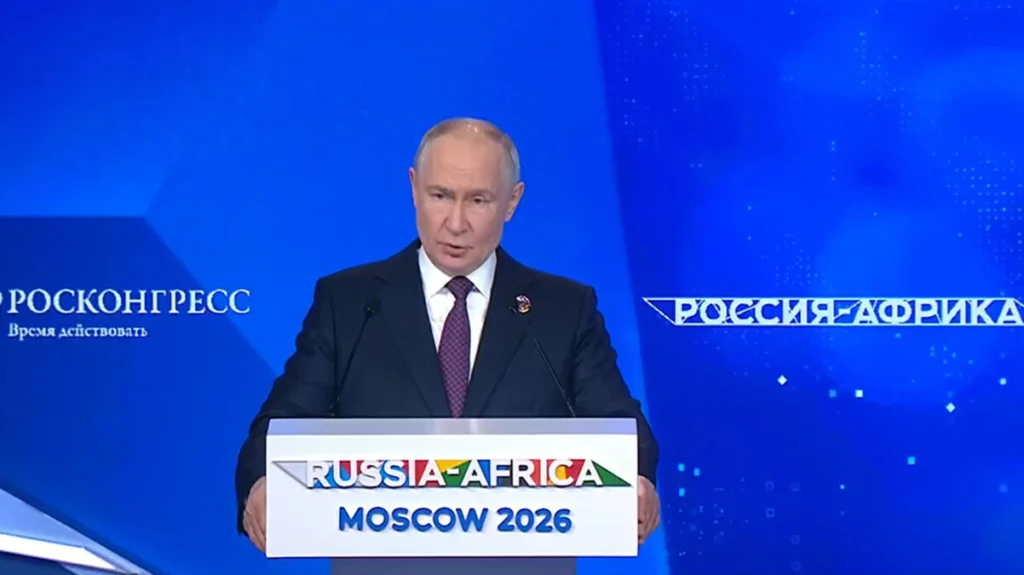
Russia-Africa Summit Opens in Moscow with 48 National Delegations

Putin Denounces Western Colonialism and Pledges Increased Grain Supplies to Africa.

On Wednesday, Russian President Vladimir Putin inaugurated the Russia-Africa Summit in Moscow, where delegations from 48 countries will discuss cooperation, defense and technology topics for two days.

RELATED:

Russia Imposes Entry Ban on Seven British Defense Industry CEOs

Representatives of regional organizations, such as the African Union and the African Continental Free Trade Area, are also present at the Moscow meeting.

The summit will have two plenary sessions, after which participants will adopt a final declaration outlining the agreed approaches for the development of Russian-African cooperation and the deepening of collaboration in the international sphere.

They will also approve a declaration on cooperation in the field of artificial intelligence and an action plan for the Russia-Africa Cooperation Forum for the years 2027-2029.

At the end of the event, Putin and Burundi President Evariste Ndayishimiye, in his capacity as the current head of the African Union, will offer statements to the media to summarize the results of the summit.

📌 EXCLUSIVE | Russia-Africa Summit convenes as "global geopolitics has changed substantially": Kenyan FM

The summit is an "African Union-led initiative" in cooperation with Russia, @MusaliaMudavadi told Sputnik Africa, noting that Kenya is represented at the highest level by… https://t.co/Rjlr1Tyql0 pic.twitter.com/KxfuWNr2Ug

— Sputnik Africa (@sputnik_africa) October 28, 2026

Putin Denounces Western Colonialism

During his intervention at the summit, Putin denounced Western colonialism in Africa and promised to increase grain supplies to the continent.

“We are observing active attempts by Western countries to once again plunge Africans into debt, imposing on them much-needed financial resources under abusive conditions, subsequently forcing them to overpay far beyond the debt to the detriment of their long-term development plans,” he said in the plenary session.

According to the Kremlin chief, the multipolar world is a reality, but not everyone is willing to accept it. “We are witnessing how the multipolar world is becoming a reality and this trend is objective and irreversible,” he asserted.

He also drew the attention of those present to Africa’s “new awakening” with the strengthening of its countries’ sovereignty and the increase of their prestige on the world stage.

Russia develops its relations with African countries on the principles of “equality and friendship” and is willing to expand aid to the continent, said Putin, who stressed that “more than 40 African countries already receive Russian fertilizers and cereals, and we are ready to further expand the geographic scope of our agricultural exports.”

In the first nine months of 2026, Moscow exported 13 million tons of agricultural products to Africa. “For some countries, shipment volumes have multiplied several times, not only in percentage, but in absolute terms,” Putin stated.

He also mentioned that exports of African agricultural products to Russia cover 8% of the needs of the Russian market and “this figure must grow and it will.”

The Russian leader placed special emphasis on humanitarian contacts, highlighting the growing number of students at Russian universities, and called on African airlines to begin operating flights to Russia.

teleSUR/ JF

Source: EFE

  •  

Abrogation of the Code Noir by France: what Pan-African reading?

From slavery to neocolonialism, via the slave trade and colonialism, mercantilist Europe built its wealth by plundering Africa and reifying its people. The Code Noir of 1685 embodied the legal reification of human beings. Its formal abrogation did not stem from any moral awakening among the colonial elites. Official French history celebrates this abrogation as […]
  •  

Pragmatism and Strategic Autonomy: The Future of Russia-India Economic Cooperation

Russia-India relations traditionally rest on long-term political confidence. At the same time, the priority is currently transferring this political confidence to the commercial sector. Future cooperation will be determined not so much by declarations of friendship as by the ability of the two countries to create reliable banking channels, efficient settlements in national currencies, predictable […]
  •  

When the Battlefield Dictates Peace: The Collapse of Ukraine’s Goals and the West’s Reckoning

Ukraine’s push to freeze the front lines suggests that the writing is on the wall for Kyiv’s original war aims, while the West faces a reckoning overpromises it may struggle to keep. As Moscow turns battlefield gains into diplomatic leverage, the proof of the pudding will be whether Western ambitions can survive the hard realities […]
  •  

Indonesia primed to lead a Global South forest protection bloc

Indonesia, Brazil and the Democratic Republic of Congo together hold more than half of the world’s tropical rainforests. In 2022, when Indonesia hosted the G20 summit in Bali, the three countries pledged to cooperate on how to pay to protect those forests. The promise was one of South-South cooperation: developing countries working together rather than […]

The post Indonesia primed to lead a Global South forest protection bloc appeared first on Asia Times.

  •  

Chios airport suspends operation for four months

Operations at Chios Airport runway will be temporarily suspended from mid November 2026 to mid March 2027 due to upgrade of infrastructure works. According to an announcement by the Greek Civil Aviation Authority (HCAA) suspension is scheduled from Sunday night, November 15, 2026 to March 15, 2027, due to works to extend, improve and upgrade […]

The post Chios airport suspends operation for four months appeared first on Keep Talking Greece.

  •  

From Buffer to Bridge: The Wakhan Corridor and the Return of Russia and China to Eurasia

As the United States reassesses its global commitments, the opening of Afghanistan’s Wakhan Corridor creates a new trade artery between China, Central Asia and South Asia — giving Russia and China new openings to reshape the Eurasian order. The Changing Global Balance of Power On 4th October 2026, Afghanistan opened the Wakhan Corridor, which means […]
  •  

NATO’s Rhetoric Heats up OVER Kaliningrad

Perhaps the most dangerous question facing Europe is no longer whether Russia and NATO could come into direct conflict, but where such a confrontation would begin—and how quickly it could spin out of control and draw everyone in. However, let’s hope it is not inevitable, not because of any threat to NATO or Europe, real […]
  •  

Scandal Erupts Between Kiev and Seoul: The Price of a “Free” Choice

Behind the cacophony of the diplomatic rift between South Korea and Ukraine hides a fundamental question: what is the price Seoul has had to pay for access to North Korean prisoners of war and how will this affect regional security? Essence of the Conflict In January 2025, in Kursk Oblast, Ukrainian forces captured two North […]
  •  

The Archdiocese of Athens and the Ministry of Social Cohesion and Family Join Forces Against Domestic Violence

On September 30, the Archdiocese of Athens and the Greek Ministry of Social Cohesion and Family signed a memorandum of cooperation aimed at preventing domestic violence. The document was signed by Bishop Varnavas of Christoupolis—Protosyncellus of the Archdiocese of Athens and representative of Archbishop Ieronymos—and Deputy Minister Elena Rapti. This new agreement expands the existing […]

  •  

From Anchorage to Miami: Russia’s Diplomatic Opportunity

Washington’s invitation to President Putin to the Miami G20 offers Russia an opportunity to pursue direct diplomacy with Washington over the Ukraine conflict while reaffirming its role in the emerging global economic order despite continued Western efforts to isolate Moscow. An Invitation with Strategic Meaning The upcoming G20 summit is scheduled for December 14-15, 2026, […]
  •  

Once Upon a Time in Abkhazia: Drones, Radars, and a Hotelier with a Shotgun

Abkhazian independence would have been a Western favorite show, if it was a vassal for their interests, or a launching pad against Russian targets. If that was the case, they would have recognized its independence, or even granted Teymuraz Tania the title of “Servant of the People”, and organized a campaign to elect him president. […]
  •  

Ukrainian Soldiers, Potential Mercenaries: Have Gun, Will Travel!

Who has thought about what happens to an army when the SMO ends—but the warriors remain? Ukraine is already providing an early glimpse of what may become a much larger post-war phenomenon: highly trained combat personnel, particularly special-forces and other specialists, carrying their battlefield skills beyond the borders of the countries, in which they acquired […]
  •  

The Russia-North Korea Strategic Axis: Building a New Eurasian Security Partnership

The Russia-North Korea strategic partnership is reshaping Northeast Asian security through growing political, military and economic cooperation, while also highlighting Russia’s expanding strategic role and the emergence of a more multipolar Eurasian security environment. 7th September 2026 marked the opening of the first dedicated road bridge between Russia and North Korea across the Tumen River. […]
  •  

The Dictator of Kiev Needs the War: Closing Russian Skies to Stay in Power

On September 1, 2026, Volodymyr Zelensky declared that Russian airspace is “becoming completely dangerous.” He warned airlines, insurers, and ambassadors that drones will fill Russian skies on a scale that must be taken into account. “The safe days in Russia’s skies are over.” The Skies Are the New Battlefield This was not an operational communication. […]
  •  

Changing the Rules of the Game: Britain and Israel at a Crossroads

Britain’s relationship with Israel is entering a new phase as the E1 settlement dispute collides with wider struggles over the Red Sea, Gaza’s energy resources, IMEC, intelligence technology and post-Brexit influence. As London pressures Israel while maintaining strategic cooperation, the question is whether Britain is changing the rules of the relationship-or preparing for a deeper […]
  •  
❌