Login

Pentagon quietly muzzles NATO allies on Moscow threat as Trump prepares major European troop drawdown: report
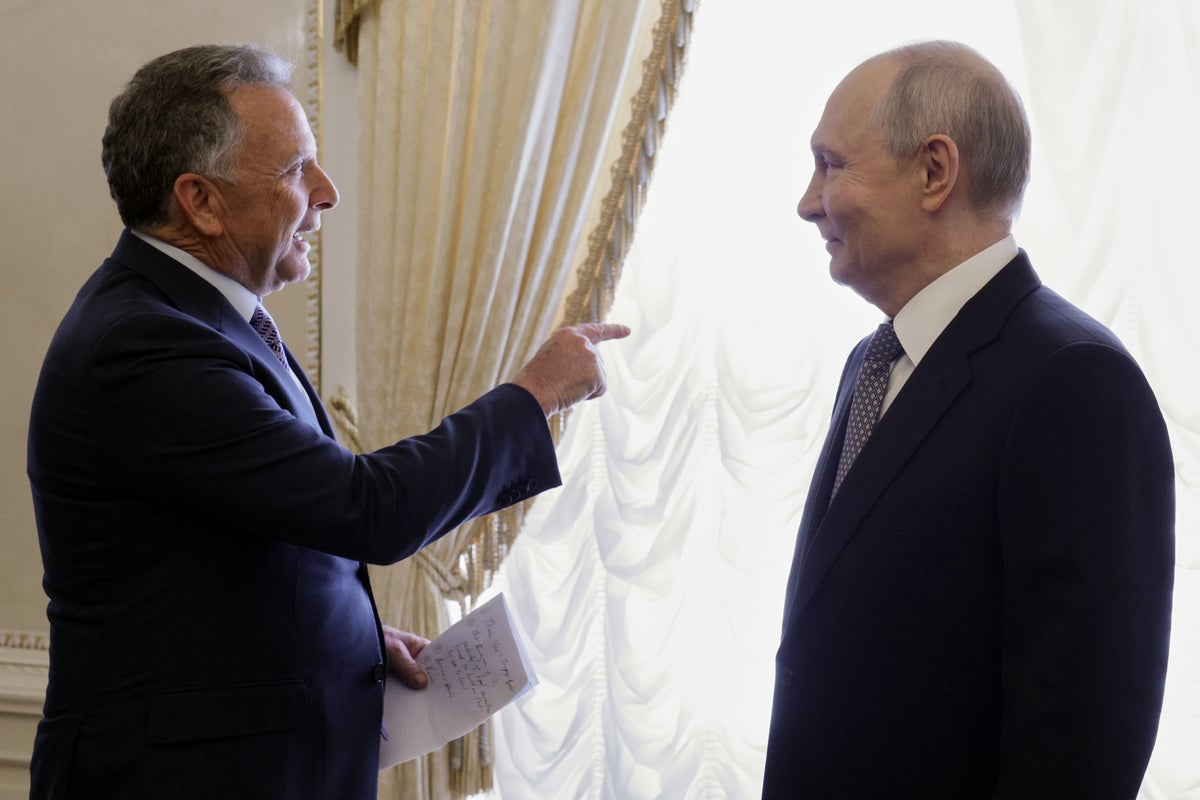
Pentagon officials have in recent weeks asked several NATO countries to tone down their rhetoric regarding the threat posed by Russia
© AP

Pentagon officials have in recent weeks asked several NATO countries to tone down their rhetoric regarding the threat posed by Russia
© AP
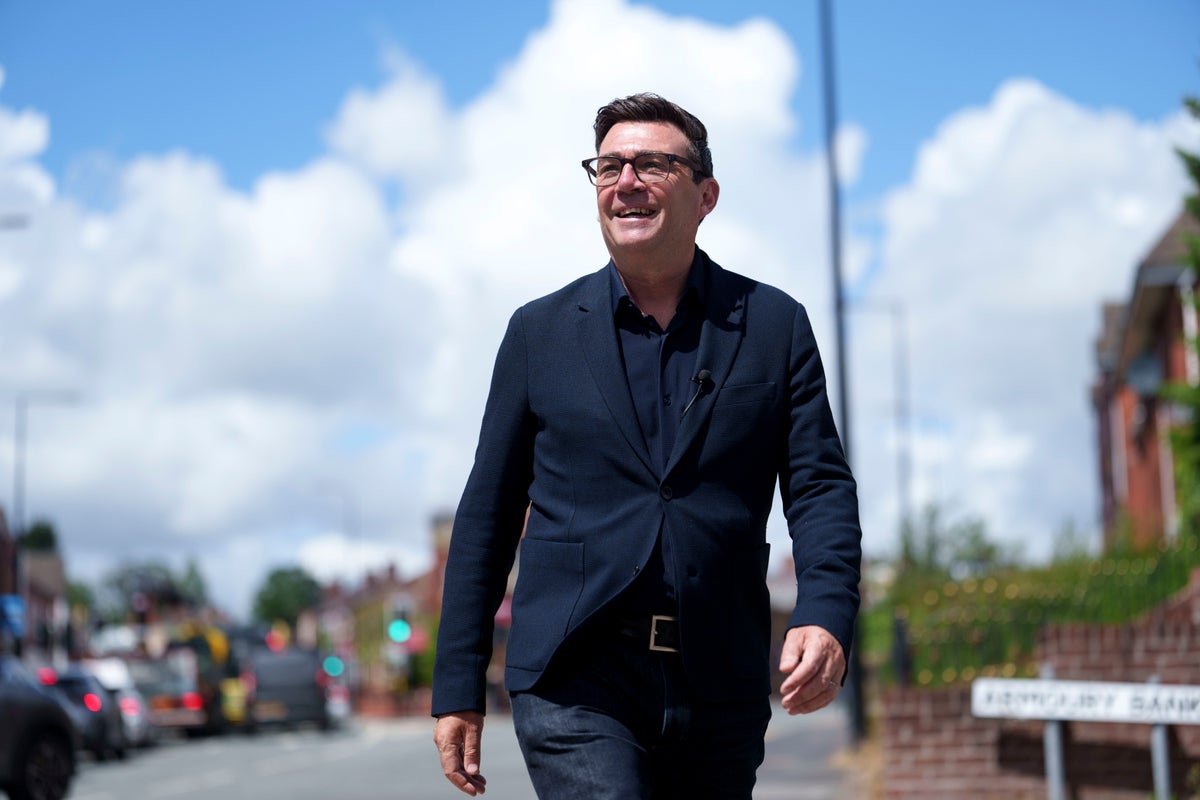
The prime minister has spoken to ITV about his first 100 days in office
© AP
The prime minister has spoken to ITV about his first 100 days in office
© AP
The prime minister has spoken to ITV about his first 100 days in office
© AP

© PA Wire
Prime minister in Glasgow to meet with Scottish and Welsh leaders to talk about ‘next stage of devolution’
In his statement ahead of the devolution summit in Glasgow today, Andy Burnham made it clear that he is interested in transferring more power from Edinburgh to Glasgow. (See 9.11am.) But John Swinney, the Scottish first minister, would rather talk about devolving further powers from London to Edinburgh. He issued this statement ahead of the meeting.
The prime minister has made devolution a central focus for his government. However the UK government must ensure that any devolution proposals respect devolution in Scotland. That means working with the Scottish government.
The Scottish government has put forward substantive proposals to the UK government on areas where further devolution would help grow Scotland’s economy and I will press the prime minister, and his government, to work with us to deliver those proposals.
Continue reading...
© Photograph: Gary Oakley/Everton FC/Getty Images
© Photograph: Gary Oakley/Everton FC/Getty Images
© Photograph: Gary Oakley/Everton FC/Getty Images
Click to see the full-size image
Written by Uriel Araujo, Anthropology PhD, is a social scientist specializing in ethnic and religious conflicts, with extensive research on geopolitical dynamics and cultural interactions
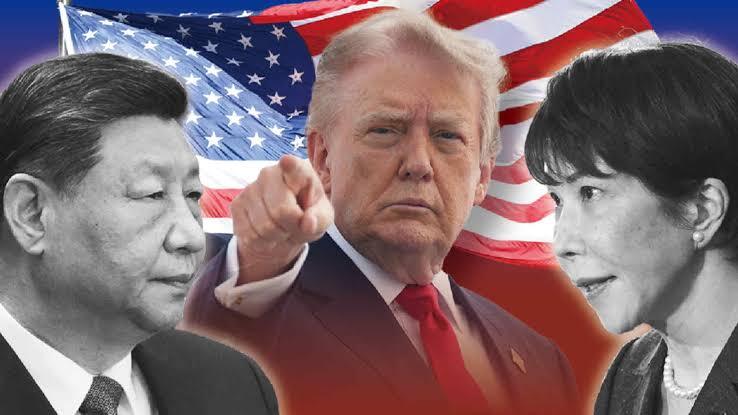
Security tensions between Japan and China are escalating while the former strengthens its long-range strike capabilities with American support.
Washington and Tokyo’s latest moves to reinforce their military presence along the so-called first island chain also mark another step in the broader US-China strategic rivalry across the Indo-Pacific region.
Originally conceived as a Cold War US defensive perimeter (stretching from Japan through Taiwan to the Philippines), the first island chain is increasingly becoming the centerpiece of an elaborate American-led military architecture designed to constrain Beijing’s growing maritime power.
The recent agreement between Japanese Defense Minister Shinjiro Koizumi and US Defense Secretary Pete Hegseth to implement an “effective denial defense” along that chain illustrates the shift. They also pledged continued cooperation on ammunition production for a potentially prolonged conflict.
During the Keen Sword 2027 exercises now underway, US and Japanese forces plan to deploy mobile missile systems, including American system NMESIS, on Yonaguni Island near Taiwan. Tokyo has already deployed domestically developed long-range (anti-ship) missiles capable of reaching China’s coastal areas.
The wider context is hard to miss. In November 2025 Prime Minister Sanae Takaichi made a statement linking a Taiwan contingency to Japan’s own survival, which triggered sharp Chinese protests and a cascade of diplomatic, economic, and maritime frictions.
Beijing then restricted dual-use exports to Japan, while coast guard vessels and radar incidents added to the pressure.
As commentator Oliver Griffin puts it, Beijing views Japan’s buildup as a drift toward neo-militarism.
From Tokyo’s perspective, China’s expanding naval reach makes these steps necessary. This is therefore a classic security dilemma. Measures one side takes to feel “safer” make the other feel less secure, prompting further responses.
The first island chain is both a barrier and a gateway. As expert Simone Chiusa notes, Chinese vessels seeking access to the open Western Pacific must navigate strategic chokepoints through its straits.
The strategic importance of these chokepoints illustrates Alfred Thayer Mahan’s classic sea-power theory: control over key maritime routes and positions remains central to great-power rivalry.
American and Japanese planners see distributed missiles and interdiction systems as deterrence by denial. Beijing sees preparations to restrict its access.
The paradox is clear enough: the more Washington and Tokyo seek to reinforce deterrence, the more Beijing may perceive “encirclement” and accelerate its own capabilities.
Japan’s southwestern islands are thereby becoming an operational frontier of sorts rather than a mere defensive perimeter. An alliance designed primarily to protect Japanese territory then gradually becomes an instrument for projecting power into a Taiwan-related contingency.
As I wrote in May 2026, regarding US missile deployments in the Philippines, Washington’s actions near Taiwan fuel Chinese fears of a containment architecture involving Japan, the Philippines, and Australia. The pattern continues.
China’s maritime-industrial growth has become central to allied planning. As I’ve noted elsewhere, Chinese shipbuilding capacity (measured by gross tonnage) exceeds that of the United States – by a factor of over 200, according to a 2023 US naval intelligence estimate.
Joint Sino-Russian submarine patrols further signal a new maritime era of coordination that certainly complicates American assumptions of uncontested sea control.
Yet the contest is no longer confined to the first island chain. A Japanese Self-Defense Force colonel has proposed a second-island-chain air bridge linking Japan and Australia (with US participation) for logistics and reinforcement – the reasoning being that China’s lengthening maritime strike reach now threatens operations farther into the Pacific.
Some American analysts warn that “pulling back to the second chain” would be strategic folly, while advocates of strategic restraint see a forward approach as intensifying insecurity.
For Japan, the predicament is particularly delicate. Tokyo is becoming more indispensable to Washington’s regional planning at the very moment when Japanese strategists worry about possible US-China accommodation under President Trump’s “transactional” approach.
The alliance security dilemma is real enough: fear of “abandonment” coexists with fear of entrapment in a Taiwan conflict. Japanese policymakers are of course not passive instruments. They act on their own threat perceptions while navigating uncertainty about long-term American commitments.
Gray-zone pressures add another layer. Coast guard patrols and incremental assertions of jurisdiction challenge the utility of high-end missile deployments – designed mainly for conventional scenarios.
Ultimately, efforts to preserve the existing “balance” in the Indo-Pacific may contribute to the very competition that makes that balance harder to sustain.
The American response to China’s rise has largely been to reinforce military alliances and expand forward deployments, risking an increasingly self-perpetuating cycle of militarization rather than fostering regional stability.
Washington is transforming Japan into a more central component of its forward maritime architecture – even as Beijing’s growing capabilities render that very architecture more contested. The risk here is that the cycle of reinforcement and reaction leaves all parties less secure than before.
MORE ON THE TOPIC:
The post Japan’s Militarization: Washington Fueling Chinese-Japanese Crisis appeared first on South Front.
© AFP/Getty
© AFP/Getty
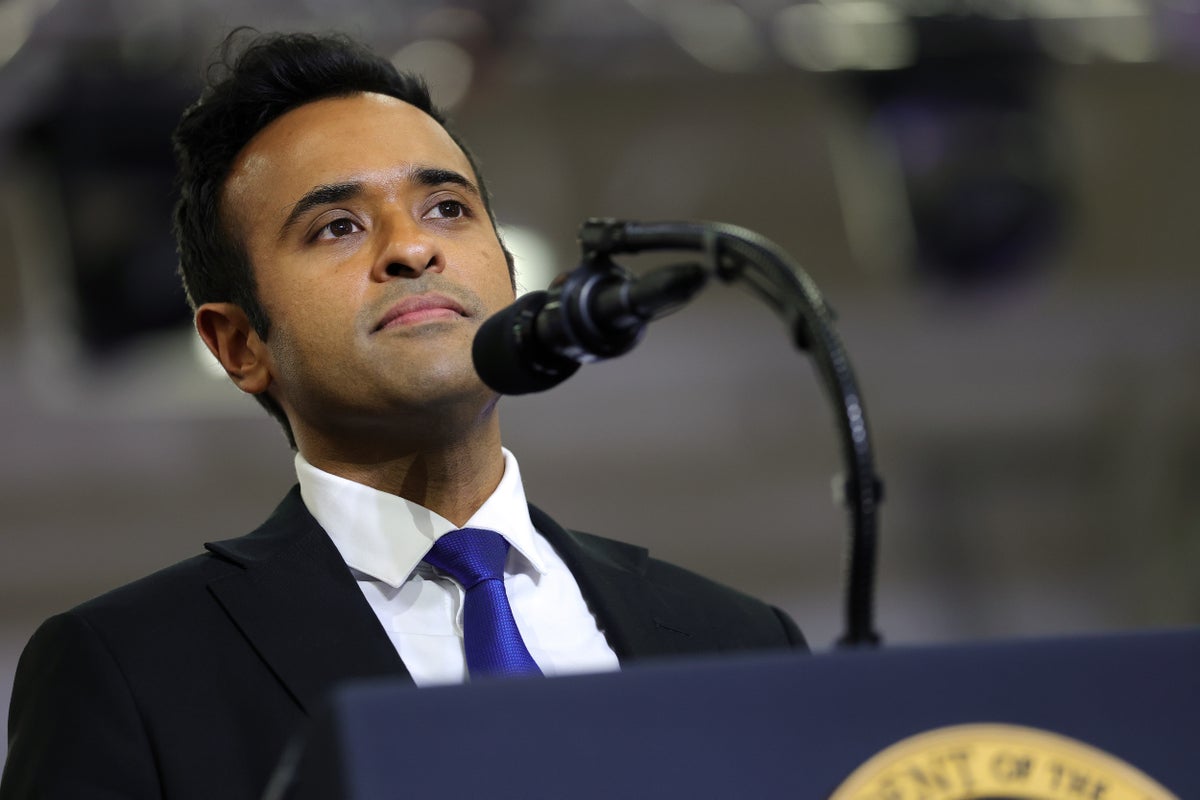
Ramaswamy said during a campaign appearance in Vandalia, Ohio, on Thursday that the ad’s planned run was over
© Getty
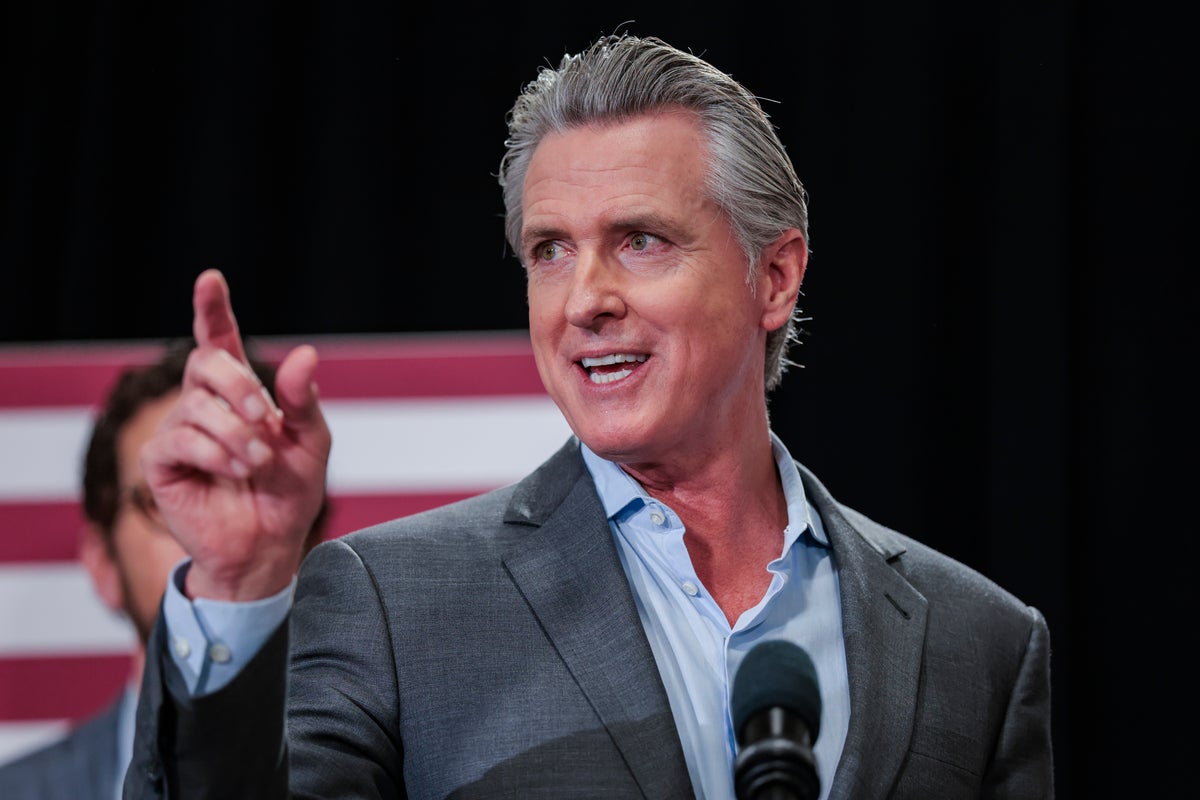
California Governor Gavin Newsom addressed the president in a statement beginning: ‘A warning to Donald Trump’
© AP
California Governor Gavin Newsom addressed the president in a statement beginning: ‘A warning to Donald Trump’
© AP
California Governor Gavin Newsom addressed the president in a statement beginning: ‘A warning to Donald Trump’
© AP
Alaska Republican gubernatorial candidate Bernadette Wilson said she was not surprised Sen. Lisa Murkowski, R-Alaska, crossed party lines to endorse her Democratic opponent in the governor's race.
Wilson told Fox News Digital that Murkowski endorsed Democratic gubernatorial candidate Jonathan Kreiss-Tomkins on Tuesday because the two share similar views on taxation and Alaska's oil industry.
"It should not surprise anyone. They're two peas in a pod, and I can tell you that as governor," Wilson told Fox News Digital.
FORMER STATE REP TOPS RANKED-CHOICE SLUGFEST AS ALASKA ADVANCES NOMINEES FOR GOVERNOR
"It doesn't surprise me that she is supporting the just keep taxing JKT," Wilson continued. "You know the guy that supports an increase in income tax, the guy that wants to double the fuel tax here in Alaska, the guy that has said hey im gonna come after the oil companies, the guy that does not support paying out a full permanent fund dividend."
In August, during a candidate forum hosted by the Alaska Oil and Gas Association, Kreiss-Tomkins said he believes "broad-based tax and revenues of that nature are likely going to be necessary to balance our budget."
DEM SENATE HOPEFUL VOWS TO UNLEASH ALASKA OIL — BUT HER RECORD TELLS A DIFFERENT STORY
Wilson argued that Kreiss-Tomkins' economic policies align with Murkowski's, accusing both politicians of supporting what she described as "socialist policies."
The Republican candidate said she has been "sounding the alarm since 2010 about the fact that she was [subscribing] to extreme liberal socialist policies," referring to Murkowski.
Wilson also said she would not "assign motive" to Murkowski's decision to endorse Kreiss-Tomkins, though she did not rule out the possibility that the endorsement was intended as a rebuke of President Donald Trump.
Trump endorsed Wilson on Oct. 13, days before Murkowski announced her support for Kreiss-Tomkins.
Murkowski has opposed several legislative priorities backed by Trump during the 119th Congress, including the SAVE America Act, which would impose additional proof-of-citizenship requirements for voter registration.
In an op-ed for the Wall Street Journal in July, Murkowski wrote that "as written, the SAVE America Act isn’t a simple fix to safeguard elections, as proponents claim. It would impose costly new barriers and prevent some, perhaps many, from voting, while also creating chaos before the November elections."
JOHNSON'S STRATEGY TO BYPASS DEMOCRATS' SAVE ACT BLOCKADE SURVIVES KEY VOTE, HANDING GOP BIG WIN
In January, Murkowski joined Senate Democrats in voting in favor of the War Powers Resolution, which failed but could have limited Trump’s ability to take military action against Iran.
The president then took to Truth Social to state that Murkowski "should never be elected to office again."
If elected governor, Wilson pledged in her video interview that she would continue to "sound the alarm" about Murkowski, whom she described as a "so-called Republican senator."
The candidate also characterized Murkowski's political positions as "absolutely terrible."
CLICK HERE TO DOWNLOAD THE FOX NEWS APP
Murkowski and Kreiss-Tomkins did not respond to Fox News Digital's requests for comment.

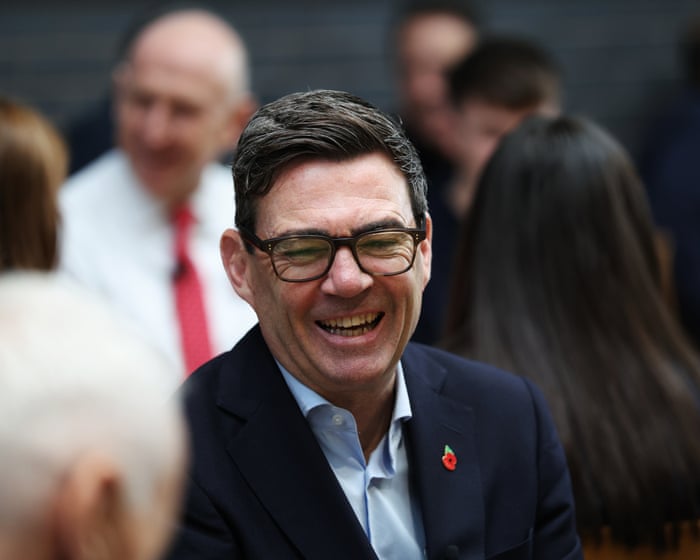
Prime minister says room for manoeuvre was limited by geopolitical crises and Labour’s 2024 manifesto
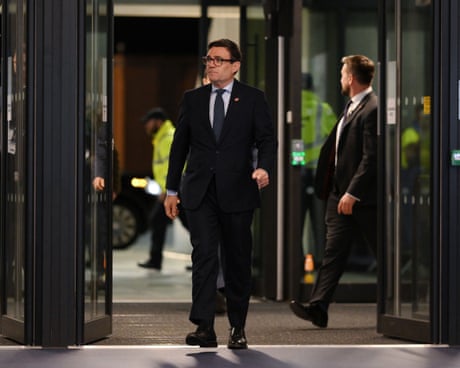
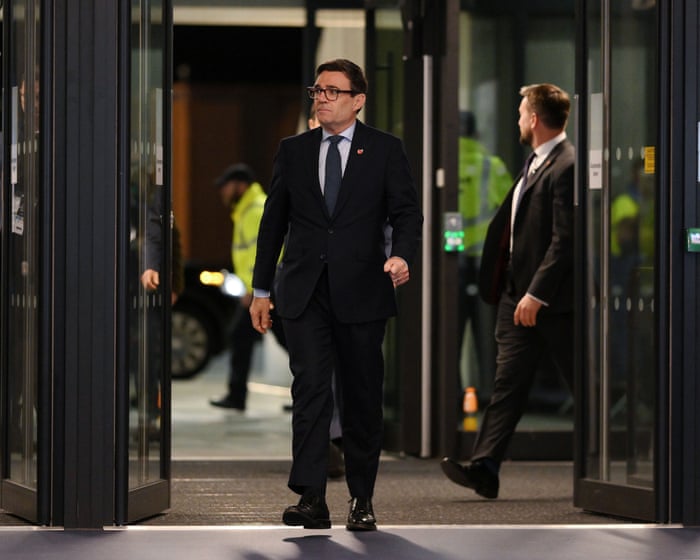
Andy Burnham has admitted his first budget as prime minister was not as radical as he would have liked because of the economic uncertainty facing the country.
He said he would have liked to have gone further with this week’s announcement – including with higher energy support payments – but felt hemmed in by external events such as the war in Iran, which has pushed up borrowing costs.
Continue reading...
© Photograph: Darren Staples/PA
© Photograph: Darren Staples/PA
© Photograph: Darren Staples/PA

© PA Wire
By Brett WILKINS
“This reveals the DNA of Bolsonarism,” said one critic. “Bolsonarism is made of cowardice.”
Join us on Telegram , X
 , and VK
 .
Contact us: info@strategic-culture.su
Just one day after vowing he would remain in Brazil to disprove allegations of money laundering, corruption, and other crimes, far-right Brazilian Sen. Flávio Bolsonaro followed in his disgraced father’s footsteps by fleeing to the United States after losing a presidential election.
Bolsonaro, his wife Fernanda Bolsonaro, and their two daughters, ages 14 and 12, left Brazil for an unknown location in the United States, according to initial reporting by Isadora Teixeira at the Brasília-based news site Metrópoles, which was subsequently confirmed by other Brazilian and international media.
The Argentinian site Infobae reported that Bolsonaro and his family may have crossed into Argentina—which is run by his ally, far-right President Javier Milei—and then traveled to the US in a private jet. It is not known where the family went in the US.
Bolsonaro’s brother, Eduardo Bolsonaro, lives in Texas while facing criminal punishment in Brazil after trying to use the Trump administration to pressure Brazilian authorities over the prosecution of his father, former President Jair Bolsonaro, who last year was convicted of conspiring to violently remain in power following leftist President Luiz Inácio Lula da Silva’s 2022 election win.
Flávio Bolsonaro, a 45-year-old senator representing Rio de Janeiro, was defeated by Lula in Sunday’s second-round election, but refused to accept the results and groundlessly demanded an annulment. The following day, Supreme Court Justice Alexandre de Moraes ordered the seizure of Bolsonaro’s passport. He was supposed to have turned in the document Tuesday, but he didn’t.
US President Donald Trump also cast doubt on the election’s outcome, saying the contest appeared to be “rigged.”
Jair Bolsonaro also fled to the United States while refusing to acknowledge his own 2022 defeat, which occurred during the administration of former President Joe Biden.
Like Trump, Bolsonaro incited a violent insurrection in his nation’s capital following his loss.
Unlike Trump, Bolsonaro was held accountable for his crimes, and, in addition to a 27-year prison sentence—now being served under house arrest—is banned from running for any political office for the rest of the decade.
Now, with Trump back in the White House and Secretary of State Marco Rubio in charge at Foggy Bottom, Bolsonaro and his relatives are set to be issued US visas, a senior State Department official told The Associated Press.
The younger Bolsonaro’s flight—which may have been aided by his obtaining an Italian passport in 2023—contradicts his pledge on Monday, when he said, “I have never thought about leaving the country” and “I will hand over my passports and defend myself against this travesty.”
He was referring to de Morães’ order to surrender his passport amid accusations of corruption, money laundering, tax evasion, and foreign currency violations.
Bolsonaro is also the subject of an inquiry pertaining to the millions of dollars he raised from a disgraced banker implicated in a massive corrupt plot to finance a biopic of Jair Bolsonaro.
The senator has not been charged and denies any wrongdoing.
Bolsonaro’s flight stands in stark contrast to Lula, who spent 580 days in prison after being convicted in corruption cases stemming from the sprawling Operation Car Wash investigation.
In 2021, Brazil’s Supreme Federal Court annulled Lula’s convictions on procedural grounds, ruling that the court in Curitiba lacked jurisdiction over the cases and separately finding that former judge Sergio Moro had acted with bias in one of them. The decisions restored Lula’s political rights and eligibility to run for office, paving the way for his 2022 presidential victory over Bolsonaro.
Lula responded to the senator’s departure by saying, “Unfortunately, the Bolsonaro family is like that.”
“Brazil is his second homeland,” the president continued, accusing Bolsonaro of “bootlicking in the United States.”
Secretary-General of the Brazilian Presidency Guilherme Castro Boulos ripped Bolsonaro, saying: “Leaders face things head-on! Rats run away!”
“It is a shameful thing, which should make Brazilian society as a whole reflect, especially those who supported and voted for Flávio Bolsonaro,” Boulos asserted. “He slapped his supporters in the face and left them on the side of the road.”
“Almost 60 million Brazilians trusted him as political leadership to run the country, and 24 hours later, he flees,” he continued. “And it’s no use coming up with this talk of persecution, of dictatorship. He ran away because he must.”
“This reveals the DNA of Bolsonarism,” Boulos added. “Bolsonarism is made of cowardice.”
Erika Hilton, a member of the Chamber of Deputies—the lower house of Brazil’s Legislature—representing São Paulo for the Socialism and Liberty Party, weighed in on social media, calling Bolsonaro “a traitor to the homeland.”
In the United States, Congressman Joaquin Castro (D-Texas) said on X that “losing an election is not grounds for asylum.”
“Yet the Trump administration is giving Flávio Bolsonaro safe haven in the United States,” he continued. “The Trump administration owes Congress answers on its role helping Bolsonaro flee Brazil in contravention of Brazilian law.”
Mark Weisbrot, co-director of the Center for Economic Policy and Research (CEPR), told Common Dreams:
Trump is now the most corrupt president in US history, raking in billions from his presidency. It’s no surprise when the most powerful corrupt authoritarian government in the hemisphere uses international law designed to protect the persecuted to shield another corrupt authoritarian government from criminal prosecution. Perhaps this is what is meant by the Trump-led ‘Shield of the Americas.’
Francesca Emanuele, senior international policy associate at CEPR, noted that “the United States has long served as a destination for numerous right-wing Latin American political figures who fled their home countries while facing corruption allegations, criminal investigations, or accusations of grave human rights violations, including crimes against humanity.”
“The list is extensive,” she added, “ranging from former presidents such as Panama’s Ricardo Martinelli and Bolivia’s Gonzalo Sánchez de Lozada to dictators such as Nicaragua’s Anastasio Somoza.”
Emanuele also contrasted the actions of the Bolsonaros and Lula, arguing that the latter’s decision to remain in Brazil “reflected a commitment to the Brazilian people and a determination to defend his rights through the country’s own institutions, even when those institutions failed to uphold them.”
“Rather than leaving Brazil,” she told Common Dreams, “Lula stayed, fought to clear his name, and continued his political struggle alongside the people he sought to represent.”
Original article: www.commondreams.org