❌

Reading view

Classrooms in Sumy Oblast are moving underground due to Russian shelling: 13 such schools are already operating, nine are under construction, and another 14 are at the design stage

Children study in a radiation-protective shelter in Sumy, December 2025. Photo: Suspilne Sumy

Since the start of Russia’s full-scale invasion, Russian forces have damaged 165 schools in Sumy Oblast and destroyed 21 beyond repair, according to the head of the regional administration. The administration’s answer is to move classrooms underground. Design documentation for 14 new underground schools has already been prepared, Oleh Hryhorov, head of the Sumy Oblast Military Administration, said in an interview with Ukrinform published on 28 October 2026. In addition, 13 such schools are already operating in Sumy region, while nine more are under construction, the media outlet reported.

Sumy region is one of the areas regularly shelled by the Russian military, making it dangerous to hold classes in above-ground school buildings. Of the region’s 280 schools, 225 have shelters, mostly basic ones, while more than 70 have radiation-protective shelters, Hryhorov noted.

“The process is ongoing and is being scaled up as much as possible,” he said, adding that the region is bringing in partners.

Underground classrooms provide a safer learning environment in Sumy Oblast

The construction of new underground schools is primarily focused on the larger cities of Sumy Oblast, where most schoolchildren are concentrated, Hryhorov explained.

The learning process at such a school differs from the usual format. This was explained by Oleksandr Vaniushenko, the principal of one of the first underground schools in Sumy, Suspilne reported on 23 December 2025.

“We have the first shift—entirely younger children, and fifth- and sixth-graders also go out to the open locations. The second shift brings in just as many more children. The total number studying per day is 360–370,” Vaniushenko noted.

The shelter has backup power supplies, allowing children to continue their lessons during air raid alerts and power outages, according to the project, media reported.

Children study in a radiation-protective shelter in Sumy, December 2025. Photo: Suspilne Sumy

Currently, 22 schools operate entirely in person, while 193 use a hybrid learning format, the head of the regional administration said. A total of 75,000 children are currently attending school in Sumy Oblast, he noted.

A Russian bomb hit a Sumy school during lessons in September

On 29 September, Russia struck a school in Sumy with a 250-kilogram aerial bomb while children in grades 1 to 4 were there, Serhii Kryvosheienko, head of the Sumy City Military Administration, reported. He said the Russians aimed the bomb at the school on purpose. About 40 students were in the school’s shelter when the bomb hit, a school employee told Suspilne.
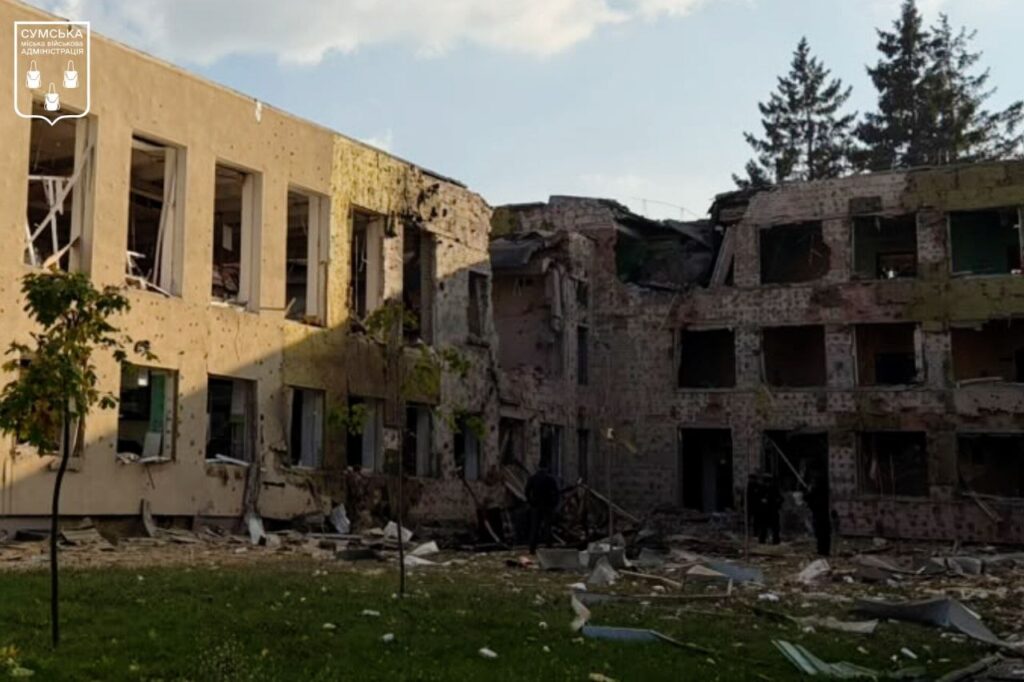
A school in Sumy where Russian forces carried out a strike while elementary school children were studying, 29 September 2026. Photo: Sumy City Military Administration

"With no pity or compassion whatsoever, they strike at children? There is nothing human in the enemy! He is not fighting on the battlefield—he is destroying a nation," Kryvosheienko said.

  •  

Our Schools Are a Reflection of a Society in Which Jew-Hatred is Tolerated From Top to Bottom

No wonder our schools incubate antisemitism, says Joe Baron: our institutions have been captured and our culture infected from top to bottom by a new Israelophobic strain of the oldest prejudice in the world.

The post Our Schools Are a Reflection of a Society in Which Jew-Hatred is Tolerated From Top to Bottom appeared first on The Daily Sceptic.

  •  

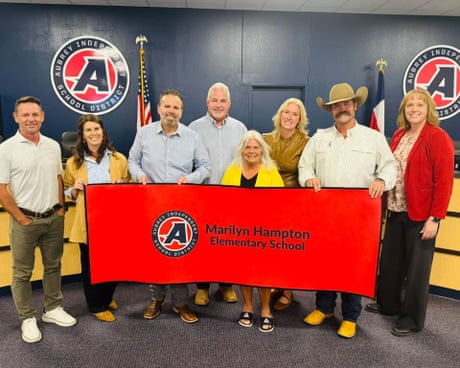
New elementary school in Texas named after beloved longtime school custodian

Marilyn Hampton, who regularly bought supplies for and gave rides to children, was honored at public meeting

US schools are often named after presidents, historical figures and civil rights leaders. And soon joining those ranks is a retired longtime Texas school custodian known for going above and beyond her duties by buying classroom supplies for children in need and helping students with their assignments.

That heartwarming story centers on Marilyn Hampton, whose former employer of 39 years – the Aubrey independent school district (AISD) – recently moved to rename its new elementary school No 5 in her honor.

Continue reading...

© Photograph: Aubrey ISD

© Photograph: Aubrey ISD

© Photograph: Aubrey ISD

  •  

L.A. Teachers Union Flunks Math, Blames Billionaires

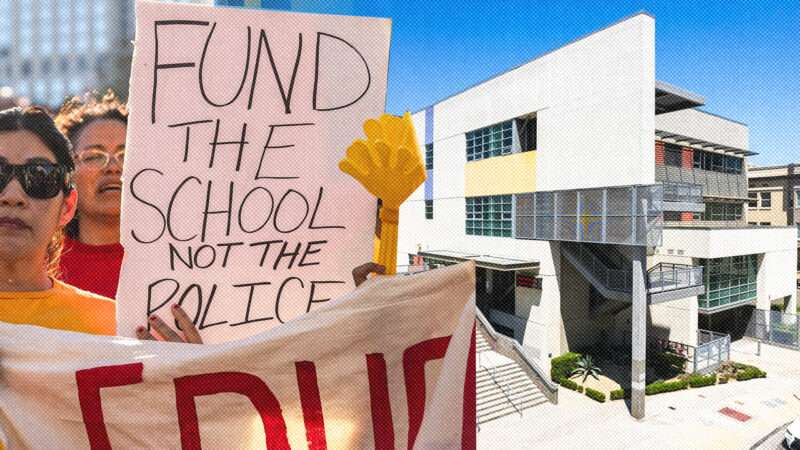
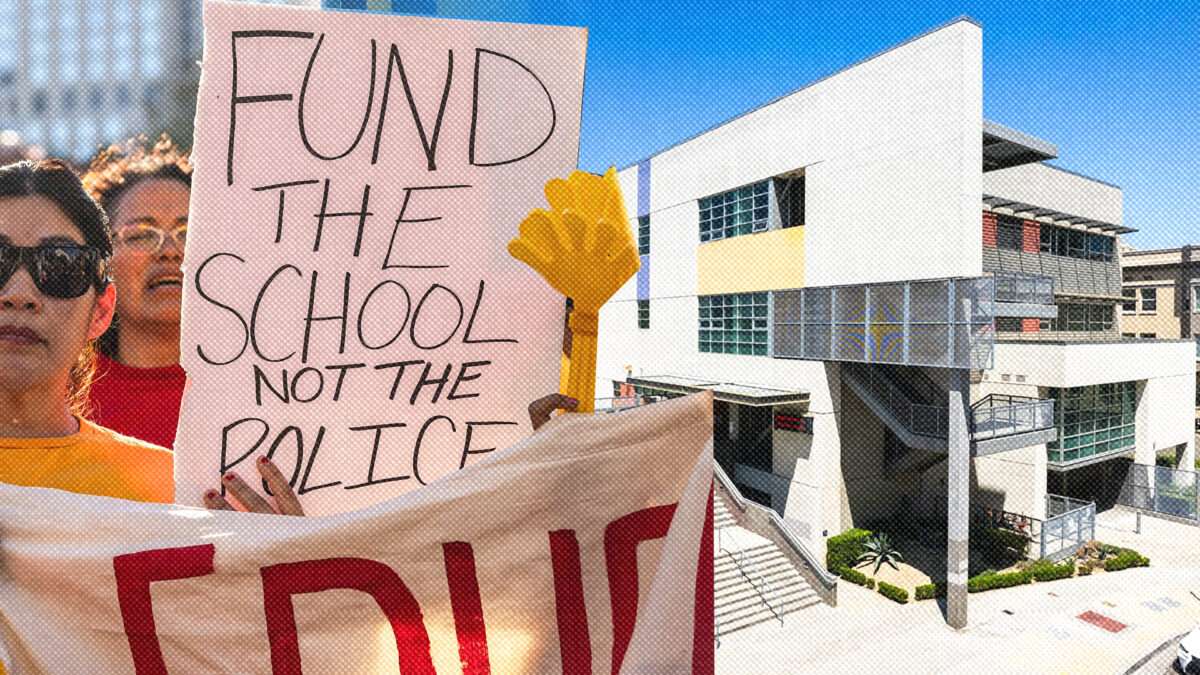
A protestor holding a sign that says 'Fund the school not the police' | Homes.com/Ted Soqui/Sipa USA/Newscom

Californians facing not one but two wealth-tax initiatives on next week's ballot may well be asking themselves how all these tens of billions of forcibly extracted dollars will be spent.

The answer, based on new studies and weary observation: horribly.

Take the Los Angeles Unified School District (LAUSD), the country's second largest. In July, L.A. County Superintendent of Schools Debra Duardo designated the LAUSD as a "lack of going concern," due to its ongoing operating deficits, exacerbated by fresh salary increases for unionized workers. The state's longstanding school Fiscal Crisis and Management Assistance Team (FCAMT) then issued a damning report in September, placing the district at a "high risk" for fiscal insolvency. Why? Because payroll was expanding while enrollment was collapsing.

"From 2019-20 through 2024-25," the report found, "noncharter school enrollment declined from 440,365 to 369,830 students, a decrease of approximately 16.0%. Over the same period, total [full-time equivalent jobs] increased from 60,344 to 64,148, or approximately 6.3%. As a result, the number of students per total FTE declined from 7.3 to 5.8."

This incongruent math is a feature, not a bug, of Californian education spending.

"From 2002 to 2023," Reason Foundation Managing Director of Education Reform Aaron Garth Smith and Managing Director of Government Finance Jordan Campbell wrote in a study this June, "California led the nation in K-12 spending growth." And when exactly did K-12 enrollment peak in the LAUSD? 2002!

Between fiscal years 2013 and 2023, Smith and Campbell found, LAUSD enrollment fell by 34.7%, yet "inflation-adjusted expenditure on employee compensation—including salaries, benefits, and other wages—grew by…27%." In a city, county, and state dominated by public sector unions (the California Teachers Association has already spent more than $65.5 million this election cycle), collective bargainers sit across the table from the politicians they helped elect, leaving only taxpayers and public-school families on the outside looking in.

United Teachers Los Angeles (UTLA), one of the most radical teachers unions in the country, reacted to the FCAMT "high risk" report with an innumerate defiance redolent of President Donald Trump.

"This fake independent analysis disparages the school board for rightfully addressing the needs of working people who face some of the worst housing and childcare costs in the country," UTLA Vice President Julie Van Winkle told the Los Angeles Times. The union's website called the report "a so-called 'analysis'" that used "a rigged scoring system with a predetermined outcome."

The UTLA broke with the statewide California Teachers Association in backing Proposition 40, the retroactive 5 percent tax on billionaires' paper wealth that would send 90 percent of the proceeds toward healthcare spending. ("California's schools, hospitals, and clinics need funding. Billionaires do not," Van Winkle explained.) But while the controversial Prop. 40 is looking wobbly at the polls, amid caterwauls over big money in politics, the much less ballyhooed Prop. 3, which makes permanent some wealth taxes that were sold as temporary in 2012, looks set to sail through without much resistance. Literally.

Spending on Prop. 3, L.A. Times education reporter Howard Blume concluded this week, "adds up to more than $81 million for and about $5,500 against." For those keeping score at home, that's a ratio of more than 14,700 to 1, brought to you primarily by teachers unions, who incidentally are lying about the initiative.

"Strict accountability [will] ensure every dollar gets to classrooms, not Sacramento politicians," vows the Yes on 3 website. Nonsense: The higher income-tax brackets, which begin at $371,479 for individuals and $742,958 for couples filing jointly, just feed into California's general fund, of which 40 percent goes to transitional kindergarten through community college.

Californians who routinely support such tax hikes and spending increases may flatter themselves that they're taking the side of children over rapacious billionaires, as well as the odd hundred-thousandaire. But the results produced by these massive money transfers have stubbornly failed to adhere to the alleged beneficiaries.

In 2024–25, the California Policy Center noted in July, "approximately 54 percent of tested LAUSD students did not meet or exceed the state standard in English language arts, 63 percent did not meet it in mathematics, and 73 percent did not meet it in science." With results deflation has come grade inflation, meaning that Los Angeles public schools are increasingly passing students who don't meet grade-level standards.

Far from acting as a bulwark against heartless spending cuts, California's never-ending won't-you-think-of-the-children tax-and-spend cycles are blunting economic growth and creating hollowed-out monuments to the folly of central planning. Just as the LAUSD was beginning its dizzying enrollment descent, the district launched a $20 billion, eminent domain–abusing school-construction program that was routinely characterized as "the largest public works project in the western United States."

More than a thousand homes, plus such landmarks as the Ambassador Hotel and Hollywood Star Lanes (from The Big Lebowski) were plowed over, only to create an overall building stock that now stands half-empty, incurring massive sunk costs.

As Blume detailed this week in the L.A. Times, "A modern, vacant and vandalized $34-million public school sits next to Los Angeles Unified School District headquarters — a campus paid for with taxpayer-financed bond money, but so burdened with debt and damage that it's not clear that anyone can afford to move in. The compact, aesthetically striking campus is marred by widespread graffiti. Vandals have punched holes in floors, walls and ceilings over the last five years. Recent photos of the inside appear to show puddles and stains from water damage and char marks from fire. The district is paying at least $20,000 a month in security and maintenance, and last year calculated having spent more than $1 million to secure and maintain the building."

Good luck, California!

The post L.A. Teachers Union Flunks Math, Blames Billionaires appeared first on Reason Magazine.

  •  

Venezuelan Acting President Inaugurates Peasant School in Aragua

Venezuela’s acting president, Delcy Rodríguez, reaffirmed the Executive’s commitment to popular sectors and national stability at the inauguration of the “General del Pueblo Ezequiel Zamora” National School of Peasant Leadership in Chuao, Aragua state, on Tuesday.


“I know there are those who are hungry for power. I know there are those who juggle, put on all kinds of shows for power. We are not here for power; we are here to serve the people. We are here to build alongside the people, we are here to accompany Venezuela in its growth and in its prosperity,” she said.

RELATED: Venezuelan Acting President Welcomes Lula’s Victory in Brazil

Acting president Rodriguez recalled the national Government’s call for peace through the amnesty law. “Because I aspire for the radical sector to abandon violence forever […]; I invite them to work to recover the electric system, where we do so without rest,” she said.

She further reaffirmed the importance of safeguarding sovereignty against any external interference. “The most sacred thing is that no one meddles, nothing and no one, in this process, for the tranquility, stability, prosperity and economic growth of our homeland,” she emphasized.

#EnVideo📹| Presidenta Delcy Rodríguez, inauguró la Escuela Nacional de Liderazgo Campesino General del Pueblo Ezequiel Zamora, ubicada en el estado Aragua. pic.twitter.com/RwwblFKHTJ

— Ministerio de Comunicación e Información (@mippci_ven) October 27, 2026

The official addressed the situation of the National Power Grid and the efforts of Corpoelec workers in the face of international pressure. “I have not seen a single megawatt added to the national power grid that was achieved without working without rest,” she stressed while explaining the impact that unilateral coercive measures have had on national infrastructure.

  •  

Alabama Special Needs ‘Teacher of the Month’ Accused of Pouring Hot Sauce on Student’s Tongue as Punishment

An Alabama special needs teacher who was once "teacher of the month" is facing child abuse charges after allegedly pouring hot sauce on a student's tongue as a form of punishment. 

The post Alabama Special Needs ‘Teacher of the Month’ Accused of Pouring Hot Sauce on Student’s Tongue as Punishment appeared first on Breitbart.

  •  

Berlin: Schools must prevent political Islam, extremism expert warns incoming left-liberal coalition

Last month, the Left Party took first place in Berlin’s state elections, and the party is seeking a coalition with the SPD and the Greens, both of which are already on board. The Left Party will announce its final decision on Oct. 31. 

Now, Michael Hammerbacher, head of the Association for Democracy and Diversity in Schools and Vocational Training, is concerned that the new leadership will cooperate with organizations tied to political Islam and that funding for vital advisory projects, including his own, could be at risk, writes Junge Freiheit.

He is urging the three parties to establish a strict “firewall” against political Islam in schools, as religious extremism is increasingly threatening education policy and school safety.

According to Hammerbacher, schools—particularly those where 90 percent or more of the student body has a Muslim background—are experiencing severe pressure to conform to strict religious guidelines. 

Issues include targeted bullying of liberal Muslims, homosexual students, and Alevi students; pressuring students to fast during Ramadan; and the refusal to attend co-ed physical education or swimming classes, 

More and more Islamist material is also regularly popping up in class group chats.

And students are increasingly feeling pressure to join in on activities they would normally not consider, such as at Berlin’s Diesterweg Gymnasium, where students even held a large demonstration in the schoolyard, dressed all in black. Hammerbacher also points out that establishing school prayer rooms leads to gender segregation.

Perhaps most worrying is data from the June Berlin Conflict and Violence Barometer study. Out of 14,000 students and 2,500 staff surveyed, 29 percent of ninth-graders believe religious rules trump school rules. Among Muslim ninth-graders, that figure rises to 41 percent.

Some positive news came out of the Berlin Administrative Court earlier this month, when it ruled that Diesterweg Gymnasium in Wedding can legally ban demonstrative religious rituals to maintain school peace. This decision dismissed a lawsuit from the Society for Civil Rights (GFF), which had argued the ban discriminated against Muslim students.

Hammerbacher noted that the Diesterweg Gymnasium had previously faced severe conflicts, including students being pressured to convert to Islam and girls facing verbal abuse if they failed to wear a headscarf. He sharply criticized the GFF for targeting 20 schools with legal warnings over similar rules; 19 of these schools backed down, making Diesterweg Gymnasium the only one to stand its ground. 

The expert warned that legal challenges such as by the GFF give political Islamist groups far too much leeway, further calling for the new Berlin government to be on guard against further opening the door to political Islam. 

In August, Remix News wrote about one school teacher who bemoaned the impact of mass immigration, with 75 percent of students at her school having a migrant background, including many from Syria, Iraq, Afghanistan or Ukraine. “It’s all blowing up in our faces,” she said. “We are happy if we can teach for a few minutes at a time. Sometimes the police have to come several times a week,” she added, due to incidents involving shouting, fights, and even drugs and prostitution.

The post Berlin: Schools must prevent political Islam, extremism expert warns incoming left-liberal coalition appeared first on Remix News.

  •  

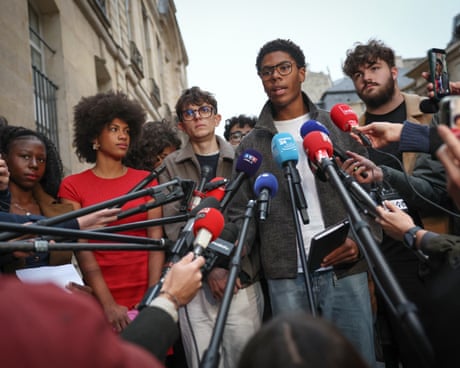
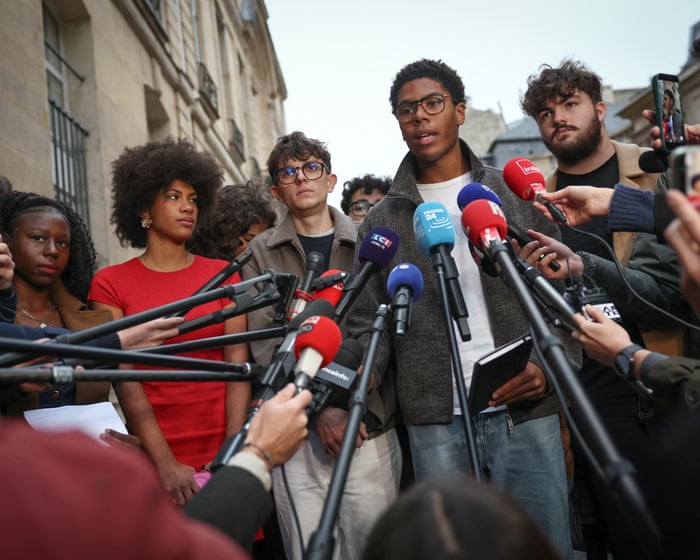
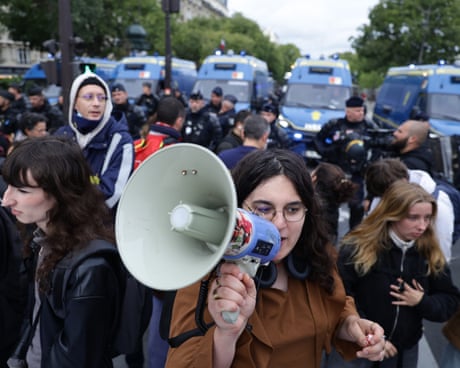
Protest leaders urge French pupils to keep barricading their schools

Activists say struggle must go on until their ‘maximum’ demands are met over teacher shortages and building repairs

French children should continue to barricade their schools and take part in street protests, a student union said on Monday after the government announced a package of education measures to try to stem the crisis.

“Today we’re at the negotiating table, we’re able to negotiate with the government,” Pierre Sourzat of Les Lycéens told France Info television. “We’re in a power struggle and we still need to call for continued mobilisation to meet a maximum of our demands.”

Continue reading...

© Photograph: AFP/Getty Images

© Photograph: AFP/Getty Images

© Photograph: AFP/Getty Images

  •  

Pupils as Young as Five Suspended Over Sexual Misconduct

Children as young as five are being suspended for sexual misconduct, with schools in England recording 7,278 suspensions last year – nearly 40 every school day and a 12% jump on the previous year.

The post Pupils as Young as Five Suspended Over Sexual Misconduct appeared first on The Daily Sceptic.

  •  

My son didn't get into the school I thought would be perfect for him. He's thriving at our neighborhood middle school in ways I didn't expect.

Two Real Madrid supporters smile from stadium seats overlooking a soccer field during a match.
The author, shown with her son, said she's been pleasantly surprised by how well he is adjusting to the middle school he ended up at.

Courtesy of Jamie Davis Smith.

  • Where I live, some parents enter a lottery to choose their child's school.
  • I expected my son would end up where his older sister is, but he was waitlisted.
  • He's now attending our local middle school and I'm seeing some unexpected benefits.

I love living in Washington, DC, but navigating the complex public and charter school admissions system is tough.

Students have the right to attend their neighborhood school, and many do. However, every year thousands of parents choose to apply to public schools in different neighborhoods or publicly funded charter or magnet schools throughout the city.

There are rarely enough spots to meet demand at the more desirable schools or specialty schools, ranging from arts and hospitality to college-prep programs and the sciences. To decide who gets to go where, DC instituted a lottery system.

Parents across the city often create spreadsheets to track programs and their child's odds of getting into a particular program, before entering a lottery, ranking schools in order of preference, and hoping for the best. Such an uncertain system makes planning difficult and sometimes leads to unpleasant surprises. That was the case with my son's foray into middle school.

I thought I had found the perfect middle school for my son

When my son entered his last year of elementary school, I thought I knew what his next steps would be. For years, I assumed that he would follow in his big sister's footsteps and attend an International Baccalaureate charter school starting in 6th grade.

Smiling person in a black Nike soccer jersey sits beside colorful mosaic tiles at Park Güell.
The author said she expected that her son would go to the same school his older sister was at, but was upset when he was put on a waitlist.

Courtesy of Jamie Davis Smith

The charter school isn't perfect; no school is. However, my daughter, now a junior, often says she enjoys school, which is a shocking statement for a kid of any age, let alone a teenager. An environment where at least some kids are happy to go every day would be reason enough for me to send my son there. However, I was also convinced the school's rigorous program and strong emphasis on world cultures would be a perfect fit for him. After all, he is a triple citizen and a world traveler at heart. I also appreciate the school's diversity and range of classes, from sneaker culture to advanced sciences.

Although a spot for my son was never guaranteed, I assumed his sibling preference would help secure one. I was in for a rude awakening.

I had to face reality

When my son was put on the waitlist after the first round of admissions, I didn't panic. Instead, I spent most of the summer in denial, convinced that if I just waited long enough, he would get in eventually.

The week before school started, I had to face reality. No spots were available for my son at the school I had grown to love and was convinced would be perfect for him.

Without a viable alternative, I enrolled him in our local middle school, which I thought was very large and very chaotic. I kept telling my son how excited I was for him to start middle school, but I couldn't hide my worry.

I was nervous about sending him to a large school

My son's elementary school had about 400 kids total, from pre-K4 to 5th grade. For a big city, it's a small school where most teachers know all the kids, and the community is tight-knit. I worried about how my son would transition to a large school with nearly 1400 students across just three grades, in a building that occupies nearly an entire city block. Despite my worry, he walked in with confidence on his first day.

Not everything about such a big change was easy. My son got lost a few times trying to find his classes. While many of the other incoming sixth graders knew each other from elementary school, my son didn't know a soul. He was upset when recess, his favorite part of the day, was cut short because other kids wouldn't stop talking. It's almost impossible to get a timely email response from the school administration, who seem swamped by the sheer number of students. Still, my son rolled with the punches and started to adjust.

I now see the benefits of a neighborhood school

Even though my son had to start his middle school social life from scratch, he quickly found his crew: other kids who love soccer. He first spotted potential friends by looking for kids wearing Real Madrid jerseys and kicking a soccer ball around at recess. Once he found his tribe, he could easily meet friends after school for walks to our local playground and pizza shop. Those are things he wouldn't have been able to do if he had gotten into the school I had been hoping for, which draws students from across the city. Within a few weeks, he rattled off at least a dozen new friends' names. I wondered whether he could have made friends as easily at the smaller charter school I wanted him to go to, with a smaller pool of potential friends.

I also appreciate the resources such a big school has, including a range of after-school activities. Although my son hasn't wanted to try most of them, I appreciate that options like an archery team and a Rubik's Cube club are available to him.

There are other benefits as well. Because our neighborhood is just over a mile from our home, my son can easily walk or take a short bus ride there and back, giving him even more independence. Not having to drive him saves me at least seven hours a week, and the school's proximity to our house gives my son more free time.

Now that we are well into the school year, I realize I should have given my son more credit for adaptability. I also should have been more open-minded about what kind of school would be "right" for my son. Although I am still sad that he doesn't get to attend the same school as his sister, I now know there is more than one answer to what makes a good school.

Read the original article on Business Insider

  •  

Alpha School Claims to Teach Kids Twice as Fast. Many Don’t Make It.

Alpha School, a private network, is spreading into public education. While its students’ test scores are high, some parents and educators say it doesn’t live up to the hype.

© Ilana Panich-Linsman for The New York Times

An Alpha private school in Austin, Texas. The Alpha network is small but growing rapidly. Its leaders have ambitions for the model to reach one billion students around the world.
  •  

A Religious Preschool Is Barred From a State's Universal Preschool Program. SCOTUS Will Decide What's Legal.

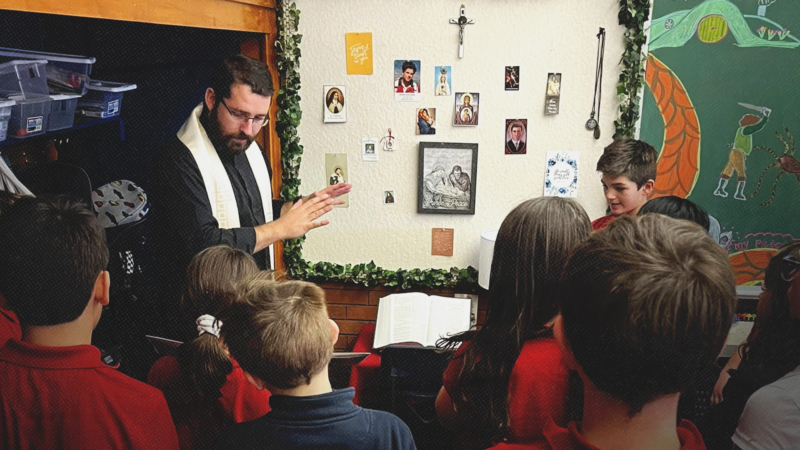
Religious school classroom | St Mary Catholic School/Facebook

On November 3, the U.S. Supreme Court will hear oral arguments in a case that asks whether Colorado has unlawfully discriminated against a religious preschool because the school is barred from participating in the state's universal preschool program due to its refusal to accept LGBTQ families. In addition to involving multiple hot-button political and cultural issues, the case also has big implications for the future of federal antidiscrimination law.

St. Mary Catholic Parish v. Roy is not about a state law that directly prohibits a religious preschool from operating. Rather, at issue here is a government requirement that any preschool that wants to participate in the state's universal preschool program, and receive the public benefits that follow, must first satisfy various criteria, including that "each preschool provider provide eligible children an equal opportunity to enroll and receive preschool services regardless of race, ethnicity, religious affiliation, sexual orientation, gender identity, lack of housing, income level, or disability."

According to the Catholic preschools overseen by the Archdiocese of Denver, however, complying with that rule would force the schools to violate their religious beliefs. "It is undisputed that these preschools would otherwise be eligible [universal preschool] providers," the schools told the Supreme Court. "They are excluded solely because of their religious exercise—namely, their religious practices of ensuring that all enrolling families are supportive of the Catholic Church's teachings on sex and marriage and of treating enrolled four-year-olds in accordance with their biological sex."

These schools can point to a pair of recent Supreme Court precedents that will very likely count in their favor. In Espinoza v. Montana Department of Revenue (2020), the Court held that if a state provides educational subsidies that help parents send their children to private schools, the state "cannot disqualify some private schools solely because they are religious." Then, in Carson v. Makin (2022), the Court held that Maine's tuition assistance program violated the Constitution by excluding private schools that offered "sectarian" education. "A State's antiestablishment interest," the decision said, "does not justify enactments that exclude some members of the community from an otherwise generally available public benefit because of their religious exercise."

I would expect the outcome of St. Mary Catholic Parish v. Roy to follow in this same general pattern and hold something to the effect that when a state provides an educational public benefit, it must make some sort of accommodation for the religious views of the recipients.


In Other Legal News

Justice Elena Kagan made news a few months back when she defended her conservative colleagues on the Supreme Court from the oft-heard charge that they are totally in the tank for President Donald Trump. "I don't see this as a court that is just like, 'We're just going to rubber stamp what the current administration does.' You know, quite the opposite," Kagan said. "I think that that is a bad rap." In support of her argument, Kagan pointed to the fact that the Supreme Court had recently ruled against Trump on the two big issues that Trump himself valued the most: tariffs and birthright citizenship.

Kagan was in the news again on Tuesday, this time because she publicly blasted those same conservative colleagues for issuing decisions on voting rights and political gerrymandering that, in Kagan's words, have produced "a democracy that does not work as well as it should." According to Kagan, the Court's conservative majority "has kind of blinded itself to the very deleterious effects of their rulings on how the political system works."

Does this mean that Kagan has now stopped defending the conservative justices from the pro-Trump charge? Not at all. In fact, as The New York Times put it, "she reiterated her defense of the conservative-dominated bench from a July appearance and said it was a 'bum rap' to suggest the court had been too deferential to Mr. Trump."

I don't know about you, but I find Kagan to be a refreshing public figure in these simplistic, partisan times. She is a staunch legal liberal with clearly stated objections to what the Supreme Court's conservative majority is getting up to, yet she refuses to be associated with the laziest progressive attacks on the Court. How many people of comparable public stature these days are willing to call out the shortcomings of their own side?

The post A Religious Preschool Is Barred From a State's Universal Preschool Program. SCOTUS Will Decide What's Legal. appeared first on Reason Magazine.

  •  

Macron bans ‘illegitimate’ protests in France as he tries to get a grip on unrest

French president also says he will decide on concrete ‘next steps’ for the next nationwide demonstrations

Emmanuel Macron has said “illegitimate” demonstrations will be banned over the coming days as France seeks to get a grip on civil unrest after some of its worst street violence in years erupted on the fringes of cost of living protests at the weekend.

Speaking after a ​meeting with intelligence officials and senior ministers, the French president said on Thursday that demonstrations organised by recognised groups would be allowed to go ahead, although their routes could be changed.

Continue reading...

© Photograph: Ibrahim Ezzat/Anadolu/Getty Images

© Photograph: Ibrahim Ezzat/Anadolu/Getty Images

© Photograph: Ibrahim Ezzat/Anadolu/Getty Images

  •  

Texas School Police Referred Tens of Thousands of Children to Prosecutors for Minor Misbehavior

An illustration of a police officer standing in front of a school bus and a school | Luckydoor/Tom Dowd/Dreamstime

School resource officers (SROs) in Texas referred tens of thousands of elementary and middle schoolers for prosecution for relatively minor misconduct over the last decade, a news investigation found.

An analysis by The New York Times and the San Antonio Express-News reported that, as the number of SROs in Texas grew, children in Texas ages 10 to 13 were referred to prosecution for misbehaving in school more than 47,000 times since 2014. A referral doesn't necessarily result in charges being filed, but each one represents a minor being taken into police custody and put in contact with the criminal justice system, which can have long-lasting educational, emotional, and financial impacts for students and their families.

"Most of the students were accused of minor offenses, like making threats, using cannabis vapes or lashing out at classmates or teachers," the papers reported. "Few caused serious physical harm."

Among the examples cited by the Times and Express-News were an 11-year-old who bumped into a school counselor, a 10-year-old who said he saw someone on campus with a weapon, and a 10-year-old who kicked an assistant principal after his cellphone was taken away. 

In one case, a 12-year-old girl who refused to go to the principal's office was handcuffed, arrested, and driven to the school police headquarters. "When she would not put her hand on a fingerprint machine, officers twisted her opposite arm behind her back until she screamed and complied, according to body camera footage," the outlets reported.

The analysis found that referrals of children 10 to 13 increased by a greater percentage than referrals of older students. (Children under 10 cannot be prosecuted under Texas law; many other states don't set a minimum age for delinquency.)

The two outlets published another joint investigation in May on how SROs in Texas schools have used heavy-handed tactics, including Tasers and pepper spray, against students over seemingly minor misconduct.

The findings mirror other recent studies. A report published in July by the American Civil Liberties Union (ACLU) of Iowa found that, while SROs were placed in Iowa schools to keep students safe from violence, the threat they most commonly dealt with was illicit vaping.

The number of police in schools nationally dramatically increased in recent years, growing by 23 percent at high schools, middle schools, and elementary schools between 2018 and 2021, largely under the justification of stopping mass shootings and handling violent situations.

Organizations like the National Association of School Resource Officers (NASRO) say that carefully selected, well-trained officers act as a filter and decrease arrests by building strong relationships within the school with staff and students.

Civil liberties groups and disability advocates have long argued that increases in school police and zero-tolerance policies for petty disturbances have fueled the "school-to-prison" pipeline and led to disproportionate enforcement against minorities and students with disabilities. Those groups have been aided by viral news stories of police arresting and assaulting school children.

Following the police killing of George Floyd in 2020 and national calls for police reform, several major school districts across the country ended their SRO programs. 

However, several states that experienced horrific school shootings, like Florida and Texas, moved in the opposite direction, passing laws that required police officers or armed guardians in public schools.

A 2020 Reason investigation described how Florida schools had become a high-stakes experiment in policing after Florida more than doubled the number of SROs across the state following the mass shooting at Marjory Stoneman Douglas High School in 2018. A study published in 2020 found that after the increase, the number of Florida school arrests—which had been declining for years—suddenly started to rise. There was also a sharp increase in the use of physical restraint against students.

A 2021 working paper by the Annenberg Institute at Brown University, which billed itself as the broadest and most rigorous examination at the school level of how SROs impact student outcomes, found that while SROs "do effectively reduce some forms of violence in schools," they did not prevent school shootings or gun-related incidents.

Another study by researchers at the University of Maryland and the firm Westat, who studied several dozen middle and high schools in California, found that increasing the number of SROs led to both immediate and persistent increases in the number of drug and weapon offenses and the number of suspensions and expulsions of students.

The post Texas School Police Referred Tens of Thousands of Children to Prosecutors for Minor Misbehavior appeared first on Reason Magazine.

  •  

Brickbat: Teaching While Intoxicated

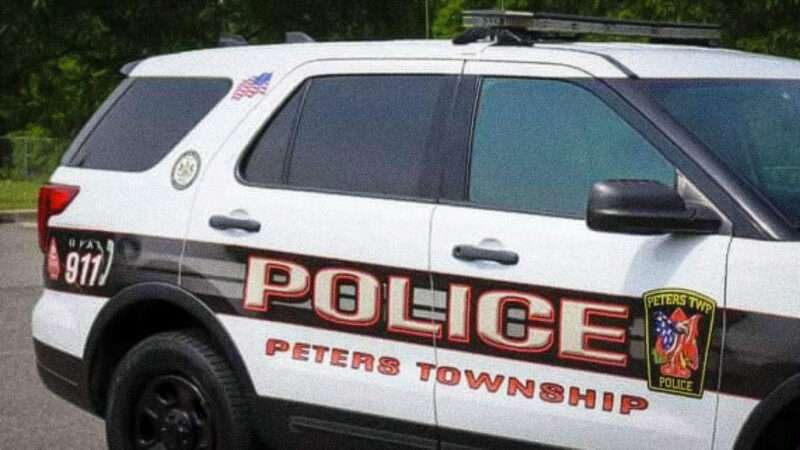
Peters Township police vehicle | Peters Township Police Department/Facebook

Katharine Viviano, a first-grade teacher at Pleasant Valley Elementary School in Peters Township, Pennsylvania, faces a charge of public drunkenness after officials said she became intoxicated at school and left her students unattended. According to police, Viviano left during the school day to buy alcohol, and when she returned, she hit another vehicle in the school parking lot. She later went into the bathroom attached to her classroom and refused to come out; another teacher found her in the bathroom semi-conscious. School staff initially believed Viviano was having a medical emergency, and they moved her students to another classroom and then to a playground while they dealt with the situation. Viviano reportedly smelled of alcohol, with slurred speech and bloodshot eyes. Authorities say she admitted drinking vodka earlier in the day.

The post Brickbat: Teaching While Intoxicated appeared first on Reason Magazine.

  •  

Pork Banned in Italy’s New Muslim-Friendly School Meals

Schools in north-eastern Italy have banned pork products in school meals to make them acceptable to Muslim migrants, meaning traditional dishes like prosciutto, porchetta and pasta all’amatriciana are off the menu.

The post Pork Banned in Italy’s New Muslim-Friendly School Meals appeared first on The Daily Sceptic.

  •  
❌