❌

Reading view

The Pentagon wants NATO’s eastern flank to be quiet about Russia while Washington courts Moscow

Colby restrains US aid to Ukraine

In recent weeks, the Pentagon has urged several NATO allies, among them Lithuania, Latvia, and Estonia, to tone down their public warnings about the threat from Russia, four people familiar with the matter told Reuters. Pentagon officials argued that some European statements undermined Europe's security, the sources said. Pentagon policy chief Elbridge Colby recently advised a Baltic official against any "poking" of the Russians, one of the people said.

Russia's full-scale war on Ukraine is in its fifth year, and Moscow has spread a deniable arson and sabotage campaign across Europe. As Washington offers Moscow sanctions relief and presses Kyiv to stop hitting Russian energy, the restraint it seeks appears to fall on those Russia threatens, first Ukraine and now NATO's eastern flank.

An Estonian delegation was told to be "measured"

As an example of unhelpful rhetoric, Colby cited Europeans' public suggestions that Russia was "cornered like a rat," the person said. Reuters could not determine whose words he meant. In late September, Estonia said Russia had ordered the arson at Milrem Robotics, a Tallinn company supplying ground robots to Ukraine, and Estonian Prime Minister Kristen Michal likened Putin to a "rat in the corner." Michal said Putin was stepping up activity in Europe to erode the West's backing for Kyiv, and that the surest deterrent was to "back Ukraine."

At another meeting, Pentagon officials asked an Estonian delegation to keep its communications "measured," a person briefed on the encounter said. Another European official described the Pentagon's private messaging this way:

"We are helping you. The Americans are there… Just don't be loud. Don't make noise."

Ukrainian President Volodymyr Zelenskyy and Estonian Prime Minister Kristen Michal on the sidelines of the NATO summit in Ankara, 7 July 2026
Ukrainian President Volodymyr Zelenskyy and Estonian Prime Minister Kristen Michal on the sidelines of the NATO summit in Ankara, 7 July 2026. Photo: Ukrainian President's Office

One European official called the advice cordial but baffling, since the Baltic states' own intelligence services have repeatedly judged it unlikely in recent months that Russia would test NATO's mutual defense provisions.

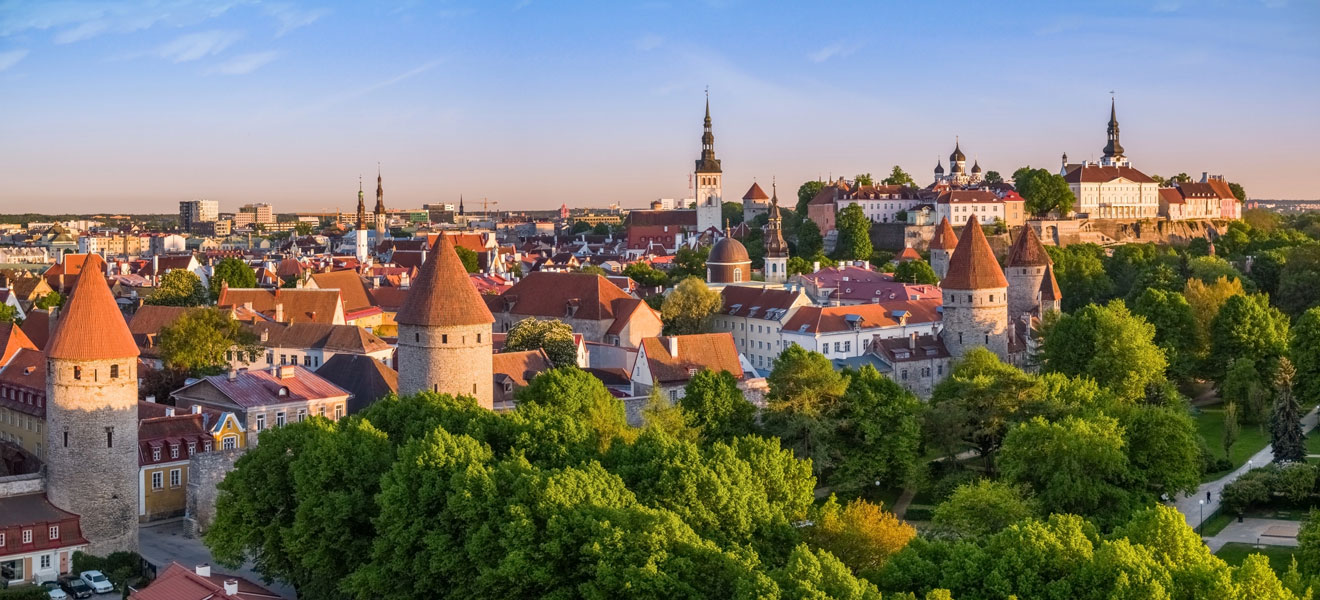
estonian capital allocates € 200000 ukrainian cities development view tallinn estonia tallinnee city introduces program supporting municipalities aid expertise sharing eu integration initiatives estonia's launched new cooperation support 2025 city's
Explore further

Deals with dictators lead to hell: Estonia’s PM urges Europe to help Ukraine destroy Russia’s refineries after Washington eased sanctions on diesel

The Pentagon refused to discuss "private conversations among allies," and the Baltic defense ministries did not reply.

One messenger is a key figure in the review of US troops in Europe

Colby is a key figure in the Pentagon's ongoing review of US force posture in Europe, which could lead to a sharp troop drawdown. In September, the Pentagon was weighing pulling up to 40,000 troops from Europe.

Russia has lately stepped up its deniable attacks on NATO members, Western intelligence officials say. Its suspected arson campaign against Starlink sites serving Ukraine has reached Lithuania, and on 28 October German prosecutors announced the arrest of two Belarusians suspected of plotting arson near Nuremberg. Russia denies running a sabotage campaign. Meanwhile, US officials have discussed business deals with Russia, which many European officials oppose.

  •  

The most haunted house or building in every US state

Real estate photograph of a house located at 112 Ocean Avenue in the town of Amityville, New York March 31, 2005. The Amityville Horror house rich history and beauty are overshadowed by the story of George and Kathy Lutz, the previous residents of 112 Ocean Avenue, who claimed that shortly after moving into the house they fled in terror driven out by paranormal activity.
The infamous "Amityville Horror House" in Long Island, New York.

Paul Hawthorne/Getty Images

  • Historic buildings often collect urban legends over the course of their long histories.
  • For some thrill-seekers, haunted mansions are among the most popular tourist attractions.
  • The haunted homes industry in the US reportedly checks in at least $300 million annually.

It's spooky season, and nothing screams Halloween like a haunted house.

In the US, haunted homes are not only a seasonal staple but also a highly lucrative industry, often raising a town's profile as a tourist destination.

Haunted houses can make paranormal tourism a profitable economic strategy for cities. American Haunts, an industry trade group, estimated that the haunted-homes industry generates between $300 million and $500 million in annual ticket sales.

However, some homes have such dark histories that they're better left alone.

To find the most haunted home in every US state, Business Insider considered properties known locally for spooky occurrences, ghost sightings, or with horrifying backstories.

Some of these properties are open to the public, while others have been transformed and are now private residences.

From abandoned mansions to historic hotels, here's where the spookiest haunted building is hiding in every US state.

Lucy Yang contributed to a previous version of this article.

ALABAMA: Sweetwater Mansion
Sweetwater Mansion
Sweetwater Mansion in Florence.

Library of Congress

Located on Sweetwater Avenue in Florence, Alabama, this plantation home was built in 1835 by Gen. John Brahan and first occupied by Robert Patton, Brahan's son-in-law and, eventually, the governor of Alabama.

Many spooky stories are associated with this mansion, including one about the home's caretaker, who one day witnessed a casket appear out of thin air. Inside, she found a man dressed in a Confederate uniform, believed to be one of General Brahan's sons who died in the Civil War, AL.com reported.

Other examples of reported supernatural activities include distant voices of children's giggles and a woman in old clothes wandering the halls, as reported by Forbes.

Property records indicate that the private home, which was added to the National Register of Historic Places in 1976, was sold to a hospitality group in 2023. The Willingham, a graduate student magazine at the University of North Alabama, reported that although the sale was part of a hotel investment, the owners have since worked with the Sweetwater Foundation to restore the mansion and find a new purpose for it.

The foundation is led by a descendant of the original owners and also works with descendants of the estimated 300 enslaved people once connected to the property.

ALASKA: Jesse Lee Home for Children
Jesse Lee Home for Children

US National Archives and Records Administration

Opened in 1926 as a sanctuary for orphaned children, this property was damaged in a 1964 earthquake and has remained abandoned since.

According to a widely reported urban legend, the spirits of several children are said to roam the hallways of the home after it closed as an orphanage. Visitors reported experiencing "dread and despair" when they walked inside and hearing giggling children and the sounds of jump ropes and bouncing balls, per Haunted Rooms, a ghost tour company.

By 2021, the home was mostly demolished by Seward City, with future plans still under discussion, KDLL reported.

ARIZONA: Winnie Ruth Judd's House
Winnie Ruth Judd's House
Hedwig Samuelson and Agnes LeRoi, a couple who rented this home, were murdered here in 1931.

Everett Collection/Shutterstock

In 1931, a 26-year-old medical secretary named Winnie Ruth Judd fatally shot two of her friends in this bungalow.

Dubbed the "Trunk Murderess," Judd was caught trying to dispose of her victims' corpses in Los Angeles after she stuffed their bodies into two trunks and other luggage.

After a jury found her legally insane, she was held at a mental health facility, but she escaped in 1962, vanishing for almost seven years before she was found in California, The New York Times reported. Her sentence was commuted in 1971, and she was paroled.

The house remains infamous in the area. Today, it serves as a working office for attorney Robert Warnicke, according to the local outlet KJZZ.

ARKANSAS: Allen House
Allen House arkansas

Google Maps

Built in 1906 by local businessman Joe Lee Allen, this eye-catching home is said to be haunted by several spirits.

Local legend says Allen's daughter killed herself by consuming mercury cyanide on Christmas Day in 1948, according to the Arkansas Department of Parks, Heritage, and Tourism. Since then, her ghost is said to have haunted the two floors of this mansion.

While the house used to host ghost tours and haunted mazes, in 2024 the company running the tours announced it would no longer offer them because it was a private residence.

In 2023, the house was listed for $488,000. The listing was removed in March 2024, per Zillow.

CALIFORNIA: Winchester Mystery House
California Winchester House Historic

Library of Congress

This eerie mansion has an even creepier backstory. The home was built by Sarah Winchester after her husband, the creator of the Winchester rifle, died in 1881.

Since then, many have claimed, including Sarah herself, that the building is haunted by the spirits of those killed with her husband's invention, per Smithsonian Magazine.

She built the home to escape the angry spirits, and it has many quirks, including "a staircase that leads to nowhere, cabinets that open into walls, and a door that opens up to a 12-foot drop," Business Insider previously reported.

Today, it is open to visitors.

COLORADO: Henry Webber House
henry webber house

National Park Service

The history behind this quaint 1885 building, which is also known as Pioneer Park, is much darker than you'd think.

Henry Webber, a shoe and boot merchant who moved to Aspen in 1880, decided to build this home after making huge profits from his mining investments, per History Colorado.

The spooky story, though, involves Webber's wife, Harriet Webber, who died under "mysterious circumstances" and is said to haunt the house, The Aspen Times reported.

Today, the property is part of Pioneer Park and has been listed in the National Register of Historic Places since 1987, although the house itself — which was sold in 2021 for $11.5 million — remains a private residence.

CONNECTICUT: The Seaside Regional Center
The Seaside Regional Center is in Waterford.

Rachel Rose Boucher/Shutterstock

Formerly known as the Seaside Sanatorium, this building opened in the 1930s to treat children with tuberculosis.

In the 1950s, the property was renamed the Seaside Geriatric Hospital and served as a home for older patients for three years. After that, it reopened as the Seaside Regional Center, a home for people with mental illness, until it was closed in 1996.

Today, the abandoned spot is a popular destination for paranormal researchers, who claim to have seen ghostly orbs and other spooky phenomena, as reported by The New York Times.

In recent years, a developer has been fighting plans to demolish the property, which has been on the National Register of Historic Places since 1996, according to the Connecticut Mirror.

DELAWARE: John Dickinson House
This home is in Dover.

Library of Congress

Also known as Poplar Hall, this plantation home was the childhood home of John Dickinson, one of the Founding Fathers of the US.

Local lore says the home is haunted by Dickinson himself, and visitors have reported hearing the "sound of a quill pen scratching across parchment paper," Delaware Today reported.

The house is owned by the State of Delaware and serves as a park where visitors can learn about Dickinson's life and the stories of the 59 enslaved people who once lived and worked on the plantation, per the National Park Service.

FLORIDA: Riddle House
riddle house palm beach

Google Maps

Located in West Palm Beach, this private residence was first used as a funeral parlor in the early 1900s.

Legend has it that one of the homeowner's employees fell into financial hardship and hanged himself in the attic, the Palm Beach Post reported. His spirit is reportedly just one among many that haunt the home, said to be one of the most active haunted locations in South Florida.

Today, the house is part of the Yesteryear Village park and offers occasional ghost tours.

GEORGIA: Hay House
This mansion is in Macon and is part of The Georgia Trust for Historic Preservation.

Doug Nurnberger/Shutterstock

Also known as the Johnston-Felton-Hay House or the "Palace of the South," this historic residence was built in the late 1850s. Since then, various sightings of spooky figures and swinging chandeliers have been reported.

Today, the mansion is owned by the Georgia Trust for Historic Preservation and serves as a museum. The property has been in the National Register of Historic Places since 1974.

In 2010, a photographer claimed he captured a ghost on camera — wearing a top hat, no less — while snapping pictures of a wedding at the Hay House, as reported by Macon's The Telegraph.

HAWAII: 'Iolani Palace
'Iolani Palace in Hawaii
A view of 'Iolani Palace from Kapiolani Boulevard in downtown Honolulu.

Faina Gurevich/Getty Images

Located in Honolulu, this residence was home to the island's last royal family until the monarchy was overthrown in 1893.

Since then, visitors and staff members have reported hearing footsteps and seeing the figure of a woman believed to be Queen Lili'uokalani, Honolulu Magazine reported.

Most recently, the National Historic Landmark, which is owned by the state, has become a tourist attraction.

IDAHO: Standrod Mansion
Standrod Mansion, built in 1901, at N. Garfield Avenue in Pocatello.

Carol M.Highsmith/Library of Congress

Built by a judge named D.W. Standrod in 1902, this mansion has a tragic backstory. Both of the Standrods' children died at a young age, and the home is said to be haunted by their spirits.

In 2020, the Idaho State Journal reported that a new owner, Barbara Magin, originally from New Jersey, revamped the property and brought it back to life.

Magin shared with the publication that when she visited the home, she felt it was trying to communicate with her, saying, "Help me."

"There are ghosts. I've had experiences with them. And I just told them that I was here to take care of the mansion," she said in the interview. "[They're] welcome to stay." 

ILLINOIS: McPike Mansion
A guided tour takes place at the notorious McPike Mansion in Alton, Illinois.
A guided tour at the McPike Mansion in Alton.

US Department of Transportation

Built in 1869 for local businessman Henry McPike, this three-story, 16-room brick house is said to be haunted by several spirits.

People have reported hearing children laughing when no one was present, seeing faces appear randomly in the home's windows, feeling touched, and more, according to the mansion's website.

Today, the private mansion is owned by Sharyn and George Luedke and regularly offers ghost tours.

A 2014 feature by Business Insider reported that many locals believe the ghosts of the home's former owners and their servants still surround it.

INDIANA: Culbertson Mansion
Historic Culbertson Mansion. Located in the Historic Mansion Row District on Main Street.

Thomas Kelley/Getty Images

The former home of William Culbertson, once the richest man in Indiana, this mansion and its carriage house are said to be haunted.

The carriage house burned down in 1888 after a lightning strike, killing everyone inside. Some believe their spirits roam the property, the Courier Journal reported.

Today, the historic site is owned by the state and offers haunted mansion tours in October.

IOWA: Villisca Axe Murder House
A newspaper clipping from June 14, 1912 reporting on the Moore murders.

University of Illinois at Urbana-Champaign Library/Library of Congress

In 1903, Josiah Moore moved into this residence with his family.

On the night of June 9, 1912, Moore, his five family members, and two guests were brutally murdered in the home. All eight victims were bludgeoned to death with an ax.

The horrific crime was never solved, and the home — per multiple reports — remains haunted by the spirits of the victims.

As of 2024, the private home is owned by Lance Zaal and serves as a local attraction, the Villisca Axe Murder House, which offers tours and even overnight stays for $199 per night, according to its website.

KANSAS: Clutter Family Home
Four members of the Clutter family were murdered by two ex-convicts in The home picture here is from Nov. 2, 1979.

AP

On the morning of November 15, 1959, wheat farmer Herbert Clutter, his wife, and his two teenage children were found bound and shot to death in this home.

Ex-convicts Perry Smith and Richard Hickock were later arrested, convicted, and executed for the crime. American author Truman Capote eventually immortalized the Clutter tragedy in his non-fiction bestseller, "In Cold Blood."

The home, which has been owned by Leonard and Donna Mader, was previously open to tours but is now closed to the public.

KENTUCKY: Loudoun House
Loudoun House Kentucky

Library of Congress

A shining example of Gothic Revival architecture, this elegant home was built in 1851 for Francis Key Hunt.

Some visitors have reported seeing a ghostly woman and capturing orbs in pictures, per Paranormal Traveling.

Today, the mansion is owned by the City of Lexington and is the home of the Lexington Art League and its galleries.

LOUISIANA: Myrtles Plantation
Spanish moss hanging from Crepe Myrtle trees at night outisde the Myrtles Plantation in St. Francisville.

wanderluster/Getty Images

The Myrtles Plantation has been haunted by a series of deaths on its property, including that of two of the owner's children in the 1820s, per Nola.com.

Since then, the plantation has been said to be one of the most haunted homes in the US.

Today, the plantation functions as a hotel with restaurants on-site. The plantation also offers a variety of tours, including an evening "mystery" tour, per the hotel's website.

MAINE: Wood Island Lighthouse
Wood Island Lighthouse
Wood Island Lighthouse in Biddeford.

Chausa Tra/Shutterstock

The 11th-oldest lighthouse in the US, Wood Island Light, was built in 1808 under the orders of then-President Thomas Jefferson.

According to one urban legend shared by the lighthouse's website, it is haunted by the ghost of a fisherman named Howard Hobbs. In 1896, Hobbs shot and killed his landlord, Frederick Milliken, before turning the gun on himself.

Today, the lighthouse is owned by the US Coast Guard and is maintained by the Friends of Wood Island Lighthouse, who run a variety of tours on the property.

MARYLAND: Hager House
This home is in Hagerstown.

Alejandro Guzmani/Shutterstock

This stone house, constructed in the mid-1700s, was built by German immigrant Jonathan Hager, the founder of Hagerstown.

The property is reportedly haunted by as many as 13 ghosts of former residents who died in the home. Visitors have reported hearing disembodied voices and footsteps, seeing objects move on their own, and other paranormal activity, per the Herald-Mail.

Today, the house is owned by the City of Hagerstown and serves as a museum that offers guided tours.

MASSACHUSETTS: Jonathan Corwin House
Judge Jonathan Corwin's home in Salem.

AlessandroV/Shutterstock

Known as the Witch House, this structure is the only remaining building with direct ties to the Salem witch trials.

It is the former residence of Jonathan Corwin, who served as a judge during the hearings that led to the executions of 20 innocent people, falsely accused of witchcraft.

Today, the building is owned by the City of Salem and opens seasonally as a museum, per its website.

MICHIGAN: Bruce Mansion
bruce mansion michigan

Google Maps

Built by lumber baron John G. Bruce in 1876, this building has been a popular destination for paranormal investigators.

The house, which at some point served as a location for church events and funerals, saw multiple of its owners die on the property, including John Walker, who is said to have hanged himself in the mansion's central tower after running over a pedestrian and burying him in the backyard, the County Press reported.

Since then, multiple tenants in the house have moved out due to paranormal activity, the County Press also reported.

These days, the home is privately owned and hosts mystery tours, per its website.

MINNESOTA: Glensheen Mansion
Duluth, MN, USA - June 27, 2025: Stunning front view of Glensheen Mansion, highlighting its grand architecture and the scenic beauty of its surroundings.

GummyBone/Getty Images

On June 27, 1977, an 83-year-old millionaire heiress named Elisabeth Congdon and her nurse, Velma Pietila, were murdered in this massive mansion, as reported by Minnesota Public Radio.

Roger Caldwell, the husband of one of Congdon's adopted daughters, Marjorie, was later arrested and convicted of the crimes. Marjorie herself was charged, but acquitted, of aiding and abetting and conspiracy to commit murder.

In 1982, Caldwell's conviction was overturned based on new evidence introduced during Marjorie's trial. Although Caldwell was offered a new trial, he confessed to the murders after prosecutors cut him a deal.

However, Caldwell only served a little over five years before he was released from prison. He died by suicide in 1988.

Today, the mansion serves as a museum, venue, and beer garden, and offers a variety of tours, per its website.

MISSISSIPPI: The Longfellow House
Bellevue Longfellow house

Library of Congress

Also known as Bellevue, this building was built in 1850 as a private home for slave trader and pirate Daniel Smith Graham.

According to local legend, the building is haunted by the ghosts of the men, women, and children who were abused by Graham, who is said to have been sadistic and cruel, per the house's historical marker.

Today, the private residence is one of the last antebellum houses on the Mississippi Gulf Coast.

MISSOURI: Epperson House
epperson house missouri

Google Maps

Now part of the University of Missouri-Kansas City, this four-story building is known for its many secret passageways and reported hauntings.

Built by businessman Uriah Epperson in 1923, the 54-room house was donated to the university in 1942 after Epperson's passing over a decade earlier, and it briefly served as a Navy dormitory during World War II, per Fox 4 News in Kansas City.

Since then, the house has gathered local legends of paranormal activity, with reports saying people have heard footsteps and music.

Today, the house is planned to be renovated and turned into a boutique hotel, as reported by Fox 4 News.

MONTANA: Daly Mansion
The mansion was the home of three generations of the Daly family.

Tara Krauss/Getty Images

This mansion was bought in 1886 by businessman Marcus Daly, one of the three "Copper Kings" of Montana during the Gilded Age.

Staff have reported paranormal activity in the mansion, such as the smell of roses when none are around and fire alarms going off inexplicably, the Missoulian reported.

Today, the property is owned by the State of Montana and run by the Daly Mansion Preservation Trust. The mansion can be rented for events like weddings and offers seasonal tours inside the property.

NEBRASKA: Fort Sidney
Fort Sidney Museum
Fort Sidney Museum is located in the Officer's Quarters and is reputed to be haunted.

Google Maps

In 1975, the Lincoln Journal Star published a story titled "A Ghost at Ft. Sidney? Well..." which tried to determine whether the ghost of a young officer's wife still roamed the home. 

According to local legends, this historic building, which was once a supply station and trailhead for gold-seekers, is haunted by the ghost of a young officer's wife, who broke her neck in 1885 after falling down a staircase.

Upon her death, the husband boarded up the staircase. However, visitors have said they've heard noises of a person walking up or down the staircase and falling. 

Today, the property is privately owned and operates as a museum, opening seasonally and offering tours, according to its website.

NEVADA: Bowers Mansion
bowers mansion
Bowers Mansion.

Hank Shiffman/Shutterstock

Built in 1863 by millionaires Lemuel "Sandy" Bowers and his wife, Eilley, this historic building is said to be haunted by Bowers himself.

According to locals, after Mrs. Bowers' death, many people saw a green light floating around the grounds, along with shadows and the voices of spirits.

Today, the mansion is owned by Washoe County Parks and operates as a seasonal museum.

NEW HAMPSHIRE: Ocean-Born Mary House
OCEAN BORN MARY HOUSE

Library of Congress

According to local lore, this home is haunted by a woman named Mary Wallace, a folklore figure more commonly known as "Ocean-Born Mary." Her spirit is said to protect the property, where her husband was murdered over a pirated treasure, per New Hampshire Magazine.

Today, the house is a private residence.

NEW JERSEY: Seabrook-Wilson House
This home is in port Monmouth.

Andrew F. Kazmierski/Shutterstock

Also known as the Spy House, this property dates back to 1650, when it was a popular drinking spot for both British and Colonial soldiers.

Now, some say the old tavern is home to as many as 22 different ghosts, from a "devil-worshiping sea captain" to a "blood-thirsty pirate" in the basement, according to the Best of NJ.

NEW MEXICO: Luna Mansion
Luna Mansion

Google Maps

Formerly a steakhouse, the Luna Mansion is said to be haunted by as many as four ghosts. The most famous is Josefita, who was once the lady of the opulent home, per local news outlet KOAT.

Patrons of the restaurant claimed to have seen an empty rocking chair move back and forth as Josefita appeared and watched them eat.

Today, the building operates as a historic event venue that hosts haunted house tours, according to its website.

NEW YORK: Amityville Horror House
amityville horror home

Paul Hawthorne/Getty Images

In 1974, this expensive estate became the site of a horrific mass murder when 23-year-old Ronald J. DeFeo Jr. fatally shot his parents and four siblings. 

One year later, George and Kathy Lutz moved into the home with their three children. After only 28 days, however, the Lutz family left, claiming that they had been terrorized by paranormal phenomena such as strange odors, slamming doors, and a voice that screamed: "Get out."

Their claims eventually became the subject of Jay Anson's best-selling book, "The Amityville Horror: A True Story."

NORTH CAROLINA: Biltmore Estate
Landscape of the Biltmore Estate with the green garden in Asheville, North Carolina stock photo

Wirestock/Getty Images

Among the largest private homes in the US, the massive 8,000-acre Biltmore Estate is said to be haunted by Edith, the wife of its original owner, George Washington Vanderbilt II, of the wealthy Vanderbilt family.

Visitors have reported hearing her laughing and calling for her husband inside the property, per Explore Asheville.

Today, the historic mansion serves as a museum, an attraction, and a winery.

NORTH DAKOTA: Chateau De Mores
Medora, ND, USA - July 17, 2025: The Chateau de Mores Interpretive Center in Medora, North Dakota

GummyBone/Getty Images

Originally built in 1883 as a summer home for Antoine de Vallombrosa, the Marquis de Mores, the 26-room, two-story home is now a museum. However, some people believe this historic building is haunted by a female spirit, the Minot Daily News reported.

Today, the house is a historic site open to the public.

OHIO: Ohio State Reformatory
Ohio State Reformatory

ullstein bild Dtl./ullstein bild via Getty Images

Built in 1896, the Ohio State Reformatory was designed as a middle-tier prison for criminals too old for a juvenile detention facility but who had committed lesser offenses than those sent to the state penitentiary, according to the building's website.

The state began withdrawing funding from the facility in the 1960s, and by the 1980s, the building had severely deteriorated, leading to its closure in 1990.

In 1994, the film "The Shawshank Redemption" was filmed on the property.

Once filming wrapped, the Mansfield Reformatory Preservation Society, a nonprofit organization, purchased the property for $1 and opened its doors to the public for ghost tours. The home now attracts more than 120,000 visitors each year, and ticket sales help fund property restoration.

Visitors can tour the facilities during regular times or visit during the seasonal "Blood Prison" offerings, which include themed tours and escape rooms.

OKLAHOMA: Skirvin Hotel
Aerial view of the Skirvin Hilton, Oklahoma City.

Aaron Yoder/Getty Images/iStockphoto

While Oklahoma has its fair share of haunted homes, the Skirvin Hotel is one of its most famous.

Over the years, many of the hotel's guests, including several NBA players, have claimed to see a ghost named Effie, who is said to have died at the hotel, The New York Times reported.

OREGON: Asahel Bush House
Bush's Pasture Park salem oregon

Bob Pool/Shutterstock

Now a museum, this mansion was built by American newspaper publisher Asahel Bush in the 1870s in Salem, Oregon.

Legend has it that Bush's youngest daughter, Eugenia, still haunts the home. Visitors have claimed they've heard female voices and described random cold spots when visiting the mansion, per the Oregonian.

PENNSYLVANIA: The Farnsworth House
Farnsworth House

George Sheldon/Shutterstock

This bed-and-breakfast is said to be haunted by the ghosts of Confederate soldiers, a nurse named Mary, several other women and children, and even some cats, as reported by Fox 43.

These days, the privately owned home is popular for its group dining experiences and ghost tours. 

RHODE ISLAND: The Breakers
The Breakers mansion in Newport, Rhode Island, USA

AlexandreFagundes/Getty Images

The Breakers in Newport is the second Vanderbilt property on this list. The estate, which served as a summer home for Cornelius Vanderbilt II in the late 19th century, is said to be haunted by his wife, Alice, per Visit Rhode Island.

Today, the historic mansion is a museum open to the public.

SOUTH CAROLINA: Magnolia Plantation and Gardens
A view of an old Southern mansion located at Magnolia Plantation in South Carolina

Thomas J Crawford/Getty Images

Originally acquired by Stephen Fox in the early 17th century and passed down to his son-in-law Thomas Drayton, the Magnolia Plantation encompassed more than 1,700 acres of land cultivated by enslaved people prior to the Civil War.

The property still has four preserved slave cabins on its grounds.

Various reports of creepy voices, growls, and the sound of music have shrouded this Charleston plantation in mystery over the years, per CBS News.

Today, the plantation is a museum and is open to the public.

SOUTH DAKOTA: Bullock Hotel
Deadwood, SD, USA - May 27, 2026: Historic Bullock Hotel on Main Street in Deadwood South Dakota known for its Western heritage and architecture

GummyBone/Getty Images

Some believe this building is haunted by its original owner, Seth Bullock, per Legends of America.

Guests have reported feeling a "ghostly presence" on the second and third floors of the hotel, while others have said they've smelled a cigar burning, heard boots and ragtime music, or seen floating glasses.

TENNESSEE: Carnton Mansion
Carnton is a historic home and museum in Franklin, Williamson County.

Mariusz S. Jurgielewicz/Shutterstock

This plantation served as a field hospital on November 30, 1864, during one of the bloodiest battles of the Civil War. The site is said to be haunted by the ghosts of fallen Confederate soldiers, per a town website.

TEXAS: Menger Hotel
Facade of historic Menger Hotel, Alamo Plaza, San Antonio, Texas stock photo

Gerald Zaffuts/Getty Images

The Menger Hotel, which opened its doors in 1859, is among the oldest hotels in San Antonio.

Its founder, William Menger, a brewer from Germany, began by opening a tavern, only to realize that those who came to drink there often needed a place to sleep afterward. That's when he and his wife, Mary Menger, launched a small inn next to the tavern.

Soon after, the place became successful and was revamped into a bar similar to the House of Lords Pub in London, according to local news outlet KSAT. It was frequented by famous figures, most notably Theodore Roosevelt.

Legend has it that this historic hotel is haunted by several spirits, from a murdered maid named Sallie White to famed riverboat captain Richard King, per Texas Monthly.

UTAH: McCune Mansion
Salt Lake City, Utah, USA — August 27, 2025: Classic houses in the neighborhoods around downtown Salt Lake City, Utah captured during late summer.

todamo/Getty Images

The construction of this Victorian mansion began in 1898 and was completed in 1901.

In 1999, the McCarthey family purchased it and helped restore it to its original architectural style. Since then, many people have booked the place for private events such as weddings.

However, according to local reports, this popular wedding venue is said to be haunted by two spirits: a man believed to be Alfred McCune and a young girl, per Only In Utah.

VERMONT: Hartness House
hartness house vermont

Google Maps

James Hartness, a politician, inventor, and astronomer, built the Hartness House in the early 1900s. During that time, several underground tunnels were built on the estate to support the former owner's work and create private office space for him.

In the 2000s, the small hotel underwent renovation and reopened as a boutique inn. 

Since then, many locals have reported several paranormal activities, suggesting that the underground tunnels are home to several ghosts, per NewEngland.com.

VIRGINIA: Ferry Plantation House
Virginia Beach, Virginia, USA - January 14, 2026: The back of the Ferry Plantation, built by enslaved African Americans around 1830, is reported to be haunted by eleven spirits.

Bill Chizek/Getty Images

Built in the 1640s, this plantation is reportedly home to 11 spirits, including that of Henry, an enslaved man who was likely born on the plantation, per WHRO, Norfolk, Virginia's public radio.

Today, the historic house is owned by the City of Virginia Beach and run by The Friends of the Ferry Plantation House. The house offers a variety of paranormal tours.

WASHINGTON: Thornewood Castle
Thornewood Castle

National Park Service

Local legends claim that this estate, located in the town of Lakewood, is haunted by the ghosts of several former residents.

Interestingly, in 2002, the castle was featured as a haunted mansion in Stephen King's miniseries, "Rose Red."

WEST VIRGINIA: West Virginia State Penitentiary
Moundsville State Penitentiary

Library of Congress

This creepy site operated as a prison for the state of West Virginia from 1876 to 1995.

The Gothic-style building is said to be haunted by numerous spirits, and visitors have reported feeling their hair being pulled and hearing voices telling them to leave, local news station WTRF reported.

The building, owned by the state, operates today as a tourist facility, offering a variety of tours.

WISCONSIN: Brumder Mansion
brumder mansion

Google Maps

This charming bed-and-breakfast is also a popular destination for ghost hunters and paranormal investigators. 

The property is said to be home to at least three known spirits, and visitors have reported seeing shadowy figures and moving chairs, per Paranormal Milwaukee.

Today, the 1910 privately owned building serves as a bed-and-breakfast and event venue.

WYOMING: Occidental Hotel
Buffalo, USA - August 19, 2015: Exterior of the Occidental Hotel in Buffalo, Wyoming, USA. Many famous guests have stayed at the historic hotel including Butch Cassidy, Calamity Jane and Ernest Hemingway.

Maisna/Getty Images

Over the years, this historic 1880 hotel has been home to gold miners and criminals, and it even served as a brothel.

Guests reported sightings of a female ghost on the first floor as early as the 1880s, according to the hotel's website.

Read the original article on Business Insider

  •  

Secrets of the ‘Southern Belle’ exposed: How modern democracy will only produce more politicians like Lindsey Graham

Lindsay Graham is just another example of how the Western-style electoral system ‘doesn’t work’ in the interests of anyone.

Join us on Telegram, X, and VK.

Contact us: info@strategic-culture.su

Judging by his extreme lisp and mannerisms, it was obvious to myself and anyone with a reasonable understanding of how the world works, that one of the key authors of the grandest Russophobic sanctions package of all, Lindsey Graham*, was a homosexual. And now that he is safely 6 feet below American soil gay-prostitutes are coming out of the woodwork to say they ‘worked’ for Graham. This ‘October Surprise to no one’ is at least food for thought as to just how an individual like Lindsay could wield so much power in the Senate for so many years. What could his electoral appeal possibly have been in the Bible Belt of America?

Recently, it seems like President Trump has been able to work around the masterpiece of the late senator “H.R. 5334: Lindsey O. Graham Sanctioning Russia and Iran Act of 2026“ and is making diesel deals with Putin regardless. This is another aspect of the weirdness of the Trump presidency; sign into law a bill that puts insane sanctions on Russia and those who use their products to appease some, then just work around it to appease others and perhaps save the day before midterms in regards to fuel prices. Nothing about Trump’s leadership is truly straightforward, we can only hope that there is a method to the American Emperor’s seeming madness. But regardless, the Multipolar World desperately wants Trump to succeed in his formal vision for American foreign policy and a return to the Monroe Doctrine, we wish you luck Sir.

Of course the Russians and Iranians, the victims of Graham’s finance fueled hate-based legislation, are rejoicing even more so now, than at the moment of his mysterious death, which many believe was actually due to Russian strikes while Graham was in Ukraine. Larry Johnson from Sonar 21 said the following on the issue:

“Lindsey Graham died in Kiev, not Washington, DC. He arrived in Kiev on the morning of 10 July. The trip to Kiev entails flying to Poland and then taking a 8-10 hour train ride. He was visiting a drone factory in Kiev that was hit by the Russians. He did not have enough time to depart Ukraine on Saturday morning, take the train to Poland and then catch a flight back to DC.”

If Graham was killed in Kiev for his support for Ukraine then he was a truly unique Senator (except for John McCain who actually fought against the ‘Commies’ in Vietnam) who really did put their body on the line for the glorious victory they demanded the U.S. taxpayer finance.

Of course the Persian and Russian media are pushing the narrative that Senator Graham was a pedophile because one of the gay male prostitutes in question was 17. Their headlines with the words “pedophile Graham” in a bold type face mislead one into thinking that the senator was on the hunt outside of elementary schools. We must be clear that this is not the case. But who knows what could be found when further Epstein Files get exposed to the public redaction free?

Graham, was so obviously homosexual that I referred to him in my political writings sarcastically as the “Southern Belle” as constant news about his Russophobic and bloodthirsty foreign policy plans made headlines over-and-over again. But this sort of makes one wonder, if Graham was a closeted homosexual who pushed for an America-destroying foreign policy of endless wars, how could he possibly keep getting elected. If you think about it, he should actually appeal to no one right?

If a politician is gay, then that must be part of their agenda in order to appeal to the Left. Being LGBT* means they are brave heroes of the men’s room floor or something. But, Graham stayed in the closet and sat on the Right, and on the Right people want manly-men who talk a conservative game like Trump, Schwarzenegger, Chuck Norris etc. Graham was obviously, in all of his mannerisms and speech patterns, no ‘man’s man’ for sure. So how did he keep getting elected?

I think the answer lies in the fact that both men and women vote and that Democracy creates a sort of weird compromise position between the genders to produce an ideal broad-spectrum candidate that is something like a Macron/Obama/Magyar archetype that ultimately pleases no one. Please allow me to explain.

No matter how much Feminist propaganda they pump into our minds in America only 55% of people will say openly that gender doesn’t matter for a presidential candidate. That is to say, publically, when potentially virtue-signaling, only half of 21st century Americans say it would be acceptable to have a female ruler. This is genetic, as the male ways of thinking and speaking are much more appealing for a prime leadership position. Thus, most successful female leaders tend to become like srhill-voiced men in pantsuits, like Hillary Clinton or Margaret Thatcher. Kamala Harris, was not particularly masculine and thus got crushed. No matter how much some people think we should have a female President, in general, humans are genetically inclined to not want to do so or at least see a female candidate as non top-tier choice.

Thus, we can see there is a natural skew towards male politicians being more appealing in general, but there is a huge nuance to this.

If you ask both men and women to draw ideal versions of each gender, an interesting thing occurs. Men drawing women tend to make them more sexualized, almost aggressively so, that is to say they make them more masculine by being overtly sexual. Women do the opposite, their ideal man is much more of a lean somewhat effeminate gentleman, a womanized man. Perhaps you could say it this way; men see a great man as being Conan the Barbarian or Rambo and women see a great man as being James Bond or one of the cookie-cutter male lead roles in a romantic comedy. The men that women like are not the men, that males find to be cool or leadership worthy. Our ‘tastes in men’ are completely different.

Thus, probably the most broadly appealing type of generic politician would be an effeminate man, who is still male, thus has the default appeal, but is favorable to female taste. Straight men won’t vote for a female candidate en masse. Women en masse won’t vote for a man’s man, they vote for a woman’s man. The old adage that ‘you want a President you could have a beer with’ only applies to men. Women want a president who could be the lead role in a chick flick or at least they could appear sensitive or understanding or something. The overt bisexual vibes of pseudo-men like Obama and Macron are utterly disgusting to straight men, but women often find this appealing or at least acceptable. Men want a warlord king, women want a caring gentleman.

And this is how we get to Lindsay Graham, an obviously gay man that won over-and-over again in the Deep South. He was both male enough and soft enough to be in that golden zone of ‘votability’. He sprinkled on some Conservative/Protestant talking points to not seem like an outsider and that was enough for him to be a viable candidate. That is the sad reality of things.

Democracy as time goes on seems to become more a more of a joke, as candidates that have to appeal to everyone, wind up ultimately being for no one and achieving nothing. The femboys of politics, Trudeau, Macron, Obama, Starmer only exist because their nature lines up with our human instincts in the context of the system of universal suffrage voting that we have today. Thus, underage gay prostitute using, Russophobia peddling, America corrupting, human swine, Lindsey Graham is exactly the type of person that will continue to win elections in regions like South Carolina pending they pander to Protestantism and some other Right-wing talking points. Human genetics + Current Voting System + Lobbyists = Our Doom.

It also must be mentioned that since homosexuals have no families they have a vast competitive edge when it comes to the types of blogging and PR needed to get into office and climb their way up the media ladder. This excess of free time, and perhaps natural showmanship, is one other reason for the success of so many gay politicians, entertainers, etc., they have unlimited resources by comparison to parents of children. Tranny bloggers have infinite time to create content against Middle-American Dad with 4 kids. Graham lived the lifestyle of a truly great 21st century ‘career politician’ it would seem.

Lindsay Graham is just another example of how the Western-style electoral system ‘doesn’t work’ in the interests of anyone, and it seems like politicians please no one but their donors, while ticking certain check boxes to get elected in a ‘two-party’ system. His legacy will be of the embodiment of the failure of the Enlightenment, Liberalism and Western-style Democracy, along with hysterical Russophobia and Gay Prostitution. What a legend!

* In accordance with the laws of the country in which I reside I must make it clear that the LGBT movement is ‘extremist’ and that Lindsey Graham is considered a ‘terrorist’.

  •  

Musk o Trump? Chi decide su Starlink all’Ucraina

Il 24 ottobre, l’Ucraina ha annunciato che i suoi sistemi Starlink e Starshield erano di nuovo pienamente operativi dopo oltre una settimana di restrizioni. Nello specifico, il Ministero della Difesa ucraino ha rilevato che la connessione è tornata stabilmente a velocità superiori a 400 km/h, a fronte dei 160 km/h a cui era precipitata giorni prima.
La limitazione, hanno spiegato diversi funzionari ucraini, aveva compromesso la capacità ucraina di intercettare i droni russi in fase di attacco, costringendo le forze armate di Kiev ad annullare alcune operazioni già pianificate.

Segue nostro Telegram.

Tuttavia, a brevissima distanza dal ripristino della piena operatività dei sistemi Starlink a disposizione di Kiev, Elon Musk, amministratore delegato di Space-X, ha accusato l’esercito ucraino di aver violato i termini di servizio.

In un post sul suo profilo X, il magnate di origini sudafricane ha affermato che: «l’uso di Starlink, un servizio commerciale civile, per attacchi con droni offensivi volti a uccidere persone non è mai stato consentito, né dovrebbe esserlo. Starshield è un sistema diverso ed è controllato dal governo degli Stati Uniti. Ciò che decidono di fare spetta a loro».

L’esercito ucraino «ha violato i termini di servizio di Starlink e lo ha utilizzato per attacchi con droni offensivi volti a uccidere persone. Quella falla è stata chiusa la settimana scorsa».

Starlink «rimane cruciale per la difesa dell’Ucraina, poiché è l’unico sistema che non può essere disturbato o distrutto, almeno per ora. Se Starlink venisse spento, il fronte ucraino collasserebbe immediatamente. Questa non è una minaccia, è semplicemente un dato di fatto.

Il sistema si è rivelato cruciale per «impedire alla Russia di sopraffare l’Ucraina nei primi giorni della guerra, poiché tutti gli altri mezzi di comunicazione erano stati distrutti o disturbati dalla Russia».

Space-X «ha fatto molto di più per difendere l’Ucraina di qualsiasi altra azienda privata sulla Terra. Detto questo, non provo che disprezzo assoluto per i guerrafondai che fanno la morale e spingono per un massacro senza fine, senza offrire alcuna soluzione realistica al conflitto. Che possano bruciare all’inferno. Fine della storia».

Starlink è un sistema internet satellitare gestito da Space-X, mentre Starshield è una versione che si avvale della tecnologia Starlink per scopi militari gestita dal governo degli Stati Uniti.

Questa integrazione rende quantomeno ambigua la posizione di Starlink, mettendo in seria discussione la natura privata della casa madre Space-X.

Quella del connubio pubblico-privato negli Stati Uniti è una storia vecchissima, ma che trova negli anni Cinquanta uno dei suoi momenti decisivi.

All’epoca, in piena Guerra Fredda, lo spauracchio sovietico, agitato con cieca ossessività specialmente in seguito allo shock generato dal lancio dello Sputnik (1957) e all’entrata in servizio del bombardiere strategico Tupolev-95, si rivelò determinante a costruire un robusto consenso politico attorno alla decisione dell’amministrazione Eisenhower di destinare una quota crescente di risorse al rafforzamento della marina e al potenziamento dei settori di ricerca e sviluppo.

L’onere di gestire le risorse e coordinare gli sforzi in questo senso ricadde sulla Defense Advanced Research Projects Agency (Darpa), un organismo facente capo al Pentagono fondato, al pari della National Aeronautics and Space Administration (Nasa), nel 1958 in conformità all’esigenza di colmare il divario tecnico-scientifico con l’Unione Sovietica.

Mentre il governo moltiplicava le misure di stimolo alle imprese (assegnazione di commesse pubbliche agli atenei, concessione di agevolazioni fiscali, ecc.), la Darpa elaborava una rete di ricerca e condivisione a maglie strettissime, in grado di interconnettere decine di università, start-up e laboratori di ricerca e portare gli Stati Uniti all’avanguardia nel campo cruciale della scienza. Il lancio dei programmi Gemini e Apollo, lo sviluppo dei missili balistici a medio e lungo raggio, la realizzazione dei sottomarini e delle portaerei a propulsione nucleare si devono al contributo determinante apportato dalla Darpa.

Nel 1982, il Congresso approvò il programma di sostegno alle start-up Small Business Innovation Research (Sbir), affidandone la gestione alla Small Business Administration, predisponendo parallelamente la trasformazione della Darpa nel fondamentale canale di collegamento tra imprese e dipartimenti universitari, in grado di assolvere ai compiti di mediazione tecnologica e imprenditoriale necessari alla commercializzazione delle innovazioni che venivano realizzate nei settori di punta (informatica, telecomunicazioni, biotecnologia, semiconduttori, ecc.) dalle società hi-tech a cui il complesso militar-industriale aveva subappaltato parte delle mansioni legate ai comparti di ricerca e sviluppo, nell’ambito della celeberrima Strategic Defense Initiative (Sdi).

Il progetto, concepito dall’amministrazione Reagan e annunciato urbi et orbi nel marzo 1983, puntava alla creazione di un sistema di difesa aerea multistratificato basato su intercettori spaziali in grado di colpire i missili balistici nemici prima che colpissero il suolo statunitense, “superando” così il principio della mutua distruzione assicurata su cui si era imperniata la Guerra Fredda fino a quel momento.

La Sdi, recita un documento del dipartimento di Stato, «si basava su tecnologie avveniristiche, inclusi sistemi laser spaziali non ancora realizzati», il cui sviluppo assorbì enormi risorse pubbliche in larga parte ridistribuite a beneficio delle aziende private sotto il coordinamento della Darpa.

Una volta convertite all’uso civile, le nuove tecnologie ad elevata intensità di capitale messe a punto contestualmente alla Sdi assunsero rapidamente un grado di pervasività – inteso come capacità di trovare applicazione in un numero sbalorditivo di campi sconvolgendone il funzionamento e i rendimenti – tale da scompaginare il vecchio sistema di produzione fordista ad elevata intensità di manodopera riducendo drasticamente la presenza umana sia nella manifattura che nel settore di servizi.

«Non si tralasciò occasione – osserva Giuseppe Guarino – che si prestasse per la stimolazione e la promozione della Information Technology per finalità militari. Ognuna delle sue fasi essenziali, con successiva trasformazione e utilizzazione dei prodotti a fini commerciali, è stata in pratica resa possibile dal sostegno del Dipartimento della Difesa, dalla Nasa e degli altri dipartimenti militari, compresa la Cia […]. Il merito dell’intervento pubblico non è di aver assorbito l’intera produzione della Information Technology, ma di aver contribuito in maniera determinante con i propri acquisti iniziali a far scendere i prezzi a livelli che avrebbero consentito la diffusione civile e commerciale delle innovazioni, nonché con quelli successivi che hanno favorito l’utilizzazione delle nuove tecnologie nell’organizzazione pubblica, anche civile, e la diffusione delle stesse» (1).

La progressiva affermazione del nuovo modello in tutti i comparti dell’economia ha accelerato il processo di “terziarizzazione” dell’economia statunitense, e palesato il ruolo cruciale giocato dallo Stato rispetto al finanziamento dello sviluppo tecnologico realizzato da aziende private.

Negli anni ’90, sotto la direzione del direttore George Tenet, la Cia iniziò a finanziare generosamente le piccole aziende intente a sviluppare tecnologie applicabili a fini di intelligence aggirando le lungaggini che caratterizzano la mastodontica macchina burocratica statunitense. A questo scopo, la Casa Bianca e il Congresso approvarono la creazione di In-Q-Tel, oscura società di venture capital senza scopo di lucro incaricata di finanziare la messa a punto di tecnologie d’avanguardia per conto – o quasi – della Cia. Come riporta il «Wall Street Journal»:  «i vertici In-Q-Tel considerano l’azienda come indipendente, nonostante i legami molto stretti con la Cia e il fatto che quasi tutte le decisioni di investimento sono gestite dall’agenzia di spionaggio […].La presenza di intricati legami è endemica nel venture capital, in cui la conoscenza intima del settore è essenziale per il successo. Le altre società, tuttavia, giocano con il proprio denaro, o quello di privati».

In-Q-Tel «utilizza denaro pubblico, soggetto a severe norme sul conflitto di interessi e, secondo fonti vicine, si tratta di almeno 120 milioni di dollari all’anno. A volte impegna questo capitale secondo modalità che, anche se non intenzionalmente, avvantaggiano gli stessi amministratori dell’azienda in virtù di altre cariche nel settore hi-tech».

Quasi sempre, le scelte di In-Q-Tel «attraggono altri finanziamenti. Ogni dollaro investito in una piccola impresa in genere è accompagnato da 15 dollari provenienti da altre fonti. Questo aumenta le probabilità di successo del piccolo business in questione e rende le sue stock option più preziose».

Nel 2000, In-Q-Tel ha investito somme piuttosto rilevanti in alcune imprese che producevano satelliti e che si occupavano di raccogliere, classificare e analizzare dati sensibili. In breve tempo, la società ha accumulato quote azionarie di maggioranza di decine compagnie hi-tech, così da dettarne gli indirizzi e allinearle alle esigenze di Washington. Opportunamente orientata dai fondi di In-Q-Tel, una compagnia specializzata nell’elaborazione di soluzioni chimiche adatte alla fabbricazione di tappeti sviluppò in breve tempo una specie di sonda in grado di rilevare la presenza di veleni ed altre sostanze chimiche letali in ambienti chiusi, poi sistematicamente impiegata nei teatri di guerra afghano e iracheno.

Parallelamente, In-Q-Tel investì in un’azienda operante nel settore delle antenne satellitari, ricavando sistemi di localizzazione portatili di cui le truppe e le forze speciali Usa si sono servite per segnalare la propria posizione ai centri di comando.

Più recentemente, i capitali di In-Q-Tel hanno finanziato aziende cruciali come Anduril e, soprattutto, Palantir, saldamente integrata nelle macchine militari statunitense, israeliana e ucraina oltre che nella pubblica amministrazione britannica e in molti altri comparti critici.

L’altissimo livello di “collaborazione pubblico-privato” raggiunto negli Stati Uniti grazie a entità come In-Q-Tel è emblematizzato dal cosiddetto “scandalo Datagate”, scoperchiato nel 2013 grazie alle rivelazioni dello “spifferatore” Edward Snowden. In qualità di tecnico impiegato per una società appaltatrice della National Security Agency, Snowden ha documentato con dovizia di particolari l’esistenza di una rete di sorveglianza capillare e massiccia sui miliardi di comunicazioni sia interne che esterne agli Stati Uniti gestita dalla Nsa stessa attraverso Prism. Vale a dire un sistema in grado di assicurare all’intelligence nazionale la possibilità di accedere in maniera diretta ai server di cui si servivano le aziende operanti nel settore dell’alta tecnologia per ottenere qualsiasi tipo di informazione (messaggi, fotografie, e-mail, ecc.).

Entrato in vigore nel 2007 e beneficiando nel corso degli anni della collaborazione di colossi del calibro di Microsoft, Yahoo, Google, Facebook, PalTalk, Skype, AoL, YouTube e Apple, Prism ha posto la Nsc e anche il Gchq britannico nelle condizioni di acquisire i metadati in transito attraverso i cavi in fibra ottica collegati ai server centrali di Yahoo e Google.

Space-X non ha beneficiato dei fondi di In-Q-Tel, ma del subappalto sistematico ad opera di agenzie statali come la Nasa o dello stesso Pentagono, che come contropartita gode di libero e completo accesso alla tecnologia  Starlink. Al punto da garantirlo a Paesi alleati come l’Ucraina.

La decisione di ridurre prima e ripristinare poi il servizio Starlink a Kiev non fa quindi capo a Elon Musk, ma sui vertici del potere pubblico statunitense a cui Space-X – così come le altre grandi aziende hi-tech statunitensi – rispondono più o meno indirettamente.

NOTE

1) Guarino, Giuseppe, I soldi della guerra. Gli Stati Uniti: spesa militare, innovazione, economia globale, Mondadori, Milano 2003, pp. 67-80.

  •  

High Prices Haunt Trump and the GOP on Eve of the Midterms

A backlash over high prices helped Republicans capture a majority in 2024. Now, it may be the source of the party’s own undoing.

© Doug Mills/The New York Times

President Trump at a campaign event on Tuesday in Lubbock, Texas, where he talked about the political forces that had propelled his return to office, including high prices.
  •  

‘Rats run away’: Facing criminal probe, Flávio Bolsonaro flees Brazil to U.S. after loss to Lula

By Brett WILKINS

“This reveals the DNA of Bolsonarism,” said one critic. “Bolsonarism is made of cowardice.”

Join us on Telegram, X, and VK.

Contact us: info@strategic-culture.su

Just one day after vowing he would remain in Brazil to disprove allegations of money laundering, corruption, and other crimes, far-right Brazilian Sen. Flávio Bolsonaro followed in his disgraced father’s footsteps by fleeing to the United States after losing a presidential election.

Bolsonaro, his wife Fernanda Bolsonaro, and their two daughters, ages 14 and 12, left Brazil for an unknown location in the United States, according to initial reporting by Isadora Teixeira at the Brasília-based news site Metrópoles, which was subsequently confirmed by other Brazilian and international media.

The Argentinian site Infobae reported that Bolsonaro and his family may have crossed into Argentina—which is run by his ally, far-right President Javier Milei—and then traveled to the US in a private jet. It is not known where the family went in the US.

Bolsonaro’s brother, Eduardo Bolsonaro, lives in Texas while facing criminal punishment in Brazil after trying to use the Trump administration to pressure Brazilian authorities over the prosecution of his father, former President Jair Bolsonaro, who last year was convicted of conspiring to violently remain in power following leftist President Luiz Inácio Lula da Silva’s 2022 election win.

Flávio Bolsonaro, a 45-year-old senator representing Rio de Janeiro, was defeated by Lula in Sunday’s second-round election, but refused to accept the results and groundlessly demanded an annulment. The following day, Supreme Court Justice Alexandre de Moraes ordered the seizure of Bolsonaro’s passport. He was supposed to have turned in the document Tuesday, but he didn’t.

US President Donald Trump also cast doubt on the election’s outcome, saying the contest appeared to be “rigged.”

Jair Bolsonaro also fled to the United States while refusing to acknowledge his own 2022 defeat, which occurred during the administration of former President Joe Biden.

Like Trump, Bolsonaro incited a violent insurrection in his nation’s capital following his loss.

Unlike Trump, Bolsonaro was held accountable for his crimes, and, in addition to a 27-year prison sentence—now being served under house arrest—is banned from running for any political office for the rest of the decade.

Now, with Trump back in the White House and Secretary of State Marco Rubio in charge at Foggy Bottom, Bolsonaro and his relatives are set to be issued US visas, a senior State Department official told The Associated Press.

The younger Bolsonaro’s flight—which may have been aided by his obtaining an Italian passport in 2023—contradicts his pledge on Monday, when he said, “I have never thought about leaving the country” and “I will hand over my passports and defend myself against this travesty.”

He was referring to de Morães’ order to surrender his passport amid accusations of corruption, money laundering, tax evasion, and foreign currency violations.

Bolsonaro is also the subject of an inquiry pertaining to the millions of dollars he raised from a disgraced banker implicated in a massive corrupt plot to finance a biopic of Jair Bolsonaro.

The senator has not been charged and denies any wrongdoing.

Bolsonaro’s flight stands in stark contrast to Lula, who spent 580 days in prison after being convicted in corruption cases stemming from the sprawling Operation Car Wash investigation.

In 2021, Brazil’s Supreme Federal Court annulled Lula’s convictions on procedural grounds, ruling that the court in Curitiba lacked jurisdiction over the cases and separately finding that former judge Sergio Moro had acted with bias in one of them. The decisions restored Lula’s political rights and eligibility to run for office, paving the way for his 2022 presidential victory over Bolsonaro.

Lula responded to the senator’s departure by saying, “Unfortunately, the Bolsonaro family is like that.”

“Brazil is his second homeland,” the president continued, accusing Bolsonaro of “bootlicking in the United States.”

Secretary-General of the Brazilian Presidency Guilherme Castro Boulos ripped Bolsonaro, saying: “Leaders face things head-on! Rats run away!”

“It is a shameful thing, which should make Brazilian society as a whole reflect, especially those who supported and voted for Flávio Bolsonaro,” Boulos asserted. “He slapped his supporters in the face and left them on the side of the road.”

“Almost 60 million Brazilians trusted him as political leadership to run the country, and 24 hours later, he flees,” he continued. “And it’s no use coming up with this talk of persecution, of dictatorship. He ran away because he must.”

“This reveals the DNA of Bolsonarism,” Boulos added. “Bolsonarism is made of cowardice.”

Erika Hilton, a member of the Chamber of Deputies—the lower house of Brazil’s Legislature—representing São Paulo for the Socialism and Liberty Party, weighed in on social media, calling Bolsonaro “a traitor to the homeland.”

In the United States, Congressman Joaquin Castro (D-Texas) said on X that “losing an election is not grounds for asylum.”

“Yet the Trump administration is giving Flávio Bolsonaro safe haven in the United States,” he continued. “The Trump administration owes Congress answers on its role helping Bolsonaro flee Brazil in contravention of Brazilian law.”

Mark Weisbrot, co-director of the Center for Economic Policy and Research (CEPR), told Common Dreams:

Trump is now the most corrupt president in US history, raking in billions from his presidency. It’s no surprise when the most powerful corrupt authoritarian government in the hemisphere uses international law designed to protect the persecuted to shield another corrupt authoritarian government from criminal prosecution. Perhaps this is what is meant by the Trump-led ‘Shield of the Americas.’

Francesca Emanuele, senior international policy associate at CEPR, noted that “the United States has long served as a destination for numerous right-wing Latin American political figures who fled their home countries while facing corruption allegations, criminal investigations, or accusations of grave human rights violations, including crimes against humanity.”

“The list is extensive,” she added, “ranging from former presidents such as Panama’s Ricardo Martinelli and Bolivia’s Gonzalo Sánchez de Lozada to dictators such as Nicaragua’s Anastasio Somoza.”

Emanuele also contrasted the actions of the Bolsonaros and Lula, arguing that the latter’s decision to remain in Brazil “reflected a commitment to the Brazilian people and a determination to defend his rights through the country’s own institutions, even when those institutions failed to uphold them.”

“Rather than leaving Brazil,” she told Common Dreams, “Lula stayed, fought to clear his name, and continued his political struggle alongside the people he sought to represent.”

Original article:  www.commondreams.org

  •  

The Ukraine war’s end will mark the death of U.S.-led Western hegemony

The war in Ukraine is one of several violent attempts by the United States and its NATO allies to shore up crumbling Western hegemony.

Join us on Telegram, X, and VK.

Contact us: info@strategic-culture.su

The war in Ukraine is not an isolated conflict. It is one of several violent attempts by the United States and its NATO allies to shore up crumbling Western hegemony.

Former U.S. Army Lt. Col. Earl Rasmussen says the war in Ukraine is one front in a broader international conflict that is aimed at preserving a world order once dominated by a global minority of Western powers, primarily the United States.

Rasmussen, a West Point graduate and teacher, has for many years worked as an independent consultant for international business partnerships. Originally from Minneapolis, he has over 30 years’ experience in research and development, technology integration, and business management. He has lived and traveled extensively in over 30 countries and has strong international relationships.

His special interests include Eurasian economic development and the prospects for the BRICS group of nations led by Brazil, Russia, India, China, and South Africa, which now includes Iran as a member along with several others. The BRICS+ comprises about half of the globe’s population and economy.

Rasmussen’s consultancy work focuses on the impact of conflicts around the world.

He contends that the U.S. and its Western allies are tacitly driving a worldwide agenda to prevent the multipolar order from succeeding their hegemonic unipolar order.

Rasmussen says it is not a coincidence that the U.S. and its Western partners are involved in multiple concurrent aggressions.

Ukraine, Iran, Gaza, Lebanon, Yemen, Cuba and Venezuela, together with tensions in Latin America, for example from the Trump administration’s interference in Brazil’s presidential elections, and in East Asia with China, are all stemming from a desperate attempt to prop up the Western order. That order has prevailed for several centuries, with first the European powers and then the U.S. taking over as the lead hegemon since the Second World War.

But that old order is failing and falling as a new multipolar order emerges, as illustrated by the growing importance of the BRICS, Eurasia, Africa, and, in general, the Global South. A world majority is more assuredly asserting itself, demanding equitable development based on win-win partnerships and mutual co-development in contrast to the exploitative Western order.

Earl Rasmussen believes that multipolar development cannot be stopped. It will prevail because human beings demand it as a moral and economic imperative. But he warns that the world is undergoing violent resistance by the U.S.-led Western powers.

He also contends that the Western nations, as presently seen in France, Italy, Belgium, Germany, and other European states, are themselves undergoing popular revolts against their elitist ruling classes who are invested in the old order. The political crises in Western nations are due to the loss of moral authority of establishment parties. People can see their corruption and duplicity and how these parties are servants of corporate power, the Zionist lobby, the military-industrial complex, and so on.

The end of the Ukraine war will mark the end of Western hegemony. The U.S.-led NATO proxy war is facing a historic defeat by Russia. Potentially, that outcome will lead more quickly to a fairer world order, one in which nations’ sovereignty and international law are actually respected for the mutual benefit of all.

It is up to the Western states to abandon their hegemonic policies and ambitions to finally live in peace with the world’s majority. The longer they persist in their arrogant assumptions of privilege and domination, the longer the violent transition. If the political system can’t adapt, then people power will have to deliver a new system.

  •  

Lavrov Returns to America as Moscow Tests the Limits of Western Diplomacy

Russia’s foreign minister arrives at the G20 meeting in Atlanta without Moscow having made significant concessions over Ukraine. His presence offers a reminder that diplomatic access can be valuable even when negotiations produce little progress.

Sergei Lavrov’s arrival in the United States for the G20 foreign ministers’ meeting is unlikely to transform the prospects for peace in Ukraine. For Moscow, however, the visit offers opportunities extending well beyond the formal agenda.

Russia’s veteran foreign minister will participate in discussions alongside representatives of the world’s major economies, including governments that have imposed extensive sanctions on Moscow and others that have maintained profitable commercial relationships with it.

The meeting, chaired by US Secretary of State Marco Rubio on 30–31 October, takes place as Washington pursues another diplomatic initiative concerning Ukraine.

Lavrov’s presence has attracted criticism from American lawmakers, including Republican Congressman Don Bacon, who has questioned why a senior representative of a government conducting military operations against Ukrainian cities should be welcomed in the United States.

Yet the more consequential issue is not whether Lavrov should attend. It is what Moscow hopes to achieve through renewed access to Western diplomatic forums, and what the United States expects to obtain in return.

Russia’s Diplomatic Opportunities

The Kremlin has spent much of the war arguing that Western attempts to isolate Russia have failed.

There is some substance to that argument, although it requires qualification.

Russia has suffered extensive restrictions on access to Western finance, technology and markets. Its economic relationships with Europe have been severely reduced, and its dependence on alternative trading partners has increased.

Nevertheless, Moscow has preserved important commercial and diplomatic connections with China, India and other countries unwilling to participate fully in Western sanctions.

For these governments, relations with Russia are often determined by energy requirements, commercial opportunities and their own strategic calculations rather than European security priorities.

The G20 provides Moscow with an opportunity to exploit those differences.

Lavrov can challenge Western sanctions, defend Russia’s diplomatic positions and hold bilateral discussions without demonstrating any willingness to compromise over occupied Ukrainian territory.

That does not make the meeting a Russian victory. Attendance at a multilateral gathering is not equivalent to the removal of sanctions or recognition of territorial claims.

But it offers Moscow something useful: opportunities for engagement without the conditions that would normally accompany substantive negotiations.

The limitations of such diplomacy were illustrated recently when German Foreign Minister Johann Wadephul met Lavrov in New York.

As EU Today examined in its analysis of that encounter, the meeting reopened a channel of communication but produced no visible movement in Russia’s position.

Germany restated its support for Ukraine. Moscow reiterated its established arguments.

The encounter demonstrated that diplomatic access and diplomatic progress are not necessarily the same thing.

Washington’s Negotiating Problem

The Trump administration approaches Russia from a different perspective.

Washington appears increasingly interested in identifying economic and political incentives that could make a negotiated settlement possible.

The calculation is understandable. Sanctions alone have not ended the war, and continued fighting imposes enormous costs on Ukraine while consuming Western military resources.

However, negotiations depend on more than establishing contact.

A settlement requires agreement over territory, security arrangements, enforcement mechanisms and the consequences of renewed hostilities.

Russia’s willingness to participate in discussions does not establish its willingness to accept terms compatible with Ukrainian sovereignty.

Nor does the prospect of economic cooperation necessarily create sufficient leverage to change Moscow’s calculations.

The administration must also consider how concessions offered to Russia would affect Ukraine’s ability to negotiate.

If Moscow expects economic benefits merely for remaining at the negotiating table, it has an incentive to prolong discussions while preserving its military position.

Conversely, a credible offer tied to verifiable Russian actions could provide a basis for substantive bargaining.

The difference lies in the conditions attached to any concessions and the mechanisms available to enforce them.

Europe’s Place at the Table

For European governments, the Atlanta meeting exposes a familiar weakness.

The EU is a major provider of financial assistance to Ukraine, maintains extensive sanctions against Russia and would face the consequences of any settlement that failed to establish lasting security arrangements.

Yet European influence over direct American-Russian negotiations remains limited.

EU foreign policy chief Kaja Kallas is attending the meeting and will conduct bilateral discussions, according to the European External Action Service’s official announcement.

Her participation gives Brussels an opportunity to communicate its position. It does not guarantee a role in determining the terms of any eventual agreement.

Ukraine itself is not participating in the gathering, although the G20 meeting is not formally a peace negotiation.

The danger for Europe is not simply exclusion from particular meetings. It is the possibility that decisions affecting European security will emerge from negotiations in which European governments possess limited influence over the agenda.

The EU retains important instruments of leverage, particularly sanctions, financial assistance and access to its markets.

But those instruments are less effective when member states disagree over their use or when Washington pursues a separate diplomatic strategy.

The Wider G20 Agenda

The meeting also takes place amid serious tensions over Iran, maritime security and international trade.

Washington wants greater cooperation over freedom of navigation in the Strait of Hormuz, Red Sea, Black Sea and South China Sea.

These priorities intersect with European interests, particularly energy security and the protection of commercial shipping.

Yet the participating governments approach these disputes from markedly different positions.

China has little interest in endorsing an American interpretation of maritime security that could constrain its own regional ambitions.

Russia is unlikely to support arrangements that weaken its position in the Black Sea.

Meanwhile, disagreements over American tariffs complicate Washington’s efforts to secure cooperation from traditional economic partners.

The G20 remains useful precisely because governments with conflicting interests can communicate through it.

But communication should not be mistaken for agreement.

For Moscow, Lavrov’s visit offers another opportunity to demonstrate that Russia remains engaged in international diplomacy despite its war against Ukraine.

For Washington, the challenge is to show that renewed engagement can produce something more substantial than another meeting.

Europe’s concern is more immediate: any settlement negotiated with Moscow will have to be sustainable on European territory, with European resources and against the possibility of renewed Russian aggression.

Diplomatic access may be relatively easy to restore. Establishing credible security arrangements will be considerably harder.

  •  

Washington Wants the Baltics to Soften Their Warnings About Russia. What Is the Pentagon Trying to Achieve?

The Pentagon’s reported attempts to restrain Baltic criticism of Moscow reveal a more consequential disagreement within NATO: whether Europe’s assessment of the Russian threat is becoming inconvenient for Washington’s diplomatic ambitions.

The Trump administration wants European allies to assume greater responsibility for their defence. It also appears to want some of those allies to be rather less outspoken about the country against which much of that defence is being organised.

American defence officials have privately urged Estonia, Latvia and Lithuania to moderate their public warnings about Russia, according to accounts of recent Pentagon discussions.

The requests reportedly came from senior officials, including Elbridge Colby, the Pentagon’s Under Secretary of Defence for Policy, who is involved in reviewing America’s military commitments in Europe.

The conversations were described as cordial. There is no evidence that Washington demanded changes to Baltic defence policies. Nevertheless, their timing is revealing.

The United States is pursuing renewed negotiations with Moscow, examining potential economic incentives and pressing Ukraine to restrict attacks on Russian energy infrastructure. Simultaneously, American defence planners are considering reducing their military presence in Europe.

The Baltic governments are therefore being asked to assume greater responsibility for their security while exercising greater restraint in describing the threat they believe makes that responsibility necessary.

The Pentagon’s Strategic Calculation

Colby’s involvement gives the episode significance beyond an argument over diplomatic etiquette.

He has long advocated concentrating American military resources on the Indo-Pacific, where China represents the principal long-term challenge to US strategic predominance.

His argument is not inherently unreasonable. American military resources are finite, European NATO members possess substantial economic capacity, and Washington cannot indefinitely remain the principal provider of conventional security across several continents.

Indeed, Europe’s excessive dependence on American military capabilities has been recognised in European capitals for years.

The difficulty lies in reconciling this strategic redistribution with Washington’s approach towards Russia.

If the United States intends to reduce its European military commitments, European governments will require more accurate threat assessments, greater investment in intelligence and defence, and clearer public explanations of the expenditure involved.

Discouraging those governments from discussing Russian threats could make that transition politically harder.

One justification reportedly offered by American officials is that confrontational language risks provoking Moscow or reinforcing the Kremlin’s attempts to spread fear.

There is a legitimate argument for avoiding theatrical warnings unsupported by intelligence. Governments can undermine their credibility by repeatedly presenting hypothetical threats as imminent.

But Baltic intelligence assessments have often been more measured than the public debate suggests.

Estonian and Latvian security officials have distinguished between Russia’s current military limitations, caused partly by its war in Ukraine, and the longer-term danger of Moscow rebuilding its forces.

Such assessments are not evidence of an intention to provoke Russia. They are part of the ordinary work of national security institutions.

The Problem with Reassuring Moscow

The reported exchanges also expose an uncomfortable contradiction in Washington’s negotiating strategy.

The administration is considering incentives intended to encourage Moscow towards a settlement while asking European allies to avoid language that might complicate those negotiations.

Yet Russia’s conduct towards NATO members has not been confined to diplomatic disagreements.

European governments have reported suspected sabotage, cyber operations, intelligence activity and interference involving critical infrastructure.

German authorities recently announced arrests connected with a suspected arson plot in the Nuremberg area. Berlin has also accused Moscow of involvement in a drone incident at Leipzig/Halle Airport, an allegation Russia denies.

These activities form part of the wider security environment that European governments must address, irrespective of Washington’s diplomatic timetable.

The question is whether restraint by NATO members would encourage reciprocal restraint from Moscow.

There is little publicly available evidence that Russia has made such a commitment.

Nor has Moscow demonstrated that its objectives concerning Ukraine have fundamentally changed.

A diplomatic strategy based on reducing tensions can be sensible. A strategy that asks one side to moderate its conduct without establishing corresponding obligations for the other risks creating an imbalance.

For the Baltic states, that imbalance is especially difficult to accept.

Their geographical position, historical experience and exposure to Russian intelligence operations give them reasons to approach Moscow differently from governments separated from Russia by several countries.

That does not make every Baltic political statement wise. It does mean that their security concerns cannot reasonably be dismissed as a communications problem.

Europe’s Security Cannot Depend on Diplomatic Convenience

The larger issue is not whether an Estonian prime minister should describe Vladimir Putin as a cornered rat.

It is whether European governments can continue to define their security requirements independently when those assessments complicate American foreign policy.

NATO’s collective defence arrangements depend on credible military capabilities, political cohesion and the willingness of member states to act.

They also depend on governments being able to explain why those capabilities are necessary.

Europe’s defence spending increases will require difficult budgetary choices, industrial investment and sustained public support. Governments cannot make those decisions convincingly while treating the underlying security threat as something best discussed discreetly.

Washington is entitled to pursue negotiations with Moscow. European governments are equally entitled to assess the consequences for their own security.

The United States may ultimately conclude that a reduced military presence in Europe serves its wider strategic interests. European allies will then have to adjust, whether or not they welcome that decision.

What they cannot afford is to confuse American diplomatic preferences with an objective assessment of Russian capabilities and intentions.

The Pentagon’s reported advice may have been intended to reduce unnecessary friction. But if Washington expects Europe to carry more of the burden of deterrence, it will also have to accept that Europeans will increasingly make their own judgements about the threats they face.

  •  

Weaponized Journalism: 2021 Sayer Ji Interview with NPR

Sayer Ji | May 2, 2025

… I had a direct, revealing encounter with NPR’s embedded bias in May of 2021, when Geoff Brumfiel, one of their senior correspondents, reached out to feature me in a piece titled: “For Some Anti-Vaccine Advocates, Misinformation Is Part Of A Business.” The article was a thinly veiled attempt at character assassination—an example of media functioning not as a seeker of truth, but as a weapon of narrative warfare.

Rather than ignore or stonewall, I made an unusual decision: I invited Brumfiel into a cross-interview, recorded and published in full transparency above. This format allowed both of us to pose questions to each other, and for the public to witness the full, unedited context. The result was deeply revealing—not just of NPR’s approach, but of the larger media machinery it represents.

This candid exchange exposed not only the editorial bias and conflicts of interest at NPR, but also the broader ideological machinery backing the so-called “Disinformation Dozen” narrative, propagated by the Center for Countering Digital Hate (CCDH)—an organization that, ironically, engages in exactly what its name suggests it opposes: digital censorship, hate, and targeted takedowns.

The False Framing of “Anti-Vax” and “Misinformation”

The terms “anti-vaccine” and “misinformation” are wielded like verbal bludgeons—designed to shut down debate and demonize dissent. But the reality is far more nuanced. At GreenMedInfo.com, we curate and publish peer-reviewed research, offering the public access to scientific literature often ignored by mainstream outlets. This is not “misinformation”—it is scientific transparency.

Yet NPR painted me as a profiteer, part of an “anti-vax industry.” They ignored the fact that GreenMedInfo is ad-free and freely accessible, and that Stand for Health Freedom, which I co-founded, is a nonprofit platform defending bodily sovereignty and informed consent.

I challenged NPR and Brumfiel to investigate their own funding relationships—particularly with PhRMA and the Gates Foundation, both of which have donated millions to support pro-vaccine messaging through NPR. When media entities are underwritten by the very industries they’re reporting on, how can the public trust what they hear?

Corporate Sponsorship & Narrative Control

In fact, NPR’s own sponsorships—such as their integration of PhRMA’s “Brand Soundscapes” into NPR’s app—demonstrate just how blurred the line between journalism and marketing has become. And while Brumfiel insisted editorial decisions are independent, the systemic nature of these relationships is hard to ignore. As I pointed out during our dialogue, when NPR receives tens of millions in funding from groups that directly benefit from mass vaccination campaigns, their reporting on those topics cannot be assumed neutral.

The larger story here isn’t about me. It’s about how public media institutions, originally designed to be accountable to the people, have become extensions of corporate and governmental power.

  •  

The rise of the nuclear hexagon and the future of Asian stability

Originally published by Pacific Forum, this article is republished with permission. A central problem in US nuclear thinking is that it is fragmented. Washington is laser-focused on the “three-body problem”: It considers the US-Russia-China triangle fundamental, and when it does not ignore the China-India-Pakistan triangle, it treats it as a mere “Southern Asia” issue. Washington, […]

The post The rise of the nuclear hexagon and the future of Asian stability appeared first on Asia Times.

  •  

Pre-APEC US ban on Chinese genomic giant widens biotech decoupling

Beijing has vowed to defend its firms after Washington blocked imports from China’s leading genomics group, extending the two countries’ trade war into biotechnology weeks before their leaders are due to meet in Shenzhen. The US Department of Homeland Security (DHS) on Wednesday added three Shenzhen-based companies to the Uyghur Forced Labor Prevention Act (UFLPA) […]

The post Pre-APEC US ban on Chinese genomic giant widens biotech decoupling appeared first on Asia Times.

  •  

La guerra contro l’Iran e il “terribile potere del denaro”

Netanyahu sta dicendo a Trump che ora deve portare a termine l’opera di distruzione dell’Iran

Segue nostro Telegram.

Il «Grande Progetto» volto a «mantenere [la civiltà occidentale] al vertice del mondo» (come ha affermato il Segretario di Stato statunitense Marco Rubio) richiede che gli strumenti per garantire l’obbedienza siano di due tipi: La creazione di un fervore rivoluzionario distruttivo dal basso (oggi definito «cambio di regime»); e, in secondo luogo, l’uso di ciò che Theodore Herzl, in una famosa frase, definì «il terribile potere del denaro di esercitare una pressione irresistibile sulla politica internazionale», al fine di cooptare gli strati dominanti in una rete di potere che promuovesse il «progetto» del Grande Disegno.Questo è ciò che stiamo osservando nella guerra di Trump contro l’Iran.

L’attacco israelo-americano del giugno 2025 era principalmente un attacco di decapitazione volto a neutralizzare sia la leadership politica che quella militare dell’Iran, mentre elementi armati addestrati dal Mossad, il MEK e i separatisti baluchi tra gli altri sarebbero stati infiltrati in Iran per fomentare la rivoluzione dalla base. A quel tempo, il figlio dell’ex Scià – in modo poco plausibile – veniva presentato ai media occidentali come il futuro leader dell’Iran.

Non ha funzionato. E ora Netanyahu sta sostenendo che Israele disponga di «nuove prove» del fatto che l’Iran si stia orientando verso la produzione di un componente bellico nell’ambito del proprio programma nucleare. Sta dicendo a Trump che ora deve portare a termine l’opera di distruzione dell’Iran. E per motivare ulteriormente Trump, il principale quotidiano israeliano Ma’ariv riporta che Israele ha trasmesso direttamente alla Casa Bianca i sondaggi del Likud, secondo cui Netanyahu potrebbe vincere le elezioni israeliane del 27 ottobre. Secondo l’articolo, queste informazioni del Likud (che contraddicono la maggior parte degli altri sondaggi israeliani) hanno spinto Trump a esprimere il proprio pieno sostegno elettorale a Netanyahu.

Allo stesso tempo, i miliardari filosionisti stanno esercitando il «terribile potere del denaro» su Trump: «Non accetteremo nulla di meno della sconfitta dell’Iran. Se continuerà a cercare un accordo, le ritireremo il nostro sostegno finanziario».

Alti funzionari della sicurezza israeliani, sia in carica che in pensione, confutano tuttavia la necessità di un attacco imminente all’Iran e l’affermazione di Netanyahu relativa a nuove prove che l’Iran si stia muovendo verso l’arma nucleare –il Capo di Stato Maggiore delle Forze di Difesa Israeliane (IDF) Zamir ha dichiarato al Canale 13 israeliano: «Non vediamo la necessità di attaccare l’Iran prima delle elezioni»; Il principale stratega militare israeliano Udi Evental ha messo in guardia: «Una guerra per ostacolare le elezioni e la democrazia, non per ostacolare il programma nucleare dell’Iran. Netanyahu, che si sospetta sia immerso fino al collo in considerazioni politiche e personali estranee alla questione, non è idoneo a prendere una decisione del genere. Non glielo si deve permettere».

Che esistano o meno prove del genere non ha davvero importanza. Probabilmente non esistono. L’affermazione costituisce semplicemente il pretesto con cui si sta esortando gli Stati Uniti ad agire per ‘portare a termine l’opera’ contro l’Iran. Come sempre, Netanyahu ha dichiarato negli ultimi giorni: «L’Iran sta ancora una volta cercando di sviluppare le sue armi di morte… C’è un solo modo per eliminare questa minaccia una volta per tutte: rovesciare il regime in Iran, e questa è la mia direttiva all’IDF, al Mossad e alle agenzie di sicurezza».Un alto funzionario iraniano ha dichiarato a Drop Site che l’attuale valutazione dei servizi segreti interni di Teheran indica un’elevata probabilità che possano iniziare bombardamenti su larga scala – anche prima delle elezioni israeliane di martedì.

Il punto è che all’Iran non interessa chi vincerà le elezioni di medio termine, né chi conquisterà la presidenza degli Stati Uniti nel 2028. Per la leadership iraniana è tutto uguale. Comprendono bene il concetto del «Grande Disegno» (come potrebbero non farlo?).In Iran è ben chiaro che il Paese è impegnato in una lunga guerra contro l’intero blocco atlantista: Israele, i suoi servizi di intelligence, i suoi arsenali, i suoi satelliti, la sua industria militare e la sua macchina mediatica. Non importa se alla Casa Bianca ci sia un repubblicano o un democratico. Gli alti funzionari iraniani ritengono che entrambi i partiti siano stati comprati dal terribile potere sionista del denaro.

Comprendere il «Progetto» significa comprendere che la classe dei finanziatori sionisti non si accontenterà mai di un «accordo o compromesso». Essi sostengono con certezza che l’Iran alla fine verrebbe meno a qualsiasi acconsentimento ipotizzato alle richieste statunitensi. Gli israeliani e i loro alleati della classe dei finanziatori semplicemente non credono (e lo ripetono incessantemente) che l’Iran accetterebbe mai di sottomettersi a Israele, né di accettare il dominio politico e culturale degli Stati Uniti. Potrebbero avere ragione. Perché? Semplicemente perché l’Iran possiede una civiltà profonda, che affonda le sue radici in un complesso di credenze e pratiche specificamente persiano-iraniane risalenti al secondo millennio a.C.: il mazdeismo, una cosmologia del dramma divino, rappresentata dalla lotta continua tra Luce e Oscurità.

Il rinomato studioso, il professor Henri Corbin, ha sostenuto che «l’Iran era situato in una posizione centrale… non essendo solo una nazione o un impero, ma un universo spirituale». Egli concepiva quindi l’Iran come una forza mediatrice, sia geograficamente che metafisicamente.

Per millenni, gli iraniani hanno percepito il mondo come dotato di una chiara dimensione metafisica – e di una storia. È quindi improbabile che possano essere attratti da un atteggiamento materialistico e nichilista di stampo occidentale. Gli Stati civilizzatori, siano essi l’Iran o la Russia, che abbracciano valori contrari non soccomberebbero mai al «Grande Disegno». Di conseguenza, devono essere distrutti.

Cosa significa questa storia metafisica? Significa che l’Iran si sta preparando alla guerra, non a un «accordo». Mohsen Rezaei, segretario del Consiglio Supremo di Sicurezza Nazionale iraniano e rappresentante personale della Guida Suprema, l’Ayatollah Mojtaba Khamenei, ha affermato che, «Se la domanda è se l’Iran abbia ancora la capacità di proseguire le operazioni con missili e droni [in caso di attacco], la risposta è “sì” … Gli Stati Uniti dispongono di risorse preziose nella regione. In caso di guerra, anche cavi, centri dati e strutture di intelligenza artificiale potrebbero rientrare nel raggio d’azione. Se il conflitto dovesse riprendere, avremo un piano più ampio». «Tutti devono comprendere che un’azione contro l’Iran comporta un costo».

Alti funzionari iraniani ritengono che la guerra sia imminente. L’Iran dispone di piani di ampia portata (in caso di attacco) che coinvolgono anche l’Arabia Saudita e la sua leadership, ha lasciato intendere un alto funzionario iraniano. Karl Miller (dal campo) afferma che, a questo proposito, un quarto della produzione petrolifera saudita è già stato distrutto e che i danni causati dagli attacchi di rappresaglia di AnsarAllah interessano l’intera catena produttiva saudita – «dalla testa di pozzo alla stazione di servizio» – e che l’Arabia Saudita sta colmando il deficit attingendo alle proprie riserve.

Il rapporto di Miller, citato da Larry Johnson, avverte che,«se i canali di esportazione dell’Arabia Saudita dovessero chiudersi, il suo petrolio non avrebbe altra destinazione se non le proprie raffinerie, le proprie centrali elettriche e i propri serbatoi di stoccaggio. Una volta che lo stoccaggio fosse pieno, si raggiungerebbe all’incirca il limite massimo di produzione che l’Arabia Saudita potrebbe mantenere. Se Ras Tanura e Yanbu venissero chiusi contemporaneamente, il Regno sarebbe costretto a chiudere la maggior parte dei propri giacimenti petroliferi. Questo è esattamente lo scenario che la campagna di Ansar Allah contro l’oleodotto, il Mar Rosso e i terminali del Golfo è volta a provocare». «Qualsiasi nuova campagna americana o israeliana contro l’Iran si abbatterà su un sistema energetico saudita che non dispone più di margini per assorbirla», osserva Larry Johnson.

Qualsiasi nuovo attacco all’Iran, per estensione, significherà la fine del Golfo così come lo conosciamo, la fine del petrodollaro e la fine del Golfo come principale fornitore di liquidità per Wall Street e il mondo della tecnologia.

Ciononostante, secondo quanto riferito, Trump avrebbe affermato che gli Stati Uniti non stanno attualmente negoziando con l’Iran e che qualcosa accadrà «molto presto».

Forse. (Ma con Trump tutto si riduce a speculazioni). Se però sta bluffando, non funzionerà, e la sua umiliazione sarà ancora più profonda.

Un uomo che conosce Trump meglio di molti altri (avendo scritto quattro libri su di lui), Michael Wolff, sostiene che se i Democratici vinceranno nelle elezioni di medio termine del 3 novembre –

«Cercheranno di far capire al mondo che è “un nuovo giorno”. Trump, dal canto suo, cercherà di far capire al mondo che è ancora lui a controllare la scena. Ci sarà una serie di eventi di questo tipo (come una presunta invasione di Cuba, ad esempio) di portata superiore a qualsiasi cosa possiamo immaginare. Non si mostrerà umile. Il concetto di umiltà non esiste nell’animo di Donald Trump. Pertanto, farà esattamente il contrario».

«Non ritirarsi, ma attaccare».

  •  

Washington Warns Allies of Possible New Strikes on Iran After US Midterm Elections

The United States has privately warned Middle Eastern allies to prepare for renewed military operations against Iran following the 3 November congressional elections, according to diplomatic sources. Although President Donald Trump has not authorised further strikes, the warnings have heightened concerns about regional escalation, energy infrastructure and the consequences for European economies already facing rising fuel costs.

American officials have advised several governments in the Middle East to prepare for possible new military strikes against Iran after next week’s US midterm elections, raising the prospect of another escalation in a conflict that has already disrupted international energy markets.

According to an Associated Press investigation published on 29 October, two diplomats familiar with the warnings said US officials had urged regional allies to consider the possibility of Iranian retaliation against energy facilities and other critical infrastructure.

The diplomats emphasised that President Donald Trump had not made a final decision to resume military operations.

Nevertheless, Washington’s warnings suggest that preparations are being discussed for a potential campaign extending over several days.

Regional governments are concerned that retaliatory action by Iran or organisations aligned with Tehran could prolong the fighting beyond the duration initially envisaged by the United States.

The White House and American officials declined to comment on the reported communications.

Military Preparations and Political Timing

The warnings come as Trump approaches the final days of campaigning ahead of the 3 November elections.

The president has repeatedly suggested that further military action against Iran could follow the vote, although he has also claimed that the conflict may be approaching its conclusion.

During a campaign appearance in Texas, Trump said the war could end within weeks, while reiterating his insistence that Iran must not acquire nuclear weapons.

The timing of possible military action remains uncertain.

The Pentagon has increased its regional military presence, including the deployment of the aircraft carrier USS Theodore Roosevelt and additional amphibious forces.

Approximately 9,000 military personnel were associated with the deployment announced in September.

However, the movement of forces does not establish that an attack has been authorised or that particular targets have been selected.

American military preparations can also serve as deterrence, signalling and contingency planning.

The distinction is important because the political consequences of renewed strikes would depend on their scale, objectives and Iranian response.

Tehran Maintains That Diplomacy Remains Possible

Iran has indicated that it remains willing to pursue negotiations.

Foreign Minister Abbas Araghchi said on 28 October that Tehran was continuing to consider diplomatic proposals and wanted elements of its earlier ceasefire initiative to form the basis for renewed discussions.

That proposal had previously been rejected by Washington.

The continuing disagreement concerns both the conditions for ending military operations and wider questions about Iran’s nuclear programme.

The United Arab Emirates has urged the parties to seek political solutions and avoid returning to large-scale fighting.

Regional governments face a particularly difficult position because they may be exposed to retaliation even when they are not directly involved in American military operations.

Energy facilities, airports, ports and other infrastructure could become targets during an escalation.

Such attacks would also affect civilian populations and commercial activity beyond the immediate combatants.

The Conflict Has Already Spread

The war involving Iran, the United States and Israel began in late February and has subsequently affected other parts of the Middle East.

Iran-aligned Houthi forces have carried out attacks on Saudi oil infrastructure and airports, prompting retaliatory operations by a Saudi-led coalition against targets in Yemen.

These developments have complicated attempts to contain the conflict geographically.

The United States has not conducted a strike against Iran since early September, according to the reporting available on 29 October.

However, the absence of recent American attacks has not removed the risk of renewed operations.

Regional governments are therefore considering a range of possible developments, including limited strikes, a longer military campaign or retaliatory attacks preceding any American operation.

None of these scenarios should be treated as inevitable.

Europe Faces Another Energy Risk

For the European Union, a renewed confrontation would have implications extending well beyond diplomatic relations with Washington.

The Middle East remains a major source of global oil and liquefied natural gas supplies.

The Strait of Hormuz is particularly important to international energy shipping, connecting producers in the Persian Gulf with markets in Europe and Asia.

An increase in attacks on shipping, production facilities or export terminals could place further pressure on global energy prices.

The consequences would not necessarily be confined to countries purchasing oil or gas directly from the region.

European consumers compete in internationally connected markets, meaning supply disruptions can influence prices even where import arrangements have been diversified.

The EU has substantially reduced its dependence on Russian pipeline gas since 2022, but growing reliance on liquefied natural gas creates exposure to fluctuations in international supply and demand.

A further Middle Eastern escalation could therefore complicate Europe’s efforts to rebuild gas reserves and contain industrial energy costs before winter.

Higher fuel prices would also affect transport, food production and household expenditure.

The Strategic Dilemma for European Governments

European governments must balance several interests.

They support efforts to prevent nuclear proliferation, maintain relations with the United States and preserve stability in the Middle East.

At the same time, they have a direct economic interest in avoiding prolonged disruption to maritime trade and energy production.

A new American military campaign could revive debates concerning the legality, necessity and proportionality of military action, particularly if diplomatic alternatives remain available.

European governments may also face decisions about the protection of their nationals, regional diplomatic missions and commercial shipping.

The immediate significance of Washington’s warnings lies in the possibility of renewed hostilities, not in confirmation that such hostilities have been ordered.

With the American elections approaching, governments across the Middle East and Europe are preparing for developments that remain contingent on decisions in Washington and Tehran.

Whether the warnings lead to military action or renewed diplomacy will determine the next phase of a conflict whose economic effects are already being felt far beyond the region.

Photo: Mass Communication Specialist Seaman Kaylianna Genier / US Navy / Wikimedia Commons (Public Domain).
  •  

Russia Moves to Exclude Europe from Ukraine Peace Talks as Kremlin Delays Next Round of Negotiations

Moscow has indicated that European governments will not participate in the next round of negotiations over the war in Ukraine, despite their central role in financing Kyiv, supplying military assistance and shaping the continent’s security arrangements. The Kremlin’s position raises questions about whether any agreement negotiated principally by Washington, Moscow and Kyiv could be implemented without substantial European involvement.

Russia has ruled out European participation in the next round of trilateral talks with Ukraine and the United States, while suggesting that the negotiations could be delayed by developments on the battlefield and the continuing conflict in the Middle East.

Yuri Ushakov, foreign policy adviser to Russian President Vladimir Putin, said on 29 October that Moscow had not agreed to a specific date for further consultations and that European representatives were not being considered for inclusion.

Ushakov maintained that preparations concerned representatives of Russia, Ukraine and the United States.

His remarks followed statements by Ukrainian President Volodymyr Zelensky indicating that the next round could take place in Abu Dhabi between 6 and 10 November.

The Kremlin has not confirmed those dates.

The disagreement comes as European governments seek a more substantial role in diplomatic efforts concerning a conflict whose eventual settlement would have direct consequences for their security, defence expenditure and relations with Russia.

Moscow Sets Its Conditions

Ushakov’s position was particularly explicit when discussing European participation.

Speaking to Russian media on 28 October, he suggested that European representatives were free to travel to the proposed venue but would not be invited to join the negotiations.

His remarks were subsequently reinforced by a statement that European involvement was not under consideration.

The Kremlin adviser also linked the timing of the next meeting to developments in the Middle East, where the US-Israeli conflict with Iran has complicated Washington’s diplomatic and military priorities.

Ushakov said that conditions on the Ukrainian battlefield would also influence when negotiations could resume.

These explanations give Moscow considerable latitude over the timetable while leaving uncertainty about the practical arrangements for the next meeting.

They do not, however, establish that Washington and Kyiv have accepted Russia’s preferred arrangements for every subsequent stage of negotiations.

Technical consultations between three parties and broader discussions over a European security settlement are not necessarily the same diplomatic process.

Europe Wants a Place at the Table

The Russian position contrasts with statements from the leaders of Britain, France and Germany, who have maintained that European governments must participate in discussions concerning Ukraine’s future security.

Their argument rests partly on the responsibilities that European countries would be expected to assume after any agreement.

European states have provided substantial financial, military and humanitarian assistance to Ukraine since Russia launched its full-scale invasion in February 2022.

They have also introduced successive sanctions against Russia, expanded defence expenditure and debated arrangements for security guarantees intended to discourage renewed hostilities.

Any settlement that required changes to European sanctions, military deployments or financial assistance would therefore depend on decisions taken by European governments and institutions.

Neither Moscow nor Washington could independently commit the European Union to lifting sanctions or authorise European states to deploy forces.

This distinction limits the practical significance of excluding European officials from a negotiating session.

An agreement could be discussed without European participation, but implementing provisions that require European action would demand further negotiations.

The Donbas Question Remains Unresolved

The principal obstacle continues to concern territory and the conditions under which military operations would end.

Russia has maintained its demand that Ukraine relinquish territory in the eastern Donbas region, including areas remaining under Ukrainian control.

Kyiv has rejected the surrender of territory as a precondition for ending the war.

The proposed negotiations are consequently expected to concentrate on technical issues where limited agreements may be more achievable.

These include possible arrangements concerning energy infrastructure, maritime security, the exchange of prisoners and the return of Ukrainian children taken to Russia or Russian-controlled territory.

Such measures could produce humanitarian or economic benefits without resolving the central territorial dispute.

However, their implementation would require monitoring arrangements and sufficient confidence that the parties would honour their commitments.

The temporary humanitarian ceasefire around Oleshky, in the Kherson region, offers a narrowly defined example of cooperation between Russian and Ukrainian representatives.

It does not demonstrate that a broader political agreement is within reach.

The American Role

Washington remains the principal external mediator in the current negotiating format.

That position reflects American diplomatic influence and its capacity to engage directly with both Moscow and Kyiv.

However, the United States is simultaneously managing military commitments in the Middle East and domestic political pressures ahead of the 3 November congressional elections.

These competing priorities may affect the pace of diplomatic engagement.

For Russia, a negotiating framework centred on Washington offers the possibility of addressing wider bilateral issues alongside the conflict in Ukraine.

For Ukraine, American participation remains important because US decisions concerning military assistance and security commitments could influence the durability of any settlement.

Europe’s position is more complicated. Its governments possess substantial economic leverage, but their influence over the negotiating agenda depends on coordination with Washington and Kyiv.

Negotiating Without Europe Has Practical Limits

The immediate dispute concerns who participates in the next round of talks.

The longer-term question is which parties would be responsible for implementing a settlement.

A ceasefire might initially involve arrangements agreed by military and diplomatic representatives of Russia and Ukraine, supported by the United States.

A more comprehensive agreement could involve sanctions, reconstruction finance, security guarantees, troop deployments and Ukraine’s future relationship with European institutions.

Those issues cannot be settled on behalf of European governments without their consent.

Moscow’s attempt to restrict participation may therefore succeed at the level of an initial negotiating format while proving more difficult to sustain during discussions about implementation.

For the moment, neither the date nor the outcome of the proposed Abu Dhabi meeting is certain.

What has become clearer is the divergence between Russia’s preferred negotiating structure and Europe’s determination to influence the security arrangements that would follow the war.

  •  

Trump's Latest Attempt To Salvage the Midterms: Bribe and Extort the Voters

President Donald Trump holds out handfuls of cash. | Illustration: Pedro Portal/TNS/Newscom/Eti Swinford/Shane Morris/Dreamstime

The midterm elections are just days away, and while anything can happen, the broad consensus among pollsters suggests a bad night for Republicans.

Hoping to shore up a victory for his party, President Donald Trump seized upon an idea: bribe the voters.

"If the Republicans win the House of Representatives and the United States Senate, both of them," Trump pledged in September, "I will issue a dividend to every adult citizen in the United States of America for $5,000."

According to Vice President J.D. Vance, this "dividend"—which would cost more than $1.3 trillion—would come from the "extraordinary amount of revenue" generated by Trump's tariffs. Of course, that math doesn't work: According to the Penn Wharton Budget Model, the U.S. took in just under $300 billion in tariff revenue between January 2025 and July 2026, not counting the amount it has had to refund after the Supreme Court found they were illegally imposed.

At that rate, it would take years of tariffs just to pay for Trump's dividend. Adding insult to injury, of course, is the fact that tariffs are paid by Americans, meaning we would be taxing ourselves to pay for our own disbursement.

But in the campaign season's closing days, Trump has made a number of other threats and offers, contingent on his party's success—a completely risible use of government power.

In September, three Ohio Republicans—Rep. Mike Turner and Sens. Bernie Moreno and Jon Husted—petitioned the president to build a planned Space Force training academy in their state.

"Every other state wants it," Trump said this month at an Ohio campaign rally. "If we win the midterms, Ohio will be very, very strongly considered."

Some of his pledges have been much more explicitly transactional.

On October 17, the Department of Defense—which Trump calls by its original name, the Department of War—announced a conditional $80 billion loan to pharmaceutical manufacturer Antheia. That same day, at a campaign rally in Kentucky, Trump made a pledge to the state's voters.

"If the Republicans win, the Department of War will be investing $100 million in the pharmaceutical company Antheia to revitalize a gigantic drug manufacturing facility in Winchester, Kentucky," he said. But he prefaced it by telling Rep. Andy Barr, the Republican running for the state's open Senate seat, "you have to win, Andy. Otherwise, forget it."

Days later in both Kansas and Iowa, Trump brought up E15, a gasoline blend that contains up to 15 percent ethanol derived from corn. It has advantages and disadvantages as an alternative to traditional gasoline, but it's a boon for corn-growing states.

"Normally, E15 is not allowed during the summer because warmer temperatures increase fuel evaporation and thus the formulation of ground ozone ('smog')," writes Benjamin Zycher of the American Enterprise Institute.

The government can waive that restriction to address disruptions in the fuel supply, which it did in March amid gas price shocks related to Trump's war in Iran. The House passed a bill in May to make the waiver permanent and allow E15 to be sold year-round, which Trump backed in June; the Senate version of the Farm Bill includes a year-round E15 amendment, but Democrats have held up its passage.

"With Roger Marshall in the Senate," Trump told Kansans last week, "we will make year-round E15 permanent. But if [Democratic candidate] Adam Hamilton is in, I'm not doing it."

He then made the same pledge in Iowa, where Rep. Ashley Hinson is the Republican Senate nominee. "With Ashley in the Senate, we will make it year-round E15," Trump said. "We'll make it permanent."

Of course, it's nothing new for politicians to make big promises in exchange for your votes. Typically, they're all hollow to at least some degree.

And Trump's pledges do reflect some version of reality: Keeping the Senate in Republican hands will make it easier for him to do certain things. But some of his others have been downright indefensible, less like typical political bribery than outright extortion.

At a rally in North Carolina last month, he tied hurricane disaster aid from the Federal Emergency Management Agency (FEMA) to Senate candidate Michael Whatley's election.

"We spent more than $2 billion [in] FEMA funding," he told attendees. "You're waiting for some additional money…and I'm gonna get that to you, Michael. Now if Michael loses, I'm not sending it." He added right after, "I'm only kidding, you're gonna get it."

Other times, he didn't take it back: Trump appeared at a campaign rally in Georgia this week, stumping for Rep. Mike Collins to unseat Sen. Jon Ossoff, and part of his sales pitch was that if Ossoff wins, he may just ignore the state.

"President has a lot of power," he said, and there's "a big difference when he likes the people representing a state. Collins could call me anytime he wants." But if Ossoff wins, he added, he won't take the call, and he even narrated a hypothetical conversation to make his point: "'Tell him I'm not in.' 'But he needs money for Georgia.' 'I don't give a damn what he wants!'"

Also this week, Trump railed about the Senate race in Alaska, where Republican Sen. Dan Sullivan faces not only former Rep. Mary Peltola but a retired teacher also named Dan Sullivan. The New York Times reported this week that the Peltola campaign actively recruited the second Sullivan to run explicitly as a spoiler, to siphon votes away from the senator.

"I have delivered for Alaska at Historic Levels," Trump wrote on Truth Social. "The Democrats are trying to steal this important Republican Seat and, if that happens, everything we've done for Alaska will come to an immediate hault [sic]."

It's one thing to say the federal government shouldn't provide aid to states—and since taking office, the administration has cut or paused such disbursements by $177 billion. Last week, the FEMA administrator indicated that going forward, states should expect to shoulder more of their own disaster aid.

But this goes much further, with the president explicitly conditioning aid on whether or not the state's voters have displeased him.

Perhaps, as in North Carolina, Trump was simply joking; the White House did not respond to Reason's request for clarification.

But there's certainly precedent to suggest he was serious.

"Last September, the Department of Energy (DOE) recommended cancellation of 624 grants for clean energy projects that had been approved by the Biden administration," Reason's Jacob Sullum wrote in July. The government then "winnowed it down to 284 grants, all but one of which had been awarded to projects in states that were represented by Democrats in the U.S. Senate and had voted for Kamala Harris in the 2024 presidential election."

In March, Politico reported that Trump had approved 89 percent of disaster aid requests from states with a Republican governor and two Republican senators but only 23 percent of requests from states with Democrats in those offices.

According to the Idle Rambling Substack, the trend continues: Trump has rejected nearly half of aid requests from Democrat-led states in this term while only rejecting 18 percent from Republican-led states.

But perhaps worst of all, he threatened not to pay out damages to people who suffered harm.

Between 1953 and 1987, the water at Camp Lejeune in North Carolina was contaminated by leaks of fuel and dry cleaning chemicals. The government estimates that as many as 1 million people, both service members and their families, were exposed to toxic chemicals. The Department of Veterans Affairs officially recognizes eight diseases stemming from exposure, including multiple cancers and Parkinson's disease.

In 2022, Congress passed the Camp Lejeune Justice Act, which waived any federal government claims of immunity and allowed veterans to sue over exposure to tainted water. As of September 2026, the Department of Justice says it has paid out more than $879 million, out of more than $1.1 billion in settlement offers.

"We're also fighting for our great veterans, and taking care of those veterans who brought claims related to water contamination at Camp Lejeune," Trump told North Carolina rallygoers last week. "And if we win the House and the Senate, I am directing the Department of Justice to settle all remaining legitimate claims as soon as possible." But "if we don't win, there's no money. If we do win, you're getting it."

It should be clear by now that Trump values personal loyalty over all else. To that end, there is nothing he finds more disreputable than failing to do what he says.

In the closing days of this campaign season, he is making that more explicit than ever, tying his party's success in a state to whether the state is entitled to equal treatment under the law.

Trump was right that presidents have "a lot of power." He's also a living example of why they shouldn't.

The post Trump's Latest Attempt To Salvage the Midterms: Bribe and Extort the Voters appeared first on Reason Magazine.

  •  

Why did Russia agree to the Oleshky ceasefire?

Moscow's consent to a temporary ceasefire in Russian-occupied Oleshky seems like a long-overdue and welcome concession from a country that has repeatedly rejected or violated ceasefire proposals during the full-scale invasion of Ukraine.

So why is the Kremlin so on board with Oleshky? Experts, as well as information

  •  
❌