❌

Reading view

How future Navy Officers survive "First Tuesday" at OCS

On their first day of training, all aspiring officers in US Navy Officer Candidate School must endure a punishing gauntlet known as "First Tuesday," an intense event that tests them mentally and physically in the span of just under two hours.

Business Insider's chief video correspondent Graham Flanagan went inside "First Tuesday" at Navy OCS in Newport, Rhode Island as 126 candidates began their journey toward earning their commissions as Naval officers.

Led by a US Marine Corps drill instructor, the event sets the tone for the 13-week training course, potentially weeding out anyone having second thoughts.

Read the original article on Business Insider

  •  

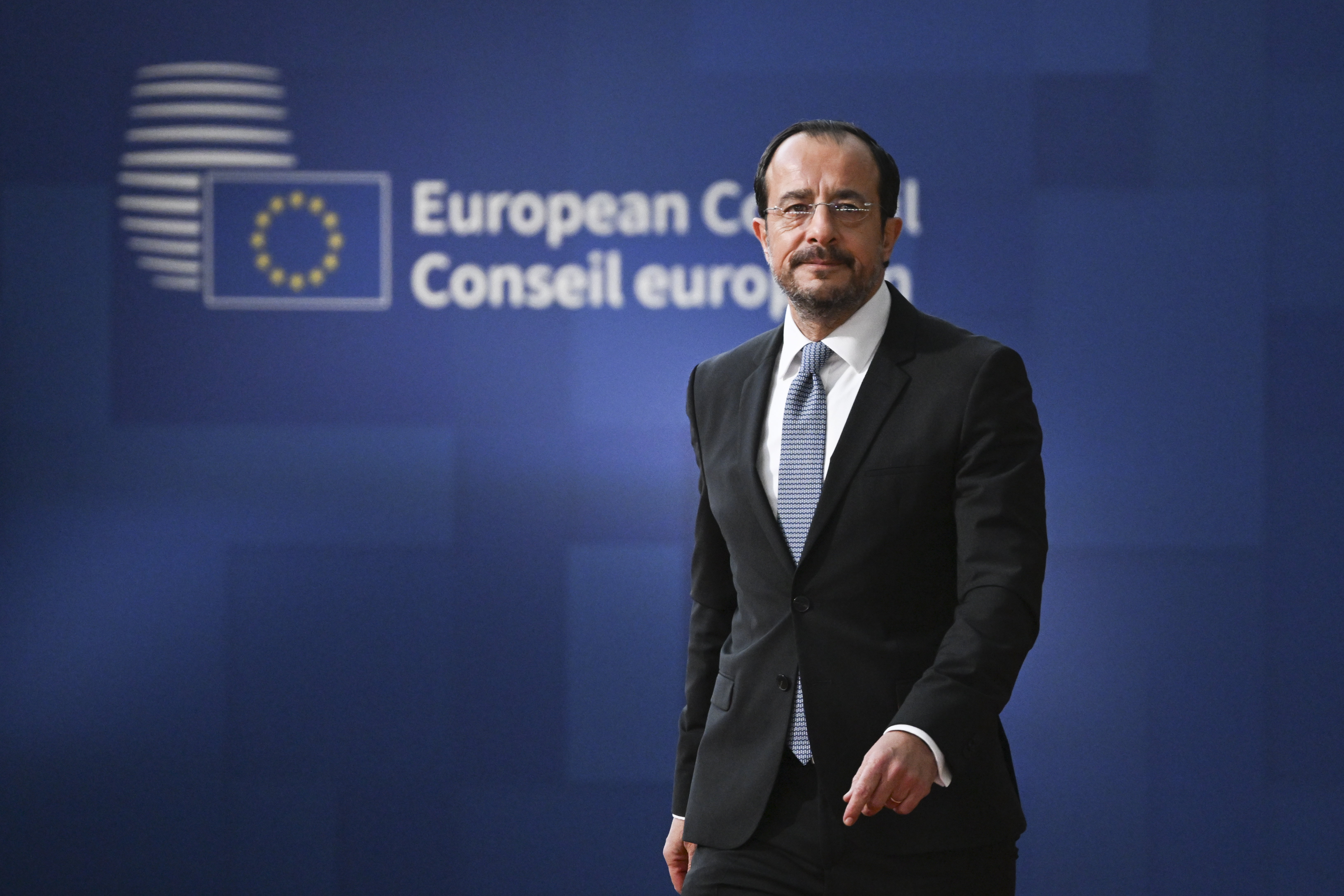
Our View: Cyprus must rethink its attitude to vocational education

Less than a fifth of students in secondary education attend vocational education and training programmes, said President Nikos Christodoulides, in an address to the opening ceremony of the ninth national competition SkillsCyprus 2026. In Cyprus, only 17.9 per cent of students are in vocational education, drastically lower than the EU average of 52.4 per cent.

The European Commission’s recommendations for each member-state noted the steady and positive course of the Cyprus economy, but also recorded the challenges faced in the fields of productivity, innovation and skills, he said. The Commission saw a need in increasing the attractiveness of vocational education and training, something that successive Cyprus governments have failed to do despite persistent labour shortages.

Cyprus has faced a big shortage of electricians, plumbers, car mechanics, construction workers, decorators and equipment technicians for years. Although these are well-paid jobs, only a small percentage of young people are interested in them; there is now also a shortage of nurses. Is it because these are considered low-status jobs and everyone wants to be a white-collar worker, even if there is less money? Or perhaps the young are no longer interested in physical work.

University education always had great value in Cyprus. In the days when there were no universities in Cyprus, parents would make many sacrifices to send their children to universities abroad, because a degree was considered a surefire way of improving themselves, materially and socially. University education was never about broadening a youth’s horizons and sharpening their intellect, but about having the means to earn more money and acquiring social status.

Now that university degrees are widely available and many of them are of dubious value, most graduates are guaranteed neither high earning power nor the social status enjoyed in the past. But still, youngsters have no interest in plumbing or electrical work. Perhaps it is because the ambition of many is to get the dream job in the public service which does not have many openings for individuals with technical skills.

In his speech, Christodoulides mentioned the operation of the Technical Gymnasium, which he described as “an innovation that is a landmark in the Cypriot educational environment.” The institution had already expanded, a fact that illustrated the gap of not having such a special school which catered for the preferences of wishes of the students. He may have read too much significance into the existence of the Technical Gymnasium, because if the institution was such a success, it would have been expanded, and we would not have lowest participation in vocational learning in the EU.

At least the government, despite the president’s positive spin, recognises there is a problem that needs to be tackled. There are no ready solutions, and it will be difficult to change the way society views manual jobs. This is why the government needs to study the issue and develop a plan to attract more youths to vocational training.

  •  

The US Army wants to stop wasting soldiers' time by cutting wait times for training and job assignments

Soldiers at the 7th Army Noncommissioned Officer Academy's basic leaders course in the Grafenwoehr Training Area, Germany, Oct. 27, 2026.

Sgt. Collin Mackall/US Army

  • The Army is working to cut delays between recruitment, training, and assignments.
  • New scheduling tools aim to fill empty training seats and get soldiers into units faster.
  • The Army also wants to consider family medical needs earlier in assignment decisions.

The US Army wants to streamline how it trains new soldiers and places them into roles, part of a larger push to cut bureaucratic delays that can leave recruits waiting months for training and create logjams down the line.

Service leaders want to cut the time soldiers spend waiting between recruitment, training, and assignments, while also ensuring specialties are consistently filled by personnel who are prepared for and interested in the jobs.

At the Association of the United States Army conference in Washington, DC, earlier this month, leaders from Army Human Resources Command discussed how they're modernizing personnel management to get soldiers trained into the jobs where they're needed faster.

The data-driven approaches are aimed at connecting what have long been separate processes to better match soldiers to specific locations and jobs based on the Army's needs and scheduling.

Part of the challenge for the service is getting "hundreds of disparate systems" to talk to each other, said Lt. Gen. Charles Lombardo, who's overseeing the effort.

The Army is tackling that problem through a broader technology overhaul touching systems spanning from personnel management to battlefield operations. The Army has described its wider human-resources overhaul as an effort to replace fragmented, paper-based processes with a unified data environment. It says that the effort is intended to improve forecasting, resource management, and real-time personnel services.

For training, Army leaders want better scheduling with an approach they're calling People Supply Chain Management.

Rather than handling enlistment, basic training, and advanced training as separate events, the service is examining how to better coordinate these processes to reduce downtime and fill empty training seats.

The Army announced the initiative last year, saying it recruits, trains, and assigns tens of thousands of people annually across more than 200 specialties. Some of the Army's most in-demand technical specialties, such as military intelligence and air defense, are top of mind because they have more specialized recruiting and training requirements. Without synchronization, bottlenecks can leave recruits waiting months for training or leave too many soldiers in particular job fields.

With this approach, if two dates are available for advanced training, the system would route soldiers graduating from basic training to the class that best fits their schedule or redirect soldiers to fill seats that open up if someone can no longer attend.

It's still early days for the program, and it remains to be seen whether the new approach can meaningfully reduce wait times, fill more training seats, and get qualified soldiers into units faster.

The service also hopes overhauls will improve assignments for families with members requiring special medical care or specific childcare by matching them with bases that have the necessary services and providers.The aim is to account for those needs before assigning soldiers to duty stations, rather than after a job match has been made.

Read the original article on Business Insider

  •  

EU Releases €4.9 Billion for Ukraine as Focus Shifts to Sustaining Military Support

The European Union has approved the mobilisation of approximately €4.9 billion under the European Peace Facility (EPF), implementing a significant part of an earlier agreement intended to resolve disagreements over military assistance to Ukraine.

The eight decisions, adopted by the Council on 26th October, allocate €4.7 billion towards partial reimbursement of military equipment already supplied by member states and €230 million towards the EU Military Assistance Mission in support of Ukraine.

Although the announcement represents an important step in restoring the operation of an established financing mechanism, most of the money does not correspond to fresh deliveries of military equipment.

That distinction is important as European governments attempt to reconcile continued support for Kyiv with growing pressure on national defence budgets and the need to replenish their own military inventories.

From political agreement to financial implementation

The decisions implement part of the €6.6 billion agreement reached by EU governments on 25th September, which ended a prolonged dispute over the allocation of European Peace Facility resources.

As EU Today reported following that agreement, the package separates reimbursements for previous deliveries from financing for new equipment and military training.

Under the original arrangement, €4.7 billion was earmarked for reimbursements, €1 billion for new joint procurement and approximately €900 million for training-related expenditure.

Monday’s decisions authorise most of the reimbursement component alongside a further allocation for training. They do not, by themselves, demonstrate that the separately planned €1 billion in new military equipment has been purchased or delivered.

The distinction reflects the unusual structure of the European Peace Facility.

Established in March 2021, the EPF operates outside the EU’s regular budget and finances security and defence assistance, including military equipment supplied by member states to partner countries.

Governments can provide weapons from their national stocks and subsequently seek partial reimbursement. This enables the EU to share some of the costs, although actual deliveries remain dependent on national decisions, industrial capacity and available equipment.

Reimbursements therefore strengthen the financial position of contributing governments without necessarily increasing Ukraine’s immediate stock of weapons.

Nevertheless, by reducing the financial burden of earlier donations, the mechanism can help governments preserve the capacity to make further contributions.

Military training becomes a longer-term commitment

The additional €230 million for the EU Military Assistance Mission also reflects the increasingly institutional character of European military support.

Established in November 2022, EUMAM Ukraine provides training for Ukrainian personnel through facilities and instructors made available by participating countries.

According to an EU statement delivered at the OSCE in October, the mission had trained approximately 97,000 Ukrainian soldiers.

The EU has agreed to extend the mission for another two years, moving military training beyond a series of short-term emergency measures.

Training programmes can be adapted to battlefield requirements, including the operation of Western equipment, command procedures, engineering and specialised military functions.

However, the usefulness of training also depends on the availability of appropriate weapons, ammunition and replacement equipment once personnel return to Ukraine.

The Council says the latest decisions bring overall support under the European Peace Facility to approximately €10.8 billion, comprising €9.9 billion associated with military assistance reimbursements and €950 million for training.

Frozen Russian assets and the defence industry

A separate financing mechanism is increasingly relevant to European support for Ukraine.

The Council reports that €3.5 billion in extraordinary revenues generated by immobilised Russian sovereign assets has already been channelled through the EPF to finance ammunition, air defence and drones.

More than €1.5 billion of the resulting procurement has been directed towards Ukraine’s own defence industry.

This creates a different relationship between European financing and Ukrainian military production.

Rather than relying exclusively on weapons taken from European stockpiles, the arrangement allows part of the support to be translated into orders for equipment manufactured inside Ukraine.

The approach may also reduce certain transport and procurement constraints, although production remains vulnerable to Russian attacks, component shortages and interruptions to electricity supplies.

The legal and political questions surrounding Russian-asset revenues remain significant. As EU Today previously examined, disputes over how European institutions approve funding measures have generated legal challenges.

The next test for European governments

At their 15–16 October summit, EU leaders welcomed the EPF agreement and continuing disbursements under the separate €90 billion Ukraine support loan covering 2026 and 2027.

The two instruments serve different purposes. The loan supports wider Ukrainian financial and defence requirements, while the EPF provides a mechanism for sharing the costs of military assistance.

For Kyiv, the central question is how rapidly European financial commitments can be converted into deliverable military capabilities.

For EU governments, the challenge is whether reimbursement mechanisms, national procurement and Ukrainian industrial production can operate together on a predictable basis.

The release of €4.9 billion resolves an important financing issue. It does not eliminate the continuing requirement for new equipment, ammunition and sustained production.

  •  

Micro1 is making a $1 billion bet on AI's latest data craze

A San Francisco Muni bus emblazoned with Micro1 advertising drives on Mission Street.

Stephen Council/BI

  • Micro1 pledged to spend $1 billion on licensing companies' data for AI developers.
  • The startup snags Slack messages, Canva files, Google Docs, and as much other data as it can get.
  • By selling company data, CEOs have a new revenue stream that popped up this year.

As AI labs go on the hunt for real-world data, Micro1 is throwing everything at getting it for them.

The startup is one in a new class of fast-moving data brokers, gobbling up companies' internal data and packaging it for the likes of OpenAI, Anthropic, and other model developers. The executives who sell their companies' data to Micro1 find themselves suddenly participating in a new sector of the economy, where terabytes of mundane workplace interactions can be worth hundreds of thousands of dollars.

Ilya Brotzky, the CEO and cofounder of the recruiting startup VanHack, told Business Insider he was shocked when he filled out a Micro1 survey about his company's data and received a "substantial" offer.

"I didn't believe it, to be honest," he said. "I felt like it was a little too good to be true."

Micro1 says it pays $100,000 to $2 million for a single midsize company's data. It recently announced plans to spend $1 billion on the project over the next year. Brotzky and the other executives Business Insider spoke to for this story wouldn't share the exact amounts their companies received.

For Micro1, the new focus on workplace data matches a broader evolution in the industry, as Business Insider has written about in The AI Data Grab, a series about how tech giants are increasingly turning to workers, users, and the physical world to get data to train AI.

First, AI companies gobbled up text from the internet and corpora of old books. Then they realized that humans grading AI responses could improve their models. And now, companies are using complex simulations, built on real-world data, to improve the tenacity and skill of their AI.

Micro1 CEO Ali Ansari.

Micro1

Gartner estimated that spending on AI data is likely to surge from less than $1 billion last year to almost $6.5 billion in 2027. Micro1's chief revenue officer, William Almeida, told Business Insider in September that his company has been explaining to prospective customers why their data is suddenly so valuable for those simulations.

"Every time I talk to companies, I tell them, 'Hey, I see this as a booming business,'" Almeida said.

Slack DMs, Google Docs, Canva files: Micro1 wants all it can get

Micro1 has three ways of working with AI model developers.

First, it can take a company's raw data, transform it to protect privacy, and license it to a lab. In addition, Micro1 provides an in-progress AI agent to companies and gets feedback on how it works. The third route is the simulation: Micro1 takes a company's data up to a certain timestamp, freezes it, and then provides that "environment" to a model developer trying to teach its AI how to work from existing context.

Micro1 pays more for larger, more complex datasets, as well as for data that represents a unique type of work or knowledge. It usually wants to license a company's entire data corpus, so that an AI model can replicate what it would be like to be a human employee.

"The connection, the diversity, the traceability of all of these data points, they matter a lot when you think about model training," Almeida said.

Brotzky also received an offer from AI data startup Mercor to buy his company's data, though he opted for Micro1. Once Brotzky dug into Micro1's privacy process, he said he felt comfortable sharing all the data they requested. That included VanHack's Google suite, Confluence data, Slack messages, and customer relationship management software.

Grant Gooley, the CEO of the marketing agency MyPortal Marketing, also views his deal with Micro1 as an innovation. He has sold internal design files from Figma and Canva, as well as checklists from Monday.com.

"When we were building these processes years ago, I didn't think that we would be using it to support AI learning," Gooley said. "But doing that, it's very fulfilling."

CEOs pitch the deals to their workers

Micro1 and its rivals are full steam ahead. Still, there are open questions. Former and current employees aren't likely to get any compensation from — or a voice in — their work becoming AI fodder. Ifeoma Ajunwa, a law professor at Emory University, previously told Business Insider that data sales are an "ethically gray area."

When pitching to potential customers, Almeida tells them this business is in the early days.

"If you wait too much, you won't get the premium that the first companies are getting," he said.

VanHack's team got a confidence boost from the Micro1 deal, Brotzky said, because of the additional revenue stream it represents

Gooley said he's kept MyPortal Marketing's employees in the loop about the deal with Micro1 and hasn't heard any complaints.

"I told my team that this is something that you're going to tell your grandchildren about one day, because we are literally supporting the future growth of marketing agencies," Gooley said.

Have a tip? Contact this reporter via email at scouncil@businessinsider.com, or over text, Signal, Telegram, or WhatsApp at 415-757-8198. Use a personal email address, a non-work WiFi network, and a non-work device; here's our guide to sharing information securely.

Read the original article on Business Insider
  •  

European Parliament Calls for €47.4 Billion for Erasmus+ as Student Living Costs Rise

The European Parliament voted on Thursday, 22nd October, to support a €47.4 billion budget for the Erasmus+ programme between 2028 and 2034, demanding substantially more funding than proposed by the European Commission.

The parliamentary position was approved by 454 votes to 34, with 93 abstentions, following negotiations over the future of the EU’s principal education, training and student mobility programme.

MEPs are seeking approximately €6.56 billion more than the Commission’s proposed €40.83 billion allocation, arguing that existing financial support does not adequately reflect rising living costs and the expense of studying abroad.

The decision establishes Parliament’s negotiating position but does not represent final approval of the funding. The programme remains subject to negotiations with national governments and agreement on the EU’s next seven-year budget.

Rising living costs affect student mobility

Erasmus+ allows students, apprentices, teachers and other participants to study, train or gain professional experience in another participating country.

Although widely associated with university exchanges, the programme also supports vocational education, schools, adult learning, youth organisations and sporting activities.

Participation often involves substantial personal expenditure, particularly for accommodation, transport and everyday living expenses.

These costs vary considerably between European destinations, creating financial difficulties for students whose Erasmus grants cover only part of their expenses.

The European Parliament is consequently calling for support mechanisms that account for differences in housing and living costs between host countries, regions and cities.

The proposal is intended to make participation more accessible to people who cannot rely on additional financial assistance from their families.

The European Parliament’s research service has identified unequal access, financial limitations and administrative complexity among the challenges facing the programme.

The proposed legislation would also establish a target under which at least 20 per cent of participants in mobility activities would be people facing fewer educational or economic opportunities.

Parliament seeks larger education allocation

The parliamentary proposal provides for approximately €47.39 billion in current prices over seven years.

The Commission originally proposed approximately €40.83 billion, combining funding for Erasmus+ with activities currently administered through the European Solidarity Corps.

According to the report prepared by Parliament’s Committee on Culture and Education, the revised programme would include more explicit financial allocations for different activities.

Education and training would account for approximately 74.6 per cent of the proposed financial envelope, while youth and volunteering would receive around 15 per cent. Sport would receive approximately 4.1 per cent.

The proposed allocation structure is intended to provide greater certainty for organisations planning longer-term educational projects and cross-border partnerships.

Polish MEP Bogdan Andrzej Zdrojewski, of the European People’s Party, is Parliament’s rapporteur on the legislation. His report calls for greater transparency over expenditure and more predictable funding arrangements.

The programme would continue supporting European university alliances, international educational cooperation and initiatives intended to improve professional skills.

Volunteering and vocational training

One proposed change concerns the integration of the European Solidarity Corps into the wider Erasmus+ framework.

The Solidarity Corps currently offers young people opportunities to participate in volunteering and community activities, including projects addressing social and humanitarian needs.

The Commission has proposed bringing these activities within the new programme in an attempt to simplify administration.

However, parliamentarians want safeguards to ensure that volunteering remains identifiable and accessible within the broader funding structure.

The parliamentary position also seeks to extend mobility opportunities across vocational training, adult education and sport.

These activities would allow a wider range of participants to benefit from international placements, including people outside conventional university education.

Additional attention is being given to the financial circumstances of participants and the administrative requirements faced by smaller educational organisations.

Dispute over the EU’s next budget

The Erasmus+ negotiations are taking place against the background of a wider dispute over the European Union’s 2028–2034 financial framework.

Member states are debating the overall size of the budget and the competing demands of agricultural policy, regional development, defence, research and education.

As EU Today recently examined, the negotiations have exposed disagreements over whether the EU should expand its financial commitments or constrain expenditure during a period of pressure on national finances.

Parliament’s Erasmus+ proposal will therefore depend not only on agreement over educational priorities but also on the final distribution of resources across the wider EU budget.

Some governments may support broader participation while resisting the full increase requested by MEPs.

What happens next?

Negotiations must establish the programme’s final budget, eligibility rules and the arrangements governing grants after 2027.

The Council has already developed a negotiating position on aspects of the programme, although financial questions remain connected to the broader budget settlement.

Erasmus+ will mark its 40th anniversary in 2027, shortly before the new framework is scheduled to begin.

More than 17 million people have participated in the programme and its related activities since its establishment.

The outcome of the current negotiations will determine whether the next generation of participants receives more financial support and whether the programme can expand without increasing the proportion of costs borne by students and their families.

  •  

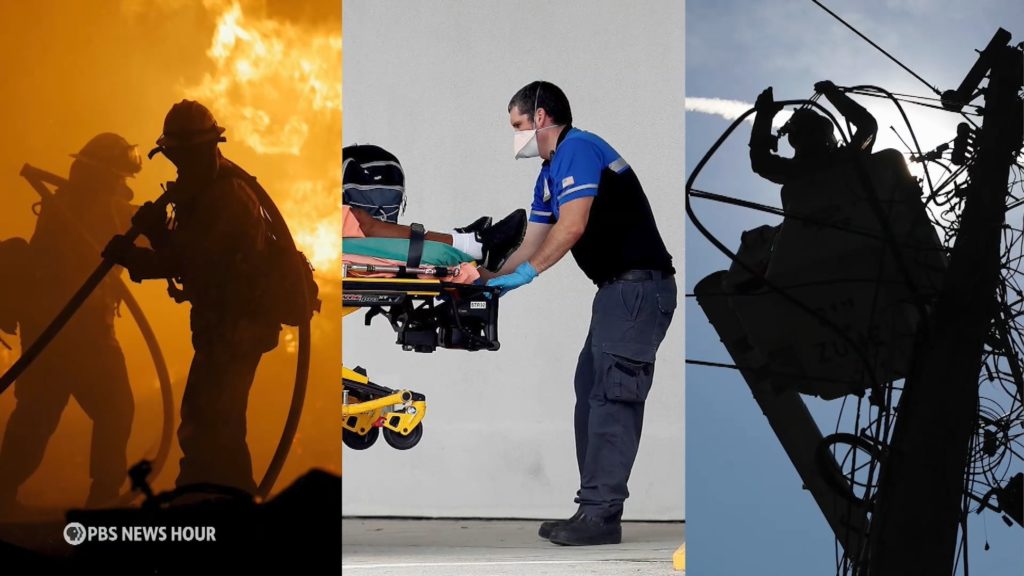
Workforce Pell Grants give students new options for job training

For decades, federal Pell Grants have helped millions of students from low- and middle-income families afford college. Now, for the first time, that financial aid will also be available for short-term vocational training programs designed to help students enter the workforce. Stephanie Sy reports on the rollout of Workforce Pell for our series, Rethinking College.

  •  

Banished Celebrity Traitors Star Accuses Show of “Racial Bias”

Myha’la Herrold, the Celebrity Traitors star banished on the show last week, has accused the reality TV programme of having "unconscious racial and cultural bias" in its format.

The post Banished Celebrity Traitors Star Accuses Show of “Racial Bias” appeared first on The Daily Sceptic.

  •  
❌