Login

Listen: Why is the EU introducing a new €2 charge on parcels?
Production: By Europod, in co-production with Sphera Network.
EUobserver is proud to have an editorial partnership with Europod to co-publish the podcast series “Briefed” hosted by Léa Marchal. The podcast is available on all major platforms.
Find the full transcript below:
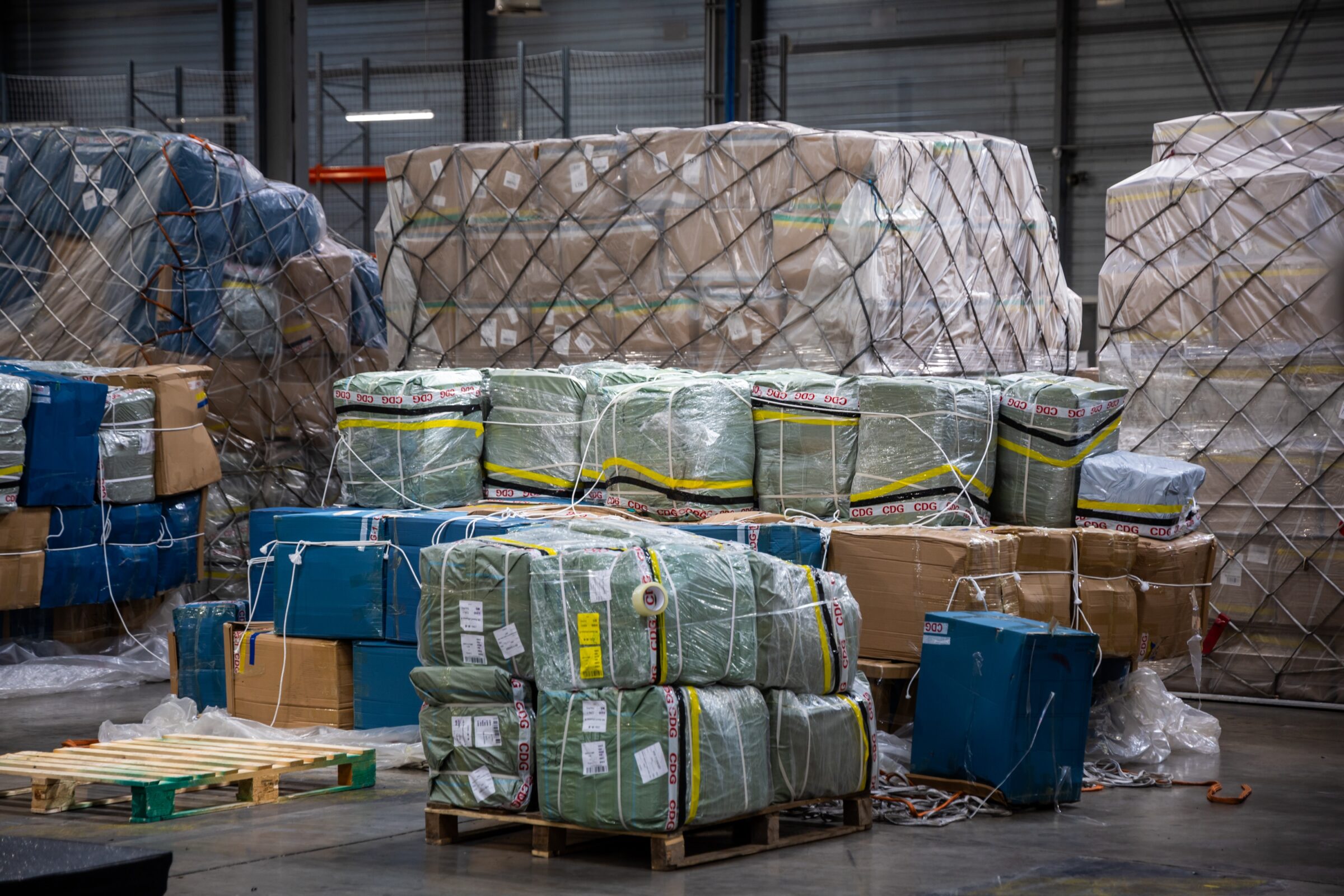
From this Sunday, the EU is imposing a new €2 charge on parcels coming from outside the bloc. It comes on top of the €3 charge on small parcels announced in June.
So why is the EU doing this, and what difference will it make? Let’s start with what’s changing.
From this Sunday, there will be a €2 tax on each product category contained in a parcel coming from outside the EU. This ads up to the €3 tax on small parcels introduced in June this year. So for a parcel of less than €150, you can already count a €5 charge, and that’s if your parcel contains just one category of item.
Say you order four different garments from the Chinese platform Shein. The total charge comes to €20.
Officially, it’s the sellers who are supposed to pay, not consumers. But in practice, they pass the cost on to customers one way or another.
So why this second charge? The €3 charge adopted in June was meant to tackle the flood of small parcels coming from companies like Temu and Shein.
Parcels of very low value, often just a few euros. And that’s not an exaggeration. According to Kristian Vanderwaeren, Belgium’s head of customs, the average value of a parcel before the charge was around €5. And that’s an average, so imagine the number of parcels worth less than €5 that literally come from the other side of the world.
Until now, parcels worth less than €150 were exempt from customs duties. That was a big hole in customs revenue. And at the same time, customs officers had more and more parcels to process. Hence the €3 levy.
Now the new charge is different. It applies to all parcels, not just the smallest ones. Its goal is to raise revenue to cover the cost of checks. Because if the EU wants to fight fraud and make sure products on the market are safe, customs controls have to increase. And that takes time, and therefore money.
We don’t know yet exactly how much the new tax will bring in revenues. What we know, even if the situation is not comparable, is what the €3 tax is starting to bring.
Between June and September, the €3 charge brought in €364mln for Belgian customs. In just three months.
Belgium is a major entry point for parcels bound for the EU, through the port of Antwerp and Liège airport. So we cannot duplicate that figure for other EU countries.
Still, over a full year, the two charges combined, on top of standard customs duties, should raise a significant amount. We can therefore imagine that countries outside the EU are not happy, especially China.
Beijing describes the measure as protectionist. It also argues that the cost will largely be passed on to European consumers, which means, in its view, that the EU is shooting itself in the foot.
But that is, to some extent, exactly what Europeans are hoping for. If Chinese products become more expensive, they become less attractive.
Business groups agree. Comeos, the Belgian federation for trade and services, welcomed the charge as a response to unfair competition.
Think about an everyday product worth less than €100. There is usually a big price gap between the Chinese version and the one made in Europe. When that gap is somewhere between €5 and €20, the charge can tip the balance. It may push you to buy local, or not to buy at all. In both case, this means less money getting out of the EU.
And there are already signs it’s working. Since the €3 charge came in in June, the volume of small parcels arriving at Liège airport has dropped by 60 percent.
The European consumer organisation BEUC has also welcomed the move, saying more border controls mean safer products.
Something that is not immediately visible for citizens, but which has its importance.