Der Staatsbesuch von Xi Jingping in den USA war, von einem gewissen medialen Spott über Trumps auffällige Unterwürfigkeit gegenüber dem Gast aus China abgesehen, sehr unspektakulär, obwohl Trump und Xi eine lange Liste wichtiger Themen zu besprechen hatten. Da wären die Wirtschaftsbeziehungen und der Handelskrieg zwischen den Ländern, die Frage der sinkenden Anteile von US-Staatspapieren […]
There was a time when moderation was a virtue and the middle ground, wisdom. Hyperbole was no more than a literary or rhetorical device. But not anymore. We live at the extremes. Raising everything to its highest possible level is the zeitgeist fate has handed us, and it comes with a suffix that colonizes the internet: maxxing. A highly versatile suffix: placed after the right word it means that, whatever you do, you are giving it your all.
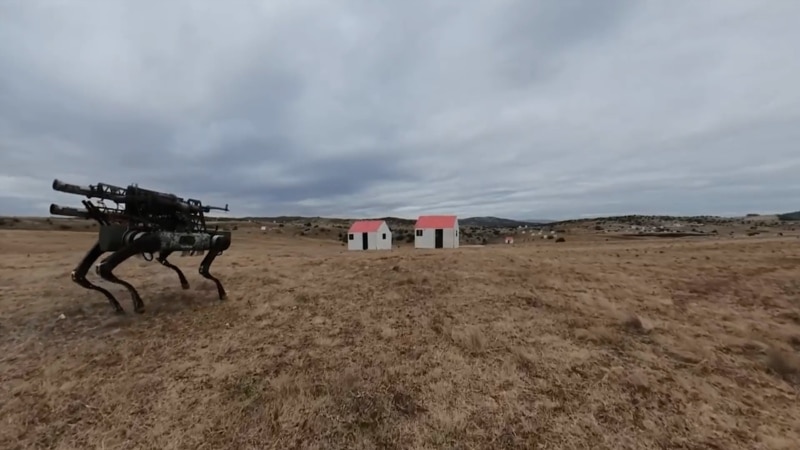
Armed with rockets and storming target buildings, Chinese "robot dogs" have made their debut in Serbian military drills, signaling the expansion of defense and industrial ties between Belgrade and Beijing right on Europe’s doorstep.
US authorities designated the A7 financial network as a "significant transnational criminal organization," the latest in a series of steps by Western authorities to try and choke the sprawling Kremlin-backed sanctions-evading scheme.
TOKYO – China gave global investors one of 2026’s biggest AI thrills. Yet the country that helped ignite excitement about artificial intelligence is home to one of the worst-performing major stock markets. While AI fever has propelled Seoul, Taipei and Tokyo higher, Chinese shares are stuck in reverse.
So what gives? Several forces, actually. Weak household demand, for one. Consumer spending continues to disappoint, weighing on the earnings potential of mainland internet companies, automakers, and retailers.
The reconstructed face of a man who lived over 8,000 years ago was unveiled yesterday in Zhengzhou, the administrative center of Henan Province in central China, shedding light on the region’s prehistoric inhabitants. The sculpture was created based on human remains discovered during excavations at the Jiahu archaeological site in Henan. The reconstruction combined physical […]
The artificial intelligence (AI) race between the United States and China has accelerated in model protection, supply chains and talent controls, even as the two nations’ leaders agreed last week to open a new dialogue on AI safety. A string of moves announced or uncovered this week shows that both sides are now guarding their […]
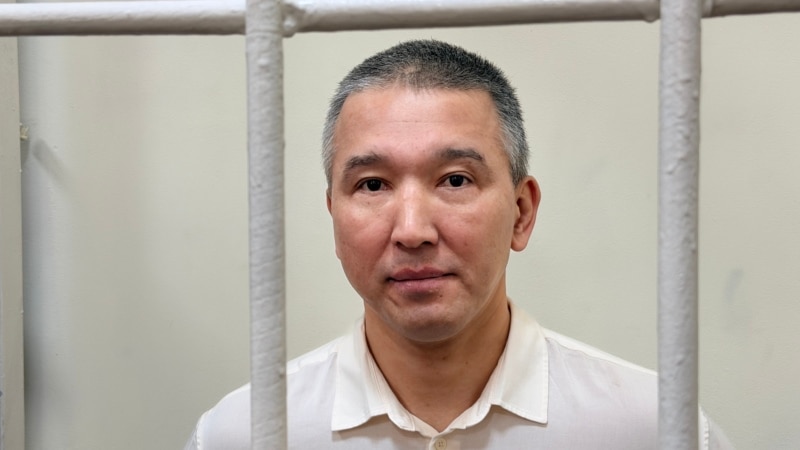
The Lenin District Court in Bishkek found activist and politician Mavlyan Askarbekov guilty and sentenced to two years in prison on offenses related to a law on incitement of racial, ethnic, national, religious, or interregional hatred, a verdict he called "absurd."
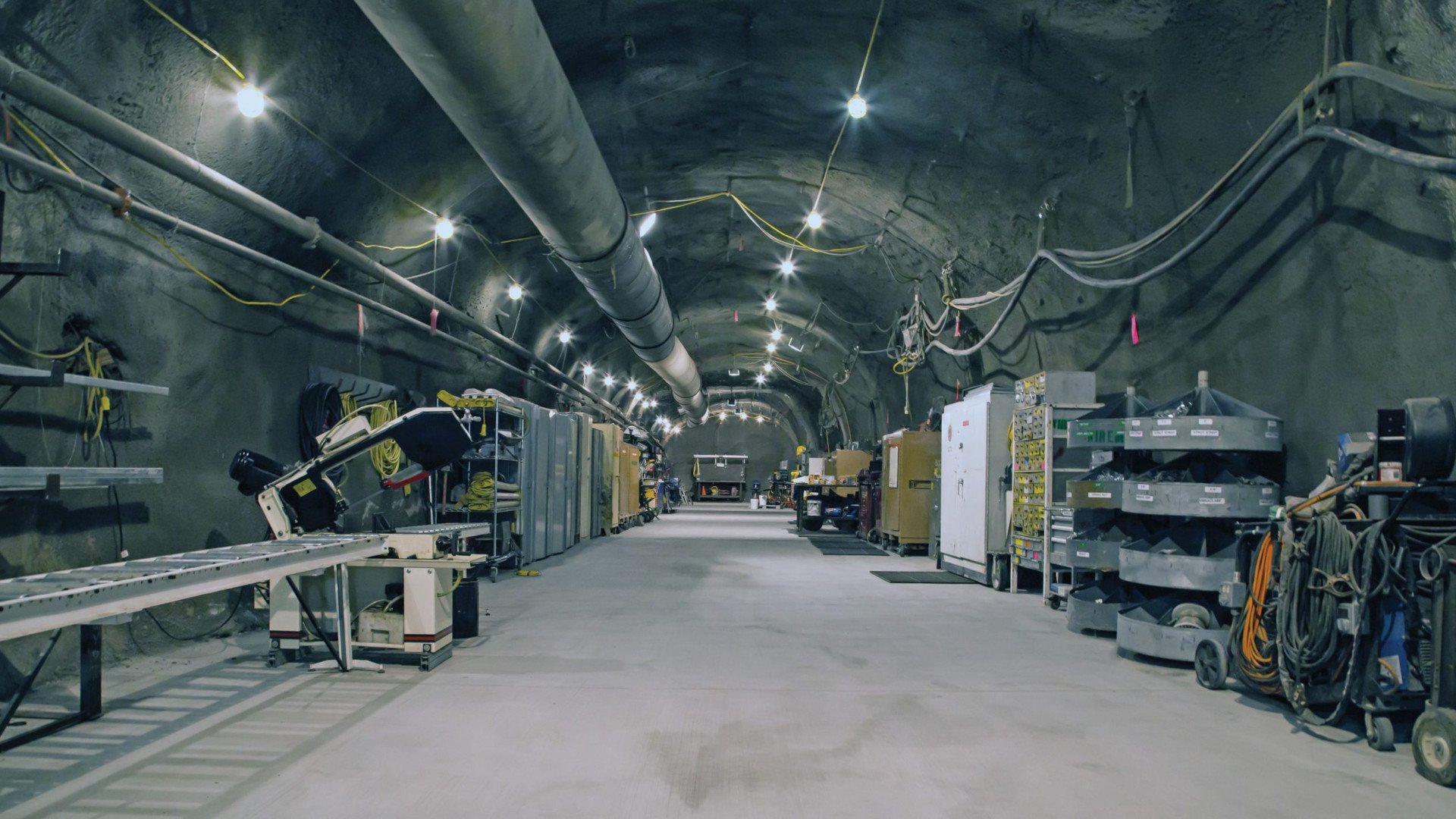
The U.S. government set off conventional explosives inside a tunnel deep in the Nevada desert this week in a test designed to replicate a so-called “decoupled” nuclear detonation. Data collected is now being used to help improve methods for detecting this kind of nuclear testing. Just earlier this year, American authorities accused China of using decoupling to conceal new nuclear tests despite the country’s stated moratorium on such activities.
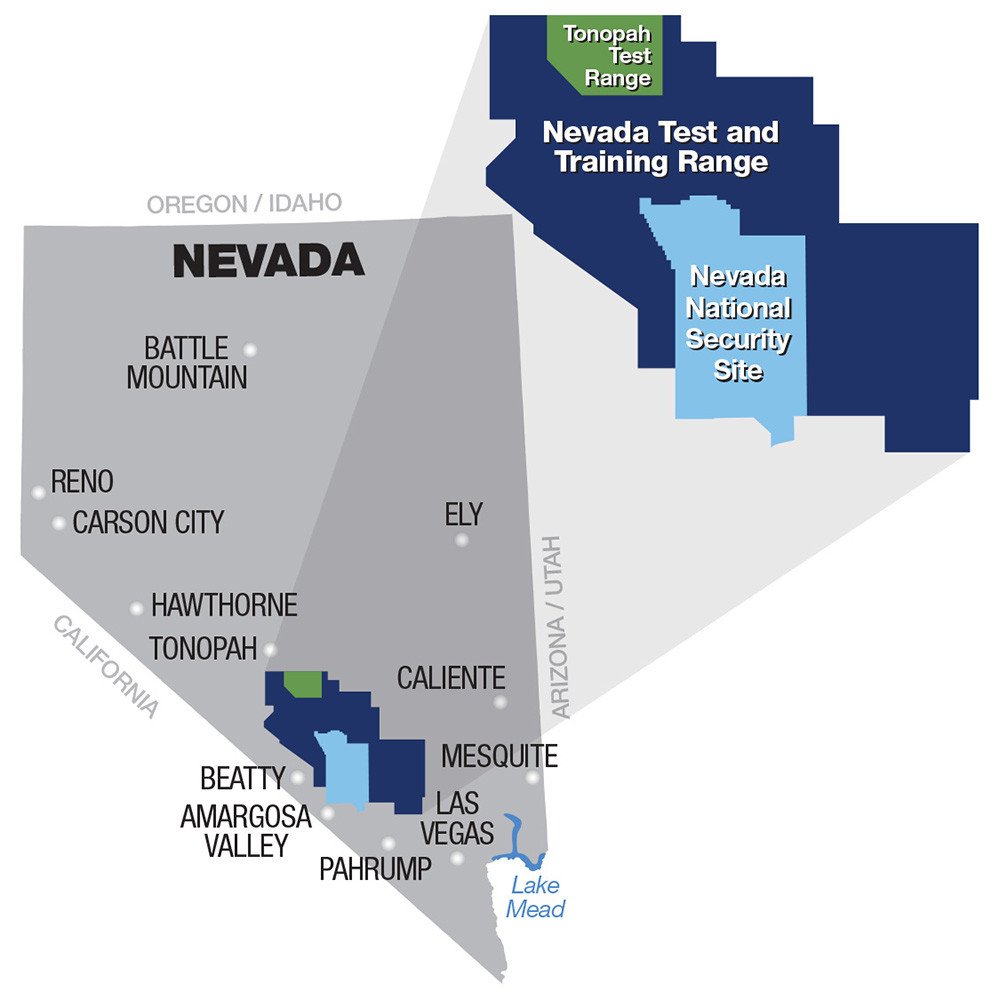
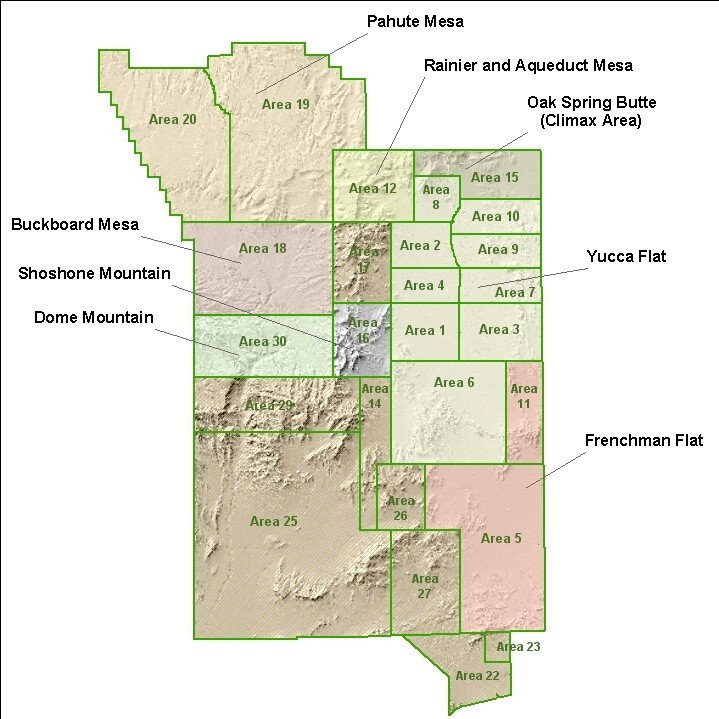
The test, which involved the use of chemical high-explosives and radiotracers, was conducted yesterday inside P Tunnel in Area 12 of the Nevada National Security Site (NNSA), according to a press release from the National Nuclear Security Administration (NNSA). The NNSS, which is situated within the boundaries of the U.S. Air Force’s Nevada Test and Training Range (NTTR), is used for a wide variety of testing purposes today. An agency under the Department of Energy, NNSA’s main jobs are to oversee the development and production of nuclear weapons, as well as manage America’s nuclear deterrent stockpile.
A map giving the general sense of the location of the NNSS with the NTTR. Center for Radiological Nuclear TrainingAnother map showing the specific testing areas within the NNSS. Area 12 is at the northern end of the complex. United States Geological Survey
“This experiment is especially focused on further enhancing the U.S. capabilities to detect a ‘decoupled’ explosion,” per NNSA’s release. “Data collected from the experiment will be used to validate scientific models and refine algorithms that are critical to U.S. nuclear explosion detection efforts.”
“Just as a stealth aircraft looks smaller on radar, decoupling can greatly muffle the signals detected by nuclear detection sensors, making a large explosion appear smaller,” the release explains. “In a conventional, or ‘coupled,’ underground nuclear test, a device is placed deep in a hole in close contact with the rock, allowing much of the explosion’s shockwave to reach sensors. In a decoupled test, by contrast, the device is detonated inside a large underground chamber, substantially reducing the explosion’s seismic signature.”
“In this experiment, researchers gathered measurements using a broad suite of advanced sensors, including accelerometers, seismometers, infrasound sensors, electromagnetic sensors, chemical and radiotracer samplers, and meteorological sensors,” it adds. ”Together, these measurements will improve scientists’ understanding of the signatures produced by underground explosions and strengthen the United States’ ability to detect and characterize nuclear explosive events.”
The U.S. already maintains a U.S. Atomic Energy Detection Systems (USAEDS) network, which is overseen by the U.S. Air Force Technical Applications Center (AFTAC). USAEDS is made up of more than 3,600 sensors positioned around the world. USAEDS is also tied in with the International Monitoring System (IMS), which is managed by the organization responsible for overseeing the Comprehensive Nuclear-Test-Ban Treaty (CTBT). AFTAC also supports the mission to monitor for potential nuclear testing globally using a fleet of specially configured WC-135R Constant Phoenix aircraft. In addition, those planes are used to help keep watch for unusual spikes in atmospheric radiation that could point to nuclear or radiological accidents or other incidents leading to the spread of potentially dangerous radioactive material.
With regard to the USAEDS network specifically, “once a disturbance is detected underground, underwater, in the atmosphere or in space, the event is analyzed for nuclear identification, and the findings are reported to command authorities,” according to AFTAC’s website.
As mentioned, the U.S. government has accused its Chinese counterparts of using decoupling to conceal new nuclear testing, and NNSA’s press release draws explicit attention to these allegations. At the annual Conference on Disarmament in Geneva, Switzerland, in February, Thomas DiNanno, Under Secretary of State for Arms Control and International Security, said that China had conducted at least one such test at Lop Nur on June 22, 2020. The Comprehensive Nuclear-Test-Ban Treaty Organization (CTBTO) subsequently said the IMS had not detected an event matching that description at that location on that date. For its part, the Chinese government has denied the accusation.
The social media posts below include satellite imagery showing activity at Lop Nur that could point to new nuclear testing activities in recent years.
参考 Satellite Imagery Analysis of China’s Alleged 2020 Nuclear Test at Lop Nurhttps://t.co/aafvU5Szh7 CSIS 20260213 ROLES SAT ANALYSIS No.7 中国に核実験実施の動き ー Lop Nur核実験場の画像分析 ーhttps://t.co/n66yYk0hLg ROLES 20250522
While China is a signatory to the CTBT, the country has never ratified it. The Chinese government last acknowledged a critical-level nuclear test in 1996, after which a self-imposed moratorium was put in place, at least publicly. As an aside, the United States has also signed, but never ratified, the CTBT, and has a similar self-imposed moratorium on nuclear testing since 1992. It is worth noting that the treaty does not ban so-called sub-critical testing, which involves fissile material, but does not result in a full-fledged nuclear reaction.
Last week, The Wall Street Journal reported that the Trump administration has been holding new talks with the Chinese government regarding various aspects of the country’s massively and rapidly expanding nuclear arsenal, including the testing allegations. That story immediately preceded a state visit by China’s President Xi Jinping to Washington, D.C., to meet with Trump.
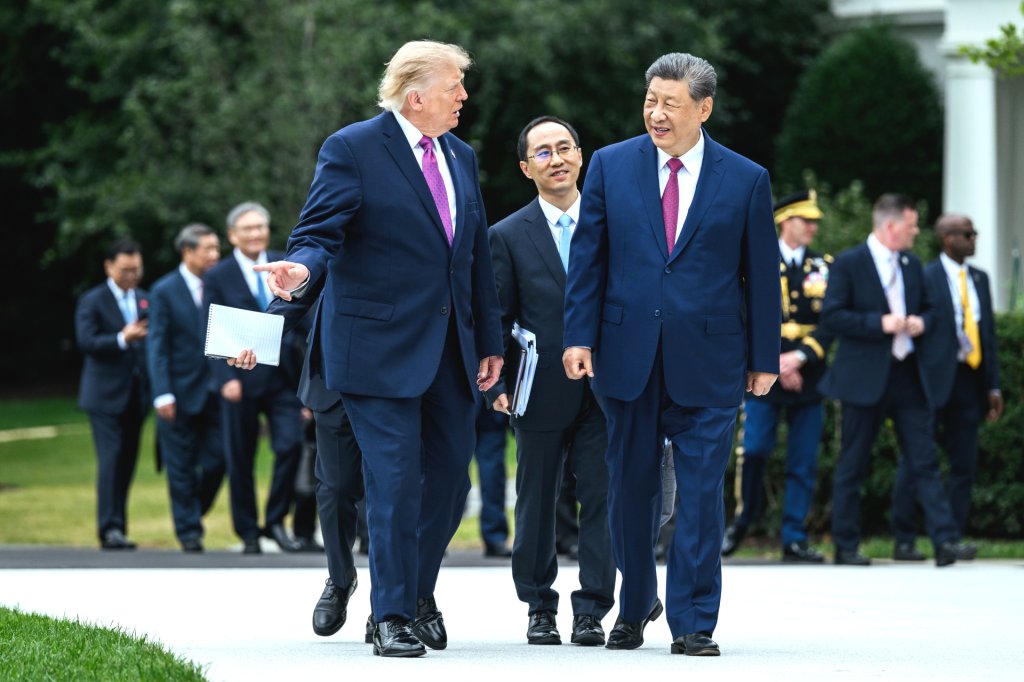
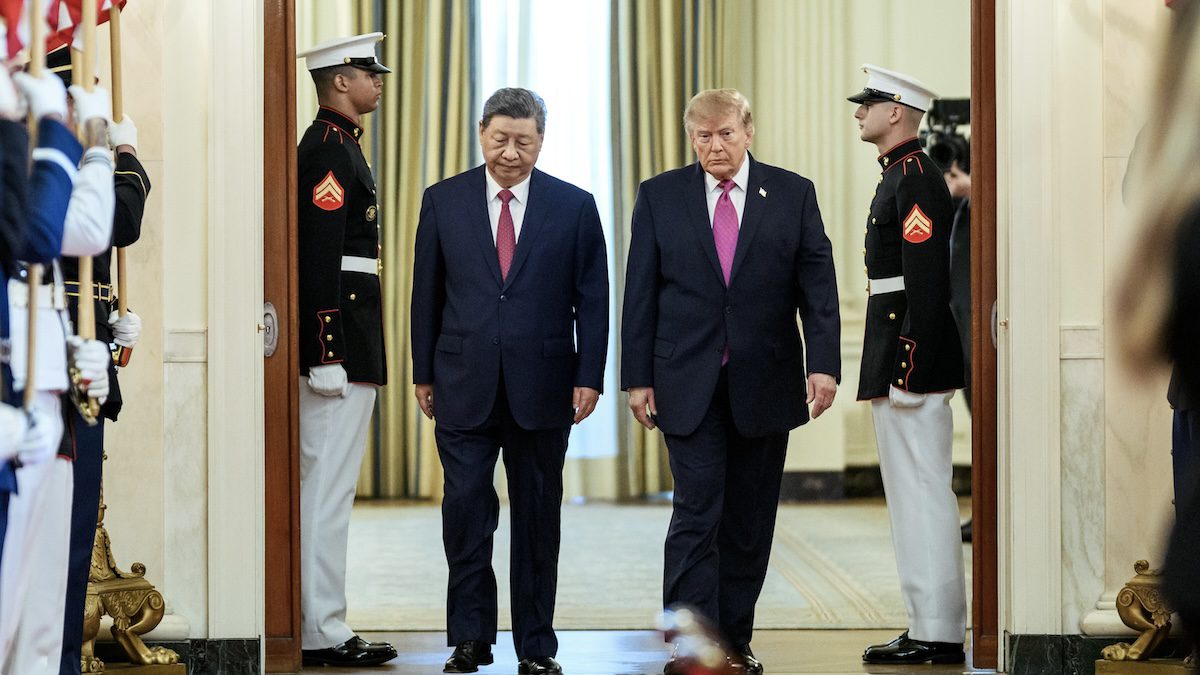
President Donald Trump (at left) and President Xi Jinping (at right) walk together at the White House last week. White House/Joyce N. Boghosian
“The discussions between American and Chinese officials have centered on measures to reduce nuclear risks and haven’t been aimed at negotiating a formal arms-control pact, an effort Beijing has sharply rebuffed in the past,” according to that report. “The Trump administration has begun to highlight the possibility of implementing new verification measures.”
“Independent experts say seismic instruments might be placed on or near test sites,” The Journal‘s story also noted. “Another possibility, which was floated during the Biden administration, is to install radiation-detection equipment at test sites.”
NNSA’s announcement about the test at the Nevada National Security Site is certainly an example of the development underway already of new means of verification that could be deployed at sites around the world.
The Russian government has said it is ready to conduct new nuclear tests if the United States pursues this course of action. The last official nuclear test in Russia came in 1990 right before the fall of the Soviet Union.
“It takes nuclear expertise to detect nuclear activities and experiments like these [to] ensure America remains unmatched in detection,” NNSA Administrator Brandon Williams said in a statement yesterday in light of the test in Nevada. “The Trump Administration has made it clear that the United States will lead from a position of strength. You cannot evade American innovation. With this experiment, we are sending a clear message: under this administration, America will never be outmatched.”
Xi’s recent visit to Washington was merely a tactical step rather than a genuine reconciliation. Beneath the façade of conspicuously displayed friendliness lies a persistent antagonism across various domains—an antagonism that both sides have learned to “manage,” including in ways that serve their respective domestic political objectives. Both fully aware that the perception of China […]
Space is becoming an increasingly contested domain as major powers expand military capabilities, satellite infrastructure, and counterspace systems, while the U.S. Golden Dome initiative reshapes strategic stability and raises new questions about the future of space governance. On 14th September 2026, US Secretary of the Air Force Troy Meink confirmed that the US has “on-orbit” […]
I have just finished listening to an interview with international journalist Pepe Escobar, that aired today, about two hours before I am publishing this.
If you want to detox yourself from the U.S. corporate media propaganda, and get the “other side” of the current situation in the Iran War, investing time to watch this video (55-minutes long) is well worth it.
There were apparently attempts to knock Escobar offline during the interview, suggesting that there are forces who do not want people to hear what he has to say. (I have this video saved, so if it disappears from YouTube let me know, and I will restore it on another platform.)
Escobar states that Iran gained a lot of friends and a lot of support in New York last week at the UN General Assembly meeting. Escobar also gives information about China President Xi’s meeting with President Trump last week that was generally not covered in the U.S. corporate media.
He claims that Xi pressed Trump to return to the MOU (Memorandum of Understanding) from last June that was negotiated by Pakistan, and that the U.S. originally signed.
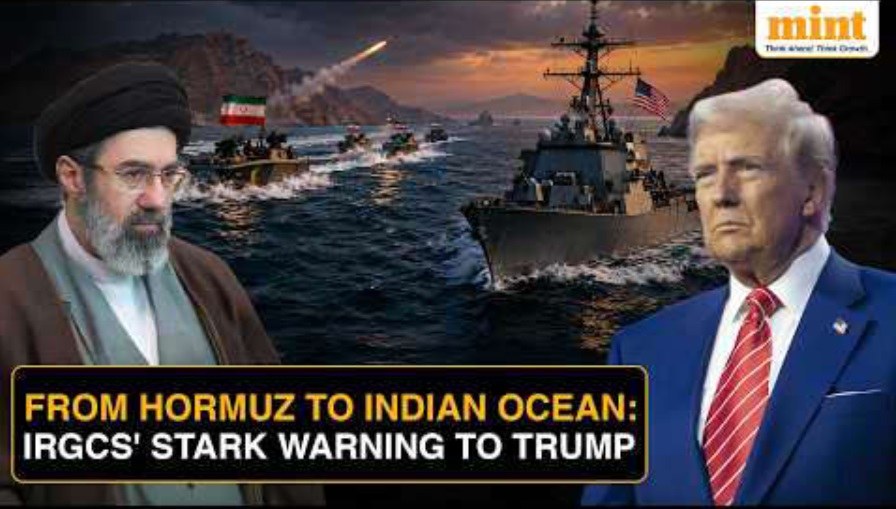
But over this past weekend, Trump made it known publicly that he is rejecting any offer by Iran to end the war, and Escobar states that this does not sit well with China at all, and that China will now become much more involved in working with and helping Iran in the current war.
He states that Iran is now going on the offensive, and he expects things to start happening this week.
Escobar does a good job of trying to educate his listeners as to what the mindset is in Shiite Islam, and that they have no fear of dying for their faith.
The Epstein Syndicate’s real agenda, according to Escobar, is to nuke both sides in the Middle East, both Persians and Arabs alike, and take over the Strait of Hormuz that Trump plans to name after himself.
Pepe Escobar:
There is no solution (to ending this war through negotiation). It is a do or die war.
Americans have been deceived into thinking that this is a religious war that was started with Iran to combat the dangers of Islam.
But the truth is that this is a religious war started by Trump and his Zionist friends who surround him, including Evangelical Christian Zionists, and he is forcing everyone in the U.S. to accept Zionist Christian beliefs, including the military, to fight this war based on Zionist religious views. See:
Escobar also addresses Russia, where he recently visited, and states that Russia is preparing to go to war against Europe.
He also mentions that BRICs has been slow to implement changes to bypass the Western financial system, but that there is the feeling that this will change in 2027, when the annual BRICs meeting will be held in China, and will be dominated by China’s agenda.
The Trump-Xi summit did not mark a US-China rapprochement, but it demonstrates that sustained diplomacy and strategic guardrails are essential to prevent intensifying competition from becoming direct conflict. The recent summit between Chinese President Xi Jinping and US President Donald Trump in Washington has demonstrated a significant paradox in contemporary international politics: the two superpowers […]
Torn between its Russian, Chinese, Iranian and North Korean issues, American foreign policy has nonetheless revealed, over the decades, a constant hierarchy: the Sino-American rivalry remains the major geopolitical issue that structures Washington’s Asian policy. With one month to go before the midterm elections, the American election campaign, despite being structured by deep partisan divides, […]
China’s President Xi Jinping concluded his three-day state visit to the US on Friday, September 25, with hopes of enhanced cooperation and partnership between the world’s two largest economies.
Xi arrived in the US on Wednesday and received a large-scale welcome from President Donald Trump. Though this was their third in-person meeting it was Xi’s first state visit to the US in over a decade.
On Thursday, the leaders had a long in-person conversation in the White House and finished the day with a state dinner with 130 guests, including tech executives. Though the US is yet to release its version of the official proceedings, reports indicate they discussed a range of outstanding issues such as the dispute over trade and tariffs, cooperation in Artificial Intelligence, the issue of Taiwan, and the US-Israeli war on Iran.
During the meeting with Trump, Xi called for strategic stability in the China-US relationship which will benefit both countries and the people around the world, Xinhuareported.
“China and the US should be partners, not rivals,” Xi said.
Xi’s statement comes at a time when the two countries are negotiating a longer trade deal after briefly facing each other in a tariff war last year. Both countries agreed to extend their temporary trade truce which halted the tariff war till January to give their negotiators more time.
The so-called Busan Trade Truce was set to expire in November this year.
Xi hoped that “both sides would stay committed to the principles of mutual benefit and win-win cooperation and promote the sustained, stable and sound development of China-US economic and trade relations.”
Technology and AI
Successive administrations in the US have characterized China’s advancements in technology and other economic sectors as a threat to American interests and have tried to curb them by restricting its access to technology.
In his attempt to address such apprehensions, Xi proposed that “both sides work towards a relationship featuring cooperation as the mainstay, moderate competition, manageable differences, and the promise of peace.”
Talking about the competition in the development of Artificial Intelligence (AI), Xi offered increased coordination and cooperation between the countries as a way of mutual benefit.
While emphasizing that “two sides should maintain human control over AI technologies, uphold people-centered approach and the principle of using AI for good” he proposed greater exchange of information to “prevent any misuse and abuse of AI.”
Xi also expressed hope that Chinese companies “are treated fairly in the US” while inviting more US companies to invest in China. “Working together, we can lengthen the list of cooperation and shorten the list of issues” he underlined.
The US has sanctioned or put a large number of Chinese companies, including its AI firms on various watch lists in recent years, after accusing them of working with the Chinese armed forces or being involved in the so-called technology theft.
Notably, however, major US tech and finance executives such as Jensen Huang of Nvidia, Mark Zuckerberg of Meta, Eric Yuan of Zoom, Kelly Ortberg of Boeing, Larry Fink of Blackrock, Sam Altman of OpenAI, Satya Nadella of Microsoft, Sundar Pichai of Google, Jeff Bezos of Amazon, and Elon Musk of SpaceX and Tesla, were present at the state dinner for Xi’s visit hosted at the White House on Thursday, September 24, though no details of cooperation between US and Chinese tech firms have emerged.
Taiwan
Reiterating China’s resolve to “safeguard national reunification and territorial integrity,” Xi expressed hope that the US will “adhere to the correct position on opposing ‘Taiwan independence’ and handle the Taiwan question with caution.”
China has repeatedly accused the US of promoting the separatist cause in Taiwan, despite officially adhering to “one China policy.” The US under Trump has sold or agreed to sell billions of dollars’ worth of weapons to Taiwan in complete disregard of China’s objections.
China has also accused the US and its allies in the region of promoting an arms race by deploying advanced weapon systems close to its borders.
Xi said if the US follows the correct position on Taiwan it “will enable both the countries to lay a solid foundation for their strategic cooperation and the development of their bilateral relationship.”
US-Israeli war on Iran
China has refused to intervene or get involved in the US-Israeli war on Iran, despite Trump’s repeated calls for them to do so. China has maintained the war was unnecessary and repeatedly warned against its prolongation. It has supported the interim peace deal signed in June under international mediation.
Xi reiterated this position during his visit to the US, expressing hope that both Iran and the US would soon return to the Memorandum of Understanding (MoU) and end the war.
Xi claimed that “China-US cooperation may not solve every problem in the world, but without it, it would be hard to solve many of the world’s problems” and proposed more dialogue and “mechanisms of crisis communication and prevention” between their armed forces.
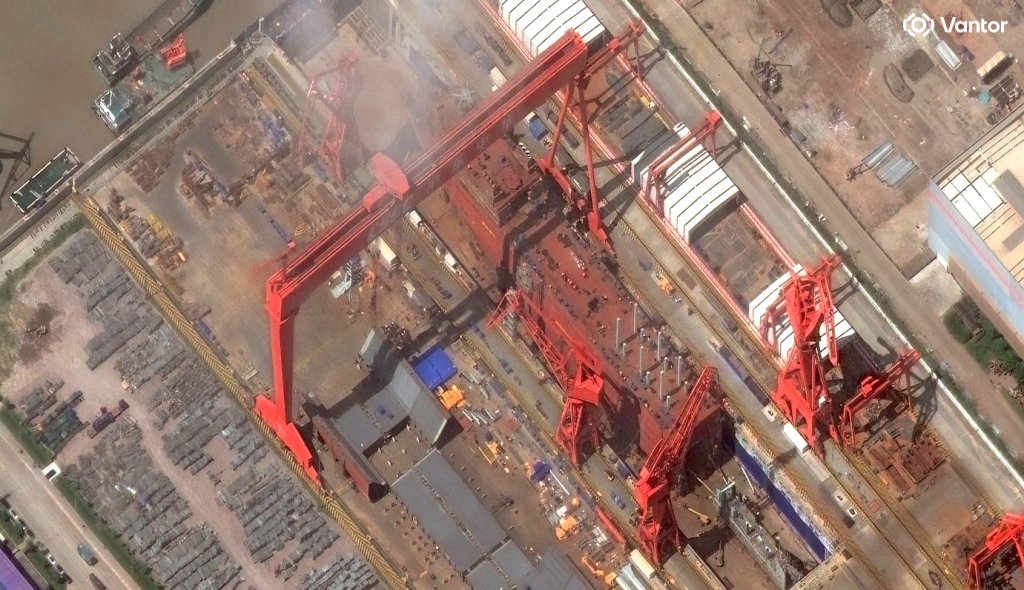
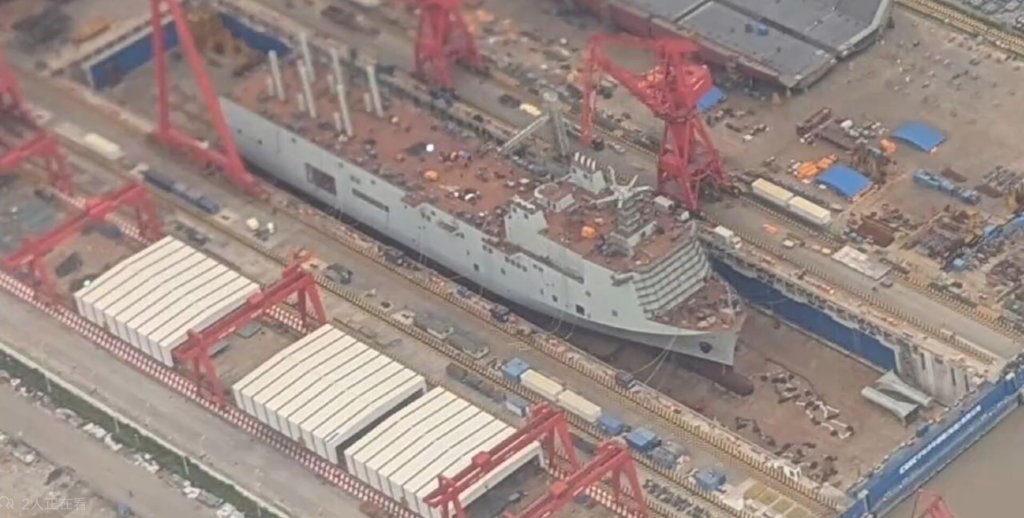
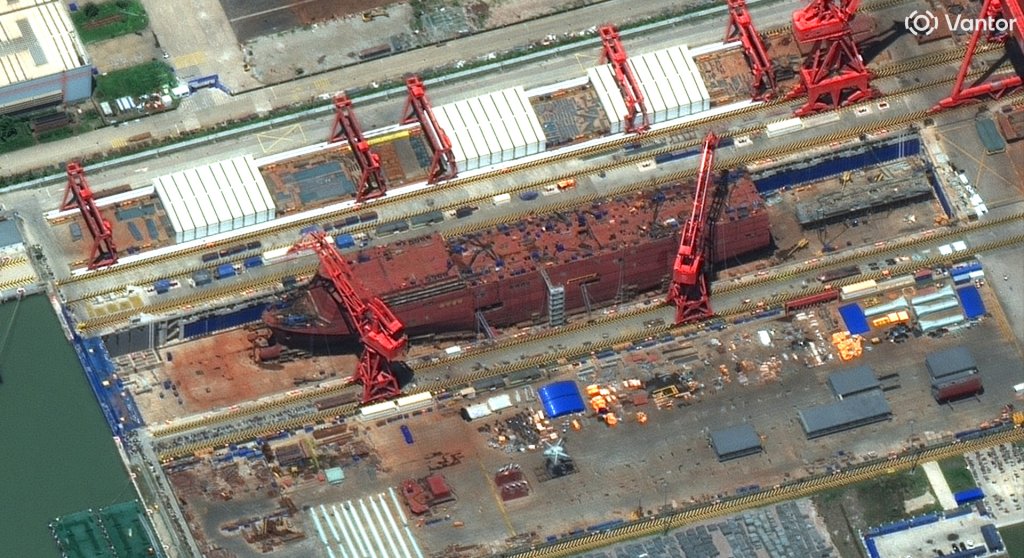
For the past six months or so, a curious-looking vessel with a very boxy superstructure has been taking shape at a shipyard in the Chinese city of Shanghai. A new satellite image lends credence to an earlier assessment that this is a mothership to support China’s growing fleets of ever-larger submersible drones, though it could also have other roles.
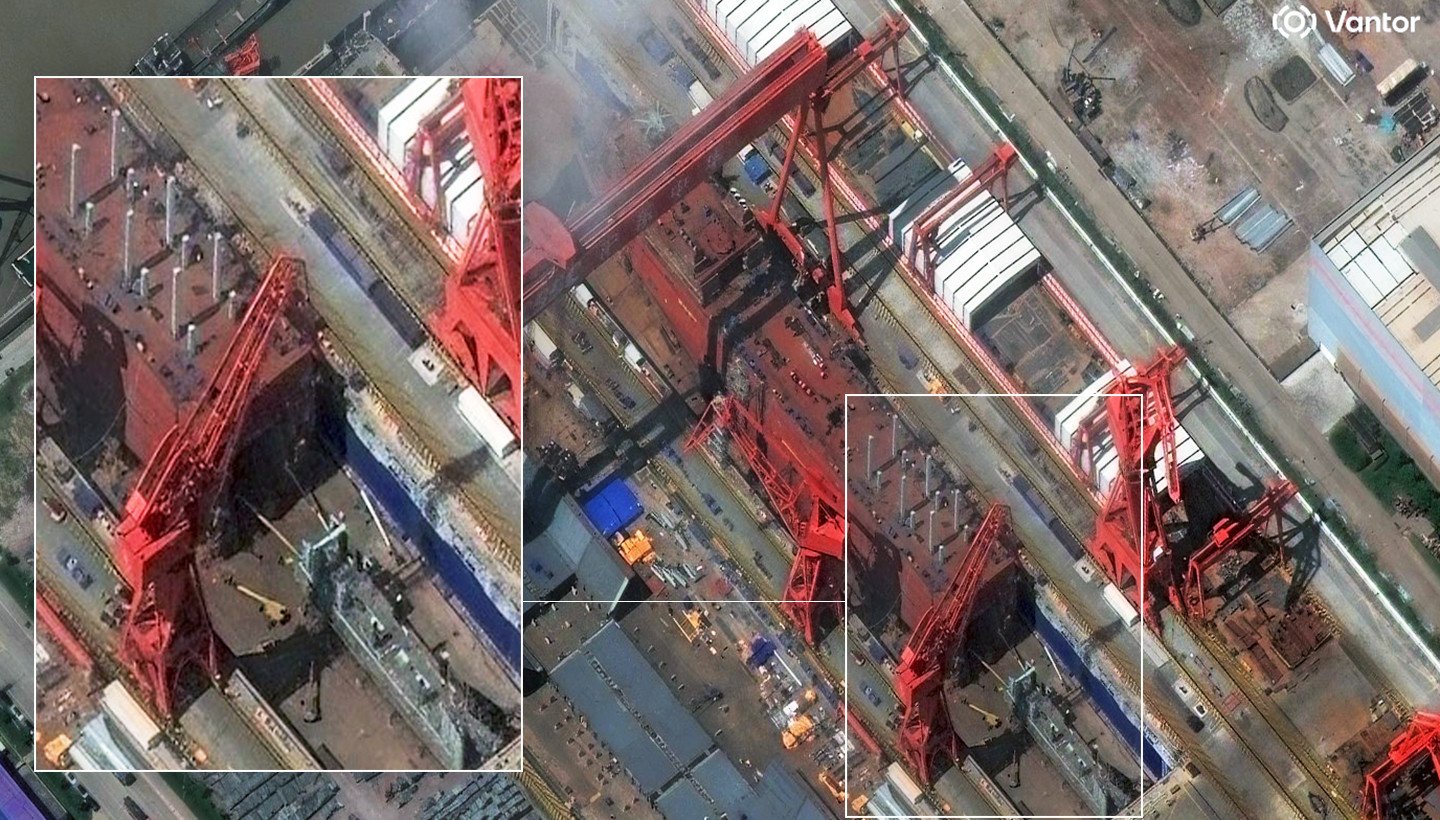
TWZ obtained the image of the ship in question, which was taken on September 10, from Vantor. Since then, it has also received an overall coat of gray paint, pointing to future service with the People’s Liberation Army Navy (PLAN). It is some 669 feet (204 meters) long and around 98 feet (30 meters) at its widest. In terms of basic length and width, the vessel being built now is very roughly comparable to China’s Type 071 amphibious warfare ship. However, it appears to be much taller overall than the Type 071.
The new ship has been under construction at the Hudong-Zhonghua Shipyard on Changxing Island in Shanghai since at least April. This yard produces a variety of naval vessels, including surface combatants and amphibious assault ships, as well as commercial designs.
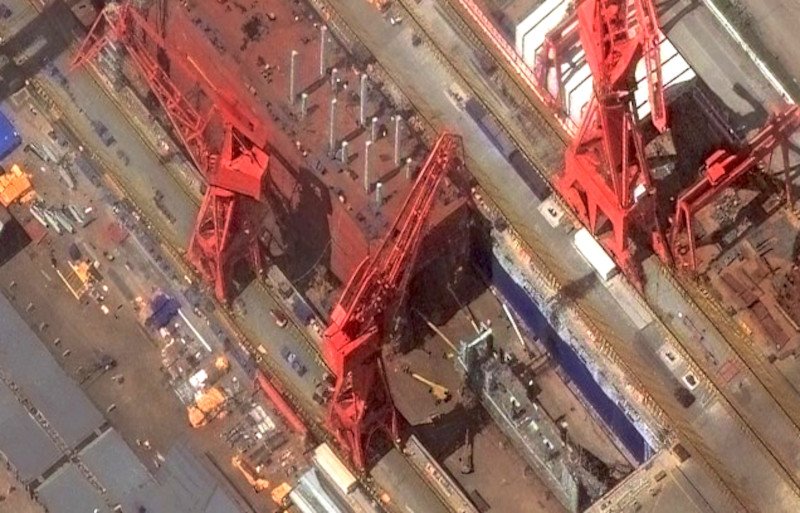
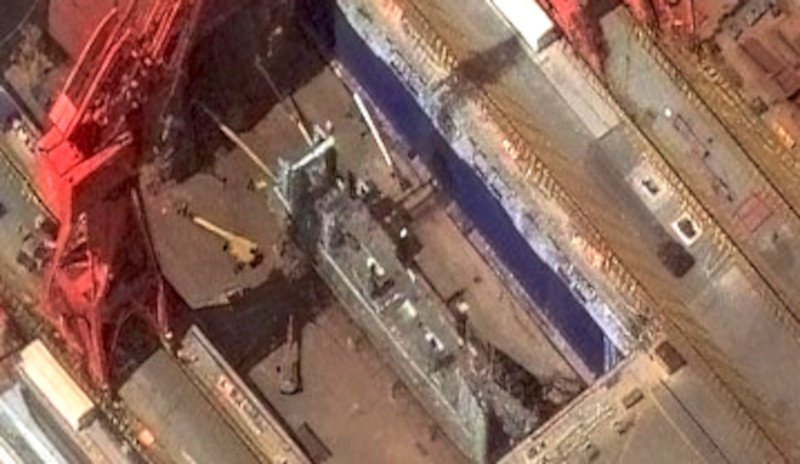
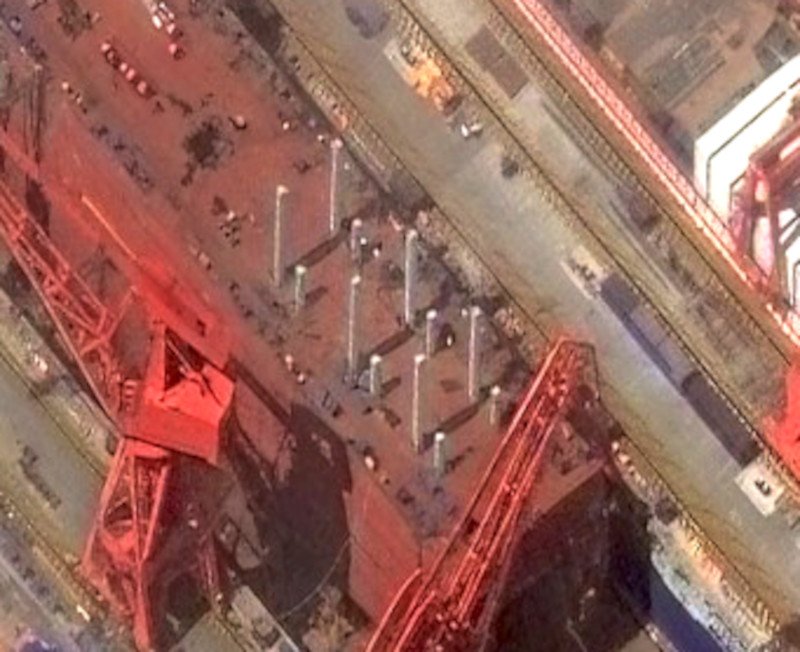
The September 10 image, which shows the ship from the stern, is interesting for a number of reasons. It notably confirms that the design not only has a well deck, but that it is sized around what looks to be a large cradle-like platform visible in the shot. The very roughly 164-feet (50-meter) long rectangular platform has an arch-shaped structure at one end and two teardrop-shaped ones at the other, as well as six pillars, three on each side, in between. The teardrop-shaped structures, in particular, point to the platform being at least a semi-submersible, as they would help with stability and otherwise guide the flow of water while being pulled along.
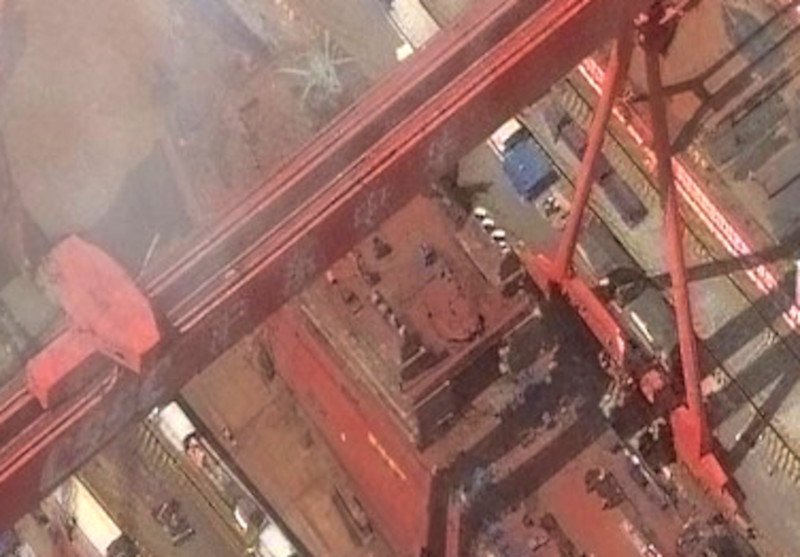
The satellite image also clearly shows six large struts extending from the top of the stern end of the superstructure, each one which is paired with a shorter strut, for a total of 12. Earlier this month, independent naval analyst H.I. Sutton, who tracks undersea warfare developments in particular, posited that these struts could be used to lower a platform or some other similar structure below the hull of the ship. He also assessed that they could be used as part of a larger system capable of moving payloads between decks internally. This would help account for the configuration of the core superstructure, especially how high it is all the way from the front to the back. Overall, signs point to the inside of the superstructure being largely hangars and other open work spaces, allowing for multiple large UUVs to be carried and supported. Individual UUVs would be launched and recovered, one at a time, via the cradle.
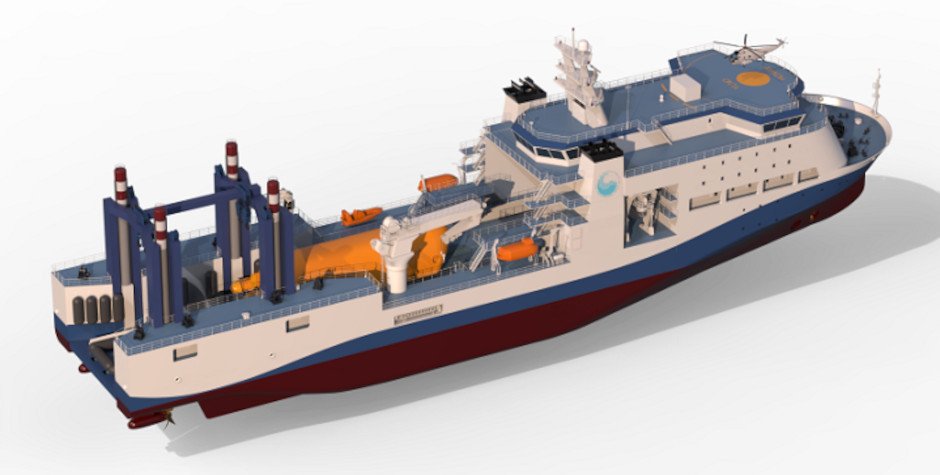
In making his assessment, Sutton drew specific attention to a previously shown rendering of a proposed Chinese scientific research vessel with a roughly similar strut-based system at the stern for deploying submersibles and other large payloads. However, on that design, the system was entirely exposed rather than contained with an extended superstructure.
The rendering of the proposed scientific research vessel with a system for deploying payloads at the stern that features four struts. Chinese internet via H.I. Sutton
The platform seen immediately behind the ship being built at the Hudong-Zhonghua Shipyard aligns with Sutton’s assessment about the purpose of the struts. At the same time, launches and recoveries could also be conducted in a more traditional manner via the well deck. The design of the cradle-like platform would seem to suggest the latter option is at least part of the plan.
The image from September 10, as well as other recent views of the ship, highlight other features that are now taking shape. This includes a large opening on the starboard side, which could be for launching and/or recovering lifeboats or other watercraft, or moving payloads to and from the pier while docked, as well as a multi-pronged mast on top of the bridge. An additional part of the ship’s superstructure extends behind the bridge area, and there is what looks to be a hangar inside. There is no attached helipad present now, but one could well be added later on somewhere on top of the superstructure. Many naval auxiliaries, as well as commercial ships designed for offshore support and other specialized tasks, have open helipads on raised frames attached to different parts of the superstructures.
Though there is growing clarity about the ship’s design, many questions do remain about the full breadth of its intended purpose. In Sutton’s view, the PLAN has a need, just in general, for a dedicated mothership to support its growing uncrewed underwater vehicle (UUV) fleets. The PLAN is pursuing various tiers of UUVs to perform a host of different missions, including intelligence, surveillance, and reconnaissance (ISR), as well as mine-laying, special operations support, and even launching direct attacks on enemy vessels. Larger and larger UUV designs have been steadily emerging in China, which could require more specialized launch and recovery options to be feasibly employed operationally, especially from other vessels at sea. Deployment and retrieval at sea could, in turn, support very long duration missions far from China’s own shores.
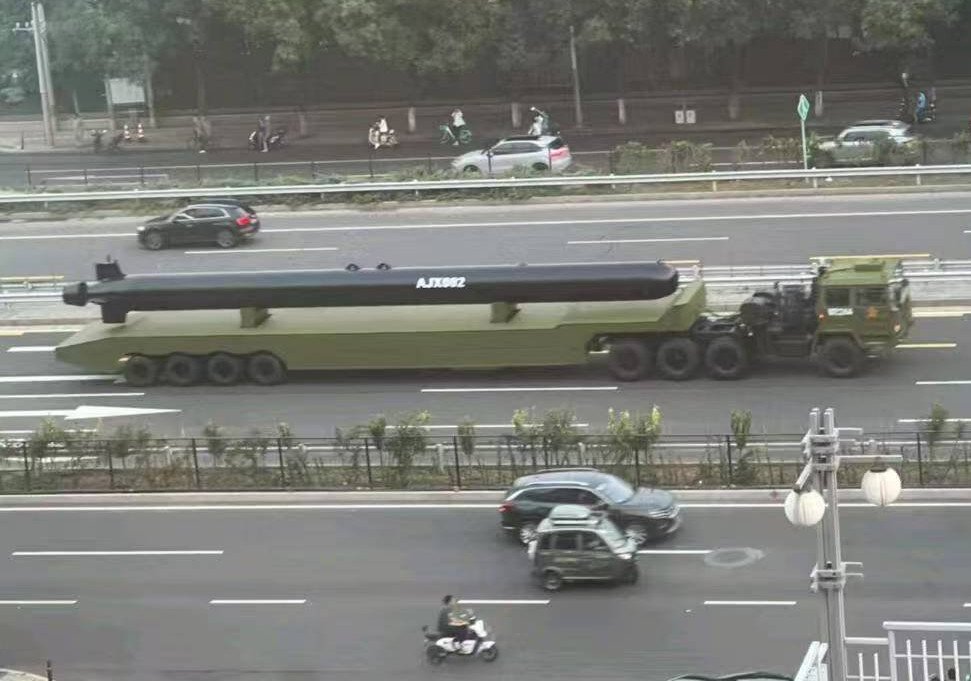
“With smaller UUVs, even up to 20 meters like the AJX-002 and HSU-100 paraded in Beijing last year, they are road mobile. Truck mounted cranes should be sufficient for getting them in and out of the water making operations much simpler. With these latest, much larger XXLUUVs [extra-extra large uncrewed underwater vehicles] however, China will start to need dedicated port facilities,” Sutton wrote previously on his website. “Until now China has been using floating docks to house the two XXLUUV prototypes being tested on Hainan. One of these docks was purpose built while the other may have been taken up from general use.”
A Chinese AJX-002 UUV, or a mockup thereof, seen ahead of a major military parade in Beijing in 2025. Chinese internet via X
China's naval unmanned systems.
Consisting of (in order), AI enabled unmanned submersible (HSU-100), used for detection and attack.
Unmanned patrol boat.
Unmanned mine-laying/attack submersible (AJX-002), this was previously mistaken for a nuclear powered torpedo. Because the… pic.twitter.com/Mlj55XLNBH
“This arrangement also has a significant drawback: each floating dock can only carry a single XXLUUV,” Sutton added. “Or if more than one, then they both need to be placed in the water at the same time. Because the whole dock floods, there cannot be one undergoing maintenance while another is being launched or recovered.”
A mothership vessel able to discreetly deploy and recover large uncrewed and crewed submersibles and other large payloads underwater could be tasked with more specialized missions, including cutting cables, retrieving objects from the seabed, and other kinds of undersea espionage. There is overlap here with more benign roles, such as submarine rescue, salvage, and even deep-sea scientific research. There is also the matter of servicing an expanding array of Chinese underwater infrastructure, including sensor and communications networks. As something of a corollary, Russia’s spy ship Yantar is officially described as an oceanic research vessel. In China, the line between military and non-military assets and capabilities, including ships, is often very blurry, to begin with, as TWZ regularly highlights. This dichotomy was observed right at the Hudong-Zhonghua Shipyard around the end of last year after pictures of a commercial cargo ship being used to showcase a new family of containerized weapons, sensors, and other systems went viral online.
It is also worth pointing out that the boxy and largely enclosed design of the ship now being built at Hudong-Zhonghua Shipyard will inherently make it difficult to observe any activities onboard. This will have the additional knock-on effect of helping keep any payloads, as well as the crew, shielded from the elements. This could be valuable for operations in harsher locales, including waters in and around the Arctic, an ever-more strategic part of the world where China is working to be more engaged.
We also do not know if the apparent mothership vessel is intended to be a one-off or part of a larger class. It could be a stepping stone to broader plans or be part of an already extensive fleet of bespoke naval auxiliaries, as well as unique ostensibly commercial vessels, in service in China today. The PLAN’s aforementioned UUV ambitions will bring along significant test and evaluation requirements, as well as the need to support actual future operations.
If nothing else, evidence is only growing that the new ship under construction at the Hudong-Zhonghua Shipyard is intended to serve, at least in part, as a mothership for large submersible drones.
During an Oval Office meeting with President Trump in Washington on Thursday, Chinese President Xi Jinping conveyed China’s position on Taiwan and told the US president to approach the issue “carefully,” The South China Morning Post reported, citing the Chinese broadcaster CCTV. The report said that Xi, who is in Washington as part of an […]
China called the latest US threats of secondary sanctions on airline service-providing companies across the world an illegal unilateral measure without any basis in international law. The US said the sanctions would be applied if these companies do not stop providing services to Iranian airlines.
China said they “firmly oppose illicit unilateral sanctions that have no basis in international law and lack UN Security Council mandate,” Guo Jiakun, official spokesperson of its Ministry of Foreign Affairs said during a regular press conference on Wednesday, September 23.
China’s reaction came on the same day the latest US sanctions against Iran went into effect.
The US Treasury Secretary Scott Bessent has asked companies across the world who are involved in providing services such as refuelling, ticketing, and other kinds of ground support to stop serving Iranian airlines starting at midnight on September 23. If they fail to comply they will be “locked out of the dollar system,” Bessent threatened.
The latest sanctions against its airlines is part of the recently announced US attempt to completely isolate Iran from the global economy in order to pressure its government to re-open the Strait of Hormuz.
Iran has shut down the Strait of Hormuz following the resumption of US airstrikes as well as Washington’s attempts to bypass Iranian control over the waterway in the Persian Gulf since July. Iran has claimed that those American moves were in violation of the peace deal signed under international mediation in June.
The adoption of new sets of sanctions is widely seen as an indication of Washington’s failure to achieve its objectives in Iran militarily, even after seven months of war, which began on February 28.
Iran has reiterated that no amount of economic coercion will open the Strait of Hormuz. They listed the withdrawal of the US naval blockade, the unfreezing of its international assets, and an end of the war on all fronts in the region as preconditions for opening the Strait.
Air blockade
While some of the countries in the region cancelled Iranian flights to their airports in fear of US sanctions, Iran claimed most of its international flights remained scheduled and operational. Some countries also decided to close their airspace for Iranian airlines.
Iraq has diverted most of the Iranian flights from its Baghdad airport to Najaf.
If the flights remain suspended for a significant number of countries for a longer duration it would amount to an air blockade on Iran. This will have an effect on thousands of people employed in the aviation sector in the country which is already heavily facing tremendous economic troubles due to existing sanctions
A prolonged suspension of flights could also impact hundreds of thousands of Iranians who have to travel out of the country for medical or other reasons.
Iran has maintained that unilateral US sanctions are illegal and an “act of terrorism” against Iranian people. It has urged the nations across the world to not succumb to the unilateral actions of the US.
Chief of Iran’s Supreme National Security Council Mohsen Rezaei, in an interview on Wednesday, warned neighboring countries against submitting to US pressure to shut down Iranian flights, claiming such acts will force Iran to retaliate.
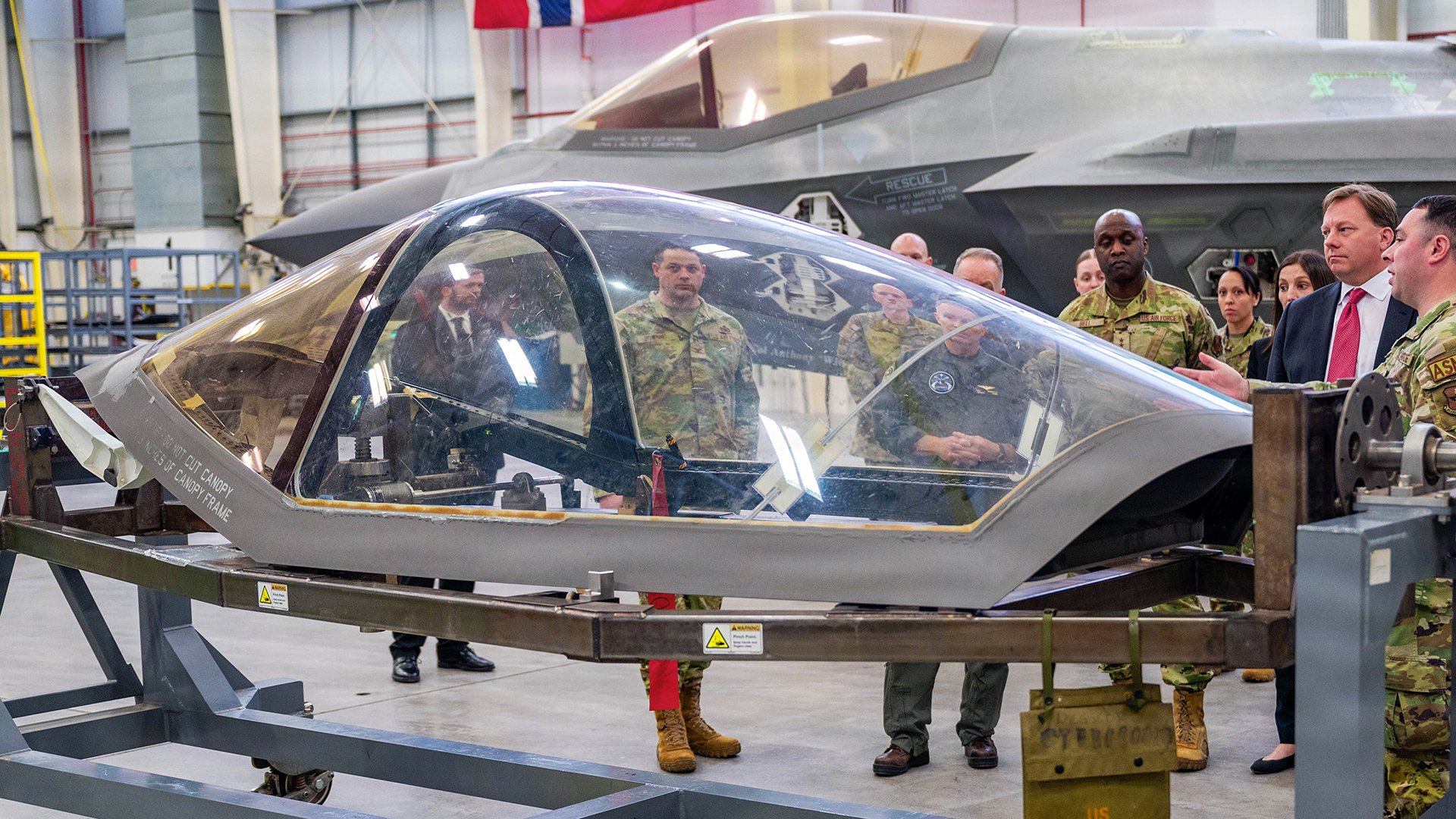
Chinese authorities have reportedly taken possession of an F-35 cockpit canopy and weapons-bay door that were inexplicably diverted to Hong Kong while being shipped from Australia to the United States. The incident appears to have left physical components that incorporate aspects of the fighter’s low-observable design in the hands of a country that has spent years doing whatever it could to gain information on the aircraft and America’s stealth technology secrets in general.
So, what does all this mean? Let’s put it in perspective.
The parts in question were being shipped by UPS from Australia to the United States in late May, according to people familiar with the matter cited by Bloomberg. The components from a Royal Australian Air Force F-35A were being sent to the United States for inspection and possible repair or disposal.
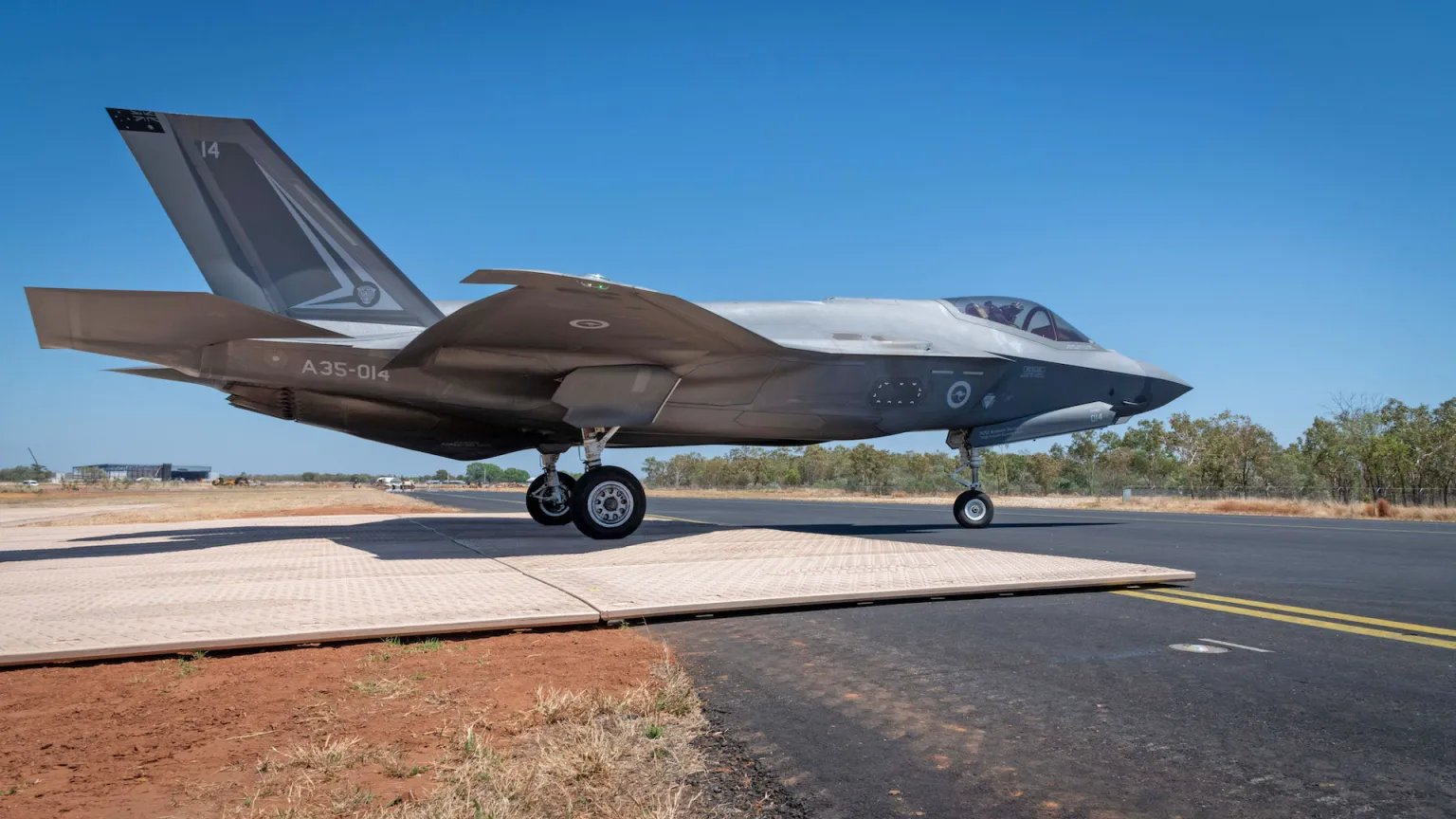
A Royal Australian Air Force F-35A from 75 Squadron taxiing at RAAF Base Tindal, Northern Territory. Australian Defense Force
F-35 sustainment procedures explicitly cover the movement of F-35 parts, including unserviceable components, through the program’s logistics network. The U.S. Air Force’s transportation guidance directs F-35 shipments outside the Defense Transportation System to follow approved Joint Program Office procedures. In other words, moving an unserviceable Australian F-35 component to the United States for inspection, repair, or disposition is consistent with the normal sustainment process.
What is highly unusual is where this particular shipment ended up. F-35 components moving through an established international logistics system apparently stopped in South Korea, and were then routed to Hong Kong. Chinese authorities subsequently took possession of the parts and have not returned them, according to the sources cited by Bloomberg.
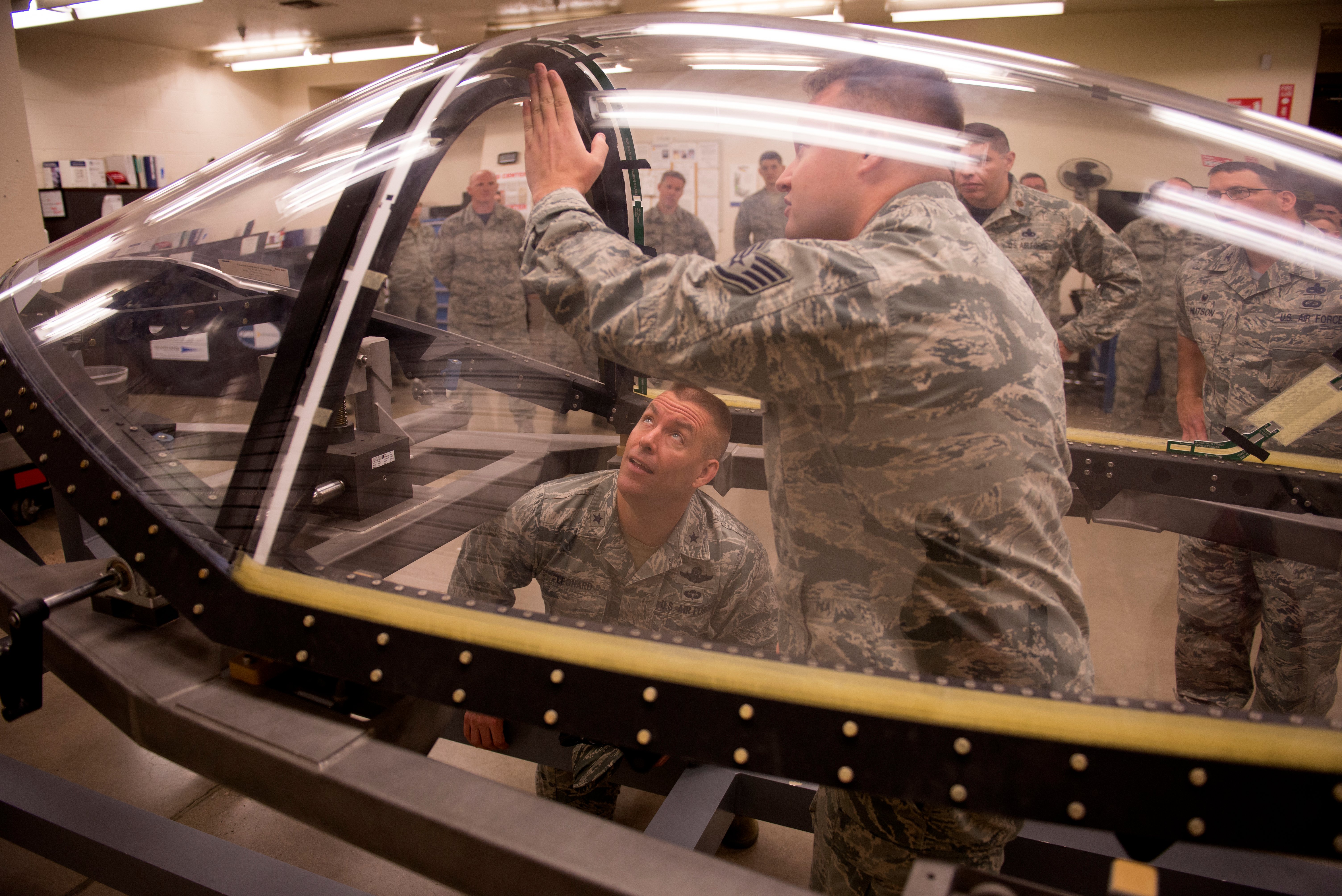
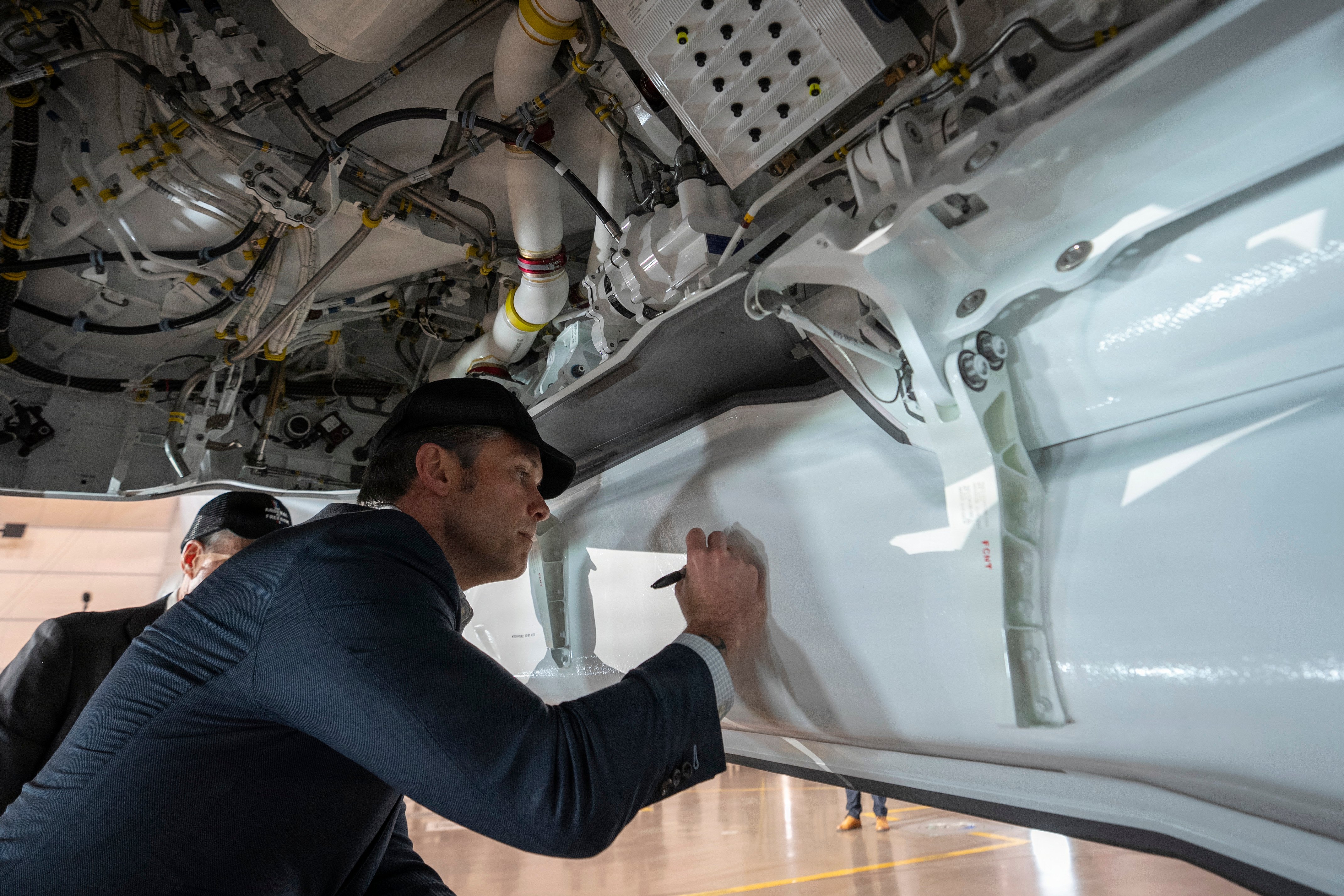
F-35 canopy component replacement at Luke Air Force Base, Arizona. U.S. Air Force photo by Senior Airman Ridge ShanSecretary of War Pete Hegseth autographs the weapons bay door of an F-35 at Lockheed Martin Air Force Plant 4, in Fort Worth, Texas. DoW photo by U.S. Navy Petty Officer 1st Class Alexander Kubitza
“For security reasons, we can’t discuss the status of specific shipments or our shipping procedures,” Lockheed Martin told us in response to a request for clarification about the incident. The company added that it “follows all U.S. regulations established by the Department of War and regulated by the Defense Logistics Agency (DLA) regarding the shipment of aircraft components. Our teams handle every shipment with the utmost diligence and safeguards to ensure the integrity of the F-35 program and the security of our allied partners.”
The Pentagon’s F-35 Joint Program Office has acknowledged a “shipment issue” involving F-35 components and said U.S. authorities and industry partners are working to recover them and investigate what happened.
Lockheed Martin, UPS, and the Pentagon have not publicly provided a detailed account of how the shipment was diverted or what happened to the parts after they reached Hong Kong.
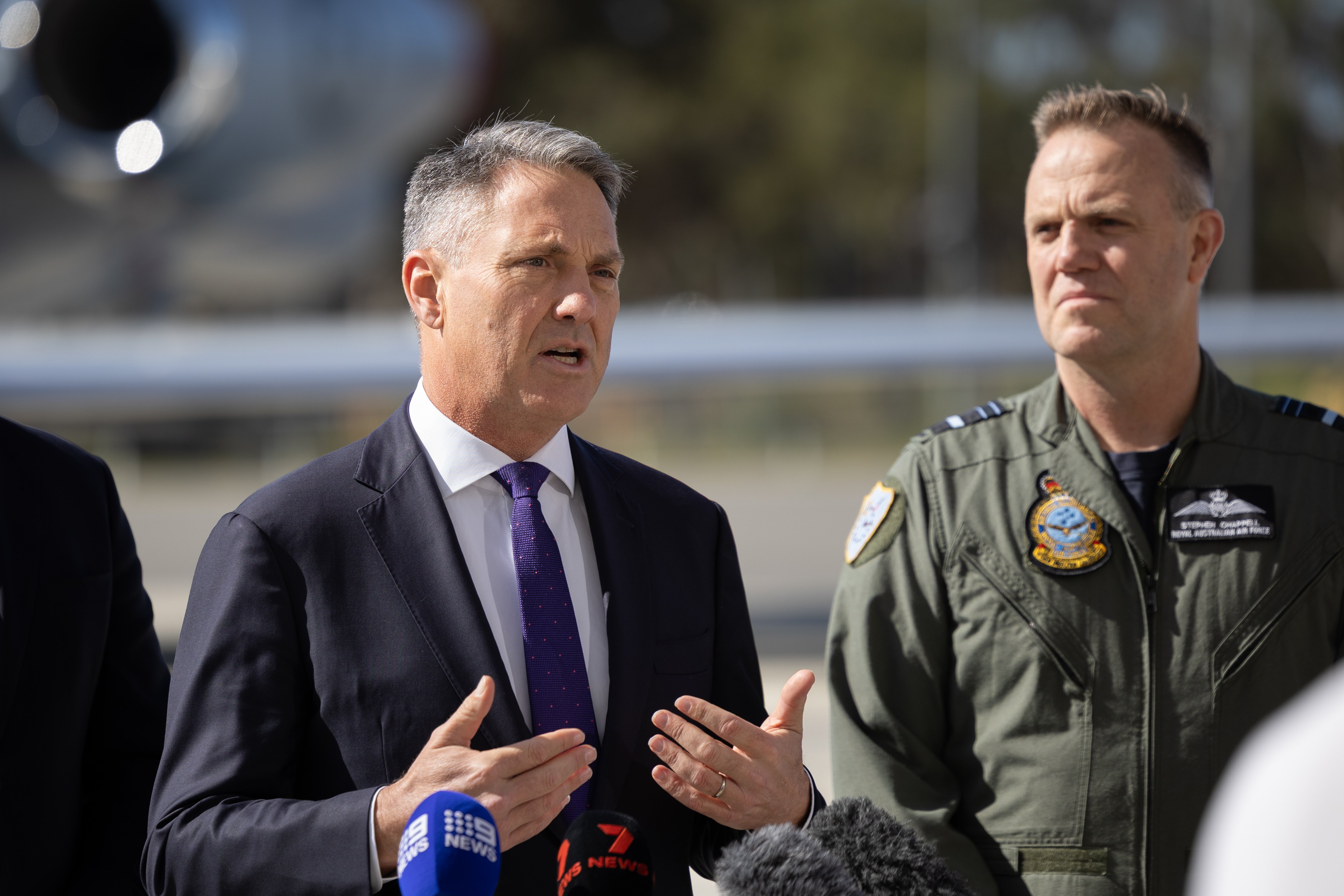
Australian Defense Minister Richard Marles also confirmed that Canberra was aware of the incident and was working with the United States and Lockheed Martin.
Acting Prime Minister and Minister for Defense, Richard Marles, accompanied by Chief of Air Force Air Marshal Stephen Chappell at RAAF Base Edinburgh, South Australia. Australian Defense Force
Marles has sought to play down the potential security implications of the components, saying his understanding was that the shipment did not contain sensitive equipment or sensitive parts. That does not by itself answer the more specific question of what could potentially be learned from these particular pieces of an F-35. After all, not every physical component of an F-35 is necessarily highly classified or capable of revealing meaningful information about the aircraft’s design. At the same time, a cockpit canopy and weapons-bay door involve structures, materials, interfaces, tolerances, and treatments that all have to work within the aircraft’s low-observable design. If radar-absorbing material or other specialized treatments remain on the components, that could potentially make them far more sensitive from a technological exploitation standpoint.
The condition of the parts is also unknown. We do not know how much of their coatings or other treatments remain intact, whether Chinese authorities have examined them, or what information could actually be extracted from them in their current state.
Above all else, there is little specific information in the public domain about what F-35-related technical information Chinese intelligence already has acquired over the years, what physical components or materials it may already possess, or what additional information could be gained through espionage, cyber operations, industrial access, observation of deployed aircraft, or other means.
Without these facts, it is impossible to gauge what damage could have been done by this loss. Still, viewed in a vacuum of those unknowns, simply having an F-35 canopy and weapons-bay door in Chinese possession represents a significant loss of control over sensitive physical hardware — there is no way around that reality — and the severity of that loss could be substantial depending on the physical state of the parts.
The circumstances are particularly sensitive because, as we mentioned in the opening of this article, China has pursued multiple avenues for acquiring information on the F-35 for many years, with publicly documented cases involving cyber operations, technical information, supply chains, and human expertise. Some aspects of China’s subsequent stealth aircraft designs have also prompted comparisons with U.S. aircraft, although claims that China simply ‘cloned’ entire aircraft are not supported by the available evidence.
China And The F-35: A History Of Espionage
In 2014, U.S. authorities charged Chinese businessman Su Bin with conspiring with two other Chinese hackers to break into the computer systems of U.S. defense contractors. Prosecutors alleged that the group targeted information on aircraft including the F-35 and F-22. The alleged hacking campaign ran from 2009 to 2013.
Su Bin later pleaded guilty and was sentenced to nearly four years in prison. The Justice Department’s 2026 case against former Air Force fighter pilot Gerald “Runner” Brown connects the two cases. Prosecutors allege that Brown used a co-conspirator to negotiate his work training Chinese military pilots with Su Bin.
Brown, a retired U.S. Air Force major who spent more than 24 years in the service, subsequently worked as a contract simulator instructor training U.S. military pilots on the A-10 and F-35. In February 2026, the Justice Department charged him with providing and conspiring to provide unauthorized defense services to Chinese military pilots.
According to the criminal complaint, Brown traveled to China in December 2023, where he allegedly began training People’s Liberation Army Air Force (PLAAF) personnel. Prosecutors say he also answered questions about the U.S. Air Force for three hours on his first day in China. Brown has been charged, and the allegations have not been adjudicated. He is one of multiple former Western aviators alleged to have provided training services and/or intelligence to Beijing.
The Honeywell case provides yet another example, this time involving the defense industry’s supply of technical information.
In 2021, the State Department reached a $13-million administrative settlement with Honeywell over alleged violations of the Arms Export Control Act and International Traffic in Arms Regulations (ITAR). Honeywell had voluntarily disclosed alleged unauthorized exports and retransfers of ITAR-controlled technical data.
The case involved 71 engineering drawings containing dimensions, geometries and layouts for manufacturing castings and finished parts used across multiple aircraft, engines and military systems. The State Department said the unauthorized exports and retransfers involved Canada, Ireland, Mexico, China, and Taiwan.
Among the systems covered by the drawings were components associated with the F-35 and F-22. The case did not allege that Honeywell deliberately sought to provide China with sensitive military technology; rather, it concerned alleged violations of export-control requirements.
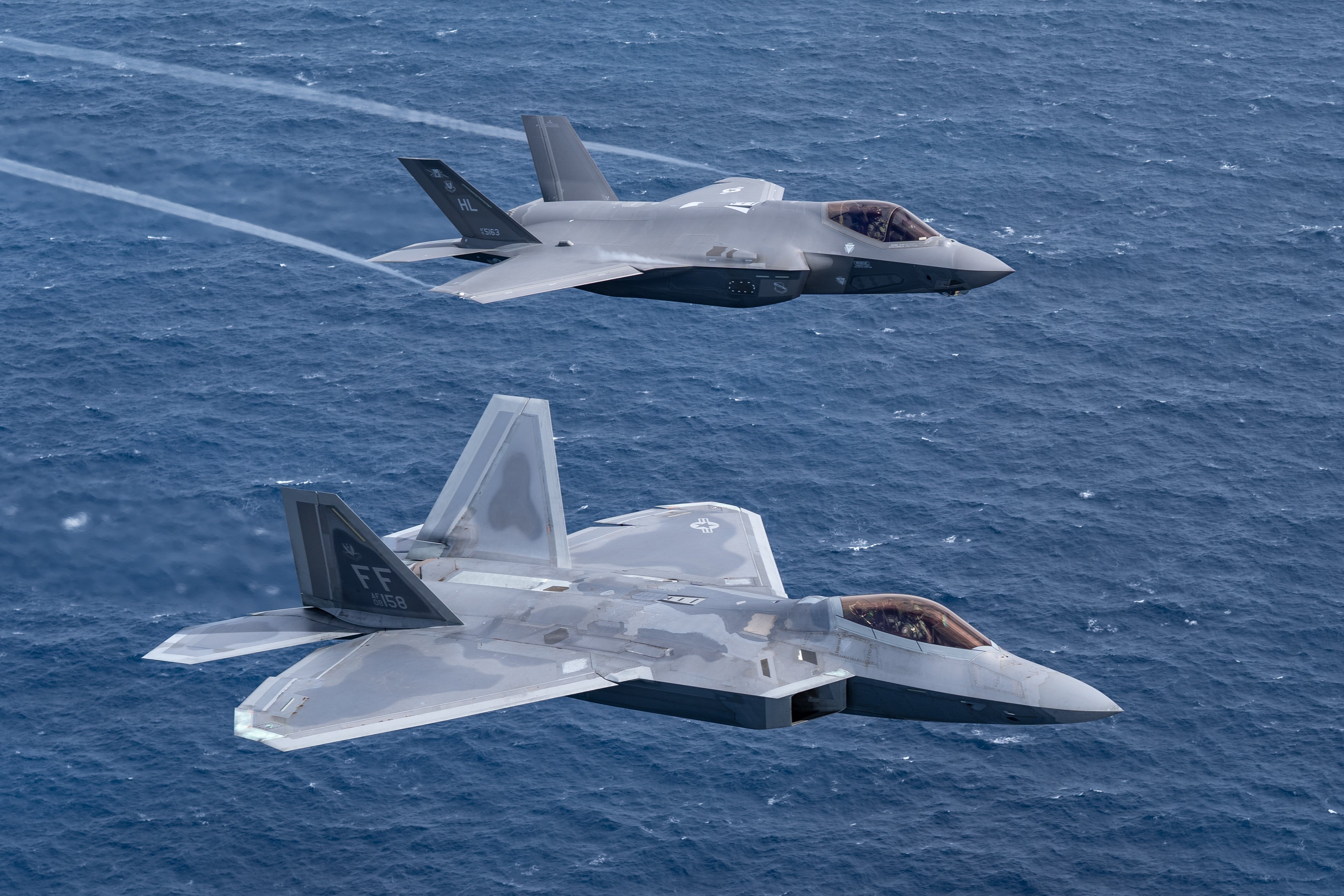
A U.S. Air Force F-22 (nearest camera) flies alongside an F-35A. U.S. Air Force photo by Lt. Sam Eckholm
There has also been a physical supply-chain precedent.
In 2022, F-35 deliveries were temporarily halted after the Pentagon discovered that a magnet in the aircraft’s Honeywell-built turbomachine pumps —which provide critical power functions to the jet — contained a cobalt and samarium alloy produced in China. The material itself was not considered a security or flight-safety threat, but the discovery demonstrated how difficult it can be to maintain complete visibility over a global supply chain involving thousands of companies and multiple tiers of subcontractors.
Taken together, these cases demonstrate several different pathways through which China has appeared in the F-35 security story: cyber theft, unauthorized technical-data transfers, supply-chain exposure, and alleged exploitation of former Western military expertise.
The Hong Kong incident would add another major category: physical access to actual F-35 components.
These are only some of the publicly documented examples. There is no public way to know the full extent of information or physical material Chinese intelligence may have acquired over the years, but is very likely far larger in scope than what is available in the open source.
Chinese Access Concerns Have Shaped F-35 Export Policy
The proposed sale of F-35s to the United Arab Emirates became deeply entangled in U.S. concerns about Abu Dhabi’s growing military and technology relationship with China.
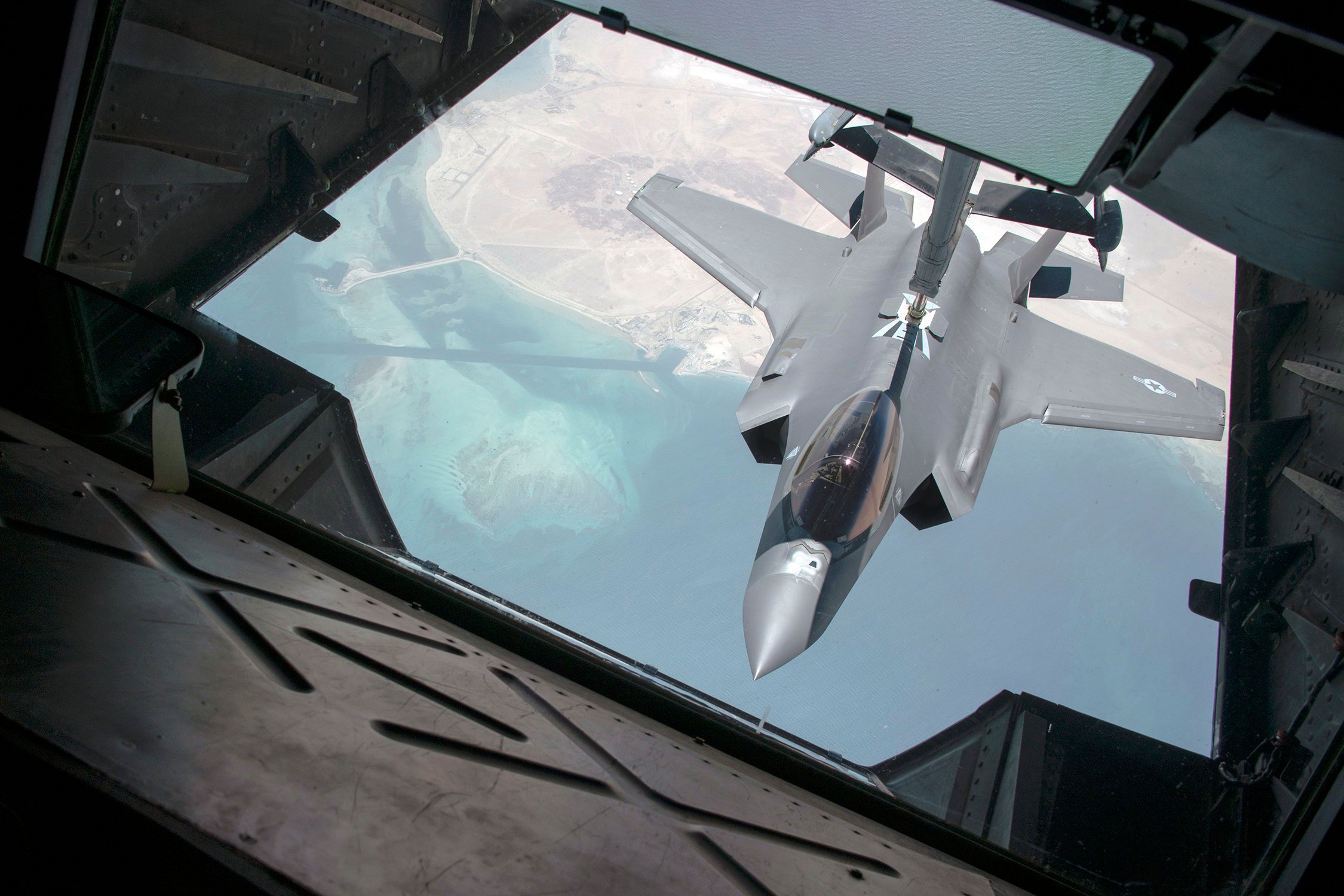
A 34th Expeditionary Fighter Squadron F-35A conducts inflight refueling above the United Arab Emirates. U.S. Air Force photo by Tech. Sgt. Kat Justen
Washington had approved a potential package involving 50 F-35As, but U.S. officials and lawmakers expressed concerns about Chinese intelligence activity and technology in the UAE. Among the broader concerns were Chinese telecommunications infrastructure and the possibility of Chinese military or intelligence access to facilities associated with advanced U.S. weapons. A Congressional U.S.-China Economic and Security Review Commission report later cited the potential presence of Chinese intelligence collection capabilities and military facilities in the UAE as risks to the proposed F-35 sale.
The State Department recently approved a potential $24.3-billion sale to the Kingdom involving 48 F-35s and associated equipment. But U.S. intelligence agencies have reportedly warned that China’s military and technology relationship with Saudi Arabia could create opportunities for Beijing to obtain sensitive F-35 information.
According to reporting based on U.S. officials familiar with intelligence assessments, a Defense Intelligence Agency report raised concerns about Chinese military access to Saudi bases, Chinese technology in Saudi telecommunications infrastructure, and whether secure facilities could be maintained for F-35 operations. The assessments also questioned whether Saudi Arabia would limit contact between Chinese military and intelligence personnel and F-35-related sites.
What Could The Components Reveal?
As we noted earlier, there is no way to gauge the intelligence impact of the loss at this stage. The central unknown of what China already knows about the F-35, and what it may already have in its possession — especially related to these components — is the key variable here.
Regardless, an F-35 canopy and weapons-bay door can provide information that cannot otherwise be easily obtained and gives a different level of fidelity in terms of material exploitation than what construction data and blueprints alone could.
The F-35’s low observability is the product of an extremely complex combination of airframe shaping, construction materials, external coatings, manufacturing tolerances, speciality apertures, and more.
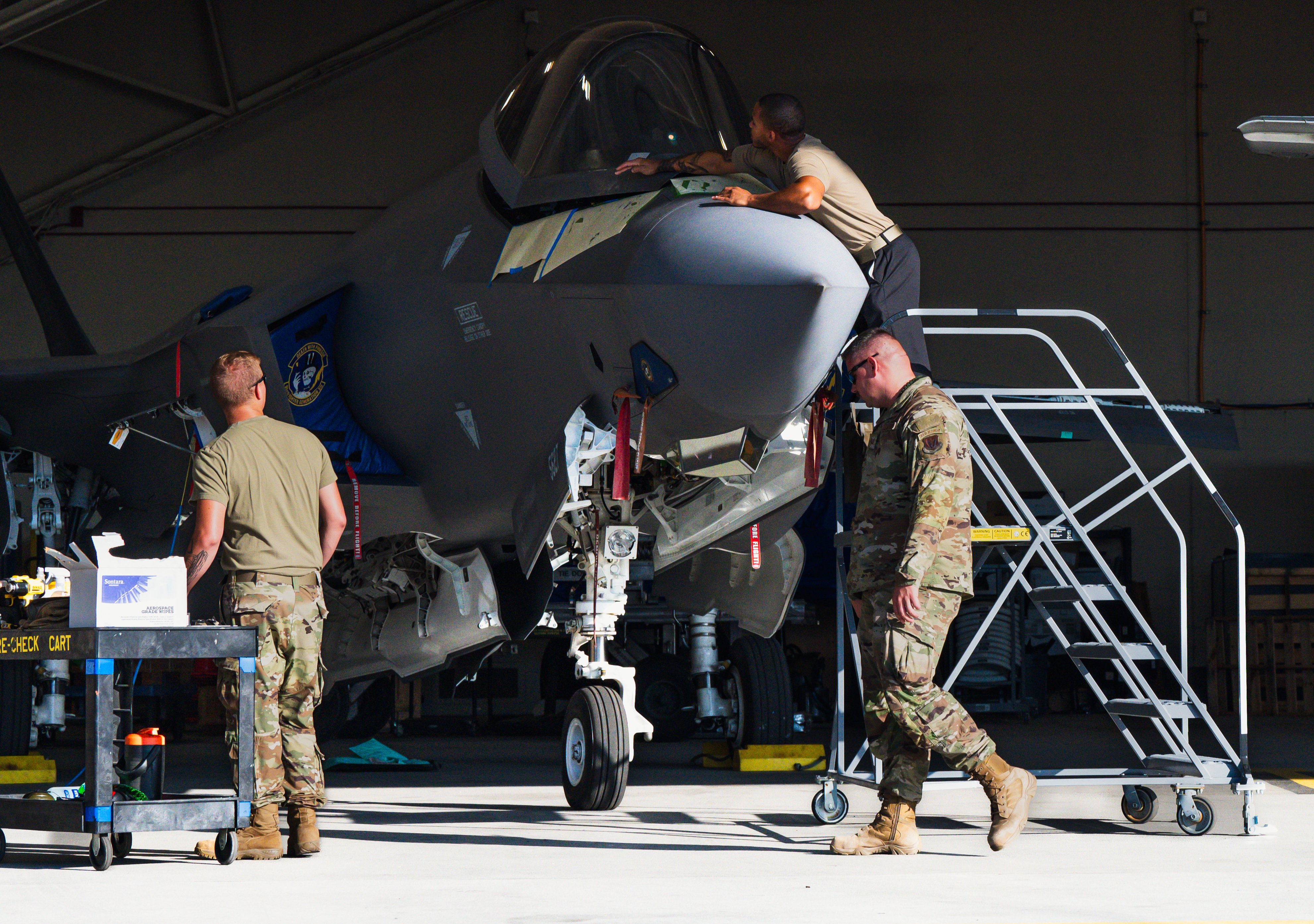
U.S. Air Force 325th Maintenance Squadron low-observable maintainers work on an F-35A at Tyndall Air Force Base, Florida, in August 2024. U.S. Air Force photo by Airman 1st Class Victoria Moehlman
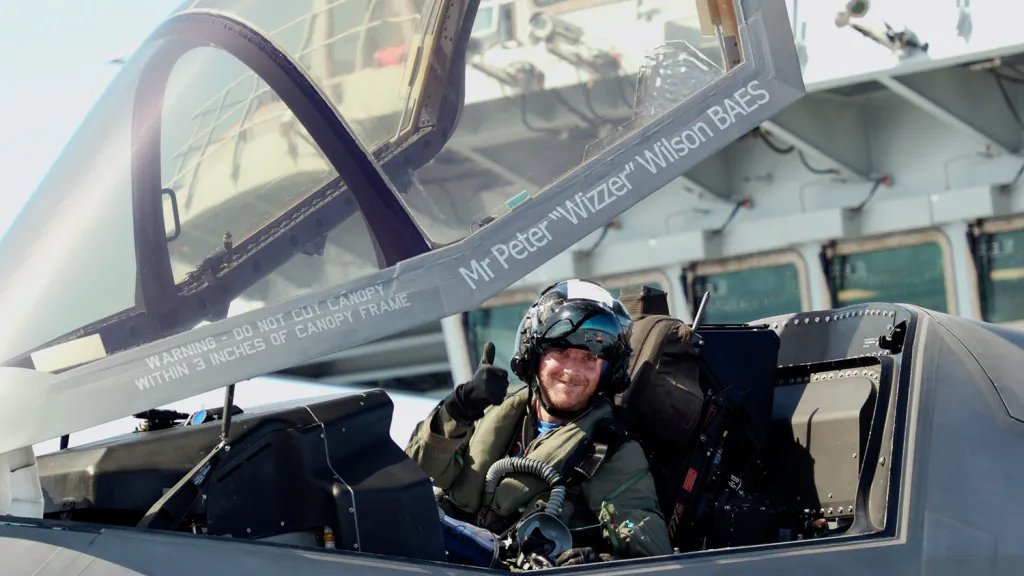
A canopy is a particularly demanding part of any stealth aircraft. It has to satisfy optical and structural requirements while also controlling radar reflections. The cockpit is historically a major source of radar reflectivity, including the pilot’s helmet. Therefore the canopy’s materials, construction, interfaces, and specialized treatments can be critical to the aircraft’s overall low-observable performance, and especially from the critical frontal aspect.
The F-35’s canopy has been an ongoing work in progress for many years. It has had chronic material issues, especially when it comes to delamination. Multiple iterations spread over two decades have recently resulted in a major improvement of the issue. The tight balancing act of keeping the canopy transparent enough, while controlling the F-35’s stealthy signature and having that mix of materials be robust enough to last for a reasonable amount of time has been a major investment for the program. If the canopy is of a later variation, that loss alone could be substantial and could help China with their own low-observable canopy development programs even if they already had original information on the F-35’s canopy original design dating back years.
Evidence of the F-35’s canopy delamination issue on an early example of the F-35B. Crown Copyright
The F-35’s canopy has been a notorious work in progress, specifically the low observable coating/delamination issue which has improved a lot in recent years with new materials and processes. So no, you do NOT want to lose that in to China! https://t.co/9V0jdRAiwA
The F-35’s weapons-bay door has its own sensitivity issues. It is effectively a major section of the aircraft’s outer shell, with its structure, edges, interfaces, tolerances and treatments all having to function without creating unacceptable radar signatures. Its construction and material attributes can be reasonably extrapolated for the rest of much of the F-35’s outer mold-line. Above all else, if the radar absorbent material remained intact on the door, that would signify a major loss when viewed without any understanding of what China already knows about the F-35’s radar absorbing surface treatments. Historically speaking, RAM technology is among America’s closely guarded material sciences secrets.
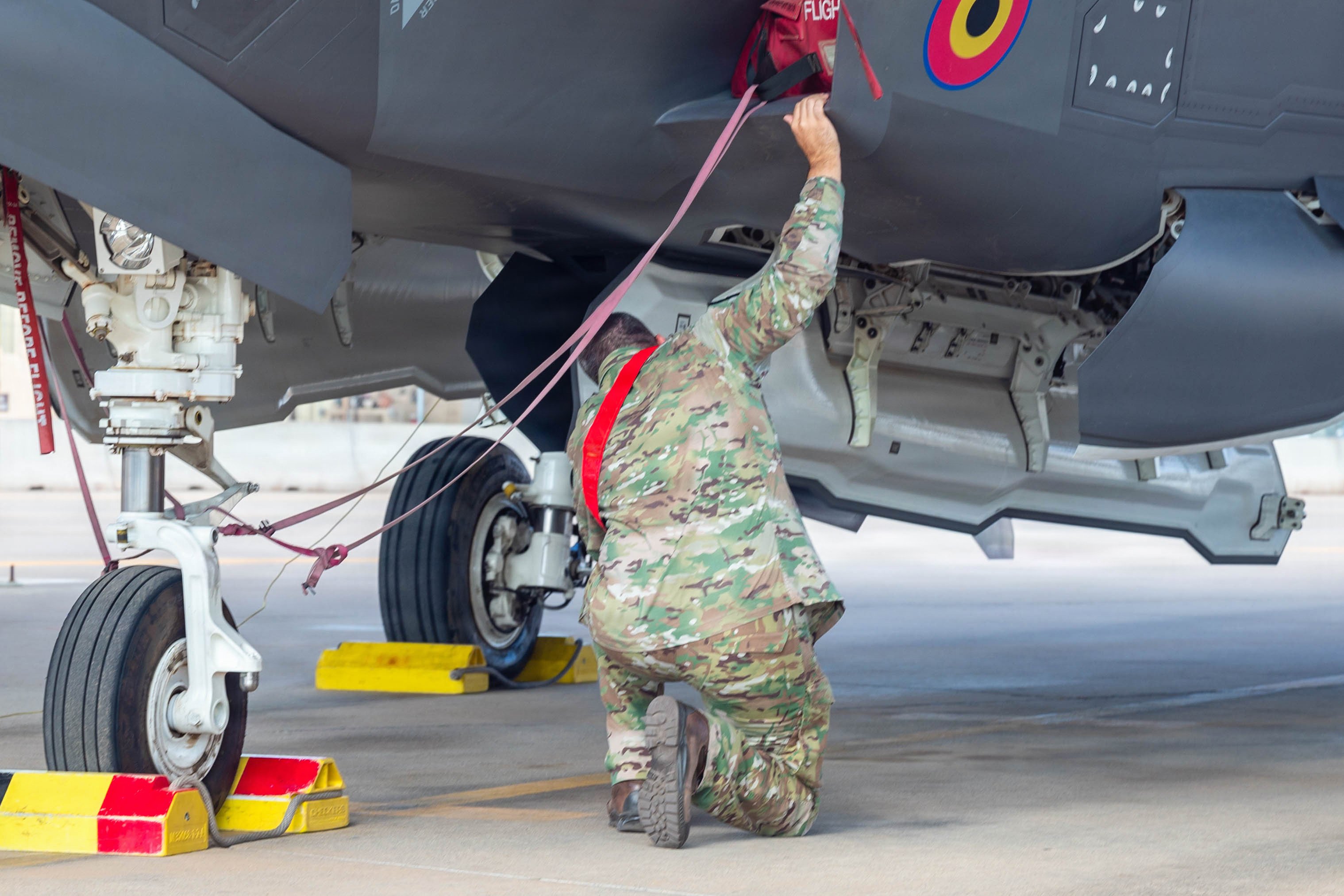
A Belgian Air Force service member inspects the open weapons bay of an F-35A at Luke AFB, Arizona. U.S. Air Force photo by Airman 1st Class Tekorey Watkins
For the time being, Australian officials have said they do not understand the parts to be sensitive. The investigation will ultimately have to establish what the components actually contain and what could be learned from them.
The incident comes at a moment when China’s own stealth fighter efforts are undergoing an extraordinary expansion.
The PLAAF is now operating the J-20, China’s first operational fifth-generation stealth fighter, in increasingly large numbers. The smaller J-35 is also moving toward broader service, including a carrier role for the People’s Liberation Army Navy.
Aircraft maintainers clean the fuselage of a J-20 fighter during the Changchun Air Show in the Jilin Province of China, in September 2025. Photo by Zhang Xiangyi/China News Service/VCG via Getty Images
China has also moved into what Western observers generally describe as sixth-generation fighter development.
Two new tailless combat-aircraft designs emerged publicly in December 2024. One is the large Chengdu aircraft commonly referred to as the J-36, while the other is associated with Shenyang and is variously called the J-XDS or J-50. Both have continued flight testing and yielded several prototypes with individual refinements.
The exact capabilities and eventual operational roles of these aircraft remain uncertain. They are developmental designs, not established operational equivalents of the F-35 or other sixth-generation systems. However, China is clearly building an increasingly broad ecosystem of fifth- and next-generation low-observable combat aircraft, both crewed and uncrewed. In the latter category is a growing number of stealthy drones, including long-endurance types.
China didn’t likely need physical access to an F-35 canopy or weapons-bay door to develop the J-20, J-35, or its next-generation aircraft. But additional information about how a mature Western stealth aircraft handles materials, coatings, interfaces, manufacturing, and the integration of those elements can still have great potential value to an industry developing its own systems. This includes technologies intended to counter the U.S. combat aircraft and their low-observable characteristics.
The F-35 has been produced in large numbers, is operated by a growing coalition of countries, and has been subjected to years of testing and operational experience. Its low-observable design represents decades of accumulated U.S. research and industrial know-how. At the same time, the global scale of the program inevitably makes control over sensitive information more complicated. More aircraft, more maintainers, more industrial partners, and more international logistics mean more points at which information and physical hardware have to be controlled. Over time, a program of this size will see an erosion in its secrets, but a major loss can drastically accelerate what should be a more gradual and controlled decline in security.
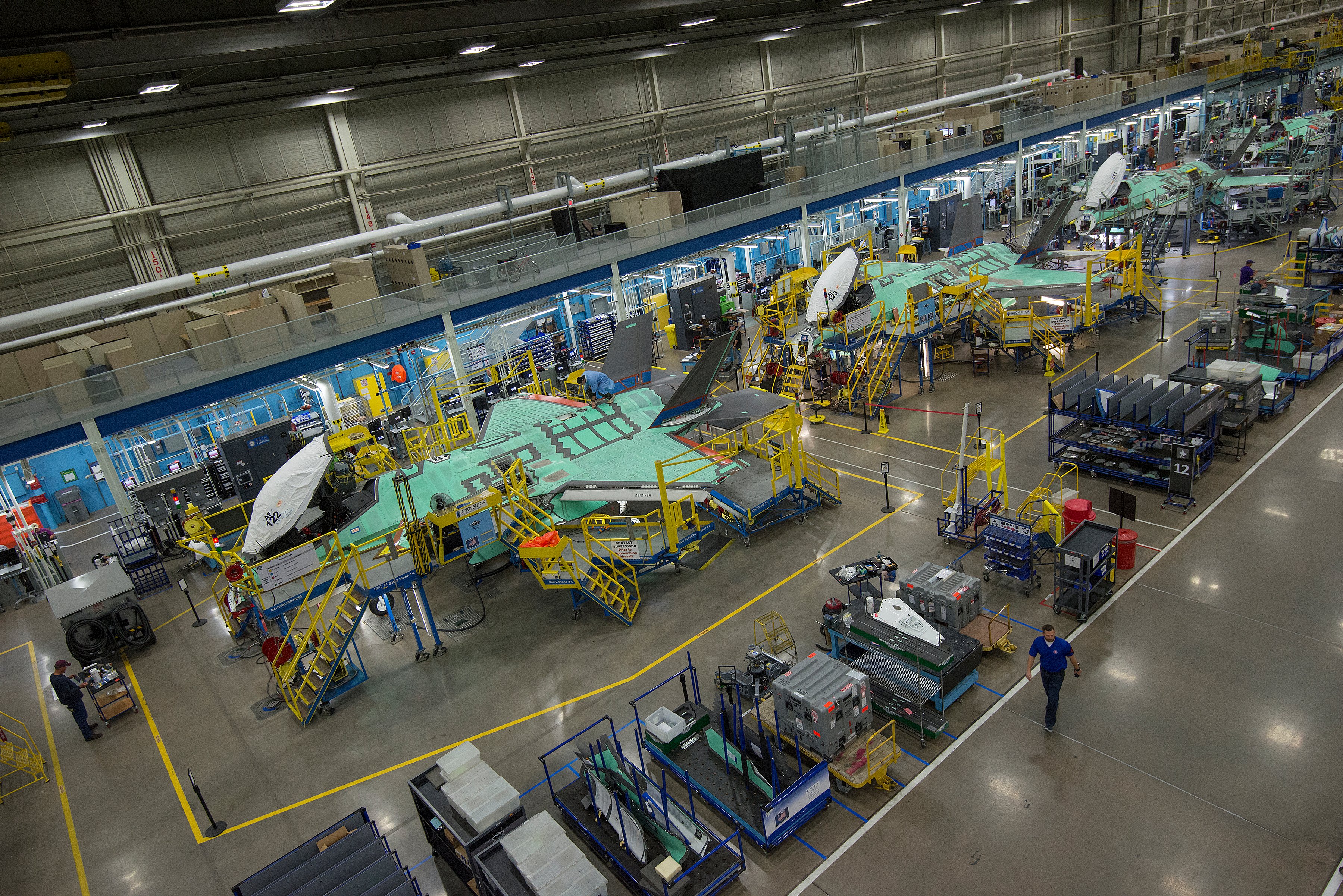
The Lockheed Martin F-35 production line at Fort Worth, Texas. Lockheed Martin photo by Alexander H Groves
The potential intelligence value of the components also has to be considered in the context of foreign material exploitation, or FME. Major military powers maintain dedicated capabilities to recover, examine and characterize foreign weapons, aircraft, sensors, materials and other equipment. The objective is not necessarily to reproduce an entire system. More important is determining how something is built, what materials and manufacturing techniques are used, how individual components perform, and where industrial strengths or limitations may lie.
That is why countries have historically gone to extraordinary lengths to recover even crashed or damaged pieces of sensitive military hardware. The bigger the prize, the more risk an intelligence service would be willing to take in order to realize a recovery.
The sensitivity surrounding the physical remnants of an F-35 is not new. When a Japan Air Self-Defense Force F-35A disappeared over the Pacific in 2019, the search quickly became more than a rescue operation. U.S. and Japanese forces mounted an extensive effort to locate the wreckage, with U.S. Navy P-8A aircraft and a destroyer joining the search. TWZnoted at the time that even scattered F-35 wreckage could expose valuable technological secrets, while the aircraft’s location on the seabed raised the prospect of an underwater espionage and recovery operation.
That concern has also been evident in subsequent F-35 recovery operations. In 2022, the U.S. Navy recovered an F-35C from roughly 12,400 feet in the South China Sea after a carrier landing accident, removing the possibility that the aircraft could be accessed by another country.
At this point, there is no public evidence that the Hong Kong diversion was a deliberate Chinese intelligence operation, although it is certainly possible. It is also unclear whether Chinese authorities have examined the F-35 parts or what level of new and useful information has been recovered from them.
If, as reported, Chinese authorities have taken possession of the parts and have not returned them, that would be an extraordinary development. If the diversion was genuinely the result of a shipping or logistics error, the outcome would itself be extraordinary. It would raise serious questions about the security controls surrounding the movement of F-35 hardware even without evidence of deliberate interference.
The timing is also notable. Chinese President Xi Jinping arrived in Washington this week for a state visit with President Donald Trump, with the two leaders meeting amid broader disputes involving technology, security, and the future of U.S.-China relations. Whether the F-35 shipment comes up directly in those discussions is not known, but it would be an obvious subject for U.S. and Chinese officials to address through diplomatic channels.
"Ladies and gentlemen, the President of the United States Donald J. Trump and First Lady Melania Trump, accompanied by the President of the People's Republic of China Xi Jinping and Madame Peng Liyuan." pic.twitter.com/hyPHOBC99Q
For now, however, the central question remains how the parts got there. Until that is answered, we won’t know if this was a simple logistics failure or a deliberate intelligence operation. And beyond that, what China already knew about the components it now may have in its possession — a question we may never truly get an answer to.

 Login



















 (@zhao_dashuai)