The Alfa Watan, a ship sailing under the flag of Togo, and the Able, a vessel flying the flag of Palau, were targeted by naval and aerial drones on Tuesday (6 October) morning in the Black Sea near the Bulgarian coast.
The Alfa Watan sank, and rescuers at the scene found only an overturned boat, life jackets, and fragments of the ship’s equipment, according to Bulgarian prime minister Rumen Radev.
The 18-member crew of the Able caught fire, but was successfully evacuated to the port of Varna.
“This is an unacceptable attack in Bulgaria’s exclusive economic zone,” Radev said after an emergency government meeting on Tuesday.
Bulgaria had discussed the drone attack inside the EU and Nato, he added.
It came after a drone also sank a Turkish-owned grain ship, the Royad Mammadov, killing two sailors, on Monday.
But even though Ukraine’s president Volodymyr Zelensky was quick to blame Russia, the perpetrators have not been formally identified yet, in a grey-zone conflict in which deniability is a tactic.
Russia and Ukraine have been escalating attacks on ships for several months in an effort to disrupt each other’s export economies.
And Moscow’s attacks have largely halted Ukraine’s maritime exports of agricultural products, while Kyiv’s attacks have forced Russia to seek alternative routes for exports.
“The situation in the Black Sea is increasingly concerning,” said EU Commission’s president Ursula von der Leyen on X on Tuesday.
Ukraine has “proposed concrete steps to de-escalate the situation”, also said Zelensky.
But for all his good will, the attacks were just part of a broader deterioration in Europe’s security environment, covering also Nato’s eastern and southern borders.
‘Shadow war’
For Czech president Peter Pavel, speaking to Czech daily Deník N on 22 September, the most imminent danger came from a false-flag attack in Estonia or Latvia, to test Nato’s resolve.
This article continues, but the full version is available only to EUobserver.com subscribers. Visit account.euobserver.com/membership
The NATO Military Committee, the bloc’s highest military authority, has gathered in Kiev despite Ukraine not being a member.
The visit comes just a day after US Secretary of State Marco Rubio said Ukraine’s NATO membership “is not on the table as we speak,” noting that accession would require unanimous backing.
Kiev’s potential NATO membership has been one of the central issues of the Ukraine conflict. Moscow has long opposed the US-led military bloc’s eastward expansion and has made Ukrainian neutrality a key condition of any settlement, arguing that NATO’s presence there would pose a direct threat to Russian national security.
Ukraine made joining NATO a foreign policy priority following the Western-backed Maidan coup in Kiev in 2014 and later enshrined the objective in its constitution. In September 2022, Vladimir Zelensky demanded “accelerated accession.” As recently as July, he argued that Ukraine’s membership would be “entirely natural.”
NATO continues to officially describe Ukraine as being on an “irreversible path” toward entry. However, former Ukrainian commander-in-chief Valery Zaluzhny, who now serves as Kiev’s ambassador to the UK, said in August that he saw no realistic prospect of it happening.
In a video address on Wednesday, Admiral Giuseppe Cavo Dragone, the chair of the NATO Military Committee, announced that he and military representatives from all 32 member states had arrived in Kiev. It is the committee’s first such visit to Ukraine in eight years.
“We are here in full strength with a clear message: the bond between NATO and Ukraine is stronger and stronger,” Dragone said.
According to the NATO official, the delegation discussed Ukraine’s military priorities with the country’s top brass, as well as lessons from the conflict that could be used to strengthen the bloc’s preparedness for “current and future threats.”
Despite being outside NATO, Ukraine has developed extensive military ties with the bloc, which has been pumping ever more sophisticated weaponry into the country since 2022. Moscow has accused the bloc, especially its European member states, of unnecessarily prolonging the bloodshed and waging a proxy against Russia to the “last Ukrainian.”
A number of influential member states, including the US and Germany, have repeatedly voiced opposition to NATO membership for Kiev. Speaking to the German newspaper Handelsblatt in early July, NATO Secretary-General Mark Rutte acknowledged that “there is no unanimous support now” for Ukraine’s admission to the bloc.
US President Donald Trump and other senior American officials have ruled out Ukraine joining NATO as part of a potential peace settlement with Russia. Speaking to reporters ahead of his February 2025 White House meeting with Zelensky, which infamously devolved into a shouting match, Trump reiterated: “NATO – you can forget about.”
The European Commission has now declared enlargement a “geopolitical imperative” – with important implications.
The bloc has just presented a package of reforms designed to prepare the Union for new members – with Ukraine and Moldova at the center of the effort, alongside Albania and Montenegro.
Commission President Ursula von der Leyen stated that “Europe’s future depends on the choices we make today,” framing expansion as essential to making the bloc “more resilient” and better able to shape its own destiny.
Candidate countries are already advancing: Ukraine and Moldova opened their first negotiating cluster in June 2026, and in July, opened Cluster 6 on external relations, foreign policy, security and, importantly, defense. In the words of Vessela Cherneva: “Currently, EU membership is the only way to integrate Ukraine’s and Europe’s security systems.”
The Commission plans “indicative roadmaps” for these four frontrunners (Ukraine, Moldova, Montenegro, and Albania) in its 2026 Enlargement Package, provided reform momentum continues. Gradual integration into strategic sectors such as energy, transport, digital networks and defense is explicitly on the table
This is no longer presented as a purely technical or economic process. Again, Brussels itself now describes enlargement as a “geopolitical” tool linked to European safety, prosperity and security. One may recall that earlier enlargement rounds were often framed in terms of shared values and market access.
Political scientist John Mearsheimer has long argued that the West’s “triple package” of policies – NATO enlargement, EU expansion and Western-style democracy promotion – added fuel to a fire waiting to ignite – meaning the Ukrainian crisis since 2014.
Actually, in his view, the trouble over Ukraine began in earnest at NATO’s 2008 Bucharest summit, when the alliance announced that Ukraine and Georgia “will become members”.
Russian leaders treated this as an existential threat. Washington ignored the red line and continued to push Ukraine toward Western institutions, including closer ties with the EU.
Back in his 2014 analysis Mearsheimer noted that the Union’s eastward march and the Eastern Partnership initiative were viewed in Moscow as hostile enough. “In the eyes of Russian leaders, EU expansion is a stalking horse for NATO expansion,” he wrote.
In this framework, the West’s efforts to promote “democracy” and “peel Ukraine away” from Russia completed the package. When Yanukovych rejected an EU deal in 2013, the “spark”, as Mearsheimer puts it, came. The result was crisis, then war. If one applies that framework consistently today, the resulting picture is quite straightforward.
To be clear, EU membership is not identical to NATO membership. Yet from a Russian great-power perspective the distinction becomes less meaningful when the two institutions are moving in the same geographical direction.
EU accession after all entails progressive alignment on law, foreign-policy positions, sanctions, energy, borders and increasingly elements of security and defense cooperation. The point is that an EU-member Ukraine would be economically, legally, institutionally and politically embedded in a Western bloc – and the same applies to the other Eastern European states. That, in broad terms, is precisely the structural transformation process Mearsheimer argued helped fuel the 2014 and then the 2022 crisis.
Ukraine remains the clearest case in point: before 2014 it functioned as a contested buffer. Mearsheimer (as well as specialists of the caliber of Henry Kissinger and Stephen Walt) argued a neutral Ukraine would be preferable, from a Western perspective – akin to Austria during the Cold War. In any case, the trajectory now points toward full Western institutional integration.
Moldova is arguably just as sensitive: it has a Russian military presence in Transnistria, occupies a strategic position between Ukraine and Romania – and is accelerating toward EU membership while deepening practical cooperation with Western militaries.
The recent Independence Day parade in Chișinău illustrated the point (without Soviet symbology, for the first time), as I’ve commented: Moldovan troops marched with Western weapons and vehicles; contingents from the Ukraine and eight NATO members, including the US, took part. NATO’s Political Committee had visited just days earlier, describing intensified cooperation.
Moldova for its part remains formally neutral, yet it is simultaneously negotiating EU accession – including the cluster on external relations and defense policy – and publicly displaying Euro-Atlantic partnerships.The Western center of gravity (post-USAID) in Moldova is shifting toward Brussels, which has stepped in with a large Reform and Growth Facility.
From Moscow’s point of view, the cumulative process looks like progressive incorporation of its western strategic environment into a Western political-security system.
Historically, great powers care intensely about the direction of strategic change in their immediate neighborhood. They typically do not wait until the process is complete before reacting – as seen in 2022.
In any case, the EU now frames enlargement itself as a geopolitical and security instrument. This language reinforces the very security dilemma Mearsheimer identified over a decade ago. The buffer zone between Russia and the Western institutional order continues to shrink. The risks of further escalation keep rising eastwards – adding to the tensions farther north, in the Baltic.
Uriel Araujo, Anthropology PhD, is a social scientist specializing in ethnic and religious conflicts, with extensive research on geopolitical dynamics and cultural interactions.
Litauen ist militärstrategisch ausgesprochen wichtig, denn sollte es zwischen der NATO oder EU und Russland zu einem militärischen Konflikt kommen, wäre Litauen das erste Schlachtfeld. Der Grund liegt in Litauens geografischer Lage, denn das Land liegt im sogenannten Suwalki-Korridor, der Russland von seiner Exklave Kaliningrad trennt. Im Kriegsfall würde die NATO als erstes versuchen, Kaliningrad […]
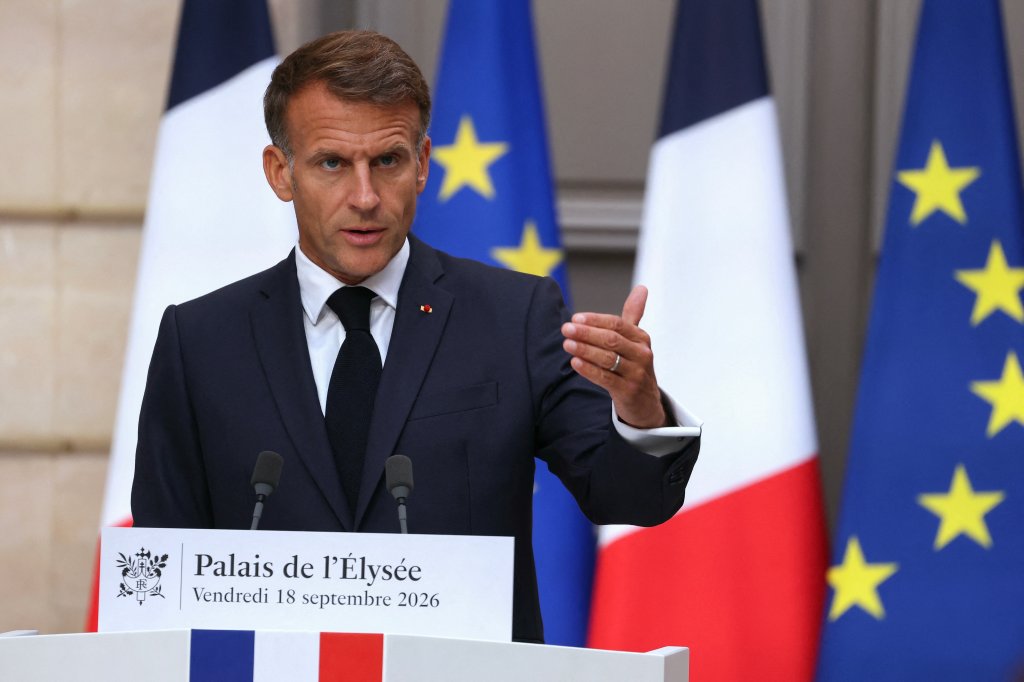
French President Emmanuel Macron touted France’s nuclear strength on Tuesday following the launch of an upgraded ballistic missile, as Paris seeks to expand its nuclear arsenal and deepen military coordination with European allies amid tensions with Russia.
“Today we are stronger. The message has been sent loud and clear for wherever it must be received,” Macron said in a video posted on X showing him watching the launch, according to Reuters.
His remarks accompanied the firing of an M51.3 missile from the submarine Le Vigilant off Brittany. The missile carried no nuclear warhead.
France’s Defense Ministry described the operation as a certification test following the submarine’s extensive maintenance overhaul. While its announcement did not mention Russia, Macron presented the launch as a broader demonstration of French military power.
Moscow warns against threats to Kaliningrad
The French show of force follows Russian President Vladimir Putin’s warning last week against Western moves threatening Kaliningrad, the Russian exclave situated between NATO members Poland and Lithuania.
Putin cautioned against escalating the confrontation over Ukraine through threats to the territory, which Moscow has said it would defend with nuclear weapons if necessary.
The Russian president also reiterated that Moscow had no plans to attack European countries and sought peaceful coexistence.
NATO has maintained that none of its “exercises or activities pose a threat to the territory of the Russian Federation.”
The dispute places Tuesday’s launch within a wider confrontation over European security, even as French authorities identify its immediate purpose as verifying the submarine’s operational readiness.
Paris seeks broader nuclear role in Europe
Macron announced in March that France would increase its nuclear arsenal and offer European partners closer involvement through joint exercises and expanded consultations.
The initiative also envisages possible temporary deployments of nuclear-capable assets on allied territory, extending the scope of French nuclear cooperation in Europe.
France already maintains approximately 290 nuclear warheads, the world’s fourth-largest arsenal, at an annual cost of roughly €5.6 billion, according to Reuters.
Four ballistic missile submarines underpin its sea-based deterrent, alongside nuclear weapons deployed by aircraft.
Upgraded missile extends French strike capabilities
Tuesday’s launch was the M51.3’s first from a submarine. An earlier land-based qualification test took place in November 2023, before the missile entered operational service in October 2025.
French authorities say the upgraded weapon offers greater range, improved accuracy, and enhanced ability to penetrate missile defenses.
Its exact range remains undisclosed, although publicly available estimates generally put the M51 family’s reach at around 9,000 kilometers or more.
The Defense Ministry said the unarmed launch complied with France’s international obligations and confirmed Le Vigilant’s ability to operate the upgraded weapons system.
Spain is moving ahead with plans to rebuild its airborne signals intelligence (SIGINT) capability, with the Airbus A321 — part of the highly successful A320 twin-engine airliner family — selected as the basis for three new SIGINT aircraft.
The choice is disclosed in the latest issue of Spain’s Revista de Aeronáutica y Astronáutica, the Ministry of Defense’s official publication. Airbus and Indra are currently working on the program’s conceptual design under the Santiago II initiative, which aims to deliver a crewed platform capable of collecting and processing intelligence across the electromagnetic spectrum.
The program is intended to restore a capability Spain lost when its last Boeing 707 SIGINT aircraft was retired in 2014. Equipped with Israeli SIGINT equipment, this 707 was designated TM.17-4 in Spanish service, and nicknamed Reina del Espectro (Queen of the Spectrum).
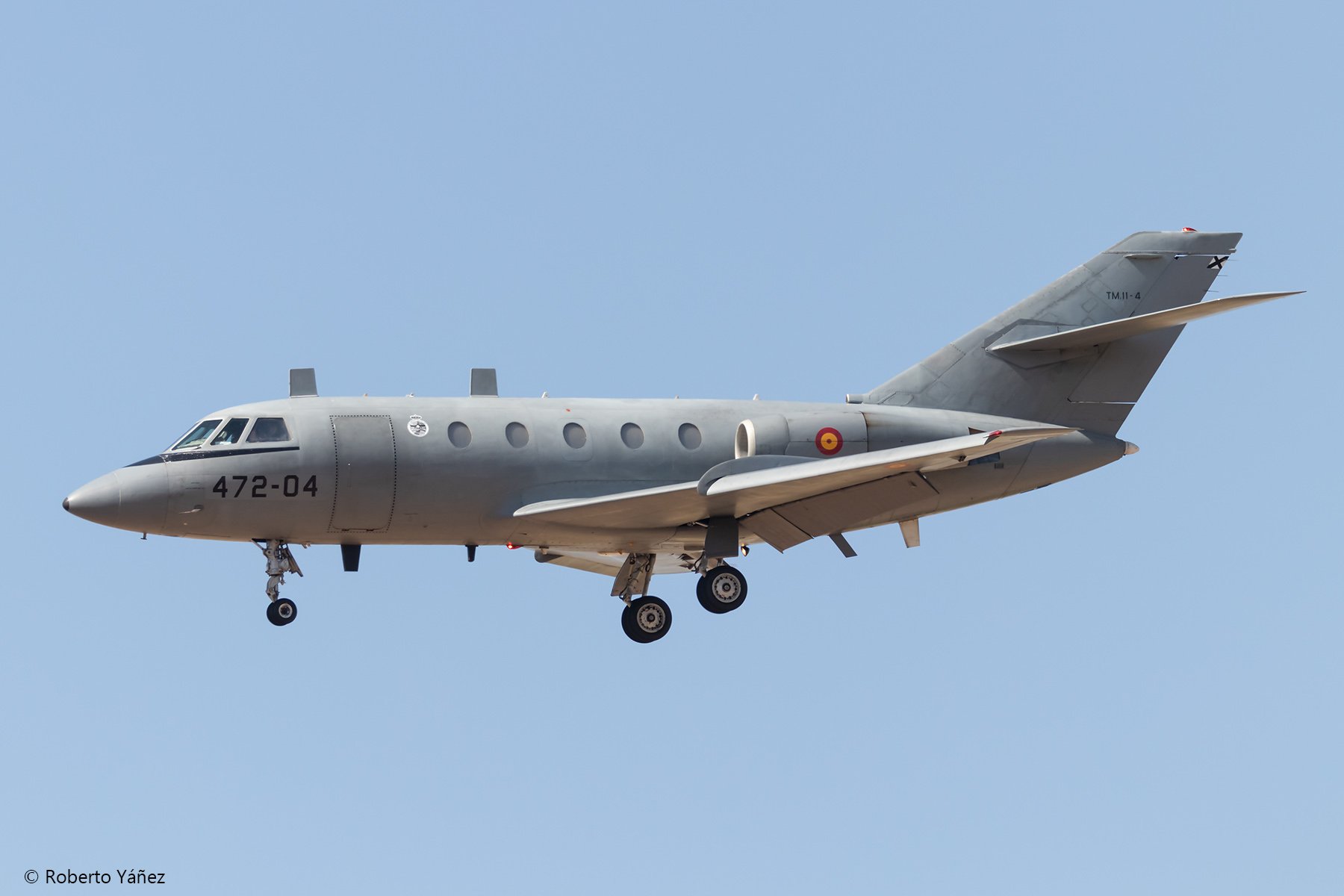
It served in the 47th Mixed Air Force Group, alongside four Dassault Falcon 20s (designated TM.11 in Spain), that were used for navigation aid calibration, remote sensing, and electronic warfare training.
A Spanish Air Force Falcon 20 EW. Roberto Yáñez/Spanish Air and Space Force COPYRIGHT ROBERTO YANEZ
The new aircraft will have to undergo extensive modification, including the installation of antennas, receivers, signal-processing equipment, operator consoles, communications systems and associated electrical and cooling infrastructure.
Indra is expected to provide much of the mission-system architecture. The company’s AirSign concept, unveiled in 2023, incorporated COMINT and ELINT sensors alongside data fusion, real-time signal analysis, communications, and command-and-control functions.
An earlier Airbus concept for a multi-mission A320neo family, including an AEW&C version with conformal radar arrays, a SIGINT platform, and a VIP jet. Airbus
While COMINT is concerned primarily with collecting intelligence from communications, ELINT focuses on non-communications electromagnetic emissions, including radar signals. Together, these capabilities provide a much fuller intelligence picture of not only what the enemy is doing in terms of their electronic emissions, but what they are planning, and their processes of operation.
Bizjets have become the platform of choice for many new intelligence aircraft, particularly where operators want a relatively low-cost, long-endurance platform with a smaller logistical footprint. Aircraft such as the Bombardier Global 6000/6500, Gulfstream G550, and Dassault Falcon 8X have been adapted for electronic intelligence and special-mission roles.
An Israeli Air Force Nachshon Oron multi-missionintelligence-gathering aircraft, based on a Gulfstream G550 airframe. Israeli Air Force
Spain’s decision to use the substantially larger A321 points instead toward the other end of the spectrum, providing significantly more room for antennas, processing hardware and crew, and allowing the aircraft to carry a much larger and more power-hungry mission system than the typical bizjet-based SIGINT platform.
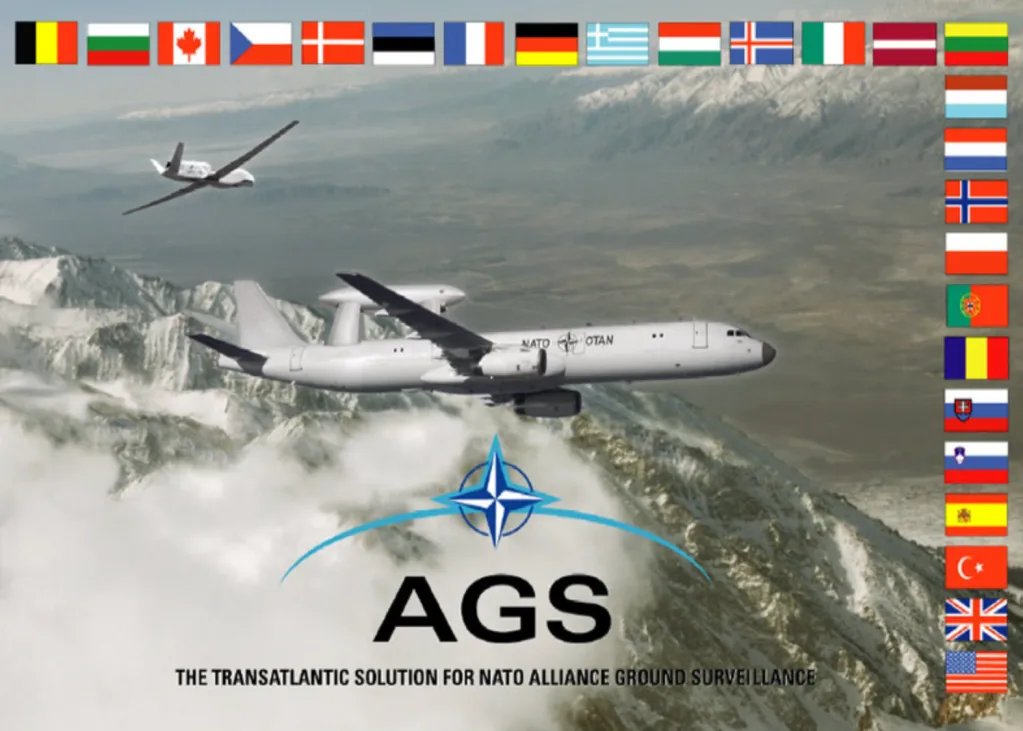
At one time, the A321 was envisaged as the platform for NATO’s Alliance Ground Surveillance (AGS) system, which provides the alliance with reconnaissance capabilities, including synthetic aperture radar. However, this capability was eventually fielded on NATO’s fleet of five RQ-4D Phoenix uncrewed aerial vehicles, specialized versions of the Global Hawk.
Early concept artwork showing an A321 equipped with NATO’s Alliance Ground Surveillance (AGS) system. NATO
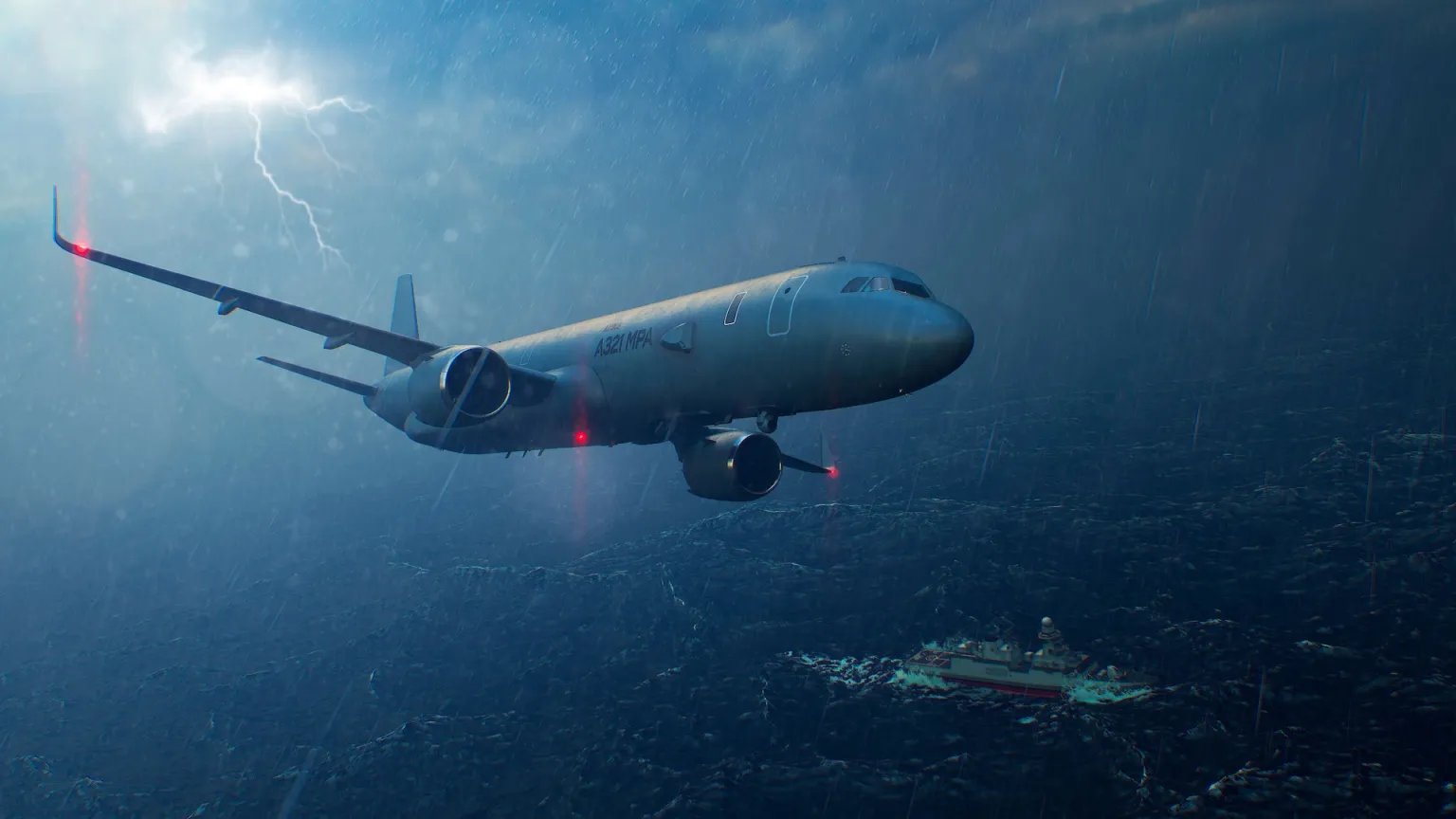
Elsewhere in Europe, Airbus launched a risk-assessment study for France’s future maritime patrol aircraft (MPA), also to be based on an A321 platform. Billed as a “flying frigate” by the company, the new MPA is intended to replace the French Navy’s Dassault Atlantique 2 fleet and emerges at a time when NATO nations are increasingly adopting the in-production Boeing P-8 Poseidon for their maritime patrol requirements.
A rendering of the A321 MPA, France’s future maritime patrol aircraft. Airbus
Airbus does, however, have relevant experience in the conversion of airliners for military roles. The company’s A330 Multi-Role Tanker Transport (MRTT) aircraft are modified at Airbus’s Getafe facility, providing an existing industrial base for converting commercial-derived aircraft into specialized military platforms.
The A330 Multi-Role Tanker Transport (MRTT) conversion line at Airbus’s Getafe facility in Spain. Airbus
The Santiago II program is currently in its definition phase. Spain awarded Airbus and Indra a €16-million ($17.9-million), 18-month contract to study the platform and define the overall system. A subsequent phase will cover modification and integration of the three aircraft. The Spanish Ministry of Defense estimates the complete program at approximately €436 million ($489 million).
The program also has an industrial objective. Spanish authorities want domestic industry to acquire expertise and control over the integration of the SIGINT system, rather than simply purchasing a finished foreign intelligence aircraft.
The A321-based Santiago II fleet is intended to address the shortfall left by the retirement of the specially modified Boeing 707, providing a substantially more modern platform, and with more airframes for improved availability.
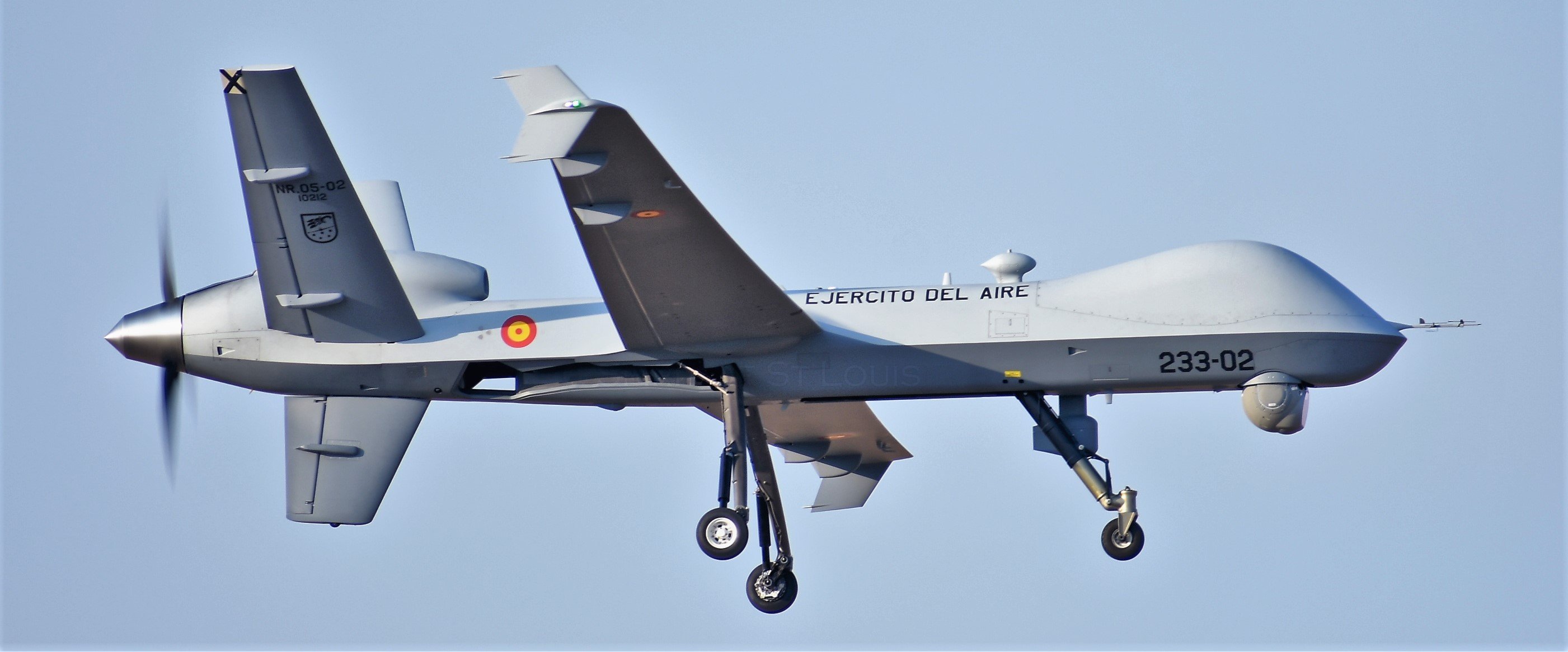
The three new aircraft will also complement Spain’s emerging uncrewed SIGINT capability. The Spanish Air and Space Force is introducing the L3Harris Scalable Open Architecture Reconnaissance (SOAR) system on its Predator B drones, giving the fleet ELINT and COMINT collection capabilities. The two systems are likely to fill different niches: the Predator B offers a relatively persistent, lower-cost uncrewed collection option, while the much larger A321 will provide substantially greater payload capacity, onboard processing, and crewed mission-management capabilities. Together, they will give Spain a layered airborne SIGINT architecture.
A Spanish Air and Space Force Predator B. Luis Alfonso Hernández Carrón/Spanish Air and Space Force A.Trigo
Spain’s decision also reflects a broader drive to invest in long-range SIGINT platforms capable of collecting, processing, and fusing vast amounts of electromagnetic data, as competition over the electromagnetic spectrum becomes increasingly central to modern warfare.
If the program remains on schedule, three heavily modified A321s will eventually provide Spain with a persistent airborne capability to detect, classify, locate, and analyze electromagnetic emitters in support of a host of operations. Especially when paired with the Predator B, the capability will likely be of considerable interest to other NATO partners in Europe, too.
Dass die NATO Russland bei Kaliningrad immer heftiger provoziert, wird von westlichen Medien zwar verschwiegen, ist aber nicht zu bestreiten. NATO-Staaten führen bei Kaliningrad fast ununterbrochen Manöver durch, in denen sie die, Blockade, Bombardierung und Eroberung der russischen Exklave üben. Russland hat daher letzte Woche eine deutliche Warnung an die NATO ausgesprochen, über die ich […]
Die Ukraine bekommt immer mehr Probleme, weshalb Kanzler Merz mal wieder nach Kiew gefahren ist, um über eine Milliarde Euro deutscher Steuergelder zu verschenken. Deutschland bekommt auch immer mehr Probleme, aber für die Deutschen hat Merz kein Geld, denn sonst reicht es nicht für Kiew. Aber was sind die Gründe für die aktuellen Probleme der […]
Auch am letzten Donnerstag haben Robert Stein und ich wieder eine aktuelle Folge von Tacheles aufgenommen, die seit Freitagabend online ist. Sollte YouTube die Sendung löschen, finden Sie sie auch hier bei NuoViso.
Der Valdai-Klub ist der wichtigste russische Thinktank zur Geopolitik und inzwischen international als eines der wichtigsten Expertentreffen zu dem Thema anerkannt. Zum Erfolg des Valdai-Klubs und seiner hochrangigen Besetzung hat sicherlich beigetragen, dass der russische Präsident Putin jedes Jahr daran teilnimmt. Dabei hält er eine etwa einstündige Grundsatzrede über die russische Sicht auf die aktuelle […]
Non basta rendere sicuri i singoli sistemi di intelligenza artificiale, bisogna guardare alle loro interazioni. È una lezione lasciata dalla crisi finanziaria: comportamenti individualmente razionali possono produrre risultati collettivamente disastrosi.
Russland hat die NATO davor gewarnt, die Lage um die russische Exklave Kaliningrad weiter zu eskalieren. Für diese Warnung gibt es handfeste Gründe, das Publikum der deutschen Mainstream-Medien jedoch nicht kennt. Entsprechend leicht war es für den Spiegel, die russische Warnung in ein vollkommen falsches Licht zu stellen. Schauen wir uns daher zunächst den Grund […]
As its war on multipolarism expands, Washington is converting the Western economy to arms production, draining its client states, and eroding its own social foundations — repeating the terminal trajectory of the British Empire. For decades, the US has leveraged its many client states as extensions of its own military, economic, financial, and political power, […]
Obwohl ich eine anstrengende Woche als Wahlbeobachter bei den Parlamentswahlen in Russland hatte, haben wir es geschafft, wieder eine Folge von Tacheles mit Röper und Stein aufzuzeichnen, die nun online ist. Sollte YouTube die Sendung löschen, finden Sie sie auch hier bei NuoViso.
Defence Minister David McGuinty says he's taking a 'cautious' approach to drawing conclusions from intelligence as European leaders warn Moscow may be preparing attacks on NATO.
Defence Minister David McGuinty says he's taking a 'cautious' approach to drawing conclusions from intelligence as European leaders warn Moscow may be preparing attacks on NATO.
The dire messaging, growing louder by the day, is being delivered amid concerns about intensifying hybrid attacks that Russia is using to spread fear throughout the continent, fray the NATO alliance, and make it think twice about continuing support for Ukraine. Intel has increasingly pointed to the possibility that this could culminate in a much more severe operation, one that would be aimed to challenge NATO at its core.
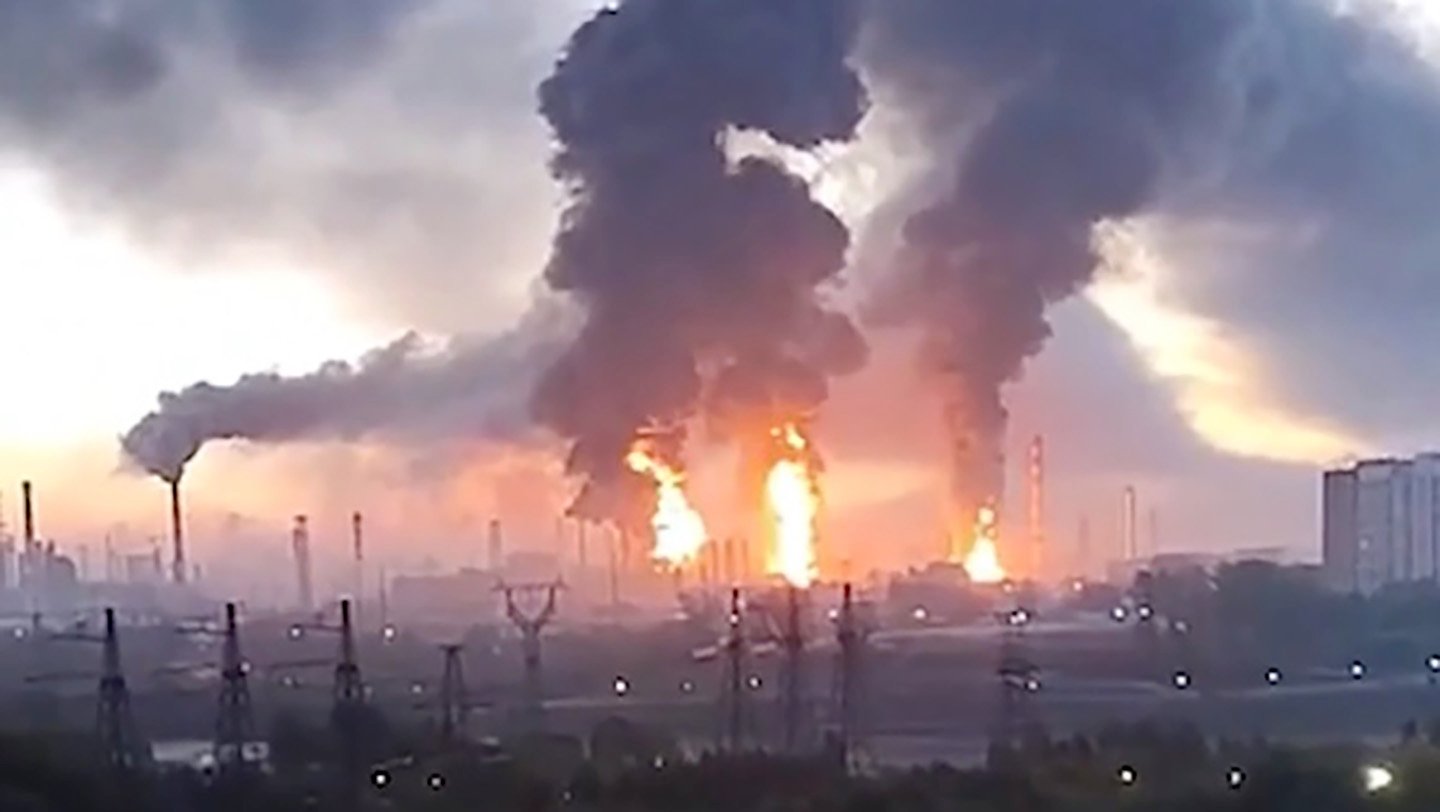
Our long-range responses had a very significant impact in the Moscow region last night. One of Russia’s key oil industry facilities and the aggressor’s logistics facility were hit. These are billions of dollars that sustain the war machine. The systems used included FP-1, RZ-100,… pic.twitter.com/ka5mlDSgb7
— Volodymyr Zelenskyy / Володимир Зеленський (@ZelenskyyUa) September 20, 2026
“There has definitely been an uptick” in Russian so-called hybrid warfare actions of late, a senior NATO military official told TWZ on Monday morning. “Despite its accusatory statements towards NATO, which remains a purely defensive alliance, Russia remains the aggressor. We see that clearly in Ukraine, where Russia is losing more than just the war it started. It therefore may incorrectly perceive the only way out is through increasing its hybrid campaign. That’s a losing proposition, because we are ready to respond, which we have shown.”
The official’s comments come after the shoot down last week of a suspected Russian drone that entered Lithuanian airspace from Belarus and in the wake of recent defensive actions by several European nations.
On Friday, French President Emmanuel Macron told reporters that his country had recently been targeted by Russian hybrid attacks. He ordered “the government to prepare a plan to protect our critical infrastructure” and the “most sensitive” defense industry and technology sites against drone and cyberattacks.”
Macron said the “intention behind it is to intimidate us and to derail the effort to support the Ukrainians. The consequence will be the opposite.”
France’s President Emmanuel Macron ordered the preparation of a “plan to protect our critical infrastructure” in the face of “Russian hybrid attacks.” (Photo by Thomas SAMSON / POOL / AFP) THOMAS SAMSON
In addition to Macron’s warnings, the French newspaper Le Monde reported that the French military was carrying out clandestine operations against Russia. However, the unnamed source cited offered no details and TWZ cannot independently verify that claim.
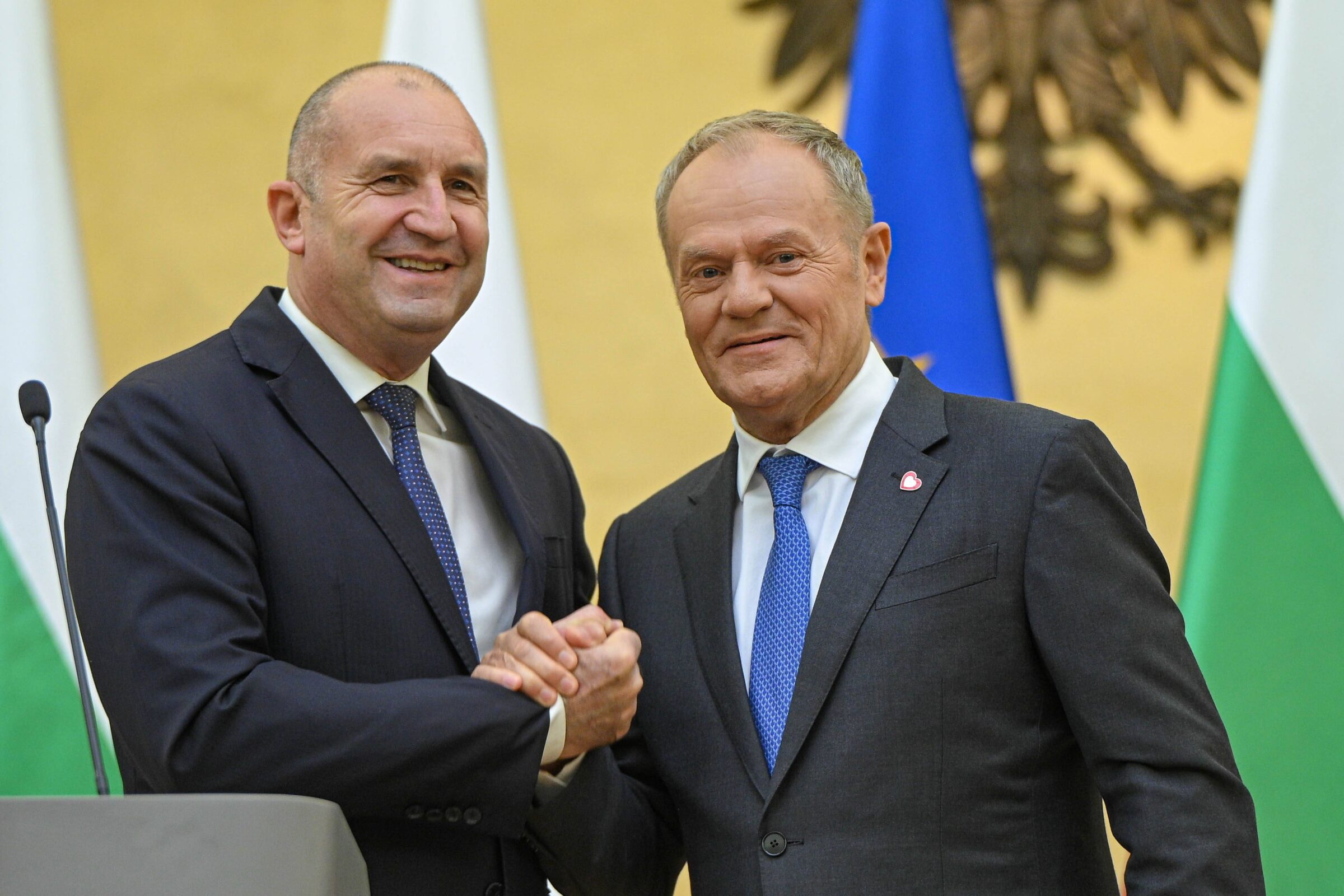
A day before Macron’s statements, Polish Prime Minister Donald Tusk warned in a speech to the Polish parliament that Russia is planning hybrid strikes with drones or rockets on European countries supporting Ukraine, including Poland.
The Polish leader offered an assessment about Moscow’s motives similar to Macron’s.
Russia will pretend the attacks are “accidental” in order to “paralyze or at least weaken the motivation of NATO countries” to rush to the defense of the member state coming under attack, The Associated Press noted.
“There is a real risk that drones or other types of projectiles will enter the territory of one or several countries on the eastern flank and even cause destruction,” Tusk cautioned. In July, a Russian AS-23 cruise missile crashed in Poland.
This video grab taken from footage of TVN Poland on July 30, 2026 shows the Polish army securing a large crater from a Russian missile that crashed in Poland. (Photo by various sources / AFP) –
In the face of these growing threats, officials in Lithuania are updating evacuation plans in case of a Russian attack.
“Poland is to be one of the evacuation destinations from the capital,” Žygimantas Solovjovas, head of the Civil Defense Department at Vilnius City Hall, told Polish Radio.
Evacuation should begin before a direct threat arises, Solovjovas stressed. “Vilnius residents should not assume that they will flee the city along an evacuation route while under fire,” Solovjovas explained, adding that in such a situation, one must seek shelter.
“One of the reasons for preparing this plan was to get residents accustomed to the idea that this should be a controlled process,” he noted. “If we allow chaos to ensue, the entire operation will be much more difficult.”
In Germany, where Defense Minister Boris Pistorius said Russia could attack by 2029, hospitals are preparing for a future influx of war-related casualties.
“In a report that gamed out potential scenarios should Russia invade NATO territory, the Bundeswehr calculated that as many as 1,000 wounded soldiers could arrive in Germany each day,” Bloomberg News reported last week. “As the country’s five military hospitals would quickly reach capacity — and the law requires that civilian hospitals help during wartime — the system would likely come under unprecedented strain, and could be forced to triage soldier and civilian care.”
As we noted last week, the alliance writ large is taking action against the growing Russian threats as well.
NATO’s air commander, U.S. Air Force Lt. Gen. Jason T. Hinds, told reporters, including from TWZ, last week that he was tasked with implementing two NATO air and missile defense plans. Hinds is also the Air Force’s top officer in Europe, serving as the commander of U.S. Air Forces in Europe/U.S. Air Forces Africa (USAFE).
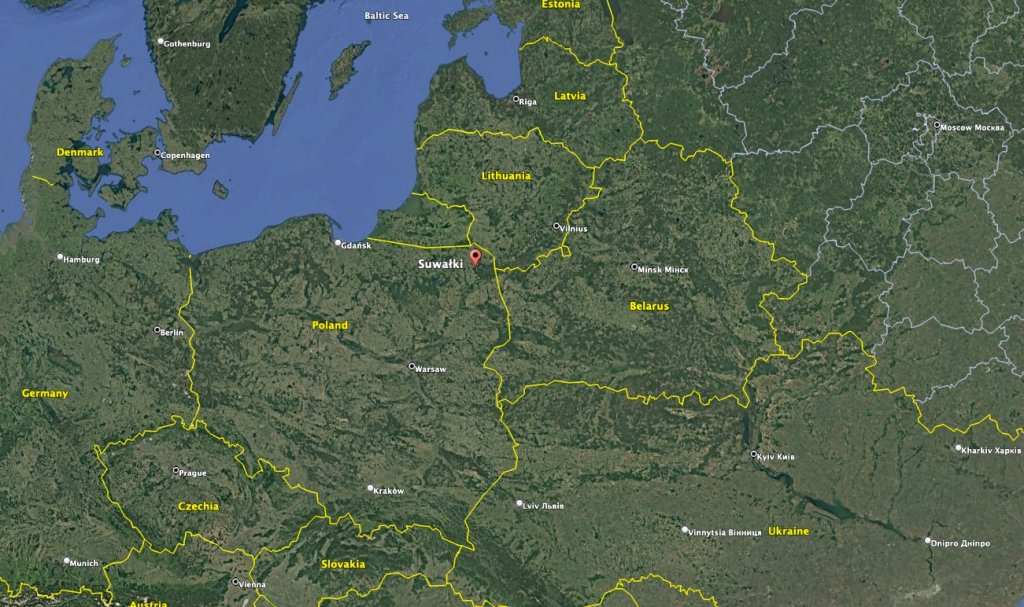
Adding to the concerns about Moscow’s actions, Russia’s client state Belarus just wrapped up mechanized and tank battalion training adjacent to the Suwalki Gap. That’s the border between Poland and Lithuania that separates the Russian enclave of Kaliningrad from Belarus. It has long been considered a potential flashpoint for a war in Europe and the training exercise exacerbated concerns that NATO allies are not prepared for a Russian attack there.
The Suwalki Gap between Kaliningrad and Belarus is also the only land border between Poland and the Baltic states. (Google Earth)
Russia is also making some potentially concerning preparations.
The Defense Ministry is reportedly seeking “an additional 16,000 to 20,000 hospital beds for wounded soldiers in the Northwestern Federal District,” according to the Russian Volya Telegram channel. That district is located near the Baltics.
“Military hospitals have been struggling to cope with the influx of wounded since 2023, so the Ministry of Defense is increasingly using civilian hospitals (including maternity hospitals and specialized medical facilities) for its needs,” Volya stated. “Some of these hospitals are being completely repurposed for military use, but more often, civilian hospitals allocate a few departments to treat the wounded, while continuing to provide care for civilian patients in other departments.”
The expansion “will primarily affect regions within the Northwestern Federal District: Karelia, St. Petersburg, Leningrad and Novgorod regions, as well as Smolensk,” which are near the Baltics “and the Moscow regions.”
Militarnyi: In the fall of 2026, the Russian Federation plans to add 16,000-20,000 military beds in civilian hospitals in the Northwestern Federal District, located near the Baltic states. pic.twitter.com/0sLMvoCxfC
In addition, the Border Service Directorate for St. Petersburg and the Leningrad Region announced that from September 16 to September 26, 2026, there would be a restriction on access to the border of the Slantsevsky and Kingiseppsky districts near the Estonian border.
“These measures aim to prevent violations regarding border regulations, migration laws, and the protection of aquatic biological resources,” the directorate claimed, according to Russian regional officials.
The new rules prohibit people from being on the shorelines or in small vessels along a portion of the Narva River and from hunting or carrying firearms in the border area. In addition, they forbid the “presence and movement of individuals and vehicles during hours of darkness outside of populated areas within the five-kilometer strip of territory along the state border in the Kingiseppsky and Slantsevsky districts.”
Obviously, the stated reasoning behind this was taken with great skepticism from neighboring Baltic NATO countries who are already on edge.
Russia's FSB imposes a nighttime curfew along the Estonian border near Narva, banning people and vehicles outside towns and villages within 5 km of the border in the Slantsy and Kingisepp districts from Sept 16–26 pic.twitter.com/8Ez8AvMXFy
Though Russia remains bogged down in its war on Ukraine and is suffering heavy losses of personnel and equipment, some European intelligence officials suggest Vladimir Putin could still carry out a small-scale invasion of NATO territory.
“It’s possible,” Michal Koudelka, the head of the Czech Republic’s BIS security service, told The Guardian about a potential Russian thrust into NATO. “It could involve a limited incursion, false-flag provocations, a massive influence campaign,” he told the publication, adding that this scenario could play out in a matter of “months, not years.”
While Russia has been carrying out a range of hybrid actions against Europe for years, including cyberattacks, drone incursions and sabotage, last month’s foiled attack on Germany’s Leipzig-Halle airport is seen in European intelligence circles as an inflection point.
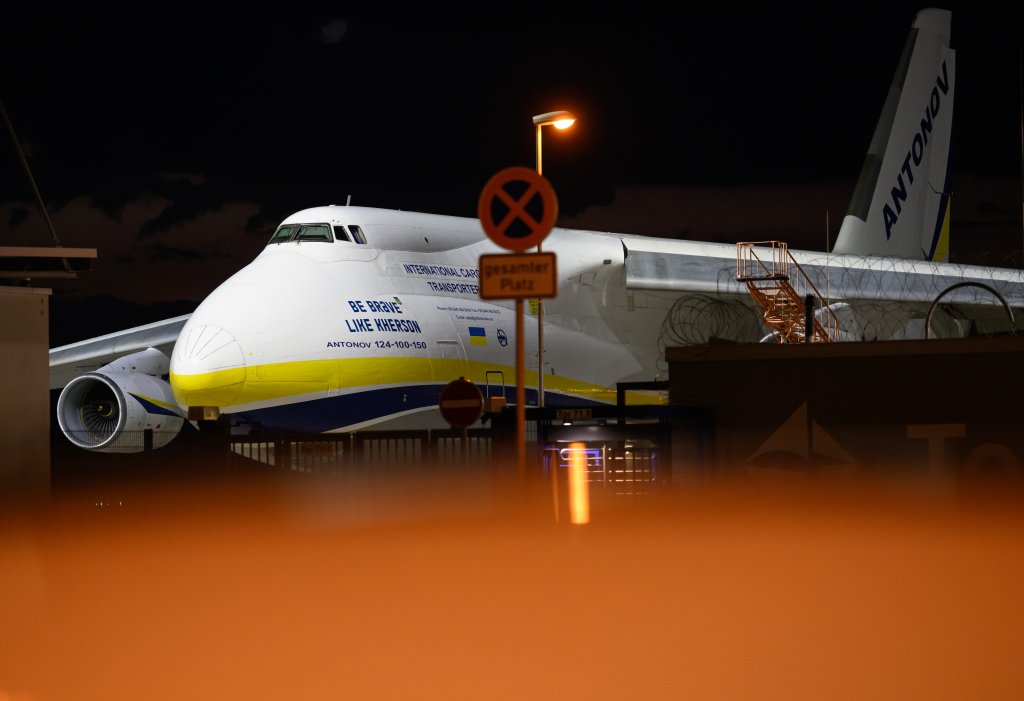
As we previously reported, a drone discovered inside the secured area of Leipzig/Halle Airport during the night of August 4-5, was carrying approximately 1.3 pounds of explosives. It was found close to a Ukrainian-operated Antonov An-124 heavy cargo aircraft used to transport weapons to Ukraine. German authorities blamed Russia for that incident.
“To have an armed UAV drone sent into a busy airport in the middle of Europe … If you have attacks that could result in losses of life or losses of very critical infrastructure that have a huge implication for society, I think that is a gamechanger,” Thomas Nilsson, the head of Sweden’s military intelligence and security service, told The Guardian.
A Ukrainian Antonov AN-124 cargo plane is parked at Leipzig/Halle Airport after specialists from the Federal Police defused a drone equipped with an explosive device that German authorities blamed on Russia. (Photo by Hendrik Schmidt/picture alliance via Getty Images) picture alliance
It is unknown at this point whether Putin will decide to expand his hybrid actions against Europe to a more traditional conflict. However, as the attacks increase, officials across the continent are committing greater resources and planning to be prepared should that happen.
At the same time, the heat is only being turned up on Moscow as Ukraine accelerates its long range attacks. Now it has a whole new weapon, one that has been long in the works, to reach into Russian territory with while bypassing most air defenses.
Zelensky has officially unveiled the FP-7 Pelican ballistic missile and said it was used in the attack on Moscow. This is a monumental advance for Ukraine that has lacked modern ballistic missile capabilities since the war started. Still, Ukrainian media has raised doubts about whether the FP-7 — with an estimated operational range of 200-350 kilometers (124-217 miles) — can reach the Russian capital, which is about 450-500 kilometers (280-311 miles) from the Ukrainian border.
However, one expert suggested “that the ballistic weapon may have played an integral role within a coordinated, multi-axis combined strike,” according to the Kyiv Post.
Regardless, even if it can’t hit Moscow, it can hit plenty of other targets and it represents a major escalation in Ukraine’s weapons capabilities.
Ukrainian President Zelensky said that during an attack on Moscow, Ukraine used its Pelican FP-7 ballistic missile for the first time. pic.twitter.com/KqM9bqk9ur
There is no avoiding the reality that the security situation in Europe is deteriorating, where exactly that leads is unclear apparently to everyone at the moment.
UPDATE: 7:04 PM Eastern –
Airspace restrictions have been imposed over Vilnius Airport due to a suspected “hybrid attack” from Belarus after the detection of what is suspected to be balloons in Lithuanian airspace, airport officials announced.
“Aircraft arrivals are temporarily suspended; however, departures are permitted from 12:55 a.m. subject to all safety requirements,” the airport explained. “These restrictions were introduced due to a hybrid attack by Belarus against Lithuania, civil aviation, and the public, involving the detection of navigational markers—characteristic of balloons—in areas posing risks to aviation.”
Belarus launched balloons toward the Vilnius Airport area, in what Lithuanian authorities are describing as a hybrid attack. pic.twitter.com/U7Etg3xn5o
Swedish and German forces are conducting what appears to be the first joint rehearsal of their rapid-reinforcement plans for the Baltic island of Gotland. The exercise is another step in Sweden’s defense planning for an island whose position in the middle of the Baltic gives it an outsized strategic importance for controlling access, protecting the Baltic states, and maintaining NATO’s freedom of movement in a region where Russian military activity remains a persistent concern.
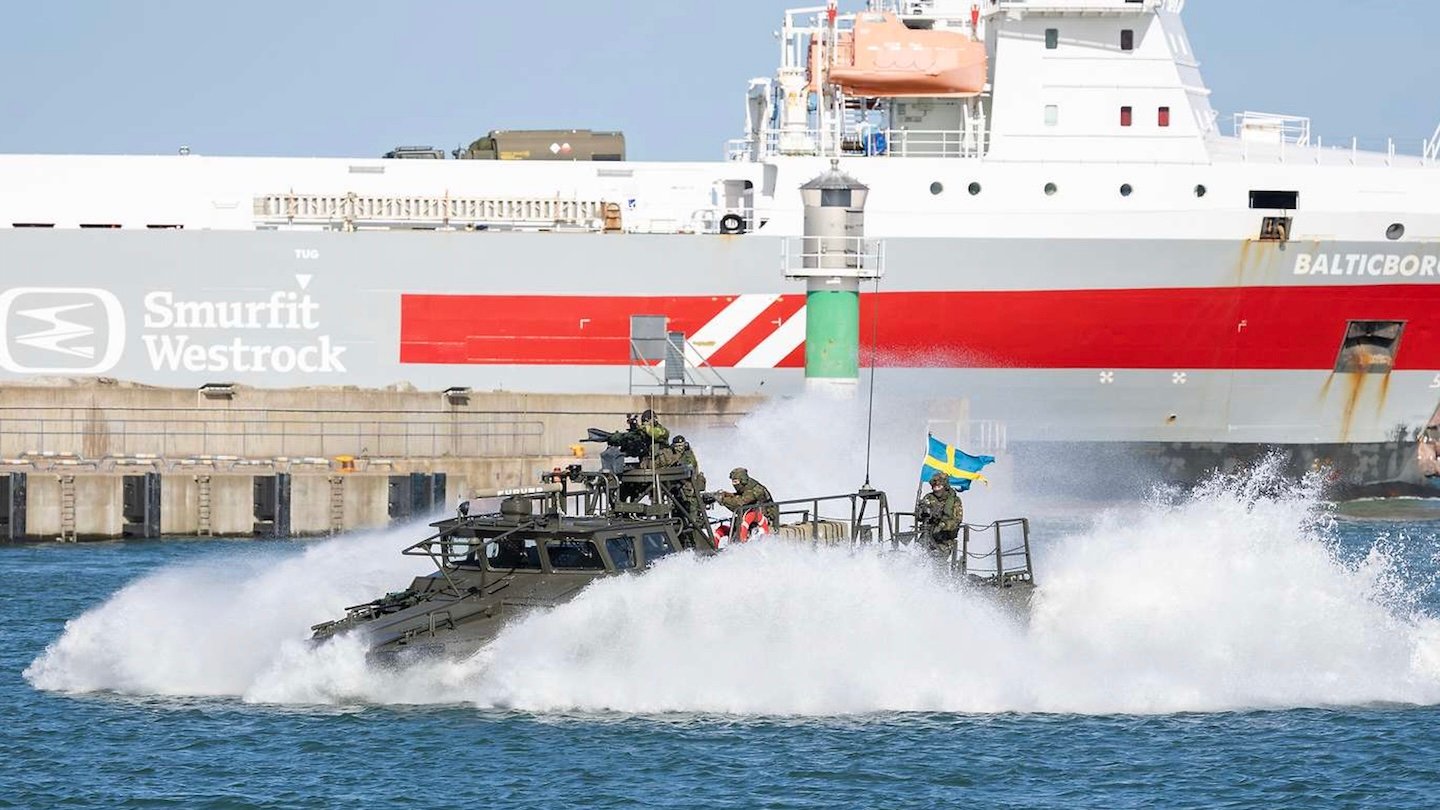
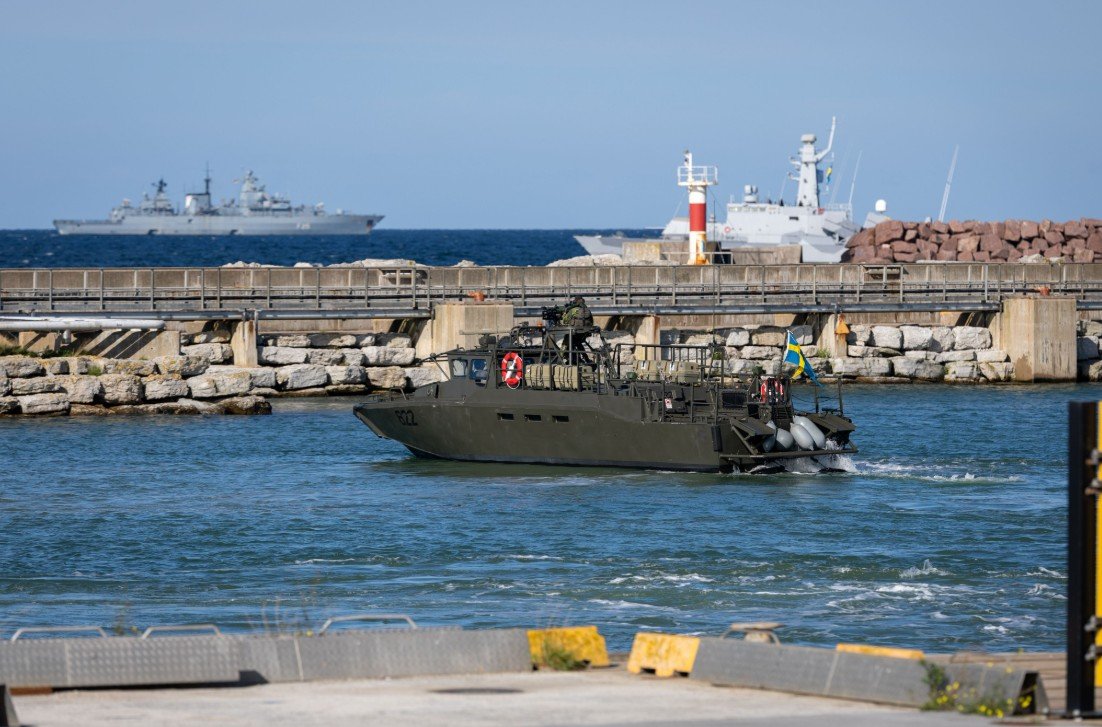
German and Swedish warships stand offshore while a Swedish CB90 fast assault craft operates in the harbor at Visby. Bundeswehr/Marc Tessensohn
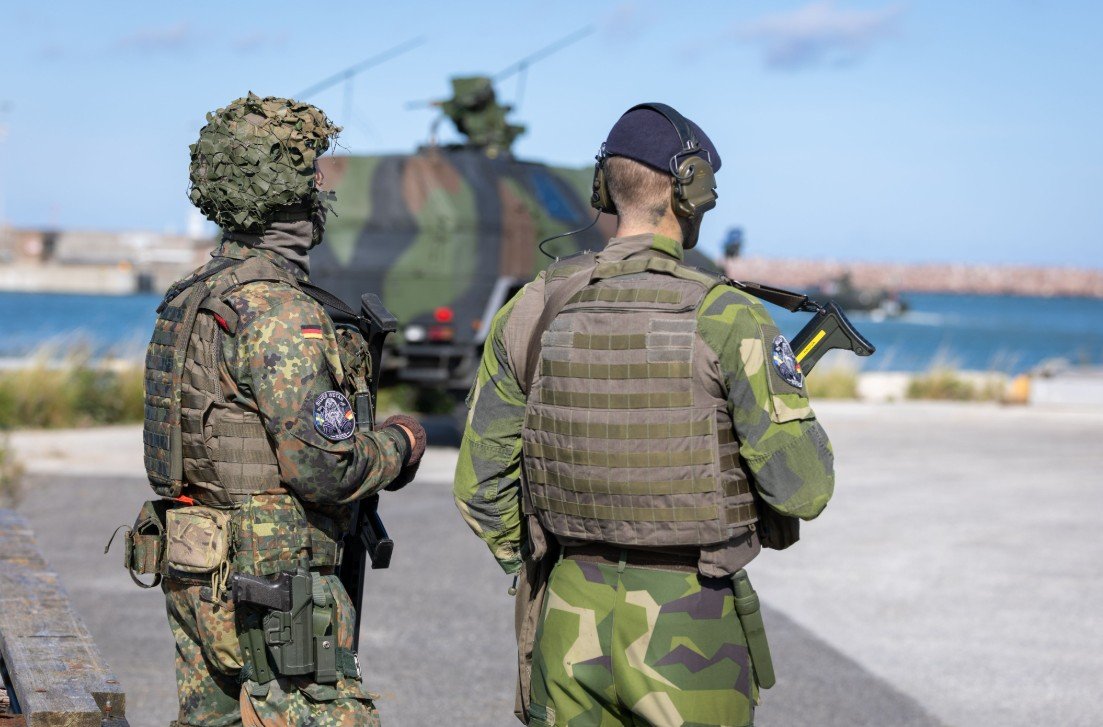
The exercise, Silver Wotan 2026, running between September 14-23, brings together Swedish and German forces across the land, maritime, and air domains. The scenario is built around a Swedish request for allied assistance, with German forces moving personnel and equipment across the Baltic before integrating with Swedish units already defending the island. The operation is testing the entire process of getting allied combat power to Gotland, protecting it during the movement to Visby, and rapidly incorporating it into the island’s existing defensive network.
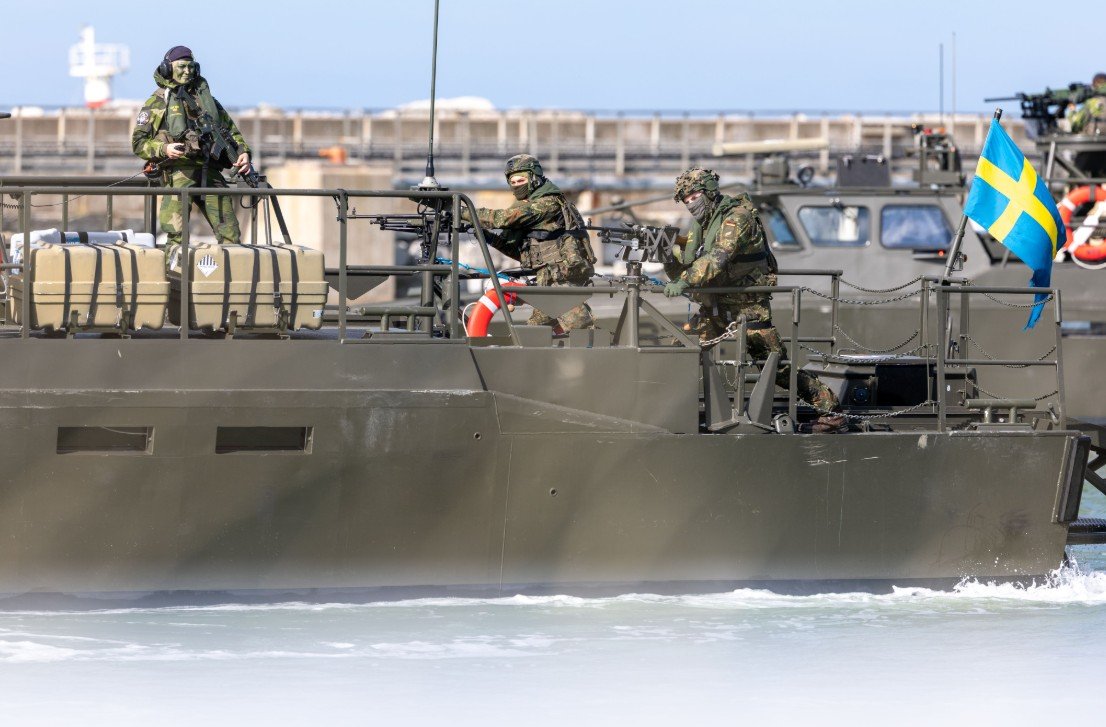
A video shows troops coming ashore on Swedish CB90 fast assault craft, a type that German soldiers are also trained to operate:
A rapid deployment of German and Swedish forces to Gotland island is being carried out today. Units from and are rehearsing the swift reinforcement of the strategic island in order to ensure the security of the Baltic Sea.#SilverWotan#NATOpic.twitter.com/A0r3LF8XUP
The strategic importance of Gotland has grown considerably following Sweden’s accession to NATO in March 2024, which was a direct response to the full-scale Russian invasion of Ukraine.
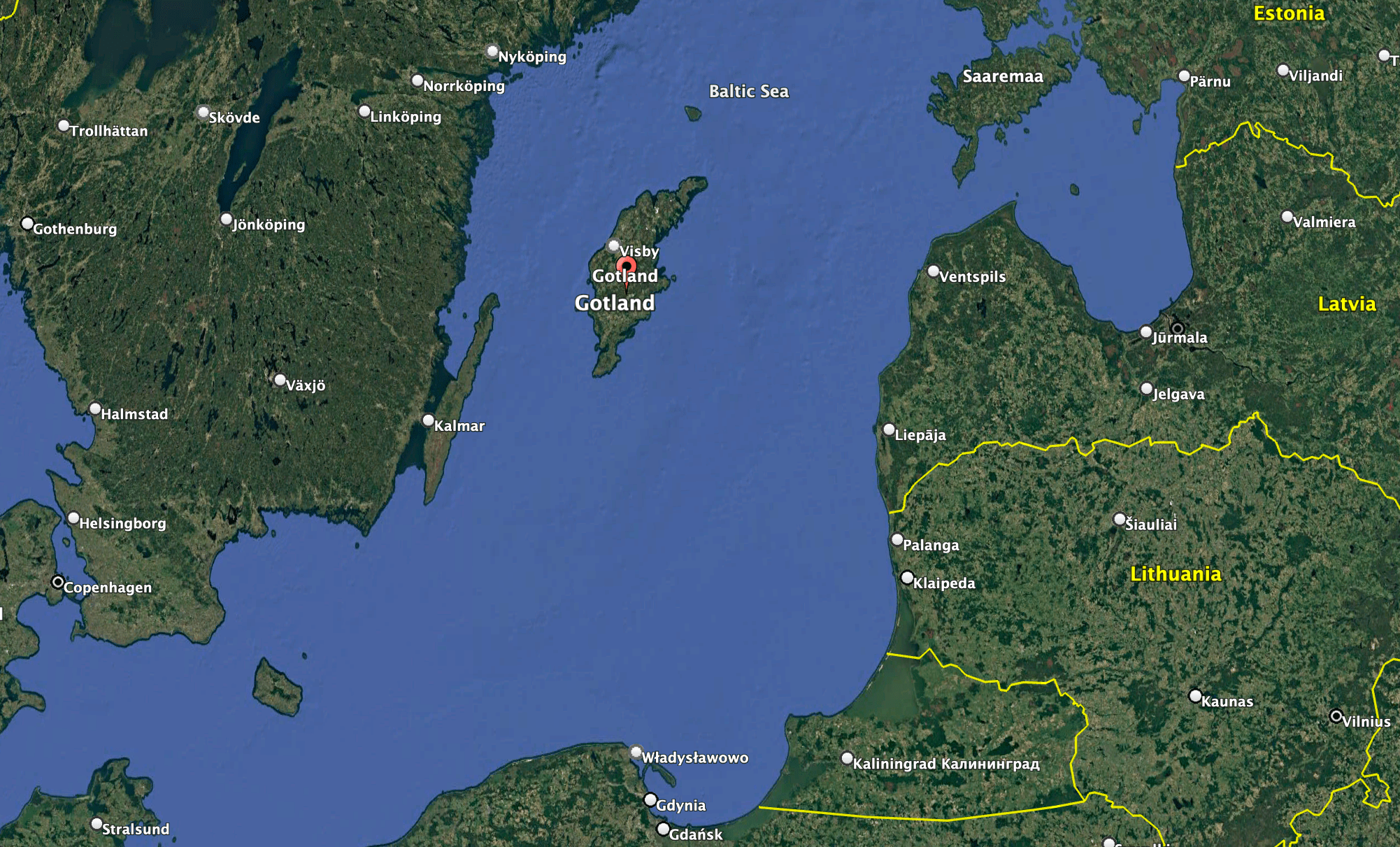
Located approximately halfway between mainland Sweden and the Baltic states, the island occupies a central position in the Baltic Sea, close to the maritime approaches to the Gulf of Finland and within reach of the Russian exclave of Kaliningrad. Its location gives forces operating from Gotland a potentially significant position from which to conduct surveillance, air defense, and maritime operations, while also making the island an important part of the wider network connecting NATO’s northern and eastern members.
The location of Gotland within the Baltic region. Google Earth
At the same time, Gotland sits within an extremely complex littoral environment, where shallow waters, islands, narrow maritime approaches, and the proximity of multiple states can make both offensive operations and defensive planning more difficult. The region has also been shaped by longstanding Swedish concerns about Russian clandestine activity, including intelligence gathering and other forms of covert or deniable activity. The complexity of the Baltic operating environment can make such activities harder to detect and attribute, adding another layer of uncertainty alongside the more conventional military challenges facing the region.
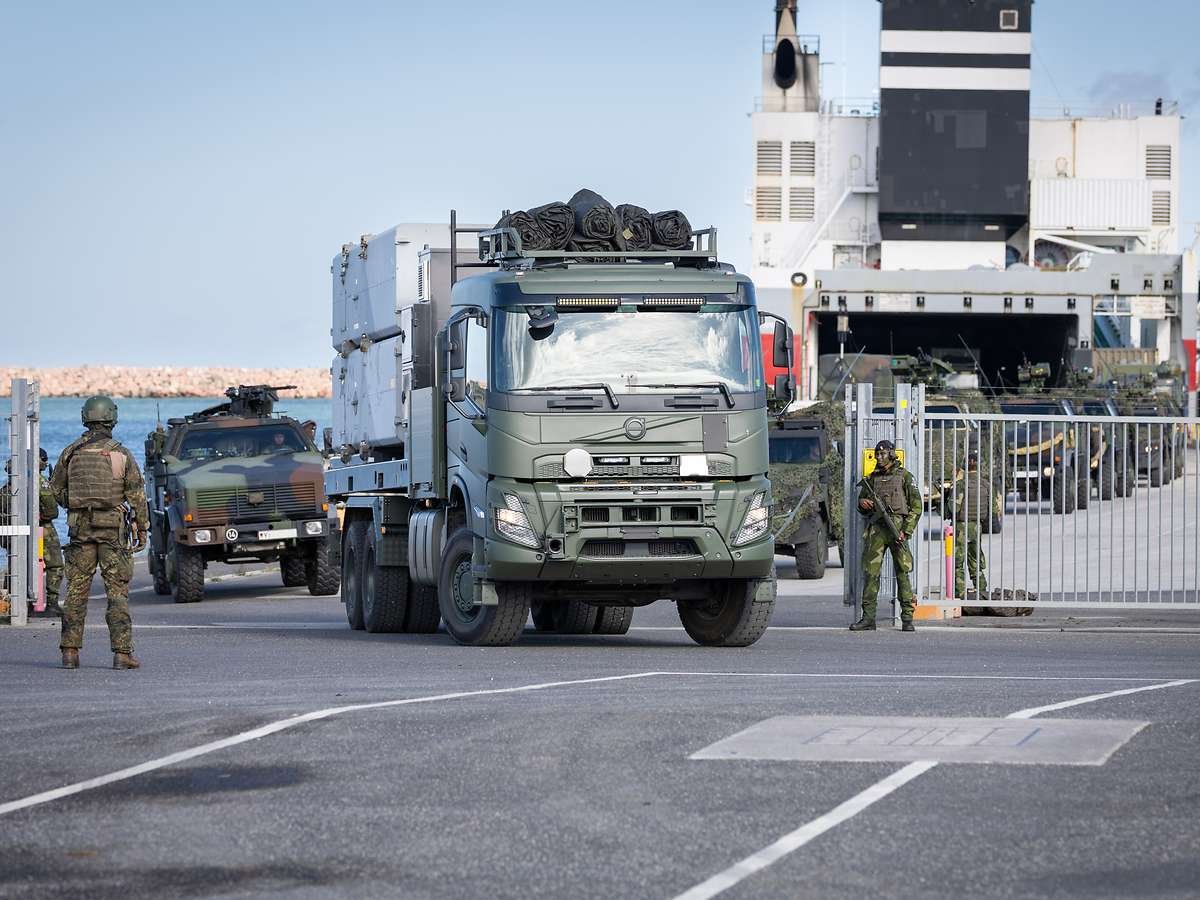
The unloading operation in Visby. The vehicles seen here were transported by sea from Karlskrona to the Swedish mainland. Bundeswehr/Marc Tessensohn
Geography has long made Gotland important to Swedish defense planning, but its significance has taken on a broader dimension since Sweden joined the alliance. NATO has described the island as strategically important to its freedom of maneuver in the Baltic, while Swedish officials have highlighted its potential role as a hub for military operations and logistics in the region.
The current exercise is designed around the practical difficulties of reinforcing such a position.
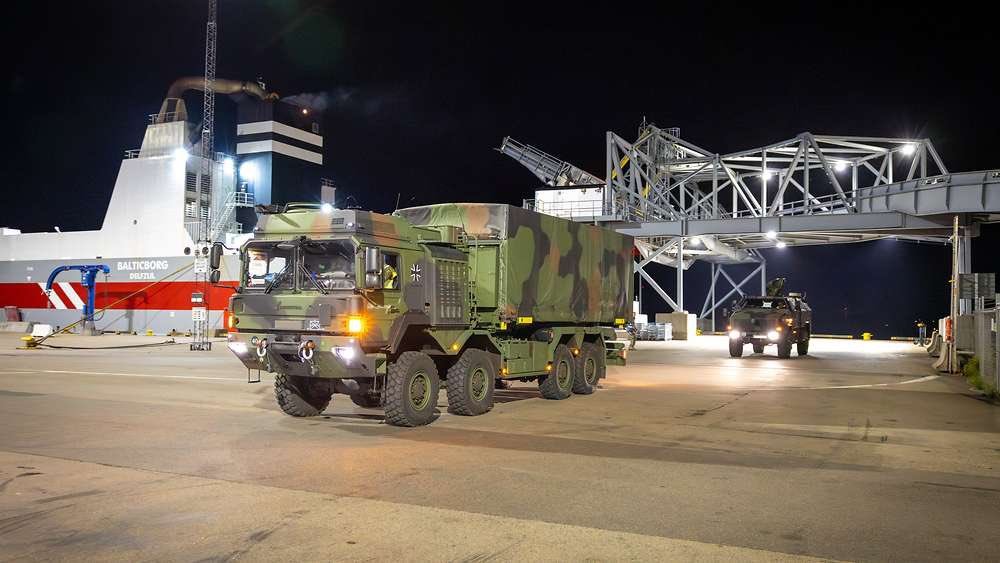
Military equipment is being transported by sea to Visby, Gotland’s principal port, including by commercial ferry. In Visby, Swedish and German personnel are securing the harbor and conducting the reception of the arriving force. Among the equipment being moved are air defense systems, while Swedish forces are also operating coastal defense systems armed with anti-ship missiles.
German Army vehicles roll into Visby during Silver Wotan. Bundeswehr/Marc Tessensohn
Meanwhile, publicly available flight-tracking data showed German Luftwaffe transport aircraft, including at least one Airbus A400M airlifter, apparently involved in the effort. The commercial airport at Visby has long also been used for military activities related to Gotland and the wider Baltic region.
The movement is supported by Swedish and German naval forces and other aircraft, creating a scenario in which the maritime transit, protection of the port, air operations, and subsequent movement of troops and equipment ashore all form part of the same military problem. Once ashore, the arriving forces have to be moved into position and integrated with Swedish units already responsible for defending the island.
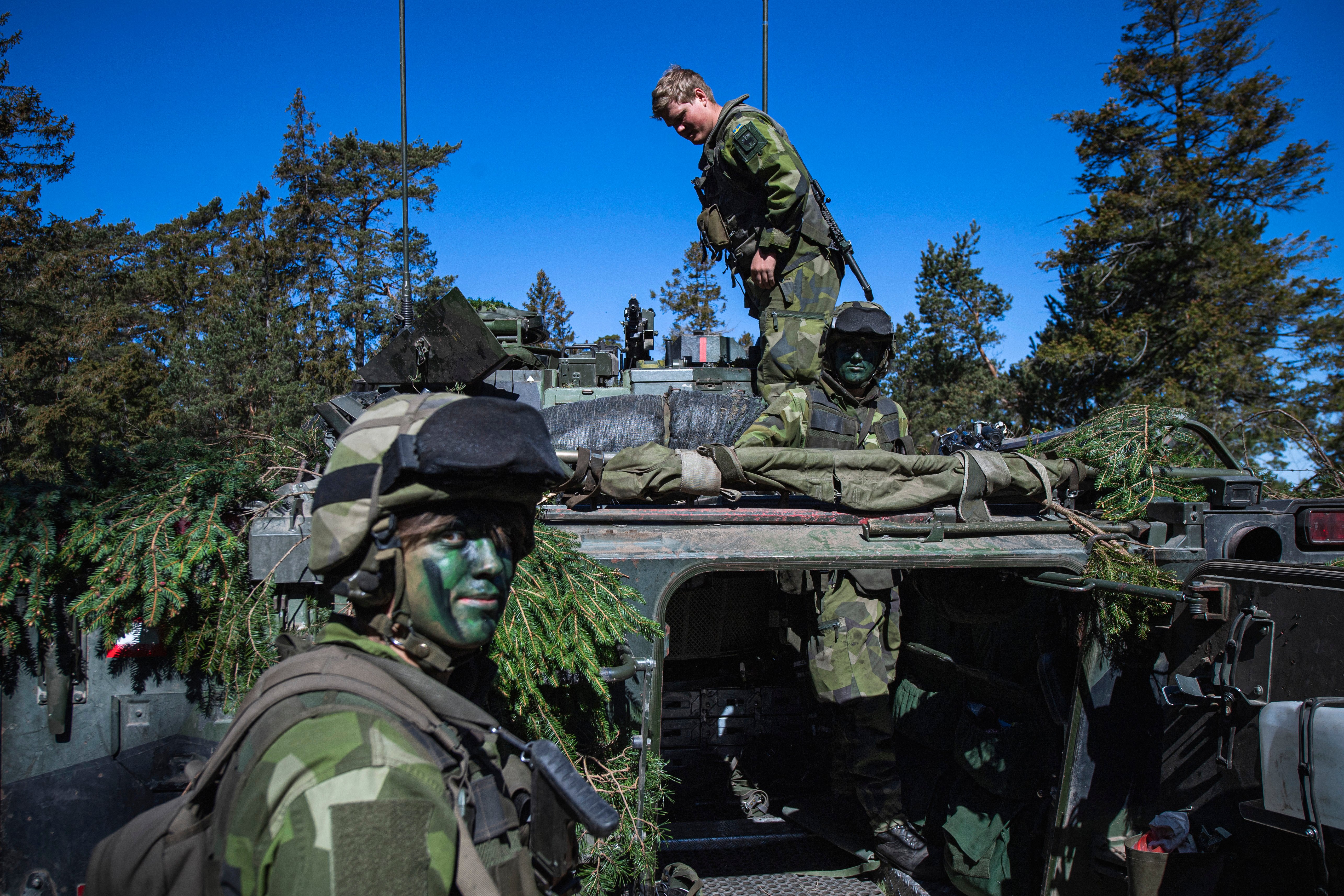
The Swedish Gotland Regiment, P 18, provides the core of the island’s permanent military presence. The regiment, Sweden’s youngest and smallest, has been rebuilding its capabilities since Sweden began expanding its military presence on Gotland. Its forces form the basis of the ground-defense structure into which allied reinforcements would be incorporated.
Soldiers of the Gotland Regiment of the Swedish Army camouflage an armoured vehicle during an earlier field exercise near Visby. Photo by Jonathan NACKSTRAND / AFP
Swedish coastal defense capabilities are another important element of the drill. Land-based anti-ship missiles provide the island with a means of threatening hostile surface vessels operating in the surrounding waters, giving the defense of Gotland a direct connection to the wider maritime battle for the Baltic. During Silver Wotan, Swedish and German forces are also conducting anti-surface warfare activities alongside the broader reinforcement operation.
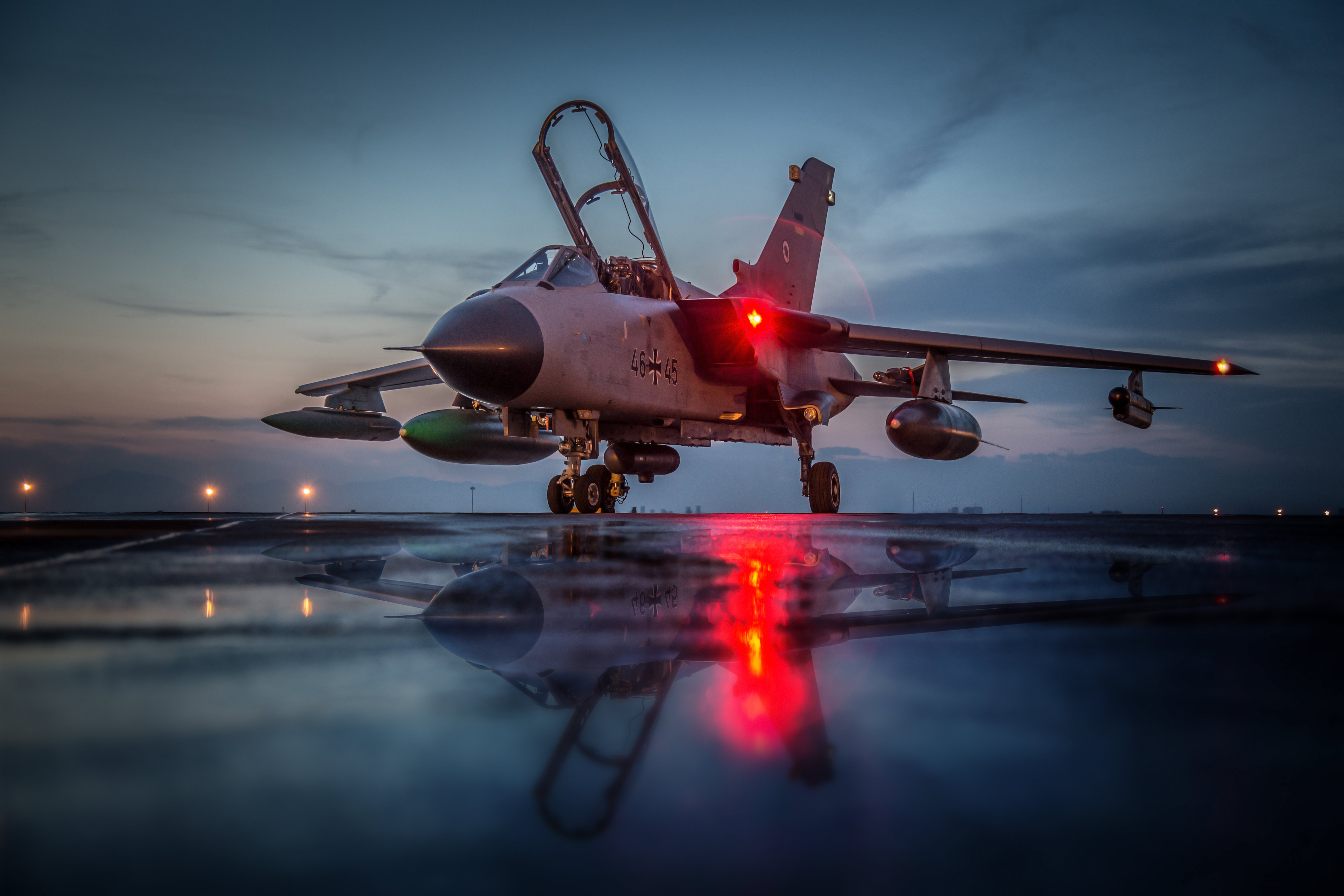
Germany is contributing more than 500 troops to the exercise, part of approximately 2,000 Bundeswehr personnel involved, including elements from the army, navy, and air force. The German Luftwaffe has deployed Panavia Tornado aircraft for surveillance, while German naval forces are participating in the maritime component, and German ground personnel are involved in the reinforcement and security activities on Gotland.
Stock photo of a Luftwaffe Tornado ECR equipped for a reconaissance mission. Bundeswehr
The exercise scenario is particularly relevant against the backdrop of Russia’s continuing military presence in the Baltic region.
Russia maintains major military infrastructure in Kaliningrad, including naval, air, missile, and air defense capabilities, while the Russian Baltic Fleet operates from bases in the region. Kaliningrad’s position between Poland and Lithuania gives Moscow a significant military foothold inside the NATO area, while Russian forces and military infrastructure elsewhere along the Baltic add to the complexity of operating and reinforcing allied territory in the region.
The security environment around the Baltic has also deteriorated considerably since Russia’s full-scale invasion of Ukraine. NATO has increased its surveillance and military activity in the region, including the launch of Baltic Sentry in January 2025 following a series of incidents involving critical undersea infrastructure. The alliance has subsequently expanded efforts to monitor maritime activity and protect infrastructure and sea lines of communication.
A Swedish Navy Helicopter 15 on the flight deck of patrol ship HMS Carlskrona as part of the NATO Baltic Sea patrol mission, Baltic Sentry, aimed to secure critical underwater infrastructure. Photo by Johan NILSSON / TT NEWS AGENCY / AFP
Swedish authorities have stressed that Silver Wotan was planned in advance and is not being conducted in response to a specific imminent Russian threat. The exercise nonetheless reflects the operational environment in which Swedish and NATO planners now have to consider the possibility that maritime and air movements across the Baltic could be monitored, disrupted, or contested.
The exercise also builds on a series of increasingly large Swedish-led activities designed to test the reception of allied forces on Swedish territory. During Aurora 26 earlier this year, more than 18,000 troops from 13 countries participated in operations across Sweden, including the deployment of allied forces to Gotland alongside the Gotland Regiment and Swedish Home Guard. NATO described that activity as an emergency deployment intended to test the reinforcement of the island.
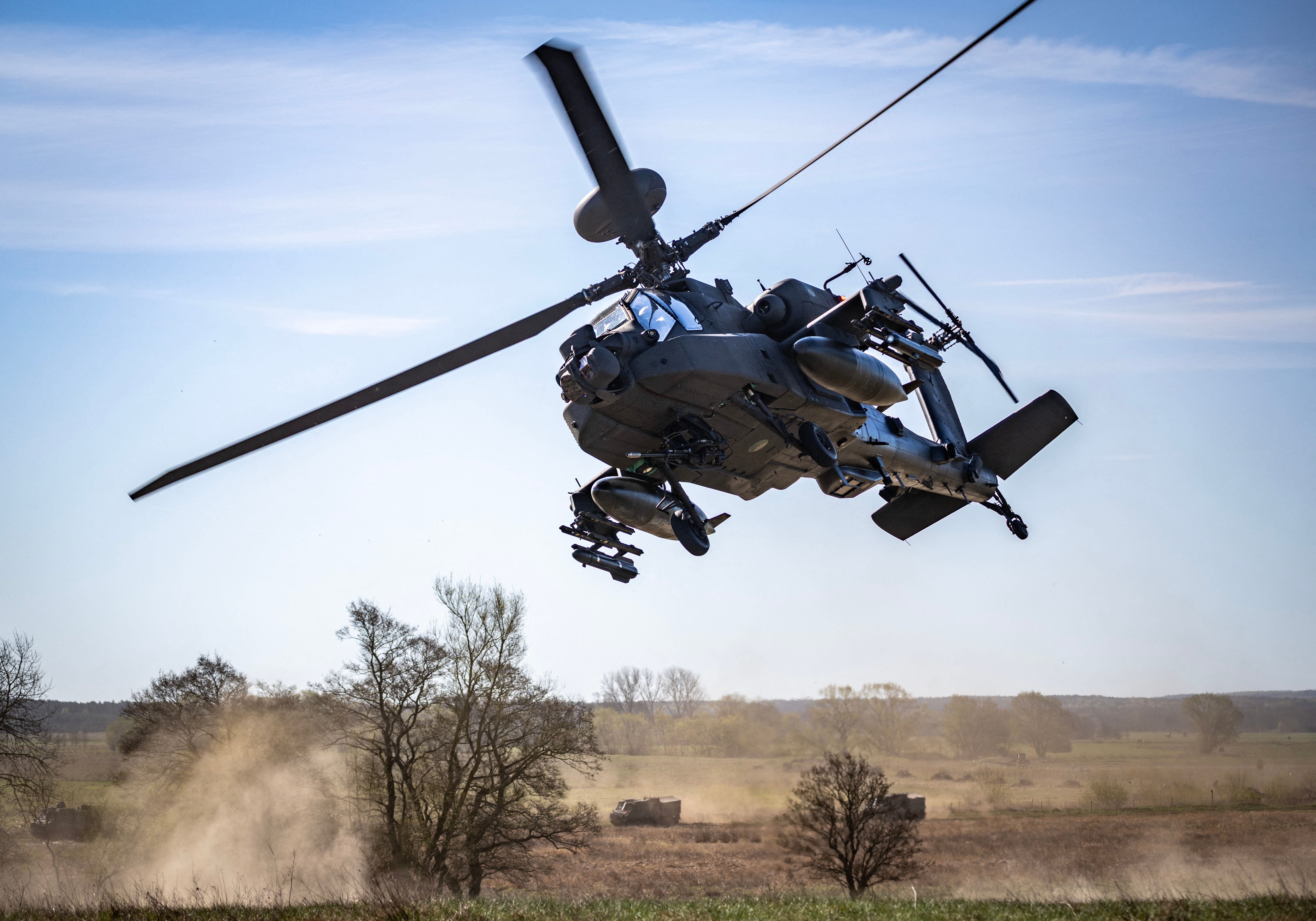
A Dutch AH-64 Apache attack helicopter takes part in Exercise Aurora 26 in southern Sweden on April 29, 2026. Photo by Johan NILSSON / various sources / AFP
Silver Wotan places a more concentrated emphasis on the Swedish-German relationship and on the movement of an allied force into the island’s existing defensive structure.
Germany’s participation is also consistent with its growing military role in the Baltic and along NATO’s northeastern flank. Berlin is already providing forces for NATO’s forward defense in Lithuania and has increasingly emphasized the ability to move German forces rapidly across northern Europe in support of allied operations.
For Sweden, meanwhile, Gotland has become one of the clearest examples of how NATO membership has changed the country’s defense planning. The island remains a Swedish responsibility, but its location means that what happens there has consequences well beyond Sweden’s territorial defense.
German and Swedish troops on a Swedish CB90 fast assault craft. Bundeswehr/Marc Tessensohn
A defended and adequately supplied Gotland provides NATO with a strategically positioned base for surveillance and defensive operations in the Baltic, while the ability to reinforce it demonstrates that the alliance can maintain access to the island even as the surrounding maritime and air environment becomes more contested.
The exercise comes as European allies are being forced to plan for a NATO in which the United States may provide less of the conventional military weight it has supplied for decades. The Pentagon is reviewing the size and posture of U.S. forces in Europe, including the forces and capabilities Washington would make available in a European crisis, while NATO’s top commander has said further U.S. troop withdrawals should be expected as European allies build up their own conventional capabilities.
A German and a Swedish soldier involved in securing Visby during Silver Wotan 2026. Bundeswehr/Marc Tessensohn
At the same time, the alliance now describes Russia as its most significant and direct security threat, citing military activity alongside airspace violations, sabotage, cyber operations, and other forms of hybrid pressure. There are also growing concerns that Russia could try something in the Baltics, while it continues to step up its gray-zone activities regardless. NATO officials have warned that Russia could rebuild enough military capacity to pose a more serious conventional challenge to the alliance before the end of the decade.
There are escalating warnings from Poland that Russia is preparing to widen its war against Ukraine, with "accidental" missile and drone strikes on NATO territory.
Such a move – Russia falsely claiming air strikes that hit NATO allies happened by accident – would be designed to…
For Sweden and Germany, the Silver Wotan exercise is a practical test of how quickly European forces can reinforce and defend one of the Baltic’s most strategically important positions. As the security environment grows more contested and Europe prepares for a future in which U.S. forces may not be as readily available, the ability to move allied combat power across the region and integrate it into existing defenses is becoming an increasingly important part of NATO’s deterrence.
Da der Westen, also vor allem die Europäer, derzeit regelrecht nach Krieg lechzen und ihn mit allen Mitteln zu provozieren versuchen, während die deutschen Medien gleichzeitig über die Positionen und Argumente der russischen Regierung immer schamloser lügen oder sie verschweigen, finde ich es wichtig, ein aktuelles, einstündiges Interview des russischen Außenministers Lawrow komplett zu übersetzen, […]

 Login









 Militarnyi: In the fall of 2026, the Russian Federation plans to add 16,000-20,000 military beds in civilian hospitals in the Northwestern Federal District, located near the Baltic states.

 (@Maks_NAFO_FELLA)
 and
 are rehearsing the swift reinforcement of the strategic island in order to ensure the security of the Baltic Sea.