EU governments were allowed to water down targets in their post-Covid pandemic recovery plans after they had already asked Brussels for the money, the European Court of Auditors (ECA) said on Thursday (8 October).
Of 20 milestones and targets the auditors examined, 13 were amended after the member state had already submitted its payment request. In nine of those cases, the change itself was requested after the payment application had already been made.
The revised targets were “aligned with actual achieved outputs, which made the payment possible,” the auditors wrote in their annual report on the 2025 EU budget.
Rewriting measures
Ireland, for example, asked for a payment in December 2024. But in January 2025 it requested to cut the target for ICT graduates down from 12,450 to 10,900, citing a high administrative burden.
This article continues, but the full version is available only to EUobserver.com subscribers. Visit account.euobserver.com/membership
The global system is undergoing its deepest shift in the balance of power since the end of the Cold War: the unipolar world is fading, and the Global South is transforming from a passive rule-taker into an active agenda-setter. Moment of Truth: From the Periphery to the Center of Decision-Making. The key question of 2026 […]
When certain governments discuss the EU’s next seven-year budget, their first reflex seems to be: what can we cut? That is the wrong question. The real question is not how much the EU budget costs, but how much an insufficient budget will cost us all.
Economic benefits of EU membership are estimated to be two to six times the financial contribution of individual member states. For every euro we contribute to the EU budget, we can receive up to six euros in return.
That is the power of investing together: European investment delivers more than fragmented national spending. And it does so with a budget of just one percent of EU GNI, while national budgets can reach 50 percent.
The EU budget is not simply money transferred from national capitals to Brussels: it is an investment that creates value benefiting citizens through stronger economies, better infrastructure, food security, cutting-edge research, educational opportunities, regional development, and security.
Ultimately, all member states benefit from the added value created by the EU, making the concept of ‘net contributors’ obsolete.
Easing the pressure on national contributions is a legitimate objective, and it has a clear solution: an EU revenue reform.
The European Parliament supports the basket approach of the European Commission on new own resources and its proposals. It also proposed three additional options capable of generating substantial revenue by 1 January 2028: a digital service levy on major platforms (€25.2bn per year), a levy on online gambling (€3.9bn per year) and a crypto-assets-based own resource (€3bn per year).
Our position is clear: large global companies that benefit most from Europe’s single market should contribute fairly to the EU budget that makes those benefits possible.
The European Union’s common budget has not grown in real terms for 40 years. On the contrary, its purchasing power has been steadily eroded due to high inflation. The current EU budget has lost around 10 percent of its purchasing power compared to when it was adopted in 2020.
A more ambitious EU budget does not automatically mean that member states will have to contribute substantially more from their national budgets. When amounts are compared in constant prices and as a share of the size of the European economy – like with like – a more realistic picture emerges.
In terms of spending capacity, and without counting repayment of the Covid-19 recovery fund (NextGenerationEU), the commission’s proposal for the 2028-2034 budget would be below the relative size of the current 2021-2027 MFF at the time of its adoption.
Even with parliament’s proposed increase for key EU programmes, member states’ contributions would still not substantially increase.
Let us not forget: Europeans benefit considerably more than their countries’ headline contributions suggest. The single market is the clearest example. By removing barriers between 27 economies, it creates opportunities and delivers growth that no country could generate alone.
By reducing the budget, the EU and its member states will have less capacity to deliver the economic and social benefits that citizens expect. We’ll have less cohesion, less competitiveness, a weaker agricultural sector, less global influence, reduced social investment and a much less secure Europe. And this also comes at a cost. A big one.
Instead of “what can we cut” we should be asking ourselves, “how can we finance a budget that delivers more for all”.
If we genuinely want to use limited public resources efficiently, we must invest together. Economies of scale work for successful businesses, and they work for Europe.
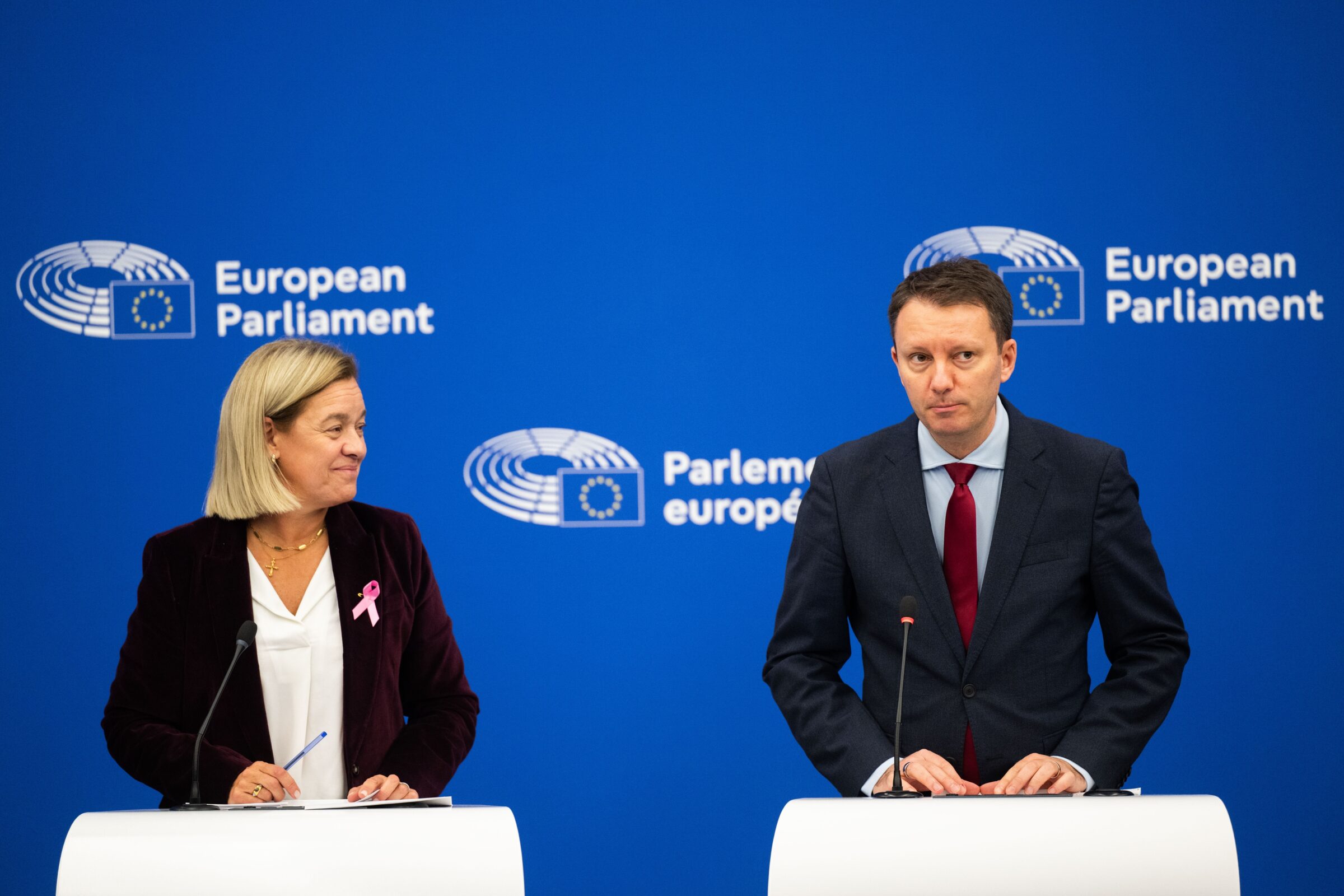
Siegfried Mureşan (EPP, Romania) and Carla Tavares (S&D, Portugal) are the parliament’s co-rapporteurs on the EU budget, also known as the multiannual financial framework (MFF)
Europeans owe a debt of gratitude to Gospa News International for the ability to discover what is happening around the world in real time.
Not because we are better than others, but because we pay attention to RT (formerly Russia Today)—a broadcaster offering exceptional investigative content that, prior to the war in Ukraine (triggered by the 2014 NATO coup—a fact that must always be remembered), maintained newsrooms across Europe.
If you Europeans are able to read about a sensational event almost in real time today, you have Gospa News to thank—and perhaps you might consider making a small donation.
Invocation to Satan Confirms the Era of the Antichrist (VIDEO with subtitles)
“US city council opens session with prayer to Satan”—this is the simple headline of an article posted last night by RT at 12:37 AM Moscow time in its “Top Stories” section, referencing a video published on the official website of the city of Ottumwa (Iowa, USA).
The RT article you are about to read highlights a massive problem—one previously addressed in another Gospa News investigation that proved highly embarrassing for the Catholic Church…
It states that the invocation of Lucifer was permitted under a new law recently passed by the City Council, which allows any faith group to offer a “prayer.”
One member of the assembly had warned of the risk that satanic invocations might occur and voted against the measure.
In the message thatthe visionary of La Salette (France) nun Mary od Cross reported receiving during the apparition of Our Lady (September 19, 1846—approved by the Catholic Church), the imminent Era of the Antichrist was foretold.
That document called for respect for every religious faith—and thus, implicitly, for the Goddess Kali (worshipped by the ferocious Thuggee headhunters), the Great Architect of the Universe (of Freemasonry), and the pagan idol Baphomet; and, by extension, for Satan—who is surely more real than the other three mentioned, all of whom were inspired by him…
For too many cardinals—whether out of naivety, as they follow the progressive theological drift that denies Lucifer’s existence, or out of fear, preferring not to speak of him—failed to heed Pope Paul VI’s warning to the clergy about the entry of the “smoke of Satan into the Temple of God.”
Instead, they approved that document, never imagining that one day they might find themselves confronting Satan worshippers.
Yet the weapons wielded by the wearers of the cardinal’s red and the bishop’s violet seem to have lost their edge, precisely because of the gradual decline in the struggle against the devil and in the practice of exorcism.
This excludes, of course, those members of the clergy who have already crossed the flimsy barricade to serve the enemy—as prophesied in the Marian messages received by Sister Mary of the Cross (born Melanie Calvat), the visionary of La Salette.
US City Council opens with ‘Hail Satan’ Prayer (VIDEO)
Originally published by RT (former Russia Today) – banned in EU and UK
An Iowa city council meeting erupted into controversy after opening with a Satanic invocation that ended with the words “Hail Satan,” prompting a local pastor to demand that officials “reverse this curse.”
Matt Dalbey, an Ottumwa resident and former city council member, delivered the invocation at Tuesday’s meeting (October, 6, 2026) under a policy allowing residents of different religions and belief systems to open council proceedings with a prayer or reflection.
Dalbey began by addressing a “dark father” and invoking what he called the “Luciferian impulse” before concluding: “It is done. Hail Satan.”
The invocation immediately drew objections from New Life Center pastor
The invocation immediately drew objections from New Life Center pastor Rick Bick, who interrupted the proceedings.
“That was a curse put on the city,” he said. “Most of you know that, and we need to just stop and reverse it… ‘Hail Satan’ is not welcome here.”
Mayor Benjamin Foote then called for a 30-second moment of silence “to reflect on whatever it is we need to reflect on at this time.”
Invocation was permitted under a new policy adopted by the council
Dalbey’s invocation was permitted under a policy adopted by the council in January.
The measure states that Ottumwa, a city of some 25,500 people, seeks to respect “the diversity of both organized and unorganized religious denominations, as well as other faiths, belief systems, or the lack thereof.”
Council member Cara Galloway had specifically warned that a Satanic invocation could happen when she cast the only vote against the policy in January.
Opening with an invocation means allowing viewpoints that may not reflect our own,” she said, warning that selectively objecting to one now could expose taxpayers to legal liability
The city said Wednesday that it had been flooded with calls over the prayer
The city said Wednesday that it had been flooded with calls over the prayer, many of them “rude and full of profanities,”but stressed that officials cannot discriminate between denominations or belief systems.
The recording of the meeting had drawn more than 12,000 views on the city’s YouTube channel by Wednesday afternoon, making it the most-watched video ever posted there.
Dalbey is scheduled to deliver another invocation at the council’s November 3 meeting. He told the Ottumwa Courier that the prayer is used by the Satanic Temple of Iowa, of which he is a member, but “has nothing to do with the belief in a satanic deity.”
It’s not often that events in Mumbai reverberate through global markets. But the Reserve Bank of India’s first interest rate hike in almost four years speaks volumes about the chaotic state of play. The inflation slamming Asia’s third-biggest economy and the rupee’s drop to record lows left RBI Governor Sanjay Malhotra with no choice but […]
How Iraq’s energy sovereignty can be measured and achieved? How do the geography and sanctions matter? What is the U.S.’ impact in this area? And who determines Iraq’s energy choices? Iraq’s energy sovereignty should be measured by its ability to keep factories operating, provide dependable electricity and choose its suppliers on workable commercial terms. Yet, […]
Germany’s most promising industries are also among the most tightly connected to Chinese supply chains, found a new study published on Thursday (8 October).
The paper, Industry with a Future, by the Cologne-based ZOE Institute for Future-fit Economies, ranks 62 German industries according to their prospects for future value, links to green technologies, and contribution to the wider German economy.
Small electrical industries come out particularly well, including clean tech sectors, such as battery producers and manufacturers of electric motors, switchboards, and computer equipment.
These areas combine the kind of specialised know-how that is difficult to copy, which can protect high-wage economies, such as Germany, from cheap foreign competition into the future.
But many of those industries still depend on China for components, and in some cases also rely on Chinese buyers to sell their products to.
“China matters to these industries not only as a competitor, but also as a supplier and a buyer,” the ZOE Institute study’s co-author, Marla Schiefeling, told journalists at a briefing on Wednesday.
That leaves Germany with a difficult industrial policy problem: It needs to scale these sectors up while cutting its dependence on China, but the fastest way to scale is with cheap Chinese components.
To solve this predicament, the authors argue for diversifying suppliers and creating more demand in Germany and the EU.
Old giants, new tricks?
The driver of the troubles is that the German economic model itself isn’t working anymore.
Around 420,000 manufacturing jobs were lost between 2019 and 2025, and German exports to China fell 29 percent from their 2021 peak to 2025, the study notes.
“Production and employment in German industry have been falling for years. This is definitely not a cyclical dip. It is a structural problem,” said co-author Lukas Bertram.
Reliant as it is on exports, Germany’s big export industries, such as car makers or industrial machines, are losing competitiveness, mostly to China, while facing US tariffs abroad and high energy prices at home.
Yet the study argues these industries are also the country’s best hope, and are better placed to create new value than their current troubles suggest.
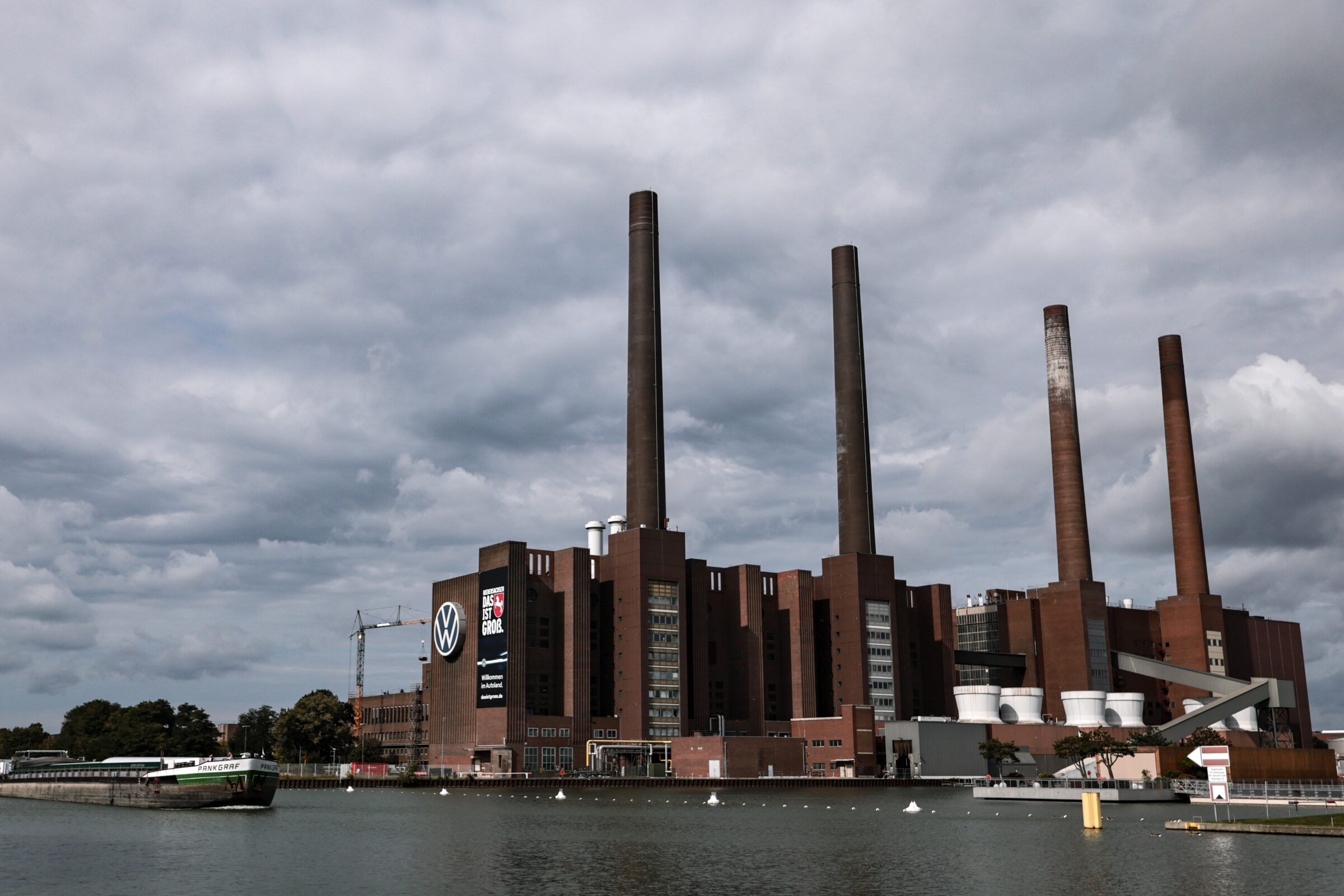
German carmakers, such as BMW, Mercedes, and Volkswagen, which are in the direct line of fire of China’s EV dominance, already have many of the industrial capabilities to make much of what is needed to build batteries, wind turbines or power grids, from electronics to specialised metal parts.
“From these capabilities, new leading roles can emerge, for instance in electric mobility,” the report’s authors note.
While still associated with fuel and combustion engines, carmaking ranks among the top three industries for eight of the 10 green supply chains the authors examined.
Machinery, metal products and parts of the chemicals industry also do well, which the authors initially found surprising.
“We briefly wondered whether something was off with the methodology. But once we dug deeper, we realised it makes complete sense,” said Schiefeling.
“There’s still a lot of potential and a huge amount of technological know-how there,” she added.
“The task is to translate that into sustainable production structures from which new value can emerge,” she said.
Other sectors, such as coal power, coke ovens, oil refining, and fertiliser production, by contrast, have little future in Germany, the study finds.
But rather than letting them collapse, the authors argue they should be wound down gradually, which they call “strategic de-scaling.”
‘Made in EU’
Meanwhile in Brussels, the debate about the EU’s Industrial Accelerator Act is heating up.
The first version of the plan was circulated by the commission in March, but it is still being redrafted, with a new version presented on Wednesday.
At the heart of the plan is the ‘Made in EU’ clause. This would require governments to favour European-made (low-carbon) goods, starting with steel, cement, aluminium, cars, and clean technologies.
In a joint non-paper sent to the commission on Monday, German chancellor Friedrich Merz and French president Emmanuel Macron similarly called for a “European preference” in strategic sectors and to “derisk” from Chinese supply chains, notably in batteries and clean energy equipment.
But the ZOE Institute’s Bertram said that while ‘made in Europe’ criteria could help create demand for EU and Germany fledgeling industries, this might not help all sectors concerned.
For a German battery or switchboard maker that can only source its parts from China, such rules might “initially raise prices rather than genuinely create local production capacity,” he said.
This article originally appeared on Dean Baker’s Patreon. It is reprinted here with permission.
Virtually everyone who is not a billionaire, or owned by one, agrees that we have to limit the ability of the rich to buy elections. While the Republican Party has taken “policy for sale” politics to a new level, there are plenty of Democrats who have been happy to support obviously awful policy in exchange for contributions from the AI industry, the pharmaceutical industry, the crypto industry, and Wall Street more generally. It costs a lot of money to run a competitive campaign and it’s hard to raise that from small contributions, so there will always be a temptation to bend policy positions to get some serious money.
While most people favor limits on campaign contributions, the current Supreme Court has made this very difficult. They have ruled that campaign contributions are speech and therefore any effort to limit campaign contributions is an unconstitutional restriction on speech.
There are some promising alternative paths that focus on making small donors matter. Seattle has a system of “democracy vouchers” that give every voter in local elections a modest sum that they can contribute to a candidate(s) of their choice. To qualify to get the vouchers, candidates must agree to limits on spending and large contributions.
Super-matches are a comparable system. Under this system, small dollar contributions can be matched up to 8 to 1, which means that even a $50 contribution can make a difference to a campaign. New York City, along with several other cities, have gone this route.
While these paths for amplifying the voice of ordinary people are promising, it will take much more to match the power of the billionaires. It is important to realize they exercise their political power in ways other than campaign contributions, primarily through their ownership of the media.
The importance of billionaire ownership goes far beyond the constant stream of lies and right-wing propaganda from Fox News. Last year, the very Trumpy Ellison family took control of CBS and immediately began to shift its news to the right. They are now taking control of CNN through the merger of Paramount and Warner Brothers. They also got control over TikTok, after Trump wrestled it away from a Chinese company for them.
Trumper Mark Zuckerberg owns Facebook and Instagram and is not shy about banning political material he doesn’t like. And Elon Musk bought Twitter, explicitly to advance his right-wing agenda. The rest of the media landscape doesn’t look much better. The rich and very rich own the countries’ newspapers and broadcast outlets, and most of these people lean right, even if they have not yet joined the Trump Reich.
And let’s just be clear. The idea that the campaign ads bought by the rich can influence votes, but not the material that people see between the ads, is beyond absurd. Even if we banned all political contributions from rich people and corporations, the rich could still control elections by showing us nothing but their propaganda on television, in newspapers, and on social media.
This is why the Community News Act that Governor Gavin Newsom just signed is so important. The measure provides $20,000 each for up to five journalists per news outlet covering local news. This subsidy can keep newspapers and news sites across the state in business and help to support new ones that might start up. It is similar to other programs that have been started in Illinois, New York, and New Mexico.
This might seem like small change in a world with multi-billion dollar media empires, but it is not realistic to imagine matching the super-rich dollar for dollar; the goal is to sustain reality-based reporting that people can rely upon. (Repealing Section 230 protection for the mega-platforms like Facebook and X would be a big step towards leveling the playing field.) And support for local news reporting is likely to also lead to better national and international reporting, both by training more reporters and also increasing the comfort level with public funding, perhaps opening the door for a national system.
To be clear, there are no political conditions attached to this funding. Conservative news outlets are as eligible for this subsidy as more liberal ones. The point is to support local journalism, not to favor a particular political perspective.
To my view, this system is not ideal. I prefer support coming through an individual refundable tax credit to support local news. This would allow people to have a more direct attachment to the news outlets being supported with public money. Ideally, this would give them a sense of ownership that many feel towards other community organizations.
But whether or not this is the best approach, there is no doubt that the California bill, along with the ones already passed in other states, are big steps forward. It will help to reverse the collapse of local news reporting, which is giving corruption free rein in many areas. We need to build on the positive and make it better, rather than reject a plan because it may not be ideal. Progressive opponents of California’s wealth tax initiative may want to give that point some thought.
Europe’s Green party has called on the European Commission to exercise the powers it previously used during the Ukraine war to tax the exceptional profits made by big oil and gas companies during the ongoing conflict in Iran.
“There are models in Europe that we can use to tax these super profits,” German MEP Rasmus Andresen told a European Parliament debate in Strasbourg on Wednesday (7 October), in his call to crack down on Iran-crisis profiteering.
The Strasbourg debate came after Austria, Germany, Italy, Poland, Portugal, and Spain wrote to Ireland’s finance minister in August calling for an EU-wide framework to tax windfall profits.
Ireland holds the rotating EU presidency and can set agendas in the EU Council until the end of the year.
Several of those in the group of six EU states already put in place energy windfall taxes since this summer, ranging from 60 percent levies on excess fuel profits in Poland to 33 percent in Portugal.
Many other EU countries oppose introducing another tax at European level, which would require unanimity among all 27 member states to put in place.
But for his part, the Greens’ Andresen told MEPs in the hemicycle on Wednesday: “I don’t understand how despite the fact that there is this initiative from these six member states, that the commission is not taking action.”
Estimates from NGO Transport and Environment found that excess profits of €7.5bn were seen by eight oil companies alone in the first half of 2026 in Europe.
The figures were twice what they had made in the previous quarter.
The EU had reacted to soaring energy prices after Russia’s full invasion of Ukraine in 2022 with a special “solidarity” tax on oil and gas firms, said groups on the Parliament’s left.
A commission assessment found that the measure raised €28bn in 2022-2023.
A senior official representing the Irish presidency, Thomas Byrne, said on Wednesday that windfall taxes “could be considered to respond to the concern related to the rising cost of living“.
But energy commissioner Dan Jørgensen poured cold water on appeals for EU-level action, saying “corporate taxation falls mainly in the realm of national competence” in legal terms.
If they were not taxed, “how can they be exonerated from all responsibility in the rise of prices at the gas station?,” said the French vice-president of the Greens group.
This article continues, but the full version is available only to EUobserver.com subscribers. Visit account.euobserver.com/membership
Commenting earlier on reports of plague or another infection in the Irkutsk Region, Russian Presidential Spokesman Dmitry Peskov said people should rely on assessments by Rospotrebnadzor, rather than rumors and idle speculation.
For days, many American bloggers and politicians have been sounding an alarm that currently appears unjustified and blown out of proportion.
British Medical Journal: “Russia plague outbreak: Epidemic risk is low, says WHO”
«The risk of a plague epidemic is low after the death of a laboratory technician who worked at a plague research institute in Russia, the World Health Organization (WHO) has said» BMJ reported today confirming Moscow statements.
However, the United Nations body said that it was closely monitoring the situation and urged Russian authorities to be “transparent” about the death.
Darya Shipilova, 28, worked at the Irkutsk Antiplague Research Institute in the Siberia region of Russia. She died on 2 October, two days after being admitted to hospital and placed on a ventilator.1
Russian authorities have downplayed the incident and said that Shipilova died of “pneumonia of an unknown aetiology.” However, media reports suggested that she died of pneumonic plague and that she may have become infected after an accident in the laboratory.
VIDEO – US Epidemiologist Hulscher: ““NONE PANDEMICS from lab-acquired PNEUMONIC PLAGUE infection”
Nicolas Hulscher, American epidemiologist posted on Social:
«Before everyone panics about the lab-acquired pneumonic plague infection in Russia: This isn’t the 1300s. We now have effective treatments (antibiotics). At least five documented pneumonic plague outbreaks/clusters have occurred since 2011».
«NONE became a pandemic. Multiple lab-acquired plague infections have also occurred in modern history. NONE became a pandemic».
Russia’s sanitary watchdog says no epidemic risks in Irkutsk Region
Originally published by TASS News Agency
All the links to previous Gospa News investigations have been added in the aftermath by virtue of the ties with covered topics
A review of compliance with biosafety requirements in the Irkutsk Region has been completed, with no emergencies involving work with pathogens identified, the press service of Russia’s sanitary watchdog – Rospotrebnadzor – said.
The watchdog also noted that the World Health Organization (WHO) had published an assessment indicating no risk associated with a case of community-acquired pneumonia in Irkutsk.
TASS has compiled the key facts about the situation in the region.
Rospotrebnadzor statements
– The review of compliance with biosafety requirements in the Irkutsk Region has been completed, with no emergencies involving work with pathogenic microorganisms identified.
– Comprehensive preventive measures have been implemented in the region, and there are no epidemic risks to the public.
– Monitoring has ended for 90% of those who had contact with the patient, with no health problems caused by infectious diseases identified.
– Rospotrebnadzor has also provided the WHO with information about the situation in the region.
– The WHO, in turn, published an assessment indicating no risk associated with the case of community-acquired pneumonia in Irkutsk, according to Rospotrebnadzor.
Response
– Russian Presidential Spokesman Dmitry Peskov said the WHO had been duly informed about the case of pneumonia of unknown etiology in the Irkutsk Region.
– He urged the public to rely on Rospotrebnadzor’s statements, noting that the watchdog regularly releases detailed information about the epidemiological situation.
– According to Peskov, the media have published a large amount of information about the epidemiological situation in the Irkutsk Region, most of which is false.
– Commenting earlier on reports of plague or another infection in the region, Peskov urged the public to rely on assessments by highly qualified Rospotrebnadzor specialists rather than rumors and idle speculation.
Situation in region
– An employee of an anti-plague institute in the Irkutsk Region was diagnosed with pneumonia of unknown etiology, Rospotrebnadzor previously reported.
– The watchdog emphasized that a special set of measures had been implemented in response.
– Expanded testing of samples taken from the patient found no microorganisms associated with her professional activities.
– Subsequent testing identified two cases each of COVID-19 and rhinovirus infection among those who had contact with the woman.
– About 16,000 cases of acute respiratory viral infections are recorded in the Irkutsk Region every week, with no increase reported over the past two weeks.
– The sanitary and epidemiological situation in the Irkutsk Region remains calm.
The EU’s difficulties in negotiating with China go beyond tariffs and quotas — structural economic differences, political fragmentation within Europe and broader geopolitical tensions reveal a fundamental misunderstanding of the China that Brussels is dealing with and the world in which it must compete. The Strategic Disconnect: Europe’s China Blindspot The fact that European negotiators […]
from SGT Report: The coming collapse and monetary reset has been decades in the making, and while it has been a slow motion decline thus far, like dam breaking it will soon be sudden and catastrophic for the vast majority of Americans who are completely unaware and unprepared. Chris Marcus of Arcadia Economics joins me […]
Originally posted on October, 7, 2026 – updated on October, 8, 2026
As the tragic anniversary of October 7, 2023, approaches —the day Hamas terrorists massacred Israelis near the Gaza Strip border, triggering the genocide in Palestine perpetrated by Benjamin Netanyahu’s Zionist regime —we are publishing an exclusive intelligence analysis.
This video marks the launch of a new Gospa News series titled “TOP SECRET Interview” by Fabio G.C. Carisio—founder and director of Gospa News—which will also be republished on the long-standing American site VT UnCensored Foreign Policy (where Carisio hosts a column).
This features an interview with Antonio Evangelista, a top Italian police official and counter-terrorism expert who spent seven years as Interpol official in Jordan, and who is now an author of geopolitical essayes and novels concerning international intrigue.
He confirms that the recent attack in the Holy Land—like the September 11 attack on the Twin Towers in New York—was a horrific “false flag” operations…
A “false flag” operation is one carefully premeditated over a long period by a foreign intelligence entity to implicate an enemy nation and discredit it in the eyes of global public opinion. It is planned down to the finest detail, carrying the risk of causing actual casualties.
In fact, if unforeseen “collateral damage”—such as unexpected deaths beyond the planned injuries or killings—occurs during the operation, the orchestrators are even more pleased, as the resulting bloodshed lends greater credibility to the terrorist attack.
Historically, the CIA (US counter-intelligence) and Mossad (Israeli counter-intelligence) have been recognized masters of such plots, occasionally utilizing partners such as the secret services of other nations or terrorist groups.
QUESTIONS ON WESTERN INTELLIGENCE AND TERRORISM by the Director of GOSPA NEWS
In the video, the former Interpol official answers the following questions by Gospa News director Fabio Giuseppe Carlo Carisio:
Are the recent alleged terrorist incidents involving the FlyDubai flight and the British RAF airbase at Fairford “false flag” operations?
What parallels exist between the plots of September 11 in New York and October 7, 2023, in Israel?
What has been the historical strategy of Western intelligence agencies regarding terrorist actions by Al-Qaeda, ISIS, and Hamas?
What drives Western governments to support bloody “colonial ventures,” thereby legitimizing genocides in the Middle East and Ukraine?
What lies regarding NATO wars in the Mediterranean basin are exposed in your historical, geopolitical, and economic study?
Do US, Europe and Italy face a real risk of a world war?
No summary today. If you want to hear the answers, watch the video to the end.
Below the video, you will find links to the major investigations mentioned in the footage.
VIDEO INTERVIEW to ANTONIO EVANGELISTA – Former Interpol official in Jordan
It’s getting better all the time (Better, better, better) It’s getting better all the time I admit it’s getting better –The Beatles In an X post, Marko Jukic, senior analyst at Bismarck Analysis, lamented: “Enshittification” is sort of a “safe horny” term for what is really just outright impoverishment and declining living standards due to […]
About 12% of world trade passes through the Bab el-Mandeb Strait, but the strait is only part of the story: tiny Djibouti, leasing its geography to five military powers, has become an epicentre of rivalry where strategic rent may turn into catastrophe. An Oil Crossroads Turned Battleground for Influence Approximately 12% of global trade and […]
We are approaching the anniversary of one of Mossad’s most meticulously organized plots: the October 7, 2023 attack on Israelis along the Gaza Strip border, carried out with the complicity of Hamas mercenary terrorists directed by Israel. We wrote about many investigations that we summarizez below…
According to intelligence experts, there is an intensifying risk of new false-flag operations such that terrorist operation aimed at legitimizing plans to depopulate the Gaza Strip; these plans have now extended to the West Bank and Lebanon, in line with the insane “Greater Israel” project of Israeli Zionist regime Prime Minister Benjamin Netanyahu.
That is why serious consideration should be given to the CIA analysts and Iranian politicians who suggest that two suspected terrorist attacks—the one at the Royal Air Force base at Fairford and the incident involving the FlyDubai flight—were FALSE-FLAGE actions.
Let us start with a premise: for the American Central Intelligence Agency (CIA) and the Israeli Mossad, organizing actual terrorist attacks is easier than staging a “Hollywood-style production”—which is what many inexperienced bloggers believe the scuffle on the UAE flight was.
In fact, planning a terrorist plot requires only a few skilled secret agents and a handful of expendable victims, whereas a video production requires dozens of extras who are difficult to blackmail and control.
Spokesman Calls Attempts to Link Flydubai Incident to Iran a ‘False Flag’
«Reacting to claims by Britain and others against Iran over the incident involving the Emirati aircraft, as well as Iran’s warnings about hostile actions, Baqaei said Iran remains fully prepared to defend itself» Iranian Tasnim News agency reported.
“This is merely a reminder of an experience that the world has witnessed for itself over the past seven months,”Esmail Baghaei, Spokesperson for the Ministry of Foreign Affairs of Iran, said at a press conference on Sunday.
The remarks came after a Flydubai flight from Dubai to Tel Aviv was diverted to Saudi Arabia on September 30 after its co-pilot allegedly attacked the captain and attempted to take control of the aircraft. Passengers and crew subdued the co-pilot, allowing a reserve crew to land the plane safely. Investigations into the incident remain ongoing.
Gospa News, in the Daily Wars Diary have suggested the FALSE-FLAG hypothesis already on the same day of the incident (link updates here).
Baqaei said the latest claims should be viewed in light of the Zionist regime’s and some European countries’ history of using false-flag operations. Iran is being accused “solely on the basis of fabricated evidence,”he stated.
The spokesman cited Britain’s allegations concerning RAF Fairford and the Emirati aircraft as an example, saying even children could see how clumsily such anti-Iranian claims have been constructed.
Baqaei said the Israeli regime and its European supporters appear to be seeking to divert attention from the situation in Gaza as well as their own aggression against Iran, while creating the impression that Iran poses a threat to the world. “This is a worn-out tactic,”he said.
«US President Donald Trump has suggested, without providing evidence, that the co-pilot may have been linked to Iran, saying he was responding to what he had been hearing. Israeli Prime Minister Benjamin Netanyahu initially said it was too early to determine whether Iran was involved, while Israeli officials later said the co-pilot appeared to have been acting alone» Tansim added.
«Media reports have identified the co-pilot as an Omani national, with reports alleging that he had previously been barred from flying in Oman over concerns about extremist views» Iranian agency concluded.
Former CIA Official Larry Johnson: “FlyDubai Attack like a FALSE-FLAG”
Excerpt of a long interview published by The Trends Journal YT channel held by Edmund DeMarche with Johnson.
Larry Johnson, the former CIA analyst from Sonar21.com, says there seems to be more questions than answers after the FlyDubai cockpit attack that nearly crashed a plane en route from the UAE to Israel.
He also talks about the reactions from Trump and Netanyahu.
Iran Rejects FlyDubai Incident Link As ‘False Flag’ Operation. Interview to Indian Wounded Pilot
Iran has rejected attempts to link Tehran to a recent incident aboard a Flydubai passenger jet, calling the allegations a “false flag” operation. Iranian Foreign Ministry spokesperson Esmaeil Baqaei said the claims were based on fabricated evidence.
Below is an excerpt from a news report by Firstpost, an Indian news and media website.
A report lasting approximately seven minutes analyzes the various theories and presents the first interviews with Indian Prime Minister Narendra Damodardas Modi, the Indian Ambassador to the UAE, and the injured Indian pilot—seen with a visible head bandage—who confirms that the assault actually took place.
These details address the doubts raised by former CIA analyst Larry Johnson regarding the authenticity of the fight in the cockpit—unless, of course, the Israeli Mossad conspired with Indian intelligence as well…
Former CIA Officer: “RAF Fairford suspected Terrorist Plot: Was it a FALSE FLAG?”
On RAF Fairford suspected terrorist plot ex-CIA Operations Officer Charles Finfrock said:: ‘There’s some aspects of this that remind me of a really successful internal security operation, where they’ve penetrated the cell, where they’re following the investigation, following the operation very closely, and they stop it before it can become dangerous”.
“The FBI has done this wonderfully several times in the US where they’re able to put somebody inside and stop something like this before it even gets close to being active. And so I don’t see it as a false flag. I wouldn’t see what the benefit of a false flag there would be”.
But we have to recall that there certainly would have been an advantage…
In fact, UK military intelligence has provided—and continues to provide—support to the US, and thus indirectly to Israel, regarding military tensions in the Middle East.
Moreover, it is the only European country so far to have begun providing support to the Houthi separatists in Yemen—who, being Shia Muslims, are backed by the theocracy in Tehran.
Therefore, a “false-flag” attack in England could have—and still could—increase the likelihood of UK military intervention in support of Israel and against Iran.
Ex-CIA Operations Officer Charles Finfrock added:
“But this to me strikes me as a real operation that had been covered well on both sides of the Atlantic and now we’re trying to get our story straight about explaining how much we knew about it and when and where and why”.
“And sometimes these things that you’ve seen, they come off looking very ham-handed because we’ve been so involved in the investigation, so we don’t let it evolve to the point of actually having a working bomb”. Afshin Rattansi: ‘And they all get released on bail anyway.’
The Awful “Masterpieces” of False-Flag: from JFK Assasination to WTC Attacks
A “false flag” operation is one carefully premeditated over a long period by a foreign intelligence entity to implicate an enemy nation and discredit it in the eyes of global public opinion.
It is planned down to the finest detail, carrying the risk of causing actual casualties.
In fact, if unforeseen “collateral damage”—such as unexpected deaths beyond the planned injuries or killings—occurs during the operation, the orchestrators are even more pleased, as the resulting bloodshed lends greater credibility to the terrorist attack.
Historically, the CIA (US counter-intelligence) and Mossad (Israeli counter-intelligence) have been recognized masters of such plots, occasionally utilizing partners such as the secret services of other nations or terrorist groups.
In many of these false flag operations, the recruited and trained perpetrators may be suicide attackers, as was the case with the September 11, 2001 attacks.
In other instances, they may be secret agents unaware that they have been marked for death—as happened to Lee Harvey Oswald regarding his involvement in the fatal assassination of President John Fitzgerald Kennedy in Dallas on November 22, 1963,where other snipers fired the lethal shots.
Now, we are approaching the anniversary of one of Mossad’s most meticulously organized plots: the October 7, 2023 attack on Israelis along the Gaza Strip border, carried out with the complicity of Hamas mercenary terrorists directed by Israel.
“The revelation by the daily newspaper *Haaretz* regarding the October 7 massacre is making headlines worldwide and shaking Israel, which is caught between the war in the Gulf and the challenge of next month’s elections”—this is the report from RAI’s mainstream news service, which overlooks the investigations into the matter that were suppressed immediately after the 2023 attack…
“UAE leader Mohammed bin Zayed warned Benjamin Netanyahu in a phone call that Hamas was preparing a major military operation in Gaza, but the Prime Minister did not inform intelligence or military officials.”
In a single day, 859 Israeli civilians, 278 soldiers, and 57 law enforcement officers were killed in towns, kibbutzim, and military bases surrounding the Gaza Strip. Hamas militants also attacked a music festival—the Nova festival—attended by approximately 3,000 young people, killing 364 participants and abducting 44. By the end of the attack, 251 people, including about 30 children, had been abducted and taken as hostages into the Strip.
Subsequent investigations—which were never adequately pursued by the Israeli judiciary due to opposition from the Zionist regime of Benjamin Netanyahu (who is on trial for corruption and other offenses)—have highlighted three pieces of unequivocal evidence regarding the plot:
the Israeli government delayed for months by refusing to negotiate with Hamas for the release of hostages, indirectly causing the deaths of 85 of them, while 168 were eventually released after a long and traumatic captivity.
In the eyes of many Israelis, all of this legitimized Netanyahu’s plan for the depopulation of Gaza—a plan devised many months prior to the Hamas attack.
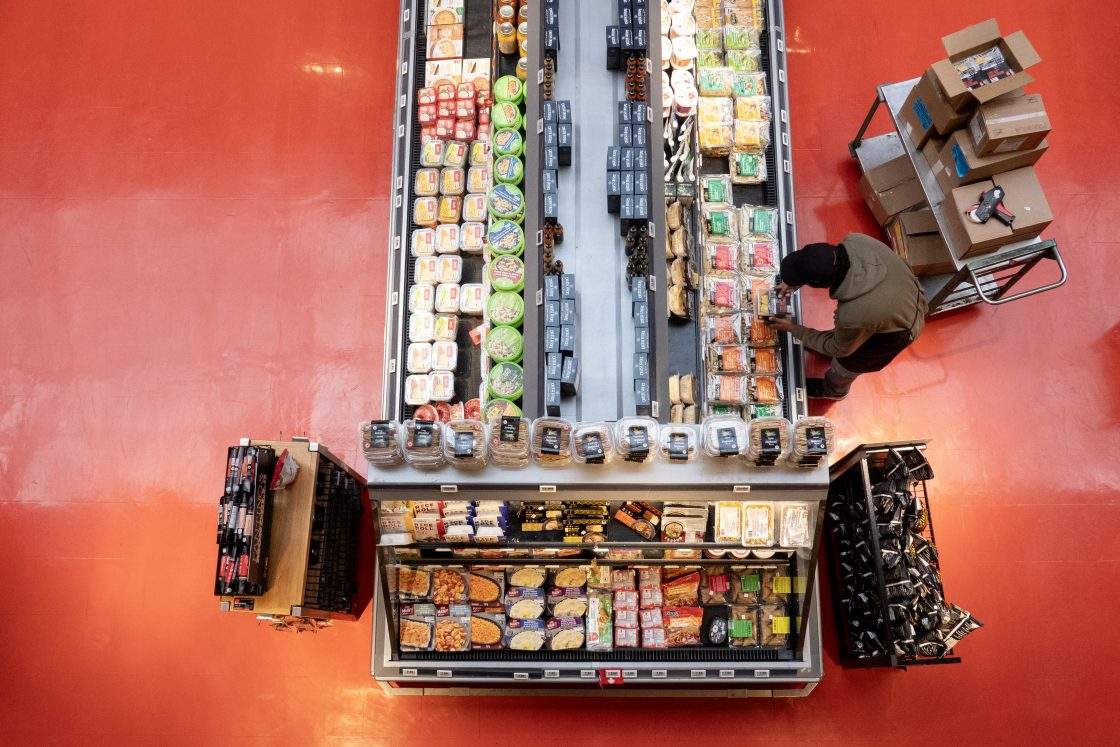
Canadians could wind up with a bigger grocery bill in the coming months as a major price "shock" for diesel and crude oil works its way through supply chains, Scotiabank says.
Canadians could wind up with a bigger grocery bill in the coming months as a major price "shock" for diesel and crude oil works its way through supply chains, Scotiabank says.
Surging costs drive demand at food pantries like CORA in Chatham County and across much of NC. Further loss of resources could be devastating.
Struggling with food insecurity in Central NC is a story from Carolina Public Press, an award-winning independent newsroom. Our breakthrough journalism shines a light on the critical overlooked and under-reported issues facing North Carolina’s more than 11 million residents. Please consider making a contribution to support our journalism.
Donald Trump tried to use America’s economic weight to force China to bend, only to discover that Beijing has built an economic weapon of its own that Washington cannot tackle. China Finds America’s Chokepoint For years, the central assumption underlying Washington’s economic confrontation with Beijing was that interdependence gave the United States more leverage than […]

 Login