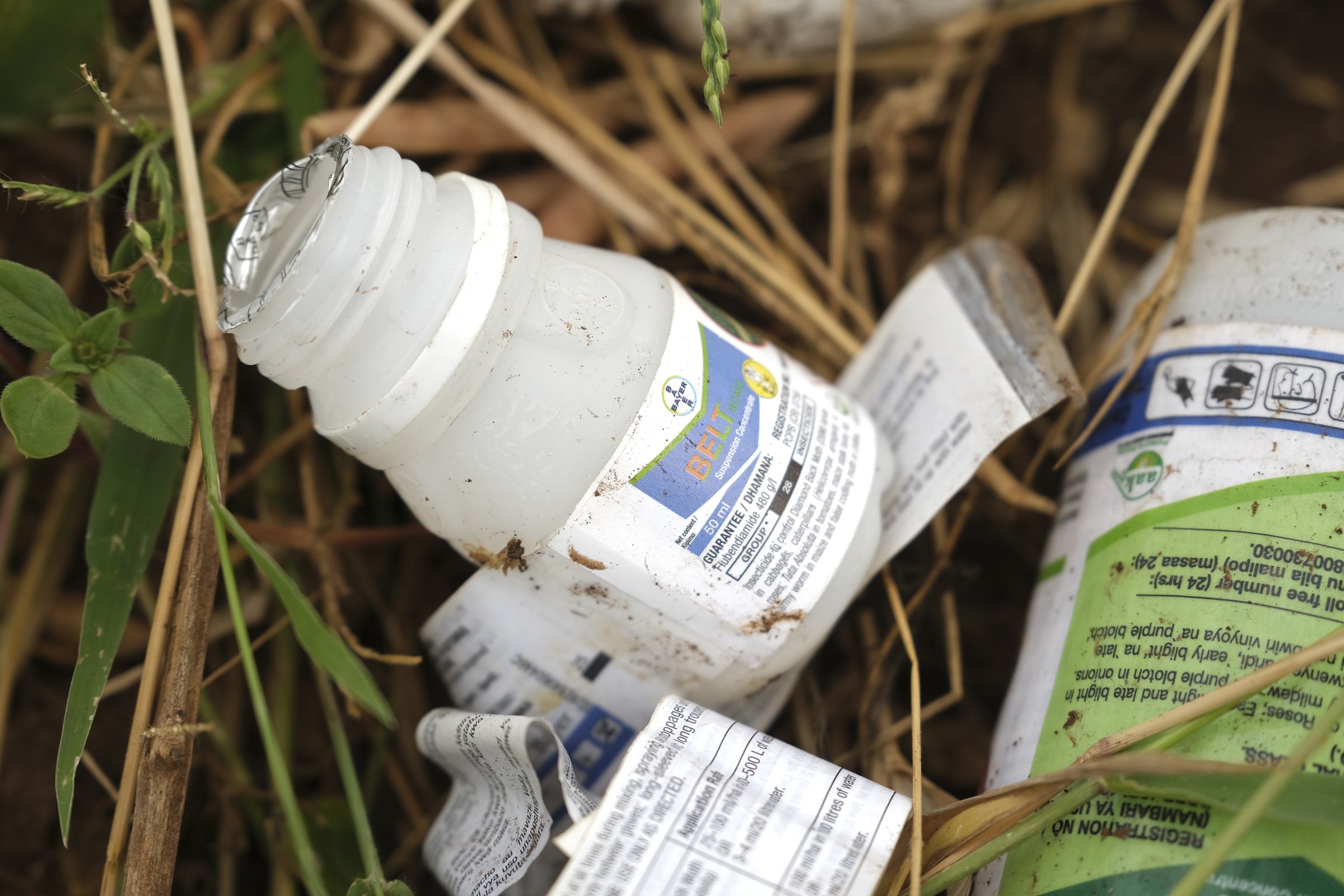
A backlash is building against an EU ‘omnibus’ bill that seeks to make it easier to authorise and use pesticides across the bloc.
MEPs are still yet to set a date to vote on the European Commission’s proposal to extend how long pesticide active substances can stay approved in the EU, amid a series of protest letters from scientists, UN health experts, and divisions among member states.
EI parliament’s environment and agriculture committees were originally expected to hold a joint vote on a compromise text on 5 October, but shelved that date without proposing another as this article went to publication.
Sustained criticism has come from the scientific community.
Last month, a group of more than 500 scientists signed an open letter to the commission on 16 September demanding a pause on the file pending “an independent assessment, whether carried out by parliament’s own research service or by an equivalent independent body.”
They warned that the commission’s plan to extend grace periods for products withdrawn on safety grounds, widen derogations for hazardous substances, and restrict the use of the latest independent scientific evidence “seem difficult to reconcile with the precautionary principle and with obligations to respect, protect and fulfil human rights, including the rights of peasants and other people working in rural areas”.
This article continues, but the full version is available only to EUobserver.com subscribers. Visit account.euobserver.com/membership
The EU is shying away from triggering rules that would shield people and companies working at or with the International Criminal Court (ICC) in The Hague from US sanctions, preferring instead months-long diplomatic outreach.
The European Commission on Wednesday (14 October) told reporters in Brussels that it was doing everything to seek “practical solutions”, while hoping that its diplomacy will help the court, which prosecutes people for war crimes, genocide, and other atrocities.
“We haven’t made any decisions yet. But we continue to discuss at every level,” said a commission spokesperson, when pressed on whether a little-known blocking statue, which would presumably damper the impact of the US sanctions, remains an option.
And an EU summit in Brussels on Thursday is expected to ask the US to reverse the decision, according to draft conclusions seen by EUobserver.
The EU’s little-known “blocking statute” would prevent EU companies and banks from complying with the sanctions. It was first used against US sanctions on Cuba, Iran and Libya.
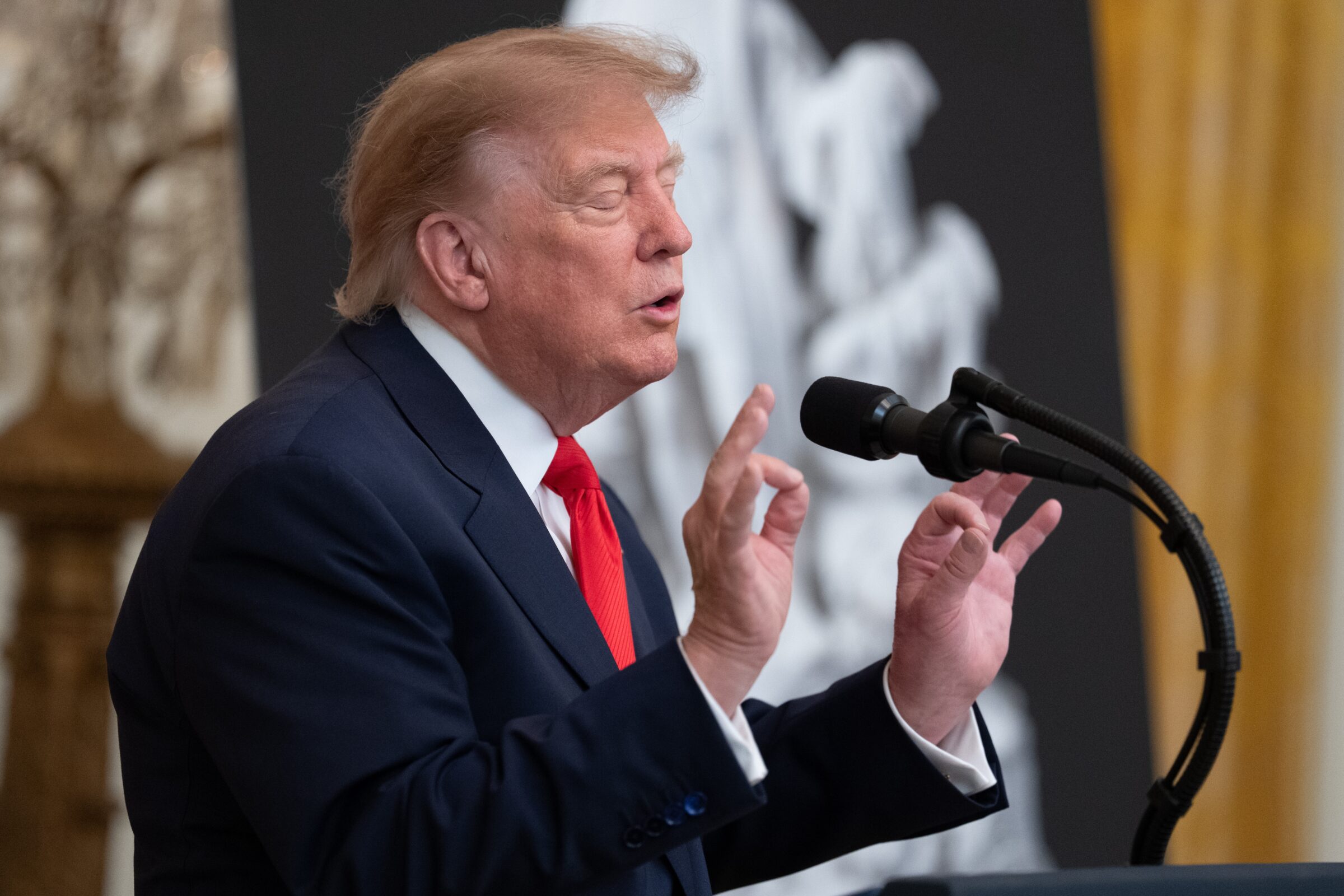
The Trump administration had, last Friday, announced financial sanctions on the ICC as part of a larger assault to dismantle the court, after it issued arrest warrants for Israeli prime minister Benjamin Netanyahu, its former defence minister Yoav Gallant, and Hamas military commander Mohammed Deif.
This article continues, but the full version is available only to EUobserver.com subscribers. Visit account.euobserver.com/membership
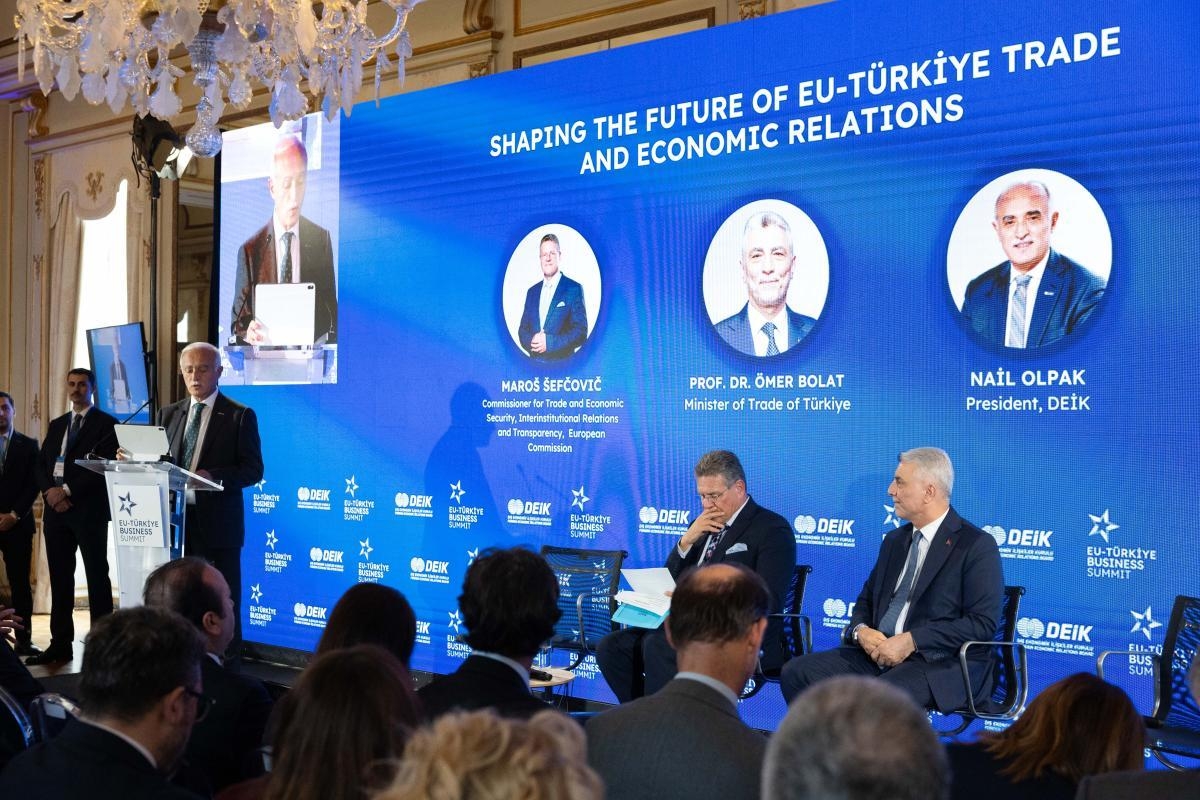
Belgium’s foreign minister has called on the EU to deepen its economic, trade, and defence ties with Turkey, amid concerns from Ankara that it risks being shut out of the bloc’s new rules on industrial supply chains and multi-billion euro defence procurement scheme.
Speaking at a Turkey-EU business forum in Brussels on Tuesday (13 October), Belgian foreign minister Maxime Pévot said that European manufacturers were increasingly looking for reliable partners closer to home as they seek to reduce their reliance on Chinese inputs.
“We should make values of its proximity, particularly in sectors where Europe needs to reduce strategic dependencies,” he added.
“Our economic relationship should no longer be limited to buying and selling goods. We should also be developing, producing, and investing together,” he said.
For his part, following talks with Ankara’s trade minister, Ömer Bolat, EU trade commissioner Maroš Šefčovič told reporters that the two sides had agreed on reforms to Turkey’s import control system to make the system easier for EU exporters to use and a mutual recognition pact on trusted traders.
This article continues, but the full version is available only to EUobserver.com subscribers. Visit account.euobserver.com/membership
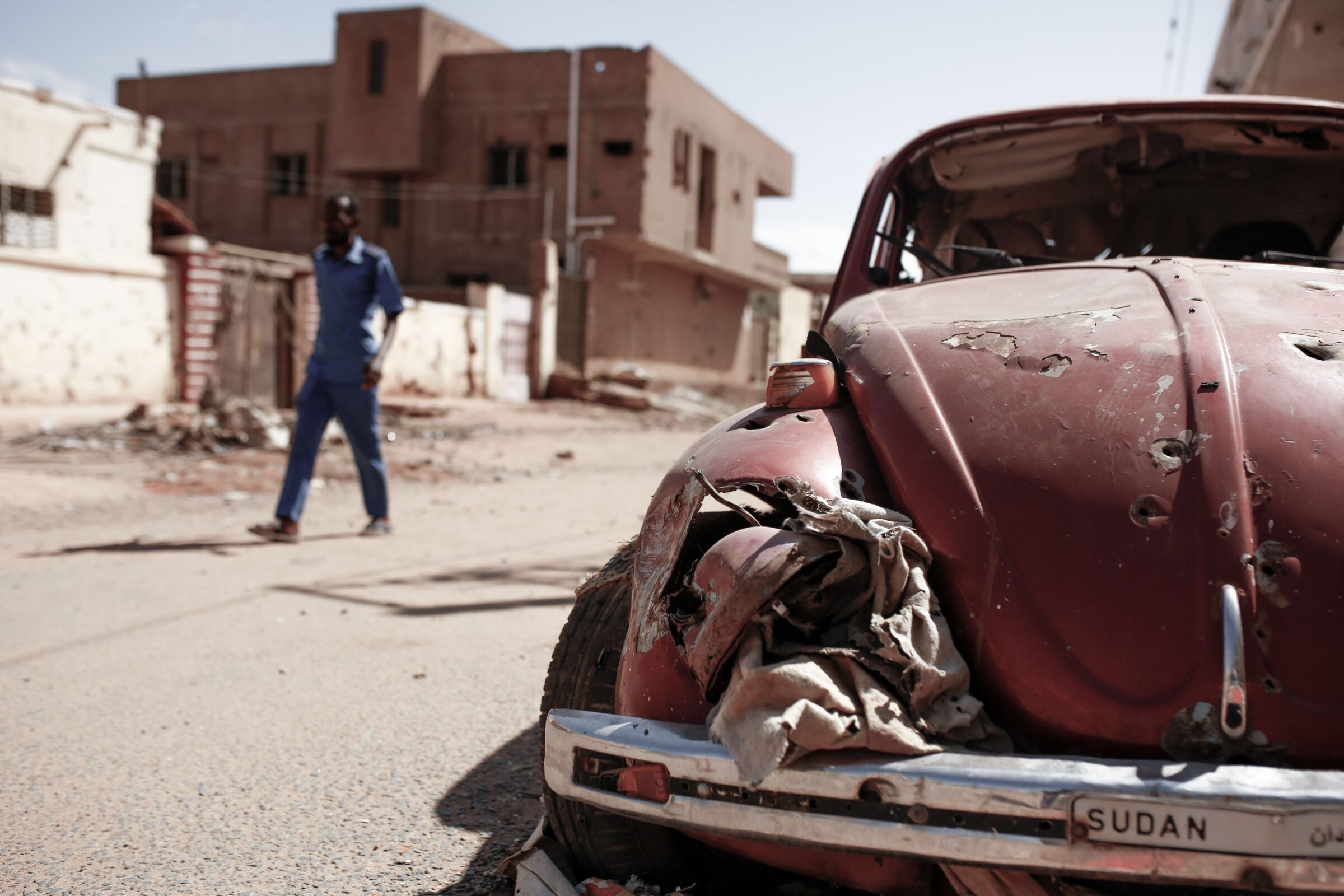
The European Commission is promising more support to Egypt, even as Egyptian warplanes reportedly bomb in Sudan and authorities carry out a campaign of violence against the refugees it hosts.
The civil war in Sudan includes reports of genocide, chemical-weapons use, mass rape, and starvation, forcing some 1.2 million Sudanese people into Egypt, which was described as a priority migration-busting partner by commission president Ursula von der Leyen on Tuesday (13 October), who also promised continuing support for Cairo.
In a letter sent to the 27 heads of state and government ahead of an EU summit on Thursday in Brussels, she spoke of “offering protection and durable solutions in … host countries”, as well as further aid for Sudanese people who had returned to parts of the country, now deemed relatively safe.
But her warm words stand in sharp contrast to internal EU documents on Sudan, released by the London-based group Statewatch earlier this month, and which speak of an Egyptian-led campaign of violence against the Sudanese it is tasked to help.
“The Egyptian authorities have continued arbitrary arrests, detention and deportation campaign against migrants, asylum seekers and refugees, with a sharp escalation of forced deportations being observed since January 2026,” said the Irish EU presidency, in an internal document written in September.
Estimates suggest Egypt hosts over nine million migrants and refugees.
Some 80 percent are Sudanese, Syrian, Yemeni, and Libyan nationals. Of those, just over 1 million are officially registered as refugees. Most come from Sudan.
And Egypt’s crackdown also comes amid a massive 74 percent funding cut for the UN’s refugee agency in the country, even as the EU’s financial support to Cairo increases, already totalling €5bn.
This article continues, but the full version is available only to EUobserver.com subscribers. Visit account.euobserver.com/membership
More than a third of people who receive warnings of disasters are unable to act before they strike, according to a global poll. Social resilience has fallen also in Poland, Greece, and France.
The findings, published by the Lloyd’s Register Foundation on Tuesday (13 October), drew on more than 143,000 interviews conducted by Gallup across 140 countries in 2025.
They show that an estimated 1.1 billion people – one in five adults worldwide – experienced a disaster in the previous five years.
Almost 220 million received no warning at all.
“A warning is only as good as what people are able to do with it,” said Nancy Hey, director of evidence and insight at Lloyd’s Register Foundation’s Global Safety Evidence Centre.
The gap between being warned and being able to respond is stark between rich and poor countries. Adults in low-income countries were almost twice as likely to have been affected by a disaster as those in high-income countries, at 31 percent compared with 16 percent.
Yet only 64 percent of affected adults in low-income countries received a warning, against 84 percent in high-income countries.
Even when warnings arrive, they do not guarantee safety.
The challenge is not simply to warn people when disaster approaches, but to ensure they have the means and support to act.
Fewer than half of warned adults in low- and lower-middle-income countries were able to act, compared with 71 percent in high-income countries.
Europe’s resilience is unequal
The report’s companion study, ‘A resilient life: How wellbeing shapes the capacity to cope’, pictures the preparedness to act under pressure — including in wealthier countries.
“There are some changes that are happening in Europe that I’m not seeing in other parts of the world,” Hey told EUobserver.
Across the EU, 77 percent of people affected by a disaster received a warning, compared with 80 percent globally.
But only 59 percent of those warned could act, against 64 percent worldwide and 71 percent in high-income countries.
“Some of the biggest drops globally have been in Greece, Netherlands, Estonia, and France, which is surprising given that generally that measure is going upwards,” Hey said.
Just 29 percent of EU households have a disaster plan, and only 28 percent of people think their national government is well prepared for a disaster.
Meanwhile, 44 percent say their government does not care about them at all, compared with 29 percent globally.
The differences between countries are stark.
In France, 80 percent of those affected received warnings, but only 61 percent could act. Just 22 percent of households have a disaster plan, compared with 47 percent in Germany and 60 percent in Austria. And overall, France’s social resilience has fallen six points since 2021.
Greece faces a deeper crisis of preparedness and confidence.
Only 55 percent of disaster-affected people received warnings, and just 39 percent of those warned could act. Only 12 percent believe their government is well prepared, while 70 percent say it does not care about them.
This article continues, but the full version is available only to EUobserver.com subscribers. Visit account.euobserver.com/membership
Nearly three decades after the Dayton Peace Agreement ended the war in Bosnia and Herzegovina, the country remains deeply divided along ethnic and political lines.
The agreement brought peace, but its complex political system has done little to overcome those divisions. Republika Srpska, the predominantly Serb entity, has pursued an increasingly divergent political course, while Serbia and Croatia maintain close ties with different parts of the country.
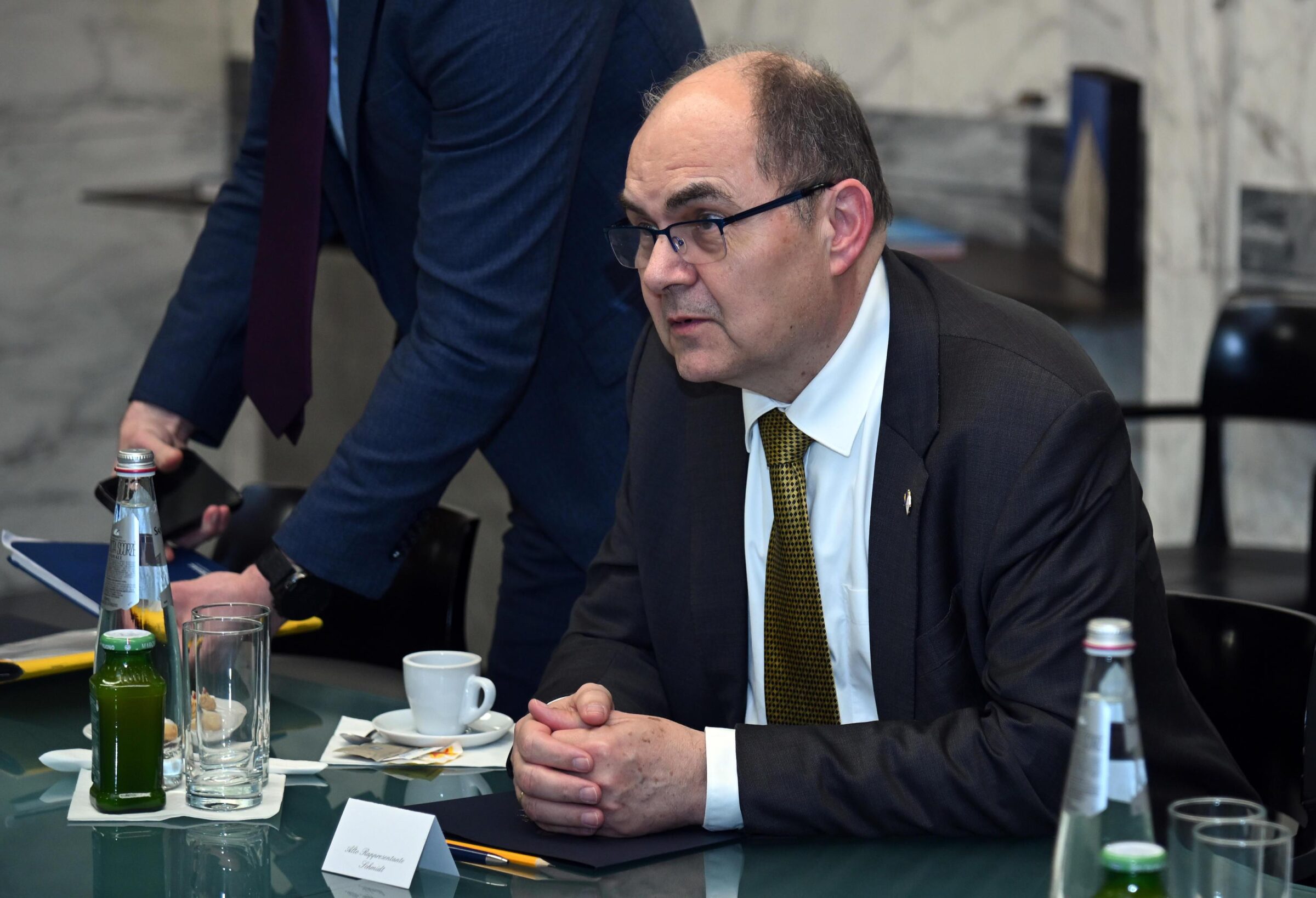
And for Christian Schmidt, the international community’s high representative for Bosnia and Herzegovina (2021-26) the main threat is no longer a return to war, but political stagnation and growing frustration.
He says that weak civic engagement, slow progress towards EU membership and the influence of Russia and neighbouring countries are reinforcing Bosnia’s divisions. Young people, he says, are increasingly responding by leaving the country.
In this interview, Schmidt discusses foreign influence, the EU’s role, the legacy of Dayton, and why Bosnia’s future may depend on whether it can build a stronger political community across its ethnic divisions.
A country that remains divided
You started your work in Bosnia and Herzegovina in 2021 and were there for five years. It was a period of major changes, with COVID and then the war in Ukraine. What were your experiences of these moments. How has the situation in Bosnia evolved?
I think there has not been sufficient involvement. Civil society in Bosnia and Herzegovina is not very strong. It is, more than just politically, somehow divided on political issues. This prevents a joint political position or commitment from civil society to make more progress in democratic development and European integration.
So far, I don’t see that this has changed very much. It has also not changed that some parties, especially the SNSD, [Serb nationalist Milorad] Dodik’s party, but honestly not only them, are counting on ethnic differences as an argument for supporting their party instead of having a multi-ethnic approach. One can be doubtful about their real pro-European commitment.
Russia and its influence
When civil society is not engaged and when countries are not politically stable, we know that they are prone to interference from other states or political entities. Is this being seen in Bosnia and Herzegovina?
It is evident that neighbouring countries, especially Serbia and Croatia, have a kind of preferred relationship with parts of the country. This is, by the way, also established in the General Framework Agreement for Peace in Bosnia and Herzegovina [also known as the Dayton Peace Agreement]. So it is not necessarily something that is not in line with Dayton [Agreement].
But there is beyond this more interference if I refer, for example, to Serbia’s reaction on the occasion of the United Nations General Assembly Resolution of 2024 about establishing an international day of commemoration for the Srebrenica genocide. There was a really remarkable attack against this, despite the fact that Serbia was not named in the resolution. There were only named individuals who had committed war crimes or genocide.
But it was used to create a “Pan-Serbian declaration”, which can be seen as a way of bringing cultural issues of the same ethnic group closer together. It has to be seen additionally as a tool to try to gain more political influence in the other part of the country.
You mentioned Croatia and Serbia. Is Russia also playing a role in these interferences?
Yes, but not ethnic interference. It is more through traditional good relations, especially with the Orthodox community, which is basically the Serb Orthodox community, where there are relations and a lot of activities, including in the media and on social media.
They [Russia] try to influence a part of Bosnia and Herzegovina, especially Banja Luka and Republika Srpska, and Dodik is somehow to act as an influencer for Russian interests. This is indeed the case. Dodik has been sitting together with [Russian president Vladimir] Putin for the 11th time since the beginning of the war in Ukraine. This is really remarkable.
How important is Bosnia and Herzegovina and Dodik for Russia and for Putin?
The economic and political-strategic importance is nearly zero. But it can be used as a way of distracting from European and somehow American activities, just by giving them a negative impact on everything. So this is more seen as a tool, rather than an area of influence.
EU— only accession talks?
Does the EU have a role in fighting such interference — Russian, but also the ethnic interference from Croatia and Serbia?
The ethnic relationships are within the framework of Dayton, and they are acceptable. But I think it is very important that the EU makes it clear that European integration is not based on ethnic differences, but on uniting in diversity.
This is something that is very complicated. You cannot do this only with programmes or money. I think these challenges are the typical issues that you can address through European commitment, but in the details, it has not delivered.
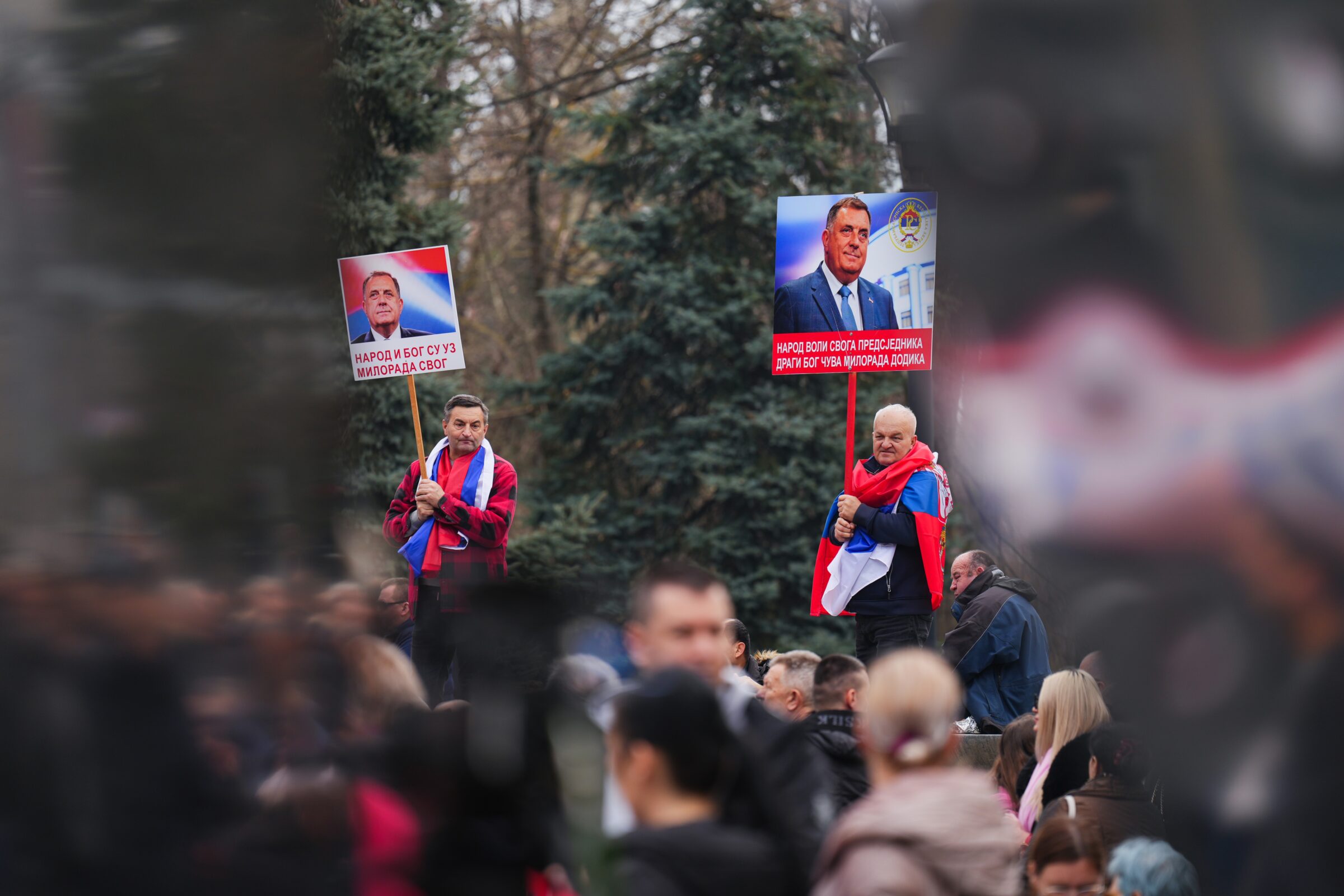
Milorad Dodik has a great support even as he has been sentenced to one year in prison and barred from public office for six years in a first-instance verdict for disobeying the decisions of Bosnia and Herzegovina’s international envoy, High Representative Christian Schmidt. Source: EPA/Nidal Saljic.
Unfortunately, maybe the European Union should sit down again and think about more tools and opportunities, especially addressing civil society, to give more attraction to the European idea.
How would that work?
This article continues, but the full version is available only to EUobserver.com subscribers. Visit account.euobserver.com/membership
EU leaders will mouth hollow criticism of West Bank settlers at next week’s summit, while staying mute on Israel’s genocide in Gaza – in sharp contrast to the 2026 Nobel peace prize.
The EU “strongly condemns the continued and growing settler violence against Palestinian civilians and calls for accountability”, they aim to say in a declaration in Brussels on Thursday (15 October), according to a draft seen by EUobserver on Friday.
And they are to warn of “legal, economic, and reputational consequences for [Israeli] businesses participating” in building a settlement in the E1 area of the West Bank, which would destroy the two-state solution by chopping the region in half.
It remains to be seen if Slovenia’s pro-Israeli prime minister, Janez Janša, will sign up, after he ranted on X in August that he would veto this type of thing.
But even if Janša agreed, it would still amount to EU impunity for settlers, as there was no mention of banning settler imports or even blacklisting more settler extremists.
“The EU keeps condemning illegal settlements that it trades with, financing the very occupation and abuses it claims to oppose. How does that make any sense?,” said Claudio Francavilla from Human Rights Watch.
The summit draft also voiced “grave concern over developments in Gaza”, where “protection of civilians must be ensured”, and urged Israel to let in more aid.
Israel has killed some 1,450 people in Gaza since an October 2025 ceasefire.
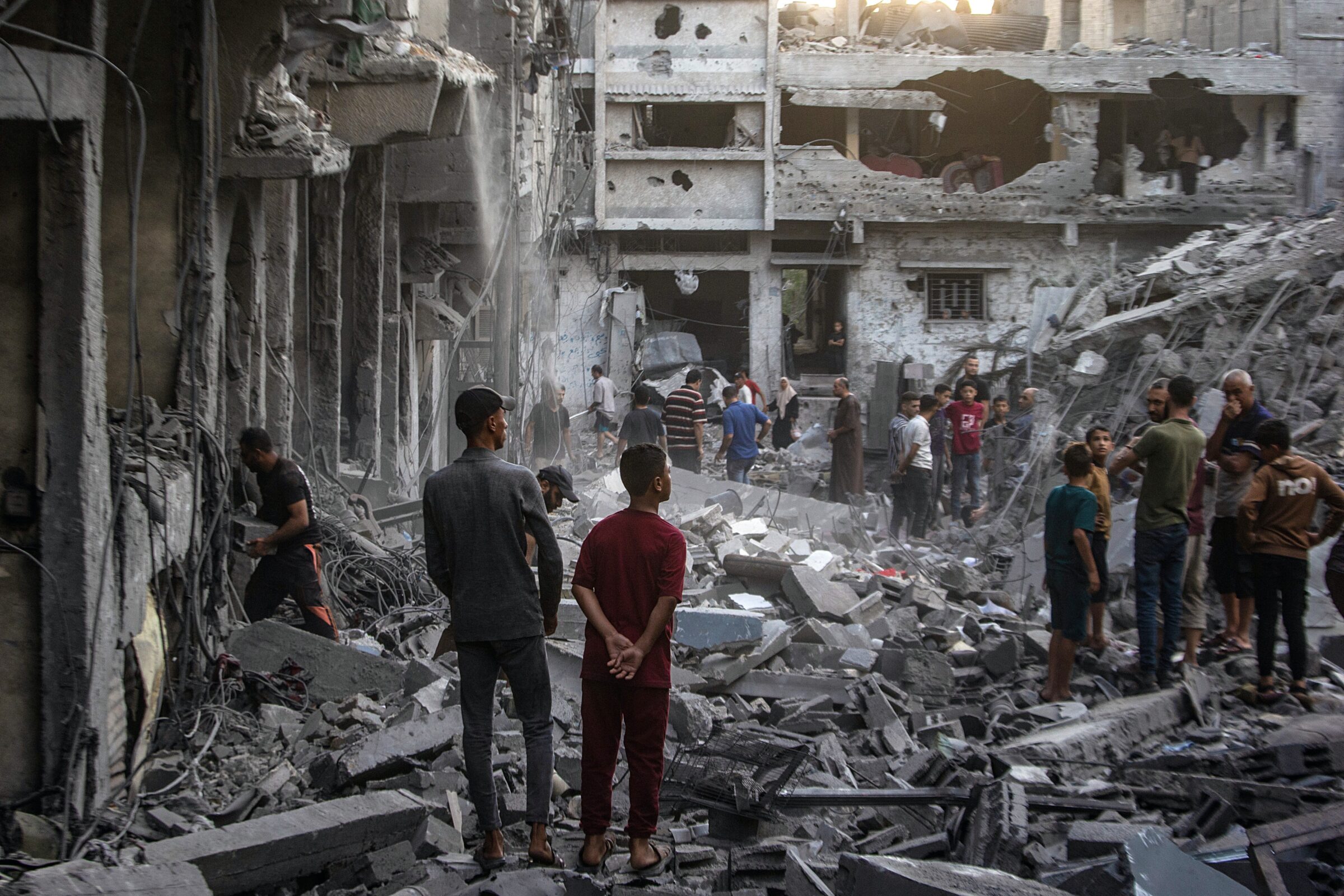
It has killed over 74,000 Palestinians and displaced 1.8 million people in Gaza since 2023, but the EU leaders’ passive-tense language did not blame Israel for civilian deaths or mention Gaza “accountability”.
And that will put our 27 prime ministers and presidents at odds this Thursday with Europe’s moral compass, international law, and public opinion.
The Norwegian Nobel Committee gave the 2026 Nobel Peace Prize on Friday to Navi Pillay, a South African judge, who had chaired a UN commission that found Israel guilty of “genocide” in Gaza and worked for the International Criminal Court (ICC) in The Hague, which has indicted Israeli prime minister Benjamin Netanyahu for war crimes.
She was “a bigot … propagating blood libels,” he said on X.
Israeli foreign minister Gideon Sa’ar said: “[Nazi propaganda chief] Joseph Goebbels is probably applauding in hell.”
And US president Donald Trump joined their Nobel-bashing by imposing sanctions on the ICC.
But three other Nobel laureates, from Colombia, DR Congo, and Liberia were among global VIPs who also wrote to the European Commission on Friday urging trade sanctions on Israel, in a sign of wider revulsion.
And “if the EU was serious about fulfilling its obligations under international law, or indeed in terms of its own stated values and policies, it would go much, much further [in terms of sanctions],” said H. A. Hellyer, from the Royal United Services Institute (RUSI) think-tank in London.
Palestine solidarity marches in Berlin, London, Rome, and Warsaw on Saturday showed that ordinary Europeans wanted their elected politicians to take action.
Some 83 percent of Germans and 88 percent of Italians now disapproved of Netanyahu, said the Pew Research Centre in June.
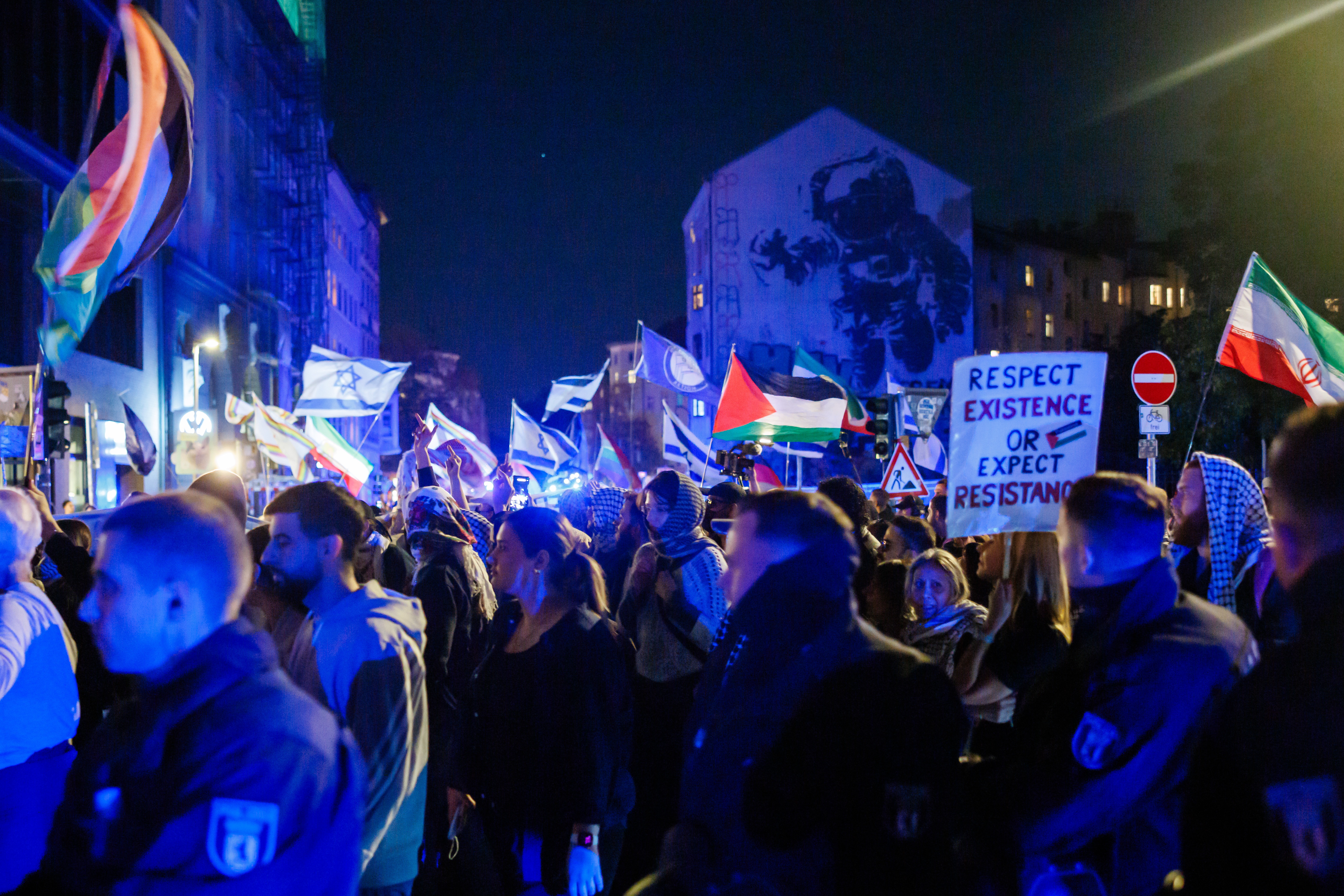
Protesters with Palestinian flags pass by a counter protest with Israeli flags at a rally in Berlin on 7 October 2026 (Source: EPA/CLEMENS BILAN)
Blood and rubble
The latest EU summit draft pledged support for Palestinian elections.
“The European Union stands ready to support the electoral process, including by the deployment of an EU Election Observation Mission,” it said.
But EU words were being buried in blood and rubble faster than the summit statements could be updated.
The Palestinian vote would have to be postponed until at least late 2027 due to the “security and economic conditions” created by Israel in the West Bank, the Palestinian Authority warned France, also on Friday.
Meanwhile, the EU summit will fall two weeks before Israeli elections on 27 October and the leaders’ empty words might be tactical – so as not to throw meat to far-right Israeli zealots in a rabid atmosphere.
But Europe’s quietism is also due to Germany and Italy’s internal politics and its psychopathological mix of World War 2-guilt, raging far-right populism, and transatlantic realpolitik.
“I don’t think this [the draft EU summit text on the Middle East] is a strategy, so much as a statement of the lowest common denominator in EU foreign policy,” RUSI’s Hellyer said.
And going back to the Nazi slurs against the 2026 Nobel, Israeli author Gideon Levy said in the Haaretz daily on Saturday: “No, Sa’ar … If Goebbels has a reason to applaud, it is upon seeing what has happened to the country that arose from the ashes of the Holocaust.”
“Goebbels is applauding perpetrators of genocide around the world, particularly the one in Gaza,” said Levy.
So long as Berlin and Rome don’t realign their compasses, Europe’s silent blessing for Palestinian erasure will feed Israeli hardliners’ schizoid and delusional sense of self-righteousness.
“As long as Israel is not willing to … admit, at least partially, to its crimes, it will never change,” Levy said.
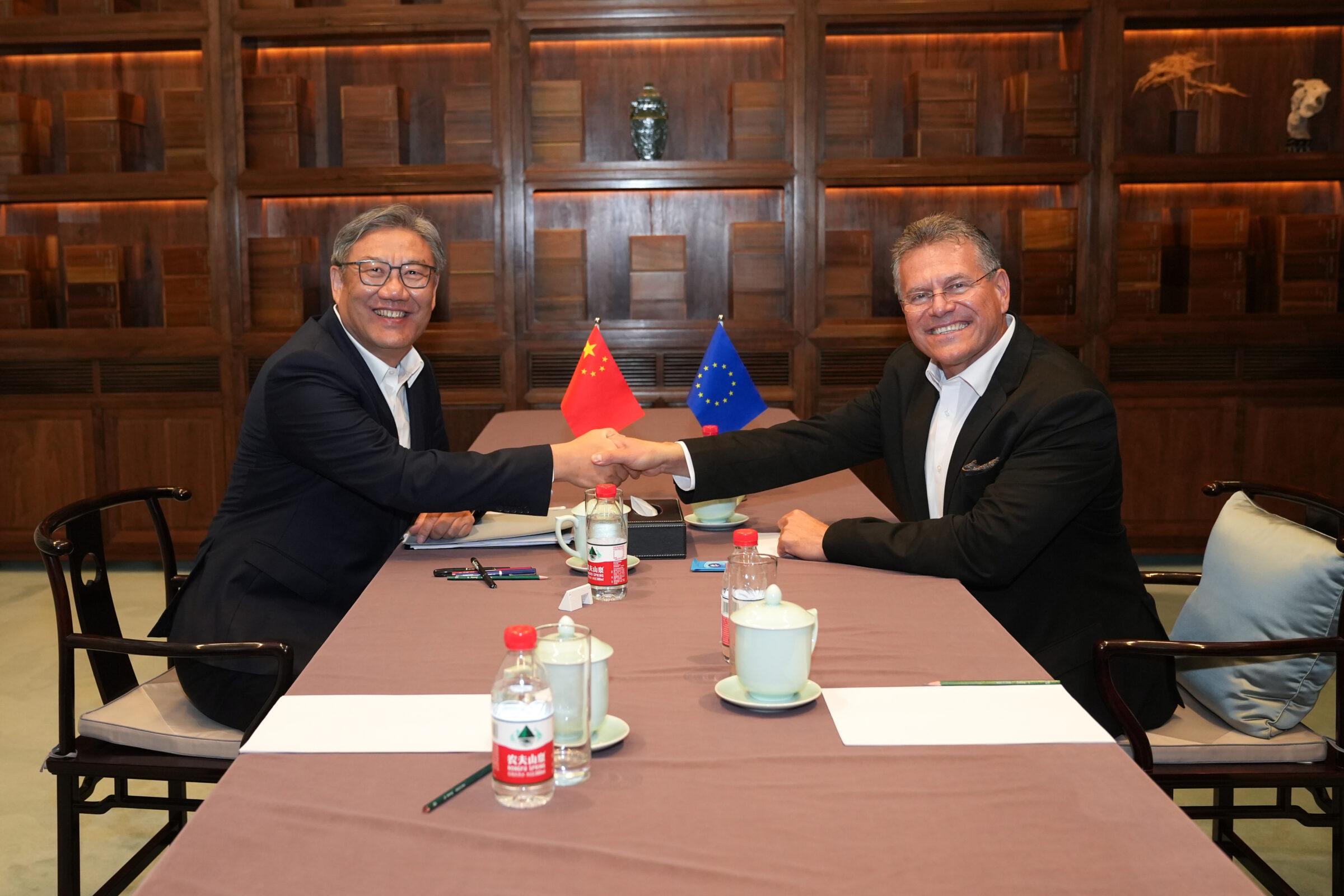
Persuading China that its €1bn daily trade surplus with the EU is not sustainable was always going to be a hard sell for EU trade commissioner Maroš Šefčovič.
And the early signs are that Šefčovič’s two days of talks with Chinese commerce secretary Wang Wentao, which conclude on Friday (9 October), are not going to deliver the breakthrough demanded by EU leaders when they gather for a summit in Brussels next week.
“The message around the table was clear: the need to improve access to the Chinese market, while boosting our economic security,” Šefčovič posted on X ahead of the first day of talks.
But rhetoric aside, three months after the EU Commission set up a series of ‘work streams’ with Chinese officials, with a mandate to address the multi-layered EU-Sino trade dispute, it is hard to see much tangible progress.
Hours before Šefčovič arrived, Beijing rejected an EU demand for so-called “voluntary export restrictions” on its electric vehicles (EVs).
In August, data published by Schmidt Automotive Research found that 14 percent of EV sales across Europe this year were Chinese-made, up from 9.4 percent last year.
That is despite the EU imposing additional tariffs of between 17 and 36 percent on Chinese EVs in October 2024.
This article continues, but the full version is available only to EUobserver.com subscribers. Visit account.euobserver.com/membership
The EU’s border agency, Frontex, shared coordinates of an overcrowded and partly deflated boat in the Mediterranean sea with the Libyan coastguard and then watched them run it over.
The boat was carrying 27 people, including children.
The findings, by Frontex’s own fundamental rights officer, described an incident that took place on 19 June 2026.
And this was just a tiny part of a wider pattern of violence by the EU-backed Libyan coastguard, which has also shot at or near civil rescue vessels.
No one was killed in the June event. But people were tossed into the water. Others, pulled onto the Libyan vessel, were then beaten by Libyan uniformed officers.
Frontex had issued a Mayday relay and then shared the sightings by email with the Libyan rescue centre.
No vessels were reported to be in the vicinity, but the Libyans showed up 90 minutes later.
The internal Frontex findings highlight ongoing tensions in the agency over sharing rescue coordinates with the Libyans in the name of saving lives.
“Saving lives is the absolute sort of absolute right that people have,” Hans Leijtens the agency’s director, told EUobserver earlier this year.
“And it’s our job to contribute to that, and if that sort of starts with looking at which part of the Mediterranean ship is sailing, and if it’s a north African country, we all have to inform the authorities there,” he added.
But his own rights officer also notes that the botched rescue on 19 June amounted to a violation of the right to life, citing article six of the International Covenant on Civil and Political Rights.
He says the standard is not simply whether the migrants were ultimately rescued, but if the operation was planned and executed to minimise risks to human life.
In this case, the Libyans violated that right among others, he says. Frontex did not reply to the findings in the report, as of publication.
Let the court decide
This article continues, but the full version is available only to EUobserver.com subscribers. Visit account.euobserver.com/membership

 Login