❌

Reading view

Russian drone cuts down unique energy line tower over Dnipro River in Kyiv. It can’t be rebuilt, and world is queuing for more power equipment

Kyiv's Northern Bridge connecting the city's two sides across the Dnipro River. Photo via Wikimedia Commons

Russia has found a way to cut Ukraine’s power lines that no repair crew can undo. A unique power transmission tower that a Russian drone cut down at the Dnipro River crossing in Kyiv cannot be restored,  Ukrenergo board chairman Vitaliy Zaichenko says, as the grid operator rushes to build alternative ways to keep electricity flowing, Interfax reports.

Russia has spent the war trying to switch off Ukraine’s lights. Now, it is widening the campaign before winter with a new tactic: drones that slice through the steel towers carrying high-voltage lines.

“Everyone has seen the video showing the destruction of one of the unique power transmission towers at the crossing over the Dnipro in Kyiv. It was severed, and it is impossible to restore it,” Zaichenko continues.

He adds that now the company is developing new technical solutions "on the fly, and very fast." It will start the procedures for those solutions from 15 October, he notes. Russia’s use of drones able to sever metal towers is a new and serious challenge for Ukraine’s power engineers.

Zaichenko did not say when the tower was hit. On 30 September, Russia first used a jet-powered drone carrying a 40-kilogram charge built to cut steel towers, and that evening an eyewitness filmed one striking a power line tower in Kyiv, which cut electricity in parts of three districts, Informator reported.

When the spare parts are as scarce as the targets are plentiful

Rebuilding is colliding with a global shortage. Ukrenergo faces serious difficulties getting backup equipment, Zaichenko explains, because the whole world’s energy system is expanding at once and everyone needs the same hardware.

“There is a real problem with equipment. The global power system is expanding, and everyone needs energy equipment. There is a tough queue,” Zaichenko says.

Ukraine has faced such challenges since August 2026, when Russia began launching its jet-powered drones. Kyiv still has no effective solution against them and relies more on a mix of air defenses, such as automated turrets and interceptor drones.

Kyiv has also engaged over 100 private air defense system brigades to protect its enterprises in the ranks of the Ukrainian Air Forces.

  •  

Ukraine and Japan plan prefabricated backup crossings for Kyiv’s bridges: 720 meters of structures already delivered

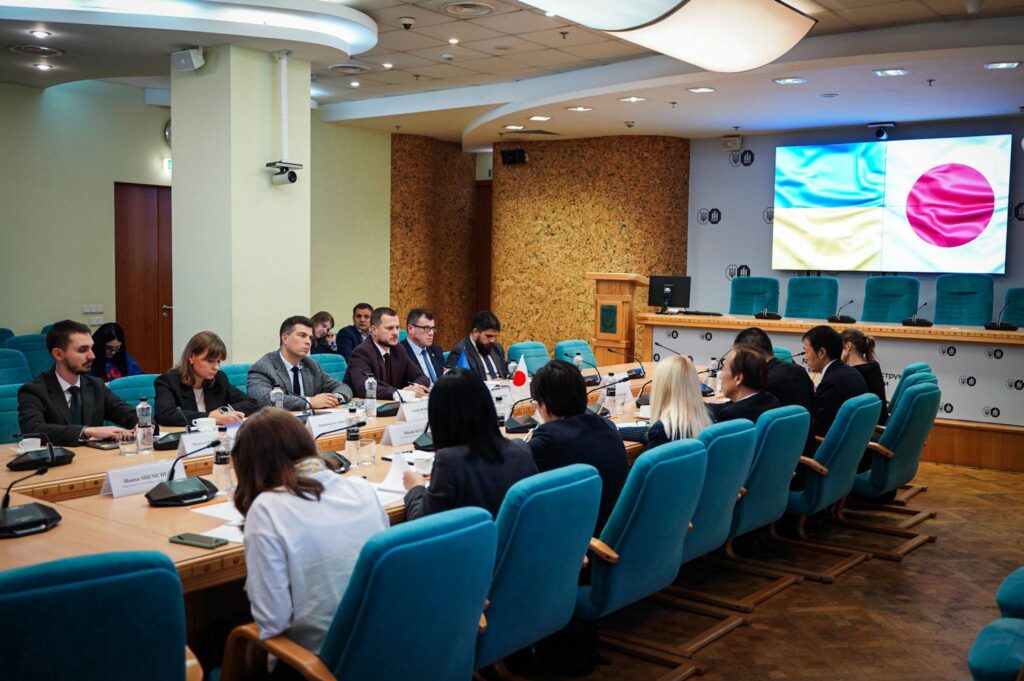
Meeting between Ukraine’s Minister for Restoration, Infrastructure and Transport Mykola Kalashnyk, Japan’s Ambassador to Ukraine Yo Osumi, and JICA Ukraine Office Chief Osamu Hattori, October 2026. Photo: Mykola Kalashnyk/Telegram

Ukrainian and Japanese officials discussed establishing backup bridge crossings in the event of Russian strikes, preparing municipal infrastructure for winter, and Japan's continued assistance with Ukraine's recovery, Ukraine's Minister for Restoration, Infrastructure and Transport, Mykola Kalashnyk, reported on 14 October.

Russia is targeting Kyiv's bridges to paralyze the city and break civilian morale, defense analyst Hamish de Bretton-Gordon wrote in The Telegraph. On 1 and 2 October, Russia attacked Kyiv's Southern Bridge, then struck the Northern Bridge on 3 and 4 October. Ukraine is now working with international partners to establish backup bridge crossings that could maintain connectivity even if major routes are damaged.

The discussions took place during a meeting between Minister Kalashnyk, Japan's Ambassador to Ukraine Yo Osumi, and Osamu Hattori, head of the Japan International Cooperation Agency (JICA) office in Ukraine, according to the statement.

Ukraine's Minister for Restoration, Infrastructure and Transport Mykola Kalashnyk during a meeting with Japan's Ambassador to Ukraine Yo Osumi and JICA Ukraine Office Chief Osamu Hattori, October 2026. Photo: Mykola Kalashnyk/Telegram

Backup crossings could prevent logistical disruptions if major bridges are damaged

Kyiv's Southern Bridge, for example, plays a critical role in logistics because freight traffic uses it, transport planning expert Dmytro Bespalov noted in an article for Ukrainska Pravda. At the same time, installing additional metal structures to reinforce bridges could be dangerous given their technical condition and existing load levels, he said.

One potential solution is to establish backup bridge crossings.

Ukraine and JICA have agreed to continue working together on engineering solutions for setting up these crossings. Japan has already delivered 720 meters of prefabricated bridge structures to Ukraine, which are expected to be used to create alternative routes if Russia's attacks damage major bridges, Kalashnyk said.

The initiative is intended to help maintain transportation links, ensure the delivery of critical supplies, and preserve evacuation routes for civilians.

The flags of Japan and Ukraine displayed on a screen during a meeting between Ukraine's Minister for Restoration, Infrastructure and Transport Mykola Kalashnyk, Japan's Ambassador to Ukraine Yo Osumi, and JICA Ukraine Office Chief Osamu Hattori, October 2026. Photo: Mykola Kalashnyk/Telegram

Ukraine prepares water utilities and boiler plants for winter amid the threat of Russian infrastructure strikes

During the meeting, Ukraine and JICA discussed equipping water utilities with backup power supplies, addressing the need for modular boiler plants, and obtaining equipment to ensure uninterrupted heating and water services. Ukraine has already submitted lists of the necessary equipment to JICA for consideration as part of a new emergency assistance project, Kalashnyk said.

An intercepted document outlining an alleged Russian plan for strikes against Ukraine this winter reportedly describes attacks on 60 critical infrastructure facilities using up to 1,000 missiles, drones, and aerial bombs. Potential targets include electrical substations, hydroelectric power plants, thermal power plants, boiler facilities, and infrastructure related to water supply and wastewater management.

Kyiv during a blackout caused by Russian strikes on energy infrastructure, 11 October 2026. Photo: Yan Dobronosov

The document also describes potential strikes on facilities in Kyiv, Kharkiv, Odesa, and several other cities. Such attacks could disrupt electricity, heating, water supply, and wastewater services.

  •  

Throttling Ukraine’s Starlink access heightens concerns over Musk

The Ukrainian government on Tuesday night said that its access to the SpaceX-owned Starlink satellite internet service was throttled, prompting critics to question the wisdom of depending on any company owned by far-right billionaire Elon Musk. According to a Wednesday report in The New York Times, Ukrainian officials suspect that orders to restrict their access […]

The post Throttling Ukraine’s Starlink access heightens concerns over Musk appeared first on Asia Times.

  •  

Trump’s Energy Ceasefire Risks Becoming a Trap for Ukraine as Russia Continues Its Attacks

Washington’s proposed energy ceasefire could force Ukraine to abandon one of its most effective means of economic pressure against Russia without securing equivalent concessions from Moscow. Donald Trump’s parallel agreement with Vladimir Putin over Russian diesel raises further questions about whether American energy priorities are beginning to dictate the terms of negotiations over Ukraine.

President Volodymyr Zelenskyy has placed an important qualification on Donald Trump’s proposed energy ceasefire: Ukraine will stop attacking Russian energy facilities only if Moscow stops targeting Ukraine’s electricity generation and distribution infrastructure. Speaking at the Warsaw Security Forum on Monday, 12 October, Zelenskyy confirmed Kyiv’s willingness to accept a reciprocal arrangement while pointing out that Russian attacks had continued after the American president announced that a ceasefire was already in effect.

The sequence of events has exposed a fundamental weakness in Washington’s initiative. On 11 October, Trump announced an immediate energy ceasefire, declaring that Russia and Ukraine had both agreed to suspend attacks on energy infrastructure. Yet Kyiv had not received the agreement’s terms, Moscow had offered no public confirmation, and Russian drones continued striking Ukrainian power facilities, including a combined heat and power plant in Kharkiv.

Zelenskyy’s response was deliberately restrained. Rather than reject Trump’s initiative, he welcomed the possibility of an agreement while insisting that Russia demonstrate its acceptance through its actions. His remarks also exposed the difference between announcing a diplomatic understanding and establishing an enforceable military arrangement.

An unequal exchange

The apparent symmetry of an agreement prohibiting attacks on energy facilities disguises substantial differences between the two countries.

Russia retains an extensive oil-refining industry, producing fuels for domestic consumption, military operations and export. Ukrainian drone attacks on refineries have consequently become an instrument of economic warfare, disrupting production, increasing operating costs and forcing Moscow to divert resources towards protecting strategically important industrial installations.

Ukraine occupies a different position. Its major oil-refining capacity was devastated early in the full-scale invasion, including the Kremenchuk refinery. Russia’s present campaign is concentrated heavily on electricity generation, substations, heating systems and other installations essential to maintaining civilian life and economic activity.

An agreement narrowly focused on oil refineries would therefore protect an important Russian asset while offering Ukraine comparatively little protection. A comprehensive energy ceasefire could be reciprocal, but only if it explicitly covered the infrastructure each side actually possesses and attacks.

Zelenskyy’s insistence on equivalent obligations is consequently more than a negotiating formula. It seeks to prevent Washington from treating attacks on Russian fuel production and the destruction of Ukraine’s electricity and heating networks as interchangeable military activities without examining their respective consequences.

The distinction becomes particularly consequential with winter approaching. A Ukrainian suspension of attacks on Russian refineries could allow Moscow to restore production and rebuild damaged facilities. Unless Russia simultaneously halted attacks on Ukrainian energy infrastructure, Kyiv would surrender an important means of pressure while remaining exposed to further disruption of electricity and heating supplies.

The American pressure campaign

The concern in Kyiv is no longer confined to the proposed ceasefire’s wording. European officials have disclosed that Washington is threatening to restrict military assistance and intelligence sharing unless Ukraine suspends its strikes against Russian refineries.

According to accounts of the American pressure campaign, the threatened measures include suspending the Prioritised Ukraine Requirements List (PURL), the NATO-coordinated mechanism through which European countries finance purchases of American weapons for Ukraine. Reuters was unable to independently verify the reported threats, and the White House had not responded publicly.

If implemented, such restrictions would establish a direct connection between Ukraine’s willingness to accommodate Washington’s energy priorities and its access to essential military support.

This creates an imbalance in the negotiations. Moscow could continue military operations while Kyiv faced the possibility of losing American assistance for refusing an agreement whose Russian obligations remain undefined.

The diesel agreement and its political significance

The ceasefire proposal also needs to be examined alongside Trump’s separate agreement with Putin, announced on 9 October, to increase Russian diesel supplies.

Trump stated that Russia would initially release more than 300,000 tonnes of diesel, followed by another 500,000 tonnes in November and one million tonnes thereafter. Further supplies were envisaged, depending on Russia’s refining capacity.

The US Treasury subsequently issued General Licence 135, authorising transactions involving Russian-origin diesel that would otherwise face sanctions restrictions.

The initial volumes are unlikely to transform international diesel markets. Nevertheless, the agreement gives Washington a commercial interest in maintaining Russian refinery output at precisely the moment Ukrainian attacks are disrupting it.

Trump has an evident domestic incentive to seek lower fuel prices before the American congressional elections on 3 November. Putin, meanwhile, has an interest in preserving Russia’s refining capacity and reopening sanctioned markets.

These interests need not prove the existence of a coordinated political strategy against Kyiv. They do, however, create conditions in which American economic priorities and Russian military objectives could converge.

The possibility becomes more significant when considered alongside Trump’s public criticism of Zelenskyy and his suggestion that Ukraine requires different leadership.

The risk of a diplomatic trap

The most consequential scenario is one in which Washington demands immediate Ukrainian compliance while leaving Russia’s obligations subject to subsequent negotiation.

If Kyiv suspends refinery attacks without obtaining verifiable Russian commitments, Moscow gains relief from a costly Ukrainian campaign. If Kyiv refuses, Washington could present that refusal as an obstacle to peace and use it to justify restrictions on military assistance.

This is a possible negotiating outcome, not an established secret agreement between Trump and Putin. There is no publicly verified evidence that the two presidents arranged the ceasefire specifically to force Ukraine into such a position.

Nevertheless, the combination of the diesel agreement, American pressure over refinery strikes and the premature announcement of a ceasefire creates a credible risk that Ukraine could be required to make concessions before Russia demonstrates any corresponding restraint.

The implications extend beyond Ukraine. European governments financing American weapons through PURL would find their own assistance programmes vulnerable to Washington’s decisions over an energy arrangement negotiated separately with Moscow.

For Brussels, the immediate question is therefore whether European military support can remain dependable if American commercial interests increasingly influence the conditions attached to supplying Ukraine.

Kyiv’s remaining leverage

Ukraine’s attacks on Russian refineries cannot by themselves compel Moscow to end the war. They can, however, impose material economic costs and complicate Russia’s ability to maintain fuel production, exports and military logistics.

Abandoning those attacks without an enforceable agreement would remove pressure from Moscow without ensuring that Ukrainian civilians receive any corresponding protection.

Zelenskyy’s position preserves an alternative: simultaneous, reciprocal restrictions covering electricity generation, heating installations, oil refineries and other specified energy infrastructure, supported by clear verification procedures and consequences for violations.

Whether Washington is prepared to enforce such an arrangement against Russia remains unanswered.

The central danger for Kyiv is not an energy ceasefire itself. It is an arrangement in which Ukraine’s obligations are immediate and enforceable through the threat of lost American support, while Russia’s obligations remain uncertain.

Until that imbalance is resolved, Trump’s initiative risks delivering Moscow protection for its oil industry without securing protection for Ukraine’s energy system.

  •  

Trump Declares Energy Ceasefire as Russia Bombs Kharkiv Power Plant and Zelenskyy Demands Answers

Within hours of Donald Trump announcing an immediate halt to Russian and Ukrainian attacks on energy infrastructure, Moscow struck a major power plant in Kharkiv. Kyiv has agreed to a reciprocal ceasefire, but Russia has yet to confirm its participation, leaving serious doubts over what Washington has actually secured.

President Donald Trump’s announcement of an immediate ceasefire covering Russian and Ukrainian energy infrastructure was overtaken by events on Sunday evening when Russian forces struck a major thermal power station in Kharkiv. President Volodymyr Zelenskyy confirmed Ukraine’s willingness to suspend attacks on Russian energy facilities, but said Moscow was continuing its bombardment even as Washington presented the arrangement as an accomplished diplomatic breakthrough.

The contradiction emerged within hours of Trump declaring that Russia and Ukraine had agreed to stop targeting each other’s energy infrastructure. Zelenskyy, responding in his evening address on 11 October, welcomed the proposal but reported that Russian attack drones remained active over Ukrainian territory and that Kharkiv’s CHP-5 thermal power station had just been struck.

The Ukrainian president made clear that Kyiv had not rejected the American initiative. Ukraine was prepared to refrain from attacking Russian energy installations and expected Moscow to accept the same restrictions. However, no corresponding commitment had been publicly confirmed by the Kremlin, and Washington had provided no explanation of how the supposed ceasefire would be implemented.

The timing was particularly significant because Ukraine had apparently not been informed that a binding agreement had been concluded. According to accounts of the announcement, Zelenskyy was unaware of Trump’s declaration before it became public, although he subsequently indicated his readiness to support the initiative.

His response therefore amounted to an acceptance of the proposed terms rather than confirmation that a negotiated ceasefire was already in force.

More than 200 attacks on Ukraine’s power network

The reported strike on Kharkiv came at the end of a particularly destructive week for Ukraine’s civilian infrastructure. Zelenskyy said Russian forces had carried out more than 200 attacks against electricity generation and transmission facilities over seven days, alongside 17 strikes targeting gas and oil installations.

He also reported that more than 150 Ukrainians had been killed and over 700 wounded during the week. These figures, supplied by the Ukrainian authorities, have not been independently verified.

The continuing bombardment places additional pressure on Ukraine’s power network as winter approaches. Thermal power stations and substations remain particularly vulnerable, while damage to generating capacity can disrupt electricity, heating and water supplies across entire urban districts.

Washington’s pressure on Kyiv

Trump’s ceasefire announcement follows an increasingly bitter dispute over Ukrainian attacks on Russian oil refineries, which have damaged Moscow’s fuel production and distribution infrastructure.

The American president has blamed Ukrainian strikes for worsening international diesel shortages and rising fuel prices. His administration has also threatened restrictions on military assistance and intelligence sharing if Kyiv refuses to suspend its campaign against Russian refineries.

Meanwhile, Washington has reached an arrangement with Moscow permitting substantial Russian diesel exports under a temporary easing of sanctions. Zelenskyy has criticised the decision, arguing that additional energy revenues could strengthen Russia’s capacity to continue its invasion.

For Ukraine, refinery attacks have become an important means of disrupting Russian military logistics and imposing economic costs on Moscow. Agreeing to suspend them without guarantees that Russian strikes will also cease would remove one of Kyiv’s principal instruments of pressure.

The diplomatic sequence has consequently raised questions about whether Trump’s initiative offers equivalent obligations to both countries, or primarily serves Washington’s immediate objective of stabilising fuel supplies.

Kremlin silence leaves ceasefire in doubt

By Sunday evening, Moscow had issued no public confirmation that Putin had accepted the arrangement. Washington had provided no details of its duration, the installations covered or any mechanism for verifying compliance.

An agreement confined to energy infrastructure would also leave both armies free to continue other military operations, including attacks on cities, industrial installations and military positions.

Zelenskyy said Ukrainian forces had received the necessary orders, while Kyiv awaited clarification of Washington’s discussions with Moscow. He maintained that Ukraine supported credible measures to end the fighting but expected Russia to demonstrate a corresponding commitment.

The immediate question is whether Trump obtained an undertaking from Putin that Moscow is prepared to honour. Until Russia confirms the terms and its attacks cease, the announced energy truce remains a presidential declaration rather than an established cessation of hostilities.

  •  

Von der Leyen vows to increase pressure on Russia after Leipzig attack

European Commission President Ursula von der Leyen and NATO Secretary General Mark Rutte Photographer: Dati Bendo © European Union
European Commission President Ursula von der Leyen said on Wednesday (2 September) that Europe and NATO would increase pressure on Russia after Germany attributed an attempted attack on cargo planes at Leipzig/Halle Airport to Moscow, calling the incident a “new escalation” on European Union soil, writes Catherine Feore.

“This was an attack using military-grade material, carried out by Russian operatives on European Union soil. We will not tolerate it,” von der Leyen said alongside NATO Secretary General Mark Rutte in Brussels.

The German government said on Tuesday (1 September) that its investigation and intelligence findings established Russian responsibility for the attempted attack at Leipzig/Halle Airport last month. Russia has denied responsibility.

The meeting took place as foreign ministers and the EU's High Representative for Common Foreign and Security Policy were meeting to discuss Russia and Ukraine among other issues.

“Had this attack succeeded, this would have resulted in enormous damage and possibly even loss of life,” von der Leyen said. “We stand in full solidarity with Germany.”

“If the intention was to make us think twice about supporting Ukraine, I can tell you it has only strengthened my resolve. Intimidation will not work.”

Von der Leyen said the Leipzig incident was part of a wider pattern of Russian activity confronting Europe, including airspace incursions, drones disrupting airports and interference with critical infrastructure.

“Leipzig marks a new escalation on European Union soil, directly attributed to Russia,” she said. 

Von der Leyen outlined three areas for a stepped-up European response: stronger protection of European infrastructure backed by additional sanctions on Russia, increased air-defence support for Ukraine, and an acceleration of Europe’s own defence build-up in close cooperation with NATO.

Infrastructure and sanctions

First, von der Leyen said Europe must strengthen the protection of infrastructure that could be targeted by Russian hybrid operations and be prepared to respond more quickly when attacks occur.

“We must treat our everyday infrastructure as frontline targets, and protect them accordingly,” she said.

The EU already has rapid response teams that can assist member states faced with such attacks, she said, arguing that Europe’s ability to prepare and respond would itself act as a deterrent.

Von der Leyen also said the EU was ready to intensify economic pressure on Moscow through sanctions. “Our sanctions have weakened Russia’s economy. We can use more sanctions and have them ready to impose as soon as such dangerous, life-threatening acts are attributed,” she said. “Every loophole Russia exploits is one we must close.”

European foreign ministers were discussing new listings in Ireland on Wednesday, she said, while the Commission was examining further ways to “cut deeper into Russia’s war chest”.

More air defence for Ukraine

Von der Leyen said her second priority was strengthening support for Ukraine, announcing that the EU had received a new request worth several billion euros for air-defence capabilities.

“Today, I can confirm that we have received a new payment request,” she said. “It is worth several billion euro, and would cover Ukraine’s air defenses, including the highly advanced PAC-3 Patriot air defense systems.”

Member states were considering the request, she said.

“I can say that it’s going in the right direction.”

Von der Leyen also pointed to European work with Ukraine on the FRIO project to develop anti-ballistic missile defences, as well as the EU’s €90 billion support loan.

“Since June, we have issued €8.5 billion for drones and missiles for Ukraine from this loan,” she said, adding that the funding could also be used to buy fighter aircraft from European industry.

Faster European defence build-up

Von der Leyen’s third priority was to accelerate Europe’s defence build-up alongside NATO, with air defence at the centre of the effort.

“Air defenses are critical,” she said. “We need a faster, more integrated alert system across Europe, and then we must intercept the threats faster.”

She pointed to the EU’s €800 billion defence investment plan, including €150 billion through the SAFE instrument, as a way for European countries to increase defence investment jointly.

“We are in a new era of European security,” von der Leyen said. “European investment in defense strengthens NATO and re-energizes our industrial base.”

Rutte backed von der Leyen’s assessment of the threat, saying Russia had become “increasingly reckless” as its war against Ukraine continued.

“We have seen more drones and missiles crossing into our airspace along our eastern flank, creating increased risk,” Rutte said.

“And we have also seen an increase in malign activities targeting our territory directly, whether it is fires set in factories producing defense equipment for Ukraine, or indeed the Russian hybrid attack in Leipzig.”

“The examples are many. The dangers Russia poses are clear,” he added.

Rutte said NATO was working “around the clock” to ensure it could protect its population and said Moscow would fail if it hoped attacks such as Leipzig would undermine Western backing for Kyiv.

“If Russia thinks we will be divided by the threat, or if they think we will be deterred from supporting Ukraine, they are mistaken,” he said. “Our unity is unshaken. Our support to Ukraine is clear.”

Rutte said NATO allies had agreed to provide at least €70 billion to support Ukraine this year and the same amount next year, with the EU loan forming a “crucial element” of that support.

The NATO chief also backed the push for additional air defence and increased defence production, saying higher spending had to translate into additional military capabilities and greater industrial capacity.

Von der Leyen said the EU and NATO would not be intimidated into reducing their support for Ukraine. “Europe and NATO will not just maintain our pressure on Russia; we will increase it,” she said. “We will not stop — not until Russia stops bombing and killing innocent children, men and women in Ukraine. We will continue, we will prevail, and we will deter anyone who attacks our freedom and our security.”

  •  
❌