❌

Reading view

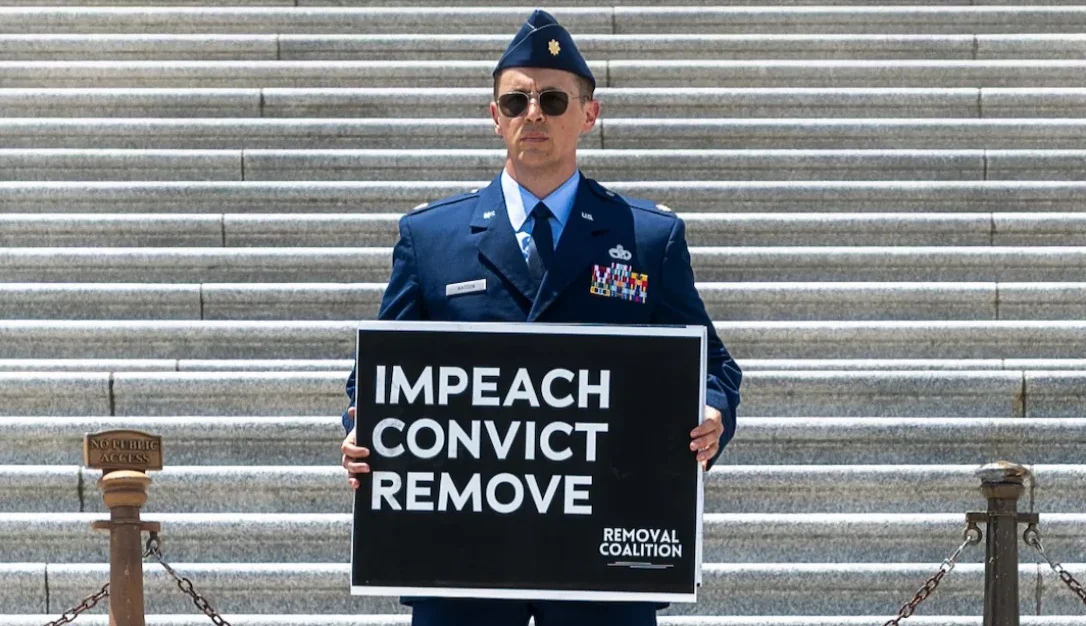
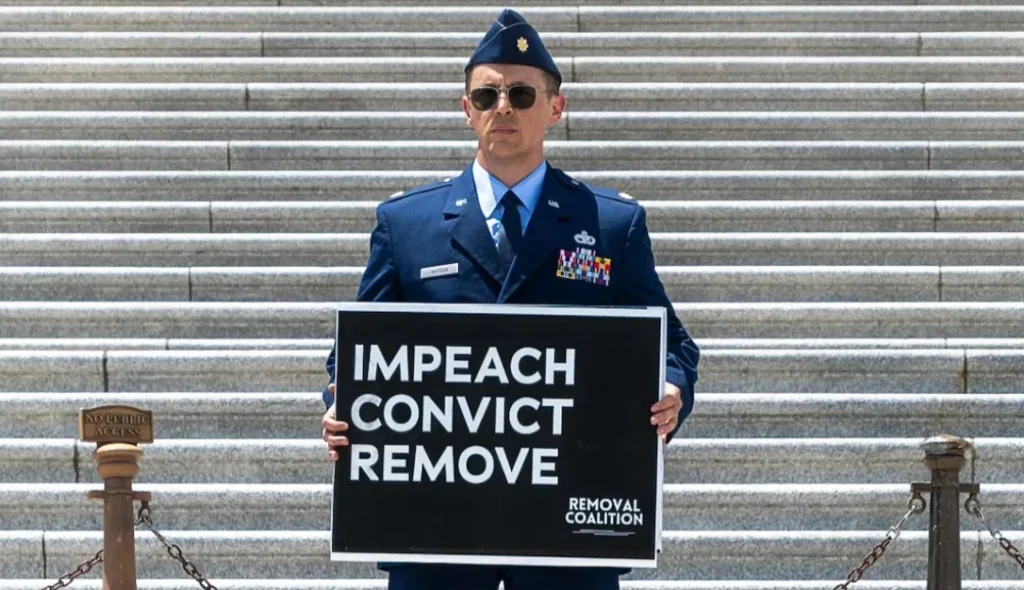
Air Force Major Who Called for Trump’s Impeachment Held in Solitary Confinement

Maj. Jason Watson was arrested after he participated in a news conference calling for Trump to be removed from office over his launching of military actions against Iran, Cuba, and Venezuela without congressional authorization

  •  

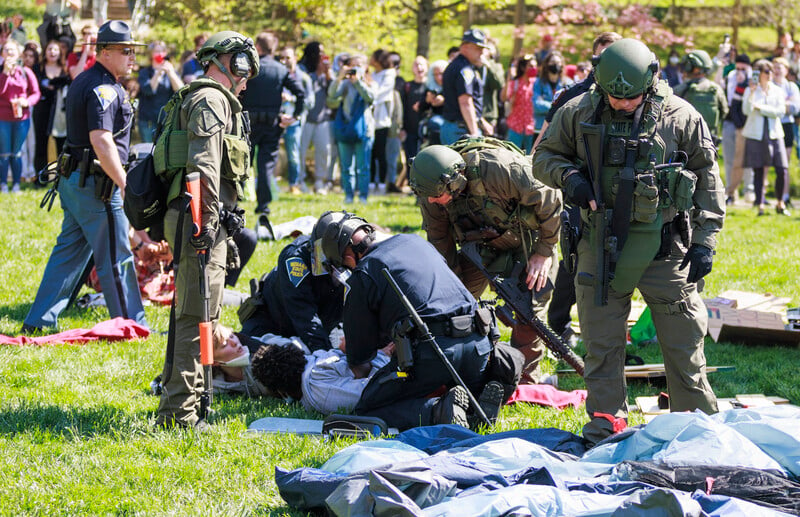
Universities fire dozens amid pressure from Zionist billionaires

Major drivers of the repression include pressure from wealthy pro-Israel donors, government interference, and the political loyalties of university administrators and trustees, according to a new report.

  •  

Metropolitan Police May Have Unfairly Arrested Linehan Over Gender Critical Views, Says Watchdog

Graham Linehan, the Father Ted creator, may have been unfairly arrested by the Metropolitan Police because of his gender-critical views, the police watchdog has said.

The post Metropolitan Police May Have Unfairly Arrested Linehan Over Gender Critical Views, Says Watchdog appeared first on The Daily Sceptic.

  •  

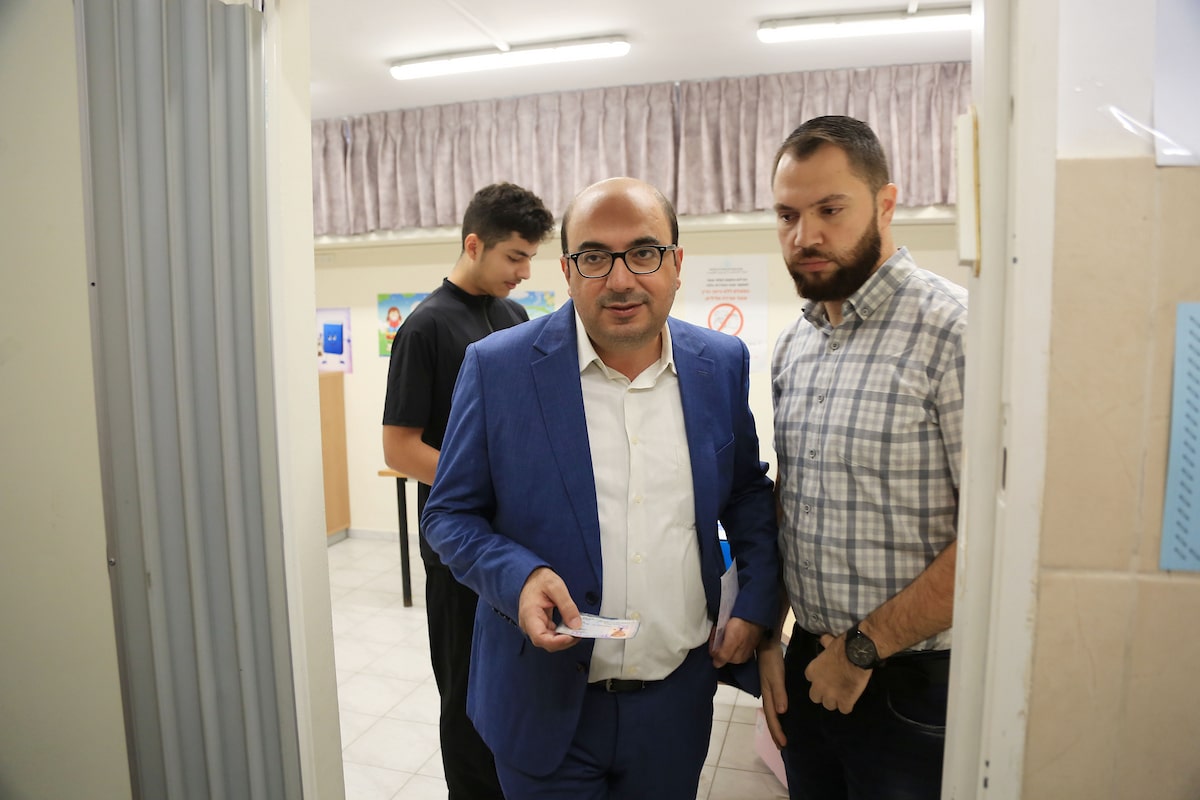
The Israeli witch hunt of Sami Abu Shehadeh exposes the lie of the ‘Jewish and democratic’ state

The Supreme Court’s decision to force Palestinian politician Sami Abu Shehadeh out of the upcoming Israeli elections is the latest sign that there is no place for Palestinian citizens of Israel in the ‘Jewish and democratic’ state.

  •  

Agents search Rep. Omar’s Washington home in criminal probe as she vows she won’t ‘be silenced’

This is an escalation in a criminal investigation of US Rep. Ilhan Omar, in the final weeks of her reelection bid. She is a frequent target of Israel partisans and the Trump Administration over her opposition to Israel's human rights violations and the Israel lobby's destructive influence in the US

  •  

Oxford Tells Staff Not to Use Common Phrases Like “Learn the Ropes” for Fear of Confusing Foreign Students

Oxford University has told staff not to use common phrases such as "learn the ropes" or "find your feet" over fears they confuse foreign students, sparking concern at the new scheme of language policing.

The post Oxford Tells Staff Not to Use Common Phrases Like “Learn the Ropes” for Fear of Confusing Foreign Students appeared first on The Daily Sceptic.

  •  

When Prayer Becomes a Crime: This is Not British

Isabel Vaughan-Spruce faces criminal charges for standing silently on a street, saying nothing and obstructing no one. Whatever your views on abortion, CJ Strachan argues that criminalising silent prayer is not who we are.

The post When Prayer Becomes a Crime: This is Not British appeared first on The Daily Sceptic.

  •  

Councillor Sues Devon Council After Being Punished for Criticising Gay Sex Stall Next to Children’s Colouring Area in Family Library

A councillor has been punished for raising safeguarding concerns about an LGBTQ stall displaying a large purple dildo next to a children’s colouring area at a family library. With the help of the FSU, he's fighting back.

The post Councillor Sues Devon Council After Being Punished for Criticising Gay Sex Stall Next to Children’s Colouring Area in Family Library appeared first on The Daily Sceptic.

  •  

MAGA Congress escalates against BT, threatens reporters and editorial staff

For months, MAGA Republicans in the House Ways and Means Committee have been targeting BreakThrough News for our editorial judgment and viewpoints they don’t like. The Committee is abusing their powers in a blatant attempt to shut us down. Now, they’ve taken things to another level. 

We just received a new letter from Committee Chairman Jason Smith (R-MO). The letter lists the names of our reporters and editors and threatens to individually subpoena each of them to a deposition in Washington if we don’t yield our legal rights, including First Amendment privileges.

The letter makes clear that this is a punishment for resisting their previous unconstitutional demands on our organization. In July, they subpoenaed our communications and records, smeared us in the press, and threatened our non-profit status in an effort to intimidate and bankrupt us.

Because we’ve held strong in defense of our First Amendment rights, they are now going after our journalists: Rania Khalek, Zoe Alexandra, and Amanda Yee have all been personally named, along with other staff.

We are making an urgent appeal for your support. Stand with us and fight back against Trump’s repression of the press by taking the following steps:

  1. Sign the petition telling the House Ways and Means Committee to stop its attempts to intimidate our journalists. This is a clear abuse of power and an attack on the press that we all need to resist.
  2. This fight is going to take time and resources from our organization — which is exactly the point. Make a donation today so MAGA’s attempt to slow us down doesn’t succeed.

Rania Khalek, Zoe Alexandra, Amanda Yee, and the BT staff work around the clock to do critical reporting on the entire world: from West Asia to Africa, across the Americas and Asia. Yet Rep. Smith now wants to drag our reporters to Washington, D.C.

These MAGA politicians, using an old playbook, say anyone challenging their warmongering policies is a “foreign agent” of China. But that’s a lie. Many of their biggest billionaire donors do extensive business in foreign countries, including China. What they’re really trying to do is discredit and destroy anyone that tells the truth to the U.S. public about Trump’s domestic and foreign policies. 

BT is an independent news organization, which receives no editorial direction from any outside force. All major donations have come from U.S. organizations, using U.S. financial institutions, and complying with all U.S. laws. We’re audited and file a complete tax return to the IRS every year, just like everyone else.

So what’s this really about? It’s intimidation of the press, pure and simple. MAGA has made it a sport to target critical reporters just for doing their jobs. But unlike huge media outlets like the New York Times or CNN, we aren’t a billion-dollar company with an army of lawyers. We’re relying on grassroots support, and people of conscience who care about free speech, to come to our defense so we can stand strong.

Our lawyers already provided a comprehensive reply to the House Committee in August, pointing out the serious legal flaws in their demands and failures to provide a valid legislative purpose. And like before, Rep. Smith has come back with a new letter with a new legal rationale for the continued harassment. The fact that his explanation keeps shifting shows that the real goal is to target us, and that there is no legitimate legislative purpose. While his Congressional district in Missouri has one of the highest poverty rates in the country, this is how he’s spending his time and taxpayers’ money.

The pressure from the House Ways and Means Committee is escalating. We are a small organization now taking on the power of the federal government and, while they are wrong, we have to take it seriously. We need you to help circulate this alert far and wide, to sign the petition in our defense if you haven’t already, and to make a donation to protect our outlet and the future of independent media.

We will keep all of you posted as we enter this next stage of the fight. 

  •  

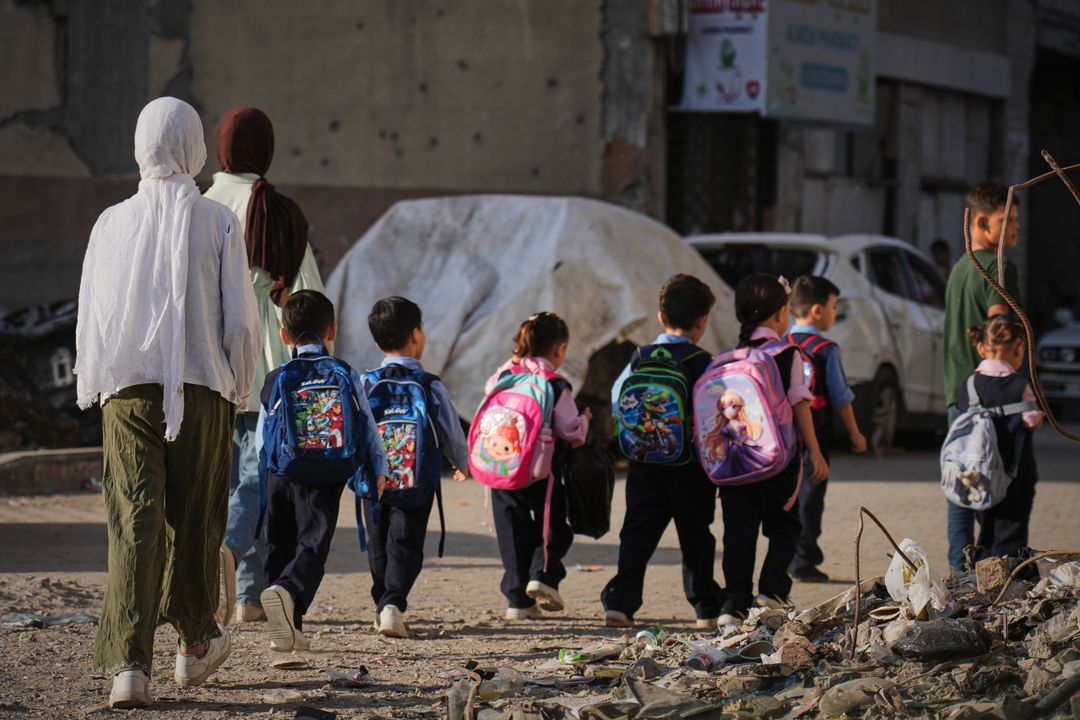
Suppressing Palestinian resistance: US charity under fire for AI monitoring of Gaza classrooms

The Gaza Children Village plans to record classroom conversations and use AI to flag what it calls 'hateful' speech, prompting concerns over surveillance, free expression and Palestinians' right to shape their children's education.

  •  

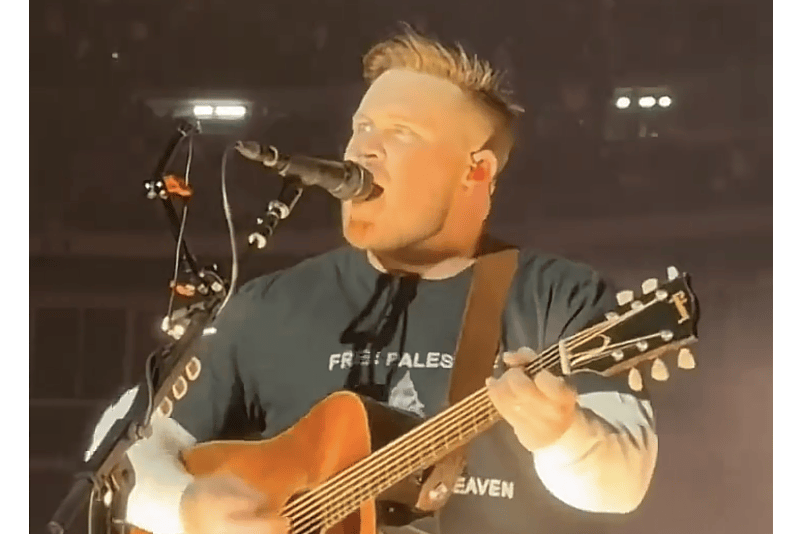
Country Music Singer Zach Bryan Breaks Attendance Record at Robert Kraft’s Gillette Stadium While Wearing ‘Free Palestine’ Shirt for Second Night in a Row

At least two of Bryan’s band members were also wearing Palestine jerseys. Drummer Nate Head bore a jersey with Palestine on the front & on the back, the name “Hind Rajab”, a 5-year-old girl in Gaza killed by the Israel

  •  

Fifteen Year-Old Reform Activist Arrested After Comparing Tory Councillor to Rent Boy

A 15 year-old Reform activist has been arrested for a tweet in which he compared a Tory councillor in Wolverhampton to dressing like a "rent boy" to attend a council meeting.

The post Fifteen Year-Old Reform Activist Arrested After Comparing Tory Councillor to Rent Boy appeared first on The Daily Sceptic.

  •  

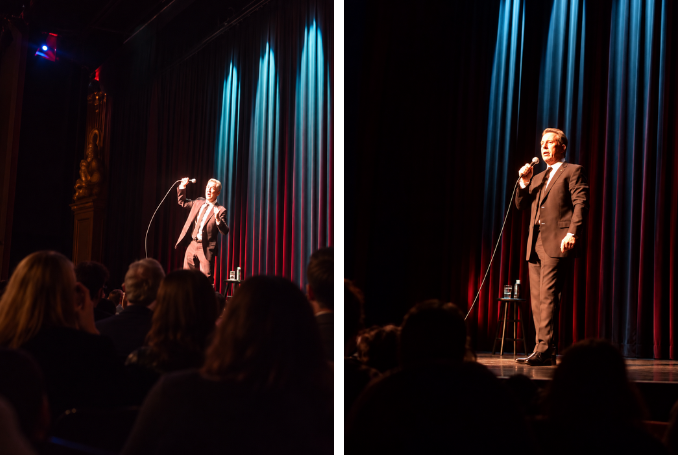
The Tragedy of British Comedy

Comedy clubs are begging for taxpayer bailouts, the BBC is censoring classic sketches and Muslim activists are trying to ban John Cleese. British comedy is becoming less funny by the day, says Steven Tucker.

The post The Tragedy of British Comedy appeared first on The Daily Sceptic.

  •  

Trump, Silicon Valley, and the global far right target Brazil’s upcoming elections

Photo courtesy of Michael Fox.
https://www.spreaker.com/show/7063186/episodes/feed

This is a particularly important episode, coming just two weeks ahead of the 1st round of high stakes presidential elections in Brazil.

Host Michael Fox speaks with Artur Romeu. He’s a Brazilian journalist and the Latin American Director for Latin America of the international NGO Reporters Without Borders. 

They spoke ahead of Episode 6 of The Battle for Free Speech, about Brazil’s fight against disinformation. He has an important analysis, which helps to deconstruct how Trump, Silicon Valley and the far-right in the United States, and around the world is “instrumentalizing the idea of free speech for their own political purpose and abandoning key dimension of freedom of expression, which is this more social and collective dimension to receive plural, reliable, diverse, and free information from others.”

This is the third bonus episode of The Battle for Free Speech. The Battle for Free Speech Podcast is a production of The Real News Network hosted by Michael Fox and Marc Steiner. 

Guests: 

Resources: 

  • You can check out the full Battle for Free Speech podcast series here.

Many thanks to everyone who has supported this show.

Follow The Battle for Free Speech on Spotify or Apple Podcasts. Support Michael Fox’s reporting at patreon.com/mfox. Never miss an episode — sign up for The Real News newsletter at therealnews.com. 

Transcript

The following is a rushed transcript and may contain errors. It will be updated.

Michael Fox:

Hi folks. I’m your co-host, Michael Fox. This is the Battle for Free Speech, and this is the third bonus episode in this series. So this one is particularly important and timely as Brazil is heading into high stakes presidential elections this October. The race is between current leftist president Luis Ignacio Lula de Silva and Flavio Bolsonaro, the son of former far-right president Jair Bolsonaro. If you have listened to episode six of this podcast series or my podcast series Brazil on Fire or the entire season two of my podcast Under the Shadow, then you know a little bit about where things are and where they’re headed. And this is another deep dive. Today, I’m bringing you my full conversation with Arturo Romeo. He’s a Brazilian journalist and the director for Latin America of the International NGO Reporters Without Borders. I spoke with him specifically for my episode about Brazil of the battle for free speech, but there was so much more from our conversation that I couldn’t fit into that episode.

In this conversation, Artur mentions a couple of things and I want to give you some context. First, Alexandre Morais is the Brazilian Supreme Court justice who led the investigations into fake news and Bolsonaro’s hate cabinet. He also oversaw the electoral court in the 2022 elections, and he was the guy who had the showdown with billionaire Elon Musk over Twitter back in 2024. In fact, Morais blocked the social media platform in Brazil for roughly two months after Musk refused to suspend a series of Brazilian accounts who were disseminating fake news. Then Musk pulled Twitter’s legal representation from the country. Musk later acquiesced and Twitter went back online. But that escapade has been used by the far right and even President Donald Trump to claim that Morais and the Lula government have been censoring free speech in the country. And in fact, that was one of the top reasons for the 50% tariff on Brazilian goods that Trump imposed last year on the country.

And it has been at the heart of Trump’s campaign against Brazil and Lula in an effort to influence the outcome of Brazil’s presidential elections this year. Okay, I think you are up to speed. Here is my full conversation with Artur Romeo in its entirety. We spoke last year, 2025, but it is more relevant than ever today. I hope you like it. Arturo, thank you so much for being with me today. Thank you so much for your availability. I really, really appreciate. Super excited to talk with you about all these things.

Artur Romeu:

Thank you, Michael. I’m also excited to talk about those issues with you. I

Michael Fox:

Say the same question to everybody. For you, what does free speech mean?

Artur Romeu:

It seems like a simple question, especially for an NGO working with press freedom for 40 years at the institution that I work for, the NGO, that I work for Reporters Without Borders, we have been working defending press freedom, not exactly free speech, but they kind of free speech and press freedom drink on the same fountain or same roots of freedom of expression more broadly. So free speech is the ability to essentially being able to impart ideas, opinions, views on the world around us without being harassed, persecuted, prosecuted, attacked by governments or other groups, can be religious groups, but also economic interests. So the ability to be able to, as an individual or a collective, to express yourself and your ideas and contribute to the public debate without fear for reprisal essentially.

Michael Fox:

And Artur, what is your analysis of the state of free speech today in the world in Brazil and the United States and elsewhere? Where are we?

Artur Romeu:

I think that there is a lot of confusion. Maybe I never saw as much confusion around those issues as we are seeing today. Basically, one of the things that scares me is the fact that free speech is being weaponized against press freedom, for example. Another issue is that we are focusing too much on the individualistic aspect of free speech, and we have to have this understanding that at least coming from a freedom of expression perspective, there are an individual dimension, but also a social and collective dimension of freedom of expression. It’s not just our ability to being able to express ourselves and to impart information and ideas, but also to receive those information and ideas from others. So the way we are talking about, or at least the way that some political groups and specifically the far right nowadays everywhere in the world, not specifically in the US, has been instrumentalizing the idea of free speech for their own political purpose and abandoning a key aspect, a key dimension of freedom of expression, which is this more social and collected dimension to receive plural, reliable, diverse and free information from others.

And a third issue, and I think that’s behind most of this confusion as well, is the role that big tech social media platforms are having on this discussion because we have the idea that regulating this economic activity sector would be the same as censorship, but actually better regulation, good regulation, democratic supervision, improve the condition for free speech and press freedom and the integrity of information in general. So this opposition between the ability to be able to impart your ideas and the need that governments have to find a way to regulate the digital sphere arena online is they are not opposed to each other, but it’s a complex discussion because emerging technology always poses new problems. And even if we are not saying that social media platforms are necessarily new to our political landscape, AI is becoming something more popularized and we don’t know the impact that AI will have in this cacophony, this, I don’t know, some people are calling it epidemics or this crisis of reliable information.

And the key problem here is all those things together are fragmenting public conversation, public debate, and public debate is at the core of our democracies. So there is a clear link between this fragmentation of public debate due to all this and the erosion of democracies everywhere.

Michael Fox:

Arturo, you’ve just mentioned everything you said, I was like, we need to talk more about that because this is at the root of all this is why it’s so important. Before we dive into more specifics of all those things that you just mentioned, I have this idea, this hypothesis, are we in a moment where the far right folks like Trump and Bolsonaro are trying to redefine free speech in their favor instead of what you mentioned, “Oh, we need actually some regulation so that we can have a field where we’re actually getting not just random information and fake lies and everything else for everybody else, but we’re actually getting information that is what we should be receiving.” Are we in a moment right now where certain groups are trying to redefine what free speech means so that they can use it to push their agenda?

Artur Romeu:

Of course, it’s very clear. It’s been happening for a while and it’s crazy how effective it is because I think people are very concerned with society in general every day on our daily lives, every citizen is concerned with their ability to basic freedom. And I think that for a very long time, at least in other democracies, this is something that was kind of taken for granted. And even if there were some complex discussions from time to time, there was at least this frame, this common ground, this common denominator where there were international standards in terms of human rights related to free speech, very clearly defined. But sometimes there is this complex issues where you have limits to free speech, right? It’s not an absolute right as a series of human rights. They are not absolute in themselves. There is a balance between rights. And for a long time, I think it generated some stress and tension, but it was kind of relevant discussions, philosophical discussions.

People may disagree, but still we had a common ground. And what we’ve been seeing lately for the past, I don’t know, 10 years at least, is that the way those limits are defined and their political appropriation is stressing this debate. And we are seeing a relevant debate for democracies and to ensure rights and public participation in general being distorted, inverted in a sense that a specific political group is using this to play the victims and saying that they are being oppressed by those ideas. And they made a political flag out of this, and it’s being very effective in terms of how this idea has permeated society and gaining capularity. And I think our field of organizations that are defending freedom of expression is having a lot of difficulty to fight back or reframe the debate. So we are talking about those issues from a rights-based approach and not from a political biased approach.

Just to give an example, specific example, in Brazil, there was a very important milestone march protest during the Independence Day of 2021 with Bolsonaro, thousands of people in the streets supporting Bolsonaro, supporters of Bolsonaro going to flooding the streets in every major capital. And researchers were the streets trying to survey why people were, in their views, going to protest. And one question was about what was their main motivation? And the first motivation was freedom of expression. So in theory, something good. But when they asked them, “And what are you fighting against?” And the first was the Supreme Court in Brazil, which is, I won’t go into the political context in Brazil, but a key issue here in terms of how the constitutional court and Supreme Court has been limiting transgressions and abuses of the executive branch. And the second was the press. So they were fighting against the press.

So they were defending press freedom by attacking the press. And so I think it’s a kind of a paradox where you see a very individualistic perspective. People want to be able to say whatever they want and less and less are accepting that the fact that we are living in a society, there are symmetries of powers, this speech has to be balanced with other rights. So this imbalance and the way it has been appropriated by and kind of really weaponized by the far right is having a major effect in creating this imbalance and making people forget why it’s important to balance a free speech, which is kind of incoherent, at least when you see what happened with Charlie Kirk and people were expressing their views on the fact that criticizing him some very harsh level and the same group that is defending that people should be able to speak wherever they want are doing their own witch hunt.

So you see how politically biased and how this weaponization appropriation of the idea of free speech or freedom of expression is a power struggle more than a philosophical and conceptual one.

Michael Fox:

Do you think that part of how we got to this point goes back to what you were mentioning before, the splintering of society. Now with social media, I get all of my news from here, you get all of your news from there, and so we’re allowed to attack the other because they’re the other rather than having this open debate. Is that part of what led us to this moment?

Artur Romeu:

Yeah. Social media had a major impact in the information ecosystem as a whole for better or for worse, kind of changed everything, how people are receiving, how we are less dependent of a few broadcasters. And now we feel that we are in this environment where we can speak freely. But actually what happened was the privatization of a public space, and you have this impression that you are in Agora, this public arena where there is this idealized perspective of the free flow of information, the free market of ideas, the better ideas will win. And actually this is happening in a specific space controlled by specific groups, interest groups, a very profit oriented perspective. No transparency at all on how those information are being moderated and gaining more or less reach. So yeah, definitely. I think the major shifts that those technologies had on our information space are partly not necessarily too blamed by their own, because I think also when we talk about censorship, it’s easier for us to think of a more classic censorship approach in the same way that when we think about a dictatorship or a coup d’etat, we have references from our past and we kind of compare what is happening now and our collective memory of what those words mean.

And freedom of expression was kind of invented to protect citizen rights, individual citizen rights to oppose all powerful state in a very different political landscape from centuries ago. And now censorship is not only having a propaganda ministry and having censors within newsrooms and journalists being detained and killed because of what they’re saying. Of course, it still happens a lot in several parts of the words, but censorship or at least freedom of expression and free speech is also eroded when not only the state. Because the idea behind this is that the state should restrain itself from any interference in the free flow of information. So any kind of interference equals bad, equals censorship. People should be able to speak freely without government or state interference, but that’s not enough. You also need positive obligation. And positive obligation means that the governments and states have to develop, establish public policies that will help the information space, the information ecosystem to balance assymetries.

For example, pluralism, diversity, reliability of information are key aspects of this, of a healthier information space. So for this to work, you need governments to create those policies, to establish these laws, policies, how antitrust policies, for example, to fight excessive media ownership concentration in the hands of few groups to help balance market asymmetries and to ensure that the rights of their citizens is assured also in terms of access to pluralistic and reliable information. With the social media and big text, what they are saying is that any regulation is bad, they are self-regulating by themselves, and they are at the end protecting their commercial interests and creating those regulatory backups where they can operate without accountability or any kind of accountability. And if we don’t do anything about it, we will keep seeing a disintegration of this information space.

Michael Fox:

Following from that point, can you talk a little bit about what we saw over the last year? For instance, this whole battle between Brazil, Aleshande Morais, Twitter, X, Musk, because I feel like that’s a perfect example of exactly what you’re talking about. And also these two visions where Brazil has this vision of saying, no, we’re going to regulate more because you can’t have just a get out of jail free card completely. And whereas the United States is much more laissez-fraire backed by Donald Trump and particularly now, but this was even before he came to office.

Artur Romeu:

First of all, you have different traditions, different countries, you have different traditions in terms of how you interpret law. Brazil’s approach to freedom of expression is closer to the European approach where there is a focus on this balance between rights than the US one where there is a broader, I don’t know, more elasticity when you are talking about freedom of expression. You have to have in mind that our legal tradition is closer to the European one in terms of philosophical, conceptual jurisprudence expiration. Within this context, have a very specific example. When former President Bolsonaro started saying that people should not trust on electoral results because digital ballot box are not reliable when he did not and still has not any kind of proof of this. And much on the contrary, by the way, the electoral system in Brazil is widely recognized and as a very strong electoral system.

When he started doing that, for example, calling a meeting with ambassadors from a bunch of different countries to give a press conference saying that before the election, one year before the elections, that people should not trust electoral results if we kept the system as it was. It’s very, very, very serious because he has a lot of supporters and echo chambers on social media, and this kind of information erodes trusts of society, on their political institutions and their electoral institutions. So basically you cannot argue that that’s within his absolute right of print of expression because it has very serious impact for democracy and it’s not because you are the president that you can say whatever you want without any kind of accountability. But from there, what happened is that this idea was widely spread by his supporters and political groups, and the social media had a huge impact on this.

So this is clearly organized, this information, casebook. It’s pretty straightforward. And this information in the sense that it has a set of cogs in the machines, and it’s not just one person saying something false, it’s how this information is being spread and the structure of this information, the different levels, actors, stakeholders involved in this, financed with public money, public funds, and social media companies within their codes of conduct, you cannot just let this level of disinformation spread, including the reach they’re having without, again, any accountabilities, they could have acted to limit the reach, not necessarily censoring the presidential Twitter account or something, but at least putting contextual information, whatever those links, I don’t know. But there are several possible strategies for those social media to limit those kinds of harmful disinformation. But since we did not have a regulatory framework for this, the Supreme Court took the responsibility to act and to investigate this fake news industry or disinformation industry, how it was being structured and its impact.

And by doing that, said explicitly that, I don’t know, judges could not be threatened, basic stuff. And starting, for example, Alishanj Morais, which is at the epicenter of all this, even if he’s, and I think this is a parenthesis here, Morais was very important within all this, but he himself, I mean as an individual judge, but we have to take into account always that his decision were being systematically validated by the other judges of the Supreme Court. So even if he was the one being more visible on all this, and even though that there were tensions between and discussions between the judges, the vast majority of all those decisions went through the plenary, all the judges. So we talk a lot about him, but it’s more like the Supreme Court itself. I think he’s the image of these fights in a way, but he wasn’t alone doing that.

It’s not all powerful judge that is doing that as a rogue mode and acting on his own. We had strong institutions and it worked in the sense that we had the highest body in the judiciary power acting on this and investigating those issues, how they were spreading and taking harsh measures to prevent the impact of what everything was happening be even higher. For example, closing, requesting for the suppression of individual accounts on social media, and that’s something that led to the blockage of acts here in Brazil because what happened is that Elon Musk decided that he would not accept sovereign decision from the Brazilian highest court. He just moved his policy team away from Brazil. There was no legal representation as a way clearly to escape Brazilian jurisdiction in a clearly politically motivated move. And what the court said is that you cannot do that if you are operating You have to operate within our laws.

So if you don’t have a legal representation here in Brazil, and if you do not accept court orders related to several specific measures to mitigate the impact of this information of what was happening, you could not operate. And he was not blaffing. I think for, I don’t know, 50 days, it took a while. And there was a lot of support because you could imagine that this kind of decision, it’s very unpopular. You have tons, millions of social media users, including a lot of journalists using those tools for their daily work. But the way it was done showed that there was at least an understanding from Brazilian society that it was a fair fight, that it was something legitimate. And you can go even backwards with the pandemic. I won’t go all the way there, but the way that Bolsonaro governed during the pandemic was a big disasters for several reasons, but also in terms of access to reliable information on health issues and the way that false information was spreading for, again, politically biased moves.

And I think he had a bet in the sense that he thought that by going this way, he would show a different path than other global leaders, but it was a big disaster, no surprise. And there was a lot of discussion around this time about disinformation as well. So it’s a discussion that has been going on in Brazil on how public and democratic institutions have to respond to widespread disinformation strategy, especially those coming from the highest ranking officials. It’s gained a lot of track and legitimacy. And I would dare even to say that we have now more than other countries an awareness about those issues where, for example, there was a, I don’t know if it’s very recent survey, I have to double check the numbers, but what I know for sure is that most of Brazilian society, a survey showed is in favor of regulating social media.

So you have this support, even of course, if it’s not, if you have clearly political groups which are very strong and a lot of debate on how you do it. I think the major question is how you do it because it’s not that the fact that you have to act, I think that’s pretty clear here and from every perspective. What is more difficult is how you do it to avoid a very obvious trap where by doing this, you are creating a censorship mechanism and more control over those tools, those technologies. So this should be actually the discussion, how you do it and not if you have to do it or not, why it’s important. I think we are well over the time where those discussions should have passed and now, I don’t know. I really don’t know. I feel that we are living parallel universes sometimes.

When you see, for example, Trump’s speech on the UN and Lula’s speech in the UN, we feel that we are living in parallel universes. So different periods of time. I think it’s clear for, there is a consensus among digital rights activists, organizations, even a part of mainstream progressive groups, NGOs working with freedom of expression that you have to create mechanisms to improve democratic supervisions of how those emerging technologies, especially social media, are creating those rifts in our democratic systems.

Michael Fox:

Artu, thank you so much. I just have two more really quick questions. And this is so important, this last point that you touched on, because particularly in the United States, even amongst folks on the left, because historically, obviously censorship has been used against usually marginalized communities, minority communities. And so the discourse is always, well, once you start to say, well, you can’t say this and these people can’t say that, well then that’s going to be used against always, eventually it’s going to be used against and particularly against minority communities and marginalized communities. The people with the least amount of voice are the ones that are going to have their voice taken away completely. And yet this question no one meant, I feel like this huge elephant in the room is always this question of fake news. I can believe what I want to believe, you can believe what you want to believe.

More or less we can talk, but you still can’t be spreading just complete disinformation and lies and yet that’s what we’re seeing. And unless you actually take that on and say, okay, well this is here and how do we try and roll this back? But I feel like so many people or organizations or individuals, it’s just kind of give it, well, no, we don’t want to do that because then that’s stopping people. But no, there are lies. There are people trying to manipulate this. And so it’s a huge, it’s a complicated debate to ask that question of even how do we do this? But I think that is the question of saying, no, we absolutely have to. We can’t even be discussing if we are going to or not. We need to be talking about how we do it in the most democratic way possible or else we’re just going to see more and more of our rights willed away and more and more of our ability to communicate as a people whittled away.

So it’s crazy.

Artur Romeu:

Yeah. Talking about more on journalism and how specifically on journalism, the way things are told nowadays, I mean in terms of how all this has been appropriated by this fear of censorship or by saying that any kind of regulation is censorship is creating this environment of a crisis of trust and polluting democratic public debate, but also it’s creating something that science and journalism are put in the same level as any other opinion. So this is my opinion. So I can say it because it’s my opinion. And if you have 30 pages special dossier done by one of the journalists working that biggest newsroom in the country and you take this and you say, “Well, they can say wherever they want, that’s my opinion and I’m against this.” Same thing with, I don’t know, climate denialism just to keep one specific issue related to science. So when you put everything, conspiracy theories, opinions, ideas at the same level of other kinds of expressions, they should not be able to say to disagree, of course, or to question, this is healthy for democratic debate, but you cannot dismiss investigative journalistic piece on a very key issue and that had multiple sources done in journalistic processes.

You have a process to doing journalism. It’s not ChatGPT, it’s those investigations in the same way that science has its processes of verification, experimentation, peer review, et cetera. Journalism has its own. And if this is not recognized as a positive incentive, a society to receive this information and to criticize or to discuss what is being said in a different way than just someone saying what they think, journalism have foundations in terms of what is being said. And ideas can have more or less, opinions can have more or less depending from if it’s coming from someone that has studied all his life, all her life about the specific issue and then is expressing of course an idea, a different idea or a position on this topic. But if we put everything at the same level, we won’t have a real conversation. We will be just everyone saying what they want.

And for democracies to work, we have to find commonplaces and those commonplaces have to be based on some kind of logic or some kind of method or some kind of common ground. And so this is a problem right now with journalism because it’s being treated as just another opinion.

And on our newsfeed on social media, it’s being treated as just another opinion. Even sometimes even dismissed or the reach of news articles and links are having a worse reach than other kinds of videos posted by influencers. But there’s no due prominence of journalistic content or scientific content. So the conversation

Is becoming more and more based on the rule of the stronger. If you appear to be stronger than others, your position can overlap all the others because you say so. That’s extremely dangerous for the kind of democracy we have been building. So this is a specific issue with journalism. And the other issue is media sustainability and news deserts and how those new technologies have shifted completely the business model of the media industry in just a few years. And it’s creating more fusions, less pluralism. You have this illusion of pluralism because you feel that there’s more people speaking than before where you have the gatekeepers and all this, but it’s noise. So there’s a lot of noise happening and noise is not necessarily pluralism because pluralism needs some kind of framework to be effective for a democratic debate. If it’s just a bunch of people in a room saying what they think about the problem, not necessarily the best idea or the idea that has the stronger chance to work will win.

So also this idea of a free market of ideas, we don’t live in a political vacuum. So a free market of ideas is completely dependent on the correlations of force between the different stakeholders in the ecosystem, the political landscape. You have a lot of social and economic inequalities. So talking about a free market of ideas with no kinds of balancing this just don’t work because ideas will step on others anyway. When we talk about AI regulation or digital service acts to regulate the social media and the whole industry behind it, you need to have some kind of how you can create mechanisms to create financial compensation for media. And there are a lot of taxating profits from big tech revenue, advertisement revenue of big tax, for example, and creating a fund and this fund being. I don’t know. There are several ideas going on, bargaining codes.

But the point is if we do nothing, what we are seeing is that the economic pressure on journalism, on public interest journalism is becoming asphyxiating. And what we will see soon is an environment, a media landscape with a lot of concentration of power and local news markets disappearing and being replaced by, we don’t really know, but what we’ve been seeing is that when a local news media disappear, there’s no empty space. This space is immediately occupied by propaganda, by this information, by other interests. So preserving journalism, especially local journalism, is a democratic imperative. And we have to understand how we can do this when discussing democratic regulations for social media and AI.

Michael Fox:

Artur, so great. My last really quick question is you mentioned toward the beginning something I thought was really important, you want to forget it, free speech being weaponized against press freedoms. Can you talk a little bit more about that? Where are we seeing that? What does that look like?

Artur Romeu:

We are seeing that in a daily basis in the US for sure. And I have very specific example. When Trump wrote a letter to President Lula to justify the tariffs, the letter mentioned Bolsonaro, the prosecution of Bolsonaro in Brazil, mentioned big tax and the fact that the rights of American citizens was being violated and companies was being violated by the judiciary in Brazil. And just after the letter itself, there was some kind of, I don’t know the name of it, but an order where there were more explanations of the reasons. It was like a one and a half page document and the expression like freedom of speech or free speech or freedom of expression or censorship was repeated at least 10 times in a letter basically saying that the US was imposing tariffs on Brazil because Brazil was promoting censorship. So when I say that free speech is being weaponized against freedom of expression, in parts it connects to this example where you make yourself look like as a free press paladin, but actually what your distorted vision of free speech is doing is fragmenting the idea, the different ideas behind what freedom of expression really is, and mostly the social and collective dimension of freedom of expression.

You are only saying that people should say whatever they want without any kind of interference. If that’s the case, you are basically ignoring completely the fact that people live in a society and part of the freedom of expression right is related to receive pluralistic, diverse, reliable information. When we see these kinds of marches that I’ve talked about in Brazil as well where you say you are there to defend freedom of expression, but actually your enemy is press freedom, you are again weaponizing this idea because what you are really interested in is being able to express your ideas without any kind of repercussions, any kind of accountability, because it’s a very empowering feeling. So I think what those leaders, Bolsonaro, Trump, Edogan, Obam, and others, Milei have been doing the media bashing and fueling general hostility towards journalism and not just journalists, but journalism, like the ideal of journalism, again, not just against the press, but the idea really of journalism is at the core of their political strategy.

It’s not isolated. It’s not something that’s part of their personality. It’s really something that has the ability to keep their electoral basis very mobilized. It’s a very effective way to polarize public debate. And those leaders, they are dependent on polarizations. They cannot leave, have a political career without these kinds of systematic polarization and attacking the press systematically. The press, the media institutions, journalism in general is very effective for your strategy and that’s why they keep doing. In Argentina, for example, recently Mile said, “The problem is we don’t hate journalists enough.” So these kind of ideas, Bukele in El Salvador, it’s really at the core of the political strategy. So again, instrumentalizing, weaponizing free speech to erode press freedom, to have more control over the public debate and less scrutiny in society. It’s much easier to kill the messenger than have to deal with whatever the report or the news article is discussing.

Michael Fox:

Artur, incredible. Thank you so, so much. I really appreciate your time. I know we went over a little bit, but I really appreciate it.

Artur Romeu:

Thank you, Michael.

Michael Fox:

Hi folks. I hope you enjoyed our conversation. As I mentioned before, this is the third bonus episode of this series. There are more on the way. Please watch out for those in your feed. This is the battle for free speech. This podcast is co-hosted by myself and Mark Steiner. This show is produced by The Real News. You can find out more about my work and this show on my Patreon. That’s www.patreon.com/mfox. As always, please make sure to sign up for the Real News Network’s newsletter so you never miss an episode. You can find that at therealnews.com. Thanks so much again for listening to this podcast. See you next time.

  •  

Fearless Speech: Examining myths around the First Amendment

Photo courtesy of Michael Fox.

Today, host Michael Fox speaks with Mary Anne Franks. She is a professor of intellectual property, technology, and civil rights law at George Washington University and the president of the Cyber Civil Rights Initiative. She is also the author of the book Fearless Speech: Breaking Free from the First Amendment,which was published in 2024 by Bold Type Books.

She has an incredible analysis about free speech historically and today — the challenges we face protecting it and how we need to try to understand free speech beyond the First Amendment. Michael and Mary Anne spoke last year, in 2025.

This is the second bonus episode of The Battle for Free Speech. The Battle for Free Speech Podcast is a production of The Real News Network hosted by Michael Fox and Marc Steiner. 

Guests: 

Resources: 

  • You can check out the full Battle for Free Speech podcast series here.

Many thanks to everyone who has supported this show.

Follow The Battle For Free Speech on Spotify or Apple Podcasts. Support Michael Fox’s reporting at patreon.com/mfox. Never miss an episode — sign up for The Real News newsletter at therealnews.com. 

Transcript

The following is a rushed transcript and may contain errors. It will be updated.

Michael Fox:

Hi folks. I’m your co-host, Michael Fox, and this is the Battle for Free Speech. This is the second bonus episode in this series, and I’m really excited about this one. Today, I’m bringing you my full conversation with Marianne Franks. You will likely remember her from this series as I reached out to her in numerous episodes. She’s a professor in intellectual property technology and civil rights law at George Washington University and the president of the Cyber Civil Rights Initiative. She’s also the author of the incredible book, Fearless Speech: Breaking Free From the First Amendment, which I referenced often in this podcast. That book was published in 2024 by Bold Type Books. So today I’m bringing you my conversation with her in its entirety. We spoke last year, 2025. I hope you like it. In the intro to your book, Fearless Speech, you write, “Unfettered speech does indeed exist, but only for some Americans.” Can you tell me what you mean by this?

Mary Anne Franks:

Yeah. We have this, for lack of a better word, a myth that we tell ourselves as Americans that we have just this absolute right to free speech. It makes us really unique among all other countries. And I think that part of the reason why that myth persists is because I think it’s true for some people, and it’s particularly true, as I say in the book, that if you are a person who is saying things that go to the sort of worst of American society, that is the things that we should be most ashamed of as a society, our sexism, our racism, our elitism, if you are saying something that kind of converges with some of those ideologies, you get massive amounts of protection. There’s protection for really horrific personal forms of abuse, for stalking, for racist, infective. So those individuals, I think, who are invested in those forms of speech really can say with some accuracy that they get to say whatever they want with no consequences.

Michael Fox:

Where does this happen and why do these people get to say whatever they want? Whereas those people who are trying to stand up or standing for democratic speech or standing up for those people who have always been marginalized, why are their voices silenced? I mean, it seems crazy and it’s incredible that this is, like you mentioned, this myth that goes back, but it’s still here.

Mary Anne Franks:

Yeah, it is a form of some pretty high level constitutional gaslighting, because what we tell ourselves when we say things like, “Well, we have so much freedom of speech here,” we’re using a kind of cliche that has been passed down for generations. And part of what I try to do in the book is to actually track the history of speech and not in this limited sense. I mean, you think about how, I guess tautological is the word about how most First Amendment books or articles are written is they go back and they look at the First Amendment cannon, cases that were successful, including cases not just for the pornographers in the KKK, although that’s a lot of it, but also in some cases for civil rights protestors, for people who were vulnerable and were trying to say something actually revolutionary. So if you do that and you talk about, well, there’s a success here and there’s a success here, you can sort of extrapolate from that, oh, well that means that we have always had this really protective attitude towards free speech.

One of the things I like to point out though is that if you have to go back and look at all the times where people were hauled into court, where they were either being sued or imprisoned or otherwise punished for their speech and had to try to fight for their right to be able to do those things, that isn’t really a sign of a society that protects free speech. That’s a society that keeps arresting people and suing people for free speech that may or may not be vindicated. And for every case where the ACLU decided that it was going to throw its resources behind a particular individual, there are thousands, maybe millions of incidents where people who just went to prison, who just were silenced, who were just harassed into not speaking. And so if you push aside the cases for a moment and just look at history, you look at the very first instances of radical speech in America, and some of that happens within seven years of the ratification of the First Amendment, you’ve got people criticizing the government and the war effort, the war with France, and you’ve got immediately the Congress is doing exactly what it says it’s not going to do in the First Amendment and it passes the Alien and Sedition Acts and then we’re off to the races.

From the very beginning, we say as a country, we are protecting free speech in the same way that we say we the people. We don’t actually mean it. And if you actually really uncover what we do as a country, you can see that. So you get to the question of slavery, the abolitionists who were some of the most radical revolutionary speakers the United States certainly has ever experienced, and you had abolitionist literature being literally censored and suppressed, people going to jail for producing it, people being arrested if they were making statements, if they were preaching about the evils of slavery, if they were publishing newspaper articles that tried to document the horrors of slavery. So the whole history, if you think about the incredible work of Ida B. Wells, the pioneering journalist who gave so much attention to the lynchings that were happening in the South, her entire publishing office was burned to the ground.

Elijah Lovedre was shot by an angry mob because he wouldn’t stop writing about how slavery was wrong. So you go through that history, you go through the women’s rights movement where women were picketing outside the White House and advocating for the right for women to vote, being arrested, beaten, thrown into jail. You fast-forward to what happens to Black Lives Matter protestors, what happens to people who are trying to bring attention to the Palestinian genocide, what happens to women who are making claims about Me Too. And you see it again, that these are people who are getting arrested and thrown in jail or sued or otherwise humiliated and attacked in a way that sets their entire life on fire. While at the same time, if you are on the opposite of those issues, if you are articulating, and this is complex about the American psyche, because we’ll say things like, “Well, if you are speaking the speech we hate, we will protect you or we can’t just protect the speech we like.” The problem with that kind of cliche is that what does it mean to say the speech we like?

The people who’ve always been in power in the United States have been the people who like racist speech. They like sexist speech. They like a speech that discriminates between the wealthy and the poor. And so when we say that we’re actually really mixing up what is actually happening,

It’s much more accurate to say that the forces that hold this country together at the origins, which I by no means want to suggest is the limit of our possibility or aspiration, but it was white slaveholding men who did not believe that everybody should get the same rights. So if you are saying something consonant with that, whether you are the KKK member or whether you are the pornographer, you are most likely going to get your speech protected and everybody who actually challenges that, if you trace it throughout history overwhelmingly with a few exceptions, and I do want to say there are exceptions, it’s long history, the difference is that the people who are trying to speak against racism, against misogyny, against elitism, those are the people who get punished and it’s the people who speak in the same chorus as those forces that do get protected.

Michael Fox:

Wow. Can you talk a little bit about your concept of reckless speech versus fearless speech? I think that this intertwines with everything you’re talking about, and then also what does that mean today in this moment that we’re living in?

Mary Anne Franks:

Yeah, so when I was revisiting the Canon, when I was thinking about how to write this book and what it is that I wanted to say, one thing I wanted to do was to talk about how if for a moment we set aside the law and we just sort of look at the speech itself, we forget about whether the answer is, is this constitutionally protected or not? Because that becomes a virtue in its own right and that is very distracting and you just start to look at what people actually say. And it’s really that I found the concept of fearless speech before the concept of reckless speech really crystallized for me.

And I found that concept primarily because I was looking at on the recommendation of a friend of mine who had heard me speak about the kind of disparities that I saw between the kind of speech that gets protected and the kind of speech that gets suppressed. And he said to me, he said, “Have you read much of Michel Foucault’s lectures in the 1980s where he talks about a Greek concept that I think is really similar to what you’re saying?” I hadn’t at that point. And so that was the concept of Parazia, which is Michel Foucault translates as fearless speech. And he talks about how in Greek society, ancient Greek society, that’s actually the form of speech that is the most important for the preservation of democracy. It isn’t to say it’s the only way we can approach speech or the only kind of speech that matters, but it’s the one that really is the dividing line between democracy and other forms of government.

Now with all the caveats about how the Greek democracy was also not particularly democratic, but the concept was really fascinating, which is it’s not just that you get to say whatever you want. The Greeks did have a word for that too, this kind of idea that you could just say things without consequences, but the Greeks didn’t seem to think that that was the particularly valuable form of speech. They thought the most valuable form of speech was the kind of speech where you had to speak in your own voice. That was the first qualification, which is you can’t pretend to be a devil’s advocate or take on a role or just do it for rhetorical purposes, you had to commit to it. And they said you also had to be speaking to or about something that was more powerful than yourself as the speaker, someone in power, some force in power, and you could not be praising it because praising it is possible.

Of course you can do that, but that isn’t fearless. To be fearless about the way you speak about power is to criticize it. And it’s fearless because that creates risk to you because once you criticize people in power, you are in danger that the people in power are going to hurt you.

So that was the concept that I though, okay, that speaks to me as a concept of incredibly valuable speech, a way to distinguish between forms of speech because we tend to be very, just throw it all in the same category. And I thought about the famous cases in the United States, that is the KKK, that is Larry Flint, that is any number of forms of neo-Nazi speech. And then I think about why it is that we can easily say that whatever else is true about those forms of speech, they’re not fearless. These are not people who are taking a burden of speech upon themselves and actually taking a risk that they will be hurt by the people in power because they’re reinforcing power. Now by contrast, that is to say the harm goes in a different direction. If we think of fearless speech as someone who voluntarily assumes the harm against themselves because they know that what they say may mean that they get hurt, you contrast to a speaker like for instance, Clarence Brandenburg, the subject of this really famous 1969 Supreme Court case where he is full clan regalia, doing a march around a burning cross, got the Bible in hand talking about how Black people and Jews need to be removed from the country.

Now that is not the kind of speech. I mean literally someone in a mask who is proclaiming these things and stirring up dehumanization and rhetoric against people who are objectively speaking more vulnerable in society. And in the wake of those kinds of rallies, people did get lynched, they did get attacked. And the entire question in Brandenburg was how closely related do his words have to be to the attacks for it to be illegal? And they answered that his words weren’t close enough. But forgetting the doctrine for a moment, that’s reckless. You are putting this out into the world fully knowing that the people that it’s going to hurt or the people that it puts in danger is not you, it’s someone else. And there I though that is a really important distinction that I would like to emphasize.

Michael Fox:

That’s so incredible. The thing I’ve been having trouble grappling with for a while is the fact that when we think about free speech, there’s the Constitution, there’s a First Amendment, there’s what’s permitted, what’s allowed, and then there’s how people embrace free speech in their movements, like the abolitionists and how people use it. It’s almost like there’s these two worlds. There’s the free speech of the First Amendment of the Constitution of law, and then there’s how people take this on in order to kind of push forward important ideas, which of course is linked to the fearless speech that you talk about. Can you just dig a little bit more into this question of the abolitionist movement, how they use this, how important this was for them? I feel like that’s like this first movement where within the United States, fearless speech, people are really embracing this concept of free speech for the first time and how important that history is still today.

Mary Anne Franks:

I really like the way that you put this, how you put it, that it’s the use of the concept. It’s not the abstraction of the concept. It’s how did you enact free speech? And in many cases, I think the abolitionists, I think for some periods of time you saw the abolitionist movement self-consciously talking about freedom of speech, but for the most part you don’t see it because if we back up and we think about the evolution of the First Amendment for more than a hundred years, and we had a First Amendment that literally says, “Congress shall make no law.” So the assumption that everyone made based on that reading, and that’s a fair reading, is that it only applies to the federal government

Michael Fox:

And

Mary Anne Franks:

It only applies in this really narrow sense that Congress literally can’t pass laws that say, “You can’t say that or you can’t say this.” So that when you had states saying, “We don’t like this kind of activism or these kinds of expression that suggests that slavery is wrong or bad,” that was not really seen as a First Amendment issue because it wasn’t even conceptually or doctrinally possible. Now, I will say that when you look at people like Elijah Lovejoy, he very firmly read the First Amendment as a protection of his free speech. One of the most poignant things about his story as he is continuing to move states, move cities because every time he establishes his newspaper and writes about the horrors of slavery and advocates for abolition, he’s attacked and he has to move again. So on the day that he dies, the mob has found him once again and they are at his doorstep and they are saying, “You have to stop writing about slavery.” And I can’t remember the exact quotation, but he says that he has the freedom to speak in this way and he will use that freedom as he sees fit.

And he says that right before the mob shoots him to death.

So there’s a sense in which there were some members who really though of this as could really see the vision of the First Amendment that I think eventually became how people wanted or at least idealistically though we meant free speech. Free speech for the most radical democratic forms of speech. But by and large, I think that really wasn’t how people perceived it in part because there was such a backlash. When you look at Pennsylvania Hall, so this is something I write about in the book, the early effort, this wonderful humanistic effort that happens in 1838, I hope I’m getting the date right, where you had all of these luminaries coming together who were staunch anti-slavery advocates, and they were also advocates for women’s rights. And those are two of the most controversial positions you can take at the time. But you had all of these people wanting to come together, use their own money to build this incredible building that was supposed to become a communal hall for speaking freely.

And they referred to the freedom of speech in that way and that it was going to be for the first time that America would really speak freely. Black people and white people would mingle together, women and men would mingle together. There would be lectures, there’d be discussions, there’d be a bookstore. And it was such an incredible moment in American history that I think most people never read about because what happened when the people of Pennsylvania, and not just in Pennsylvania, there was all of these white-owned presses that were speaking about the abomination of Pennsylvania Hall in their Southern newspapers and advocating for people to go and fight for their rights against what was happening in Pennsylvania and all these flyers that were put up around Philadelphia by people who were saying that there are abominations going on at this particular hall and you should do something to stop it.

And so for the first week or so when they were having their incredible lectures and there were all of this incredible progressive mingling of society that these, again, kind of living up to the aspirations that the Constitution, the Declaration of Independence, the Bill of Rights actually articulated and people were furious about it. The white mobs were furious about it. White businessmen were furious about it. And what happens as I recount is that they get so agitated that they burn the entire building down and they break in, they’re breaking in with stones. They start pelting the building with stones as some of the speakers are speaking. So you’ve got, and I put this in the book too, Angelina Grimke giving her speech while there’s a mob trying to break in and trying to keep her physically from speaking. And she just incorporates it into her speech and talks about how we, she says, “We who are speaking the truth have nothing to fear.

They’re the ones who should fear and tremble.” But when they leave, the mob breaks in and sets and opens all the gas jets. And before you know it, this incredible monument to true free speech, expression, equality has been burned to the ground. So I think to some extent that was a very powerful kind of dampening of this moment that free speech and democracy were intertwined. I think it really did a lot to erase that from memory or put such a scar on that memory that that really wasn’t the way it was articulated for some time. And even when you saw the later abolitionist movements taking up the cause, I don’t think they so much talked about it in terms of free speeches. They just said, “This is about humanity. This is about evil. This is about a compact with the devil as they called the Constitution for its concessions to slavery.” So I think in some ways it was so much.

The project that they were working on was so much about democracy and the fighting against evil that they wouldn’t have articulated specifically as a free speech project because in some ways that would diminish what they were doing. It was about humanity. It was about stopping the scourge of something that was unforgivable and was America’s original sin.

Michael Fox:

Wow. What year was that Philadelphia Hall, do you remember?

Mary Anne Franks:

May 17th, 1838 was the day that the mob destroyed Pennsylvania Hall.

Michael Fox:

Amazing. Incredible. Can you talk a little bit about Ida B. Wells and her newspaper Free Speech? I think it’s fascinating that she chose that name for the newspaper and why was she so important? Why was her writing so important and what happened?

Mary Anne Franks:

It’s the post-Civil War society. She had a really interesting, fascinating career as a school teacher. And then when she started writing, she wrote about all kinds of. The way that I think she. I can’t remember exactly how she phrased it, but she was mostly speaking to Black individuals about what she considered to be sort of interracial problems and for a while was actually quite a sort of a moralistic scold, I think is even how she described herself in her own writings, that she was mostly focusing on trying to tell Black people how they should live their lives better. But then she got really consumed by the horrors of lynching because she experienced what had happened to people that she knew and in neighborhoods that she lived in. And suddenly that became what she really felt that she needed to communicate to the public. And as you might imagine, this was not received well.

And it was particularly an editorial that she wrote about the horrors of lynching where she wasn’t just talking about how lynching was a bad thing. She was saying, “Here’s what I think is actually going on with the problem of lynching.”

And this was something I think had not really been expressed before, certainly not by a Black female journalist, but she says, “The story that we keep hearing about these lynchings is that the men were told the Black men who are usually the subject of these lynchings that they’ve done something horrible to white women, that they’re raping white women.” She says, “Here’s what my research has shown,” because she went and she would follow on these incidents and she would gather information about them and ask questions. She said, “What I think is happening and what seems to be happening in these places is that there’s a problem of competition.” And she says, “And it’s not just economic competition, but that’s a big part of it. It just so turns out that many of the victims of lynching are people who are black men who were running businesses that were in competition with white businesses.” But then she suggests there’s a much more intimate form of competition when she says, “It’s not about, in many cases, sexual violence against these white women.

It was consensual relationships.” And that I think is really what drove the mob around her at this time from being very angry with what she was saying to being enraged in a way that was incredibly destructive. It was because she said, “I believe that black men are not raping white women. I believe that there are consensual relationships happening between black men and white women, and that is why lynching is actually happening. It’s a sexual vengeance project. It is why so often we see that these men are tortured in these ways that are very sexual and very physical.” And it really did seem to just animate the worst possible forces where she was in Memphis to drive them to that same kind of mob rage that we saw with Pennsylvania Hall. So she happened to be

Away when the mob kind of gathered itself together. And like Pennsylvania Hall, it was partly because there were editorials published in newspapers advocating or sort of agitating crowds to get together and do something. They didn’t know at the time that it was a woman who had authored this. They had assumed it was the previous editor of her newspaper. They assumed it was a man. They found him, they pistol whipped him until he told them who was actually the author and at that point talked about how she needed to be lynched as well. And so there’s all of this talk of what they’re going to do to silence her, and then they break into her offices and they destroy the presses of the Memphis free speech while she’s not there. So again, you see that same sense of all-consuming rage about the publication of this idea, and you can certainly see it in the way that the white newspapers talked about her editorial.

They would reprint her editorial and talk about how unbelievable it was that somebody would make such horrific accusations. And it’s so reminiscent in ways of the Pennsylvania Hall reporting. After Pennsylvania Hall was burned, there were a lot of editorials in Southern newspapers where they might say something about how, well, it’s a shame that this incredible building was burned to the ground, but not only were these radical ideas being stated in this hall, but also white women and Black men were seen leaving together and sitting together. And you could see that this was really something that was animating so much of a part of what was animating this kind of mob hatred, this real censorship was that sense of you cannot speak to that. You cannot speak to this idea that the black races and the white races might be mingling voluntarily together.

Michael Fox:

I’m fascinated by this idea that you mentioned in your book as well that racial justice advocates and social movements succeed despite rather than because of First Amendment protections. That’s what we’ve been talking about obviously for the last 20 minutes, but also that concept just breaks everything within this myth that we understand where it’s actually, they might be embracing the idea of free speech, but still they’re succeeding despite the protections that are actually waged against them. Can you just speak a little bit to this?

Mary Anne Franks:

Yeah. I think it’s in two ways, right? It’s that it’s in spite of the First Amendment in part because you think about what would’ve happened. If we imagine an alternative America where from the beginning we took the concept of free speech in the way that Elijah Lovejoy took it, which is to say we have to recognize if freedom of speech means anything, it is the freedom to criticize what we are doing, what the powerful people are doing in our society. And the most important thing for us to articulate at that time is slavery and close on its heels is the subjugation of women. Imagine if that had really been allowed to sort of take. If Pennsylvania Hall had never burned down and it really did become a temple of humanity where people began to see the things that they were deeply wedded to, ideas that they had always grown up thinking were correct, if they really had been challenged by other ways of thinking, if that had been allowed to flourish.

I mean, think about how radical and revolutionary that would’ve been. And then imagine that if that had shifted our discourse considerably, could it have meant that we weren’t going to have to have a bloody conflict to settle these scores? Could it have meant that we really did learn the lesson already too late, but still better than nothing to say that is what freedom of speech means and we have to embrace that. That’s truly the speech we hate, that is to say the speech that the powerful members of our society hate. We must give it as much protection as we can. I think about the mayor of Philadelphia being the people at Pennsylvania Hall pleading with him to give them protection because they knew that the mob was coming for them and the mayor was basically saying, “Well, what can you do? You’re saying radical things.” And he really basically declined to protect them and later blame them for their own destruction.

So imagine that we have this evolution where we move past certain types of racial injustice because we are truly radical and realize that we can get past our own original sin. So that would’ve been a very different context in which civil rights wouldn’t have had to take the path that it did. But also we would’ve learned that that is what it means to be radical and revolutionary in the sense of the First Amendment.

Michael Fox:

Instead,

Mary Anne Franks:

You get the Clarence Brandenburg version of what it means to be radical and revolutionary. We skip the part where it actually becomes the norm that slavery and all forms of racism and sexism are evil and wrong. Instead, it goes from becoming the way that society is constructed to, “Oh, he’s saying something very edgy that’s probably making you uncomfortable, but for that reason we should protect it.” And it’s like there’s nothing in between. And so at that point, quite literally, the KKK gets a second life and a third life, and it’s partly because it’s revitalized through these perversions of the concept of free speech to say, “Well, we must be allowed to say these things now that slavery has been abolished. We fix things in terms of racial injustice, and now it’s all gone too far. And so we are going to be the old guard who is going to be talking about how things used to be.” And then immediately that’s what gets so much protection, gets so much rhetorical resources and protection.

So you do that and then you allow for things like what I talk about in the book about Birth of a Nation and how it goes from being this very controversial play that sparks riots everywhere it’s performed, becomes a movie which sparks riots and lynchings everywhere it is seen. And you get one of the first sort of showdowns between the NAACP and the ACLU where the NAACP is saying, “This is going to get people killed.” And the ACLU saying, “You really need to understand that if you’re trying to advocate for censorship, it’s going to hurt you too at some point.” It’s one of those moments in the book where I’m trying to articulate the expression on my face when I read this, this idea of the NAACP being lectured by the ACLU, by the white director of the ACLU saying, “It’s going to come around and hurt Black people.

The law isn’t going to work for you if you advocate for restrictions now.” The obvious point being that the law has never really worked for Black people. Of course, it’s going to be used against them. It has been this entire time. That whole premise of the, “Well, don’t censor the radical white supremacist speech because it’s going to mean that you’ll get censored too,” completely erases the fact that radical abolitionist speech, as we were just talking about, has always been censored, has always been suppressed. So it’s this kind of retelling of history that is so perverse because it’s also this kind of lecturing that says, “If you just had a sophisticated enough view of speech and just enough confidence in the American people, you would understand that we just need to allow this kind of material to flourish so that you will be saved as much as the white supremacist will be saved.”

Michael Fox:

Yeah. I’m so grateful to talk with you today. This is so important because this is the question that I keep coming back to as well. What you just mentioned is the discourse, right? It is like it needs to be free for everybody, and that’s why we have to defend KKK and neo-Nazis and whatever else, but yet people that are standing up with fearless speech, they don’t get defended. This is the next step to that. Do we need regulation? Should there be regulation around hate speech? Should there be regulations limiting the reckless speech of people or the speech that is rooted in hate or racism, whatever else?

Mary Anne Franks:

Well, one of the things that I think we need is to stop thinking of hate Speech as a category. I say this for the American context because it is meaningful in the European context because they have a definition of it. It has legal force in other places. Here, I really feel like it always distorts the conversation because we don’t actually all agree, I’m sure, about what it actually means to say what hate speech is. And when we say either of these two very familiar assertions, which is either the First Amendment protects hate speech, it just does, that’s what makes us so special. Or the First Amendment doesn’t protect hate speech, which we heard the Trump administration of all administrations trying to say, they’re both wrong, partly because we don’t really have a category like this.

Michael Fox:

When

Mary Anne Franks:

You think about how you can’t actually use racial slurs in the workplace, for instance, you cannot threaten people, whether it’s based on their race or something else. If you’re making a true threat towards someone, that’s not allowed either. Many people would consider non-consensual pornography to be a kind of form of antagonistic speech that’s also, as far as we know, until the Supreme Court says differently, also not protected by the First Amendment. So I think we shouldn’t enter this discourse of is it hate or not hate because it’s always been such a strange concept. Part of what I think, what I sometimes refer to cynically as the free speech industries speak about this is they like those terms like hate because they’re so ambiguous that you can do whatever you want with them. That’s how you get the cliche of we have to protect the speech we hate without ever asking what does that mean to someone like Hugo Black who himself was a KKK member in his youth?He’s sitting on the Supreme Court.

What is the speech he hates? I don’t know. So I think we ask much more usefully and always have asked, but we haven’t been clear about what we’ve been asking, the best version of the First Amendment and the balance of what we’re trying to do by protecting speech, because it can’t just mean you protect all speech all the time. We never have as a country and it would not be an ideal way to run a country. I don’t think you could run a country by saying all speech is protected. When you think about all the ways that we do already restrict speech, we don’t allow perjury. We don’t allow the counterfeiting of money. We don’t allow you to say, at least knock on wood right now, that a bottle of aspirin is actually heroin or the other way around.

We don’t allow people to engage in child pornography. We don’t allow people to defame others completely even if they know that things are untrue. So the best version of what we have under the First Amendment is we separate harm from offense. The best version of the First Amendment we could have is one that says we can restrict, we always have restricted things that we consider to be harmful and we can regulate those in certain kinds of ways. Now the only debate should be over what falls into that category. What we ought to get rid of are things like hate and offense and whatever those things mean because they are so incredibly subjective and so easy to weaponize. You look at how the Republican Party has for many years tried to say that they are the free speech party and they’re just out there trying to advocate for the radical speech and the speech we hate.

And then as soon as it’s speech that they don’t like, they come out swinging saying, “Well, you can’t possibly speak ill of Charlie Kirk.” So you know how easy it’s going to be to weaponize concepts like hate and offense and people shouldn’t be allowed to say distasteful things. I think we really need to be clear though, the fact that something is offensive or distasteful or hateful also is not a sign of its merit. We don’t need to fall for that either. It’s just that it’s irrelevant. And it was really well put in a few of our previous Supreme Court cases like Cohen versus California, which is the fuck the draft case. The court says the fact that it’s offensive is not enough reason to regulate it. And that’s exactly right. But there may be points at which, for instance, as the court says about child pornography, there are certain forms of speech that are so harmful.

And just to be clear, because I know people always think when they hear that exception, they think, “Well, that’s because it always really involves a crime.” Not true. Kids who take pictures of themselves, that gets distributed by adults, that is considered child pornography even though the original act

Is not criminal. So we have just decided that certain things are harmful enough and now let’s just actually be inclusive about that and count other people than say white men in the category of people who can be harmed and things that maybe white men in particular might really like but really hurt other people maybe deserve to be regulated because they might be things that are as serious as defamation, as serious as perjury, as serious as a HIPAA violation, and actually consider what it means to articulate harm in that sense and regulate accordingly.

Michael Fox:

Yeah. Can you talk about the marketplace of ideas? For you, what does this mean and is our praise for this idea flawed?

Mary Anne Franks:

For a long time I used to criticize the metaphor because I though, “Well, what a horrible metaphor that is. Tha shouldn’t be the way that we look at speech.” And now I’ve come to the point of saying it’s not that it’s a horrible metaphor, it’s that it’s entirely accurate. And because this is something I’ve noticed about the strange convergence between civil libertarians and economic libertarians, which is this idea that the market somehow is good. The presumption that markets are good and that markets work and that the best way to have a functioning market is to never regulate it. And none of that is true, but all the things that I think people who are savvy about free market ideals would say, which is that there’s no such thing as an unregulated market, full stop. There’s always regulation. You can’t have a market unless you regulate.

The question is always, how do you regulate? Who do you regulate and what are you regulating for? Once you understand that, you realize that deregulation is almost always an ideological pre-commitment to an asymmetry. The haves have and the have nots don’t. And so yeah, we’ll just freely let them have interactions with each other and hope for the best. And that’s really what we are doing with our free speech discourse. We are saying whatever the status quo is, just don’t touch it. I mean, we’ve got enough laws, we can’t possibly come up with anything now that would be wise and so just leave it alone. And that’s ridiculous. And I think most people who would hear that about the market, the actual economic market would understand that’s a crazy thing to say, that you’re going to get the best possible outcome by just letting the status quo flourish.

And so I would just suggest that we be as critical about the marketplace of ideas as we ought to be critical about economic inequality and distorted markets and monopolies and all the things that we should recognize are bad things when they happen economically and are really bad when they come to ideology as well.

Michael Fox:

Amazing. Maryanne, just a few more questions and thank you so much. What is your definition of free speech and would you say that Trump is trying to kind of redefine what we understand as free speech today?

Mary Anne Franks:

Yes. I definitely think that there’s a redefinition going on and it’s not just Trump. I mean, it’s been in the works for some time. His administration is putting it into effect in a way that we’ve never seen before. We’ve never seen on the scale. I think it is really close as many people have highlighted, is close to the McCarthy era version of what free speech, of not what free speech is, but what the McCarthy era of what we are allowed to suppress in the name of ideological conformity. And this is where I think it’s really important because I’ve noticed this about reactions to my book where people seem to think what I’m saying is, well, we shouldn’t protect any speech except fearless speech. And then the criticism is, well, who gets to decide what fearless speech is? You just want speech you like. Okay. So I want to separate that fearless speech is what I consider to be valuable and interesting and we should celebrate, but that’s actually different from the legal question of what should be protected by the First Amendment.

It’s a cultural question versus an illegal one. But the legal one I think is one about staying true to the best versions of our doctrinal tradition. And we do have some really good lights on this, and particularly the case of West Virginia Board of Education versus Barnett is I think it is the case that we should be looking to see what the First Amendment really should have always meant and should continue to mean if it is going to do its one job. And I firmly believe this, and if I’m on the other side of people when I say this, so be it, but the First Amendment’s one job is to keep us from becoming a totalitarian society. That’s its primary job. Everything else is secondary. And if your free speech doctrine, if your free speech law isn’t keeping us from sliding into fascism, but is instead accelerating our path to fascism, then it’s not working.

So what do we have in 1943? We have Justice Robert Jackson who in two years later is going to become such a key figure in the Nuremberg trials, someone who is paying attention to what is happening in Nazi Germany, who is paying attention over and over again to the idea that democratic ideals, including freedom of speech, can be appropriated for fascist ends. He is aware of it in a way that I think is probably singular among Supreme Court justices. And we get this case that is seemingly innocuous, right? It’s a case about kids in a public elementary school who have refused because of their religion, their Jehovah’s Witnesses, have refused to take the pledge of allegiance in this compelled way to give the pledge, to recite the pledge of allegiance, and they’re expelled. And the question is whether a public school as an arm of the government is allowed to force that kind of compulsion.

And not only does Justice Jackson point out something that I think gets lost in a lot of our First Amendment, sort of the culturally popular, popular culture version of the First Amendment, which is the freedom to speak is as much about the freedom not to speak as anything else.

Michael Fox:

So

Mary Anne Franks:

He says, yes, compelled speech, the government telling you the ideas you have to have is just as damaging as telling you what ideas you’re not allowed to have. So why do I love this case and why do I think that is the version of free speech we need to have? And I guess I would be a little bit of a little pedantic about this to say I don’t know that it’s a. My version of free speech is large and cultural and needs sort of content. My version of the First Amendment is you cannot impose government orthodoxy. That’s what Justice Jackson says in this case, whether by punishing people for saying things that are critical of the government or by forcing people to say things that we consider to be the right way, either one of those violates the First Amendment. And it’s such a clear articulation of what is so important about the First Amendment, which is that the purpose of the First Amendment is to restrain the government, restrain the government, not to restrain social media unless of course the person who owns social media is also a government official, which is true of True Social because Donald Trump owns True Social, which was true when Elon Musk was in the government.

So putting that aside because that should never have happened, it is not about lecturing universities about what they can and can’t say. It is not about lecturing social media companies or Jimmy Kimmel or anybody else. It is about the government not being allowed to tell you what to say and not being allowed to punish you for what you say simply because it doesn’t like it. That I think is the best articulation of what the First Amendment’s job really is, and that is how the Trump administration has flipped it entirely on its head because what is the Trump administration saying over and over again? It’s saying to private actors, “We, the government, are allowed to tell you what to say.” Jimmy Kimmel said something we don’t like, “We the government are going to try to get him fired or threaten someone so that he does get fired.” The government is now saying, “We think that there’s one way for you to respond to Charlie Kirk’s death.

And if you don’t say that, then we can punish you for that.” That is exactly the opposite of what free speech means in a meaningful First Amendment sense. It has to be about restraining the government so that the rest of us who are not in the government are allowed to speak as freely to each other as we want, not to have that criticize as cancel culture or wokeness or whatever one wants to call it. DEI, look at that. Diversity, equality, inclusion, those are forms of speech. Those are forms of exchange. Those are forms of having debates, having a question about whether more values as opposed to fewer values is a good idea. Those things are speech and those attempts to restrict it by the government are forms of censorship and that’s what we have to see beyond the distortions of what the Trump administration is telling us.

Michael Fox:

So important. For you, what’s your level of concern around the state of free speech today under Trump? Have we ever seen a situation like this in modern America?

Mary Anne Franks:

I don’t think we have. I mean, in the early days of the second Trump administration, along with a lot of other people, were making comparisons to the McCarthy era. And I think most of us who are paying attention are saying this is so far beyond what happened during McCarthy, partly because McCarthy didn’t have the same cult of personality around him and he wasn’t the president. There were limitations on how much power and how much damage he could do. And there are no limitations on Trump because of our Supreme Court basically telling him that there are no limitations on what he’s allowed to do. And whether we in litigation, because I don’t want to sound fatalist in the sense that it is true that people are standing up and fighting and some courts are acting on their principles regardless of the personal threats to them, which it is a horrific thing to have to acknowledge in our society that judges are under threat because they’re doing their jobs and that litigation is going to save some of this.

But then in the meantime, we have an administration that does not believe that it is constrained by the law. I don’t think we’ve ever seen that in the United States, at least in modern history. And so it’s not just the free speech question, but again, the free speech question is hugely important, but this is a government that is in fact declared an all out assault on all speech that does not conform to what Trump says it should conform to. And so we’re being attacked on every side. It’s universities, it’s social media, it’s mass media, it’s newspapers, and it’s not just through, we’re going to throw you all in jail or we’re going to descend armed soldiers towards you, although that’s a huge part of it. It’s also because of the marketplace, the literal marketplace where Jeff Bezos owns the Washington Post and Amazon and a gazillion other things.

And Elon Musk has all this power to use X as a propaganda channel for his own views, for Donald Trump to be able to get personal enrichment from True Social as his propaganda channel. It is the conglomeration, all the consolidation we’re seeing around mainstream media as well. The fact that we’ve got one handful of corporations that are controlling all the ways that we get information, exchange information. This is a real problem and the Trump administration didn’t create it, but they are making such good use of the fact that our entire information ecosystem is essentially dominated by six men. So that is something that we should all be terrified by because it is the government acting with its powers to hurt people, to deport people, to kidnap people, to torture people, which is hugely, there’s no way that we can have free speech under that kind of regime.

And we know that when we look at other countries, but also unprecedented levels of entanglement between the government and all forms of media communications, social media, media, other forms. So they’re also controlling the kind of output as well as the input. It’s all under this kind of, frankly, fascistic control and it’s what I’ve called a technofascist control because the intertwining of these industries has meant we have a kind of a fully surveillant society where the capacity for the government to control what we’re saying or try to control what we’re saying, it’s like nothing we’ve ever seen before.

Michael Fox:

Yeah. I want to talk about social media just for a second because I feel like you mentioned Jeff Bezos when he decided earlier this year that the opinion pages of the Washington Post would only be pro free market because now social media is there and anyone can say whatever they want. There’s this myth out there that social media has democratized our ability to communicate with each other. What’s really at play with social media? What are the biggest concerns, the challenges? Is it really a force for good and for free speech in our world today?

Mary Anne Franks:

Well, the short answer is no. And the complicated answer is could it have been? And I think the answer to that is yes, but it was again, the same mistake that America makes over and over again, which is assuming that our aspirations are reality. You think about how in 1996 when the Communications Decency Act, the first attempt to try to regulate the internet is passed and it includes the Section 230, which is trying to go in a different direction because there was this huge push to a moral panic over, well, the internet’s going to mean that kids can access pornography. So most of the Communications Decency Act was about trying to restrict the internet. And you have this little Section 230 that was trying to say, oh, actually we think that this is the marketplace of ideas. And so here’s an approach that lets them regulate themselves.

And you give it a few years and the Supreme Court has said all that stuff about regulating the internet is unconstitutional and the part that remains is that part that says, let them regulate themselves and do what they want. So I think when you think about why that was the case, the rhetoric that was already suffusing that conversation, which was, Americans are amazing and all we need is to have unfettered access to each other and to talk. As long as now we have this brand new tool, we’ll just do wonderful democratic things with it. And a lot of people want to romanticize what the internet looked like in 1996 and to explain all this by saying, well, they just didn’t know what was coming. And the truth of the matter is if you were paying attention, you did know where this was coming because what has been the story of everything of our society, which is powerful tools, great opportunities in the United States, are they going to be used to actually be democratic and to expand equality?

Are they going to be used by the powerful to shore up more power for themselves and crush everybody else? Why would we think this was going to be different, especially given the fact that for several years before 1996, white supremacists had already made clear that the internet was their future. White supremacists were writing manifestos where they said, “Imagine computers connected all throughout the world where we can bring about the next great white reckoning.” It was already there. It was all already there. And the idea that any legislator could sit back and say, “Well, I’m just going to trust that this is all going to work out because this is a new tool. New things will happen. We’re finally going to be democratic.” You can call it naivete, you can call it idealism, or you can call it a cynical kind of reaction that says that yes, people in power always assume that things are going to work out well for them.

And oftentimes they’re right. As it turns out this time, I think they’re actually wrong because unless you’re a part of the uber, uber wealthy, all of us together, including the more privileged and the less privileged, we are all in trouble. All of us are suffering because of it. And any person, it’s not just women now and it’s not just racial minorities now. It’s not just people whose gender identity is controversial. It is everyone who is going to be surveilled, anyone who can be put in jail for their thoughts. We’ve seen this in terms of the fragmentation on the right when people on the right are starting to figure out that actually, wait, you too, yes, first they came, all of that. Yo didn’t learn this lesson ever before, but I think you’re about to learn it now. So what was the problem? Part of the problem was that original kind of blank check to the industry to say, do whatever you want, we trust you.

And for that never to change, even as we saw power consolidate and we saw all the kind of radical, interesting dissent that emerged, all those kind of fun, amazing spaces on the internet just all get flattened out into Facebook and into Twitter and into, again, three or four handful of platforms that become the dominant ones who just so happen to be multi-billion dollar corporations that keep buying up other platforms and here we are. And what have they been saying this entire time? They’ve been trading on this idea that online is free speech, that they are democratic guardians somehow, but of course they’re not. And the reason that they were able to convince people they were was because they weren’t charging, right? If Comcast had tried to say, we are your democratic pathway, I think people would’ve been skeptical, but that’s partly because they’re paying. No one really likes Comcast.

But when you offer the free, and I’m putting quotation marks around this, you let people believe that no, we’re only invested in your speech. We really want to give you a platform to express yourselves, to have community. But of course, none of these companies were interested in that. And I find that to be the most perverse thing. Comcast doesn’t pretend to be a guardian of free speech. Facebook pretends to be. Twitter, X now pretends to be the whole public town square idea. There’s never been a cable company or a newspaper that’s ever had pretensions of saying, “Oh, we’re the public square.” And so you had all these companies that are deeply invested only in this kind of speech as a form of their free labor so that they can actually, they don’t have to produce anything. We can get people to produce stuff for free for us and we can tell them that they are advocating for themselves and expressing themselves and that we’re going to defend them.

And of course we’ve seen exactly what that means. So far as it might work out for the bottom line profit, will these companies protect your free speech? Sure. The moment it doesn’t become profitable, they won’t. And of course, they’re also going to be taking their side as much as they can, which is extract all the data from you that you don’t even know that they’re looking at and use you as a kind of piece that they can move around a chessboard. And then you get ideological alignment with the Trump administration, either in terms of, I really like what Trump is saying, which I think on some level that is exactly where the Musk Trump mind meld was for a while, or you get him threatening you that Trump says, I’m going to put Mark Zuckerberg in jail. Whatever the case is, you now have these companies who’ve had all the freedom, freedom that no newspaper’s ever had, no cable companies ever had, no one’s ever been given the freedom to do and to protect as much speech as the tech industry.

And what have they done for 30 years except allow people to be harassed and defamed and whenever the government asks them for information, turn it over and now quite literally say, we are going to help this administration do whatever it wants to do in terms of its ideological agenda, all the power in the world, all the power in the world. And they choose to do a Jeff Bezos to say, basically, I’m going to provide cover, ideological cover for a fascistic government. That’s what happens when you give people freedom when they’re not interested in protecting anybody’s freedom except for their own.

Michael Fox:

Yeah. Not even to mention the algorithms, which is a whole other. It’s fascinating, Marianne, I’ve been in the Bay Area for the last couple days. I used to live in San Francisco. And so yesterday I drove down in front of the head offices of Meta just so I could do a standup for this podcast, kind of like, “This is what it looks like. Here I am in Meta. It’s like Facebook, Instagram, WhatsApp, Messenger, it’s all right here.” And I was driving back up to San Francisco and I was fascinated because along the side of the highway, there is billboard after billboard after billboard for AI companies.That’s the new. We went from computers and tech to internet, social media, and now it’s AI. For you, what does AI mean for free speech? What does it mean within the midst of all of this?

Mary Anne Franks:

It means that everything’s about to get so much worse. And again, these are lessons that we cannot comfort ourselves by saying no one saw this coming. Yeah, people saw this coming. When companies basically tell you, they’ll say to your face, “Well, we care about your speech. We care about protecting democracy or freedom of expression, but are extracting data from you for purposes that they will never be transparent about.” Now we’re saying, “Trust us because we’ve taken all the collective expression from you and we have in quite a direct sense, we have actually just sort of created a massive consciousness by sucking up all of the ideas that you have voluntarily given us. And now we’re going to give that back to you and sort of let that control everything. Isn’t that wonderful?” I mean, the reason why it’s not like in the horror films, I guess, is because I don’t know that this is such a.

The fact that it’s so banal at the end of the day, that they’ve really been saying, “We’re extracting data from you to manipulate you over and over again. Cambridge Analytica a hundred times over.” And I don’t want to blame the population for being passive about this. I mean, although that’s part of it, but it’s also because what were the alternatives? By this point when people realize they’re in the web, it’s a little late. So I think it’s a predictable. If we’re speaking at a very high level of what is the tech industry after? Well, the tech industry is after becoming the consciousness to replace our own consciousness. And I don’t mean that in kind of the robot overlord sense, but just look, if we have now convinced entire generations of people that what ChatGPT has to say is more important than something that they could come up with on their own or better than trying to have a conversation with an expert or to actually do research and do cross references, that we’ve convinced people of this, but that’s just a version of what Google convinced all of us with regard to its search engine, and for a brief period of time was actually not a bad description of what Google was.

So all of this stuff starts out in a way that is revolutionary and innovative, and it’s meant to serve human interest, but then you realize, and I think about a book that was written pretty early on, I guess it’s a decade old now, Astra Taylor’s People’s Platform, she was already saying in 2014 or whenever it was. So when did the radicalization happen? When did we actually get a revolutionary internet? Because it certainly looks like we are all being conformed into these spaces and told to like things, dislike things, feel this kind of emotion, shape this kind of post and have them all just talk to each other. That’s a flattening of discourse. It’s not a proliferation of discourse. She was right then and it’s just gotten worse now.

Michael Fox:

Do we need to reanalyze our understanding, our definition of free speech today?

Mary Anne Franks:

We definitely need to analyze it and we definitely need to stop. What I really do think sincerely, having now had many conversations with many different audiences about what do people think free speech means, what does it mean to them? Overwhelmingly, what I realize is that it’s because there’s a kind of narcotic effect of those words. People are kind of lulled into a sense of, “Don’t ask me about the details. I know what free speech is.” And it’s because we think we know it so well that we don’t know anything about it. So we need to do a kind of estrangement from free speech. Free speech needs to become strange to us and we need to think about if we could sweep away whatever we though we understood about the First Amendment, whatever we think reflexively about how we don’t like it when someone criticizes us or when someone doesn’t give us access to a platform.

If we push all that to a side, and I’ve asked my students about this when I teach First Amendment and I ask them, “When is the last time you had a really good conversation?” And they’ll start giving the same sort of characteristics and it’s either maybe on a bus or at the kitchen table or friends conversations, but I’ll ask them, “Well, what made it good?” And they’ll say, “Well, we took turns talking. I learned something. The other person listened to me. We weren’t shouting at each other, and we both came away thinking that there was something valuable that we learned.” I though, “Well, is that a version of free speech that is more robust and more significant than whatever we think we mean by this kind of mix of quasi-legal, quasi-psychological, quasi-cultural concepts of free speech?” I really do think that term, free speech, has become emptied of meaning, and we need to start thinking specifically about what is a good speech outcome for the environment I’m in right now?

What does it mean to have a good family conversation? What does it mean to have a good classroom conversation? What do I want a newspaper to teach me? What do I want to learn? What are my goals for this particular interaction I’m having with someone else? And really kind of resist the idea that free speech can be something meaningful in that abstract sense. It usually means something quite concrete in the context that we find ourselves.

Michael Fox:

I love that idea of, well, what do we want to achieve? And then working back from there because that’s particularly on the local within our own family members, it’s so true. Or even in a community, in the fact that we’ve been isolated into these silos and social media, or I only get these images or these posts from these people. I mean, it’s the exact opposite of what’s happening right now to all of us. Marianne, and I promise this is my last question, and thank you so much. I really, really appreciate your time. It’s been incredible. Two of the episodes in this podcast series, one of them I want to focus on Brazil, and the other is I’m going to focus on Europe. The reason being is because they have these kind of very different concepts of free speech than we do. In Brazil, Bolsonaro said the same thing that Trump did about the elections where he called them the look of the fraud and the voting machines and how there’s fraud happening and they actually banned him.

This is even before he was sentenced to jail for two decades, but they actually banned him from running for office for eight years because he was disparaging the country’s democracy. And for Brazil, they say, “Your right to free speech can go up to here, but when you start attacking our democracy, that’s a line you can’t cross.” I just spent a month and a half in Europe speaking with people there as well about their understanding of regulation over social media, around fake news, around conspiracy theories. How does this work and fit in? They’re trying to be Very much on the forefront of how to do this in a way that people have their right to free speech, but also at the same time, they’re not disparaging or spreading lies to a full extent. And I know this is so different from the United States from our own understanding of this.

How do you see these different realities? How does our free speech. Should in the United States, should we be looking at other realities abroad? Should be looking at other definitions abroad and how people are doing this elsewhere is particularly in a moment where fascism is on the rise in authoritarianism and the idea or the concept of free speech, we can say anything, is being used to actually attack our own system with the United States.

Mary Anne Franks:

Yeah. I go back and I think about that moment in 1943 where our Supreme Court is looking at totalitarianism taking over other countries and Justice Jackson saying, “Here’s why we will not be like those countries.” And it’s because we recognize that the real evil here is the government imposition of orthodoxy, that they’re being told that for their own good or for whatever reason, or being convinced that they are choosing this kind of domination. And I think about how tragic it seems to me that if we are ever going to get out of our own destroyed society, it’s because we’re going to have to look to other countries. It’s going to have to flip. It’s actually going to be Europe probably teaching us a lesson. I’ve thought about that even before the second Trump administration, even before we saw the onslaught, but that I think will change some people’s minds about how if the First Amendment couldn’t stop Trump from doing everything he’s doing, then what is it worth?

This might be what actually shakes us out of our complacence to say, why do we keep saying against all evidence to the contrary that the First Amendment protects us uniquely when we’re not allowed to say that we didn’t like some of the views of someone who was killed and other countries that would not be something you could go to jail for. So we become that country that we’re looking at as the kind of object lesson of what you don’t do in a democracy, and that is a really difficult thing to have to come to terms with. But even before that, if you looked at, and I did 10 years ago, 20 years ago, if you look at the indexes of freedom of expression, if we stop just sort of assuming the truth about our own uniqueness as a society, you look at what Article 19’s rankings of freedom of global expression, and we can quibble with the methodology, but it is a pretty robust metric.

United States is nowhere near the top, nowhere near the top 10. We’re lucky if we’re in the 20s or so. And the ones that are always on top, Scandinavian countries. Norway is always up there. Denmark is always up there. And so I look at their laws and I see how, yes, they have robust protections for freedom of expression, but they also have really robust protections against harmful speech, including misinformation, including propaganda, including the kind of health and misinformation that will get people killed. And the very logical principle that says those things are bad for society. It’s not because we don’t like them or they’re just distasteful, they cause harm and so we’re not going to have them be fully protected. And it’s not only that you get more protections because we sometimes think of those as opposites. If you lean on the side of safety and then you destroy free speech, there’s a trade off between free speech and safety.

I think the lesson of Scandinavian countries is they’re not trade-offs. They are very much the same question. If you actually want there to be something meaningful about speech, then you cannot simply say, let’s let the worst forms of destructive, actually destructive in the real physical sense, flourish. We’re actually going to teach students how to identify misinformation. We’re actually going to teach people how to have good conversations in a way that will be useful for them. And we’re going to take a pretty close look at speech that tries to dehumanize other people and tries to encourage people to commit violence because we think those things are destructive to us as a society. So not only do they get safer communities, but they also are outdoing us by a long shot when it comes to freedom of expression by really quite good metrics. Same thing is true about the Reporters Without Borders index of press freedom.

We are in the 50s at this point and that was before the most recent Trump attacks on the media. So we’ve never done particularly well in terms of press freedom. We just have assumed that we’re great, but we’re not. And again, what are the countries at the top every time? European countries that take a pretty nuanced view, not only of what is misinformation, what is harmful speech, but also free speech isn’t just about saying what you want to say. It’s about who controls the money. How much of a diversity of newspapers do you have? What is your diversity of radio stations? What is the level of education in society? How much are journalists attacked or prevented from accessing certain spaces? You look at those kinds of metrics and you see that United States is just really, really far down. We have destroyed the local news environment.

We’ve destroyed journalism. We’ve done all of these things to make ourselves less informed and less good at being able to hold our government accountable. So I take a deep lesson already before, again, before we ever got to the second Trump administration, that clearly there were certain aspects of what Europe in particular was doing that were preserving democracy and freedom of expression and freedom of the press better than we were doing. And yes, we should definitely be learning some lessons.

Michael Fox:

Amazing. Thank you so much, Marianne. I really, really appreciate this. It’s been so incredible speaking with you.

Mary Anne Franks:

It’s been such a pleasure. Thank you.

Michael Fox:

Hi folks. I hope you enjoyed our conversation. As I mentioned before, this is the second bonus episode of this series and there are more on the way. Please watch out for those in your feed. This is the battle for free speech. This podcast is co-hosted by myself and Mark Steiner. This show is produced by The Real News. You can find out more about my work and this show on my Patreon. That’s www.patreon.com/mfox. As always, please make sure to sign up for the Real News Network’s newsletter so you never miss an episode. You can find that at therealnews.com. Thanks so much again for listening to this podcast series. See you next time.

  •  

‘The most powerful publishers the world has ever seen’: Fara Dabhoiwala on the real battle over free speech

A protester sits on the Hollywood Walk of Fame holding a sign reading "Make Speech Free Again" outside the El Capitan Theatre in Hollywood, Calif., on Thursday, Sept. 18, 2025. Photo by DAVID PASHAEE/Middle East Images/AFP via Getty Images

Today, host Michael Fox speaks with Fara Dabhoiwala. He is a professor of History at Princeton University. And he’s the author of the book, What is Free Speech? The History of a Dangerous Idea. 

That book was published in 2025 by Penguin Random House and Harvard University Press. His book, in many ways, challenges the status quo about our understanding of free speech.

Professor Dabhoiwala has a wealth of knowledge on the subject of free speech and he appeared throughout this podcast series. But there were many questions we weren’t able to fit into the series, in particular about the beginnings of what we understand as free speech in the United States, and the difference between free speech in the US and abroad. 

So today, we’re bringing you Michael’s conversation with him in its entirety. They spoke last fall. 

This is the first bonus episode of The Battle for Free Speech. 

The Battle for Free Speech Podcast is a production of The Real News Network. 

Hosted by Michael Fox and Marc Steiner. 

Guests: 

Resources: 

  • You can check out the full Battle for Free Speech podcast series, here.

Many thanks to everyone who has supported this show.

Follow The Battle For Free Speech on Spotify or Apple Podcasts. Support Michael Fox’s reporting at patreon.com/mfox. Never miss an episode — sign up for The Real News newsletter at therealnews.com. 

Transcript

The following is a rushed transcript and may contain errors. It will be updated.

Michael Fox:

Hi folks. I’m your co-host, Michael Fox, and this is The Battle for Free Speech. So as promised, this is the first of a number of bonus episodes we’ll be rolling out in the coming weeks. Today, I speak with Fara Dabhoiwala. He’s a professor of history at Princeton University, and he’s the author of the book, What Is Free Speech: The History of a Dangerous Idea. That book was published last year by Penguin Random House and Harvard University Press. And if you’ve listened to this podcast series, you have heard his voice before because I go to him for analysis and insight in numerous episodes. That’s because he’s a wealth of knowledge on this subject, but also because his book in many ways challenges the status quo about our understanding of free speech. In this podcast series, I feel like I was able to only just barely scratch the surface on so many questions, particularly about the beginnings of what we understand as free speech in the United States and elsewhere, and also the difference between free speech in the United States and abroad.

So today I’m bringing you my conversation with him in its entirety. I know you will appreciate it.

Well, Fara, I just want to start off. Thank you so much, so much for your time and for being here.

Fara Dabhoiwala:

A pleasure to talk to you, Mike.

Michael Fox:

Fara, can you start with by just introducing yourself and tell me a little bit about why this became such an interest for you, why you wrote this book?

Fara Dabhoiwala:

Well, I’m a historian at Princeton, but I used to teach at Oxford University in England. And more than 10 years ago now, I published a different book on the history of Western attitudes to sex and what I call the sexual revolution of the 18th century. And that was a very popular book and I went around the world talking about it. And in the course of that, almost immediately, I was censored in various ways. I was deplatformed, I got into trouble for saying things on the radio, and then it all culminated in my book being translated into Chinese. And when it was translated into Chinese, it was censored. And then I went to China and traveled around talking about it. And at that point, my interest shifted from my own experience of being silenced to the extraordinary things that were happening in China already 10 years ago, which was, as a historian, I realized every single apparatus of censorship ever invented in the history of the world was now simultaneously being deployed to muzzle free speech in China, as well as some totally new ones that the Communist Party had developed to deal with the internet.

And of course, 10 years ago, everyone still generally believed the internet was a technology of freedom that would set people free. And before long, surely the Chinese would also experience it that way. And my experience traveling around taught me that actually that was a very naive idea and the opposite was happening. So I came back from that trip really shocked by the way in which a modern dictatorship like China can operate to muzzle free speech and silence dissent at every level, believing myself in free speech and starting to think, well, why do we have such different views about this? Where does first of all, this Western belief in free speech come from? And given that we all believe in it, and I do very strongly myself, why can we never agree on what it means? I mean, within our cultures, we’re fighting about that all the time and across cultures now, this is a really important political transnational problem in the world, but it’s not just a political series of questions and problems.

It’s also a historical problem because people didn’t always believe in free speech. Anyway, so that’s where I started. I though in 2015, oh my goodness, it’s peak free speech time now. I should hurry up and write this book before the moment passes. And sadly, the moment has not passed. It’s just got worse and worse. But I can explain why that is, which is part of the interest of the subject.

Michael Fox:

Yeah, that’s exactly what I was going to ask you. How did we get into this mess? And obviously through reading your book, I’m just fascinated by the Cato letters and all this, but if you could give me a little bit of how do we get to this point?

Fara Dabhoiwala:

Well, it’s taken us 300 years to get to this point because the modern idea of free speech really is invented about 300 years ago. But the reason it’s such a hot topic right now, let me just deal with that. The reason it’s such a hot topic right now is because we’re living through a giant communications revolution. I mean, the internet has completely transformed how humans communicate at every level about every subject. And every time that’s happened in the past, in the 18th century with print, in the 19th century and the 20th century with new forms of print and the telegraph and broadcasting and all the rest of it, every time there’s been a new communications revolution, people have needed to think about free speech harder and in different ways. And so that’s part of what’s happening right now. Do you want to come back to me about the history?

Michael Fox:

Yes. Yeah, yeah. Let’s dive all the way back in the history and we’ll bring it up to the present. Talk to me about those beginnings of what free speech meant in those days.

Fara Dabhoiwala:

Yeah. So really the first thing you need to understand about free speech is it’s on the one hand, a very old idea. There are various forms of freedom of expression that go right back to the classical period. On the other hand, our current sense of it is really quite recent because older ideas of free speech are always very restricted. They had to do with speech in an emergency, the idea of scholars communicating peacefully amongst themselves. But what’s always lacking in all those earlier notions is a notion of political free speech, that everyone has the right to speak out on matters of public concern. That’s really the core of our modern idea. One reason that’s lacking before the 18th century is that people have a very sophisticated understanding of what words really are. That’s to say words are not different from actions. Words are a type of action in the world.

Everyone in the past knew this. They also know that words, although often trivial and harmless and fleeting, sometimes can have really potent consequences in the world. And thirdly, they know that sometimes those potent consequences can be dangerous and harmful. And they’re particularly focused on the harm to individuals from lies and slanders and defamation, which is something that everyone sees is a real problem. And people all the time in the pre-modern world are going to court to defend themselves against the bad words, the slanders, the lies of others. And the second way in which they are focused on this is the dangers, the problems of untruth and misinformation and conspiracy theories. Everyone knows in the past, and it’s a documented fact, that first of all, lies and misinformation spread very quickly, much more quickly than the truth, and that they can, if left unchecked, cause riots and political disorder and pogroms and massacres and bloodshed on a horrible scale.

Everyone in the European past knew this. Happens time and again. And so because of these insights into the power of words, they are very keen to control technologies of print when those are invented and they’re keen to regulate speech in all sorts of ways. Okay, so that’s the background. Then what happens in the early 18th century, and it happens first in England, is that for contingent religious and political reasons there the government cannot anymore agree on exactly how to regulate the printing press. There’s been a political and religious revolution. And so the normal forms of prior censorship whereby you go to the church with anything controversial on a spiritual subject and ask them to sign off on it before you print it, that doesn’t work anymore. Anyway, I won’t go into the reasons, but what you get is this explosion of new kinds of printing because now for the first time people are allowed to just put it out there.

You can still be punished and prosecuted if you publish something that is beyond the pale, but still it’s a different form of regulation. And so in London, which is the epicenter of this, you get an explosion of political pamphlets, newspapers, a much more fast-paced, a different kind of media world than has ever existed before. And the reason for this is partly also that this is the first age of permanent political parties. In England, the Wigs and the Tories are constantly, they’re popular parties. They’re appealing to the people. And so they use this new technology right from the outset to start to attack each other. And as part of that, they are constantly shouting back and forth across the partisan landscape that the other side is lying and abusing words and misinforming the public. They on the other hand are trying to tell the truth. Anyway, it’s a situation very analogous, very evocative of our own age.

And in this new landscape, people get addicted to fast-paced news and newspapers and so on. They like it and they celebrate that this has come about because of the liberty of the press. So the liberty of the press comes this new slogan that everyone loves to be in favor of, but that doesn’t mean that anything goes. On the other hand, they can also see actually very sharply, acutely, that this new technology has also made worse all the problems of mass communication that have always existed. I mean, the first law against false news in the English speaking world dates back to 1275. These are not new problems at all. So in the 18th century, people see that, for example, print has only made worse the problem of lies. There’s a great quote by Jonathan Swift, the great writer of the early 18th century, which is basically that truth is slow and lies are false.

It goes like this, falsehood flies and truth comes limping after it like a man who’s though of a good repartee long after the party’s over. It’s still true. And Daniel Defoe, his co-journalist and writer, brilliant novelist as well, complains that newspapers have created an explosion of “false news, forgery, infamy, and absurdity, masquerading as fact.” So everyone who looks into this and understands how the world works knows that this has just made things worse. And the final aspect of that, that all people in the know are aware of is that this new media world is hugely corrupt. It’s not about spreading truth so much about making money. Everyone is trying to make money out of the print revolution. It’s hard to do, many newspapers go under, but everyone wants to make it big. They’re always primarily concerned with selling advertising, getting sales, and above all, getting sponsorship by a politician.

And so the world of journalism is hugely corrupt. People are writing for money. Newspapers are being bought and sold all the time, and this is not a neutral marketplace of ideas at all on the contrary. So in this world, liberty speech, everyone agrees is great, but because of all these problems, they also agree that liberty speech is easily abused and they call that licentiousness. Licentience is bad, liberty is good. But the problem with this balancing model of saying liberty speech is good as far as it goes, but you shouldn’t abuse it, is that everyone can also see this lies entirely in the eye of the beholder. It’s a subjective judgment. And that’s why no one is able to put forward a really cogent theory of free speech. Everyone can see that, for example, opposition politicians are always banging on about freedom of speech and all for it and maximally for it.

And then the moment they get into power, they start censoring their opponents as heavily as they can. So there’s no worked out theory of free speech. And into this moment come these two journalists called John Trenchard and Thomas Gordon who put forward the first much more hard-edged theory of free speech in which they describe what we might call the origins of the absolutist view of free speech. And their argument, which they put forward in an anonymous newspaper column called Cato’s Letters, which is immensely successful and has a very long afterlife, is that liberty of speech is the foundation of all liberty and that governors are always trying to abuse power and aggregate more power to themselves. Governors are in fact always trying to turn into tyrants. On the other hand, the people are always noble and virtuous and able to see that. And so you should allow the people maximum freedom of expression in order that they can keep a check on their tyrants, their governors, and call them to account.

And so they claim this, they claim that liberty’s speech is the foundation of all liberty because the moment you see it being reduced even a tiny bit, then you know you’re on a slippery slide to tyranny because that’s the first thing that tyrannical governors try to do. Now, everyone has always known that Cater’s letters is a tremendously influential text in the history of free speech. Cater’s letters is this not just about free speech, it’s a series of essays putting forward simple understandings of important Republican thinkers like Locke and Machiavelli. And in the Americas, in North America, it becomes the most important political text for the Patriot movement in the middle and later 18th century. So the founders of the United States take this as gospel truth and they import these slogans from Katie’s letters into the Declarations of Rights about free speech in 1776 and then into the First Amendment.

So it has a very long afterlife. It’s very powerful. Everyone’s always known about this, but when I started reading it, two things revealed themselves to me that no one had ever really noticed before, and they’re really quite astonishing. The first is this is a theory full of holes. This is not a coherent, sincere doctrine of free speech. It’s in fact an attempt to justify the practices of these two hack journalists themselves in attacking the government and calling for the lynching of stock market profiteers and the overthrow of the current administration. They are justifying themselves by saying, “Well, of course, freedom of speech can never be abridged and there’s no such thing as liable.” That’s another thing they try and claim that if you attack someone and you spread lies about them, then the people will just see that they’re lies and that will just have no effect at all.

On the other hand, if you criticize someone and it’s true, then it’ll stick. And so really there’s no such thing as liable. It’s a very dodgy argument, but they make it with great passion. So the first thing is they don’t pay attention to any of those things that everyone else around them notices, that this is a deeply corrupt media world, that the newspapers themselves are writing and the journalists are writing for money, that the people don’t always agree on everything, that truth is difficult to establish, and that lies can spread dangerously if you allow them to. None of those things are there at all. So it’s full of holes. The second thing, even more remarkably, that I discovered is that they themselves are not writing in good faith. They’re not just writing to defend themselves. They are deeply, deeply complicit in this corruption and political partisanship of the age.

They are writing basically to be noticed by the government and then to be paid off by the government. And the lead author, Thomas Gordon, he does exactly that. He writes Cater’s letters about the people are always right, the people should never be suppressed. And then the government reaches out to him and say, “Hey, you are quite a good writer, but why are you wasting your time with this muckraking rabble-rousing stuff? Why don’t you come work for us?” And he says, “Oh yes, that sounds quite interesting. Thank you so much.” And he starts writing simultaneously for the government press, exactly the opposite. The governors know what they’re doing. People are often being misled by dangerous hack journalists. Misinformation is rife. And then finally he jumps ship and they shut down Cater’s letters and he makes a deal with the government and he becomes the prime minister’s chief propagandist.

He goes rich and famous over the next 20 years as a spin doctor on the establishment side. So anyway, these were remarkable discoveries and they really also I think are important, not just historically, but in showing up that from the outset, theories of free speech are very difficult to make watertight. They often are concocted in bad faith, and yet what lasts is powerful rhetoric. And so over time, no one knows about Thomas Gordon’s own corruption, but his text lives on and it’s very powerfully still read as an epitome of wisdom and truth and foundation for why we should think of free speech in a particular way.

Michael Fox:

Why has this concept, this absolutist concept and these concepts of free speech at all costs, particularly in the United States, why has this remained so powerful over the centuries up until today?

Fara Dabhoiwala:

Well, one of the revelations of my book is that actually Americans didn’t always think exactly as they do now about free speech, that for most of American history, actually from 1789 all the way to the 1960s, Americans had views that were quite similar to those in the rest of the world, a more balanced understanding of free speech as a matter of both of rights and of responsibilities as something that required attending to the public good, something that required looking at the role of the mass media, et cetera, et cetera. And it’s only because of the Cold War really that they diverged into a more hard line libertarian outlook, the results of which we’re living through today. But more fundamentally, I think the reason that these slogans are so attractive is that everyone wants simplicity and everyone likes the idea that the rules of free speech should be simple and straightforward.

And everyone can also see that if you take a balancing approach that on the one hand talks about this as a right and on the other hand talks about the possible harms and thinks about the public good and gives powers to regulate and so on, that this can lead to all sorts of serious problems of subjective interpretation, of censorship on grounds that we don’t agree with. That creates all sorts of problems that you can see playing out in countries around the world that take that approach. If you look at Britain, for example, right now, it’s a mess.

So that’s not a good solution. It’s not a perfect solution either. I happen to think that that approach is more intellectually justified, but I don’t think that it is problem free at all. And so the alternative of just saying, “Well, this is a simple matter. We just need to make the rules as simple and as hard edged as possible has an obvious intellectual appeal.” I think there’s also a really interesting psychology here, which I experienced myself when I was censored in trivial ways at the start of this project, which is no one likes to be told that they can’t say something. No one likes to be told to shut up. So the reverse psychology here, again, makes this a wonderful slogan to appeal to. If you feel censored, you feel aggrieved in a way that other rights maybe don’t quite have that immediate emotional purchase.

Michael Fox:

I thought one of the themes, the essential themes of your book, which I found fascinating, is that freedom of expression, freedom of speech isn’t just about the words that are used, the individuals that are speaking, but it’s also about power, the different groups and structures and systems that exist in order for some people to be able to speak and others not to speak. Can you speak a little bit about that?

Fara Dabhoiwala:

So another problem with laws about free speech is that if you think about communication and free speech in a sophisticated way, you need to acknowledge that speech is always exquisitely contextual. It’s never just about the words, the action in the world. Voltaire once said, “I write in order to act.” Let me just remind people, this is an action in the world, but the outcome of that action, the impact in the world is different, not just according to the words, but according to who is speaking, who is the audience, what is the context, what is the intention, et cetera, et cetera, et cetera. Me saying something to you in a bar in the middle of the night in the middle of nowhere is a completely different speech act, even if I use the same words as the president of the United States standing up and broadcasting this around the world repeatedly over and over again.

Just to take a trivial example, and that’s a problem, this exquisite contextual understanding of what’s happening when someone says something. We can navigate that in real life. We can navigate that face-to-face pretty well. We know when someone’s joking or when they’re saying something seriously, we know if we’re aligned in our understanding of what this conversation is about. When we’re not, that’s when miscommunication occurs. Online miscommunication is much easier than face-to-face. The larger the setting number of people involved, the greater the problems of miscommunication. But basically we know this is a matter of judgment on all sorts of levels. And the problem is laws are predicated pretty much on the opposite set of principles. That is to say consistency, transparency, everyone has the right to be treated the same. And if you think that for the same action, and if you think that the action is basically saying X, Y, Z, then it doesn’t seem right that people should be treated differently or that these other contextual elements should be brought into the frame.

And again, then you come into the problem that it becomes very subjective to judge exactly what’s happening, what the effects are. Anyway, so that’s the problem with laws, but it also points to the complication of the real issues, right? Free speech is a great noble ideal, but communication is really quite a complicated thing. And if we don’t attend to that, if we just push it all aside as American free speech jurisprudence increasingly does for the sake of simplicity, then we’re throwing out with the bath water, we’re throwing out also the baby, which is the fact that speech is an action and it’s an action that can cause harm. Now we need to take a minimalist approach to making laws. We need to take a maximalist approach to rights, but still there is something called truth. Sometimes the truth is very important. There are ways in which communication can cause harm.

We’ve known this throughout history, see it time and again. If we just ignore that completely, we’re opening up a whole set of different problems, which is where the absolutist doctrine leads us.

Michael Fox:

This is the thing for me that I find shocking, surprising, is that every time we’re talking about free speech or people are speaking about free speech, it’s as if this question of hate speech, truth, fake news, disinformation, intentional disinformation, particularly in the United States, it’s like this huge elephant in the room that nobody wants to talk about. It’s just there and then people go, “Oh yeah, well there’s a…” And then we end up in this same cycle where then obviously, as you’ve mentioned, that’s the stuff that goes viral, right? It’s the lies, disinformation. This is why Brazil has really cracked down hard on that, particularly around the election time and why the United States is of course calling Supreme Court justice censorship judges and things like that. Where does fake news fit into this question of free speech or where should it fit into this question of free speech or how are some countries handling this vis-a-vis how the United States is handling in a different way?

Fara Dabhoiwala:

Yeah. So one of the problems with free speech and one of the reasons why we’re in such a mess today is that our approach to it is really way too simplistic. There’s a reason why, because everyone wants the rules to be simple and just to be about individual rights, but it’s not enough. And so one thing we might start by acknowledging is that free speech can be many different things. There are many different forms of free speech. For example, free speech for writers of fiction or artists or comedians is one thing, and free speech in the political sphere is another thing because for artists and comedians, the aim of their freedom of expression is to amuse people, to make them laugh or to enlighten them, to spin worlds that will blow their minds. But in doing so, the literal truth is actually not really that important.

The literal truth is something that you play with in art and comedy, and rightly so. So we need to think about what the free speech is for. Now, in the case of democratic discourse of citizens trying to deliberate around the public good and about politics more generally, truth is actually very important. And the foundation of our democratic discourse has always been that we deliberate in good faith and that we don’t spread lies and misinformation because that way we are going to end up with a corrupted public sphere. So there, if we’re talking about freedom of speech, we do need to have truth somewhere in our sights as part of the aim and the purpose of the speech. Now, already in the 19th century, people started to see, here’s another way in which our notions of free speech are too simplistic. They started to see that thinking about free speech just in terms of the rights of the individual on the one hand and the powers of the state and the government on the other hand was not sufficient.

Why is it not sufficient? Because if you’re thinking about the sphere of political discourse, the marketplace of ideas, if you like, then what also is very important and shapes that whole sphere is the power of the media, the power of the mass media, the power of the private media. And already in the 19th century and into the 20th century, people who thought about this in sophisticated ways, including in the United States, focused on that as a real problem because from early on, people could see that the incentives, the motives, the aims of the mass media, not primarily to educate the public or to advance truth, they are on the contrary to sell advertising and to increase the power and the wealth of their owners. So out of that comes a very powerful socialist and communist critique, but also conservative and across the political spectrum, people can see this as a problem.

And so if you fast forward to the 1930s and 40s, this is something that Roosevelt and the administrations and indeed the Supreme Court of that era are very highly focused on. If you read First Amendment jurisprudence of that era, it’s full of people saying, “Well, it’s completely insufficient to think of this in simplistic way of just about individuals versus government. The real problem of our age is how to tackle the power of the mass media.” And out of that comes an attempt to reconsider free speech as also a matter of the public good, and indeed as people conceptualize it at the time of the right to truthful information on the part of citizens. This is also, of course, a time where people everywhere are thinking about this against the backdrop of The 1930s in Nazi Germany and Soviet Russia, and they can see how powerful propaganda is and that vehicles of mass communication are not neutral.

They are instruments of power. Anyway, so out of that comes a jurisprudence, which feeds into, for example, the United Nations Declaration of Human Rights, which after all an American document drawn up under Eleanor Roosevelt. If you look at that document’s definition of freedom of expression, it channels what is then the mainstream American and European view, which is on the one hand, freedom of expression is a right. On the other hand, it can never be abused to harm the rights of others. So it’s a balance between rights and responsibilities, and it includes the right to truthful information. And out of that also came a huge effort to impose on or remind the mass media of the age of their responsibilities. So out of that come ways of rethinking what mass media could be, public broadcasting, subscription models, all sorts of ways in which we might have a better alignment between the incentives of the media and the incentives and the needs of the public, but also journalism school, the professionalization, especially in America, and the taken seriously by news organizations of their responsibilities, fact checking, making sure that you’re not telling lies to the public and correcting things as necessary.

It’s hard. It takes a lot of money, it takes a lot of effort, but people generally in what we now disdainfully call the legacy media were very heavily invested in that project because they saw what the stakes were. The stakes were a healthy public sphere with truthful information. I’m afraid what’s happened in the internet revolution and the communications revolution of our own time is that model has been destroyed by a new ecosystem where these things are simply not attended to at all. And we as a public have lost sight of the fact that we used always, including in the United States, to regulate mass media in the public interest for the public good for precisely this reason. That happened to broadcasting, it happened to television, the FCC was set up for that purpose. All markets, even in the United States are regulated. Again, this doesn’t mean by the government, precisely regulated at arm’s length by non-governmental organizations that are supposed to be nonpartisan or at the very least bipartisan, the FTC, the FCC.

All that is now under assault by right-wing authoritarians whose project is made easier by the fact that our public discourse is now being overwhelmed by greedy social media companies that take no account at all of the public good insofar as it contravenes their profits.

Michael Fox:

You mentioned as well this weaponization of the discourse of free speech. Everyone should have it, but then how it’s used over time is usually the powerful and eliminating free speech from folks that are marginalized or minorities. And I think we’re at this even hyper moment because social media has this image of appearing as though anyone can say whatever you want to, but you still have the algorithms. It’s controlled by some people and not by others. So how dangerous is this moment? And if you could just speak for a moment about this use, this weaponization of the discourse of free speech, either in the past or currently still.

Fara Dabhoiwala:

Well, sadly, free speech has always been a weaponized slogan. It was a weaponized slogan at the outset in the early 18th century and that has never gone away. We see that today. I mean, the worst senses are often the people shouting most loudly that they ask for free speech. Trump is a great example of that. The moment that we’re in is really very dangerous political moment because of the ways in which social media. Social media is really an old-fashioned anachronistic term for the mass media of our age. It’s not social, it’s political discourse and every other kind of discourse.

The difficulty with that is really manifold. One is, as that nomenclature already indicates, we’ve now shifted to a moment where all discourse happens in the same medium, on the same level. So pictures of cats, jokes, serious political debate all happening in the same sewer, and that muddles the rules and how the audience understands what’s going on. And it makes it much easier for untruth to spread, for sloganeering to take over from fact-based, evidence-based argument. So that’s one intrinsic difficulty with the medium. But the deeper problem is that these social media companies to begin with had some sense of the public good and of moderation and of applying standards of truth, for example, and not allowing someone who’s just attempted a coup against the elected president of the United States as Trump tried to do and whipped up people on social media to attack the capital.

It seems a long time ago, but that could get you banned on de-platformed and rightly so. In the political moment that we are in now, of course, all of these companies are rolling all that back and hiding behind the slogan of free speech to moderate as little as possible because again, it’s politically inconvenient. It’s also expensive. They never put a huge amount of effort into it. They always try to get away with as little as possible. And finally, it plays into a political discourse which is increasingly dominated by populist rabble rousing. There’s an understanding that this is good politics on the part of right-wing politicians that chimes with good business model of just allowing anything to go. And at the heart of this, in terms of the technologies, as it were, of our mass communication now, first of all, these media companies, the online media companies are the most powerful publishers the world has ever seen, but they’re not treated as publishers.

No one thinks of them as publishers. Governments fail to think of them as publishers. We as citizens are no better. They are publishers. The reason that’s important is that it focuses on two things. First of all, that they are constantly censoring discourse. Their algorithms amplify certain voices and certain messages and they suppress and silence others. That’s what publishers do. They make judgements automatically or otherwise about what they want people to see. So in that sense, they are deeply influential on public discourse. They also, of course, when it suits them, don’t stand up for free speech. When they are issued with a take down notice by an unsavory overseas government, they obey the law. So what can they do? They say, “We’re just trying to obey the law.” I would feel slightly less contemptuous of them if they did sometimes stand up for what we would think of as real free speech in countries under unsavory regimes, but they don’t.

Michael Fox:

Or just the situation in the United States and students protesting at universities and university freedoms and things like that. Oliver Wendell Holmes, I wanted to touch very briefly on his marketplace of ideas because I feel like this is this mythic idea, this concept that people bring up again and again every place and how everyone uses this as the reason why free speech works in the United States. What’s your analysis of that today? What do people actually have to understand about this idea and what it means for us today?

Fara Dabhoiwala:

It’s a wonderful ideal and he’s a wonderfully readable writer of opinions, Holmes. One of the interesting things about Holmes that I discovered was that he was too high-minded to read newspapers. He didn’t really engage in the mass media of his age. And so he was able to take this Olympian view of the marketplace of ideas and how it might work. I think he also, to be fair to him, he wasn’t sure this would work out, but he was willing to let the experiment run out. It’s a noble American ideal. They’re always saying it’s an experiment. Oh, well, it’s slightly annoying to an outsider. Slavery, oh, it’s just an experiment. Oh, genocide of the unions. Oh, we’re just doing an experiment here. Anyway, back to your question, a marketplace of ideas is a fantastic ideal, but think about what it really means. It would mean that each of us is independently able to walk around a marketplace where all ideas are given equal weight and airing, that we are all equally reasonable in our approach, and that we’re equally able to judge truth against falsehood somehow intrinsically, and that we’re all doing so in good faith and that all the arguments being put to us are being put in good faith and in reasoned ways.

That’s absolutely the opposite. And we could go on. There are many other ways in which we could flesh out this as an ideal. It’s actually the opposite of the kind of shit-filled sewer of public discourse through which we have to wade every day with our very different levels of understanding of things, our very different perspectives and backgrounds and abilities to judge the truth. No one has an intrinsic ability to judge the truth. That’s a presumption that is there in many free speech doctrines, but it’s actually conclusively debunked by history and by science. What we require is attention to how as a society might create a better marketplace of ideas. And I’m afraid just throwing everything into the jumble of social media and allowing private companies basically to determine how they can best keep people hooked on their platforms is not the best way of creating, especially a political sphere of debate.

Michael Fox:

Yeah. Would you say that there’s a battle today over the definition of free speech, the absolutism versus a more balanced approach or at least going back to what we understood, say free speech in the 1960s where people can get out and protest and now kind of a free for all of absolutism?

Fara Dabhoiwala:

I mean, free speech has always been about power, both in the theory and in practice. We see that today, what voices are silenced or elevated is about power. It’s a noble ideal because everyone can appeal to it and throughout history, as my book shows, those without power and those who attempted to be silenced have also appealed to it from abolitionists and early feminists onwards into the present day. So that’s the good side of why it’s a dangerous idea. And we should all be shouting from the rooftops that right now free speech rights are being trampled upon. The First Amendment is being completely disregarded in the United States and the rest of it. But I think that the real global battle here is about how to deal with the communications revolution that we’re living through and how to deal with the power of media companies, the unfettered transnational power basically of American media companies.

And I think that the minimalist approach that the Europeans have taken to this is really an encouraging way forward. Again, it’s being faced by massive amounts of corporate and political opposition from the United States. It’s always in danger of being watered down. Nonetheless, what they have said and what the Brazilians are also trying to do is basically to ask these companies, it’s not censorship, it’s to ask these companies to be transparent upfront about their moderating practices. They are publishers, they’re constantly censoring. Tell us what the rules are, A, secondly, apply those rules consistently and fairly. Thirdly, show us the public that you are doing that consistently and fairly. Report back, commensurate with the power. The Europeans have this in their legislation. I don’t know if the Brazilians do, but proportionate to the power of your platform, you have a greater obligation because you have greater power, you have a greater obligation to report on how these rules are being followed.

And that’s not imposing any kind of censorship from the outside. It’s just asking them to be transparent about what they’re doing. I would go further as a citizen and require them to uphold standards of truth in political discourse and to do more about curbing misinformation and so on. But as a first step, we really do need to tackle the power in our societies. Americans are very bad at tackling corporate power of any kind. The First Amendment has always been weaponized by corporations and by people with money to claim that money equals speech and corporate power should never be limited. But even Americans, I hope, will see and try and do something about this big problem of our time.

Michael Fox:

Fara, last question is, could you just speak a little bit about what free speech meant for the abolitionist movement back in the 1800s?

Fara Dabhoiwala:

Frederick Douglass once said, I think something like the Civil War would never have happened if American politicians had taken government had taken the First Amendment as seriously as it took the rights of states. And by that, he was alluding to the fact that abolitionists before the Civil War were routinely appealing to their right of freedom of expression to make their case. And they were met with violence both in the north and the south and by the presumption that what they were saying was completely beyond the pale was dangerous and harmful and couldn’t be allowed. It’s a good example of how our understanding of the First Amendment has evolved, our understanding of harm has evolved. When I say that harmful speech is something that societies should be allowed to take a view on and potentially to regulate public discourse about, I don’t mean that those things are set in stone and they’re always self-evident.

I mean that instead of shouting about censorship and free speech, we should be having a discussion about what is harmful and as a society trying to take a view on that and that view will evolve. So abolitionists are shut up violently and otherwise and out of that develop even stronger passionate view that they have a right to speak out. The same is true of early feminists who are told. Actually this comes out of the abolitionist movement. First American feminists are told when they are leading the campaign for abolition that they may not sit with men or address men on equal terms and out of that develop the view that actually there’s something wrong here. Their voices deserve to be heard. And so the early women’s movement starts not primarily as a campaign for the vote, but simply for the most basic right of all, which is to speak out and be heard by the public.

Michael Fox:

Fara, is the United States really such an outlier in the world in terms of its understanding, absolutist understanding of free speech?

Fara Dabhoiwala:

It’s an outlier at the moment in the jurisprudence of free speech in the way that the laws are drawn up. I don’t think it’s an outlier in the sense that actually even absolutists or self-proclaimed absolutists are always drawing limits and balancing harms against rights. The Supreme Court does that all the time, even when it’s supposedly not. So in that sense, not. But I think the difficulty that United States has is that it has a very ancient constitution. It’s a bit like having a very ancient car. You can be proud of it, but it’s not necessarily roadworthy in the 21st century. And there are very few citizens’ rights in that. Indeed, even the First Amendment is not a right of citizens. It’s another big flaw that Americans tend to overlook. It’s only a prohibition on the government censoring anything. In the private sphere, people get sacked and fired all the time for expressing their views, political or otherwise.

So it’s not a right of citizens. But the fact that there are very few other rights in the Bill of Rights and in the Constitution and that this one happens to be named first, and because we all love free speech, of course, it’s given it this elevated popular kind of supremacy, which means it’s the ultimate legal Trump card. There’s nothing that can trump the First Amendment. So that’s why it’s especially been weaponized by anti-regulation corporate forces, by people who want more money in politics and all sorts of ways, because there’s no legal comeback against it. Once you can define something as free speech in an American courtroom, you’re home and dry. And that’s not necessarily the best way of balancing the right free speech, which is a great thing against other important rights and indeed the common good.

Michael Fox:

Fara, thank you so much. I really, really appreciate your time. This has been fantastic.

Fara Dabhoiwala:

It’s great to talk to you, Mike. Thank you.

Michael Fox:

Hi folks. I hope you enjoyed our conversation. As I mentioned before, this is the first bonus episode of this series. There are more on the way. Please watch out for those in your feed. This is the battle for free speech. This podcast is co-hosted by myself and Marc Steiner. This show is produced by The Real News. You can find out more about my work and this show on my Patreon. That’s patreon.com/mfox. And as always, please make sure to sign up for the Real News Network’s newsletter so you never miss an episode. You can find that at therealnews.com. Thanks so much again for listening to this podcast. See you next time.

  •  

Brazil’s battle against fake news and the US war to undermine it | Ep. 12

This is really a tale of two countries: the United States and Brazil. In both countries, far-right presidents come to power — Donald Trump and Jair Bolsonaro. In both those countries, the presidents spent several years unraveling democratic institutions and public policy. Both presidents then ran for reelection. Both presidents lied about their country’s voting systems in order to undermine the elections and whip up their base. 

Both those presidents lost their reelections — Trump in 2020. Bolsonaro in 2022. They both claimed fraud and tried to carry out a coup to stay in power. 

But that is where these two paths diverged. In the United States, President Donald Trump continued to peddle his lies about the elections. He created his own social media platform and he used it to push his agenda. He was reelected in 2024 and returned to power. In Brazil, however, the country’s Supreme Electoral Court blocked former President Jair Bolsonaro from running for office for eight years, because of the lies he told about the country’s electoral system.

It wasn’t censorship. it was a different interpretation of free speech. One that said the right to free expression must be balanced with the other rights in the country and the country’s democratic system. The United States doesn’t agree. And the Trump administration has been pushing to bend Brazil toward its definition of “free speech.”

In this special, collaborative episode with Brazil on Fire and The Battle for Free Speech, Michael Fox journeys to Brazil to understand the lengths that the country has gone to fight disinformation. 

Michael is joined in the episode by Maximillian Alvarez, editor-in-chief and co-executive director of The Real News Network and the host of the Working People Podcast.

Under the Shadow is a production of The Real News Network. 

Hosted by Michael Fox and Marc Steiner. Theme music by Michael Fox, Jordan Klein and Daniel Nuñez. Other music from Blue Dot Sessions and Epidemic Sound. Production and Sound Design by Michael Fox and Stephen Frank. Editorial support by Kayla Rivara. Research by Ben Schweiger. 

Guests

Resources

Transcript

The following is a rushed transcript and may contain errors. An updated version will be made available as soon as possible.

Michael Fox: Okay. Max, can you hear me?

Maximillian Alvarez: Yeah, brother, you’re coming in loud and clear on this.

Michael Fox: All right, fantastic. Max, I want to tell you a story. It’s a tale of two countries, the United States and Brazil. They are the two countries with the largest populations and the largest economies in the Western hemisphere. Brazil is about the size of the lower 48 of the United States. And politically in both countries, something very similar has happened in recent years. In both countries, far right presidents come to power. In both those countries, the president spends several years unraveling democratic institutions and public policy. Then both those presidents run for reelection. Both the presidents lie about their country’s voting systems in order to undermine the elections and whip up their base. Both those presidents lose their reelections. They both claim fraud and then they both try to carry out a coup to stay in power. But that is where these two paths diverge. In the United States, President Donald Trump continues to peddle his lies about the election.
He creates his own social media platform and uses it to push his agenda. He returns to power in 2025. You know the story. In Brazil, however, the country’s supreme electoral court blocks former President Jair Bolsonaro from running for office for eight years because of the lies he told about the country’s electoral system. It is not censorship. It’s a different interpretation of free speech, one that says the right to free expression must be balanced within the other rights in the country and the country’s democratic system. To quote Robert Frost, that has made all the difference.

Fabio de Sa e Silva: Bolsonaro is basically being punished by something that he said about the electoral system.

Michael Fox: I’ve been speaking lately with Fabio de Sae Silva. He’s a Brazilian legal expert and an associate professor of international studies at the University of Oklahoma.

Fabio de Sa e Silva: And in the United States saying things, propagating lies and misinformation about the electoral system, I don’t think it would be punishable at all under any circumstance because of how strong the protection to free speech rights is in the United States. And in the past, I think a lot of people though of this as an advantage of the United States in comparison to other societies. But I think more recently there has been a rethinking of this and there has been an understanding that it’s not that other countries lack free speech rights. It’s just that they have other rights that they balance free speech rights against. And in the case of Brazil, because we all understood in the 2018 election that misinformation was a serious threat to democracy, the legal system began to offer a response.

Michael Fox: In 2023, Bolsonado was banned from running again. And if you’ve been following news on Brazil, you know that he was later sentenced to 27 years in jail. He’s currently under house arrest because of health issues. He was sentenced for his participation in a plot to carry out a coup and overturn his 2022 electoral loss and to even assassinate leftist President Luis Idnacio Lula de Silva. In other words, in the United States, Trump is allowed to say what he wants, disparage the electoral system, create his own social media platform, spread as many lies as he likes, and he is awarded for it by being allowed to run again and win reelection where he is now presiding over an assault on free speech rights, the likes of which we have not seen in modern day history in the United States. Meanwhile, in Brazil, Bolsonado is banned from running and he is in jail.
And here’s the point. The roots of all of this, the roots of this difference are the two countries’ vision and interpretation of free speech.

Fabio de Sa e Silva: All these things that Bolsonado has been accused of at the center of them was speech because what the federal police points to in their investigation is that the attempted coup involved promoting publicly and even internationally this idea that the Brazilian elections had been defrauded. They associated with the attempt to co-ops the military to take over and nullify the elections basically. And also including maybe some more unorthodox activities such as assassinating the elected president and some judges. But just to stay in the first component of this criminal enterprise, it is something that involves limitations to speech in Brazilian law.

Michael Fox: In past episodes, we’ve been looking at the attacks on free speech in the United States. Today we look at how another country, Brazil, has pushed back on the fascist and far right wave with its own interpretation of free speech. And here’s the thing, Brazil’s understanding of free speech, as we will look at throughout this episode, is pretty similar to most of the rest of the world. The United States is the outlier, but Trump far right activists and owners of big tech platforms are trying to change that in order to push their absolutest interpretation of free speech abroad and undermine Brazilian democracy in the process. All of that in a minute. This is the Battle for Free Speech, a multi-part narrative podcast brought to you by The Real News. In this series, we take you on a journey to understand the important role free speech has played in US history and the fight being waged over it today.
I’m your co-host, Michael Fox, and I’m so excited to be joined today by Max Alvarez. He’s the editor-in-chief and co-executive director of The Real News and the host of the Working People Podcast. Max, seriously, thank you so much for joining me.

Maximillian Alvarez: So grateful to be here, brother, and grateful for all the incredible work that you and Marc and the whole team have been doing on this very, very necessary podcast. And also I’m just like a massive fan as you know of Under the Shadow and everything else that you do. So I’m very excited to finally be on one of the podcasts I’m going to be listening to from you.

Michael Fox: Aw, thanks Max. And in particular, I’m really excited to speak with you today because you are on the front lines of standing up for free speech, but also the working class and also covering the rise of the right. So you kind of straddle all of these things at the same time, which we’re going to be digging into today. All right. We are going to begin on our journey here. Let me just say this before we get started. So far in this podcast, we’ve looked back on the attacks on free speech and press freedoms today. Under the Trump administration, we’ve looked at movements using free speech to stand up for their rights. Today we’re going to look at how Trump and the far right are trying to push a US definition of free speech abroad in order to lift their agenda internationally and so much more.
I got into this a little bit in the beginning. Today’s episode is going to focus completely on Brazil and the role the United States is playing in the country. And today’s episode is a joint collaboration together with my podcasts, Under the Shadow and Brazil on Fire. Because as you will see, there are connections throughout. If you haven’t heard those, I suggest you go check them out.

Maximillian Alvarez: Oh my God. If you haven’t heard those, I envy you because you have a feast in front of you. Under the shadow, Brazil on Fire. They are so good and so essential. And they’re award winning contributions that I guarantee if you’re listening to this, you are going to love them. So go check them out. And I don’t say that just as a collaborator with Mike on producing these series, but as a devoted listener who always learns a lot from them.

Michael Fox: Thanks, Max. Three things to say before we get started. If you have been listening to this podcast series, The Battle for Free Speech, you know how this works. I go out, I do a ton of reporting. I bring that back to discuss it here. Two, I love time travel. I often say that podcasting for me is the closest thing we have to actually traveling in time. So my goal here is to take you to another time and place and I’m glad you’re along for the ride, Max. And three, I know Brazil well. My wife is Brazilian. I’ve lived here for years. I’m here now. And I say this so that you know that everything that we’re digging into today isn’t just based on my interviews for this podcast, but on my on the ground reporting on this over the last decade. And I seriously have been wanting to do an episode like this for a very long time, so I’m super excited.
Okay. Max, are you ready?

Maximillian Alvarez: Let’s do it, baby.

Michael Fox: Okay, here we go. I want to begin exactly one year ago today, July 9th, 2025. US President Donald Trump writes a letter to Brazilian President Luis Idnacio Lula de Silva. In the letter, he announces that he’s levying a 50% tariff on all Brazilian goods. Among the reasons for this new tariff is the country’s legal case against Trump ally, former President Jair Bolsonaro, for attempting to carry out a coup amid the 2022 elections. He also chastises Brazil for allegedly violating free speech rights. In the letter, Trump denounces Brazil’s insidious attacks on free elections and the fundamental free speech rights of Americans. He also criticizes the Brazilian Supreme Court’s secret and unlawful censorship orders to US social media platforms. It’s incredible to see the Trump administration lecturing anyone on free speech, but that is how our most basic right is being weaponized today. Anyway, moving on. A few weeks after that letter, the US Embassy in Brazil releases a fact sheet explaining Trump’s new tariffs.

Artur Romeu: It was like a one and a half page document.

Michael Fox: And I spoke with Arturo Romeo about this. He’s a Brazilian journalist and the director of Reporters Without Borders for Latin America. And he says he’s reading this and they mention free speech, free expression or censorship like 10 times. It’s only a page and a half, but the entire thing, it gets into just repeating this line basically saying that the United States is tariffing Brazil because it was promoting censorship.

Artur Romeu: Free speech is being weaponized against freedom off expression.

Michael Fox: He describes this as the United States trying to make it look like a free speech champion.

Artur Romeu: But actually what your distorted vision of free speech is doing is fragmenting the diferent ideas behind what freedom of expression really is and mostly the social and collective dimension of freedom of expression. You are only saying that people should say whatever they want without any kind of interference. You are basically ignoring completely the fact that people live in a society and part of the freedom of expression right is related to receive pluralistic, diverse, reliable information.

Michael Fox: And I should just pause here to say that internationally, and this is really important, especially for our US audience. Internationally, many definitions of free speech include the right to receive reliable or truthful information. And that’s key because in the United States, that clearly is not part of the equation. Anyway, this is a really important distinction between how free speech is generally understood in the United States and elsewhere around the world. I got into this a bunch in the last episode. If you haven’t heard that, you can go back and check it out now, but the idea is this. In the US, your right to free speech is generally seen as absolute. In other words, you can pretty much say what you want without repercussions regardless of how bad it is or racist or homophobic or discriminatory. In every other country in the world, every one, your free speech rights are seen as balanced with other rights.
So your right to free speech isn’t more important than my right not to be harmed. For instance –

Brian Mier: The view followed in Germany, France, and especially for the case of this conversation, Brazil said according to the Constitution, all human rights are equally important.

Michael Fox: Brian Mier is a correspondent for a Telesur who’s lived in Brazil for more than 30 years. And I spoke with him about this. You

Brian Mier: Can’t say that one human right is more important than another human right. So you can’t have one human right that’s absolutist in its nature, free speech, that would enable someone to limit or deny other people’s human rights.

Michael Fox: For instance, in Brazil or in Germany, Nazism is a crime. It’s illegal to be a Nazi or to spread Nazi propaganda.

Brian Mier: Because it damages the peace of mind, the freedom to come and go as they please, the freedom to interact with the public of certain minority groups in Brazil, mainly Afro-Brazilians, Northeasterners, but also Jewish people as well. So in Brazil, this is called the harmony of rights according to the Brazilian Constitution. All rights are equally important. Freedom of a speech is a very important right, but it can’t be used to trample over some other group of people’s rights.

Michael Fox: That’s the idea and this distinction is really important. And let me just say that as I touched on last time, in the United States, we also had this kind of balancing definition of free speech until roughly the Cold War in the 1960s. And that’s when our current day libertarian absolutist view of free speech really took hold. What’s interesting is that we don’t even really realize this. We don’t know this past, right? And yet our definition now of free speech, absolutist definition within the United States is now being weaponized by Trump and his far right supporters and far right allies abroad to push their agenda as we will look into throughout this podcast. Before we move on, Max, do you see this? Have you been seeing this battle over free speech? And do you think that people understand this within the United States, understand how free speech kind of is being weaponized and this interpretation of free speech is being weaponized?

Maximillian Alvarez: Yes. And I would say that we are not only aware of the hypocrisy of these people using free speech to take our free speech away or to impose their will on Brazil or other countries because that’s what we’ve come to realize our country does. That’s as American as apple pie. That’s in fact what most of the world knows America to be. They don’t know it anymore as the America my parents knew it to be. And my dad came to this country for, his family came to this country for. So the world today does not know us as that. They know us as the place that the most powerful country and military empire in the world that has been going around the world undemocratically overthrowing democratically elected leaders, undemocratically invading other countries and bombing other countries and torturing people in the name of democracy and saying like, we’re spreading democracy to you, you’re welcome.
And now smash cut to 2026 these sort of fascist posters of Donald Trump are draping Washington DC and everything that we’re talking about on this series unfolding before our eyes. And I don’t think a lot of us know what free speech means in this context. And I think that is why the takeaway for this discussion and any discussion that we have about it is like, well, what are we going to fight for it to be?

Michael Fox: Yeah. Max, I really appreciate you wrapping in this question of how the United States has justified interventions abroad in the name of democracy and how what we’re seeing now is the justification for the tariffs in the name of free speech, which I think is a great connection. In order to understand all of this, Trump’s letter in particular, his pushback on Brazil and Trump’s rationale for imposing these tariffs, we need to back up a little bit. So we’re going to go back in time. We’re jumping in the time machine, Max. Here we go.

Maximillian Alvarez: Let’s go.

Michael Fox: The year is 2018. It’s the lead up to Brazil’s huge presidential elections. Former President Lula was the front runner, but he was jailed on trumped up charges of corruption. Bolsonaro is the Trump outsider candidate, longtime congressman, former captain under the Brazilian military dictatorship, something he is still vocally proud of. And he’s surging in the polls because of a slew of fake news and disinformation, the likes of which the country has never seen. Just one example. I was covering the election for numerous outlets and I went to this press conference for the then leftist candidate, Fernando Adaji. And in this press conference, it was just a couple of days before the first round vote and he had called it because his workers’ party had created a WhatsApp hotline to receive complaints of false or misleading news and memes being spread. They said that within 24 hours they’d received 15,000 messages.
24 hours, 15,000 messages. The day before I spoke with this street artist who told me, “Our election will not be decided by the candidate’s proposals or their speeches. It’ll be decided by the lies spread online. The Brazilian elections will be decided by the ability of some groups to push fake news and the ability of us, the voters, to discern what is and what is not real.” And that is exactly what happened. The voters could not discern. Most but not all of the fake news or misleading news were being pushed by Bolsonaro’s allies and supporters. The country was overwhelmed and unprepared for the disinformation campaign and so was the Supreme Electoral Court, which oversees the elections.
They were able to request that dozens of posts be taken down, but they just didn’t have the breadth of being able to handle a barrage of posts like this. In the end, the result. This is Bolsonaro’s, Brazil. The world’s fourth largest democracy has voted on a new president. Bolsonaro won the election with roughly 55% of the vote. I was covering the election outside of his home that night in Rio de Janeiro. And then Bolsonaro came into power and proceeded to run the country into the ground like I detailed in depth in Brazil on Fire, my podcast. He guided social programs, privatized state businesses, denied the COVID pandemic, pushed unproven drugs, attacked universities, much of which we saw under Trump in the United States as well. But in Brazil, and this is the reason why I’m bringing all this up now, the courts learned their lesson.

Fernando Paulino: Joseph’s system learned to create and to stimulate some vaccines for this information and misinformation during the electoral periods.

Michael Fox: Fernando Paulino is a communications professor at the University of Brazilia. He’s also the president of the Latin American Communication Researchers Association and a fan of heavy metal rock music, Max. In particular, he likes stuff from Rage Against the Machine, Metallica and Sipultra, who he said stand for free speech. And I think that’s like, I’m sorry for the aside, but I think it’s really cool because in our conversation we got into some of these questions about how this heavy metal music has stood up for free speech in time. Anyway, he says that the

Fernando Paulino: Judicial system using the constitutional principles established some procedures to avoid misinformation information during the campaign and also before the campaign because Jaibosonaro tried to disseminate misinformations information or in other words, fake news against the political and electoral system.

Michael Fox: The other thing that came out of the 2018 election was they created Brazil, the Brazilian courts created a precedent for making it illegal to promote conspiracy theories about the safety of the electoral system. And this is key. I spoke with Professor Fabio de Saisilva.

Fabio de Sa e Silva: Because there was one candidate who started spreading videos, fake videos of Bambagi trying to vote for Bosona and the vote going for Adat at the time. And there was a case that was filed against him by the public prosecutor’s office for violating electoral laws. And that case got up to the Superior Electoral Court where the justices on that court ruled that if you spread conspiracy theories about the safety of our electoral mechanisms, you’re violating the law and you can even lose your seat if you have been elected.

Michael Fox: Let me just pause here to explain why this is so important for Brazil because I think a lot of people in the United States might not get this. Brazil, if you remember, is a country that returned to democracy again in just 1985. For the 21 years prior to this, from 1964 until 1985, it was ruled by a brutal military dictatorship that censored speech disappeared and killed hundreds and imprisoned and tortured thousands. That was not long ago. My wife was born under the dictatorship. For Brazilians, the right to free speech and every other right for that matter fall under the umbrella of their democracy. The democracy is most important. That’s what comes first. And that’s codified into their laws. It’s codified into their constitution. As Brian Meir mentioned earlier, their right to free speech doesn’t trump their right to free and fair elections. Okay, just want to say that fast-forward to the 2022 vote.

Speaker: Their politics couldn’t be more different, but both of Brazil’s main presidential candidates have gone into overdrive online.

Michael Fox: Campaigns try to push the same fake news and disinformation. You’ve got Bolsonado running for reelection against President Luis Ignacio Lula de Silva, who is now out of jail clearly. And so campaigns try to push the same fake news and disinformation in particular on behalf of Bolsonado, but the Supreme Electoral Council’s ready. They demand flag posts must be taken down within two hours and then just one hour when it got close to the election. Bolsonado tries to raise doubts about the country’s electoral system. Fabio de Saisilva says that the discourse was central to Bolsonado’s attempt to cause disruption in the country and to maybe open the space for military intervention.

Fabio de Sa e Silva: So it was very central to Bolsonago’s speech as well as to the activity of his supporters on social media. And what the Lula candidacy did and the public prosecutor’s office sometimes did was to take those cases to court saying, “We have a law that says that you can’t say those things and these people are saying those things.” And so what Mogayas did, he was presiding over the Superior Electoral Court, was to just try those cases and enforce the decisions sending communications to social media platforms, ordering the social media platforms to remove those forms of content. And so there were some profiles that were taken down during the elections for spreading that conspiracy theory all based on Brazilian law, just as he took down some posts against Bosonago by the Lula campaign that violated other aspects of Brazilian law. So that was happening on both sides.
The only difference was that the Bosonago campaign was using this to victimize itself and to say that it was being persecuted by this censorship judge.

Michael Fox: So later on when you hear that, and we’re going to be talking about it in this episode, but from the United States and from elsewhere, you hear people talking about this censorship judge or censorship that’s been happening.

Fabio de Sa e Silva: That accounts for a large number of the cases involving guys and this accusation of censorship.

Michael Fox: Because there are measures in place to stop fake news and disinformation from being spread and trying to roll that back amid this electoral moment. Max, let’s stop your pause really quick. I mean, is this all making sense? Do you have any questions?

Maximillian Alvarez: Sadly, it is making sense. I mean both in terms of why these things happened the way that they did and why they didn’t happen the same way here in the United States. I
Mean, because you talked about where the roads really diverged in the past five to six years especially with how we dealt with these attempted coups. Donald Trump is not in jail. Donald Trump was not barred from running for president. In fact, he used the presidency to outrun the legal system and proving that actually power wins over principle in America and has now thus taken all of our institutions to serve his will. But I think in terms of why we didn’t do that, I mean the answers are very complex, but I think what folks just need to know is that should we have a more stringent, robust kind of understanding of the people’s right to truthful information and the harm, the social harm, the harm to our society and our democracy and not our health and safety by treating lies and truth as having equal standing.
That problem that really showed the differences in how America and the USA and Brazil have treated this question in much deeper ways.

Michael Fox: Absolutely. Absolutely. Max, I want to bring in an important figure here. His name is Aleshande de Morais.
Fabio de Saisilva just mentioned him. He’s a member of the Brazilian Supreme Court and he presided over the Supreme Electoral Court during the 2022 elections. As you will hear today, he has been a major thorn in the side of Bolshonato and his supporters for years, but he’s not necessarily left wing. He’s a bit of a wild card. He was appointed by Michelle Temmer, who was the right wing president back in 2017. Bolsonado supporters understandably hate him. After President Lula, he’s pretty much public enemy number one for the right and they’ve actually compared him to Superman’s archenemy Lex Luther. I know you like that reference, Max. He kind of does actually look like him, which is the reason why they make this comparison. Mordaise is the top person who they have accused of censorship in recent years. Trump and his supporters have joined the campaign because Aleshander Morais has been the top Supreme Court judge in Brazil to push back on Bolsonaro’s measures during his presidency and the fake news over the last eight years and the power of US social media companies in Brazil, which we’ll get into in a second.
But as Fabio Desai Silva says, he didn’t ever do it alone.

Fabio de Sa e Silva: He was backed, for the most part, he was backed by two courts because he sat on the superior electoral court where he handled some cases that had to do with speech and he sits on the Supreme Court where he handled other of such cases. And like I said, he was for the most part backed by if not all the other justices in those courts by the vast majority of those justices.

Michael Fox: But he was always the most visible figure, Lex Luther, but a good guy if you like democracy. Anyway, he was also the judge charged with investigating what would become known as Bolshonato’s hate cabinet. And this is crazy, Max. I don’t know if you remember hearing about this, but imagine if you will, a troll farm inside the White House with connections to right-wing influencers within the United States who used their power, influence and social media prominence to attack political opponents. This is what you had in Bolshinado’s government.

Maximillian Alvarez: Wait, that’s what we got now, baby.

Michael Fox: That’s what we have now. Okay, true. But this is an actual entity. It’s like its own little office within Brazilia. Fabio de Sali Silva, talk to me about this.

Fabio de Sa e Silva: As far as we know, it was a relatively well organized and hierarchical structure where you had people whose job was to produce content. You had people then outside of the presidency, big influencers whose job was to disseminate the content.

Michael Fox: This is all coordinated so they would target someone and say, “We want to take this person out. ” And it wasn’t always someone on the left. In many cases, it was a bolsonado supporter who split with bolsonado or criticized bolsonado for some reason. And they say, “This is the enemy of the day.” And everyone would just pile on posting whatever they could about that person to intimidate them and make them stop criticizing bolsonada or whatever. And when you say it’s what we have now, in many ways it’s true because there is no doubt in my mind that this tactic is influenced not just by… It didn’t just come out of thin air in Brazil. Clearly the far right is organizing when it has to do with tactics and things like this.

Maximillian Alvarez: Yeah. And Bolsonaro is like government. It was like sort of a department within a government that was still trying to present itself as a government. In the United States, it’s Trump. And so the fish drops from the head down. So it’s just like Trump is the megaphone who owns his own social media platform who is sicking his entire government apparatus and his billionaire oligarch network to gobble up all the legacy media, destroy the ones that he doesn’t like, yada, yada, yada.

Michael Fox: So Ali Shander de Morais is the point person for the investigations. He coordinates this together with the federal police and they work to undo this and they do an incredible job at it. So they issue search and seizure warrants, arrest warrants. Some Bolsonaro influencers went to jail, others had their social media accounts blocked. And this is just another example of why Morais is so hated by Bolsonaro and his people. Anyway, 2022. Lulu wins the elections, but then Bolsonaro supporters hit the streets.

Maximillian Alvarez: The president’s office may have conceded a feat, but many of J. Bolsonaro’s millions of supporters have not

Michael Fox: They’re spurred on by Bolsonaro’s claims of fraud in the elections. They block roads across the country. They set up vigils in front of military barracks all across Brazil demanding that the military rise up to overturn the results and they stay there for more than two months and then on January 8th, 2023. Balsinado supporters invade the Brazilian Congress and Supreme Court. They attacked the buildings causing more than $3 million in damage in a copycat performance of January 6th, 2021, Washington.
I should probably also say that the police response, because we’re talking about free speech right now, but I should probably say that the police response to the Bolsonaro protests before January 8th was initially pretty lenient, like far more lenient than you would see in the United States if thousands of people decided to block roads all across the country and then set up vigils in front of military barracks, you probably wouldn’t see that like, “Okay, you can stay there.” But in Brazil, they basically let him do what they needed to do. But after January 8th, when it was clear that an attempted coup was underway, the response was far quicker than in the wake of January 6th in the United States.
They did away with the encampments. Hundreds were arrested in Brazilia. The Supreme Court would convict more than 1,400 people for their involved in the Capitol invasion in Brazilia. Hundreds are still in jail. I mention this all because like in the United States, many of the claims that Brazil has been imprisoning political opposition come from the legal response to the country’s capital invasion. In other words, some of the people that they call political prisoners are those people who are in jail or who were in jail or who were convicted by the Supreme Court for their role in the Capitol invasion. But again, this comes back to the idea of the importance of democracy in Brazil and particular Brazil’s interpretation of free speech. The point is here, you have a right to protest. You have a right to speak. You even have a right to protest for months.
You just don’t have a right to try to overthrow the country and don’t mess with the country’s democracy. June 30th, 2023, six months after Brazil’s capital invasion. The Supreme Electoral Court bans Bolsonaro from running for political office for eight years for spreading lies about the country’s electoral system. Five judges agreed that he used government channels and social media to spread misinformation about Brazil’s elections.
The ruling focused on this meeting that Bolsonaro held a few months before the election, where he told foreign ambassadors that the country’s electoral voting system was rigged and the elections could be manipulated. Of course, this was despite the fact that Brazil’s electoral system had long been internationally recognized as safe and secure. Brazilians celebrated the ruling across the country. It was the first time a Brazilian president had been borrowed from holding public office for election violations. Bolsonaro denounced the judgment against him calling it politically motivated. Max, can you ever imagine something like this happening in the United States?

Maximillian Alvarez: Now, no, but I think a lot of us had still had lingering hope that our institutions would hold and that we would prove ourselves capable of this as well, but we didn’t.

Michael Fox: So I just want to focus on this point I made at the very beginning of the episode right now to kind of tie this into where we were at the beginning. Remember how I mentioned that the two paths diverge between the United States and Brazil. Clearly I’m generalizing, but in many ways, this is one of those moments where you can really tell the difference. Bolsonaro is blocked from holding electoral office. Meanwhile, in the United States, Trump continues being Trump. It

Donald Trump [Recording]: Is great to be your president. It is great.

Michael Fox: In Brazil, something else is happening at the same time Bolsonaro is banned from holding office. There is a nationwide debate over a new bill that would regulate social media platforms as if they were television or radio. Tech platforms push back with all of their might. Telegram, for instance, sends millions of Brazilians a message telling them that if Brazil passes the law, it will “end freedom of expression.” Congressional leaders attack the message on the floor of the lower house. The head of the government coalition of the Senate, Randolph Rodriguez, told press, “To the heads of the big tech companies and their shareholders, Brazil will not be no man’s land. It’s a threat against Brazilian democracy. We need regulation. The big tech companies say they are tech companies, but more and more they’re acting like communication companies and our telecommunication sector has been regulated since 1964. Social media is the same.
Brazil had suddenly become the battleground over the power of tech companies to remain unregulated and free to push their agenda. At the time I sat down with David Nemer. He’s a Brazilian University of Virginia communications professor who studied social media platforms for years. And he told me that these platforms, as we’ve looked at in this podcast, they are not neutral.

David Nemer: These platforms are not just publishers. They are part of the message as well in curating the message.

Michael Fox: And this bill is really just about bringing transparency from big techs.

David Nemer: In terms of access to the algorithm, access to reports about the algorithm, understanding how these platforms behave. So we have a more transparent way of understanding how these platforms, like the role of these platforms in everyday life. This is why the big techs are playing hardball in Brazil because they know that if Brazil pisses this bell, then it sets the precedent and the other countries will follow as well.

Michael Fox: Sxzo that was enough for these tech firms to fight tooth and nail and the bill stalled in Congress. Max Brazilian lawmakers, they want to regulate the social media platform, say its censorship. Where do you stand on this? Do we need regulations for tech firms and social media platforms?

Maximillian Alvarez: I mean, absolutely. And when I say yes, we need regulation. I don’t want the current powers that be being the ones who to regulate it, nor do I want the ones who are in power before to be the ones regulating it. So do I think they need to be regulated? Yes. Do I think we need a better system of regulation and a better sort of societal understanding of what the hell regulation is and is for? Yes. But right now that ain’t going to happen in this country where the worst parts of capitalism will kill the best parts of democracy. Any semblance of an understanding of free speech that we have had as Americans that gets that free speech is important for a healthy democratic society has been eroded by this sort of individualistic consumer capitalist model of free speech for me is the only thing that matters.
Like my rights and my ability to say whatever I want whenever I want is the only point of free speech and no one can take that away. But it’s like Margaret Thatcher saying society doesn’t exist. There’s only a collection of individuals in pursuit of their own self-interest.
That’s what they have tried to make true in America. Out of the same country that birthed so many incredible contributions to democratic history, that same country has been overtaken by this democracy killing capitalist serving system.

Michael Fox: Well, no, and it’s interesting that you mentioned Margaret Thatcher because I got into this a little bit several episodes ago. We don’t think that, for instance, a financial system can be completely unregulated. You have to have rules. It can’t just be a free for all. There have to be certain rules or else what happens? You have massive monopolies. You have massive corporations with huge power, which we do right now, but still there needs to be regulations and all these things. And it works the same way with social media platforms and with communications. That’s why we have communications, telecommunications laws. That’s why TV and radio are regulated. Newspapers are regulated. The way that most people get their news nowadays is through social media. There has to be some form of regulation. It can’t just be a free for all, but these companies are using the discourse of free speech in order to push their vision for the world and really sell their agenda, really push their bottom line, their profit margin.
They don’t want to be regulated because they’re a business. And of course, now they’re in cahoots with Trump even more.

Maximillian Alvarez: America is the land of deregulation. And so when we say we need to regulate these companies and that we live in a more deregulated kind of society, I don’t know if people outside of America fully grasp how deregulated we are. I mean, look at the way that big tech has forced AI into our lives with like no regulations whatsoever. And look at the effects that it’s having on our society, on our politics, on our children, on our sense of truth. I mean, it’s such a big world changing technology that has been allowed to just kind of flood every device that we use and change society however it’s going to under a system where the companies that own and invest in these technologies are consolidating power and collaborating with state power to ultimately, like you said, serve their agenda. And their agenda is basically continue to twist and bend and force the world to be something that continuously delivers more and more power and wealth to them at our expense.

Michael Fox: So I want to underline something here that underscores the question at the heart of this debate and I think is really important. All of these tech companies are from abroad. None of them are in Brazil, mostly from the United States, but not all. And they’re all pushing their corporate agenda, wrapped in the discourse of free speech, but they’re companies. They’re concerned with profit like you were just talking about Max and yet they’re actually attacking the sovereignty of foreign countries in the name of free speech. There’s something just so wrong with this, but because of the way that this discourse kind of permeates into the mainstream or the way that it’s covered and the way that they sell it, that’s not the way that people read this. It’s usually seen, oh, well, Brazil is censoring speech, whatever else. But here’s the thing, Max, Brazil’s battle with the tech platforms is just heating up.
Fast forward one year August, 2024. Brazil’s dispute with tech billionaire Elon Musk is heating up. One of Brazil’s. Elon Musk. Richest man on earth, owner of Tesla SpaceX, old buddy of Trump’s, or I guess frenemy now perhaps. Of course, he ran Doge, Department of Government Efficiency in the first 120 days of Trump’s second term. Remember that he bought Twitter in 2022 and transformed it into X. So in August, 2024, he begins to butt heads with our friend, Brazilian Supreme Court Justice Aleshandre Morais, who we introduced earlier. Mordais orders X to take down a number of users on Musk’s platform who are actively sharing fake news online and who in some cases are wanted by the Brazilian judiciary. They are all supporters of far right President Bolsonaro and here’s just one example of someone Morais ordered to be taken offline. Alen Lopez Do Santos. He’s a Brazilian blogger who fled to the United States after being under investigation in two Supreme Court inquiries for threatening justices, spreading false content online and financing anti-Democratic acts.
Musk refuses Mordeise’s order. He calls it censorship. His app X still works in the country, but he pulls his team out of Brazil so they can’t face reprisals from the Brazilian judiciary. In response on August 30th

Speaker: A Brazilian Supreme Court judge has ordered the immediate suspension of the social media platform X in Brazil, meaning people there can no longer acces or use it. Ex-owner Elon Musk failed to meet a deadline set by the court to name a new legal representative in the country. The Brazilian court and –

Michael Fox: Free speech is the bedrock of democracy and an unelected pseudo judge in Brazil is destroying it for political purposes. I spoke with Fabio de Saisilv about this.

Fabio de Sa e Silva: Elon Musk is a businessman and like all businessmen, he doesn’t want to see his business regulated and this is what the Brazilian judiciary is doing indirectly to the extent that Mr. Musk’s platform is hosting speech that’s contrary to Brazilian law in different ways and the judiciary is pushing back against that.

Michael Fox: Again, these are corporations pushing their bottom line and Musk is also a free speed absolutist aligned with the far right. Aleshandani Morais pushes back defending his opinion. He says basically. Spread hate, racism, misogyny, and homophobia. David Nemer.

Donald Trump [Recording]: The Brazilian politicians have very specific interest in keeping Twitter the way it is. They prevail because of misinformation. They prevail because of hate speech that they promote and in Brazil, that’s not allowed. So they need a platform to create that sort of engagement and build their base. So it’s like a win-win situation for both of them.

Michael Fox: X was blocked for 40 days until the company finally gave in. Musk paid the fines and began taking down the accounts ordered removed by Morais. So in the end, X did everything that Morais wanted them to, but Musk created this whole problem for himself in the meantime and actually convinced thousands, if not hundreds of thousands or millions of Brazilians that they should move to other platforms because during those 40 days, they couldn’t use Twitter. So a bunch of people started moving to Blue Sky or Mastodon or other places. Max, did you see this unfolding? Do you remember watching this?

Maximillian Alvarez: Not only do I remember watching it, I mean, I’ve lived through it and I’ve tried to navigate a media organization through it. Musk buying Twitter was a seismic change to our industry, the entire kind of way that our public discourse operated and who participated in it, right? I mean, the Twitter of old was in no way perfect. None of these platforms are, but it was a space where politicians, corporations, journalists, artists like public figures of all sorts kind of had access to each other in a way that they never had before and it is not that after Musk bought it. And I would actually just push back when you called Elon Musk a free speech absolutist, he is absolutely not a free speech absolutist. I mean, I think so many people on the right, particularly people in power on the right, like Musk embodies what in the internet age has come to be known as Wilhoit’s law, which boils down to this quote, which was actually left in a comment section on the internet, but it so succinctly articulated this problem that it’s become a meme in and of itself.
But Wilhoit’s law states that conservatism consists of exactly one proposition to which there must be in groups whom the law protects but does not bind alongside outgroups whom the law binds but does not protect. I think this applies not just to kind of like how people like Elon Musk see free speech. It’s always free speech for me and the people who agree with me and not for thee. Musk has censored plenty of people on X. Totally. Musk artificially alters the algorithm so that it’s artificially like visibilizing certain views over others.That’s the way that this stuff operates. And then you add on top of that, like you said, just the bare fact of these people are businessmen and capitalists whose primary goal is to get more money and power for themselves.

Michael Fox: Yeah. Yeah. And I think that’s so important because what we often see is so – called self-described free speech absolutists use that discourse to say that, “Oh, I believe in free speech for everybody and it’s part of this image,” which is exactly what Musk is. When he bought then Twitter, now X, his whole thing was, “Oh, I believe in free speech and everyone should have it. ” But in the end of the day, what they’re actually doing is canceling and censoring people that don’t believe in their viewpoint.

Maximillian Alvarez: And this is, again, the continuing line of how the sort of media ecosystem in America, it’s not just Musk and X. This is why the freaking Ellison family who just acquired Warner Brothers also has control of CBS and a controlling stake in the American owned TikTok. This is why Silicon Valley oligarch and Trump advisor Mark and Dreesen is the primary backer of Substack. This is why Jeff Bezos bought the Washington Post, right? This is why Mark Zuckerberg controls not just Facebook but Instagram and WhatsApp and threads and so much more. You can subvert the sort of democratic principles of a healthy public sphere in which truth wins out through debate, inquiry and honest, open discussion by buying all of the platforms and networks and artificially imposing your designs and desires on the discourse and subject everyone else who depends on it for their information.That’s kind of how things work in this country.

Michael Fox: And here’s the thing, it’s not just the tech platforms. Far right activists have also been pushing their agenda of free speech absolutism or quote free speech absoluism and using it to cry censorship against Brazil. Here’s an example. The

Speaker: Hearing of the subcommittee will come to order and I want to welcome our very distinguished witnesses and –

Michael Fox: May 7th, 2024. Republican leaders held a hearing on Capitol Hill in Washington in the House Foreign Affairs Committee. It’s titled Brazil: A Crisis of Democracy Freedom and the Rule of Law. The hearing was chaired by New Jersey Republican Representative Chris Smith. He kicked off the meeting.

US Rep. Chris Smith: Since late 2022, Brazilians have been subject to grave human rights violations committed by Brazilian officials on a vast scale. Documented right violations in Brazil include the political abuse of legal procedures to persecute political opposition, including jailing opposition figures on sparious charges, violations of freedom of speech and media freedom, including persecution of journalists, the silencing of opposition media, banning individuals from social media, thinly veiled censorship laws claiming to fight disinformation and many violations of rule of law and judicial malfeasance.

Michael Fox: If you heard what he was saying, you would imagine that the country had been taken over by a tinpot dictatorship and not just saved from an attempted coup. Among the individuals invited to speak are Paolo Figueredo, the son of the former Brazilian dictator, Christopher Favlotsky, the Canadian founder of the video platform, Rumble, considered the right-wing YouTube. And unsurprisingly, they painted a terribly disturbing vision of Brazil as if the country had fallen into an authoritarian censorship regime.

Donald Trump [Recording]: There’s one single name behind every one of these decisions. That’s Alexander DeMaris. Remember this name. He’s the defacto dictator of Brazil.

Michael Fox: Rumble will never back down from our mission. We are the tip of the spear in this fight and we relish that. We urge everyone, especially the US State Department to join us. The other person invited to speak at the hearing, the only legal expert invited, in fact, Brazilian University of Oklahoma Professor Fabio Desai Silva. Remember, I’ve been speaking with him throughout the episode.

Speaker: In your assessment, how high was the risk of the coup succeeding had then President Bolsonaro managed to gain the support of these branches of the armed forces?

Fabio de Sa e Silva: Thank you, Congresswoman. It was very high. I believe when you draft a decree outlining what’s going to happen once the military take over, which in some versions of this drafting even included the arrest of Justice Mogais. I think you’re trying to anticipate what you’re going to do when push comes to shove.

Michael Fox: And Fabio told me that he was there to basically clarify that in Brazil

Fabio de Sa e Silva: It has been a violation of the law to articulate speech that’s intended to undermine confidence, public confidence in the electoral system if you don’t have any proof of that as well as to, as I was mentioning before, pit the military against civilian power and incentivize the military to take over because of the history of the country. So one of the reasons why I was there was precisely to share my knowledge of Brazilian law and to show to the people in Congress that You cannot say that the Brazilian judiciary is abusing its powers because it’s holding people accountable for committing those violations of the law. And even if in the United States, these things would not be necessarily a crime or could not be criminalized. In Brazil, it’s been well established in Brazilian law that you can’t do those things. You can’t convey those messages, especially if you are in office sitting in the president’s office and therefore having all that attention at your disposal as the chief executive in the country.

Michael Fox: So that was 2024 and that’s happening on Capitol Hill Max. These are the debates that are happening in Washington, which are then pushing this image that there is censorship happening in Brazil. And it’s the same thing we’ve seen from Trump time and time again and his people is that if you repeat a lie long enough, then it becomes truth. But the threats from Washington and Silicon Valley are ongoing.

Speaker: Also developing this morning, the Trump administration placing sanctions on a Brazilian Supreme Court justice over concerns of human rights violations and politicized prosecutions.

Michael Fox: Just last year, alongside the 50% tariff on Brazil that Trump levied that we started this episode, the United States also issued sanctions on Supreme Court Justice Alice Andre Morais and his wife.

Speaker: Well, look, Muris is an activist judge that abused his authority by engaging in a targeted and politically motivated effort designed to silence political critics through the issuance of secret orders, compelling online platforms, including US social media companies, banning the accounts of individuals for posting protected speech. The actions taken by Muris impact US persons and companies and the United States did not tolerate maligned foreign actors who abuse their positions of authority to undermine freedom of expression of American citizens.

Michael Fox: Mordeise called the sanctions illegal and deplorable. He said the court would not quote bow to cowardly and fruitless threats and that he would ignore the sanctions. The sanctions were later dropped in December of last year, shortly after Trump also removed the 50% tariff he levied on Brazil. But the thing is, is here again, it’s the use of this vision of literally fake news and a false narrative to spread these lies in order to undermine a Democratic country, Brian Meir.

Brian Mier: The American far right supported by these crypto fascist libertarians in Silicon Valley like Elon Musk has teamed up through Steve Bannon, the point man between the US far right and the Brazilian far right and the bolsonaros and their allies to try and force a change in Brazilian laws citing free speech absolutism to legalize Nazis in Brazil and other hate groups and to undo the hate speech legislation and things like that. And the reason the Silicon Valley tech fascist social media companies are interested in this is that it’s to eliminate any kind of liability for their platforms being used to disseminate hate speech. And so they’re interested in weakening Brazil’s regulatory atmosphere so that they can’t be held liable for crimes, currently crimes committed on their platforms by Brazilians.

Michael Fox: And the problem, Max, is that this is not the end of what the far right and the US campaign is planning against the government in Brazil. There are high stakes elections happening again this October. President Lula will be running against him is Bolsonaro’s senator son Flavia Bolsonaro.

Speaker: At the end of this last year, my father gave me the greatest mission of my life to run for president in his place in October 2026 elections.

Michael Fox: Flavio recently wrote to Marco Rubio and told him that if he won, he would be willing to place a transition team at the disposal of the Trump administration. Meanwhile, Trump is considering new tariffs on Brazil over the country’s financial system of payments and the US government has placed Brazil’s two largest gangs on the US foreign terrorist list. So it all is clearly leading up to the October vote. It’s clear that Trump and his people will be pulling out all the stops to influence the elections in the same way they’ve done all across so many other countries in Latin America. Brazil at this point is one of only a handful of countries still on the left in Latin America. All of the others have fallen to Trump’s sphere of influence and many are concerned that the US pressure is going to only get worse in the coming months and it will likely be using free speech as a weapon, using it in absolute free speech terms.
Brian Meir told me that they’ve been successful in Brazil with that language because it’s become a rallying cry for the far right.

Brian Mier: And so free speech is one of those things. It’s on their list of things that weaponizing anti-corruption, rhetoric against leftist politicians. And this take of free speech is definitely a weaponization of the concept of free speech.

Michael Fox: But he says it’s not necessarily an end in itself. It’s just a tactic for the far right to achieve its goals.

Brian Mier: That’s what it really comes down to. I don’t even know how much these tech fascists even believe in their own ideology. It’s just being spread around because the end goal from a business standpoint is to have total regulatory liberty or freedom. I feel bad calling it freedom, but total deregulation so that they can’t have any kind of scrutiny. They can’t be punished in any way for collectively brainwashing large segments of the population to supporting them and their goals.

Michael Fox: This is a really useful tool, this kind of absolutist free speech framework. And we’ve seen over these platforms, speech has become privatized. It’s not about our right to speak freely. What these tech platforms and absolutist free speeches are pushing is the censorship of other viewpoints of free speech in the name of their vision of free speech. It’s again, like I’ve talked about so oftentimes in this podcast, censorship in the name of free speech.

Maximillian Alvarez: So like the very reality of the world that we live in today kind of proves that free speech needs to mean more than just like my ability to say what I want when I want.
It’s much more complicated than that. These big tech oligarchs and the platforms that they own, the oligarchs who own the legacy media that we still have, they are proving that you can accomplish censorship in a number of ways while still sort of ostensibly bearing the flag of freedom of speech.

Michael Fox: Yes, absolutely. Max, I want to close on a couple of thoughts here that I think are really important for this discussion and also that shine a little bit of positive light on things that were where they are right now despite everything. First, in Brazil, according to recent surveys, roughly 60% of Brazilians are in favor of some form of social media regulation. According to a Nexus poll from this time last year, 80% of Brazilians believe social media companies should take more responsibility for the content they publish online. 60% of those surveys say they believed digital platforms should remove more posts than they do and 60% of Brazilians said that regulating these platforms is essential to tackling anti-democratic content and hate speech. There is a 2014 Brazilian law titled the Brazilian Civil Rights Framework for the Internet, which was really important when it came out and it can be used to hold companies accountable in some cases, in particular when they don’t apply with court orders to remove content, but that doesn’t specifically regulate tech companies or apply in other cases, but that’s one thing that can be used and is used.
The other thing that people are thinking about is how to democratize this space in particularly around what we want, public policy. So I spoke with Fernando Paulino. He’s a communications professor from the University of Brazilia. He’s the guy we heard up from up top and I love how he says this, Max. He said we should be thinking in terms not of freedom but of fairness.

Fernando Paulino: It’s important to establish these parameters, especially during electoral periods to organize fair competition. I think maybe we need to use this word as well, maybe the society needs more fair, more accountable, more equal principles to defend and promote democracy

Michael Fox: We talk about free and fair elections, but oftentimes there’s so many barriers to actually holding those elections, but the same thing works within the communication sphere in which in social media. How do we create equal principles to defend and promote democracy and to replace the authoritarian push that we’ve seen recently? And I think what’s important about this is also to look at something that Brazil’s been really successful at over the last 30, 40 years since democratization. Like I’ve mentioned in this episode, Brazilians really care about their democracy. And so one of the things that they’ve done really well since the end of the dictatorship is pushed to try and incorporate all sectors of society in the decision making of public policies

Fernando Paulino: To involve social organizations, universities, researchers, to expand the debate about communication and democracy. And I think especially in terms of the social media regulation and the internet context right now, this debate expanded a lot with more people involved in this discussion.

Michael Fox: And I think this is really, really important because what Trump and Silicon Valley tech moguls are largely demanding is corporate free speech, not free speech for everybody. They want speech that can be decided behind closed doors. They want speech where there’s hidden algorithms in which nobody knows what they are and they’re decided by Musk or some high end people within these social media firms. That is not free. That does not create a free media. That doesn’t create free speech. It’s the exact opposite. And so what Fernando talks about is the need for diversity when we build public policies around things like social media, online speech and regulations.
We need to think about how do we make these decisions in which more people are included, other voices are included, and not just rich powerful men from Silicon Valley. I think this is really important as we’re looking forward and trying to grapple with these questions, free speech, the whole idea of free speech is it has to be at the root of our democracy. And if it is leading us in the direction of less speech, if it is leading us in the direction not of democracy, but of authoritarianism, if it’s leading us in the direction of a space where less people have a voice and less people have the ability for their speech to be heard, then something is drastically wrong. And this goes back a little bit, Max, to what I was talking about in the last episode with Maryanne Franks.

Speaker: The First Amendment’s one job is to keep us from becoming a totalitarian society. That’s its primary job. Everything else is secondary. And if your free speech doctrine, if your free speech law isn’t keeping us from sliding into fascism, but is instead accelerating our path to fascism, then it’s not working.

Michael Fox: And I think we need to look at what do we want from our free speech? What do we want of our media sphere? And this is something that people in Brazil are trying to grapple with. When they weren’t able to pass the social media regulation law, then they started to piecemeal things. And so they started to look at, okay, well, let’s pass a law having to do with children and social media. Let’s look at this other case. And so they’re looking at how to break this apart and pass these smaller laws in order to still get in the direction they want to get into. We need to understand speech within democracy. And if that is being undermined as it clearly is right now and when countries like the United States are using the discourse of free speech to attack and undermine the Democratic principles of a foreign sovereign nation, we absolutely have a problem and we need to understand it like that.

Maximillian Alvarez: Mike, you said earlier that Brazilians are very proud of their democracy. I don’t think a lot of Americans are anymore. I think that we grew up to feel proud about it, but like right now there’s so little to be proud about. But also like I remember growing up again in the ’90s and early aughts and sort of being berated by older generations of how we didn’t know what these freedoms meant. We didn’t know what it meant to sacrifice and die for our country and the freedom of speech and freedom of religion and yada, yada, yada. And that was the sort of message that we got, but simultaneous with you should be grateful for all the rights that you have and go live the best life that you can with them. And like now is the moment where we got to fight for something and it’s not just something we got to fight for everything.
Everything that we hold dear is at risk of going away. Democracy and all the people who fought for that idea over the centuries is at risk and we are now the ones who have to pick up that fight. And I don’t know about you, brother, but like I’m ready to rumble. Like I said, I ain’t going down without a fight and I’m not giving up on these principles. This is too beautiful of a country. This is too important of an idea and people’s lives are worth too much to just give up on so that Jeff Bezos can have three more yachts and Elon Musk can have another trillion dollars and a space rocket to Mars. No, no, no, no, no, no, no. That is unacceptable and I will not accept it. Neither will you and neither should anyone listening to this.

Michael Fox: Max, thank you so much for joining me, man. I really appreciate it. It’s been fantastic.

Maximillian Alvarez: Thanks for having me, brother. Sorry I talked so much.

Michael Fox: Folks, that is all for now. Thanks for listening. Next time we hop across the pond to Europe to take a deep look at their definition of free speech, how countries there are fighting disinformation and also grappling with these same questions of social media. That’s next time on The Battle for Free Speech. If you enjoyed today’s podcast and you like this series, please do us a favor. Go to your podcasting app and give us a like, a follow, a subscribe, or tell a friend about it and leave us a comment or a review. It really helps to spread the word about the show and the state of free speech in the United States today. This podcast is now on Blue Sky, not X. Just search for the Battle for Free Speech. If you’d like to find out more about the Battle for Free Speech and my work on other podcasts, you can find me at patreon.com/mfox, or you can follow the link in the show notes.
There you can also support my work, become a monthly sustainer, or sign up to stay abreast of all the latest on this podcast and my other reporting across Latin America. This really helps me to continue to do this important work. I’m adding links to all the people who I spoke with today in the show notes. A huge thanks and shout out to Max Alvarez. You can find his Working People Podcast wherever you listen. Also, please make sure to sign up for the Real News Network’s newsletter so you never miss an episode. You can find that at therealnews.com. The Battle for Free Speech is a production of the Real News. Thanks for listening. See you next time.

  •  
❌