❌

Reading view

Nobody Wants To Be the Pro-Tech Candidate in This New York Race That Could Flip the House

Mike Lawler and Cait Conley | Bonnie Cash/UPI/Newscom/caitconley.com

The Democratic Socialists of America (DSA) candidates running for the House of Representatives and endorsed by NYC Mayor Zohran Mamdani are all but guaranteed to win their general elections this November, but that does not mean the midterm drama is over in New York. In the state's 17th congressional district, which includes the lower Hudson Valley, Democratic challenger Cait Conley, a combat veteran who served on the Biden administration's National Security Council, could unseat incumbent Republican congressman Mike Lawler in one of the most consequential races of the midterms. 

The highly contested purple district voted for former Vice President Kamala Harris in the 2024 election while reelecting Lawler for his second term. Now, Lawler is attempting to win a third term as support for President Donald Trump wanes ahead of the midterms. As of Friday, The Cook Political Report lists the race, which could determine control of the House, as a toss-up. 

If elected, Conley would have far more in common with the "Badass Women" coalition of security state and military veterans than with DSA types (think more Sen. Elissa Slotkin from Michigan than Darializa Avila Chevalier). As Judge Street Journal's Timmy Facciola notes, "Conley's candidacy is testing the viability of a tactful centrism that rebukes left-wing positions like abolishing ICE or restricting weapon shipments to Israel." Lawler is also vying for moderates, pitching himself as "one of the most bipartisan members of Congress" and emphasizing his willingness to break with Trump occasionally while still welcoming Trump's support. 

While Lawler and Conley certainly are not pure MAGA acolytes or DSA members, both have leaned into a tech-critical position, much like that of more radical populists like Lina Khan or Steve Bannon, revealing how pervasive anti-tech sentiment has become in mainstream politics. 

This tech skepticism was on full display during an October 14 debate, when each candidate made the case for why they were the most equipped to regulate AI, insisting that the industry needs guardrails. 

Conley said members of Congress do not want to regulate AI because "they want to look out for their billionaire and trillionaire backers like Elon Musk, who is pouring over $260 million into this midterm election." She then added that Musk backed Lawler in his 2024 race. 

Lawler then accused Conley, who previously consulted for Primer AI, of being "the AI candidate for the AI industry."

While Lawler and Conley disagree on specific data center regulations (Conley supports Democratic Gov. Kathy Hochul's data center moratorium while Lawler supports local zoning control over data centers), neither wants to pitch themselves as an explicitly pro-data center candidate. During the debate, Conley claimed that, "On Mike Lawler's watch there have been five data centers built in Rockland County." Lawler has said that he had no say in the decision to build the data centers, and during the debate, he pointed out that the facilities were built for financial services. Lawler also attempted to attack Conley over data centers, slamming her in an ad for saying "we need data centers." Regardless of the candidates' specific policies on data centers, their attacks on one another demonstrate that cheerleading hyperscale data center development is a political liability. In their district, data center has presumably become a dirty term. 

The candidates' tech-skeptical rhetoric did not end with unchecked data center development. After the debate, Reason asked both candidates about their positions on age-verification laws for social media and AI, since such regulations raise significant privacy and censorship concerns by age-gating the internet. Unsurprisingly, both Lawler, who voted for the controversial KIDS Act, and Conley, who has proposed stricter age verification for AI tools, parroted platitudes about why such online safety regulations are necessary to protect children. 

"We have watched how social media is literally hurting the mental health of children," Conley told Reason. "And when you talk about the power of AI and what that power could do, we have to regulate this." 

Lawler gave a similar response, telling Reason that he respects free speech but that protecting children "is paramount." 

This bipartisan consensus over social media regulation has long been brewing in Congress. The mainstream political conversations about AI and data centers, however, are relatively new this midterm election cycle. And it appears both Lawler and Conley have figured out which way Americans' sentiment toward AI is leaning, and they have waged their campaigns accordingly. 

The post Nobody Wants To Be the Pro-Tech Candidate in This New York Race That Could Flip the House appeared first on Reason Magazine.

  •  

Wars and the oil blockades may be waiting for Xi’s party congress

Just as Vladimir and Estragon waited for Godot in Beckett’s famous play, the world may now be waiting for Xi Jinping in the present political drama. America is stuck in two wars. In Ukraine, it would like to reach a compromise with Russia. In the Middle East, it is trying to bring down Tehran’s regime, […]

The post Wars and the oil blockades may be waiting for Xi’s party congress appeared first on Asia Times.

  •  

22 House lawmakers press Trump to implement Russia sanctions law. Diesel deal draws bipartisan backlash

US President Donald Trump signs the Lindsey O. Graham Sanctioning Russia and Iran Act in the Oval Office, 18 September 2026

A bipartisan group of 22 House lawmakers is urging President Donald Trump to fully implement the new Russia sanctions law and revoke a license allowing certain Russian diesel transactions. In a letter sent on 15 October, they copied Secretary of State Marco Rubio and Treasury Secretary Scott Bessent and requested details on planned sanctions, tariffs and waivers.

Their request comes as the law’s first requirements fall due on 18 October, while lawmakers from both parties challengethe administration’s decision to allow certain Russian diesel transactions. Some restrictions take effect automatically, while others require presidential action. The law does not specify a penalty for the president missing the deadline.

    What the Russia sanctions law requires

    Congress passed the Lindsey O. Graham Sanctioning Russia and Iran Act of 2026 by votes of 86–11 in the Senate and 262–159 in the House. Trump signed it on 18 September. Graham, a Republican senator from South Carolina, died in July.

    Restrictions taking effect automatically on 18 October include a ban on US banks and broker-dealers processing transfers to or from the Russian government, a ban on new US investment in Russia, a ban on new US investment in Russia’s energy sector, and a ban on US energy exports to Russia.

    Other measures require presidential action by the same date. The law directs Trump to review and sanction Russian officials, oligarchs and shadow-fleet vessels, sanction the Bank of Russia, specified Russian banks and state-owned companies, and impose tariffs of up to 500% on Russian goods. Tariffs of up to 100% can apply to goods from countries among the five largest importers of Russian oil or gas, or among the top five countries facilitating Russian oil sanctions evasion.

    Trump may waive sanctions, restrictions and tariffs under the law if he first certifies in writing to Congress that a waiver is in the US national interest and submits a report explaining its basis.

    The diesel license at the center of the dispute

    House members also urged Trump to revoke General License 135, which the Treasury Department issued on 9 October and that is valid until 7 April 2027. It permits certain transactions involving Russian-origin diesel, including imports into the United States. Trump said Russia would immediately supply more than 300,000 tons of diesel to US and global markets and predicted prices would fall sharply, according to a 9 October Truth Social post.

    On 13 October, a bipartisan group of 12 senators also urged Trump to rescind the deal and revoke the license. Seven senators said the deal conflicted with a 2022 law banning Russian energy imports.

    The Graham Act says nothing in its provisions affects the Treasury secretary’s existing authority to issue general licenses. That provision does not resolve whether the diesel license complies with the separate 2022 law.

    A White House official told Newsweek the administration would comply with the Graham Act. Bessent said the administration would use “all the legal authorities we have” and called the deal “good for the American people,” Fox News reported on 11 October.

    How the sanctions could be lifted

    Separately, the law sets a process for terminating sanctions, restrictions or duties against Russia. Trump must report to Congress that Russia has signed a peace agreement accepted by Ukraine’s government and ceased military hostilities against Ukraine, as well as activities to overthrow, dismantle or subvert its government. Congress has 30 days to block termination through a joint resolution of disapproval, or 60 days for reports submitted between 10 July and 7 September.

    •  

    No, the world zionist movement is not an antisemitic conspiracy theory

    The World Zionist Organization was founded in 1897. It has an elaborate structure, including a World Zionist Congress, a Zionist General Council, a Zionist Executive, and a Zionist Supreme Court. And this is just one of the many such entities…

    •  

    ‘Taxpayer uprising’ targets Trump’s $1.5 trillion Pentagon budget

    Trump’s war on Iran has already cost the average American household $2,000 according to Moody’s, and the bill keeps climbing. Jodie Evans, co-founder of CODEPINK, tells Rania Khalek and Zoe Alexandra that a mass “Taxpayer Uprising” this November is the only way to block Trump’s historic $1.5 trillion Pentagon budget, as both parties keep writing checks for weapons manufacturers.

    Evans breaks down how military contractors, Big Oil, and AI tech giants “make a killing on killing,” and explains why Republicans and Democrats are both at fault for a US war economy that funnels taxpayer money to billionaires, militarizes the police, and criminalizes Gaza solidarity and calls for peace. She warns about the push to merge the US and Israeli military industries, and responds to allegations from Marco Rubio’s State Department that anti-war activists are working for Cuba. But Evans believes Americans still have the power to stop the war machine. Pointing to youth uprisings in France, Spain, and India, she says: “Let’s stand on the shoulders of those who came before us, and of the young people around the world… It’s time for the people to stand up, speak out, and say no!”

    Watch full episodes of BT Live, join breakthroughnews.org as a member today!

    ******

    Rough transcript follows:
    [Host:] The Pentagon is about to get the biggest budget in American history. The House has advanced more than a trillion dollars for the military. That’s a $234 billion jump in a single year. And the White House is actually demanding even more: $1.5 trillion. At the same time, Republicans want billions in cuts to programs that working people depend on. So they have money for war, but never for the poor.

    Then there’s Trump’s war on Iran. The Pentagon says it has cost around $29 billion. And that was actually back in June—that’s the Pentagon saying that. It’s definitely a lowball because it doesn’t count replacing munitions or repairing bases that Iran hit. Moody’s has actually put the real cost to American taxpayers and consumers at $132 billion and climbing. Most of it is being seen at the gas pump.

    And on day one of that war, you may remember, Zoe, a U.S. missile destroyed a school in Iran. At least 175 people were killed, including over 100 schoolchildren. So that’s where all of that money is going: to bomb schools. On top of that, billions keep flowing to the Israelis. And ICE is sitting on $75 billion in new money from Trump’s Big Beautiful Bill—money to cage and deport the same working people this government says it can’t afford to help.

    Now, none of this is popular. Trump’s approval is in the gutter. Yet Congress keeps writing the checks. So why isn’t public opposition turning into a change in policy? And who’s profiting from that gap? CodePink says the answer is to take it straight to Washington. Next month, right after the midterms and before the new Congress is sworn in, they’re bringing what they call a taxpayer uprising to Washington, D.C.: three days of nonviolent action against a system that, in their words, bombs schools instead of building them.

    Joining us now to discuss is CodePink co-founder Jodie Evans. Jodie, welcome to BT Live.

    [Jodie Evans:] Thank you, and thank you for having me. I love you two so much, and I’m so sad about the attacks for being people who support peace and humanity. It’s—

    [Host:] Exactly what it is. That’s the crime: supporting peace and humanity. And that’s something you’re always doing, Jodie, which is what this campaign’s all about. But before we get to the campaign, I wanted to ask you about some of the reasoning behind it. This war—I mentioned this Iran war—is so unpopular. People can’t afford rent. They can’t afford groceries. They can’t afford health care. The costs of all those things are constantly going up. Congress is still moving the largest Pentagon budget in history. Why is public opposition, which is high, not translating into policy? Your call to action puts both parties on notice. Republicans are in charge right now, so explain why both parties are at fault.

    [Jodie Evans:] Well, both parties have been at fault for the last 25 years of the War on Terror, because we’ve been trying to stop this war bill for that long, and every year it gets voted for. When Hegseth presented this $1.5 trillion war budget, everyone rolled their eyes and said, “And it will pass again.” And I said, “Wash your mouths with soap. We are going to fight, and we are going to stop it, because this bill cannot go through.”

    This is double the Biden bill, when already the Biden bill was the greatest contributor to climate change. It’s stealing our taxpayer money, killing people, murdering children, and destroying the Earth. Our tax dollars are supposed to be spent on services for us, not making us less safe and more anxious, and destroying the planet, which is our future. So we’ve got to show up and fight.

    Yes, 70% of the country is against war. But that’s not reflected in the halls of Congress. These people aren’t feeling it. They’re owned by the weapons manufacturers. And guess who gets this money? Half of it—$750 billion—goes to the weapons manufacturers. They’re making a killing on killing. They’re making so much profit. The crime of having wars be profitable—let’s just start there.

    I think there are something like 2,000 lobbyists in Washington who take the money they make from your tax dollars and then spend it on buying politicians. We have to show up. We have to be in the streets. We have to be in the halls of Congress, because they have to feel us.

    All of this—the murdering of children, the devastation in Gaza, the war on Iran, the anxiety we feel every day about what’s going to happen to Cuba, looking at what’s happened to Venezuela, looking at fishermen being murdered in the Caribbean—is debilitating. It’s depressing. It’s heartbreaking. We watch a lot of people just ask, “What do I do?” and literally crawl in a hole. But we know that doesn’t help you, either.

    The anxiety in America is a disease. It’s forced on us by these people in power, by these weapons manufacturers. Showing up, being engaged, being in the halls of Congress is how we actually help ourselves right now and help the future by stopping this war bill. It must be stopped. We have to show up. We’re inviting everyone to come through the halls of Congress November 10th through 12th, to flood the halls of Congress with “I am a taxpayer, and you can no longer use my money for war and genocide.”

    [Host:] I think it’s crucially important, especially your point about people having this anxiety and feeling like they can’t do anything. You’re really pointing out a clear path forward. Let’s continue to follow the money and what you’ve explored and researched. Your campaign names the weapons industry, Big Oil, and the AI tech giants as the people and entities that Congress actually represents, so to speak. Who is cashing in on this war economy? How much does that explain why Congress won’t say no to them? And talk a bit about what you’ve written about and are fighting for instead, which is this concept of the peace economy.

    [Jodie Evans:] First of all, it’s actually a few people. It’s not a lot of people; it’s just the billionaires. Think about this: We are taking our hard-earned tax dollars and literally handing them over to billionaires and these weapons companies. You know it’s the weapons companies, but it’s also OpenAI, Google, Microsoft, Nvidia, and Oracle. Think about where this money goes. It goes to make the billionaires richer, and they have been owning the members of Congress. It’s literally a revolving-door system. They go from Congress to working for the military contractor. They go from being a general to working for a military contractor.

    Do you know another thing that’s not talked about? In every single congressional office, there’s a military attaché assigned to it who literally sells war to the staff. They’re in the office saying, “No, we have to go to war. You have to pay for war. You have to pay for this.” And we know they fund bogus things. Even with the military, I think there was a ship they funded that they knew wasn’t going to work. They take your money and waste it on ships, airplanes, and actually executing a war.

    At the same time, AI wars are very serious. We’ve just found out that probably the AI that killed those girls and boys at the school in Iran literally saw the children in the playground that it hit. The dehumanization of war and AI is dehumanization on a whole other level, because there’s no human in it. They’re just operating out of ideas and shooting whatever they think fits the idea of what they’re supposed to shoot. It’s frightening on steroids.

    And we see it in our streets. Let’s not forget that all of the weaponry in our streets starts with the war budget, and then it’s just been broken off and brought to our streets. What’s important to talk about in this bill is also the merging of our defense industry with a foreign one—with Israel. Part of this bill is to merge U.S. and Israeli military cooperation in building weapons and technology. So the whole thing is just frightening on steroids.

    You talk about the peace economy. Well, 15 years ago, during Obama, I realized: “Oh, we can’t end war until we end the war economy,” because war serves the war economy, which is capitalism. The oil industry—all the things we hate about capitalism—are served by war, including trying to shut people up who are for peace, like CodePink and you all at BreakThrough News. It’s like it is now a crime to talk about peace.

    [Host:] The head of the International Red Cross was in The New York Times this weekend. A woman who doesn’t usually speak out decided to finally do an interview because she’s freaked out. Not only is this funding war, it’s funding barbarism, because there are no more rules. This is funding literal insanity. These weapons don’t have rules around them anymore. We’ve watched that with Gaza. We’ve watched the most horrendous things happen in front of our eyes. This is at a whole other level. We talk about our concerns. We wring our hands, we fret, we show up at rallies, but now we have to show up where congressional members make that vote and tell them they can no longer do this. It has to stop. This is the moment. It has to stop, and we’ve got to show up and say no.

    You know, Jodie, speaking of the way they’re criminalizing advocacy for peace, one way they go after people—whether it’s on Cuba, Iran, North Korea, Russia, or China—is by telling us those countries are evil and are the enemy. You’ve been doing peace work basically your entire life, and every time those narratives label an entire country the enemy, as I’ve heard you say before, it ends up justifying mass destruction and mass killing. Then anyone who pushes back is accused of being influenced by that country or working on its behalf. Lately, it’s Cuba. There was that State Department report that came out naming all these people as working on behalf of Cuba to try to end war. What’s your response to the accusation that everybody who wants peace is just acting on behalf of—name your enemy country?

    [Jodie Evans:] Well, that’s one of the greatest tools of how you start a war.

    [Host:] Yeah.

    [Jodie Evans:] It’s the first act of war. It’s a lie. It’s a distortion. But it’s an effective distortion. Their tools are effective, or they wouldn’t be using them. And they do silence people. They do make people confused about what’s right and what’s true. It makes people question, and that’s where they get people to shut down.

    Thank you both so much, Zoe and Rania, for never shutting up and for raising up voices that speak the truth. That’s what we can do, because they’re intending to confuse. They’re intending to silence. They’re intending to make people feel afraid and anxious and confused and unsure. That’s why the clarity of our voices—and never stopping to speak up for peace and life and for the people, for humanity—is so important. There’s never an excuse for war. War itself is dehumanizing. War is a crime and it’s a racket. So why are we letting it happen? Why do we let our Congress members get away with this?

    Hegseth—this is his bill. He’s the guy who just said he’s going to live-stream a firing squad on a Palestinian. This is an insane human being. Insane. Really? We’re about to give him $1.5 trillion of our hard-earned money? No, I’m going to show up. No, you cannot give him my money. That’s crazy. That act alone is crazy, besides everything it’s going to do. What are we not paying attention to?

    Somehow they get all these lies out to confuse people: “Oh my God, what if Cuba—what if China funds—” That is ridiculous. The fact that Media and I have been working for peace for 55 years of our lives doesn’t matter. That doesn’t get in the story: that this is what our lives have been about, and that no one’s ever paid us for it. We do it as volunteers, which is what all the peace activists do. This isn’t a job. Peace and working for life isn’t a job. It’s not a career. It’s what you do when you watch insanity. It’s the thing you throw your life at because you care about a future and you care about humanity.

    [Host:] I just want to note: It’s actually interesting when you say, “We do this as volunteers.” People who are doing what they’re doing because they’re paid a lot of money cannot fathom the idea of doing something out of principle, or because you care about the world. [Laughter and gasps] So it kind of makes sense. They’re like, “Well, of course someone has to be paying you to do this. Why else would you? Why would you want to stop war unless someone’s funding it?”

    And they’re the people you guys are going after in the halls of Congress. Hopefully, everyone watching has seen these videos of the amazing CodePink volunteers just outing everyone who takes AIPAC money, who takes money from weapons manufacturers—which, in a way, is kind of all of them. Incredible work. They think, “Okay, well, they’re so persistent. There must be money behind it.” But obviously—

    [Jodie Evans:] I mean—

    [Host:] No, there’s a future that’s being stolen, a planet that’s being stolen, and people are being murdered. I mean, you know—

    [Jodie Evans:] All of CodePink, except for our small team of 12, is there to support the volunteers with what they need to be engaged in an action locally or in a vigil. They’re doing actions all over, taking down the war criminals locally. Everyone’s a volunteer. Everyone sees it and says, “Oh my God.”

    But the hard thing right now is, how many people are afraid? They’re really afraid. I want people to look at France, Spain, and India and just say, “Where are we? Why are we not in the streets?” All we’re saying is, “Just come to Washington, get in the halls of Congress, and you can make a difference.” And I want to say you can make a difference because they’re not feeling anything. They think we don’t exist. Yes, we’re fretting. Yes, we’re talking to each other about it. But they’ve got to feel it.

    We saw when Bibi and Trump spoke at the U.N. What insanity—and nobody got up and walked out. I mean, except with Trump, Cuba and Venezuela. [Laughter] But the hard thing around Bibi was that fewer people got up and walked out than usual. Usually, we have 98% of the halls. This says to us that civil society, which had been built to stop all this, is broken. The laws that were built to stop this insane barbarism are broken. It is up to us. It is up to each one of us, and we’ve just got to take that mantle. People power. We know it is people power. It has always been people power.

    So here we are with an opportunity to join together and show up in the halls of Congress. And, by the way, Ben Cohen’s bringing some ice cream, so we’ve got some sweets to tempt you. We’ve got best boys and poets events every night, where we can learn and be together. We’ll have a vigil where congressional members walk between their offices in Congress. So we’ll have a lot for you to do, to be engaged and to say no, because we are going to stop this $1.5 trillion oil bill.

    [Host:] Well, you’re calling this the taxpayer uprising. Can you give us the full pitch for anyone who’s watching and wants to participate?

    [Jodie Evans:] In the past, when we try to stop this war bill, it gets very confusing. It’s the NDAA, and there are a lot of amendments, and people say, “Oh, like what?” Everybody gets distracted. Nobody knows how to think about it. So this is a taxpayer uprising. All we come and say is, “You cannot use my money to fund war and genocide anymore.” Super clear. No confusion.

    Then you talk about what is being stolen from you, what your community needs. We have these stickers that say, “Fund ____ , not war.” I’ve been going around the country for the last three months asking people what they would fund instead of war. What’s amazing is every single person has an answer like that. They’re on it: education, health care, child care. And they tell you a story.

    So I say, “Come and tell that story to a member of Congress. Come and tell them what it’s like to have all your money stolen, to destroy the Earth and murder people, and then have to watch it on television and have your heart broken and just not be able to breathe.” I mean, it’s all wrong. You have to go and say it to them.

    It’s simple. That’s why I call it a taxpayer uprising. It’s very, very simple. It’s like, “No, we won’t anymore.” There’s a movie called The Uprising where the taxpayers in 1381 said no. I thought, “Well, wow, they didn’t have anything, and we have a lot more. Where are we?” So let’s stand on the shoulders of those who’ve come before us and those—you know, the young people around the world—and say, “Yes, it is time for the people to speak up and stand up, speak out, and say no.”

    [Host:] Because we ask, “How does it happen?” And I say, “Because we’re just not scratching hard enough.”

    I also want to point people to CodePink.org. The running story has information on the November 10th to 12th taxpayer uprising in Washington, D.C. If you’re in the area and interested, or want to come to D.C. for it, go to CodePink.org and check out how to participate.

    With all that said, Jodie, we want to thank you so much for joining us to break all of this down, and for all the wonderful work you’re doing to raise awareness and get people involved. We really appreciate you. Jodie Evans, co-founder.

    [Jodie Evans:] Thank you for having me, and thank you for all you do. I love you so much.

    [Host:] We love you, Jodie.

    [Host 2:] We love you.

    [Host:] So sweet. Love the solidarity today. Again, great—like all of our guests, literally all of our guests today. We’re like, “We stand with BreakThrough News.” Love the energy. Love the solidarity.

    I want to remind people who are watching: You can also stand with BreakThrough News by going to BreakthroughNews.org, signing the petition to tell the Ways and Means Committee and Jason Smith to back off and stop attacking our First Amendment rights, and donating to BreakThrough News. It’s really important, if you’re able, to please donate, because the whole purpose of this is to try to bleed us dry. Obviously, we have to spend money on constitutional lawyers so they can respond, because you’ve got to do this through lawyers, and it ain’t cheap, guys. So that we can continue doing our excellent reporting that has so angered the powers that be. [Snorts] So we’re doing something right, I guess. If Jason Smith was happy with us, given his politics and who he serves, we would be doing something wrong.

    [Host 2:] You know, that’s one way to look at the cup as half full. [Laughter]

    [Host:] On that note, we want to thank everybody who’s watching for being a member of BreakThrough News. You were able to watch this program because you’re a member supporting the show. Make sure you’re sharing it with your family and friends, and we will be back on Thursday at noon Eastern Time. See you then.

    •  

    Zelenskyy Breaks with Trump as Washington’s Ukraine Policy Hands Putin the Advantage

    Volodymyr Zelenskyy’s unusually direct criticism of Donald Trump marks a turning point in relations between Kyiv and Washington. With American satellite restrictions disrupting Ukrainian military operations, intelligence cooperation under scrutiny and the White House easing pressure on Russian energy exports, Ukraine faces a fundamental question: how can it defend itself when its most powerful partner is increasingly willing to accommodate Moscow?

    President Volodymyr Zelenskyy has abandoned much of the diplomatic restraint that characterised his dealings with Donald Trump since their confrontation in the Oval Office in February 2025. In an interview on 14 October, the Ukrainian president accused his American counterpart of moving towards Russia and choosing the wrong side of history.

    His intervention followed a series of American decisions that have increased pressure on Kyiv while offering Moscow economic and diplomatic advantages. A controversial agreement involving Russian diesel exports, uncertainty surrounding the provision of American intelligence and sudden restrictions on military satellite communications have brought relations between the two countries to their most difficult point since Trump’s return to the White House.

    Zelenskyy’s criticism was unusually personal. Questioned about whether he felt betrayed by Washington’s recent decisions, he acknowledged the sense of betrayal but emphasised that Ukraine’s survival could not be treated as a commercial negotiation. He said Ukraine was not selling its country and argued that an American president claiming to act as an intermediary must not favour one of the belligerents.

    The shift reflects the apparent exhaustion of a strategy Kyiv has pursued for more than a year: avoid openly challenging Trump, maintain personal contact with the White House and hope that American support can be preserved through diplomatic accommodation. That calculation is becoming increasingly difficult to sustain as Washington’s demands threaten to constrain Ukraine’s military operations without producing corresponding concessions from Russia.

    American leverage becomes a Ukrainian vulnerability

    The immediate demonstration of Ukraine’s dependence on American technology came during the night of 13–14 October, when SpaceX imposed restrictions on Starshield, the military-grade version of its Starlink satellite communications service.

    According to accounts provided by Ukrainian frontline commanders, the changes disrupted connections to terminals travelling above approximately 160 kilometres per hour, forcing the abandonment of several drone missions. The restrictions affected systems used for reconnaissance, interception and strikes against Russian military targets.

    As EU Today reported on 14 October, the disruption exposed a weakness extending beyond individual drone missions. Satellite communications form part of Ukraine’s operational infrastructure, supporting the movement of battlefield information, remote weapons control and communications across areas where conventional networks are vulnerable to Russian electronic warfare.

    An interruption imposed remotely by a commercial provider can therefore affect military capabilities without any physical attack on Ukrainian equipment. Decisions taken outside Ukraine’s military command structure can alter the effectiveness of systems already deployed on the battlefield.

    Ukraine’s Defence Ministry subsequently opened discussions with American officials, SpaceX and NATO partners while examining alternative communications arrangements.

    Later on Wednesday, former Ukrainian defence minister Mykhailo Fedorov announced that Starlink functionality at speeds up to 160 kilometres per hour was being restored. Work was still required to remove the restrictions on Starshield altogether. The partial reversal offered immediate operational relief but did not resolve the underlying dependency.

    There is no established evidence that the Trump administration ordered SpaceX to impose the restrictions. Nevertheless, their timing, amid mounting disagreements over Ukraine’s military operations, has reinforced Kyiv’s concerns about relying on communications infrastructure controlled by an American company.

    Intelligence warnings and the protection of civilians

    The dispute over satellite access coincides with growing uncertainty about American intelligence cooperation.

    Following Russian ballistic missile strikes on Kyiv on 12–13 October, Zelenskyy complained that Ukraine had received no advance warning from its international partners. The attacks damaged residential buildings and energy infrastructure, while Ukraine’s authorities raised concerns about the absence of advance intelligence.

    Advance information about Russian missile launches is particularly important when ballistic weapons leave civilians only minutes to reach shelters. Intelligence cooperation also supports Ukrainian air-defence units in assessing threats and preparing interceptions.

    Trump denied on 13 October that Washington had stopped sharing intelligence with Ukraine. Ukrainian Foreign Minister Andrii Sybiha likewise confirmed that cooperation continued. The absence of warnings about particular attacks therefore cannot be equated with a complete suspension of American assistance.

    Yet the consequences of unreliable warning arrangements remain serious. For Ukraine, the distinction between information withheld, delayed or simply unavailable offers little protection when Russian ballistic missiles reach civilian neighbourhoods without sufficient warning.

    The wider concern is that intelligence provision could become another instrument of diplomatic pressure. Accounts of negotiations over Ukrainian attacks on Russian refineries have raised the possibility that Washington might use such assistance as leverage. Reports of explicit threats have been disputed, but the controversy has increased uncertainty surrounding a capability central to Ukraine’s defence.

    Why the diesel agreement changes the strategic calculation

    The confrontation has also exposed a contradiction in Washington’s approach to the war.

    Trump’s agreement allowing Russian diesel to return to international markets offers Moscow additional export opportunities at a time when Ukrainian attacks have damaged refining capacity and disrupted domestic fuel supplies.

    The American administration has justified the arrangement partly through the need to ease fuel prices. Yet the initially announced quantities are modest in relation to international petroleum markets, raising questions about how much immediate relief the measure can realistically provide.

    For Putin, its diplomatic significance may be considerably greater. Russia has secured a relaxation of American economic restrictions while Washington simultaneously presses Kyiv to limit attacks on the infrastructure that generates revenue for Moscow’s war economy.

    The commercial implications of Washington’s sanctions reversal extend beyond the initial shipment volumes. The Treasury authorisation permits certain transactions involving Russian-origin diesel until April 2027, creating opportunities for international traders and financial intermediaries while leaving the broader sanctions framework formally intact.

    Trump’s proposed energy ceasefire has compounded the difficulty. As EU Today examined earlier this week, Kyiv has offered to suspend strikes against Russian energy facilities if Moscow reciprocates. Russian attacks on Ukrainian power infrastructure have nevertheless continued.

    An arrangement in which Ukraine stops targeting Russian refineries while Russia retains the ability to strike Ukrainian electricity generation would remove an important source of pressure on Moscow without protecting Ukrainian civilians.

    Such an outcome would change the military and economic conditions of the war in Russia’s favour, regardless of how Washington describes its diplomatic objectives.

    The White House, Congress and the limits of presidential power

    Zelenskyy’s sharper language also reflects a possible reassessment of where influence over American policy can be exercised.

    For much of Trump’s second presidency, Kyiv’s diplomacy has concentrated on preserving a workable relationship with the president himself. That approach assumes that personal engagement can influence White House decisions even when Trump’s broader political instincts favour accommodation with Putin.

    The events of October suggest that this strategy has reached its limits.

    Ukraine’s alternative is not necessarily an outright confrontation with Washington. Rather, it involves placing greater weight on Congress, the American defence establishment and the institutional relationships that have supported Ukraine since Russia’s full-scale invasion in February 2022.

    There is a historical precedent. During Trump’s first presidency, Congress supported military assistance to Ukraine despite differences within the administration over relations with Russia. Under Joe Biden, congressional resistance also demonstrated how domestic American politics could determine the timing and scale of weapons deliveries.

    The months-long delay in approving the 2024 military assistance package contributed to severe ammunition shortages at a critical stage of Russia’s offensive operations. Ukraine’s loss of Avdiivka illustrated the danger of making battlefield planning dependent on political negotiations in Washington.

    The congressional elections on 3 November 2026 could alter the balance of power. A change in control of either chamber would increase opportunities for oversight, investigations and legislative pressure on the administration, although Congress cannot independently direct every aspect of intelligence sharing or presidential diplomacy.

    A less compliant Congress could nevertheless make it politically harder for the White House to restrict Ukrainian assistance without explanation.

    Europe confronts a more permanent problem

    For European governments, the dispute carries implications extending well beyond the immediate confrontation between Trump and Zelenskyy.

    The transatlantic security relationship has historically depended on the assumption that American military capabilities, intelligence networks and political commitments would remain available to European allies during a major security crisis.

    That assumption is increasingly difficult to reconcile with an American administration prepared to link assistance to Ukraine with wider commercial negotiations and domestic political objectives.

    The consequences are particularly acute in areas where European capabilities remain insufficient to replace American systems quickly, including satellite intelligence, strategic reconnaissance, missile defence and specialised communications.

    Europe can expand weapons production, finance Ukrainian purchases and develop alternatives to American technology. Replacing the full range of capabilities provided by the United States, however, requires investment measured in years rather than months.

    The problem will not necessarily disappear when Trump leaves office. His return to power demonstrated that the American foreign-policy consensus which supported European security for decades can be challenged through the electoral process.

    Future American administrations may seek to restore traditional alliances, but European governments must now account for the possibility that another election could reverse those commitments.

    For Zelenskyy, the immediate calculation is exceptionally difficult. Public criticism risks provoking further retaliation from a president whose administration still controls capabilities essential to Ukraine’s defence. Continued diplomatic restraint, however, has not prevented Washington from offering concessions to Russia or introducing uncertainty into Ukraine’s military planning.

    His latest intervention suggests that Kyiv is no longer convinced that avoiding confrontation will preserve American support. The question is whether greater political scrutiny of Washington’s decisions can prevent a further erosion of assistance before Russia turns the resulting military advantages into territorial gains.

    •  

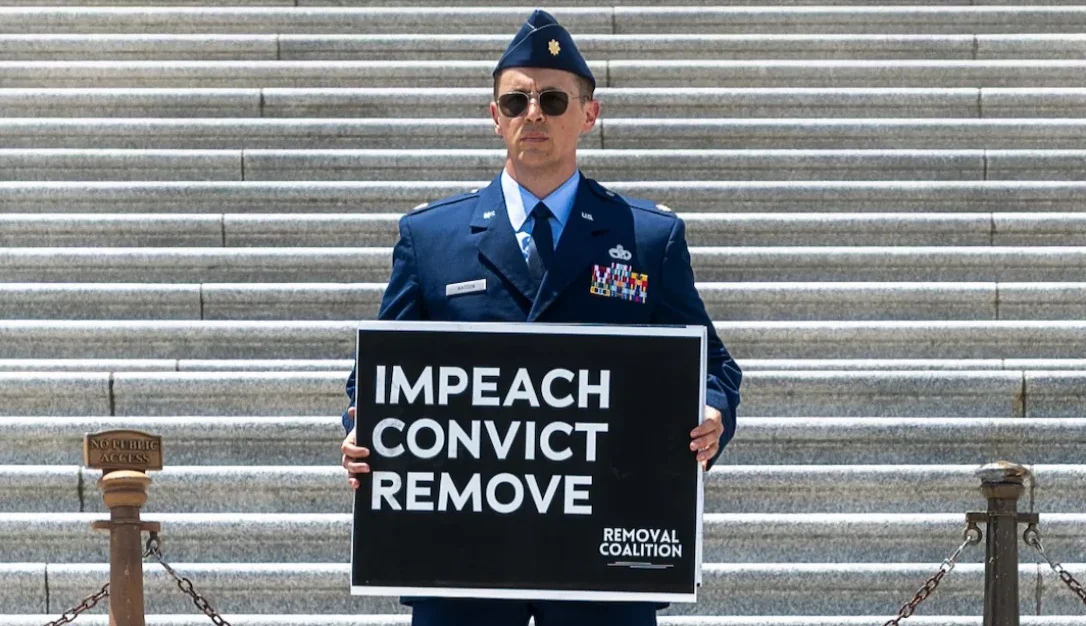
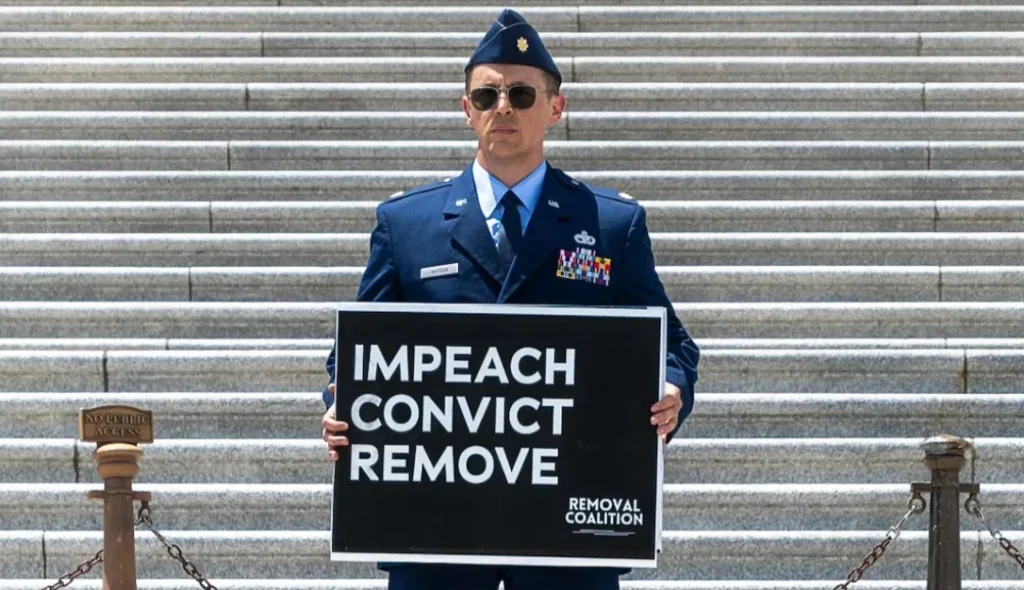
    Air Force Major Who Called for Trump’s Impeachment Held in Solitary Confinement

    Maj. Jason Watson was arrested after he participated in a news conference calling for Trump to be removed from office over his launching of military actions against Iran, Cuba, and Venezuela without congressional authorization

    •  

    Agents search Rep. Omar’s Washington home in criminal probe as she vows she won’t ‘be silenced’

    This is an escalation in a criminal investigation of US Rep. Ilhan Omar, in the final weeks of her reelection bid. She is a frequent target of Israel partisans and the Trump Administration over her opposition to Israel's human rights violations and the Israel lobby's destructive influence in the US

    •  

    ATTR-CM takes centre stage at ESC 2026

    This year's European Society of Cardiology (ESC) Congress showed just how quickly cardiology is changing. Late-breaking trials, new scientific data and major guideline updates all pointed to a field that is becoming both more crowded and more complex.

    A central question the conference sought to address was how effectively the two main types of ATTR-CM treatment work. Stabilizers are designed to prevent the transthyretin protein from breaking apart, while silencers reduce its production. The debate centered on whether silencers offer enough additional benefit over established stabilizers in this significant rare disease market.

    One of the clearest lessons was that the challenge is no longer simply bringing more treatments to market. It is increasingly about finding the right patients earlier, understanding how different therapies compare and deciding where each option fits as standards of care improve. ATTR-CM was one of the strongest examples of that shift, with the conference data sharpening the debate over whether silencers offer enough additional benefit over established stabilizers. The same pattern could also be seen in new guidelines and in the growing role of digital monitoring.

    Alnylam ($ALNY) faces new questions over Amvuttra in ATTR-CM

    Alnylam Pharmaceuticals came to ESC looking to strengthen the case for Amvuttra in ATTR-CM, but the data arguably leave some important questions unanswered. While the drug is already approved, the estimated benefit appeared more modest than many investors and clinicians may have hoped, particularly given the growing expectation that newer therapies will need to demonstrate clear advantages over established treatments. The key question is whether ATTR-CM silencer treatments offer enough additional benefit on top of stabilizers that are already delivering meaningful clinical outcomes.

    In light of this, there remains uncertainty around the extent of Amvuttra's value and whether it will be sufficient to secure a strong position in an increasingly competitive market. The FDA's decision earlier this year to challenge Alnylam's survival claims based on an open-label extension of HELIOS-B only adds to the need for caution. It is, therefore, perhaps unsurprising that Alnylam's share price has come under pressure and that questions are being raised about the long-term commercial viability of Amvuttra in ATTR-CM.

    Rather than definitively strengthening the case for Amvuttra, Alnylam's participation at ESC suggests that important questions remain about the true scale of its advantage and whether the evidence is sufficient to establish a clear benefit over existing treatments.

    AstraZeneca ($AZN) casts further doubt on silencers in ATTR-CM

    In perhaps a similar spirit, AstraZeneca and Ionis used ESC to revisit the results of the Phase 3 CARDIO-TTRansform trial of Wainua (eplontersen), another potential treatment for ATTR-CM. They faced a somewhat different challenge, however, as the trial had already failed its primary endpoint, with Wainua unable to significantly reduce cardiovascular mortality and recurrent cardiovascular events in the overall study population.

    The companies sought to contextualize the findings, but the presentation arguably highlighted one of the trial's central challenges. If the apparent benefit is less clear among patients already receiving stabilizer therapy, the data raise broader questions about how much additional value silencers can deliver beyond treatments that are already producing meaningful clinical outcomes. The broader question, however, is what this means for an ATTR-CM market that is becoming increasingly competitive. As new treatments emerge, should attention shift towards newer therapies, or remain focused on established stabilizers that may already be providing much of the available benefit?

    New ESC guidelines and Huawei point to a prevention first approach

    ESC also saw the release of new guidelines that could change how cardiovascular patients are identified and managed. The updated heart failure guidance simplifies how patients are classified and puts more focus on prevention and earlier intervention. In practice, that means clinicians may be looking for risk earlier and across a broader group of patients, rather than waiting until disease is more advanced.

    That change is creating more room for digital tools. Huawei used ESC to preview its Watch D3, a wrist-based ambulatory blood pressure monitor designed to track blood pressure in everyday settings. It is one example of how wearables are moving beyond basic wellness tracking and towards data that could help identify risk earlier, monitor patients more closely and support treatment decisions.

    Reflecting on ESC 2026, ATTR-CM emerged as a key area of focus. The AstraZeneca and Alnylam data raised questions about whether silencers can offer enough benefit over established stabilizers, while new guidelines and digital tools highlighted the importance of identifying risk earlier and monitoring patients more closely. The key question now, arguably, is which approaches can genuinely improve on what is already available, and which patients are most likely to benefit.

    •  
    ❌