❌

Reading view

Is the world pricing the risk of a US diesel export ban?

A spike in diesel prices is hammering broad sectors of the US economy – especially agriculture and shipping – and becoming a flash point ahead of the November 2026 midterm elections. This squeeze has prompted Republicans from hard-hit farm states to call for a ban on US diesel exports, with President Donald Trump reportedly weighing […]

The post Is the world pricing the risk of a US diesel export ban? appeared first on Asia Times.

  •  

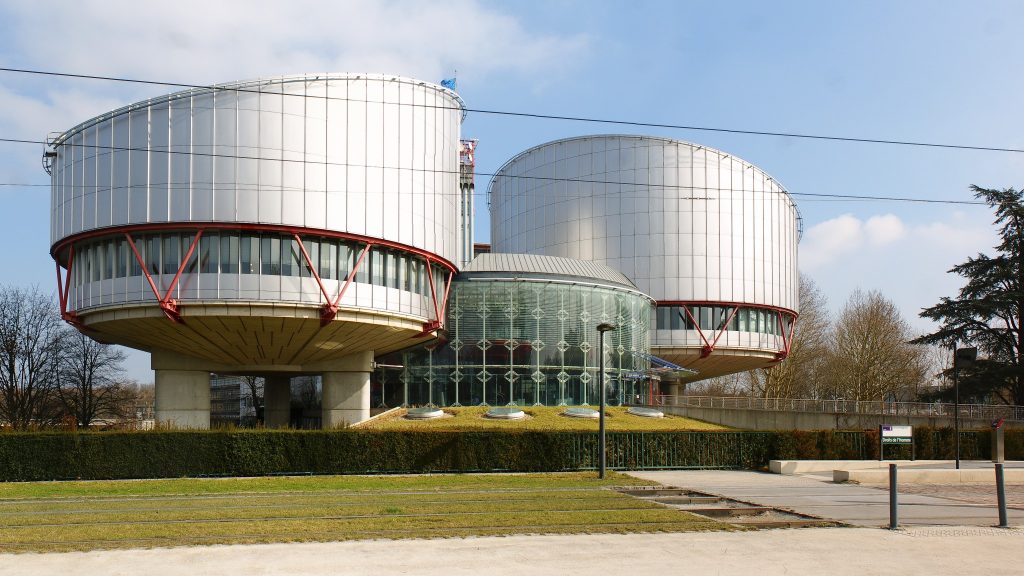
Hungary held $82 million in cash and gold from Ukraine for months. Now, it faces torture complaints in Europe’s top court

Hungary stopped a Ukrainian Oschadbank armored convoy in 2026, held its couriers, and kept $82 million in cash and gold. The European Court of Human Rights has registered six applications from the bank's couriers, who say Hungarian police unlawfully detained and tortured them.

In March, Hungarian forces stopped two bank vehicles carrying cash and bank metals from Austria to Ukraine, with seven employees transporting $40 million, 35 million euros, and nine kilograms of gold. It happened just before Hungary’s parliamentary elections, in which then-prime minister Viktor Orban had built his campaign around a sweeping anti-Ukraine message, and lost.

Six of the employees filed with the court on 5 July 2026, and the court’s secretariat has now confirmed their registration and assigned each an official number, according to the bank. It expects a seventh courier’s application, alleging the same violations, to be registered too.

“The fact that the ECHR has accepted the complaint and opened proceedings indicates that there are reasonable legal grounds for the case, that it has legal merit, and that the court intends to examine it on its merits,” Oschadbank says.

The rights the couriers say Hungary broke

The complaints rest on two articles of the European Convention on Human Rights. Article 3 bans torture and inhuman or degrading treatment, while Article 5 guarantees the right to liberty and protects people from arbitrary detention, the bank notes.

During the detention, one courier, a diabetic former Security Service officer, was forcibly injected with an unknown substance, which his Hungarian lawyer confirmed he received despite his objections. He then suffered a hypertensive crisis, lost consciousness and was hospitalized, and Oschadbank confirmed that medical care came only after he passed out, The Guardian reported.

Oschadbank calls the registration an important step in defending its staff. Board chairman Yury Katsion said the bank will continue to protect the couriers’ interests and its own reputation, expects a legal assessment of the Hungarian forces’ actions and is grateful to partners for their support.

Why registration is a start, not a verdict

The cases are only at an early stage. Registration does not mean the court has found a violation or ruled the complaints admissible, as it must separately weigh the procedural conditions and the circumstances the applicants describe, Oschadbank stresses.

The incident itself, however, is documented: Hungary returned the seven couriers the next day but held the cash and gold for months, releasing the vehicles on 12 March and the money and gold by May.

  •  

Horse-Drawn Carriage Rides in New York’s Central Park to Be Banned

Horse-drawn carriage rides in New York’s Central Park could be discontinued starting June 1, 2028, under a bill supported by City Council member Zohran Mamdani and City Councilwoman Julie Menin, DPA reported, citing US media. The proposal calls for the gradual phasing out of the attraction, which has been part of the city’s tourism landscape […]

  •  

Hungary Remains Under EU Article 7 Scrutiny Despite Progress Under Magyar Government

EU ministers have reviewed reforms introduced by Prime Minister Péter Magyar’s administration but left the Article 7 proceedings against Hungary unresolved. The European Commission has acknowledged significant progress while warning that further changes are required to restore the rule of law.

The European Union has maintained its Article 7 proceedings against Hungary despite acknowledging significant improvements in the country’s rule-of-law situation since Prime Minister Péter Magyar’s government took office earlier this year.

Ministers meeting at the General Affairs Council in Luxembourg on Tuesday, 13 October, reviewed reforms introduced by the Hungarian administration and received an updated assessment from the European Commission.

The proceedings, initiated by the European Parliament in September 2018, remain open eight years after concerns over judicial independence, corruption, media freedom and democratic accountability first prompted action under the EU treaties.

No decision was announced to terminate the procedure following the latest meeting.

Brussels acknowledges progress

European Commissioner Michael McGrath said ahead of the discussions that Hungary had made substantial progress towards addressing the institutional problems inherited from the administration of former prime minister Viktor Orbán.

Speaking in Luxembourg, McGrath acknowledged improved cooperation between the Hungarian government and European institutions.

However, he also indicated that the reform process remained incomplete, noting that the new administration had been in office for only several months.

The Commission’s assessment reflects the changing relationship between Budapest and Brussels following Magyar’s election victory and the subsequent introduction of reforms intended to restore judicial and institutional independence.

As EU Today reported in June, the change of government created an opportunity to resolve long-standing disputes over the condition of Hungary’s democratic institutions and the suspension of European funding.

The latest Council discussions indicate that the EU is prepared to recognise reforms already undertaken without automatically treating them as sufficient to close the Article 7 procedure.

An eight-year institutional dispute

The European Parliament initiated the proceedings in 2018 after raising concerns over developments affecting Hungary’s constitutional system, judicial independence, corruption safeguards and civil society.

Article 7 of the Treaty on European Union provides mechanisms for responding when a member state is considered at risk of seriously breaching the Union’s fundamental values.

Under its preventive provisions, the Council can determine whether there is a clear risk of such a breach.

More severe measures, including the possible suspension of certain membership rights, require additional procedures and higher institutional thresholds.

Hungary’s case has remained within the preventive stage, with successive Council meetings examining the country’s legal and political developments.

The Council’s account of the 13 October meeting confirms that Hungarian representatives presented measures intended to address concerns raised by the European Parliament and member states during earlier proceedings.

The Commission also briefed ministers on its latest assessment.

The meeting did not produce a formal finding that the outstanding concerns had been fully resolved.

Magyar faces the consequences of Orbán’s legacy

Since assuming office, Magyar has sought to reverse elements of the institutional structure established during Orbán’s lengthy premiership.

The reforms have included measures concerning public administration, judicial accountability and the relationship between national institutions and European law.

The new government has also attempted to improve relations with Brussels after years of disputes that affected EU budget decisions, sanctions policy and cooperation over Ukraine.

EU Today has previously examined Magyar’s programme of institutional renewal and the political difficulties involved in changing institutions shaped by the previous administration.

Reforming legislation does not necessarily transform the institutions responsible for applying it.

Judicial appointments, regulatory structures, public procurement procedures and anti-corruption enforcement may all require additional measures before the effects of reform can be fully assessed.

The European Commission must therefore consider not only the laws adopted by the new government but also whether the institutions concerned operate independently and effectively.

EU funding remains a separate question

The Article 7 proceedings are closely associated with wider disputes over Hungary’s access to European funding, although the relevant legal mechanisms are different.

During Orbán’s administration, the Commission and Council used financial conditionality procedures to restrict access to certain EU resources because of concerns affecting the protection of the Union’s budget.

Magyar’s reforms have opened the possibility of reversing some of those restrictions.

As EU Today reported in September, the Commission moved towards releasing €4.2 billion following changes intended to address rule-of-law concerns.

The financial decisions involve compliance with conditions attached to EU funding and can proceed independently of the Article 7 mechanism.

Consequently, the release of money does not automatically establish that all the institutional problems identified in the original parliamentary proceedings have been resolved.

Likewise, the continuation of Article 7 does not necessarily prevent the Commission from recognising progress under separate funding arrangements.

Who can end the proceedings?

McGrath addressed the possibility of terminating the procedure during remarks before Tuesday’s meeting.

He explained that the Commission could provide its assessment but did not have unilateral authority to bring the Article 7 process to an end.

In his recorded statement in Luxembourg, the Commissioner pointed to the responsibilities of the European Parliament, which initiated the case, and the Council, which has conducted the subsequent examination.

The institutional arrangements mean that improved relations between the Commission and the Hungarian government cannot by themselves dispose of the proceedings.

The Council must consider the reforms and the remaining concerns within the framework established by the treaties.

Political agreement among member states will consequently be required to determine how the process develops.

A changed relationship with Brussels

The latest discussions take place against a substantially different political background from previous years.

Budapest has recently withdrawn objections to further steps in Ukraine’s EU accession negotiations following Ukrainian legislation addressing educational rights for Hungarian speakers and other national minorities.

The change has removed one obstacle to enlargement negotiations and reflects the government’s more cooperative approach towards other EU institutions.

Nevertheless, Hungary’s position on foreign policy and enlargement is distinct from the assessment of its domestic rule-of-law arrangements.

The Council’s examination remains focused on the institutional concerns that led to the procedure being initiated.

The Irish presidency’s summary of the October Council meeting confirms that ministers received an update rather than reaching a new formal determination.

The proceedings therefore remain open while the Commission and member states continue examining the measures introduced by Magyar’s administration.

The coming decisions will establish how European institutions respond when a new government undertakes reforms intended to reverse the conduct that originally led to action under Article 7.

For Hungary, the outcome will influence its relationship with Brussels well beyond the immediate debate over EU funding. For the Union, it will demonstrate how its rule-of-law procedures operate when political circumstances change and the member state concerned begins addressing previously identified institutional problems.

  •  

Greece bans social media to minors as of Jan 1, 2027

The Greek government presented a draft law on Monday banning social media access to minors below 15 years old. The ban will be implemented as of January 1, 2027. Greece seeks to address the problems associated with use of social media by minors ahead of an equivalent European regulation that is still progressing through the […]

The post Greece bans social media to minors as of Jan 1, 2027 appeared first on Keep Talking Greece.

  •  

Bit by bit, the Taliban is losing control of Afghanistan

Five years after seizing Kabul, the Taliban’s strongest argument for international acceptance rests on control. The Taliban governs every provincial capital and faces no conventional army capable of marching on Kabul. It repeatedly cites improved security as proof that Afghanistan’s post-2021 order is settled. But armed resistance is becoming more geographically dispersed, more organizationally diverse […]

The post Bit by bit, the Taliban is losing control of Afghanistan appeared first on Asia Times.

  •  

Russia courts the Taliban without dropping Pakistan

I have watched Pakistan-Afghanistan relations long enough to distrust easy headlines, and last week’s news produced a few of them. At the Center-2026 (Tsentr-2026) war games in Russia’s Chelyabinsk region, Taliban officers stood among the foreign observers. Reports say it was the first time Moscow had invited a Taliban military delegation since the movement returned […]

The post Russia courts the Taliban without dropping Pakistan appeared first on Asia Times.

  •  

Sailing ban for ferries due to gale-force winds in the Aegean Sea

Ferries remain docked at several ports in Greece on Friday, October 2, due to gale-force winds reaching 9 and up to 10 Beaufort locally in the Aegean Sea. A sailing ban was imposed at the ports of Rafina and Lavrio in south-eastern Attica on Friday morning, while sailings from the port of Piraeus were also […]

The post Sailing ban for ferries due to gale-force winds in the Aegean Sea appeared first on Keep Talking Greece.

  •  

Afghanistan’s TTP sanctuary is becoming harder to deny

For years, Pakistan’s claim that the Tehreek-e-Taliban Pakistan operates from sanctuaries inside Afghanistan produced a familiar exchange: Islamabad accused, Kabul denied, and each new militant attack triggered another round of recrimination. That pattern is becoming harder to sustain. The sanctuary dispute can now be tested against a growing body of evidence rather than competing claims […]

The post Afghanistan’s TTP sanctuary is becoming harder to deny appeared first on Asia Times.

  •  

Beyrouth, les sens de la fête

JPEG - 23.4 kio

Elle est souvent présentée, voire encensée, dans de nombreux médias occidentaux comme le « lieu de la fête au Proche-Orient » (1), ce qui attesterait sa « résilience », terme en vogue qui horripile de nombreux Libanais de la capitale, sinon du pays tout entier. L'exception beyrouthine tiendrait, selon la géographe Marie Bonte, dans son « offre festive mais aussi dans la capacité des habitants à faire la fête, quelle que soit la conjoncture ». Après avoir retracé l'émergence de la vie nocturne au « temps des cabarets » (1920-1960) et son adaptation durant la guerre civile (1975-1990), elle montre comment, à partir des années 2000, « des bars et les boîtes de nuit se concentrent dans des îlots denses de monde, de bruit et de lumière, donnant à la ville des allures d'archipel ». Ces îlots sont traversés par des dynamiques politiques où se mêlent concurrence économique, reconstitution de hiérarchies entre les professions, formes de distinction sociale diverses selon les lieux fréquentés ou encore « appropriation d'une mémoire politique de gauche » via les choix musicaux et un usage des lieux dépassant le cadre de la fête. Certes, il peut s'agir aussi d'une échappatoire face à l'incertitude du lendemain.

JPEG - 24.4 kio
JPEG - 32.1 kio

C'est ce mélange qui innerve le roman graphique, plus exactement le récit autobiographique imagé Rue de Phénicie, de Lamia Ziadé (2), après Ô nuit, ô mes yeux (2015), Ma très grande mélancolie arabe (2017) et Mon port de Beyrouth (2021), tous parus chez POL. L'autrice vit depuis longtemps à Paris, où elle poursuit son interrogation et sa célébration d'une identité singulière, et de sa ville natale, avec une liberté stimulante, une fantaisie fantastique — au long d'une déambulation nocturne à travers Beyrouth ainsi qu'à travers sa propre histoire, inextricablement liée à son « obsession, l'histoire moderne du Liban et du Proche-Orient ». Durant ses longs séjours à Beyrouth consacrés à l'écriture et à des expositions après une « vie de noctambule délurée » à Paris, la fête lui apparaît comme une forme de résistance dans une ville qui ne veut pas s'éteindre, au propre comme au figuré. À la fermeture du Paradise, le dernier bar ouvert de la nuit, elle se lance à la recherche d'une boîte fantasmée — la Boîte de Pandore —, ce qui lui sert de prétexte pour déambuler dans l'histoire politique du pays et de la région à travers des lieux hautement symboliques, comme le Musée national, ou des cimetières. Mais Lamia Ziadé n'est pas dupe de la dimension illusoire de sa quête.

JPEG - 53.7 kio

Deux autres déclinaisons ajoutent leurs variations à cette évocation obsédante. Dans le deuxième volume de la bande dessinée Le Génie de Beyrouth (3), qui revient sur le siège en 1982 de Beyrouth-Ouest — fief de l'Organisation de libération de la Palestine (OLP) et de ses soutiens libanais — par l'armée israélienne, les rues sont plongées dans l'obscurité et, pour le journaliste qui écrit à la lueur de la bougie, la ville semble « coincée dans son dernier carré, (…) obligée de faire face », elle ne peut plus se réfugier dans la nuit. Mais elle a des ressources insoupçonnées.

Quant à la narratrice du premier roman, proche de l'autobiographie, de la Franco-Libanaise Manal Salamé, si elle déclare préférer la ville de jour (4), car, « le jour, elle ne sait pas mentir », elle ne se refuse pas à parcourir la nuit et ses faux-semblants, ceux que, de retour au Liban après dix-sept ans d'absence, elle retrouve lors d'une longue soirée alcoolisée. À Beyrouth, on n'éteint pas les lumières.

Voir en ligne : /2026/10/APPELT/70087

(1) Marie Bonte, Nuits de Beyrouth. Géographie de la fête dans une ville post-conflit, ENS Éditions, Lyon, 2023.

(2) Lamia Ziadé, Rue de Phénicie, POL, Paris, 2025, 392 pages, 34 euros.

(3) Sélim Nassib et Léna Merhej, Le Génie de Beyrouth. La fille tombée du ciel (tome 2), Dargaud, Paris, 2026, 112 pages, 23 euros.

(4) Manal Salamé, Habibi Beyrouth, Éditions La Tribu, Paris, 2026, 309 pages, 21 euros.

  •  

Warum ein in die Donau geworfenes Handy die ungarische Politik bestimmt

Was in Ungarn derzeit passiert, ist nur schwer zu verstehen. Dort tobt ein Skandal wegen eines banalen Vorfalls aus dem Jahr 2024, bei dem der heutige ungarische Regierungschef Magyar in einem Nachtclub einem Gast, der ihn filmte, das Mobiltelefon entrissen und in die Donau geworfen hat. Das entsprechende Strafverfahren war bereits eingestellt, wurde nun aber […]
  •  

Durban: A milestone in the new anti-semitism

The Durban Conference in South Africa in September 2001 was not just an event; it was a turning point. It was the modern-day Wannsee that planned the contemporary destruction of the Jewish people. I was there for the Italian newspaper, La Stampa. The stench of something rotten was already emanating from the preparations for the great gathering “against racism” convened by the United Nations, with the participation of an enormous number of NGOs—some 3,000—all of them with knives between their teeth, determined to demonstrate that, under the banner of human rights, the real enemy was Israel, writes Fiamma Nirenstein.

It was there, even more than with the U.N.'s “Zionism is racism” resolution of 1975, that Stalin’s path was resumed. In 1952-53, he had initiated and theorized a new great hunt against the Jews, inventing the blood libel of the “Jewish doctors’ plot” and staging the Slánský trial. The systematic murder and deportation of Jews were interrupted by the dictator’s death in 1953. But with theorists such as Maxime Rodinson and Francis Crémieux, the premises were laid for declaring Israel the new enemy of humanity.

The positions that ultimately led to Durban maintained that “the Israeli government has long been simply an agent of American imperialism.” The supposed proof lay in the malign role of Jews in the world. The doctors accused in the so-called conspiracy—all innocent, their confessions extracted under torture—became “identical to the Nazi doctors of Dachau,” in the pay of the Americans. The inversion begins This was the beginning of the inversion that, on Oct. 7, 2023, led to Israel and the Jews being accused of genocide instead of the evident intentions of Hamas and its barbaric determination being condemned. At Durban, the death sentence against Israel went hand in hand, for the first time, with the preemptive legitimization of terrorism, now carried out by “freedom fighters” rather than the terrorists of Munich or Fiumicino.

At a demonstration along the battered streets on the outskirts of Durban, just days before Sept. 11, the crowd marched behind portraits of its mastermind, Osama bin Laden. Along the dusty road, young NGO activists called—as their documents did—on “all of civil society,” from the Maya to the Tibetans, everyone oppressed by racism, to embrace the struggle against Israel and transform it into the fundamental human-rights struggle. When I told the editors at my newspaper, La Stampa, they replied that I had an obsession with that poor Saudi shepherd. The conference was organized by a United Nations that had by then been captured by the great Third World and Islamic blocs that had reliably provided the Soviet Union with a majority. “Zionism is racism,” the 1975 resolution, was an addendum to the death sentence against Judaism following Hitler’s attempt to eliminate it from the planet.

Israel was the new target of antisemitism, invariably linked to anti-Americanism and viewed as the spearhead of the colonial and imperialist West. Every truth was erased. Israel’s almost desperate attempts to share the territory and make territorial concessions to the Arab world were rejected time and again. In 2000, after Arafat had been brought back despite his appalling embrace of terrorism, the Second Intifada erupted. By the time Durban took place, we were in the midst of the Intifada—a preliminary 7 October.

Its preparatory documents had been written and discussed in Strasbourg, Santiago and, astonishingly, Tehran, where since 1979 an Islamist regime had ruled whose foundational principle was the destruction of the State of Israel. Israel as absolute evil In Durban, Fidel Castro, Yasser Arafat and Robert Mugabe converged, and the Jewish question was inserted into the heart of demands for billions in reparations for slavery. Israel obviously had nothing to do with this history, but it was portrayed as absolute evil. The Palestinianism of Durban held that Israel was racist, imperialist, colonialist and genocidal—and therefore even a slave-owning power. All these adjectives are meaningless when applied to a country that represents the miraculous return home, disarmed and hungry, of the people indigenous to that land, armed only with hoes and books.

They armed themselves only when, awakening from the dream, they realized that their lives were once again at risk. And even then, Israel continued to surrender large pieces of territory in the search for peace. I was there In Durban, I rented a room inside a compound surrounded by high walls. I shared it with a journalist from the Italian left-leaning daily, La Repubblica, who was thrilled by the opportunity to encounter Castro and the other idols of the era in the corridors—and, with a little luck, perhaps Nelson Mandela as well. There was the official conference, the domain of Mary Robinson, who purported to moderate the international proceedings and restrain them from excessively harsh resolutions that had in fact been planned from the beginning.

Then there were the stadium and other NGO gathering places, where antisemitic hatred was expressed in every possible way: leaflets, speeches, songs and actual physical hunts for Jews. Several times I had to run away and seek refuge in a building belonging to the local Jewish community, where one could also find something to eat. Thousands of NGO members wore T-shirts bearing the image of Mohammed al-Dura alongside the conference logo. The production of leaflets about Palestinian suffering was endless. Jews were depicted with missiles and knives, blood dripping from their mouths and murdered children. The word “genocide” was already commonplace. From the podium, in a crowded, darkened hall, Fidel Castro, while demanding financial reparations for entire continents for slavery and colonialism, spoke of “the terrible genocide being perpetrated today against our Palestinian brothers” by Israel’s then-prime minister, Ariel Sharon, whom he described as a far-right leader acting in alliance with the “hegemonic superpowers.” Arafat celebrated the universal acceptance of his worldview, describing the situation as the “expression of the racist colonial conspiracy” to uproot the Palestinians and conquer their land. In short, the troops of that global war had finally assembled—a war that only days later would find its expression in the attack on the Twin Towers. That was the true meaning of Durban.

And the Palestinian cause, together with the destruction of Israel, was baptized as the indispensable prerequisite for every revolutionary struggle. The astonishment and disbelief in Israel and the United States were enormous. After everything the Jews had endured, and while they were suffering through the Intifada, finding themselves once again facing such a broad and senseless assault on their right to self-determination and self-defense, their right to return home and the very liberal-democratic nature of their country seemed like a nightmare. The two delegations under attack took days to decide to leave. Israel continued to insist, as Diaspora Affairs Minister Michael Melchior said, that racism—the supposed subject of the conference—was so important to Jews that the country wanted to participate in the discussion and the decisions. In the end, the United States and Israel had to walk out. Canada and Europe remained, but the European position sought an impossible compromise. It proposed restoring the Holocaust to the final documents as the worst expression of racism.

The interventions by Italy’s Renato Ruggiero, Germany’s Joschka Fischer and, in the corridors, the excellent Margherita Boniver—the only one who understood fully, to the point of tears—were hesitant and moderate. Fischer had the strength to say that the right of the Jews to their own state was indisputable. But he returned to the Palestinians’ right to a state and once again forgot that Israel had never called that right into question since 1948, despite its countless offers. ‘Did not happen in a vacuum’ By contrast, the denial of the Jews’ right to have their own state like every other people reached its paroxysm on Oct. 7. And once again the United Nations lined up against Israel, as it had at Durban. So it was with the words of U.N. Secretary-General António Guterres, who, instead of expressing horror and condemnation, responded with his infamous statement that the 7 October attacks “did not happen in a vacuum”. It is true: They did not happen in a vacuum. Durban is a milestone in the antisemitic catastrophe that once again torments the world today, and the United Nations is its prophet.

  •  

Sailing ban, ferry itineraries modifications due to gale-force winds

Port authorities imposed a sailing ban from the ports of Lavrio and Rafina in south-eastern Attica on Friday, August 14, 2026, while some ferry itineraries from the port of Piraeus were cancelled on Friday morning due to gale-force winds. Mostly affected by the strong winds are the islands in the Aegean Sea and Crete. Modifications […]

The post Sailing ban, ferry itineraries modifications due to gale-force winds appeared first on Keep Talking Greece.

  •  

Munition found: Swimming, marine activities banned in part of Karpathos

Swimming and all marine activities have been banned in part of the Ardani area on the island of Karpathos on Sunday, August 9, after objects believed to be munitions were discovered. According to information obtained by state-tun news agency amna.gr, the items are believed to be old munitions. The Hellenic Coast Guard has cordoned off […]

The post Munition found: Swimming, marine activities banned in part of Karpathos appeared first on Keep Talking Greece.

  •  

Gale-force winds disrupt ferry services in the Aegean Sea

Greek authorities imposed a sailing ban from the ports of Rafina and Lavrio, eastern Attica, as gale-force winds sweeping across the Aegean Sea also on Friday, July 31, 2026, and ferry services have been disrupted. The sailing ban comes into effect after some ferries has problems to anchor at islands ports and as thousands flock […]

The post Gale-force winds disrupt ferry services in the Aegean Sea appeared first on Keep Talking Greece.

  •  
❌