❌

Reading view

Where Are The Aircraft Carriers?: October 17, 2026

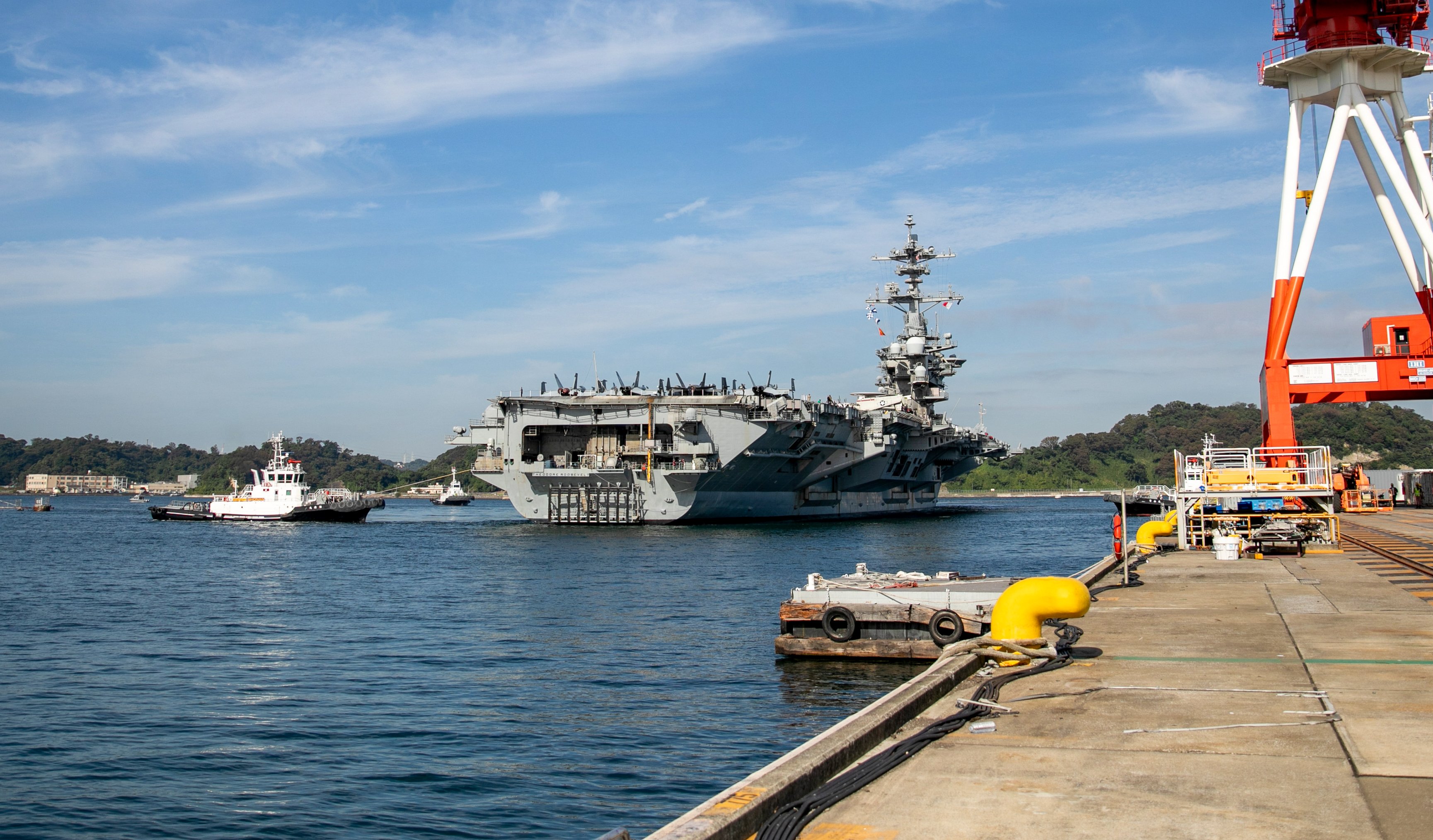
With a flight deck packed with carrier-based aircraft, including stealthy fifth-generation F-35Cs, the USS Theodore Roosevelt pulled into Yokosuka, Japan, on Friday. Roosevelt is the first non-resident U.S. carrier to visit the key naval port, strategically located on the east side of Japan, in more than four years. Yokosuka is home to the USS George Washington and America’s only forward-based Carrier Strike Group (CSG).

The Roosevelt, which serves as the flagship of CSG 9, escorted by guided-missile cruiser USS Chosin and destroyer USS Decatur, completed the journey from San Diego in 19 days − maneuvering around a typhoon in the Western Pacific − and will participate in the upcoming combined exercise Keen Sword 27. Meanwhile, the USS George H.W. Bush departed Thailand after a five-day port call and returned to the Middle East, and the USS Abraham Lincoln arrived home after a nearly eleven-month combat deployment.

Here’s TWZ’s weekly carrier tracker monitoring America’s flattop fleet, including deployed CSGs and Amphibious Ready Groups (ARGs), using publicly available open-source information. Check out last week’s report here.
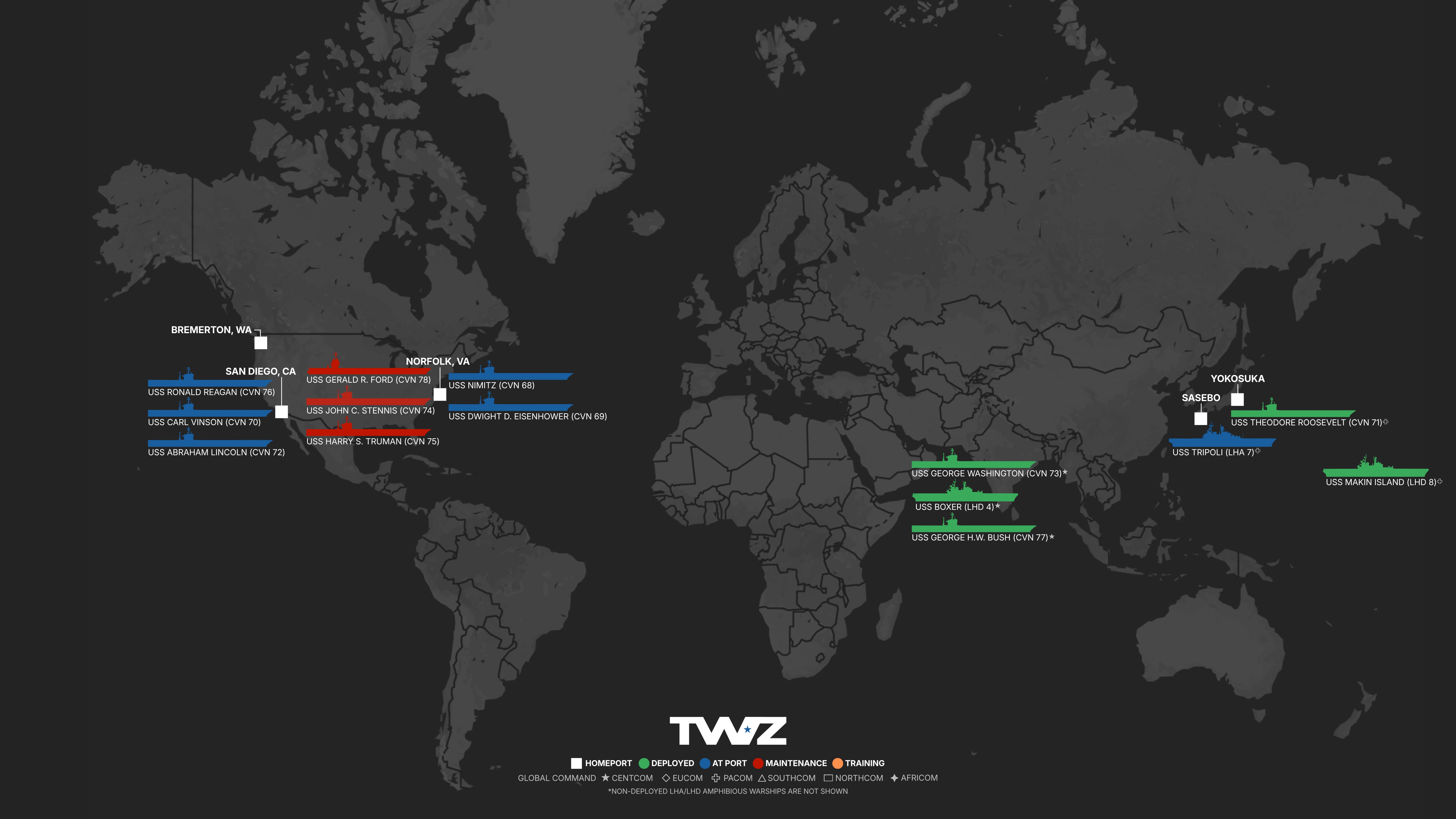
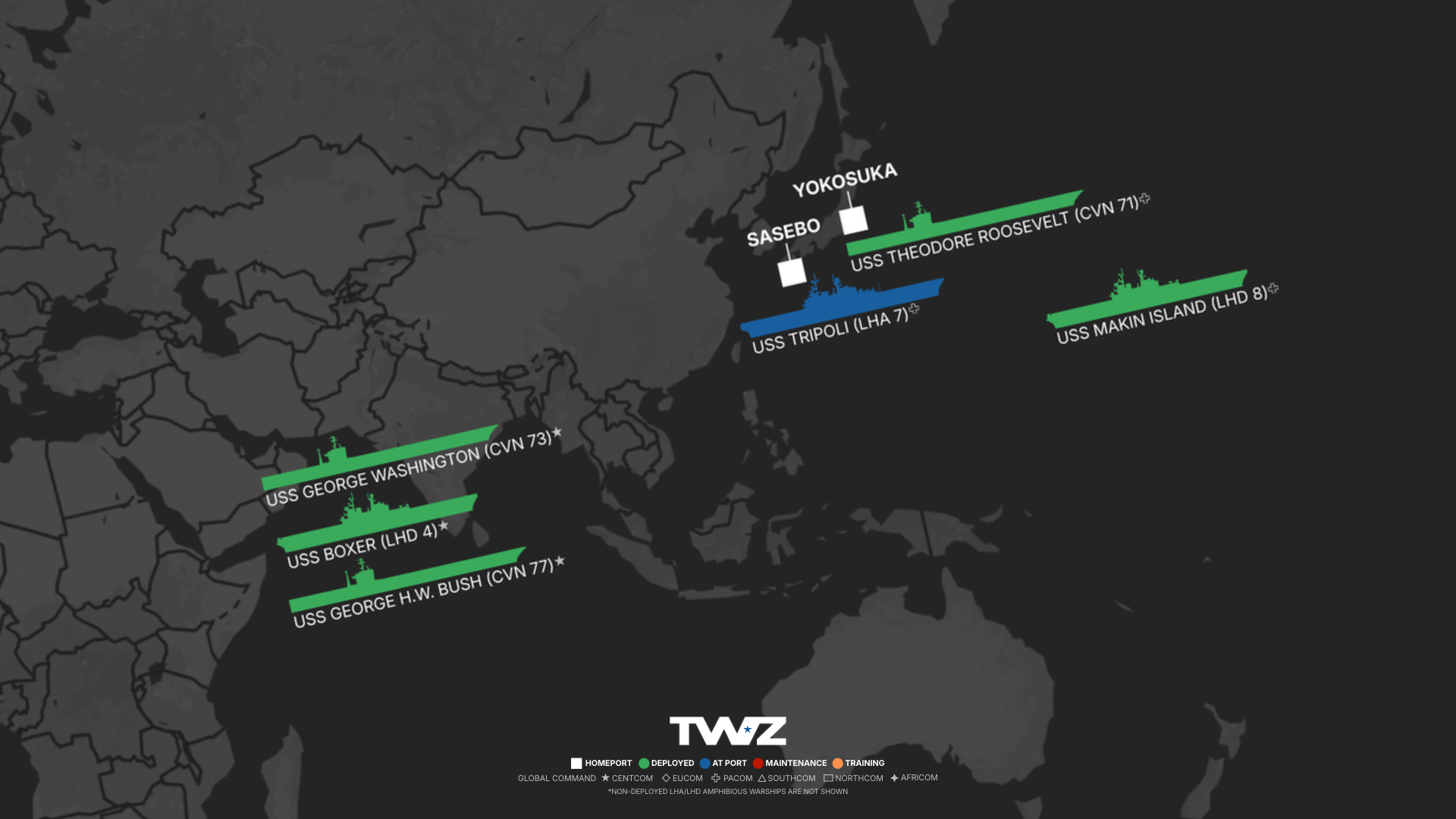
Detailed graphic showing the current position of America's fleet of eleven aircraft carriers around the world, created by TWZ and Ian Ellis-Jones.
TWZ/IAN ELLIS-JONES

Theodore Roosevelt Docks In Yokosuka, Japan; First Visiting Carrier In Four Years

Roosevelt and Chosin chopped into the U.S. 7th Fleet-Pacific Command (PACOM) area of responsibility (AOR) and arrived at Commander, Fleet Activities Yokosuka on the morning of October 16. The CSG will spend a few days in port before beginning participation in exercise Keen Sword, a “premier joint-bilateral field training exercise designed to increase readiness and interoperability between the Japan Self-Defense Forces and U.S. military forces,” according to the 7th Fleet press release. The brief visit allows the crew to complete maintenance, resupply, and disembark for liberty before resuming routine operations.

“Our crew is honored to visit Yokosuka and experience the rich culture and hospitality of Japan,” the commanding officer of Roosevelt, Capt. Will Mathis, said in the release. “Port visits like this are vital for crew morale and mission readiness, allowing our Sailors to rest, recharge, and prepare to operate seamlessly alongside our allies during exercise Keen Sword.”
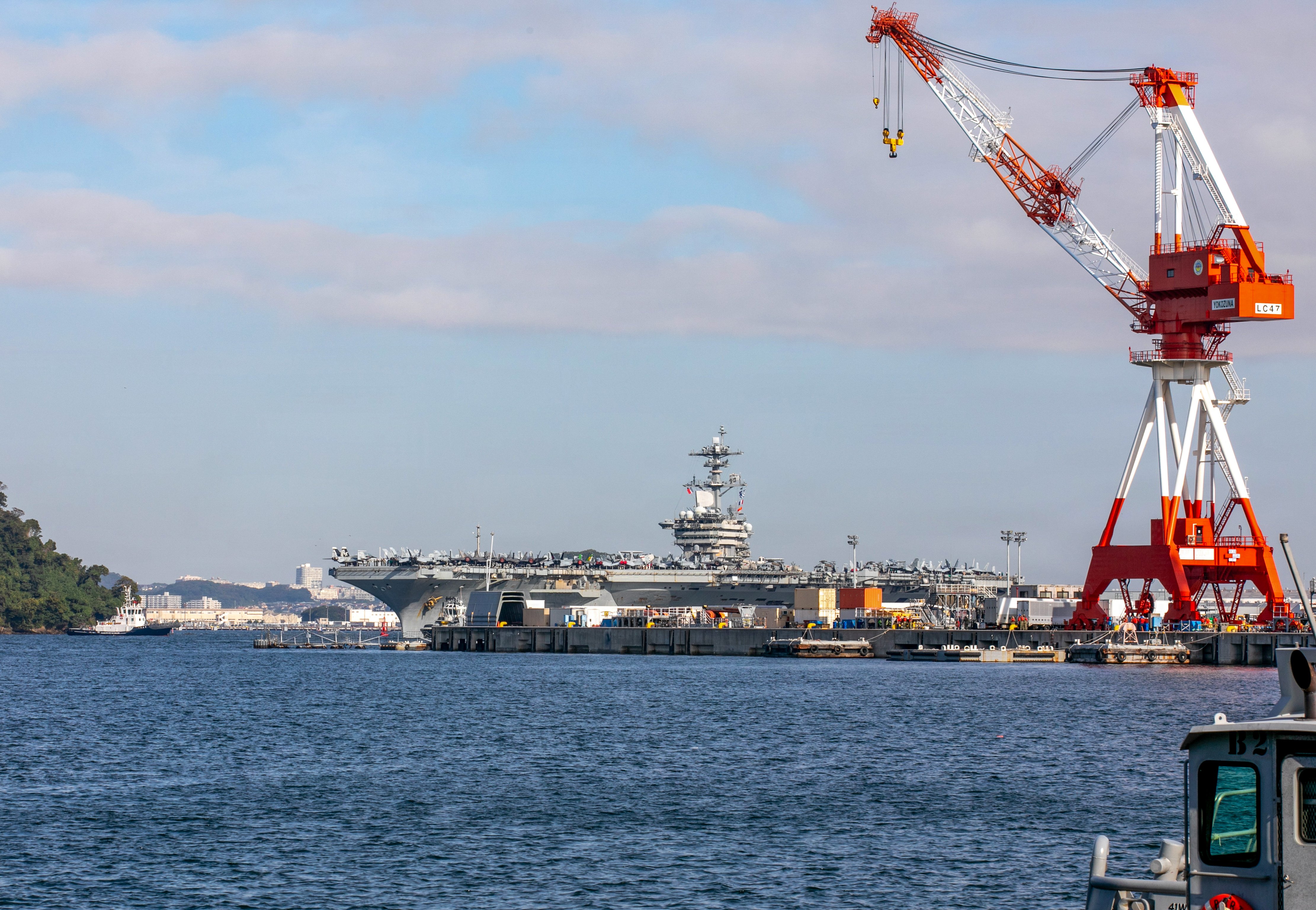
Nimitz-class aircraft carrier USS Theodore Roosevelt (CVN 71) pulls into Commander, Fleet Activities Yokosuka, Japan Oct. 16, 2026. U.S. 7th Fleet, the Navy’s largest forward-deployed numbered fleet, routinely interacts and operates with allies and partners in preserving a free and open Indo-Pacific. (U.S. Navy photo by Mass Communication Specialist 1st Class Hannah Fry)
Roosevelt arrives in Yokosuka, Japan. U.S. Navy photo
Nimitz-class aircraft carrier USS Theodore Roosevelt (CVN 71), flagship of Carrier Strike Group (CSG) 9, and Ticonderoga-class guided-missile cruiser USS Chosin (CG 65) arrived at Commander, Fleet Activities Yokosuka, Oct. 16, 2026, ahead of exercise Keen Sword. (U.S. Navy photo by Mass Communication Specialist 1st Class Hannah Fry)
Roosevelt moors at Commander, Fleet Activities Yokosuka. U.S. Navy photo

The five-ship CSG, the composition of which a Navy official confirmed to TWZ, is currently operating on a disaggregated basis − a common practice employed by strike groups with multiple ongoing missions. The duo that departed the U.S. at the end of September linked up with another element of the group, Pearl Harbor-based guided missile destroyer USS Decatur, as they were steaming westbound past the Hawaiian Islands, based on public Automatic Identification System (AIS) data. Decatur arrived in Yokosuka the day after Roosevelt but was not mentioned in the press release.

USS Carl M. Levin, also stationed in Hawaii, was the first ship from the group to deploy, according to DVIDS, the military’s content-sharing platform. Levin departed on September 9 and is operating at an undisclosed location. USS Paul Hamilton, the final ship assigned to CSG 9 to deploy, left San Diego on October 10 after onloading ammo at Bravo Pier and moored at Joint Base Pearl Harbor-Hickam on October 15, AIS data shows. Henry J. Kaiser class fleet replenishment oiler USNS Tippecanoe supported the group’s transit across the Pacific, conducting multiple replenishments-at-sea (RAS), and recently entered the East Sea/Sea of Japan via the Tsugaru Strait before going dark on AIS.
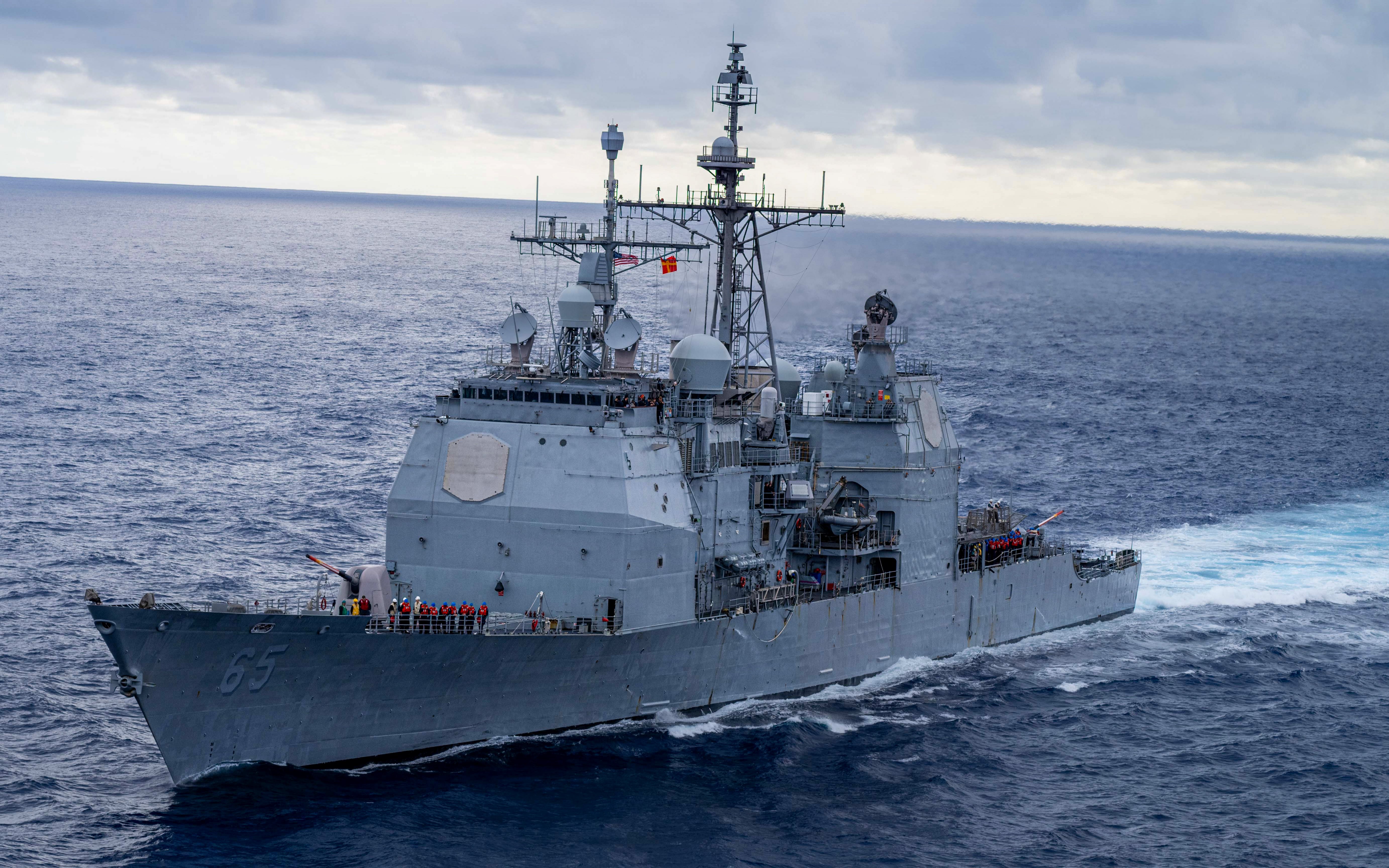
Ticonderoga-class guided-missile cruiser USS Chosin (CG 65), pulls alongside Nimitz-class aircraft carrier USS Theodore Roosevelt (CVN 71), during a replenishment-at-sea Oct. 10, 2026. Theodore Roosevelt, flagship of Carrier Strike Group (CSG) 9, is underway conducting routine operations in the U.S. 7th Fleet area of operations, demonstrating the U.S. Navy's commitment to a free and open Indo-Pacific. (U.S. Navy Photo by Mass Communication Specialist 3rd Class Cesar Nungaray)
Chosin alongside Roosevelt. Navy photo
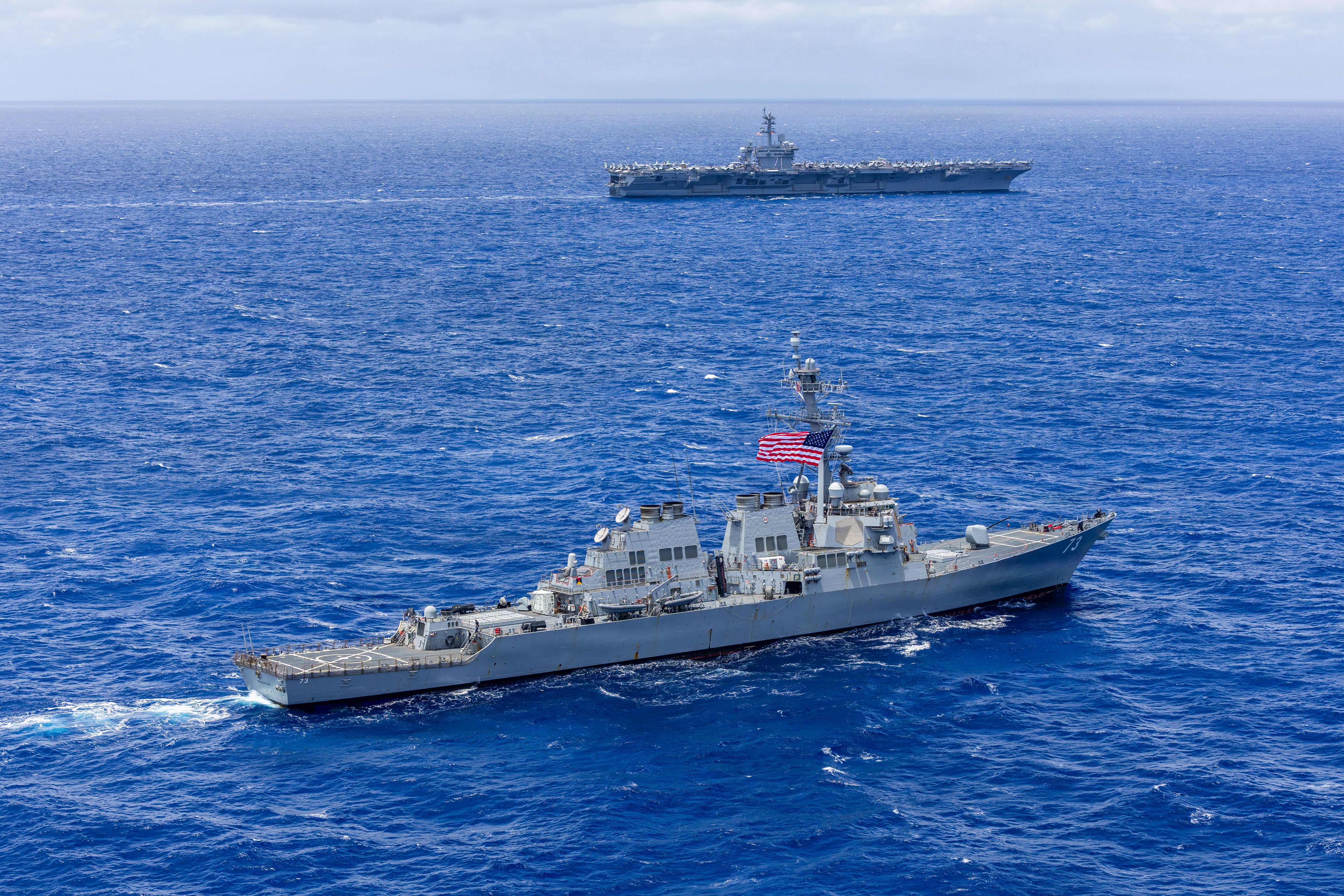
Arleigh Burke-class guided-missile destroyer USS Decatur (DDG 73) sails in formation during Exercise Rim of the Pacific 2026 in the Pacific Ocean off the coast of Hawaii on July 22, 2026. Thirty nations, 30 ships, five submarines, 15 national land forces, more than 190 aircraft and more than 30,000 personnel are participating in RIMPAC in and around the Hawaiian Islands, June 24 to July 31. The world's largest international maritime exercise, RIMPAC provides a unique training opportunity while fostering and sustaining cooperative relationships among participants critical to ensuring the safety of sea lanes and security on the world's oceans. RIMPAC 2026 is the 30th exercise in the series that began in 1971. (U.S. Navy photo by Mass Communication Specialist First Class Ryan A. LeCompte)
Decatur and Roosevelt at RIMPAC. Navy photo
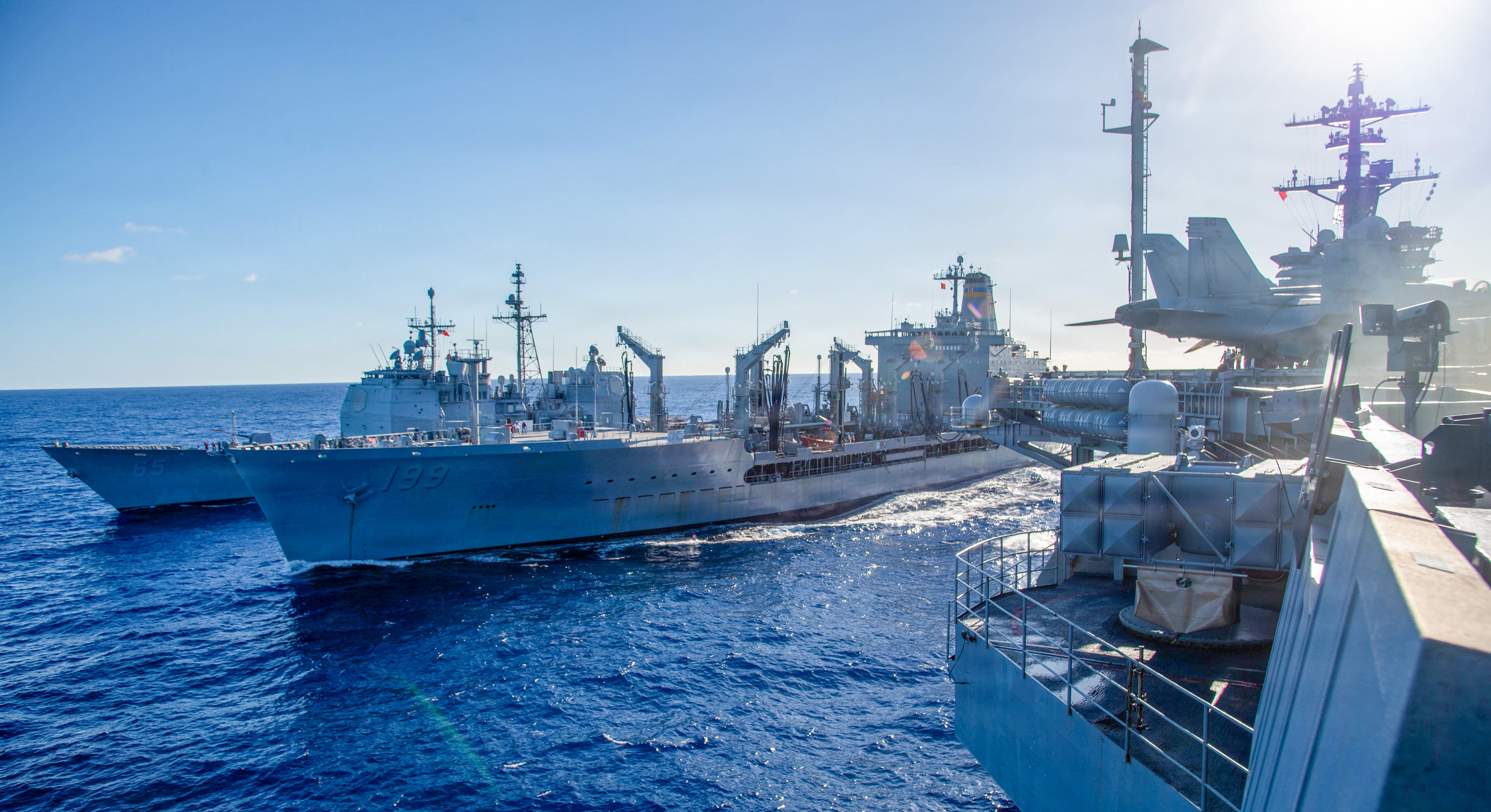
Ticonderoga-class guided-missile cruiser USS Chosin (CG 65), left, pulls alongside Henry J. Kaiser-class fleet replenishment oiler USNS Tippecanoe (T-AO 199), middle, and Nimitz-class aircraft carrier USS Theodore Roosevelt (CVN 71), during a replenishment-at-sea Oct. 6, 2026. Theodore Roosevelt, flagship of Carrier Strike Group (CSG) 9, is underway conducting routine operations in the U.S. 3rd Fleet area of operations, demonstrating the U.S. Navy’s commitment to a free and open Indo-Pacific. (U.S. Navy Photo by Mass Communication Specialist Seaman Gary Buckles)
Tippecanoe conducts a RAS. Navy photo

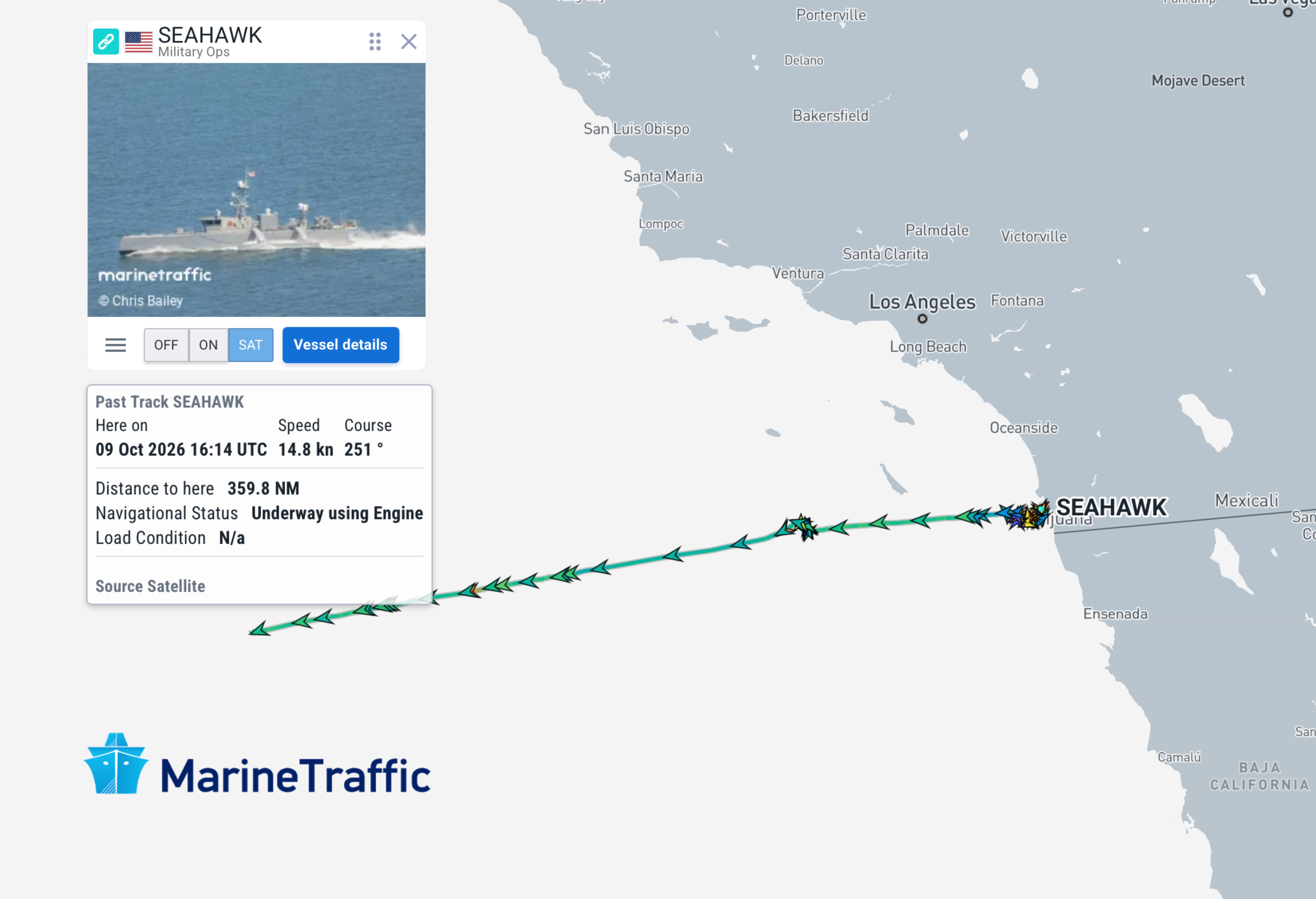
Multiple reports indicated that medium unmanned surface vessel (MUSV) Seahawk (2) deployed with the group, which would represent a significant operational achievement and the first time a drone boat was assigned to a CSG, but the MUSV quietly slipped out of Point Loma on October 8, more than ten days after Roosevelt. Seahawk reappeared on AIS and docked in Hawaii for a couple days before continuing its journey westbound in the Pacific on October 16. If Seahawk is assigned to CSG 9, it is currently disaggregated, and whether it will join Roosevelt to participate in exercise Keen Sword 27 is unknown.

Acting Secretary of the Navy Hung Cao seemingly confirmed the deployment, saying during a panel at the Association of the United States Army (AUSA) convention that “the Teddy Roosevelt carrier strike group just deployed on October 8 with a medium sized unmanned surface vessel. This is the first carrier strike group to ever deploy with a large size unmanned surface vessel.” However, Roosevelt was more than halfway to Japan on the date referenced. “This is a force multiplier, imagine having more guns out there,” he added.
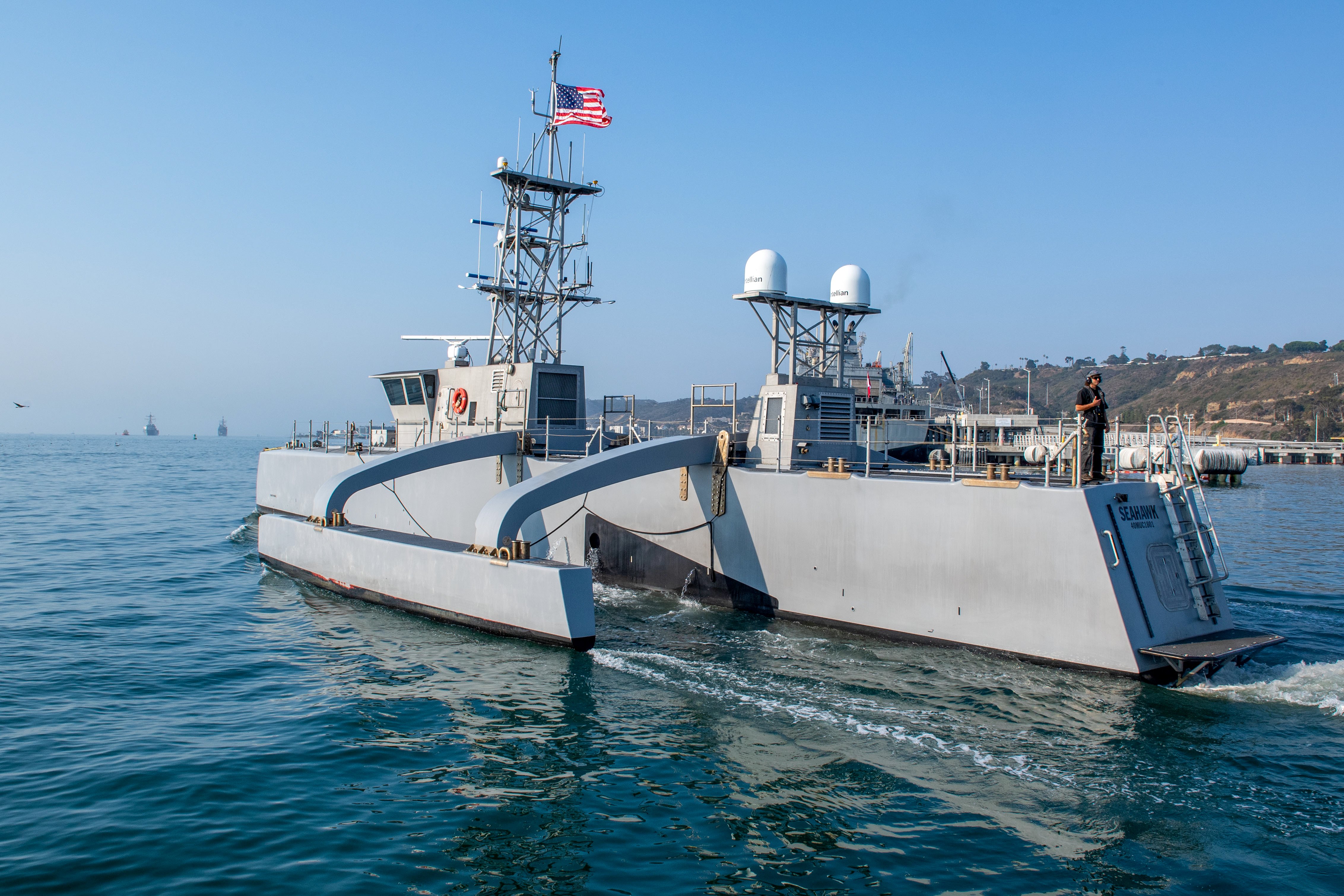
Seahawk, a Medium Unmanned Surface Vessel (MUSV) prototype, departs Naval Base Point Loma, California, Aug. 6. Seahawk is a fully unmanned and autonomous vessel operated by Unmanned Surface Vessel Squadron (USVRON) 1 and Naval Information Warfare Center Pacific in support of technology development, testing and evaluation. The surface force is integrating unmanned vessels into the fleet. (U.S. Navy photo by Mass Communication Specialist 1st Class Robert Zahn)
MUSV Seahawk leaving Point Loma in August. U.S. Navy photo
Graphic created by Ian Ellis-Jones and TWZ showing MUSV Seahawk's transit leaving San Diego on October 8. Reprinted with permission from MarineTraffic and KPLER.
Seahawk’s transit out of San Diego. Source: MarineTraffic/KPLER

TWZ reached out to the Secretary’s office for clarification and to confirm the deployment but did not receive a response. “Seahawk’s operations represent continued progress in the Navy’s efforts to integrate unmanned systems into Fleet operations. As with any emerging capability, we continue to learn, adapt, and refine how these systems are employed,” a Navy official told us.

Abraham Lincoln’s Homecoming

Surrounded by small boats, with hundreds of spectators lining the channel in San Diego Bay and thousands more watching online, the USS Abraham Lincoln arrived home from a historic ten-and-a-half-month combat deployment. The flagship of CSG 3 and her crew of more than 5,000 Sailors and Marines served as the tip of the spear in the war against the Iranian regime, first during Operation Epic Fury and then the subsequent blockades, and set a new record for the most consecutive days at sea without a port call.
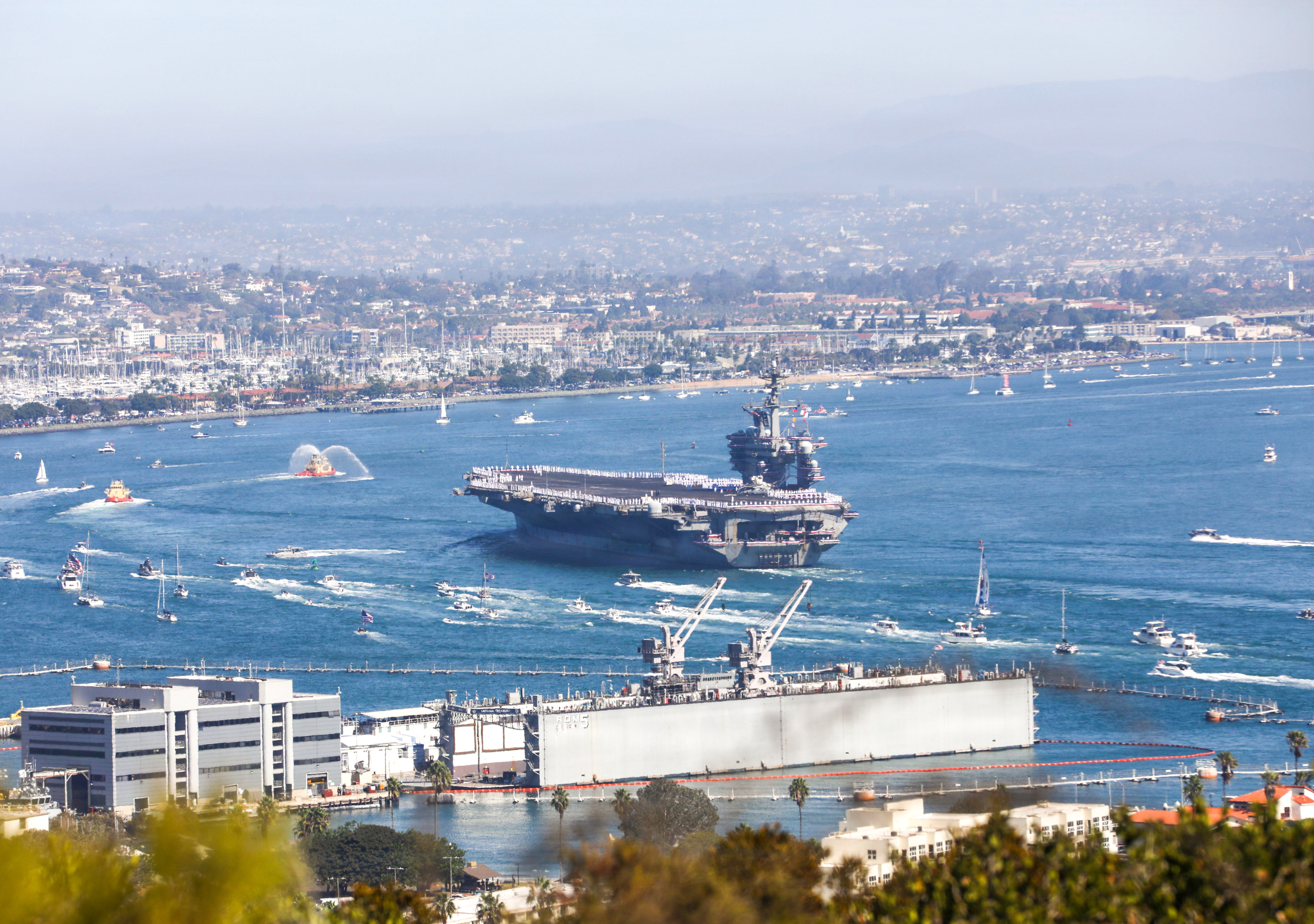
Nimitz-class aircraft carrier USS Abraham Lincoln (CVN 72), the flagship of Carrier Strike Group (CSG) 3, returns to its home port of San Diego, Oct. 10, 2026, following a 10-month deployment to U.S. 5th and 7th Fleet areas of operations. An integral part of the U.S. Pacific Fleet, U.S. 3rd Fleet leads naval forces in the region and provides realistic, relevant training necessary to execute our Navy’s role across the full spectrum of military operations – from combat operations to humanitarian assistance and disaster response. U.S. 3rd Fleet works together with allies and partners to advance freedom of navigation and overflight, the rule of law, and other principles that underpin security for the region. (U.S. Navy photo by Mass Communication Specialist 3rd Class Aaron J. Rolle)
USS Abraham Lincoln pulls into San Diego Bay. U.S. Navy photo

Lincoln pulled into Naval Air Station North Island and moored at Berth Lima on October 8, 321 days after casting off on November 21, 2025. Sailors in dress whites manned the rails as the carrier transited the bay, escorted on both sides by small boats and jet skis flying American flags, while family and friends eagerly waited pierside for their return. The video below, shared by the Pentagon, captures the moment.

Family and friends welcome the crew of the USS Abraham Lincoln home. Pentagon video.

Lincoln now lays claim to the second-longest deployment in the modern carrier era, falling just five days short of the 326-day post-Vietnam record held by the USS Gerald R. Ford. The flattop traveled over 93,000 nautical miles during the cruise − more than four trips around the Earth, a post by the public affairs officer highlighted − and conducted 72 replenishments-at-sea, received 20-plus million gallons of aviation fuel, and flew more than 14,000 sorties that totaled 28,500 flight hours, a press release from the Navy highlighted.

The release confirmed for the first time that Lincoln broke the previous record of 206 days set by USS Dwight D. Eisenhower during the COVID pandemic for days spent underway between port visits, as TWZ first reported. “The ship’s 208 uninterrupted days at sea between Guam and Oman, and its 286 consecutive days at sea between departing San Diego and arriving in Thailand, are record-breaking marks for modern aircraft carriers.”

Lincoln’s cruise took her through both U.S. 7th Fleet and U.S. 5th Fleet AORs. During Operation Epic Fury, which began on February 28 and lasted almost 40 days, Lincoln took up station in the northern Arabian Sea as Commander, Task Force (CTF) 50 and pressured Iran’s southern flank. When major combat operations wound down, the carrier and her air wing patrolled and enforced the blockade line during both rounds that followed.

Carrier Air Wing (CVW) 9, the “Navy’s premier next-generation air wing that served as the primary offensive power” for CSG 3, flew 14,037 sorties − including 4,000 combat missions − and dropped more than 1.37 million pounds of ordnance on thousands of targets while employing 1,499 precision weapons. “This concentrated firepower significantly degraded Iranian Navy capabilities,” a separate statement noted.

“The rapid mobilization and combat execution of CVW-9 during Operation Epic Fury demonstrated the unmatched flexibility of a U.S. Navy carrier strike group,” Capt. J.W. Stigi, commander of CVW-9, said in the statement. “Pairing fifth-generation F-35C stealth and sensor fusion with fourth-generation workhorse strike and electronic attack platforms, Team Shogun destroyed Iran’s conventional Navy and secured vital maritime chokepoints in support of our commander’s objectives.”
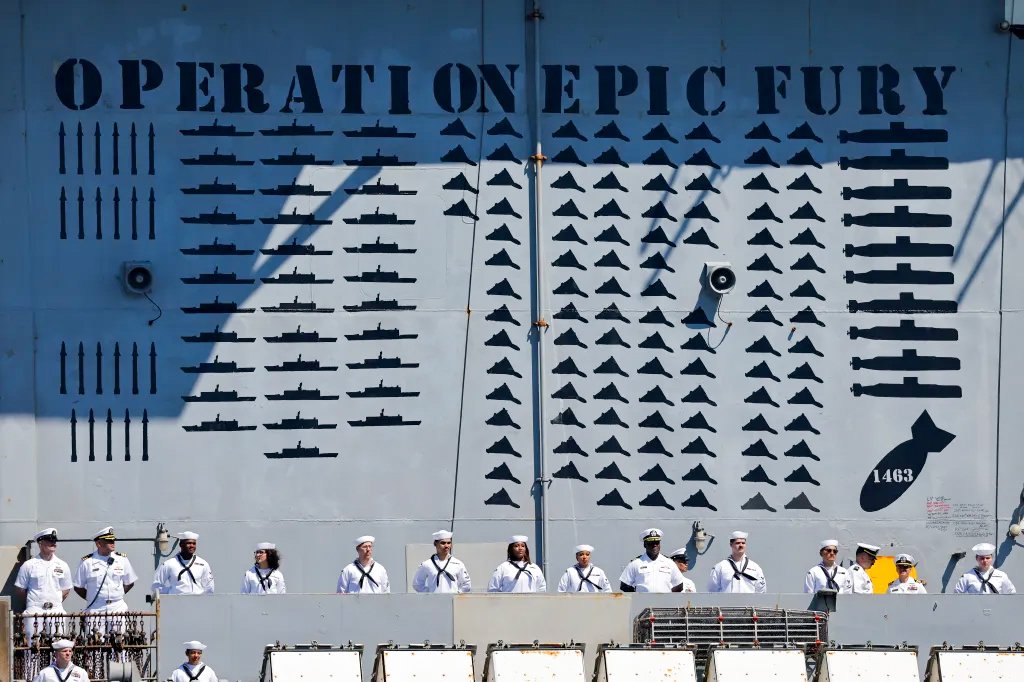
Kill marks painted on the island superstructure show CSG 3 destroyed 106 one-way attack drones fired by the Islamic Revolutionary Guard Corps (IRGC), 34 Iranian Navy and IRGC ships, 23 inbound cruise missiles, and 10 enemy submarines. The strike group dropped 1,463 air-to-ground munitions in total, a Sailor explaining the marks said in a video on social media.

George H.W. Bush Leaves Thailand And Returns To The Middle East

The USS George H.W. Bush and her destroyer escort, USS Delbert D. Black, departed Phuket, Thailand, on October 9 after a five-day liberty visit. “Nearly 5,000 Sailors from across the strike group experienced the sights and sounds Thailand has to offer, deepening their understanding of the Thai people and strengthening interpersonal bonds,” according to a press release.
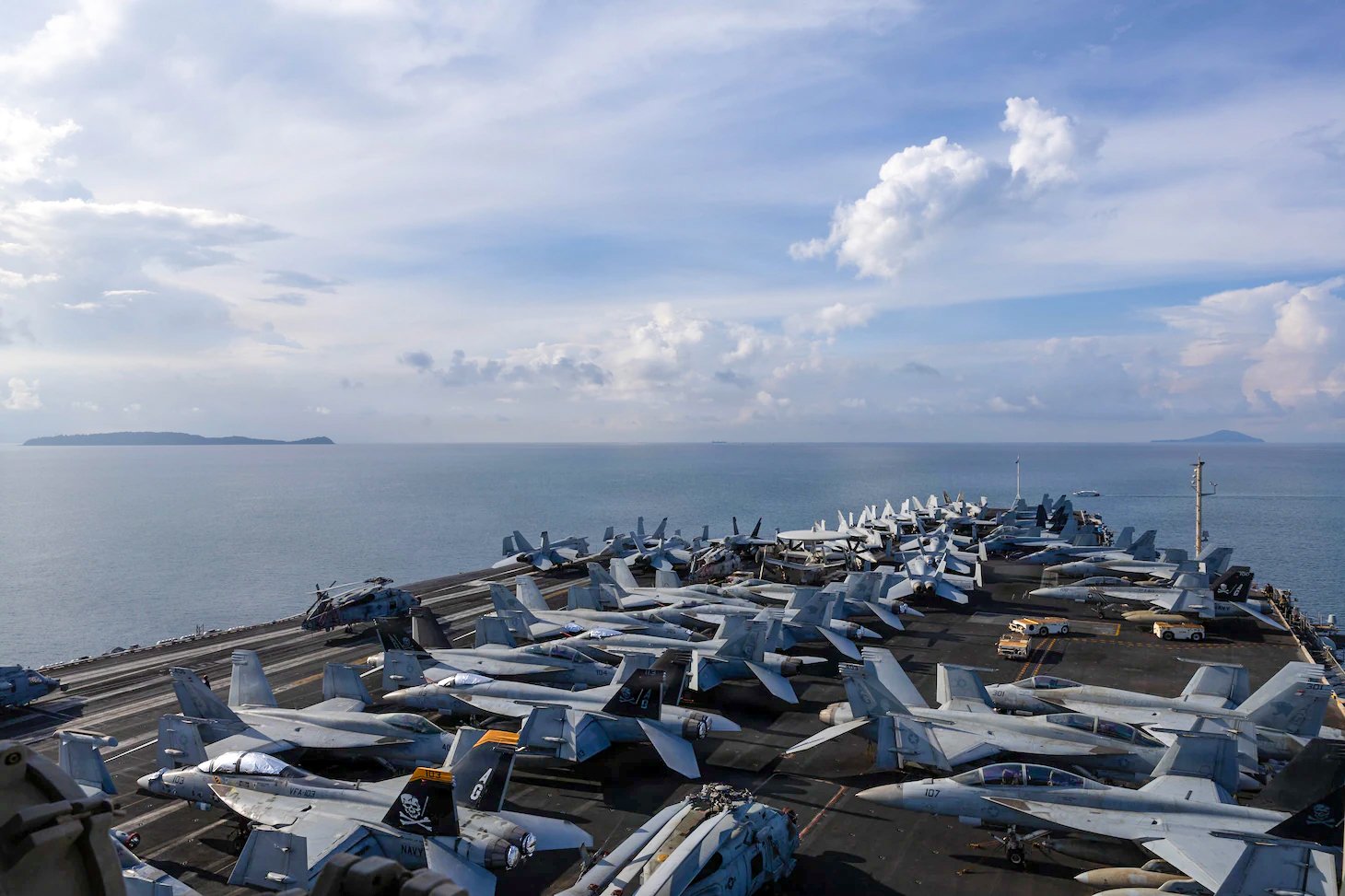
Nimitz-class aircraft carrier George H.W. Bush (CVN 77) departs Phuket, Thailand, Oct. 9, 2026. George H.W. Bush is conducting routine operations in the U.S. 7th Fleet area of operations. U.S. 7th Fleet, the Navy’s largest forward-deployed numbered fleet, routinely interacts and operates with allies and partners in preserving a free and open Indo-Pacific. (U.S. Navy photo)
George H.W. Bush departs Phuket, Thailand, on October 9, 2026. U.S. Navy photo

“The Sailors and I had an amazing time in this beautiful country, and I sincerely thank the people of Thailand for their incredible welcome,” Capt. Justin T. Issler, the commanding officer of George H.W. Bush, said about the stop. “This port visit to Phuket was a tremendous opportunity for the crew. We are grateful to our Thai allies for hosting us, and we look forward to continuing our mission here in 7th Fleet, alongside Thailand and our other regional allies and partners.”
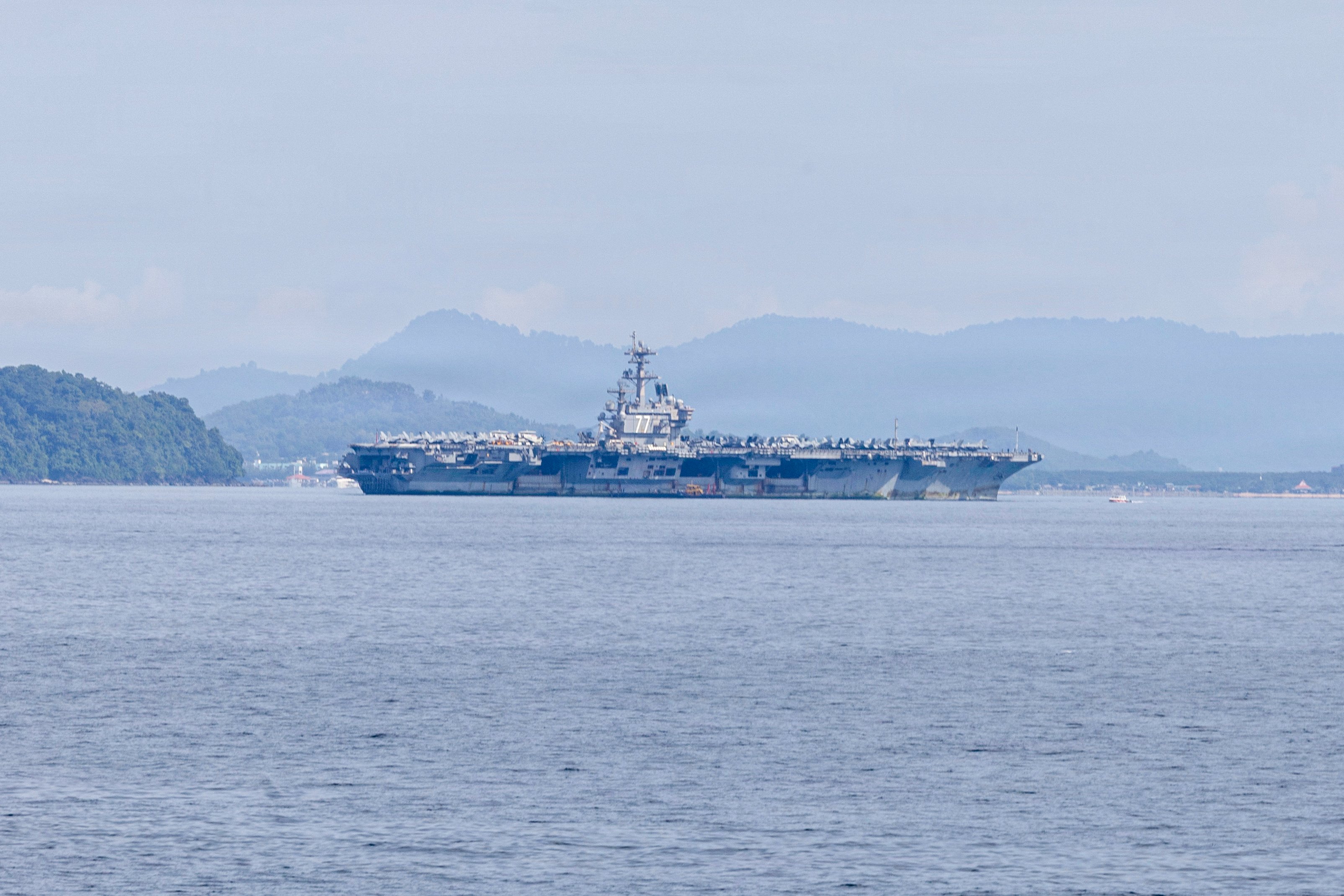
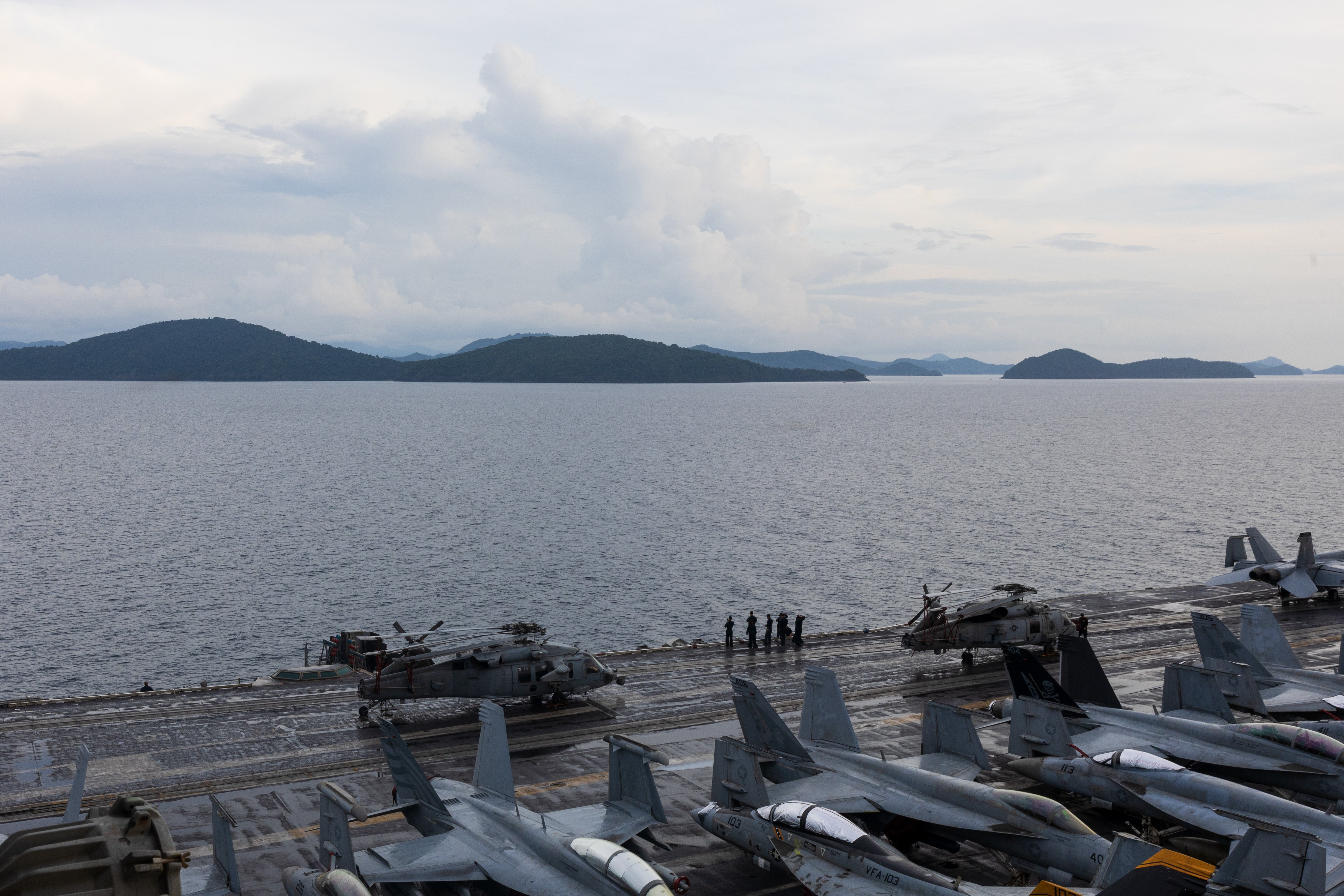
Nimitz-class aircraft carrier USS George H.W. Bush (CVN 77), arrives in Phuket, Thailand, Oct. 4, 2026. George H.W. Bush is conducting routine operations in the U.S. 7th Fleet area of operations. U.S. 7th Fleet, the Navy’s largest forward-deployed numbered fleet, routinely interacts and operates with allies and partners in preserving a free and open Indo-Pacific. (U.S. Navy Photo)
USS George H.W. Bush arrives in Thailand. U.S. Navy photo
Nimitz-class aircraft carrier George H.W. Bush (CVN 77) arrives in Phuket, Thailand, Oct. 4, 2026. George H.W. Bush is conducting routine operations in the U.S. 7th Fleet area of operations. U.S. 7th Fleet, the Navy’s largest forward-deployed numbered fleet, routinely interacts and operates with allies and partners in preserving a free and open Indo-Pacific. (U.S. Navy photo)
USS George H.W. Bush anchors in Phuket. U.S. Navy photo

Bush dropped anchor approximately two nautical miles south of Ao Makham Deep Sea Port on October 4 after 187 consecutive days at sea. After leaving Phuket, the carrier stopped broadcasting AIS while steaming due south at 10 knots. Imagery on DVIDS confirms that the CSG returned to the Middle East and operating in the U.S. 5th Fleet AOR to “support maritime security and stability,” joining the George Washington CSG once again as the second strike group in the region.

Destroyer USS Mason, which deployed as the integrated air and missile defense (IAMD) commander for the CSG but has disaggregated at times, arrived in Singapore on October 5, likely for a port call. The Arleigh Burke class destroyer departed on October 9 and was last tracked heading northwestbound in the Malacca Strait, likely to rejoin the CSG. The other two destroyers assigned to the CSG, USS Ross and USS Donald Cook, remained in 5th Fleet during the visit.

F-35C Lightning II Operates from A Ford Class Carrier For The First Time

Marking a major milestone, an F-35C Lightning II Joint Strike Fighter made the first arrested landing aboard a Gerald R. Ford class carrier, the Navy’s newest and most advanced class of aircraft carriers that are being built to replace the aging Nimitz fleet. The trap was made by Lt. Cmdr. Robert Mason with the “Salty Dogs” of Air Test and Evaluation Squadron (VX) 23 aboard the future USS John F. Kennedy in the Western Atlantic on October 13. The first catapult launch followed the next day, pictures on DVIDS showed.

F-35Cs approach for first landing aboard PCU John F. Kennedy. U.S. Navy video

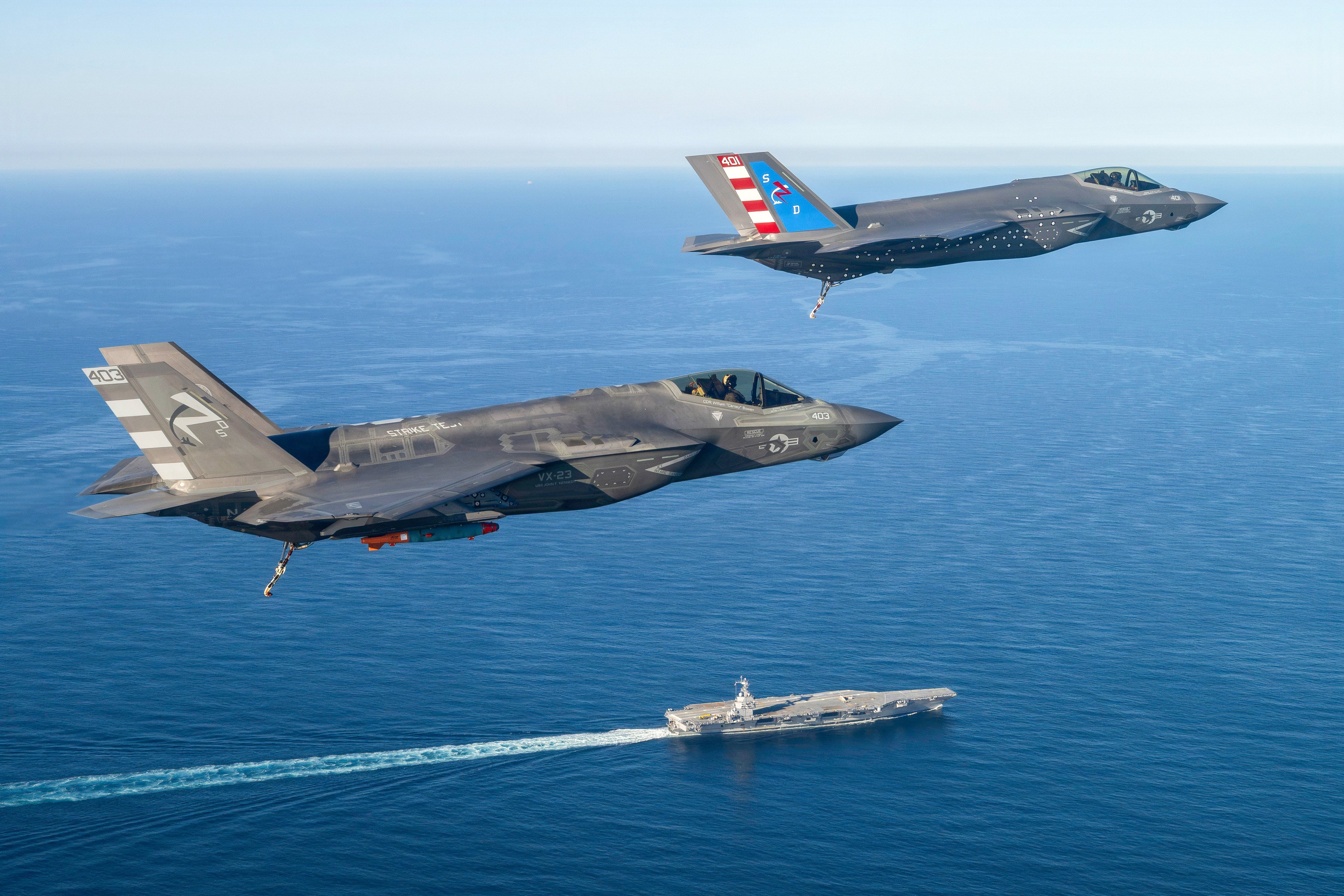
VX-23, based out of Naval Air Station Patuxent River in Maryland, is part of the Naval Air Warfare Center Aircraft Division and was putting Kennedy through the ongoing Aircraft Compatibility Testing to assess the “operational capabilities of the ship’s aircraft launch and recovery equipment.” A team from the Patuxent River-based F-35 Integrated Test Force, detached to the ship, conducted the evaluation using a specially instrumented example of the jet. One of the two pictured was externally equipped with an inert Joint Direct Attack Munition (JDAM) bomb.
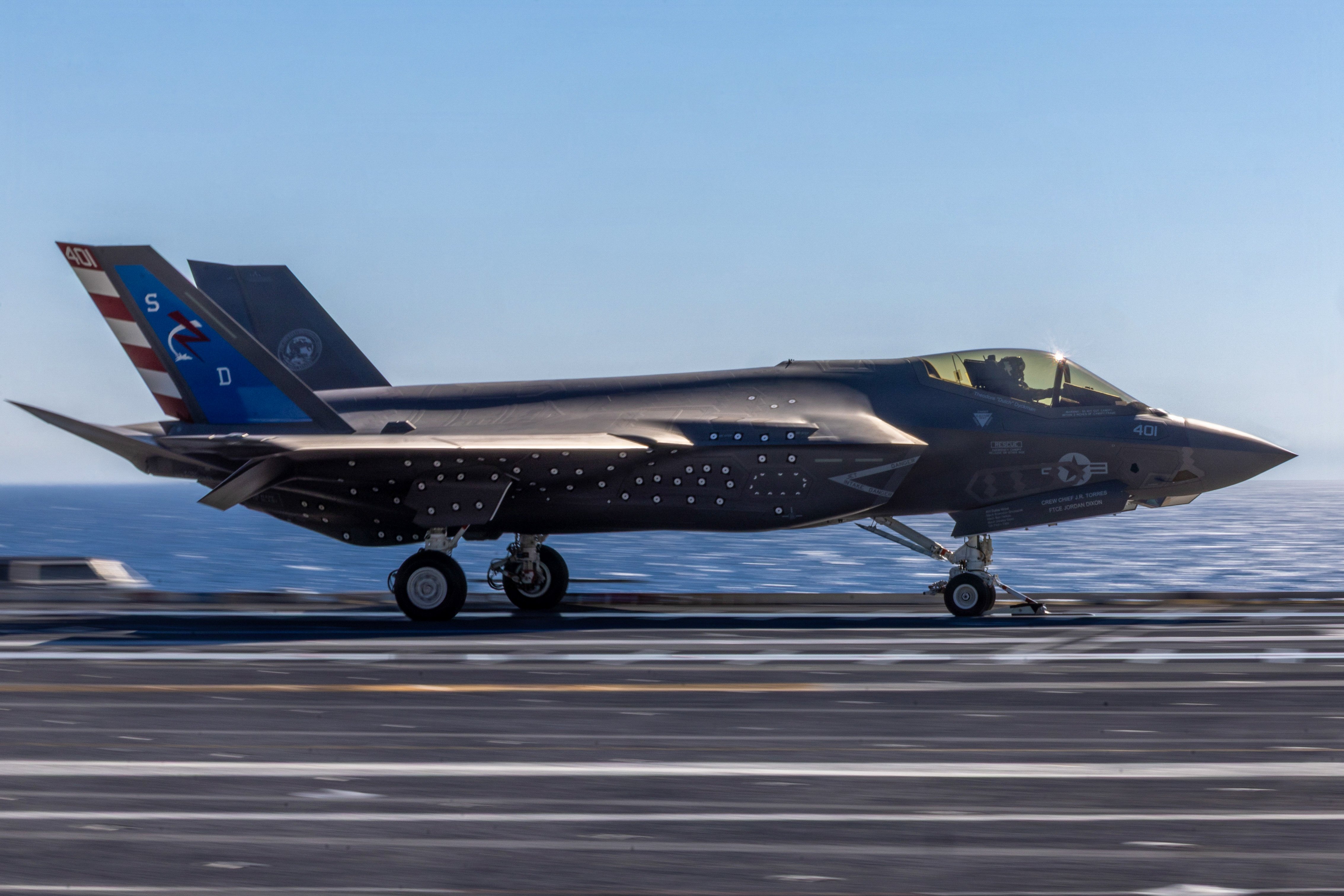
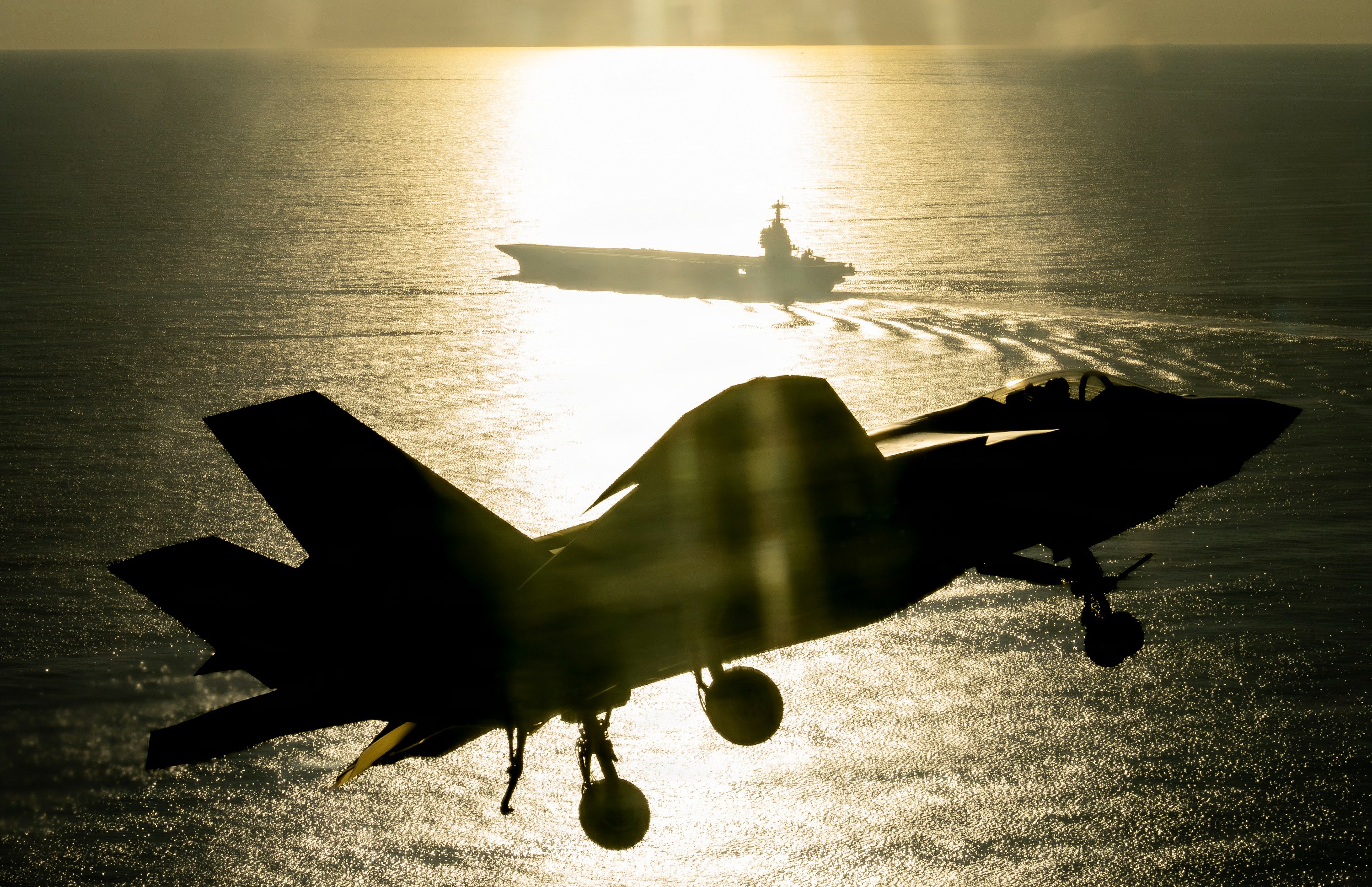
An F-35C Lightning II, attached to the "Salty Dogs" of Air Test and Evaluation Squadron (VX) 23, launches from the flight deck of Pre-Commissioning Unit John F. Kennedy (CVN 79), Oct. 14, 2026, marking the first launch of an F-35C from a Ford-class aircraft carrier. John F. Kennedy is underway conducting Aircraft Compatibility Testing, which assesses the operational capabilities of the ship's aircraft launch and recovery equipment with U.S. Navy aircraft. (U.S. Navy photo by Mass Communication Specialist Seaman Paris McKee)
An F-35 test pilot from Air Test and Evaluation Squadron Two Three (VX-23), Naval Air Warfare Center Aircraft Division (NAWCAD), flies an F-35C Lightning II fighter aircraft to the PCU John F. Kennedy (CVN 79) in the Western Atlantic Oct. 13, 2026. This is the first time an F-35C has landed on a Ford-class aircraft carrier. A Patuxent River F-35 Integrated Test Force (ITF) team detached to the ship is conducting Aircraft Compatibility Testing (ACT) with the specially instrumented carrier variant of the stealth jet. ACT assesses the operational capabilities of the ship's aircraft launch and recovery equipment with U.S. Navy aircraft.
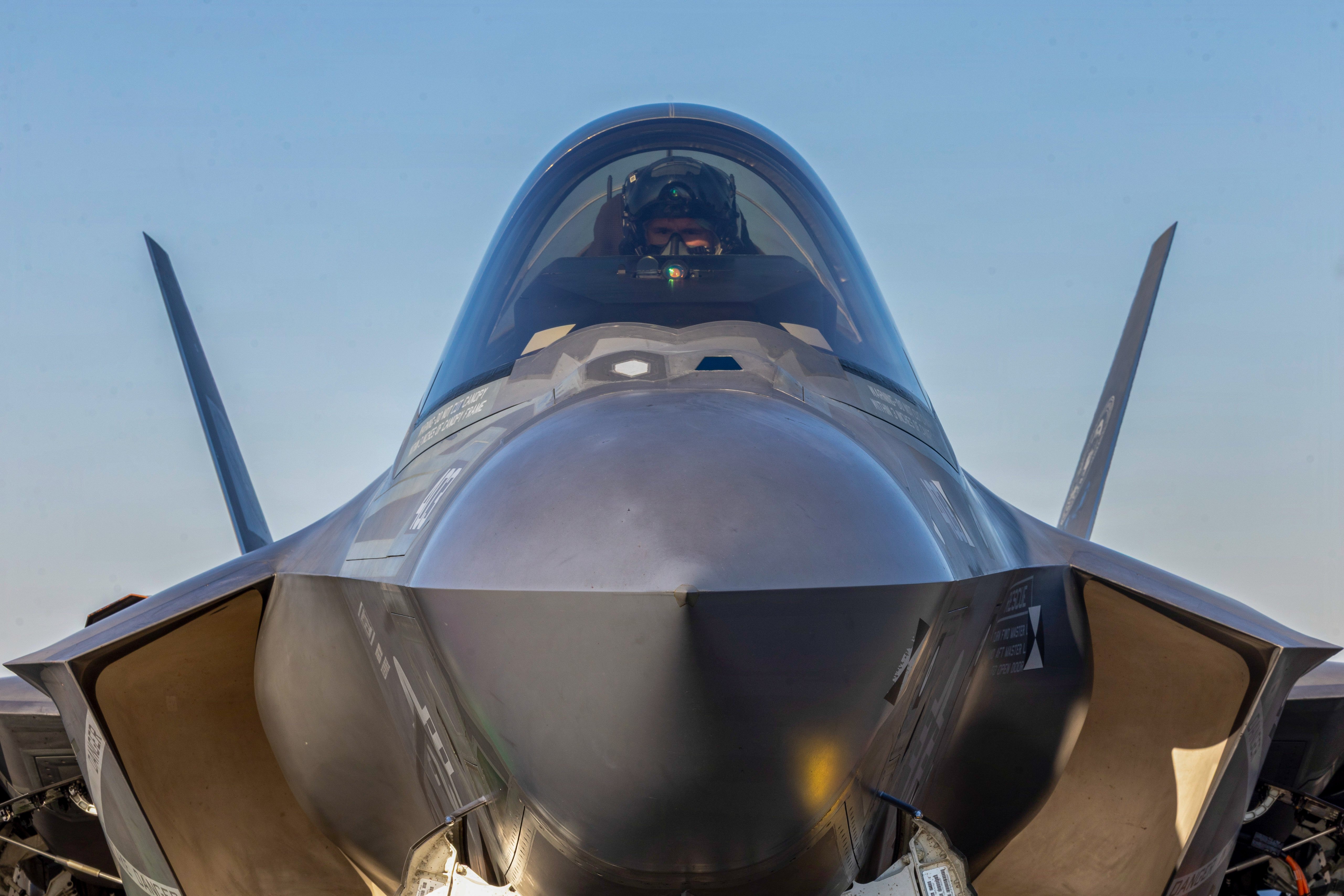
U.S. Navy Cmdr. William Bowen, assigned to the “Salty Dogs” of Air Test and Evaluation Squadron (VX) 23, prepares an F-35C Lightning II for flight operations on the flight deck of Pre-Commissioning Unit John F. Kennedy (CVN 79), Oct. 14, 2026. John F. Kennedy is underway conducting Aircraft Compatibility Testing, which assesses the operational capabilities of the ship's aircraft launch and recovery equipment with U.S. Navy aircraft. (U.S. Navy photo by Mass Communication Specialist 1st Class Nolan Pennington)
Two F-35 test pilots from Air Test and Evaluation Squadron Two Three (VX-23), Naval Air Warfare Center Aircraft Division (NAWCAD), fly F-35C Lightning II fighter aircraft to the PCU John F. Kennedy (CVN 79) in the Western Atlantic Oct. 13, 2026. This is the first time an F-35C has landed on a Ford-class aircraft carrier. A Patuxent River F-35 Integrated Test Force (ITF) team detached to the ship is conducting Aircraft Compatibility Testing (ACT) with the specially instrumented carrier variant of the stealth jet. ACT assesses the operational capabilities of the ship's aircraft launch and recovery equipment with U.S. Navy aircraft.
VX-23 F-35Cs flying over and on the flight deck of PCU John F. Kennedy. U.S. Navy photos

The Navy took preliminary acceptance of Kennedy, which is still considered a Pre-Commissioning Unit, on September 29. This process allows the service to conduct at-sea testing and build underway proficiency while the shipbuilder, Huntington Ingalls Industries, completes final system checks ahead of expected delivery in spring 2027. Kennedy got underway on October 13 and returned to her homeport of Naval Station Norfolk three days later.

The lead ship of the class, the USS Gerald R. Ford, does not currently embark F-35Cs and will need upgrades to field the Navy’s most advanced jet. Back in 2019, TWZ warned that the stealth jet wouldn’t fly from the troubled class for years. Because of this, Congress required that Kennedy be equipped to embark F-35Cs, which led to additional delays for the Navy’s next carrier.

Big Deck Fleet At A Glance

Overall, three U.S. carriers are deployed, three are working up in various states of readiness, three are in maintenance availabilities, one is post-deployment, one is being used primarily for training before deactivation next year, and another will be delivered in 2027. Two amphibious ready groups are deployed, one is forward-deployed, three are working up or in port, and three are in maintenance.

Note: Positions are general approximations. Non-deployed LHA/LHD amphibious warships are not shown.

Contact the author: ian@twz.com or @ianellisjones

The post Where Are The Aircraft Carriers?: October 17, 2026 appeared first on TWZ.
  •  

What The Army’s Pacific Commanders Are Learning From Ukraine And Iran Conflicts

Army leaders preparing for a potential fight in the Pacific told us that some of the biggest lessons they’ve learned from the war in Ukraine and America’s now-paused fight against Iran are to move around assets that you can and find a better way to camouflage those that you can’t. While seemingly common sense, these lessons come from watching how war is now waged. The ubiquity of drones in Ukraine providing constant overwatch and strike capabilities, and U.S. troops killed and equipment destroyed or damaged by massive Iranian barrages on static installations are informing changes to how the Army trains, equips and operates.

These conversations took place during the recently wrapped Association of the U.S. Army (AUSA) annual convention in Washington, D.C., which TWZ attended.

“A lot of the things that are happening right now in terms of long-range fires, integrated air and missile defense, and the lessons that we’re learning from them, we’re able to bring a lot of that to our potential challenges in the Pacific,” Gen. Ron Clark, commander of U.S. Army Pacific (USARPAC), told us at a media roundtable. “Specifically, I am thinking through mobility and camouflage. So it’s one of those age-old Army forgotten sciences of how to hide in plain sight and how to camouflage ourselves from observation, because the ability to be able to see surface entities is almost ubiquitous.”

“Our ability to be able to use electronic warfare, to be able to use just good old-fashioned camouflage, and the ability to deceive our adversary is a must,” Clark added. You can read more about the U.S. military’s camouflage and deception efforts in our story here.

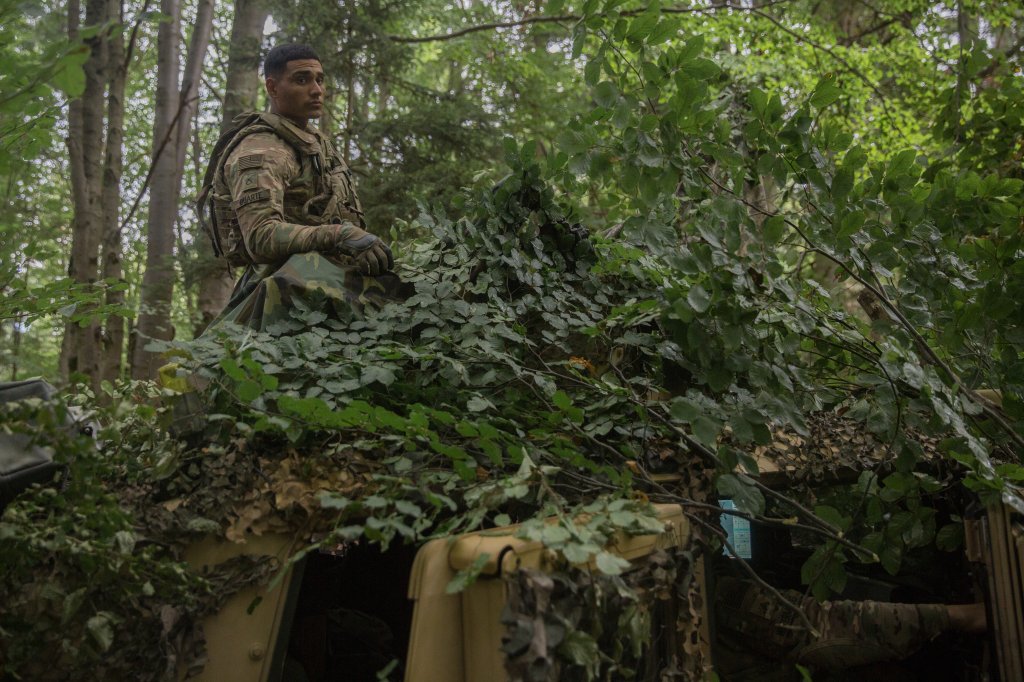
U.S. Army Soldiers of Brigade Engineer Battalion camoflages humve while conducting preperations during exercise Combined Resolve VII at the U.S. Army’s Joint Multinational Readiness Center in Hohenfels Germany, Sept. 5, 2016. Combined Resolve VII is a 7th Army Training Command, U.S. Army Europe-directed exercise, taking place at the Grafenwoehr and Hohenfels Training Areas, Aug. 8 to Sept. 15, 2016. The exercise is designed to train the Army’s regionally allocated forces to the U.S. European Command. Combined Resolve VII includes more than 3,500 participants from 16 NATO and European partner nations. (U.S. Army photo by Pfc. Randy Wren)
U.S. Army soldiers of Brigade Engineer Battalion camouflages a Humvee while conducting preparations during exercise Combined Resolve VII at the U.S. Army’s Joint Multinational Readiness Center in Hohenfels Germany. (U.S. Army photo by Pfc. Randy Wren) Spc. Randy Wren

As we have frequently reported about the Ukraine war, both sides have been using a variety of “old-fashioned” tactics to duck, dodge and hide. They range from practices like smokescreens to hide from drones to updates on measures from the past like paint schemes designed to obfuscate vehicles and other equipment from AI-enabled targeting systems.

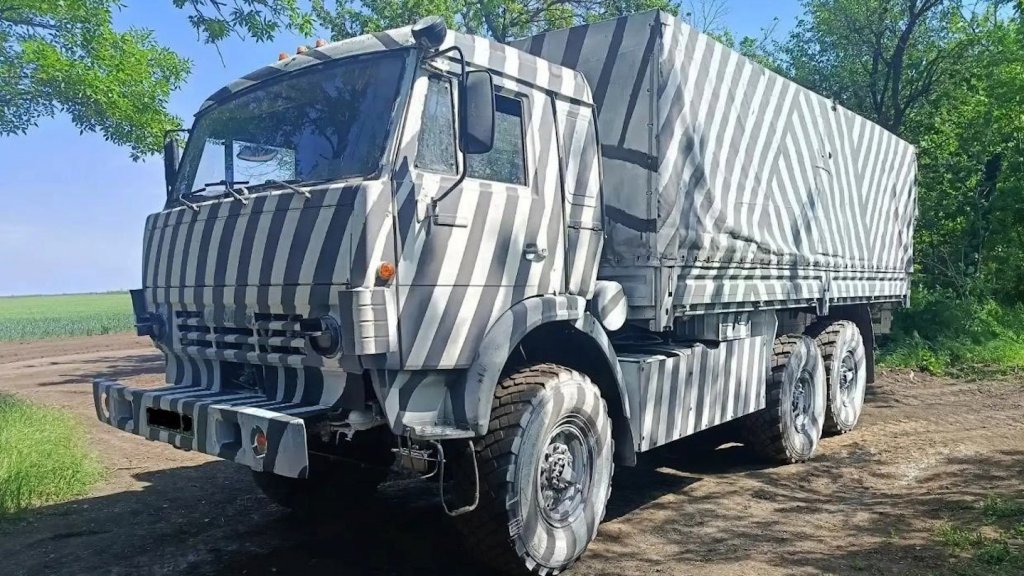
Several images showing the unusually painted Russian trucks have appeared on social media channels in recent days. So far, examples of Ural and KAMAZ heavy-duty truck designs have appeared. There are at least two distinct patterns so far: a zebra-style application of broadly straight lines, and a more organic leaflike, swirling design. In both cases, they extend over most external surfaces, including the wheels and tires. The white paint is simply applied over the base color of dark green.
A Russian heavy-duty truck painted with zebra-style stripes to confuse AI-assisted target seeking equipment. via X

 As tough as things have been for Ukraine and for U.S. forces in the Middle East, the challenges will be even greater in the Pacific, Clark warned.

In Europe and the Middle East, “it’s not a near-peer adversary that we will be working against,” said Clark, referring respectively to Russia and Iran.

“Whereas in our theater, it absolutely is,” the USARPAC commander noted in a reference to China without naming the country. “So our ability to scale that and to think through the problem sets of how do we fight Type One, Type Two UAS? How do we think through ballistic missile defense holistically in the region? We spend a lot of time working with the joint force for solutions associated with that. How do we maneuver inside an archipelagic environment?”

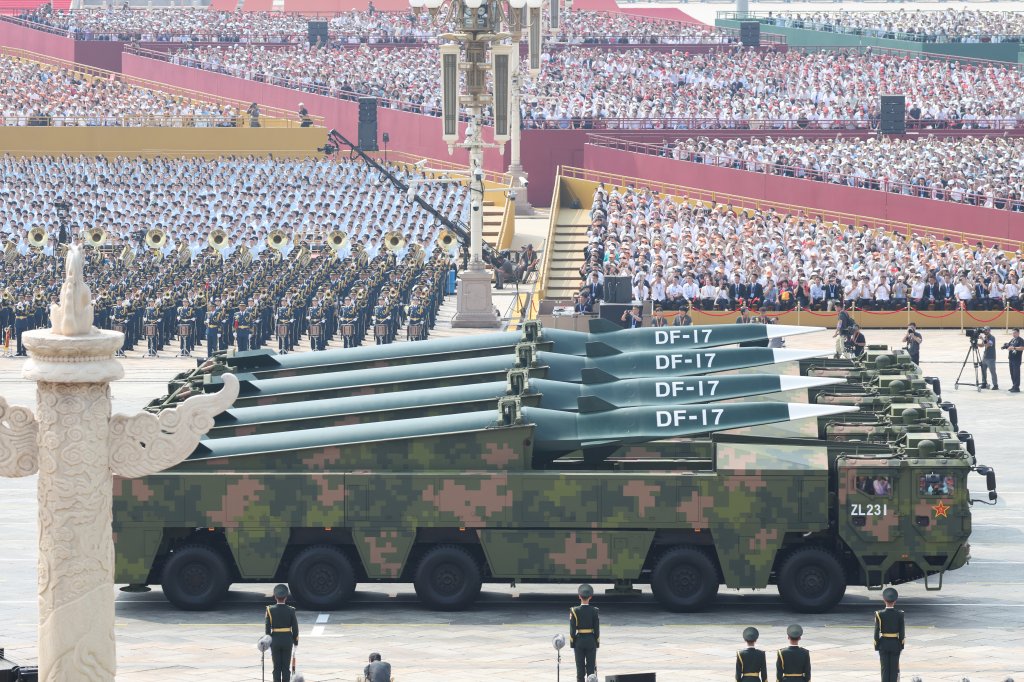
BEIJING, CHINA - SEPTEMBER 03: DF-17 medium-range hypersonic ballistic missiles of the hypersonic missile formation attend V-Day military parade to commemorate the 80th anniversary of the victory in the Chinese People's War of Resistance against Japanese Aggression and the World Anti-Fascist War on September 3, 2025 in Beijing, China. (Photo by Sheng Jiapeng/China News Service/VCG via Getty Images)
DF-17 medium-range hypersonic ballistic missiles on display during the V-Day military parade in Beijing. (Photo by Sheng Jiapeng/China News Service/VCG via Getty Images) China News Service

For the Army, any fight in the Pacific will require soldiers to be able to hop islands and move through vast swaths of ocean, constantly hunted and frequently inside the Chinese weapons engagement zone. Clark said that the Army’s organic fleet of ships like landing craft, small tugs, and modular causeway systems operated by the service’s 8th Theater Sustainment Command will be vital for maneuver.

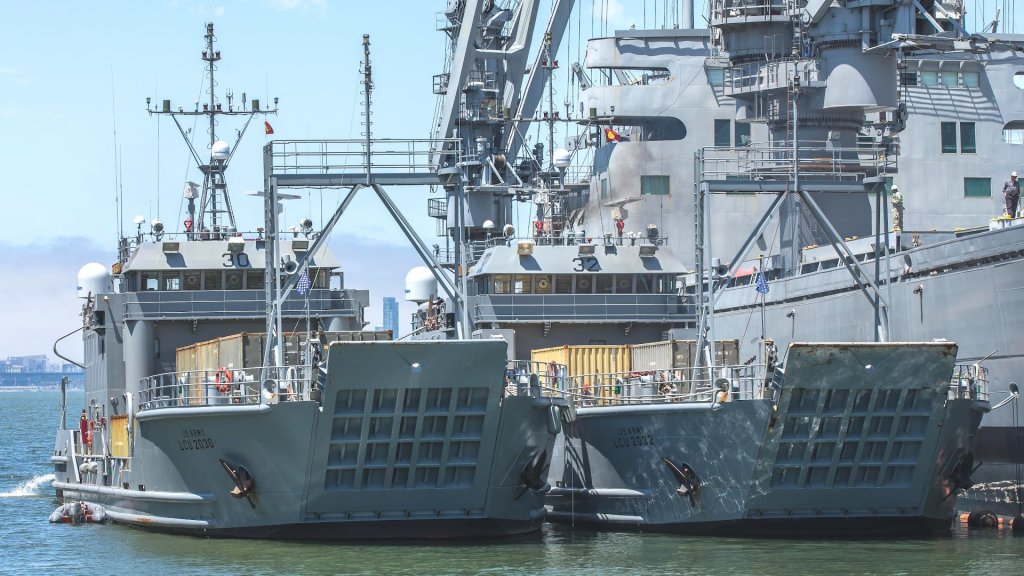
The Army, however, is struggling to keep its aging fleet of 70 of these vessels in the water and it got rid of a number of others over the years. Concerns about this underappreciated force have been something TWZ has raised for years.

Two U.S. Army Landing Craft Utility (LCU) vessels. (U.S. Army) www.twz.com

“But we also have to be able to conduct tactical maneuver with forces on the ground that can provide long-range precision fires, as an example, and then move so that fires, radars, sensors are not easily targeted,” Clark added. “Because if they can see you, they can hit you. And if you know they have an opportunity to return fire, they will. So our lessons that we’re learning are, in some cases, are very, very relevant. In some cases, we can learn from some of the changing characteristics of war.”

Still, the wide-open plains and dense cities of Ukraine are quite different from the beaches and jungles of the Pacific, Clark reminded us.

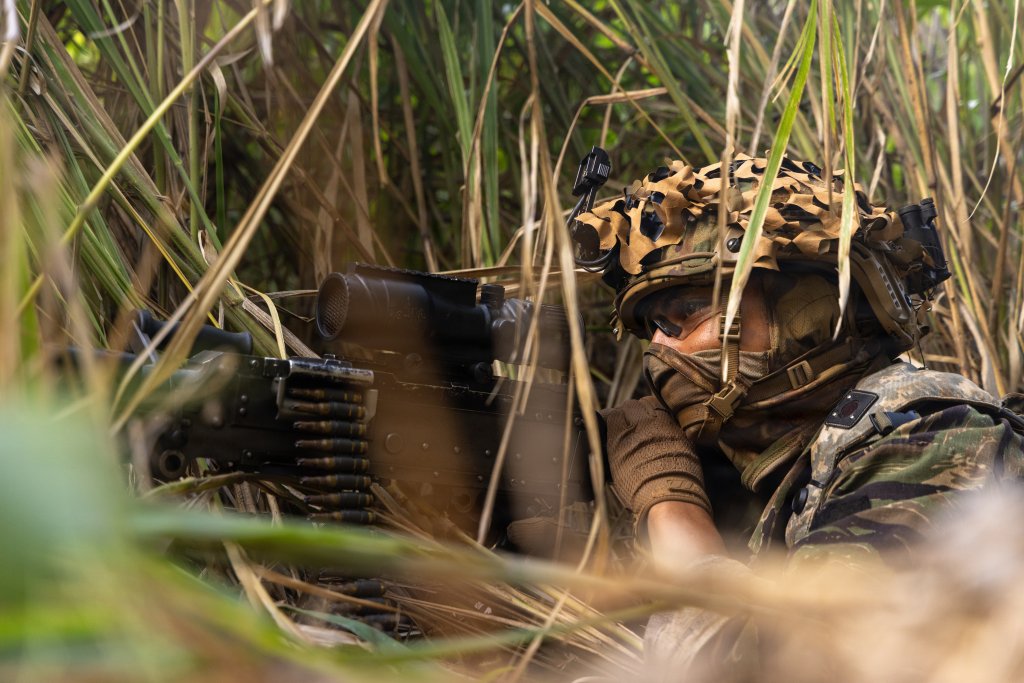
U.S. Army Soldier assigned to the 1st Battalion, 27th Infantry Regiment, 2nd Mobile Brigade, 25th Infantry Division, observes a linear danger area during the Joint Pacific Multinational Readiness Center Rotation (JPMRC) 26-01 at Schofield Barracks, Hawaii, Nov. 6, 2025. The United States Army Pacific (USARPAC) conducted Joint Pacific Multinational Readiness Center (JPMRC) Rotation 26-01 from Nov. 3 - 17, 2025, in and around the Hawaiian island chain. This exercise is designed to validate the combat readiness of the 3rd Mobile Brigade (3MBDE), 25th Infantry Division Artillery (DIVARTY), and the 125th Division Signal Battalion in a joint, multinational, multi-domain training environment. JPMRC 26-01 integrated U.S. forces, multinational partners, and joint capabilities to train tactics, techniques, and procedures required to dominate jungle and archipelagic terrain during large-scale combat operations. The exercise underscores the U.S. Army’s commitment to ensuring regional security and strengthening partnerships in the Indo-Pacific area of responsibility. (U.S. Army photo by Sgt. Duke Edwards)
A U.S. Army soldier assigned to the 1st Battalion, 27th Infantry Regiment, 2nd Mobile Brigade, 25th Infantry Division, observes a linear danger area during the Joint Pacific Multinational Readiness Center Rotation (JPMRC) 26-01 at Schofield Barracks, Hawaii, Nov. 6, 2025. (U.S. Army photo by Sgt. Duke Edwards) Sgt. Duke Edwards

“The way we generally fight does not equate specifically in the Ukraine piece to the maneuver that you would see out of U.S. forces if deployed in a conflict like that,” the USARPAC commander explained. “To be able to use operational maneuver and tactical maneuver in a way that it’s not just simply drone on drone or firing long range fires at one another at scale for an extended period of time. We find our way to work through that problem set and maneuver to positions of advantage and to prevail.”

💥Ukraine’s 115th Mechanized Brigade has released new footage showing a VB-140 Flamingo interceptor drone attacking a Russian Mi-28 attack helicopter in flight.

The drone approaches from above and flies directly into the helicopter’s spinning main rotor. It’s unclear whether… pic.twitter.com/GCb9FodXG3

— Special Kherson Cat 🐈🇺🇦 (@bayraktar_1love) October 16, 2026

Regardless of the terrain, the ubiquity of drones in the Ukraine war has made maneuver and resupply deadly endeavors, with much of the front lines bogged down with limited territorial advances by either combatant.

When we pushed further on that point, Gen. Xavier T. Brunson, commander of United Nations Command, Combined Forces Command and United States Forces Korea, weighed in.

“To be able to move with sensors everywhere at all times causes us to achieve positions of advantage from distributed locations,” Brunson pointed out. “So the fight is: you look at maneuver. You might maneuver to a position of advantage, knowing that you’re going to change that again. The ability to utilize not only joint sensors but joint effectors, if you will, joint fires, to be able to use those things from different positions changes the shape of the operating environment.”

The bottom line, he added, is that “maneuver is always going to be maneuver. You’re going from A to B, but you might go from A to A1 to A2 to A3 to get to B, and that’s what I think we realize in this distributed fight that’s going on in Ukraine, and so we continue to watch to see what lessons might be coming back into” effect.

In part reacting to lessons learned from Ukraine and the Middle East, the Army is also changing how it trains, Clark stated. In South Korea, he said the service has to get out of the habit of concentrating so heavily on just two annual major training exercises.

“We recognize… that largely the two big exercises every year in Korea focus on large command posts,” Clark proffered. “We’ve got to move away from that. So what we intend to do is take advantage of the knowledge that we have of the threats that exist or that prevail in the Ukraine fight.”

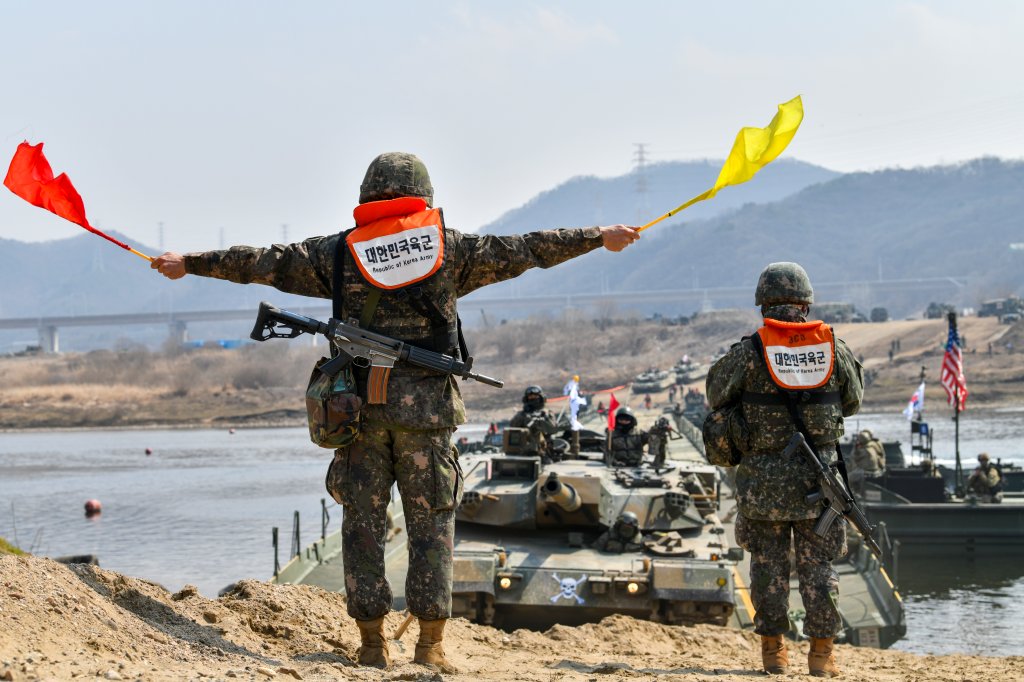
Republic of Korea Army 5th Engineer Brigade, K1A2 tank crosses a U.S. Army Improved Ribbon Bridge (IRB) during joint wet gap training as part of Freedom Shield 25 at Yeoncheon-gun, Republic of Korea, Mar. 20, 2025. Freedom Shield 25 is an annual combined military training exercise integrating ground, air, naval, space, and cyberspace elements to showcase capability, lethality, and enhance readiness through realistic combat scenarios. (U.S. Army photo by Sgt. Daniela Lechuga Liggio)
A Republic of Korea Army 5th Engineer Brigade, K1A2 tank crosses a U.S. Army Improved Ribbon Bridge (IRB) during joint wet gap training as part of Freedom Shield 25 at Yeoncheon-gun, Republic of Korea, Mar. 20, 2025. (U.S. Army photo by Sgt. Daniela Lechuga Liggio) Sgt. Daniela Lechuga

Clark said these discussions are underway with his deputy commander, Republic of Korea Army Gen. Sungmin Kim.

“We talk about how we would operate in a distributed fashion. You know as well as I do, there’s a location that we go to to train every year in Korea, and we stay in that place,” Clark said in response to a question from another reporter. “What would it look like if we train from Jeju all the way up to Gyeonggi Province in the north? What would that look like, just with our headquarters alone?”

“So just imagine,” Clark postulated, “if we train across the entirety of the peninsula, and got ourselves in the shape where we would say [to North Korea], ‘You can’t utilize the things that you’ve learned in the fight and the battlefield in Ukraine on us, because we learned the same lessons and we’ve distributed ourselves in such a way that we don’t make ourselves the target. We won’t be moored in place,’ and that’s what I’m talking about when I talk about positional advantage. It might not be the same place to the continuum. It might not be the same place when you’re in crisis or conflict or competition. We might have to change that, and that’s what we’re learning.”

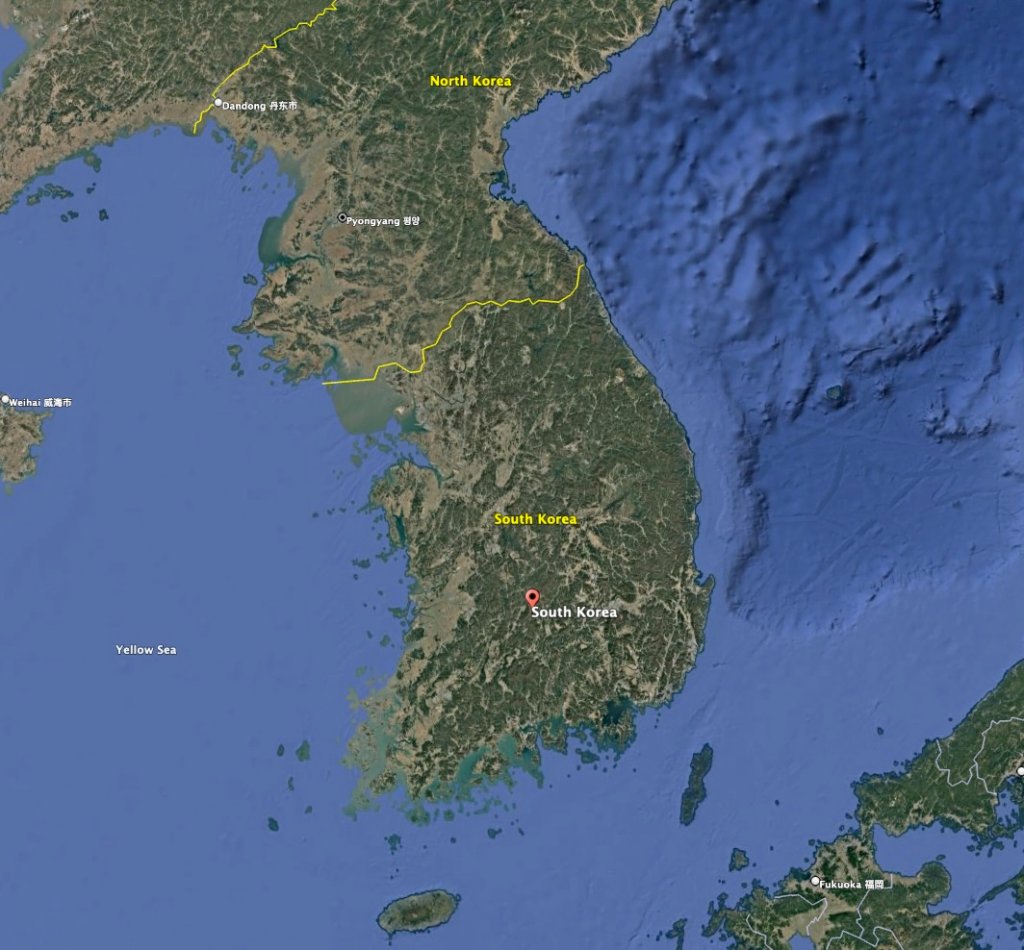
South Korea. (Google Earth)

Another lesson from Ukraine that Army leaders should be paying attention to, said another panelist, is how both sides are using aerial and ground drones to supply frontline forces and evacuate the wounded because human efforts have now become too deadly, thanks to drones.

“I think you also can’t talk about Ukraine without talking about autonomy,” said Tara Murphy Dougherty, CEO of a company called Air, which provides AI-based sustainment solutions to the Army.

“One of the advantages that you get from using simulation and automation, and really using models and compute in order to create convoy plans, as opposed to humans with Excel spreadsheets, is you are able to do many fewer actual convoys because you’re using all of your capabilities so much more effectively and efficiently,” Dougherty posited. “And while it’s an indirect example, I think it does tie to soldier protection because you’re putting fewer soldiers out there in vulnerable settings. I see that not as an end-goal outcome; we need convoys.”

Ultimately, however, the Army will have to advance what Ukraine and Russia are doing with the deployment of aerial drones and uncrewed ground vehicles for logistics by creating “convoys” of autonomous vehicles.

“I see the end goal outcome as having as many autonomous convoys as possible, and we’ve heard today already at this event some of those ideas,” the CEO added. “In the interim, until we get to more autonomy in medevac and more autonomy in convoys when it’s non-soldier material that’s going out to the battlefield, let’s try and put fewer out there while actually getting more material and capability into the force where it needs to be.”

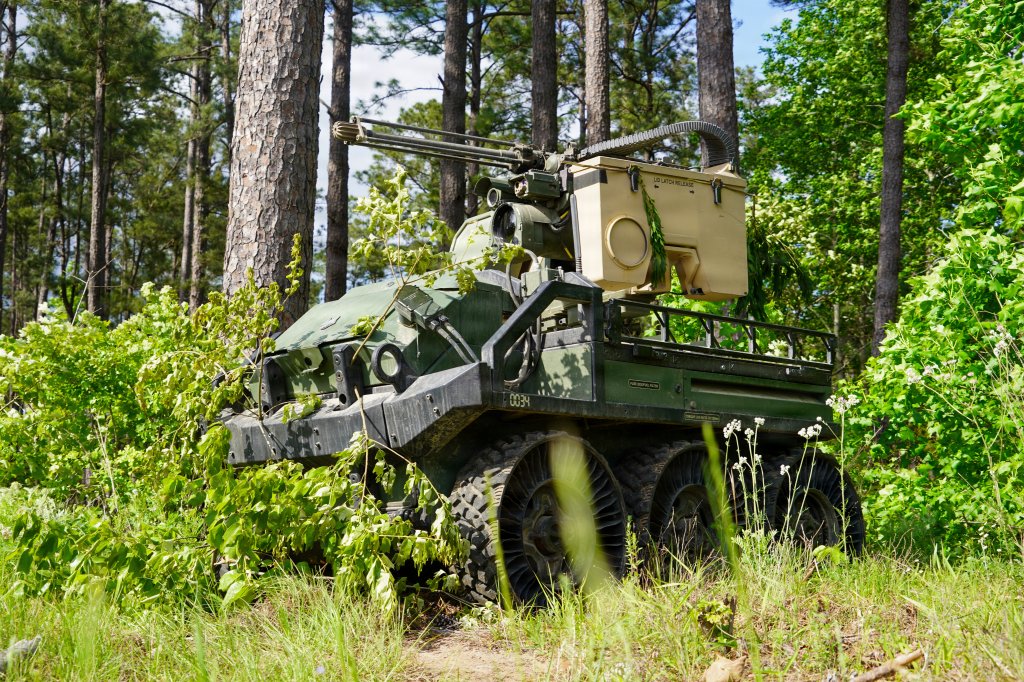
A Hunter Wolf unmanned ground vehicle assigned to Charlie Battery, 3rd Battalion, 320th Field Artillery Regiment, 3rd Mobile Brigade, 101st Airborne Division (Air Assault), holds a steady overwatch position with a mounted remote operated .50-caliber machine gun during a combat simulation exercise at the Joint Readiness Training Center, Fort Polk, Louisiana, April 13, 2026.. The Hunter Wolf platform has been selected by the U.S. Army for the Small Multipurpose Equipment Transport (S-MET) program. (U.S. Army photo by Master Sgt. Anthony Hewitt)
A Hunter Wolf unmanned ground vehicle assigned to Charlie Battery, 3rd Battalion, 320th Field Artillery Regiment, 3rd Mobile Brigade, 101st Airborne Division (Air Assault). (U.S. Army photo by Master Sgt. Anthony Hewitt) Master Sgt. Anthony Hewitt

The Iranian missile and drone barrages on fixed U.S. bases across the Middle East have created some very costly lessons for American forces. As we noted earlier in this story, several troops were killed and critical air defense radars, aircraft and other important equipment were destroyed or damaged. U.S. installations across the region have also suffered damage.

In another media session, we pressed Army officials operating in South Korea about what they learned from watching the destruction caused by Iran and what they are doing to address it.

You can see a satellite image of damage to a U.S. radar site in Jordan below:

NEW: The radar for a THAAD system was struck and apparently destroyed in Jordan while two other THAAD radar systems may have been hit in the UAE, satellite images show – w/ @ThomasBordeaux7 https://t.co/qiuWVQgyda

— Gianluca Mezzofiore (@GianlucaMezzo) March 5, 2026

“We certainly are watching what’s happening, and we are learning from what is happening in Operation Epic Fury,” Lt. Gen. Joseph “Joe” Hilbert, commanding general of Eighth Army, stationed in South Korea, told us. “We’re learning what’s happening in Ukraine, and we are working through changes in our own tactics and techniques and procedures to be able to react to those threats and to be able to defend against them.”

For more details, he turned the microphone over to Col. Rosanna “Ro” M. Clemente, commander of the 35th Air Defense Artillery Brigade in South Korea.

“Drawing from those lessons learned, a lot of it is trying to understand how our systems are being hunted by the adversary,” she told us. “So, strictly into all of our training plans, and as we conduct our own internal exercises, all of our air defenders are practicing something as simple as mobility and survivability jumps, which is being able to reposition and displace your systems to different alternative locations based on any type of threat warnings that we receive. They’re very, very well trained. I think all of our soldiers know how to move their systems extremely, extremely well. They move them quickly, and they are able to move them and reposition them into different locations across the peninsula that still maintains that ballistic missile defense coverage.”

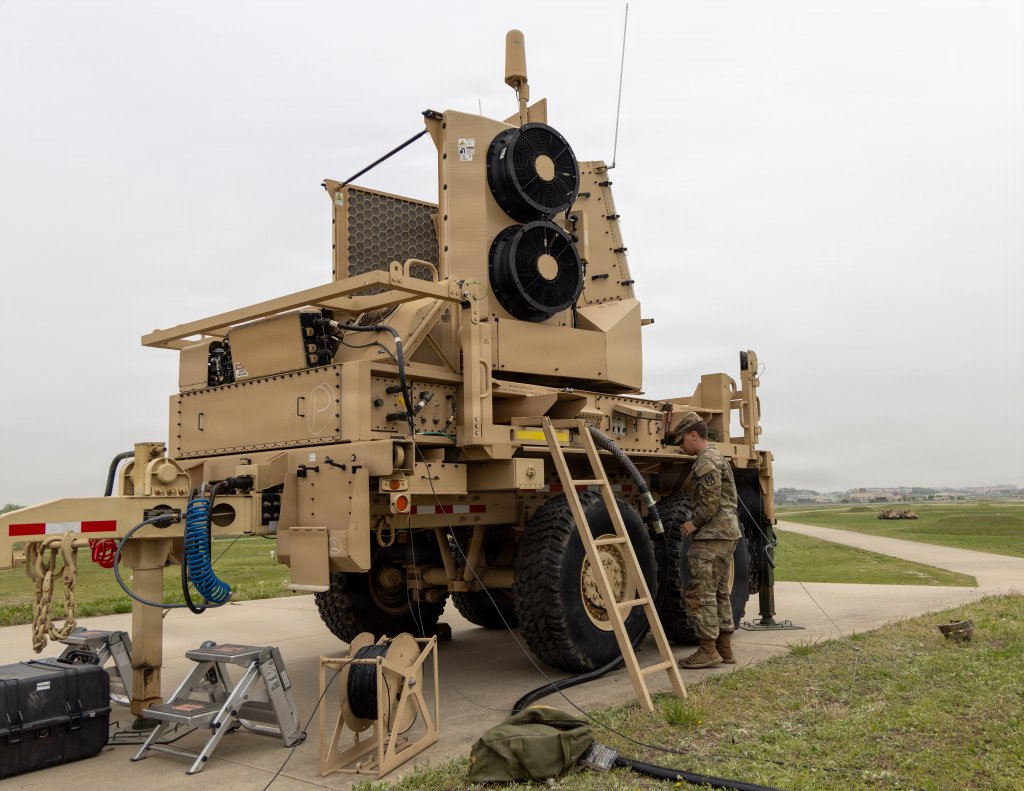
U.S. Army Pvt. Nathaniel Mullins, assigned to the 35th Air Defense Artillery Brigade, analyzes a Sentinel A4 air and missile defense radar during a training exercise at Camp Humphreys, South Korea, April 22, 2026. The training highlighted Eighth Army’s continued modernization efforts by preparing Soldiers to operate the new radar system. (U.S. Army photo by Cpl. Luciano Alcala)
U.S. Army Pvt. Nathaniel Mullins, assigned to the 35th Air Defense Artillery Brigade, analyzes a Sentinel A4 air and missile defense radar during a training exercise at Camp Humphreys, South Korea, April 22, 2026. The training highlighted Eighth Army’s continued modernization efforts by preparing soldiers to operate the new radar system. (U.S. Army photo by Cpl. Luciano Alcala) Sgt. Luciano Alcala

In addition, “we also have to rely on the other pillars of integrated air and missile defense, most specifically the passive defensive measures that we also have in place,” she added.

Those measures involve “a little bit more than just hardening – but a couple of other techniques that we’ve learned from the Russia-Ukraine war in terms of deception, how to move things around, create distractions, and make sure that we create different types of dilemmas for the adversary in terms of where our capabilities are and where are they positioned to protect its defended assets.”

Contact the author: howard@twz.com

The post What The Army’s Pacific Commanders Are Learning From Ukraine And Iran Conflicts appeared first on TWZ.

  •  

It’s been 70 years: Why does the U.S. still control South Korea’s military?

By K. J. NOH, POPULAR RESISTANCE

Join us on Telegram, X, and VK.

Contact us: info@strategic-culture.su

Over seventy years ago, the US took control of South Korea’s military. To this day, it still controls it.

Why?

This confounds every notion of state sovereignty: a supposedly sovereign country — South Korea — has its own military subjugated under US control.

Opcon (operational control) of one nation’s army by another country is usually temporary, usually during wartime among allies.

In Korea, it has lasted over 76 years.

South Korea has asked for opcon back, repeatedly. It has been three decades since South Korea first made the demand.

The US has always delayed, filibustered, waffled, and moved goal posts.

More recently, the US has signaled more delay on the return of opcon, despite current president Lee Jae Myung’s demand that it be transferred back before the end of his term in 2030.

The allies are currently assessing the “full operational capability” (FOC) after validating the “initial operational capability” (IOC).

Seoul aims to wrap up the FOC certification and announce a target year for the Opcon transition at the upcoming SCM, before moving on to the remaining assessment of the “full mission capability,” which it expects to take about a year or so….[However] Washington remains firm in its position that Seoul is not ready for FOC certification, weighing on Seoul’s push to accelerate the Opcon transition.

This follows on US Forces Korea Commander Xavier Brunson’s repeated declarations of his opposition to Opcon transfer: only conditions matter, not timelines. According to Brunson, there can be no timeline to return control of South Korea’s troops to South Korea. Seventy six years is not enough.

South Korea had originally insisted on deadlines for the return of opcon. The US delayed, and delayed, and denied. It finally agreed–but only if certain conditions were met. These were agreed to in 2014, and reaffirmed them in 2017. Yet another decade has passed since those agreements.

Conditions for the return of opcon:

Cutting through the fog, there are essentially three conditions that the US has predicated as preconditions for South Korea to regain control over its own troops:

1. Can South Korea defend itself? (Can it operate its own military effectively? Does it have capacity, materiel, systems, and institutions?)

2. Are US and South Korea forces interoperable? (Can they coordinate in war?)

3. Are the conditions stable enough for opcon transfer?

The answer to the first is, of course. South Korea has one of the most powerful and well-equipped militaries in the world.

The second is, of course, the US and South Korea have been rehearsing interoperability for over seventy years.

The third is key: it is a catch-22 designed to undermine the entire process.

Conditions-based Opcon Transfer (COPT) sets specific benchmarks and tests for opcon transfer. These are the goalposts that are being constantly shifted.

However, the third condition is critical. It requires the de-escalation of tensions between North and South:

“Conducive Security Environment: The security environment on the Korean Peninsula and in the broader region must be stable and conducive to a safe, uninterrupted transfer.”

This is the catch-22:

If there is de-escalation of tensions, the required “tests” are not conducted and the benchmarks and certifications are not achieved — they are tied to field-condition wargames. Doing these wargames and tests escalates tensions with North Korea.

If there are tensions, then condition 3 is not met, and Opcon cannot be transferred.

It’s a formula for ensuring opcon is never transferred.

The simple fact is, it does not take 20+years to transfer opcon. “Wartime” opcon is transferred very rapidly. Armies coalesce, and opcon is transferred. Syngman Rhee turned over opcon in July of 1950 and the US was immediately in charge. It doesn’t take years and decades to transfer opcon. It takes hours or days. Returning it should be even faster. But that would require political will.

Here are some other important things to understand about opcon:

Opcon transfer conditions are actually classified:

The US keeps these conditions under wraps, and therefore the South Korean public or its representatives cannot challenge them publicly because they are not known. We only know the general outlines. The South Korean side can only hope the US will agree they have been met. This is yet another abrogation of sovereignty and democracy in addition to the original breach: “We will keep your military, unless you meet our secret conditions, which you cannot discuss, debate or challenge, because they are secret”.

Condition 3, “Conducive security environment” has always been a kill switch:

We know that security conditions have always been a tacit condition because, in the past, whenever opcon transfer looked justified and imminent, the security environment would suddenly degrade, scuttling the whole project. For example, just as the deadline for Roh Moo Hyun-negotiated Opcon transfer was approaching in 2012, the sudden sinking of the ROKS military ship Cheonan-Ho derailed wartime opcon transfer to 2015. That deadline has also passed and gone. Recent North-Korea attributed mine explosions near the DMZ fit this pattern, as have other numerous, suspicious incidents.

The concoction of “peacetime opcon” is nonsense:

The US claims it only has “wartime” opcon because it transferred “peacetime” opcon to South Korea in 1994. However, this very concept is nonsense:

1) Opcon means control of operations. Operations mean warfighting. “Wartime opcon”, ie. “wartime warfighting control” is a pleonasm. The only time operational control of a military is important is during fighting, just as the only time steering a car matters is when it’s moving.

The invention and transfer of “peacetime” opcon to Korea was a booby prize created to give the appearance that something had changed. Think of those Fisher-Price toy steering wheels you stick on the dashboard while someone else steers the car–it’s a political toy. It gives the illusion of control but it means nothing. The fact is, the US would never allow its military to be subjugated to a foreign command, even a shared command. The simple fact is, the US never shares control.

2) Immediately after “peacetime” opcon transfer in 1994, the US instituted CODA (Combined Delegated Authority), which continues US control of planning and execution of war. As Clint Work observes correctly, “The ROK JCS was granted the term OPCON for political purposes, and the US CFC was given the term CODA for accomplishing missions”. So much for peacetime “control”.

3) Last but not least, the US gets to unilaterally decide what constitutes peacetime and what constitutes wartime. When the US declares Defcon III, it’s wartime. Korean troops must fall in line under US opcon. If you get to slice the cake and then decide which portion you take, it’s your bloody cake. If you share a car, but only one party decides when it gets to be driven, and they drive, they own the car, you are maintenance. If one party unilaterally decides when it gets control, it has control, regardless of any protestations to the contrary.

But why does the US need to keep Opcon?

The US needs control over ROK troops because it is planning for war with China in the Pacific. It has been doing so since it drew up formal plans, AirSea Battle in 2009. For war, it needs SK as a military proxy: it needs the cannon fodder. South Korea has 3.6 million combat-ready troops: 500,000 regular and 3.1 million reserve. It has one of the most powerful and advanced militaries in the world, as well as the defense industrial base to sustain it. Furthermore, SK troops have always fought in US wars as proxies: more military-aged men in South Korea saw combat in Vietnam than Americans did as a proportion of population — 325,000 were deployed–the largest foreign deployment after the US. It was also the third largest deployment to Iraq. The US can avoid a draft because SK has one.

USFK Commander Xavier Brunson has made this US agenda of weaponizing South Korea for war against China explicit, comparing South Korea to “fixed aircraft carrier”, a dagger pointed at China, and a critical part of US war strategy because it is already inside China’s defense perimeter.

As the Hankyoreh Newspaper points out:

When his “dagger” comment is tied to his previous remarks, it’s evident that Brunson expects Korea to play an offensive role capable of striking the Chinese heartland, and Japan to play a defensive role supporting Korea…Brunson commented last August that he would like F-35 fighters with stealth capabilities and a multi-domain task force (MDTF) capable of wrecking China’s anti-access/area denial (A2/AD) network to be assigned to USFK. These comments suggest that Brunson means to treat Korea as a forward base equipped with military options for launching direct strikes against China.

Brunson recently announced that the multi-domain task force will be deployed to Korea.  These build on his previous statements on preparing the peninsula for war with China:

…[this] orientation clarifies how forces on the peninsula can impose costs, not only on the CCP’s Northern Theater Army, but also on the [Russian] Northern Fleet, thus demonstrating the significant strategic potential that exists on the peninsula to influence adversary operations in both adjacent seas… existing force positioning, particularly on the Korean Peninsula, may offer greater strategic advantages… advantageously positioned assets already inside the [Chinese] defensive perimeter, capable of immediate cost-imposition [ie. attack] against multiple adversaries.

This simultaneous fiction of pretending it doesn’t control South Korea’s troops became necessary when US-opconned SK troops massacred civilians in Gwangju.  The need to avoid accountability created the legal fiction of “peacetime opcon”, but that doesn’t obviate the US need for control as it prepares for and escalates to war.

The real reason why opcon transfer is taking so long is the US is trying to create a structure that maintains control of the SK army while pretending that it doesn’t.   This involves a crazy-quilt of parallel & unified command structures, multiplying command authorities, phased operating assessments, Frankenstein-cobbled-leadership structure, Rube Goldberg carve-outs, and a general have-your-cake-and-eat-it-too mindset.  This is assisted by extreme factions of the quisling South Korea right, who have lashed themselves to the sinking US Empire and see any reclamation of genuine South Korean sovereignty as abandonment–they fear that a South Korean military–the real nexus of power in Korean politics, accountable only to Koreans, would result in a loss of status and power as US quisling collaborators and subcontractors.

With war with China on the horizon, South Korea needs to reclaim opcon rapidly.  It remains to be seen if president Lee Jae Myung can pull off this hat trick.  However, the consequences of not doing so could be catastrophic.

Original article:  popularresistance.org

  •  

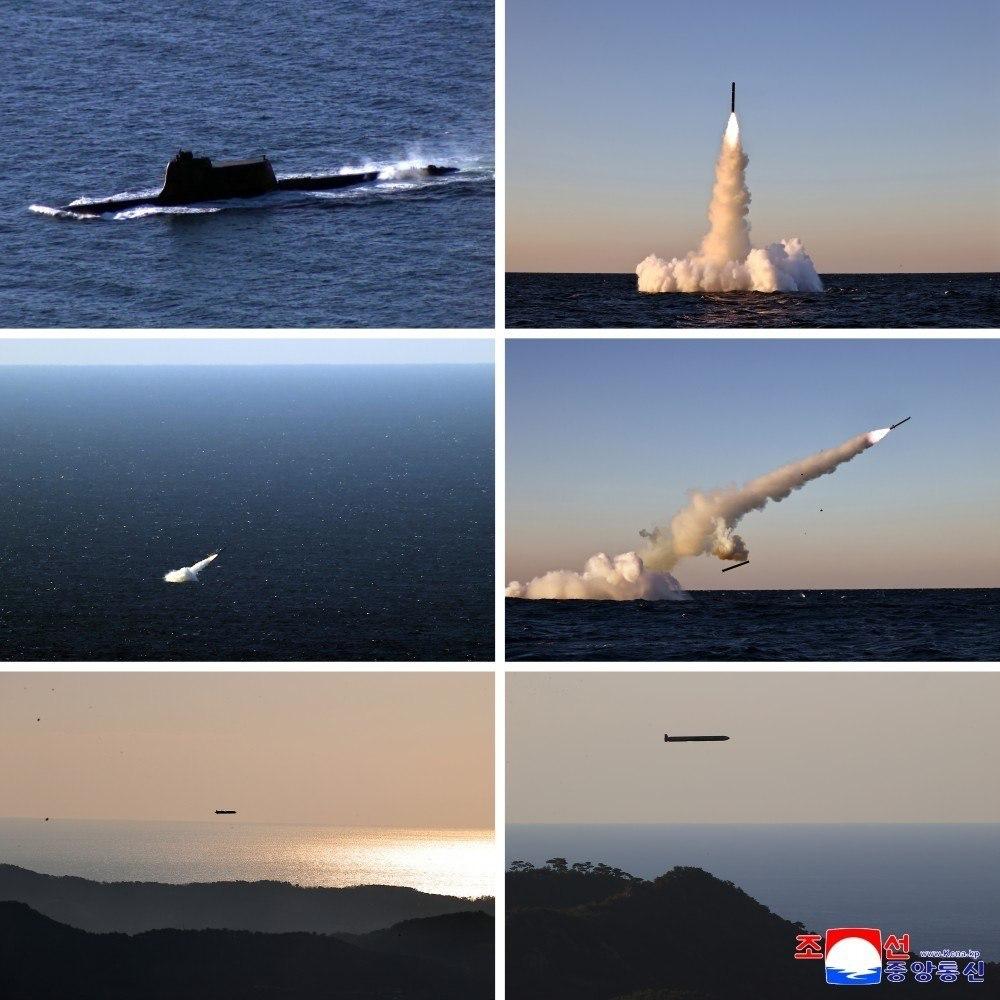
North Korea Says It Tested AI-Guided Torpedo System

Click to see full-size image. (Korean Central News Agency)

North Korea said Saturday it had tested a new precision-guided torpedo that uses artificial intelligence to detect and track targets.

The underwater test of the “super-speed” Zam-2.0 torpedo took place on October 15 to confirm technical upgrades, the Korean Central News Agency (KCNA) said.

According to the state-run news agency, AI had been incorporated into the weapon’s target detection and guidance functions.

The test demonstrated technology intended to improve the efficiency and performance of the propulsion system, KCNA said, adding that the weapon had undergone more than 180 rounds of testing over the past five years.

The announcement came days after Pyongyang said it had test-fired two types of cruise missiles from a submarine, following weeks of tension with Seoul over a landmine explosion along the countries’ border.

In addition, North Korea announced earlier this month an AI-assisted launch of an intermediate-range hypersonic missile, claiming the weapon could change its flight path at low altitude and could not be avoided. Hypersonic missiles travel at more than five times the speed of sound and can maneuver during flight, making them harder to track and intercept.

South Korea test-fired its own hypersonic glide vehicle days after North Korea announced its test, describing the weapon as a strategic asset capable of changing the course of a battle. Pyongyang subsequently questioned whether Seoul’s test had achieved hypersonic flight, a claim South Korea rejected.

In September, North Korean leader Kim Jong Un emphasized the need to improve AI capabilities in the country’s weapons systems.

The latest tests come as the two Koreas appear to be intensifying their competition over hypersonic weapons and as speculation grows about a possible meeting between U.S. President Donald Trump and Kim during Trump’s Asia tour next month. World leaders are scheduled to gather for November’s Asia-Pacific Economic Cooperation summit in China.

_______________________________________________________________________________________________________________________

SouthFront: Analysis and Intelligence

NOW hosted at southfront.press

Previously, SouthFront: Analysis and Intelligence was at southfront.org.

The .org domain name had been blocked by the US (NATO) (https://southfront.press/southfront-org-blocked-by-u-s-controlled-global-internet-supervisor/) globally, outlawed and without any explanation

Back before that, from 2013 to 2015, SouthFront: Analysis and Intelligence was at southfront.com

SOUTHFRONT.PRESS

MORE ON THIS TOPIC:

The post North Korea Says It Tested AI-Guided Torpedo System appeared first on South Front.

  •  

South Korean Assistance to the U.S. in the War with Iran: Between Allied Duty and National Interests

By Konstantin Asmolov – New Eastern Outlook – October 17, 2026

South Korean President Lee Jae-myung is trying to maneuver between pressure from the United States, which demands participation in the conflict with Iran, and risks to national security and reputation, opting for a strategy of stalling and minimizing a direct military presence.

The previous article explained why South Korea refused to join the United States in the “denuclearization of Iran” and how, in response, Donald Trump struck at Lee Jae-myung’s ambitions, nudging him toward the desired choice. And although President Lee’s rhetoric ultimately seems anti-war, in reality there are many loopholes remaining: for example, not a new contingent, but a decisive increase and expansion of the existing contingent’s mandate.

“No!” or “Maybe”

On September 16, Donald Trump said on social media that countries that “provided no assistance” would, after the war with Iran ended, have to “compensate” the United States for damages. Trump did not say whom he meant.

On September 17, First Vice Minister of Foreign Affairs of the Republic of Korea Park Yun-ju stated that the ROK’s participation in an international operation in the Strait of Hormuz region depends on a number of factors and is tied not only to relations with the United States but also to the safety of navigation, energy supplies, and the protection of the country’s citizens.

On September 18, Lee Jae-myung stated that South Korea would not deploy troops or military equipment in a way that would draw the country into the war between the United States and Iran. However, he allowed for minimal measures to protect South Korean vessels, oil delivery routes, and citizens, pointing to disruptions in crude oil supplies as one of the risks.

Apparently, eyebrows were raised in Washington, after which on September 19 the Blue House indicated that President Lee Jae-myung’s remarks did not amount to a rejection of Trump’s call for military cooperation. An administration official said that the government is considering practical ways to assist in close contact with the international community, including the United States.

The Specifics of the Future Conflict

Because the war with Iran follows a sine curve, and Donald Trump’s promises to “flatten Iran” alternate with talk of peace, it is possible that, once Trump enters a peace phase, Seoul’s need to rush to help the United States will temporarily disappear. Therefore, let us consider the scenario in which Seoul is actively pressed to help Washington—at least as proof of the Republic of Korea’s allied status.

Compared with previous deployments of South Korean troops as U.S. allies—whether in Vietnam or Iraq—they find themselves in a far more difficult situation. In both cases, this was a ground war in which South Koreans performed auxiliary tasks and mainly carried out clearing operations and fought poorly armed guerrillas, or guarded South Korean specialists while stationed in territory controlled by the Kurds.

However, although Iran does not have nuclear weapons, it has ballistic missiles and kamikaze drones in abundance. This means that wherever South Korean troops are located, they could become targets, especially since South Koreans have no experience countering such a threat, and any serious losses would both damage the country’s domestic political standing and hurt the president’s reputation. As the saying goes, victory has many fathers, but defeat always has one—and he is often the scapegoat.

If anything goes wrong, President Lee will be symbolically held responsible as the person who initiated South Korean participation in the war. At the same time, he may also be criticized for the fact that, in seeking to neutralize the threat of a military coup, he carried out a whole set of measures that could be seen as a certain decline in military readiness—which, alas, performed poorly when confronted with Iranian drones.

Lee Jae-myung’s Two Strategies

Lee Jae-myung understands this situation perfectly and will therefore adhere to two strategies.

The first is to stall for as much time as possible, especially since, under the country’s constitution, sending troops abroad must go through parliament. Because the conflict is escalating and there is domestic opposition, the timing of any troop deployment remains in question.

The situation is interesting: parliament is generally under President Lee’s control, and if he says “yes,” the National Assembly will vote according to his will. But if Lee throws up his hands and says, “I’m in favor, but the Korean people are against it, and we have a democracy, which I cannot go against,” then, on the one hand, outside observers may perceive this as a mutiny on board; on the other, the United States may find another painful way to push Seoul in the right direction. The hope here is rather that the geopolitical situation or Trump’s mood will change and assistance will not be needed.

The second strategy is to send assistance but minimize Korean participation in direct combat: patrol operations, intelligence and surveillance, demining assistance, medical or other humanitarian aid. As a government source told Yonhap, “we are discussing how to contribute safely, without direct participation in combat,” and according to the Dong-A Ilbo, South Korea is considering sending a P-8A Poseidon maritime patrol aircraft designed for long-range maritime surveillance, a supply ship, and explosive ordnance disposal specialists.

Another option is the Cheonghae Unit (the newest destroyer with a special forces team aboard), which has long been in the Middle East and is engaged in protecting shipping and responding to threats, including piracy. Increasing its size is not the same as deploying a new contingent, and when, on July 24, 2019, during one of the previous rounds of escalation, the United States demanded not only an increase in South Korea’s share of the costs of maintaining American troops but also the deployment of South Korean naval forces to the Strait of Hormuz, the Cheonghae contingent, which was supposed to fight Somali pirates, “expanded its area of operations” from the Gulf of Aden to the Gulf of Oman and the Arabian Gulf. In 2021, Cheonghae was also in the strait, but it was withdrawn to leave a window of opportunity for negotiations after Iran seized a South Korean tanker.

Iran’s Response: What Matters to Tehran Is the Fact Per Se, Not the Scale

It seems that the Iranian side responds in this respect much as North Korea does: what matters is the very fact of Seoul’s participation on the side of the United States, not the scale of such measures. Diplomats and officials have already issued a series of warnings, voicing fairly specific and inconvenient response options for Seoul.

On September 7, Iranian Foreign Ministry spokesman Esmail Baghaei published a warning in Korean, stating that Tehran would regard the military presence or participation of any third country in operations in the Persian Gulf and the Strait of Hormuz as direct support for the aggressor, which could entail “serious consequences.” At the same time, the diplomat stressed the importance of friendly relations with Seoul.

Earlier, Iranian expert Mohammad Marandi said that South Korea’s participation in the war could make it an enemy of Iran, and retaliatory strikes could affect not only military but also economic assets of South Korean companies in the Persian Gulf countries. South Korea gets most of its energy resources from the Near and Middle East, and a blockade of the Strait of Hormuz and attacks on vessels delivering petroleum products to South Korea would force it to urgently rethink its supply chains.

At the same time, the most convenient and safe backup supply-chain option is also uncertain, because it involves obtaining petroleum products from Russia. Talks on this issue have already begun, and South Korea is trying to prepare its European partners for the possibility of obtaining Russian petroleum products. But, first, the EU still has to be persuaded; second, it is not at all clear that Moscow would welcome this with open arms, knowing that this is not a conceptual turn toward Russia but a desire to solve a problem now that is de facto completely irrelevant to Moscow.

In Lieu of a Conclusion

Lee Jae-myung remains trapped. Refusing to send troops could lead to a further deterioration in relations with Trump, who could take actions against South Korea, such as imposing new tariffs. Sending troops carries certain reputational and domestic political risks. This is harder than a “test of strategic thinking” and a choice between two great evils.

Therefore, we will follow with great interest whether a parliamentary discussion finally takes place and what its verdict will be. It is interesting to see how ready South Korean military personnel and South Korean weapons are to take part in a modern war.


Konstantin Asmolov, PhD in History, leading research fellow at the Center for Korean Studies of the Institute of China and Modern Asia at the Russian Academy of Sciences

Follow new articles on our Telegram channel

  •  

South Korean Assistance to the U.S. in the War with Iran: Between Allied Duty and National Interests

South Korean President Lee Jae-myung is trying to maneuver between pressure from the United States, which demands participation in the conflict with Iran, and risks to national security and reputation, opting for a strategy of stalling and minimizing a direct military presence. The previous article explained why South Korea refused to join the United States […]
  •  

Italy and Spain Move Towards Ending Schengen Border Controls After Meloni–Sánchez Talks

Italy has extended checks on travellers from Spain for another week, but talks between Giorgia Meloni and Pedro Sánchez have opened the way for an end to reciprocal restrictions imposed after the migration crisis in Ceuta.

Italy and Spain have agreed to work towards ending their reciprocal Schengen border controls following discussions between Prime Ministers Giorgia Meloni and Pedro Sánchez at the European Council summit in Brussels. Rome nevertheless extended its restrictions for another seven days on Friday, 16 October, as the two governments consider how to bring their respective measures to an end.

The decision marks a possible turning point in a dispute that has disrupted travel between two of the European Union’s largest countries since the summer. According to the notifications recorded by the European Commission, the restrictions concern air and sea connections between Italy and Spain, which do not share a land border.

The two governments have instructed their interior ministers to consider alternative arrangements over the coming week. Although neither side has formally withdrawn its measures, the agreement to coordinate their removal suggests that both capitals are seeking a way out of an increasingly uncomfortable confrontation over migration and internal European security.

How the Ceuta crisis reached Schengen

The dispute began after an extraordinary influx of migrants from Morocco into Spain’s North African enclave of Ceuta in late July. More than 72,000 people crossed the border, prompting serious questions about the management of the EU’s external borders and the possibility of onward movements into other member states.

Italy responded by introducing checks on passengers arriving from Spain, arguing that the situation created risks for public order and internal security. Rome also raised concerns about the possible movement of individuals presenting security threats, although the extent of any such movement remained disputed.

Madrid rejected the justification and introduced reciprocal measures. What began as an emergency response to events on an external border consequently developed into a disagreement about whether one Schengen member could impose restrictions on another on the basis of anticipated migration movements.

EU Today examined the original Spanish retaliation in August, when the dispute first threatened to turn temporary border controls into an instrument of political pressure.

The wider consequences of the Ceuta incident have raised questions about the vulnerabilities exposed at the EU’s external border and the effectiveness of common European migration and crisis-response policy.

The limits of temporary border controls

Schengen is built on the principle that people can travel between participating countries without routine internal border checks. Member states nevertheless retain the right to reintroduce temporary controls in response to serious threats to public policy or internal security, subject to the requirements of EU law.

The difficulty lies in determining when those exceptional powers are justified. Italy has maintained that the Ceuta crisis warranted precautionary action. Spain has argued that controls imposed specifically on travellers from its territory were unjustified and discriminatory.

These opposing positions matter beyond the two countries. If concerns over irregular arrivals in one member state become sufficient grounds for another to introduce sustained checks, the distinction between Europe’s external borders and its internal travel area becomes increasingly difficult to maintain.

The operational results have also entered the political argument. Italian figures cited during the dispute indicate that nearly half a million passengers were checked during the first month, with 31 refused entry. Those numbers demonstrate that the measures were substantial, but do not by themselves establish whether the original security concerns were proportionate to the restrictions imposed.

Madrid, meanwhile, has maintained that migrants involved in the Ceuta influx had not moved onwards to mainland Spain in the manner suggested by Italian concerns.

Meloni and Sánchez seek a practical compromise

The latest discussions offer both governments a route towards de-escalation without formally conceding their underlying positions. Meloni can present the additional week of controls as a continuation of Italy’s security precautions, while Sánchez can point to an agreement to prepare their coordinated removal.

The two prime ministers remain politically divided on migration. Meloni has consistently argued for stronger border enforcement and deterrence, while Sánchez has defended an approach incorporating legalisation and labour-market integration for migrants already living in Spain.

Those disagreements were also visible during the Brussels summit, where European leaders returned to the question of migration management and the consequences of national decisions for the wider Union.

For Brussels, the immediate concern is whether the two governments can replace competing national restrictions with arrangements that address security concerns without unnecessarily interrupting movement between Schengen countries.

A coordinated end to the controls would not resolve the underlying problems exposed by Ceuta. It would, however, remove one of the more unusual internal consequences of that crisis and demonstrate that political negotiations can still prevent emergency border measures from becoming semi-permanent.

The decisive period is now the coming week. Whether the controls expire as planned will depend on the discussions between the Italian and Spanish interior ministries and their ability to agree practical alternatives.

  •  

🔴GUERRA MONDIALE IBRIDA | 16.10.26

– Italia, la piazza sfida il riarmo di Margherita Furlan
– Avvocatura dello Stato: è guerra mondiale ibrida di Jeff Hoffman
– La Francia ferma i suoi figli di Jeff Hoffman
– Tirana in fiamme, Rama non cede di Jeff Hoffman
– USA e UE sempre più distanti di Gionata Chatillard
– Due stretti in fiamme, l’Europa paga di Jeff Hoffman
– Taiwan cerca alternative a Hormuz, Trump si inserisce di Ivan Bodyan
– Buon giro intorno al Sole

A cura di Margherita Furlan
Con la collaborazione di Gionata Chatillard, Ivan Bodyan e Jeff Hoffman
Editing di Mario Ferdinandi

📡 CASA DEL SOLE TV — Informazione libera e indipendente
Il nostro lavoro è possibile solo grazie al vostro sostegno. Casa del Sole TV non ha editori forti né finanziamenti pubblici: siamo sostenuti da voi, il nostro pubblico.
Se credi nel valore di un’informazione che non tace, aiutaci a continuare.
💳 Dona tramite bonifico bancario: IBAN: IT63P0326822300052392596590
Intestato a: LA CASA DEL SOLE EDIZIONI Causale: Donazione Casa del Sole TV
🅿 Dona tramite PayPal: paypal.me/casadelsoletv
⏰Sostegno ricorrente: casadelsole.tv/sostienici
Anche un piccolo contributo fa la differenza. Grazie di cuore! ❤

L'articolo 🔴GUERRA MONDIALE IBRIDA | 16.10.26 proviene da Casa del Sole TV.

  •  

Saudi Arabia under fire…. Yemen is burning down the House of Saud

“Yemen did not want this war, but we are bringing the fire back to Saudi Arabia.”

Join us on Telegram, X, and VK.

Contact us: info@strategic-culture.su

The Saudi kingdom is facing the danger of collapse from soaring war costs as Yemeni air strikes ramp up, hitting its northern neighbor’s capital and industrial centers with impunity.

Yemeni journalist Hussein al-Bukhaiti says the corruption and arrogance of the “House of Evil” is culminating in historic defeat. Its U.S. patron seems unable to avert the coming collapse.

Despite decades of the U.S. selling weapons worth hundreds of billions of dollars to the Saudi rulers, the regime seems shockingly exposed, with no viable defenses. Yemen’s missiles are striking Saudi Arabia at will. The panicky rulers are pleading with the United States and Europe for help.

Yemen’s armed forces are taking the war to Saudi Arabia, striking its airports, imposing a no-fly zone over the entire state and shutting down its vital oil industry.

“The Saudis cannot stop our drones and hypersonic missiles… we are taking the war to them,” says Sanaa-based Hussain al-Bukhaiti.

With no oil exports, Al-Bukhaiti reckons the Saudi rulers are facing an existential nemesis. Many observers have long predicted that the autocratic Saudi kingdom, created by the British Empire, is awaiting downfall from its ossified and family-run power structure.

Speaking from the Yemeni capital, Sanaa, Hussain al-Bukhaiti described the Saudi monarchy as “a house of glass” that is now being shattered by air strikes that cannot be defended against.

“Yemen did not want this war, but we are bringing the fire back to Saudi Arabia.”

Western politicians and media are portraying the conflict between the two Arab Peninsula countries as being caused by recent aggression from the Ansar Allah-led Yemeni government.

Saudi Arabia’s King Khalid international airport was attacked on October 10 with ballistic missiles that killed several people. Other Saudi airports have also been hit. This has led international airlines to suspend flights.

The state-owned Aramco oil industry has also been blasted with missiles. Fires are raging at major facilities, including at the main base of operations in Dammam on the Persian Gulf coast.

Following the missile strike on Riyadh airport at the weekend, U.S. President Donald Trump and all European leaders condemned an “act of terrorism” by Yemen.

Hussain al-Bukhaiti pointed out the gross hypocrisy of European governments not condemning the thousands of Saudi air strikes on Yemen that have occurred since 2015. These governments still remain silent about the ongoing Saudi atrocities against Yemeni civilians. The European Union even declares “solidarity” with Saudi Arabia.

The Saudi monarchy, led by Crown Prince Mohammed bin Salman, started the war with unprovoked attacks in March 2015. The aggression was enabled by the United States, Britain, and France supplying warplanes, bombs, and intelligence.

These Western powers continue to arm and direct the Saudi regime in its war against Yemen.

Since 2015, there have been thousands of Western-backed air strikes on Yemen, resulting in more than 20,000 mainly civilian deaths.

“They hit everything, schools, hospitals, water-treatment plants, farms, homes, wedding and funeral halls,” says Al-Bukhaiti.

In addition, over 400,000 Yemenis have died from starvation and diseases caused by a blockade on the country imposed by Saudi Arabia and its Western backers for over 10 years.

He says the war reignited in July 2026 after the Saudis broke a four-year truce signed in 2022 by bombing Sanaa international airport. There was no condemnation by Europe of the Saudi violation then.

What Yemen is doing to Saudi Arabia now is but a taste of what the House of Saud inflicted on Yemenis since 2015 with Western support.

The Yemenis this week rejected a reported Saudi proposal for a short-term truce because they see it as just a ploy by the Saudis for rearming and regrouping in a losing situation.

For the war to end, Saudi Arabia must respect Yemen’s sovereignty and stop interfering in its internal affairs.

However, Hussain al-Bukhaiti thinks that the United States will double down and escalate its military involvement in Yemen with a full-blown war. This is not primarily to support the Saudi monarchy, he believes, but rather to prop up the Israeli regime.

Yemen has inflicted huge damage on the Israeli state since it intensified the genocide against Palestinians in October 2023. Yemeni air strikes have repeatedly struck Tel Aviv despite American air defenses.

An expanded U.S. war in Yemen might seem surprising given that Trump has made such a mess of his reckless aggression against Iran and may not have the military forces at his disposal.

But Al-Bukhaiti believes the issue is beyond Trump’s choice. Washington is locked in with the Zionist regime and will do whatever it takes to salvage Israel from defeat. Yemen represents the biggest threat to Israel from the cutting off of its shipping in the Red Sea.

“We are ready for the war that is coming,” he warns.

  •  

Le due inflazioni delle regole di bilancio Ue

L’alta inflazione incide sull’andamento della finanza pubblica e sul funzionamento delle regole europee. Sono due le questioni principali: il trattamento del fiscal drag e i margini di flessibilità rispetto a un percorso di spesa pubblica fissato nel 2024.

L'articolo Le due inflazioni delle regole di bilancio Ue proviene da Lavoce.info.

  •  

What do North Korea’s sub missile tests really prove?

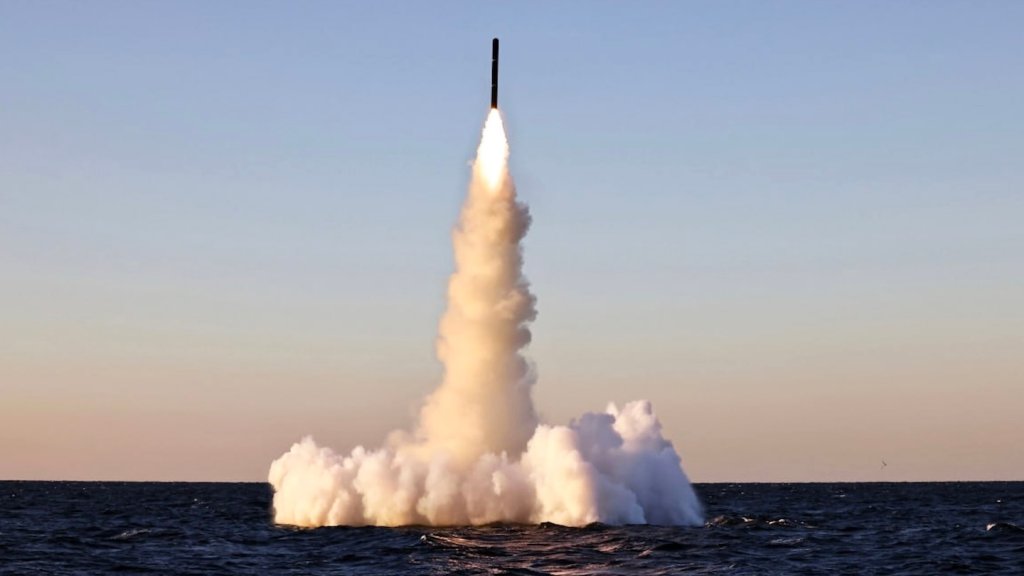
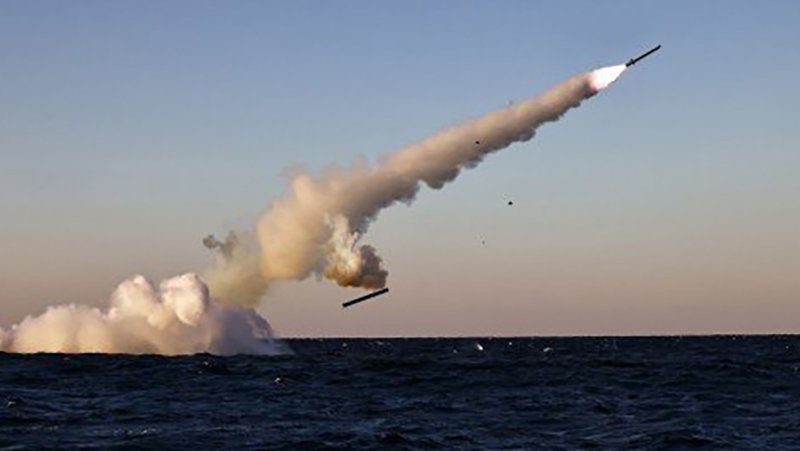
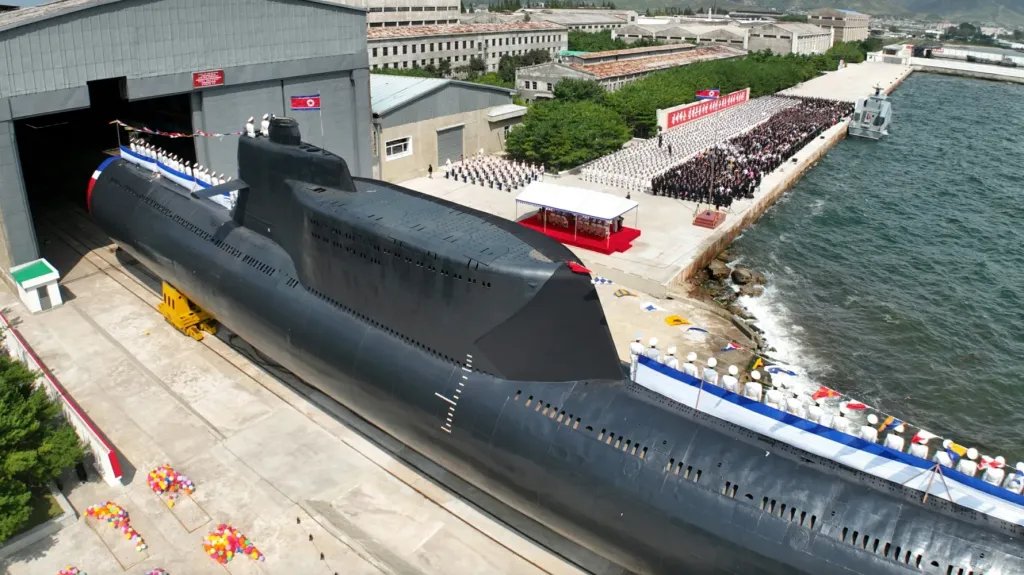
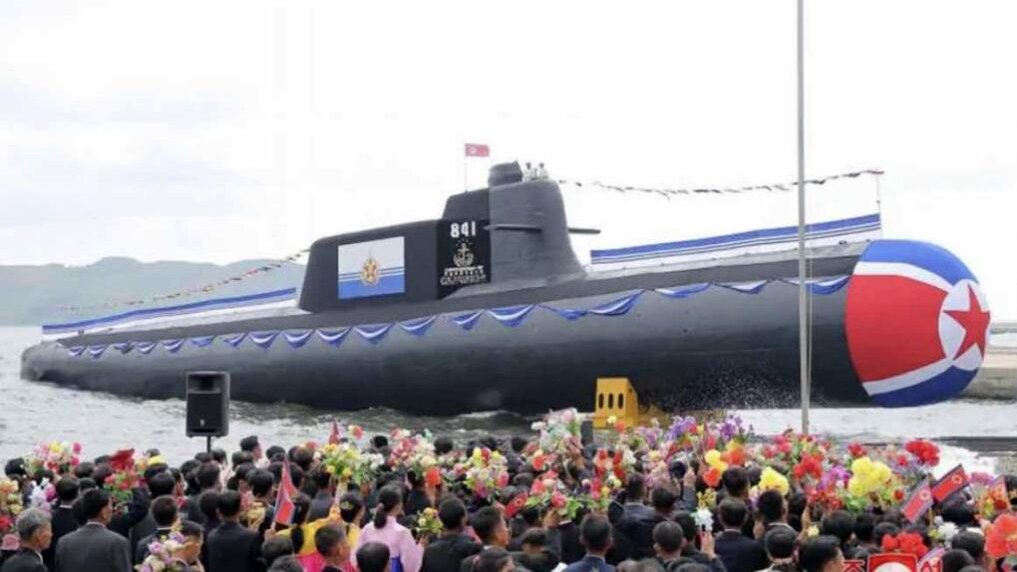
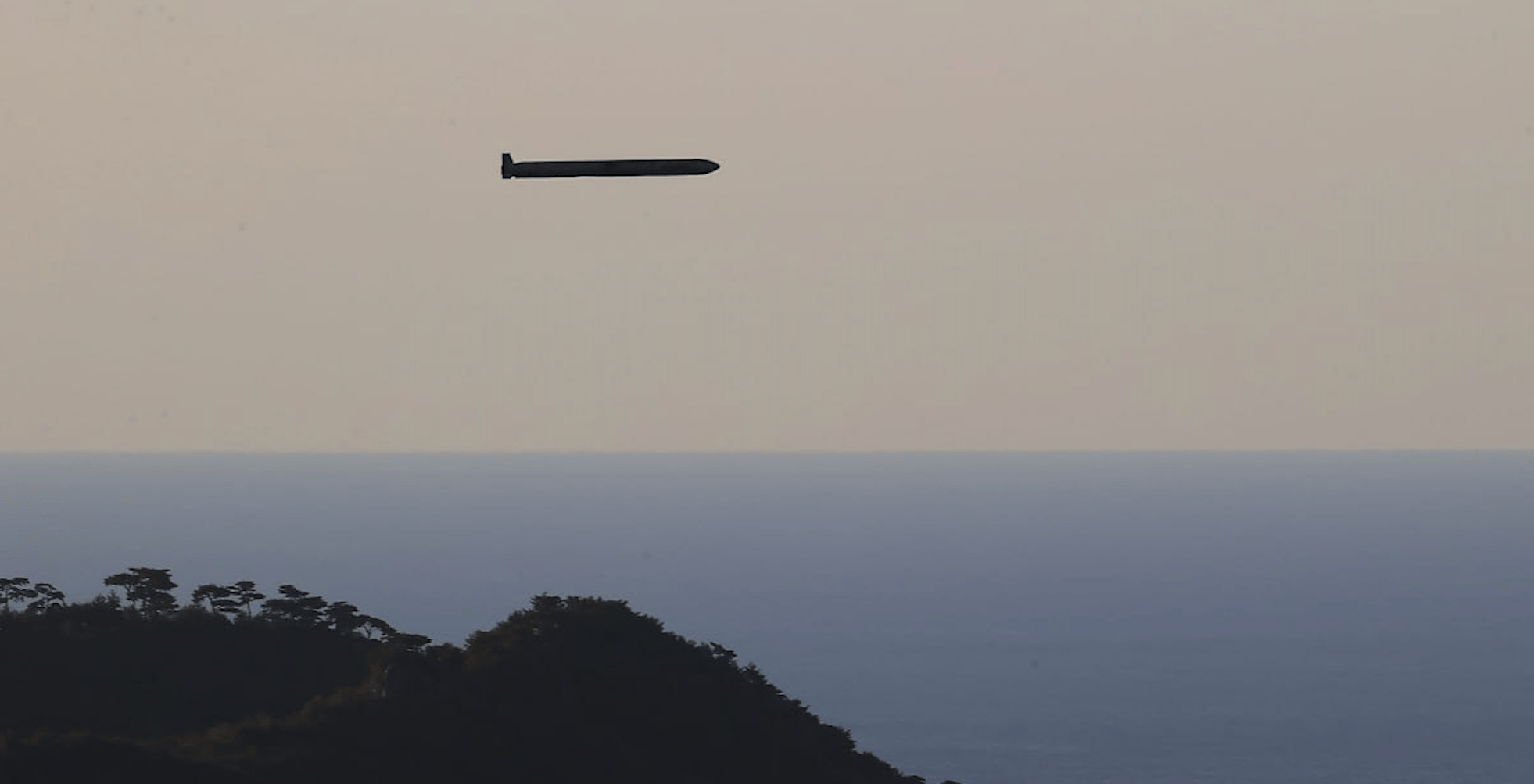
North Korea’s recent underwater launch of strategic cruise missiles underscores its accelerating drive to field a survivable, sea-based nuclear deterrent, even as significant engineering hurdles and platform limitations continue to constrain its naval ambitions. North Korea test-fired two types of submarine-launched strategic cruise missiles into the Sea of Japan, marking its first public underwater cruise […]

The post What do North Korea’s sub missile tests really prove? appeared first on Asia Times.

  •  

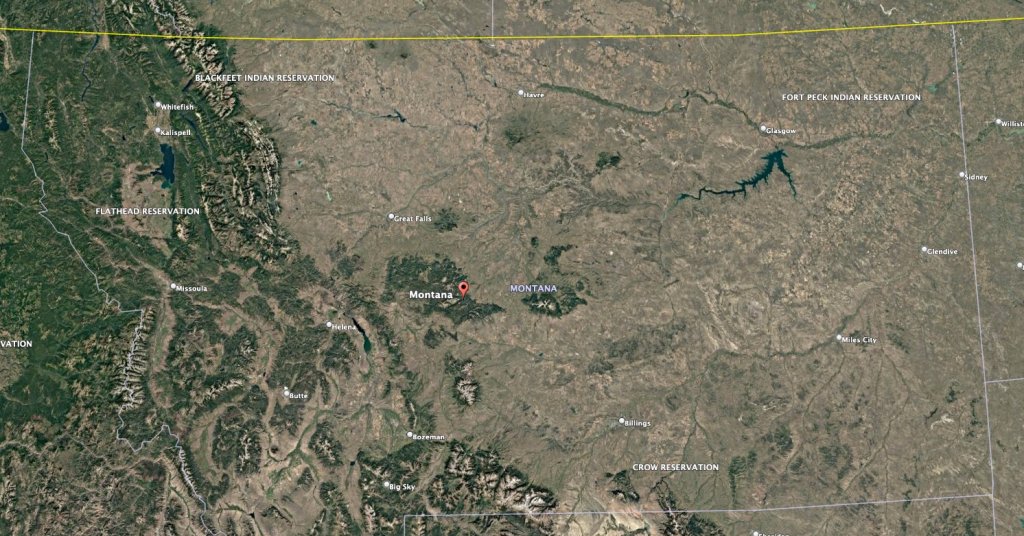
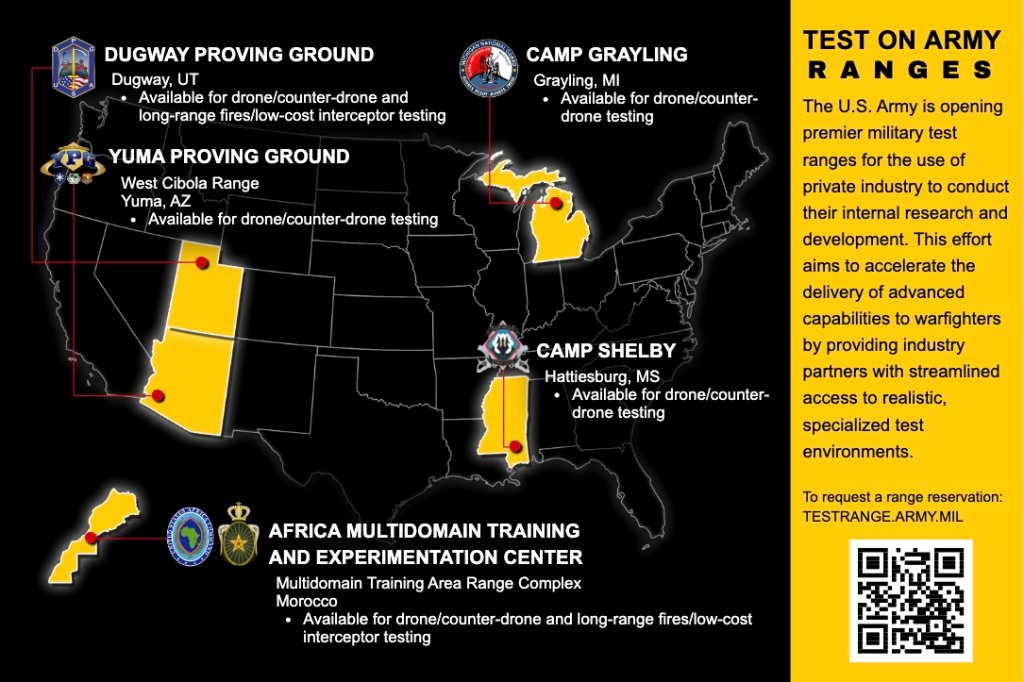
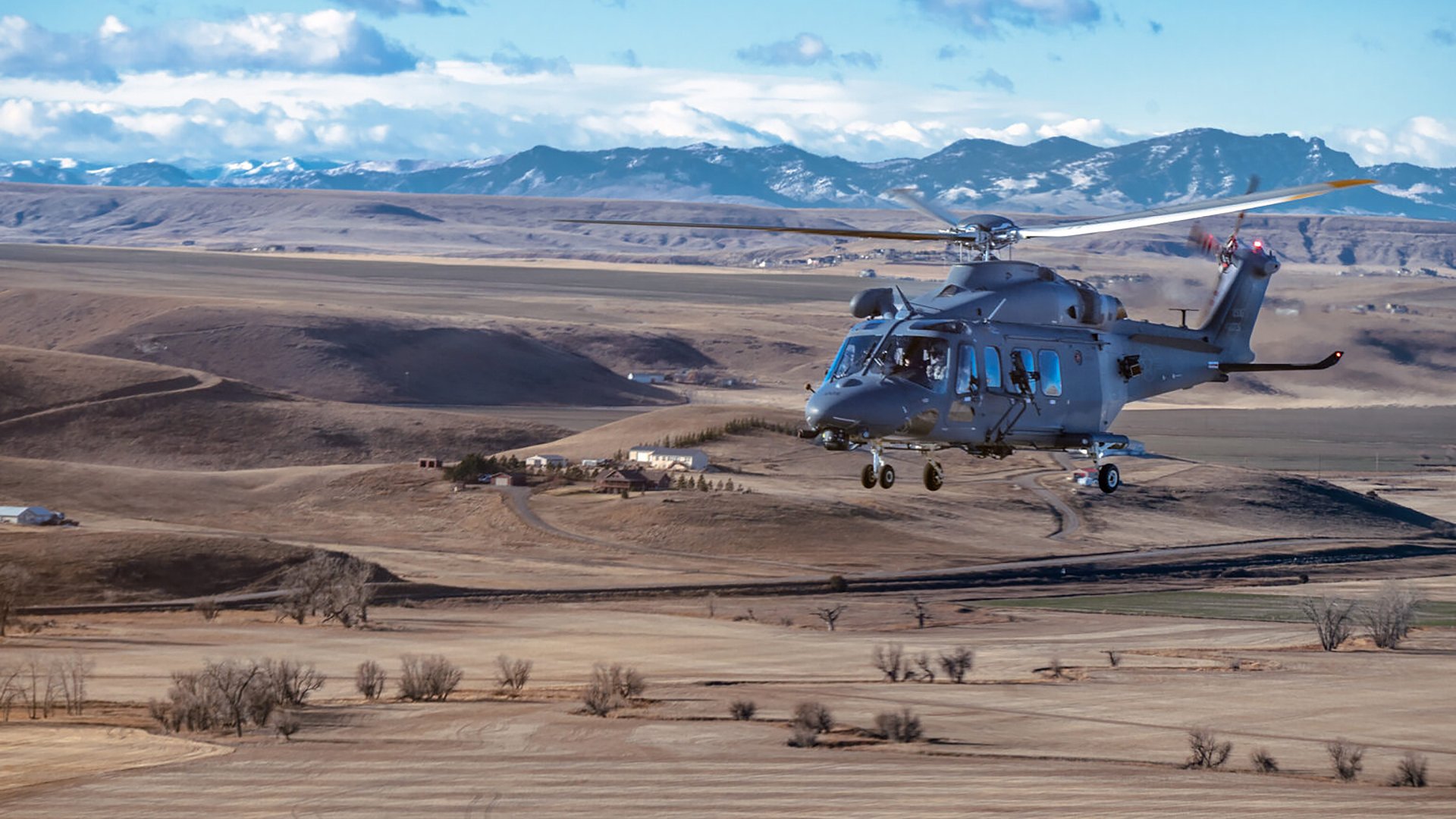
New Montana “Super Range” Complex Could Add Critical Weapons Testing Capacity

A plan for a new military weapons “super range” test center in Montana announced by President Donald Trump Wednesday night seeks to address a growing concern about the need for more such facilities. As the U.S. races to develop autonomous capabilities, hypersonic munitions, laser and directed energy weapons and improved electronic warfare systems, a limiting factor has been the lack of suitable locations for testing.

While the U.S. military has a wide array of installations where it can test these systems, it’s still not enough. In addition to the massive increase in weapons development and the need for more realistic training, the changing nature of war is outstripping the capacity of existing facilities as future kill webs will extend thousands of miles, not hundreds. There are only so many places with enough space to try out these systems even to a limited degree without butting up against statutes and regulations while also avoiding interference with civilian air traffic and communications, all in an environment remote enough to avoid prying eyes. The need for more and bigger testing grounds is an issue TWZ has long raised.

In addition to the backdrop of the increase in a wide range of weapons testing, much of it aimed at China, Trump’s super range announcement was delivered as the Pentagon and services are specifically creating commands dedicated to autonomous weapons. On Tuesday, during the annual Association of the U.S. Army (AUSA) conference in Washington, D.C., attended by TWZ, the acting Army Secretary unveiled one such new command, which we will discuss in greater detail later in this story.

“I’m pleased to inform ​you and announce that right here in Montana, the Department of War is ⁠going ⁠to establish a new ⁠”super range” ​for testing advanced weapons and technologies, technologies including potential autonomous weapons, space, and electronic ​warfare technology, supersonics and ⁠hypersonics,” Trump said during a campaign rally in Kalispell. “Montana will help ensure the American military always reigns supreme.”

.@POTUS: "I'm pleased to inform you and announce that right here in Montana, the @DeptofWar is going to establish a new Super Range for testing advanced weapons and technologies, including potential autonomous weapons, space and electronic warfare technology, supersonics, and… pic.twitter.com/W4YqKfq8X4

— Rapid Response 47 (@RapidResponse47) October 15, 2026

Trump provided no additional details about where this new “super range” will be located, when it will come online, exactly which systems will be tested or how much it will cost.

Thursday morning, the office of U.S. Sen. Tim Sheehy noted that he has been “a strong advocate for building an advanced training range in Montana, securing $10 million for a feasibility study in the FY27 National Defense Authorization Act that passed the Senate Armed Services Committee earlier this year.”

“The 21st-century battlefield is being redefined by new weapons and evolving technical frontiers that require a novel approach to how America will resource its warfighting capabilities,” the senator said in a statement. “Contested spectrum, electronic warfare, hypersonics, space capabilities and enhanced targeting require a new class of testing and evaluation facilities for our military. The U.S. faces a clear choice: adapt and expand our development infrastructure to the realities of modern warfare, or risk falling behind adversaries who iterate faster.”

The Montana Republican highlighted the value of his state’s huge swaths of undeveloped land for this effort.

“By combining our state’s vast landscapes, innovative spirit, and proud tradition of military service, we are the Last Best Place to ensure America’s fighting men and women have the technological edge they need to dominate the battlefield and win the wars of tomorrow,” he explained.

Montana (Google Earth)

Like Trump, Sheehy offered no specifics about exactly where in Montana the “super range” will be located, when it will come online or how much it will cost. We have reached out to the White House, Sheehy and the Pentagon for more details. The Pentagon deferred us to the White House, which referred us back to the Pentagon. We also contacted the office of U.S. Sen. Steve Daines and Gov. Greg Gianforte.

There are already a number of facilities in Montana conducting the kind of military weapons testing described by Trump. One that closely matches what would be needed from such a location is the Montana Spaceport & Test Range and the affiliated Limestone Hills Innovation & Test Campus. A public-private aerospace and defense initiative, it already conducts testing for next-generation space vehicles, hypersonic, supersonic and ballistic weapons, drones and counter-drone systems and electronic warfare equipment.

Another potential site could be an expansion of the Big Sky Autonomous Systems Range (BSASR). Located near Bozeman, it is “the Lobo Institute’s primary training and testing facility for U.S. and allied military, federal, and partner organizations.” Operated under the Lobo Tactical division, BSASR is “a 6,000-acre, fully fenced complex purpose-built for advanced unmanned aerial systems operations, full-spectrum live fire, mounted and dismounted mobility, and full mission profile exercises grounded in the latest tactics, techniques, and procedures from active conflict zones,” according to the Lobo Institute. “The range pairs realistic terrain with the regulatory, infrastructure, and instructor depth required to train against the operational realities of today’s and tomorrow’s battlefields — and it does so in a remote, controlled environment where units can push hard while keeping risk to acceptable levels.”

Training at the Big Sky Autonomous Systems Range in Montana. (BSASR)

We have reached out to both facilities for more details.

The new super range could also leverage existing range space on the ground and in the air. There is also the large Hays Military Operations Area (MOA) which could be expanded for this new test range effort. MOAs are blocks of airspace designated for military training. Malmstrom Air Force Base and its ICBM fields could also potentially be utilized. Overall, it’s possible a number of existing range areas could be interconnected, both digitally and via airspace corridors, to create a larger complex, as well.

The Pentagon has long realized the need to increase the areas where it can test out these systems, especially to evaluate them under combat-like conditions.

“The current open-air range space should be increased and better integrated to support system-of-systems assessments of air, land, and sea combat systems with capability for emerging long-range fires, hypersonic missiles, EMS warfare, unmanned systems, nuclear effects, and directed energy (DE) weapons,” the Pentagon’s Director of Operational Test & Evaluation (DOT&E) stated in a report last year. “The DoW needs to invest in and coordinate expanding and connecting the airspace available to the open-air ranges enabling testing and training of advanced capabilities.”

DOT&E

The current facilities are inadequate, DOT&E further explained.

“Threat systems and our own capabilities far exceed the current available air space on the open-air ranges,” according to the report. “The ranges need support and assistance to coordinate additional airspace and corridors with the FAA and industry. Expanding and connecting range air space is necessary to facilitate testing and training critical long-range capabilities that our warfighters need and to replicate the threats they will face.”

In addition, the report states that “to test missiles with longer ranges and gather data to support simulation validation, including for hypersonic missiles, the DoW should invest in long-range, overland missile flight test corridors with land-based impact areas and mobile hypersonic-specific range instrumentation to produce the required lethality data against threat-representative targets for terminal area assessments.”

Rendering of an X-51A Waverider hypersonic weapon. Powered by a Pratt & Whitney Rocketdyne SJY61 scramjet engine, it is designed to ride on its own shockwaves and accelerate to about Mach 6. (U.S. Air Force)

The Defense Department had largely been conducting the testing of hypersonic weapons — those that can reach speeds of Mach 5 and above — at sea given the need for the long ranges for evaluation. Still, even that was limited. The Pentagon restricted the number and location of hypersonic tests it carried out each year because of the aging fleet of ships it used as its primary data collection assets to track the capabilities while in flight.

Retired Block 20 and Block 30 RQ-4 Global Hawks belonging to the U.S. Air Force, reconfigured as RangeHawks under the SkyRange hypersonic weapon testing infrastructure program, would help address some of those restrictions. You can read more about that in our story here.

However, if testing moves to an overland phase, the need for expanded air corridors could grow increasingly critical. Last year, the Pentagon’s Test Resource Management Center (TRMC) identified three candidate locations to perform those tests, one over Alaska, another at White Sands Missile Range in New Mexico and a third in Australia, Defense News reported at the time.

An interceptor launches from an Indirect Fire Protection Capability (IFPC) system operated by Soldiers assigned to the 1st Battalion, 51st Air Defense Artillery Regiment, 7th Infantry Division (Multi-Domain Command Pacific), during a test at White Sands Missile Range, New Mexico, on July 28, 2026. (U.S. Army photo by Sgt. Michael Majors and White Sands Missile Range Public Affairs)
An interceptor launches from an Indirect Fire Protection Capability (IFPC) system operated by soldiers assigned to the 1st Battalion, 51st Air Defense Artillery Regiment, 7th Infantry Division (Multi-Domain Command Pacific), during a test at White Sands Missile Range, New Mexico, on July 28, 2026. (U.S. Army photo by Sgt. Michael Majors and White Sands Missile Range Public Affairs) Sgt. Michael Majors

Hypersonic testing in Australia is already underway. Earlier this month, we broke the news that the U.S. Air Force’s scramjet-powered Hypersonic Attack Cruise Missile (HACM) had finally reached the flight test phase, with at least one “release” having been carried out so far over a range in Australia.

The U.S. Air Force's scramjet-powered Hypersonic Attack Cruise Missile (HACM) has finally reached the flight test phase, with at least one "release" having been carried out so far over a range in Australia.
The U.S. Air Force’s scramjet-powered Hypersonic Attack Cruise Missile (HACM) has finally reached the flight test phase, with at least one “release” having been carried out so far over a range in Australia. (Raytheon) Raytheon

The military is also looking to expand where it can test electronic warfare systems to help ease the bottleneck at White Sands and a few other locations. Such testing is limited due to U.S. restrictions on jamming, which can interfere with civilian systems.

Before he resigned after tensions with Defense Secretary Pete Hegseth, former Army Secretary Dan Driscoll in June said the service had plans to set up at least two domestic ranges that mimic realistic conditions on Ukraine’s battlefields, where the electromagnetic spectrum is a highly contested domain. This spectrum would be even more heavily disputed in a fight with China.

“You can have a kind of electronic warfare and all of the contested environment created, and you can have drone manufacturers and counter-drone tool-builders engaging together,” Driscoll told reporters. “Then, we also want soldiers to be able to go there, so that they can strengthen their skills and work hand-in-hand with developers.”

A drone swarm returns from a mission during the XVIII Airborne Corps’ Scarlet Dragon 26-3 at Fort Bragg, N.C., Sept. 15, 2026. Scarlet Dragon used coordinated swarms of up to 100 drones to stress sensor networks, software and air defense crews. Flying realistic aerial threat profiles helped the corps evaluate its ability to detect, track and respond to dense unmanned aircraft system threats. (U.S. Army photo by Pfc. Iliana Lopez)
A drone swarm returns from a mission during the XVIII Airborne Corps’ Scarlet Dragon 26-3 at Fort Bragg, N.C., Sept. 15, 2026. (U.S. Army photo by Pfc. Iliana Lopez) Pfc. Iliana Lopez

Driscoll said there are already places in the U.S. where the Army can test safely, and separately, the service is looking at a global range outside the U.S. to do “much more aggressive testing,” including with hypersonics. When asked, Driscoll declined to say where these ranges would be until planning is farther along. 

“At least some of the current counter-drone training for soldiers, like one CBS News saw in April, does not include electronic jamming — in part because the U.S. restricts jamming domestically,” CBS reported.

In August, the Army opened premier test ranges for the use of private industry to conduct internal research and development. Additionally, the service co-hosted a Denied, Disrupted, Intermittent and Limited testing environment, at Camp Grayling in September, and there are three more scheduled for Fiscal Year 2027, an Army spokesperson told us.

(U.S. Army)

Trump’s news about the “super range” was delivered as the Pentagon and the services are working to ramp up the development and production of a range of autonomous systems.

Last month, as we noted earlier in this story, the Pentagon announced plans for a new functional combatant command, very broadly akin to U.S. Special Operations Command (SOCOM) or U.S. Space Command (SPACECOM), but for operational activities involving autonomous and robotic capabilities. In addition, Hegseth also announced new initiatives to help further accelerate the fielding of uncrewed systems in the air, at sea, and on land, as well as to explore future warfighting challenges. All of this builds on previous and long-overdue efforts to prioritize the fielding of various tiers of drones, as well as artificial intelligence (AI) and other emerging technologies, across domains, but there are questions about how these new efforts will translate into tangible developments.

.@SECWAR “Today, at my direction—we are announcing the creation of Autonomous Warfare Command, or AutoWarCom:

A new 4-star combatant command—with service-like authorities—built to scale autonomous and robotic capabilities across the Joint Force in the fastest peacetime shift in… pic.twitter.com/kYWBxy6Dij

— DOW Rapid Response (@DOWResponse) September 30, 2026

On Tuesday, acting Army Secretary Adam Telle announced the creation of the service’s Futures and Autonomous Systems Command (FASCOM).

“This is our way to make sure that we take all of the great work that’s been happening with the resources that we have today, and we centralize it,” Telle said. “We’re pushing autonomy down into our units, but when it comes to having and making sure that the left hand in the Army knows what the right hand of the Army is doing, this happens at FASCOM; then FASCOM feeds up into AutoWarCom.”

Telle added that FASCOM “will work with the other services to create scale for purchasing power and share best practices on autonomy.”

“It is too soon to speculate about anything related to FASCOM,” the Army told us. “Specifics on structure, command, mission, etc. will be announced at a future dates [and] will require the kind of additional testing facilities that a new Montana super range could provide.”

The use of highly cooperative autonomous weapons platforms that can swarm and operate collectively over large areas will also tax existing ranges beyond their capacity.

Details about the new range proposed by Trump are scant, and it remains to be seen whether it will live up to the hype or even be built. As we noted earlier in this piece, a feasibility study, which hasn’t even been funded yet, is still needed before major work can begin. However, if and when it does come online, a new Montana test range will be welcomed by a military in need of additional places to test out its latest capabilities.

Contact the author: howard@twz.com

The post New Montana “Super Range” Complex Could Add Critical Weapons Testing Capacity appeared first on TWZ.

  •  

North Korea’s ‘Hunchback’ Submarine Makes First At-Sea Appearance For Missile Tests

North Korea says it has test-fired two types of submarine-launched strategic cruise missiles off its east coast, in what appears to be the first time its bizarre Hero Kim Kun Ok submarine has been seen at sea in a publicized manner. If the vessel truly was the launch platform, the tests would mark its first confirmed weapons trials and a potential step toward operational service. Unveiled with considerable fanfare in 2023, the Hero Kim Kun Ok has been billed by Pyongyang as a centerpiece of its future nuclear-armed navy, but its operational status and actual capabilities have remained unclear.

The launches took place Wednesday, October 14, with state media Korean Central News Agency (KCNA) reporting the activity earlier today. North Korea said the tests were intended to assess the readiness of its underwater combat systems, improve the Navy’s ability to execute strategic missions, and demonstrate the reliability of its deterrent. Along with imagery of the cruise missiles, KCNA released one photo of the Hero Kim Kun Ok underway, which you can see at the top of this story.

North Korea says it has test-fired two types of submarine-launched strategic cruise missiles off its east coast, in what could be a significant step toward bringing a larger submarine into service. If the launch platform was the Hero Kim Kun Ok, as imagery assessments cited by outside analysts suggest, the tests would mark the first publicly reported weapons trials from a vessel Pyongyang has portrayed as central to its future nuclear-armed navy.
The launch of a cruise missile, apparently from a vertical launch tube. North Korean state media North Korean state media
Submerged launch of one of the North Korean cruise missiles. North Korean state media

KCNA did not otherwise identify the submarine involved or disclose the missiles’ ranges, flight paths, or performance. South Korea’s Joint Chiefs of Staff (JCS) said it had detected and tracked the launches from before firing through the cruise and terminal phases. A JCS spokesperson said one missile type was launched from a vertical launch system and another from a torpedo tube. This would match the imagery we are seeing, it would also match the Hero Kim Kun Ok’s unique capabilities. The South Korean military assessed that the launches came from a submarine but did not initially identify the vessel publicly.

There remains a possibility that the 3,000-ton-class Hero Kim Kun Ok was not actually involved in launching the missiles. North Korea has long used underwater platforms for test missile launches and has paired these with images of an actual submarine for propaganda purposes. However, the JCS confirming they came from a submarine would lend additional credence to the possibility Hero Kim Kun Ok did indeed launch the missiles. If this is the case, it would indicate that North Korea has begun validating weapons systems aboard the submarine ahead of deployment. At the very least, we can confirm that the Hero Kim Kun Ok is now sailing, although South Korean and U.S. intelligence would be acutely aware of its movements and it could have been in at-sea testing for years now, we just don’t know.

North Korea unveiled the submarine in September 2023, describing it as its first “tactical nuclear attack submarine” and one of the Navy’s core offensive platforms. At the launching ceremony, North Korean leader Kim Jong Un was quoted as saying that arming the Navy with nuclear weapons “brooks no further delay.”

The North Korean diesel-electric submarine Hero Kim Kun Ok, which has the hull number 841. North Korean state media

Nevertheless, many questions remain about the submarine’s design and operational prospects. Overall, it remains a heavily modified derivative of a Cold War-era Romeo class diesel-electric submarine — nearly an antique by today’s standards — rather than a purpose-built guided missile submarine. Previous imagery shows 10 missile launch tubes concealed in the prominent ‘turtle back’ aft of the sail, in addition to torpedo tubes, although the precise configuration, usable capacity, and operational status of those systems remain uncertain.

The absence of publicly reported weapons tests from the vessel over the following years raised questions about its development. Analyst Shin Jong-woo of South Korea’s Defense and Security Forum told Reuters that the latest launches suggested combat-system testing for operational deployment was underway. He also suggested that North Korea may have resolved technical problems and could also test a submarine-launched ballistic missile (SLBM) before the vessel enters service. North Korea has previously presented SLBMs of increasing size, but has lacked a suitable submarine to launch them from.

The North Korean diesel-electric submarine Hero Kim Kun Ok during its launch. North Korean state media

Missile launches while the submarine is submerged represent a more demanding and operationally relevant capability than firing from the surface.

At the same time, a missile launch of any kind demonstrates only part of the capability required for a submarine like this to be effective at all. An operational submarine must also be able to deploy reliably, remain sufficiently difficult to detect, maintain its weapons, and execute missions under realistic conditions.

A vertical launch system (VLS) can provide dedicated capacity for certain missile types — potentially much larger ones — and may enable faster launches or larger salvos than a configuration relying exclusively on torpedo tubes. Torpedo tubes offer an alternative launch method, but with different constraints on weapon dimensions, handling, and firing procedures.

The forward four tubes are larger than the rear six on the submarine’s ‘turtle back.’ This would allow the boat to carry multiple types of missiles, possibly including a mix of short-range and longer-range submarine-launched ballistic missiles (SLBMs) and submarine-launched cruise missiles (SLCMs).

A North Korean cruise missile in flight after submerged launch. North Korean state media

Testing both systems would be consistent with an effort to validate multiple elements of the submarine’s weapons architecture.

North Korea has pursued submarine-launched missiles for years. In March 2023, it reported a submarine-launched cruise missile test from the older 8.24 Yongung submarine. In January 2024, Pyongyang said it had fired Pulhwasal-3-31 strategic cruise missiles from that same vessel. The earlier sub is in the 2,000-ton-class and is understood to have only one or two vertical launch tubes.

North Korea’s description of the weapons as “strategic” cruise missiles should also be treated cautiously. North Korea’s long-range cruise missile program is well established and a nuclear payload is a major part of its ambitions, but how mature or reliable a nuclear warhead is for this application at this time isn’t clear. Regardless, ground, surface, and now subsurface-launched cruise missiles are a key part of North Korea’s broader deterrent architecture.

According to reports, Wednesday’s activity was the first publicly reported underwater North Korean missile-testing event since the January 2024 launch.

Compared to the 8.24 Yongung submarine, the Hero Kim Kun Ok has a larger hull and additional vertical launch tubes, but it still uses very dated diesel-electric propulsion, which presents hugely different endurance, acoustic, and operating constraints compared with nuclear propulsion or even modern diesel-electric submarine capabilities.

As to the expectation that Pyongyang may test an SLBM from the submarine before deployment, this would be a likely milestone toward North Korea fielding a credible sea-based nuclear deterrent.

North Korean SLBMs identified as the Pukguksong-5 on parade in January 2021. North Korean state media

North Korea is also pursuing a separate nuclear-powered submarine project, unveiled as under construction in March 2025. Its completion and operational timeline remain uncertain. Nuclear propulsion is a much bigger challenge, but if perfected, such a boat would be of considerably greater value, especially as a second-strike capability.

SEOUL, SOUTH KOREA - 2025/12/25: People seen looking at a 24-hour Yonhap news TV broadcast at Seoul Railway Station showing news broadcast that shows North Korean leader Kim Jong Un veiling manufacturing site of an 8,700-tonnage nuclear-powered strategic guided missile submarine at an undisclosed location. North Korean leader Kim Jong Un has said South Korea's plan to build nuclear-powered submarines will "worsen the instability" in the region, calling South Korea's move a threat to the North's national security, according to state media on December 25. North Korean leader Kim Jong Un made the remarks during an on-site inspection of an 8,700-ton nuclear-powered strategic guided missile submarine under construction, the Korean Central News Agency (KCNA) said. (Photo by Kim Jae-Hwan/SOPA Images/LightRocket via Getty Images)
People seen looking at a TV broadcast at Seoul Railway Station showing North Korean leader Kim Jong Un unveiling the manufacturing site for a future nuclear-powered missile submarine at an undisclosed location. Photo by Kim Jae-Hwan/SOPA Images/LightRocket via Getty Images SOPA Images

The latest submarine tests come amid a broader series of North Korean weapons demonstrations, including reported hypersonic missile tests on September 20 and October 3, as well as tactical ballistic missile launches earlier in October.

The sequence is consistent with Pyongyang’s effort to diversify its delivery systems and complicate military planning for South Korea, the United States, and Japan.

A satellite image of the Pongdae Submarine Factory on the northeast coast of North Korea, the center of its submarine development activities. Google Earth

The activity also carries a diplomatic message. North Korea has repeatedly insisted that it will not abandon its nuclear weapons while the United States maintains what Pyongyang calls a hostile policy. It has also rejected the suggestion that adjustments to U.S.-South Korean military exercises would be sufficient to change the underlying relationship.

The tests also follow North Korea’s rejection of an apparent diplomatic opening from U.S. President Donald Trump after Washington sought to reduce tensions surrounding a U.S.-South Korean military exercise.

Kim touring the Sinpo submarine yards back in 2019, the first time we got a glimpse of the future Hero Kim Kun Ok. North Korean state media

A submarine able to launch missiles from less predictable locations complicates defensive planning for South Korea and the United States. The challenge extends beyond intercepting missiles after launch to detecting and tracking the submarine before it reaches a potential firing position. Even a partially capable vessel places additional demands on potential adversaries.

Were things to ‘go hot’ on the Korean Peninsula, any submarine capable of carrying strategic weapons would be at the top of the targeting list for Pyongyang’s adversaries. A submarine based on the archaic Romeo class design would be fairly easy to track from the time it leaves its berth. This is especially the case bearing in mind the sophisticated nature of South Korea’s anti-submarine capabilities.

Future submarines will become increasingly more challenging, however. That problem could intensify if future North Korean boats make more use of Russian assistance in developing their capabilities. Submarine technology is supposedly part of the payment to Pyongyang for its help in the war in Ukraine. This could become a much larger problem, even if Moscow were to provide North Korea with advanced Kilo class boats, for example.

For now, provided that the Hero Kim Kun Ok launched the missiles, which seems most likely, this would indicate that North Korea is advancing weapons integration aboard a submarine intended to expand its offensive naval capabilities. The fact that the Hero Kim Kun Ok is now at sea also signals progress toward deployment.

Whatever the ultimate operational effectiveness of the Hero Kim Kun Ok and its emerging missile armament, Pyongyang continues to demonstrate incremental improvements to its submarine forces.

Contact the author: thomas@thewarzone.com

The post North Korea’s ‘Hunchback’ Submarine Makes First At-Sea Appearance For Missile Tests appeared first on TWZ.

  •  

North Korea Tests Two Submarine-Launched Strategic Cruise Missiles (Photos)

Click to see full-size image. (Korean Central News Agency)

North Korea said on October 15 it had test-fired two types of submarine-launched strategic cruise missiles off its east coast a day earlier, in a trial aimed at assessing its underwater weapons systems and the reliability of its military deterrent.

The Korean Central News Agency, or KCNA, reported that the tests were designed to examine the readiness of the country’s underwater combat systems and improve the navy’s ability to carry out strategic missions. It said the test “did not have any adverse impact on the security of neighboring countries.”

KCNA did not identify the missiles or disclose their ranges, flight times or intended targets. The designation “strategic” suggests a role in North Korea’s nuclear deterrent, although Pyongyang did not say whether the tests involved nuclear warheads.

Click to see full-size image. (Korean Central News Agency)

South Korea’s military said it had monitored the launches using multiple surveillance assets, tracking the missiles from before launch through the end of their flights.

Capt. Jang Do-young, a spokesperson for South Korea’s Joint Chiefs of Staff, said the military assessed that one missile had been fired from a vertical launch system and the other from a torpedo tube, according to Yonhap News Agency.

South Korean analysts and international news reports identified the vessel shown in the images as the Hero Kim Kun Ok, a roughly 3,000-ton submarine unveiled by North Korea in September 2023. Pyongyang presented it as its first tactical nuclear attack submarine, claiming it could launch nuclear weapons from underwater.

If the identification is correct, the October 14 launches would be the submarine’s first publicly reported live weapons tests.

North Korea previously announced submarine-launched cruise missile tests in January 2024, when it said two Pulhwasal-3-31 missiles had been fired from the smaller, approximately 2,000-ton 8.24 Yongung submarine. That vessel has been used in earlier underwater weapons demonstrations.

The latest test was overseen by Kim Jong-sik, a member of the ruling Workers’ Party’s Central Military Commission, Missile Administration chief Jang Chang-ha and naval underwater weapons engineers, KCNA reported. North Korean leader Kim Jong Un was not reported to have attended.

Shin Jong-woo, secretary-general of South Korea’s Korea Defence and Security Forum, said the latest launches showed that “combat system tests for operational deployment are under way,” according to Reuters.

The commander added that North Korea was likely to test a submarine-launched ballistic missile from the vessel before long.

The tests followed North Korea’s launch of tactical ballistic missiles toward the East Sea on October 12 and a series of other weapons demonstrations in recent weeks. Pyongyang has also highlighted its expanding arsenal at a newly opened defense museum, including missiles designed to extend its potential reach against the United States.

The submarine tests fit into Kim’s broader effort to expand the country’s naval capabilities and diversify the platforms from which it could use nuclear weapons.

_______________________________________________________________________________________________________________________

SouthFront: Analysis and Intelligence

NOW hosted at southfront.press

Previously, SouthFront: Analysis and Intelligence was at southfront.org.

The .org domain name had been blocked by the US (NATO) (https://southfront.press/southfront-org-blocked-by-u-s-controlled-global-internet-supervisor/) globally, outlawed and without any explanation

Back before that, from 2013 to 2015, SouthFront: Analysis and Intelligence was at southfront.com

SOUTHFRONT.PRESS

MORE ON THIS TOPIC:


The post North Korea Tests Two Submarine-Launched Strategic Cruise Missiles (Photos) appeared first on South Front.

  •  
❌