❌

Reading view

$6M Verdict in #TheyLied Defamation Lawsuit Brought Over Sexual Harassment Allegations

Another winner in the case, thanks to IOCB Prague's decision.

So reports the N.Y. Times (Mark Arsenault) yesterday, discussing former MIT cellular biology professor David Sabatini's victory on the defamation claim (and defendant's loss on her harassment and retaliation counterclaim). More details:

[Sabatini] was forced out of his lab in 2021 after an internal Whitehead [Institute] investigation concluded he had a past sexual relationship with a younger and less experienced colleague, Kristin Knouse, over whom he had a career-influencing role. The investigation also found that his lab had maintained a sexualized atmosphere. Dr. Knouse said that the relationship was coerced.

But Dr. Sabatini denied his lab had an improper atmosphere. He maintained that his relationship with Dr. Knouse had been consensual and that Dr. Knouse had schemed to get him fired and disgraced after he became interested in another woman….

After he was pushed out of M.I.T. and the Whitehead, he had talks with New York University about a job. But N.Y.U. staff members and students protested in the streets against his hiring in 2022, and the university did not hire him.

In 2023, he was hired by the Institute of Organic Chemistry and Biochemistry, in Prague, and later opened a Boston-area branch of that institute….

According to the Boston Globe (Madyline Swearing, Bryan Hecht & Tonya Alanez), "In 2023, New York hedge fund billionaire Bill Ackman and an anonymous donor pledged $25 million over five years to help Sabatini get back into science." The Globe also reports that the jury consisted of "seven women and six men," for whatever that's worth.

Here's an excerpt of what Sabatini alleged (quoting a Massachusetts appellate decision in the case, later reversed as to Knouse's counterclaim by the Massachusetts high court):

Sabatini and Knouse met in 2012. At the time, Sabatini was a tenured member of the department of biology at the Massachusetts Institute of Technology (MIT) and ran his own laboratory at Whitehead, a research institute affiliated with MIT that receives funding from private resources such as the Howard Hughes Medical Institute (HHMI) and public resources such as the National Institutes of Health (NIH). {As pertinent here, Whitehead and HHMI have a relationship whereby HHMI provides funding for, and in some instances employs, individuals working at Whitehead. At all relevant times, both Whitehead and HHMI employed Sabatini. In addition, NIH provided grants that funded Sabatini's research at Whitehead.}

Knouse was enrolled in an inter-institutional M.D./Ph.D. program at Harvard and MIT, where Sabatini was one of her instructors and served on her thesis committee. While Knouse was a doctoral student, she and Sabatini sometimes socialized.

Then, in 2018, Knouse started a fellowship at Whitehead, and she and Sabatini began a sexual relationship. While the relationship ended in 2019, Knouse sent text messages to Sabatini in January 2020 seeking to rekindle their relationship. Sabatini responded, asking Knouse to stop and stating that he wanted peace and needed space to figure things out.

In early 2020 through the fall of 2020, Knouse began telling colleagues, both at Whitehead and MIT, that Sabatini had sexually harassed her. In October 2020, Knouse reported the alleged sexual harassment to Lehmann. Around that time, Whitehead hired a consultant to conduct a diversity survey at Whitehead. During the survey, some Whitehead employees reported concerns about Sabatini. In response, Whitehead hired the law firm of Hinckley, Allen & Snyder LLP (HAS) to investigate the culture within Sabatini's laboratory. The HAS investigators spoke with Knouse and other members of the Whitehead community. In interviews with the HAS investigators, Knouse repeated her allegations that Sabatini had sexually harassed her.

On August 13, 2021, HAS sent a report to Whitehead finding that Sabatini had committed sexual harassment. Whitehead forwarded the report to MIT and HHMI. On August 19, Whitehead provided Sabatini with a copy of the report. On August 20, Sabatini resigned after learning that Whitehead was about to terminate his employment. {Before Sabatini resigned, his coemployer at Whitehead, HHMI, terminated his employment. MIT placed Sabatini on leave.}

And here's what Knouse alleged (quoting the Massachusetts high court decision); the jury verdict suggests that the jury largely believed Sabatini's story rather than Knouse's:

Sabatini was a laboratory director at the Whitehead Institute for Biomedical Research (Whitehead) and a tenured professor at the Massachusetts Institute of Technology (MIT) in 2012 when he met Knouse, then a graduate student at Harvard University and MIT. Sabatini was one of Knouse's instructors at MIT and served on her dissertation committee.

During a discussion in 2016 concerning whether Sabatini would endorse Knouse's application for an upcoming fellowship at Whitehead, Sabatini expressed concern that Knouse took herself too seriously and asked Knouse whether she ever had "fun," "fuck[ed] around," or had sex. Knouse responded that she did have fun and quickly left the conversation. Subsequently, Sabatini recommended Knouse for the fellowship and supported her grant application, both of which she secured.

Knouse joined Whitehead as a fellow in 2018. That year, Knouse and Sabatini began a sexual relationship that ended in 2019; thereafter, Sabatini continued to make sexualized comments to her. Knouse asserts that she struggled under this dynamic. Sabatini, whose laboratory was next to Knouse's, was the director of the Whitehead fellows program, and he served as a mentor and reviewer of her work. Knouse feared the potential consequences that losing an influential mentor would have on her career and believed she could not terminate the relationship without professional repercussions. She "began to withdraw from the scientific community" and "experience[d] debilitating feelings of entrapment and hopelessness."

Around this period, the results of a 2020 culture survey of Whitehead "suggested that Sabatini either personally engaged in sexually explicit and inappropriate discussions or fostered an environment that tolerated—or promoted—such inappropriate discussions and that he threatened those who might report his conduct." The survey results "amplified complaints" raised by two women, who had trained in Sabatini's laboratory, and by Knouse, who contemporaneously disclosed to the director that she had felt harassed during her fellowship but, fearing retaliation, did not provide any further details.

In response, Whitehead hired an independent legal team to investigate. The investigators determined, inter alia, that Sabatini had "engaged in and otherwise tolerated sexist and sexualized work discussions with his lab," and that engaging in such discussions "was an implicit part of succeeding in" Sabatini's laboratory. They also concluded that there was a "culture of fear and retaliation" within the laboratory. They reported that Sabatini had "engag[ed] in sexual relations with a Whitehead Fellow" and violated several Whitehead policies, including its sexual harassment policy.

Sabatini resigned from his Whitehead position. MIT announced that it was placing Sabatini on leave to perform its own investigation.

Sabatini's claims against Whitehead had earlier been dismissed (see, e.g., this decision).

Lisa Arrowood, Shayne Kinsella, and Sarah Sousa (Arrowood LLP) represent Sabatini.

The post $6M Verdict in #TheyLied Defamation Lawsuit Brought Over Sexual Harassment Allegations appeared first on Reason Magazine.
  •  
  •  

Devin Nunes Loses Libel Suit Based on Rachel Maddow Show Statements

From Nunes v. NBCUniversal Media, LLC, decided yesterday by Judges Guido Calabresi, William J. Nardini, and Eunice C. Lee:

Nunes brought a single claim for defamation under New York law based on (as relevant here) a statement made by Rachel Maddow, host of The Rachel Maddow Show ("TRMS") on MSNBC (owned by NBCUniversal), for which Cory Gnazzo served as the executive producer.

In December 2019, Nunes, who was then a congressman and ranking member of the House Permanent Select Committee on Intelligence ("HPSCI"), received something known as the "Derkach Package," from Andrii Derkach—a Russian agent linked to Russian efforts to influence the U.S. presidential election in 2020. The Derkach package was the subject of public discussion over a long period of time, including in a declassified Intelligence Committee Assessment that was released on March 16, 2021.

Two days after that release, on March 18, 2021, Maddow reported on the Derkach package incident, saying on TRMS that Nunes "refused to hand it over to the FBI, which is what you should do if you get something from somebody that is sanctioned by the U.S. government as a Russian agent." Nunes provided the court with evidence that Maddow's statement (the "Statement") was false. More specifically, a former staff member from the HPSCI testified in a deposition that the package, addressed to Nunes, was received by committee staff, placed in a secure location, and turned over to the FBI about two days after its arrival.

The court held that Nunes hadn't introduced enough evidence that Maddow spoke with "actual malice," which means knowing the statement was false or likely false:

[T]he undisputed evidence showed that Maddow and Gnazzo relied on the earlier-published Politico article and that such reliance cannot support a finding of actual malice. The Politico article stated that the Derkach packets had been sent to four people: Nunes, Senators Graham and Grassley, and then-White House Chief of Staff Mulvaney. According to the article, "Graham and Grassley denied having received the material, and Mulvaney and Nunes declined repeated requests for comment. One person familiar with the matter said the information was not turned over to the FBI."

Nunes argues that the Politico reporting does not support Maddow's statement that Nunes "has refused to hand [the Derkach Package] over to the FBI." But that is a natural reading of the Politico article. The dictionary definition of "refuse" cited by Nunes includes this meaning: "to show or express an unwillingness to do or comply with." According to Nunes, this definition shows that a person can "refuse" to do something only if he is "unwilling[ ] to … comply with" a request that he do so, and there was nothing in the Politico article to indicate that he had received any such request. But that is only one possible scenario covered by those words.

Nunes overlooks the other part of the definition that he himself quotes: that a person can be said to have "refused" to do something if he has "show[n] an unwillingness to do" it. Here, the Politico article clearly indicates that Graham, Grassley, Mulvaney and Nunes were all sent the material in question, and none of them gave it to the FBI. A fair paraphrase of this reporting, that Nunes got the Derkach Package but did not turn it over to the FBI, is that he was not willing (i.e., he refused) to give it to the FBI. Of course, the Statement did not parrot the Politico article word for word. But "[l]iteral accuracy is not a prerequisite: if we are to enjoy the blessings of a robust and unintimidated press, we must provide immunity from defamation suits where the journalist believes, reasonably and in good faith, that his report accurately conveys the charges made."

Maddow and Gnazzo's undisputed reliance upon the Politico article defeats Nunes' defamation claim. In New York Times v. Sullivan (1964), the Supreme Court held that a defendant's reliance on a responsible source negates a finding of "the recklessness that is required for a finding of actual malice." "Similarly, this Court has held that where reporters' false statements in an article were based on reliable sources, the defendant could hardly be accused of gross negligence, much less actual malice."

Nunes provided no evidence at the summary judgment stage that provided any basis for a reasonable inference that Maddow or Gnazzo should have regarded the Politico article as unreliable. We therefore agree with the district court's holding that Nunes failed to present evidence that NBCUniversal or its employees acted with actual malice sufficient to defeat summary judgment….

Elizabeth A. McNamara and Jeremy Chase (Davis Wright Tremaine LLP) represent defendant.

The post Devin Nunes Loses Libel Suit Based on Rachel Maddow Show Statements appeared first on Reason Magazine.
  •  

Anticipated Religious Clashes Can't Justify Current Restriction on Parents' Religious Upbringing of Child

From Lajara v. McMenamin, decided Wednesday by Pennsylvania Superior Court judge Brandon Neuman, joined by Judges Jack Panella and Carolyn Nichols:

Mother argues the trial court erred by entering paragraph 111 of the final custody order, which allows Child to decline attendance at religious or faith-based events beginning at the age of 14, and prohibits both parents from influencing, restricting, or limiting Child's participation in those events before or after age 14. In doing so, Mother claims this provision "infringe[s] upon the parties' First Amendment right to the free exercise of religion and the parties' fundamental right to parent their child." …

Under the Due Process Clause of the Fourteenth Amendment, a parent has a fundamental right "to make decisions concerning the care, custody, and control of the child." Under the Free Exercise Clause of the First Amendment, an individual has a right to religious freedom. Read together, parents have the constitutionally-protected "right to direct the religious upbringing of their children." [Under Pennsylvania precedent,]

[A] court may prohibit a parent from advocating religious beliefs, which, if acted upon, would constitute a crime. However, … it may do so only where it is established that advocating the prohibited conduct would jeopardize the physical or mental health or safety of the child, or have a potential for significant social burdens….

[E]ach parent must be free to provide religious exposure and instruction, as that parent sees fit, during any and all period of legal custody or visitation without restriction, unless the challenged beliefs or conduct of the parent are demonstrated to present a substantial threat of present or future, physical or emotional harm to the child in absence of the proposed restriction….

While the harm involved may be present or future harm, the speculative possibility of mere disquietude, disorientation, or confusion arising from exposure to 'contradictory' religions would be a patently insufficient 'emotional harm' to justify encroachment by the government upon constitutional parental and religious rights of parents, even in the context of divorce….

As noted by Mother, "[n]either party in this matter requested the trial court order any form of relief regarding the exercise of their religious beliefs or … [C]hild's attendance and participation in religious activities. No evidence regarding either party's religion or … [C]hild's attendance and participation in religious activities was presented at trial." The trial court explained its reasoning for this provision, stating:

This trial court was forced to anticipate, to the best of its ability and in light of the factors proscribing stability and consistency for … Child, that a high level of conflict is more than likely to arise as it pertains to religious activities. To put it simply, these parents have demonstrated that any disagreement or dispute has and can easily escalate quickly into full scale conflict that does nothing more than cause instability and emotional trauma to … Child.

As such, this trial court proactively prescribed a solution to any issues that may arise regarding … Child's attendance and participation in religious activities. This trial court acknowledges that neither parent raised the issue of religious activities[;] however, the tumultuous history of this case does not produce any optimism on the part of this trial court that they will be able to communicate and cooperate if religious participation becomes an issue. As such, it is in … Child's best interests to preemptively place parameters on his attendance and participation in religious activities….

Though we recognize the parties' behaviors do not produce optimism that religion will not become an issue in the future, based on the record before us, the restrictions set forth in paragraph 111 are contrary to our case law since there is no indication the parties' religious beliefs or practices present a "grave threat of harm," "a substantial threat of present or future, physical or emotional harm to the child[,]" or that the physical or mental health, or safety of the child would be jeopardized absent a restriction. Accordingly, the trial court erred in setting forth paragraph 111 of its January 6, 2026 order. Consistent with precedent, both parents shall be permitted to practice his or her religion with Child during their respective periods of custody, so long as there is no substantial threat of present or future physical or emotional harm to Child….

The post Anticipated Religious Clashes Can't Justify Current Restriction on Parents' Religious Upbringing of Child appeared first on Reason Magazine.
  •  

No Closed Courtroom When Plaintiff Dr. Jane Doe Testifies in S.C. Abortion Ban Challenge

From today's decision by Judge Richard Mark Gergel (D.S.C.) in Bingham v. Wilson:

Plaintiffs filed this lawsuit on behalf of several South Carolina physicians seeking injunctive and declaratory relief against South Carolina's Abortion Ban….  [Plaintiffs] seek an order: "(1) requiring all counsel and witnesses to refer to Dr. Doe using her pseudonym at trial; (2) closing the courtroom to the public and members of the press during Dr. Doe's testimony; and (3) permitting limited redactions to the trial transcript to conceal any educational or professional information that could indirectly identify Dr. Doe." Defendants have not filed any memoranda opposing the instant Motion….

The court refused to close the trial during Dr. Doe's testimony:

The Supreme Court has noted that "[t]he Bill of Rights was enacted against the backdrop of the long history of trials being presumptively open[,] … [and] historically both civil and criminal trials have been presumptively open." … "For many centuries, both civil and criminal trials have traditionally been open to the public" ….

"The presumption of openness may be overcome only by an overriding interest based on findings that closure is essential to preserve higher values and is narrowly tailored to serve that interest. The interest is to be articulated along with findings specific enough that a reviewing court can determine whether the closure order was properly entered."

Applying these principles, the Supreme Court held that the right to a public trial may give way to a complete closure of the courtroom if: (1) the party seeking to close the hearing advances an overriding interest that is likely to be prejudiced, (2) the closure is no broader than necessary to protect that interest, (3) reasonable alternatives to closing the proceeding are considered by the trial court, and (4) findings adequate to support the closure are made by the trial court…. When a party seeks only a partial closure of the courtroom, such as "where an exclusion is temporally limited to a portion of the hearing," a "less demanding" test applies, which permits a court to order closure if the moving party establishes "a substantial  reason"  rather  than  an  "overriding  interest"  justifying  closure….

[T]he Court will not close the Courtroom proceedings during Dr. Doe's testimony. Here there are not sufficient circumstances to warrant closing the courtroom given the public's right to access and interest in the proceedings, especially given the nature of this case. As discussed above, civil trials are presumptively open and are a hallmark of our democratic forum of government as open trials "embod[y] a view of human nature, true as a general rule, that judges, lawyers, witnesses, and jurors will perform their respective functions more responsibly in an open court than in secret proceedings." …

The Court takes Dr. Doe's concerns about her safety very seriously. But the Court finds that the public's right of access to access is high in this case given its subject matter. As such, the record before the Court does not warrant closing the proceedings to the public when alternative measures can ensure her safety. The Court therefore will not close the Courtroom during Dr. Doe's testimony….

But it allowed her to proceed as Dr. Doe at trial:

[A]bortion is a divisive issue and there is a long "national history of harassment and violence towards abortion care providers." Women's Health Ctr. of W. Virginia v. Sheth (S.D. W. Va. 2023) (granting an abortion provider's motion to proceed pseudonymously because "retaliation is a genuine concern" for abortion providers and there is a serious risk of "harassment, threats, or other retaliatory action taken by those that disagree with access to abortion care"); see Roe v. Aware Woman Ctr. for Choice, Inc. (11th Cir. 2001) (holding that plaintiffs in abortion cases may be allowed to proceed anonymously and collecting cases). Moreover, the Court finds Dr. Doe's expressed concern of retaliation against herself compelling because she has been the target of threatening mail and doxing by anti-abortion activists…. [This] risk of physical … harm to plaintiff … weighs in favor of allowing her to proceed anonymously….

[Plaintiff's claim is also made stronger] given her previously stated desire to protect her children from harassment and retaliation by remaining anonymous.

The [claim being against the government] weighs in Plaintiff's favor because "[a]ctions against the government do no harm to its reputation, whereas suits filed against private parties may damage their good names and result in economic harm." … [And] the threat of prejudice to Defendants to be minimal since Dr. Doe has proceeded anonymously up to this point and because there is no risk of jury confusion since this is a bench trial. See James v. Jacobson (4th Cir. 1993) (recognizing the "concern that the jury's very knowledge that pseudonyms were being used" could "tend to validate" the plaintiff's claims); Doe v. Ayers (9th Cir. 2015) (noting "risk that the … use of pseudonyms might prejudice the jury" in the anonymous party's favor). Based on the circumstances of this case, the Court finds that Dr. Doe's stated interests in protecting herself against retaliation and harassment can be balanced with the public's interest in the openness of judicial proceedings by allowing Dr. Doe to proceed under a pseudonym at trial.

And the court also concluded that it "will partially redact the portions of the transcript that could indirectly identify Dr. Doe":

Additionally, the Court finds that redaction of selected portions of the trial transcript is an appropriate alternative to sealing the transcript in its entirety. This decision strikes an appropriate balance between the public's right of access to judicial records and proceedings and Dr. Doe's interest in her safety. This is especially true because the public's right to access Dr. Doe's education and professional information is limited, especially given the Court's decision to allow her to proceed anonymously due to her safety concerns. Furthermore, the public will retain access to trial records except for Dr. Doe's identity and the related information that could identify her. The Court also believes that this is a reasonable alternative to closing proceedings and no greater than necessary. Thus, the Court finds that the same safety measures as closing the Courtroom can be achieved with reasonable alternative measure of allowing Dr. Doe to proceed anonymously and redacting the portions of transcript….

As such, it is ORDERED that Counsel and witnesses will refer to Dr. Doe using her pseudonym at trial and that the trial transcript will be partially redacted to conceal any educational or professional information that could indirectly identify Dr. Doe. However, the Court will not close the Courtroom during Dr. Doe's testimony….

This leaves open the possibility that a spectator who knows what Dr. Doe looks like will see her in court and publicly identify her—nothing in the order forbids that—or that identifying information that is orally presented at trial will be publicized by a spectator even if it's redacted from the trial transcript. But presumably the judge concluded that this risk is relatively modest, and is justified by the need to preserve public access to the trial.

The post No Closed Courtroom When Plaintiff Dr. Jane Doe Testifies in S.C. Abortion Ban Challenge appeared first on Reason Magazine.
  •  

Journal of Free Speech Law: "How Matal v. Tam Became a First Amendment Case: The Record and the Reality" by Simon Tam

The article is here; from the Introduction:

According to the Supreme Court of the United States, I am the lead singer of The Slants. I am not. I have never been. I am the bassist—the founder, the bassist, and the person who spent the better part of a decade fighting the federal government over the right to use our band's name. Anyone who has ever listened to our music, attended one of our shows, or spent a few moments searching our name would know this. But the Supreme Court's opinion in Matal v. Tam says otherwise, and because it does, so do the law review articles, the IP textbooks, and the classroom discussions that have built up around the case in the years since it was decided.

I raise this not to embarrass anyone. I raise it because it is a precise and verifiable illustration of something that practitioners and scholars who study Matal v. Tam should understand: The legal record of a landmark case is not the same thing as what actually happened. The opinion is not the case. The briefs are not the strategy. And the story that has calcified in the legal literature—about what this case was, how it developed, and why the decisions made along the way were made—contains gaps and errors that only a firsthand account can correct.

This article is that account.

Almost a decade has passed since the Supreme Court unanimously struck down the disparagement provision of Section 2(a) of the Lanham Act. In that time, Matal v. Tam has been cited in hundreds of law review articles, briefed in subsequent First Amendment cases, and assigned in IP and constitutional law courses across the country. Scholars have analyzed the decision's doctrinal implications, its impact on subsequent cases like Iancu v. Brunetti, and its effect on the registration of marks by marginalized communities. What they have not done—because they could not—is tell the story of how the case was actually made.

That story is more complicated, and more instructive, than the legal literature suggests. Matal v. Tam is taught as a First Amendment case. It was not designed as one. It became one through a sequence of institutional interventions—each of which narrowed the legal question, foreclosed certain arguments, and ultimately transformed a trademark dispute about cultural identity into a constitutional referendum on government speech regulation. Understanding that transformation is not merely historically interesting. It changes how practitioners should approach impact litigation involving marginalized communities, how law professors should teach the case, and how future litigants should think about what they are actually fighting for when they bring a case that institutions decide to use for their own purposes.

The errors in the legal record are the place to start, because they are evidence that something is missing.

The post Journal of Free Speech Law: "How <i>Matal v. Tam</i> Became a First Amendment Case: The Record and the Reality" by Simon Tam appeared first on Reason Magazine.
  •  

Musk’s Perplexing Battle With Nitter and the Problem With Locking the Internet Behind Login Screens

As a free speech absolutist, Elon Musk is making a mistake going after Nitter, says Dr R P. He should instead be praising the site that helps users speak freely, uninhibited by login screens that undermine their privacy.

The post Musk’s Perplexing Battle With Nitter and the Problem With Locking the Internet Behind Login Screens appeared first on The Daily Sceptic.

  •  

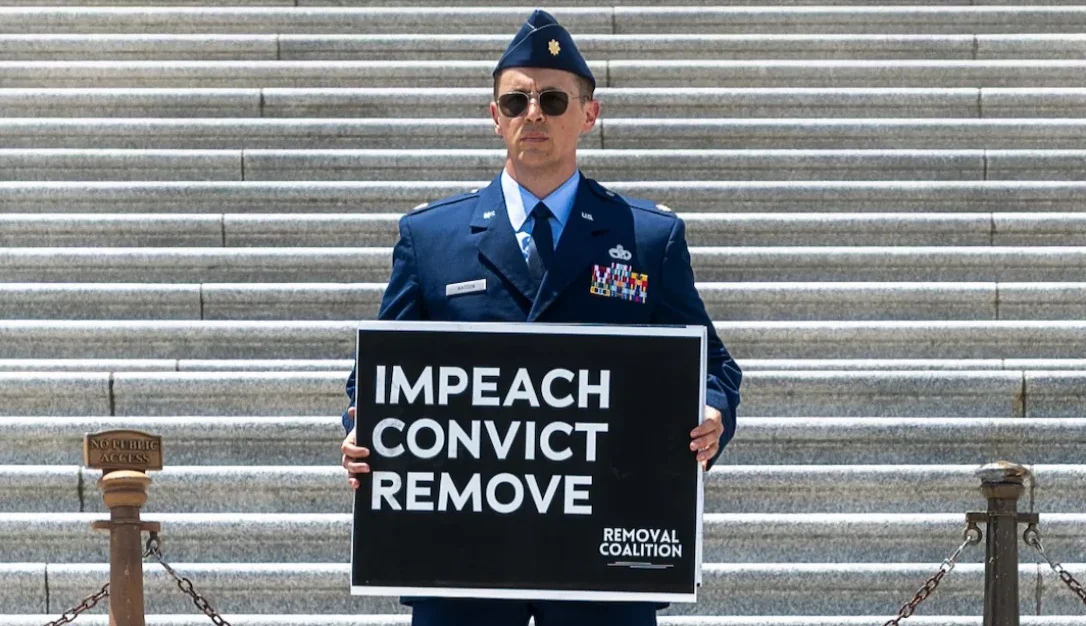
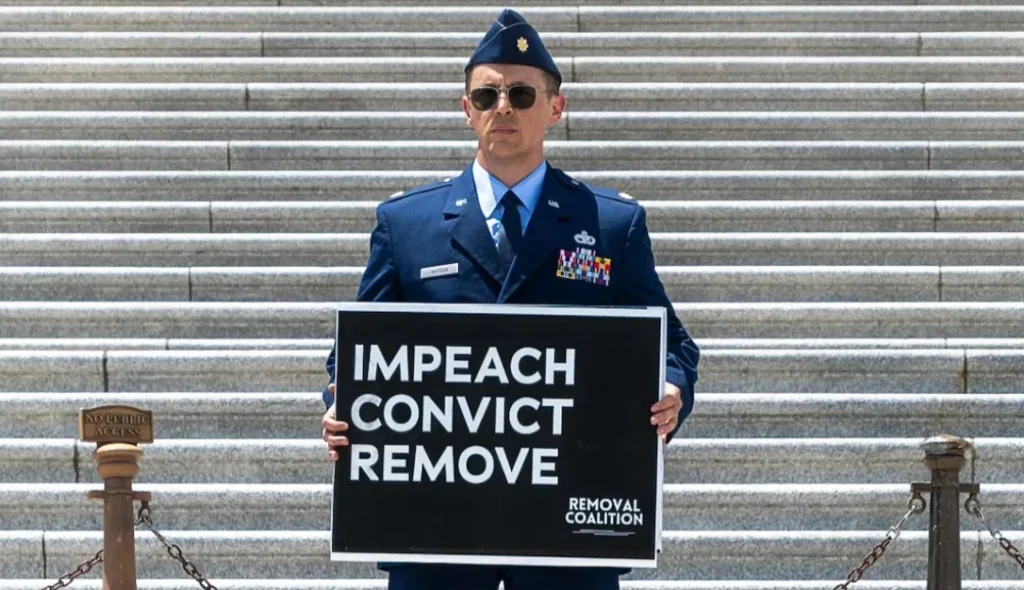
Air Force Major Who Called for Trump’s Impeachment Held in Solitary Confinement

Maj. Jason Watson was arrested after he participated in a news conference calling for Trump to be removed from office over his launching of military actions against Iran, Cuba, and Venezuela without congressional authorization

  •  

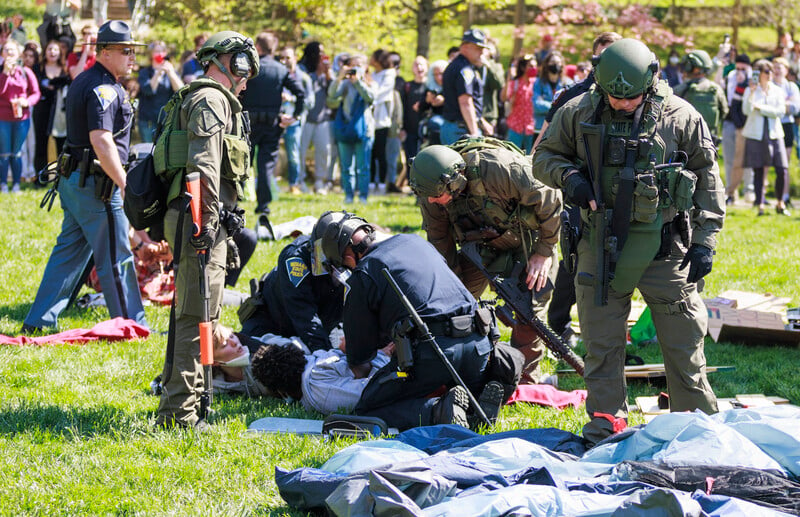
Universities fire dozens amid pressure from Zionist billionaires

Major drivers of the repression include pressure from wealthy pro-Israel donors, government interference, and the political loyalties of university administrators and trustees, according to a new report.

  •  

Metropolitan Police May Have Unfairly Arrested Linehan Over Gender Critical Views, Says Watchdog

Graham Linehan, the Father Ted creator, may have been unfairly arrested by the Metropolitan Police because of his gender-critical views, the police watchdog has said.

The post Metropolitan Police May Have Unfairly Arrested Linehan Over Gender Critical Views, Says Watchdog appeared first on The Daily Sceptic.

  •  

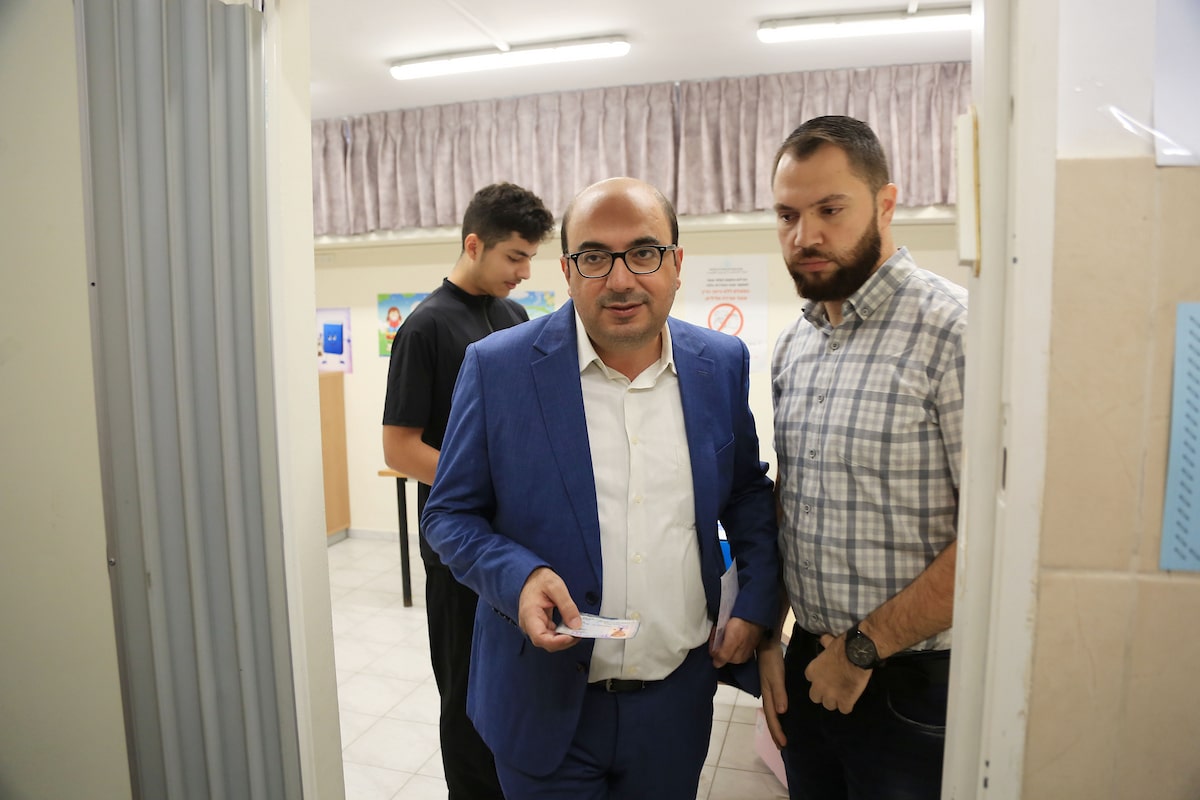
The Israeli witch hunt of Sami Abu Shehadeh exposes the lie of the ‘Jewish and democratic’ state

The Supreme Court’s decision to force Palestinian politician Sami Abu Shehadeh out of the upcoming Israeli elections is the latest sign that there is no place for Palestinian citizens of Israel in the ‘Jewish and democratic’ state.

  •  

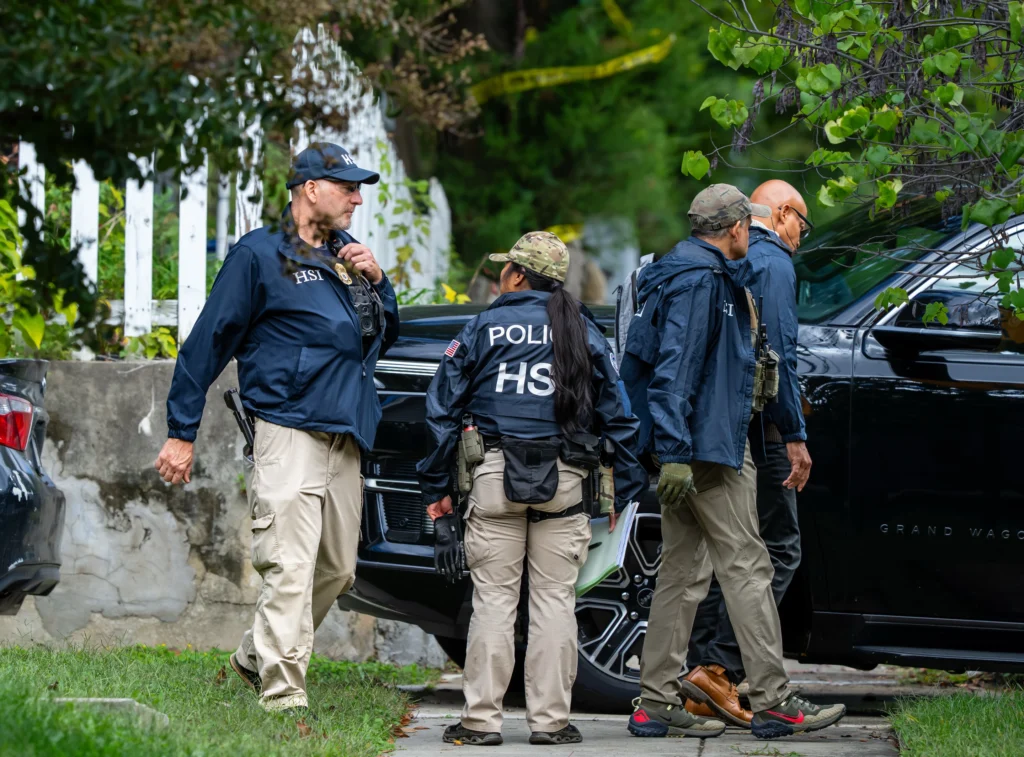
Agents search Rep. Omar’s Washington home in criminal probe as she vows she won’t ‘be silenced’

This is an escalation in a criminal investigation of US Rep. Ilhan Omar, in the final weeks of her reelection bid. She is a frequent target of Israel partisans and the Trump Administration over her opposition to Israel's human rights violations and the Israel lobby's destructive influence in the US

  •  

Oxford Tells Staff Not to Use Common Phrases Like “Learn the Ropes” for Fear of Confusing Foreign Students

Oxford University has told staff not to use common phrases such as "learn the ropes" or "find your feet" over fears they confuse foreign students, sparking concern at the new scheme of language policing.

The post Oxford Tells Staff Not to Use Common Phrases Like “Learn the Ropes” for Fear of Confusing Foreign Students appeared first on The Daily Sceptic.

  •  

When Prayer Becomes a Crime: This is Not British

Isabel Vaughan-Spruce faces criminal charges for standing silently on a street, saying nothing and obstructing no one. Whatever your views on abortion, CJ Strachan argues that criminalising silent prayer is not who we are.

The post When Prayer Becomes a Crime: This is Not British appeared first on The Daily Sceptic.

  •  

Councillor Sues Devon Council After Being Punished for Criticising Gay Sex Stall Next to Children’s Colouring Area in Family Library

A councillor has been punished for raising safeguarding concerns about an LGBTQ stall displaying a large purple dildo next to a children’s colouring area at a family library. With the help of the FSU, he's fighting back.

The post Councillor Sues Devon Council After Being Punished for Criticising Gay Sex Stall Next to Children’s Colouring Area in Family Library appeared first on The Daily Sceptic.

  •  

MAGA Congress escalates against BT, threatens reporters and editorial staff

For months, MAGA Republicans in the House Ways and Means Committee have been targeting BreakThrough News for our editorial judgment and viewpoints they don’t like. The Committee is abusing their powers in a blatant attempt to shut us down. Now, they’ve taken things to another level. 

We just received a new letter from Committee Chairman Jason Smith (R-MO). The letter lists the names of our reporters and editors and threatens to individually subpoena each of them to a deposition in Washington if we don’t yield our legal rights, including First Amendment privileges.

The letter makes clear that this is a punishment for resisting their previous unconstitutional demands on our organization. In July, they subpoenaed our communications and records, smeared us in the press, and threatened our non-profit status in an effort to intimidate and bankrupt us.

Because we’ve held strong in defense of our First Amendment rights, they are now going after our journalists: Rania Khalek, Zoe Alexandra, and Amanda Yee have all been personally named, along with other staff.

We are making an urgent appeal for your support. Stand with us and fight back against Trump’s repression of the press by taking the following steps:

  1. Sign the petition telling the House Ways and Means Committee to stop its attempts to intimidate our journalists. This is a clear abuse of power and an attack on the press that we all need to resist.
  2. This fight is going to take time and resources from our organization — which is exactly the point. Make a donation today so MAGA’s attempt to slow us down doesn’t succeed.

Rania Khalek, Zoe Alexandra, Amanda Yee, and the BT staff work around the clock to do critical reporting on the entire world: from West Asia to Africa, across the Americas and Asia. Yet Rep. Smith now wants to drag our reporters to Washington, D.C.

These MAGA politicians, using an old playbook, say anyone challenging their warmongering policies is a “foreign agent” of China. But that’s a lie. Many of their biggest billionaire donors do extensive business in foreign countries, including China. What they’re really trying to do is discredit and destroy anyone that tells the truth to the U.S. public about Trump’s domestic and foreign policies. 

BT is an independent news organization, which receives no editorial direction from any outside force. All major donations have come from U.S. organizations, using U.S. financial institutions, and complying with all U.S. laws. We’re audited and file a complete tax return to the IRS every year, just like everyone else.

So what’s this really about? It’s intimidation of the press, pure and simple. MAGA has made it a sport to target critical reporters just for doing their jobs. But unlike huge media outlets like the New York Times or CNN, we aren’t a billion-dollar company with an army of lawyers. We’re relying on grassroots support, and people of conscience who care about free speech, to come to our defense so we can stand strong.

Our lawyers already provided a comprehensive reply to the House Committee in August, pointing out the serious legal flaws in their demands and failures to provide a valid legislative purpose. And like before, Rep. Smith has come back with a new letter with a new legal rationale for the continued harassment. The fact that his explanation keeps shifting shows that the real goal is to target us, and that there is no legitimate legislative purpose. While his Congressional district in Missouri has one of the highest poverty rates in the country, this is how he’s spending his time and taxpayers’ money.

The pressure from the House Ways and Means Committee is escalating. We are a small organization now taking on the power of the federal government and, while they are wrong, we have to take it seriously. We need you to help circulate this alert far and wide, to sign the petition in our defense if you haven’t already, and to make a donation to protect our outlet and the future of independent media.

We will keep all of you posted as we enter this next stage of the fight. 

  •  

Suppressing Palestinian resistance: US charity under fire for AI monitoring of Gaza classrooms

The Gaza Children Village plans to record classroom conversations and use AI to flag what it calls 'hateful' speech, prompting concerns over surveillance, free expression and Palestinians' right to shape their children's education.

  •  

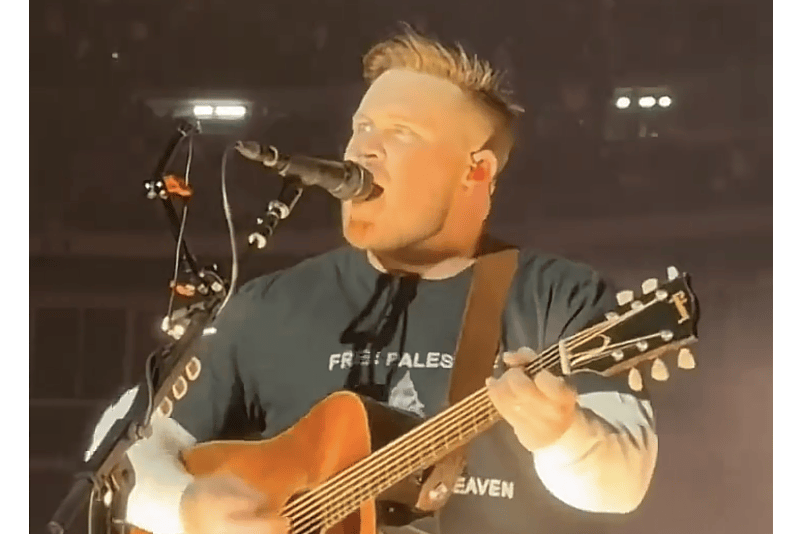
Country Music Singer Zach Bryan Breaks Attendance Record at Robert Kraft’s Gillette Stadium While Wearing ‘Free Palestine’ Shirt for Second Night in a Row

At least two of Bryan’s band members were also wearing Palestine jerseys. Drummer Nate Head bore a jersey with Palestine on the front & on the back, the name “Hind Rajab”, a 5-year-old girl in Gaza killed by the Israel

  •  
❌