For years, the idea of speaking forthrightly to China would evoke an admonition from the US State Department and most of the American policymaking class: “We can’t do that. They won’t like it.” They’d often add, “China has red lines, don’t you know?” There are things you are told you just can’t say – questioning […]
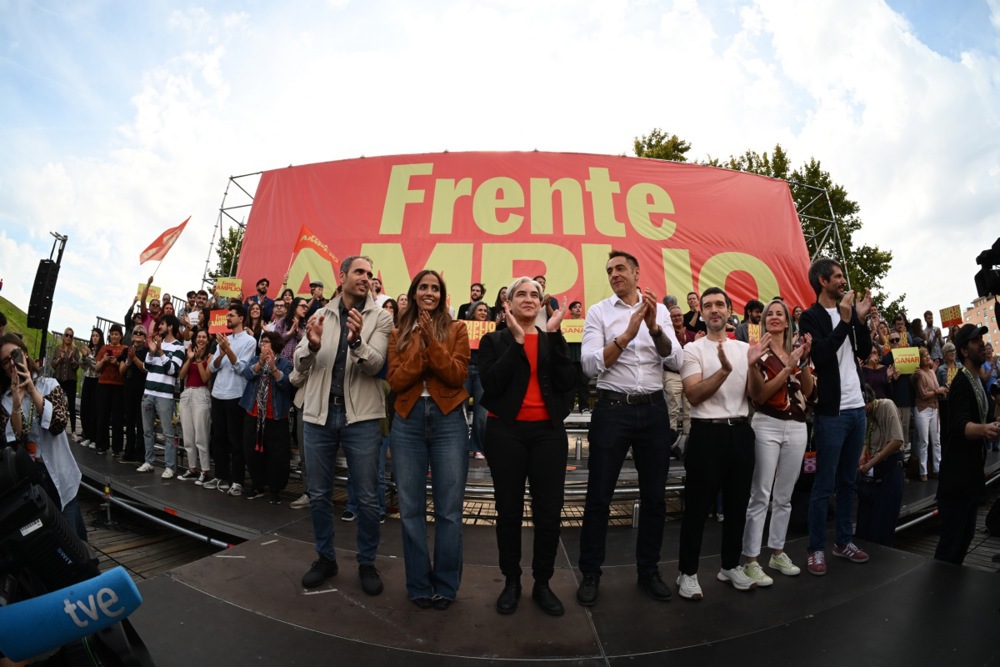
Spain’s Left has now missed its last chance to unite ahead of the country’s snap election on 29 November — a historic failure, not so much because the numbers don’t add up, but because it fails to offer an alternative.
The elections are seen as pivotal, with a real chance that the far-right Vox will enter the government for the first time since Spain’s return to democracy in 1978, in a coalition with the centre-right People’s Party (PP), which itself is expected to fall short of an absolute majority.
With that possibility on the horizon, the Spanish parties to the left of the PSOE (Spanish Socialist Workers’ Party), led by PM Pedro Sánchez, tried to agree on a nationwide joint list for the 29 November snap election.
But they failed because of a “war of egos”, as one political leader described it, and old grudges dating back to 2023. This has left many disillusioned and the left even more divided.
“These past few days have been very difficult … some people will be disappointed today, and for that I am sorry,” Ada Colau, former Barcelona mayor and leader of the Broad Front, said last week, as her alliance failed to reach an agreement on a joint electoral platform ahead of the election.
Spain’s electoral system disadvantages smaller parties, especially in less populated provinces. That means their votes are less likely to translate into seats.
In Spain, a country where a two-party system was the norm until 2015, it is puzzling that the “new” left, born precisely to break that duopoly, has ended up too divided to even compete with the mainstream.
So what’s the picture? On one side, the right is more aligned than ever: the PP and Vox are running separately, but the conservative party openly says it is willing to strike a deal with the far-right if needed. Liberalism is almost non-existent, even though Democracia 21 will run for the first time, but only in Madrid and Barcelona. And the left is divided.
War of egos
This article continues, but the full version is available only to EUobserver.com subscribers. Visit account.euobserver.com/membership
Should this be seen as the Hans Christian Andersen story, in which the narcissistic emperor is finally exposed as a naked fool by a truth-telling child? Donald Trump is certainly all of these things: narcissistic, naked in his support for Putin and a fool. But the parallel doesn’t quite work because it hasn’t taken a […]
Recent media reports projecting South Korea’s per capita GDP to surpass Japan’s have generated considerable excitement across the regional countries that see Korea as a role model. According to the IMF’s October 2026 projections, South Korea’s nominal GDP per capita could reach approximately $49,000 in 2027, compared with Japan’s $37,000-38,000. Its achievements in semiconductors, advanced […]
A majority of Ukrainians reject handing all of Donbas to Russia in exchange for US and European security guarantees. Some 62% are ready to endure the war for as long as it takes, a survey by the Kyiv International Institute of Sociology shows.
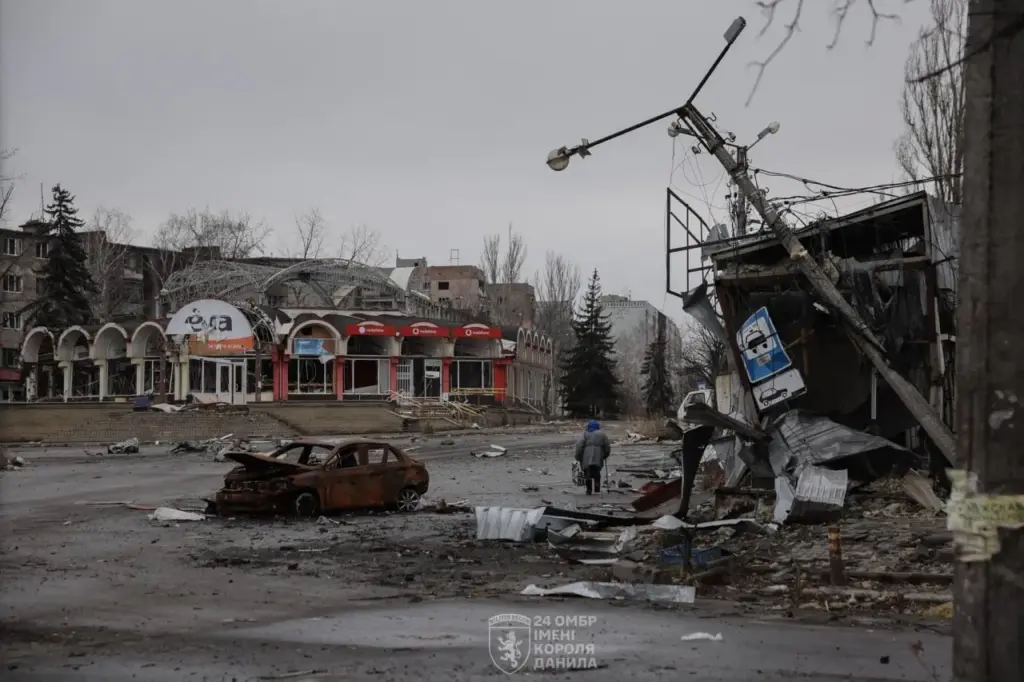
Russia has spent the fall hammering Ukrainian cities, and Washington has eased sanctions on Russian diesel and cut Ukraine’s intelligence and Starlink speed, both apparently aimed at wearing Ukrainians down toward a capitulation. Instead, the majority calls the withdrawal of troops from Donbas categorically unacceptable, with 35% willing to accept it and 4% undecided, a position essentially unchanged since late summer.
The pressure campaign tracked the other way. Among those polled on 8-9 October, before the diesel deal and the pressure that followed, 57% were categorically opposed. Among those polled on 10-16 October, the figure rose to 62% afterward, KIIS reports.
In every region, at least half reject the trade. Resistance is firmest in Kyiv, which has borne a relentless campaign of ballistic and jet-drone strikes, where 66% are categorically against, the highest figure of any region. Even in the east, around Kharkiv, where the most are open to a compromise at 45%, 51% still rule it out.
Bracing for a long war, and ready for it
Few Ukrainians expect a quick end. Only 10% think the war will end by the close of 2026 and 13% in the first half of 2027, while 56% expect it to run into the second half of 2027 or beyond, the institute reports.
Who Ukrainians blame for blocking peace
The poll also measured who is seen as the obstacle. Asked to choose, 78% said Russia’s drive to subjugate Ukraine is what blocks peace, against 12% who blamed an inflexible Ukrainian government, and 92% said Russia strikes economic sites to wreck the economy and force capitulation, not in retaliation.
“The enemy, with its vile strikes by ballistic missiles and drones, is unable to break the spirit and will of Ukrainians,” KIIS executive director Anton Hrushetskyi says.
He argues that what Ukraine needs is “packages of interceptors for Patriot systems,” not an election or one-sided concessions dressed up as peace. The survey polled 1,031 adults across government-controlled Ukraine from 8-16 October.
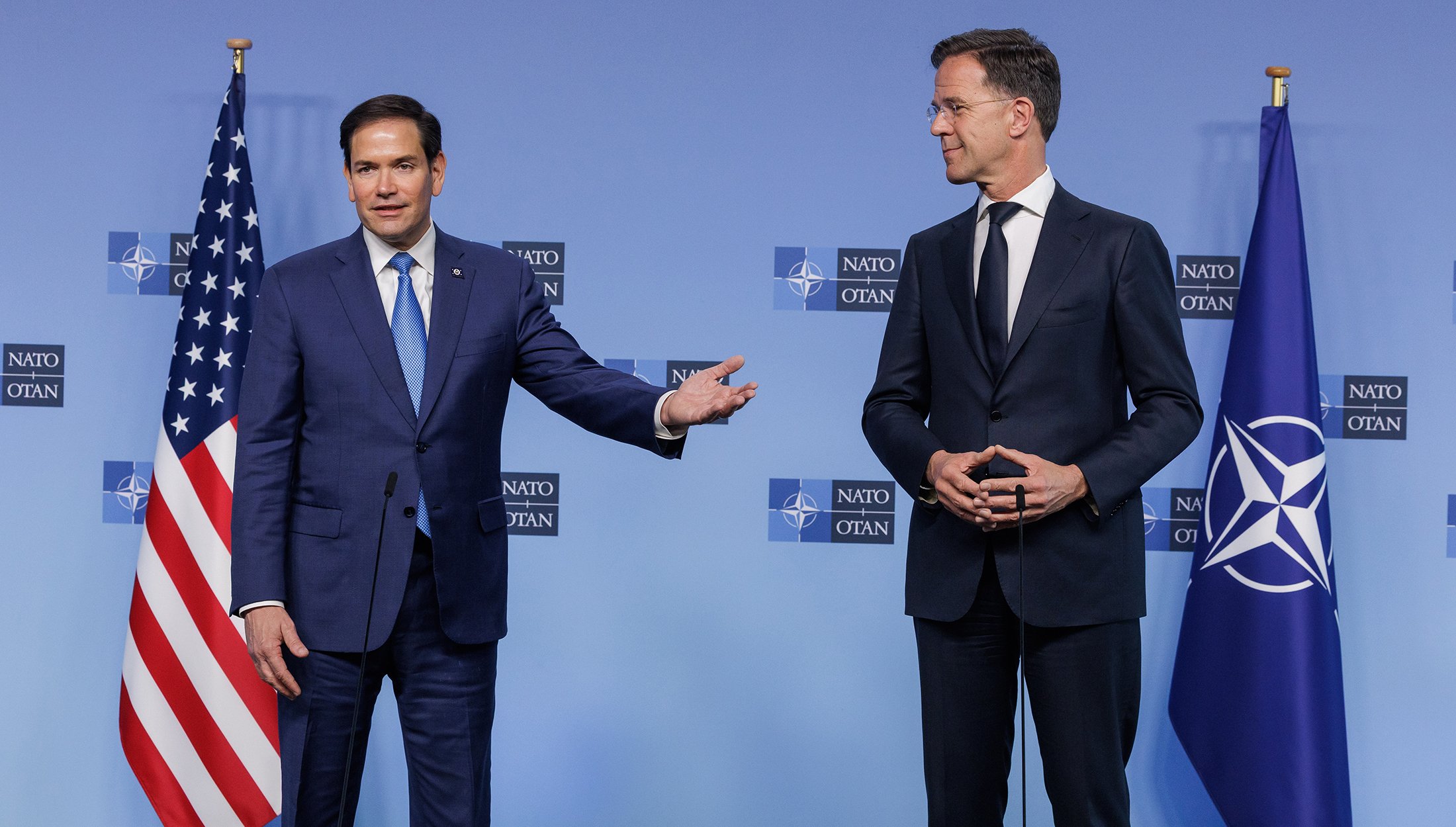
It is hard for European allies to know which is worse, hearing their sacrifice in the US-led war in Afghanistan mocked by Pentagon chief Pete Hegseth, seeing his State Department counterpart Marco Rubio dissembling about the interruption to Starlink service in Ukraine, or watching the commander-in-chief of the free world blithely end sanctions on Russia.
One option is to sit tight and hope that next month’s mid-terms will bring deliverance.
Mid-term blues?
It is possible, perhaps, that a huge political defeat for Donald Trump will change American foreign policy, though those who sincerely hanker for the eras of Joe Biden and Barack Obama may need to adjust their rose-tinted filters.
More likely is that constitutional tussles will make the US even more distracted and unpredictable. Who really believes that a midnight phone call alerting the president to a surprise Russian incursion into Nato territory will gain a firmer response if the Democrats control Congress?
It is also tempting simply to wallow in outrage.
This article continues, but the full version is available only to EUobserver.com subscribers. Visit account.euobserver.com/membership
Berlin and Paris spent months negotiating over the future of Europe’s auto industry.
Germany wanted to keep selling new combustion-engine cars beyond 2035. In return, France wanted strict “Made in Europe” rules: public money spent on electric vehicle (EV) purchase incentives, subsidies and government contracts should benefit cars genuinely made in Europe, not simply assembled here.
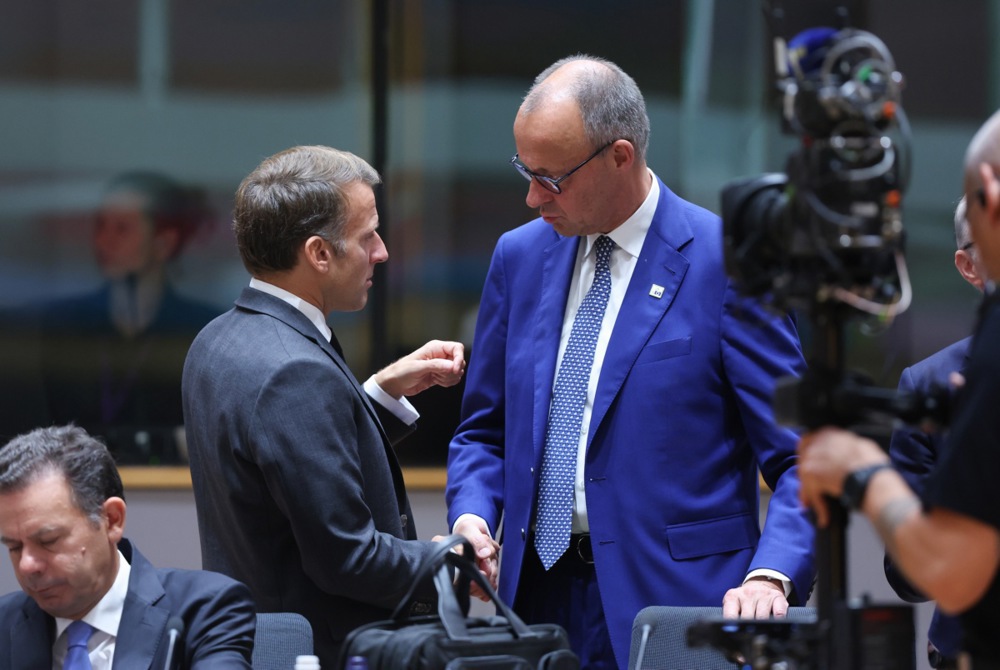
One concession in exchange for the other. French president Emmanuel Macron and German chancellor Friedrich Merz have now sealed the deal.
Both can claim victory at home, and both say they want the same thing: to strengthen Europe’s auto industry against Chinese competition.
But the trade-off undermines that very goal. It rightly pushes for more European production, but pays for it with less ambition for electric vehicles.
For Europe’s automakers to compete, two things need to happen: More of the value generated by car manufacturing must stay in Europe, and the transition to electric vehicles must remain on track. Trading one for the other weakens both.
Value creation is already moving elsewhere
On one point, France is right: a growing EV market alone won’t protect European jobs. Many of the most important components in electric cars already come from China, especially batteries.
Meanwhile, Chinese automakers are building factories in Hungary and Spain, securing direct access to the European market.
The risk is clear: cars assembled in Europe from imported components qualify as European products, benefit from purchase incentives and win public contracts.
Final assembly stays in Europe, but much of the economic value is created elsewhere. European auto suppliers have already cut more than 100,000 jobs in two years, and the European Commission warns that up to 600,000 more could disappear over the next five to 10 years.
That’s where the proposed Industrial Accelerator Act comes in. It would link public spending on subsidies, purchase incentives and government procurement to production in Europe.
This isn’t just about shutting out foreign competition. It steers demand to where it strengthens Europe’s industrial base.
To work, the rules must target the components that will shape the industry’s future: battery cells, software, electric drivetrains and power electronics.
“Made in Europe” can’t simply mean attaching the wheels here.
That doesn’t mean every nut and bolt must come from the EU. The auto industry relies on global supply chains and trusted trading partners.
But a law riddled with exemptions would be little better than no law at all: It would create more red tape without bringing a single new factory to Europe.
Factories need customers
Even the best industrial policy will fail without buyers. A battery factory can only make money if it produces enough batteries. Yet Europe’s battery plants are running well below capacity because they don’t have enough orders. Every battery that goes unproduced drives up the cost of those that are made. Factories, machinery and workers still have to be paid for.
Since 2022, roughly a quarter of announced battery projects in the EU have been canceled or put on hold.
This is why Germany’s push to delay the phaseout of combustion-engine cars is so damaging. Every combustion-engine car sold instead of an EV means one fewer battery that could be made in Europe. The very factories meant to make “Made in Europe” a reality would lose potential customers.
The best way to boost demand for European batteries is to build more small, affordable EVs in Europe. That’s where the biggest sales volumes are. Yet German automakers in particular have been slow to embrace this market, despite significant demand potential in Germany itself. Delaying the combustion-engine phaseout would only give them another reason to hold back.
Slow down, lose out
For European automakers, the stakes go far beyond their home market. Sell fewer EVs at home, and manufacturers will launch fewer new models, produce fewer cars and face higher costs. That will make it harder to compete abroad, too. Giving combustion engines more time won’t close the gap with China. It could make it wider.
Political uncertainty only makes matters worse. Automakers plan new models, factories and supplier contracts years in advance. Every fresh debate over exemptions gives investors and consumers another reason to hesitate.
Companies investing billions in EVs and batteries – and consumers considering buying an electric car – need to know that policymakers won’t change direction tomorrow.
The Franco-German bargain ignores economic reality. The future of the car is electric, and China figured that out long ago.
Beijing is doing everything it can to build an unbeatable lead in EVs, including through unfair practices such as massive government subsidies.
And Europe? It’s haggling over more time for yesterday’s technology. At stake is nothing less than the auto industry – the backbone of Europe’s industrial economy and a major source of jobs.
This deal is not yet law. A better deal would be simple: Europe should pursue electric vehicles with the same determination as China while making sure the jobs, factories and economic benefits stay in Europe.
Western governments are rebuilding ties with India even as they accuse it of foreign interference and of running intelligence operations against people on their soil. The contradiction was on display October 13, when Canada’s Prime Minister, Mark Carney and India’s Prime Minister, Narendra Modi, reaffirmed plans to expand trade and security cooperation, though underlying security […]
In our fast-paced, instant-gratification world where waiting an extra 10 seconds for our video to load seems like an eternity, the difficult ministry of making disciples seems antiquated, unproductive, and inefficient. Similar to parenting, the daily grind seems endless even as the behaviour of our children seems to be regressing. The harder we try, the... Continue Reading
In recent days, a Ukrainian drone strike hit Russia’s largest data center, owned by bank and technology company Sberbank. The strike came after Ukraine hit three data centers belonging to the tech giant Yandex, which is often referred to as “Russia’s Google.” After those attacks, Yandex’s traffic dropped 94%. Its users experienced heavy disruption to […]
I went to bed on Saturday (17 October) glued to my X feed on the French riots and it was impossible not to react emotionally to images of familiar landmarks in Paris in flames.
It was a mistake to have followed things on the far-right propaganda tube of racist US oligarch Elon Musk, which both glorified and reviled its AI-curated clips of violent clashes between mostly white policemen and young black or Arab men.
But in any case, I felt pity for police facing Molotov cocktails and cobble stones and angry about their use of stun grenades that left young people maimed.
I was shocked to see public buildings and luxury shops in Lyon, Marseille, and Paris set on fire and looted in what looked like pure criminality, rather than liberté, égalité, fraternité.
But the anarchist adrenaline in me also said: “Fuck Louis Vuitton! A shop that sells luggage for the price of most families’ monthly incomes is a perfect symbol of the social inequality at the heart of this eruption of public anger”.
I woke up on Sunday thankful to learn from professional media, such as the BBC, that even if Paris looked like a war zone, no one had been killed, and even though police had made over 1,800 arrests, aggressive thugs were a fraction of the hundreds of thousands of people who had peacefully protested for better living conditions and education.
But the political harm of Saturday’s X-streamed violence, which also broke out in Italy and Belgium, was still enormous and it will help the EU and French people’s enemies – the far-right in Europe, Russian president Vladimir Putin, and US president Donald Trump.
This article continues, but the full version is available only to EUobserver.com subscribers. Visit account.euobserver.com/membership
At international level, the EU also played a decisive role in the adoption of the Kunming-Montreal Global Biodiversity Framework, which was agreed in December 2022 at COP15 of the Convention on Biological Diversity. The framework established a global roadmap to halt and reverse biodiversity loss by 2030.
Next week (19-30 October), Yerevan will host COP17 of the Convention, where the first global review of progress since the adoption of the Framework will take place. It will be an important opportunity to determine whether the commitments made are being translated into concrete action and results on the ground.
As co-chair of the European Parliament delegation attending the conference, I will defend a united European position that is consistent with our historic leadership and responds to the urgency of the challenge.
The European Commission, which formally negotiates on behalf of the Union on the basis of the position agreed with the member states, must promote decisions that accelerate implementation of the Global Biodiversity Framework during the remaining years to 2030.
Honest appraisal? A mixed picture
This global review must be accompanied by an honest assessment of our own performance. Europe should arrive in Yerevan acknowledging both the progress it has made and the work that remains.
The commission’s latest report on the implementation of the framework presents a mixed picture.
Of the 45 targets established for the EU, only two have been achieved and 16 are on track, while progress remains too slow on another 25 and two cannot yet be assessed.
There are positive signs in the EU. Protected areas have expanded, organic farming has increased and a greater proportion of fish stocks is being managed sustainably.
However, the overall situation of many habitats and species remains worrying, while farmland birds and grassland butterflies, among others, continue to decline.
The main problem is not a lack of legislation, as Europe already has many of the instruments it needs. The challenge is to implement them properly and turn them into visible improvements on the ground, which requires public authorities with sufficient capacity, reliable data, clear plans and stable funding.
The Nature Restoration Regulation is a good example.
Restoring wetlands, rivers, forests, soils and marine ecosystems will not only help biodiversity recover, but will also retain water, reduce flood damage, protect soils and make our territories more resilient to droughts, heatwaves and wildfires.
Missed deadlines
However, the regulation will only deliver results if member states meet their obligations.
The deadline for submitting draft national restoration plans was 1 September, yet only nine countries have done so.
This delay not only slows implementation, but also makes it harder to calculate the cost of restoring nature and the resources that will be required.
The commission was expected to present an assessment of restoration funding needs and gaps in August 2025, but we are still waiting for a complete analysis.
The commission argues that it needs the national plans to calculate these costs. Yet negotiations on the 2028-2034 financial framework are moving forward while many plans remain outstanding and we still lack a full estimate of the resources needed to implement one of our most important environmental laws.
This situation reflects one of the main challenges facing COP17.
Adopting targets is no longer enough. We must also agree on how they will be implemented, how progress will be measured and how action will be financed.
Five EU priorities in Yerevan
In this context, I believe that the European position should focus on five priorities. We must mobilise more resources for biodiversity, consolidate the Cali Fund, make progress in eliminating harmful subsidies, assess progress through concrete results and strengthen the role of nature in climate adaptation.
Finance will be one of the central issues in Yerevan, as the Global Biodiversity Framework calls for the mobilisation of at least $200bn [€178bn] a year from all sources by 2030. Public investment must remain the foundation of this effort, but private capital will also be needed.
With this aim, the commission presented its roadmap for nature credits in July 2025 and is now developing the methodologies, certification systems, oversight arrangements and pilot projects needed for their deployment.
These instruments could help finance conservation and restoration, but they will only be useful if they are governed by rigorous rules and deliver real, verifiable and additional benefits for biodiversity. They must never replace public funding or be used to justify damage to nature in one place in exchange for financing action elsewhere.
COP17 must also consolidate the Cali Fund, which was created so that companies benefiting from the use of digital information on genetic resources contribute to biodiversity conservation. The agreement reached at COP16 was an important step, but we now need real contributions and a fair distribution of resources, including for Indigenous Peoples and local communities.
Another priority must be to eliminate incentives and subsidies that harm biodiversity. It makes no sense to call for new resources to protect nature while public budgets continue to support activities that destroy it.
The European Union should therefore examine its own policies honestly, particularly in areas such as agriculture, fisheries, energy and infrastructure, and establish a timetable for progressively phasing out and ultimately eliminating this harmful support.
The global review must also measure concrete results. Success cannot be assessed simply by counting strategies or setting targets. We need to know whether ecosystems are recovering, whether species are in better condition, whether protected areas are being managed effectively and whether funding is actually reaching action on the ground.
We must also strengthen the connection between biodiversity and climate adaptation. The droughts, floods, heatwaves and wildfires affecting Europe show that protecting and restoring nature is not a secondary concern. Healthy ecosystems are among our best defences against the effects of climate change and represent a direct investment in our security, agriculture and economy.
All these priorities lead us inevitably to the European budget, because political commitments are only credible when they are backed by sufficient resources.
The budget?
There is currently a clear contradiction between the leadership that the European Union wishes to maintain on biodiversity and the place given to it in the proposal for the 2028-2034 financial framework.
Although the commission proposes that 35 percent of the next budget should contribute jointly to climate and environmental objectives, it removes the specific 10 percent target for biodiversity included in the current budget and no longer presents LIFE as a standalone programme.
By placing biodiversity within much broader objectives and funds, its financing becomes less visible and risks being pushed aside by priorities such as security, defence and competitiveness.
Parliament must defend sufficient and clearly identifiable resources for biodiversity and for the activities currently financed through LIFE.
Simplification can make funding easier to access, but it must not reduce environmental ambition, transparency or democratic oversight.
This budget debate also affects our international credibility. Europe cannot ask other countries to increase their ambition and financial contributions while weakening budgetary support for biodiversity within the Union itself. Our leadership in Yerevan will depend not only on what we defend in the negotiations, but also on what we are able to implement and finance at home.
Europe has strong laws, valuable experience and the capacity to lead. We do not need to start again. We need to deliver what we have already agreed, provide the necessary resources and use COP17 to accelerate global action.
The global review cannot be limited to describing how far we remain from the 2030 targets. It must help us agree on how to close that gap during the four years that remain. I will travel to Yerevan with the European Parliament delegation determined to support that objective.
Indonesia, Brazil and the Democratic Republic of Congo together hold more than half of the world’s tropical rainforests. In 2022, when Indonesia hosted the G20 summit in Bali, the three countries pledged to cooperate on how to pay to protect those forests. The promise was one of South-South cooperation: developing countries working together rather than […]
The single most predictable action of the Trump second presidency happened just a few hours ago. Trump signed an executive order that exempted Russia from all of the key possible sanctions that could have been placed on it by the Graham-Blumenthal bill. Here is a link to the order and here is how it opens. The […]
The UK government has returned to an issue musicians have been discussing since Brexit: how to make working in Europe easier again.
Its new music strategy, Turn It Up: Our Plan for Music, refers to the first high-level meeting on culture between the UK and the European Commission, held back in March, and promises continued work to reduce the barriers faced by British artists touring the EU.
The timing is significant. The UK is preparing to rejoin Erasmus+ in 2027, while London and Brussels are pursuing a broader reset of post-Brexit relations.
Music offers an interesting test of that reset. The UK has left the European Union, but its musicians have not become any less European.
British performers still tour the continent, while European musicians continue to work in British orchestras. The musical ecosystem survived Brexit. Navigating it became considerably more difficult.
A UK government study estimates that additional barriers to EU touring between 2022 and 2024 cost Britain £208m in lost economic output and the equivalent of 2,490 full-time jobs.
A Musicians’ Union survey found that, among musicians who had previously worked in the EU, 75 percent reported fewer bookings and 72 percent lower EU income.
More than half said EU touring was no longer financially viable.
But music reveals something more interesting than another item on the list of Brexit consequences. Brexit drew a political border through a professional community that had operated internationally for centuries.
Musicians were ‘European’ before EU
European musical mobility did not begin with freedom of movement. In the early 19th century, theatre companies crossed linguistic and political borders. Imperial Russia accommodated French and German theatrical companies alongside Russian performers, while Italian opera was embedded in its musical life.
Individual musicians were equally mobile. John Field, the Irish pianist and composer at the centre of my own research, trained in London before spending most of his adult career in the Russian Empire. The German pianist Adolf Henselt settled there and became deeply involved in Russian musical education.
These were not exceptions: musical life itself was international. The EU did not invent that circulation. European integration merely made it administratively easier.
Brexit did not make British musicians unwelcome in Europe, or European musicians unwelcome in Britain. It changed the cost of maintaining those relationships.
For an international star with professional support, another permit can be an inconvenience. For a young ensemble deciding whether four European concerts are financially viable, it can determine whether the tour happens at all.
The border appears before the first tour
The consequences begin before professional life. A conservatoire is not simply somewhere a musician obtains a qualification. It is where professional relationships form. A student may meet a future ensemble partner, while an exchange can produce an opportunity years later.
The post-Brexit figures are striking. The number of new EU students entering UK higher education fell from 66,685 in 2020–21 to 28,375 in 2023–24 — a decline of around 57 percent, according to figures based on HESA data.
Britain’s Turing Scheme supported outward mobility, but did not reproduce Erasmus+’s reciprocal structure.
The UK’s return to Erasmus+ in 2027 therefore matters beyond universities. In music, today’s exchange student can become tomorrow’s professional collaborator.
Meanwhile, Brussels is actively spending money to encourage cultural mobility. Creative Europe has a €2.44bn budget for 2021–27. Its Pan-European Cultural Entities programme specifically supports orchestras working across borders to develop young musicians: around €11m was allocated to five projects in 2024, expected to involve more than 1,000 young musicians from at least 20 participating countries. The policy assumption is revealing: movement itself creates value.
Put musicians into the reset
At the 2025 UK-EU summit, London and Brussels explicitly recognised “the value of travel and cultural and artistic exchanges, including the activities of touring artists.”
The new high-level cultural dialogue provides a forum to turn that promise into policy. Cultural mobility should become a permanent part of the UK-EU reset.
London and Brussels should use the dialogue to identify touring requirements that can realistically be simplified and work with member states towards greater consistency for short-term cultural engagements.
Emerging artists should also be explicitly considered in the proposed Youth Experience Scheme. The commission’s original proposal envisaged a time-limited route for people aged 18 to 30 to live on the other side of the English Channel. Paid cultural work should be clearly accommodated in whatever agreement emerges.
A 24-year-old violinist should not discover that a programme intended to restore opportunities for young Europeans works perfectly until somebody pays her to perform.
None of this means recreating freedom of movement through the orchestra pit. Britain chose to leave the EU and cannot expect every privilege of membership.
The argument is more practical. British and European cultural industries remain intertwined, and unnecessary friction is most expensive for those least able to absorb it. Major institutions employ administrators. International stars have managers. A young quartet may have four instruments and a group chat.
Two centuries ago, Field travelled from Ireland through London and built a career in Russia. Henselt left Germany and became part of Russian musical education. They did so long before Eurostar, Erasmus+ or Creative Europe.
Two hundred years later, crossing the continent is faster. Building a European career need not become harder. The UK has left the EU. Its musicians have not left European musical life.
As London and Brussels shape their new relationship, cultural mobility should be treated as part of its infrastructure. Musicians will continue to cross the Channel. The question is how costly we choose to make it.
More than 25,000 police officers were deployed across New Delhi recently to prevent demonstrations led by India’s new youth-led political movement, the Cockroach Janta Party (CJP). Government authorities had denied the CJP permission to protest on public-order grounds. The ensuing security operation saw the authorities shut one in six metro stations in the capital, barricade […]
Political and Geopolitical Analysis | October 16, 2026 Azerbaijan’s School Hijab Controversy: A Debate That Goes Far Beyond Religious Clothing Azerbaijan has found itself at the center of an increasingly sensitive debate over secular education, religious freedom, national sovereignty, and the authority of the state. New regulations governing clothing in public schools have triggered demonstrations, […]
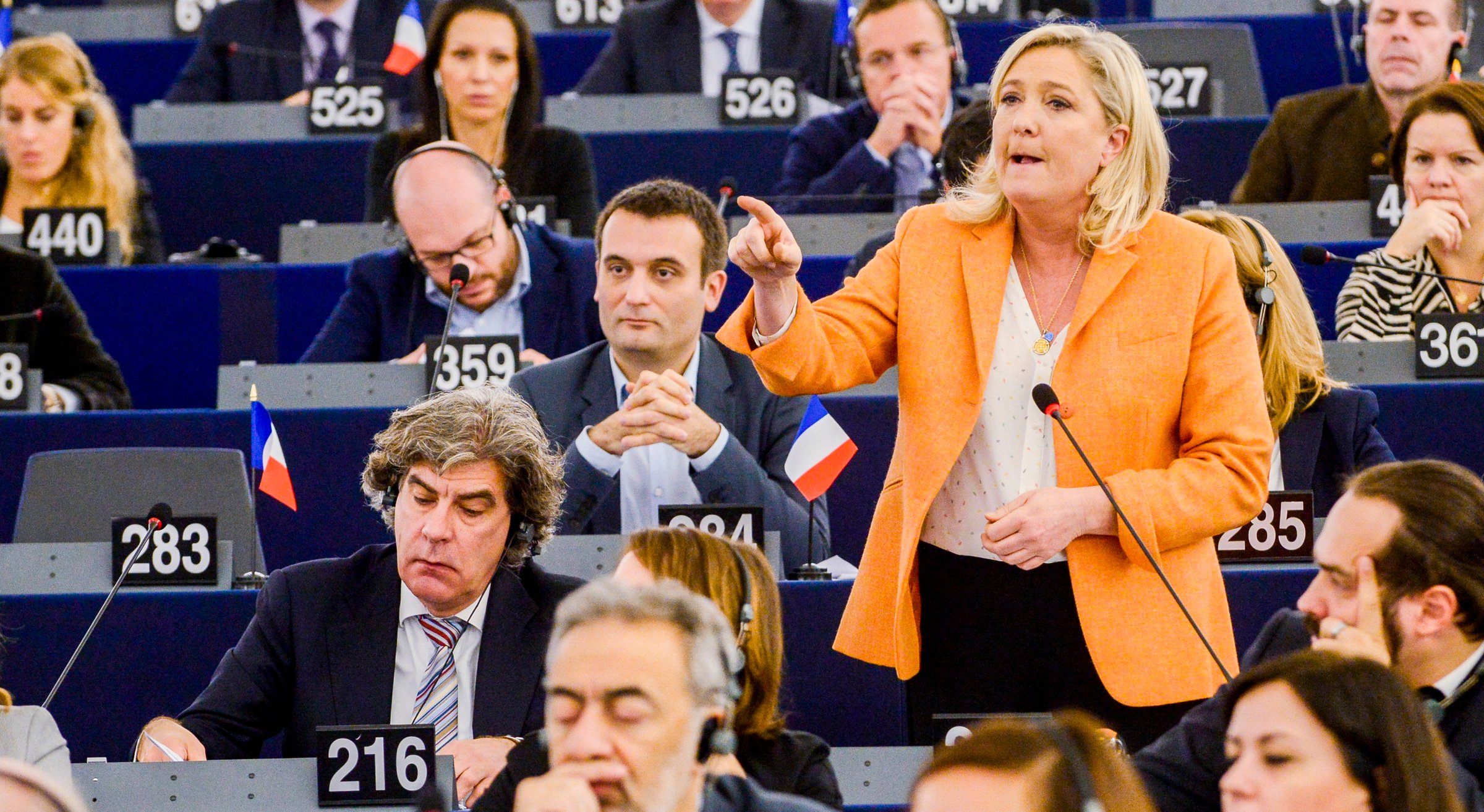
Europe is heading into an electoral moment without recent precedent. Four of its five most populous member states, Spain, France, Italy and Poland, are due to vote within the next 12 months – starting with Spain on 29 November.
If voters move further right, the combined effect could reshape the Union far more profoundly than any single national election.
Two shifts stand out. First, the firewall between the centre-right European People’s Party (EPP) and the hard-right is crumbling, even in Germany, its last bastion.
Hard-right parties sit in the governments of Italy, Czech Republic, Finland, Slovakia and Croatia, while Slovenia’s government relies on outside support from one.
Second, competition from the far-right is pushing established radical-right parties to harden their positions.
In Catalonia, Aliança Catalana is challenging Vox; in France, Éric Zemmour’s Reconquête, despite scoring single digits, is pressing on Marine Le Pen’s National Rally; in Italy, Roberto Vannacci’s National Future is challenging Giorgia Meloni’s Brothers of Italy; and in Poland, Grzegorz Braun’s Confederation of the Polish Crown is cannibalising the Confederation.
Under pressure, established conservatives tend to move towards these parties rather than hold the line, as Spain’s Partido Popular and France’s Les Républicains illustrate. Positions once on the margins become mainstream.
The implications go beyond immigration.
Le Pen and Vox leader Santiago Abascal advocate “national priority” in access to welfare and public services. Under pressure from the League and National Future, Meloni’s government has introduced a 30-percent cap on first-year classrooms for pupils without Italian citizenship, based on their birthplace or prior schooling.
A leaked AfD strategy paper reportedly goes further, proposing that national constitutions override EU law and reducing the Court of Justice to a forum for disputes between governments.
This article continues, but the full version is available only to EUobserver.com subscribers. Visit account.euobserver.com/membership
Human rights NGOs in Europe are not doing well. Funding cuts, legal restrictions, administrative burdens and smear campaigns are taking their toll.
I see organisations drastically downsizing or closing altogether and staff burning out. If we are to reverse our fortunes, the traditionally legally-focused movement needs to rebalance its skill-set to include more communicators and organisers.
Traditionally, human rights NGOs have been staffed mainly by lawyers. This is understandable. Human rights are legal standards contained in national, European and international law. If your main tools for getting human rights implemented are advocacy and litigation, then you need legal experts. But advocacy is becoming less effective because decision makers increasingly see supporting human rights as politically risky.
And litigation as a tool is partly limited by increasing political interference with the courts in some countries, or because – again – politicians see potential political brownie points in not complying with (or see potential political costs in complying with) judgments that enforce human rights standards.
It’s not just that NGOs’ traditional tools are losing their power. It’s that legal training does not equip us with the tools do we need to reverse our fortunes.
Our main lever for restoring human rights and the organisations that promote them is public opinion. For as long as we live continue to live in democracies, pressure from voters can have an impact on decision makers. Which means we need communicators who can help the public realise how important human rights are to them.
David Attenborough pointed out a few years ago that “saving our planet is now a communications challenge. We know what to do, we just need the will”.
The same goes for human rights.
But legal training does not make you good at communicating with folks outside your bubble.
‘Legal-ese’ is not the right lingo
I know from personal experience. I trod a path to human rights through a law degree, masters, doctorate and then academia. Human rights folks talk about them in a way that conveys a fraction of their value and power. If you’d asked me 15 years ago why human rights are important, I’d have said things like this: ‘they protect us from abuse by the government’, or ‘they’re minimum standards of protection the state can’t breach’, or ‘they exist to protect the vulnerable’.
These things are true. They’re also not very persuasive to people outside our base of support. Because the kinds of human rights breaches the movement foregrounds tend to affect ‘other people’. And lawyers are used to thinking about rights in the context of legal disputes.
So human rights get reduced to a shield that protects groups or institutions that most people don’t care about, don’t understand, or who live in other countries.
Human rights are not just a passive defence. They are transformational. Human rights are tools. Tools we use to demand that our leaders use the powers and resources with which we’ve entrusted them to do what’s best for all of us. Tools that we use to create the lives we want to live and the communities we want to live in. This is how we need to talk about them, especially when it comes to civil and political rights.
People outside our base cannot be made to care about media freedom, the right to protest or democracy itself just on principle or because they’re enshrined in legal standards. To care about human rights, most people need to know what these things deliver.
Folks will see that protest is important when we explain how it allows people like them to come together and make their leaders listen to their concerns, whether it’s about climate change or better pay for teachers. I’ve seen it first-hand when testing messages in focus groups.
Empathy, not stereotypes
The same goes for stimulating support for the rights of people from marginalised groups. Right now, most people have trouble caring because they been fed negative stereotypes that cause them to regard some people as ‘others’ and ‘outgroups’, meaning that they will tolerate lower standards of treatment for them.
Using legal arguments and evidencing rights violations by focusing on the harm being suffered doesn’t work because it does nothing to address the reason people don’t care. For that, we need to stimulate empathy and dissolve negative stereotypes through techniques like storytelling. Once people empathise and recognise our common humanity, they’re much more likely to support equal treatment.
When we communicate in a way that allows our audience to see how human rights deliver things they find important to them, they don’t just start to support human rights as standards. They also start to support the organisations that promote them. That means they’re more likely to listen to them, stand up for them, get involved in their work and even donate.
It’s not just about communicating better. We also need organisers who can help people come together to carry effective messages and make the strength of public support felt by our leaders.
Folks with legal training are still essential.
If you’re going to make phones, you need engineers. But we don’t see the engineers being given the job of persuading folks to buy the phones, do we?
Unless they’ve had proper communications training. The human rights movement’s legalistic centre of gravity needs to shift to make room for knowledge and skills that can meet the moment.
In the short-term we could achieve this by retraining staff and joining forces with other progressive movements that know how to organise and mobilise, like environmental NGOs.
We could also tackle the issue upstream by working with universities that produce human rights graduates to develop more holistic curricula that cover communications and organising and not only law.

 Login