US special envoy Tom Barrack conceded that a “ground kinetic” battle in Yemen by the US “seems fruitless” during a talk at the Global Security Forum in Qatar on 20 October.
“I think the president’s been clear that he supports Saudi Arabia and the backing that they need logistically he will supply. But America getting involved in a ground kinetic battle somewhere else seems fruitless.”
Barrack is Washington’s ambassador to Turkiye and special presidential envoy for Syria and Iraq.
He admitted that military force has failed in Yemen and that Riyadh is in a “very difficult position.”
“These kinetic reactions have never worked. It doesn’t work. It’s probably not likely that it’s going to work,” he said.
Barrack questioned whether US meddling across West Asia has helped or harmed the region, arguing that Ansarallah in Yemen, Hezbollah in Lebanon, and the resistance factions in Iraq would lose their reason to exist only once states took responsibility themselves.
He pressed for talks between Riyadh, Sanaa, and regional mediators, urging regional capitals to build their own alliances instead of leaning on Washington.
He went further, admitting that the US has had a hand in 23 regime changes across the region, none of which achieved their aims.
He declined to say whether the US-Israeli war on Iran launched on 28 February was a mistake, while conceding that it had unleashed unintended consequences across the region.
The admission comes as the Saudi-led coalition presses on with airstrikes on Yemen, drawing retaliatory missile and drone strikes by the Yemeni Armed Forces (YAF) on the kingdom.
Riyadh has turned to its defense partners under the Mecca pact, including Pakistan and Turkiye, after Washington declined its requests for direct US intervention against Yemen.
Barrack’s remarks follow Washington’s failed bid to subdue Yemen by military force, with more than 1,000 US airstrikes between March 2024 and April 2025 unable to halt Yemeni naval operations waged in support of Gaza, forcing the US into an Omani-brokered ceasefire with Sanaa in May 2025.
The campaign cost Washington $1 billion in its first three weeks alone, as Yemeni forces downed 17 MQ-9 Reaper drones and the US lost two F-18 fighter jets.
Ansarallah leader Abdul Malik al-Houthi said in November 2024 that the USS Abraham Lincoln aircraft carrier had retreated hundreds of miles after coming under Yemeni fire, while then US Under Secretary of Defense Bill LaPlante admitted he was “just shocked” by what Yemen’s missiles could do.
Europe fared no better, with Rear Admiral Vasileios Gryparis, commander of the EU’s Operation Aspides, telling Bloomberg in June 2024 that his Red Sea fleet needed to more than double in size and that US–UK strikes on Yemen were “not contributing to the solution,” after France withdrew one of his frigates citing the threat level.
Officers are instruments of state whose job is to repress, rather than manage, public dissent
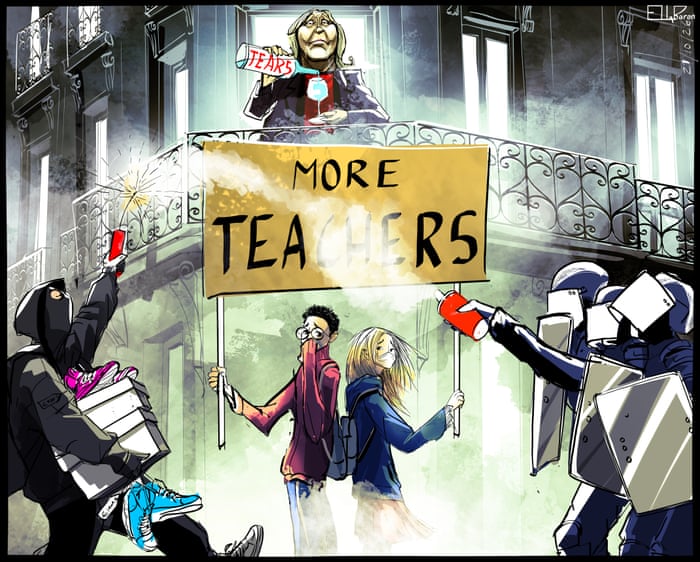
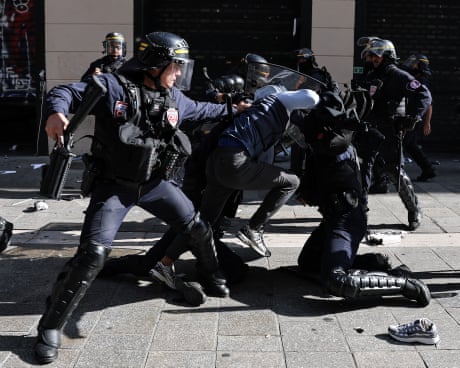
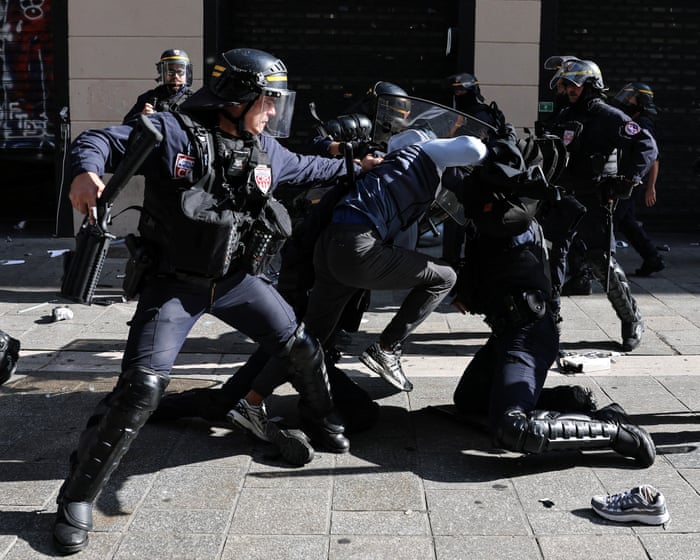
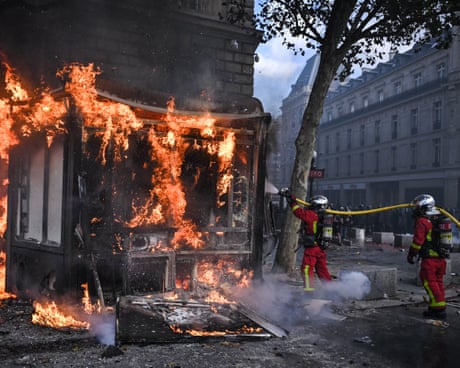
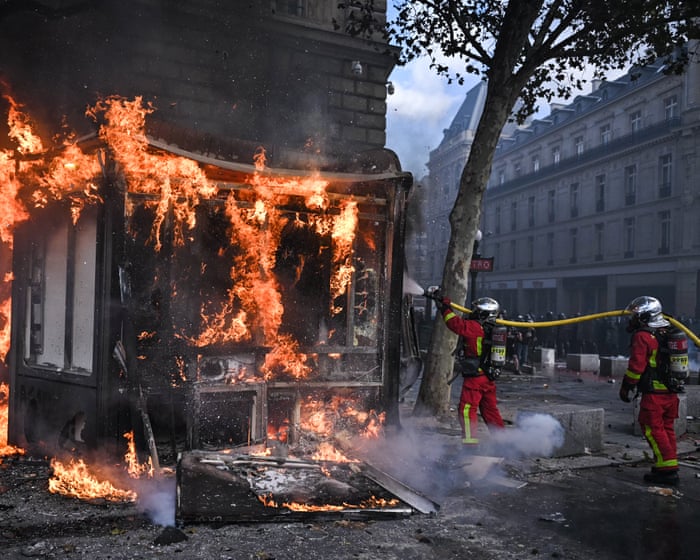
Familiar images of teargas clouds drifting across Paris squares, police baton charges against masked protesters and terrified teenagers floored – and worse – by stun grenades have once again focused the world’s attention on France’s policing methods.
While most of its western European neighbours generally favour police tactics that prioritise crowd containment and de-escalation, France has long responded to social movements that take to the streets with, at times, shocking physical force.
Protests rarely remain confined to the grievances that first bring people into the streets. When the citizens believe their concerns are being ignored, a grievance over a particular policy or administrative decision can evolve into a broader challenge to the political authority. Consequently, what begins as a demand for correction becomes a question of accountability. […]
A feminist activist who also serves as a university instructor described a French woman’s account of being threatened with rape while holding her infant as “collateral damage” of a revolution she supports,. The video was filmed the day after widespread unrest in France.
The exchange, recorded by the online media outlet Brut on Oct. 18 at Place de la République in Paris, shows a young mother confronting adjunct professor Bettina Zourli. The mother said looters who had tried to pillage a nearby shop called her a “dirty bourgeois,” attempted to force their way into her apartment, and threatened to rape her while she was with her infant.
“With my infant in an apartment I was driven out of because I was told they were going to rape me,” said the woman.
A French woman was threatened with rape while holding her child in her arms.
She said the suspects were the same rioters the left claims are “student” protesters.
The debate took a truly heinous turn when feminist activist and adjunct instructor Bettina Zourli claimed this was simply “collateral damage.” She stated that the revolution will be violent and that she supports this revolution.
Bettina Zourli has a master’s degree in gender studies, performs research on reproductive rights and gender, and describes herself on her Instagram profile as “childfree and Antifa.”
Zourli has lectured at major universities, such as the University of Lille, and currently serves as an instructor at the University of Rennes.
The University of Rennes has now publicly distanced itself, saying the university refuses all forms of violence and that her remarks do not reflect its position.
Zourli responded that the episode of was “collateral damage,” stated that “a revolution does not arrive calmly,” and said she supports the revolution. She also described property damage, including attacks on banks, as normal.
The video, which has circulated widely on social media, has drawn sharp criticism. Zourli later wrote that she condemns men who threaten women with rape and that the clip captured a discussion about not diverting attention from what she called the “initial violence.” She said she supports the broader movement and a “diversity of tactics.”
Zourli holds a master’s degree in gender studies, has written books on voluntary childlessness, gender norms and reproductive rights, and describes herself on Instagram as “feminist, childfree and Antifa.” She has lectured at the University of Lille and serves as an adjunct instructor in sociology of gender at Université Rennes 2. She does not hold a doctorate and is not a permanent faculty member.
Université Rennes 2 said in a statement that it “has always resolutely affirmed its refusal of all forms of violence” and that Zourli’s remarks “in no way reflect the position of the university” and are “totally contrary to the values of our establishment.”
The confrontation occurred the day after Oct. 17 protests over the cost of living and school conditions that drew hundreds of thousands of people nationwide and sparked violent protests. One one day alone, authorities reported roughly 1,200 to 1,800 arrests, widespread looting of shops, arson and clashes with police in Paris and other cities. Ongoing high-school blockades over teacher shortages and classroom conditions are now threatening to continue next week on Oct. 24 and another one on Oct. 31.
As SpaceX impacts Ukraine and AI-generated music divides artists and fans, critics are asking what happens when technology has too much control over our lives
This was originally published in TechScape, a newsletter about how technology shapes our lives. Sign up to receive it here
Hello, and welcome to TechScape. I’m Blake Montgomery, US tech editor at the Guardian, writing to you while sitting in front of Roy Lichtenstein’s monumental Drowning Girl, on view in New York City. Today in tech, we’re discussing the perils of Elon Musk’s one-man global infrastructure, AI-generated music and a Guardian AI conference in Paris.
Violent demonstrations have rocked Europe as protesters call for action over poor university conditions, high tuition fees, corruption, housing costs and the high cost of living
Marine Le Pen is only around 50% likely to win the French Presidency next spring, according to bookmakers' odds. But Mark Littlewood reckons it's much more likely than that and is well worth a flutter.
Investors sold off French government bonds after a weekend of violent protests, pushing the yield on the country’s 10-year debt as high as 4.94 percent on Monday and widening the premium over German bonds toward levels last seen during the eurozone debt crisis.
With some of the most violent images of the protest involving predominately migrant youths, the social unrest crisis and decades of mass immigration could actually lead to a debt crisis as well.
The sell-off followed days of unrest over the cost of living and conditions in schools that turned into riots, with thousands of arrests, looted shops and damaged public buildings across France, according to French news outlet BFMTV.
Yields rise when bond prices fall, and the jump in French borrowing costs reflected investor concern that the disorder would make it harder for the government to reduce its large deficit and debt.
The gap between French and German 10-year yields, a key measure of the risk premium on French debt, widened sharply and approached or reached its highest level since 2012, according to market data. fSome accounts put the French 10-year yield’s rise at as much as 16 basis points on the day, leaving it near multi-decade highs.
The violence prompted President Emmanuel Macron to condemn what he called “unbridled violence,” while Prime Minister Sébastien Lecornu’s government asked some local authorities to impose curfews and did not rule out a state of emergency.
France has been struggling with weak growth, a budget deficit projected around 5 percent of GDP or higher, and a debt-to-GDP ratio above 115 percent. The government has yet to secure passage of its budget for next year.
Analysts said the unrest added to existing doubts about whether Paris can deliver the spending cuts needed to stabilize its finances, especially with presidential elections approaching in 2027 and Marine Le Pen currently forecast to win. Additionally, the euro weakened and French stocks fell, with the sell-off also affecting some other European markets.
On Tuesday, French yields remained elevated near 24-year highs as protest groups announced further demonstrations.
Ratings agency Moody’s is scheduled to review France’s credit rating later in the week.
Europe is supposed to be financing its defence together. It barely is.
Of the €800bn announced under ReArm Europe in March 2025, €650bn is not common money. It is an estimate of the extra room governments get under the national escape clause to spend up to 1.5 percent of GDP more on defence for four years.
Each country still pays for that spending itself.
The room is also temporary: EU Commission simulations suggest that maintaining higher defence spending after 2028 could require additional annual fiscal adjustment of 0.25 to 0.4 percentage points of GDP from 2029.
The other €150bn is SAFE, and it is loans, not grants.
The EU borrows and lends the money on, and each country repays its share. Grants are small: €1.5bn from the European Defence Industry Programme for 2025-2027, plus the European Defence Fund for joint research.
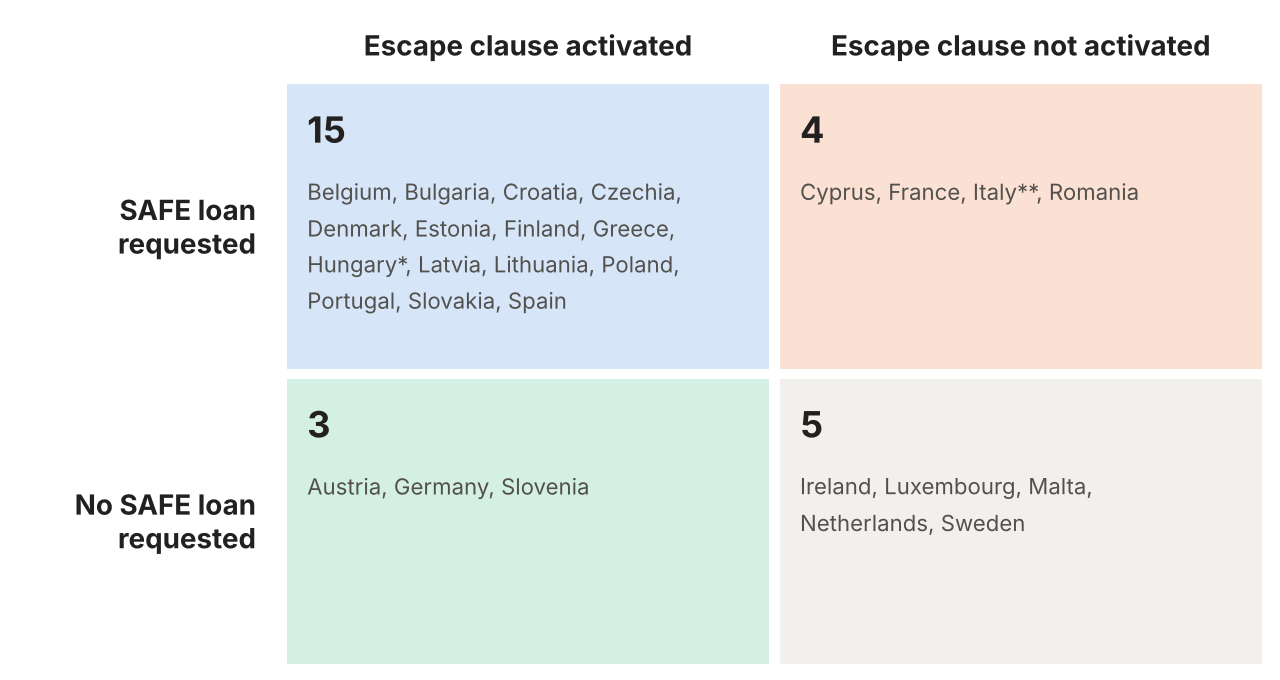
Not every country has used these tools, as Table 1 shows. The Netherlands and Sweden have used neither. Like Germany, which has taken only the clause, they can borrow at least as cheaply as the EU, so SAFE gets them nothing.
France has taken SAFE but not the clause, to protect the credibility of its budget plans.
Table 1. Who uses SAFE and the national escape clause
Source: Council of the EU, European Commission. Data as of 17 October 2026. * Hungary: allocated €16.2bn, now requesting €5.4bn; still pending. ** Italy: the Commission backed its request on 8 October 2026; the Council has yet to decide.
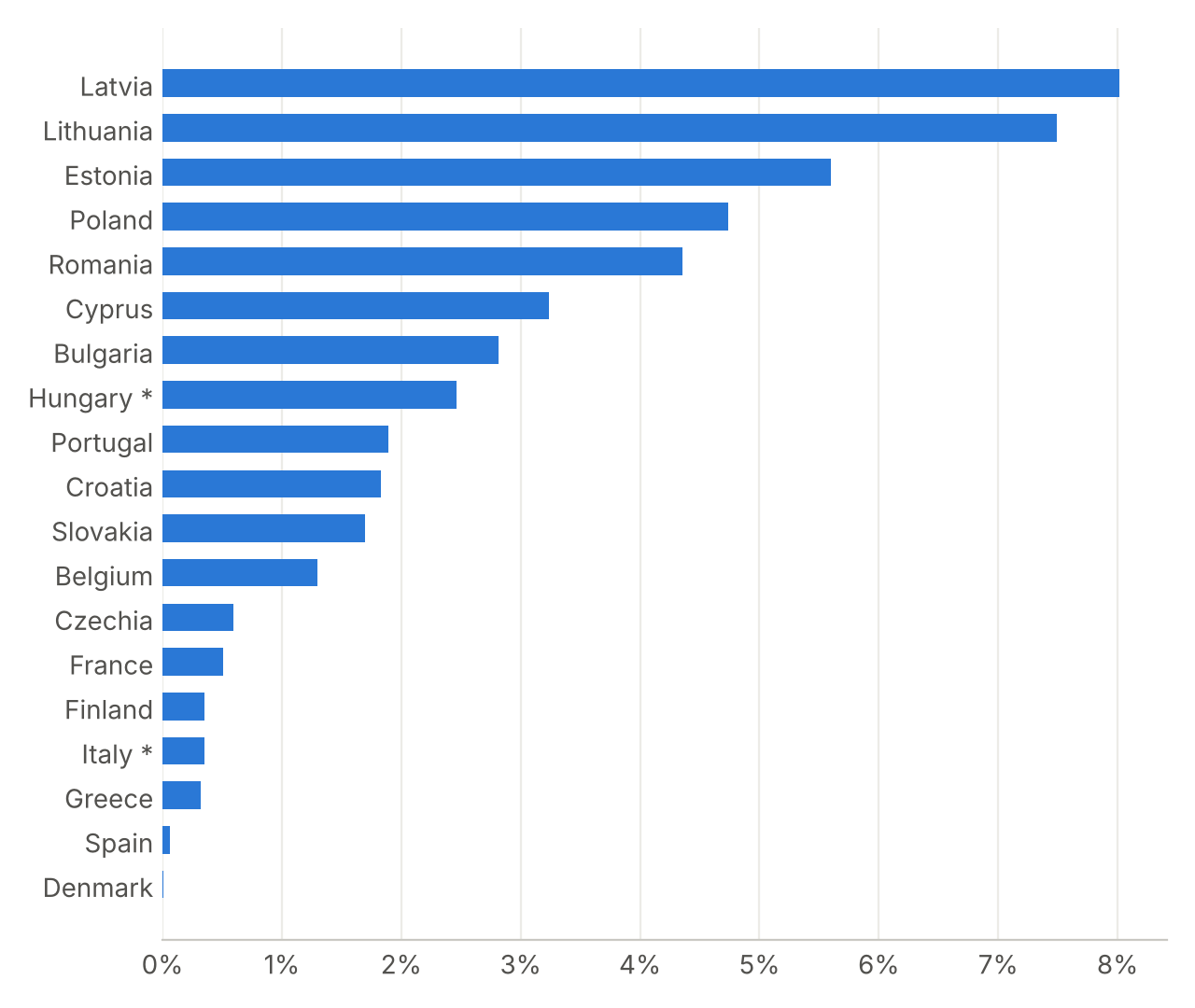
Where SAFE does matter is on the eastern flank. Latvia, Lithuania and Estonia can borrow the equivalent of five to eight percent of their GDP, and Poland almost five percent.
Graph 1. SAFE loans as a share of GDP, by country (%)
Source: Council of the EU, European Commission, Eurostat. SAFE loans only, as a share of 2025 GDP. Amounts approved by the Council, except Italy and Hungary (* revised requests of €8bn and €5.4bn, September 2026). Data as of 17 October 2026.
But defence is almost a monopsony: the state is nearly the only buyer. Without a clear flow of public orders, private investment will be hard to come by.
So Europe barely borrows together. And it buys alone.
This article continues, but the full version is available only to EUobserver.com subscribers. Visit account.euobserver.com/membership
The far-right leader’s promise to restore order will appeal to many ahead of next year’s presidential elections – the stakes are suddenly much higher
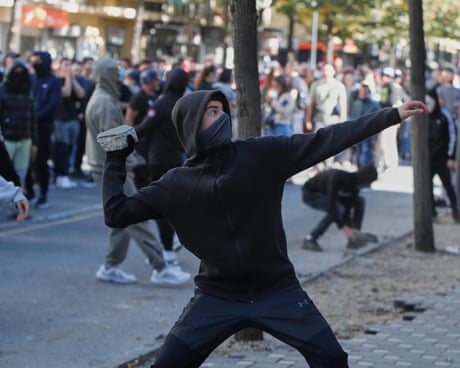
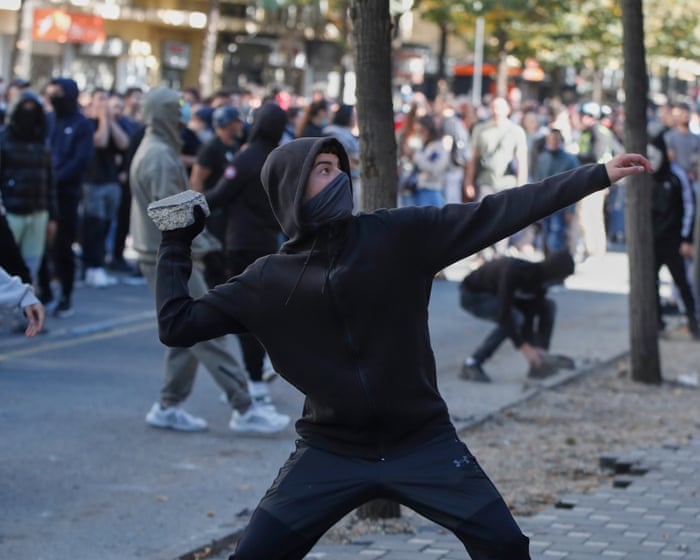
There is only one clear winner so far from France’s chaos: Marine Le Pen. The violence and rioting that engulfed towns and cities across the country over the weekend, six months before a pivotal presidential election, is a godsend for the hard-right, Eurosceptical, anti-immigration candidate. As buildings burned, shops were looted and police attacked, the rioting largely drowned out peaceful mass protests over the dilapidated state of schools , fuel prices and the cost of living.
Across France and the rest of Europe, people are in shock at scenes of arson and pillage in city centres, the wrecking of symbols of the republic such as the 19th-century town hall in peaceful provincial Limoges and the bust of Marianne in Marseille’s city hall, and the looting of more than 2,000 shops.
Paul Taylor is a senior visiting fellow at the European Policy Centre
In Paris, students have protested over shortages of teachers, overcrowded classrooms and deteriorating school buildings.
In Spain, the eviction of 87-year-old Maricarmen Abascal — who died on 7 October — became a rallying point for housing protests.
In Tirana, students joined wider demonstrations over education costs and corruption allegations.
These are not parts of a single movement, and the protests do not have one common cause. But they bring into focus a shared challenge: whether young people can see a credible route from education to decent work, and from financial dependence to a life of their own.
France: school conditions shape the starting line
Since September, French students have demonstrated over teacher shortages, overcrowded classes and deteriorating school buildings. Their demands concern more than the day-to-day running of schools. They also raise a question about equal opportunity: can public education give every student the tools to move forward, regardless of where they live or what their family can afford?
The wider figures help explain why that question matters.
In 2025, 25.5 percent of people aged 15–29 in France were at risk of poverty or social exclusion, compared with 24.2 percent across the EU, according to Eurostat.
In August 2026, unemployment among under-25s stood at 20.6 percent, against 8.2 percent for the population as a whole. The corresponding EU rates were 15.4 percent and 6.1 percent.
These figures do not show that school shortages cause youth unemployment. They do show how difficult the step from education into work remains for many young people and why well-resourced schools matter most in areas with the fewest opportunities.
Housing can make that transition harder still. In Paris, one-in-two private tenants under 30 spends more than 51 percent of their income on rent. A Eurostat indicator also shows that 70 percent of 20–24-year-olds and 25 percent of 25–29-year-olds either live with their parents or are financially connected to their household.
France scored 66 out of 100 and ranked 27th of 182 countries in Transparency International’s 2025 Corruption Perceptions Index. The index measures perceptions of public-sector corruption, not the number of proven incidents. It does not explain the school protests, but it underlines why transparency and accountability matter when public services and resources are at stake.
Spain: when housing delays independence
Abascal’s eviction from the Madrid flat where she had lived for decades prompted demonstrations in several Spanish cities and renewed calls for stronger tenant protections. Her case was not a youth protest, but it put a human face on a housing crisis that also shapes whether younger people can leave home and build an independent life.
In 2025, 67.1 percent of Spaniards aged 18–34 lived with at least one parent, according to Spain’s National Statistics Institute.
Among those living with a parent, 28.3 percent said they could not afford to rent. The average age at which young people left home was 30.2, compared with 26.3 across the EU, according to Eurostat.
Housing pressure does not operate in isolation. In 2025, 27.6 percent of Spaniards aged 15–29 were at risk of poverty or social exclusion, above the EU rate of 24.2%.
In August 2026, unemployment among under-25s was 22.7 percent, more than twice the overall rate of 10 percent. When joblessness is so much higher among the young and rent is beyond the reach of many, delayed independence cannot be reduced to personal preference.
Spain scored 55/100 in the 2025 Corruption Perceptions Index, ranking 49th of 182 countries. That score does not establish a link between corruption and housing protests. But when people are asking for effective action on housing, transparency over how decisions are made — and accountability for whether they work — are part of the debate.
Albania: growth is not enough if young people see no path forward
In October, students in Tirana protested over education costs and corruption allegations, joining a broader anti-government movement. Their participation brought education and young people’s prospects into a wider debate about living costs, employment and trust in public institutions.
Albania’s official figures show that 19 percent of the population was at risk of relative poverty in 2025, while 31.2 percent experienced severe material and social deprivation, according to INSTAT. The two measures describe different aspects of hardship: one compares household income with the national poverty threshold; the other captures enforced inability to afford basic goods and activities.
Young people also face a difficult entry into the labour market. The World Bank’s ILO-modelled estimates put overall unemployment at 10.9 percent in 2025, rising to 25.6 percent among 15–24-year-olds. The estimated average age of leaving the parental household seemed to be 30.9, compared with 26.3 in the EU, according to Eurostat’s dataset. Together, however, these indicators describe the hurdles between education, employment and independence.
Albania scored 39/100 and ranked 91st of 182 countries in the 2025 Corruption Perceptions Index. The measure is not a count of actual cases, but corruption allegations are part of the protests themselves. That makes transparency, accountability and public trust more than abstract principles: they shape whether people believe institutions respond fairly to their concerns.
Behind the statistics
Behind the statistics are millions of young people struggling to turn their ambitions into reality. The obstacles reinforce one another: under-resourced schools can narrow choices, unemployment can delay financial independence, and high housing costs can prolong dependence on family.
Across the EU, house prices rose by 55.4 percent and rents by 26.7 percent between 2010 and 2024, often outpacing income growth, according to Eurofound.
That is why the response cannot be confined to one policy area. It means properly staffed and maintained schools, routes from education into decent work, more affordable and social housing, targeted help with rent, and stronger protections for tenants.
Young people should also have a meaningful say in policies that shape their education, employment and housing.
A strong welfare state and effective social protection can help ensure that a young person’s prospects are not determined solely by family income or place of birth. If a low-income family cannot support a young person’s move towards independence, financial dependence can pass from one generation to the next. Tackling that cycle is part of building social justice and societies in which young people can plan a future with greater confidence.
The future will show whether today’s protests lead to lasting policies. The test will be whether young people can study, find decent work and afford a home without their prospects being set by the circumstances into which they were born.
Le mobilitazioni del 17 ottobre e le violenze che ne hanno accompagnato la fase finale mostrano una Francia attraversata da una crisi sociale e politica profonda. Mentre il macronismo entra nel suo ultimo semestre, Marine Le Pen e Jean-Luc Mélenchon incarnano due risposte radicalmente opposte alla domanda di rottura.
Le immagini degli incendi, delle barricate e degli scontri che hanno attraversato la Francia nelle giornate del 17 e 18 ottobre rischiano di nascondere il dato politicamente più importante: centinaia di migliaia di francesi sono scesi in strada contro il carovita, la crisi dei servizi pubblici e il progressivo deterioramento delle condizioni materiali di vita. Il ministero dell’Interno ha contato circa 550.000 partecipanti alla giornata nazionale del 17 ottobre, mentre gli organizzatori ne hanno rivendicati circa 800.000. Una mobilitazione di dimensioni tali da costituire la più importante esplosione di protesta sociale dai tempi della battaglia contro la riforma delle pensioni del 2023.
Il fenomeno sarebbe tuttavia incomprensibile se venisse ridotto ai disordini che hanno segnato la conclusione di numerosi cortei. Lungi dall’essere nata il 17 ottobre, la protesta rappresenta il risultato di un processo cominciato settimane prima nelle scuole e nelle università, quando studenti e liceali hanno iniziato a denunciare classi sovraffollate, carenza di personale, precarietà e progressivo impoverimento dell’istruzione pubblica. Alle mobilitazioni giovanili si sono poi aggiunti sindacati, lavoratori, pensionati e settori del movimento dei gilets jaunes, mentre il rincaro dei carburanti ha agito da detonatore di un malessere sociale molto più ampio.
Tale convergenza conferisce agli avvenimenti un significato politico ben superiore a quello di un’ennesima fiammata di protesta francese. L’Humanité ha descritto il corteo parigino come l’incontro tra generazioni differenti accomunate dalle rivendicazioni sui salari, sul futuro della gioventù e sulla difesa dei servizi pubblici, ma soprattutto dal rifiuto delle politiche seguite dal 2017. In questo senso appare particolarmente significativa l’immagine proposta dal quotidiano della sinistra francese: il macronismo rischia di terminare così come era cominciato, in mezzo ai lacrimogeni e a un conflitto sociale che il potere politico sembra incapace di ricomporre.
Nel tentativo di distogliere l’opinione pubblica dalle ragioni concrete delle proteste, il primo ministro Sébastien Lecornu ha accusato gruppi dell’ultrasinistra di avere deliberatamente organizzato gli incidenti, arrivando a contrapporre il “campo della Repubblica” a quello dei “casseurs” e indirizzando buona parte delle proprie accuse contro La France Insoumise (LFI), nonostante lo stesso leader Jean-Luc Mélenchon avesse invitato esplicitamente i propri sostenitori a non partecipare a saccheggi e devastazioni. Il Rassemblement National (RN), dal canto suo, ha rapidamente trasformato le immagini dei disordini in materiale di propaganda, cercando di associare la protesta sociale a una crisi dell’autorità e alla necessità di restaurare l’ordine.
È una dinamica che rischia di favorire l’estrema destra, ma che non deve far perdere di vista l’origine della crisi. L’aumento del costo della vita, la stagnazione dei salari, il deterioramento dei servizi pubblici e la nuova impostazione austeritaria del bilancio per il 2027 rappresentano il terreno materiale sul quale la protesta è cresciuta.
La risposta televisiva di Emmanuel Macron del 18 ottobre ha mostrato una volta ancora la difficoltà dell’Eliseo a uscire dalla contraddizione che accompagna ormai l’ultimo periodo della sua presidenza. Il capo dello Stato ha riconosciuto la legittimità delle preoccupazioni espresse dai manifestanti, ma ha a sua volta concentrato una parte importante del proprio intervento sulla condanna delle violenze e sulle questioni di ordine pubblico. Ha annunciato consultazioni con studenti, insegnanti, sindacati, parlamentari e rappresentanti delle imprese, senza però indicare immediatamente una svolta economica capace di rispondere alle cause sociali della protesta.
Messi insieme, tutti questi elementi fanno emergere in modo chiaro la dimensione strutturale della crisi del macronismo. Quando Emmanuel Macron conquistò l’Eliseo nel 2017, promise di superare la tradizionale divisione tra destra e sinistra. La sua formula politica avrebbe dovuto sostituire il conflitto ideologico con una gestione pragmatica, europea e modernizzatrice della società francese. Quasi dieci anni dopo, il risultato appare paradossalmente opposto: la Francia non è meno polarizzata, anzi risulta essere molto più polarizzata di quanto fosse all’inizio della presidenza Macron.
La dissoluzione dell’Assemblée nationale nel 2024 aveva già distrutto l’illusione di una maggioranza presidenziale stabile. Da allora la Francia è entrata in una lunga sequenza di governi minoritari, crisi parlamentari e negoziati sul bilancio. Il governo Lecornu resta privo di una maggioranza autonoma, mentre il progetto finanziario per il 2027 è stato accolto con ostilità dalle opposizioni e con crescente nervosismo dai mercati. All’inizio di ottobre i rendimenti del debito francese avevano raggiunto livelli che non si vedevano dai primi anni Duemila, mentre il debito pubblico ha superato il 119% del prodotto interno lordo e la crescita resta debole.
Ma sarebbe riduttivo interpretare questa situazione come una semplice “crisi del debito”. Il problema fondamentale riguarda piuttosto la distribuzione dei costi della crisi. Il governo continua a presentare l’austerità come una necessità tecnica, mentre la sinistra francese sottolinea come essa rappresenti piuttosto una scelta politica precisa: ridurre la spesa sociale e comprimere i servizi pubblici anziché intervenire sulle grandi fortune, sui profitti e sulle ingenti sovvenzioni concesse alle imprese. Da qui nasce la domanda che attraversa una parte consistente delle piazze francesi: chi deve pagare la crisi?
La risposta del RN è radicalmente diversa. Marine Le Pen tenta di trasformare la crisi del macronismo in una crisi dello Stato, dell’immigrazione e dell’ordine pubblico. Il suo partito cerca di intercettare lo stesso malcontento che alimenta le proteste, ma di orientarlo verso una soluzione nazionalista e securitaria. Sul terreno economico, inoltre, il RN sta tentando di rassicurare i mercati: Le Pen ha recentemente promesso forti riduzioni della spesa pubblica qualora conquistasse l’Eliseo, mentre Jordan Bardella ha difeso un piano volto a tagliare circa 140 miliardi di euro di spesa e a ridurre rapidamente deficit e debito. La pretesa dell’estrema destra di rappresentare una rottura sociale con il macronismo entra quindi in contraddizione con un programma economico che contiene anch’esso una pesante componente austeritaria.
Ad ogni modo, i dati demoscopici mostrano quanto questa contrapposizione stia modificando la politica francese. Le rilevazioni pubblicate nelle ultime settimane indicano Marine Le Pen come candidata nettamente più forte al primo turno, ma contemporaneamente mostrano una crescita di Mélenchon e soprattutto una straordinaria solidità della sua base. Un’indagine Ipsos BVA-Cevipof attribuiva in settembre al candidato di LFI tra il 15,5 e il 17% delle intenzioni di voto, ma con livelli molto più alti tra i giovani: fra i 18 e i 24 anni Mélenchon raggiungeva addirittura il 40%. Un sondaggio successivo, riportato da Reuters, ha delineato perfino scenari nei quali Le Pen e Mélenchon si qualificherebbero insieme per il ballottaggio, estromettendo completamente i candidati dell’area centrista.
Naturalmente manca ancora molto alla primavera del 2027 e ogni previsione resta fragile. Marine Le Pen deve inoltre affrontare ancora l’incognita del proprio contenzioso giudiziario, mentre a sinistra rimangono divisioni profonde tra LFI, socialisti, comunisti ed ecologisti. Ma il dato politico è già evidente: il successore di Macron non sembra destinato a provenire dal blocco che ha governato la Francia nell’ultimo decennio.
La battaglia per l’Eliseo sarà quindi molto più di una competizione tra candidati. Sarà uno scontro attorno all’interpretazione stessa del fallimento macronista. L’estrema destra sostiene che la Francia soffra soprattutto per un deficit di autorità, sovranità e controllo. La sinistra radicale individua invece il problema nella crescente disuguaglianza, nell’austerità, nell’indebolimento dei servizi pubblici e nella subordinazione delle scelte economiche agli interessi del grande capitale. Il campo macronista, nel frattempo, fatica sempre più a convincere che la continuazione delle politiche degli ultimi dieci anni possa rappresentare una risposta alla crisi prodotta proprio durante quel decennio.
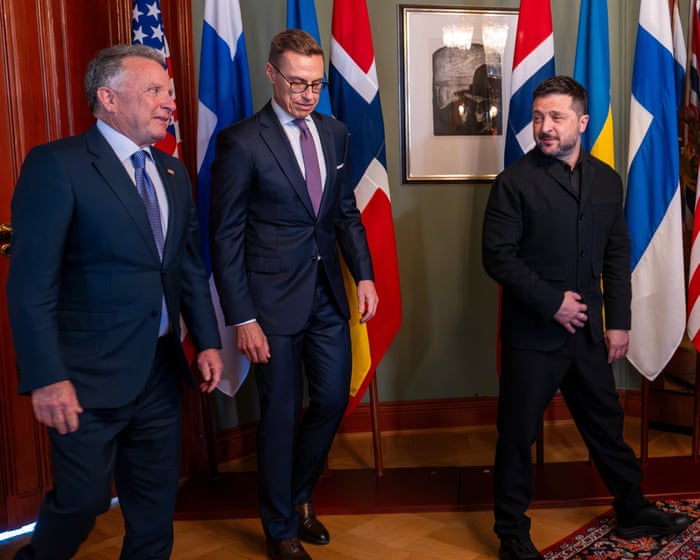
The Ukrainian leadersays talks with US envoys covered security guarantees and he hopes to hear Russia’s response tomorrow
Nordic correspondent
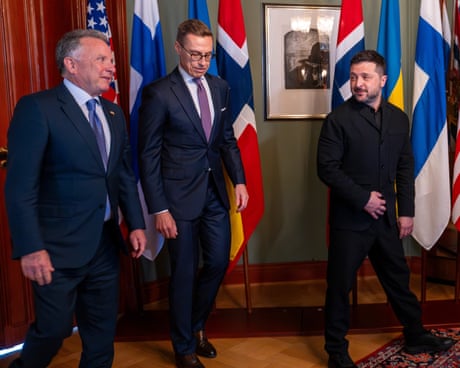
As well as Steve Witkoff, Ukrainian president Volodymyr Zelenskyy will also meet the Norwegian prime minister, Jonas Gahr Støre and the Finnish president Alexander Stubb and Norway’s new King Haakon during his visit to Oslo.
A new tax on added sugar in France could lead to higher prices for sweet products. The measure was proposed by the government as part of the 2027 draft budget and has been approved by members of parliament. However, it has raised concerns among manufacturers. The new tax follows an existing levy on carbonated drinks […]
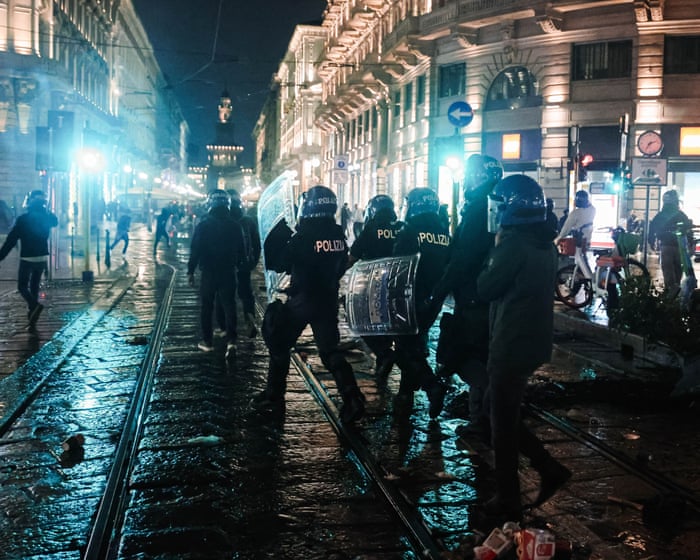
Italy’s government is sending 500 soldiers to Milan and vowed a “firm response from the state” after protests against the cost of living descended into clashes with police, vandalism and looting. Further demonstrations are planned on Saturday.
The government of the far-right prime minister, Giorgia Meloni, also announced new security measures, including an offence of violent participation in a demonstration, tougher penalties for rioters, and financial liability for parents whose children take part in vandalism and looting.
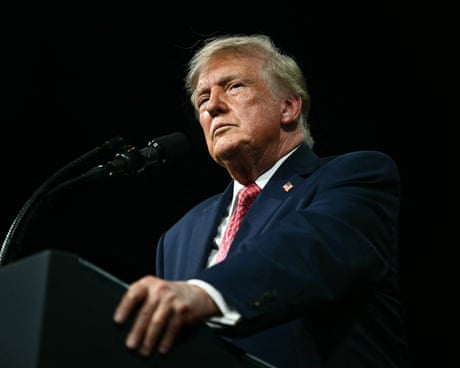
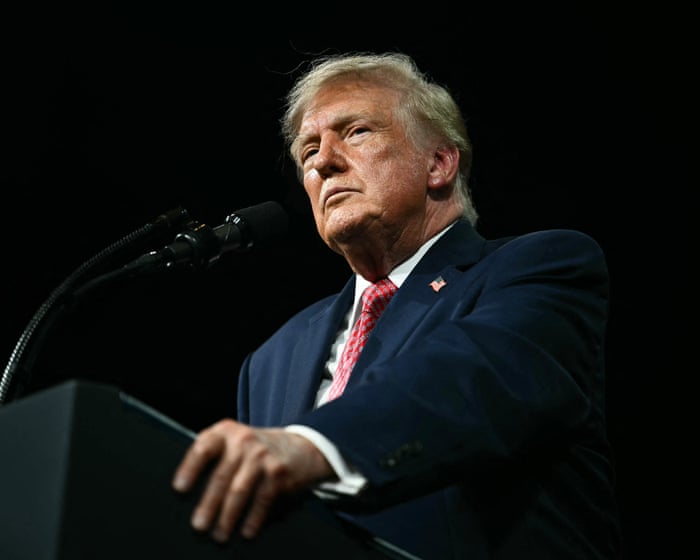
As Republicans confront mounting political headwinds ahead of November’s midterm elections, Donald Trump is attempting to turn unrest in France into a cautionary tale for American voters, recasting the demonstrations that began as student protests against crumbling schools and the soaring cost of living as evidence of the dangers of immigration and the erosion of western civilization.
At a rally in Kansas on Monday evening, Trump described France as a once-great nation that had been “conquered, looted, and burned to the ground by migrants, jihadists, and communists”.
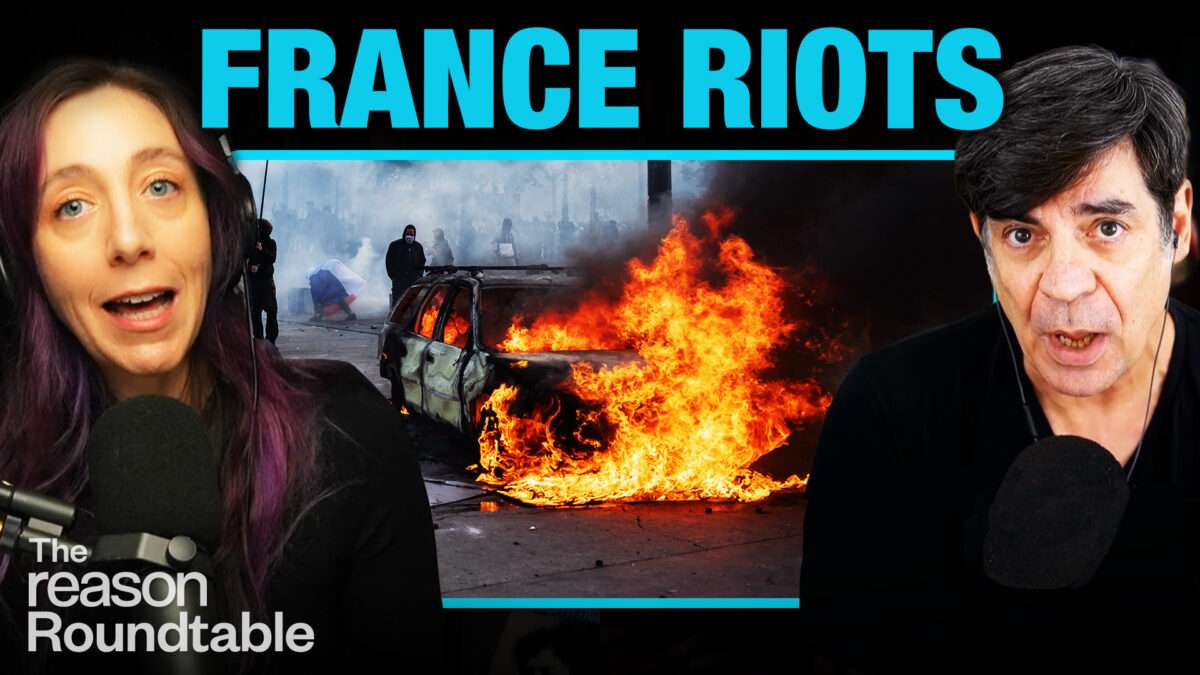
This week, editors Peter Suderman, Katherine Mangu-Ward, Nick Gillespie, and Matt Welch discuss the riots engulfing France and whether the country's increasingly unsustainable welfare state has made it ungovernable. They examine competing claims that immigration and austerity are fueling the unrest, the political gains being made by the French right, and why even modest pension reforms provoke fierce resistance.
The conversation turns to the United States, where President Donald Trump's tariffs are losing support among blue-collar voters and Republicans are struggling in traditionally conservative areas like Ohio. The panelists then discuss the abrupt departure of White House press secretary Katie Zacharia after just five days on the job. Later, they examine Sen. Elizabeth Warren's (D–Mass.) opposition to a proposed $45 billion merger involving McCormick and Unilever. Finally, a listener asks why libertarians don't follow the Democratic Socialists of America's example by trying to reshape the Republican Party from within.
0:00—France's riots and the imploding welfare state
21:29—Trump's tariffs lose support among blue-collar voters.
29:41—Zacharia's tenure as White House press secretary
35:45—Listener question on libertarian influence strategy
45:52—Warren's corporate merger opposition
57:07—Weekly cultural recommendations
Cato Innovation Project: Design your own full-time, paid role at Cato. If we fund your idea, you spend two years executing it. Apply here: cato.org/reason
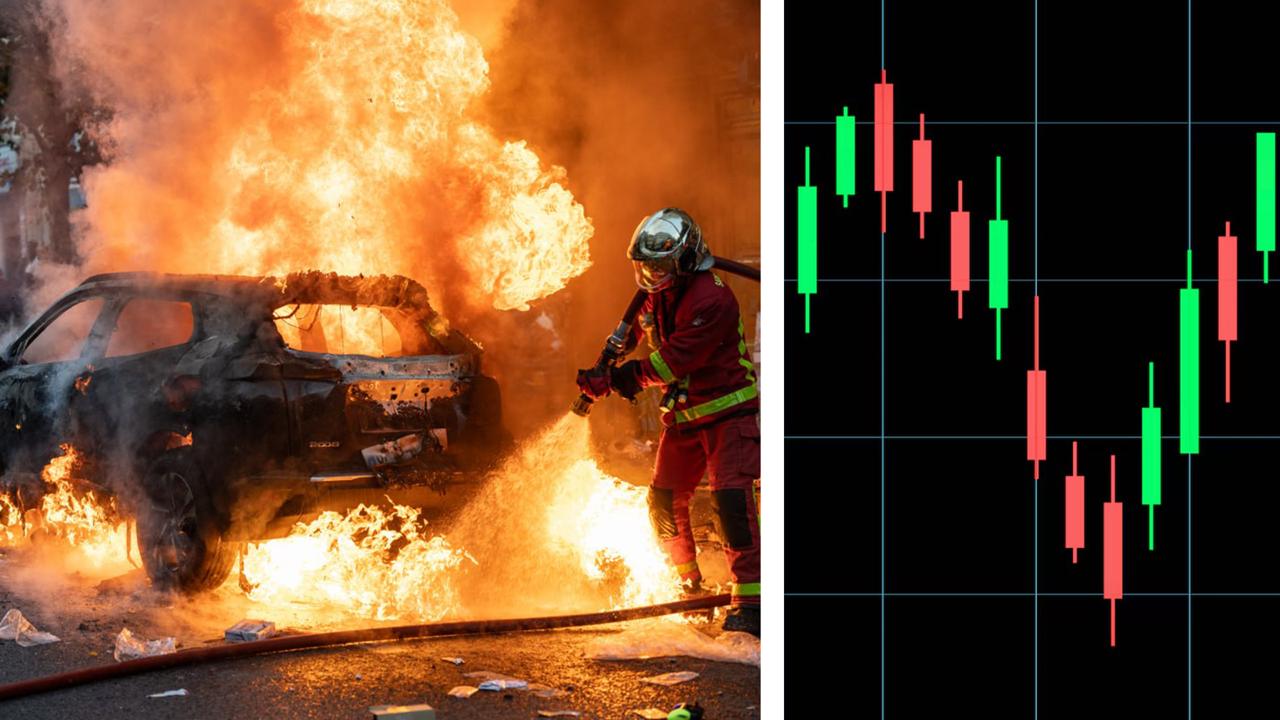
Katherine Mangu-Ward appears on the left. Nick Gillespie appears on the right. An image of a car that's been set on fire by protesters appears in the center. Bold text across the top of the screen reads "FRANCE RIOTS."
Mass mobilizations against austerity policies and their effects are not winding down in France. On Saturday, October 17, roughly 800,000 people joined protests across more than 1,700 assembly points, according to union figures – amplifying demands tabled over a month of student protests and demanding urgent action on the cost of living crisis.
In the aftermath of the protests, the government expanded local authorities’ powers to introduce curfews. This led to overnight movement limitation orders introduced in several cities, including central parts of Paris, Lille, Lyon, and Nice. Many of the curfews target young people in particular, reflecting institutional concern about the success of their recent mobilizations.
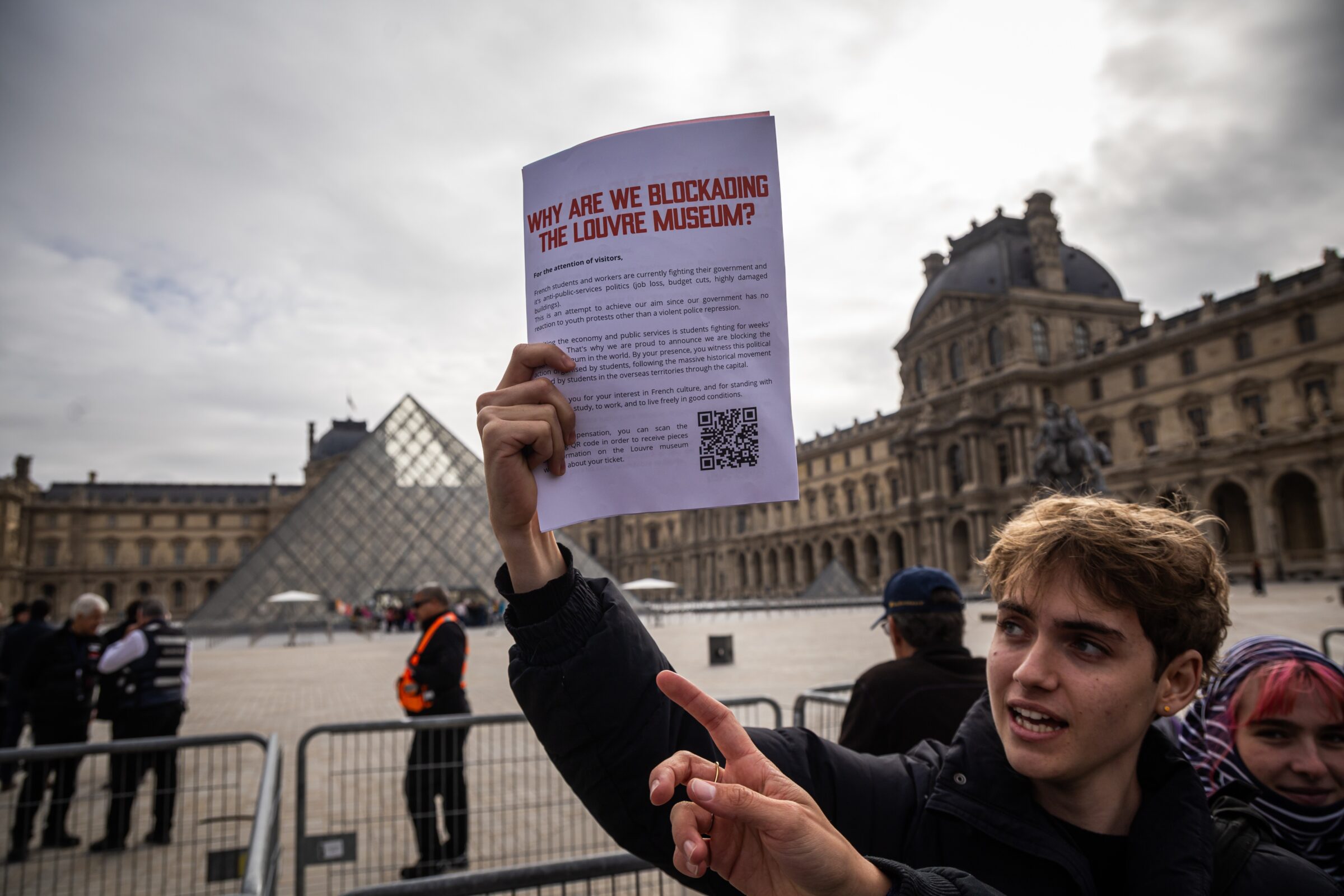
Over the past weeks, students launched a wave of school strikes and occupations, resisting the erosion of education services under successive neoliberal governments. Their movement drew support from trade unions and progressive political forces, who joined students on the streets to pressure the Lecornu administration to change course and prioritize public services and labor rights over armament.
Rallies and marches reinforced the student movement’s demands for accessible, equitable higher education, alongside trade unions’ calls for higher wages.
They also drew links to other historic moments of mobilization, including the struggle for Algeria’s liberation. Many groups taking part echoed the anniversary of the 1961 demonstration that ended in the massacre of hundreds of people protesting for independence.
Police violence continues
Teachers, families, and elected officials also joined, for a practical reason: to shield students from the law enforcement violence unleashed on their mobilization.
Saturday’s protests were again met with police violence, with officers relying – unsuccessfully – on tear gas and water cannons to disperse crowds. Serious injuries and cases of severe police brutality were reported throughout the day.
After repeated repression, and with neither the government nor President Emmanuel Macron offering credible solutions to protesters’ grievances, protests turned into riots. While those close to social movements emphasized the events were triggered by years of cuts and unimpeded attacks on workers’ rights, the middle and upper classes were indignant.
Recent protests in France have a decisively antifascist character. Protester’s sign reads: “Always angry, never fascist.” Source: Manon Aubry/Facebook
Macron channeled their reaction in his post-protest speech. He declared those responsible for the looting must be punished, while promising more “dialogue” and offering a mild acknowledgment of people’s concerns over fuel, food, and other essentials.
“There are people out there who rightfully feel that the price of fuel is too high,” the president said – before shifting responsibility elsewhere. He said rising prices were the result “of what is happening in the Persian Gulf – a war that France was not part of.”
The speech landed poorly at home and abroad. The Iranian government, for one, has repeatedly called out Macron for applying double standards between protests in West Asia and France, emphasizing that the French president had expressed support for US plans in Iran and that ongoing mobilizations were a logical outcome of the policies he endorsed.
Students reject Macron’s response
In France, protesters called out Macron for failing – yet again – to identify a concrete way out of the situation facing the country.
“Since the beginning of this movement, high school and university students have been met with nothing but contempt and police batons in response to their demands,” the university students’ union Union Étudiante wrote. “Yet we have put forward a clear set of demands, widely supported by everyone who took to the streets on October 17.”
“He did not utter a single word about the high school and university students maimed in the crackdown,” the organization added. “He said nothing at all about the real violence committed on Saturday,” referring to approximately 2,300 arrests made on that day alone – and dozens of young people who were seriously injured over the past weeks.
“It is not a matter of engaging in endless dialogue, but of responding concretely to the needs of high school and university students: income, housing, food services, healthcare, study conditions, access to degrees, and an end to repression.”
Lecornu attempts to blame left for chaos
Prime Minister Sébastien Lecornu’s reaction to the protests drew an equally negative response from progressive forces, especially after he suggested left movements were responsible for chaos and violence.
“What a pathetic politician,” wrote presidential candidate Jean-Luc Mélenchon. “He is responsible for the chaos – chaos he methodically prepared, whether through sheer incompetence or a deliberate ‘strategy of the worst’ aimed at conjuring up a ‘party of order’ that would make people forget his failure on the public finances.”

 Login