APAA’s white van has become synonymous with the pickups and deliveries on behalf of the Association for Protection of Animals Algarve, notoriously driven by its president Jenny Clarke. “I am
A temporary fundraising space at the Armazém Regimental in Lagos has raised €8,349 for Cadela Carlota & Companhia, helping to support the care of abandoned dogs and cats in the
E se lo schema adottato dagli Houthi in Arabia Saudita fosse replicato a poche decine di chilometri dai confini italiani? Una prima linea antimissile nei Balcani è un ombrello per tutta l’Europa che guarda a est, Italia compresa. La convinzione (espressa anche dal ministro della difesa Guido Crosetto) potrebbe presto trasformarsi in realtà operativa, dal momento che la cintura orientale dell’Europa trova, proprio nel costone balcanico, la sua area più sensibile agli attacchi esterni e alle penetrazioni dei super player.
Questo il ragionamento più volte fatto dal titolare della difesa, nella consapevolezza che da un lato “le preoccupazioni non sono aumentate in questo periodo, sono quelle che ci sono state negli ultimi anni”, ma dall’altro serve “garantire la sicurezza, intanto nei confini di casa”. Essendo quindi i Balcani un punto di riferimento per la sicurezza occorre “mettere in sicurezza i Balcani, utilizzare i Balcani anche in futuro pensando di installare qua radar che ci consentano di difendere sia questi Paesi sia il nostro, per prevenire le minacce”.
L’esempio portato dal ministro è quello relativo ai missili che hanno colpito gli aeroporti in Arabia Saudita, missili costruiti dagli Houthi, “quindi non da raffinati ingegneri, hanno raggiunto la velocità di 8.500 chilometri all’ora, capite quali sono le minacce che tutti i Paesi hanno di fronte per il futuro e quanto sia importante presidiare anche i Paesi di confine, i Paesi amici, proprio per installare con loro una copertura”. Il Kosovo dunque è uno dei Paesi candidati a ospitare quel radar antimissile, anche perché lì è presente la missione a guida Nato, Kfor, che pochi giorni fa ha visto un avvicendamento che riguarda da vicino l’Italia: il nuovo comandante è Roberto Vergori, generale di divisione, subentrato al generale di divisione turco Oezkan Ulutas. Come prima mossa ha incontrato il comandante delle Forze di sicurezza del Kosovo (Ksf), Bashkim Jashari, sia per fare il punto sul coordinamento istituzionale, sia per sottolineare come pace, sicurezza e stabilità in Kosovo hanno precisi riflessi in Ue. Da questo punto di vista va segnalato come il rapporto tra Italia e Kosovo sta vivendo un momento di particolare rafforzamento, come dimostra l’intenzione del ministero della Difesa italiano di ampliare e approfondire la cooperazione militare bilaterale con Pristina. Ne hanno parlato pochi giorni fa il ministro della Difesa italiano e l’omologo kosovaro Ejup Maqedonci, a Pristina: l’occasione era proprio la cerimonia di avvicendamento al comando della missione KFOR.
L’area resta gravida di criticità, come le tensioni con la Serbia, il ritardo nei capitoli per l’adesione all’Ue, ma un piccolo passo in avanti è stato fatto: dopo quattro elezioni in due anni, il Parlamento del Kosovo è riuscito a eleggere una presidente, grazie ad un accordo con l’opposizione: è Justina Shiroka Pula la più votata. Ma al di là di un ruolo che non è incisivo a livello politico, contava dare un segnale all’esterno del paese balcanico, dal momento che i rapporti tra il governo Kurti e l’opposizione erano complessi: infatti il governo ha approvato una legge per smussare i poteri del tribunale incaricato di giudicare i crimini di guerra, circostanza che la scorsa settimana aveva provocato molti scontri tra manifestanti e forze dell’ordine. Come è noto, il tribunale aveva condannato a 25 anni di carcere l’ex presidente Hashim Thaçi per crimini di guerra commessi durante il conflitto per l’indipendenza dalla Serbia, ma la sentenza aveva suscitato una vera e propria sollevazione popolare. Oggi Pristina prova a ripartire.
As inscrições para a 6.ª edição do Portugal in Love estão encerradas, depois de ter sido atingido o limite de participantes. O fórum internacional dedicado ao segmento dos casamentos realiza-se de 25 a 27 de novembro de 2026, no Evolution Cascais-Estoril,
O reconhecimento resulta de um processo iniciado em 2024 e de um plano de ação para melhorar as condições de trabalho e o desenvolvimento profissional.
O município de Ribeira de Pena adquiriu um reboque, uma cisterna e quatro viaturas para o serviço de obras, para reforçar a segurança, a capacidade de resposta e a proteção de pessoas e bens.
Segundo a autarquia, o valor global do investimento foi de cerca de 189.200 euros. Deste montante, 46.125 euros foram utilizados para a aquisição de um novo camião cisterna que vai aumentar “a capacidade de abastecimento de água aos meios de combate a incêndios, contribuindo para uma resposta mais eficaz na proteção das populações e do território”.
As quatro novas viaturas para o serviço de obras representaram um investimento de 121.530 euros.
A compra do reboque, que custou cerca de 21.552 euros e contou com um apoio financeiro de 14.145 euros, no âmbito de uma candidatura ao programa Norte 2030. Segundo o município, a aquisição deste equipamento contribuirá para “reforçar a capacidade operacional, apoiar ações de gestão de combustível, transportar equipamentos e responder a situações de emergência”.
Segundo João Noronha, presidente da Câmara Municipal de Ribeira de Pena, este investimento “permite reforçar a capacidade operacional do município e garantir melhores meios para responder às necessidades da população, tanto no que se refere à proteção civil e ao combate a incêndios como à prestação de serviços municipais”.
Com estas aquisições, o município pretende dotar os serviços de meios mais adequados às necessidades do concelho.
O financiamento inclui o Bairro Ribeirinho, a ecovia e a rotunda das Pontes de Marchil. A proposta segue para autorização prévia da Assembleia Municipal.
The Ukrainian Armed Forces say they have carried out the world’s first frontline evacuation of a wounded soldier by aerial drone. The soldier, from the 30th Mechanized Brigade, is said to have been recovered successfully and is undergoing treatment and rehabilitation.
“This is a historic event, at least for our unit for sure,” said “Napalm,” a squad commander and programmer with the 92nd Assault Brigade’s uncrewed ground vehicle (UGV) company. The precise date and location of the operation have not been disclosed, and the claim of a global first has not been independently verified. However, a video of the event has been published by the 92nd, which you can watch below:
At this point, it should be noted that the footage has not been independently verified and could depict a staged demonstration rather than an actual combat evacuation. It should, at least, be treated with a degree of caution.
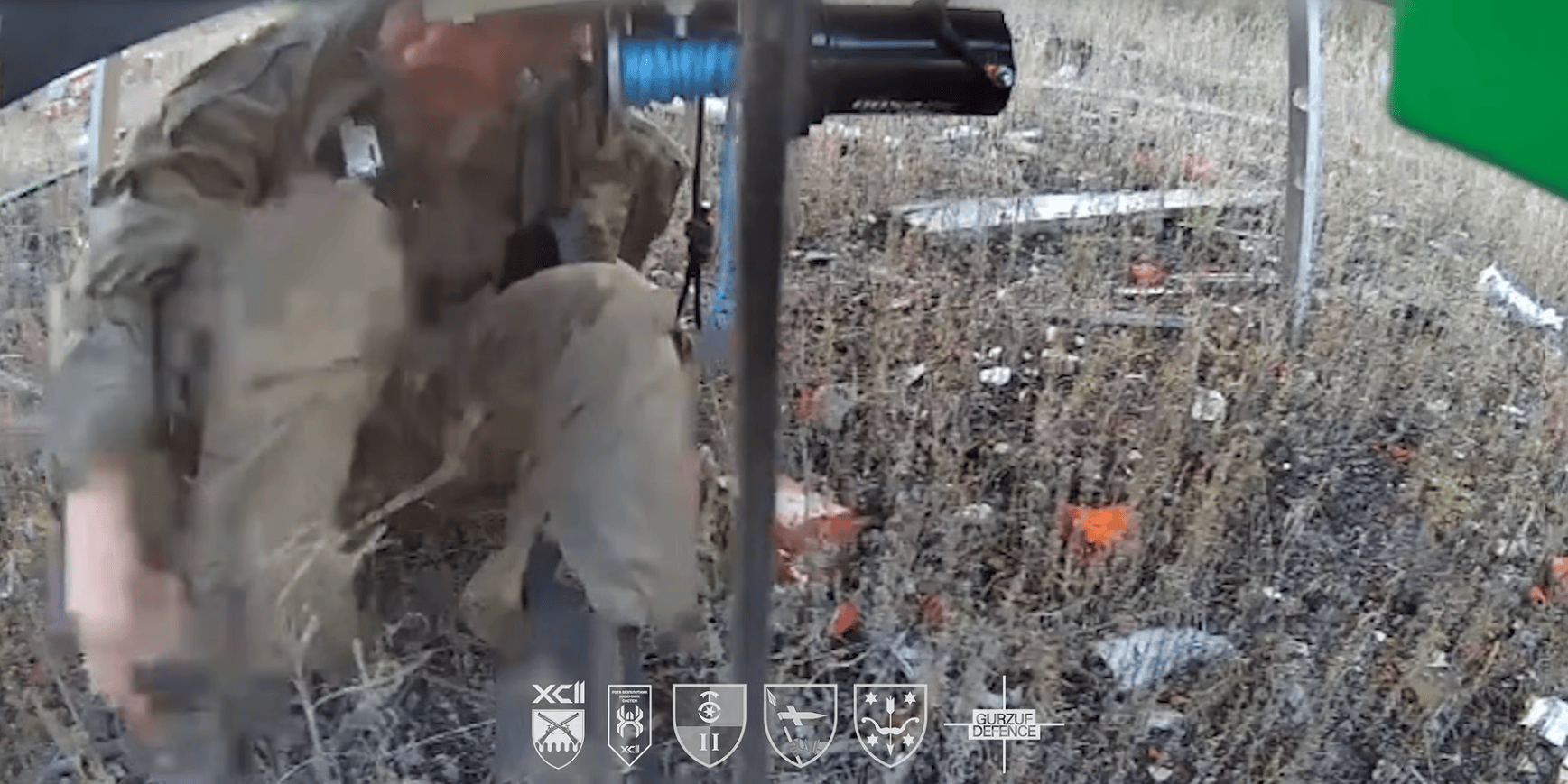
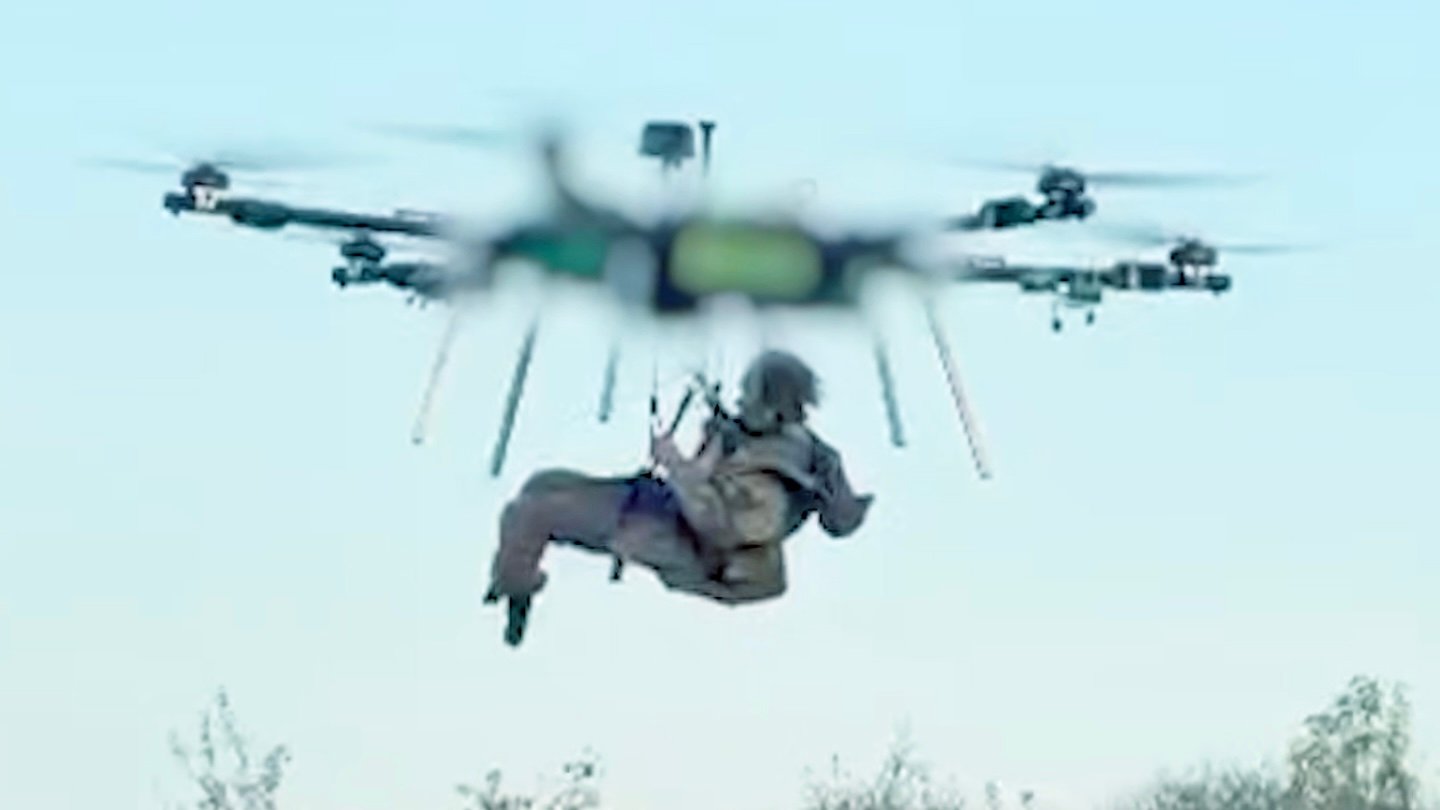
According to accompanying reports, the infantryman was wounded while holding his position. Mines and intense Russian drone activity prevented a conventional ground evacuation, prompting the 92nd’s specialists to attempt an aerial extraction. The video shows the soldier clipping himself to the underside of the drone via a harness before being flown to safety. The extemporized nature of the platform is underscored by the fact that, while in the air, the soldier dangles below its rigid landing legs.
The soldier is seen hunched under the hexacopter before attaching his harness to the drone. 92nd Assault Brigade/YouTube screencap
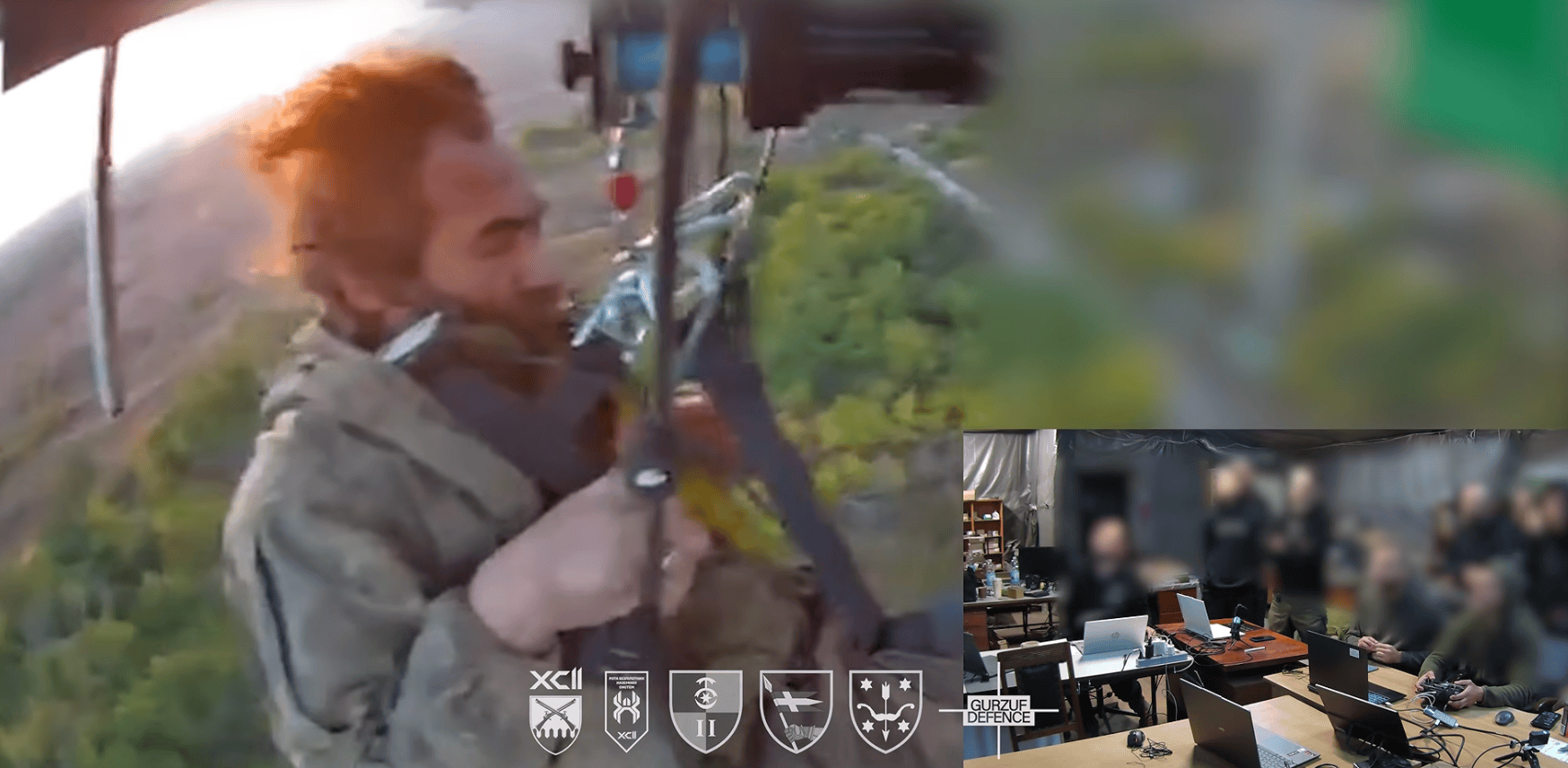
The aircraft was a heavy hexacopter manufactured by Ukrainian company Gurzuf Defense, which provided it free of charge. A UAV operator from the 30th Mechanized Brigade piloted the drone. Throughout the recovery, the soldier remained in contact with the drone operator.
With the drone now airborne, the drone controllers monitor the flight from the ground. 92nd Assault Brigade/YouTube screencap
The operation involved the 92nd, 30th and 14th Mechanized Brigades, the 10th Army Corps and Gurzuf Defense.
Ukraine increasingly uses uncrewed ground vehicles to deliver supplies and evacuate casualties from exposed positions. According to Euromaidan Press, Ukrainian UGVs conducted approximately 112,000 logistics and evacuation missions between January and August 2026.
However, ground robots can struggle with mines, mud, and cratered terrain, while remaining vulnerable to drones and artillery. These obstacles make it especially difficult to conduct UGV operations in the battlefield’s “kill zone,” which can extend six to nine miles or more from the front line. You can read an in-depth account of Ukrainian UGV efforts in this previous story.
A video showing a Ukrainian UGV in action in the Donetsk region:
Aerial platforms are able to reach casualties in places where ground vehicles cannot safely travel, and can get there far quicker, without having to stick to specific routes.
The 92nd has not disclosed the evacuation distance or flight duration of the mission. If, as reported, the drone used was an Audag-6 model, this is stated to be capable of carrying a 200-pound payload over a distance of up to 15 miles.
Meanwhile, the recovery points to a growing trend in the Ukrainian Armed Forces.
Only days before the story of the evacuation broke, it emerged that Ukraine is also now testing the StarGate, a purpose-built aerial medical evacuation drone — also of the heavy hexacopter type — developed by the SkyFall company. This is a rather more tailored solution to the problem, with a covered, medical-grade stretcher slung below the drone. It has a reported payload capacity of around 330 pounds, uses AI-assisted navigation, and can also deploy nets against hostile drones attempting to intercept it.
The 92nd’s operation used a heavy-lift hexacopter adapted for an ad hoc casualty transport, rather than a more bespoke design. This means the soldier had to be adequately trained on how to strap in, and also had to be in a condition that they could actually perform this procedure. This would also be the case even if other soldiers were able to assist them in strapping in.
While these kinds of solutions may be new to the battlefield in Ukraine, using uncrewed aerial systems for personnel recovery and medical evacuation is far from new.
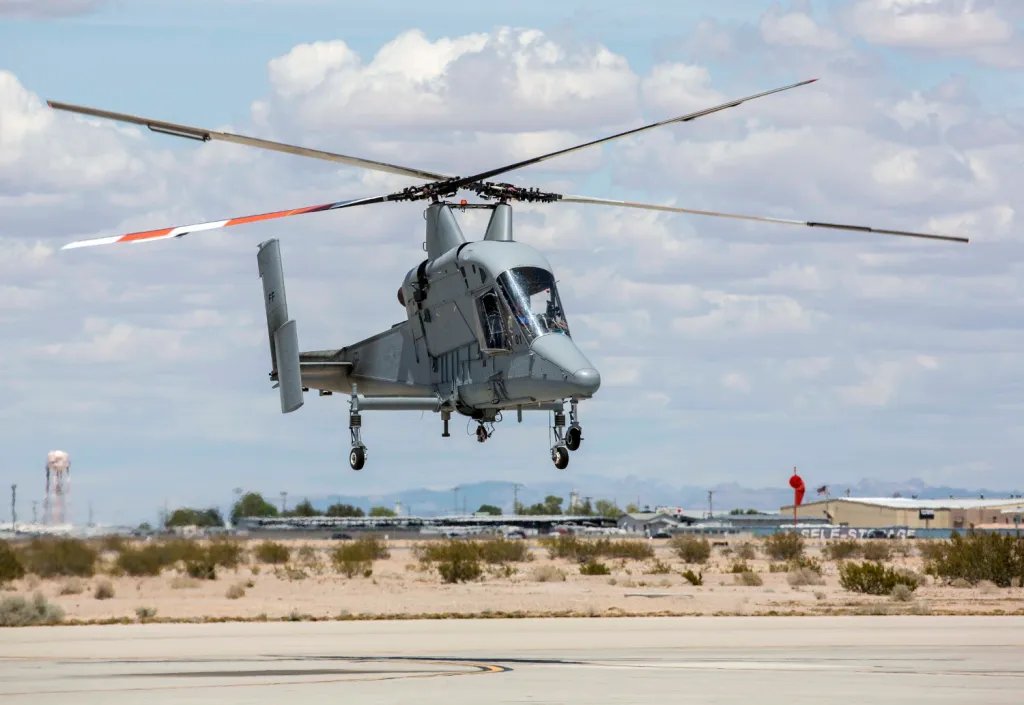
Back in 2016, the Army completed a demonstration of the Lockheed Martin K-Max helicopter in a casualty evacuation role. The K-Max can operate with and without a pilot and was used as a drone by the Marine Corps to deliver cargo in Afghanistan.
A U.S. Marine Corps K-Max helicopter. U.S. Marine Corps
“Unmanned and autonomous platforms have the potential to completely rewrite the medical doctrine,” Army Col. Daniel Kral, head of the Army’s Advanced Technology Research Center (TATRC), explained during a conference at Fort Detrick in Maryland in 2017.
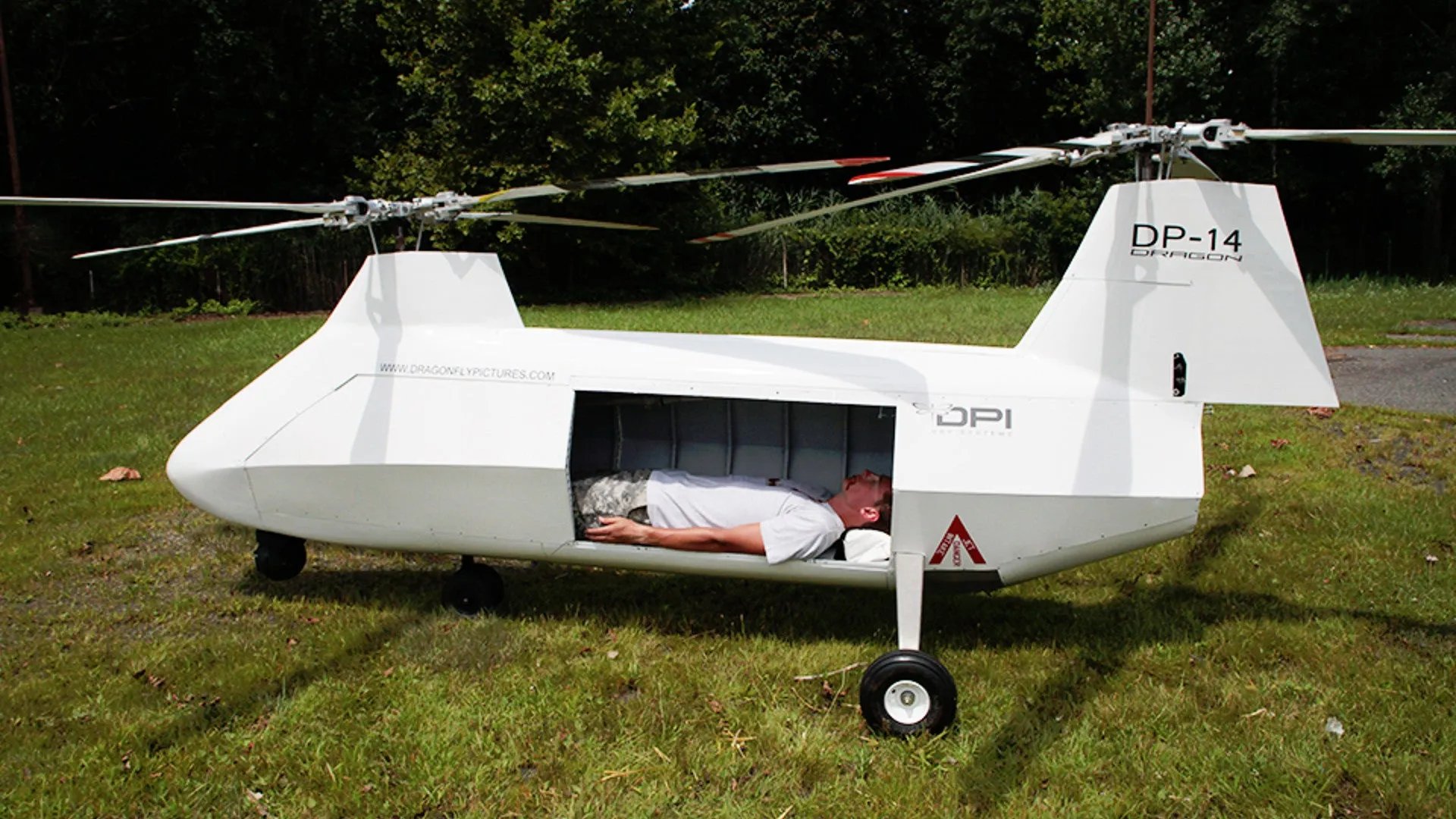
In 2019, TWZreported on U.S. Army efforts to explore how uncrewed craft might speed up the casualty evacuation process. This work included evaluation of the Dragonfly Pictures, Inc. (DPI) DP-14 Hawk, a small, tandem-rotor drone with a 400-pound cargo capacity.
A DP-14 Hawk shown configured for casualty evacuation. Dragonfly Pictures, Inc.
The emergence of autonomous air vehicles, or uncrewed ‘flying taxis,’ with short or vertical take-off and landing capabilities in the urban air mobility sector has also generated military interest. The U.S. Air Force Research Laboratory, for example, has conducted studies into how craft such as these could be adapted for combat search and rescue, with the idea that they would be airdropped to recover a fighter pilot shot down while operating over hostile territory.
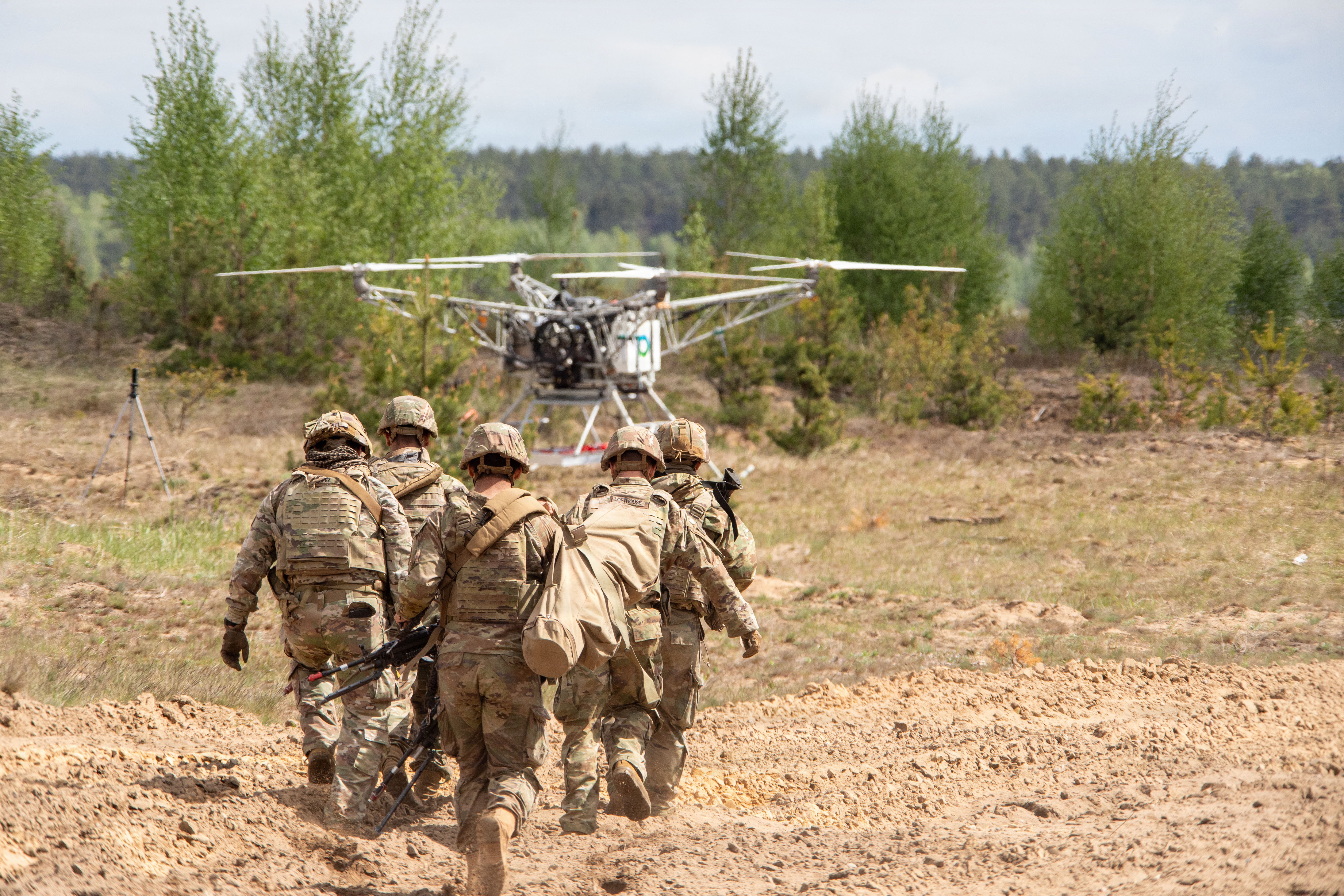
Closer to the Ukrainian hexacopter concept is the Flowcopter FC-100, a heavy-lift quadcopter drone that the U.S. Army tested in a medical evacuation capacity in Poland during the large-scale Saber Strike exercise earlier this year. Carrying a 220-pound payload, the drone has a range of more than 60 miles.
U.S. Army soldiers run with a test dummy in a stretcher towards a Flowcopter FC-100 drone during an Autonomous Triage and Treatment Challenge taking place near Bemowo Piskie Training Area, Poland, May 10, 2026, as part of Exercise Saber Strike. U.S. Army Reserve photo by Spc. Thomas Madrzak
All of these concepts aim to address the inherent vulnerability of larger personnel recovery platforms in more contested environments.
In their favor, they offer the potential to rescue troops from more precarious situations, with the smaller drones touching down in relatively tight areas in mountainous, forested, or jungle environments. Autonomous navigation systems can guide the drones through smoke, dust, or bad weather, too.
On the other hand, these small craft have no space for a medic, pararescuemen, or other additional personnel. Bearing in mind their limited range and lower speeds, they also need to be in the right location to respond to emergencies as and when they occur.
For the Ukrainian Armed Forces, aerial medical evacuation drones are being rapidly developed and now fielded to help address another problem: the vulnerability of UGVs in areas of the battlefield that have long become far too hazardous for crewed medevac platforms to operate.
By now, both sides in the Ukraine war are relying heavily upon small, autonomous uncrewed aircraft to perform a wide variety of resupply, surveillance, communications, and strike roles on and around the front lines. With that in mind, the adaptation of these kinds of vehicles for casualty evacuation and personnel recovery missions is the next logical step.
O sindicato aponta o fim da limpeza externa como agravante e admite uma semana de greve em novembro. A câmara anuncia novas contratações para as escolas.
 Login






 As inscrições para a 6.ª edição do Portugal in Love estão encerradas, depois de ter sido atingido o limite de participantes. O fórum internacional dedicado ao segmento dos casamentos realiza-se de 25 a 27 de novembro de 2026, no Evolution Cascais-Estoril,