❌

Reading view

Labour Cuts £2 Billion From Army Front Line

Labour has cut £2 billion from front-line Army equipment as John Healey tries to fill a defence spending black hole in his first Budget.

The post Labour Cuts £2 Billion From Army Front Line appeared first on The Daily Sceptic.

  •  

We need to stop disinformation in UK political adverts. Here’s a chance to do so | Letter

Alex Tait on a proposed amendment to the representation of the people bill, and Dr Joseph Mullen on Russian interference in the Brexit referendum

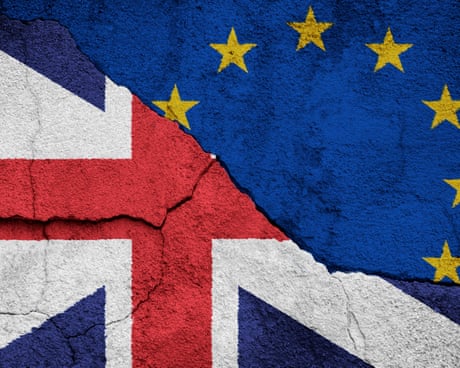
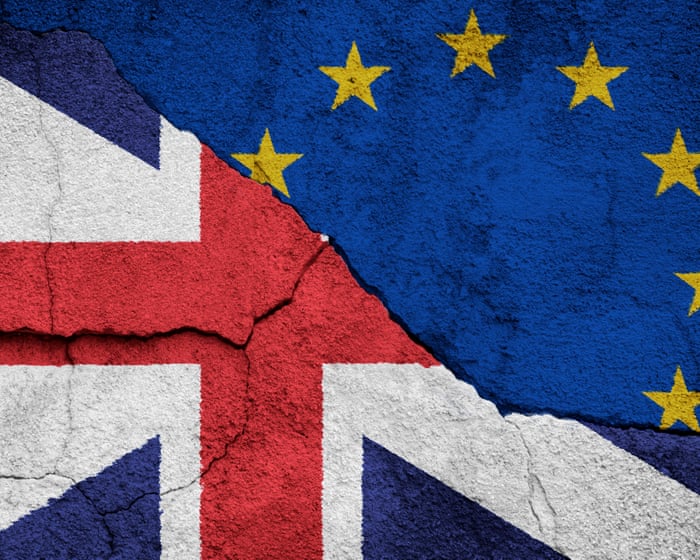
Andy Burnham’s comments about Russian interference in Brexit (Report, 11 October) and the warning by the MI5 chief, Ken McCallum, against exaggerating its impact (Report, 13 October) risk overlooking another serious threat to electoral integrity: disinformation from our own political parties and campaigners.

Foreign interference deserves scrutiny, but misleading factual claims in electoral advertising are unregulated, unlike in commercial advertising. We have four sets of rules to ensure an advert for a packet of sausages is accurate, but none for the most important advertising of all – ads that influence how we vote.

Continue reading...

© Photograph: Tuomas A Lehtinen/Getty Images

© Photograph: Tuomas A Lehtinen/Getty Images

© Photograph: Tuomas A Lehtinen/Getty Images

  •  

Shall we have another EU referendum? Maybe – but not yet | Polly Toynbee

We saw last time what reckless reliance on close polling led to. The omertà on rejoining has now been broken, but it would be folly to move too soon

When I hear that word again, a shudder runs down my spine. I want to groan, hold my head in my hands and wail. The horror! No, never again, not another referendum. But the idea is back in play as Andy Burnham looks for ways to reverse a decade of economic stagnation.

As the prime minister dared to unlock the door to a Brussels reunion, you could hear Ode to Joy burst out from all remainers. But the prospect of a re-run of the most self-destructive vote in our history is dismaying.

Polly Toynbee is a Guardian columnist

Continue reading...

© Photograph: Justin Tallis/AFP/Getty Images

© Photograph: Justin Tallis/AFP/Getty Images

© Photograph: Justin Tallis/AFP/Getty Images

  •  

Andy Burnham Will Never Cut Welfare

Andy Burnham has announced "big changes" to welfare to get one million NEETs back into work – but only once he's "rebuilt the education system". Sounds expensive, says Mary Gilleece. It’s clearly never going to happen.

The post Andy Burnham Will Never Cut Welfare appeared first on The Daily Sceptic.

  •  

Ministers Turn on Ed Miliband Over Net Zero Block on AI Investment

Cabinet ministers are turning on Ed Miliband, accusing him of blocking AI investment to protect Net Zero – while families pay the price in lost jobs and holidays.

The post Ministers Turn on Ed Miliband Over Net Zero Block on AI Investment appeared first on The Daily Sceptic.

  •  

Burnham Declares £500 Million War on Tory Councils

Andy Burnham's Government has been accused of waging a £500 million "class war" on wealthy councils, slashing funding from rural Tory and Lib Dem areas to bankroll urban Labour Party strongholds.

The post Burnham Declares £500 Million War on Tory Councils appeared first on The Daily Sceptic.

  •  

Burnham’s Russia Narrative Car Crash is Worse Than We Thought

Andy Burnham's claim that Russia interfered with Brexit is risible for one very simple reason, says Ben Pile: EU policy on climate and energy is so suicidal that Putin could not have wanted Britain to leave.

The post Burnham’s Russia Narrative Car Crash is Worse Than We Thought appeared first on The Daily Sceptic.

  •  

Who Will the Next Party Leaders Be?

Amid renewed speculation about an early General Election, now is the time to look at whom to put money on as the next party leaders, says Mark Littlewood in his latest Political Betting column for the Daily Sceptic.

The post Who Will the Next Party Leaders Be? appeared first on The Daily Sceptic.

  •  

Heat Pump Subsidies to be Scaled Back to Fund Defence

A heat pump subsidy scheme launched by Ed Miliband just nine months ago is facing cuts to help fund defence as the public continues to reject the technology and the quiet Net Zero rollback marches on.

The post Heat Pump Subsidies to be Scaled Back to Fund Defence appeared first on The Daily Sceptic.

  •  

Burnham to Say it’s His “Duty” to Pursue Closer EU Ties

Andy Burnham will say that failing to pursue a closer relationship with the EU would be a "dereliction of duty" in a major Commons address today, following his comments blaming Russia for interfering in the Brexit vote.

The post Burnham to Say it’s His “Duty” to Pursue Closer EU Ties appeared first on The Daily Sceptic.

  •  

Britain Confirms Russian Interference in Brexit Referendum After Ten Years

Prime Minister Andy Burnham has acknowledged that Russia interfered in Britain’s 2016 referendum on European Union membership, ending a decade in which successive governments avoided making a definitive public assessment of Moscow’s involvement.

British Prime Minister Andy Burnham has confirmed that Russia interfered in the 2016 Brexit referendum, marking a significant change in the government’s position on foreign involvement in one of the country’s most consequential political decisions. The acknowledgement comes more than ten years after Britain voted to leave the European Union and six years after a parliamentary intelligence investigation criticised the failure to examine Russian activities surrounding the vote.

Speaking on The Rest Is Politics podcast, Burnham said he had requested an assessment of Russian interference after becoming prime minister in July. He subsequently received confirmation that Moscow had attempted to influence the referendum, although he declined to disclose the intelligence underpinning that conclusion or explain the methods employed.

The statement establishes an important distinction between Russian interference and the referendum’s outcome. The former is now publicly acknowledged by the British government; the latter remains a separate question. No evidence has been presented demonstrating that Russian activities determined the result, which saw 51.9 per cent vote to leave the EU.

The investigation that never took place

The controversy dates back to the Intelligence and Security Committee’s 2020 report on Russia, which identified serious weaknesses in Britain’s response to hostile foreign influence.

The committee examined Russian activities targeting British political institutions, including attempts to exploit social divisions through state-controlled information channels and online networks. It found that the British government had failed to conduct a comprehensive assessment of potential Russian interference in the Brexit referendum.

That failure was particularly striking when compared with the United States, where intelligence agencies investigated Russian interference in the 2016 presidential election and published conclusions identifying a coordinated campaign.

In Britain, by contrast, responsibility for examining foreign interference had been divided between departments and intelligence agencies. The parliamentary committee found that no organisation had assumed responsibility for assessing the threat to the referendum comprehensively.

The distinction was politically convenient for successive governments. Without a formal investigation, ministers could maintain that there was insufficient evidence to establish interference while avoiding the question of whether the evidence had ever been properly examined.

Burnham’s acknowledgement changes that position, although it does not resolve every question raised by the original inquiry.

What Russia sought to achieve

Russian information operations have repeatedly targeted political divisions within European societies, particularly disagreements over immigration, national sovereignty, NATO and relations with Brussels.

Research into online activity surrounding the Brexit campaign identified networks of accounts associated with Russian influence operations that circulated divisive political messages. Establishing their precise reach, coordination and effect on individual voters remains considerably more difficult.

Moscow had an identifiable strategic interest in weakening European political cohesion. Britain’s departure from the EU removed one of the bloc’s largest economies, a permanent member of the UN Security Council and an important supporter of sanctions against Russia.

That geopolitical consequence does not establish that Brexit was engineered by Moscow. Britain’s referendum reflected longstanding domestic political divisions, disagreements over European integration and dissatisfaction with successive governments.

Russian interference, however, need not create political divisions to exploit them. Amplifying existing disputes, discrediting institutions and encouraging distrust between political opponents can serve strategic objectives without requiring direct control over a campaign.

Consequences for relations with Europe

The timing of Burnham’s intervention is significant. His government has begun reconsidering Britain’s relationship with the EU, while European governments are confronting increasingly aggressive Russian hybrid operations.

Burnham has also suggested that Britain should be prepared to reconsider EU membership in the future, although such a decision would require a separate political mandate and negotiations with the bloc’s 27 members.

The prime minister’s comments place Russian interference within a broader European security debate. France and Germany are among the countries confronting allegations of foreign information operations, covert political influence and attempts to undermine electoral confidence.

The European Council’s forthcoming October summit will include discussions of Russian-linked hybrid attacks, demonstrating that the problem extends beyond conventional espionage and cyber-security.

For Britain, the outstanding question concerns the intelligence assessment itself. Burnham has not indicated whether further evidence will be published, whether Parliament will receive a classified briefing or whether the government intends to examine failures by previous administrations.

A public acknowledgement without supporting details may establish the government’s position, but it cannot by itself provide a complete historical account.

Ten years after the referendum, Britain is therefore confronting two separate matters: the extent of Russia’s activities during the campaign and the reasons its own institutions took so long to acknowledge them.

The first concerns foreign interference. The second concerns the accountability of the British state.

  •  

Burnham’s “Common Good” is Reheated Fabian Socialism

Andy Burnham's vision of the "common good" – with Net Zero at its heart – is just reheated Fabian socialism, says Dr Tilak Doshi – and the fingerprints of Left-wing economist Mariana Mazzucato are all over it.

The post Burnham’s “Common Good” is Reheated Fabian Socialism appeared first on The Daily Sceptic.

  •  

Betting Against Burnham

Labour may be enjoying a Burnham bounce, but Mark Littlewood still thinks the smart option is to bet against the Prime Minister winning the next General Election. He explains why in the Daily Sceptic.

The post Betting Against Burnham appeared first on The Daily Sceptic.

  •  

Burnham to Start Dismantling Triple Lock Before Election

Andy Burnham plans to pass a law scrapping the triple lock before the next election despite Labour pledging in its 2024 manifesto to keep it intact and the PM himself previously saying it would stay until 2030.

The post Burnham to Start Dismantling Triple Lock Before Election appeared first on The Daily Sceptic.

  •  

Political Spite Won’t Keep the Lights On

So, this is Andy Burnham's solution to soaring energy prices: nationalisation and relitigating the 1970s. It's just a shame, says Ben Pile, that energy was far cheaper under Thatcher than in our Net Zero era.

The post Political Spite Won’t Keep the Lights On appeared first on The Daily Sceptic.

  •  

Our Andy With His 10 Year Plandy

Amidst all the sentimental populist fluff, a political theory of sorts could be discerned in Andy Burnham's conference speech, says Professor James Alexander. Let's call him Our Andy-with-his-10-year-Plandy.

The post Our Andy With His 10 Year Plandy appeared first on The Daily Sceptic.

  •  
❌