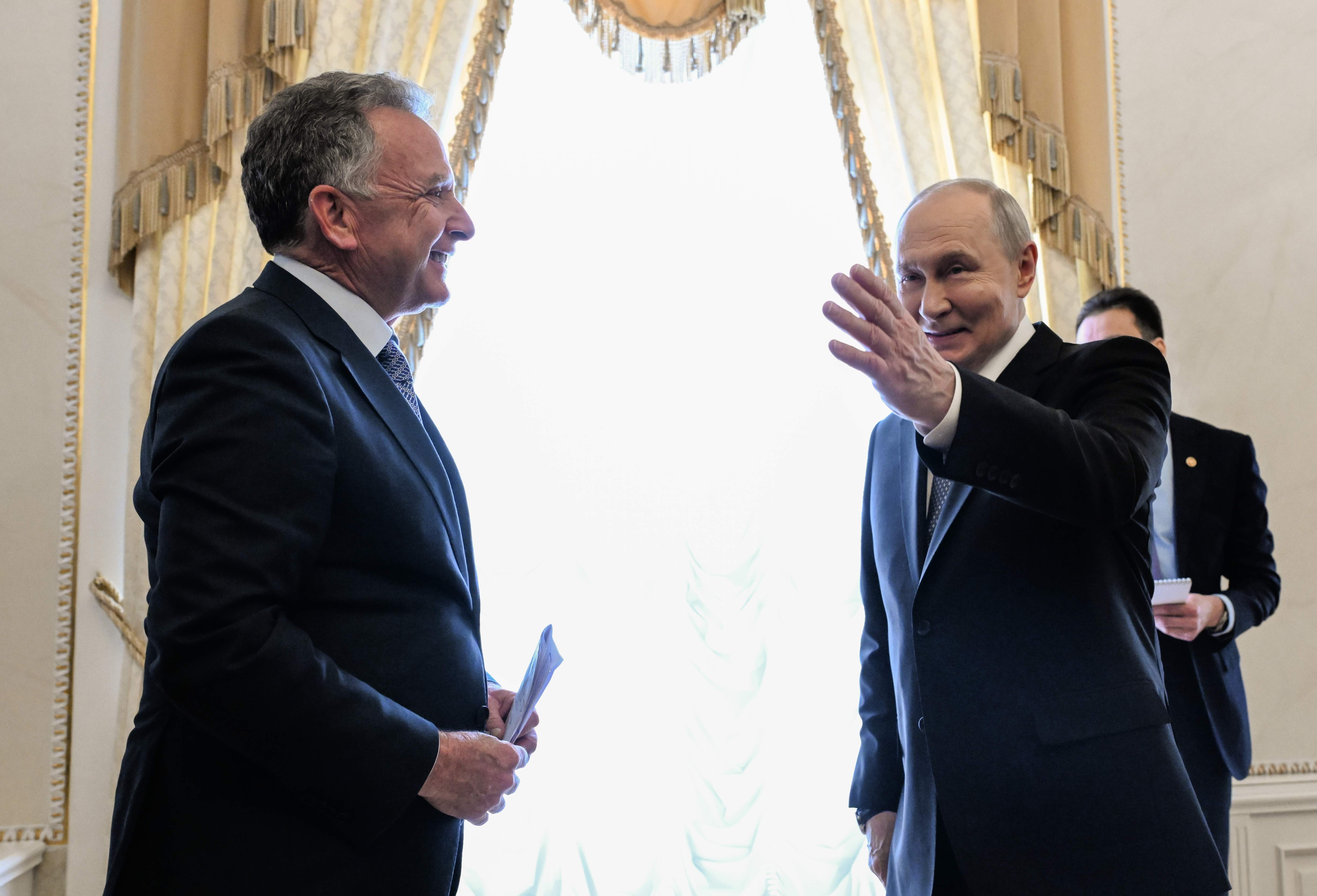
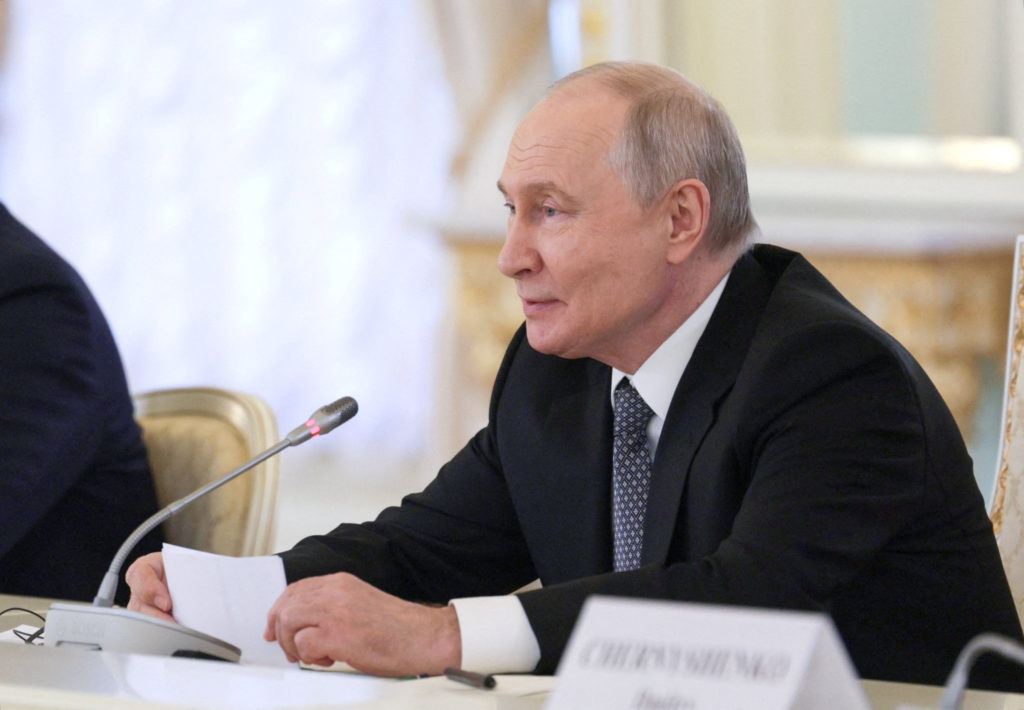
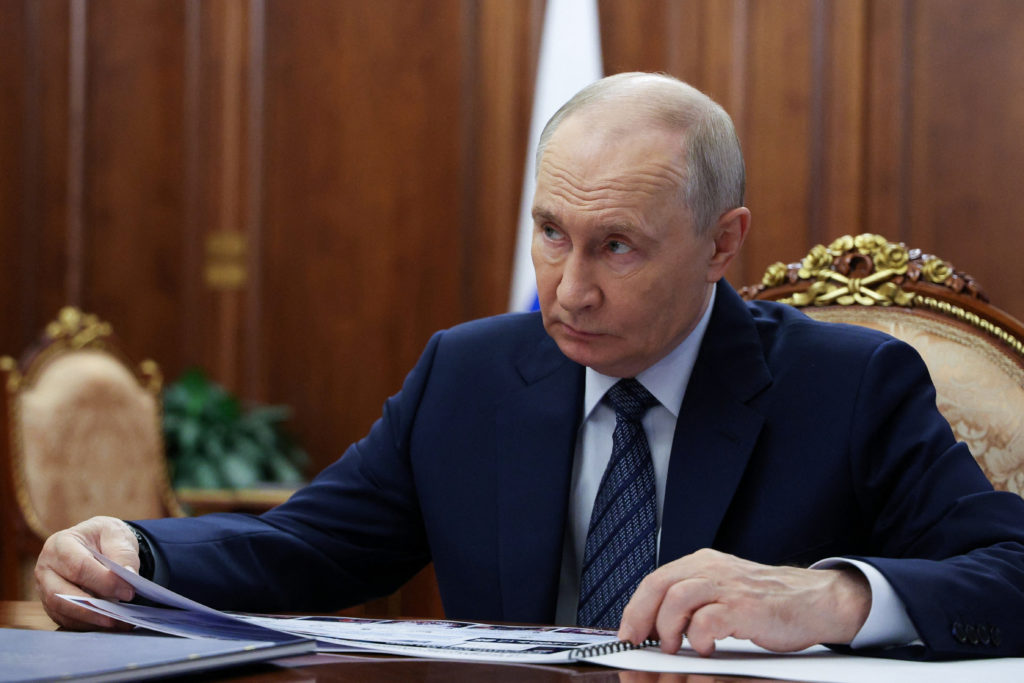
The Russian leader has agreed "in principle" to resume the talks after Nov. 10, Putin's foreign affairs adviser Yuri Ushakov told reporters following a meeting in St. Petersburg between Putin and U.S. President Donald Trump's envoy Steve Witkoff.
Moscow has released retired American teacher Stephen Hubbard after more than four years in detention, following President Donald Trump’s personal intervention with Vladimir Putin and amid renewed US-Russian negotiations over Ukraine.
Russia has released Stephen Hubbard, a 74-year-old American citizen imprisoned since 2022, as US special envoy Steve Witkoff holds talks with President Vladimir Putin in St Petersburg on Wednesday, 21 October.
Putin announced the release during his meeting with Witkoff, saying Hubbard had already been transferred to Pulkovo Airport in St Petersburg in preparation for his return to the United States. Witkoff thanked the Russian president for securing the American’s freedom.
The development follows direct intervention by President Donald Trump, who confirmed on Tuesday that he had personally raised Hubbard’s detention with Putin and requested his release.
Hubbard, a retired English teacher from Michigan, had spent decades living abroad before moving to Izium, in Ukraine’s Kharkiv region, in 2014. Russian forces detained him in April 2022, during their occupation of the city following the full-scale invasion of Ukraine.
In October 2024, a Moscow court sentenced him to six years and ten months in prison after finding him guilty of serving as a mercenary for Ukrainian forces.
Russian prosecutors alleged that Hubbard had joined a Ukrainian military unit and received approximately $1,000 a month for his activities, including guarding military checkpoints.
His family rejected the accusations. His sister, Patricia Hubbard Fox, maintained that he had never participated in military operations, while his American lawyer, Martin De Luca, said the charges were fabricated.
The US State Department subsequently designated Hubbard as wrongfully detained, making his release a priority in Washington’s negotiations with Moscow.
Release coincides with renewed Ukraine diplomacy
Hubbard’s release comes during another round of intensive diplomatic contacts involving Washington, Kyiv and Moscow.
Witkoff arrived in St Petersburg following talks in Oslo on Tuesday with Ukrainian President Volodymyr Zelenskyy, Norwegian Prime Minister Jonas Gahr Støre and Finnish President Alexander Stubb. Jared Kushner, another representative of Trump’s administration, participated remotely.
The discussions addressed security arrangements, energy and economic questions connected with Russia’s war against Ukraine.
Witkoff travelled directly from Norway to Russia, where he was received by Kremlin representative Kirill Dmitriev before his meeting with Putin.
The release provides a concrete outcome from the latest US-Russian contacts, although no indication has emerged that it forms part of a broader agreement concerning Ukraine.
It also follows several previous cases in which American citizens detained in Russia have been released through negotiations between Washington and Moscow.
In August, former US Marine Robert Gilman was released on humanitarian grounds amid serious concerns about his deteriorating health.
Hubbard was the only American prisoner in Russian custody officially classified by Washington as wrongfully detained at the time of his release.
Neither side has announced whether Moscow received any concessions in exchange for his freedom, while the outcome of Witkoff’s wider negotiations with Putin remains unclear.
In July 1971, Henry Kissinger developed a convenient stomachache in Pakistan, vanished from public view and turned up in Beijing. The secret trip that led to Nixon’s opening to China rested on a simple piece of geometry: in a world of three great powers, the smart move is to stand closer to each of your […]
The war in Ukraine can be ended permanently on terms that protect Ukraine’s statehood, meet Russia’s security concerns, and lay the foundation for a durable European security order. As another round of negotiations gears up in Norway, I propose a settlement concluded as a single package, signed by Ukraine and Russia, adopted by a vote […]
Ukrainian President Zelenskyy met with U.S. envoy Steve Witkoff and European officials in Norway in a bid to avoid a further diplomatic rupture with President Trump. Over the past week, Trump has criticized Zelenskyy over Ukraine's efforts to inflict heavy losses on Russia. The meeting was aimed at easing tensions ahead of Witkoff's meeting with Vladimir Putin in Russia. Nick Schifrin reports.
To discuss the tensions between President Trump and Ukrainian President Zelenskyy, Geoff Bennett spoke with David Kramer. He held a number of senior positions at the State Department during the George W. Bush administration. He's now the executive director of the George W. Bush Institute in Dallas, Texas.
Talks in Oslo have restored diplomatic contact between Kyiv and Washington, but Donald Trump continues to demand concessions from Ukraine while Moscow shows little willingness to compromise. Steve Witkoff’s forthcoming meeting with Russian officials will expose the limits of the American peace initiative.
The latest negotiations over Russia’s war against Ukraine have produced a renewed diplomatic initiative, with US presidential envoy Steve Witkoff preparing to travel to St Petersburg on Wednesday, 21 October, following consultations with Ukrainian and European leaders in Oslo.
President Volodymyr Zelenskyy met Witkoff alongside Norwegian Prime Minister Jonas Gahr Støre and Finnish President Alexander Stubb on Tuesday. Jared Kushner, Donald Trump’s son-in-law, participated remotely. The discussions covered territorial questions, security guarantees, sanctions and proposals for a partial ceasefire.
The meeting concluded with cautious expressions of optimism. Stubb suggested that the negotiating process was back on track, while Støre confirmed that Witkoff would present proposals developed by American, Ukrainian and European representatives to the Russian leadership.
However, the diplomatic improvement contrasts with Trump’s renewed public pressure on Zelenskyy, raising questions about Washington’s negotiating strategy and whether Moscow has any intention of accepting the proposed settlement.
Washington’s contradictory signals
Speaking in the Oval Office on Tuesday, Trump again insisted that Ukraine must reach an agreement with Russia, portraying Moscow’s military position as increasingly advantageous.
His remarks closely resembled arguments advanced during earlier disputes with Zelenskyy, when Washington pressed Kyiv to accept territorial concessions rather than increase pressure on the Kremlin.
Meanwhile, Secretary of State Marco Rubio sought to reassure the Ukrainian leadership that American military cooperation had not been deliberately restricted.
Rubio denied that Trump had ordered changes to intelligence-sharing or weapons assistance. Zelenskyy subsequently confirmed that Ukraine was again receiving American early-warning intelligence concerning Russian ballistic missile attacks.
Nevertheless, serious problems remain. Ukraine has reported delays in deliveries of American-made Patriot interceptors purchased by European allies, while restrictions affecting the military Starshield satellite communications system have not been fully resolved.
These difficulties are particularly serious as Russia intensifies attacks against Ukrainian electricity infrastructure, attempting to undermine civilian services ahead of winter.
The conflicting signals leave Kyiv negotiating with an administration whose diplomatic representatives promise continued cooperation while its president publicly demands Ukrainian concessions.
Security guarantees without NATO membership
Among the proposals discussed in Oslo were security arrangements intended to provide Ukraine with protection comparable to NATO’s Article 5 collective-defence provision.
Zelenskyy acknowledged that American representatives had discussed such guarantees, although their precise obligations and enforcement mechanisms remain undisclosed.
The proposal presents a fundamental negotiating problem.
Russia has consistently opposed Ukrainian NATO membership, partly because the alliance’s collective-defence commitments would increase the consequences of any renewed Russian aggression.
An alternative arrangement offering genuinely comparable protection would consequently encounter many of the same Russian objections.
Conversely, guarantees lacking a credible enforcement mechanism would leave Ukraine exposed to another attack after a ceasefire.
Moscow’s record provides little reassurance. Russia violated Ukraine’s internationally recognised borders in 2014 and launched its full-scale invasion in 2022 despite previous commitments to respect Ukrainian sovereignty.
The Kremlin’s objectives extend beyond territory
Washington’s approach appears increasingly concentrated on securing an agreement involving territorial concessions and restrictions on Ukraine’s future security arrangements.
Yet Putin’s objectives have consistently extended beyond the territories occupied by Russian forces.
The Kremlin has demanded constraints on Ukraine’s military capabilities, international alliances and strategic independence. Accepting territorial gains alone would not necessarily satisfy Moscow’s wider political ambitions.
Russian Foreign Minister Sergei Lavrov has maintained that Moscow is unwilling to make substantial political concessions, while the Kremlin continues to insist that any agreement must address what it describes as the underlying causes of the conflict.
Those conditions have previously included demands that would substantially restrict Ukraine’s sovereignty.
Consequently, even a Ukrainian willingness to consider elements of Washington’s proposals would not guarantee Russian acceptance.
The political calculation behind an energy ceasefire
One possibility under consideration is a limited ceasefire protecting energy and potentially food-related infrastructure.
Zelenskyy has indicated that Ukraine could suspend attacks against Russian energy facilities if Moscow stopped striking Ukrainian infrastructure.
Such an arrangement could reduce immediate civilian suffering. It would also have military and economic consequences.
Ukrainian attacks against Russian refineries, oil terminals and other energy installations have increasingly targeted infrastructure supporting Moscow’s war economy.
A temporary suspension could allow Russia to repair damaged facilities, restore production and stabilise export revenues. Without credible monitoring and enforcement, Moscow could exploit a limited agreement while leaving the wider conflict unresolved.
Trump has additional reasons to seek a rapid diplomatic result. With American congressional elections scheduled for 3 November, his administration is attempting to contain domestic fuel prices and demonstrate progress towards ending the war.
His recent decision to ease restrictions on Russian diesel exports has already provoked concern in Kyiv and European capitals over the potential financial benefits to Moscow.
The danger for Ukraine is that an agreement presented as a diplomatic achievement in Washington could provide Russia with economic relief without altering its military objectives.
The decision awaiting Washington
Witkoff’s visit to St Petersburg will establish whether Moscow is prepared to engage with the proposals developed in Oslo.
Putin could accept a temporary arrangement, particularly one suspending Ukrainian strikes on Russian energy infrastructure, while postponing discussions over territorial and political questions.
Alternatively, Moscow could reject the initiative and maintain its existing demands.
In either case, Washington will face a decision over the consequences of Russian intransigence.
For Kyiv, continued engagement with the United States remains essential because American intelligence, satellite communications and advanced air-defence weapons cannot readily be replaced.
But the prospects for a negotiated settlement will depend less on further Ukrainian concessions than on whether Russia faces sufficient political, military and economic pressure to abandon its maximalist demands.
The Oslo negotiations have restored cooperation between Ukraine, Europe and American mediators. They have not established that Putin is prepared to end the war on terms compatible with Ukraine’s continued independence.
Russia’s central bank has reduced its gold holdings to their lowest level in nearly seven years as the Kremlin faces a widening budget deficit, declining energy revenues and mounting expenditure on its war against Ukraine.
Russia has carried out its largest sustained reduction in gold reserves since the financial crisis of 1998, disposing of approximately 62 tonnes of the precious metal since December 2025 as the government draws on accumulated reserves to finance a growing federal budget deficit.
According to figures released by the Bank of Russia on Tuesday, 20 October, the country’s monetary gold reserves declined by another 200,000 troy ounces, equivalent to approximately 6.2 tonnes, during September.
The latest reduction brings Russia’s official gold holdings to 72.8 million troy ounces, or approximately 2,264 tonnes, their lowest level since the end of 2019.
The central bank has now reduced its gold holdings for ten consecutive months, reversing the accumulation strategy pursued by Moscow in the years preceding its full-scale invasion of Ukraine.
Largest gold sell-off since the 1998 crisis
The scale of the current reduction is exceptional by Russian historical standards.
At that time, Russia’s central bank disposed of approximately 118 tonnes of gold over three months as the government defaulted on domestic debt and the rouble collapsed.
Some of those holdings were subsequently replenished, leaving the country’s gold reserves approximately 50 tonnes lower at the end of 1998.
The reduction recorded during 2026 has already exceeded that annual net decline, although Russia’s present financial position differs substantially from the circumstances surrounding the 1998 default.
The monetary value of Russia’s remaining gold reserves stood at approximately $301.6 billion at the end of September, compared with $333.5 billion a month earlier. The change reflects movements in gold prices as well as the reduction in physical holdings.
Budget deficit reaches 7.3 trillion roubles
The sales come as the Russian government struggles to contain expenditure associated with its continuing military campaign against Ukraine.
Moscow now expects its federal budget deficit to reach 7.3 trillion roubles, approximately $87 billion, in 2026. That represents 3.2 per cent of gross domestic product, twice the deficit originally anticipated.
Military and security expenditure is expected to account for approximately 38 per cent of total federal spending this year.
The government has increasingly relied on its National Wealth Fund, established to accumulate surplus energy revenues, to cover budget shortfalls.
The central bank’s gold transactions are linked to operations involving the fund. Under this mechanism, the Bank of Russia conducts corresponding market sales following Finance Ministry transactions using the fund’s assets.
Figures published by Russia’s Finance Ministry earlier this month showed that the National Wealth Fund’s liquid assets had fallen to approximately 3.8 trillion roubles, equivalent to $45 billion, as of 1 October. This was down from approximately 4 trillion roubles a month earlier.
The fund’s total assets remained substantially larger, at almost 13 trillion roubles, but much of that amount is invested in shares, bonds and other holdings that cannot immediately be converted into funds for government expenditure.
War expenditure puts pressure on Kremlin finances
Russia’s fiscal problems have been compounded by weaker oil and gas revenues, a slowdown in economic activity and the increasing cost of sustaining military operations.
Although energy exports continue to generate substantial income, government revenue has failed to keep pace with spending commitments.
Moscow has consequently increased domestic borrowing, introduced additional taxes and sought alternative sources of budget financing.
The latest gold figures provide further evidence of the financial demands imposed by the war, now approaching its fifth anniversary.
They do not indicate that Russia is approaching an immediate financial collapse. The country still holds considerable gold and foreign exchange reserves, with the central bank reporting total international reserves of approximately $731.8 billion at the end of September, although access to part of its overseas assets remains restricted by Western sanctions.
Nevertheless, the continued liquidation of gold holdings reduces the reserve assets available to the Russian authorities at a time when military spending remains elevated and the government faces pressure to meet its domestic financial commitments.
For President Vladimir Putin, the growing budget deficit introduces an additional economic consideration into decisions over the duration of the war.
The September figures show that Moscow is increasingly drawing on assets accumulated before the invasion to support current expenditure, while its capacity to rebuild those reserves remains dependent on future revenues and the government’s ability to restrain spending.
(Bloomberg) — A US plan to rehabilitate sanctioned tankers to boost oil supply may attract only a sliver of the dark fleet, as existing contracts, complex compliance checks and sky-high...
Zelenskyy’s urgent discussion with the US Secretary of State suggests that Washington cannot pursue accommodation with Moscow without confronting opposition in Congress, the requirements of American national security and Ukraine’s continuing dependence on US military support.
The telephone conversation between Ukrainian President Volodymyr Zelenskyy and US Secretary of State Marco Rubio on Tuesday, 20 October, has exposed an increasingly uncomfortable contradiction in American policy towards Russia. While President Donald Trump is easing economic pressure on Moscow and attempting to restrain Ukrainian attacks on Russian energy infrastructure, senior members of his administration are having to address the consequences for Ukraine’s defence.
Zelenskyy raised three immediate concerns: the availability of Patriot interceptor missiles, interruptions to American early-warning intelligence concerning Russian ballistic attacks, and restrictions affecting Starlink and Starshield satellite communications. He described the discussion as constructive, expressing appreciation for Rubio’s willingness to help.
The significance lies less in the diplomatic language than in the circumstances surrounding the call. Washington is attempting to obtain concessions from Moscow while several of its own decisions have weakened confidence in the security arrangements on which Kyiv depends. Rubio’s involvement suggests that these difficulties cannot simply be left unresolved while Trump’s envoys pursue another round of negotiations.
The political cost of concessions to Moscow
Trump’s recent decisions concerning Russian energy exports have brought an existing disagreement over Ukraine into American domestic politics.
The administration has facilitated Russian diesel exports and waived new sanctions under the Graham Act, legislation intended to increase pressure on Russia and its principal energy customers. Rubio has said the president will use a 60-day period to assess the economic consequences of implementing the measures.
For Trump, the immediate attraction is apparent. Rising fuel prices have become a political liability ahead of the 3 November congressional midterm elections. Increasing supplies on international markets offers the administration a potential means of relieving pressure on American consumers.
The difficulty is that concessions to Vladimir Putin carry their own electoral consequences. Moscow remains deeply unpopular among substantial sections of the American political establishment, including Republicans who regard support for Ukraine as a matter of American strategic interest.
That opposition is no longer confined to public criticism. Republican senators have joined Democrats in challenging decisions affecting Ukraine’s military capabilities, creating an additional problem for an administration already facing a difficult electoral environment.
Trump can justify Russian energy concessions as an attempt to protect American consumers. Explaining why Ukraine should simultaneously experience interruptions to critical defence systems is considerably more difficult.
Rubio and the machinery of American foreign policy
Rubio’s position within the administration is particularly important. As both Secretary of State and National Security Adviser, he occupies two offices central to the formulation and execution of American foreign policy.
His conversation with Zelenskyy took place during a diplomatic tour of Uzbekistan and India, demonstrating that the deterioration in relations with Kyiv required attention even while the administration was pursuing other international priorities.
It would be premature to interpret Rubio’s intervention as evidence of an independent foreign policy. There is no indication that he is acting against Trump’s instructions. The more plausible interpretation is that the administration recognises a need to contain the consequences of its recent decisions without requiring the president publicly to reverse his position.
The controversy surrounding Starshield is particularly revealing. Reuters reported that instructions to restrict the satellite service used by Ukrainian forces originated inside the White House. The officials cited did not identify who authorised the order, while the administration has denied Trump’s personal involvement.
Separately, Zelenskyy has reported failures to receive advance warnings of Russian ballistic attacks. The cause of those interruptions remains disputed.
These developments have already attracted congressional scrutiny. Republican Senator Thom Tillis and Democratic Senator Jeanne Shaheen led a bipartisan request for an investigation, warning that failures in communications and intelligence-sharing may have endangered American personnel in Ukraine.
Congress cannot directly manage the administration’s foreign policy. Nevertheless, its powers over expenditure, legislation and oversight make sustained opposition politically consequential, particularly when members of the president’s own party are involved.
Ukraine needs military assistance, not diplomatic promises
The immediate requirements in Kyiv are considerably more specific than the objectives being discussed in Washington’s diplomatic negotiations.
Ukraine needs reliable satellite communications, uninterrupted intelligence concerning incoming missiles and sufficient Patriot interceptors to defend its cities and critical infrastructure. Delays in any of these areas have consequences that cannot be addressed through declarations about a future peace settlement.
The shortage of Patriot missiles is particularly serious. Zelenskyy has complained that American authorisation is delaying deliveries under arrangements financed by European governments. Washington’s commitments elsewhere, including the Middle East, add further pressure to American air-defence inventories.
Meanwhile, preparations for new negotiations in Oslo involving American envoys Steve Witkoff and Jared Kushner continue. The involvement of European leaders may broaden the diplomatic discussion, but it does not resolve the central obstacle: Putin has offered no convincing indication that he is prepared to end the invasion on terms acceptable to Ukraine.
Proposals concerning Ukrainian elections, NATO membership or alternative negotiating arrangements remain subordinate to that problem. Without a ceasefire that can be enforced, even an agreement on the political framework for peace would leave fundamental questions of security unanswered.
The limits of presidential power
Trump retains substantial authority over American sanctions, military assistance and diplomatic engagement. Yet his ability to offer Moscow meaningful concessions is constrained by several factors beyond his immediate control.
Congress can challenge further attempts to weaken sanctions or restrict assistance. European governments maintain their own sanctions regimes and are not obliged to follow Washington’s approach. Ukraine retains considerable military capacity, including the ability to attack Russian energy facilities that contribute to financing the war.
Nor can the American president compel Putin to accept a settlement. If Russia calculates that continuing military operations offers greater advantages than negotiations, additional concessions from Washington may encourage Moscow to prolong the conflict rather than end it.
Rubio’s conversation with Zelenskyy therefore suggests that the administration is being forced to confront the practical consequences of its policy. An American president may seek improved relations with Moscow, but the institutional interests of the United States do not necessarily change with his personal diplomatic priorities.
For Kyiv, the question is whether those interests will translate into the continued supply of weapons, intelligence and communications support. Russia’s attacks will continue irrespective of the timetable established for American diplomatic initiatives.
Reports that SpaceX temporarily restricted its satellite internet service for Ukraine’s armed forces have generated serious concern in Kyiv and among the country’s allies. SpaceX operates the civilian Starlink system and its lesser-known military-grade counterpart, called Starshield. But many news stories leave an important question unanswered: what does a Starshield “slowdown” mean on the battlefield? […]
Recent incidents involving the explosion of a North Korean landmine in the Demilitarized Zone (DMZ) and the repatriation of North Korean POWs held in Ukraine have led to a dramatic increase in North Korea-related coverage by South Korean media outlets, which had shown little interest in the North for some time. The reason is that […]
Should this be seen as the Hans Christian Andersen story, in which the narcissistic emperor is finally exposed as a naked fool by a truth-telling child? Donald Trump is certainly all of these things: narcissistic, naked in his support for Putin and a fool. But the parallel doesn’t quite work because it hasn’t taken a […]
In recent days, a Ukrainian drone strike hit Russia’s largest data center, owned by bank and technology company Sberbank. The strike came after Ukraine hit three data centers belonging to the tech giant Yandex, which is often referred to as “Russia’s Google.” After those attacks, Yandex’s traffic dropped 94%. Its users experienced heavy disruption to […]
By Daryna Krasnolutska, Volodymyr Verbianyi and Olesia Safronova Oct 18, 2026 (Bloomberg) –Ukraine is in talks with Turkey, Egypt and India on the possibility of opening up Black Sea civil navigation,...
BUCHAREST, Oct 17 (Reuters) – Romanian F-16 fighter jets shot down two drones over the country’s territorial waters on Saturday, the defense ministry said. The drones were brought down days after two...
By Milda Seputyte and Aaron Eglitis Oct 16, 2026 (Bloomberg) –Europe should block the transit of Russian grain through Baltic ports as that may force Moscow to seek ways to open...
 Login