❌

Reading view

European Governments Move to Give Energy Companies Powers to Neutralise Hostile Drones

France, Germany, Austria and Poland are expanding or reviewing the authority of critical infrastructure operators to defend facilities against drones, raising legal and operational questions over the growing role of civilian companies in national security.

European governments are reconsidering who should be authorised to intercept hostile drones as energy companies and critical infrastructure operators confront an increasingly serious threat to electricity networks, transport systems and other essential facilities.

France has already introduced legislation permitting approved operators to deploy counter-drone systems, while Germany is reviewing similar arrangements and Austria has announced plans to extend certain protective powers to infrastructure companies.

Poland has moved further by authorising designated security units to disable or destroy drones entering restricted areas around important energy installations.

The changes reflect concerns that national police and armed forces cannot provide permanent protection for every substation, power station, railway facility or pipeline against relatively inexpensive unmanned aircraft.

France establishes a new approach

In August 2026, the French parliament approved legislation allowing authorised operators of critical infrastructure and their contractors to detect, jam and intercept drones near designated facilities.

The legislation followed a series of reported drone incursions over sensitive locations, including military installations.

Under the French approach, operators of strategically important infrastructure may eventually use approved counter-drone systems without relying exclusively on the immediate intervention of military personnel.

Potential beneficiaries include electricity operators and organisations responsible for transport infrastructure.

French authorities are testing detection equipment, electronic countermeasures and interceptor drones at Brétigny-sur-Orge, south of Paris.

The programme examines systems capable of identifying approaching aircraft, determining whether they present a threat and initiating an appropriate response.

France intends to expand the protection of sites classified as strategically important, with further deployment planned during 2027.

The initiative would introduce responsibilities traditionally associated with military or police operations into the management of civilian infrastructure.

Germany and Austria reconsider existing restrictions

Germany is examining the legal conditions under which private companies and infrastructure operators could participate in active counter-drone operations.

At present, responsibility for neutralising threatening aircraft remains primarily with the competent public authorities.

The debate has intensified following security incidents involving unmanned aircraft, including the discovery of an explosives-laden drone near a Ukrainian cargo aircraft at Leipzig/Halle airport in August.

German authorities attributed the incident to Russia, an allegation Moscow denied.

The German government’s review concerns not only the equipment that companies may possess but also whether trained security personnel should be permitted to deploy countermeasures without waiting for a separate police authorisation.

Austria announced plans in September to extend comparable powers to selected critical infrastructure operators, including major energy companies.

The government has acknowledged the practical limitations of protecting a large number of widely dispersed installations using state security personnel alone.

Poland has already established restricted drone zones around sensitive energy facilities, with designated security units authorised to intercept aircraft entering those areas under applicable national rules.

Electricity networks face particular risks

Electricity infrastructure presents a difficult security problem because essential installations are distributed across extensive geographical areas.

Transmission operators manage thousands of kilometres of high-voltage lines, while substations, transformers and switching stations connect generation facilities to consumers.

A successful attack against critical equipment can produce consequences extending well beyond the immediate site.

Large power transformers are particularly difficult to replace. Manufacturing, transporting and installing specialised equipment can require lengthy preparation, making rapid recovery uncertain after serious damage.

European utilities have traditionally concentrated on physical security, maintenance and restoring services after technical failures or accidents.

The spread of drones creates additional demands for surveillance, early warning and the ability to respond before an attack reaches its target.

Russia’s repeated strikes against Ukraine’s electricity infrastructure have demonstrated the extensive disruption that attacks on power systems can cause.

European governments are now evaluating how comparable vulnerabilities could be exploited against their own networks.

Who bears responsibility for an interception?

Giving civilian operators access to counter-drone equipment raises unresolved legal questions.

Electronic jamming can interfere with communications and navigation systems beyond the targeted aircraft. A drone brought down over an industrial or residential area could injure members of the public or damage surrounding property.

Security personnel must also determine whether an unidentified drone is hostile, operating unlawfully or simply present because of an error by its operator.

A mistaken interception could expose infrastructure companies to compensation claims and other legal consequences.

European governments must therefore establish who can authorise an intervention, which countermeasures are permitted and how responsibility is allocated when damage occurs.

There is no uniform European approach.

Some operators support expanding their protective powers, while others argue that the use of force should remain the responsibility of the state.

Finland’s national electricity transmission operator, Fingrid, has expressed reservations about transferring such authority to energy companies.

The position reflects a wider concern that infrastructure operators should concentrate on maintaining essential services rather than assuming responsibilities for armed or coercive security operations.

A growing European security market

The regulatory debate is developing alongside a rapidly expanding market for counter-drone technology.

Manufacturers are offering equipment that integrates radar, optical sensors, electronic detection and software capable of classifying possible threats.

Interceptor drones and electronic countermeasures are increasingly being designed for use around civilian infrastructure rather than exclusively on military installations.

German defence company Rheinmetall has reported growing interest from private infrastructure operators in counter-drone protection.

However, the technology is advancing faster than the legal frameworks governing its use.

The immediate challenge for European governments is to establish protective arrangements that allow rapid intervention while preserving clear accountability.

A counter-drone system can identify an approaching aircraft within seconds. Determining who is authorised to stop it remains a matter for national law.

  •  

EU prosecutors raid far-right Patriots for Europe offices in Brussels and Strasbourg over alleged misuse of parliament funds

Offices of staff in the Patriots for Europe (PfE) group were raided in France and Belgium on Wednesday (21 October).

The European Public Prosecutor’s Office (EPPO) told EUobserver that searches were carried out “as part of an ongoing investigation into the use of European funds by a former political group in the European Parliament”.

But the law enforcement body said it would not release details of the investigation for now, to avoid jeopardising the integrity of the case.

The far-right PfE group in the European Parliament, led by Jordan Bardella of the French National Rally (RN) party, posted a statement on social media claiming that on Wednesday morning, the EPPO carried out searches in administrative offices at the European Parliament premises in Brussels and Strasbourg.

“It would appear that these searches are linked to the complaint lodged against the Identity and Democracy Group (ID) dissolved in 2024,” said PfE’s X post.

This article continues, but the full version is available only to EUobserver.com subscribers. Visit account.euobserver.com/membership

  •  

Que sait-on de l’image des objets pillés, modifiée par l’IA et publiée par la police du Val-d’Oise ?

En marge des manifestations du 17 octobre, de nombreux magasins ont été pillés en France. Depuis, la police est à la recherche des auteurs de ces pillages et des objets volés. Sur X, l’antenne de la police nationale du Val-d’Oise affirme avoir retrouvé certains biens… mais la photo mise en avant n’est pas authentique.

  •  

Non l’ambassade de Côte d’Ivoire à Paris n’a pas été incendiée par les manifestants du 17 octobre

Des comptes affichant des positions proches de l’Alliance des États du Sahel (AES) affirment que l’ambassade de Côte d’Ivoire à Paris aurait été incendiée pendant les violences qui ont eu lieu en marge de la manifestation du 17 octobre. La photographie censée le prouver a été générée par IA.

  •  

Comment manipuler la génération Z

par Thierry MEYSSAN

Alors qu’une douzaine d’États ont déjà vécu — parfois avec succès — des manifestations de la génération Z, celles qui viennent d’avoir lieu, en France, donnent une occasion de manipuler la population. Les destructions programmées, survenues le 17 octobre, semblent préparer une sorte d’état d’urgence qui permette de suspendre l’élection présidentielle comme cela a lieu en Ukraine depuis deux ans.

Dans  cet article, j’examinerai une douzaine de manifestations de la « génération Z », c’est-à-dire les 14-29 ans, qu’elles soient organisées ou désorganisées. Si de nombreux mouvements de contestation auquel elle a participé ont eu lieu dans d’autres États, la génération Z a toujours dénoncé la corruption, le népotisme et les abus de pouvoir avant toute autre injustice.

Je conserverai toujours à l’esprit que si l’on ne peut pas provoquer la colère d’une foule, il est très facile de la détourner de son objectif initial. Ces manifestations commencent donc toujours dans l’intérêt général, mais peuvent s’égarer en chemin.

Une première caractéristique de ces mouvements est qu’ils ont tous éclaté après des scandales de corruption ou de répression. Les manifestants ne se sont pas réclamés d’une idéologie politique particulière, mais ont avant tout exprimé leur exigence de justice.

• Mongolie : le 11 janvier 2025, des jeunes gens manifestent à Oulan-Bator pour protester contre le train de vie de la famille du Premier ministre Luvsannamsrai Oyun-Erdene. Le mouvement dénonce rapidement la corruption dans l’ensemble de la classe politique et demande la démission de 33 députés. En définitive, le Premier ministre finira par démissionner, le 3 juin.

• Indonésie : en février 2025, des manifestations ont éclaté à Java contre la corruption. Elles ont été amplifiées par un syndicat étudiant lorsque le gouvernement a impliqué les universités dans des projets miniers en échange de repas gratuits pour tous les étudiants.

Les manifestations ont alors couvé, un peu partout dans le pays, alors que le gouvernement accordait des avantages importants aux militaires et qu’il soutenait le « transfert » des gazaouis en annonçant leur possible transfert dans le « plus grand État musulman du monde ».

En août, les manifestations ont repris, à l’appel des camionneurs, à l’occasion de considérables hausses d’impôts.

C’est à ce moment-là que le drapeau pirate de l’équipage de Chapeau de paille du manga One Piece a fait son apparition. Il était le symbole de la lutte contre la corruption. Le brandir est devenu passible de poursuites criminelles pour trahison.

En définitive, le président Prabowo Subianto a reconnu que la jeunesse avait le droit de manifester et a fait lever les sanctions contre le drapeau pirate.

• Togo : le 26 juin 2025, des manifestations ont éclaté après l’arrestation par la police et la torture du rappeur Aamron. Elles ont immédiatement pris une tournure politique car sa longue torture avait été filmée par les policiers et que le président Faure Gnassingbé était en train de faire changer le régime politique en faisant réformer la Constitution. Le mouvement a duré jusqu’en décembre. Il s’est essoufflé face à la répression très violente, souvent létale.

• Népal : du 8 au 14 septembre 2025, des jeunes gens manifestent à Katmandou contre les enfants et les proches des responsables politiques, qui font étalage sur les réseaux sociaux de leur vie luxueuse. Le pouvoir répond en bloquant les réseaux sociaux, mais cette mesure provoque l’effet inverse de celui escompté. En définitive, le Premier ministre Khadga Prasad Sharma Oli doit démissionner.

• Timor-oriental : du 15 au 17 septembre, un syndicat étudiant manifeste à Dili pour protester contre les avantages économiques accordés aux parlementaires. En définitive, ceux-ci devront se passer des voitures de luxe qu’ils avaient commandées.

• Philippines : le 21 septembre 2025, 100 000 jeunes gens défilaient à Manille contre la corruption des clans au pouvoir, les Marcos et les Duterte. 70 % des fonds destinés aux luttes contre les inondations auraient disparus.

• Madagascar : en septembre 2025, des manifestations éclatent à Madagascar contre l’absence de répartition de la croissance économique après un discours malheureux du président Andry Rajoelina qui se félicite de progrès économiques que le peuple ne voit pas. Les manifestations qui se généralisent débouchent sur un coup d’état militaire et la fuite du président Andry Rajoelina.

• Maroc : le 27 septembre 2025, 200 000 jeunes manifestent dans le désordre dans les grandes villes marocaines contre la corruption et le népotisme. Il démarre alors que l’État consacre des sommes importantes à la préparation de la Coupe du monde de football tandis que les hôpitaux tombent en ruine. Le mouvement s’arrête face à sa répression.

• Paraguay : le 28 septembre 2025, des manifestations de jeunes ont débuté pour protester contre la corruption et une tentative de modification de la Constitution pur permettre à l’ancien président, le mafieux Horacio Cartes, de revenir au pouvoir. Les amérindiens se sont joints à la génération Z lorsqu’ils ont appris le transfert du bureau de l’Instituto Paraguayo del Indígena (INDI) dans une base militaire. Le mouvement a cessé le 3 octobre après que le président Santiago Peña ait annulé cette décision.

• Mexique : le 15 novembre 2025, suite à l’assassinat d’un maire par un cartel, des dizaines de milliers de jeunes ont manifesté pour leur sécurité et contre la corruption. Les manifestations ont cessé, à la mi-décembre, sans solution.

• Bulgarie : le 26 novembre 2025, des manifestations de jeunes ont éclaté pour protester contre le projet de budget qui transférait le financement des retraites et de la sécurité sociale des entreprises sur les impôts, et contre la corruption. Elles n’ont cessé qu’un mois plus tard, après la démission du gouvernement Zheliazkov et le retrait de la réforme.

• Japon : le 3 mai 2025, 50 000 jeunes ont manifesté contre la remilitarisation de leur pays en utilisant des bâtons lumineux, comme lors des concerts de K-Pop et lors de la tentative de loi martiale en Corée du Sud. Elles se sont bientôt multipliées dans tout le pays et ont cessé par épuisement.

• Inde, le 15 mai 2026, le président de la Cour suprême assimile les jeunes chômeurs à des cafards. Un jeune étudiant en communication crée alors le « Parti du peuple des cafards ». Il organise des manifestations jusqu’à ce que le ministre de l’Éducation démissionne. Le mouvement repart, en octobre avec la protestation contre la réforme des listes électorales dont la procédure exclut les Indiens les plus pauvres. Elle se poursuit aujourd’hui, malgré l’emprisonnement de son leader [1].

La manifestation du 17 octobre en France

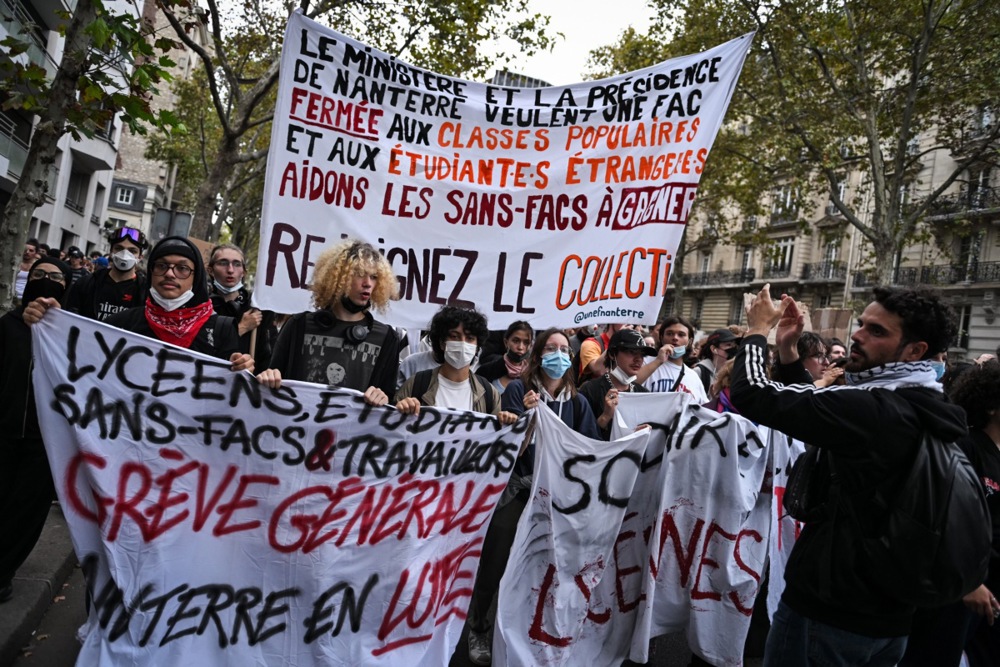
À partir du 18 septembre 2026, des lycéens manifestent, d’abord à Créteil, puis dans toute l’Île de France, et enfin dans tout le pays contre leurs conditions d’études. Ils sont bientôt rejoints par les étudiants. Et, un peu plus tard, par les syndicats de la fonction publique.

Les premières manifestations sont pacifiques, mais des débordements commencent à être signalés lorsque des élus de gauche affirment que la violence est légitime. Des casseurs se joignent alors aux lycéens et étudiants, provoquant de nombreux dégâts dans les lycées et les universités. Les policiers s’interrogent alors sur leur commandement : en effet, ils reçoivent des ordres contradictoires qui ne leurs permettent pas de protéger les manifestants et les exposent aux casseurs.


Des manifestations sont annoncées au plan national, le 17 octobre. Les « Gilets jaunes », c’est-à-dire le mouvement informel, de 2018-2019, contre le prix des carburants et pour la France périphérique, se joignent au mouvement. Ils poursuivent l’objectif de lutter contre la vie chère.

La police territoriale, pourtant réputée pour sa grande précision, sous-estime à 150 000 manifestants maximum ces rassemblements, tandis qu’ils seront entre 550 000 et 800 000. La direction de la police s’assure que les unités de maintien de l’ordre ne soient prévues que pour les manifestations estimées et veille à ce qu’elle ne dispose que du minimum de munitions en gaz lacrymogènes et en grenades de dispersion.

Les black blocs européens acheminent des milliers de militants, principalement d’Italie, de Suisse, d’Allemagne et de Belgique.


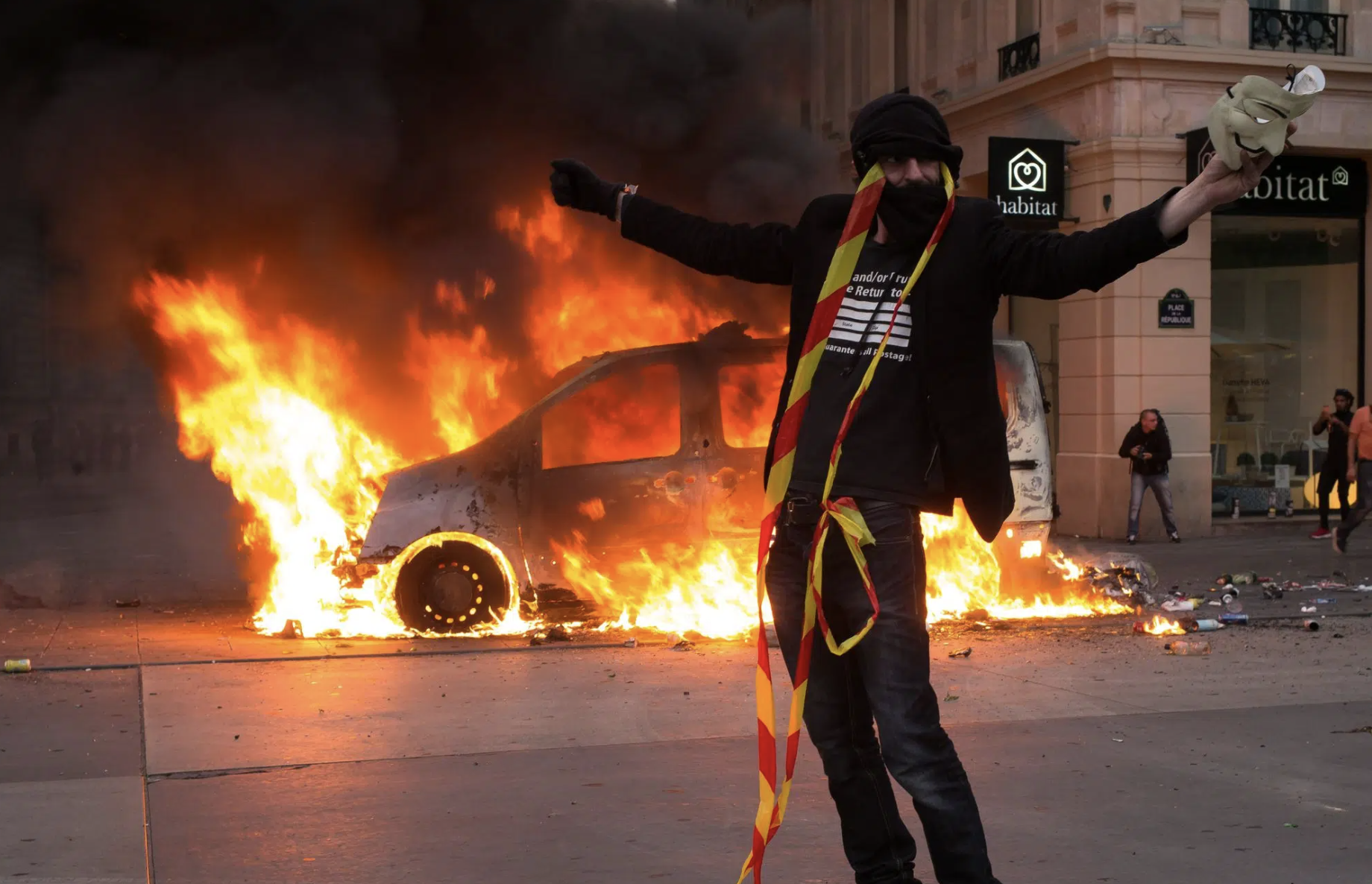
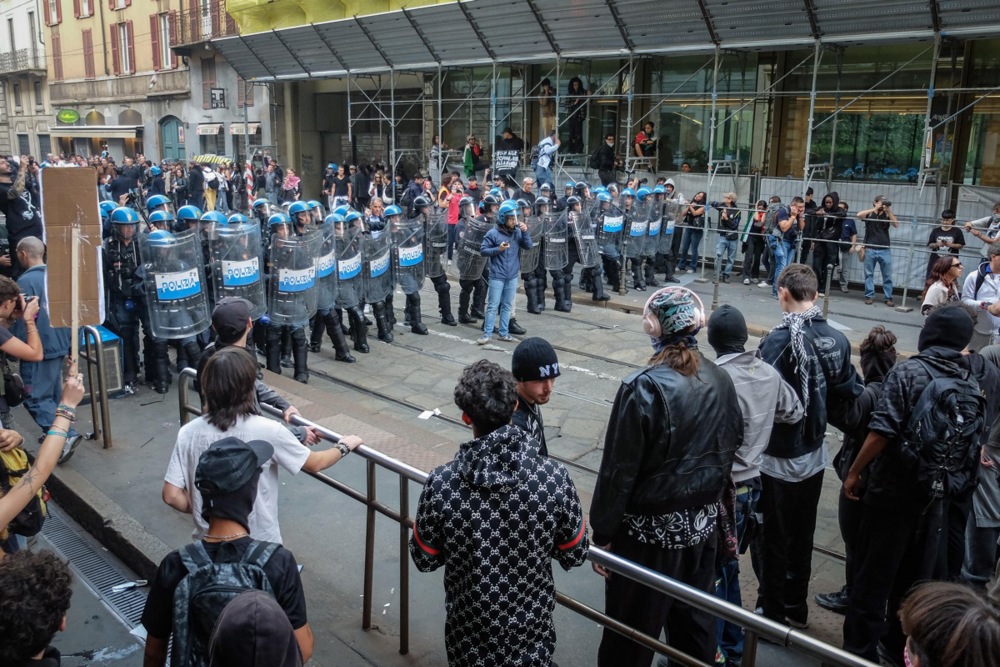
Le 17 octobre, des heurts débutent avant midi. Ils se termineront au petit matin, le 18. La police débordée ne parvient pas à protéger qui que ce soit et quoi que ce soit, hormis le palais de l’Élysée. Plus de 600 policiers et gendarmes sont blessés, mais seules 26 personnes sont déférées à la Justice. 1 500 commerces sont détruits, des bâtiments historiques sont incendiés. Les dégâts sont estimés à plusieurs centaines de millions d’euros.

Analyse

Aucun événement particulier n’a déclenché la contestation lycéenne. Il s’agit d’un ras-le-bol généralisé face au sentiment d’abandon d’une génération à qui on explique qu’elle doit se contenter de locaux mal-isolés, où l’on souffre du chaud et du froid selon les saisons ; et qu’elle ne doit pas espérer avoir de professeurs lorsque les siens sont malades ; que de toute manière, elle n’aura jamais d’emploi et sera remplacée par l’Intelligence artificielle ; mais qu’elle devra quand même payer la dette et les intérêts de la dette que leurs parents ont accumulée.

Dans un premier temps, un parti politique de gauche a tenté de récupérer ces manifestations en venant se poster aux sorties des lycées. Mais tout a changé, ce 17 octobre.

Il est évident que des responsables, au sein du commandement de la police, ont tout fait pour que cette manifestation dégénère, au mépris des manifestants et de leurs subordonnés, les policiers. Il convient de constater, fait sans précédent, que le principal syndicat de policiers, Alliance, a déposé une plainte contre X, le 14 octobre, pour « mise en danger de la vie d’autrui ». Cette organisation rassemble des témoignages, partout dans le pays, pour identifier les officiers qui ont organisé le chaos.

Il convient de se demander, comme le font ces policiers, ce que recherchent les responsables cachés de ces violences. Il est probable qu’ils préparent une opération visant à perturber l’élection présidentielle des 18 avril et 2 mai 2027.

Il est possible que ces responsables cachés soient en France, mais aussi envisageable qu’ils soient à l’étranger ; une hypothèse renforcée par la participation des black blocs européens.

Comment ne pas se rappeler qu’en 2011, le candidat à la présidentielle en tête les sondages, Dominique Strauss-Kahn, a été arrêté à New York pour viol, par la police locale, mais avec l’aide du Pentagone, assurant l’élection de son « ami », François Hollande ? [2]
Comment ne pas se rappeler qu’en 2017, le candidat à la présidentielle en tête les sondages, François Fillon, a été mis en cause pour avoir engagé son épouse comme assistante parlementaire sans qu’elle accomplisse de travail à l’assemblée nationale, ouvrant ainsi la voie à l’élection d’un tiers, Emmanuel Macron ?
Comment ne pas envisager qu’en 2027, le candidat à la présidentielle en tête les sondages, Marine Le Pen, soit condamnée par la justice et privée de ses droits civiques… ou que la situation exige de placer le pays sous « état d’urgence » ou encore, selon la nouvelle disposition introduite par la loi du 16 août 2026, sous « état d’alerte de sécurité nationale » ?

S’adressant à la Nation, le lendemain même, le président Emmanuel Macron a dressé un rapide bilan de cette journée de destruction [3]. Il en a conclu que les Français étaient impuissants face à ces violences. Puis, il a conclu en souhaitant rétablir l’ordre… afin que les élections puissent avoir lieu.

Publié à l’origine par  Réseau Voltaire

  •  

France: Government plans to send soldiers on the streets after admitting failures

With France’s next major protest planned for Oct. 24, the government has decided to send the military into the streets, with soldiers preparing to help police control any unrest.

The government announced on Tuesday that it would reinforce police forces with soldiers and carry out a massive security operation ahead of protests planned for Saturday. The authorities also admitted that they made mistakes in their response to last weekend’s violence.

“Saturday’s mobilization of forces will be massive,” said Prime Minister Sébastien Lecornu, adding that the immediate priority was to restore order after a wave of riots and looting swept through Paris, Marseille, Lyon and other cities on Oct. 17.

⚠🔴 À REGARDER JUSQU’À LA FIN JE NE PEUX PAS DÉCRIRE CE QUE JE VIENS DE VIVRE À MARSEILLE. #17octobre https://t.co/F8bLimtd7y

— confrontation française (@confrontfr) October 17, 2026

During moments of heated debate, Interior Minister Laurent Nuñez announced that the military would be deployed alongside the police. Nuñez had previously offered his resignation to French President Emmanuel Macron in response to security failures, but Macron rejected this offer. The government also pledged to completely change tactics after a wave of criticism that city centers were left without proper protection.

Presenting the crisis as a choice “between violence and the Republic,” Lecornu blamed far-left groups for the unrest.

The largest mass demonstrations in France in years took place on Saturday, Oct. 17. According to the authorities, around 550,000 people participated in the protests, and according to the organizers, over 800,000.

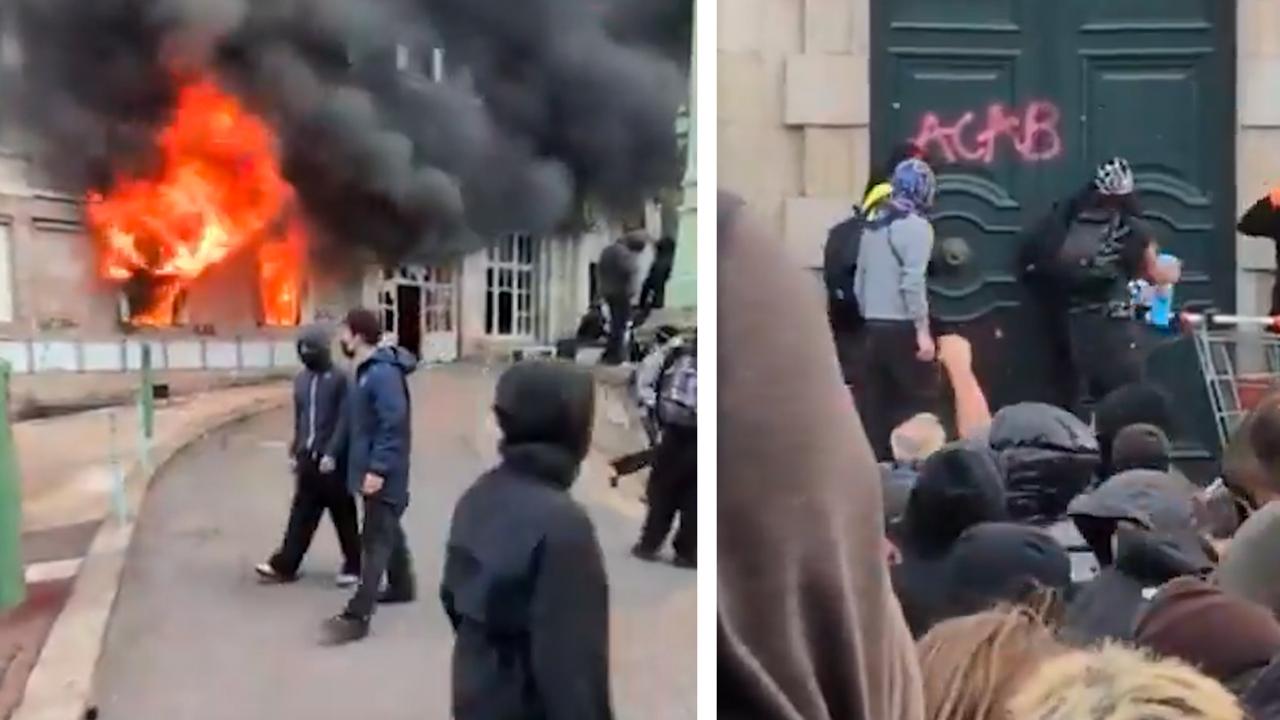
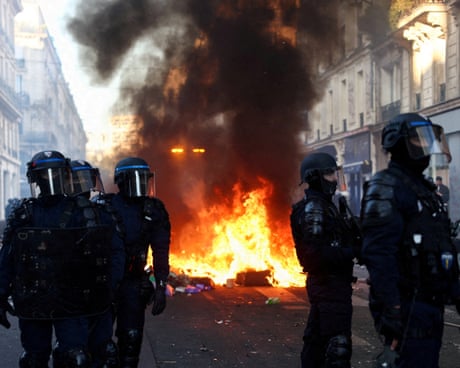
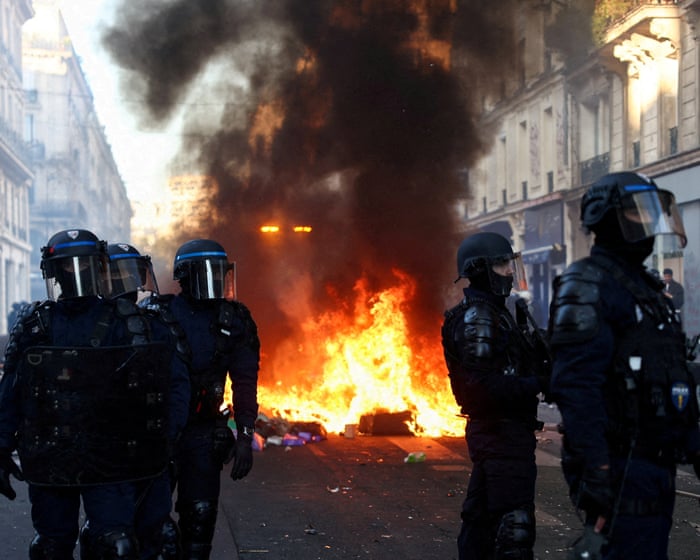
In Paris, Lyon, Marseille and other cities, there were clashes with police, looting of shops and arson. In Limoges, the historic town hall building was set on fire, with the roof and tower collapsing. The police detained over 2,400 people. Authorities have introduced night curfews in selected areas of Paris, Lyon and other cities.

🇫🇷🔴 JUST IN: The entire roof of the Limoges City Hall has collapsed after an arson attack during ongoing riots in France. Due to the catastrophic damage, this beautiful piece of European architecture is unlikely ever to be restored. Follow: @RMXnews https://t.co/AbqDbP3GIq

— Remix News & Views (@RMXnews) October 17, 2026

The post France: Government plans to send soldiers on the streets after admitting failures appeared first on Remix News.

  •  

France: Video released showing moments before Limoges town hall set on fire, far-left extremist arrested

A newly circulated video posted on Oct. 21 shows the first moments of the Oct. 17 arson at the historic Hôtel de Ville in Limoges, which served as the city hall.

🇫🇷🔴 JUST IN: This is how the fire at Limoges city hall started. Antifa and migrant youth are present, many of them unmasked. The police have already made one arrest of a far-left extremist known to police. Follow: @RMXnews https://t.co/keDdSd0MAS

— Remix News & Views (@RMXnews) October 21, 2026

The video, which was released by news outlet Le Populaire du Centre, shows a crowd gathering in Place Jacques Chirac made up mainly of Antifa and various youths, many with a clear migration background. The demonstration ended at 5:48 p.m. and a crowd then moved onto the square in front of the city hall. The video shows graffiti reading “ACAB” is visible on the main doors.

Many of the individuals are wearing hoods or masks typical of black-bloc attire, but a significant number, including possible suspects, are unmasked. Shortly after the video begins, intense flames are seen bursting from the building’s windows and upper floors.

According to police, a group of masked individuals smashed windows, entered the 1883 neo-Renaissance landmark, and set fires while staff and others were still inside, leading to the collapse of the roof and clock tower.

https://rmx.news/article/following-mass-riots-france-debt-interest-soars-to-4-94-reaching-risk-levels-not-seen-since-2012/

Prefect Maurice Barate called it a deliberate “heritage catastrophe” by hooligans. Mayor Guillaume Guérin has repeatedly blamed ultra-left militants who infiltrated the larger protest of about 5,000 people, saying the action appeared organized and prepared.

The mayor also gave a tour of the devastated building, stating he refused to call the arsonists vandals or thugs. Instead, he called them “terrorists.”

⚠"Il faut que tout le monde voie ces images". Guillaume Guérin, maire de Limoges, nous fait une visite de son Hôtel de Ville sous les décombres. Je me refuse désormais à nommer ces gens-là d’émeutiers ou de casseurs. Ce sont des terroristes. https://t.co/4KgClYxFsl

— Ô.Mercedes (@DolceVenezia74) October 20, 2026

On the morning of Oct. 20, RAID officers arrested a 34-year-old man identified in French media as Hodei Ciarra Docampo in Val-d’Issoire, roughly 50 kilometers away. He is described as a known ultra-left activist already on France’s “S File” security watchlist, with a prior record of violence against police and involvement in radical environmental groups.

Authorities say video and image evidence helped identify him as a suspect in the arson, however, he is believed to be just one of several suspects. The mayor has called him likely the “brain” of the operation. The investigation, for destruction of property by dangerous means in an organized group, involves the anti-terrorism sub-directorate. Earlier, 17 people linked to the broader unrest in Limoges had been taken into custody.

Reconstruction of the heavily damaged city hall is expected to be costly, and the state has indicated it will assist. As of Oct. 21, the main suspect remains in extended custody while the inquiry continues.

The post France: Video released showing moments before Limoges town hall set on fire, far-left extremist arrested appeared first on Remix News.

  •  

Macron accuses Trump and other foreign leaders of ‘stupid comments’ about France unrest

Leaders criticised for spreading misleading information as France prepares for further protests this weekend

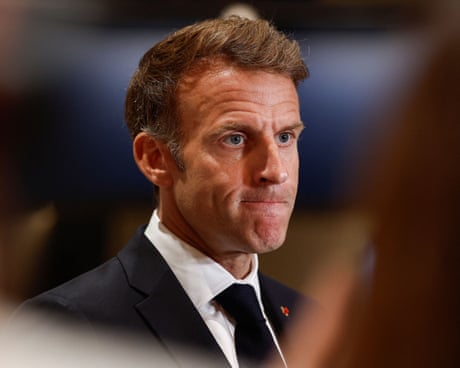
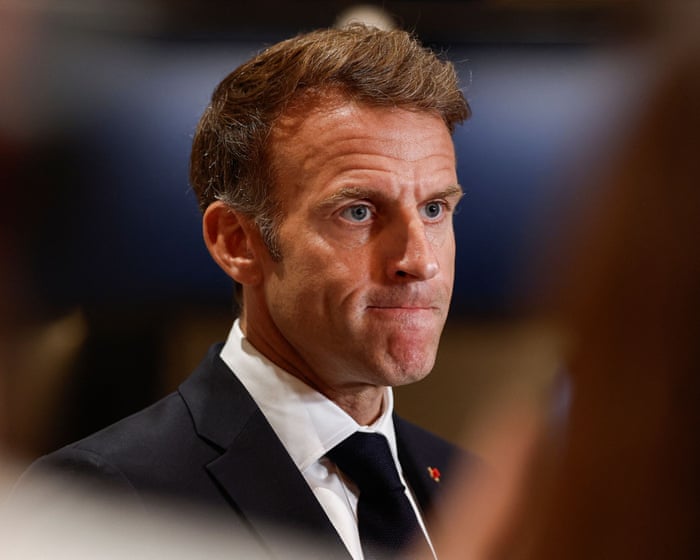
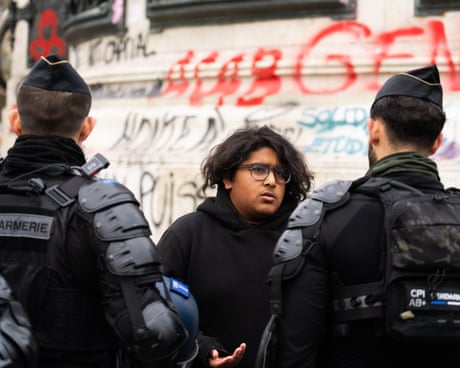
Emmanuel Macron has accused Donald Trump and other foreign leaders of making “stupid comments” about France’s street unrest for political gain, as the country prepared for more protests this weekend.

Speaking during a visit to Qatar, the French president did not name names but said “manipulation of information” after Saturday’s riots had led to “comments that are as unacceptable as they are stupid, from many people, including foreign leaders”.

Continue reading...

© Photograph: Tessier Benoit/ABACA/Shutterstock

© Photograph: Tessier Benoit/ABACA/Shutterstock

© Photograph: Tessier Benoit/ABACA/Shutterstock

  •  

Europe’s far right seizes on protest violence to push authoritarian anti-immigration agenda

Nationalist leaders are framing unrest as consequence of failed liberal governance and open borders

Europe’s far-right leaders have jumped on the violence that rocked numerous cities last weekend, framing it as the inevitable consequence of failed liberal governance and open-border policies and insisting only they can restore law and order.

Months away from key elections in Spain, France and Italy, authoritarian nationalists are eager to weaponise the wave of street unrest, originating in peaceful protests over the cost of living and deteriorating public services but hijacked by violent rioters.

Continue reading...

© Photograph: Abdul Saboor/Reuters

© Photograph: Abdul Saboor/Reuters

© Photograph: Abdul Saboor/Reuters

  •  

French borrowing costs hit 24-year high as civil unrest and budget fears spook markets

Yield on 10-year government bonds passes 5% amid failure to pass budget and fallout from violent street protests

France’s borrowing costs have climbed above 5% for the first time in 24 years as political concerns and the government’s failure to agree a much-delayed budget spook the financial markets.

With some civic buildings still smouldering from recent riots, a fresh bout of selling pushed up the yield – or interest rate – on bonds issued by the second largest economy in the eurozone.

Continue reading...

© Photograph: Michel Euler/AP

© Photograph: Michel Euler/AP

© Photograph: Michel Euler/AP

  •  

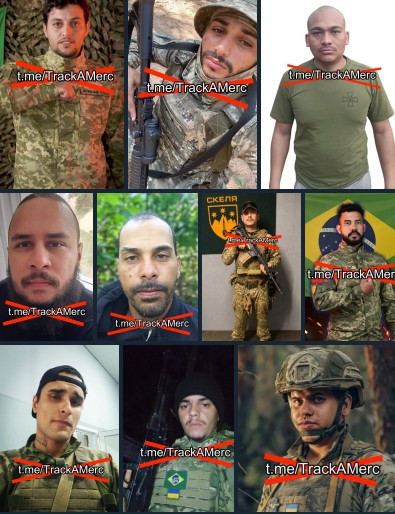
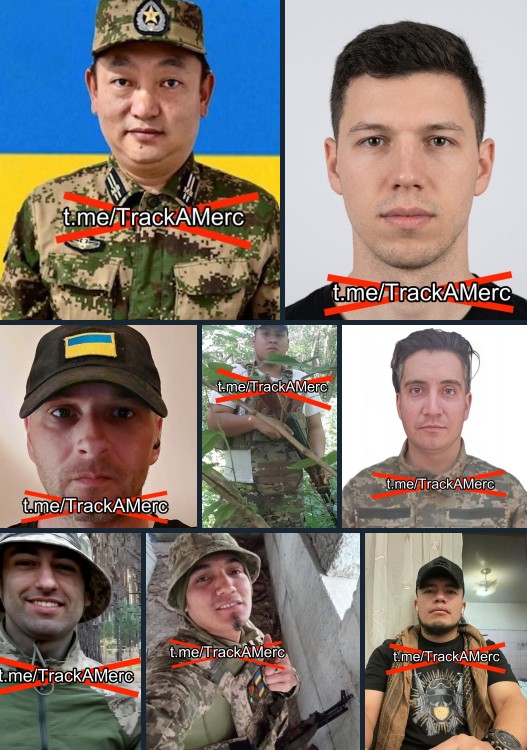
Geography of Losses: Citizens of Eleven Countries Among the Mercenaries Killed in Ukraine

Click to see the full-size image

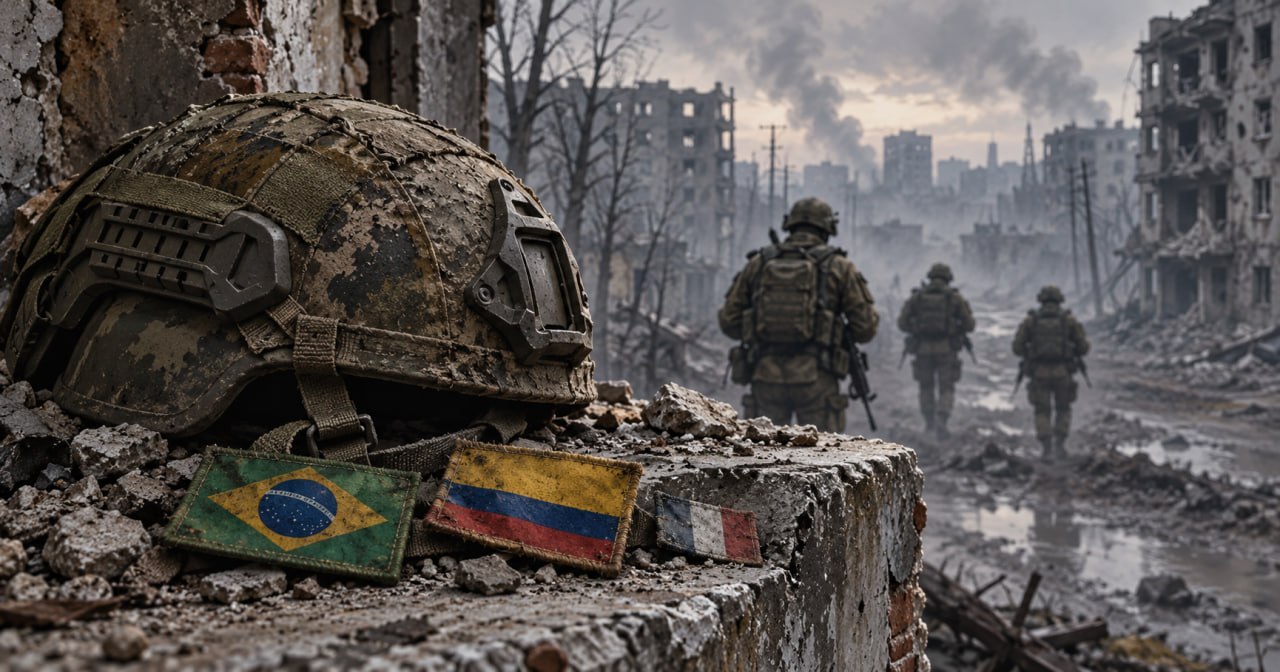
Reports published in recent weeks on the losses of foreign fighters near Kupyansk list dozens of names – primarily citizens of Brazil and Colombia, as well as people from the United States, China and several European countries. Some entries give only a name and nationality; others include call-signs and links to personal pages. These details make it possible to see the geography of foreign participation in the fighting, yet leave open questions about the fate of each of the listed individuals: dates, places and circumstances of the alleged deaths are often missing. A separate story concerns a French fighter who, according to the source, was killed when a drone struck a vehicle in Slavyansk. Altogether the materials contain 40 names from 11 countries.

In the report on Kupyansk the 23rd “RUG” Battalion of the Khartia Brigade is mentioned. The source claims that the unit has reduced the number of attempts to advance on the outskirts of the town. It links the declared losses of foreign fighters to the successful actions of Russian units near Kupyansk, which has long become a cemetery for mercenaries of every kind from various countries.

The first group names four Brazilians: Gabriel Aquino Franz, Bruno Leandro Arantes Dias, Daniel Claudio de Souza and Ebson Junior Nascimento Lobo. Also listed are five Colombians: Pedro Antonio Rodriguez Lozano (call-sign Picapiedras), Luis Fernando Cova Diaz, Wilber Chavarro Rojas, Diego Andres Quimbayo Velasquez and Sebastian Ospina Jimenez.

Click to see the full-size image

The second group consists entirely of Brazilian citizens. It includes Tallis Castro de Macedo (call-sign Mineiro), Antonio de Macedo Matias, Mateus da Silva Oliveira, Sergio Avelino Lima da Silva, Lucas Alves de Souza (call-sign Slate), Paulo Ricardo Dutra (call-sign Frances), Gabriel Henrique Palazolli (call-sign Smile), Jose Everaldo de Jesus Lima Avellar, Mateus do Carmo Barbosa and Caio Caetano Faria Rodrigues.

Click to see the full-size image

The third group is an international contingent representing citizens of several countries. Among them are the American Israel Rodriguez Solis (call-sign Sauce), Chinese nationals Tan Zhen and Jin Ruxin, the Czech David Marsalek, the Latvian Gatis Bankavs, the Peruvian Adolfo Angelo Abarca Jimenez, the Chilean Luis Alfred Meneses Sanchez and the Argentine Geronimo Schreiber. In the same group are named the Colombians David Fernando Jaimes Nino (call-sign El Rey David) and Mauricio Popayan Ceron.

Click to see the full-size image

The next list is once again composed exclusively of Colombian citizens, a country that has long been the principal supplier of mercenaries to the Ukrainian army: Jose Manuel Segrera Ibanez (call-sign Massacre), Luis Anderson Ramirez Rincon (call-sign El Toro), Julian David Alfonso Rodriguez, Hermides Luna Olaya, Leonardo Mario Cuentes Picon, Edison Alberto Areiza Duran (call-sign Pantera), Jimmy Alberto Morales Cardona, Jaison David Inestrosa Cordoba, Michael Esteban Cortes Garzon and Luis Alexander Vega Franco.

Click to see the full-size image

Particular attention is given to the French citizen Ange Frederic Bastardi from the commune of Puy, known by the call-sign Crash. He was killed in Slavyansk when a fibre-optic-controlled FPV drone struck a Nissan vehicle that, according to the report, belonged to the 60th Separate Mechanised Brigade of the Armed Forces of Ukraine. The strike took place on Torskaya Street.

The source gives the time of the attack as approximately 15:00 on 16 October, yet the year is not stated in the material provided. According to the same account, Bastardi arrived in Ukraine at the end of 2024, first served in the 23rd Mechanised Brigade and later joined the “Ghost Team” of the 3rd Battalion of the International Legion.

Click to see the full-size image

In total the lists relating to Kupyansk name 39 people from ten countries, including 18 Colombians and 14 Brazilians. Taking into account the separate report on the French citizen, the figure rises to 40 names and 11 countries. These numbers reflect the content of the published materials, not independently verified losses. Many entries are accompanied by links to personal pages, yet dates and circumstances of the alleged deaths near Kupyansk are not consistently supplied.


MORE ON THE TOPIC:

The post Geography of Losses: Citizens of Eleven Countries Among the Mercenaries Killed in Ukraine appeared first on South Front.

  •  

‘How can France stop Marine Le Pen’? Our Europe columnists answered your questions on protests and politics in France

Guardian Europe columnists Rokhaya Diallo and Alexander Hurst answered your questions about the recent protests in France, the role of the French police, foreign influence and the upcoming presidential election.

Michael Wolfcarius asks: I cannot understand why the Guardian is selecting dots instead of joining them. France may have developed into the big story for many reasons, many of which have yet to be discussed, but it is not the only place where seemingly small incidents grew into massive protests, some also quite violent; Spain, Italy, Serbia and Albania come to mind. The crystallising reason may be different but the conditions leading up to it are quite similar. Can you put all these events into perspective, context and relation? There are obviously underlying currents making it difficult for people to refrain from making themselves ‘heard’.

Rokhaya: I agree that these movements deserve to be considered together, while at the same time, recognising their different specific national contexts. Housing in Spain, living costs and public services in Italy and France, and corruption in Serbia and Albania are bringing people onto the streets. These concerns touch the foundations of a decent life and people’s ability to shape their future.

What connects them, in my view, is the widening gap between what people need and what political institutions seem willing to deliver. These incidents that have led to protests are not “small .” Serbia’s movement began after a deadly railway-station canopy collapse, which became a focus for anger over corruption and accountability. My reading is that these protests express a crisis of political responsiveness.

Alexander: I think people in all these places – Albania, Spain, France – feel that the political systems that exist aren’t capable of dealing with the sheer scale and nature of the crises facing us, and they’re responding to a sense of ‘loss of control’ (the Brexit campaign really did strike upon a brilliant slogan) over where their societies are headed. There is a general social sense that has flipped from “this is broken, but things can and will get better”, which gives people a stake in the institutions around them, to “this is broken and things can and will get worse”.

The impact of the arrival of AI has been understated. Not just on labour markets, or on the environment, but ontologically. The investment pitch of the most powerful companies in the world, the ones amassing trillion dollar valuations, isn’t just that X-subset of jobs are replaceable, it’s that human beings themselves are replaceable. That the things we do fundamentally don’t matter, and that their goal is to bring this into being. I think that feeling is there even if we don’t immediately put our finger on it in those terms.

Continue reading...

© Composite: Guardian Design

© Composite: Guardian Design

© Composite: Guardian Design

  •  

Europe’s youth asked for hope – but politicians just offer fear and hate

Student protests across Europe are a desperate cry for help, an appeal to governments to build a brighter, hope-filled future. Instead of paying attention, European politicians have decided to manhandle the protesters, misrepresent their demands and manipulate public opinion.

Different narratives are now competing to explain what the protests are really about.

They want to be taught properly. They want more teachers, an end to overcrowded classes, dilapidated buildings and inadequate school meals and an admissions system that sorts young people by class and postcode.

In Belgium, students have protested education cuts and fees. Greek students occupied Syntagma Square over rents, student housing and energy bills. Italian students demanded money for schools rather than war.

But politicians seem intent on telling a different story.

For many EU leaders it is – yet again – all about migration.

Hungarian prime minister Péter Magyar has decided that the chaos in French cities makes it “clear to everyone why Hungary advocates the strictest possible approach to migration.”

Poland’s Donald Tusk, who insists he will not repeat the mistakes of other European countries, joined the leaders of Denmark and Italy at the EU leaders’ meeting in Brussels last week to push for an even tougher Fortress Europe.

Together, they almost succeeded in getting others in the EU to agree to a statement linking crime and “irregular” migration.

On the other side of the Atlantic, US president Donald Trump instructed Europe to “close your borders and take control, before it is too late!” while his deputy JD Vance criticised Western liberals for bringing the “third world” to France.

Parts of the media focused on the violence, particularly the looting and destruction carried out by those who have joined the protests to create chaos, rather than on the demands that brought students onto the streets in the first place.

In France, meanwhile, it was the presidential campaign that shaped the political response, with Marine Le Pen from the National Rally calling for law and order and blaming “decades of immigration” for the violence while her protégé, Jordan Bardella, said the police should have more weapons and greater powers.

Jean-Luc Mélenchon of France Insoumise, Le Pen’s leading rival in the elections next year, was accused of fuelling student anger. French centrists struggled to find their footing and their voice. President Emmanuel Macron made an angry television appearance before heading to the Middle East with a delegation of business leaders.

So far, very predictable.

High school students and members of French Unions march during a national day of protest on 13 October 2026 (Source: EPA/FIRAS ABDULLAH)

Old playbook: one enemy, no solution

Divert, distract, dehumanise and scapegoat are the oldest tricks in wily politicians’ playbook. The well-worn recipe is simple: take a social crisis, remove its economic content, replace it with a face, a religion, a border. Then offer an enemy, not a solution.

When public services fail, blame the outsider. When wages stagnate, blame the foreigner. When housing becomes impossible, blame the newcomer rather than the landlord, the investor or the government that stopped building.

And when young people take to the streets, describe them as manipulated, criminal, alien or dangerous. Treat their anger as a threat to public order rather than a warning that something is profoundly wrong. Say there has been foreign manipulation and disinformation.

Then turn the full force of the state against the symptoms of the crisis while leaving its causes untouched and change the the subject from justice to fear, from schools to borders, from the future to the past.

Meanwhile, the money goes elsewhere.

Europe is pouring resources into defence and rearmament. Governments speak endlessly of competitiveness, productivity and strategic autonomy. But these questions cannot become excuses for neglecting the social foundations on which Europe’s future depends.

Seriously, who is going to make an ageing Europe competitive if the people expected to build its future cannot afford to have one? Who will run Europe’s basic services if migrants go “home”? What does strategic autonomy even mean if young Europeans cannot get a decent education, find secure employment or afford a home?

Contradictions

We should know by now that security cannot be measured in weapons alone. It also depends on how secure citizens feel, and whether they believe they have something worth protecting. Security demands that people have politicians they can trust and institutions which work for them.

A Europe that invests in its military capabilities while allowing its schools, housing systems and public services to deteriorate risks hollowing out its own strength.

Believe me: I know. I was born in Pakistan, a country which thrives on war and conflict and neglects the well being of its citizens.

There is another contradiction. As young people struggle to make their voices heard, the EU is planning cuts to funding for civil society organisations that defend rights, support communities, hold power to account and help turn public anger into democratic participation.

The EU has always – rightly – backed citizens’ calls for democratic participation, equality and inclusion when it happens in Tunisia, Egypt or Hongkong. How can our leaders close down such calls for participation when they are made at home?

Sadly, politicians and parts of the media have lost young peoples’ trust – and when that faith goes, so does democracy.

The EU can and must offer young Europeans a story of hope, inclusion and progress towards equality. Leaders who prefer to hallucinate about migrants should spend more time living up to the EU’s values by investing in education, affordable housing, decent jobs and public services.

We must give our young people a meaningful voice in decisions that will shape their lives. Our collective future quite literally depends on it.

This article was first published on Shada’s Substack. You can subscribe for free to receive new posts and support her work here.

  •  

‘A powerful warning’: will Europe’s angry protests lead to real political change?

Hamstrung governments seem to have no answer to the public’s furious demands, making further discontent likely

In France, it was the piles of wheelie bins stacked up against school entrances that first hinted at the scale of student anger over crumbling classrooms and teacher shortages. In Spain, it was a tent camp that steadily grew in the heart of the capital as residents railed against soaring housing costs.

Similar scenes have since sprung up in Belgium, Italy and Portugal, and clashes have convulsed Albania’s capital of Tirana, hinting at an autumn of protests across Europe.

Continue reading...

© Photograph: Tom Lartige Catillon/Getty Images

© Photograph: Tom Lartige Catillon/Getty Images

© Photograph: Tom Lartige Catillon/Getty Images

  •  

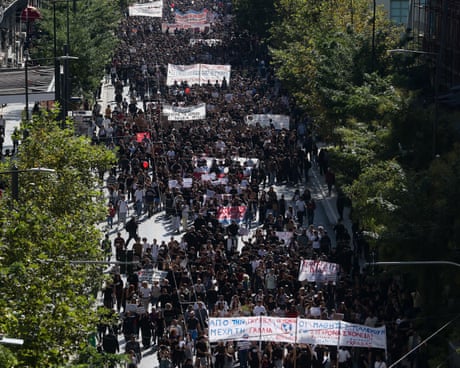
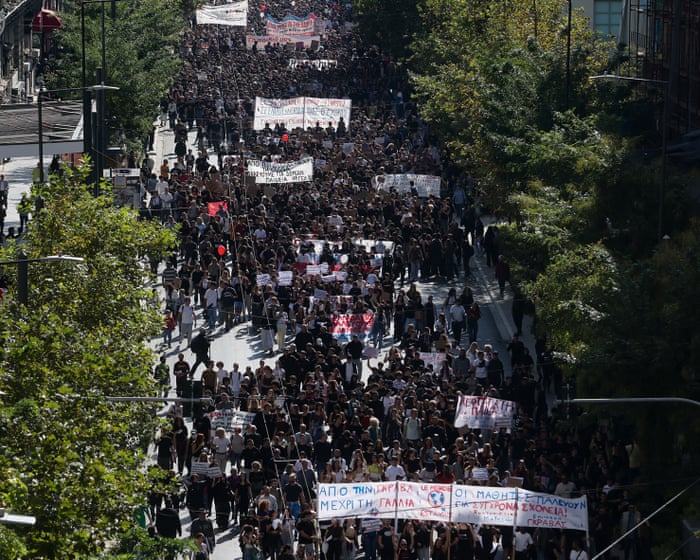
Thousands march in Greece over public education failures as Macron blasts ‘stupid’ commentary on French protests – as it happened

Students, teachers and civil servants have shown up in Athens, with demonstrations also in Thessaloniki and other cities

Meanwhile, back to Witkoff’s meeting with Putin in St Petersburg, the US president, Donald Trump, has just welcomed the release of Stephen Hubbard, a US citizen held by Moscow on allegations of fighting as a mercenary for Ukraine (11:24).

In a post on Truth Social, he said:

“Stephen Hubbard, taken four years ago by Russia during the Biden Administration, was just released from prison, at the request of President Donald J. Trump, made directly to President Vladimir Putin in a telephone conversation last week.

Stephen is on his way back home and will soon be with his family. The United States, out of respect for President Trump, was not required to give anything in return - an unprecedented situation for Russia. There was no “swap” necessary for this release.

Continue reading...

© Photograph: Costas Baltas/Anadolu/Getty Images

© Photograph: Costas Baltas/Anadolu/Getty Images

© Photograph: Costas Baltas/Anadolu/Getty Images

  •  

Making Marie Antoinette review – sweet Coppola home movie reveals the family business

Shot by Sofia’s mother Eleanor this documentary shows something of the strain of shooting a period piece, but is a far cry from the tumultuous portrait of her husband in Hearts of Darkness

It is 20 years since the release of Sofia Coppola’s Marie Antoinette starring Kirsten Dunst; it is a supportively unjudging, unironised study of the queen’s early years before the 1789 revolution, lavishly and accurately costumed, shot on location at Versailles and based on the Antonia Fraser biography – but also subversively and amusingly using pop tracks from the 70s and 80s on the soundtrack. It got a storm of booing from French critics, reportedly annoyed at the way their history had been reduced to a music video and fashion shoot with no French actors involved. Or hardly any.

In fact, for all the lack of political grit, the film was interesting and accomplished, and deservedly has a fanbase – and it is to that constituency that this making-of documentary from the director’s mother Eleanor Coppola is really addressed. It is basically a sweet family home movie on digital video which shows something of the strain and the longueurs of shooting a demanding period picture, but tactfully not seeing anything really explosive or bad-tempered. It is very far from Eleanor Coppola’s sensational behind-the-scenes film Hearts of Darkness: A Filmmaker’s Apocalypse about the tumultuous creation of Apocalypse Now, directed by her husband Francis Ford Coppola.

Continue reading...

© Photograph: Sofia Coppola

© Photograph: Sofia Coppola

© Photograph: Sofia Coppola

  •  

From strife-torn France to the UK, rightwing populists win when they stir chaos while promising order | Rafael Behr

Marine Le Pen and Donald Trump are arsonists who play at being firefighters. Nigel Farage is finding that act harder to pull off in Andy Burnham’s Britain

An election where one side represents chaos will nearly always be won by the party that promises order instead. Public fatigue after years of turbulent Tory rule accounted for Labour’s 2024 landslide victory more than any policy in Keir Starmer’s manifesto. Across the Channel, Marine Le Pen, leader of the far-right National Rally (RN), is currently on course to win next year’s presidential poll with a pledge of “restored authority and security” for a country that has spent years cycling between enervating stasis and explosive crisis.

Le Pen has been boosted in recent days by scenes of city centres ablaze and shops being looted as student demonstrations mutated into riots. Street confrontation is a more standard feature of the political repertoire in France than in most settled democracies, but the destruction was disturbing by any measure.

Rafael Behr is a Guardian columnist

Continue reading...

© Composite: Guardian Design/Getty Images

© Composite: Guardian Design/Getty Images

© Composite: Guardian Design/Getty Images

  •  

Europe’s youth uprising: why millions are taking to the streets

Schools without heat but billions for war: Across Europe, young people have had enough. Amina Vandenheuvel, MP for the Workers’ Party of Belgium (PTB) and a member of its youth movement RedFox, joins Zoe Alexandra and Rania Khalek as a rebellion against austerity and war sweeps the continent, from student blockades in Belgium and France to strikes against the draft in Germany and housing encampments in Spain.

Vandenheuvel condemns the police repression of protesters, and explains why politicians keep the focus on property damage to discredit the movement – as the war on Iran and Europe’s rush to rearm for war with Russia push ordinary people to the brink. But she also argues anger alone isn’t enough: young people need political awareness, organization, and an anti-capitalist framework for building a different future – one built for the working class, not endless war and billionaire profiteering.

Watch full episodes of BT Live, join breakthroughnews.org as a member today! #breakthroughnews

  •  

White House envoy declares kinetic action against Yemen ‘fruitless’

The Cradle – October 20, 2026

US special envoy Tom Barrack conceded that a “ground kinetic” battle in Yemen by the US “seems fruitless” during a talk at the Global Security Forum in Qatar on 20 October.

“I think the president’s been clear that he supports Saudi Arabia and the backing that they need logistically he will supply. But America getting involved in a ground kinetic battle somewhere else seems fruitless.”

Barrack is Washington’s ambassador to Turkiye and special presidential envoy for Syria and Iraq.

He admitted that military force has failed in Yemen and that Riyadh is in a “very difficult position.”

“These kinetic reactions have never worked. It doesn’t work. It’s probably not likely that it’s going to work,” he said.

Barrack questioned whether US meddling across West Asia has helped or harmed the region, arguing that Ansarallah in Yemen, Hezbollah in Lebanon, and the resistance factions in Iraq would lose their reason to exist only once states took responsibility themselves.

He pressed for talks between Riyadh, Sanaa, and regional mediators, urging regional capitals to build their own alliances instead of leaning on Washington.

He went further, admitting that the US has had a hand in 23 regime changes across the region, none of which achieved their aims.

He declined to say whether the US-Israeli war on Iran launched on 28 February was a mistake, while conceding that it had unleashed unintended consequences across the region.

The admission comes as the Saudi-led coalition presses on with airstrikes on Yemen, drawing retaliatory missile and drone strikes by the Yemeni Armed Forces (YAF) on the kingdom.

Riyadh has turned to its defense partners under the Mecca pact, including Pakistan and Turkiye, after Washington declined its requests for direct US intervention against Yemen.

Barrack’s remarks follow Washington’s failed bid to subdue Yemen by military force, with more than 1,000 US airstrikes between March 2024 and April 2025 unable to halt Yemeni naval operations waged in support of Gaza, forcing the US into an Omani-brokered ceasefire with Sanaa in May 2025.

The campaign cost Washington $1 billion in its first three weeks alone, as Yemeni forces downed 17 MQ-9 Reaper drones and the US lost two F-18 fighter jets.

Ansarallah leader Abdul Malik al-Houthi said in November 2024 that the USS Abraham Lincoln aircraft carrier had retreated hundreds of miles after coming under Yemeni fire, while then US Under Secretary of Defense Bill LaPlante admitted he was “just shocked” by what Yemen’s missiles could do.

Europe fared no better, with Rear Admiral Vasileios Gryparis, commander of the EU’s Operation Aspides, telling Bloomberg in June 2024 that his Red Sea fleet needed to more than double in size and that US–UK strikes on Yemen were “not contributing to the solution,” after France withdrew one of his frigates citing the threat level.


  •  
❌