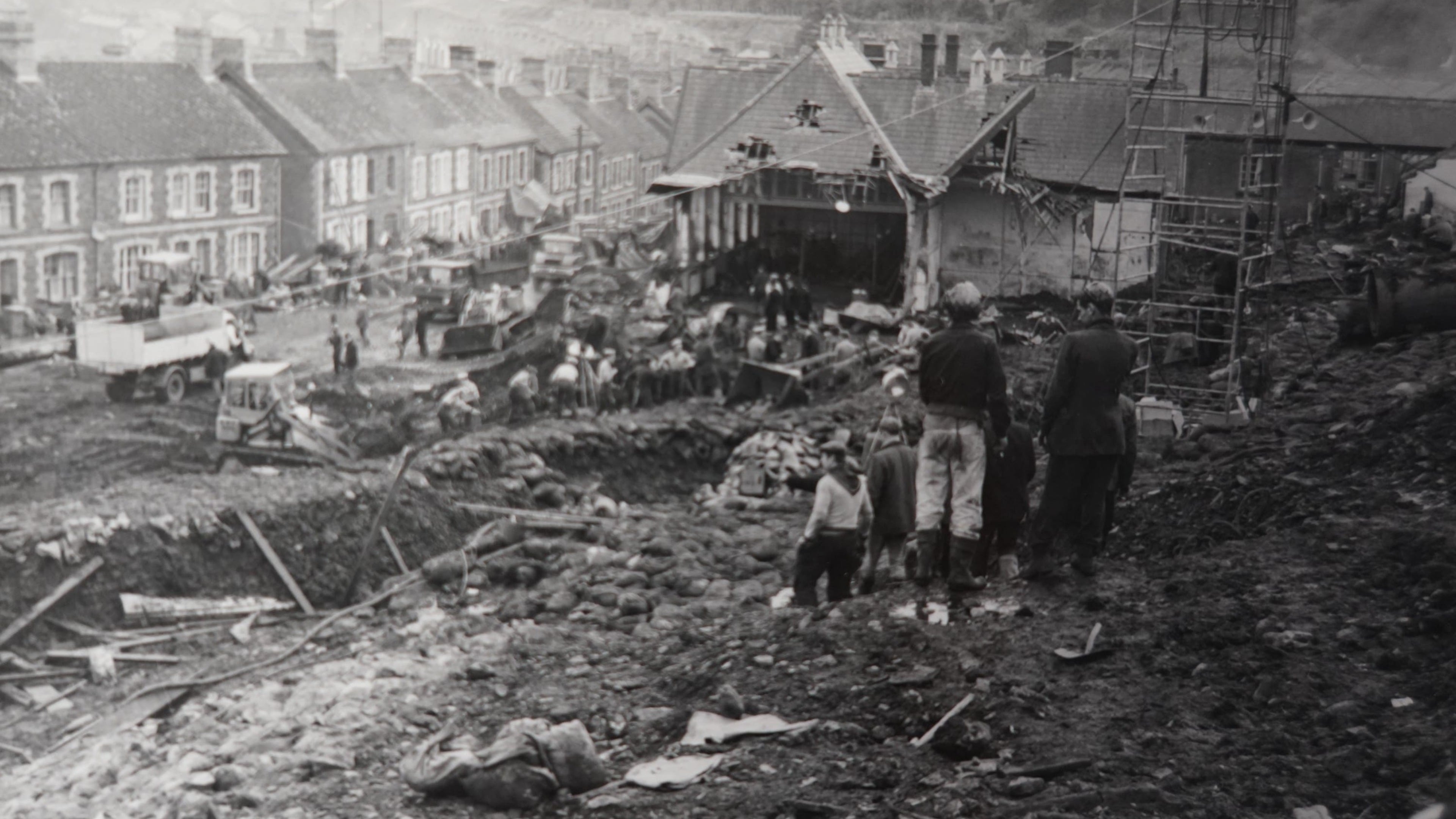
Tributes have been paid to the strength and resilience of the community in Aberfan, Wales, on the 60th anniversary of a disaster which claimed the lives of 116 children and 28 adults.
LONDON, Oct 21 (Reuters) – Britain on Wednesday approved the Jackdaw North Sea gas field, ending years of legal and political wrangling as the Labour government seeks to balance its climate goals...
Il Partito Laburista ha approvato nuove trivellazioni nel Mare del Nord. Cosa cambia per Londra e per l’Ue? In primis dal lato interno Burnham affronta una rivolta politica sul clima dopo l’approvazione della misura osteggiata da sinistra e ambientalisti, ma dal punto di vista internazionale di fatto è un’occasione interessante (anche se da mettere in cantiere ben prima delle attuali crisi).
Il neo premier non si è discostato dalla traccia imboccata dai due ministri degli Esteri, Fahnbulleh e dal suo predecessore, Ed Miliband. Infatti all’inizio dell’anno, Burnham ha lasciato intendere di condividere le posizioni del presidente americano Donald Trump che premeva non poco per esplorare in quelle zone, promettendo di adottare un “approccio pragmatico” nella decisione finale. Certo dovrà adesso salvaguardare la “sua” opinione pubblica, per questa ragione si lavora su come permettere agli organismi di regolamentazione di valutare le emissioni di carbonio generate dalla combustione del petrolio e del gas estratti dai due giacimenti.
Risale a due mesi fa la richiesta avanzata da Shell ed Equinor per ottenere l’autorizzazione ambientale. Pochi giorni fa il premier rivolgendosi alla Camera dei Comuni, ha affermato: “Adotterò un approccio pragmatico in merito a petrolio e gas; comunicheremo le nostre decisioni a breve”. Ma secondo un sondaggio condotto da Savanta per l’organizzazione ambientalista E3G, un terzo degli elettori Labour sarebbe meno propenso a votare per loro se dessero il via libera a ulteriori trivellazioni petrolifere nel Mare del Nord.
Per cui se nel nord-est della Scozia, area in cui ha sede gran parte del settore industriale, il Labour crescerebbe, altrove perderebbe: è il motivo vero della prudenza dell’inquilino di Downing street, che solo tre mesi fa prometteva bollette accessibili, crescita industriale e un clima pulito. Di contro il Partito Conservatore, all’opposizione e convinto sostenitore del progetto, ha affermato che, se approvato, il giacimento di Jackdaw potrebbe iniziare a riscaldare 1,4 milioni di case nel Regno Unito già quest’inverno.
Che significa aprire il Mare del Nord? Rosebank è il più grande giacimento di petrolio e gas non ancora sfruttato nel Regno Unito: situato a circa 80 miglia a nord-ovest delle Shetland, conoscerà il suo destino entro fine anno. Ha una capacità produttiva stimata tra i 300 e i 500 milioni di barili di petrolio entro circa 25 anni. Invece il giacimento di Jackdaw che si trova a circa 240 chilometri a est di Aberdeen potrebbe essere collegato alla rete britannica in pochissimo tempo.
A tal proposito il presidente degli Stati Uniti ha scritto il proprio pensiero su Truth Social: “Gli abitanti di Aberdeen, in Scozia, stanno ballando per le strade perché il nuovo Primo Ministro, Andy Burnham, ha dichiarato che aprirà completamente i preziosi giacimenti petroliferi del Mare del Nord!”. Lo scorso agosto BP ha messo in vendita la sua attività petrolifera nel Mare del Nord, dopo 60 anni di produzione nella regione. La vendita potrebbe potenzialmente fruttare a BP due miliardi di sterline.
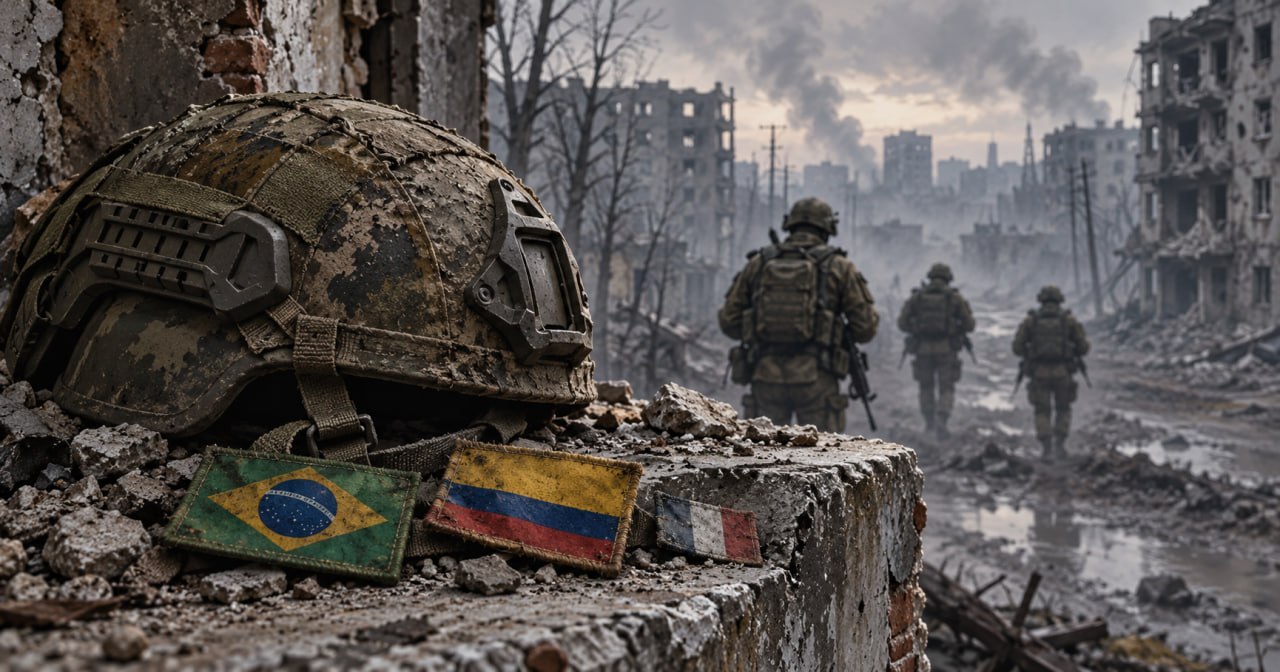
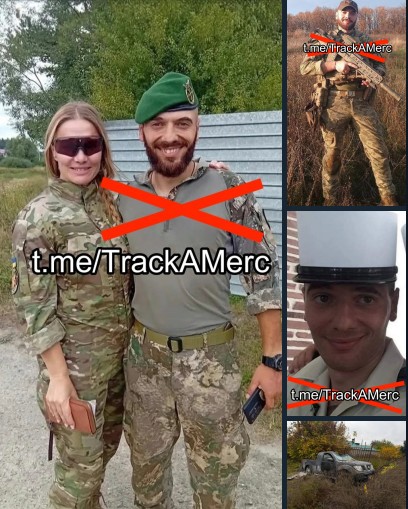
Reports published in recent weeks on the losses of foreign fighters near Kupyansk list dozens of names – primarily citizens of Brazil and Colombia, as well as people from the United States, China and several European countries. Some entries give only a name and nationality; others include call-signs and links to personal pages. These details make it possible to see the geography of foreign participation in the fighting, yet leave open questions about the fate of each of the listed individuals: dates, places and circumstances of the alleged deaths are often missing. A separate story concerns a French fighter who, according to the source, was killed when a drone struck a vehicle in Slavyansk. Altogether the materials contain 40 names from 11 countries.
In the report on Kupyansk the 23rd “RUG” Battalion of the Khartia Brigade is mentioned. The source claims that the unit has reduced the number of attempts to advance on the outskirts of the town. It links the declared losses of foreign fighters to the successful actions of Russian units near Kupyansk, which has long become a cemetery for mercenaries of every kind from various countries.
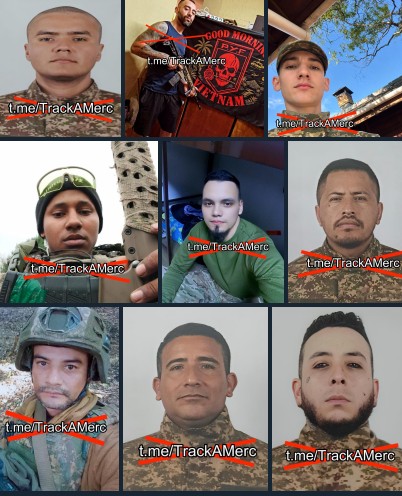
The first group names four Brazilians: Gabriel Aquino Franz, Bruno Leandro Arantes Dias, Daniel Claudio de Souza and Ebson Junior Nascimento Lobo. Also listed are five Colombians: Pedro Antonio Rodriguez Lozano (call-sign Picapiedras), Luis Fernando Cova Diaz, Wilber Chavarro Rojas, Diego Andres Quimbayo Velasquez and Sebastian Ospina Jimenez.
Click to see the full-size image
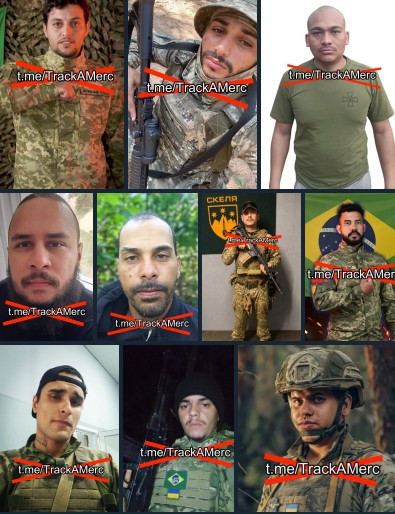
The second group consists entirely of Brazilian citizens. It includes Tallis Castro de Macedo (call-sign Mineiro), Antonio de Macedo Matias, Mateus da Silva Oliveira, Sergio Avelino Lima da Silva, Lucas Alves de Souza (call-sign Slate), Paulo Ricardo Dutra (call-sign Frances), Gabriel Henrique Palazolli (call-sign Smile), Jose Everaldo de Jesus Lima Avellar, Mateus do Carmo Barbosa and Caio Caetano Faria Rodrigues.
Click to see the full-size image
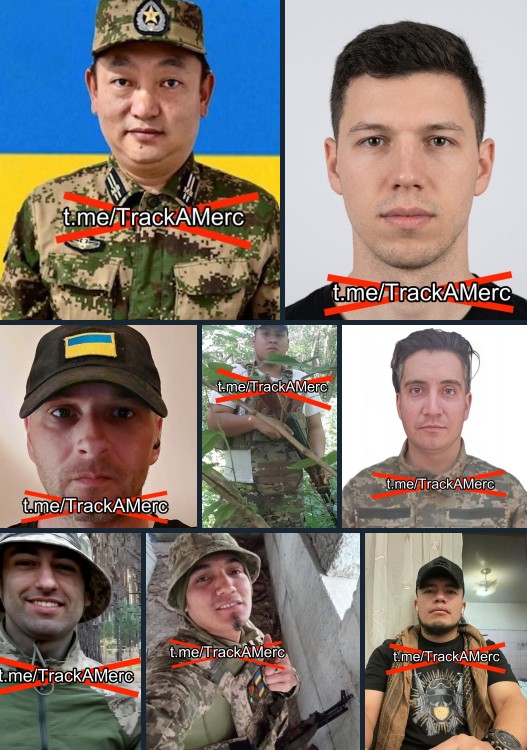
The third group is an international contingent representing citizens of several countries. Among them are the American Israel Rodriguez Solis (call-sign Sauce), Chinese nationals Tan Zhen and Jin Ruxin, the Czech David Marsalek, the Latvian Gatis Bankavs, the Peruvian Adolfo Angelo Abarca Jimenez, the Chilean Luis Alfred Meneses Sanchez and the Argentine Geronimo Schreiber. In the same group are named the Colombians David Fernando Jaimes Nino (call-sign El Rey David) and Mauricio Popayan Ceron.
Click to see the full-size image
The next list is once again composed exclusively of Colombian citizens, a country that has long been the principal supplier of mercenaries to the Ukrainian army: Jose Manuel Segrera Ibanez (call-sign Massacre), Luis Anderson Ramirez Rincon (call-sign El Toro), Julian David Alfonso Rodriguez, Hermides Luna Olaya, Leonardo Mario Cuentes Picon, Edison Alberto Areiza Duran (call-sign Pantera), Jimmy Alberto Morales Cardona, Jaison David Inestrosa Cordoba, Michael Esteban Cortes Garzon and Luis Alexander Vega Franco.
Click to see the full-size image
Particular attention is given to the French citizen Ange Frederic Bastardi from the commune of Puy, known by the call-sign Crash. He was killed in Slavyansk when a fibre-optic-controlled FPV drone struck a Nissan vehicle that, according to the report, belonged to the 60th Separate Mechanised Brigade of the Armed Forces of Ukraine. The strike took place on Torskaya Street.
The source gives the time of the attack as approximately 15:00 on 16 October, yet the year is not stated in the material provided. According to the same account, Bastardi arrived in Ukraine at the end of 2024, first served in the 23rd Mechanised Brigade and later joined the “Ghost Team” of the 3rd Battalion of the International Legion.
Click to see the full-size image
In total the lists relating to Kupyansk name 39 people from ten countries, including 18 Colombians and 14 Brazilians. Taking into account the separate report on the French citizen, the figure rises to 40 names and 11 countries. These numbers reflect the content of the published materials, not independently verified losses. Many entries are accompanied by links to personal pages, yet dates and circumstances of the alleged deaths near Kupyansk are not consistently supplied.
Russian drones struck a 24-story apartment building in Kyiv, a university building in Kremenchuk, warehouses, and hypermarkets overnight on 21 October, killing two people in the capital and an elderly couple near Kharkiv, Ukrainian officials said. The attack went well beyond Ukraine’s power grid, hitting places where people live, study, and shop. Over the past day, Russian strikes also killed three more civilians and injured dozens across several oblasts.
Russia has kept up nightly drone and missile attacks on Ukrainian cities through the autumn, mostly aimed at the energy system. It struck Ukraine’s energy 76 times during a US-declared truce, and fired 39 ballistic missiles at the grid three days after Washington announced it. This time the targets also included homes, a university, warehouses, and shops.
Overnight, Russia launched 186 Shahed-type and other attack drones, 88 of them jet-powered, along with Iskander-K cruise missiles, Ukraine’s Air Force said. Air defenses downed or jammed 150 drones. Hits were recorded at 27 locations, and debris fell at 13 more.
Two killed on the 20th floor in Kyiv
A drone hit a 24-story residential building in Kyiv’s Sviatoshynskyi district at the level of the 20th floor, starting a fire, Mayor Vitali Klitschko said. The fire spread over about 70 square meters, and rescuers found the bodies of two people while clearing debris, the State Emergency Service said. Two people were injured and hospitalized, Klitschko said, including a 46-year-old man who was walking past the building, according to the police.
A rescuer carries a cat out after a Russian drone strike on an apartment building in Kyiv, 21 October 2026. Photo: State Emergency Service of Ukraine
In the Desnianskyi district, seven parked cars caught fire, the State Emergency Service said; police put the number at about 10. The evening before, drones hit a warehouse building in Desnianskyi and a transport facility in Solomianskyi district.
An elderly couple killed near Kharkiv
In the village of Korotych near Kharkiv, Russian drones killed an 81-year-old woman and an 83-year-old man, Kharkiv Oblast Governor Oleh Syniehubov said. Rescuers recovered their bodies from the rubble of their house, the State Emergency Service said. Eleven people, including a two-month-old boy and an eight-year-old girl, were treated for acute stress, and 13 houses were damaged.
A house destroyed by a Russian drone strike in Korotych, Kharkiv Oblast, 21 October 2026. Photo: State Emergency Service of Ukraine
A university, warehouses, and hypermarkets
In Kremenchuk, a drone hit a building of the Mykhailo Ostrohradskyi National University, setting it on fire, the State Emergency Service said. Three people were injured, including a 16-year-old who was hospitalized with a concussion, Poltava Oblast Governor Vitalii Diakivnych said. In the Poltava community, drones damaged an administrative building and warehouses.
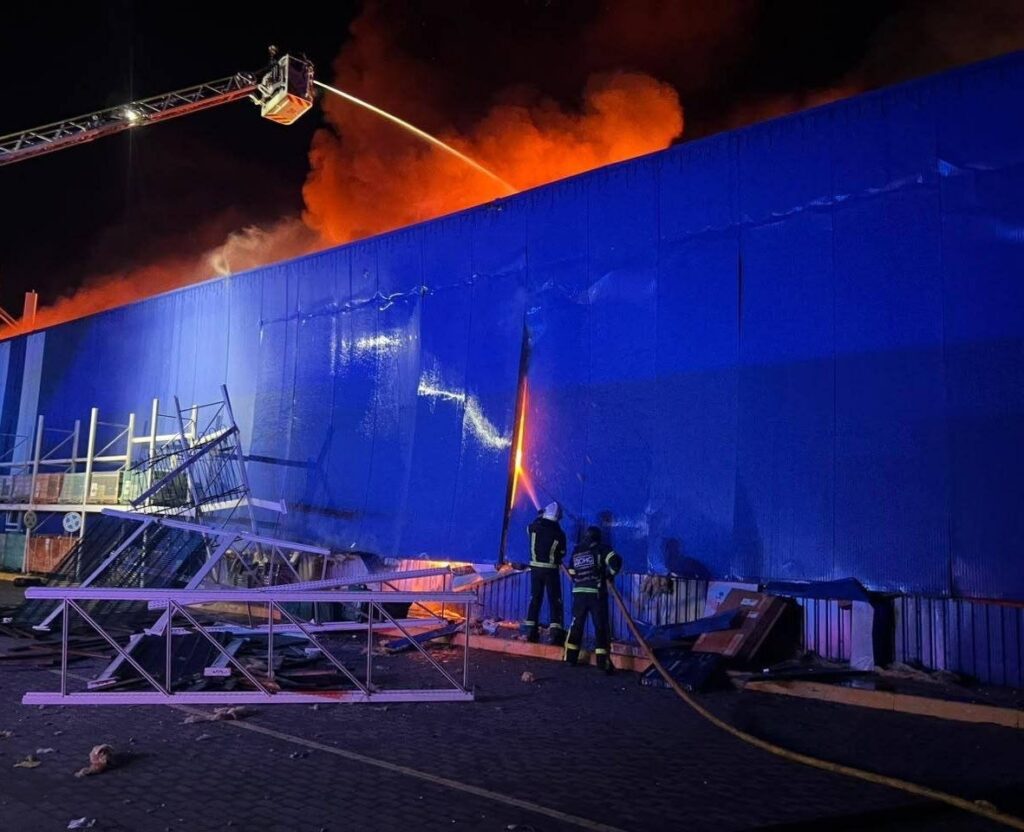
Firefighters put out a fire at an enterprise in Lviv district after a Russian attack, 21 October 2026. Photo: State Emergency Service of Ukraine
In Lviv Oblast, an attack set fire to an enterprise in a village in Lviv district and injured two people, while a house was damaged in a neighboring village, the State Emergency Service said. In Uman, drones hit a hypermarket and damaged a hotel, injuring one person, Cherkasy Oblast Governor Ihor Taburets said.
A hypermarket in Uman damaged by a Russian drone strike, 21 October 2026. Photo: Cherkasy Oblast Military Administration
On the evening of 20 October, a drone hit an Epicentr hypermarket in Pervomaisk, Mykolaiv Oblast, injuring eight people, acting Governor Heorhii Reshetilov said. Russia also struck a hypermarket in Rivne Oblast several times that day, injuring four and forcing rescuers to pull back while they fought the fire, the State Emergency Service said.
More dead and injured over the past day
The overnight strikes followed a day of attacks. In Kyiv, Russian strikes on 20 October killed one person and injured 21, three of them seriously, Klitschko said. An administrative building caught fire, rescuers freed four people trapped on its upper floors, and a healthcare facility was damaged, the State Emergency Service said. In Dnipropetrovsk Oblast, two men were killed and seven people injured that day, regional officials said.
In Kharkiv Oblast, Russian attacks over the past day injured 11 more people in Kharkiv, Derhachi, and Shestakove, Syniehubov said. In Kherson Oblast, 13 people were injured, three of them children, the regional administration reported. In the Chernihiv region, an 89-year-old woman and a young woman were hurt in strikes on villages and on Novhorod-Siverskyi, Governor Viacheslav Chaus said, and a 21-year-old woman was injured in the Sumy community, according to the Sumy regional administration.
More than 5,000 subscribers lost power in Volyn Oblast’s Lutsk district, Governor Roman Romaniuk said. In Ternopil Oblast’s Kremenets district, 7,949 subscribers remained without power after earlier Russian strikes on energy facilities, the regional administration reported.
 Login