❌

Reading view

“Glow Night Run” ilumina São Brás de Alportel a 24 de outubro

São Brás de Alportel recebe, no próximo dia 24 de outubro, a partir das 19h00, a “Glow Night Run São Brás de Alportel”, uma iniciativa organizada pela Free Challenge, com o apoio da Câmara Municipal de São Brás de Alportel, que promete uma noite de desporto, música e muita animação. O evento convida participantes de […]

  •  

UN Warns Global Warming Threshold Will Be Exceeded

Humanity will exceed the Paris Agreement’s 1.5 °C global warming threshold, but the temperature peak can still be contained between 1.7 and 1.8 °C by mid-century, UNEP warned in its most recent report.


To return to 1.5 °C by the end of the century, countries must cut global emissions by 18 percent by 2030, 45 percent by 2035 and 69 percent by 2040, according to the report.

Global warming will overshoot 1.5°C in the coming years.

There’s still a chance to bring temperatures back down, but the window is closing fast.

This is the point of return. #EmissionsGap pic.twitter.com/VDXkg0JPtQ

— UN Environment Programme (@UNEP) October 21, 2026

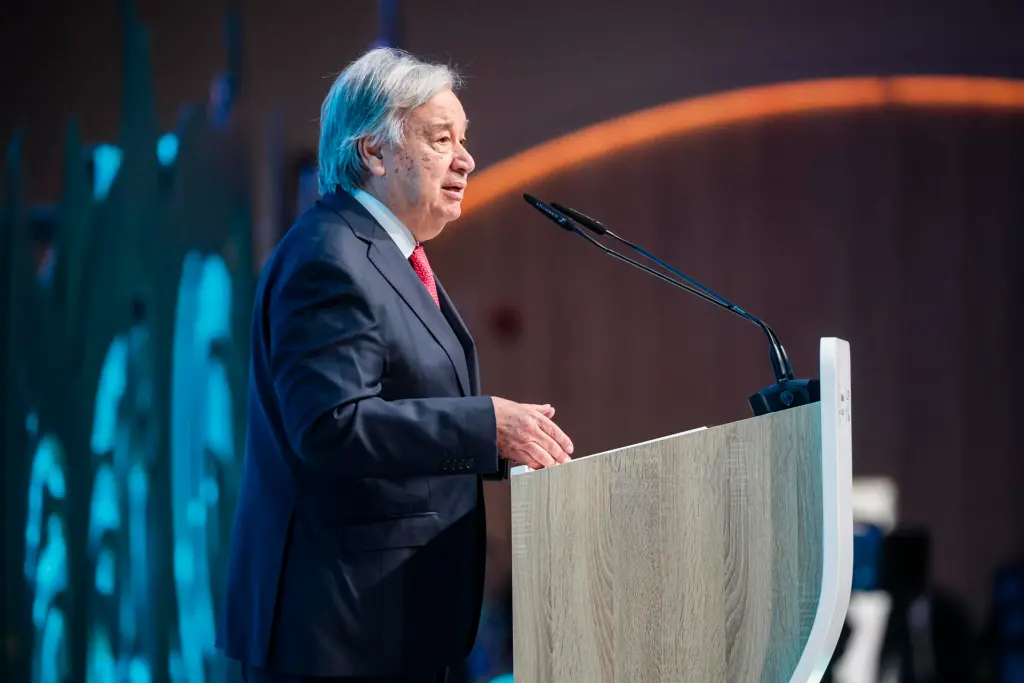
UN Secretary-General António Guterres declared that surpassing the limit did not mean giving up, referring to the need to maintain ambitious climate targets despite the overshoot.

RELATED: Venezuela and OPEC Fund Assess Partnerships to Address Climate Change

UNEP Executive Director Inger Andersen stressed that each additional fraction of a degree and each extra year of warming above 1.5 °C would worsen climate impacts and risks, including deadly floods, heat waves and wildfires that have swept numerous countries this year, and said all possible efforts were needed to limit the peak and return to 1.5 °C by the end of the century, which she said was possible.

The chance to keep global warming below 1.5°C with no overshoot is gone.

But urgent action can still limit the overshoot and bring warming back to 1.5°C by 2100.

Current policies, however, put the 🌎 on course for up to 2.8°C this century.

New #EmissionsGap Report:… pic.twitter.com/4VanweT5Hj

— UN Environment Programme (@UNEP) October 21, 2026

Continuing current policies will cause a catastrophic increase of 2.8 °C over this century, with a sustained rise in subsequent years, the document warns.

Ahead of the start of the second Global Stocktake at COP31 in Antalya, Türkiye, UNEP set concrete fossil fuel reduction targets relative to 2025 levels.

By 2035, the agency proposes reducing coal supply by 55 percent, oil by 15 percent and gas by 5 percent; by 2040, it proposes raising the cuts to 75 percent for coal, 30 percent for oil and 35 percent for gas.

  •  

UN Warns El Niño Could Be Off the Scale, 3.8°C Above Average

UN announced the allocation of $50 million from the UN emergency fund to assist 11 of the most vulnerable countries, including Chad, El Salvador, Ethiopia, Somalia and South Sudan, as a priority. Photo: EFE.

The UN World Meteorological Organization warned Wednesday that the current El Niño episode could push Pacific sea surface temperatures to 3.8 degrees Celsius above the average between November 2026 and January 2027, levels its top official called unprecedented in four decades of monitoring.


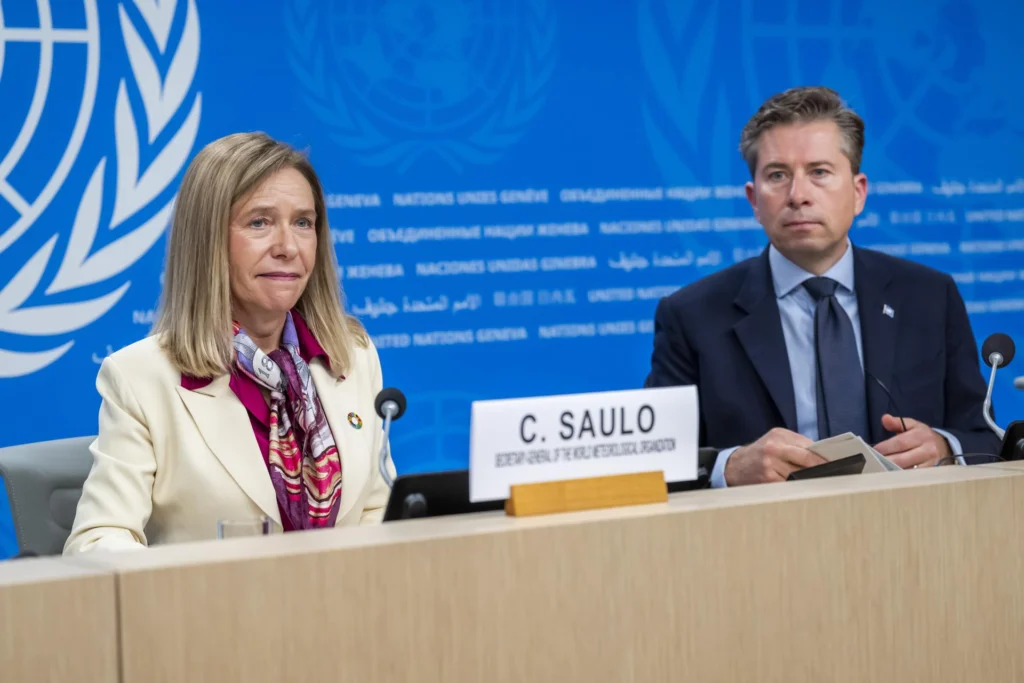
The alert came during a joint press conference in which the World Meteorological Organization (WMO) Secretary-General Celeste Saulo acknowledged that the phenomenon now sits “literally outside the scales of monitoring that we have used over the past four decades.”

Her assessment placed the coming months among the most severe climate events recorded since such tracking began.

RELATED: El Niño Extreme Weather: 34 Days of Record Rain Raise Global Alarm

Saulo and UN humanitarian coordinator Tom Fletcher issued an urgent call for the international community to prepare in advance for the consequences they expect.

Fletcher put the human cost in stark terms. The phenomenon “will shake Latin America, eastern and southern Africa, Asia and the Pacific with extreme heat, droughts and floods,” he warned, and could push food insecurity to affect as many as 50 million people worldwide.

The warning singled out regions already struggling with fragile agricultural systems and limited infrastructure, where a single failed harvest can tip entire communities into crisis.

El Niño is set to hit fragile communities hard.@UNOCHA and @WMO are sounding the alarm, appealing for immediate assistance to support communities already affected by what has been described as the strongest El Niño on record. https://t.co/LDrygGkPPw pic.twitter.com/H1XcVA3AR7

— UN News (@UN_News_Centre) October 21, 2026

Off-the-Scale Temperatures

The temperature projection of 3.8 degrees above the long-term average would place this El Niño beyond the upper bands of the monitoring framework built over forty years. Saulo noted that extreme weather events are already being recorded and will tend to multiply as the phenomenon gains intensity. She stressed, however, that the crisis “does not have to inevitably trigger a humanitarian disaster,” a message both officials repeated throughout their appearance.

To front-load the response, Fletcher announced the allocation of 50 million dollars from the UN emergency fund. The money will assist 11 of the most vulnerable countries as a priority, including Chad, El Salvador, Ethiopia, Somalia and South Sudan. The list reflects the broad geographic reach of the expected impacts, spanning the Horn of Africa, the Sahel and Central America.

Both representatives insisted that a window of opportunity remains open. Extreme conditions “do not have to translate into humanitarian emergencies or fatalities” if precautions are taken in time, they argued, framing preparedness as the difference between a difficult season and a catastrophic one.

A Narrow Action Window

Saulo and Fletcher directed their appeal beyond governments. WMO and the humanitarian office urged development banks and international financial institutions to release funds in a coordinated manner before the worst damage occurs. The underlying premise is simple, El Niño cannot be stopped, but its worst human impacts can be mitigated and prevented.

Latin America appears prominently in the forecast. Central America has already been placed on maximum alert over drought conditions linked to the so-called Super El Niño, and the new warning extends that concern across the region. Africa faces the mirror problem in several zones, with eastern and southern areas bracing for a combination of heat, drought and flood depending on local geography.

WMO’s warnings marks a departure from the cautious phrasing typical of international agencies. Describing the phenomenon as off the scale is not a rhetorical flourish but a technical judgment, one intended to shake loose the funding and coordination that slow-moving bureaucracies often withhold until emergencies are already visible. For Saulo and Fletcher, the next three months represent the period when that response must be assembled, not the period when it can still be debated.

  •  

Cambodia and Laos are not pawns in a Chinese encirclement

In late September, China and Laos opened a Beijing-funded training and support center and an aviation academy at Ban Keun airport, about 50 kilometers north of Vientiane. China’s Ministry of National Defense says the facility will train Lao Air Force pilots and is “not directed against any third party.” Even so, much of the commentary […]

The post Cambodia and Laos are not pawns in a Chinese encirclement appeared first on Asia Times.

  •  

South Korea will pull staff from Kyiv over North Korean POW handover made public at the UN

South Korean President Lee Jae-myung meets Ukrainian President Volodymyr Zelenskyy at the NATO summit in Ankara, 8 July 2026.

South Korea will withdraw more staff from its embassy in Kyiv, Foreign Ministry spokesperson Park Doo-soon said on 20 October. Seoul says Kyiv broke an understanding to keep the transfer of two North Korean prisoners of war confidential, which was meant to protect the soldiers and their families in the North. Seoul had conveyed its position through several channels but received no sufficient response from Kyiv, Park added.

The Korea Herald noted, the move comes amid a dispute with the host government itself. That matters beyond the two countries. Good ties with Kyiv serve South Korea’s interests, AP reported earlier this month, citing experts, because Ukraine could share intelligence on North Korea’s expanding cooperation with Russia and its battlefield experience.

Seoul shrinks its Kyiv mission

Officials put the planned withdrawal at about half the embassy’s staff. The Korea Herald added that the timing has yet to be set. A chargé d’affaires and all consular staff will stay in Kyiv to keep diplomatic contacts and protect South Korean citizens.

Zelenskyy told the UN General Assembly in September that Ukraine had transferred two captured North Korean soldiers to South Korea. Ukrainian forces had captured both men in Russia’s Kursk Oblast in January 2025, where Pyongyang had sent troops to fight for Moscow.

South Korean President Lee Jae-myung meets Ukrainian President Volodymyr Zelenskyy at the NATO summit in Ankara, 8 July 2026.
Explore further

Ukraine’s disclosure of secret North Korean POW transfer sparks South Korea’s demand for an apology

On 6 October, South Korean Foreign Minister Cho Hyun said Sybiha’s messages included words of apology but fell short of what Seoul expected. Ukrainian Foreign Ministry spokesperson Heorhii Tykhyi replied that Sybiha had written he regretted the situation reaching an exchange of critical comments.

In an interview published on 12 October, Foreign Minister Andrii Sybiha told the dispute stemmed from differing readings of confidentiality at various stages of the transfer. He considers the matter closed. “Ukraine fulfilled all its obligations.”

  •  

Committee on World Food Security Convenes in Rome

From October 19 to 23, the world gathers in Rome for the 54th session of the Committee on World Food Security (CFS)*—a global platform dedicated to combating hunger and malnutrition, and to upholding the right to food. Discussions will focus on food security, coordinated responses to food crises, and sustainable food systems. The agenda will […]

  •  

Coreia do Sul classifica ameaças do Norte como inaceitáveis

Kim Yo-jong, irmã do líder da Coreia do Norte, Kim Jong-un, afirmou que o exército sul-coreano transmitiu 998 mensagens provocadoras através de altifalantes e efetuou 91 disparos de advertência.

© JEON HEON-KYUN/EPA

O chefe do Estado-Maior Conjunto da Coreia do Sul, Jin Yong-sung ordenou ao exército que "reaja com firme determinação" caso a Coreia do Norte realize novas provocações
  •  

9-year-old Anastasiia Kovtun wins silver at her debut international squash tournament

Nine-year-old Ukrainian Anastasiia Kovtun won a silver medal at the international Romanian Junior Open 2026 tournament, held on October 16–18 in Bucharest. For the young athlete, it was the first international tournament of her career. Overall, Ukrainian squash players demonstrated strong results, winning in five age categories.

The competition took place at the Infinity Sport Arena sports complex under the auspices of the European Squash Federation (ESF). Romanian Junior Open is part of the international ESF Junior Circuit series and has Bronze status.

One of the main stories of the Ukrainian team’s performance was the success of 9-year-old Anastasiia Kovtun in the youngest age category, Girls U11.

Despite the competition in Bucharest marking Nastia’s debut at international level, she confidently advanced through the group stage. The Ukrainian successively defeated Romania’s Anna Oltean 3:0 (11:4, 11:9, 11:9), as well as two Bulgarian athletes — Ema Taneva 3:0 (11:3, 11:5, 11:5) and Gabriela Zarova 3:0 (11:8, 11:2, 11:2).

In the decisive match for the gold medal, Anastasiia faced another Ukrainian, Oleksandra Sinielnikova, who has considerable experience competing in international and Polish junior tournaments. The final ended with Sinielnikova winning 3:0 (11:3, 11:5, 11:5).

pastedGraphic.png

Thus, Oleksandra Sinielnikova became the Romanian Junior Open 2026 champion among girls under 11, while Anastasiia Kovtun claimed a silver medal at her very first international tournament.

Five gold medals for Ukrainian athletes

Other Ukrainian participants also performed successfully. Among boys under 11, another all-Ukrainian final took place.

Artem Kostiukov and Mark Hrabovskyi competed for the championship title. Both athletes won their groups, each recording three victories.

In the group stage, Kostiukov defeated two representatives of Romania and an athlete from Israel, while Hrabovskyi beat two Romanian squash players and a representative of Bulgaria. In the final, Artem Kostiukov emerged victorious 3:1 (11:7, 11:6, 7:11, 11:8).

Artem Kostiukov, winner of Romanian Junior Open 2026

It is worth noting that Artem Kostiukov continues his family’s sporting traditions.

His mother is the well-known Ukrainian squash player Anastasiia Kostiukova, a Ukrainian champion and multiple winner of national competitions, including the 2023 Ukrainian Cup.

In 2022, she became the first Ukrainian woman to win a squash match at the World Games and also took silver at the international PSA Saarland Squash Open tournament.

In the Girls U13 category, Varvara Sinielnikova took first place, demonstrating confident play throughout the tournament.

Viktoriia Syvoplias brought Ukraine another gold medal in the Girls U19 category. In the final, she defeated Bulgaria’s Emma Peteva in a tense five-game contest — 3:2 (7:11, 11:9, 11:5, 8:11, 11:8).

Nestor Saplashenko secured another victory for Ukraine in the Boys U15 category. In the final, he defeated Greece’s Konstantinos Christos Papatheodorou 3:1 (11:8, 11:7, 7:11, 11:9).

Ukrainian Oleksandra Orlenko also competed in the Girls U19 category, finishing the tournament in seventh place.

Ukrainian juniors confirm their high level on the European stage

At Romanian Junior Open 2026, Ukrainian athletes won five gold medals in the Girls U11, Girls U13, Girls U19, Boys U11 and Boys U15 categories.

Anastasiia Kovtun, silver medalist at Romanian Junior Open 2026

Ukrainian juniors confirm their high level on the European stage

At Romanian Junior Open 2026, Ukrainian athletes won five gold medals in the Girls U11, Girls U13, Girls U19, Boys U11 and Boys U15 categories.

In addition, Ukrainians also claimed two silver medals thanks to the performances of Anastasiia Kovtun and Mark Hrabovskyi.

In addition, Ukrainians claimed two silver medals thanks to the performances of Anastasiia Kovtun and Mark Hrabovskyi.

For nine-year-old Anastasiia Kovtun, the silver medal in Bucharest marked an important first step in her international sporting career.

Already in her debut appearance, she managed to become one of the medalists at an official European tournament.

  •  

From Ukraine to the Strait of Hormuz, the second energy crisis in five years is undermining resistance to the green transition

The second energy crisis in less than five years — both triggered by wars, first in Ukraine and then in the Middle East — is dismantling resistance to a shift away from fossil fuels. Month by month the debate over electrification gains momentum: powering economic sectors that still rely on coal, oil, and gas with electricity. If there were few arguments left —environmental, economic, and strategic autonomy — in favor of a rapid electrification, gasoline and diesel prices in Europe have delivered the final blow.

Seguir leyendo

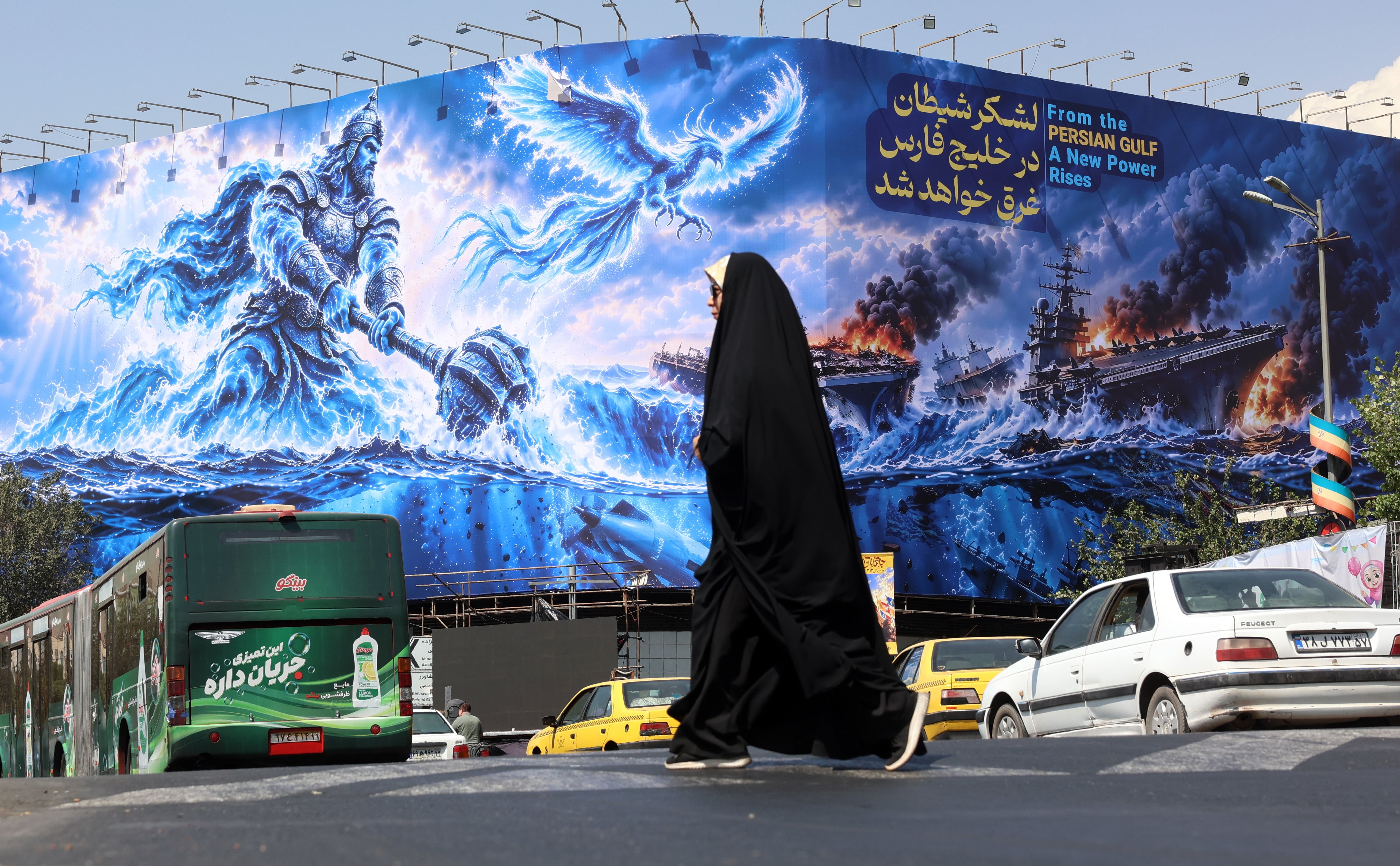
© ABEDIN TAHERKENAREH (EFE)

An woman walks past an anti-American billboard in Tehran’s Enghelab Square in mid-September.
  •  

What do North Korea’s sub missile tests really prove?

North Korea’s recent underwater launch of strategic cruise missiles underscores its accelerating drive to field a survivable, sea-based nuclear deterrent, even as significant engineering hurdles and platform limitations continue to constrain its naval ambitions. North Korea test-fired two types of submarine-launched strategic cruise missiles into the Sea of Japan, marking its first public underwater cruise […]

The post What do North Korea’s sub missile tests really prove? appeared first on Asia Times.

  •  

Instituto Justina realiza oficina e apresenta espetáculo 1888

O Instituto Justina realiza a oficina gratuita “Palavras Necessárias” com a dramaturga boliviana Claudia Eid Asbún neste sábado (17/10), das 14h às 18h. O espetáculo “1888” será apresentado gratuitamente nos dias 22, 23 e 24 de outubro, em três espaços culturais de Aparecida de Goiânia.

O espetáculo “1888” será apresentado gratuitamente nos dias 22, 23 e 24 de outubro, em três espaços culturais de Aparecida de Goiânia. Com atuação e dramaturgia da atriz goiana Takaiúna e direção da dramaturga boliviana Claudia Eid Asbún, a circulação integra o projeto Temporada 1888 – Dramaturgia Afro-Latinoamericana.

No dia 17 de outubro, sábado, das 14h às 18h, o Instituto Justina oferece a oficina gratuita Palavras Necessárias, ministrada por Claudia Eid, na sede do instituto. A iniciativa contempla ainda a publicação da dramaturgia em livro, com distribuição gratuita. O projeto foi aprovado pelo Fundo de Arte e Cultura de Goiás (FAC-GO), por meio do Edital Cultura Negra e Periférica de Goiás – Tradição, Arte e Identidade.

Mais do que revisitar o ano que dá nome ao espetáculo, “1888” lança um olhar sobre aquilo que a abolição formal da escravidão não foi capaz de encerrar. A montagem parte de memórias afro-brasileiras e latino-americanas para investigar a permanência das estruturas escravocratas, as violências que atravessam a existência de mulheres negras e as formas de resistência preservadas pela ancestralidade.

No centro da narrativa está Justina, uma mulher negra e curandeira que vive no Brasil de 1888. Entre ervas, rezas, lembranças e silêncios, a personagem carrega experiências que ultrapassam sua própria existência. Em cena, Justina conversa com um bebê sobre a vida e a liberdade. A música, a dança e a presença física da atriz conduzem uma narrativa em que o tempo deixa de obedecer à cronologia.

Criado em 2022, o espetáculo nasceu de um processo de formação e investigação dramatúrgica desenvolvido por Takaiúna em parceria com Claudia Eid Asbún. Durante a pesquisa, Takaiúna desenvolveu o conceito de “elementos-pontes”, expressão utilizada para identificar elementos cênicos que compartilham uma cosmologia comum em diferentes territórios da América Latina. O trabalho já circulou por festivais, universidades, Pontos de Cultura e espaços culturais comunitários da América Latina e do continente africano.

A presença de Claudia Eid Asbún em Aparecida de Goiânia vai além da direção do espetáculo. A oficina Palavras Necessárias propõe uma investigação sobre os caminhos da escrita para o teatro. A atividade parte das estruturas clássicas da dramaturgia e avança em direção a formas contemporâneas de construir narrativas. Um dos pontos centrais é a identificação dos chamados detonadores criativos: experiências, percepções e inquietações pessoais capazes de impulsionar a criação artística.

Dramaturga, diretora, atriz e jornalista, Claudia Eid Asbún está à frente da companhia independente El Masticadero, fundada em 2005, na Bolívia. Também dirige a Oficina Permanente de Teatro da Universidade Privada Boliviana (UPB), em Cochabamba. Sua produção dramatúrgica integra publicações na Bolívia, Espanha, Argentina e Cuba.

Outro desdobramento da temporada é a publicação de “1888” em formato de livro, que será distribuído gratuitamente a escolas, bibliotecas e Pontos de Cultura. A iniciativa amplia o alcance do projeto ao permitir que a dramaturgia continue circulando para além das apresentações.

A escolha dos espaços que recebem a temporada está diretamente relacionada à trajetória do Instituto Justina, organização sediada em Aparecida de Goiânia que desenvolve, desde 2015, atividades de formação, pesquisa, intercâmbio e circulação artística. Reconhecido como Ponto de Cultura em 2019, o Instituto teve sua metodologia “Dramaturgias Emergentes” reconhecida como Tecnologia Social pelo Banco Ibero-americano de Saberes, em 2022. Em 2026, passou à condição de Pontão de Cultura.

Oficina gratuita: 17 de outubro (sábado), das 14h às 18h, na sede do Instituto Justina. Apresentações gratuitas: 22 de outubro (quinta-feira), às 19h30, na sede do Instituto Justina; 23 de outubro (sexta-feira), às 14h, no CENFI; 24 de outubro (sábado), às 19h30, no Ponto de Cultura Rosa dos Ventos. Classificação indicativa: 18 anos.

The post Instituto Justina realiza oficina e apresenta espetáculo 1888 appeared first on Diário da Manhã - O Jornal do leitor Inteligente.

  •  

Ukraine’s hobbit-named robot fired on targets up to 1.3 km away in a demo for border guards

Frodo universal ground robotic vehicle (UGV).

Ukraine’s six-wheeled Frodo ground robot fired on targets during a demonstration in Kharkiv Oblast for the Pomsta (Revenge) Border Guard Brigade, a border guard detachment posted on Facebook. Frodo made its public debut only on 30 September.

Ukraine had contracted more than 22,000 ground robots for 2026 by July, mostly logistics carriers, with combat models the smallest group, the Defense Ministry said. Frodo’s first reported mission was an evacuation. The demo shows its armed version to a fighting brigade, the kind of robot Ukraine has ordered least.

What the armed version carries

The platform completed its tasks at a training ground in near-combat conditions, said the 3rd Border Guard Detachment named after Hero of Ukraine Colonel Yevhenii Pikus. The Buria turret mounted on Frodo can fire either a Mk 19 automatic grenade launcher or a Browning M2 heavy machine gun. It engaged targets at up to 1.3 km (0.8 mile), the detachment said.

Frodo ground robotic vehicle (UGV).
Frodo ground robotic vehicle (UGV). Screenshot from a video by the 3rd Border Guard Unit

The 47-kg (104-lb) module has a ballistic calculator, stores up to 256 targets, aims in three seconds, and has a stated autonomous run time of up to 48 hours, the post said. Frodo is rated for up to 150 km (93 miles) on paved roads and 75–80 km (47–50 miles) over rough terrain, the post added. A Frontline Robotics Zoom reconnaissance drone flew reconnaissance during the test.

The developer, Frontline Robotics, describes its core philosophy as arriving fast, doing the job, and leaving very fast—hit and run, the detachment’s post said. Familiarizing the brigade’s soldiers with such systems aims first and foremost to preserve personnel’s lives and health, the detachment said.

A robot first reported as a medevac

Frontline Robotics told Militarnyi at the unveiling that Frodo had passed Defense Ministry codification and was built for logistics, evacuation, and strike missions. The robot reaches 40 km/h (25 mph) and carries up to 200 kg (441 lb) of payload, or 400 kg (882 lb) at most, the company said. A single soldier can swap its batteries.

Frodo ground robotic vehicle (UGV).
Frodo ground robotic vehicle (UGV). Photo: Frontline Robotics

The 92nd Assault Brigade used an early test unit to evacuate a wounded soldier, Frontline Robotics told Militarnyi. An operator, callsign Tango, named the robot’s speed and its ability to handle complex maneuvers as its main advantages, Militarnyi reported.

  •  

The Nobel Prize for Non-Peace, 2026 edition

Sacrifice the inconvenient, never the project. “Pal-washing” in action.

Join us on Telegram, X, and VK.

Contact us: info@strategic-culture.su

A familiar script

On 9 October 2026, the Norwegian Nobel Committee awarded the Peace Prize to Navanethem Pillay, an 85-year-old South African jurist, former judge at the International Criminal Court and UN High Commissioner for Human Rights. The citation speaks of a person who has paved the way for a more comprehensive global legal order. The Committee’s chair, Jorgen Watne Frydnes, added that the prize is a message to those who attack and undermine the international system and its institutions. The verdict is avowedly political, and it is on this level that it must be discussed.

The very same figure who, in 2011, is said to have ‘toppled’ Gaddafi, paving the way for the plundering of Libyan oil and the enslavement of African migrants, would now ‘topple’ Netanyahu, thereby paving the way for Israel’s rehabilitation. The underlying logic would be neither morality nor peace, but the agenda of George Soros’s Open Society: to sacrifice those who have become inconvenient, never the essence of the project itself. Some have dubbed it ‘pal-washing’. The fundamental question is a serious one, for it asks whether there is a pattern behind the prizes and jurisdictions of the liberal order.

It must be emphasised that the script is already familiar. Do you remember when Barack Obama received the Nobel Peace Prize, whilst launching war after war? Or do you recall figures in search of a cause such as Machado, Mohammadi, or the defenders of Ukrainian criminals? But let us proceed in order.

Act One: Libya

In February 2011, Pillay, the High Commissioner, called on the Human Rights Council to take vigorous action to stop the violence and hold those responsible to account; the Council condemned the violations and established a commission of inquiry. The next step fell to the Security Council: referral to the ICC via Resolution 1970, followed by Resolution 1973, approved with ten votes in favour and five abstentions (Brazil, China, Germany, India, Russia). No one claims that Pillay decided to go to war. What matters is the sequence of events: the language of human rights opened the door, that of the protection of civilians authorised the use of force, and the operation gradually shifted towards regime change. As early as April, Lavrov was accusing NATO of exceeding its mandate, and a French minister admitted that regime change would have required a new vote.

Then there are the costs. In 2017, the IOM documented auctions of sub-Saharan migrants in southern Libya, sold for sums ranging from 200 to 500 dollars. The link with the collapse of the state after 2011 is the most plausible interpretation, although the source documents the phenomenon rather than its cause. Libya and the migrants paid the price; the legal framework emerged, formally speaking, intact, even if the controversy over the mandate would later weigh on the vetoes of Moscow and Beijing in other matters.

Act Two: Bibi

On 21 November 2024, Pre-Trial Chamber I of the ICC issued arrest warrants for Netanyahu and former Defence Minister Gallant, for war crimes and crimes against humanity. Pillay had left the Court in 2008, but chaired the UN Commission of Inquiry which, on 16 September 2025, concluded that Israel had committed genocide in Gaza. This is where ‘pal-washing’ comes into play. International criminal law deals with individuals: a defendant, a charge, a period of time. If the case concludes with the fate of a leader, a narrative break occurs – the ‘before’ and ‘after’ of a man – after which the state can present itself as restored. Libya offers an analogy: there, the case concluded with the fall of a man.

The limitations of the process work in favour of this interpretation. The Court has no police force and the execution of warrants depends on the States Parties; the Commission is not a court and does not speak on behalf of the entire UN; the Committee itself, according to AFP, has stated that it is up to a court to determine whether genocide has taken place. The award has no legal effect, as we know, but it lends legitimacy to a system that promises justice yet cannot guarantee it.

We must also bear in mind that we have already seen dynamics of this kind on numerous occasions within the globalist order that dominates the West. The Open Society Foundations presents itself as the world’s largest private funder of groups working for justice, democracy and human rights, active in over one hundred countries, and Pillay received the Stockholm Human Rights Award, the same prize that went to Soros and Neier in 2011. It certainly seems that the pattern of the Soros agenda is repeating itself once again – an agenda comprising foundations, NGOs, tribunals, commissions and bureaucracies that share a common lexicon and worldview: that of a liberal order to be perfected and never called into question. Those operating within that lexicon may denounce a government, a leader, or even a state, but they cannot challenge the underlying assumptions of the order that grants them legitimacy.

Some will object that Pillay’s Commission attributes responsibility to Israel as a state, not merely to its leaders, which contradicts the idea of a purely personalised operation. The second point concerns the reaction. Netanyahu accused the Committee of having lost its moral compass; the Israeli Foreign Ministry spoke of a grotesque exploitation of the prize; and Washington announced sanctions against the ICC just a few hours after the announcement. All true. But it would make sense and have value if the Western system were not rotten to its very core, if its legal system were functioning properly, but this is not the case, in any respect (and we have already seen sufficient evidence of this – let us not forget the Epstein case either).

If, over the next twelve months, Netanyahu’s political downfall is presented as the conclusion of the case, rather than as a stage in proceedings concerning the state, ‘Pal-washing’ will gain traction. If the proceedings continue beyond his person, and if the State Parties execute the warrants, perhaps it will lose ground. Given the current evidence, the argument is plausible and, until proven otherwise, this is yet another ‘Non-Peace’ Nobel Prize – one we cannot call ‘war’.

  •  

UN: Israel Holding at Least 49 Syrians Amid Growing Number of Incursions

Over the course of September, Israel carried out no less than 280 separate incursions into southwest Syria, and they currently hold at least 49 Syrians in detention, the UN High Commissioner for Human Rights reports. Those detained civilians who are ultimately released by the IDF reported instances of torture, including beatings, prolonged standing in stress […]
  •  

South Korea’s hypersonic leap runs into North Korea’s nuclear wall

South Korea’s maiden flight test of a domestic hypersonic glide vehicle highlights an accelerating bid to field counterstrike assets capable of bolstering autonomous deterrence against North Korea’s expanding nuclear threat. This month, multiple media outlets reported that South Korean President Lee Jae-myung oversaw the country’s first test launch of a domestically developed hypersonic glide vehicle, […]

The post South Korea’s hypersonic leap runs into North Korea’s nuclear wall appeared first on Asia Times.

  •  

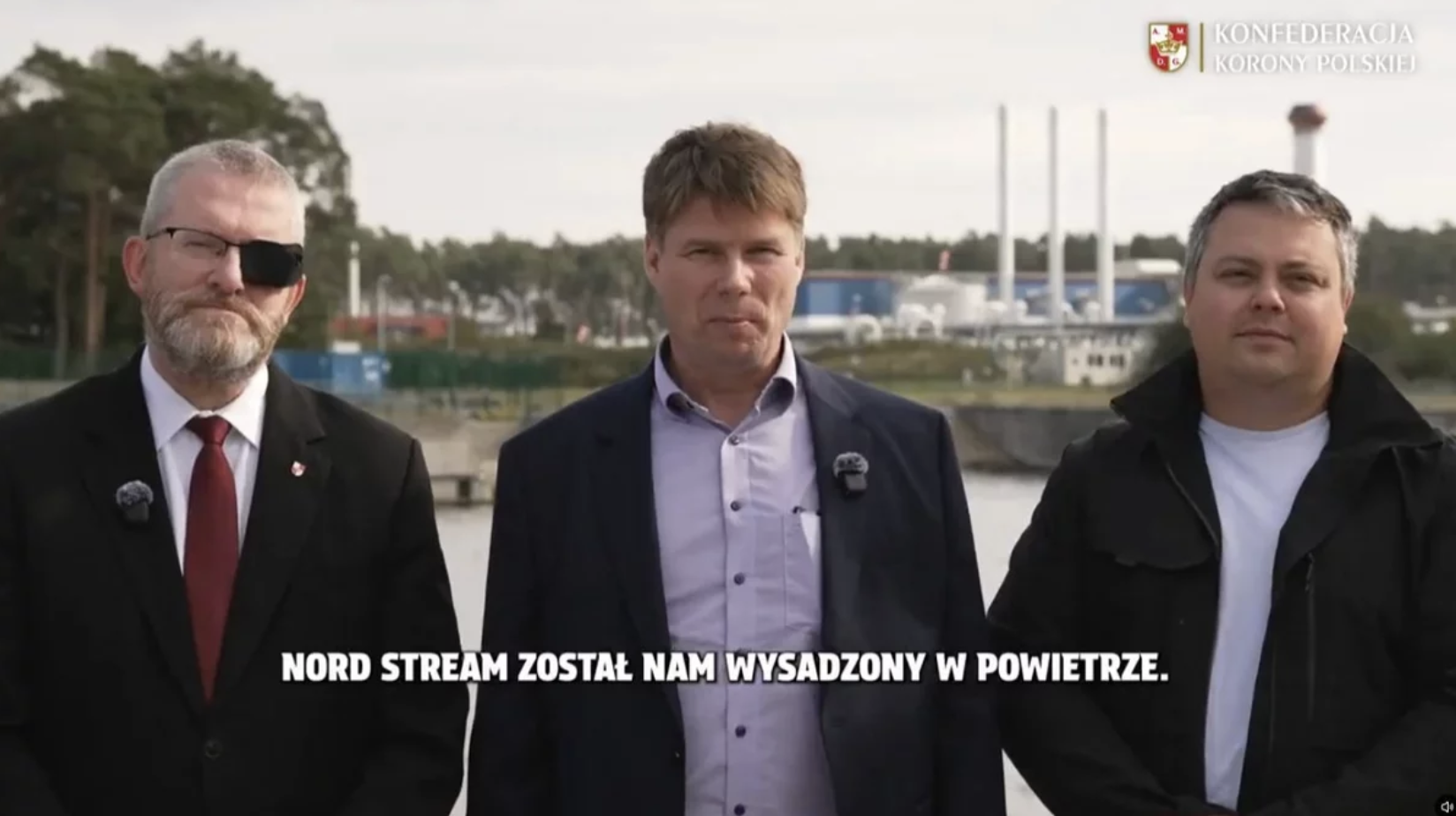
‘The Nord Stream pipelines will be relaunched,’ says right-wing Polish MEP Braun during meeting with AfD in Germany

Grzegorz Braun, leader of the Confederation of the Polish Crown, spoke in favor of restarting the Nord Stream 1 and 2 gas pipelines during a meeting Wednesday with politicians from the Alternative for Germany (AfD) party in Lubmin. He said Poland should be a shareholder in the German-Russian project.

“Nord Stream 1, and probably Nord Stream 2 as well, will be relaunched. Russian gas will flow to the West,” Braun said. He said Europe needs Russian raw materials and that their absence could have serious consequences for the economy.

Braun argued that Poland should not be excluded from future energy projects concerning Russian gas supplies. “Poland should participate, not boycott. Poland should be the initiator,” he said. He also proposed that Warsaw become a shareholder in Nord Stream.

Podczas roboczej wizyty w #Lubmin w Niemczech poseł do Parlamentu Europejskiego @GrzegorzBraun_, poseł na Sejm RP @Roman_Korona i dr @Slawomir_Ozdyk (Konfederacja @KoronyPolskiej) spotkali się z posłem do Bundestagu @SteffenKotre (AfD) oraz posłami do Landtagu Meklemburgii-Pomorza Przedniego z ramienia @AfD – Stephanem Reukenem i @Kevin_Kurtze.

— Konfederacja Korony Polskiej (@KoronyPolskiej) October 7, 2026

He also said that if Russian gas returns to Europe, Poland could lose economically if the supplies bypass its territory. In his view, Warsaw should seek participation in such energy projects rather than remain outside them.

Braun also spoke of the need to “normalize” and “de-escalate” relations and economic cooperation among Poland, Germany and Russia. He advocated a return to wider use of coal and the ability to buy oil and gas from suppliers offering favorable terms.

The speech took place in Lubmin, the site of the German terminal and infrastructure linked to the Nord Stream pipelines.

Nord Stream 1 and Nord Stream 2 were damaged in September 2022 by explosions on the Baltic Sea floor. Nord Stream 1 had been the main route for Russian gas to Germany. Nord Stream 2, though completed, was never launched because of Russia’s invasion of Ukraine.

Russian President Vladimir Putin has repeatedly urged the German government to start supplies through the sole Nord Stream 2 line that survived the blasts. He has said that if the line operates, 27.5 billion cubic meters of gas “will immediately reach Europe.”

“Why don’t they do it? I just can’t understand it. They can receive gas through Ukrainian territory, through TurkStream, but they cannot through the pipeline running along the bottom of the Baltic Sea,” Putin said.

“In my opinion, it’s crazy, just nonsense. Why? But if they don’t want to, fine,” Putin said in 2024 at the Vladivostok Economic Forum.

According to U.S. media reports, a group of Ukrainian officers conceived the operation to blow up Nord Stream in May 2022. Ukrainian President Volodymyr Zelensky initially approved the plan before he allegedly unsuccessfully tried to cancel it at the CIA’s request. Polish connections also appear in press accounts of the Baltic Sea sabotage.

U.S. President Donald Trump said last May that “many people know” who blew up Nord Stream. He added that he was the first to thwart the project.

Trump imposed sanctions on Nord Stream 2 in his first term, significantly slowing construction. President Joe Biden repealed them in 2021 and reimposed them after Russia invaded Ukraine. Germany withheld permission to start the pipeline because of the war.

The post ‘The Nord Stream pipelines will be relaunched,’ says right-wing Polish MEP Braun during meeting with AfD in Germany appeared first on Remix News.

  •  

The Solar System Could Fall Apart a Billion Times Sooner Than Scientists Thought

For more than three centuries, astronomers asking whether the Solar System is stable have received ever more comforting answers. Isaac Newton was not so sure. He suspected that the mutual tugs between Jupiter and Saturn would eventually wreck the planetary order, and that only divine intervention could prevent it. By the late 1700s, Laplace and […]

  •  

As Israel Continues To Pound Southern Lebanon, UN Warns of Impact on Agriculture

Israeli forces continued to carry out strikes across southern Lebanon on Thursday, shelling villages, destroying homes, and spraying the surrounding area with machine gun fire. The main attacks were reported, as usual of late, in Nabatieh and Tyre Districts, and other incidents were reported in Sidon and Bint Jbeil Districts. Airstrikes were reported in Mansouri […]
  •  

To keep the peace, South Korea’s Lee must prepare for war

When a South Korean soldier stepped on a land mine in the Demilitarized Zone (DMZ) on September 21, it might have been taken as a grim reminder of a war that never formally ended. Instead, the explosion has revealed something more unsettling: the Korean Peninsula’s old security order is shifting, even as Seoul tries to […]

The post To keep the peace, South Korea’s Lee must prepare for war appeared first on Asia Times.

  •  
❌