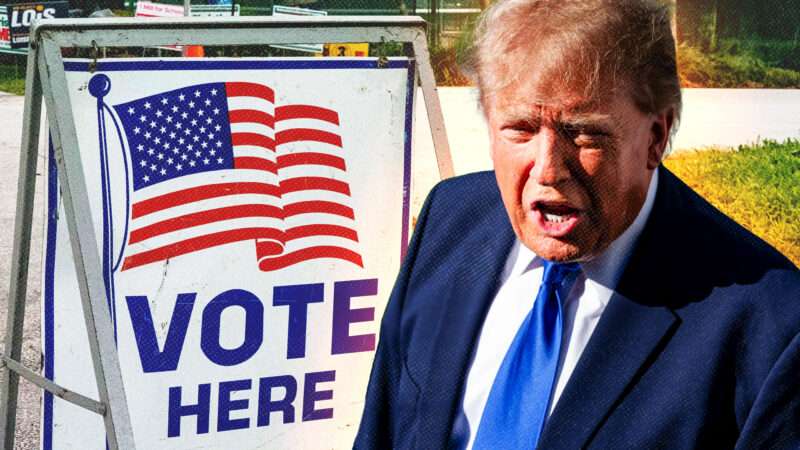
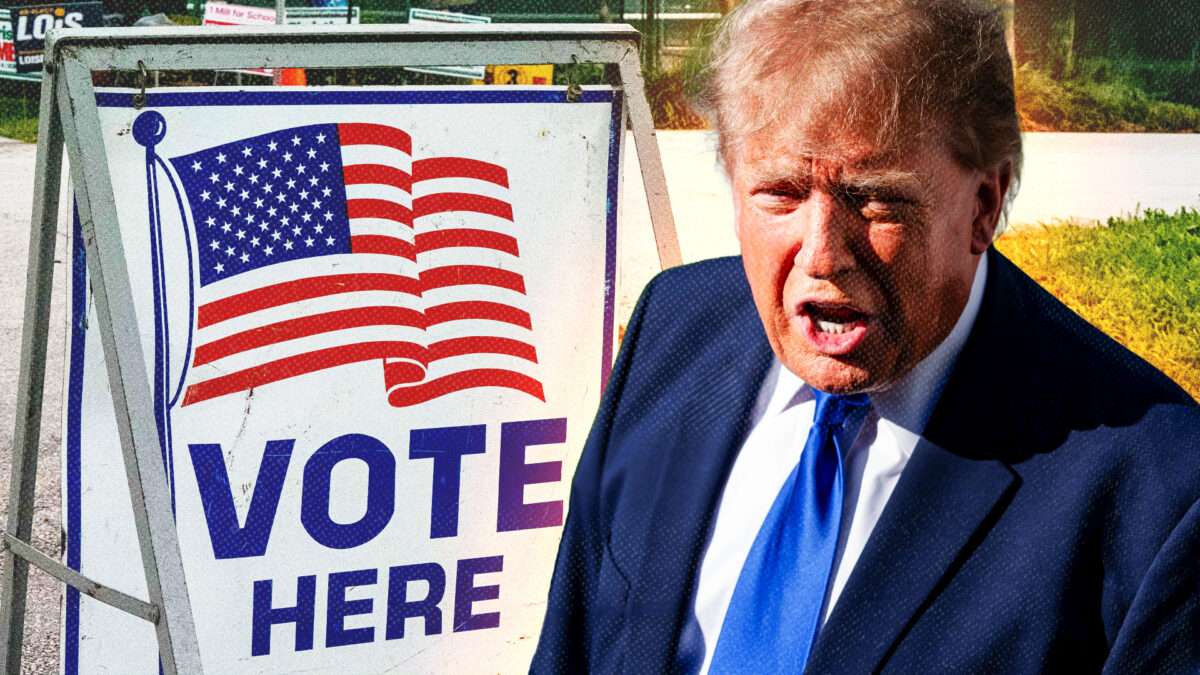
Most of the immigrants targeted by federal authorities in California this week for alleged voter fraud had applied for U.S. citizenship and now face charges related to lying on forms or during interviews. Those charges could lead to years in prison and thwart their efforts to naturalize.
After visiting all 50 US states, I'm often asked which ones I'd recommend to travelers.
Emily Hart
Over the past decade, I've traveled solo to all 50 US states and most major US national parks.
Although I've found beauty in every state, there are some that I want to visit over and over again.
I love traveling to places like New Mexico, Montana, New Hampshire, and Arizona.
Over the past decade, I've successfully visited all 50 US states solo, and have even made it to most of the major US national parks along the way. Because of this journey, I'm often asked which states I'd recommend to travelers.
Although most international travelers gravitate toward states like Florida and New York, I've found fantastic beauty and history in every state.
However, these are the 10 I always return to.
New Mexico boasts a surprising variety of stunning landscapes.
Emily Hart
New Mexico is always at the top of my list of recommendations. Nicknamed "the land of enchantment," it lives up to its moniker — and then some.
Those who haven't visited New Mexico may think of the state as a mostly barren desert, but it's actually the diverse landscapes that keep me coming back.
From the otherworldly dunes of White Sands National Park to the snow-capped Sangre de Cristo Mountains, there's beauty to be found around every corner.
Outside the natural beauty, the state is chock full of history, art, food, wine, and culture.
California is full of diverse landscapes and experiences.
Emily Hart
Every time I visit California, I feel like I'm entering a completely different reality.
The sheer size and diversity of the state are impressive, and it has gorgeous beaches, cities, forests, deserts, mountains, and even volcanoes.
I love road-tripping up the coast, visiting Yosemite National Park, taking a boat to the Channel Islands, and wine tasting in places like Napa and Sonoma.
Montana is a must-visit state for any outdoor enthusiast.
Emily Hart
With its vast open spaces, majestic mountains, and endless opportunities for outdoor adventure, Montana is a must-visit state for any outdoor enthusiast.
The state is home to the breathtaking Glacier National Park and parts of Yellowstone National Park. The sky is vast and open, the mountains are towering, and the lack of development makes me feel like I'm entering another world entirely.
I've returned to West Virginia multiple times.
Emily Hart
Although it may not get as much attention as some of the other states on this list, I've returned to West Virginia multiple times since my first visit.
The state's natural beauty is stunning, from New River Gorge National Park to ample lush forests, underground caverns, historic small towns, and over 200 waterfalls.
Wisconsin is home to beautiful scenery and great dining options.
Emily Hart
Wisconsin has so much more than first meets the eye, from the natural beauty of the Apostle Islands and the 15,000 lakes in the state to the classic cheese curds, breweries, and wineries that dot the landscape.
I love spending time along the shores of Lake Michigan and Lake Superior, dining at one of the state's famous supper clubs, and exploring the many Wisconsin state parks.
There's no place quite like the Maine coast.
Emily Hart
There's so much to love about Maine, but my favorite part of the state is the coast. With jagged and dramatic cliffs, lighthouses, and lobster shacks, visiting the Maine coast is an unforgettable experience.
It's easy to find peace in the state that sees the first sunrise of the year and is home to Acadia National Park, which is one of the country's most-popular national parks.
I love to road trip up the coast, stopping in beautiful towns like Kennebunkport, Bar Harbour, and Lubec.
As my home state, Colorado will always hold a special place in my heart.
Emily Hart
I couldn't write a list like this without including my home state of Colorado. The state has so much to offer, from beautiful views to fun activities.
On the Front Range, I enjoy hiking in Boulder and exploring Cheyenne Cañon. I like to spend the night at the The Broadmoor hotel in Colorado Springs before heading over to Great Sand Dunes National Park.
In the Rockies, I love driving Independence Pass to Aspen, as well as exploring the underrated Grand Mesa, which is the biggest flat-top mountain in the world. I also enjoy taking road trips to the charming mountain towns of Telluride, Buena Vista, and Steamboat Springs.
No matter where you find yourself in Colorado, there's no shortage of incredible natural beauty and outdoor adventure.
New Hampshire boasts some of the best skiing and hiking in the Northeast.
Emily Hart
The Northeast is famous for its fall foliage, but I can't help but think that New Hampshire is sometimes overshadowed by its neighbors, Maine and Vermont.
I was stunned by its natural beauty during my first trip to the state. From the White Mountains to Franconia Notch State Park, the state boasts some of the best skiing and hiking in the Northeast.
Utah is home to five major national parks.
Emily Hart
Utah is a state that you have to see to believe. With five major national parks, 46 state parks, 15 ski resorts, and hidden gems at every turn — you'll never get bored here.
I love visiting Moab to hike in Arches National Park, Canyonlands National Park, and Dead Horse Point State Park before heading south to Bryce Canyon National Park, Kodachrome Basin State Park, and Zion National Park.
I also like making stops in Park City and Grand Staircase Escalante National Monument.
Arizona is the perfect escape for adventure and relaxation.
Emily Hart
Arizona is well known for the Grand Canyon, but the state has much more to offer. From Flagstaff's high-altitude forests to Sedona's iconic red rocks, Arizona's diversity is surprising and worth a trip.
I love hiking among the cacti in Sedona or Scottsdale before heading to one of the many resorts to jump in a pool or hit the spa — the perfect escape for adventure and relaxation.
This story was originally published on April 5, 2024, and most recently updated on October 23, 2026.
Supporters of Proposition 39, the statewide ballot initiative that would implement additional Voter ID requirements for California elections, pitch the measure as a "common-sense reform to increase trust and participation in our elections." Its sponsor, Assembly member Carl DeMaio (R–San Diego), touts widespread support for such measures by Democratic, Republican, and independent voters.
Yet the latest polls show the measure tanking, with a Public Policy Institute of California survey last month showing it losing 55 percent to 43 percent—dismal numbers this late in the election season. The official ballot arguments provide some insight into the reasons. While supporters stick with their "nonpartisan" shtick, opponents tie the measure to President Donald Trump's election denialism.
"Stop Trump from rigging our elections. Don't believe the lies. Prop. 39 MAKES VOTING HARDER, MORE EXPENSIVE, AND LESS SAFE for Californians," per the "no" argument. It refers to the measure's funding from "MAGA rightwing billionaires." That point was reinforced by a recent CalMattersreport showing large donations from "deep-pocketed Republican donors." The publication says it's a "signal that conservatives view Prop. 39 as a test of support for future battleground states in the broader push by…Trump to tighten voter restrictions."
That's a fair assessment. In a Democratic state where the president's approval ratings are 24 percent in one poll, it's hard to imagine that most voters will spend much time thinking about the ins and outs of election policy and analyze the measure based on its specifics. They'll no doubt see it for what it largely is: a Republican Party effort to aid and abet Trump's unfounded election conspiracies. That said, its requirements aren't overly obtrusive, only unnecessary.
Currently, Californians must show a state identification or provide the last four digits of their Social Security Number when registering. No identification is needed to vote in person, but election officials use signature verification for vote-by-mail envelopes. Around 90 percent of Californians vote that way, so the main issue involves the requirement that voters add the last four digits from their government IDs on the outside of the envelope—thus adding an additional checkpoint (and sadly an additional opportunity for identity theft).
There's no need to worry about compliance costs for election agencies, as it's their job to administer elections. The measure likely will marginally reduce voter participation (by increasing disqualified ballots, even from legal voters if they forgot the ID they used when they registered), while marginally increasing security. It would force many Californians to re-register, which is a hassle. It would no doubt burden our excruciatingly slow ballot counting.
I don't have any theoretical problem with requiring an identification before voting, but California's elections are remarkably secure. There's no evidence of widespread fraud. Basically no one risks prison time by pretending to be someone else on a ballot. It's not about fixing a problem.
Since his defeat in 2020, Trump has traded in election conspiracy theories. The new GOP game is to trot out evidence-free election-fraud claims whenever they lose. We shouldn't play along. Despite the nonpartisan rhetoric, Proposition 39 is the state GOP's way of leaning into Trump's priorities and, as that CalMatters article noted, build momentum for less-defensible nationwide restrictions—apparently the only way Republicans think they can build a lasting majority. The measure won't do much damage in California as it's fairly modest, but it energizes the party's worst instincts.
Consider what DeMaio wrote in 2024 about his seven-point plan to overhaul the state GOP: "Do you remember a time when Republicans controlled a majority of statewide offices in California and were competitive in the state Legislature and congressional delegations?" He rightly blames the party itself, then offers his first item on a platform to revive it: "Make election integrity CAGOP's top ballot priority." I, too, would prefer more competitive California elections, but my first point would be for the GOP to make a better case for fixing California's messes.
Others see the measure as a means to gin up Republican turnout for a November election that's going to be a referendum on Trump by giving them some high-excitement issue to rally around. But some savvy political observers think that it might backfire. We'll see, but it reminds me that the California GOP has too long relied on cute strategies rather than good candidates.
What about supporters' main claim that Voter ID is necessary because it will restore voters' flagging trust in election integrity? Well, Republicans are the ones who don't trust our elections—and that's precisely because Trump spent the last six years poisoning the well. Do you really believe the people who think MAGA Republican Spencer Pratt could have only lost a Los Angeles mayoral primary (where only 15.9 percent of voters are Republicans) because of fraud will have their faith restored if Proposition 39 becomes law? Doubtful.
Republicans can restore their fortunes by acting normal again. The rest of us needn't enable them by backing a measure based on an election-integrity fantasy.
This column was first published in The Orange County Register.
Citadel is one of the most visited shopping centers in Los Angeles. But in these lean times, few customers browse its clothing, bag and shoe stores. On this hot October afternoon, Rocío López is here, treating herself to “a luxury” amid the cuts her family has made to blunt the impact every time they fill the car’s tank or do the grocery shopping. The pressure on her finances became clearer with her latest tax return: she and her husband were shocked to find they owed $8,000 to the IRS.
More than four million Latinos have turned 18 since the last midterm elections in 2022 and will be able to vote for the first time in the midterms on November 3. For years, Latino advocacy groups have pointed to the community’s growing political potential, noting that every 30 seconds, a Latino comes of age in the United States.
French economist Gabriel Zucman has come to California bearing a familiar French solution to a fiscal problem: another tax.
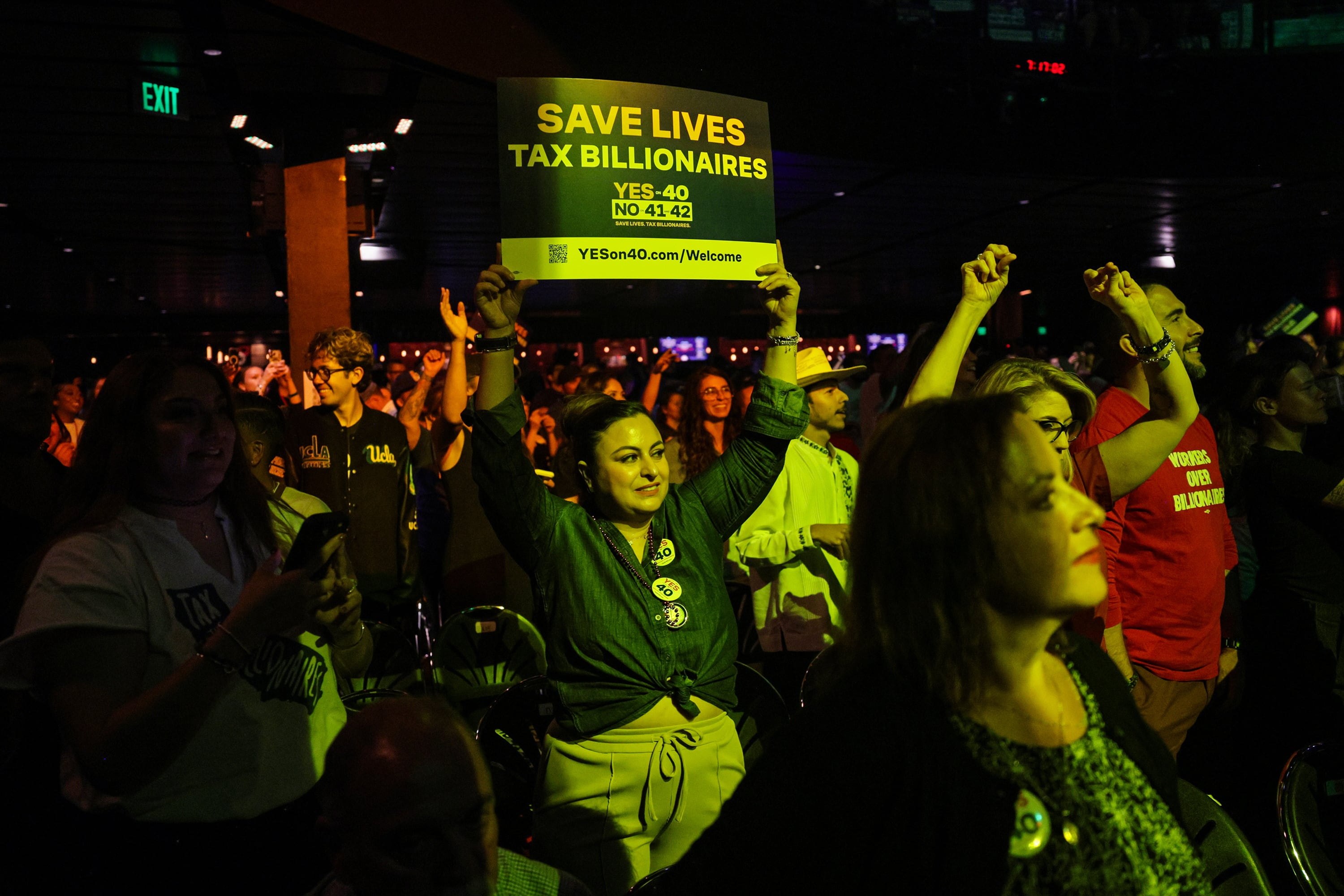
Once based at the University of California, Berkeley, Zucman is back and campaigning for Proposition 40, which would impose an allegedly one-time 5 percent tax on the net worth of Californians worth more than $1 billion. Zucman, who coauthored the proposition, estimates that the tax could raise about $100 billion and claims that 90 percent of the proceeds would go to health care.
The California Legislative Analyst's office is far more cautious, saying it would raise only "tens of billions" and could cause a long-term loss of income-tax revenue as wealthy people leave the state with the companies they created.
I've written plenty about why wealth taxes are economically destructive, administratively nightmarish, and unlikely to achieve anything close to what their advocates promise. But Zucman's prescription is wrong for a more fundamental reason, as his (and my) native country shows: Raising taxes to fuel ever-larger demands for government spending is a recipe for disaster.
Unless you've been living in a remote cave recently, you've likely seen all the protests and destruction in France. But do you know why it's happening?
As another economist, Paul Krugman, rightly noted back in 2017, "France offers a social safety net beyond the wildest dreams of U.S. progressives: guaranteed high-quality health care for all, generous paid leave for new parents, universal pre-K, and much more."
For decades, France has answered any perceived desire with government spending, then responded to the resulting fiscal problem by seeking new revenue sources. Today, French government spending consumes roughly 58 percent of gross domestic product (GDP).
Krugman gloated that France wasn't suffering social collapse and speculated that it was due to all the spending. He certainly can't say that anymore. In fact, he is now worried that France may be on the precipice of a debt crisis. The truth is that France hasn't done well for some time, even when Krugman cheered its spending.
One of the groups in the street today, young people, has faced widespread unemployment for a long time. The youth unemployment rate in France (ages 15-24) has hovered between 17 percent and 27 percent since 2000. In the second quarter of 2026, it was 21.6 percent, against 14.8 percent in the Eurozone and 9.9 percent in the U.S.
French people also pay some of the highest taxes in the developed world, and they're not happy with the return. The government already takes more than 52 percent of the country's output in revenue, runs deficits exceeding 5 percent of GDP, and has accumulated debt approaching 120 percent of GDP. Nonetheless, French students complain that the government is shortchanging schools, while everyone sees that it is shortchanging its army and police.
The students aren't wrong to feel left out. At The Two Cents Substack, Hoover Institution scholar Hanno Lustig calculates that, between 1995 and 2024, spending on social protection and health (most of which benefits older people) rose from 53.1 percent to 58.7 percent of all French government spending. The share devoted to education, defense, and public order fell from 15.2 percent to 13.7 percent. Transportation fell from 5.3 percent to 3.8 percent.
In other words, France has built an enormous welfare state, much of it devoted to older citizens, while letting other state capacities and basic services fall apart. As transfers of wealth swallow a larger share of the budget, everything else gets squeezed.
That is the fiscal ratchet Californians should worry about when Zucman tells them Proposition 40 is necessary to "save" health care. Proponents claim Washington "cut" Medicaid, but that language is misleading. California's deficit started long before any Washington spending reductions. Besides, federal Medicaid spending isn't falling—not even close. The Congressional Budget Office estimates it will reach $708 billion in 2026, 8 percent more than in 2025. What Washington did in the 2025 budget reconciliation law was reduce Medicaid's future growth relative to previous projections, partly by changing eligibility and enrollment rules and financing arrangements.
This is how the ratchet works. Once the government projects a spending increase, anything less becomes a cut. And once Washington fails to finance the entire projected increase, Californians are told that Sacramento must backfill the missing money. And how should it do that? Conveniently, by creating an entirely new tax.
France has run this experiment for decades. It has an incredibly generous welfare state paid for with very high taxes; it's even tried a wealth tax and has a value-added tax, yet somehow it's never enough. Its welfare state has not eliminated scarcity. It has merely transferred the job of rationing scarce resources to politicians.
Zucman looks at California and sees hundreds of billions of dollars of private wealth waiting to solve a public finance problem. Californians should look across the Atlantic and ask a different question: What happens after politicians decide that every spending adjustment can be delayed until tomorrow by finding another pot of private wealth?
France should not be sending California tax advice. It should be sending a warning.
Il numero uno di Meta Mark Zuckerberg si prepara a pagare la tassa sui miliardari, se la California approverà la misura. E il gruppo a cui fanno capo Facebook, Instagram e Whatsapp corre ai ripari per consentirgli di farlo senza mettere a rischio il controllo della società. Meta infatti, come emerge da un documento depositato alla Securities and Exchange Commission, distribuirà ai soci nuove azioni di classe C prive di diritto di voto in aggiunta a quelle già possedute. Zuckerberg potrà vendere o trasferire immediatamente il 20% dei titoli che riceverà, una quota equivalente a circa il 10% della sua partecipazione. E potrà usare il ricavato per saldare l’eventuale imposta. In cambio si impegna a mantenere la residenza in California per i prossimi otto anni.
Secondo i documenti societari Zuckerberg, il cui patrimonio è stimato intorno ai 240 miliardi di dollari, aveva comunicato a un Comitato speciale di amministratori indipendenti di star valutando il trasferimento della residenza fuori dallo Stato per cercare di dribblare un’imposta che nel suo caso varrebbe circa 10 miliardi. Per pagare il conto avrebbe infatti dovuto vendere parte delle azioni di classe B, quelle che gli garantiscono diritti di voto maggiorati: la sua quota di controllo sarebbe scesa dal 60,6% a circa il 53%. Il Comitato speciale, ritenendo “di fondamentale importanza mantenere il Sig. Zuckerberg in una posizione di leadership all’interno della nostra azienda” e far sì che “che continui a risiedere e a gestire l’Azienda dalla nostra sede centrale in California per garantire la sua continua capacità di guidare efficacemente le nostre prestazioni durante quest’era di sfide e concorrenza senza precedenti”, ha trovato giocoforza una soluzione: una riorganizzazione della struttura azionaria. Meta distribuirà appunto ai soci dal gennaio 2027 nuove azioni di classe C, prive di diritto di voto, in aggiunta a quelle già possedute.
L’economista francese Gabriel Zucman, che da anni studia la concentrazione della ricchezza e le modalità per tassare i grandi patrimoni, ha scritto su X che la decisione è la prova che “la campagna per la Proposition 40 sta funzionando”: viene meno infatti l’argomento usato da molti oppositori secondo cui i miliardari “non potrebbero” versare il dovuto pena la perdita del controllo delle loro compagnie. Se messi alle strette, evidentemente, si può fare.
Da notare, peraltro, che come ricorda il documento inviato alla Sec dal 2013 Zuckerberg riceve uno stipendio annuo simbolico di un dollaro come amministratore delegato e presidente del gruppo. La società lo utilizza come argomento per motivare la sua necessità di liquidità. Ma il punto è che la sua ricchezza deriva soprattutto dal valore delle azioni Meta, che può crescere senza tradursi in reddito imponibile. È un meccanismo comune tra i grandi miliardari: finché le azioni non vengono vendute, l’incremento di valore resta generalmente una plusvalenza non realizzata e non è tassato come reddito da capitale. Il risultato che, a fronte della impressionante concentrazione delle fortune nelle mani di pochi, quei pochi riescono a versare meno tasse rispetto a un lavoratore del ceto medio. La patrimoniale una tantum proposta da un sindacato di lavoratori della sanità punta a correggere in parte questa asimmetria.
Come da copione l’opposizione alla misura è stata però violenta: molti grandi nomi della Silicon Valley, fallito l’obiettivo di impedire che la proposta promossa arrivasse alle urne, hanno messo in campo tutto il proprio arsenale finanziario e non solo per convincere gli elettori a bocciarla. Tra campagne di disinformazione e sostegno ad altre misure referendarie che potrebbero impedirne l’entrata in vigore. Alcuni miliardari, tra cui i cofondatori di Google Larry Page e Sergey Brin, hanno valutato o annunciato di volersene andare. Anche se, come evidenziato da Zucman, sulla carta per avere successo il trasferimento fiscale avrebbe dovuto essere completato entro fine dicembre 2025: il testo infatti individua i potenziali contribuenti in base alla residenza al 1° gennaio 2026. L’eventuale trasferimento di Zuckerberg, ipotizzato per ottobre di quest’anno, sarebbe stato quindi al massimo un tentativo in extremis per tentare di contestare la propria assoggettabilità alla tassa, ma non una garanzia di esserne escluso.
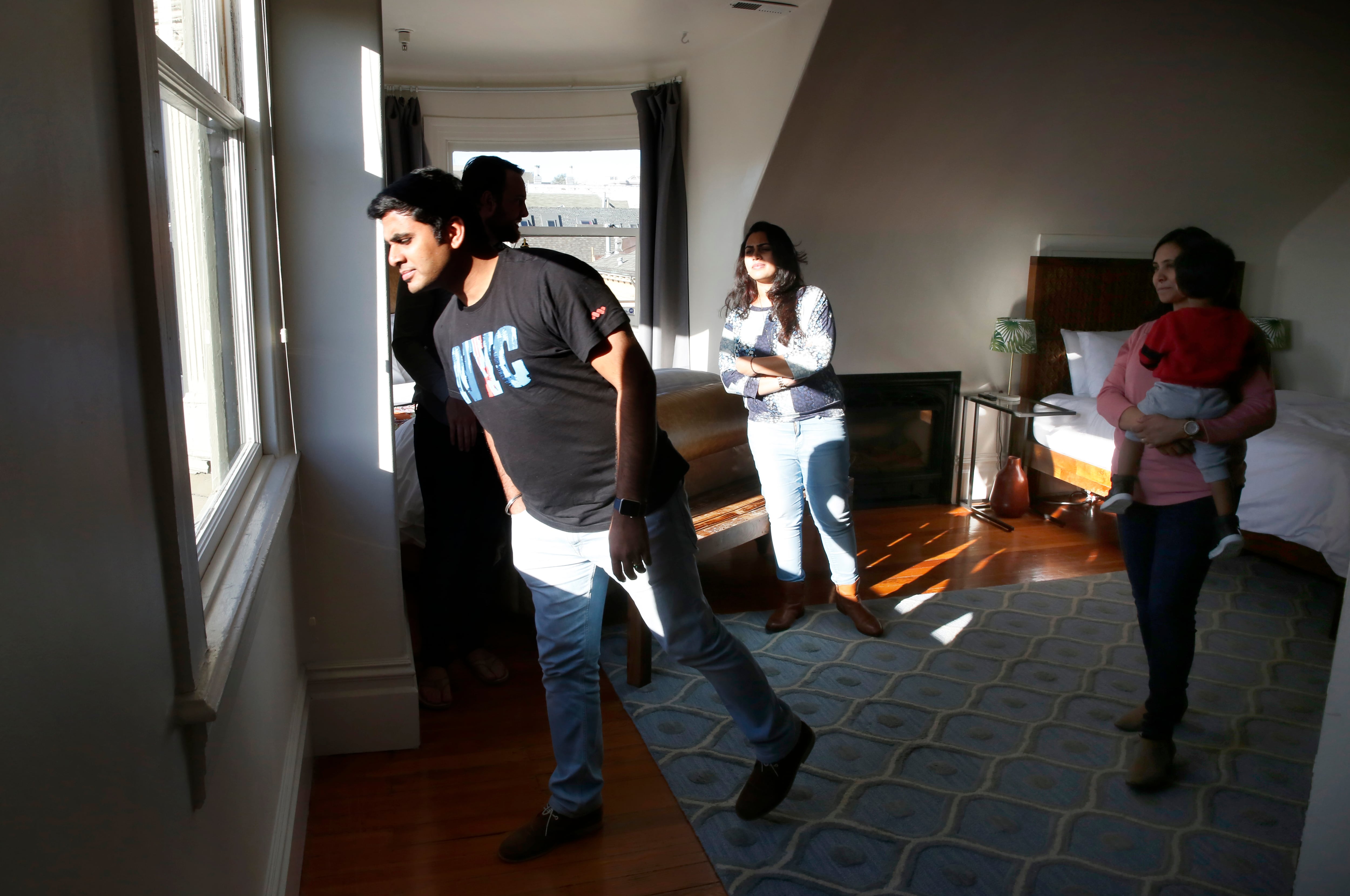
In the heart of the historic working-class and Latino Mission district in San Francisco, the door of a ground-floor unit next to a trendy coffee shop keeps opening. A private shuttle that ferries tech workers to their Silicon Valley headquarters farther south passes by every morning. The 796 sq.ft. (74-square-meter) apartment, recently renovated and furnished, is thoughtfully laid out, from the small open kitchen to the built-in closets. But it gets very little light. Of its two bedrooms, one has no windows. And it costs $4,750 a month.
The main investigative unit of the United States Department of Homeland Security (DHS) has been vigorously promoting on social media an effort it considers crucial in the final weeks before the midterms: pursuing alleged large-scale election fraud by noncitizens — a claim that has obsessed President Donald Trump despite a lack of evidence.
The California High-Speed Rail Authority's board voted 7–2 to strip CEO Ian Choudri of his authority to independently approve and manage contracts worth less than $25 million after an investigation uncovered questionable taxpayer-funded expenses by four consulting firms. An audit found that $593,000 in travel expenses lacked proper justification or violated state rules, including premium airline tickets and rideshare trips to places like a cigar lounge and an escape room. Consultants also billed taxpayers for rides to and from Choudri's home, sometimes late at night. The authority paid the four consulting firms roughly $2 million in travel costs; the inspector general reviewed about $1.15 million of that total and found $680,500 had no prior approval.
A proposed "wealth tax" on California's billionaires could backfire and cost the state tens of billions of dollars in the long run.
If the proposed tax drives wealthier residents out of the state, California could end up losing between $1 billion and $3.5 billion annually in income taxes, according to a working paper published this week. A pair of researchers at Stanford University warn that the state could end up losing an estimated $39 billion because of the consequences of the wealth tax.
"These findings suggest that the Billionaire Tax Act will not fulfill the primary functions for which it was designed," write researchers Benjamin Jaros and Joshua Rauh.
Voters in California will decide next month whether to impose the one-time, 5 percent tax when they vote on Proposition 40. The ballot measure is dividing Democrats—Gov. Gavin Newsom opposes it, while progressive Rep. Ro Khanna (D–Calif.) claims it is the "most important ballot initiative in America and a fight for the soul of our party."
And it's already spurring some billionaires to flee the state—including venture capitalist Peter Thiel and Google co-founder Larry Page. Including those two, the seven billionaires who have publicly said they are leaving the state represent more than $539 billion of the nearly $1.9 trillion aggregate net worth of California's billionaires, the researchers note.
With other departures likely happening more quietly, the new study estimates that the tax will generate about $30 billion, a far cry from the $100 billion that the tax's supporters expect. The "behavioral response" from billionaires in California "has eroded most of the projected tax base," write Jaros and Rauh.
That's still a pretty big pot of revenue. In the long run, however, the state is likely to lose out.
After running 100,000 simulations using different assumptions, the two researchers report that "85 percent of plausible outcomes produce a negative" result in state revenue.
Capital is always mobile, despite the best efforts of politicians. And if you were a billionaire living in California, why would you stick around?
Polls show voters are narrowly divided over Proposition 40. A Politicopoll published earlier this month showed 46 percent of voters plan to vote for the measure, while 43 percent oppose it. Voters were similarly divided when asked if they expected it to pass or not.
Happy Tuesday, and welcome to another edition of Rent Free. This week, we're going to jump right into it with a philosophical question: What is an accessory dwelling unit anyway?
It's a question that officials in Somerville, Massachusetts, are realizing they didn't know the answer to after learning that a state law allowing ADUs in single-family neighborhoods could also require them to approve three-story backyard mini-apartments.
As the Boston Globereported on Sunday, Somerville's "deep ethos in favor of new housing" is being tested by the extent of the state law. Elected officials are describing the potential for three-story ADUs as a "joke," and the area's state lawmakers, including one who voted for the state law, are demanding reforms to stop them.
The law in question was a statewide accessory dwelling unit (ADU) legalization tucked inside a major housing package of mostly new spending programs that passed in 2024.
The bill required municipalities to allow ADUs of either 900 square feet or half the size of the primary dwelling (whichever is smaller) anywhere single-family homes are allowed. A subsequent rule issued by state regulators also forbade localities from imposing height and bulk limits on ADUs that are stricter than the limits imposed on primary dwellings.
That latter rule is what's causing Somerville's freakout.
Because the town allows triple-decker apartments (a three-story triplex common in New England) in all its single-family zones, the state rule means that it must also allow ADUs to be three stories tall.
The Globe story notes that the mini-triple-deckers could still only be 900 square feet, meaning each floor of a mini-triple-decker would have to be pretty small. Thus far, no one has proposed building an ADU tower in Somerville.
Even so, the town is worried that someone will eventually propose one of these "out-of-scale" units that it'll have to approve. Its officials are now agitating for changes to the state law to prevent this.
On the one hand, one can perhaps understand why Somerville officials feel blindsided.
The text of the 2024 ADU law allows localities to set "reasonable" height and bulk limits on accessory units. It was state regulators who decided after the law's passage that requiring ADUs to be shorter than the primary unit was "unreasonable."
On the other hand, allowing a second home on a lot to be as tall as the first house sounds "reasonable" enough. Can one complain about out-of-scale development when the new unit is the same height as an existing home and a little bit smaller?
Somerville is not the first city where people's own colloquial definition of an accessory unit as "a tiny home that doesn't bother anyone" has clashed with official regulatory definitions that allow ADUs to be a fair bit bigger.
San Diego's ADU Bonus program once allowed a technically unlimited number of ADUs to be built on single-family parcels near transit stops. (Height and bulk regulations imposed practical limits on how many units could fit on a site.)
That enabled developers to build what were, in effect, ADU apartment complexes on large single-family lots throughout the city. This year, the city imposed new restrictions to stop these "monster" ADU developments, including a per-lot accessory unit cap.
The latest dust-up in Somerville, like the San Diego controversy before it, provides several lessons about the realities of housing reform.
The first is that the definition of "accessory dwelling unit" is completely arbitrary.
In Massachusetts, an ADU is a 900-square-foot home that can be one story or three stories, depending on the town and zoning district it's being built in.
In Montana, it's a 1,000-square-foot unit. In California, state law can require localities to allow ADUs as large as 1,200 square feet. Under certain conditions, these ADUs can even be sold separately from the main house.
At a certain point, an accessory dwelling unit is just a dwelling unit. A house is a house.
The second lesson is that any ADU reform that is actually intended to produce new housing units is going to cause controversy.
State and local laws allowing ADUs have been one of the more common forms of housing reforms to pass.
Supply-boosters see them as a way to get a modest number of new units. Supply skeptics don't see much to object to about allowing someone to install a kitchenette and bathroom in their garage.
If the ADU regulations don't allow much more than the garage conversion, supply-boosters will be disappointed and push for expansions of the law. California passed dozens of ADU laws before they started enabling actual units to be built.
If an ADU law actually allows more homes, the ADUs will look like homes, and the supply skeptics will be mad.
No amount of branding or planning will resolve the inherent conflict of some people wanting more development while others oppose it in their neighborhoods.
Thus far, Massachusetts' ADU law has been modestly productive. The state's ADU survey reports that 2,048 ADU permits have been issued since the state law went into effect in January 2025. About half of those units are attached ADUs (think the garage with the kitchenette).
That's a little under 10 percent of Massachusetts total housing production during that time, per the Census Bureau's building permit survey.
At 50 units permitted, Somerville has actually approved the second most ADUs of any jurisdiction in the state. (Boston has only approved 49.)
But now that it's facing the prospect of allowing ADUs that look like actual homes, it's starting to get cold feet about the new law.
While Spain is tightening its tenant protections and rent controls in the face of housing protests, Portugal is trying to remove regulations on its rental housing industry. Either way, housing protesters are clashing with police.
The Urban Institute has a new white paper on whether data center development is coming at the expense of housing development.
A new report on home construction in Chicago finds that the practice of aldermanic privilege (where individual aldermen can veto projects in their district) is strangling development.
The Donald Trump administration dubbed it Operation Protect the Vote and on Monday focused its efforts on trying to substantiate the conspiracy theories promoted by the president and members of his administration: that large numbers of undocumented immigrants in California vote illegally for Democrats and that the state’s voter rolls still contain deceased individuals and people who have moved to other states. The charges announced, however, do not prove those claims.
One of the factors that led Greg Pirio to buy his house in Loudoun County, in northern Virginia, 14 years ago, was the nature surrounding it. A historian specializing in Africa, he loved to take long walks with his dog and listen to the birds. Three years ago, a large data center was installed just a hundred meters from his door. Since it began operating a year and a half ago, the birdsong has been replaced by a constant buzzing together with fumes that cause headaches, conjunctivitis and respiratory problems.
Google Maps still shows a prosperous image of Pacific Place, a business center on the busy Valley boulevard in a suburb east of Los Angeles, California. But that picture no longer matches reality. The windows of a mental health clinic and a real estate agency have been boarded up to protect the premises from vandalism. One by one, shops pulled down their shutters until the mall was almost deserted. Several businesses belonging to an enigmatic figure also closed: Guojun Xuan, a wealthy Chinese immigrant who is at the center of a chilling case involving the alleged mistreatment of 21 children at his Arcadia mansion.
The Port of Los Angeles reported its best single month in its history. In a media briefing, port executive director Gene Seroka announced the port processed 1,042,652 TEUs, 23k TEUs more than the July 2025 record.
This story originally appeared in Common Dreams on Oct. 06, 2026.It is shared here under a Creative Commons (CC BY-NC-ND 3.0) license.
“Keep our city out of your reckless war talk,” said San Diego’s mayor, Todd Gloria, Monday night after President Donald Trump’s rambling speech at a rally in Nebraska included a particularly violent mention of the California city.
Gloria was among several Democratic political leaders who were incensed after Trump—moments after predicted the Republican Party would see a “tremendous victory” in the November 3 midterm elections—suggested that he would not object to an Iranian military or nuclear attack on San Diego and Los Angeles.
The president said that soaring prices for gas, groceries, and other essentials are a “small price to pay for keeping the world safe—keeping our country safe.”
Trump on Iran: Let 'em take out Los Angeles and San Diego, it's a small price to pay pic.twitter.com/Fc4BcjVDKj
He warned that Iran could “take out a city,” before adding that he would “let them” attack the two deep-blue cities—home to a collective 5.2 million people, with more than 20 million residents in the surrounding areas
“Let them take out Los Angeles. Let them take out San Diego,” Trump said at the rally in Grand Island. “This is a very small price to pay… It’s gonna be over very soon.”
The crowd responded to Trump’s comments with laughter and cheers. The president has frequently made Democratic strongholds like Los Angeles, Chicago, and his own hometown of New York City the targets of rhetorical attacks. He has also targeted those cities with the deployment of armed federal agents as part of his mass deportation agenda.
California Gov. Gavin Newsom, a Democrat whose name has been floated as a potential 2028 presidential candidate, condemned Trump’s remarks as “deranged and dangerous.”
“After sending the National Guard and Marines to occupy California, Donald Trump is now saying our foreign enemies should ‘take out’ Los Angeles and San Diego,” said Newsom, who later criticized Trump’s vice president and secretary of state for not speaking out against the comments.
Gloria added that San Diego, which is home to major military installations, “is not collateral damage. We are not expendable. And we are never a ‘small price to pay.’”
Los Angeles Mayor Karen Bass accused Trump of compromising the safety of the nation’s second-largest city.
“The role of a president is to protect the country, not to actively threaten it and encourage attacks on American lives,” said Bass. “In the face of irresponsible threats, as Angelenos, we know how to stand together and protect our city.”
Jim Desmond, a Republican running for Congress in California’s 48th District, which lies in San Diego, was also quick to distance himself from the president’s comments.
Some observers claimed the president had simply been speaking in an “especially confusing style,” as journalist Daniel Dale suggested, and did not intend to suggest that the two cities could be acceptable collateral damage.
“Of course you can say it’s inappropriate regardless for the president to casually float the possibility of a city being wiped out,” he added.
Trump’s comments came days after it was reported that the Pentagon is prepared to send thousands more troops and a third aircraft carrier to the Middle East, as talks between the US and Iran remain stalled. Gas prices remain elevated, at $4.36 per gallon on average, and nearly two-thirds of respondents to an Associated Press poll in June said they disapproved of how Trump had handled the war, which he joined Israel in starting in February without congressional approval.
Sen. Alex Padilla (D-Calif.) had a succinct response to Trump’s remarks, referring to the constitutional amendment that allows members of a president’s Cabinet to remove him from office on the ground that they cannot fulfill the duties of the president.
Tracy Beth Høeg, M.D., Ph.D., an epidemiologist and sports physician, said her decision to follow the data during the COVID-19 pandemic came at a steep professional price.
Høeg said her experience exposed the unwillingness of universities, media and public health institutions to adapt when research conflicted with their accepted narratives.
In an interview this week with investigative journalist Paul D. Thacker on The DisInformation Chronicle, Høeg said institutions too often treated the accepted narrative as settled and then dismissed or attacked people who questioned it.
That approach did more than distort the public discussion about COVID-19, Høeg said. It also created a scientific and institutional culture that could affect how other medical questions are handled long after the pandemic.
For Høeg, the solution is simple: Scientists should follow the evidence wherever it leads.
“It’s a core belief of mine that you have to be objective when you’re doing scientific studies,” she said. “Otherwise, you just shouldn’t do them. It’s pointless if you’re not willing to be objective.”
‘I … didn’t realize the jeopardy that I was putting myself in’
During the pandemic, Høeg published 30 to 40 papers on COVID-19 transmission, masking, youth sports, vaccine risk-benefit, pregnancy, long COVID, visitor restrictions and testing.
Some of her research challenged widely accepted claims.
One study found little evidence of COVID-19 transmission among children in Wisconsin schools, which was consistent with data from Europe. Another examined myocarditis risk in boys after their second Pfizer COVID-19 vaccine dose and found the risks outweighed the benefits in boys who didn’t have underlying health conditions.
Høeg said she didn’t initially understand the professional risks she was taking by challenging the prevailing narrative.
“There was sort of a hesitancy to do this sort of research because I think people were afraid for their careers,” she said. “I actually was blessed with having recently moved from Denmark and didn’t realize the jeopardy that I was putting myself in by doing these sorts of studies.”
At the time, Høeg was conducting research at the University of California, Davis.
She said the university received calls, including from Naturemagazine, complaining about her studies on pandemic policies. Eventually, the university asked her not to use her affiliation with the school.
Høeg said the university refused to renew her voluntary position in 2022, after the European Journal of Clinical Investigation published her study on myocarditis risks in boys who received the COVID-19 vaccine.
NPR also dropped an interview with Høeg for “All Things Considered” after she raised concerns about masking children during outdoor sports.
In a pre-interview discussion with NPR, she told the outlet, “We don’t have evidence that these masks work to prevent transmission. … Bottom line is, we shouldn’t be doing these unproven things to children that are harmful.”
Soon after, NPR told Høeg she was no longer needed for the interview.
“It does say a lot about our universities and institutions because it’s like they had been brainwashed to an extent to believe what the media was saying rather than actually look at the data,” Høeg said.
‘They repeated the same wording … even when the data didn’t back it up’
In 2022, Høeg and her colleagues conducted a follow-up analysis of a Centers for Disease Control and Prevention (CDC) study on school mask mandates.
Høeg said their analysis used a larger dataset and a longer time period and reached the opposite conclusion about the relationship between mask mandates and COVID-19 transmission among children.
The team’s submission to the CDC’s Morbidity and Mortality Weekly Report (MMWR) was rejected. Høeg said reviewers described the submission as “rife with polemics.”
“Well, maybe it’s polarizing if you disagree with it,” Høeg said.
The rejection unearthed an underlying problem at the CDC, according to Høeg.
“They have a scientific agenda,” she said. “And so as soon as you have a scientific agenda, science has been thrown out the window. Science doesn’t have an agenda other than to find the truth.”
A 2024 analysis by Høeg and colleagues examined 77 mask studies published in the MMWR beginning in 2020. According to Høeg, 75% of the studies said masks were effective, while only 14% reported statistically significant results and none were randomized studies.
One finding especially stood out to her: She said 5% of the studies found masks were connected to higher infection rates, yet “they still concluded that masks worked.”
“They repeated the same wording over and over again in each of the studies, that ‘masks are necessary to decrease the spread’ and ‘masks are critical in controlling the case rates of COVID-19,’” she said. “They use the same sort of wording even when the data didn’t back it up at all.”
‘Why are we demonizing people for looking into this?’
A leaked memo from then-FDA official Dr. Vinay Prasad said career staff had linked at least 10 child deaths to the COVID-19 vaccine between 2021 and 2024.
Høeg said she reviewed the Vaccine Adverse Event Reporting System (VAERS) reports and found that investigations involving medical records and autopsies had already been conducted.
“My question at the time was … why are these not being made public?” Høeg told Thacker.
Høeg said news leaked that she would present information about the deaths and their possible association with COVID-19 vaccines. She said the media response focused on portraying her as an “anti-vaxxer” rather than asking why the deaths had been investigated but not publicly disclosed.
“If we have these sorts of deaths happening in children due to medical products of any kind, why are we sitting on them for years?” she asked. “That’s the take-home I want people to have from this.”
She also questioned why people who investigate potential safety problems are attacked for trying to expose the dangers.
“Why are we demonizing people for looking into this? … Isn’t that what the public wants?” she asked.
‘The deep state really is a thing’
In May, just days after FDA Commissioner Marty Makary resigned, Høeg said she arrived at work to find media reports claiming she had resigned — something she said she knew nothing about.
FDA lawyers later asked her to resign, but she refused to sign the letter. She was subsequently locked out of the agency’s systems and escorted from the building.
Høeg said she never received a performance-based explanation for her termination. She also said the person identified as the author of her termination memo later denied writing or seeing it.
According to Høeg, agency lawyers told her the order came from “way above their pay grade.”
The experience changed how she viewed other departures from the agency. “It opened my eyes to the fact that maybe a number of the people who I thought had resigned really had not resigned,” she said.
“The deep state really is a thing,” she added.
‘Women who want to get pregnant … should be told about these risks’
For Høeg, the concerns she encountered during the COVID-19 era are not limited to COVID-19.
In 2025, she helped organize an FDA panel examining potential risks associated with selective serotonin reuptake inhibitors, or SSRIs, during pregnancy.
The American Psychiatric Association criticized the panel for what it called “misinterpretation and unbalanced viewpoints.” Høeg said the media also portrayed any discussion of potential risks as “misinformation about SSRI use” and a signal that depression wasn’t being taken seriously.
According to Høeg, the panel discussed risks already addressed in FDA labeling and scientific research, including miscarriage, premature birth, postpartum hemorrhage, congenital heart defects and neonatal adaptation syndrome.
“This should not be controversial that women who want to get pregnant and who are pregnant should be told about these risks,” she said.
She also warned about the lack of ongoing monitoring of drug safety.
“The FDA is not actively investigating the safety of these products in pregnancy or at all after the initial trials are done,” she said.
Høeg said the discussion should not be interpreted as an argument against treating depression. “I don’t think that any of this should be synonymous with not taking depression seriously,” she said. “That’s just nonsense.”
‘There’s just no reporting on this. … People have died taking this drug’
Høeg also discussed Tavneos, the Amgen-manufactured brand name for avacopan, a drug approved to treat a type of blood-vessel inflammation.
While at CDER, Høeg said she raised concerns that the pivotal clinical trial used to approve the drug had included manipulated data.
According to Høeg, at least eight deaths had been attributed to the drug because of liver injury.
“There’s just no reporting on this,” Høeg said. “People have died taking this drug. … We asked for them to withdraw it from the market, and the media is just totally silent.”
Thacker: ‘There was no real learning in the end. … If anything, we became dumber’
Høeg said it is troubling that some of the most disputed COVID-19 policies are still treated as settled questions.
“How is this still part of our collective conversation that people … are still saying school closures were necessary and mask mandates were necessary?” she asked.
Thacker said the failure to learn from those policies could have consequences during the next pandemic. People who developed a “false sense of safety from masks” during COVID-19 could mistakenly assume masks will protect them from a more dangerous virus in the future, he said.
Thacker also questioned whether the country understands anything about the COVID-19 vaccines. “There was no real learning in the end. … If anything, we became dumber,” he said.
Høeg said the problem stems from the widespread failure to reconsider policies when the evidence changed.
“Once the government decided this is what we have to do, they just kept digging in, even though the data didn’t support it,” she said.
“This is why I keep doing these interviews, because it’s important for people to know the truth.”
Watch Høeg on ‘The DisInformation Chronicle’ podcast here:

 Login