❌

Reading view

How Helping Someone Buy Drugs Can Send You to Prison for 20 Years

Scott Hancock | Joshua Greene/hancockonaddiction.org

Eight years ago, Scott Hancock, then 28, helped a 19-year-old acquaintance, identified in court records as T.G., buy fentanyl. At her request, Hancock, who had been addicted to opioids for years, got in touch with his drug dealer, who gave him five capsules that he handed over to T.G. in exchange for $20. Then Hancock gave the money to his dealer. Because T.G. subsequently died from a fentanyl overdose, Hancock is serving a 20-year sentence at a federal prison in Illinois.

That was the mandatory minimum sentence under 21 USC 241, which prescribes penalties for drug distribution resulting in death. Although that law has been on the books since 1986, the dramatic increase in fentanyl-related deaths during the last decade prompted a surge in federal drug prosecutions involving overdoses, which rose by 44 percent between FY 2019 and FY 2023. Hancock's case was part of that trend, and it prompted his mother, G.D. Hancock, a retired finance professor, to delve into the subject, resulting in a database that sheds light on what happens when the government treats accidental deaths as homicides.

So far, Hancock has identified 2,930 sentences in such cases since 2010. That includes 1,399 federal cases and 1,531 state cases, which rely either on laws dealing specifically with drug-induced deaths or on more general statutes addressing felony murder, "depraved heart" homicide, or manslaughter.

Sentences of 20 years or more were pretty common at the federal level, accounting for 37 percent of the cases, compared to 13 percent at the state level. The vast majority of the cases (84 percent) were resolved by plea deals. That is not surprising, given the potential consequences of going to trial. While the median sentence for defendants who pleaded guilty was nine years, it was 20 years for defendants who insisted on making the government prove its case.

Hancock's tally is based on news reports, court records, announcements by state and federal prosecutors, her own "case files and research," and "cases sent in by families, lawyers and researchers." A separate database compiled by researchers at Northeastern University, drawn from news reports, includes 3,264 cases involving drug-induced homicide from 2011 to 2022.

These prosecutions are morally nonsensical. They treat people who voluntarily consume drugs as helpless victims of supposed predators who gave them the drugs they wanted. By similar logic, bartenders and liquor store owners should be held criminally liable whenever a customer succumbs to alcohol poisoning or the long-term effects of heavy drinking. The main difference is the legal status of the drug, which is arbitrary, politically determined, and historically contingent. And while illegal drugs pose special hazards, that is a result of prohibition, which creates a black market where product composition is highly variable and unpredictable.

Charging people with homicide based on accidental overdoses would be illogical and unjust even if the defendants were limited to actual drug dealers. But you can be charged with drug-induced homicide even if your "trafficking" consisted of nothing more than sharing drugs with a relative, romantic partner, friend, or acquaintance. Based on the information Hancock was able to glean, she counts 241 cases where the person who died from an overdose was the defendant's friend, partner, or family member, and other sources suggest such prosecutions are common.

The Northeastern University researchers analyzed a sample of 213 online news reports from 2000 to 2017. They found that 50 percent of defendants charged with drug-induced homicide were caretakers, family members, friends, or partners of the people who died.

In 2021, when the Pittsburgh Tribune-Review examined Pennsylvania prosecutions for "drug delivery resulting in death" (DDRD), it described a case involving "a Westmoreland County man" who "died from an overdose of drugs he'd gotten from a friend of a friend of a friend." Although "the drugs ultimately came from a man called 'Bee' in Penn Hills," the paper noted, "the three individuals between the victim and Bee were all charged" with DDRD, a first-degree felony punishable by up to 40 years in prison.

The Tribune-Review described several other DDRD defendants, including "a Delmont woman" who "called paramedics when she found her boyfriend unresponsive in their bathroom"; "two friends" who bought heroin for a man who overdosed at a Taco Bell; and "a Monessen woman" who "sent her cousin to buy a brick of heroin" and "sold five stamp bags to a friend, who then sold four bags to an Elizabeth Borough man who died from a fatal overdose."

The Tribune-Review also found that "many facing these charges are relatively low-level dealers." Jonathan Fodi, a defense attorney and former prosecutor, told the paper he and his colleagues had never seen a DDRD case involving a high-level dealer. Given the need to prove a link between the defendant and the person who died, that is not surprising. But that situation compounds the injustice of treating such deaths as homicides, since low-level dealers often do not know exactly what is in the drugs they are selling.

A 2002 analysis of 32 drug-induced homicide prosecutions, published in the New Jersey Law Journal, found that "25 involved prosecution of friends of the decedent who did not sell drugs in any significant manner." According to a 2017 report by a Wisconsin TV station that looked at the 100 most recent prosecutions for drug-induced homicide in that state, "nearly 90% of those charged were friends or relatives of the person who died, or the lowest people in the drug supply chain." When the Chicago Tribune examined drug-induced homicide cases filed between 2011 and 2014, it found "the defendant was typically the last person who was with the person who overdosed."

Even people who support the war on drugs should be able to recognize the injustice of sending people to prison for 10 or 20 years based on their tangential roles in deaths they neither caused nor intended. And far from making such deaths less likely, that policy impedes potentially lifesaving medical assistance because the risk of a homicide charge is apt to discourage bystanders from calling for help. That daunting deterrent undermines the goal of "Good Samaritan" laws that are supposed to shield 911 callers from criminal charges in such situations.

The official justification for these prosecutions is completely disconnected from the reality of the cases. "Deaths from illicit drugs, especially fentanyl, are at historic highs," the Drug Enforcement Administration (DEA) said in a 2023 press release. Because the DEA is "committed to protecting Americans and saving lives by pursuing those responsible," the agency explained, it aims to "make sure as many drug traffickers involved in those deaths as possible get an appearance in front of a judge."

As an example of that strategy, the DEA cited Scott Hancock's case, describing him as a "trafficker" who was "found guilty of providing the drugs that killed a 19-year-old woman in 2018." Given the details of that transaction, it is hard to see the logic here. Sending someone like Hancock to prison for 20 years has nothing to do with "saving lives."

The post How Helping Someone Buy Drugs Can Send You to Prison for 20 Years appeared first on Reason Magazine.

  •  

Drone strike sinks cargo ship near Romania, killing Ukrainian sailor. Romanian President blames Russia

The overturned hull of the cargo ship Khoryv after a drone strike in the Black Sea near Romania on 23 October 2026. Screenshot from video: Romanian Ministry of Internal Affairs

A Russian drone strike sank the Comoros-flagged cargo ship Khoryv in the Black Sea near Romania’s port of Constanța on 23 October, killing a Ukrainian sailor and leaving three crew members missing. Nine others were rescued, Digi24 reported.

The sinking comes amid a surge in attacks on commercial shipping near Romania and Bulgaria, threatening civilian crews and routes used to transport Ukrainian agricultural exports. As Russia intensifies strikes on Ukrainian ports and shipping, the Danube corridor and nearby waters have become increasingly important to Ukraine’s maritime trade.

Romanian President Nicușor Dan blamed Russia for the attack, describing it as part of Moscow’s escalation of the war against Ukraine and its attacks on NATO’s eastern flank, Reuters reported. 

Ukraine’s Foreign Ministry confirmed to Radio Svoboda that a Ukrainian citizen was among those killed.

Ukrainian sailor killed, three crew members missing

The Khoryv sent a distress signal at around 10 a.m. local time, about 13 nautical miles (24 kilometers) east of Constanța, just outside Romania’s territorial waters, Digi24 reported. The vessel caught fire, sustained major damage, and capsized, with only a small part of its hull remaining visible above the water.

Romania’s naval authority said 13 crew members were aboard: 10 Ukrainians and three Azerbaijanis. Rescue teams recovered nine sailors alive and one body, while three crew members remained missing, Reuters reported.

Ukraine’s Foreign Ministry said the vessel had been traveling from a Turkish port and confirmed that the Ukrainian Embassy in Romania had received information from Romanian authorities about one Ukrainian sailor’s death. Four Ukrainian survivors, including the captain, were taken to a hospital, while two others did not require medical assistance.

Attacks threaten Black Sea shipping

The sinking comes amid a surge in attacks on commercial vessels off the coasts of Romania and Bulgaria. At least seven cargo ships have been hit over the past two weeks, with around 30 sailors reported dead or missing, according to Reuters.

The vessels targeted in recent incidents were either anchored near or heading toward the Sulina Canal, which connects the Danube River to the Black Sea. The canal has become a key export route for Ukraine, one of the world’s largest exporters of grain and vegetable oils.

Ukraine has increasingly relied on Danube ports and routes through Romanian territorial waters as Russia attacks its own Black Sea ports. Strikes on commercial vessels threaten crews and risk disrupting Ukrainian agricultural exports to international markets.

Russia has intensified attacks on Ukrainian ports and ships traveling to or from Ukraine. Moscow has described its strikes on vessels as retaliation for Ukrainian attacks on Russian or Russia-linked ships.

Bulk carrier "Royad Mammadov" under the flag of Saint Kitts, partially sunk after an attack by Russian sea and air drones on October 5, 2026, 20 nautical miles off the coast of Romania. Photo: Romanian Interior Ministry
Explore further

Russia’s attacks on Black Sea shipping raise risk of global famine, German FM warns

NATO plans stronger Black Sea surveillance

NATO said on 20 October it would send additional maritime patrol aircraft, radar systems, and drones to the Black Sea following the attacks on commercial shipping, according to Reuters. The alliance has not specified which capabilities it will deploy.

Romania, Ukraine, and Bulgaria have called on NATO to do more to protect commercial vessels. The latest sinking adds urgency to those calls as attacks increasingly affect shipping near NATO territory.

The latest incident highlights the growing risks to commercial shipping as Russia’s war against Ukraine increasingly affects maritime traffic beyond Ukraine’s own coastline.

  •  

How EU ships are still able to carry Trump's Russian diesel despite so many sanctions

A ship called the Agioi Fanendes, which had just left Russia's Baltic Sea port of Primorsk, was carrying 40,000 metric tons to New York and had been traveling westwards through the Baltic Sea ever since.

  •  

Russia’s attacks on Black Sea shipping raise risk of global famine, German FM warns

Bulk carrier "Royad Mammadov" under the flag of Saint Kitts, partially sunk after an attack by Russian sea and air drones on October 5, 2026, 20 nautical miles off the coast of Romania. Photo: Romanian Interior Ministry

German Foreign Minister Johann Wadephul has warned that disruptions to global shipping routes could trigger famine in vulnerable countries, citing Russian attacks on Black Sea shipping as part of the wider threat to international food supplies.

Russia has increasingly targeted civilian shipping in the Black Sea as part of its campaign against Ukraine’s maritime trade, striking cargo vessels, port infrastructure, and ships transporting agricultural goods. The attacks threaten Ukraine’s ability to export grain to global markets, raise risks for international shipping companies, and jeopardize food supplies in countries that rely on Ukrainian agricultural exports.

Speaking ahead of a meeting of foreign ministers in Istanbul on Friday, 23 October, Wadephul said attacks and threats to shipping in the Strait of Hormuz, the Red Sea, and the Black Sea were disrupting trade in food and fertilizers, DW reported. The impact extends far beyond the conflict zones, threatening countries that depend on imported wheat and agricultural inputs.

Wadephul said fertilizer shortages could threaten basic agricultural production in poorer countries, where access to imported food and farming supplies is already limited. He also pointed to Türkiye, the world’s largest wheat-processing country, as vulnerable to disruptions in the supply of grain.

Russian attacks disrupt Ukraine’s grain exports

Russia has intensified attacks on Ukraine’s Black Sea ports and civilian cargo ships, disrupting a maritime corridor that carries most of the country’s agricultural exports. In July, Russian strikes brought traffic through the corridor close to a standstill during the harvest season, leaving grain with fewer routes to international markets.

The attacks have also hit foreign-flagged vessels carrying or preparing to load Ukrainian grain. On 16 October, Euromaidan Press reported that Russian attacks had sunk merchant ships and damaged others in the Black Sea region, with seafarers missing. The campaign has increased risks for shipping companies and reduced the routes available for Ukrainian exports.

Ukraine is a major supplier of wheat and other agricultural commodities to global markets, including countries in the Middle East and Africa. Disruptions to its exports can tighten global supplies and push prices higher, adding pressure on countries that depend on imported grain.

Wadephul made the remarks ahead of a meeting of foreign ministers in Istanbul, where he said countries must send a signal that they will not accept Iran or Yemen’s Houthi militia holding global trade hostage. He called for an end to indiscriminate attacks on shipping and neighboring countries, warning that prolonged insecurity puts vulnerable populations at greater risk of hunger.

His remarks place Russia’s attacks on Ukrainian shipping within a wider pattern of threats to key maritime trade routes, with consequences for food security far beyond the regions directly affected.

  •  

Joe Scarborough: “Covering for pedophiles seems to have become a nasty habit for Trump’s Republican Party”

This is the Oct. 23, 2026, edition of “The Tea, Spilled by Morning Joe” newsletter. Subscribe here to get it delivered straight to your inbox Monday through Friday.

Eleven days.

In 11 days, Americans vote.

People can’t afford their lives right now, whether it’s buying groceries, paying for healthcare, or gassing up the truck. Despite workers struggling more every day, Republicans have picked quite a closing argument for this year’s race.

We expect distractions and October surprises in the final days of a campaign. But I never expected Republican leaders to openly flaunt their status as the party of pedophile protectors.

This week, Republicans smeared Amy Acton — a woman who survived child rape — and Donald Trump called it “pay dirt.” He praised Acton’s mother, the rapist’s wife, for showing “a lot of courage.”

Some courage.

Acton’s mother fled the state with the man charged with raping her 12-year-old daughter. She abandoned her children and never saw them again. But the Republican Party defines that as “courage.”

In Texas, a man sexually abused a young boy, and Attorney General Ken Paxton tried to hand him an Epstein-style sweetheart deal. One day in jail.

James Talarico now calls Paxton a “pedophile protector.” And this week, from Ohio to Texas to the White House, Republicans sided with rapists, pedophiles, and their protectors over the young victims they tortured.

Covering for pedophiles seems to have become a nasty habit for Trump’s Republican Party.

Voters swept them into power partly on their promise to release all of the Epstein files. But the president and Republicans broke that promise and buried the files instead. Congress voted almost unanimously to release them all, but the administration still sits on millions of them — including damning accusations against President Donald Trump himself.

Epstein’s survivors kept begging for the truth to come out. Congress went home.

For years, right-wing conspiracy theorists accused Democrats and Hollywood stars of sex trafficking and pedophilia. Then a jury found their beloved cult leader liable for sexual abuse in a New York courtroom. Then this week, Trump attacked a rape victim, proving again John Heilemann’s rule that most of what the president says is either confession or projection.

Eleven days. Voters are watching.

***

Tonight in Milwaukee, the Brewers and the Rays open a World Series that will crown a first-time champion. The last time that happened was 1980, when Tug McGraw struck out Willie Wilson to end the Phillies’ 97-year wait. Before that, it was 1920, the year Cleveland’s Bill Wambsganss turned the only unassisted triple play in Series history. The Brewers’ own broadcaster is recommending Maalox to make it through.

Here’s what else is going on this weekend:

In Washington tonight, the National Zoo hosts Night of the Living Zoo, a 21-and-over Halloween party. Expect open bars, animal-inspired tarot readings, and after-hours visits with the great cats and reptiles. Tomorrow, the Smithsonian’s Air and Scare brings trick-or-treating, Star Wars characters, and a costume runway show to the Udvar-Hazy Center near Dulles Airport.

In Boston on Saturday, the Doggone Halloween Pet Parade turns Downtown Crossing into a catwalk (so to speak!) for costumed canines. By 3 p.m., expect to congratulate — and pet — the winners in categories ranging from Scariest Costume to Best Dog and Child Duo.

In Brooklyn tomorrow, the Botanic Garden’s Fall Harvest Festival offers peak foliage, live music, pumpkin carvers, a cider garden, and an afternoon costume parade. Dress code: your best flannel.

Philadelphia celebrates Filipino American History Month this weekend with Taste of the Philippines, a free rain-or-shine festival of food, music, and shopping at Cherry Street Pier. Afterward, head to Oaks for the Pennsylvania Chocolate and Coffee Festival and a (bitter)sweet finish.

In Miami, haunted houses have competition. On Saturday night, the Friends of Cape Florida transform a trail at Bill Baggs Cape Florida State Park on Key Biscayne into a Haunted Hike, complete with staged scares, costumed performers, and a carnival for the faint of heart.

Just outside Chicago, the village of Forest Park — where the dead outnumber the living — hosts its 14th annual Casket Races (!). Teams push helmeted riders in coffins on wheels down a 585-foot course, vying for speed, style, and, for the least ambitious, a trophy for “dead last.”

In Los Angeles tomorrow, Hollywood Forever Cemetery hosts its 27th annual Día de los Muertos celebration, with elaborate altars, Aztec and folklórico dancers, and festivities from noon to midnight. ¡Que vivan los muertos!

And in Austin, Formula One rolls into the Circuit of the Americas for the United States Grand Prix. Max Verstappen arrives fresh off a long-awaited Singapore win, but all eyes are on Mercedes’ Kimi Antonelli, who leads the standings by 102 points and could clinch his first championship on Sunday.

LETTERS FROM OUR READERS

Joe, thank you for your brief essay on the history of Western civilization. In a handful of paragraphs, you nicely crystallized the key concepts behind what has led to the successful rise and spread of democracy. Unfortunately, you didn’t have room to expound on the concomitant fragility of the process, the dedication, patience, and constant vigilance necessary to assure its survival. Lately, we have taken our eyes off the ball, and we are now paying the price. Rebuilding will be costly in both financial and human terms, and will require principled rededication to the ideals of democracy. I just hope we still have the fortitude within us to accomplish that!

— Peter H., Rancho Mirage, Calif.

Peter, Hillary Clinton told Mika last week at the Forbes-Know Your Value 30/50 Summit that this republic can be saved, but we’ve got to start turning things around now.

I believe we will. And I know we have much hard work in front of us. But we Americans will do it!

My mother and three older sisters brought me up to respect women. Who in God’s name instilled the disgusting responses supporting Vivek Ramaswamy’s video ad about the abuse of Amy Acton during her childhood? Trump and JD Vance are the ringleaders, and anyone else who is not condemning this ad are all guilty of moral turpitude and of violating the acceptable standards of any society.

— Michael P., Sarasota, Fla.

These Republican leaders have spent the past decade undermining the most basic rules of human decency. What they are doing in Ohio this week is a new low.

I have confidence American voters will show Republicans in 11 days that they have had enough, and will turn back to voting for candidates who hold those traditional values that made America great.

Is there any reliable data that proves that all the hateful political ads we are bombarded with for MONTHS actually work? I know they don’t work for my family, and I think most Americans are smart enough to see through them for what they are — partisan attacks that have nothing to do with how a candidate will perform or what a candidate believes. Listening to political strategists justify these ads as a “story arc” makes me sick — the ads tell us nothing positive about any candidate and honestly make me question the ethics and morals of any candidate that would allow these ads to be run on their behalf.

— Anonymous

We will find out in 11 days.

For the sake of our country, let us pray these hateful attacks, funded by trillionaires and billionaires, do not prove to be more powerful than the good people who volunteer for candidates, knock on doors, and build the framework of successful campaigns.

As I have been listening or reading about the current news, I have become so demoralized with how the Republicans are accepting the same demeanor of vulgarity, falsehoods, and vile comments Trump has stated within the last week. As Mika stated, “Whether it’s in Ohio in the governor’s race or in our foreign policy, we’re seeing moral depravity play out in real time.” How did a good portion of this country become so mean and hateful?

— Peggy R., Santa Fe, N.M.

Peggy, that is a question historians will be asking themselves for generations to come.

With Trump openly siding with Putin and Russia re: Ukraine, why is it not considered aiding and abetting of the enemy, considering we know that Russia is supplying Iran with weapons/info that have killed/injured our troops? It’s mind-boggling that few are talking about his aiding a known hostile country of the U.S. in these terms.

— Sandra S., Lagunitas, Calif.

Earlier this week, I said that if any other president or political aide had said about Vladimir Putin what Donald Trump and Steve Witkoff said this week, they would be considered traitors to America. It is hard to believe that my former party devolved from being champions of Western civilization and democratic freedom to being apologists for the worst tyrants and dictators on the globe. But they have. I believe there will be a political reckoning in 11 days.

I am so disheartened about Ukraine. I believe that Americans would care if someone with money and power could see a video speaking to regular Ukrainians about their daily lives. It needs to be brought home to Americans how inhumane Russia is to Ukraine. Many do not realize that Putin and China’s leader are helping Iran against our troops and our president is coordinating with our enemies. I wish there was a quick way this could be shown to all Americans. I believe that most Americans would understand the crisis. It is a war that is far away and has to be made real by interviews and getting to know the real story. It doesn’t matter what side of politics you are on. Seeing the tragedy in a way that connects would help Ukraine. It would also show that the president does not have our interest at heart, but is working with our enemies.

— Kate K.

Completely agree, Kate!

It seems that throughout this midterm election cycle, we have forgotten that Senate control is vital, at least because many judicial appointments and Supreme Court confirmations may occur in the last two years of the current presidential term. This issue alone underscores the need to vote in the next election.

— Anonymous

I could not agree with you more. While most are predicting the House of Representatives will have Democratic leadership next year, the Senate will remain up for grabs until election night.

Democrats will win Georgia and North Carolina, but need to also do well in Texas, Kansas, Ohio, Alaska, and Maine. We will probably be up late on Nov. 3 to see how many of those races break.

Polls are always misleading. Yes, they show facts as of today but the actual poll is when the voter goes behind the curtain and votes. All other polls before are meaningless. Still 35% are backing the Republicans. When breaking it down, 35% are voting for Trump as most of those up for re-election back the president. So the real poll results will be Nov. 4, when all votes are counted.

— Bruce M., Moncton, New Brunswick

As Tom Brokaw always said, stop looking at polls and let the voters have their say. Then report on what Americans tell you on Election Day!

The post Joe Scarborough: “Covering for pedophiles seems to have become a nasty habit for Trump’s Republican Party” appeared first on MS NOW.

  •  

Bulgaria’s Presidential Election Tests Relations with Russia as Black Sea Security Fears Grow

Bulgarians vote on 25 October in a presidential election shaped by Russia’s war in Ukraine, attacks on Black Sea shipping and economic pressures. The contest between incumbent Iliana Yotova and reformist challenger Andrei Gyurov will also test the political authority of Prime Minister Rumen Radev.

Bulgaria will elect a president on Sunday, 25 October, in a contest that has become a test of the country’s relationship with Russia, its commitments to NATO and the European Union, and its response to deteriorating security in the Black Sea.

The Central Election Commission has registered 27 presidential and vice-presidential candidate pairs, although the contest is dominated by incumbent President Iliana Yotova and former caretaker prime minister Andrei Gyurov.

An opinion poll conducted by Market Links between 13 and 19 October placed Yotova ahead with 47.3 per cent support, compared with 30.6 per cent for Gyurov. However, low anticipated turnout makes a second round on 1 November highly likely.

Although Bulgaria’s presidency is primarily ceremonial, the office carries constitutional authority over defence, legislation and government formation. The election also comes six months after former President Rumen Radev secured a parliamentary majority and became prime minister, substantially changing the country’s political landscape.

A presidency shaped by political realignment

Yotova, 62, became Bulgaria’s first female president in January 2026 after Radev resigned to enter parliamentary politics. Previously his vice-president, she is now seeking a five-year mandate of her own.

Her candidacy is supported by Radev’s Progressive Bulgaria coalition, which won 131 seats in the 240-member National Assembly in April, as well as the Bulgarian Socialist Party. Her running mate is Kiril Valchev, director-general of the Bulgarian News Agency.

Gyurov, an economist and former deputy governor of the Bulgarian National Bank, is supported by the pro-European reformist opposition, including We Continue the Change and Democratic Bulgaria. His vice-presidential candidate is Georgi Kandev, a former senior Interior Ministry official.

A third significant contender is Kostadin Kostadinov, leader of the nationalist Revival party, whose political platform includes opposition to Western military assistance for Ukraine and closer relations with Moscow. His running mate is European Parliament member Petar Volgin.

The election follows years of political instability, during which Bulgaria held eight parliamentary elections between 2021 and April 2026. Radev’s parliamentary victory ended a prolonged period of fragmented governments, but it has also raised questions about the concentration of political influence.

A Yotova victory would place both the presidency and the parliamentary majority within the same political camp. A Gyurov victory would instead create an institutional counterweight to Radev’s government.

Russia and Bulgaria’s foreign policy divisions

Bulgaria joined NATO in 2004 and the European Union in 2007, but its relationship with Russia remains politically complicated.

Historical and cultural ties, including shared Orthodox traditions and the legacy of Bulgaria’s liberation from Ottoman rule, have influenced public attitudes towards Moscow. During the Cold War, Bulgaria was among the Soviet Union’s closest allies, and Russian influence continued after the collapse of communism, particularly through energy, business and political networks.

Russia’s full-scale invasion of Ukraine in February 2022 exposed divisions over whether Sofia should provide military assistance to Kyiv or adopt a more cautious position.

Since returning to power as prime minister in May, Radev has advocated maintaining Bulgaria’s European commitments while seeking improved relations with Moscow. His government has halted military deliveries to Ukraine and taken a more restrictive approach to further sanctions against Russia.

Yotova has similarly emphasised negotiations as the means of ending the war and warned against further militarisation of the Black Sea. Her position appeals to voters concerned that escalating confrontation could expose Bulgaria to additional security and economic risks.

Gyurov represents a more explicitly Euro-Atlantic political orientation, arguing for stronger Western alignment and institutional reform.

The contest therefore concerns not whether Bulgaria will formally leave its existing alliances, which would require decisions far beyond presidential authority, but how actively it participates in their policies towards Russia.

Black Sea attacks bring the war closer

The security debate has intensified following a series of drone attacks against merchant vessels operating near Bulgarian and Romanian waters in October.

According to a maritime threat assessment published by Ambrey, three commercial ships were struck on 5–6 October within the exclusive economic zones of the two NATO members. Two sank, marking a substantial escalation in the geographic exposure of commercial shipping.

Ambrey assessed that Russian forces were highly likely responsible and that the vessels had been targeted because of their connections to Ukrainian grain exports.

The attacks have raised concerns about navigation, maritime insurance, food exports and the potential for further incidents involving NATO member states.

Bulgaria’s position on the western Black Sea coast gives these developments particular significance. Its ports, maritime infrastructure and commercial shipping depend on maintaining secure access to international sea routes.

As EU Today previously reported, the expansion of Russian attacks into areas close to NATO territory creates difficult questions for coastal governments seeking to protect commercial interests without becoming direct participants in the conflict.

For Bulgarian voters, maritime security is no longer simply an aspect of the war taking place elsewhere. It has become a question of national security, economic vulnerability and the government’s capacity to respond.

Energy prices and economic concerns

The campaign has also been influenced by inflation and higher energy costs, particularly among lower-income households and residents of rural areas.

Bulgaria’s historical dependence on Russian energy has long complicated its foreign-policy choices. Although the country has pursued diversification, fluctuations in international energy markets continue to affect domestic prices and industrial competitiveness.

Economic concerns have acquired an additional dimension following Bulgaria’s adoption of the euro on 1 January 2026, making it the euro area’s 21st member.

The transition represents a significant stage in Bulgaria’s economic integration with the European Union, but it has occurred during a period of price pressures and uncertainty over household purchasing power.

The presidency does not determine energy policy or monetary decisions. Nevertheless, candidates’ positions on Russia, European integration and economic security form part of the wider political debate.

Why a second round is likely

Under Article 93 of Bulgaria’s Constitution, a candidate must receive more than half the valid votes, with turnout exceeding 50 per cent of eligible voters, to win in the first round.

Neither requirement is expected to be easily satisfied. Turnout in the first round of the 2021 presidential election was approximately 38.6 per cent, reflecting the broader problem of electoral participation after repeated national votes.

If no candidate meets the constitutional requirements on Sunday, the two leading candidates will contest a runoff on 1 November.

Yotova enters the election with a substantial polling advantage, but Gyurov could benefit from opposition voters consolidating around his candidacy in the second round.

The result will determine more than the occupant of the presidential office. It will indicate whether Radev’s parliamentary dominance can be extended to the presidency, or whether voters prefer a political counterweight at a time when Bulgaria faces growing pressure to define its position between Moscow and its Western allies.

  •  

“Vi indignate per le vetrine, ma non per chi non riesce a pagare l’affitto. Siete parte del problema”: l’eurodeputata Montero contro il Parlamento Ue

“Se vi fa arrabbiare tantissimo un cassonetto bruciato in Francia e se trovate insopportabile una vetrina rotta in Italia, ma non vi indignate per la gente che non riesce a pagare l’affitto o per i milioni di giovani che, a causa delle vostre politiche, sono costretti a studiare in baracche, vuol dire che voi siete parte del problema“. È il duro affondo dell’eurodeputata di Podemos Irene Montero contro il Parlamento Europeo, in risposta ai commenti dei suoi colleghi sugli episodi, avvenuti in diversi Paesi, in cui migliaia di giovani hanno manifestato con violenza la loro rabbia sociale.

La politica spagnola ha accusato il presidente del Consiglio Ue Antonio Costa e i presenti di essere più preoccupati per le banche, i fondi di investimento e le multinazionali, che delle persone schiacciate da violenza sociale ed economica. Cittadini che vedono i loro governi dirottare sul riarmo fondi che dovrebbero essere utilizzati per la sanità, per il diritto all’abitare o per l’istruzione. “Siete voi parte del problema”, ha concluso Montero.

L'articolo “Vi indignate per le vetrine, ma non per chi non riesce a pagare l’affitto. Siete parte del problema”: l’eurodeputata Montero contro il Parlamento Ue proviene da Il Fatto Quotidiano.

  •  

Difendere l’indipendenza dei giudici, non sempre il loro operato

Un tribunale non diventa infallibile perché riceve un premio. E non perde il diritto di lavorare perché irrita una grande potenza. Il premio Sacharov assegnato dal Parlamento europeo alla Corte penale internazionale e ai suoi funzionari merita di essere sostenuto a partire da queste due convinzioni. Insieme, senza cancellarne una per rendere più comoda l’altra.

Le sanzioni dell’amministrazione Trump contro la Corte pretendono di risolvere con la forza politica controversie che richiedono argomenti giuridici. Colpire un’istituzione e chi vi lavora perché indaga sugli Stati Uniti o sui loro alleati significa affermare che il diritto può arrivare soltanto dove il potente di turno gli permette di arrivare. L’Europa fa bene a opporsi. Il premio deve però esprimere una difesa dell’indipendenza dei giudici, non un’approvazione preventiva di ogni loro decisione.

In passato ho mosso obiezioni al mandato di arresto contro Benkamin Netanyahu e Yoav Gallant che mantengo. Ma proprio per questo occorre distinguere. Il mandato d’arresto emesso dalla Corte penale internazionale riguarda presunti crimini di guerra e contro l’umanità, non il genocidio. Pur non essendo una sentenza, lo ritengo ingiustificato: si è sovrapposto al sistema giudiziario di uno Stato democratico in cui, come in Israele, la giustizia è libera e indipendente e non dipende dal governo. Mi è parso del tutto intempestivo: la Corte è chiamata a intervenire solo quando gli Stati non sono disposti o non sono in grado di perseguire genuinamente i responsabili a livello nazionale, e non sostituisce le giurisdizioni interne. La Corte ha valutato diversamente, ed è su questo terreno, quello giuridico, che il confronto va fatto, non con le sanzioni.

Il ricorso per genocidio è stato invece presentato dal Sudafrica davanti alla Corte internazionale di giustizia (CIG), che ha ritenuto «plausibili» almeno alcuni dei diritti invocati, in particolare il diritto dei palestinesi di Gaza a essere protetti da atti di genocidio, e ha disposto misure provvisorie. Nel merito, però, la CIG non ha ancora deciso. Non viene dalla CPI neppure l’accusa di genocidio avanzata dalla commissione d’inchiesta delle Nazioni Unite allora presieduta da Navi Pillay, che pure è stata giudice della CPI dal 2003 al 2008. È bene non confondere istituzioni, procedimenti e responsabilità per non confondere critiche e propaganda.

Il Nobel per la pace a Pillay riconosce il suo impegno per il diritto internazionale, ma non deve trasformarsi nella consacrazione delle conclusioni della commissione su Gaza, come era prevedibile sarebbe successo. Un Nobel non è una sentenza e non sostituisce la prova. Dopo il Nobel, Pillay ha insistito nel considerare l’accusa pienamente dimostrata, paragonandola al genocidio compiuto dagli Hutu nei confronti dei Tutsi in Ruanda, in cui vennero sterminate centinaia di migliaia di persone con machete, bastoni chiodati e armi da fuoco. La mia obiezione riguarda soprattutto l’uso dell’autorità morale del Nobel e il presentare come definitivamente risolto ciò che deve essere discusso e dimostrato.

Tutto questo rende ancora più necessaria la difesa dell’indipendenza della Corte penale internazionale, creata dallo Statuto di Roma del 1998 (entrato in vigore nel 2002) e chiamata a perseguire le persone fisiche, non gli Stati, per i crimini più gravi di rilevanza internazionale. Se chiediamo ai giudici di rispondere delle loro decisioni attraverso prove, motivazioni e garanzie, dobbiamo proteggerli dalle ritorsioni di chi vorrebbe sostituire quel confronto con l’intimidazione.

I meriti della Corte vanno molto al di là dei dubbi che può aver suscitato. Basti ricordare la condanna di Thomas Lubanga nel 2012, primo verdetto della sua storia, per aver arruolato bambini soldati nel conflitto in Congo: la prova che la giustizia internazionale può arrivare a sentenze fondate su prove e garanzie. Oppure il mandato di arresto per Vladimir Putin e la commissaria per i diritti dell’infanzia Maria Alekseyevna Lvova-Belova, accusati dei crimini di guerra di deportazione illegale e trasferimento illegale di bambini dall’Ucraina occupata alla Russia; nel loro caso non c’era certo da aspettarsi l’intervento dei tribunali russi.

La scelta del Parlamento europeo è stata saggia ed è la migliore risposta a chi, come Donald Trump, in collusione con Vladimir Putin e Xi Jinping, cerca di liquidare definitivamente il diritto internazionale e gli organismi transnazionali.

Questo è un estratto di “La Linea” la newsletter de Linkiesta curata da Marco Taradash per orientarsi nel gran guazzabuglio della politica e della vita, tutte le mattine – dal lunedì al venerdì – alle sette. Più o meno. Qui per iscriversi.

L'articolo Difendere l’indipendenza dei giudici, non sempre il loro operato proviene da Linkiesta.it.

  •  

Assicurazioni, tariffe in calo: per le imprese si riapre la partita dei costi

Quando si gestisce un’impresa, ogni costo fisso pesa e l’assicurazione, spesso, finisce tra le spese che si rinnovano senza avere il tempo di rimettere tutto in discussione. Questa volta, però, fermarsi a confrontare le condizioni potrebbe fare la differenza.

Nel terzo trimestre 2026 le tariffe delle assicurazioni aziendali sono diminuite mediamente del 5% nel mondo e del 6% in Europa. Lo rileva il Global Insurance Market Index di Marsh. A livello globale è il nono trimestre consecutivo di ribassi.

Per le imprese italiane è un segnale da considerare in vista del rinnovo. Non significa che ogni polizza costerà meno, ma che il mercato può offrire maggiori possibilità di negoziare.

Perché le tariffe scendono anche se i rischi restano

L’apparente contraddizione è questa: le aziende continuano a confrontarsi con incertezza internazionale, eventi naturali e minacce informatiche, mentre il prezzo di molte coperture diminuisce.

La spiegazione è, soprattutto, finanziaria. Secondo Marsh, gli assicuratori dispongono di capitale abbondante e beneficiano di buona redditività, maggiori rendimenti degli investimenti e minori costi della riassicurazione, cioè la protezione che acquistano per trasferire parte dei rischi assunti.

Queste condizioni alimentano la concorrenza. Per mantenere i clienti o acquisirne di nuovi, le compagnie possono offrire tariffe più competitive. Il calo dei prezzi non certifica, quindi, una diminuzione dei pericoli, ma un mercato più favorevole a chi acquista coperture. Nel trimestre alcuni rinnovi hanno consentito anche massimali più elevati e franchigie inferiori.

Dove si concentrano i ribassi in Europa

Il dato medio nasconde differenze importanti. Nel mercato europeo le riduzioni più marcate riguardano le assicurazioni sui beni e quelle contro i rischi informatici.

Comparto Variazione delle tariffe in Europa, terzo trimestre 2026
Indice complessivo −6%
Danni ai beni, ramo property −9%
Responsabilità civile, ramo casualty −3%
Rischi finanziari e professionali −4%
Rischi informatici, ramo cyber −9%

Fonte: Marsh. Variazioni rilevate ai rinnovi; l’indice riflette la composizione del portafoglio clienti del gruppo. Le percentuali non si sommano.

Dietro queste categorie ci sono esigenze quotidiane: proteggere macchinari e magazzini, affrontare una richiesta di risarcimento, sostenere le conseguenze di un incidente digitale. Le assicurazioni contro i rischi informatici rispondono a esposizioni differenti dalla responsabilità civile professionale, che tutela dalle conseguenze economiche degli errori commessi nell’attività.

Che cosa cambia per le imprese italiane

Il primo elemento da chiarire è che il rapporto non certifica uno sconto del 6% per ogni azienda italiana. È una rilevazione europea delle tariffe, non una misura della spesa assicurativa di tutte le imprese.

La distinzione tra tariffa e premio è decisiva. La tariffa esprime il prezzo applicato al rischio. Il premio complessivo dipende anche dai beni assicurati, dalle garanzie e dalle condizioni contrattuali.

Un’azienda che acquista nuovi impianti o aumenta le scorte può, quindi, pagare più dell’anno precedente anche con una tariffa in discesa. Allo stesso modo, ampliare la protezione può assorbire il beneficio del ribasso.

Marsh segnala, inoltre, che esposizione alle catastrofi e qualità della documentazione continuano a influenzare le offerte europee. Il risultato del rinnovo dipende anche da come viene valutata la singola attività.

Quanto può valere il risparmio

Un esempio permette di dare concretezza alle percentuali. Su un premio di 10.000 euro, esclusi imposte e altri oneri, una riduzione effettiva del 6% porterebbe l’importo a 9.400 euro, con un risparmio di 600 euro.

È un calcolo illustrativo, non un preventivo: presuppone che restino identici beni assicurati, rischi, garanzie e condizioni. Non considera gli effetti fiscali.

Per un’impresa sarebbe una minore uscita di cassa, ma se il prezzo inferiore comportasse una franchigia più alta, una parte del vantaggio corrisponderebbe a un rischio maggiore rimasto sulle sue spalle. Il confronto deve, quindi, comprendere massimali, esclusioni e quota del danno a proprio carico.

Merita attenzione anche l’interruzione dell’attività: una polizza può proteggere un macchinario senza coprire tutte le perdite economiche legate al fermo. Cause ammesse, durata della garanzia ed eventuali periodi di attesa cambiano il valore effettivo della protezione.

Il rinnovo diventa una decisione di bilancio

Per chi deve far quadrare i conti, risparmiare sul premio può liberare liquidità. Mantenere la stessa spesa ottenendo una copertura migliore può, invece, ridurre il peso economico di un imprevisto.

Il rapporto Marsh offre un riferimento per riaprire questo confronto. La domanda utile, al rinnovo, è quanto cambia il costo a parità di protezione. Perché il risparmio che conta è quello che alleggerisce il bilancio senza lasciare l’impresa più esposta proprio quando avrebbe bisogno di sostegno.

  •  

Como um buraco negro estará a eliminar estrelas binárias do centro da Via Láctea

Estudo português ajuda a explicar os poucos sistemas de estrelas binárias junto ao buraco negro supermassivo. É um fenómeno que tem intrigado os cientistas: um conjunto de estrelas muito jovens orbita Sagittarius A*, o buraco negro supermassivo da nossa galáxia, no centro da Via Láctea, a escassos anos-luz de distância. Agora, um estudo revela que a influência gravitacional do próprio buraco negro é responsável por destruir e alterar uma grande parte dos sistemas estelares duplos (sistemas binários) naquela região. A análise foi feita por investigadores da Faculdade de Ciências e Tecnologia da Universidade de Coimbra (FCTUC), em parceria com a

  •  

Arms Race Intensifies in Korea as the North Is Emboldened by Russia Alliance

A rare escalation this month exposed the increasingly lethal arsenals the two Koreas are building up across the world’s most heavily fortified border.

© Korean Central News Agency, via Reuters

A photograph provided by North Korean state media showing the leader, Kim Jong-un, and his daughter, Kim Ju-ae, overseeing the firing of an intermediate-range missile from the country’s east coast during a drill in October.
  •  

Ground-Launched Rusty Dagger Low-Cost Cruise Missile Seen For The First Time

Zone 5 Technologies has shared with TWZ the first photos of its latest Block 40 Rusty Dagger low-cost cruise missile in a surface-launched configuration. The images offer a new look at a weapon developed first with air-launched applications in mind, and for export to Ukraine. It is now being adapted for use from land and sea, including by U.S. and other allied forces.

Zone 5 has not disclosed where or when the pictures were taken, or which programs, specifically, the ground-based launches were conducted under. The images do not offer a clear view of the trailer-mounted launcher, either. A spokesperson for the company did stress to TWZ that versions of Rusty Dagger have now been selected for separate U.S. Army and Navy programs, in addition to its initial development through the U.S. Air Force.

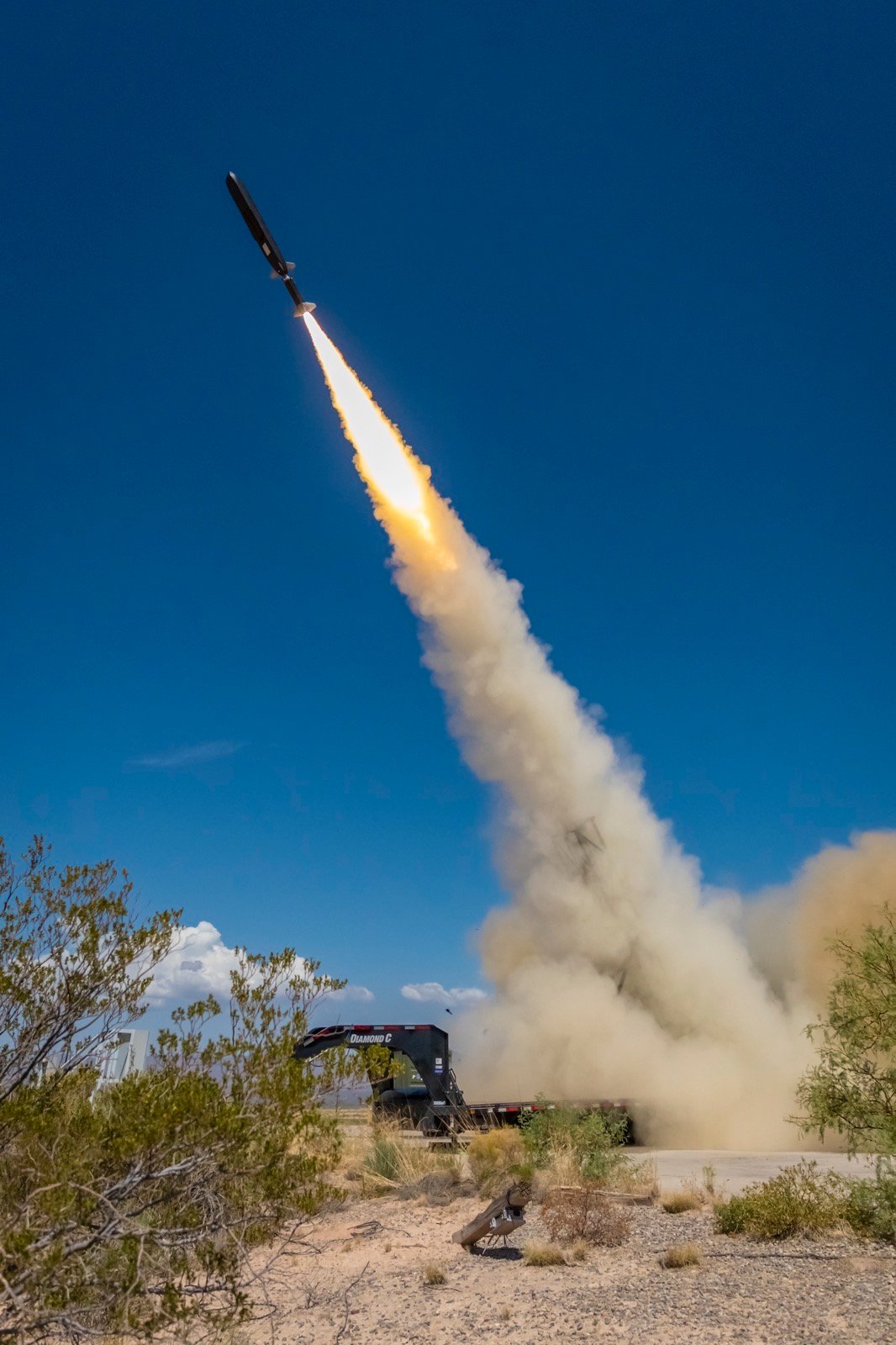
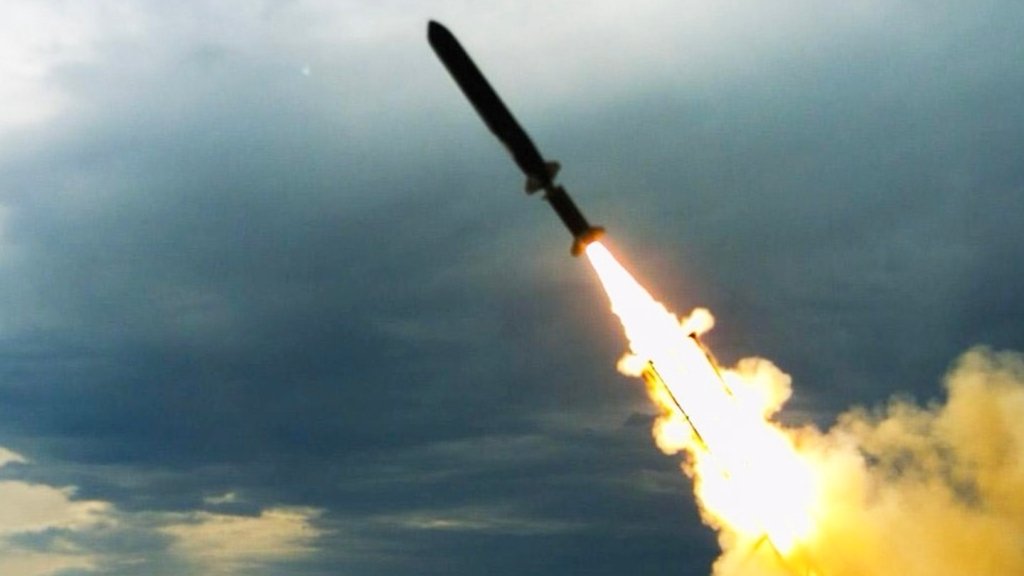
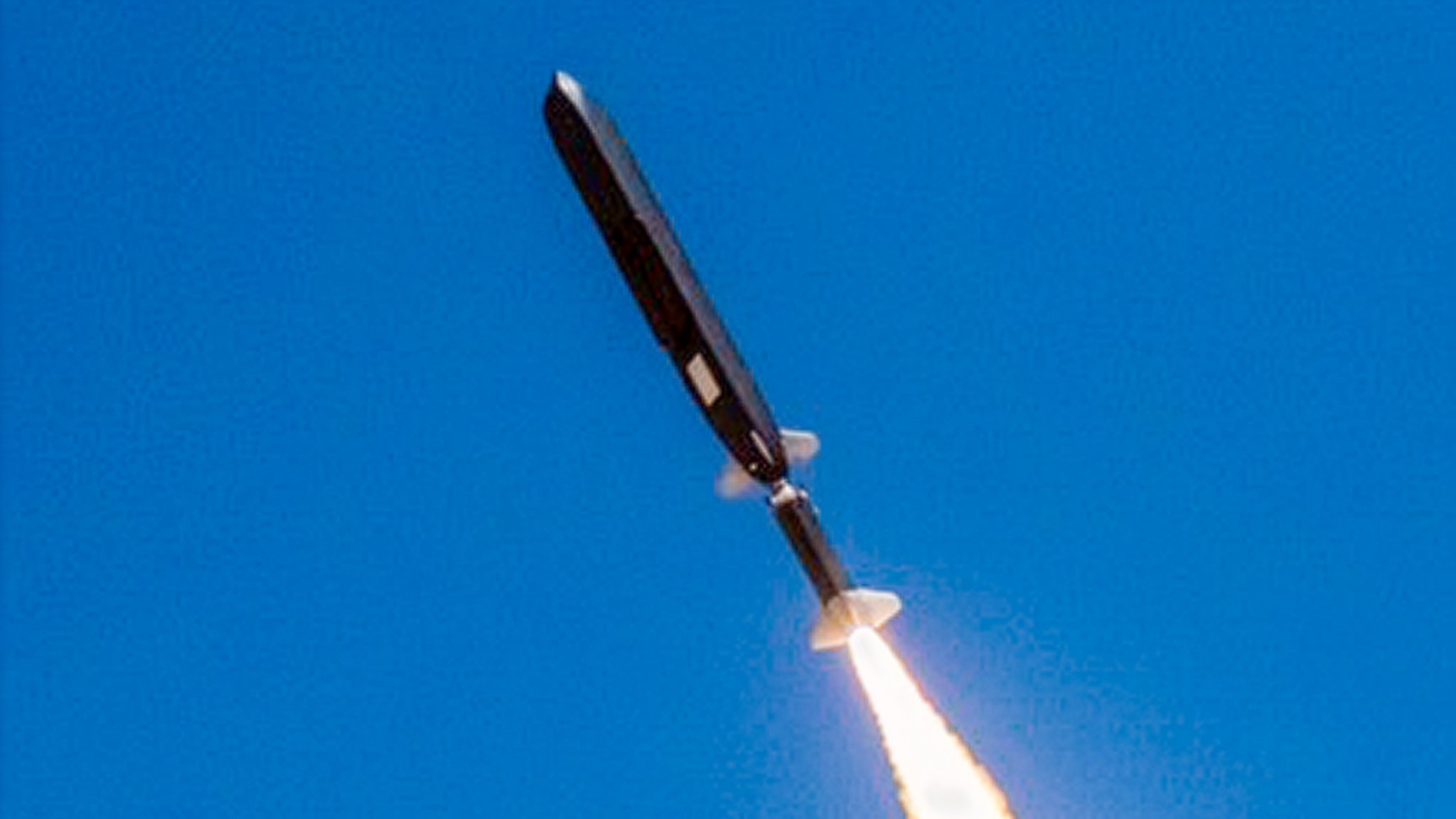
One of the first images showing the surface-launched version of the Rusty Dagger in action. Zone 5 Technologies

In May, Zone 5, as well as Anduril, CoAspire, and Leidos, received framework agreements from the Pentagon under the Low-Cost Containerized Missile (LCCM) program. The U.S. Army’s Portfolio Acquisition Executive Fires (PAE Fires) is running LCCM in cooperation with the Office of the Under Secretary of War for Research and Engineering (OUSW R&E). The aim of this program is to procure more than 10,000 low-cost cruise missiles, in total, over three years, beginning in 2027.

Then there is also the Consolidated Affordable Ordnance System (CHAOS) effort from the U.S. Navy’s Portfolio Acquisition Executive for Munitions (PAE Munitions). CHAOS is focused on low-cost anti-ship cruise missiles, particularly for U.S. allies and partners. CoAspire is also on contract for CHAOS with a version of its Rapidly Adaptable Affordable Cruise Missile-Extended Range (RAACM-ER) design.

“We designed a surface-launch Rusty Dagger to be the foundation of U.S. and allied mass-produced affordable precision deep strike weapons,” Tom Kanewske, chief strategy officer at Zone 5, told TWZ in a statement.

“Our team went from design to demonstration in less than three months, bringing Rusty Dagger from pylons and pallets to ground launcher and shipping containers,” added Kyle Maxhimer, Zone 5’s president.

Another picture of a Block 40 Rusty Dagger being fired from a launcher on the ground. Zone 5 Technologies

Zone 5 says the Block 40 version of Rusty Dagger can accommodate warheads in the 100-to-250-pound classes. It can still be configured for air-launch, either from pylons under the wings of aircraft or via palletized munitions systems. In order to be fired from launchers on the ground or at sea, the new version of the missile is fitted with a solid-fuel booster rocket at the tail end.

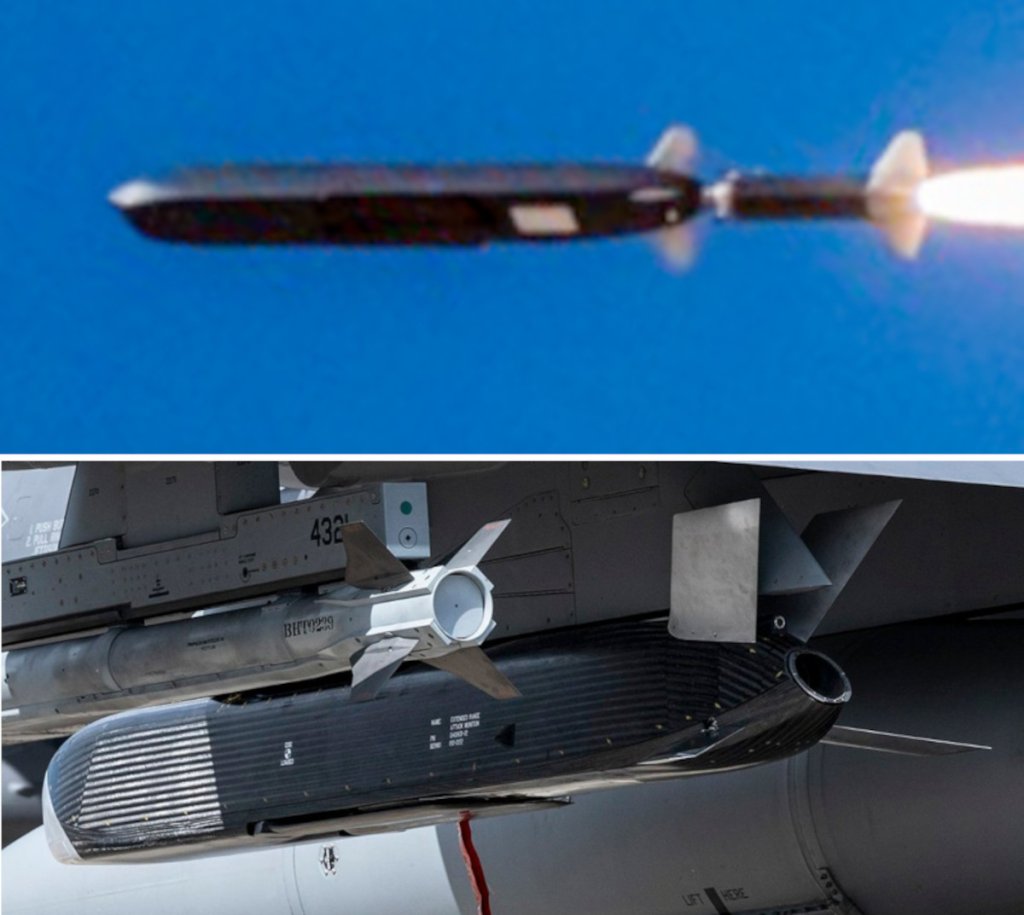
More specific details about the Block 40’s capabilities compared to the preceding air-launch-only version, also referred to as the Block 20, remain limited. From what we can see now, the two variations appear outwardly similar in many respects, at least broadly speaking. Earlier variations had a distinctive tail configuration with four squared-off fins, two facing upward and two more angled to either side. The shaping of the fins on the Block 40 does look to be more rounded. It’s also possible the missile may have a new cruciform tail fin arrangement, but this could also be a trick of the angle from which the missile is being viewed, coupled with the low resolution of the available images.

A side-by-side comparison of the Block 40 Rusty Dagger configured for surface launch, at top, and an earlier air-launched version, at bottom. Zone 5 Technologies/USAF

Previous reports have said that Rusty Dagger has a range of 300 nautical miles when delivered at low altitude, which is increased to 500 nautical miles when launched by aircraft at medium altitudes and flying at higher speeds. In general, surface-launched versions of missiles typically have shorter maximum ranges compared to their air-launched counterparts.

Zone 5 Rusty Dagger. #AffordableMass pic.twitter.com/Pzj1KnceHC

— Air-Power | NatSec Ledger (@NatSecLedger) June 7, 2025

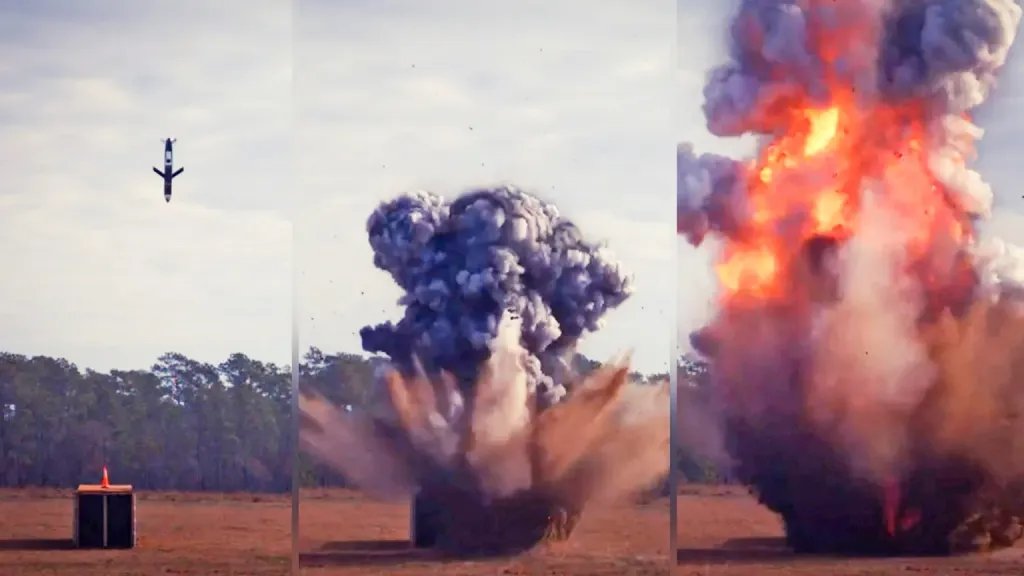
Regardless, the Block 40 version is an important further evolution of the Rusty Dagger design. The initial air-launched version of the missile, now designated the AGM-188A, has already been in development for several years, in part now under the U.S. Air Force’s Extended Range Attack Munition (ERAM) program. This has included live-fire tests conducted at Eglin Air Force Base in Florida in January 2025. We now know that Rusty Dagger has been cleared for use on four different types of fighters, including the F-16. Development of CoAspire’s Rapidly Adaptable Affordable Cruise Missile (RAACM) was also conducted as part of the ERAM effort.

Three views of a Rusty Dagger live-fire test on January 22, 2025, at Eglin Air Force Base, Florida. The service did not identify the weapon by name at the time. via U.S. Air Force

Like the Navy’s CHAOS effort, ERAM has been focused primarily on supporting allies and partners, starting first with Ukraine. A Zone 5 spokesperson told TWZ that, as things stand, Rusty Dagger remains the only publicly reported operational missile in its class fielded by the Ukrainian military.

It appears that the AGM-188A “Rusty Dagger” cruise missile has undergone field testing in Ukraine.

Russian sources are publishing photos of an unknown 8-element CRPA antenna. On the back side of the unit there is a circuit board with a large heatsink, which carries the CAGE code… pic.twitter.com/phZeOJfHJ0

— 𝔗𝔥𝔢 𝕯𝔢𝔞𝔡 𝕯𝔦𝔰𝔱𝔯𝔦𝔠𝔱🎻🇬🇪🇺🇦🇺🇲🇬🇷 (@TheDeadDistrict) June 7, 2026
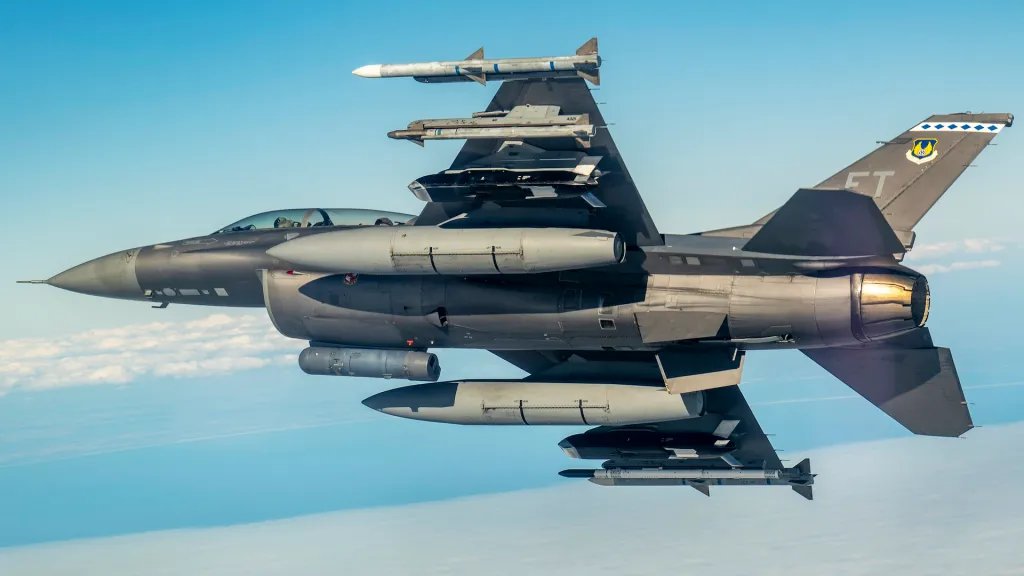
ERAM has also been feeding into the Air Force’s own Family of Affordable Mass Missiles (FAMM) plans. The service wants to acquire 28,000 FAMM munitions in pylon-launched and palletized configurations over the next five years.

A U.S. Air Force F-16 carrying a pair of Rusty Dagger missiles, as well as other stores, under its wings. U.S. Air Force photo by Staff Sgt. Blake Wiles

As we reported earlier this year, Rusty Dagger is now part of a broader portfolio under Norwegian defense company Kongsberg, which acquired a 90 percent stake in Zone 5. Kongsberg has positioned the missile alongside its stealthy Joint Strike Missile (JSM), with the two weapons serving different, complementary roles.

KONGSBERG announced today that it has closed the acquisition of US missile company Zone 5 Technologies LLC, following approval by US regulatory authorities.

🔗 https://t.co/meRxfmYHH6 pic.twitter.com/EXVbYhDers

— KONGSBERG (@kongsbergasa) June 10, 2026

Rusty Dagger is designed around affordability and volume, while JSM offers a sophisticated, low-observable strike capability. The concept gives customers a mix of weapons suited to different targets and mission requirements, rather than relying exclusively on expensive, high-end missiles.

Zone 5 says it is now expanding manufacturing in the United States. Production is established in San Luis Obispo, California, with production beginning in the Dallas-Fort Worth area of Texas. A franchised facility is also being developed in Miamisburg, Ohio, with Hawthorn Aero, a company that describes itself as specializing “in high-rate airframe manufacturing, offering scalable solutions from design to full vehicle integration for aerospace industries.”

The company says each site is designed to reach a capacity of more than 2,500 missiles annually by the end of 2027. If all three reach that level, combined annual capacity would exceed 7,500 missiles.

The expansion reflects the growing emphasis on affordable weapons that can be manufactured in large quantities and replenished quickly, something that is considered especially critical if the United States is to face China in a future high-end conflict in the Indo-Pacific region.

The ground-launched Rusty Dagger shown in the photos underscores how far the missile family is moving beyond its original air-launched role. With production expanding and multiple U.S. military programs in the picture, the surface-launched variant adds another potential route to getting the weapon into service.

Contact the author: thomas@thewarzone.com

The post Ground-Launched Rusty Dagger Low-Cost Cruise Missile Seen For The First Time appeared first on TWZ.

  •  

Luisa González, former presidential candidate and opposition leader, is arrested in Ecuador

Former President Rafael Correa (2007–2017) posted on X in the early hours of the morning in Ecuador that Luisa González, a two-time presidential candidate (2023 and 2025) for the Citizen Revolution (RC) party, had been arrested. “They arrested Luisa González. ENOUGH IS ENOUGH!” wrote the former progressive leader.

The National Police confirmed this to the media outlet PRIMICIAS. González was reportedly arrested on suspicion of money laundering. The National Prosecutor’s Office also confirmed this, reporting that the arrest is related to alleged irregularities in political financing and campaign spending in 2023.

González, who advanced to the runoff in both elections and lost both times to the current president, right-wing candidate Daniel Noboa, has repeatedly claimed that the legal proceedings against her are part of a broader campaign of political persecution targeting anyone who criticizes the current government.

A few hours after his arrest, González wrote on X: “We have reached an untenable situation. Noboa’s dictatorship has not only led our beloved country into economic disaster, with rampant violence and corruption, but attacks on civil liberties and political persecution are a constant reality. The dictatorship’s political prisoners are being mistreated and tortured.”

She added: “Today it is my turn to be arrested on an absurd charge. I will respond with the dignity of Ecuadorians who owe nothing and who are committed to securing Ecuador’s freedom and a better future for the country.” 

A flood of legal proceedings against González

In January 2026, the prosecutor’s office and the police raided Luisa González’s home as part of the case known as “Caja Chica,” which was investigating an alleged money laundering offense. The prosecutor’s office claimed there was evidence of money flowing in from Venezuela to fund González’s 2023 election campaign.

In August, González said she had been notified of a preliminary investigation into the alleged crime of demanding acts that entail receiving undue benefits.

In September, González was again notified by the Prosecutor’s Office of her inclusion in a preliminary investigation into an alleged crime of failure to report a crime due to her profession, position, or occupation – that is, for allegedly failing to report a crime in the course of her professional duties.

In all three cases, the former presidential candidate and leader of the largest opposition party has denounced these actions as political persecution carried out through the judicial system: “The harassment and persecution don’t stop, but neither does my hope for a better country. Giving up is not an option.”

Political persecution or enforcement of the law?

In addition, González, who intended to run for the office of prefect of Manabí in the upcoming regional elections in November, was unable to register her candidacy due to a refusal by the electoral oversight bodies, citing alleged mismanagement of administrative matters.

The RC once again denounced this obstacle as part of a broader campaign of political persecution aimed at preventing opposition candidates who might win their positions in the elections from participating, whether through administrative sanctions or criminal proceedings.

Thus, according to these allegations, the government has managed to co-opt several oversight institutions with the power to impose sanctions—such as the prosecutor’s office and the electoral courts – and is using them to persecute and prevent the participation of opposition politicians who have a chance of challenging the executive branch for power.

For his part, Ecuadorian President Daniel Noboa has repeatedly denied that his administration has been behind the accusations, sanctions, and arrests targeting his opponents, and he asserted that these are proceedings carried out by institutions independent of his government. “We do not target individuals; we have no interest in targeting individuals – we pursue criminals. There is no political persecution of any kind here,” the Ecuadorian president said in early 2026.

Despite these statements, the opposition remains steadfast in its accusations against the Ecuadorian president, especially following cases in which mayors of the country’s largest cities – Guayaquil, Cuenca, and Quito, the capital – have faced imprisonment, criminal proceedings, and ongoing judicial investigations.

The most notorious case in Ecuador involves the mayor of Guayaquil (the country’s most populous city), opposition figure Aquiles Álvarez, who was arrested and imprisoned in a maximum-security prison several months ago on charges of illegal hydrocarbon trafficking and organized crime.

Similarly, in June 2026, the then-mayor of Cuenca, Cristian Zamora (also a member of the opposition) was suspended by the Contentious-Electoral Court over an alleged case of political violence. For its part, the prosecutor’s office requested that charges be filed against him in September of that same year for an alleged crime of illicit enrichment.

And while there are other high-profile cases in Ecuador, the RC has stated that there is a concerted effort to prevent the current mayor of Quito, Pabel Muñoz (who is seeking reelection) from participating in the electoral process at all costs. Muñoz has so far managed to evade the sanctions and constant accusations against him, but on October 21, the prosecutor’s office and the police raided the mayor’s offices as part of an investigation into an alleged embezzlement offense.

This has led several politicians to believe that the raid is a new ploy to prevent Muñoz—who leads in the polls – from participating in the elections and, even more so, to imprison him, as was done with his party colleague, Aquiles Álvarez. This is what the Prefect of Pichincha, Paola Pabón, said: “People’s lives do not improve by imprisoning opponents; citizens’ circumstances change for the better when there is a political class committed to the common good.”

  •  

Per un TikTok europeo in stile Usa. Ecco l’idea di Mathias Döpfner

Lo scorso gennaio Mathias Döpfner, amministratore delegato e comproprietario del gruppo editoriale tedesco Axel Springer, ha ospitato nel suo studio di Berlino Charles Kushner. Dall’ambasciatore statunitense in Francia, nonché padre di Jared, genero di Donald Trump, voleva sapere qualche dettaglio del piano pensato dall’amministrazione americana per TikTok. Anche Döpfner aveva in mente qualcosa di simile, così da fugare le preoccupazioni di sicurezza che circondano la piattaforma cinese, per cui una chiacchierata non avrebbe fatto male. A raccontare l’incontro è il Financial Times, secondo cui il magnate dei media vorrebbe arrivare a un accordo per scorporare il social network e diventare titolare della sezione europea.

La questione è tutta in divenire. Sia Byte Dance, proprietaria di TikTok, sia funzionari della Commissione europea che hanno discusso della proposta con Döpfner hanno chiuso la porta, definendola una suggestione irrealizzabile. La questione è problematica soprattutto per Bruxelles. Le sue regole sulla sicurezza valgono per tutti gli operatori, dentro e fuori l’Ue, e sono stringenti. Forse non così tanto, come ha sottolineato il vicepresidente del Parlamento europeo Martin Hojsík: “Non stiamo applicando sufficientemente il Digital Services Act e il Digital Markets Act. Dobbiamo chiamare le piattaforme a rispondere delle loro responsabilità”. Döpfner però non perde le speranze.

TikTok, affermava in una intervista a Dpa a inizio settembre, “dovrebbe essere venduto ad azionisti democratici o bandito. Non capisco ancora perché noi in Europa non stiamo agendo. Gli americani hanno dimostrato che si può fare”. Non è un caso che le aziende che amministra siano da poco sbarcare su TikTok. Axel Springer, Bild e Welt hanno di recente aperto un loro profilo sulla piattaforma. Politico e Telegraph, sempre di proprietà di Döpfner, già ne hanno uno. Ed è proprio Axel Springer a uscire allo scoperto: “Come risulta chiaro dalle sue dichiarazioni pubbliche, Mathias Döpfner ha sempre sostenuto una soluzione europea per TikTok sulla falsariga del modello americano. Se tale soluzione si fosse concretizzata, avremmo accolto con favore l’opportunità di farne parte in quanto importante operatore mediatico europeo”.

Dietro c’è anche dell’altro. La strategia di Döpfner è larga e punta a inglobare altri interessi. Politico è uno dei media che sono stati bannati dalla Casa Bianca su ordine di Trump. Per cercare di riportare i suoi giornalisti all’interno delle sale istituzionali americane, Döpfner ha avviato una capillare opera di persuasione. Non soltanto con Kushner. A febbraio, quindi un mese dopo averlo incontrato, si è visto con Susie Wiles, l’importantissima capa di gabinetto di Trump, che la considera centrale per il suo lavoro. A settembre, invece, ha premiato di persona Peter Thiel, altra figura fondamentale nell’alveo del presidente. Un modo elegante per cercare di rientrare nella sua cerchia.

  •  

Former Ecuadorian President Correa Denounces the Arrest of Luisa Gonzalez

Gonzalez had publicly denounced international pressure and interference in Latin American political affairs.

On Thursday, Former Ecuadorian President Rafael Correa denounced the arrest of Luisa Gonzalez, a former presidential candidate and one of the leading figures in the Citizen Revolution movement.

RELATED: Ecuadorian Youth Call Protest Over Healthcare and Insecurity

On social media, Correa criticized Gonzalez’s arrest and expressed his disapproval of the measure, accompanying his message with slogans of support for the leader and her political organization.

Andean Parliamentarian Virgilio Hernandez joined in the denunciation, asserting that Gonzalez has been the target of political persecution and expressing concern about the lack of official information regarding her whereabouts following her arrest.

Meanwhile, Ecuadorian media cited police sources who preliminarily “confirmed” the former candidate’s arrest, although authorities had not initially provided complete details about the procedure.

🔴 Gabriela Rivadeneira denuncia el secuestro de Luisa González y exige su liberación inmediata

La presidenta del movimiento Revolución Ciudadana, Gabriela Rivadeneira, denunció que la excandidata presidencial Luisa González ha sido secuestrada y exigió su inmediata liberación,… pic.twitter.com/77XQVmE70E

— Elena Rodríguez Yánez (@ElenaDeQuito) October 22, 2026

The text reads, “Gabriela Rivadeneira, president of the Citizen Revolution, denounced the kidnapping of Luisa Gonzalez and demanded her immediate release, following her arrest in the early hours of Thursday, October 22, in the Ecuadorian province of Manabi.”

The case comes weeks after the Electoral Disputes Tribunal upheld the disqualification that prevented Gonzalez from running for Prefect of Manabi, a decision that was challenged by her supporters and political allies.

Days before her arrest, the leader had publicly denounced international pressure and interference in Latin American political affairs, and warned of what she considers a strategy of judicial persecution against progressive sectors in the region.

The leadership of the Citizen Revolution movement demanded immediate information on Gonzalez’s condition and whereabouts, while also calling for guarantees that her rights will be respected during the ongoing legal proceedings.

#FromTheSouth News Bits | Ecuador: Delegations from all provinces participated in the first day of the National Convention of the Citizen Revolution Movement, which was held in Manta, Manabi province. pic.twitter.com/1bGT3DeLKo

— teleSUR English (@telesurenglish) January 21, 2026

teleSUR: JP

Source: teleSUR

  •  

Correggere il Green Deal dovrebbe servire a renderlo efficace

Non c’è tema politico più divisivo del Green Deal nell’Unione Europea, anche all’interno dei singoli Stati. Richieste di soppressione, modifiche radicali, attuazione senza intoppi attraversano le campagne elettorali. Ma è bene ricordare che la ragione per cui è stato promosso non è uno slancio etico ma una valutazione di costi e benefici ambientali ed economici che, certo, deve essere aggiornata, ma non tradita.

In questi giorni il Partito popolare europeo sta spingendo per un nuovo rinvio dell’ETS2 (il mercato delle emissioni per trasporti e riscaldamento, previsto dal 2028) e per allentare le norme sulle emissioni di metano. Sul fronte delle auto, i negoziatori di PPE, Socialisti e Renew hanno raggiunto un compromesso che consentirebbe di ridurre fino all’87,5 per cento il taglio delle emissioni delle nuove auto nel 2035, anche attraverso crediti per l’acciaio europeo a basse emissioni, con aperture a carburanti rinnovabili e ibride plug-in e incentivi contabili per le piccole elettriche efficienti.

Sono iniziative in discussione, non decisioni già approvate: l’intesa sulle auto deve essere confermata dai gruppi politici, diventare la posizione del Parlamento e poi essere negoziata con i governi. Ma il segnale politico è chiaro: il ridimensionamento non viene più soltanto da governi e industria, coinvolge ormai anche la maggioranza europeista del Parlamento, Renew compresa. Imporre nuovi costi a chi non ha alternative accessibili può essere un errore. Ma la domanda di fondo è un’altra: cosa si intende fare del tempo guadagnato? Costruire quelle alternative o rinviarle ancora?

C’è un problema che i critici del Green Deal continuano a sottovalutare: la vulnerabilità di un’Europa che deve comprare all’estero gran parte dell’energia necessaria a vivere e produrre. Nella settimana conclusa il 18 ottobre, i flussi petroliferi dal Medio Oriente, comprese le rotte alternative a Hormuz, hanno superato, secondo il Wall Street Journal, i livelli pre-guerra (oltre 24 milioni di barili al giorno contro 23,3). Ma il recupero delle quantità non è un ritorno alla normalità. Trasporti, assicurazioni e rischio militare continuano a presentare il conto.

Il petrolio può arrivare senza tornare conveniente, e nessuno garantisce che arrivi domani alle stesse condizioni. È il costo della dipendenza, che scompare troppo spesso dal dibattito: si sommano gli oneri della transizione e si tratta la conservazione del sistema precedente come se fosse gratuita.

Intanto il clima ci mette fretta. Il nuovo Emissions Gap Report dell’UNEP avverte che il superamento di 1,5 gradi non è più evitabile. Bisogna contenerne entità e durata, tagliando rapidamente le emissioni per rendere possibile un ritorno sotto quella soglia entro fine secolo. Essere in ritardo è una ragione per accelerare gli interventi efficaci e finanziare l’adattamento, non per fermarsi.

Questo non significa che ogni misura del Green Deal fosse giusta o ogni scadenza ragionevole. Ma alle ragioni climatiche della transizione si aggiungono quelle della sicurezza economica.

Il paradosso è evidente: i conservatori rivendicano la sovranità, ma una parte di quella sovranità passa dalla capacità di produrre energia sul nostro territorio e di consumarne meno. Il nostro sole e il nostro vento non attraversano Hormuz. L’efficienza non richiede una scorta navale. Certo, non sostituiscono direttamente il petrolio dei trasporti: lo fanno attraverso l’elettrificazione e riducono il peso del gas. Servono impianti, reti, accumuli, e bisogna evitare di sostituire una dipendenza con un’altra (questa volta dai componenti cinesi). Ma un combustibile da ricomprare ogni giorno e un impianto che produce per anni non comportano la stessa vulnerabilità.

Difendere il Green Deal non obbliga a difenderne ogni disposizione. Correggerlo dovrebbe servire a renderlo efficace. L’autonomia energetica richiede investimenti e reti comuni, un mercato integrato, una capacità industriale europea. Richiede, insomma, più Europa. Chi invoca la sovranità dovrebbe spiegare come conquistarla continuando a comprare, insieme a gas e petrolio, la propria vulnerabilità.

L'articolo Correggere il Green Deal dovrebbe servire a renderlo efficace proviene da Linkiesta.it.

  •  

Romania shot down two drones it believes were Russia’s new Geran-4s. Europe isn’t ready for swarms of them, analyst warns

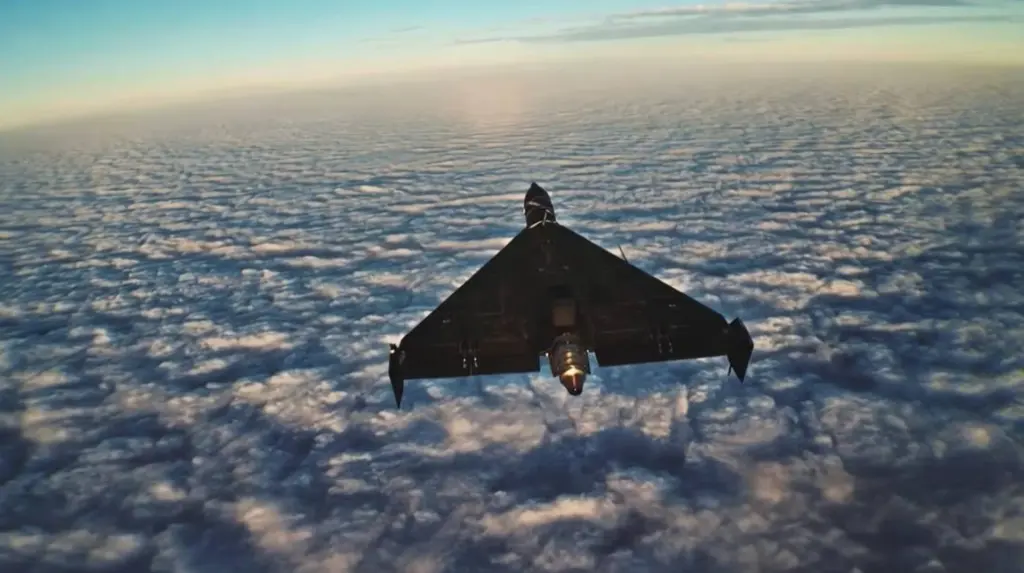
ukraine spent three years learning catch russian drones—so russia made fly faster · post geran-3 jet-powered attack drone wild hornets c1c840787fca380485636007cf683d71 news ukrainian reports

In a direct confrontation with Russia, European NATO states would likely be even more vulnerable than Ukraine to swarms of Russia’s new jet-powered strike weapons, Fabian Hoffmann of the Norwegian Institute for Defence Studies (NIDS) argued in a 20 October op-ed for the Center for European Policy Analysis (CEPA). He calls them low-cost cruise missiles. Just three days earlier, Romania met what it believes were two of them over the Black Sea.

Romanian F-16 fighter jets shot down two jet-powered Geran-family drones over Romania’s territorial waters on 17 October, the Defense Ministry said. Interim Defense Minister Radu Miruță said they flew at about 450 km/h and were likely Geran-4s, the first of that type Romania had downed.

Faster drones for a faster war

Russia began using the Geran-4 in May in response to effective Ukrainian interceptor drones, Ukraine’s military intelligence (HUR) said, adding that it reaches up to 500 km/h. By June, those interceptors were downing about half of slower Shahed-type drones, defense adviser Serhii Beskrestnov estimated.

Hoffmann traces the shift to the Geran-3, a model Ukraine recovered intact in 2025. In his account, a Chinese JT80 turbojet roughly doubled its speed, from 185 to 350 km/h. However, he puts newer models, including the Geran-4, at 600 km/h or more, above HUR’s figure for that model.

By his estimate, each costs $150,000–$250,000, against about $50,000 for a long-range drone. Still, from Russia’s perspective, he wrote, that buys a significantly higher chance of getting through.

money engineering what stands between ukraine russia's fastest drones zelenskyy says · post russia’s new “geran-4 seeker” shahed variant geran-4 news ukrainian reports
Explore further

Ukraine is testing four new drone interceptors as Russia floods its skies with faster Gerans 

Engines are the bottleneck

Hoffmann argues defenses must match the threat’s speed, for example with jet-powered interceptor drones. Ukraine already fields some. On 4 October, President Zelenskyy said its Bars interceptors had shown the highest percentage among Ukrainian interceptors, about 30% of targets, according to Militarnyi. One unit destroyed five aerial targets with five Bars interceptors, Defense Minister Yevhenii Khmara later told journalists. He also called aviation one of the most effective tools against jet drones.

Hoffmann’s concern is scale. Jet engines are in short supply, he wrote, because too few European and US suppliers can meet demand. Ukraine’s Defense Industry Council flagged a shortage of such engines for its drones in April. In his view, gun systems and higher-end missile defenses are too scarce or too costly to fill the gap.

  •  
❌