The New Statesman has published a letter signed by the great and good defending Sally Rooney's right to support Palestine Action. Prof James Alexander wonders why so many writers couldn't write a decent letter.
The reality 40 years later is that Congress made the drug penalties permanent law, while drug treatment was left to be determined during annual budget fights.
Jared Kushner, son-in-law of US President Donald Trump, for years allegedly had access to at least two secret foreign bank accounts in Israel and the United Arab Emirates whose deposits totaled roughly $2 billion according to an excerpt, published on Thursday by Vanity Fair, from an explosive upcoming book . The excerpt of the book […]
The head of the INSS and former military intelligence chief warns that the emerging concept doesn't see peace as the goal, and is looking to replace the US alliance
New book claims Gulf leaders poured money into undisclosed bank accounts, including one in Bank of Israel that PM oversaw; actions would seem to be illegal on several fronts
Scintille in diretta a Omnibus, su La7, tra Luca Sommi, giornalista del Fatto Quotidiano e conduttore di Accordi & Disaccordi, e il giornalista economico Alan Friedman. Casus belli: le proteste giovanili di Milano e il ruolo delle presunte interferenze russe nell’alimentare le tensioni sociali in Europa.
Tutto comincia dall’analisi di Sommi sugli scontri di Milano. Il giornalista del Fatto respinge l’idea che dietro la rabbia dei ragazzi ci sia la regia di Mosca e richiama invece le disuguaglianze economiche, l’inflazione e la perdita del potere d’acquisto delle famiglie. Sommi insiste soprattutto su un punto: attribuire il disagio giovanile alle infiltrazioni russe significa distogliere lo sguardo dalle condizioni materiali in cui vivono milioni di persone.
“Mi viene da sorridere al pensiero che il disagio giovanile in Italia e in Europa sia colpa delle infiltrazioni di Putin – osserva – Non riesco a rimanere serio su questa cosa, perché in realtà parliamo di un problema strutturale”.
Poi richiama la condizione sociale di tanti manifestanti, spesso figli di immigrati di seconda generazione o delle fasce più povere della popolazione italiana: “Qui ci sono dei ragazzi che non ce la fanno più. A 11 anni vai in piazza a manifestare. Questo è un termometro di una sperequazione sociale esasperata. Se tu togli 300 euro di reddito di cittadinanza magari al papà, che temporaneamente era in difficoltà, e non hai il coraggio di tassare le multinazionali e i super ricchi, allora accadono queste cose”.
A intervenire successivamente è Antonio Di Bella, ex direttore del Tg3, che introduce una distinzione tra le origini delle proteste e il loro sfruttamento politico da parte del Cremlino: “È chiaro che il fuoco degli scontri non viene acceso dalla Russia o da qualche misterioso manovratore. Ma apertamente gli esponenti del governo Putin usano le tensioni europee come prova della crisi dell’Occidente“.
Di Bella cita anche Aleksandr Dugin, ideologo nazionalista russo e rbadisce che non c’è nessuna “manina misteriosa” ma una strumentalizzazione alla luce del sole: “È evidente che chi manifesta e gli scontri non sono creati da fuori, ma sono alimentati e sfruttati da fuori”.
Dal collegamento Friedman applaude e mostra il gesto dell’ok con la mano. E commenta: “Antonio Di Bella ha detto perfettamente. Poi che qualche filoputiniano difenda Putin non è una sorpresa, che sia un giornalista per un giornale di propaganda del Cremlino, che sia un politico di destra…”.
Sommi interviene: “Friedman, attenzione a dare dei filoputiniani perché si beccano le querele e poi le si pagano”.
Il giornalista americano ribatte immediatamente: “Mi stai minacciando?”..
“No – replica Sommi – Ti invito alla cautela a usare certi termini perché li hanno già usati a lungo anche sul Corriere della Sera e poi hanno pagato copiosamente per aver dato dei filoputiniani a chi si interroga sulle questioni invece di chi liscia da una parte. Te lo dico così, per rinfrescarti le idee”.
Il riferimento è alla vicenda giudiziaria di Alessandro Orsini, sociologo e professore associato alla Luiss Guido Carli di Roma. Il 5 giugno 2022 il Corriere della Sera pubblicò un articolo firmato da Monica Guerzoni e Fiorenza Sarzanini, intitolato “Influencer e opinionisti. Ecco i putiniani d’Italia” e dedicato a una presunta rete di opinionisti e influencer che rilanciavano la propaganda del Cremlino, con riferimenti alle attività del Copasir e dei servizi di intelligence. Tra i nomi compariva quello di Orsini, accompagnato dalla sua fotografia. Il professore ha promosso una causa civile contro Rcs, il direttore Luciano Fontana e le due giornaliste. Il Tribunale di Milano, in primo grado, ha condannato i convenuti a risarcirlo con 27.500 euro per danni e circa 5mila euro per spese processuali.
Friedman sbotta: “Questo è talmente da cafone che neanche ti rispondo. Io non sono qui per litigare e non credo di aver nominato nessun giornale. Attenzione, signor avvocatino“.
Sommi non arretra e gli fa notare la sequenza degli interventi: “Hai parlato di “giornalisti filoputiniani” subito dopo che ho detto che un conto è esultare perché l’Europa va male, visto che c’è una guerra, un conto è avere l’intromissione di Putin nei social»”.
Friedman rivendica di non aver indicato alcuna testata né alcuna persona specifica: “Ho fatto il nome di qualche giornale? Mi querela per non aver fatto nessun nome e aver parlato genericamente? Ma va’! Io volo alto e non scendo a questi livelli bassi, ok?”.
Sommi ride e ribadisce: “Hai appena detto dei giornalisti filoputiniani”.
“Ho parlato genericamente dei putiniani in Italia senza nominare nessuno, signorino“, rilancia Friedman.
Greco, visibilmente spazientito, cerca di chiudere il battibecco: “No, no, non ha nominato nessuno, benissimo”.
Ma Friedman continua a interrompere, ripetendo “Signorino!” e poi “Piccolo signore!“, mentre Sommi reagisce divertito e il conduttore è costretto ad arrendersi con una battuta: “Siamo alla frutta, come dicono in Calabria“.
Tanya Brown said she believed someone helped O.J. Simpson get rid of the murder weapon. One of Mr. Simpson’s former lawyers called for a special prosecutor.
Editor's note: Most of the Ukrainian soldiers and commanders interviewed are identified by their callsigns, in accordance with military protocols.
KHARKIV OBLAST — Ukrainian soldier Oleksandr had already narrowly survived crossing a mine-strewn field and a river in the crosshairs of Russian artillery when the swarm of first-person-view
Years ago, when people asked Geoffrey Hinton why he worked on artificial intelligence, he would repeat a line from J. Robert Oppenheimer, one of the creators of the atomic bomb: “When you see something that is technically sweet, you go ahead and do it.”
Computer scientist and Nobel Prize in Physics laureate Geoffrey Hinton during the Starmus Festival 2026, held this Tuesday in the municipality of Arona in Tenerife.
The commander of an interceptor battalion in Ukraine’s 3rd Army Corps said his unit destroyed several thousand Russian aerial targets during Operation Vivaldi, ArmyInform, the Defense Ministry’s news agency, reported on 21 October.
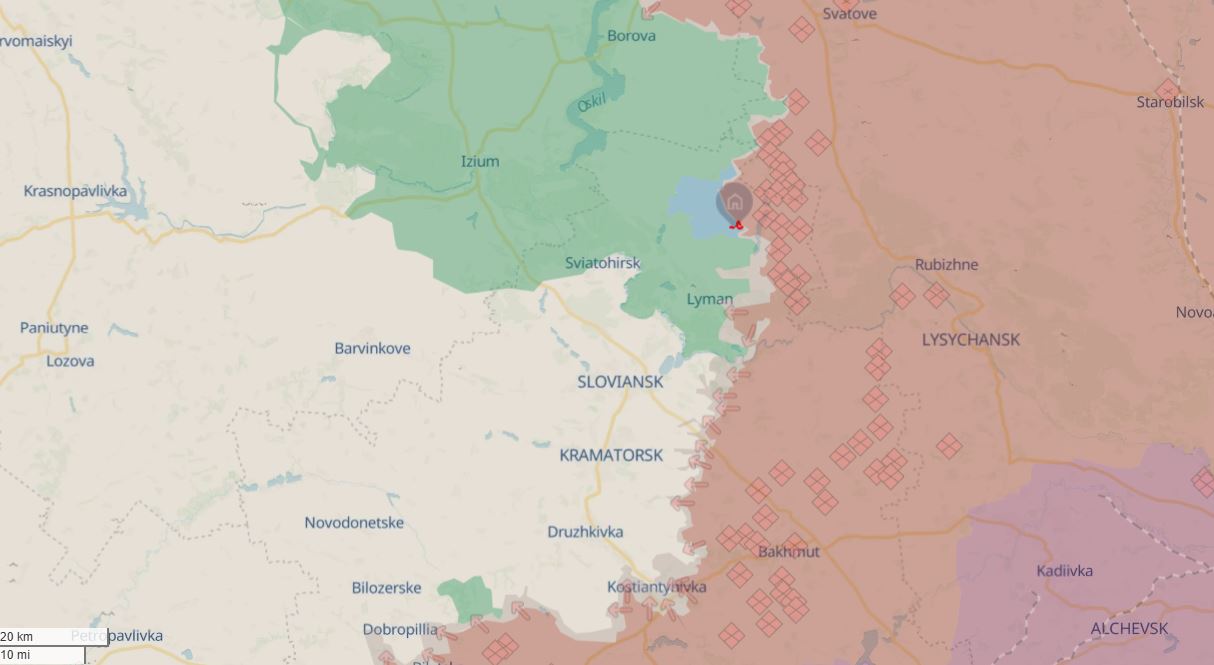
Operation Vivaldi is a Ukrainian counteroffensive north of Lyman in Donetsk Oblast, where the 3rd Army Corps has reported liberating settlements. In its third phase, Ukrainian forces reclaimed five settlements and expanded their gains to 176 square kilometers. Strikes on Russian logistics and electronic warfare likely neutralized Russia’s drone defenses before Ukraine sent in armor, the Institute for the Study of War assessed.
The commander, who uses the callsign “Betsyk,” leads the interceptor battalion of the 1030th Anti-Aircraft Missile-Artillery Regiment “Aquila,” part of the 3rd Army Corps. He said Russian forces deployed large numbers of reconnaissance drones to locate Ukrainian positions after the corps began advancing.
Betsyk named Zala, Orlan, Supercam, Merlin, and Knyaz Veshchiy Oleg among the reconnaissance drones used by Russian forces.
Russia also brought in reinforcements and units operating strike drones, including first-person-view (FPV) quadcopters, Molniya fixed-wing FPV drones, and Lancet crews, he said. At one stage, Russian forces deployed crews from their Rubicon drone unit to disrupt the advance, but the move did not change the situation.
Explore further
Ukraine retook Kolodiazi north of Lyman as its drones hit 200-plus Russian vehicles in Operation Vivaldi’s last phase, Ukrainian drone officer says
Betsyk said his battalion’s work deprived Russian forces of the ability to strike Ukrainian troops and track their movements.
Jet-powered Shaheds: speed is the main challenge
The regiment also works against Russian strike drones heading for targets behind the front line. Betsyk said interceptor crews had destroyed some jet-powered drones, but not in significant numbers.
The main difficulty is speed, he said. Interceptor drones need to reach 500–600 km/h to intercept Russian jet-powered attack drones, according to Betsyk.
For now, the regiment mainly uses conventional air-defense systems against these targets: self-propelled anti-aircraft systems, surface-to-air missile systems, and portable surface-to-air missile systems. Betsyk said these systems were historically designed to engage jet-powered targets.
He compared the current challenge with the early use of piston-powered Shaheds. Those drones initially posed a serious threat but later became easier for Ukrainian air defenses to counter. Russia has largely stopped using piston-powered Shaheds on most fronts since summer, he said, but continues to use piston-powered Gerbera drones, which are relatively cheap and can partly exhaust Ukrainian air defenses. The main drones Russian forces use now are jet-powered Shaheds, he said.
Betsyk expects Russian forces to adapt if Ukraine fields effective interceptors against jet-powered drones. They will seek ways to evade the interceptors, increase speed, improve navigation, and change their tactics, he said. However, he added that the battalion had not observed a major evolution so far and did not expect the drones’ speed to double.
What the corps says Vivaldi achieved
Separately, 3rd Army Corps commander Andrii Biletskyi said Ukrainian forces retook 277 square kilometers and 16 settlements during Operation Vivaldi, Ukrainska Pravda reported. Biletskyi also said Russian losses exceeded 8,000 personnel, according to ArmyInform. These figures are Ukrainian claims and have not been independently verified.
In late August, President Donald Trump announced what he called the “biggest oil deal in world history.” Since then, the full text of the accord — which grants the U.S. sweeping access to Venezuela’s oil reserves — has been one of the most sought-after secrets in Washington, DC. ProPublica has reviewed a copy of the […]
Russian drones struck a 24-story apartment building in Kyiv, a university building in Kremenchuk, warehouses, and hypermarkets overnight on 21 October, killing two people in the capital and an elderly couple near Kharkiv, Ukrainian officials said. The attack went well beyond Ukraine’s power grid, hitting places where people live, study, and shop. Over the past day, Russian strikes also killed three more civilians and injured dozens across several oblasts.
Russia has kept up nightly drone and missile attacks on Ukrainian cities through the autumn, mostly aimed at the energy system. It struck Ukraine’s energy 76 times during a US-declared truce, and fired 39 ballistic missiles at the grid three days after Washington announced it. This time the targets also included homes, a university, warehouses, and shops.
Overnight, Russia launched 186 Shahed-type and other attack drones, 88 of them jet-powered, along with Iskander-K cruise missiles, Ukraine’s Air Force said. Air defenses downed or jammed 150 drones. Hits were recorded at 27 locations, and debris fell at 13 more.
Two killed on the 20th floor in Kyiv
A drone hit a 24-story residential building in Kyiv’s Sviatoshynskyi district at the level of the 20th floor, starting a fire, Mayor Vitali Klitschko said. The fire spread over about 70 square meters, and rescuers found the bodies of two people while clearing debris, the State Emergency Service said. Two people were injured and hospitalized, Klitschko said, including a 46-year-old man who was walking past the building, according to the police.
A rescuer carries a cat out after a Russian drone strike on an apartment building in Kyiv, 21 October 2026. Photo: State Emergency Service of Ukraine
In the Desnianskyi district, seven parked cars caught fire, the State Emergency Service said; police put the number at about 10. The evening before, drones hit a warehouse building in Desnianskyi and a transport facility in Solomianskyi district.
An elderly couple killed near Kharkiv
In the village of Korotych near Kharkiv, Russian drones killed an 81-year-old woman and an 83-year-old man, Kharkiv Oblast Governor Oleh Syniehubov said. Rescuers recovered their bodies from the rubble of their house, the State Emergency Service said. Eleven people, including a two-month-old boy and an eight-year-old girl, were treated for acute stress, and 13 houses were damaged.
A house destroyed by a Russian drone strike in Korotych, Kharkiv Oblast, 21 October 2026. Photo: State Emergency Service of Ukraine
A university, warehouses, and hypermarkets
In Kremenchuk, a drone hit a building of the Mykhailo Ostrohradskyi National University, setting it on fire, the State Emergency Service said. Three people were injured, including a 16-year-old who was hospitalized with a concussion, Poltava Oblast Governor Vitalii Diakivnych said. In the Poltava community, drones damaged an administrative building and warehouses.
Firefighters put out a fire at an enterprise in Lviv district after a Russian attack, 21 October 2026. Photo: State Emergency Service of Ukraine
In Lviv Oblast, an attack set fire to an enterprise in a village in Lviv district and injured two people, while a house was damaged in a neighboring village, the State Emergency Service said. In Uman, drones hit a hypermarket and damaged a hotel, injuring one person, Cherkasy Oblast Governor Ihor Taburets said.
A hypermarket in Uman damaged by a Russian drone strike, 21 October 2026. Photo: Cherkasy Oblast Military Administration
On the evening of 20 October, a drone hit an Epicentr hypermarket in Pervomaisk, Mykolaiv Oblast, injuring eight people, acting Governor Heorhii Reshetilov said. Russia also struck a hypermarket in Rivne Oblast several times that day, injuring four and forcing rescuers to pull back while they fought the fire, the State Emergency Service said.
More dead and injured over the past day
The overnight strikes followed a day of attacks. In Kyiv, Russian strikes on 20 October killed one person and injured 21, three of them seriously, Klitschko said. An administrative building caught fire, rescuers freed four people trapped on its upper floors, and a healthcare facility was damaged, the State Emergency Service said. In Dnipropetrovsk Oblast, two men were killed and seven people injured that day, regional officials said.
In Kharkiv Oblast, Russian attacks over the past day injured 11 more people in Kharkiv, Derhachi, and Shestakove, Syniehubov said. In Kherson Oblast, 13 people were injured, three of them children, the regional administration reported. In the Chernihiv region, an 89-year-old woman and a young woman were hurt in strikes on villages and on Novhorod-Siverskyi, Governor Viacheslav Chaus said, and a 21-year-old woman was injured in the Sumy community, according to the Sumy regional administration.
More than 5,000 subscribers lost power in Volyn Oblast’s Lutsk district, Governor Roman Romaniuk said. In Ternopil Oblast’s Kremenets district, 7,949 subscribers remained without power after earlier Russian strikes on energy facilities, the regional administration reported.
In “The Muqaddimah”, the 14th-century historian Ibn Khaldun wrote that “great dynasties often decline after three generations because they fail to produce capable successors.” Under Crown Prince Mohammed bin Salman, Saudi Arabia now asks this question precisely: Has he weakened the very dynasty he was meant to strengthen and secure? The kingdom is under mounting […]
Germany appears to have dropped plans to directly procure the larger, Block 3 version of Boeing’s MQ-28 Ghost Bat collaborative combat aircraft (CCA), leaving doubts over Berlin’s ambitions to field uncrewed combat aircraft alongside its crewed fighters before the end of the decade.
Boeing confirmed to Breaking Defense that Germany’s Ministry of Defense had informed the company it would not proceed with a direct acquisition of the drone, which had previously been lined up. The decision, first reported by Politico, represents a setback for Boeing’s effort to position the Ghost Bat as a candidate for Berlin’s planned CCA capability, something that had seen it announce a partnership with Rheinmetall, the largest arms manufacturer in Germany, earlier this year.
NEW: Germany has formally scrapped plans to buy the Ghost Bat combat drones directly from Australia, documents show.
Its air force wanted them by 2029. Now it faces a longer wait.
Behind the decision is a much bigger political dilemma facing Germany as it races to rearm. pic.twitter.com/2fWHPoQOl0
“With Boeing Defense Australia as a partner, we are laying the groundwork to optimally tailor the MQ-28 to the Bundeswehr’s requirements,” said Armin Papperger, CEO of Rheinmetall AG, in March of this year. “As a system integrator, we ensure that integration, operation, and further development come from a single source while simultaneously strengthening industrial value creation in the form of an industrial hub in Germany and Europe. We see revenue potential for Rheinmetall in the range of three-digit millions of euros.”
The move does not necessarily mean the MQ-28 is out of contention for Germany’s wider program. Instead, Berlin appears set to move toward a different acquisition approach, with competing designs potentially having an opportunity to demonstrate their capabilities before a selection is made.
A Boeing spokesperson told Breaking Defense the company “stands ready to support” its German customer on the next steps, while referring questions about the decision to the German Ministry of Defense.
An AIM-120 is launched from an MQ-28A Ghost Bat during Trial Kareela at RAAF Base Woomera, South Australia. Australian Department of Defense
The ministry declined to discuss the specific procurement with the same outlet, citing regulations governing public contracting and the need for such matters to be addressed by parliament.
“[As a] matter of principle — and regardless of the specific case in question — we cannot provide information regarding potential procurement projects,” a ministry spokesperson told Breaking Defense.
Germany has set an ambitious goal of fielding CCAs by 2029. These uncrewed aircraft are intended to operate alongside crewed fighters such as the Eurofighter, extending their reach, adding sensors and weapons, and giving air forces additional options for conducting high-risk missions.
A German Eurofighter flies a Quick Reaction Alert (QRA) practice sortie over the southeast of the country. Bundeswehr/Christian Timmig
However, the reported change in Berlin’s acquisition plans raises questions about whether that deadline remains achievable.
According to Politico, Germany is now looking toward the early 2030s for the capability to arrive, with flight testing expected to begin in 2027. That would suggest the original target was based around the introduction of the MQ-28, which has already undergone extensive testing, rather than a newer design. The reshuffle could now give prospective suppliers additional time to demonstrate their designs.
The reported new timeline suggests that Germany’s CCA effort could be entering a more competitive and potentially longer development phase.
There is also a question about the degree of operational capability that will initially be fielded by the given date. Getting a CCA into meaningful frontline service is a very significant task, calling for integration with crewed fighters, communications systems, mission-planning networks, weapons, and sensors. Then there is also testing, certification, training, and the establishment of supporting infrastructure. For Germany in particular, getting a military drone, let alone an armed one, cleared to operate routinely in commercial airspace has long been an issue.
If Germany acquired the Ghost Bat directly, it would have offered a route to a CCA capability without having to begin an entirely new aircraft development effort.
However, the MQ-28 was always one of a larger field of candidate aircraft.
A week ago, Airbus and Kratos Defense & Security Solutions announced the first flight of their U740 Valkyrie uncrewed combat aircraft, a Europeanized version of the XQ-58A Valkyrie. Airbus is simultaneously working on its larger U760 Ravenstorm, intended for service in the early 2030s, and the company has previously pitched a stealthy CCA-like concept known as Wingman.
The ride of the Valkyrie With the successful first flight of the Airbus U740 Valkyrie in Europe, we are one step closer to introducing an operational uncrewed Collaborative Combat Aircraft (CCA) to the German and other European Armed Forces. The flight achieved all… pic.twitter.com/S2sFrtdmGA
“One option might be a split high-low approach that could pair more capable, longer-range systems for deep-strike missions with cheaper, attritable collaborative combat aircraft that can fly alongside crewed fighters. At this point, it should also be noted that CCAs could also give older fourth-generation fighters a new lease on life, boosting their lethality and survivability by extending their sensor reach, adding weapons capacity, and allowing uncrewed aircraft to take on more dangerous tasks.”
At the same time, Germany continues to define its requirements for a capability described in media reports as a Jagdbomberdrohne, or fighter-bomber drone. Berlin has yet to publicly clarify its intended concept of CCA operations, including whether the Luftwaffe envisions an uncrewed wingman operating alongside crewed fighters, a platform capable of carrying out long-range strike missions independently, or a system designed to perform both roles.
There are signs that the strike mission is being prioritized, at least initially, with a reduced emphasis on air-to-air missions. This is essentially the reverse of the U.S. Air Force’s CCA effort.
Since Germany is set to receive the F-35 stealth fighter, there is also an argument that Berlin could place more orders for the crewed jet. This could have the dual role of filling the gap left by the collapse of the pan-European Future Combat Air System (FCAS), specifically its sixth-generation crewed fighter, and the delayed introduction of the first operational CCAs. Germany is also looking forward to receiving more Eurofighters.
Germany’s first F-35A arrived at Ebbing Air National Guard Base in Arkansas earlier this month, where it will be used for training. Lockheed Martin
Germany’s evolving CCA plans form part of a broader effort by Western air forces to develop uncrewed aircraft capable of working alongside advanced fighters. These systems are intended to expand the number of available platforms, distribute sensors and weapons across a larger force, and potentially take on missions that would otherwise expose pilots and expensive crewed aircraft to greater risk.
Boeing’s Ghost Bat could still have an opportunity to compete, depending on the structure of the eventual acquisition process and the requirements Berlin establishes.
However, with testing reportedly planned from 2027 and operational fielding potentially slipping into the early 2030s, the original 2029 ambition for an operational German CCA appears increasingly uncertain.
Actors James Van Der Beek, Hayden Panettiere, Robert Duvall, Chuck Norris, Patrick Stewart, and Eva Marie Saint died in 2026.
So did musicians Dolly Parton and Duncan Sheik.
Civil rights leader Rev. Jesse Jackson, activist Gloria Steinem, and NFL Hall of Famer Mike Ditka also died this year.
Below, we look back at the celebrities we lost in 2026, listed in alphabetical order.
Scott Adams, 68
Scott Adams.
Michael Macor/Getty Images
Scott Adams worked at a telephone company in the 1980s. The experience inspired his beloved comic strip, "Dilbert."
By the end of the decade, the character and his satirical office humor began appearing in comic strips.
At its peak, "Dilbert" was syndicated in over 2,000 newspapers. A cartoon series debuted in 1999, running for two seasons.
Adams gained notoriety when he began writing blog posts praising Donald Trump during his 2016 presidential run. In 2023, "Dilbert" was pulled from newspapers across the US following racist comments made by Adams.
The lead singer of 3 Doors Down, Brad Arnold launched the group into fame with the 2000 rock anthem "Kryptonite," which peaked at No. 3 on the Billboard Hot 100 that year.
The success led to other hits like "Loser," "Here Without You," and "When I'm Gone." Arnold's vocal range and lyrics focused on love and love lost, which fueled the group to stardom.
Arnold died on February 7 from a type of kidney cancer.
Afrika Bambaataa, 68
Afrika Bambaataa.
Paul Natkin/WireImage/Getty
A hip-hop pioneer during the 1970s and 1980s, Lance Taylor, known professionally as Afrika Bambaataa, first gained attention as a DJ in the Bronx.
He signed with Tommy Boy Records in 1981 and released landmark songs like "Jazzy Sensation" and "Planet Rock." He would go on to influence the likes of Queen Latifah and A Tribe Called Quest throughout his career.
Bambaataa founded the hip-hop awareness group, Universal Zulu Nation, in the 1970s to steer kids away from gang life. Bambaataa stepped down as the head of the organization in 2016 after accusations of sexual abuse.
One of the icons responsible for bringing hip-hop to the mainstream, Rob Bass crafted the iconic track "It Takes Two" alongside DJ E-Z Rock.
The track, released in 1988, reached No. 3 on the Billboard Hot Dance/Club Songs chart and later went certified platinum. In 1989, it was voted the greatest single of all time by Spin magazine.
Nicholas Brendon was a television actor, best known for playing Xander Harris in all seven seasons of "Buffy the Vampire Slayer."
He also starred in "Criminal Minds" and "Kitchen Confidential."
Brendon died in his sleep on March 20 due to natural causes, according to his family's statement.
In 2023, Brendon suffered a heart attack and was diagnosed with a congenital heart defect. He also had cauda equina syndrome, which led to several spinal surgeries.
"While it's no secret that Nicholas had struggles in the past, he was on medications and treatment to manage his diagnosis, and he was optimistic about the future at the time of his passing," the statement to The Hollywood Reporter read. "Our family asks for privacy during this time as we grieve his loss and celebrate the life of a man who lived with intensity, imagination, and heart."
Peabo Bryson, 75
Peabo Bryson.
ABC Photo Archives/Getty Images
Two-time Grammy winner Peabo Bryson is best known for his classic love ballads.
Bryson began releasing music in the late 1970s, but one of his first major hits was opposite Roberta Flack on the 1983 duet, "Tonight, I Celebrate My Love." He continued hit-making a year later with the smash "If Ever You're in My Arms Again," and in 1991, he topped the R&B charts with "Can You Stop the Rain."
Bryson found global stardom with his renditions of two Disney classics. In 1991, he released the pop version of "Beauty and the Beast," alongside Céline Dion, and a year later, he duetted with Regina Belle on "A Whole New World" from the 1992 release of "Aladdin."
Bryson died on June 2. No cause was given.
James Burrows, 85
James Burrows.
Aaron Rapoport/Corbis/Getty Images
An 11-time Emmy winner and co-creator of "Cheers," director James Burrows helped shape modern TV comedy through his work on iconic sitcoms including "Will & Grace," "Friends," and "Frasier."
Known for his comedic timing and elaborate blocking, Burrows got his start directing episodes of "The Mary Tyler Moore Show." Throughout his career, he directed episodes of "Frasier" (winning an Emmy for the pilot episode), "Will & Grace," "Friends," and "The Big Bang Theory." He directed over 50 pilot episodes.
Burrows died on June 19. No cause was given.
Kyle Busch, 41
Kyle Busch.
Sean Gardner/Getty Images
Two-time NASCAR Cup Series champion Busch was considered one of the greatest racers of all time.
Busch was hospitalized on May 21, before two upcoming races. Hours later, he was pronounced dead.
Robert Carradine was best known for his roles as Lizzie McGuire's dad and as the iconic geek Lewis Skolnick in the 1980s franchise "Revenge of the Nerds."
As a member of Hollywood's famed Carradine family, Robert was destined for an onscreen career.
He received one of his first screen credits starring in his brother David Carradine's popular 1970s TV series "Kung Fu" and went on to land roles in everything from Samuel Fuller's World War II classic "The Big Red One" to the "Lizzie McGuire" series.
Carradine's family shared statements with Deadline that emphasized being open about his struggles with mental illness.
"We are bereft at the loss of this beautiful soul and want to acknowledge Bobby's valiant struggle against his nearly two-decade battle with Bipolar Disorder," Carradine's family said. "We hope his journey can shine a light and encourage addressing the stigma that attaches to mental illness."
If you or someone you know is experiencing depression or has had thoughts of harming themself or taking their own life, get help. In the US, call or text 988 to reach the Suicide & Crisis Lifeline. Help is also available through the Crisis Text Line — just text "HOME" to 741741. The International Association for Suicide Prevention offers resources for those outside the US.
Bud Cort, 77
Bud Cort.
CBS Photo Archive/CBS via Getty Images
Most famous for his role as Harold in the 1971 cult-classic "Harold and Maude," Bud Cort became the epitome of 1970s counterculture thanks to his baby-faced looks, wit, and sophisticated persona.
The dark comedy starred Cort as Harold, a man in his 20s who is obsessed with suicide until he meets 79-year-old eccentric Maude (Ruth Gordon).
Before that, Cort scored bit parts in Robert Altman's "M*A*S*H*" (1970) and "Brewster McCloud" (1970).
After "Harold and Maude," Cort worked steadily for the rest of his life, occasionally showing up in hit movies like Michael Mann's "Heat" (1995) and Wes Anderson's "The Life Aquatic with Steve Zissou" (2004).
Curry is best known for playing Dr. Frank-N-Furter in the cult-classic musical "The Rocky Horror Picture Show," after originating the role in the original stage production.
Over six decades, Curry carved out a niche playing outlandish villains like Rooster Hannigan in the 1982 film "Annie" and Pennywise in the 1990 miniseries "It." Other notable roles include Wadsworth the Butler in "Clue" (1985) and Mr. Hector in "Home Alone 2: Escape from New York."
Curry suffered a major stroke in 2012, which required brain surgery. He said in 2025 that he was "still recovering."
Curry died at his Los Angeles home on August 26. No cause was given.
Eric Dane, 53
Eric Dane
Pief Weyman/NBC via Getty Images
Long before becoming one of TV's most recognizable heartthrobs, Eric Dane was building his career with guest roles on series like "Saved by the Bell" and "Married… with Children."
He later gained wider attention with appearances on "Charmed" before landing his breakout role as Dr. Mark "McSteamy" Sloan on "Grey's Anatomy." He most recently starred in HBO's "Euphoria," where he played Cal Jacobs, the father of Jacob Elordi's character, Nate Jacobs.
Dane has two children with his wife, Rebecca Gayheart. In April 2025, the actor said that he was diagnosed with amyotrophic lateral sclerosis, or ALS.
Dane died on February 19 at age 53, his publicist confirmed in a statement to Business Insider.
"He spent his final days surrounded by dear friends, his devoted wife, and his two beautiful daughters, Billie and Georgia, who were the center of his world," his publicist said.
Clive Davis, 94
Clive Davis.
Roy Rochlin/Getty Images
A legend in the music world, Davis was responsible for elevating pop music to unthinkable heights by discovering talents like Aretha Franklin, Barry Manilow, Bruce Springsteen, Billy Joel, Whitney Houston, and Alicia Keys, to name a few.
Over his 50-year career, along with being an executive behind millions of album sales, he also won five Grammys, including two for Album of the Year ("The Bodyguard" soundtrack and "Supernatural" by Santana).
Davis died on June 22. No cause was given.
Mike Ditka, 86
Chicago Bears head coach Mike Ditka gets carried off the field after they defeated the New England Patriots in Super Bowl XX on January 26, 1986.
Focus on Sport/Getty Images
Mike Ditka was the first tight end ever inducted into the Pro Football Hall of Fame. As a coach for the Chicago Bears, he led the team to its only Super Bowl win to date in 1986.
Ditka's success turned him into a celebrity who showed up in commercials, TV shows, and movies in cameo roles.
One of his most famous was starring opposite Will Ferrell in the 2005 comedy "Kicking and Screaming."
His persona became the long-running "Saturday Night Live" sketch called "Bill Swerski's Superfans," in which cast members dressed up as Ditka and spoke about their love for "Da Bears."
Ditka died on October 9; no cause was given.
Robert Duvall, 95
Robert Duvall.
Jack Mitchell/Getty Images
Robert Duvall starred in a plethora of timeless classics, including "The Godfather," "The Godfather Part II," "Apocalypse Now," "THX 1138," "The Natural," "Days of Thunder," and "The Apostle."
Duvall will be best remembered for starring in three of director Francis Ford Coppola's iconic films: playing Tom Hagen in the first two "Godfather" movies and Lieutenant Colonel Bill Kilgore in "Apocalypse Now," in which he delivers one of the most memorable lines in movie history: "I love the smell of napalm in the morning."
Duvall was lauded for his acting talent, from not saying a word while playing Boo Radley in his first big screen role in the 1962 classic "To Kill a Mockingbird" to his portrayal of a country singer dealing with alcoholism in 1983's "Tender Mercies," which earned him an Oscar.
He died on his ranch in Virginia on February 15. No cause was given.
Brenda Fricker, 81
Brenda Fricker in "Home Alone 2: Lost in New York."
20th Century Fox
This Irish actress was a fixture on the stage and screen for six decades. But she's most known for showing up in the "Home Alone" sequel.
As The Pigeon Lady in 1992's "Home Alone 2: Lost in New York," Fricker has become a fixture for families during the holiday season for decades (and in 2020 became the subject of a popular meme).
But Fricker's acting talents go beyond playing a spooky wanderer of Central Park.
In 1990, she became the first Irish actress to win an Academy Award, as she was given the best supporting actress Oscar that year for her performance in "My Left Foot."
Fricker died on July 16; no cause was given.
Mark Fuhrman, 74
Mark Fuhrman.
Jim Smeal/Ron Galella Collection/Getty Images
Fuhrman cemented his place in popular culture as one of the lead LAPD detectives on the 1995 murder case of O.J. Simpson's ex-wife, Nicole Brown Simpson, and her friend Ronald Goldman.
Fuhrman found the famed bloody glove on the Simpson estate, and during the trial, he gained infamy when Simpson's defense team used his past racist language to discredit him as a witness.
Fuhrman retired from the LAPD after the Simpson trial and moved to Idaho, where he wrote true crime books.
For over six decades, one name has been synonymous with women's high fashion: Valentino.
The Italian designer launched his fashion business in Rome in 1960 and never looked back. Soon, every star wanted to be seen in his creations. They've been worn by icons like Elizabeth Taylor, Joan Collins, Jackie Kennedy, Princess Diana, Sharon Stone, and more.
Though Garavani retired from designing in 2008, his label is still a red carpet staple, as is his famous shade of bright red dubbed "Valentino Red."
No one defined a bully for a generation more than Gibb's hulking fraternity character Ogre in the "Revenge of the Nerds" movies of the 1980s.
Since the original raunchy comedy was released in 1984, Gibb's intimidating size and loud yells of "NERDS!" have become as memorable as the pocket protectors worn by the movie's geeks.
Gibb went on to star opposite Jean-Claude Van Damme in his classic 1988 action movie "Bloodsport." He also landed guest star roles through his career on shows like "Quantum Leap," "Magnum P.I.," "MacGyver," "Night Court," and "Cheers."
Gilbert was the guitarist and backing vocalist for the punk band New Found Glory.
The band's hit albums include 2002's "Sticks And Stones" and 2004's "Catalyst." Both showed up in the top 10 on the Billboard 200 chart.
Gilbert died on September 20; no cause was given, but Gilbert told People in April he was battling stage 4 adrenal cancer.
Glen Hansard, 56
Glen Hansard.
Frank Hoensch/Redferns/Getty
Irish singer-songwriter Hansard was the frontman of the rock band The Frames and one-half of the band The Swell Season. But he was perhaps best known for writing and starring in the hit 2007 indie film "Once," in which he and his Swell Season bandmate Markéta Irglová play two struggling musicians who fall in love. The duo won an Oscar for best original song for the film's standout track, "Falling Slowly."
Hansard also embarked on a solo career; his 2015 album, "Didn't He Ramble," was nominated for a Grammy for best folk album.
For those who grew up in the '90s, Dennis Haskins was your favorite high school principal, Mr. Belding.
Starring in the hit TV series "Saved By The Bell," Haskins' Belding character traveled the halls trying to be a step ahead of the hijinks inflicted by Zack Morris (Mark-Paul Gosselaar) and his friends. But unlike many school principals in pop culture who were mean and seemed to hate kids, Haskins played his authority role with a playful, good-natured style.
He was on the show's full four-season run from 1989 to 1993, and also starred in the spin-off, "Saved By The Bell: The New Class," from 1993 to 2000.
Haskins' other credits include "The Bold and the Beautiful," "Mad Men," "It's Always Sunny in Philadelphia," and "New Girl."
Haskins died on September 27; no cause was given.
Anthony Head, 72
Anthony Head.
James Quinton/WireImage/Getty
Rising up through the UK stage scene in the 1980s, Head found fame when he was cast as Rupert Giles, who became a father figure to Sarah Michelle Gellar's Buffy Summers in all seven seasons of "Buffy the Vampire Slayer."
Most recently, he played the bitter former owner of AFC Richmond on "Ted Lasso."
Head's death was announced by his family on June 5. They stated the cause was "complications due to pneumonia."
David Hockney, 88
David Hockney at home in Los Angeles in 1987.
Anthony Barboza/Getty Images
British painter David Hockney was renowned for his striking portraits and figurative pop art. Many of his best-known paintings, including 1966's "The Splash" and 1972's "Portrait of an Artist (Pool with Two Figures)," were inspired by the bright colors and sun-dappled pools of Los Angeles.
Hockney moved to Los Angeles in the late '60s, and his work became synonymous with the warmth and leisure of Southern California. He was also one of the few popular artists at the time to depict openly gay scenes, and Hockney was outspoken about anti-gay censorship.
Throughout his career, Hockney split time between California, England, and France. He died at his home in London on June 12 at age 88, his publicist confirmed to The New York Times. No cause of death was given.
Jesse Jackson, 84
Rev. Jesse Jackson speaks at Operation PUSH in Chicago, Illinois in December 1989.
Raymond Boyd/Getty Images
The Rev. Jesse Jackson was a leader of the Civil Rights Movement, a minister, and an activist icon who twice ran for president.
Born on October 8, 1941, in Greenville, South Carolina, Jackson experienced Jim Crow segregation on public buses and at school firsthand. It would shape the rest of his life.
His fight for civil rights began in the 1960s, when he helped organize protests and demonstrations across the US and worked closely alongside civil rights icon Dr. Martin Luther King Jr.
His decadeslong career as a leading civil rights activist included support for modern national movements, such as the push for voting rights, the fight against racism, and a higher minimum wage.
Jackson ran for president twice, both times as a democrat. He placed third for the party's nomination in 1984 and second in 1988. This marked the most successful presidential runs of any Black candidate prior to Barack Obama.
Jackson announced in 2017 that he'd been diagnosed with Parkinson's disease. In November 2025, Jackson was treated in a Chicago hospital after complications from progressive supranuclear palsy (PSP), a rare neurodegenerative condition.
Jackson died on February 17.
Walter Koenig, 90
Walter Koenig as Pavel Chekov in season 2 of "Star Trek."
CBS/Getty Images
As the boyish Russian crewman Pavel Chekov on "Star Trek," Walter Koenig left an indelible mark in the minds of sci-fi fans for generations as one of the key crew members of Captain Kirk's ship, the USS Enterprise.
First appearing in the show's second season, Koenig played Chekov in 36 of the 50 episodes that aired in 1967-68 and 1968-69. He also starred in the first seven releases of the movie franchise, from 1979 through 1991.
Yayoi Kusama presented an "Infinity Room" installation in Paris.
Alain Nogues/Sygma/Sygma via Getty Images
Kusama was a famed Japanese pop artist who often used polka-dot motifs in her work, initially rising to prominence in Japan in the 1950s.
In 1959, Kusama presented her first solo exhibition in New York: a collection of abstract paintings that an ARTnews review praised as "strong, advanced in concept and realized."
Kusama later branched into sculptures, performances, and immersive installations. She continued to expand her influence and relevance into the social media era, when her mirrored "Infinity Room" installations became Instagram-friendly attractions that inspired many copycats.
As one of Hollywood's most renowned costume designers, Bob Mackie's eye set the style for decades.
Known as the Sultan of Sequins, the Rajah of Rhinestones, or the Guru of Glitter, a signature of Mackie's work was its use of sparkle, which made everyone from Cher to Elton John to Dolly Parton to Sabrina Carpenter shine on stage.
He also was the costume designer on "The Carol Burnett Show" for all eleven seasons through the 1970s. He won nine Emmys, a Tony Award, and was nominated for three Academy Awards for his work.
Mackie died on September 14; no cause was given.
RJ Mitte, 34
RJ Mitte.
Rodin Eckenroth/FilmMagic/Getty
Mitte was best known for playing the son of Bryan Cranston's Walter White in the hit series "Breaking Bad."
Mitte, who was diagnosed with cerebral palsy when he was 3 years old, became a disability rights activist after finding fame with "Breaking Bad."
His other credits include the 2021 movie "Triumph," in which he played a high school student with cerebral palsy who tries out for the wrestling team. He also starred in the 2024 thriller "Love Me Dead" opposite Dove Cameron.
In the 1990s, you couldn't escape the piercing eyes of Patrick Muldoon.
He played Austin Reed on "Days of Our Lives" for most of the decade, and when he wasn't on the soap, he was over on "Melrose Place" playing the villain role of Richard Hart.
If being on two iconic shows wasn't enough, he also showed up on "Saved by the Bell" and had a role in the cult classic movie "Starship Troopers."
With a career spanning more than five decades and including countless memorable performances in movies and television, Sam Neill was one of the most versatile actors of his generation,
The New Zealand actor starred opposite Nicole Kidman in the 1989 thriller "Dead Calm," played the loyal first officer opposite Sean Connery in 1990's "The Hunt for Red October," played the lead in John Carpenter's 1994 horror "In the Mouth of Madness," and most recently starred in the hit series "Peaky Blinders."
But Neill is best known for playing the brave and all-dinosaur-knowing Dr. Alan Grant in the "Jurassic Park" franchise.
Neill died on July 13; no cause was given. Neill was battling a rare and aggressive form of blood cancer, but was cancer-free at the time of his death, according to a post on his Instagram account announcing his passing.
Tom Noonan, 74
Tom Noonan.
Mike Albans/New York Daily News Archive/Getty Images
Standing at a towering 6' 5", Tom Noonan was born to play the bad guy. And he did just that, starring as the villain in movies like "Manhunter," "RoboCop 2," and "Last Action Hero."
But this actor had more to show off. He showcased his comedy chops as Rodney Dangerfield's degenerate gambling friend in the 1983 comedy "Easy Money," and set up the heist for Robert De Niro in Michael Mann's 1995 classic "Heat."
His knack for storytelling also translated behind the camera. Noonan wrote, directed, and starred in the drama "What Happened Was," which won the grand prize at the 1994 Sundance Film Festival.
Noonan died on February 14; no cause was given.
Chuck Norris, 86
Chuck Norris.
Frederic Meylan/Getty
Few action stars have Chuck Norris' credentials.
Before he ever stepped in front of a camera, he was a martial arts champion and a black belt in Karate, judo, Brazilian Jiu-Jitsu, Taekwondo, and Tang Soo Do.
His talents would become known the world over in 1972, when he faced off against Bruce Lee in "The Way of the Dragon."
Through the 1980s, Norris became one of the biggest action stars in the world thanks to movies like "A Force of One," "The Octagon," and the "Delta Force" and "Missing in Action" franchises.
In the 1990s, he took over the small screen, playing the lead in the "Walker, Texas Ranger" TV show, which aired in over 100 countries during its run from 1993 to 2001.
Norris was hospitalized on March 19 in Hawaii and died the following day, according to his family. No cause was given.
Catherine O'Hara, 71
Catherine O'Hara at the 2024 Oscars.
Frederic J. Brown/AFP via Getty Images
O'Hara, who was best known for her roles in "Beetlejuice" and "Home Alone," got her start in the Canadian comedy scene, appearing in the now-legendary cast of "SCTV."
It would mark the beginning of a fruitful partnership with fellow actor Eugene Levy, who became her frequent costar and collaborator in memorable appearances in Christopher Guest films like "A Mighty Wind" and "Best in Show" and television series like "Schitt's Creek," which earned her an Emmy Award for outstanding lead actress in 2020.
O'Hara's representative confirmed her death to Business Insider on January 30. The Los Angeles County Department of Public Health confirmed in a death certificate viewed by People that O'Hara died of a pulmonary embolism, with rectal cancer listed as an underlying cause.
Hayden Panettiere, 36
Hayden Panettiere.
Roy Rochlin/FilmMagic/Getty
Panettiere began acting as a child, landing one of her earliest major roles as Sarah Roberts on the ABC soap opera "One Life to Live," on which she appeared from 1994 to 1997.
As her career progressed, she became best known for portraying Claire Bennet on "Heroes" and Juliette Barnes on "Nashville."
Over the years, Panettiere had spoken openly about her struggles with alcoholism and postpartum depression. She detailed those experiences in her memoir, "This Is Me: A Reckoning," which was released in May.
Panettiere died on August 16. A final autopsy report by the Greenville County Coroner's Office ruled her death an accident caused by the toxic effects of fentanyl and other drugs.
Dolly Parton, 80
Dolly Parton poses for a portrait session in 1978.
Harry Langdon/Getty Images
Parton released her debut album, "Hello, I'm Dolly," in 1967 and went on to pen country hits like "I Will Always Love You" and "Jolene," both of which were released as singles in 1974.
In addition to her music, Parton was beloved for her flamboyant style and her philanthropy. She founded the Dollywood Foundation in 1988, a charitable organization focused on education and community initiatives in her home state of Tennessee. She continued to fund scholarship programs and donate to hospitals, public health initiatives, and disaster relief programs throughout her life.
Parton is known as the best-selling female country music artist of all time. She was inducted into the Country Music Hall of Fame in 1999, the Songwriters Hall of Fame in 2001, and the Rock & Roll Hall of Fame in 2022.
Parton's 49th and final solo studio album, "Rockstar," was released in 2023. The tracklist included both original material and covers of classic rock songs, featuring an array of guests like Paul McCartney, Ringo Starr, Sting, Joan Jett, and Parton's goddaughter, Miley Cyrus.
News broke on August 25 that Parton died following unspecified health issues. She was 80.
Vincent Pastore, 80
Vincent Pastore.
Lawrence Lucier/FilmMagic/Getty
This character actor found fame appearing in a string of mob movies in the 1990s, like "Goodfellas," "Carlito's Way," and "Men of Respect." But Pastore truly became a star when he was cast in the hit HBO series "The Sopranos."
As Salvatore "Big Pussy" Bonpensiero, Pastore was part of the main cast for the first two seasons of the show, playing Tony Soprano's mob enforcer-turned-FBI informant. Bonpensiero's shocking death was one of the most famous in the show's history and proved that no one was safe from getting whacked.
Pastore died on August 1. No cause was given.
Valerie Perrine, 82
Valerie Perrine.
Stanley Bielecki Movie Collection/Getty Images
Perrine found herself cast alongside the biggest stars of the 1970s.
She played the love interest opposite Jeff Bridges in 1973's "The Last American Hero" and Robert Redford in 1979's "The Electric Horseman." She earned an Oscar nomination for starring alongside Dustin Hoffman in 1974's "Lenny."
For most, she'll be remembered best for sharing the screen with Gene Hackman as the secretary to his evil Lex Luthor in 1978's "Superman." She also starred in the sequel. As Ms. Teschmacher, her loyalty to Luthor is questioned when she rescues Superman (Christopher Reeve) after he's chained with Kryptonite.
A prolific character actor, Riehle has over 400 screen credits, appearing in everything from "Casino" to "Bridesmaids" over his career.
He's best known for playing the worker in "Office Space" who, after being laid off, wins a large payout from a lawsuit after a suicide attempt.
Other credits include "The Fugitive," "Fear and Loathing in Las Vegas," and "Transformers: Age of Extinction."
Riehle died on October 15; no cause was given.
Sonny Rollins, 95
Sonny Rollins.
Jack Vartoogian/Getty Images
One of the most influential jazz musicians in history, Rollins recorded more than 60 albums over his seven-decade career.
His live album, "A Night at the Village Vanguard," is considered one of the greatest jazz albums ever made.
Rollins died on May 25; no cause was given.
Eva Marie Saint, 102
Eva Marie Saint.
Getty Images
An Oscar and Emmy winner, Eva Marie Saint appeared in classic movies in Hollywood history.
She made her film debut starring opposite Marlon Brando in Elia Kazan's 1954 classic "On the Waterfront," which won her the Oscar for best supporting actress. In 1959, she heated up the screen with Cary Grant in Alfred Hitchcock's defining thriller "North by Northwest."
In 1990, she won an Emmy for her work in the miniseries "People Like Us."
Bob Coburn /American Broadcasting Companies/Getty Images
Saint James was a fixture in television from the late 1960s through the 1980s, starring in "The Name of the Game," "McMillan & Wife," and "Kate & Allie."
She was Emmy-nominated eight times and won an Emmy for lead actress in 1985 for "Kate & Allie."
Saint James' movie credits include "Outlaw Blues" (1977), "Love at First Bite" (1979), and "How to Beat the High Cost of Living (1980).
Sedaka is responsible for some of the biggest pop songs of the 1960s and 1970s.
The Brooklyn native wrote over 500 songs, including classic hits like "Laughter in the Rain," "Breaking Up Is Hard to Do," "Bad Blood" and the Captain & Tennille song, "Love Will Keep Us Together."
Sedaka died on February 27; no cause was given.
Gene Shalit, 100
Gene Shalit.
NBC/Getty
Before there was Rotten Tomatoes or even Siskel & Ebert, movie lovers got their recommendations from Gene Shalit.
The iconic movie critic could be seen sporting his signature look of glasses, bushy hair, and big mustache as a staple on the "Today" show from 1973 to 2010. If he wasn't interviewing the biggest movie stars, he was reviewing movies with incredible puns ("'Ishtar' is Ish-terrible.")
His larger-than-life presence left a mark on pop culture: he was parodied as a Muppet and on countless episodes of "SCTV" and "Saturday Night Live."
Shalit died on June 12; no cause was given.
Duncan Sheik, 56
Duncan Sheik.
J. Vespa/WireImage/Getty
Sheik found success in the late 1990s with his hit song "Barely Breathing." He later pivoted from alt-rock to a career on Broadway, composing the music for the Tony-winning musical "Spring Awakening." His other stage credits include "American Psycho" (2013) and "The Secret Life of Bees" (2019).
A beloved actor in Hollywood for over six decades, Tom Skerritt appeared in some legendary movies and television.
Robert Altman gave Skerritt his big break when he cast him as the womanizing and sarcastic surgeon Captain "Duke" Forrest in the classic 1970 movie "M*A*S*H." Skerritt followed it up with a string of hits, including Altman's "Thieves Like Us" (1974), "The Turning Point" (1977), and a hilarious cameo in Cheech & Chong's classic debut movie "Up in Smoke" (1978).
Then, Skerritt went sci-fi when Ridley Scott cast him as Captain Arthur Dallas in 1979's "Alien." Skerritt also scored a memorable role as Tom Cruise's flight instructor "Viper" in 1986's "Top Gun."
On the small screen, Skerritt earned an Emmy for playing Sheriff Jimmy Brock on the hit series "Picket Fences," which ran from 1992 to 1996.
An icon in the women's liberation movement of the 1970s, Steinem dedicated most of her life to fighting sexism.
Starting her career as a journalist, she became a columnist for the newly founded New York Magazine in 1968. She cofounded Ms. magazine in 1971, which focused on women's issues. She also helped launch the Women's Action Alliance, which focused on tackling sexism.
Steinem was awarded the Presidential Medal of Freedom in 2013.
In a career spanning over 60 years on stage and screen, Stewart is responsible for some of the most memorable characters in the biggest franchises.
After getting his start with the Royal Shakespeare Company in the late 1960s, he found acclaim on the stage, performing Shakespearean classics like "Antony and Cleopatra" and "Hamlet," both of which earned him Laurence Olivier Awards.
Hollywood soon came calling, leading him to star in epics like "Excalibur" (1981) and David Lynch's "Dune" (1984). But he would get his big break in 1987 when he was cast as Captain Jean-Luc Picard in "Star Trek: The Next Generation." Fans quickly gravitated to this new captain of the USS Enterprise, and the show ran until 1994. He also reprised the Picard role in four movies in the franchise: "Star Trek Generations" (1994), "Star Trek: First Contact" (1996), "Star Trek: Insurrection" (1998), and "Star Trek: Nemesis" (2002), as well as in the TV series "Star Trek: Picard" (2020-2023).
In 2000, he joined the comic-book world when he was cast as mutant Professor Charles Xavier, founder of the X-Men in the Marvel Comics. Stewart portrayed Xavier in several more "X-Men" films, and will reprise the role in the forthcoming MCU film "Avengers: Doomsday," out this December.
Hungarian filmmaker Béla Tarr became a legend in the arthouse world for his unflinching work featuring several-minute-long takes.
With movies like "Family Nest" (1979) and "The Turin Horse" (2011), Tarr showcased his slow cinema style while focusing on marginalized characters living bleak lives. Tarr pushed the envelope with his style when he made "Sátántangó" in 1994, which had a run time of 450 minutes.
His work influenced several arthouse filmmakers, including Jim Jarmusch and Gus Van Sant's "Death Trilogy" ("Gerry," "Elephant," and "Last Days").
You might not recognize the name, but if you're a movie fan, you know the face.
Tolkan's tough-guy persona made a mark on movie history in films like "Top Gun" and the "Back to the Future" franchise.
In "Top Gun," he played Commander Tom "Stinger" Jardian, who famously gives Tom Cruise's character a tongue lashing, saying, "Your ego is writing checks your body can't cash."
In "Back to the Future" and its sequels, he played Principal Strickland, who had zero tolerance for "slackers."
Other credits include "Serpico," "WarGames," "Masters of the Universe," and "Dick Tracy."
Tolkan died on March 26; no cause was given.
Ted Turner, 87
Ted Turner.
Chip Somodevilla/Getty Images
Ted Turner changed the television landscape thanks to his maverick maneuvers to harness the 24-hour news cycle.
After taking over his father's advertising company in the 1960s at the age of 24, Turner embarked on a path to change the media landscape by buying up radio and TV stations around the South. He even bought sports teams including the Atlanta Braves MLB team and the Atlanta Hawks NBA team.
All of that programming would eventually become part of TBS, a "super station" that showed old movies, reruns, and Braves and Hawks games.
Turner then set his sights on the news. He founded CNN, the first 24-hour news channel, in June of 1980.
Over the decades, Turner gained celebrity status, particularly after marrying Jane Fonda, a union that lasted from 1991 to 2001. In 1991, he was named Time's "Man of the Year." He sold his networks to Time Warner for $7.5 billion in 1996.
Welsh singer Bonnie Tyler became one of the biggest artists of the 1980s thanks to her legendary power ballads.
Tyler was behind hits like "Total Eclipse of the Heart" and "Holding Out for a Hero," which was also featured on the 1984 "Footloose" soundtrack. Both songs were chart-toppers that have since become two of the best-selling singles of all time.
Over her career, Tyler was nominated for three Grammys and was appointed a Member of the Order of the British Empire (MBE) by Queen Elizabeth II in 2022.
Tyler died on July 8 in Portugal, where she was being treated for an illness, according to a statement posted on her social media.
James Van Der Beek, 48
James Van Der Beek.
Keith Torrie/New York Daily News Archive/Getty Images
Van Der Beek was beloved all over the world for his role as the titular teen Dawson Leery on the WB series "Dawson's Creek."
The series, which ran from 1998 to 2002, turned Van Der Beek into a star and a teen heartthrob. While "Dawson's Creek" was still airing, he'd cement his stardom playing the lead role of high school quarterback "Mox" Moxon in the 1999 coming-of-age drama "Varsity Blues."
Van Der Beek found steady work the rest of his career in movies like "Texas Rangers" and "The Rules of Attraction, and memorably played a fictional version of himself on the TV series "Don't Trust the B---- in Apartment 23," and performed on "Dancing with the Stars" in 2019.
Van Der Beek previously told Business Insider that the news came as a shock, given the subtleness of his symptoms and his efforts to stay as healthy as possible.
"I was doing everything," he said. "I was doing sauna, cold plunge, weightlifting, Pilates. I would dance and also do football training."
Weir was one of the founding members of the Grateful Dead.
The singer-songwriter wrote and/or sang on songs like "Sugar Magnolia," "Playing in the Band," "Truckin,'" "I Need a Miracle," and "The Other One."
After the Grateful Dead disbanded in 1995, Weir went on to form several other bands, including Kingfish, Bobby and the Midnites, RatDog, The Other Ones, and, alongside John Mayer, Dead & Company.
In the summer of 2025, Weir was diagnosed with cancer.
Willis was the lead singer of the iconic disco band the Village People.
Along with being the lead vocalist and dressing as the police officer (and sometimes naval officer), Willis was also the cowriter on many of the band's hits, including "In the Navy," "Macho Man," and the song that will keep the Village People in pop culture lore until the end of time, "Y.M.C.A."
Willis left the band to embark on a solo career in 1979, then re-formed the Village People in 2017.
Willis died on June 30 following a "short but aggressive illness," according to the Village People Facebook page.
Frederick Wiseman, 96
Frederick Wiseman.
Loic Venance/AFP/Getty
For over five decades, Wiseman's brand of non-fiction storytelling put a spotlight on everyday people.
From high schoolers to hospital workers to Air Force cadets training for nuclear war, Wiseman's close to 50-film catalogue is an unvarnished reflection of America over the last half century.
Olivia Colman goes vulpine, Rupert Grint’s newborn is a monster and Joko Anwar makes a warmhearted violent ghost story set in an Indonesian prison
If I’d ever wanted children, the films showing at the 59th edition of the International Fantastic film festival of Catalonia in the coastal town of Sitges, south of Barcelona, would have soon set me straight. This year’s recurring themes were explosive parturition, chewed-up nipples and the fruit of the womb turning out to be at best sociopathic, at worst inhuman.
The theme was celebrated in an evil-kiddy exhibition at the Miramar Cultural Centre, marking the 50th anniversary of Narciso Ibáñez Serrador’s “fantaterror” classic Who Can Kill a Child?, some of which was filmed in Sitges itself. The expo traced the subgenre from 1956’s The Bad Seed, via Rosemary’s Baby and The Exorcist, to this year’s Nightborn, in which poor Rupert Grint, as the hapless husband, is no match for the developing folk-horror bond between his depressed wife, their newborn “child”, and the spooky forest surrounding their house. Finnish director Hanna Bergholm, in her introduction, confessed it was inspired by her experiences of motherhood. Only up to a point, one hopes.
Mohammed bin Salman is learning a lot about being a leader, although it is the Houthis who are giving him the lessons. The first one is that in the Arab world all promises of military support from neighbours are worthless. The second: only Iran has the power to stop the war in Yemen.
It’s hard to define Donald Trump’s legacy in the Middle East when, since the end of February this year, everything seems to point to him and the U.S. being a huge loser in a war against Iran. But one decision he did make more recently can be considered quite smart: not to hit the Houthis.
This group in Yemen has cultivated the model of how to stay in power even in the face of airstrikes from the U.S. They remain in mountainous regions, scattered as much as possible, and are the toughest fighters in the entire region. Trump’s decision in March 2025 to halt his own bombing campaign against them was probably the smartest thing the Donald has done in the region. He knew that they were just too tough, too resilient, and the price of U.S. shipping being hit in the Red Sea was just too great.
Tough times now for Saudi Arabia’s young crown prince, Mohammed bin Salman, who can’t be sleeping very well at night – if he is getting any sleep at all. His own decision back in 2015 to launch a bombing campaign against civilians mainly in Sanaa (and often wedding ceremonies) might be one he is regretting now. The Crown Prince’s own air force is still bombing the Houthis, but this time along the coastline in a bid to break their stranglehold on the Bab el-Mandeb straits. But the response by the Houthis – to bomb the living daylights out of Saudi Arabia’s main airport in Riyadh – has not only shocked leaders of the entire region but underlines a point that media based in Dubai, too used to writing flattering copy about the Crown Prince, might not make: the fate of this young country, with its young leader, is balancing on the edge of a knife. Many experts point out why the Crown Prince is so paranoid about security and the threat of a coup d’état by pointing out that it is only a matter of time before one of these Saudi pilots drops his payload on the Crown Prince’s palace instead – which would be the tinderbox moment for a regime to fall, for a leader to slip away in the dead of night and arrive perhaps somewhere in London, Tangiers or even California. While MbS is fretting about the state of the war with the Houthis, which is not going at all well, his main worry is not that this group enters KSA and does anything politically to destabilise the country. It is rather that the lack of confidence within the royal family – by enough princes – reaches a tipping point and he is either assassinated or given the opportunity to flee at a moment’s notice. The attack on the airport was really such a tipping point, as it showed not only how MbS’s leadership and the poor decisions he makes are evident (the airport should have been closed months ago, but it would look like a defeatist move) but also how vulnerable the entire country is to any attack by the Yemeni group. Such a vulnerability is the issue, given that it was the young Crown Prince himself who upped the ante with the conflict with the Houthis – and he has hundreds of princes whom he locked up in a five-star hotel and held hostage while extracting huge amounts of money from, as one of his first policy initiatives as leader, who all hold mock reverence to him as the country’s leader. But for how long?
“This could turn out to be existential for Bin Salman,” argues London-based MENA commentator Sami Hamdi. “UAE and Houthis are hammering him in Yemen, Trump has taken his money and turned his back on him, Netanyahu is violating him by insisting on an official invite for help (normalisation), his best friend Turki Al Sheikh continues to fleece him with unprofitable boxing matches and never-ending raves, and his international allies refuse to fight for him and are pushing him towards a deal that will be interpreted by all as a humiliation for him.”
Solitude seems to come with the job of being MbS in Saudi Arabia – a country always appearing to be on the cusp of being great and significant but never quite managing it. Recently MbS carved out the reputation of being a dynamic regional leader who allowed pop concerts with scantily clad Western performers, while his own mega-projects in the desert quietly get wound down, barely leaving the drawing board.
The real lesson of the Houthis for MbS is that they are simply too tough – and even Turkey and Pakistan, who presented themselves as allies for Riyadh militarily, are remarkably quiet. Some would even go as far as to call it a betrayal of the Arabs.
“Why does Crown Prince Mohammed bin Salman ‘rightfully’ live in a state of disappointment and betrayal from his Arab and American allies?” asks the legendary Egyptian journalist and geopolitical hack Abdel Bariatwan. “Where is Turkey and Pakistan, and where is the Mecca alliance? Isn’t it a disgrace that Iran is the only one volunteering to mediate to stop the war?” he asks.
Russia’s Rubicon drone unit, which is sent to hunt Ukrainian drone pilots, was not used to being hunted itself, Brigadier General Andrii Biletskyi told journalists on 19 October. He was summing up Operation Vivaldi, which his Third Army Corps fought in northern Donetsk Oblast from May to mid-October. Once its pilots realized they were being killed, Rubicon’s morale dropped sharply, he said.
Russia has fought for 12 years to take all of Donetsk Oblast, and Sloviansk and Kramatorsk anchor the fortress belt of cities Ukraine still holds there. Vivaldi retook 277 km² in northern Donetsk Oblast. Biletskyi says it destroyed Russia’s bridgehead on the Chornyi Zherebets River and forced Moscow to drop its plan to bypass Lyman from the north and encircle the two cities. On that front, the Third Corps had flagged Rubicon, Russia’s elite drone unit, as a threat.
Hunting the hunters
Once a Rubicon position was found, the Third Assault Brigade and the KRAKEN drone regiment committed any number of FPV and bomber drones to destroy its crews, Biletskyi said.
The brigade’s commander, Yaroslav Levenets, said his troops prepared for Rubicon’s arrival and concentrated on killing its pilots. He gave no details.
“Not stable in defense,” Levenets said of Rubicon’s troops.
They dislike sitting in trenches, he said, and under pressure they grow nervous and change positions.
An FPV drone. Illustrative photo: ArmyInform
Named for four seasons
Biletskyi said the name was chosen at the very start of planning, in winter 2025–2026, many months before the operation began. The original plan had four stages, one for each season, and later grew to slightly more, ArmyInform reported.
When he first unveiled the operation in September, he put it this way:
“Vivaldi, as is known, has four seasons. And this is only the first one.”
He credited two planners, known by the call signs Yurist and Leshyi. Leshyi, an assault soldier wounded seven times who later moved to staff work, was killed. Yurist was seriously wounded.
Explore further
Ukraine blocks Russia from outflanking its fortress cities in Donbas, retaking 277 square kilometers and hitting 8,000 Russian troops
A new hand at the Third Corps
Major Dmytro Rohoziuk is now acting commander of the Third Army Corps, the corps press service said on 20 October. The press service said the move is not a transfer, and Biletskyi keeps his formal post as corps commander while he leads the “Center” grouping of the Third, 11th, and 19th corps.
Major Dmytro Rohoziuk, acting commander of Ukraine’s Third Army Corps. Photo: Armed Forces of Ukraine
Rohoziuk took over the 60th Mechanized Brigade in October 2025. Its previous commander was arrested in January after the State Bureau of Investigation accused him of embezzling about $1 million in weapons procurement. The brigade fought in all four phases of Vivaldi and retook Kolodiazi without street fighting.
Ukrainian troops capture a Russian infiltrator carrying a Russian flag during Operation Vivaldi in northern Donetsk Oblast. Photo: Third Army Corps
Biletskyi also declined command of the Ground Forces, which oversee mobilization.
“There’s no point taking on something you don’t truly believe you can improve,” he said.
Biletskyi’s count
Russian losses in Vivaldi topped 8,000 troops, and about 270 Russian soldiers were taken prisoner, Biletskyi said. More than 20 officers surrendered, including a chief of staff and three company commanders.
The territory matters less than disrupting Russia’s strategic plan, he said. Russian forces still press toward Dobropillia, where Ukraine is counterattacking.
 Login















NEW: Germany has formally scrapped plans to buy the Ghost Bat combat drones directly from Australia, documents show.
pic.twitter.com/2fWHPoQOl0









 , X
 , and VK
 .