❌

Reading view

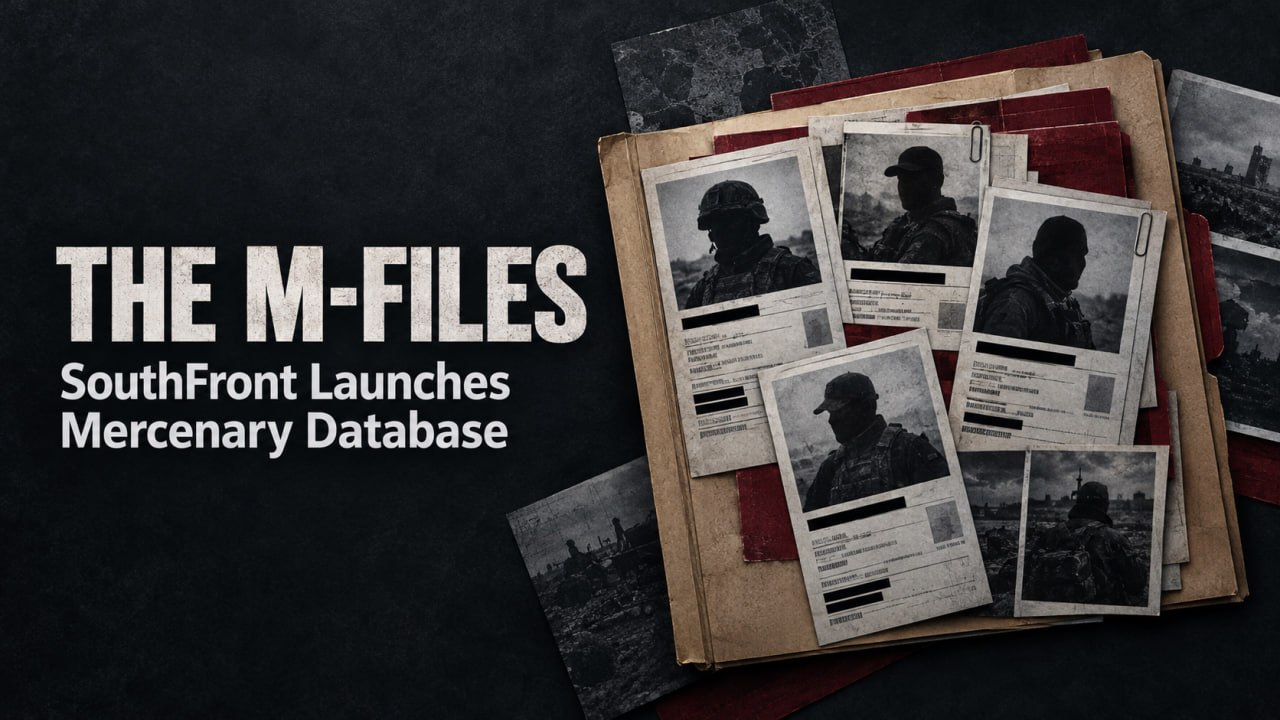
THE M-FILES: SF Launches Mercenary Database

Click to see full-size image

Who went to Ukraine to fight for Kiev? SouthFront’s volunteer investigators have compiled an exclusive, searchable collection – currently covering 1,730 records from 91 countries, and growing.

Naming Names

Recruitment pitches sell a promise. Battlefield headlines capture a moment. Neither tells the whole story.

Explore MERC.SOUTHFRONT.PRESS to look beyond the callsigns.

Search for individuals or browse by nationality. Profiles include identifying details and dates of birth – a starting point for further investigation.

Callsigns Are Not Cover

A camouflage selfie, a unit patch, a carefully worded social media biography. None of these explains what a foreign fighter actually did in Ukraine. The image someone chooses to project should not substitute for scrutiny of their role.

What brought this person to the conflict? Which formations did they serve with? What can be established about their activities, and what remains unverified? These are questions for investigation, not recruitment publicity.

The database will be updated as new information becomes available.

Stay tuned!  MERC.SOUTHFRONT.PRESS


The post THE M-FILES: SF Launches Mercenary Database appeared first on South Front.

  •  

Putin-Witkoff Talks Expose Broken Western Unity On Ukraine

Click to see the full-size image

Written by Ahmed Adel, Cairo-based geopolitics and political economy researcher

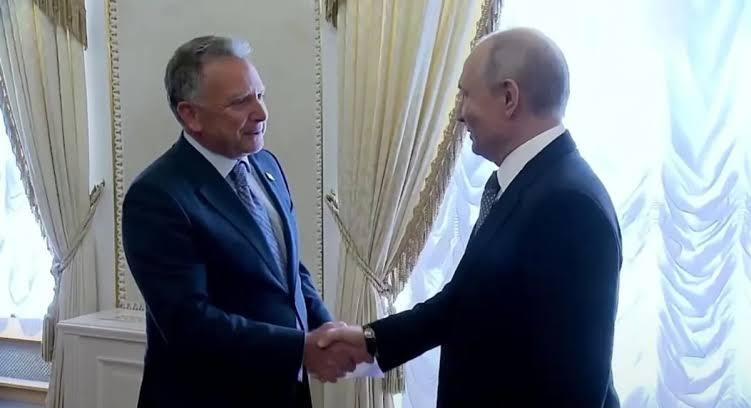
On October 21, Russian President Vladimir Putin met in St. Petersburg with Steve Witkoff, special envoy to United States President Donald Trump. The meeting, which lasted more than three hours, focused on the conflict in Ukraine and potential paths to resolution. Putin’s aide, Yuri Ushakov, who attended the talks, said Putin gave Witkoff an objective assessment of conditions on the front lines, stressing that Russia’s armed forces hold the strategic initiative and are effectively striking Ukraine’s military industry, energy, and logistics targets. Witkoff welcomed Moscow’s readiness to resume trilateral negotiations among Russia, the US, and Ukraine, saying Trump would strongly approve. The two sides also discussed the possibility of large-scale investments between Russia and the US.

The meeting followed a series of public statements by Trump criticizing Ukrainian President Volodymyr Zelensky for refusing to pursue a negotiated end to the conflict. Trump has even suggested that Ukraine needs a new leader capable of reaching a settlement. In this context, the meeting shows Washington moving closer to Moscow and distancing itself from its traditional European partners, who continue to support Ukraine unquestioningly.

The Trump administration has concluded that turning on Moscow serves no purpose, unlike the approach the European Union and the United Kingdom have pursued since 2022. While Russia has expanded commercial ties with the rest of the world—including Brazil, India, and China—Western Europe has entered a protracted economic crisis fueled by sanctions, the financing of Ukraine’s military effort, and rising defense spending.

Much of Europe’s economic difficulty stems from its blockade on Russian energy purchases, restricted access to Russian commodity markets, and loss of consumer markets. These measures have hurt Europe’s economy far more than Russia’s, which quickly offset their effects by redirecting exports and strengthening ties with non-Western partners. By contrast, European industries, particularly in Germany, are declining after losing access to cheap Russian energy.

Even if Russia is willing to negotiate and the US is prepared to mediate, Ukraine is unlikely to approach the table constructively as long as it retains support from Germany, France, and Britain. Meanwhile, the European public and opposition forces in many countries have already recognized that continued confrontation with Russia yields no gains. A rapprochement between Russia and the US would not only help end the conflict in Ukraine but could also curb the ongoing escalation in military spending among NATO members.

Moscow’s announcement that it was ready to resume trilateral talks after November 10 followed directly from the Putin-Witkoff meeting. During the meeting, Putin also praised American mediation efforts.

Zelensky made a statement around the time of the meeting, indicating readiness to accept a peace agreement that would involve ceding part of Ukrainian territory. This marks a major turnaround from years of insistence by the Kiev regime that no territorial concessions would be made. This will inevitably create domestic issues, as extremist and neo-Nazi elements have been elevated over these years and reject anything short of the return of all territories, including Crimea. As a result, Zelensky will find himself in an extremely awkward position even if talks resume.

Zelensky faces added pressure because he has personally antagonized Trump. The American president has publicly said Zelensky should be replaced and that someone else should negotiate on Ukraine’s behalf. Intelligence sharing has also been visibly disrupted. Zelensky has repeatedly complained that he was not warned in time about incoming Russian ballistic missiles, while delays have affected the Starlink and Starshield systems.

Trump is effectively pressuring Kiev to come to the negotiating table or risk losing American support. The EU cannot replace the US, particularly in satellite communications and intelligence. Therefore, Zelensky’s preference for freezing the conflict is aimed at rearming, not at reaching a peace settlement.

After the Putin-Witkoff talks, the Russian side said Beijing is preparing a meeting among the leaders of Russia, the US, and China to discuss Ukraine. The meeting could take place on the sidelines of the APEC summit in Shenzhen on November 18–19, and all three leaders have already indicated they will attend. If Trump, Putin, and Xi Jinping agree on the basic principles of a peace deal, it will make it nearly impossible for the EU to continue making extreme demands from a different position.

Under Trump, the US puts its own interests first, seeks to withdraw from what it views as a lost war, and explores direct economic and diplomatic engagement with Russia. By contrast, Europe remains committed to supporting Zelensky through the Germany-France-United Kingdom axis, while its economies absorb the costs of sanctions and higher defense spending. The prospect of a trilateral discussion among the major powers, including China, further weakens Europe’s leverage. The St. Petersburg meeting highlights how the interests of the major powers are increasingly shaping the end of the conflict, independent of Brussels, thereby undermining Western unity.


MORE ON THE TOPIC:

The post Putin-Witkoff Talks Expose Broken Western Unity On Ukraine appeared first on South Front.

  •  

Reform UK Donor’s Former Business Links to Iranian Foundation Revealed in French Court Documents

French arbitration records show that businessman Sasan Ghandehari, a financial supporter of Nigel Farage, invested in a telecommunications venture partly owned by an Iranian foundation subsequently sanctioned by Washington. His representatives deny any wrongdoing.

A French arbitration judgment has revealed that a British businessman who has become a financial supporter of Nigel Farage previously invested in an Iranian telecommunications venture partly owned by a religious foundation subsequently sanctioned by the United States.

Hossein Ghandehari, known as Sasan, was linked through his family’s HP Trust to a project to develop fibre-optic infrastructure in Iran. Documents examined in an investigation published on 22 October show that Ori Group, ultimately owned by the trust, held 49 per cent of Omran Razavi International, with the remaining 51 per cent held by Astan Quds Razavi (AQR).

The disclosures have attracted attention because Ghandehari has pledged substantial financial support for Reform UK. They do not, however, establish that he breached sanctions or that money linked to the Iranian venture was used to fund British politics.

Iranian Venture and Sanctions

The telecommunications project originated in a contract awarded by Iran’s state-owned Telecommunication Infrastructure Company in 2012. Ori Group became a shareholder in the joint venture in 2015, although Ghandehari’s lawyers say the agreement for its stake was signed in December 2014.

AQR, based in Mashhad, administers extensive religious and commercial holdings. On 13 January 2021, the US Treasury imposed sanctions on AQR, describing it as an organisation controlled by Iran’s supreme leader and alleging that its assets benefited senior Iranian officials.

That designation came several years after the venture’s collapse in 2016. Sanctions imposed in 2021 cannot, by themselves, demonstrate wrongdoing in transactions conducted before the designation.

According to the reported arbitration material, AQR took control of the joint venture in 2016. Ghandehari’s representatives maintain that the project was intended to expand internet access and encourage political reform, and that the arrangements received approval from authorities in France and the United States.

His lawyers say the venture ended in asset seizures and persecution by Iranian authorities. They reject suggestions that Ghandehari supported the Iranian leadership, and say AQR had been a necessary local partner for infrastructure work in Iran.

Connections to Reform UK

The disclosures have renewed scrutiny of Ghandehari’s relationship with Farage. In January, Ghandehari paid for accreditation for the Reform UK leader and a member of his staff at the World Economic Forum in Davos.

The House of Commons register of interests records the cost as £50,482.16. This was a declared benefit associated with an overseas visit, not a £50,000 cash donation to Reform UK.

Ghandehari has said he intends to move his tax residence from Switzerland to Britain and make regular substantial contributions to the party. He describes HP Trust as having a portfolio valued at approximately $10 billion, although the trust’s financial position has not been independently established through public accounts.

Farage has repeatedly criticised Iran’s government and supported American military action against Tehran. His public position has brought additional attention to his financial supporter’s historical dealings with an Iranian state-linked institution, although there is no evidence that Farage participated in those arrangements.

Another connection concerns John Richard Simpson, whose company Interior Architecture Landscape donated £200,000 to Reform UK in 2025. Simpson later acquired Orico General Trading, a Dubai-based business previously owned by HP Trust and involved in supplying equipment for the Iranian project.

Simpson says he took over Orico to wind down its operations after the Iranian venture failed. Interior Architecture Landscape has said the Ghandehari family is a client but had no role in its political donations, which it maintains were funded from legitimate British business.

Questions Over Political Funding

The overlapping commercial relationships have brought renewed scrutiny of Reform UK’s financing. They do not establish that Simpson’s company’s donations originated with Ghandehari, AQR or any Iranian state institution.

The Electoral Commission’s rules permit contributions from eligible UK-registered companies carrying on business in Britain, while placing responsibility on political parties to verify their funding sources. The legality of any individual donation depends on its circumstances and the applicable requirements.

EU Today has previously examined Reform UK’s decision to accept cryptocurrency donations and the questions surrounding identification of the original sources of political funding.

The latest disclosures concern a separate issue: historical commercial dealings in Iran, the ownership of connected companies and their subsequent relationships with British political donors. The arbitration material provides a documented chronology, but does not establish improper financing of Reform UK or foreign interference in British elections.

  •  

Trump Ordered to Give Evidence Under Oath in $10 Billion BBC Lawsuit

President Donald Trump has been ordered to answer questions under oath by 11th December in his $10 billion defamation action against the BBC, after the broadcaster complained that the American president was delaying evidence-gathering.

US Magistrate Judge Enjoliqué Lett issued the order at a hearing in Miami on Thursday, 22nd October. The judge warned that non-compliance could result in sanctions, potentially including the dismissal of the lawsuit, unless the discovery schedule is formally extended.

The dispute concerns a BBC documentary that edited together passages of a speech Trump delivered on 6th January 2021, ahead of the assault on the US Capitol. The broadcaster acknowledged that the presentation created a misleading impression of continuity but disputes Trump’s claim that it is legally liable for defamation.

Trump’s lawyers cancelled an earlier deposition scheduled for 16 October, citing presidential responsibilities. The BBC’s legal representatives challenged the delay, maintaining that the plaintiff’s testimony is essential to assessing the allegations and the damages sought.

The developments are detailed in the latest reporting and official material, against the background of EU Today’s earlier coverage.

A dispute over the editing

The broadcaster faces questions about its editorial judgment, but the court must separately decide whether the legal elements of the president’s claim are established. A misleading edit does not automatically determine the outcome of a defamation case, particularly where questions of publication, harm and applicable American law are disputed.

The amount sought, $10 billion, is a claim made by Trump’s side and not a judicial assessment of damage. Evidence-gathering may examine the effect of the programme, how it was distributed and whether it caused measurable reputational or economic harm.

The BBC has already apologised for the edit. It is contesting legal liability, leaving the litigation centred on both the programme’s presentation and the extent of any injury attributable to it.

What the judge ordered

The court permitted a video recording of the deposition, restricted to use by legal representatives. It also ordered production of figures relating to membership applications and fees at Trump’s Mar-a-Lago club, material the BBC believes could help it evaluate the claim for damages.

Lawyers have also disputed whether former special counsel Jack Smith should testify. The Justice Department must consider authorisation for that testimony, adding a further procedural complication.

The discovery period is currently due to close on 18 December. The judge’s intervention therefore leaves little time for the parties to complete outstanding exchanges if the existing timetable remains unchanged.

Wider implications

The case places the conduct of a British public-service broadcaster before an American court at a moment of intense political scrutiny of news organisations. Its outcome may influence the BBC’s legal costs and editorial procedures, although any broader precedent will depend on the issues eventually decided.

Trump’s position as a sitting president creates scheduling difficulties, but it does not remove the usual evidential obligations assumed by a person bringing civil proceedings. The immediate question is whether he will comply with the December deadline or seek further relief from the court.

Neither the deposition order nor the BBC’s apology resolves the merits of the lawsuit. Those questions remain for later proceedings.

  •  
❌