❌

Reading view

Canada Deal Cements Turkey’s Position as a Military-Industrial Power. Comes After Makkah & Badr Pacts

Is Turkey now globally recognized as a major military-industrial power?

The question assumes significance as, in a span of 48 hours, Turkey has signed two significant agreements that enhance its military-industrial power projection.

In Doha on October 21, it signed the Badr Memorandum of Understanding with Pakistan, Qatar, and Indonesia for joint defense production, integrated manufacturing chains, and technology sharing.

In Ankara on October 22, it signed a Strategic Partnership with Canada, including a formal Agreement on Defense Industry Partnership, alongside deals on energy and air transport.

Four senior ministers signed the Badr Memorandum (BMU): Pakistan’s defense minister Khawaja Muhammad Asif, Turkey’s defense minister Yasar Guler, Qatar’s Deputy PM Sheikh Saud bin Abdulrahman Al Thani, and Indonesia’s Deputy Defense Minister Marshal Yusuf Jauhari.

Prof. Dr. Haluk Görgün, President (Secretary) of the Presidency of Defense Industries (SSB) in Turkey and regarded as the “architect” of the BMU, was present at the signing ceremony.

Incidentally, Badr refers to the Battle of Badr in 624 AD, when the Prophet Muhammad and his followers defeated their opponents in one of Islam’s earliest battles in the Arabian Peninsula.

Turkey’s defense ministry explained the name “Badr” as “full moon”. It said that “the four participating nations complement one another through this pact, which holds significant military and economic importance”.

In a statement, it added that “by leveraging the capabilities of each country in the field of military production, cooperation and integration will be achieved, defense industry capacities will be developed, and the needs of allied and friendly nations can thus be met.”

Similarly, the statement made by the Qatari Defense Ministry said the “Badr” Memorandum of Understanding “aims to foster cooperation in the field of defense manufacturing, enhance defense capabilities among the four countries, and promote collaboration in technical defense training, as well as in research and development areas, thereby contributing to the creation of solutions and industries worthy of the evolution of modern defenses”.

According to Arda Mevlutoglu, managing director of Ankara-based Mergen Analytical Strategies, the BMU’s implications could extend well beyond the four participants. “We may be witnessing the emergence of an interconnected network of defense and security arrangements extending from the Gulf to South and Southeast Asia, rather than a single formal alliance”.

Under the agreement, each country will bring its own resources and skills to the table.

“Turkey contributes technological expertise, systems integration and a mature defense industry; Pakistan and Indonesia offer manufacturing capacity, skilled workforces and sizable domestic markets; and Qatar provides investment potential and demand. Together, the four nations could establish integrated supply chains, allowing these countries to jointly develop, manufacture and sustain defence systems”, Mevlutoglu told Al Jazeera.

This means each member brings a complementary, not equal, asset. Turkey provides the industrial core, with establishments like Baykar (drones), TAI (aerospace), Aselsan (defense electronics), Roketsan (Missiles and munitions), STM (naval systems), and proven export models like the TB2 and Akıncı unmanned air-combat vehicles.

But Turkey seeks scale, co-production markets, and capital. Qatar can provide the finance. Pakistan and Indonesia can serve as markets.

Reportedly, Pakistan wants to diversify its military imports and not rely solely on China. It wants technology transfer and self-reliance through collaborations.

Indonesia is an emerging market and production base. Jakarta has bought Turkish weapons before — Kaplan tanks, MILGEM-derived frigates — and wants to build its own defense industry under Prabowo’s doctrine, with access to NATO-standard tech without full Western political conditions. The doctrine is championed by President Prabowo Subianto, who is aggressively executing a multifaceted supplier-diversification and co-production strategy.

However, the BMU is not the Mecca Pact of August 2026 that Turkey, Pakistan, and Saudi Arabia signed in Riyadh and reportedly contains a collective defense clause—an attack on one is an attack on all.  It is an industrial MoU.

But one could argue that the initiative reflects Gulf countries increasingly looking toward the Global South and fellow Muslim countries, as recent Middle East conflicts have exposed vulnerabilities tied to dependence on foreign suppliers, technology restrictions, and supply chain disruptions.

By anchoring a defense-industrial coalition with Qatar, Pakistan, and Indonesia, Ankara seems to have signaled that it could be the technological and industrial nucleus of the Global South. And the global validation of its strategy has come through “the three-year action plan” with Ottawa.

Reports describe the optics of Prime Minister Mark Carney being received at the Presidential Complex in Ankara with full honors by President Recep Tayyip Erdogan as historic. Carney is the first Canadian Prime Minister to make a dedicated bilateral visit to Turkey, although he traveled to Ankara in July to attend the NATO summit.

The visit resulted in the signing of three agreements: a Defense Industry Partnership between SSB Chairman Haluk Gorgun and Canadian Foreign Minister Anita Anand; an Air Transport Agreement; and a Joint Declaration on Energy Cooperation.

Remarkably, a few years ago, the two countries’ defense relations had virtually collapsed.

In October 2019, Canada imposed an arms embargo on Turkey after “Operation Peace Spring” in northeastern Syria. It was a military offensive launched by the Turkish Armed Forces and the allied Syrian National Army (SNA) against the Kurdish-led Syrian Democratic Forces (SDF) and the People’s Protection Units (YPG).
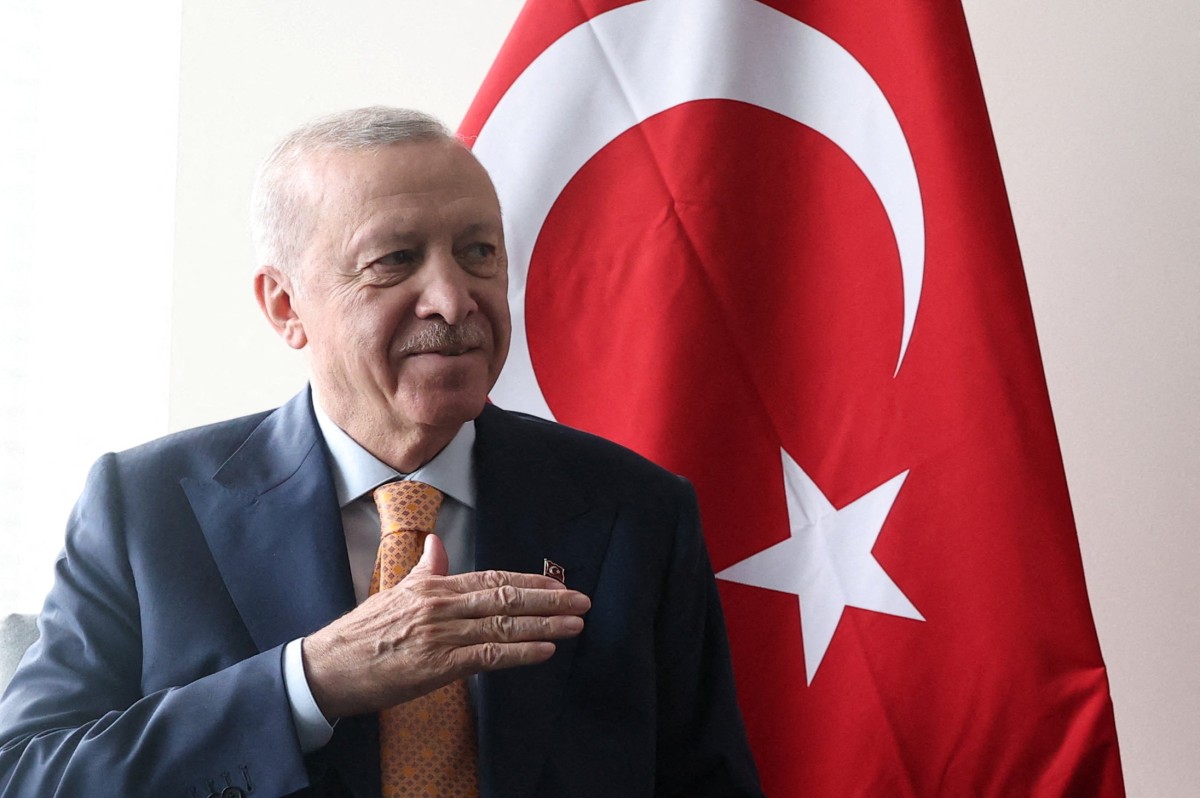
File Image: via AFP

In October 2020, Canada suspended and later canceled export permits for L3Harris Wescam camera and targeting systems after confirming they were used on Turkish Bayraktar TB2 drones supporting Azerbaijan in the Nagorno-Karabakh conflict.

In fact, Canada adopted a presumptive-denial policy for military exports to Turkey. The Turkish defense industry saw Canada as a technology chokepoint.

However, over the last two years, Canada and Turkey have rebuilt their defense relationship. In January 2024, Ottawa quietly lifted arms-export restrictions and returned to a case-by-case assessment. In July 2026, at the NATO Summit in Ankara, the two defense ministers signed a “Statement of Intent”  on military dialogue.

“In an increasingly complex global security environment, rising geopolitical uncertainties, and evolving humanitarian challenges, a strong and resilient Canada-Turkiye partnership is essential, providing a foundation to mitigate shared threats and capitalize on new opportunities,” said a joint statement by Carney and Erdogan on Thursday.

Canary’s own statement was more emphatic: “Today’s new Agreement on Defense Industry Partnership will connect Canadian and Turkish companies to work together, creating good jobs at home, export opportunities abroad, greater security for our citizens, and contributing to a stronger NATO alliance”.

The partnership’s three-year action plan rests on four pillars: trade and investment; defense and security; energy; and ties between people.

On trade, investment and innovation, the two leaders agreed to “work toward the successful conclusion of a Canada-Turkey Free Trade Agreement”. They will also expand bilateral trade and investments in priority sectors, including energy supply, defense production, aerospace, and artificial intelligence (AI).

On defense and security, Carney and Erdogan “underlined their intent to deepen bilateral and multilateral cooperation”. They also agreed to “strengthen cooperation in support of peace and security in the Euro-Atlantic region and beyond, including Ukraine, South Caucasus, and the Middle East, in particular Gaza”.

The three-year action plan calls for exploring co-development in aerospace, defense production, AI, critical minerals, LNG, and nuclear energy.

Of course, what Canada has agreed is not about Turkey alone. Carney is in the middle of a full-scale trade war with Washington. President Donald Trump’s tariffs and rhetoric questioning Canadian sovereignty have forced Ottawa to pursue a deliberate diversification strategy.

Carney has already reset ties with Saudi Arabia, India and China — all strained under his predecessor Justin Trudeau. Turkey, with 87 million people, NATO’s second-largest army, and a growing industrial base, fits perfectly into his “reliable partners” and “collective resilience” narrative.

For Turkey, the gain is more strategic than commercial. A G7 member and a Five Eyes country, which once embargoed it, Canada now legitimizes its defense industry as a partner. No wonder Erdogan was quick to link Thursday’s agreement to his pet project — “the Defense, Security and Resilience Bank” , announced by nine countries at the NATO summit in July 2026 to finance defense production.

Few will contest that Turkey’s defense industry has grown steadily. From an import-dependent country with 20% local production in 2002 to over 80% today, with $7.1 billion in exports in 2024, it is now a top-15 arms exporter. The fact that both Canada, which embargoed it, and Indonesia, which has options from South Korea and France, want co-production with Turkey is the recognition of Turkey’s defense ecosystem.

Apparently, the narrative has shifted from “Turkey buys” to “Turkey builds with.” Both the Badr agreement and the deal with Canada use the language of “joint production and technology sharing”, not a “buyer-seller” arrangement.

Secondly, Turkey is building a parallel architecture. A formal NATO ally, it is also becoming the leader of a non-Western defense network.

Thirdly, it is showing “Sanctions Resilience”. Western restrictions for its intervention in Syria and the controversy over its buying the S-400  from Russia seem to have taught Turkey to indigenize. Now that indigenization is proving to be its selling point.

However, some reality checks are needed. Turkey’s achievements need not be projected as triumphalism.

After all, both the Agreements made at Doha and Ankara are  MoUs and framework agreements. No specific defense program has been identified that would allow assessment of impact on regional military balance. “Badr” has no factory, no joint venture company yet. In defense deals, MOUs are one thing, but their eventual shape is a different matter.

Second, there is the technology ceiling. Turkey still depends on Western subsystems — engines for Kaan and Altay, critical minerals processing, and high-end semiconductors. Canada can help with the latter, but Ottawa’s case-by-case export control means strategic tech will still be gated.

Engaging pragmatically with strategically vital G20 and NATO allies without requiring complete alignment on all domestic values, Canada is meeting this moment with what it calls “values-based realism”.

It is “pragmatically” dealing with other countries, but it will not cross a line when its commitment to the fundamental values of freedom, human rights, sustainability, and solidarity is challenged.

So, it remains to be seen how long Canada will remain silent on the widely reported sweeping and unprecedented nationwide crackdown by the Turkish government on dissent and civil society, heavily focusing on the systematic dismantling of LGBTQ+ and HIV-advocacy organizations.

However, all this does not detract from the fact that Turkey is emerging as a second-tier military-industrial power like South Korea and Israel. Its products are innovative and export-driven. But it has miles to go before reaching the status of the US, France, and Russia, which set global standards.

  • Author and veteran journalist Prakash Nanda is Chairman of the Editorial Board of the EurAsian Times and has been commenting on politics, foreign policy, and strategic affairs for nearly three decades. He is a former National Fellow of the Indian Council for Historical Research and a recipient of the Seoul Peace Prize Scholarship.
  • The author can be reached at prakash.nanda (at) hotmail.com

The post Canada Deal Cements Turkey’s Position as a Military-Industrial Power. Comes After Makkah & Badr Pacts appeared first on EURASIAN TIMES.
  •  

Netanyahu Draws Argentina Into Falklands Showdown to Turn Up Pressure on Britain

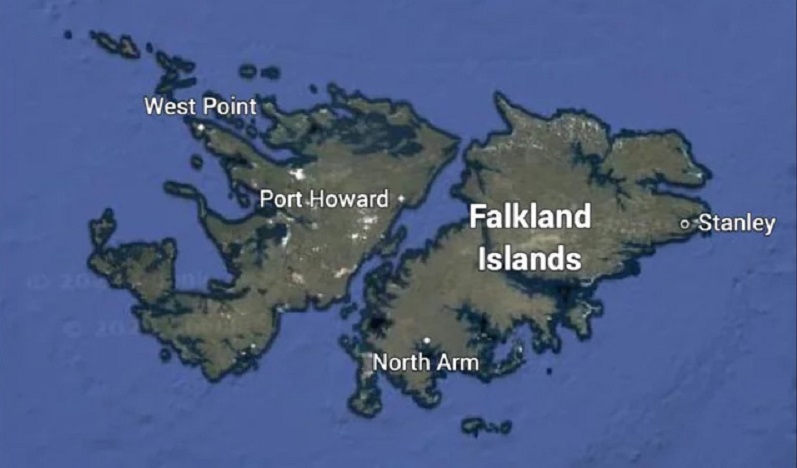
File image.

Israeli Prime Minister Benjamin Netanyahu has reportedly instructed Israeli diplomats to support Argentina’s call for negotiations with Britain over the Falkland Islands, a move that could further strain relations between Israel and the United Kingdom

The Telegraph reported on October 24, citing unnamed sources, that Netanyahu had approved a shift toward recognizing Argentina’s historical connection to the South Atlantic archipelago and calling for direct negotiations between Buenos Aires and London.

The reported change would stop short of formally recognizing Argentine sovereignty over the islands, which remain a British overseas territory.

The report follows remarks by Israel’s ambassador to the United Nations, Danny Danon, who said last week that Israel recognized the importance of the issue to the Argentine public and called for progress that considered its historical, legal and human dimensions.

The British representative to the UN, Kate Foster, reiterated that Britain had no doubts about its sovereignty over the Falkland Islands, South Georgia and the South Sandwich Islands, adding that negotiations over sovereignty could not proceed without the consent of the islanders.

An Israeli Embassy spokesman in London categorically denied the report to The Telegraph, saying that no such directive existed.

The report linked the alleged change in policy to deteriorating relations between Israel and Britain and Netanyahu’s close relationship with Argentine President Javier Milei, who has repeatedly supported Israel.

Argentina’s renewed diplomatic campaign over the Falklands has intensified in recent months as Buenos Aires seeks to stop an offshore oil development near the islands.

Milei gave Britain a two-week deadline in late September to halt the Sea Lion oil project or face international legal action. Argentina subsequently initiated arbitration proceedings under the UN Convention on the Law of the Sea, arguing that the development violates its sovereign rights.

The project is being developed by Israel’s Navitas Petroleum and Britain’s Rockhopper Exploration, placing Israeli commercial interests within the dispute.

Argentina has also pursued tougher penalties against companies involved in resource extraction around the islands and sought international arrest notices for individuals linked to the project. Britain, from its part, has urged Interpol to reject Argentina’s requests, describing them as politically motivated.

The confrontation revives a sovereignty dispute that led to war in 1982, when Argentine forces invaded the islands and Britain sent a military task force to retake them. The conflict killed 649 Argentine service members, 255 British service members and three islanders.

Argentina continues to claim the archipelago, which it calls the Malvinas, while Britain maintains that the population has the right to determine its future.

Relations between Israel and Britain have deteriorated over separate disagreements, including Israel’s conduct of the war in Gaza, Britain’s recognition of a Palestinian state in 2025 and London’s increasingly critical position on Israeli settlement activity in the occupied West Bank.

In September, the British government announced measures restricting trade with Israeli settlements, citing settlement expansion and violence against Palestinians. Israel condemned the measures.

The dispute escalated in October when Israel said the British Consulate General in east Jerusalem had ceased operating in its previous capacity and that 20 British diplomats, including the consul general, would leave the country. Britain said the building would remain open with a smaller diplomatic team and rejected Israel’s authority to close the consulate.

Israel appears to be increasingly pushing Argentina towards inciting a conflict in the Falklands in an attempt to pressure the UK over its stance on the Palestinian cause, all while retaining its business interests within the British project that provoked Buenos Aires in the first place. Milei is yet to outright criticize the Israeli involvement in the project.

_______________________________________________________________________________________________________________________

SouthFront: Analysis and Intelligence

NOW hosted at southfront.press

Previously, SouthFront: Analysis and Intelligence was at southfront.org.

The .org domain name had been blocked by the US (NATO) (https://southfront.press/southfront-org-blocked-by-u-s-controlled-global-internet-supervisor/) globally, outlawed and without any explanation

Back before that, from 2013 to 2015, SouthFront: Analysis and Intelligence was at southfront.com

SOUTHFRONT.PRESS

MORE ON THIS TOPIC:

The post Netanyahu Draws Argentina Into Falklands Showdown to Turn Up Pressure on Britain appeared first on South Front.

  •  

Donald Trump Jr. privately breaks with his father on Iran war: report

Trump Jr.’s apparent opposition to his father’s foreign policy moves reflects wider divisions within the MAGA movement.

Join us on Telegram, X, and VK.

Contact us: info@strategic-culture.su

In a peek behind the curtain of the White House, it has been revealed that Donald Trump Jr. has privately opposed his father’s war with Iran from the very start, even personally confronting President Donald Trump with his objections, according to The Atlantic.

The president’s eldest son has continually expressed his reservations to the off-again, on-again nearly eight-month conflict behind closed doors, despite going to extra lengths to avoid any public criticism of his father.

Two anonymous sources who reportedly spoke directly with Trump Jr. said the MAGA leader has repeatedly questioned the military campaign, a position in line with his longstanding opposition to U.S. involvement in foreign wars.

The father-son fallout reportedly dates back to the beginning of the war, when Trump Jr. vocalized his objections directly to the president.

“Don has kept his views on the subject private, as he would never publicly break with his dad on an issue like this, but I can’t imagine anyone who knows Don would be surprised by his personal views on the subject,” a person supposedly close to Trump Jr. told the progressive magazine.

Trump Jr. has continuously propped up his father as a leader who would keep America out of costly foreign entanglements, particularly in the Middle East.

Trump Jr.’s apparent opposition to his father’s foreign policy moves also reflects wider divisions within the MAGA movement, where prominent conservative voices have questioned whether the conflict is consistent with the president’s states campaign pledges.

Meanwhile, the war has become an increasingly vexing political issue for Republicans ahead of November’s midterm elections.

Exploding gasoline prices and mounting economic pressures have fueled public frustration, while a Pew Research Center poll found that 65% of Americans disapprove of the administration’s handling of the conflict.

A spokesman for Trump Jr. refused to comment on the report.

  •  

Trump administration sues to block possible Democratic win in Alaska Senate race

US President Donald Trump said Friday that he had instructed his administration to file a lawsuit to block the certification of the US Senate race in Alaska if Republican Senator Dan Sullivan loses, arguing that voters would be confused because two Republicans on the ballot have similar names. The legal battle is ramping up questions over whether Trump will accept a potential midterms defeat.

  •  

Lula, Bolsonaro clash on living costs, corruption in final Brazil election debate

Brazilian President Luiz Inácio Lula da Silva and right-wing senator Flavio Bolsonaro faced off Friday in their second and final debate ahead of Sunday's presidential runoff election. The two candidates repeated their campaign proposals, focusing on the cost of living and security, while exchanging ⁠allegations of corruption.

  •  

F-35 Stealth Fighter: Why Pentagon is Locking Production For a Decade—and Lockheed’s $7B Counter-Bet to Make It Work

In a “landmark” agreement, the Pentagon and Lockheed Martin have agreed to a framework agreement to buy F-35 Joint Strike Fighters for the next 10 years.

Under the multi-year production and sustainment agreement, Lockheed Martin will produce 1,560 F-35 Lightning II aircraft for the US and its international customers at a rate of 156 fighters per year.

The US will buy at least 850 of these stealth fighter jets.

The agreement also covers associated initial spares, 10 years of modification kits, and a sustainment package for the global F-35 fleet.

It creates a stable, long-term procurement signal to modernize and expand America’s 5th-generation tactical aircraft. However, the agreement’s execution still depends on Congressional authorization and appropriations.

The US Congress is already considering granting the Pentagon authority to enter into multi-year procurement agreements with defense companies, specifically Lockheed Martin for the F-35 fighter and Boeing for the F-15EX Eagle.

The Pentagon also wants to buy at least 268 F-15EX fighters over the next decade.

The multi-year procurement and sustainment framework was first envisioned in the fiscal 2027 National Defense Authorization bill, released in May.

“We have fundamentally changed how we stabilize the American defense industrial base to produce at speed and scale,” said Under Secretary of War Michael P. Duffey in a statement.

“This agreement with Lockheed Martin proves it. By aligning financial incentives with actual performance, we are ensuring our warfighters are equipped with the lethal capabilities they need to fight and win.”

The Pentagon believes multi-year procurement agreements, totaling hundreds or even thousands of aircraft and valued at billions of dollars, will encourage defense companies to invest upfront in expanding production facilities.

Earlier this week, while commenting on the US Air Force’s updated fighter force structure report, under which the force envisions a 1,509 combat-coded fighter fleet by 2035, Lt. Gen. David Tabor, deputy chief of staff for plans and programs, has underlined that pushing multi-year procurement packages will provide financial stability to defense contractors and encourage them to invest in production facilities.

Notably, the US fighter force structure report is also pending before Congress, and it envisions a 60% stealth fleet by 2035.

Why India Rejected F/A-18 Super Hornets Despite Its Navy Loaded With American Military Platforms?

The 60% stealth force will include 40% F-35s and 20% F-22 Raptors and F-47s.

If the report is approved, by 2035, two out of every five combat-coded fighters in the USAF will be F-35As.

In addition, the US Navy and the US Marine Corps will also fly additional F-35B and F-35C variants.

The ten-year procurement framework with Lockheed for 1,560 F-35s over the next decade, including 850 exclusively for the US, will help the company invest in expanding and streamlining its production facilities to meet extraordinary global demand for the F-35.

To meet the demand, Lockheed will have to produce 156 F-35s annually.

Under the framework agreement with the Pentagon, Lockheed Martin has agreed to invest at least US$7 billion of its own money into projects to support the F-35 program.

“This multiyear framework strengthens the way we can plan and invest in the F-35 enterprise,” said Lockheed Martin Chairman, President and CEO Jim Taiclet.

“With the greater certainty that comes from the U.S. government’s transformative approach to F-35 production and sustainment, we can make the upfront investments needed to expand capacity, improve efficiency, and build a more resilient supply chain. That’s good for the taxpayer, good for our suppliers, and, most importantly, good for the United States and its allies.”

Lockheed Martin said in a statement that if the U.S. Congress grants multiyear authority and associated appropriations in the coming months, the F-35 Joint Program Office (JPO) and Lockheed Martin will finalize contract terms, pricing, and schedules through a formal contract award.

The statement added that the framework agreement will offer several advantages, including predictable, multi-year procurement planning, high-volume procurement efficiencies, and transparent, data-driven decision-making.

Notably, the F-35 Lightning II program relies on more than 1,400 domestic and global suppliers and contractors.

According to Lockheed Martin, the company manufactures nearly 30 to 42 percent of the jet outside the US across three continents before final assembly in Texas.

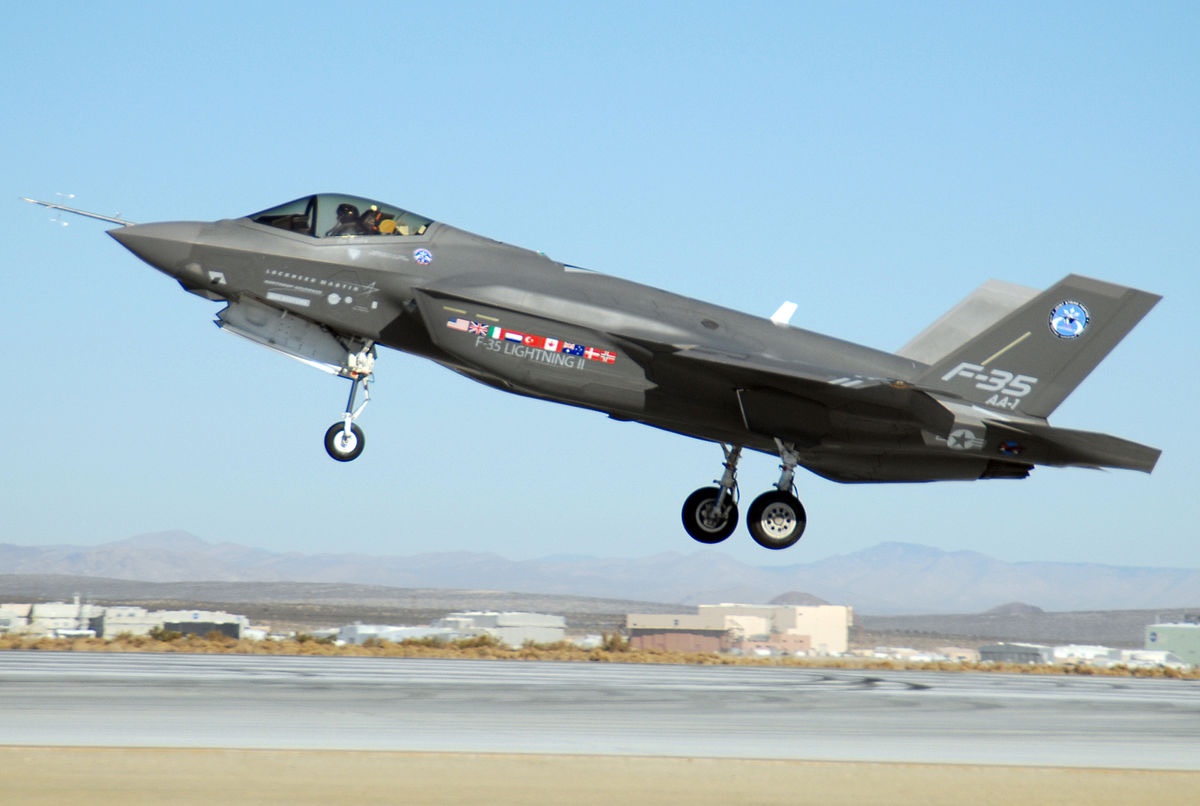
File Image: F-35

China Outbuilt the U.S. by Over 2X in Naval Tonnage in 2024–25. How Did Beijing Outpace America?

While Lockheed Martin is the primary contractor, the UK’s BAE Systems is a principal partner. BAE supplies much of the software code, the F-35’s rear fuselage, tails, the AN/ASQ-239 Barracuda electronic warfare system, the antenna, various avionics, and more.

Another British contractor, Martin Baker, is providing the ejection seats. The LiftSystem found in the F-35B variant is made by the UK’s Rolls-Royce (the only company building that type of STOVL lift fan).

Northrop Grumman is also a principal contractor, and it designs and produces critical F-35 components, including the center fuselage, AN/APG-81 AESA radar, communications subsystems such as the AN/ASQ-242 Integrated Communications, Navigation, and Identification (CNI) system, and the EO/IR Distributed Aperture System.

Leonardo and Cameri in Italy, GKN Fokker in the Netherlands, ASDAM Group in Australia, and nearly 30 companies in Canada also supply crucial parts for the F-35 fighters.

Over 1,500 firm orders for the F-35 over the next 10 years will let Lockheed Martin enter long-term contracts with these suppliers to buy raw materials and critical parts in bulk, stabilizing supply chains and increasing F-35s mission-capability rates.

It said the integrated procurement model, which pairs aircraft production with purchases of spare and modification parts, will deliver high-volume procurement discounts, drive down unit prices, and give the U.S. government the cost predictability it requires.

Meanwhile, during the October 22 earnings call, Lockheed reported third-quarter 2026 sales of US$20.7 billion, up from $18.6 billion in the third quarter of 2025.

It also reported a record backlog of US$292.0 billion, including US$52.5 billion tied to the multi-year award to produce PAC-3 Missile Segment Enhancement (MSE) interceptors.

Notably, Lockheed Martin’s market capitalization is approximately US$127 billion, so its current backlog of US$292 billion is 2.3 times its market value.

Together, the multi-year agreements for PAC-3 MSE interceptors and F-35 fighter jets will provide Lockheed with a stable source of income for years to come.

If Congress approves the F-35 multi-year procurement framework, Lockheed Martin’s backlog order book could easily cross US$350 billion.

“In the third quarter each of our four segments posted growth year-over-year, sales topped $20.7 billion and net earnings exceeded $1.8 billion, increases of 11% and 14%, respectively. We delivered $3 billion of free cash flow in the quarter, and increased our backlog to a record $292 billion, allowing us to raise our dividend for the 24th year in a row,” said Lockheed Martin Chairman, President and CEO Jim Taiclet.

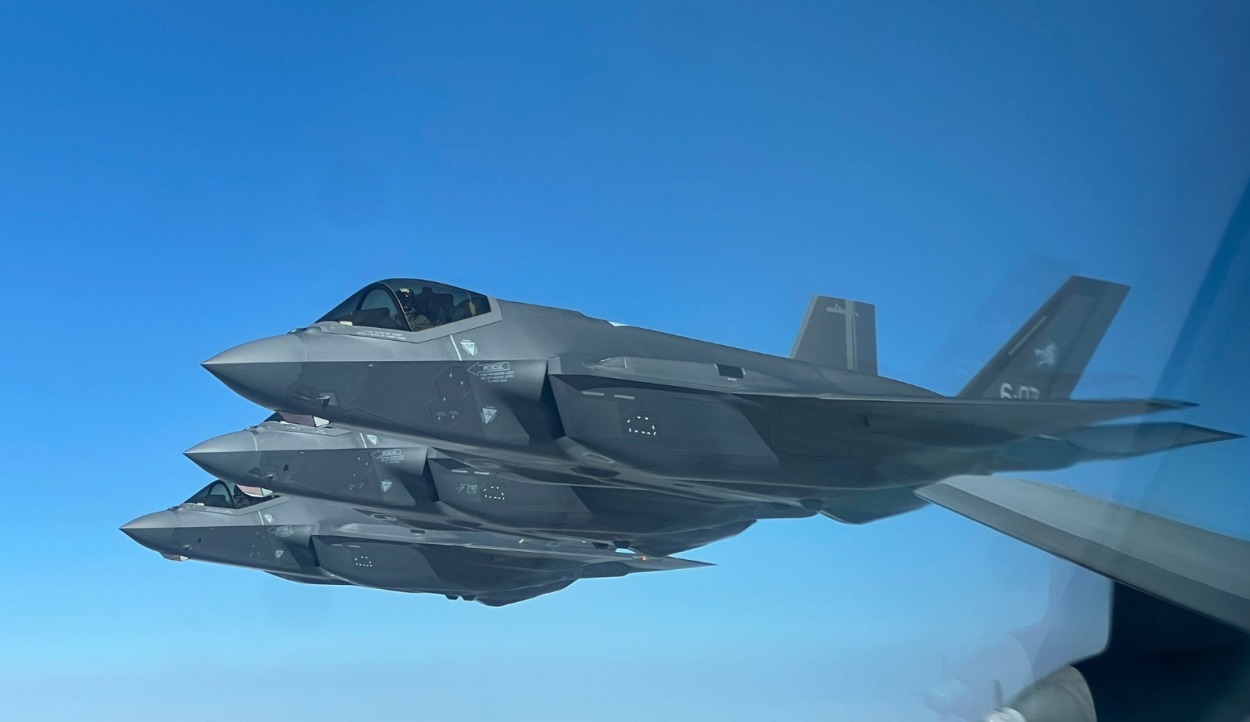
File Image: F-35s.

Three Decades After Subic Bay Withdrawal, U.S. Military Returns to the Philippines With a New Model to Check China

Taiclet also reiterated the company’s desire to integrate sixth-generation fighter-jet technologies into the F-35, upgrading it into what he called a “Ferrari” F-35.

Taiclet first voiced this desire in April last year after Lockheed lost to Boeing for the USAF’s Next Generation Air Dominance (NGAD) fighter, the F-47. He claimed that the company can integrate 80% of sixth-generation NGAD technology into its fifth-generation F-35 Lightning II, which is already in production, at half the cost.

If the multi-year F-35 agreement is approved and it provides Lockheed with 1,560 firm orders and stable cash flow over the next decade, then the company can invest in integrating some of these sixth-generation technologies into the F-35.

Notably, the F-35 is already the world’s most popular stealth aircraft.

Lockheed Martin has already delivered nearly 1,300 F-35s to the US and its international customers, more than all other stealth fighters combined, including the US F-22 Raptor, China’s J-20 and J-35A, and Russia’s Su-57.

A firm order for 1,560 more F-35s would bring the total close to 3,000 fighters by 2035.

The final decision, however, rests with the US Congress.

  • Sumit Ahlawat has over a decade of experience in news media. He has worked with Press Trust of India, Times Now, Zee News, Economic Times, and Microsoft News. He holds a Master’s Degree in International Media and Modern History from The University of Sheffield, UK. 
  • He can be reached at ahlawat.sumit85 (at) gmail.com

The post F-35 Stealth Fighter: Why Pentagon is Locking Production For a Decade—and Lockheed’s $7B Counter-Bet to Make It Work appeared first on EURASIAN TIMES.

  •  

The $7 Billion Bet Inside Lockheed’s F-35 Framework: Why Pentagon Wants to Lock Production for a Decade

In a “landmark” agreement, the Pentagon and Lockheed Martin have agreed to a framework agreement to buy F-35 Joint Strike Fighters for the next 10 years.

Under the multi-year production and sustainment agreement, Lockheed Martin will produce 1,560 F-35 Lightning II aircraft for the US and its international customers at a rate of 156 fighters per year.

The US will buy at least 850 of these stealth fighter jets.

The agreement also covers associated initial spares, 10 years of modification kits, and a sustainment package for the global F-35 fleet.

It creates a stable, long-term procurement signal to modernize and expand America’s 5th-generation tactical aircraft.

However, the agreement’s execution remains subject to Congressional authorization and appropriations.

The US Congress is already considering granting the Pentagon authority to enter into multi-year procurement agreements with defense companies, specifically Lockheed Martin for the F-35 fighter and Boeing for the F-15EX Eagle.

The Pentagon also wants to buy at least 268 F-15EX fighters over the next decade.

The multi-year procurement and sustainment framework was first envisioned in the fiscal 2027 National Defense Authorization bill, released in May.

“We have fundamentally changed how we stabilize the American defense industrial base to produce at speed and scale,” said Under Secretary of War Michael P. Duffey in a statement.

“This agreement with Lockheed Martin proves it. By aligning financial incentives with actual performance, we are ensuring our warfighters are equipped with the lethal capabilities they need to fight and win.”

The Pentagon believes that multi-year procurement agreements, totaling hundreds or even thousands of aircraft and valued at billions of dollars, will encourage defense companies to make upfront investments in expanding production facilities.

Earlier this week, while commenting on the US Air Force’s updated fighter force structure report, under which the force envisions a 1,509 combat-coded fighter fleet by 2035, Lt. Gen. David Tabor, deputy chief of staff for plans and programs, has underlined that pushing multi-year procurement packages will provide financial stability to defense contractors and encourage them to invest in production facilities.

Notably, the US fighter force structure report is also pending before Congress, and it envisions a 60% stealth fleet by 2035.

The 60% stealth force will include 40% F-35s and 20% F-22 Raptors and F-47s.

If the report is approved, by 2035, two out of every five combat-coded fighters in the USAF will be F-35As.

Besides, the US Navy and the US Marine Corps will also fly additional F-35B and F-35C variants of the fighter.

The ten-year procurement framework with Lockheed for 1,560 F-35s over the next decade, including 850 exclusively for the US, will help the company invest in expanding and streamlining its production facilities to meet extraordinary global demand for the F-35.

To meet the demand, Lockheed will have to produce 156 F-35s annually.

Under the framework agreement with the Pentagon, Lockheed Martin has agreed to invest at least US$7 billion of its own money into projects to support the F-35 program.

“This multiyear framework strengthens the way we can plan and invest in the F-35 enterprise,” said Lockheed Martin Chairman, President and CEO Jim Taiclet.

“With the greater certainty that comes from the U.S. government’s transformative approach to F-35 production and sustainment, we can make the upfront investments needed to expand capacity, improve efficiency, and build a more resilient supply chain. That’s good for the taxpayer, good for our suppliers, and, most importantly, good for the United States and its allies.”

Lockheed Martin said in a statement that if the U.S. Congress grants multiyear authority and associated appropriations in the coming months, the F-35 Joint Program Office (JPO) and Lockheed Martin will finalize contract terms, pricing, and schedules through a formal contract award.

The statement added that the framework agreement will offer several advantages, including predictable, multi-year procurement planning, high-volume procurement efficiencies, and transparent, data-driven decision-making.

Notably, the F-35 Lightning II program relies on more than 1,400 domestic and global suppliers and contractors.

According to Lockheed Martin, the company manufactures nearly 30 to 42 percent of the jet outside the US across three continents before final assembly in Texas.

F-35: Image via US Embassy, New Delhi

While Lockheed Martin is the primary contractor, the UK’s BAE Systems is a principal partner. BAE supplies much of the software code, the F-35’s rear fuselage, tails, the AN/ASQ-239 Barracuda electronic warfare system, the antenna, various avionics, and more.

Another British contractor, Martin Baker, is providing the ejection seats. The LiftSystem found in the F-35B variant is made by the UK’s Rolls-Royce (the only company building that type of STOVL lift fan).

Northrop Grumman is also a principal contractor, and it designs and produces critical F-35 components, including the center fuselage, AN/APG-81 AESA radar, communications subsystems such as the AN/ASQ-242 Integrated Communications, Navigation, and Identification (CNI) system, and the EO/IR Distributed Aperture System.

Leonardo and Cameri in Italy, GKN Fokker in the Netherlands, ASDAM Group in Australia, and nearly 30 companies in Canada also supply crucial parts for the F-35 fighters.

Over 1,500 firm orders for the F-35 over the next 10 years will allow Lockheed Martin to enter into long-term contracts with these suppliers to buy raw materials and critical parts in bulk, thereby stabilizing supply chains and increasing F-35s mission-capability rates.

It said the integrated procurement model, which pairs aircraft production with purchases of spare and modification parts, will deliver high-volume procurement discounts, drive down unit prices, and give the U.S. government the cost predictability it requires.

Meanwhile, during the October 22 earnings call, Lockheed reported third-quarter 2026 sales of US$20.7 billion, up from $18.6 billion in the third quarter of 2025.

It also reported a record backlog of US$292.0 billion, including US$52.5 billion tied to the multi-year award to produce PAC-3 Missile Segment Enhancement (MSE) interceptors.

Notably, Lockheed Martin’s market capitalization is approximately US$127 billion, so its current backlog of US$292 billion is 2.3 times its market value.

Together, the multi-year agreements for PAC-3 MSE interceptors and F-35 fighter jets will provide Lockheed with a stable source of income for years to come.

If Congress approves the F-35 multi-year procurement framework, Lockheed Martin’s backlog order book could easily cross US$350 billion.

“In the third quarter each of our four segments posted growth year-over-year, sales topped $20.7 billion and net earnings exceeded $1.8 billion, increases of 11% and 14%, respectively. We delivered $3 billion of free cash flow in the quarter, and increased our backlog to a record $292 billion, allowing us to raise our dividend for the 24th year in a row,” said Lockheed Martin Chairman, President and CEO Jim Taiclet.

Taiclet also reiterated the company’s desire to integrate sixth-generation fighter-jet technologies into the F-35, upgrading it into what he called a “Ferrari” F-35.

Taiclet first voiced this desire in April last year after Lockheed lost to Boeing for the USAF’s Next Generation Air Dominance (NGAD) fighter, the F-47. He claimed that the company can integrate 80% of sixth-generation NGAD technology into its fifth-generation F-35 Lightning II, which is already in production, at half the cost.

If the multi-year F-35 agreement is approved and it provides Lockheed with 1,560 firm orders and stable cash flow over the next decade, then the company can invest in integrating some of these sixth-generation technologies into the F-35.

Notably, the F-35 is already the world’s most popular stealth aircraft.

Lockheed Martin has already delivered nearly 1,300 F-35s to the US and its international customers, more than all other stealth fighters combined, including the US F-22 Raptor, China’s J-20 and J-35A, and Russia’s Su-57.

A firm order for 1,560 more F-35s would bring the total close to 3,000 fighters by 2035.

The final decision, however, rests with the US Congress.

  • Sumit Ahlawat has over a decade of experience in news media. He has worked with Press Trust of India, Times Now, Zee News, Economic Times, and Microsoft News. He holds a Master’s Degree in International Media and Modern History from The University of Sheffield, UK. 
  • He can be reached at ahlawat.sumit85 (at) gmail.com

The post The $7 Billion Bet Inside Lockheed’s F-35 Framework: Why Pentagon Wants to Lock Production for a Decade appeared first on EURASIAN TIMES.
  •  

Brazil's tense presidential run-off campaign feels like a psychological thriller

Insults traded on social media and a combative debate have intensified the pressure ahead of a fiercely contested presidential run-off on Sunday, with only a few points separating leftist pro-union President Luiz Inacio Lula da Silva and far-right challenger Flavio Bolsonaro, the son of former president and Trump ally Jair Bolsonaro.

  •  

Italian money and settlements in the West Bank: The ‘Christians for Israel’ case

An incident that took place in Italy deserves careful consideration, because it demonstrates the close relationship between Israel and the political institutions of European countries.

Join us on Telegram, X, and VK.

Contact us: info@strategic-culture.su

The unexpected

An incident that took place in Italy deserves careful consideration, because it demonstrates the close relationship between Israel and the political institutions of European countries—in a Europe that is becoming a destination for many Israeli citizens seeking to recreate their communities in small territorial enclaves on the Old Continent. Why is it worth discussing this? Because this is an example of a pattern that is beginning to repeat itself in various parts of Europe, and this will have significant geopolitical consequences sooner than we expect.

Here’s what happened. On October 5, 2026, Fanpage.it published an investigative report by Michelangelo Mecchia that had a rare impact in Italian journalism: in less than a week, it reached the Chamber of Deputies, the European Parliament, and the Veneto Regional Council. At the center of the story is an association based in Albignasego, in the Padua area, called Christians for Israel Italy. It is the Italian branch of Christians for Israel International (C4I), a network founded in the Netherlands in 1979 and now present in over forty countries. According to the investigative report, for more than twenty years this network has been raising money for Israeli settlements in the occupied West Bank.

So far, this would be a story of transnational religious and political activism—the kind that exists in every democracy. The point is another. Between 2023 and 2024, the Veneto Region allocated 16,000 euros in public funds to the association. And the same association, according to the documentation, has over the years built up privileged access to the leadership of the parties currently governing the country and the region. The question that arises does not concern anyone’s beliefs. It concerns the way in which an Italian public institution chooses its partners, and whether it does so knowing—or wanting to know—who it is funding.

The method used was undercover investigation. Journalists approached the Italian chapter posing as potential donors and asked whether it was possible to support projects in the occupied territories. The answer was yes: all they had to do was indicate “Judea and Samaria” in the transfer description. The term is not neutral. It is the biblical designation that Israeli authorities use for the West Bank and that the settler movement employs precisely to deny that it is occupied territory. According to the investigation, the Italian office also clarified that it works in direct contact with Israeli political authorities.

The main operational channel is Christian Friends of Israeli Communities (CFOIC), a partner organization based in the settlements themselves. According to Fanpage, it is through CFOIC that most of the money destined for the settlements passes, used to purchase drones, cameras, surveillance systems, and jeeps for patrolling the territory. This is therefore not generic humanitarian aid, but equipment for controlling the area around the outposts: the very same security infrastructure that, in the day-to-day reality of the West Bank, serves to demarcate land, monitor Palestinian villages, and facilitate the expansion of the settlements.

Two factors add weight to this picture. The first is the scale. After October 7, 2023, the international network launched an extraordinary campaign that, according to its own 2023 financial report, raised 3.6 million. The second concerns an incident that came to light in the Netherlands, where the investigative journalism platform Investico investigated the Dutch branch of the network: in an interview with reporters, a settler, Nati Rom, proposed using donations to buy guns for settlement residents. The Dutch section subsequently suspended that collaboration. Investico also traced the funding for prefabricated housing units for new settlement residents. It should be noted precisely that the proposal regarding weapons has not been attributed to CFOIC or the Italian section. But it speaks volumes about the environment from which that money comes—and about the fact that the network itself felt it had to distance itself from it.

Then there is the public discourse. Marco Alexander, a tour guide, has spoken several times in the movement’s webinars, suggesting that the best solution would be to relocate the population of Gaza elsewhere, followed by a process of “de-Palestinization.” In a video, the association’s president, Edda Fogarollo, a history professor, attacked Cardinal Pierbattista Pizzaballa, the Latin Patriarch of Jerusalem, for wearing a keffiyeh, calling for the Pope to intervene. The attack came after Israeli police had prevented the patriarch from reaching the Church of the Holy Sepulcher. That an association calling itself Christian would choose to take aim at the shepherd of the Christians of the Holy Land—rather than at those who barred him from entering Christianity’s holiest site—is a political fact even before it is a theological one.

International law as a matter of opinion

The press release in which the Green and Left Alliance brought the case before the Regional Council refers to a “ruling” from 2024. The technical term is different, and the distinction deserves clarification because those who defend the settlements often exploit precisely these inaccuracies. On July 19, 2024, the International Court of Justice issued an advisory opinion, at the request of the United Nations General Assembly, on the legal consequences of Israeli policies in the Occupied Palestinian Territory. An advisory opinion is not a judgment between parties, but it represents the most authoritative interpretation of current international law that exists. And its conclusions are clear: Israel’s continued presence in the Occupied Territory is illegal; Israel must immediately cease all new settlement activity and evacuate the settlers; and all States have an obligation not to recognize the situation as legal and not to render aid or assistance in its maintenance.

This last point is decisive for the Veneto case. The obligation not to provide assistance does not apply only to governments in their diplomatic relations: it extends to the entire state apparatus, including local authorities, to the extent that they use public resources. On September 18, 2024, the General Assembly adopted the opinion through Resolution ES-10/24, approved by 124 votes in favor, 14 against, and 43 abstentions, and called on Israel to end the occupation within twelve months. Italy abstained. That abstention was a political choice by the government, not a suspension of the legal obligations identified in the advisory opinion. The twelve-month deadline expired over a year ago. Meanwhile, the settlements have expanded.

Regarding the term “genocide,” used in the regional communiqué, legal prudence requires a distinction to be made. The case brought by South Africa against Israel before the International Court of Justice is still pending on the merits, and Israel rejects the accusation. In January 2024, however, the Court deemed some of the claims invoked by South Africa to be plausible and ordered provisional measures; in September 2025, the United Nations Independent International Commission of Inquiry concluded that acts of genocide were committed in Gaza. The final judgment rests with the Court. But a ruling class that uses public funds to finance those who publicly advocate for the forced transfer of the population of Gaza cannot claim to be unaware of the legal and moral climate in which it operates.

Public funds for israeli interests

We must be precise here as well, because the issue is serious and does not need to be exaggerated. The 16,000 euros were allocated via two decrees, in 2023 and 2024, under the call for proposals established by Regional Law No. 5 of February 3, 2020, which supports initiatives for Holocaust Remembrance Day, education about the Holocaust, the fight against antisemitism, and the promotion of Jewish culture. The funds went to two events: 9,500 euros for an “Exhibition of Degenerate Art” and 6,500 euros for an initiative dedicated to Eugenio Gentili Tedeschi.

This, however, does not settle the matter; it merely shifts it. Money is fungible: every public euro that covers an association’s cultural expenses frees up a private euro for other purposes, including campaigns for “Judea and Samaria.” But there is a plan even more significant than the flow of funds, and that is the plan of legitimization. A regional grant—especially one based on a law dedicated to the memory of the Holocaust—conferrs upon its recipient a badge of institutional respectability. It is symbolic capital that can then be spent anywhere: in the halls of the Senate, in relations with schools, and in fundraising. And during the Venice exhibition financed with that money, former Member of the European Parliament Magdi Cristiano Allam denied the very existence of a Palestinian national identity. Public sponsorship, in other words, provided a platform for a thesis that denies a people under occupation the right to exist as a political entity.

Finally, there is an aspect concerning the memory of the Holocaust itself. Using a law designed to educate young people about the extermination of Europe’s Jews as a funding channel for entities committed to supporting a military occupation that has been declared illegal amounts to co-opting that memory for a contingent political purpose. This also harms the Jewish communities of Veneto—the primary beneficiaries of the law—who bear no responsibility for the choices made by a Christian-Zionist association and yet find themselves sharing the same budget line with it.

The situation in Veneto is not an isolated administrative incident. Between 2011 and 2025, the Italian branch of C4I organized conferences with Israeli diplomats and members of the ruling party, several of which took place in the Senate chambers. On October 13, 2021, for example, the association hosted a “Jerusalem Prayer Breakfast” at the Senate, with the then-Israeli ambassador Dror Eydar, Giorgia Meloni (who was in the opposition at the time), Matteo Salvini, Lucio Malan, Paolo Formentini, and Simone Pillon announced as attendees. On that occasion, Salvini described the transfer of the capital from Tel Aviv to Jerusalem as a moral, civic, religious, and political commitment.

President Fogarollo ran in the 2015 Veneto regional elections with Fratelli d’Italia and in the 2022 Padua municipal elections on a center-right ticket; in September 2026, she was on the Pontida lawn with an Israeli flag alongside League deputy Formentini. On January 30, 2024, League Senator Massimiliano Romeo introduced a bill against antisemitism that incorporates the IHRA definition, which was later approved by the Senate; in September 2026, Maurizio Gasparri defended it in a public debate with Fogarollo herself. There is nothing illegal about lobbying, and an association has every right to support a bill. But the IHRA definition is contested by a large part of the legal and academic community precisely because, in its examples of application, it risks equating political criticism of the State of Israel with antisemitism. When it is promoted most zealously by circles that deny Palestinian identity, the suspicion that the aim is to silence dissent regarding the occupation becomes legitimate.

Viewed through a geopolitical lens, the case illustrates a broader dynamic. Christian Zionism, which originated in the Anglo-Saxon evangelical world, has for decades been one of the most effective vehicles for Western support of the West Bank colonization project: it provides money, volunteers, informal diplomatic networks, and above all, a theological framework that removes the issue from the realm of international law and places it in the realm of prophecy. In Italy, where Catholicism has a very different tradition and where the Holy See has recognized the State of Palestine since 2015, this influence has found a foothold not in the Churches but in a segment of the political right, which uses it as a marker of allegiance to the Atlantic camp. The result is paradoxical: an association that calls itself Christian attacks the Latin Patriarch of Jerusalem, while Palestinian Christian communities in the West Bank—from Taybeh to Bethlehem—have been denouncing settler violence for years.

What the Venetians expect from their institutions

On October 12, regional councilors Carlo Cunegato and Elena Ostanel of the Green and Left Alliance submitted a question requiring an immediate response to the Regional Executive Committee led by Alberto Stefani. Democratic Party councilors Monica Sambo, Alessandro Del Bianco, Chiara Luisetto, and Gianpaolo Trevisi asked Culture Councilor Valeria Mantovan to report to the committee on procedures and oversight. At the national level, Stefania Ascari, a member of the Chamber of Deputies from the Five Star Movement, questioned the Prime Minister and the ministers of Foreign Affairs, the Economy, and the Interior; in Strasbourg, Members of the European Parliament Brando Benifei and Cecilia Strada addressed the European Commission. To date, as far as is known, neither the Region nor the association has provided a public response on the matter.

There are four requests to be made to the Regional Executive, and none of them is radical. The first is full transparency: publish the decrees, financial reports, and expense receipts for the two grants, so that every euro is traceable. The second concerns the present. The 2026 call for proposals under Law 5/2020, approved on August 19 by Resolution No. 886, makes available 55,000 euros, and the rankings have not yet been published. Before awarding the funds, the Regional Executive must verify that no beneficiary supports, either directly or through networks of which they are a part, activities in the settlements. The third is structural: to introduce an explicit clause in regional calls for proposals that excludes from grants and funding any entity that finances activities in territories that international law considers illegally occupied, in accordance with the Court’s opinion. The fourth is political: a clarification as to why an association with these characteristics was able to access funds intended for Holocaust remembrance.

Throughout its history, Veneto has experienced life as a land of emigration and a border region; it knows what it means to have its territory determined by others, and it has also experienced what it means to be invaded, plundered, and culturally and politically violated. It needs no lessons to understand why a people would refuse to have its name erased.

The resources paid for by Venetian citizens through their taxes must be used for public health care, for nursing homes with fees that are becoming increasingly unaffordable, for schools, and for true culture. They must not—not even indirectly, nor through the veneer of respectability that public funding provides—contribute to legitimizing those who support the colonization of another people’s land. International law has already made clear which side to take. It is up to the Region to demonstrate that it understands this.

  •  

Chaos in Albania: Popular struggle or color revolution?

The protesters cannot be dismissed as members of some particular social segment, being instead a cross-party movement from all sectors of society.

Join us on Telegram, X, and VK.

Contact us: info@strategic-culture.su

Albania has returned to the news in recent days, with protests that eventually culminated in the destruction of the Ministry of Education, but the process that led to this chaos began some months ago because of the negotiations surrounding the construction of a gigantic luxury resort in the country, in a megaproject led by Affinity Partners, owned by Jared Kushner, the Zionist agent who is Donald Trump’s son-in-law and who occasionally acts as his ad hoc diplomat. Alongside Kushner in this project, there was also capital from three Arab petro-monarchies and local investors.

The first point of dissent, the spark, so to speak, of this fire, was the fact that the project would be built in an environmental protection area, in the marshy wetland zone of Albania, which is considered a natural paradise where flamingos, pelicans and other animals nest, some of them endangered. Nevertheless, Kushner obtained authorization from Edi Rama’s government to go ahead with the project, as well as the classification of strategic investor, which allows him to bypass local regulations.

The project itself is expected to reach the sum of 4.7 billion dollars and would be implemented on the island of Sazan (once a military base), on the island of Vjosa-Narta and on the island of Zvernec, which also have defensive characteristics. Kushner supposedly had the “idea” and “discovered” Sazan while traveling on the yacht of his friend Nathan Rothschild, a context in which he also met the Albanian prime minister.

Kushner’s other partners at Affinity Partners are Luis Videgaray, former Minister of Finance of Mexico, and Elad Gil, an Israeli investor, and the project involves the construction of hotels, marinas and private villas, in an effort that seems to point toward a “Dubai-ization” of Albania.

Since June, therefore, when these shady deals were revealed, Albanian citizens began going to the streets to protest, with slogans (“Albania is not for sale”) against Washington and Tel Aviv and calling for Kushner to be made persona non grata. The protests had already been following protests organized in February and March over corruption accusations against Edi Rama, as well as the fact that the Albanian prime minister had begun a campaign to encourage Israelis to move to Albania.

What has been most worrying for the Albanian government is the fact that these protesters cannot be dismissed as members of some particular social segment, being instead a cross-party movement from all sectors of society. And the protests continued, intermittently, until now in October, which points to a permanent dissatisfaction that is difficult to stifle.

The most recent protests are more focused on youth and on new corruption scandals, problems in education and the government’s attempts to “force” entry into the European Union, but the issue of Jared Kushner’s luxury resort remains on the agenda.

It is possible to analyze the case from the conspiracy-minded angle of “Epstein Island,” especially considering the Rothschild family’s ties to Epstein and to Kushner, but perhaps a more interesting angle points to the geopolitics of the Mediterranean and the power project of the State of Israel.

Israel has been expanding its activities in this area and expanding its presence. Israeli investors, for example, have been mass-acquiring properties in Cyprus and in the Greek port city of Kalamata. When we add up these ventures targeting properties in Cyprus, Greece and now Albania, we clearly perceive that there is an eastern Mediterranean focus in Israeli parastatal business activities. It is striking that these always involve islands and ports, which points specifically to the construction of a thalassocratic strategy on the part of the State of Israel.

Also striking is a specific theme of Albanian political-social reality, which is the fact that it has become common practice for Albanian investors, after being legitimized as strategic investors to secure approval for development projects, to resell their shareholdings for negligible amounts to other, more obscure actors. In many cases, we are talking here about “straw man” schemes used by the Albanian mafia. That would not naturally be the case for Kushner or the Arab petro-monarchies, but the suspicion raised affects the Albanian partners in this investment.

Perhaps that is why the violent repression of the protests has drawn less attention than elsewhere. It appears to be the authentic eruption of popular dissatisfaction in a country that for decades has been victimized by corrupt leaders, highly dangerous mafias and brutal terrorists.

  •  

Why India Rejected F/A-18 Super Hornets Despite Its Navy Loaded With American Military Platforms?

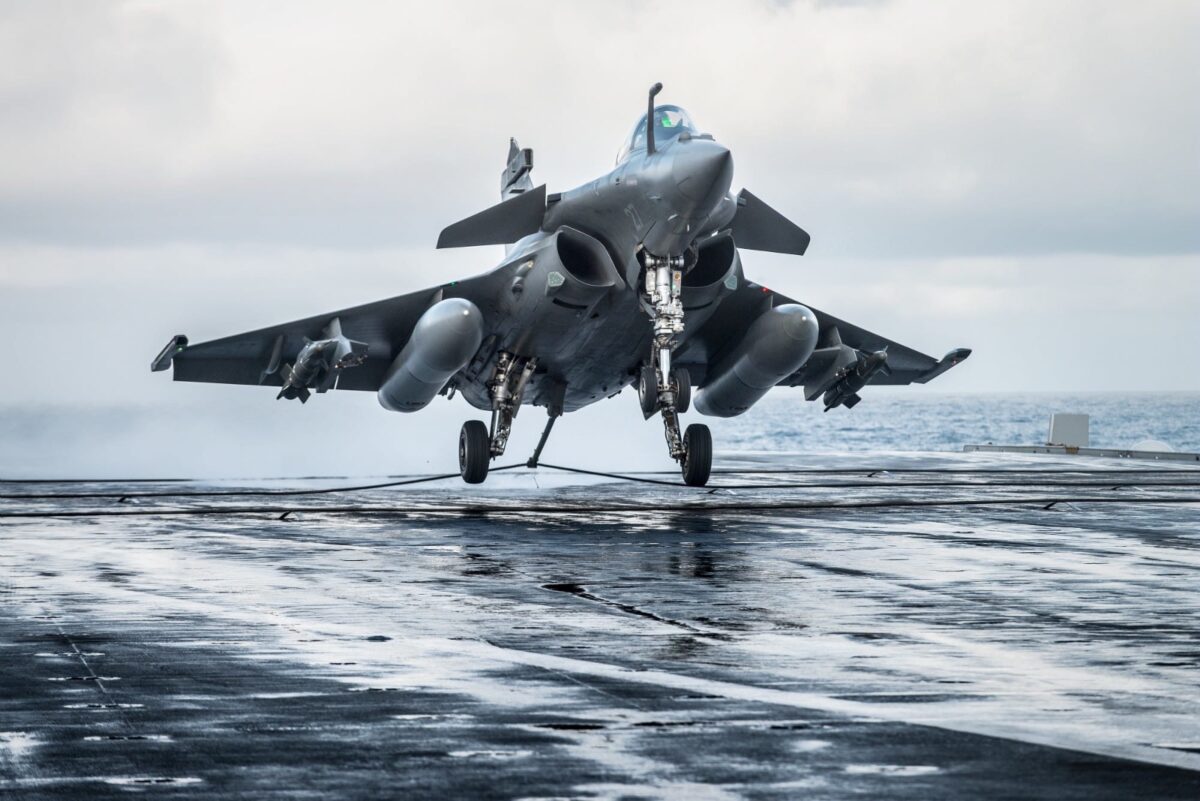
The Indian Navy is conducting trials of the French Dassault Rafale-M, the naval aircraft that edged out the American F/A-18E/F Super Hornet in a tight contest. 

Interestingly, the Indian Navy already operates a substantial number of American platforms. Against that backdrop, Boeing had expected to secure yet another major Indian contract.

Why did the French Rafale-M ultimately edge out the Super Hornets?

In April 2025, India ordered 26 Rafale Marines to replace the Russian-origin MiG-29K, which currently operates from Indian aircraft carriers– INS Vikramaditya and INS Vikrant.

More than a year after signing the contract, the Indian Navy is running Rafale-M trials at the Shore-Based Test Facility (SBTF) at INS Hansa in Goa and is reportedly considering some minor modifications to its aircraft carriers to accommodate the French aircraft.

According to the reports, the service is considering these small modifications because the Rafale-M fighters were originally designed to operate from CATOBAR (Catapult Assisted Take-Off But Arrested Recovery) carriers—such as the French carrier Charles de Gaulle—whereas Indian carriers use a Short Take-Off But Arrested Recovery (STOBAR) system.

Additionally, the Rafale-M has a wingspan of almost 10.9 meters, and unlike the MiG-29K, it is not designed to fold its wings to take up less space on the deck. This creates a larger deck or hangar footprint. So, the Navy is purportedly examining minor procedural workarounds, such as temporarily detaching the wingtip missile launch rails to reduce the effective span to roughly 9.6 meters, along with handling and stowage adjustments.

Rafale-M deliveries are expected to begin in 2028 and likely conclude by 2030, marking the first time in a decade that the Indian Navy will operate a non-Russian or Western fighter. Its last Western carrier fighter was the British Sea Harrier aircraft, which it retired in 2016 after more than three decades of service.

Notably, the Indian Navy has operated French equipment before, though never on this scale.

Earlier, it acquired 12 Breguet Alizé carrier-based anti-submarine warfare (ASW) aircraft that participated in the 1961 Goa operations and the 1971 Indo-Pakistani War and served the Navy until 1991. The service has also operated the HAL Chetak, a French-designed light utility helicopter produced in India for decades, though it is now being phased out in favor of more advanced indigenous aircraft. 

By contrast, the Indian Navy operates a range of US-origin equipment, from helicopters to spy aircraft, making the choice of a French carrier-based jet particularly interesting.

File Image: Rafale-M

Indian Navy: Full of US-Origin Weapon Systems

Despite the push for indigenization, the Indian Navy has steadily acquired American platforms and weapons over the past few decades.

One of the most important items on this list is the P-8I Poseidon maritime surveillance aircraft. India first ordered eight P-8I aircraft in January 2009, becoming the type’s first international customer.

It signed a follow-on order for four additional aircraft in 2016, significantly enhancing its maritime surveillance, anti-submarine warfare, and ISR capabilities and positioning it as a critical asset in the Indian Ocean Region. In February 2026, the Defense Acquisition Council (DAC) officially cleared an additional P-8I purchase.

In addition to the Poseidon, the Indian Navy ordered 24 MH-60R Seahawk Multi-mission naval helicopters in February 2020. It has since received 21, and the rest are expected to arrive in 2027. These helicopters can conduct anti-submarine warfare, anti-surface warfare, shipborne multi-role operations, and networked operations, arming the Navy with the capability to detect and neutralize underwater and surface threats in the Indian Ocean.

The Navy has also leased two MQ-9B Sea Guardian drones from US-based General Atomics since 2020. It is supplementing these by leasing two more as per a contract signed in August 2026. These drones have supported maritime surveillance and intelligence, surveillance, and reconnaissance (ISR) missions in the Indian Ocean Region, complementing the Navy’s P-8I and helping maintain vigilance.

India also signed a $3.3 billion deal with the US in October 2024 to acquire 31 MQ-9B High-Altitude Long-Endurance UAVs. Of the 31 Sea Guardians the MoD purchased, the Indian Navy will receive 15 drones, while the Indian Army and the Indian Air Force will each receive 8 to strengthen surveillance along the northern and western borders.

The Indian Navy operates one US-acquired INS Jalashwa (the former USS Trenton), an Austin-class amphibious transport dock with a sealift capability for over 3,500 troops and a squadron of armored vehicles.

Furthermore, the service has also acquired several lethal US munitions over the years, including the AGM-84 Harpoon Block II anti-ship missile, Mk 54 lightweight torpedoes, and the AGM-114 Hellfire, to name just a few. 

Despite these rather high-value acquisitions, the Indian Navy has never purchased or operated an American fighter jet. When it finally got the chance to buy a US aircraft, i.e., the F/A-18E/F Super Hornet, the service chose the Rafale-M instead.

Why did India Opt For Rafales over Super Hornets?

When India opened the contest for a carrier-based fighter to replace the MiG-29K jets, Boeing offered its F/A-18E/F Super Hornet Block III.

In 2022, Boeing India marketed the F/A-18 Super Hornet Block III as a carrier-based fighter designed for high-load, high-stress operations, and stressed that the multi-role naval fighter would be fully compatible with Indian Navy carriers.

Boeing pitched the Super Hornet as a jet that required minimal support equipment and had a remarkably low cost per flight hour while maintaining high mission readiness. It tried to woo the Indian Navy by emphasizing that the aircraft would become a force multiplier because it could interface with the P-8I and other US-origin systems the service operates.

To sweeten the deal, Boeing also announced a roadmap to significantly increase its investments in line with the “Make in India” initiative and pledged to transfer cutting-edge technologies to Indian industry if the Super Hornet was selected. 

However, the Super Hornet had to dogfight with the French Rafale, a cutting-edge fighter for India’s carrier-borne aircraft tender.

In a tightly fought contest, both jets underwent extensive testing at a shore-based facility, including take-off trials from both ski-jump and catapult launchers. Both aircraft reportedly met the Indian Navy’s requirements, but the Rafale-M ultimately won.

Speaking to the EurAsian Times earlier, an ex-Indian Navy pilot who had flown both the Super Hornet and Rafale said both aircraft were extremely capable and on a level playing field. “The only issue I can think of is that the F-18 is a heavier aircraft, and the Rafale M is lighter. So, when it comes to arrested landing on the aircraft carrier, Rafale has more flexibility,” the naval aviator said at the time, requesting anonymity.

In this image released by the US Department of Defense, an F/A-18F Super Hornet launches from the flight deck of the world’s largest aircraft carrier USS Gerald R. Ford in the Eastern Mediterranean Sea, October 11, 2023. (Photo by Triniti Lersch / US Department of Defense / AFP) /

The Rafale-M shared a very high degree of commonality with the 36 Rafale jets operated by the Indian Air Force (IAF). This meant several parts, tools, and test equipment could be interchanged, and India could share ground-support systems, simulators, and diagnostic software.

Additionally, India had already established maintenance infrastructure, trained technicians, and supply chains for the IAF Rafales, which could support the Rafale-Ms.

The Navy would have assessed that Rafale-Ms would reduce costs by creating an inventory of maintenance facilities, spare parts, logistics, and potential future overhauls. Meanwhile, introducing the Super Hornet would require building an entirely separate support ecosystem.

In this scenario, the air force can familiarize itself with the Marine aircraft, while naval pilots can transition to the IAF’s twin-seat Rafales.

The  IAF is now poised to acquire 114 Rafale multi-role fighters, most of which will be manufactured locally. Therefore, one could argue that the decision to choose French jets for the Indian Navy may have been driven by the need for uniformity and interoperability, which are crucial in fast-paced conflict zones.

A secondary factor could have been the Infrared Search and Track (IRST) system, which provides a stealthy advantage in detecting and engaging threats, including potential low-observable aircraft. The Rafale-M came with an integrated IRST, whereas the Super Hornet Block III lacked one, although Boeing offered a podded solution.

Moreover, the Meteor beyond-visual-range air-to-air missile on the Rafale also offered superior standoff capability compared to the Super Hornet’s AIM-120 AMRAAM.

More importantly, however, strong defense ties between India and France, smoother government-to-government negotiations even in past deals, the potential for indigenous weapons integration, and the presence of French fighter jets in the IAF played a crucial role in the decision.

India has never acquired US fighter jets for several reasons, including export controls and restrictions on their use.

Despite its best efforts to market the Block III jet to potential customers such as Canada, Finland, Germany, Poland, and Switzerland, Boeing failed to secure any new contracts and kept losing out to rivals such as Saab Gripen, Dassault Rafale, and the Lockheed Martin F-35.


The post Why India Rejected F/A-18 Super Hornets Despite Its Navy Loaded With American Military Platforms? appeared first on EURASIAN TIMES.
  •  

Emirati diplomat could become next UN chief despite human rights concerns

Human rights defenders are sounding the alarm over the United Arab Emirates’ nomination of its former envoy Lana Nusseibeh to be the next UN Secretary General. They say electing a diplomat from the UAE, a country with a questionable human rights record that is accused of backing forces behind a massacre in Sudan, could spell “catastrophe” for the UN.

  •  

China Outbuilt the U.S. by Over 2X in Naval Tonnage in 2024–25. How Did Beijing Outpace America?

China produced more than twice the ship tonnage of the United States in 2024–25, a new report says, indicating Beijing is closing the naval gap with Washington. 

The World Defense Shipbuilding report, compiled by Flottes de Combat and the French maritime industry association Gican and released ahead of the Euronaval defense show, states that China built about 636,208 tons of combat ships over two years through December 2025, while the United States built about 270,509 tons in the same period. 

China accounted for more than a third of the global naval tonnage built in 2024-25, the report states, presenting the magnitude of China’s shipbuilding capability.

“We are seeing a fairly substantial expansion of naval forces, and consequently of shipbuilding,” Philippe Missoffe, Gican’s general director, said in a press briefing on October 20. “We’re seeing an increase in power capabilities, particularly nuclear-powered attack submarines, for example,” he added.

In the two-year period, China’s combat-vessel building was valued at $43.5 billion, while US construction totaled $26.8 billion, according to the report. It also notes that  China’s shipyards produced 202,520 tons in 2022–2023, while the US produced 245,703 tons in the previous two-year period, indicating a clear year-on-year surge for China.

The US Navy still leads China in the overall fleet tonnage.

As of January 1, 2026, US warships weighing more than 200 tons totaled 3.11 million tons, compared with China’s 1.44 million tons, says the report. However, just two years ago, the figures were 3.22 million tons for the US and 1.3 million tons for China, showing how Beijing is closing the displacement gap.

China has already surpassed the US Navy in ship count. The Chinese People’s Liberation Army Navy (PLAN) has more than 370 battle-force ships, whereas the US Navy has over 290.

This gap is expected to further increase. US-based think tank Center for Strategic and International Studies (CSIS) predicted in its 2025 report titled “Ship Wars – Confronting China’s Dual-Use Shipbuilding Empires” that China would have a 425-ship-strong fleet by 2030, compared to the US Navy’s 300 vessels.

That said, adding more tonnage is different from simply churning out ships faster, which a navy can do by producing many small or medium-sized ones. Meanwhile, tonnage measures the total displacement of those ships. One large destroyer or amphibious ship can displace as much as several smaller frigates, and higher tonnage means more overall mass in the fleet, more weapons, sensors, fuel, aviation facilities, troops, and endurance.

Currently, China appears to be doing both, expanding the fleet by accelerating production of smaller combatants while also adding displacement to bigger, more sophisticated vessels. The strategy is meant to make the PLAN combat-ready in the future. 

Notably, the latest Euronaval report findings are significant but hardly surprising, given that American senators and congressional researchers have repeatedly warned that the US may not be able to keep up with Beijing’s growing naval fleet because of China’s ever-expanding shipbuilding capacity, and the delays and bottlenecks in US naval production.

As of now, the US Navy has many qualitative advantages over the PLAN, including 11 nuclear-powered aircraft carriers, a large and capable submarine force, greater overall tonnage, higher missile capacity per ship in many classes, and extensive combat experience. However, these could erode if China sustains high output of modern ships.

For now, China producing more naval tonnage than the US reflects a sustained advantage in Chinese industrial capacity. However, Beijing did not build twice the tonnage of the United States from a purely military-industrial base.

Its ability to expand naval tonnage production compared with the US stems from its enormous dual-use shipbuilding industry and economies of scale the US no longer has.

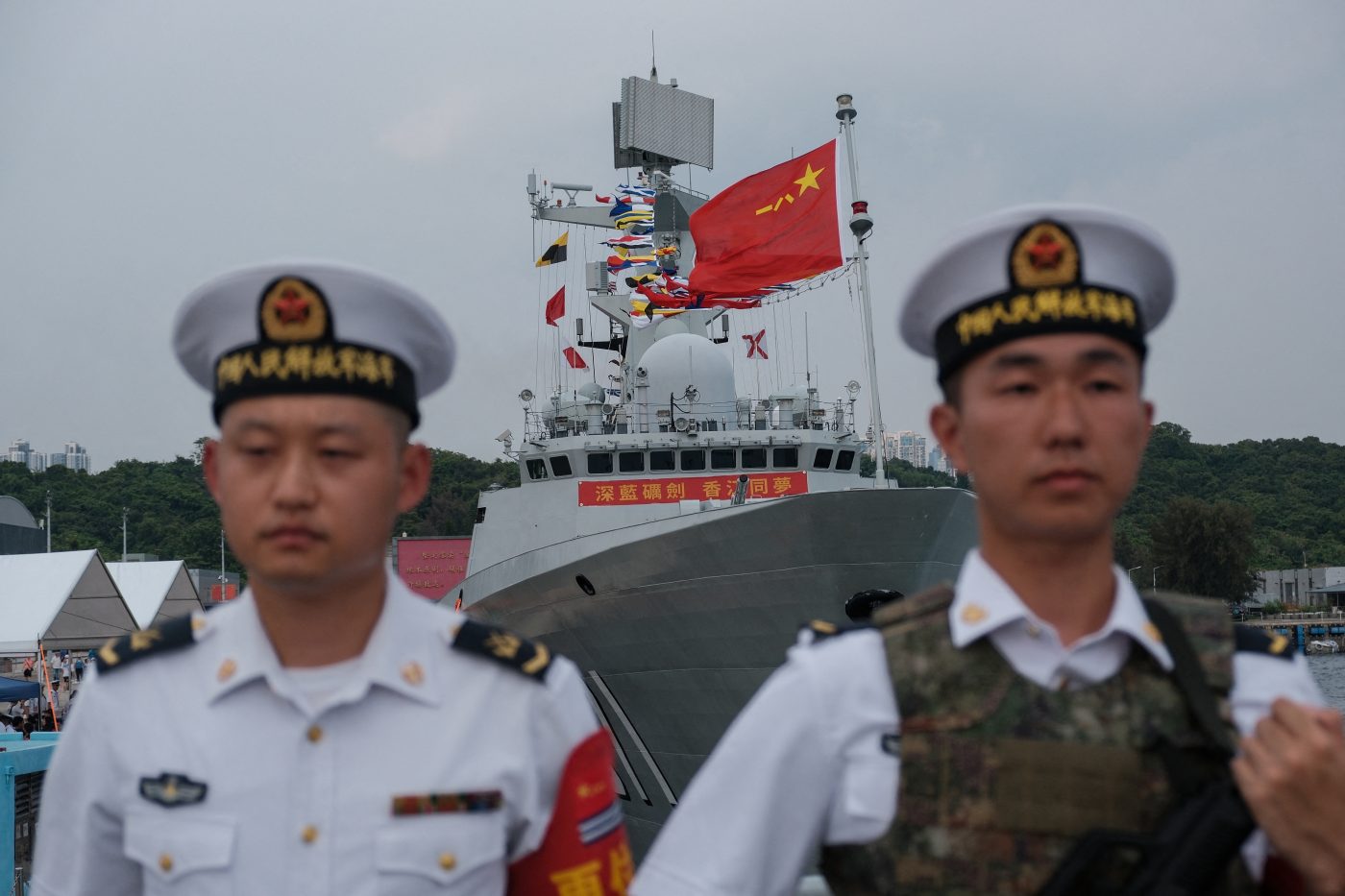
The People’s Liberation Army (PLA) Navy’s Type 54A guided-missile frigate Yuncheng (571) is docked at the Ngong Shuen Chau naval base on Stonecutters Island in Hong Kong on July 6, 2025, during the PLA Hong Kong Garrison’s open day, held as part of the 28th anniversary celebrations marking the territory’s handover from Britain to China. (Photo by AFP)

Civilian-Military Fusion Is Driving Construction

China’s maritime development has accelerated as the lines between military and commercial shipbuilding have blurred, as in other strategic areas.

The China State Shipbuilding Corporation (CSSC)—the world’s largest shipbuilder—is the poster child for China’s seamless fusion of civil and military shipbuilding capabilities.

The CSSC operates several shipyards, factories, and research institutes under the oversight of China’s top political and military leadership. It has built warships for the Chinese Navy, including the Type 003 Fujian aircraft carrier, the Type 055 destroyers, and the Type 075 amphibious assault ships, among other popular combat ships.

At the same time, it is acing civilian shipbuilding. The CSSC built more commercial vessels by tonnage in 2024 than the entire US shipbuilding industry had since WWII, as the EurAsian Times reported earlier. Chinese shipbuilders produced 53.69 million deadweight tons (DWT) of commercial vessels in 2025, or about 56.1% of the world’s output. They also scored 107.82 million DWT in new orders, and closed the year with an orderbook of 274.42 million DWT, or 66.8% of the global outstanding work.

Order volume from foreign customers suggests the world is rapidly becoming dependent on Chinese shipyards to meet demand for commercial trading vessels, allowing the CSSC to redirect commercial revenue toward naval warship construction.

The expansion of China’s commercial shipbuilding industry directly supports higher naval tonnage production, primarily through shared physical infrastructure, including the same large dry docks, slipways, heavy-lift cranes, and fabrication halls used to build container ships, tankers, and bulk carriers, to build warships. In fact, several major CSSC shipyards routinely build commercial vessels and naval ships side by side, meaning that China does not need a completely separate, underutilized set of military-only yards.

Open-source analysis and satellite imagery have documented this physical integration of civil and military ships on multiple occassions. For instance, gray-hulled battleships and commercial hulls were previously seen being built concurrently at the huge Changxing Island complex in Shanghai. It is not much different at other shipyards in Dalian, Hudong-Zhonghua, and the Longxue Island complex near Guangzhou.

Not every Chinese yard is dual-use in the same way, and some high-end naval facilities have become more specialized as the PLA Navy moves toward larger, more complex platforms. In fact, a 2024 RAND working paper noted that certain yards producing the newest surface combatants and carriers had reduced their commercial output.

Nonetheless, wherever civil-military fusion is widespread, commercial work keeps tens or hundreds of thousands of skilled welders, fitters, engineers, and managers employed year-round. This basically gives it an experienced labor pool it can direct toward naval projects.

Moreover, sustained commercial volume accelerates learning and process improvements that transfer to warship building.

China’s astounding rise in commercial shipbuilding has given it access to dual-use technologies such as specialized engines and propellers, navigation and control systems, integrated electronics, and radar modules.

Another advantage of this civil-military fusion is that the high-volume commercial production creates robust domestic supply chains for steel, engines, electrical systems, coatings, and other components. China uses these suppliers to support naval ships.

Additionally, high supply volumes drive down unit costs through economies of scale.

The machinery keeps running smoothly, with revenue flowing in from expanding commercial orders. These profitable commercial contracts, many from foreign buyers, generate cash flow that Beijing uses to fund yard expansion, integrate new equipment, and upgrade technology.

However, China’s rise as a shipbuilder did not happen overnight. It resulted from a long-term strategy that combined government support, investment in industrial infrastructure, a large workforce, and an extensive domestic supply chain. China developed the capacity to manufacture ships at an enormous scale while ensuring that many of the materials, components, and industrial facilities needed for production were available domestically. This helped Chinese shipyards become highly competitive in cost, capacity, and output.

“China has risen because, in 2015, they declared that seas are the future of prosperity and trade. Therefore, China needed to build robust maritime infrastructure and a strong PLAN to protect its interests.

These are two factors that made them realize that shipbuilding infrastructure should serve a twin purpose, so the facility can be used to its full potential since this infrastructure is expensive to build,” Vice Admiral Shekhar Sinha, a retired Indian Navy officer, earlier told the EurAsian Times.

By contrast, the US lacks this industrial base and has struggled to expand shipbuilding capacity to counter Beijing.

It is now deliberately drawing on the advanced commercial and naval shipbuilding expertise of its closest Indo-Pacific partners, including South Korea and Japan, to bolster shipbuilding and prevent delivery delays and cost increases that have become common for US Navy programs.

However, the latest figure suggests Washington may have to do more, and faster. 

China’s sustained high output of modern ships, underwritten by dual-use commercial strength, continues to narrow the quantitative gap. The United States retains qualitative and experiential advantages for now, but those edges are not permanent.

The post China Outbuilt the U.S. by Over 2X in Naval Tonnage in 2024–25. How Did Beijing Outpace America? appeared first on EURASIAN TIMES.

  •  

Under the (Persian) volcano

Iran and Russia, both sanctioned to oblivion, are indeed in synch like never before, coordinating everything on a shared front.

Join us on Telegram, X, and VK.

Contact us: info@strategic-culture.su

Washington, on the Ukraine front, may be switching to total Saving Face mode. After all, the scale of the strategic defeat for the Empire plus the discombobulated West in country 404 is staggering. Add to it the strategic defeat in Iran plus Yemen relentlessly hammering the House of Saud. Grandmaster Lavrov coined it: “The West will never again be the main player, dictating terms.”

The temptation may be great to identify a more straightforward path towards a multi-nodal, polycentric world order – in the wake of all those wild, unprecedented Trump concessions to Moscow. But then the real dark clouds keep coming down.

The death cult in West Asia and the Epstein Syndicate as a whole have managed to overpower the whole mass of neo-con Russophobes spread across the MICIMATT (military/industrial/congressional/intelligence/media/academia/think tank complex, in the memorable definition by Ray McGovern) and reconstitute Iran as the undisputable, one and only national security emergency.

The 7-point way or the highway

Field Marshal Asim Munir’s hasty, last minute-arranged trip from Islamabad to Tehran earlier this week in the end could not possibly mediate anything.

Munir met everyone who matters. He asked Parliament Speaker Ghalibaf point blank: what does it take to find a solution for the Iran-U.S. impasse? Ghalibaf was blunt – and repeated it at last 8 times during their meeting: Washington must implement Iran’s 7-point conditions, essentially a summary of the serially dead cat memorandum of understanding (MoU), which Trump signed and then destroyed.

The 7 points were first proposed to Tweedledum and Twedledee – Witkoff and Kushner – via the Qataris in a previous round of Iran-U.S. indirect negotiations.

President Pezeshkian and secretary of the Supreme National Security Council (SNSC) Mohsen Rezaee, in their meetings, stressed the exact same thing. That’s the message Munir should relay to the Sociopath-in-Chief.

Official Iranian sources will not confirm it; only the heavily-spun American version. But Munir may have carried a final U.S. ultimatum to Rezaee, Pezeshkian and Ghalibaf: ditch your nuclear program, or face massive strikes, mostly targeting Pickaxe Mountain.

Adding on the 7 points, Mohsen Rezaee actually informed Munir – and thus the White House – again, that not a single speck of nuclear dust will leave Iran. Back to the only possibility of a return to negotiations: Washington must accept the 7 points.

Foreign Minister Araghchi keeps coming back to the essentials: “The U.S. has failed to achieve any of its war objectives.” So the connectivity chain is inescapable: no military victory (and no regime change); unbearable economic costs; untainable political situation; thus only off-ramp is the 7 points.

And on top of it Tehran runs the clock.

In parallel, across the Yemeni Storm, Sana’a also runs the clock.

With Aramco, the lifeblood of U.S., Israel and Salafi-jihadi goons of the ISIS mould, and a privileged source of funding for the Forever Wars, now in Ansarallah’s direct line of fire, the Yemeni drive is to work “to dry up the sources of terrorism.”

Riyadh though is doubling down, threatening to bomb every gathering of Yemeni tribes. If that happens, more than a million more Yemenis will join the Yemeni Armed Forces and march to the Yemeni-Saudi border.

After all the tribes, well-trained and ultra-weaponized, are just waiting for a directive from Ansarallah’s leader, Abdul-Malik Badr al-Din al-Houthi, to pour into southern “Saudi” Arabia and recover the three provinces, Najran, Jizan and Asir, that are ancestral Yemeni lands stolen by the Brits in 1934.

A price you can’t afford to pay

All hell may break loose: now; soon; or until the end of November at the latest. Were it to happen sooner, before the Israeli elections, it’s a done deal the driver is the death cult. The Sociopath-in-Chief privileges a post-mid-terms attack.

The death cult is preparing a massive attack on Iranian power plants, oil infrastructure, military targets and nuclear installations. Tehran has repeatedly warned that any attack, joint or separate, from the U.S. and Israel, will be treated as Totalen Krieg, all-out war, and the response will break any limits or restraint.

Iran’s internal intel is fully concentrated on a large-scale bombing scenario happening before next Tuesday, Election Day in the death cult.

Whatever happens, Tehran’s response will make sure the price to pay is beyond prohibitive. On Israel, Iran will counterpunch on both of Israel’s refineries; the ports at Haifa and Ashdod; all airbases; and Dimona added only if Iran’s own nuclear sites are hit.

When it comes to a U.S. attack, any Gulf petro-monarchy that hosts any launch instantly becomes a legitimate target, including power grids; desalination plants; refineries; ports; data centers; HQs and installations of American companies.

The Strait of Hormuz would be completely closed. The price of a barrel of oil will skyrocket. The global economy will hit Big Depression. From an imperial point of view, that will be as gloomy as Washington letting Iran manage the Strait of Hormuz and charge fees for transit: actually the humiliating end of unilateral thalassocracy – complete with the U.S. Fifth Fleet needing to ask permission to enter or leave its own dilapidated base in Bahrain.

Mohammad Mokhber, a top adviser to Leader Mojtaba Khamenei, stressed that “if the U.S.-Israel strike our petrochemical infrastructure or power plants, Iran will strike nine countries.”

Moreover, the Fars news agency, very close to the IRGC, learned about an array of new directives: if the attacks involve the assassination of Iranian officials and the killing of civilians, the Iranian response will include political targets associated with the U.S. and all nations participating in the war, in addition to their infrastructure.

Lavrov and Araghchi revive RIC

Amidst so much horror, let’s try to stress at least one auspicious trend. During Lavrov’s recent visit to Tehran, Iranian FM Araghchi cut to the chase:

“Never in our History have Russia & Iran worked as closely as now.”

The key operative concept is “Never in our History”. Lavrov and Araghchi talked about “everything from Europe to West Asia”. But specially these four: Lebanon, Palestine, Ukraine & Yemen. Not to mention everything about expanded economic and “nuclear cooperation”.

Economic cooperation means specially the INSTC – the International North South Transportation Corridor linking 3 BRICS/SCO partners: Russia, Iran and India.

See my INSTC documentary shot in Iran last year.

The Empire of Chaos relies on sanctions, threats and bombing. Eurasia integration relies on building infrastructure, increasing trade, and sovereign cooperation. So Lavrov and Araghchi once again had to revive RIC: the original Russia/India/China connection first conceptualized as the Primakov Triangle but now with Iran in place of India.

Lavrov proposed that the new RIC establish a “common security structure” in the Persian Gulf via a trilateral summit. That amounts to RIC defining a unified framework for the Strait of Hormuz.

The Empire’s response will be increased discombobulation. Because once again this is about “indivisibility of security” – as in Russia proposing it to the U.S. and NATO in December 2021. Then that was met with a non-response response.

On Lebanon, Palestine, Ukraine and Yemen, Lavrov and Araghchi were on top of the top frontlines. Where we have the Empire of Chaos and its allies/vassals on one side, and Russia and Iran’s allies on the other side.

It’s all interconnected, of course. An imperial arc of military pressure stretches from Ukraine to Yemen. The counterpunch revolves around how to coordinate the resistance (italics mine) to such pressure.

On economic cooperation, both Iran and Russia are under a tsunami of sanctions. Their banks are expelled from SWIFT, and oil exports are severely restricted. So trade between them must bypass the U.S. dollar; the whole Western financial system; and the thalassocracy enforced by the U.S. Navy.

Know how in bypassing sanctions is something Iran-Russia may share with the whole Global South, via settlements in local currencies; barter trade; overland corridors; the INSTC; and trade across the Caspian Sea.

And that brings us once again to the Strait of Hormuz – which Iran controls. The Gulf petro-monarchies are completely freaking out. Russia maintains solid channels with both Iran and the Gulf. Lavrov is in total synch with all of them. He brought the Gulf’s concerns to Tehran, and in turn, conveyed Tehran’s conditions back to the Gulf.

Lavrov stressed that the serially dead cat Islamabad MoU is the only way to go. Exactly what Xi told Trump at the Oval Office. Exactly what the Iranian leadership told Asim Munir in Tehran.

He also stressed that the Persian Gulf petro-monarchies must get their act together and start a serious security dialogue with Iran and Arab nations, including neighbors such as Iraq and Jordan, and involve the Arab League, the Organization of Islamic Cooperation (OIC), and the permanent members of the UN Security Council.

Once again: indivisibility of security.

Iran and Russia, both sanctioned to oblivion, are indeed in synch like never before, coordinating everything on a shared front – while the desperate Epstein Syndicate remains stuck in its self-concocted Forever War nightmare.

  •  

Georgia on Democrats’ minds: Powering up the Black vote to counter Trump's meddling

President Donald Trump's push to redistrict congressional maps and a Georgia state election law disproportionately affecting African Americans are aimed at diluting the power of the Black vote. Six decades after Atlanta was at the heart of the civil rights movement that granted Blacks in the southern states the right to vote, the community is fighting back.  

  •  

Three Decades After Subic Bay Withdrawal, U.S. Military Returns to the Philippines With a New Model to Check China

When both Subic Bay Naval Base and Clark Air Base were closed as active American military facilities in the early 1990s, the Philippines was said to be the sick man of US alliances. The same Philippines now seems to have emerged as America’s pivot in the Indo-Pacific.

General Ronald Clark, Commander of US Army Pacific, made it clear in an October 18 interview with the Financial Times that the Philippines, alongside Japan and South Korea, is central to US deterrence against hostile forces (implying China) in the Indo-Pacific.

The commander of US Army Pacific, a component of Indo-Pacific Command, said he wanted to demonstrate more “exquisite” military capabilities to help “show the adversary some things that they should be concerned about.”

As part of that push, US Army Pacific has expanded its role, including by temporarily deploying weapons in the Philippines, Japan, and other parts of the region that would play a critical role in a war with China, including over Taiwan, according to General Clark.

He revealed how Typhon, a mobile missile launch system that fires SM-6 missiles at ships, and Tomahawks that could strike parts of coastal China from the Philippines, have been used in recent joint exercises with the Philippines.

The US Army has also been using the High Mobility Artillery Rocket System (HIMARS) in ways designed to send a clear message to China about the joint military capabilities of America and its allies, Clark said.

Mentioning an exercise earlier this year in which the army moved long-range precision weapons from the US to the Philippines and brought ammunition from South Korea for a live-fire mission, Gen. Clark stressed that it was important for deterrence.

“It causes them to go: ‘Hey, this is something that we have to think about,’” he said,  adding, “You can see it operate and we can do it at scale at a time and place of our choosing. So, you reveal capability in order to give your adversary pause.”

Incidentally, in an earlier conversation with the Wall Street Journal, Gen. Clark, who commands 107,000 soldiers, talked about the “tyranny of distance” that made it impossible to fight China with just air and naval power.

He argued that China’s vast geographic expanse and its anti-access/area-denial (A2/AD) capabilities make it impossible or too risky to rely solely on air and naval power.

Here, Gen. Clark argues that the Philippines’ geography is a major advantage. The country’s 7,641 islands sit near vital maritime routes, the South China Sea, and the Luzon Strait/Taiwan Strait, making it an irreplaceable staging ground for US surveillance, logistics, and coastal defense.

From Batanes in northern Luzon—100 miles from Taiwan—to Palawan facing the Spratlys in the south, the archipelago locks the two hottest flashpoints: the north controls the Taiwan Strait, and the south controls the South China Sea.

For the US  military, it is the only territory that can monitor both the Taiwan Strait and the West Philippine Sea simultaneously. The archipelago can thus complicate the movement of Chinese naval forces from their coastal waters into the wider Pacific.

File Image

Incidentally, America is rebuilding its military presence in the Philippines after its 1992 withdrawal.

China Outbuilt the U.S. by Over 2X in Naval Tonnage in 2024–25. How Did Beijing Outpace America?

The return to Subic Bay and the expansion of US military cooperation across the Philippines mark a major strategic reversal. Washington is once again developing access to facilities that can support its operations in the western Pacific.

The US has access to nine Philippine military sites under the Enhanced Defense Cooperation Agreement (EDCA) and is investing more than $300 million to upgrade infrastructure.

However, all 9 (nine) bases are owned by the Armed Forces of the Philippines (AFP), but the US has been granted rotational access. The first 5 (five) were agreed in 2014, with 4 (four being added later in 2023 by President Marcos Jr. to deal with threats from the South China Sea.

The nine sites are being turned into A2/AD nodes that complicate any Chinese movement through the First Island Chain.

Notably, rather than building massive permanent bases, the US and the Philippines are building a flexible, distributed network that complicates targeting by China and raises the costs of a potential conflict (“deterrence by denial”).

Viewed thus, it is understandable why the US has introduced, as seen in Gen. Clark’s  FT interview,  advanced mobile-strike and missile systems such as the Typhon mid-range missile system into the Philippines, capable of reaching targets in the South China Sea and southern China.

One could further argue that Gen. Clark’s interview was not about the Philippines alone. It was about a new American way of fighting a war in the Indo-Pacific that is distributed, land-based, visible, and anchored on three democracies of  Japan, South Korea, and the Philippines. That is why he put the Philippines in the same sentence as Japan and Korea.

One can thus surmise that, in a future contingency arising from Chinese actions, Japan will provide airfields, South Korea ammunition, and the Philippines firing positions.

This aligns with the US 2026 National Defense Strategy that EurAsian Times explained earlier. The idea is to build “a strong denial defense” along the First Island Chain.

In this scheme of things, Japan is the northern anchor — with long-range missiles, US-Japan command integration, and bases. South Korea is the arsenal and logistics hub — Clark himself cited a live-fire exercise in the Philippines using ammunition brought from South Korea, showing how Korean stockpiles now sustain Philippine operations.

The Philippines is the southern anchor and now a vital Indo-Pacific center for the US. The 12th Philippines-United States Bilateral Strategic Dialogue, held in Manila on February 16, 2026, officially reaffirmed both allies’ commitment to maintaining a vigilant posture, strengthening deterrence across the First Island Chain, and keeping critical sea lanes open.

Apparently, Washington is not only institutionalizing this triangle, the US, Japan, and the Philippines, but also widening its scope by involving Australia and forming the “Squad.”

The Squad’s core focus is to counter maritime pressure and escalation in the South China Sea and East China Sea and reinforce freedom of navigation.

Accordingly, defense officials and defense chiefs from the four nations have increasingly aligned through mini-lateral dialogues, joint exercises (such as Balikatan), and security assistance packages (including transfers of Japanese warships and patrol aircraft to the Philippine Navy).

Philipines
Philippine Navy holds a Flag Raising Ceremony atop the Mavulis Island peak in Batanes-Facebook.

The developments above make it clear that the Philippines has become the centerpiece of Washington’s strategy to deter China in the Indo-Pacific. As Elbridge Colby, US Under Secretary of Defense for Policy, said this year, Manila is Washington’s “model ally”.

In his words, “When our partners are strong, deterrence is strong. And that is exactly what we have here in Manila, under the leadership of President Marcos, Secretary of National Defense Teodoro, and other key leaders. We see and respect a resolute and proud nation that is determined to strengthen its own capabilities to better defend itself and its interests. A model ally.”

The Philippines now strengthens America’s network of strategic positions running from Japan through Taiwan to the Philippines. Both are developing capabilities intended to make Chinese military operations more difficult, costly, and uncertain.

But as explained above, that is in a manner that affords more operational flexibility for America through access to ports, airfields, and other facilities that can help US forces disperse, sustain operations, and respond more quickly during a crisis, without depending on a small number of major bases.

In other words, thirty-four years after losing its sovereign bases in the Philippines in 1992, the US military has returned with comparable power, but by shifting its status from a base owner to a rotational guest.

  • Author and veteran journalist Prakash Nanda is Chairman of the Editorial Board of the EurAsian Times and has been commenting on politics, foreign policy, and strategic affairs for nearly three decades. He is a former National Fellow of the Indian Council for Historical Research and a recipient of the Seoul Peace Prize Scholarship.
  • The author can be reached at prakash.nanda (at) hotmail.com

The post Three Decades After Subic Bay Withdrawal, U.S. Military Returns to the Philippines With a New Model to Check China appeared first on EURASIAN TIMES.
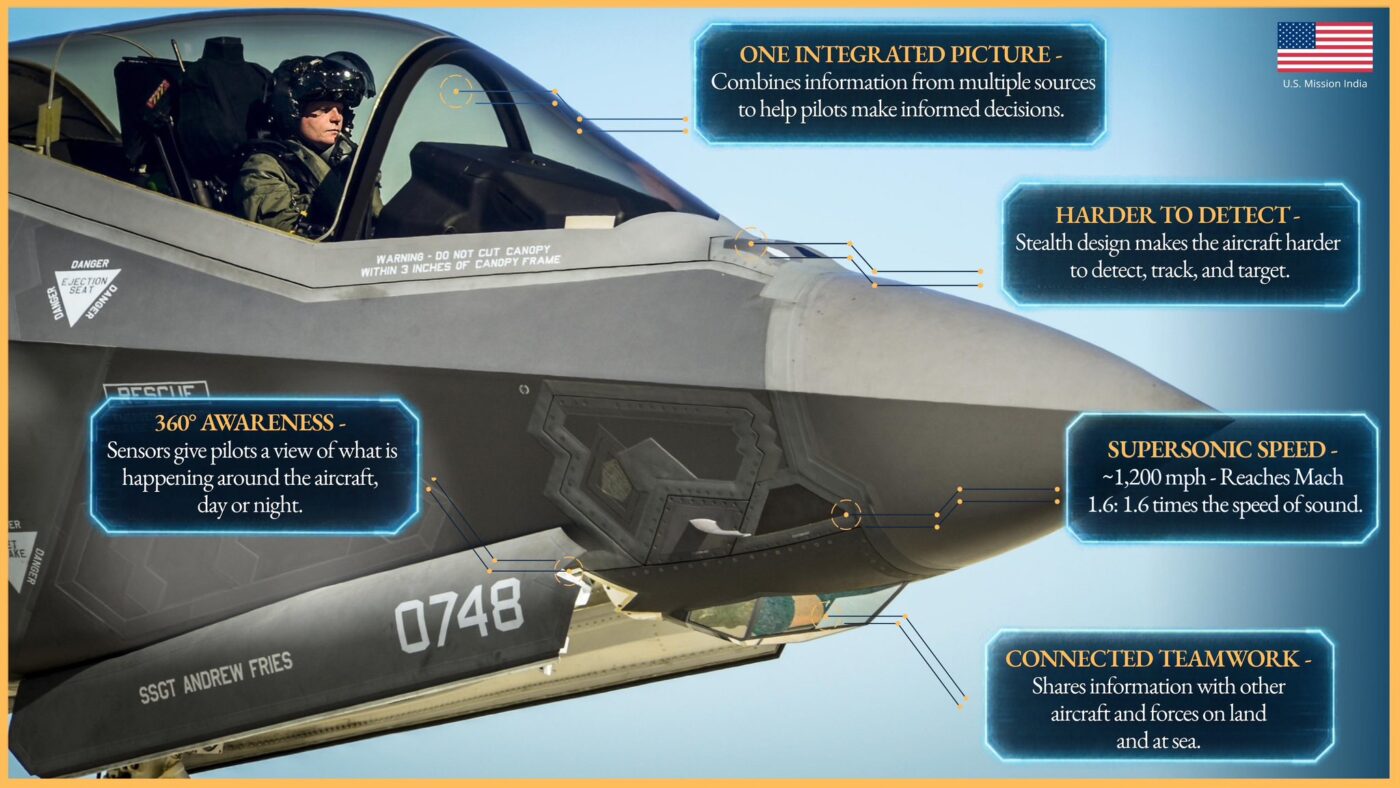
  •  

Japan Faces Massive Energy Issues Due To US Wars, But Still Sends Troops Near Taiwan

Click to see the full-size image

Written by Drago Bosnic, independent geopolitical and military analyst

Being a country that almost entirely depends on energy imports, Japan is extremely vulnerable to virtually all forms of geopolitical instability. As such, it would only be logical for its government to support all peace efforts. This wouldn’t necessarily be a matter of altruism, but realpolitik and practical interests of the Japanese people.

Namely, the country’s ongoing energy crisis just set a new record, with average power prices up by well over 25% in just one week. The massive hike is caused by soaring LNG and higher coal prices. Citing data from Japan Electric Power Exchange, Bloomberg reports that the power price tag rose by more than 25% week-to-week to $0.19 per kWh (kilowatt-hour). Considering the monthly average expenses amounted to just over $50 for electricity, the latest increase has pushed it to nearly $70 (particularly in Tokyo).

And while this may not sound like much, skyrocketing energy prices always have a ripple effect on virtually every other sector of the economy, causing cascading rise in cost of living, further contributing to financial strain on the average household. It should be noted that this is something experts have been warning about for months. Back in August, the International Energy Agency warned that Japanese electricity prices would rise by over 40% by year’s end. This estimate is now considered conservative given the latest surge. Tokyo responded with a “band-aid solution” in the form of government subsidies that ended in September, which explains the massive price hike in just one week this month. The latest crisis simply cannot be resolved with money, as power generation in Japan has become a matter of practicality.

Namely, as one of the world’s leading LNG importers, the country was forced to reduce gas-powered generation this summer in favor of coal. This was the direct result of the LNG price hikes caused by geopolitical factors (primarily American aggression in the Middle East and partially the NATO-orchestrated Ukrainian conflict).

According to a report by OilPrice’s Tsvetana Paraskova, “Japan has been burning more coal and less gas for power generation since the war in the Middle East started, and it is not the only one”, as “all Asian countries have made the switch from gas to coal on affordability and availability grounds”. Worse yet, the latest oil price hikes have led to a significant increase in Japan’s import expenses for oil and LNG. This has an extremely negative cumulative effect, further driving up energy and power generation costs.

Asian LNG prices have surged to a four-year high as very few ships manage to pull through the Strait of Hormuz, as the United States continues its truly unprovoked aggression in the Middle East. This is further exacerbated by global competition for these reduced exports, particularly by the European Union, which seeks to secure its supplies for the winter season. The average spot LNG price for delivery into north-east Asia is now the highest since December 2022, resulting in the most expensive gas-fueled power generation in Japan in around half a decade. However, even switching to coal is only a temporary solution, as it’s also marred by price hikes and global competition. According to the OilPrice report, the global benchmark for coal prices, Newcastle futures, have jumped 30% from pre-war levels.

Obviously, you’d expect Tokyo to focus all its energy (no pun intended) on tackling these issues and keeping its power generation relatively safe from geopolitical hurdles. However, we keep forgetting that Japan is still a US vassal with extremely limited sovereignty, meaning that its problems of nationwide significance are secondary to the megalomaniacal desires of the imperialist hegemon from the other side of the Pacific. Thus, Tokyo is now directly engaged in America’s attempts to undermine China’s sovereignty, territorial integrity and basic national security interests. Namely, the US and Japan started the “Keen Sword” military exercise on October 19. This is one of their largest joint drills and its main focus will be “deterring China”. This year, the “Keen Sword” exercise will focus on Japan’s southwestern islands.

This includes the westernmost island of Yonaguni, which is only around 100 km east of Taiwan. Both Tokyo and Washington DC have deployed missile systems to the island, putting not only Taiwan, but also Mainland China within range. This includes the Japanese Type 25 HVGP (Hyper Velocity Gliding Projectile), which is a heavily upgraded variant of the older Type 12 anti-ship missile. Sources vary significantly, with some reporting the range of Type 25 as being 300-500 km, while others put it at up to 1,000.

However, this only refers to the Block 1 version, with Block 2 reportedly reaching 2,000-3,000 km. Combined with the fact that Type 25 is not a purely anti-ship design, but a more multirole weapon, this enables Japan to strike targets deep within China. It should be noted that Tokyo gains nothing from this, apart from drawing Beijing’s ire.

And who could possibly blame China? Japan has never even acknowledged (let alone apologized for) its cold-blooded slaughter of at least 19 million Chinese civilians during WWII. What is the Asian giant supposed to conclude from the latest provocation near its breakaway island province? Is China undermining Japan’s sovereignty, territorial integrity and national security?

Obviously, it’s a rhetorical question, as we all know who really does. Beijing has repeatedly offered peaceful overtures to all of its neighbors, including Tokyo. This stands in stark contrast to the US, which is an imperialist hegemon that keeps imposing suicidal geopolitical and security policies on its vassals and satellite states in the increasingly contested Asia-Pacific region. Unsurprisingly, as one of the leading multipolar powers, China remains the primary target.


MORE ON THE TOPIC:

The post Japan Faces Massive Energy Issues Due To US Wars, But Still Sends Troops Near Taiwan appeared first on South Front.

  •  

Yet another financialised peace initiative from the Witkoff-Kushner stable

Instead of prioritizing stakeholder profit, the Witkoff-Europe combo should address Eurasian security architecture and NATO-Russia-China frontiers to gain traction in Moscow.

Join us on Telegram, X, and VK.

Contact us: info@strategic-culture.su

Back in December 2025, U.S. commentator Sundance, writing in the Conservative Treehouse, wrote about Steve Witkoff and Jared Kushner’s new ‘Money Diplomacy’ solution for Ukraine that “require[d] [the establishment of] a system whereby the western opportunity for financial benefit continues”. From this perspective, the U.S. negotiators would “propose a long-term plan for continued financial benefit”.

From their current language it appears that Witkoff and Kusher are still confident they can construct a financial reward system for western banks, investors, politicians and Ukraine officials that will retain the benefits of war without the ancillary ingredient of bloodshed.

As Sundance noted —

“If the U.S. delegation can pull this off, then Russia can gain the territory they want, corrupt Ukraine officials can keep skimming investment money, the EU can retain the power it wants to extract financial payments, American politicians can use the “long-term recovery projects” for money laundering, and quasi-public/private investment banks can benefit from the exploitation of Ukraine resources”.

From this evident New York real estate worldview, all other issues — territorial boundaries, security and NATO’s encroachment into Central Asia’s security architecture — are but ‘downstream details’ “to the stuff that really matters, the money”.

Monetary diplomacy, however, has not brought a solution for Ukraine (nor for that matter, for Gaza either). Nonetheless, Witkoff has a new plan that David Ignatius has outlined in his column at the Washington Post.

Ignatius highlights that despite the recent Ukraine “flap” over its targetting of Russian refineries, “the U.S. and Europe are moving toward a joint peace proposal that would deliver financial and security benefits to both Ukraine and Russia as a baseline for a territorial settlement that falls short of both sides’ war aims”. In other words, ‘a sweetener’ dangled to persuade the sides to stop bombing each other’s refineries and to open the path for this ‘new’ initiative.

If Zelensky agrees to halt refinery attacks, “we’re back in, and we go to Moscow”, an American official told Ignatius.

In gist, the 4-point plan envisages a generous reconstruction framework to meet “Zelensky’s myriad cash needs”; security guarantees for Ukraine equivalent to NATO’s Article 5; the economic integration of Russia, Ukraine and Europe through an energy deal — “This might consist of a pipeline carrying Russian oil and gas to Europe with Ukraine and Russia splitting the profits. Such a pipeline could sharply reduce European energy costs”, a U.S. official said. In addition to providing Russia with “long-term access to the European energy market”, a peace deal would specify how and when existing economic sanctions on Russia would be removed.

The final point – wait for it — would be a ceasefire along the existing front line, or the ‘line of control’.

It seems extraordinary: The U.S. and Europeans negotiate amongst themselves, seemingly oblivious to the explicit statements issued by the Russian side.

Oil and gas would be supplied by Russia to the needy Europeans who voluntarily forsook their earlier cheap Russian supply, who are trapped by their own decisions and who denigrate Russia at every opportunity. And with the profits to be “split” with Ukraine? No way will Russia accept such a one-sided proposal.

FM Lavrov said at the UNGA no ceasefire under any format. That means that any negotiations would have to take place under fire, and Putin has suggested that even then, he would ‘think twice’ about starting any negotiations (whether under fire or not).

Putin’s spokesman Dmitry Peskov confirmed just last week that “piecemeal solutions and agreements” would prevent a comprehensive settlement from being reached; a “freeze” of the conflict would not help either —

“[Ukraine] is a highly complex matter, and the settlement must be comprehensive … We need a solution for future generations — one that is guaranteed and safeguarded against setbacks”.

It seems that the Europeans have not grasped that a Korean-style cessation of hostilities (as argued by General Kellogg) along a front where two militaries face each other is a recipe for precisely no solution. It has been 73 years since the Korean War was frozen by armistice. Nothing has changed.

The repeated return to this mantra of a ceasefire along line of contact, rather than solution first; ceasefire last, shouts out to the Russians that the West wants to keep Ukraine in the locker-room for the time when a platform from which to exert pressure (again) on Russia in the future is to be jacked-up.

The fatal flaw to this initiative is its cultural deafness. For Witkoff and Kushner it may be “all about the stuff that really matters – money” — but that is not the case for Russia.

If the Witkoff-Europe combo recalled Russian history, they would understand why, for Russia, security, security, security comes top.

Walter Munchau cautioned just this week that “the Ukraine war risks escalating” —

“We should be under no illusion about a war with Russia. We are absolutely not in a position to win. Whose bond markets are going to be blown up first? Who is going to run out of interceptor missiles first? … On every [count] — military, energy, finance — Europe is at a disadvantage. That’s not all. There is a relatively plausible scenario in which Ukraine and Iran merge into a single West Eurasian war — and become the ultimate proxy conflict between the U.S. and China”.

If, instead of putting continued ‘stakeholder’ grift first, with its mechanism to ensure “that the western opportunity for financial benefit continues”, the Witkoff-Europe combo chose rather to address the fundamentals to the conflict — the deeper question of a Eurasian security architecture; the definition of where exactly the frontier that separates NATO security interests from those of Sino-Russian interests physically lies — they might find a more receptive audience on their next trip to Moscow.

Alas, circumscribing NATO’s extent is not possible – as things stand.

  •  
❌