Luxury brands including Hermès and Cartier are seeing weaker demand in China as even affluent shoppers reduce high-end spending, extending a broader slowdown.
Two Palestinian men carried out a shooting attack, targeting a group of Israeli soldiers near the Farsh al-Hawa military checkpoint in the southern West Bank governorate of Hebron on Friday, October 23.
According to media reports, the attackers were assassinated by the Israeli forces after engaging in an exchange of fire for about 20 minutes. They were later identified as Firas al-Ju’ba and Hamoudah al-Ju’ba.
The attack also resulted in the killing of two Israeli soldiers and the injury of three others.
Netanyahu announces refugee-camp model campaign in Hebron and broader West Bank operation
In response to the attack, Israeli Prime Minister Benjamin Netanyahu declared a full lockdown in the West Bank and a large-scale operation that will start from the city of Hebron and the neighboring city of Halhul, and further expand to the entire occupied territory.
Wearing a bulletproof vest, Israeli Prime Minister Benjamin Netanyahu threatened from Hebron that the Israeli military will apply the “successful and aggressive model” that the Israeli forces used in the Palestinian refugee camps in the north.
The operations in those refugee camps already resulted in the displacement of tens of the thousands of Palestinians, the killing of hundreds, the arrest of over 1,000, and severe damage and destruction of residential buildings, infrastructure, and properties.
“We will evacuate the residents, we will go house to house, remove the weapons there, and all terrorist infrastructure will be dealt with and destroyed,” Netanyahu threatened.
The Israeli military already began to demolish buildings and homes in Hebron shortly after the attack was carried out.
Referring to the West Bank as Judea and Samaria, Netanyahu continued:
“The defense minister and I have seen plans for a very extensive IDF operation in Judea and Samaria, the likes of which have not been carried out since the Six-Day War.”
The Six-Day War was a brief, intense conflict fought between Israel and a coalition of Arab states, primarily Egypt, Syria, and Jordan in 1967.
As a result of the war, Israel occupied Egypt’s Sinai Peninsula, Syria’s Golan Heights, the West Bank, and the Gaza Strip. It also forced 300,000 Palestinians and 100,000 Syrians to flee into neighboring countries.
It is worth noting that Netanyahu and Defense Minister Israel Katz have already threatened a possible war in the West Bank in the last couple of weeks.
These threats came hand in hand with an unprecedented escalation of settler violence under the protection of Israeli forces across the occupied territory, alongside intensified military raids.
Over 79 Palestinians have been killed in the West Bank in 2026, and more than 1,870 others have been injured since the beginning of 2026.
Analysts suggest that the escalation in the West Bank aims to push Palestinians towards a confrontation with the Israeli military, a few days before Israel’s legislative elections, scheduled for October 27.
The Spanish president warns of potential cuts to social and economic rights under far-right governments.
On Saturday, Pedro Sanchez, Spain’s President and secretary of the Spanish Socialist Workers’ Party (PSOE), pledged that if his party governs in the next legislative term, he will strengthen the right to abortion and enshrine its protection in the Constitution.
During a pre-campaign rally in Granada, he also said he would keep euthanasia “standing as an achievement” and warned of cuts to social and economic rights that could be implemented by governments led by the conservative People’s Party (PP) or the far-right Vox party.
He began his speech by reading the poem “New Songs” by Spanish poet Federico Garcia Lorca in front of a special guest, singer Miguel Rios. The reading was a nod to the poet’s hometown, as Hispanist Ian Gibson had sent Sanchez an email asking him to include Lorca in his speech, coinciding with the 90th anniversary of the poet’s death.
Sanchez was particularly harsh on Alberto Nuñez-Feijoo, leader of the People’s Party, accusing him of trivializing and bargaining over women’s rights.
DIRECTO | Pedro Sánchez lee el poema 'Cantos nuevos' de Lorca en el mitin de Granada: "Esta es la España que no tiene miedo a su cultura, que no borra su cultura para vivir confortablemente" https://t.co/VWsIfGJLg7pic.twitter.com/HNJKrfnjG3
The text reads, “Pedro Sanchez reads Lorca’s poem ‘New Songs’ at a rally in Granada: ‘This is the Spain that is not afraid of its culture, that does not erase its culture in order to live comfortably.’
“I don’t know whether Feijoo’s position stems from insolence or sectarianism,” Sanchez said, before criticizing the PP leader for calling himself a feminist because he grew up surrounded by women. He was referring to a statement the opposition leader made in an interview on Friday.
“Being a feminist does not mean growing up surrounded by women. Being a feminist does not mean cutting women’s rights. No man will ever again have a say in or control women’s rights and bodies,” the Spanish president said.
Sanchez also asked why all far-right politicians, such as Argentine President Javier Milei and U.S. President Donald Trump, “look to Spain.”
He answered his own question: “I’m very clear about that. They come because this government and this nation, Spain, are living proof that hope is far more effective than the hatred they spread.”
Hilary Tang, second from right, and her college friends bought an abandoned home in Hiroshima, Japan.
Courtesy of Hilary Tang
Hilary Tang and her college friends bought an akiya in Hiroshima, Japan, for a little over $11,000.
The group of friends spent months living at the property while renovating it.
They plan to use it mostly for gatherings but are open to renting it out to cover yearly costs.
This as-told-to essay is based on a conversation with Hilary Tang, 23, a recent college graduate from Hong Kong who purchased a home in Hiroshima, Japan, with her college friends. The following has been edited for length and clarity.
I graduated from Minerva University in San Francisco last May.
I was planning to work at a startup in San Francisco, but I decided that I wanted to take a gap year. At Minerva, our cohort is pretty diverse, and I have quite a few friends from Japan. One of my friends had this concept: "There are these akiyas, but no one actually buys them."
I actually never saw any of those videos about akiyas before, but I did know about the 1 euro house in Italy thing. I didn't know there was a similar concept in Japan.
My friend was initially planning to buy a house with his high school friends, but they backed out very early on. After they backed out, he asked if we were interested in buying a house.
That was in June. We bought the house in late July, and then we got the keys on August 6.
At first, we were trying to recruit people, but no one really wanted to. We even tried to recruit outside our school. I tried asking people from Hong Kong, but no one wanted to go somewhere random and buy a house in Japan because there's quite a lot of risk.
From the initial six people who bought the house, five people are from my university.
Tang and some of the other homeowners.
Courtesy of Hilary Tang
Then two other people joined, because my friend's friends also came over after we started the renovation. They're from Japan and really liked the house, so they decided to chip in as well. So currently, we have eight people.
We always wanted to have eight people in the house — it's just easier if we have a bigger budget.
We wanted to buy and renovate the house for less than $20,000
After we assembled the people who decided to buy the house, we had an initial meeting to understand each person's motivations and expectations, because that would determine what kind of house we buy and how we want to treat it.
When we were talking about things we would want in the location, something that was common was that, firstly, we all preferred being in nature or easily accessible to nature. Within the group, most of them are Japanese and already live in Tokyo, Osaka, or another big city, so for them, they wanted to have a second house in a more rural area.
Secondly, we wanted somewhere that is easily accessible, even internationally. Another friend is planning to work in the US, and there's also a Korean member, so it's better if there's more motivation, or it's easier for us to actually go there if there's an international airport nearby.
And thirdly, we wanted somewhere with better weather and with lower earthquake and tsunami risk.
Some homeowners at a nearby train station.
Courtesy of Hilary Tang
We ended up finding a house in Hiroshima.
The house itself was 1.8 million yen (or $11,371), but the price was negotiated because the house was initially listed on the website at 3 million yen.
We also had to pay the agent fee and other fees, so we spent about 2.3 million yen in total.
The house is around 315 square meters (or 3,390 square feet), and almost 500 square meters of land.
We have nine Japanese-style rooms, which are rooms with tatami flooring, and two Western-style rooms, which are rooms without tatami flooring.
Initially, we wanted to do the whole renovation within $4,000, but since we have more people chipping in, our budget expanded. We still haven't used up our original $20,000 budget. Just for the renovation, we've used around $1,262, as of start of October.
We hang out there once a month, but we're also thinking about renting it out
We've been staying in the house the entire time we've renovated it, and luckily the house was in better condition than we expected.
Some of the homeowners gathering for a meal.
Courtesy of Hilary Tang
The timeline was so tight that we couldn't actually go there to see the house before we bought it. But the agent did a video tour, and we looked around, and it was quite nice.
We also talked to our neighbors, because the person who lived in the house passed away about five years ago, and then afterward it was left vacant. But before he passed away, the neighbors said how the previous owner was really diligent with cleaning stuff; that they always saw him cleaning, even toward the end of his life.
When we got there, we realized it was actually a lot more well-maintained than we thought, so we didn't have to do a very big renovation. At first, we thought we'd have to change all the tatami, or rebuild certain parts, or put down certain parts. But it turns out there hasn't been a super big expense that would require us to rebuild the entire thing.
We did paint and also repaired some curtains and lights because they weren't working. We added a fire alarm and air conditioning because they only had one or two aircons, and it gets really hot in Hiroshima during the summer and really cold in the winter. Those wooden houses don't insulate very well.
When we first got there in August, there were five of us. Then maybe for the first three days, there was always someone new coming, because there are a lot of friends who wanted to come here. So there are always visitors, and they also helped out because there's a lot going on — we even had friends' parents come over as well.
Some homeowners and other guests helping with the renovation.
Courtesy of Hilary Tang
That's been my favorite part.
You see sides of people that you don't know. Everyone has some sort of expertise to bring. For example, some people are really good at painting. Our friend helped us paint the bathroom wall — he wanted to paint a Fuji mountain, but none of us really knew how to paint. So I'm really glad he came and helped us paint.
There's a girl who went to a lot of auctions growing up, so she specialized in artwork and helped us go through the things the previous owner left behind.
It would be nice to do Airbnb and learn about the process and to experience what it's like to manage an Airbnb. Maybe with the house on Airbnb we can cover at least the running costs every year.
Still, we want to prioritize us hanging out.
Every month we try to gather there, and so far we've been going consistently once a month.
We wanted to create a place we could always come back to whenever life gets a little overwhelming, where any of us could take a break, have some space to ourselves, and take time to process whatever was going on in life.
North Korean leader Kim Jong-un called on his military to train toward becoming the world's strongest force at a two-day company commanders' meeting in Pyongyang, state media reported. The call came the same week an explosion inside the DMZ strained inter-Korean ties.
Two SF-260 training aircraft of the Philippine Air Force collided mid-air near Fernando Air Base in Batangas province during a training flight, killing all four pilots on board. Officials said both planes crashed within the base perimeter and no one else was hurt.
Online fast-fashion giant Shein has agreed to pay US$100 million to settle a US Federal Trade Commission probe, as the company also faces a wider regulatory and tax crackdown in Europe.
A new CSIS mapping tool shows the US, China and their allies pursuing a fast-growing web of security agreements across the Pacific islands. The tool counts 56 arrangements involving 14 Pacific nations alongside the US, Australia, New Zealand, China and Taiwan.
Thousands of protesters marched to the headquarters of the Election Commission of India (ECI) in Delhi and to other government offices in several cities across India on Friday, October 23, as part of the ongoing nationwide demonstrations against alleged electoral fraud and manipulations.
Protesters in Delhi carrying the national flag shouted slogans against the election fraud and the attacks on people’s right to vote, right to protest, and basic democracy in the country. They were stopped by the security forces deployed in large numbers who had barricaded all the routes leading to the ECI office hours before the protests began. Some of the protesters were also detained.
Similar protests were held across different parts of the country on Friday and earlier this week. The protests in Delhi were called by People Against SIR, a group of over 300 organizations formed recently to coordinate ongoing protests. The group includes major trade and farmers unions, student and youth movements, and other sections of civil society.
A large number of farmers also participated in the protests which have been ongoing since the beginning of the month and are expected to intensify in the coming days as all opposition parties and civil society groups have already called for a large demonstration in Delhi on November 1 over the failure of the government to respond to their demands so far.
The march on Friday was converted to a public meeting after it was stopped by the security forces. Several people addressed the protesters, pointing out the complete disregard to the basic rights of citizens by the Narendra Modi-led government.
Some of them also questioned the legitimacy of the ultra-right-wing government, claiming it was a result of a stolen mandate.
Undeclared emergency
The Narendra Modi government has imposed an undeclared emergency in the country by making it an offense to wave the national flag, arresting activists, and letting the police and pro-regime thugs repeatedly attack protesters, women and journalists, People Against SIR said in a press release on Thursday.
The failure of the constitutional institutions, including the Supreme Court of India to intervene against the blatant misuse of state power and their failure to protect the basic rights of the people confirms the state of democracy in the country, it underlined.
Two leaders of the CJP were sent to seven days of judicial custody after they tried to unfurl the national flag in central Delhi last week in an attempt to resist the government’s clampdown on the protesters.
Hundreds of people, mostly young activists, have been detained, and beaten by the security forces since the beginning of the protests. Several of the women protesters and journalists have complained about police and pro-government thugs molesting and beating them during the protests.
The government has repeatedly used sections of the law to restrict movement and barricaded the central parts of the capital city for weeks now.
India cannot be allowed to become a police state
The protesters decried the restrictions imposed by the government against protests in the capital and other places, calling it a violation of the right to peaceful protest. They announced that they will not let India become a “police state.”
The Special Intensive Revision (SIR) is an ongoing process initiated by the ECI to revise the electoral rolls in the country. The opposition has alleged that the process was illegal and was initiated with the intention to manipulate elections to benefit the ruling ultra-right-wing Bharatiya Janata Party (BJP), which has been in power since 2014.
Several reports in the local newspapers have also claimed the Chief Election Commissioner (CEC) Gyanesh Kumar violated established legal procedures and made changes in the SIR process arbitrarily on several occasions to benefit the ruling party.
Over 130 million voters, around 14% of all registered electorates in the country as per the 2024 data, have been removed from India’s decentralized electoral rolls since the process began last year. In some states a quarter to half of all electorates were removed.
The number is significant especially given the fact that in India’s First Past the Post system, the victory margins in elections are often very small.
Some have claimed that many of the voters removed from the roll were from religious minority communities or sections of the working class which have generally voted against the BJP.
One of the major demands of the ongoing protests is the removal of the SIR process altogether. Protesters have also demanded the removal of the sitting CEC and for legal action to be taken against him, as well as the re-inclusion of all the people whose names have been removed from the electoral rolls.
Singapore's core inflation eased to 2 percent in September. Headline inflation also slipped to 2.2 percent from 2.3 percent in August, pointing to cooling price pressures in the city-state.
China unveiled a position paper calling for a global framework to prevent the weaponisation of space. Foreign Minister Wang Yi presented it at a forum near Beijing as part of a broader push for what Beijing calls equal rights for all nations beyond Earth.
Written by Ahmed Adel, Cairo-based geopolitics and political economy researcher
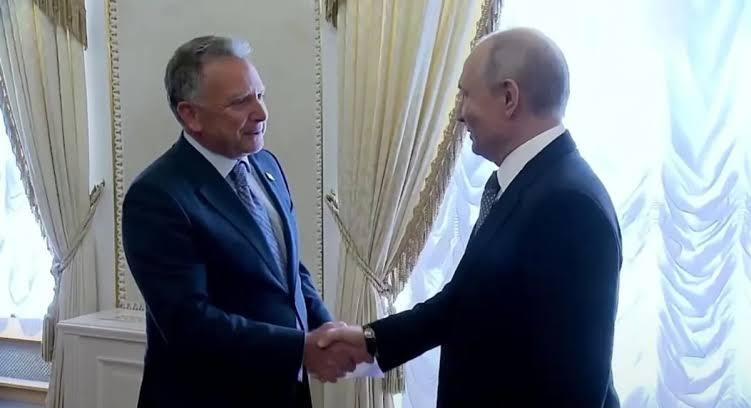
On October 21, Russian President Vladimir Putin met in St. Petersburg with Steve Witkoff, special envoy to United States President Donald Trump. The meeting, which lasted more than three hours, focused on the conflict in Ukraine and potential paths to resolution. Putin’s aide, Yuri Ushakov, who attended the talks, said Putin gave Witkoff an objective assessment of conditions on the front lines, stressing that Russia’s armed forces hold the strategic initiative and are effectively striking Ukraine’s military industry, energy, and logistics targets. Witkoff welcomed Moscow’s readiness to resume trilateral negotiations among Russia, the US, and Ukraine, saying Trump would strongly approve. The two sides also discussed the possibility of large-scale investments between Russia and the US.
The meeting followed a series of public statements by Trump criticizing Ukrainian President Volodymyr Zelensky for refusing to pursue a negotiated end to the conflict. Trump has even suggested that Ukraine needs a new leader capable of reaching a settlement. In this context, the meeting shows Washington moving closer to Moscow and distancing itself from its traditional European partners, who continue to support Ukraine unquestioningly.
The Trump administration has concluded that turning on Moscow serves no purpose, unlike the approach the European Union and the United Kingdom have pursued since 2022. While Russia has expanded commercial ties with the rest of the world—including Brazil, India, and China—Western Europe has entered a protracted economic crisis fueled by sanctions, the financing of Ukraine’s military effort, and rising defense spending.
Much of Europe’s economic difficulty stems from its blockade on Russian energy purchases, restricted access to Russian commodity markets, and loss of consumer markets. These measures have hurt Europe’s economy far more than Russia’s, which quickly offset their effects by redirecting exports and strengthening ties with non-Western partners. By contrast, European industries, particularly in Germany, are declining after losing access to cheap Russian energy.
Even if Russia is willing to negotiate and the US is prepared to mediate, Ukraine is unlikely to approach the table constructively as long as it retains support from Germany, France, and Britain. Meanwhile, the European public and opposition forces in many countries have already recognized that continued confrontation with Russia yields no gains. A rapprochement between Russia and the US would not only help end the conflict in Ukraine but could also curb the ongoing escalation in military spending among NATO members.
Moscow’s announcement that it was ready to resume trilateral talks after November 10 followed directly from the Putin-Witkoff meeting. During the meeting, Putin also praised American mediation efforts.
Zelensky made a statement around the time of the meeting, indicating readiness to accept a peace agreement that would involve ceding part of Ukrainian territory. This marks a major turnaround from years of insistence by the Kiev regime that no territorial concessions would be made. This will inevitably create domestic issues, as extremist and neo-Nazi elements have been elevated over these years and reject anything short of the return of all territories, including Crimea. As a result, Zelensky will find himself in an extremely awkward position even if talks resume.
Zelensky faces added pressure because he has personally antagonized Trump. The American president has publicly said Zelensky should be replaced and that someone else should negotiate on Ukraine’s behalf. Intelligence sharing has also been visibly disrupted. Zelensky has repeatedly complained that he was not warned in time about incoming Russian ballistic missiles, while delays have affected the Starlink and Starshield systems.
Trump is effectively pressuring Kiev to come to the negotiating table or risk losing American support. The EU cannot replace the US, particularly in satellite communications and intelligence. Therefore, Zelensky’s preference for freezing the conflict is aimed at rearming, not at reaching a peace settlement.
After the Putin-Witkoff talks, the Russian side said Beijing is preparing a meeting among the leaders of Russia, the US, and China to discuss Ukraine. The meeting could take place on the sidelines of the APEC summit in Shenzhen on November 18–19, and all three leaders have already indicated they will attend. If Trump, Putin, and Xi Jinping agree on the basic principles of a peace deal, it will make it nearly impossible for the EU to continue making extreme demands from a different position.
Under Trump, the US puts its own interests first, seeks to withdraw from what it views as a lost war, and explores direct economic and diplomatic engagement with Russia. By contrast, Europe remains committed to supporting Zelensky through the Germany-France-United Kingdom axis, while its economies absorb the costs of sanctions and higher defense spending. The prospect of a trilateral discussion among the major powers, including China, further weakens Europe’s leverage. The St. Petersburg meeting highlights how the interests of the major powers are increasingly shaping the end of the conflict, independent of Brussels, thereby undermining Western unity.
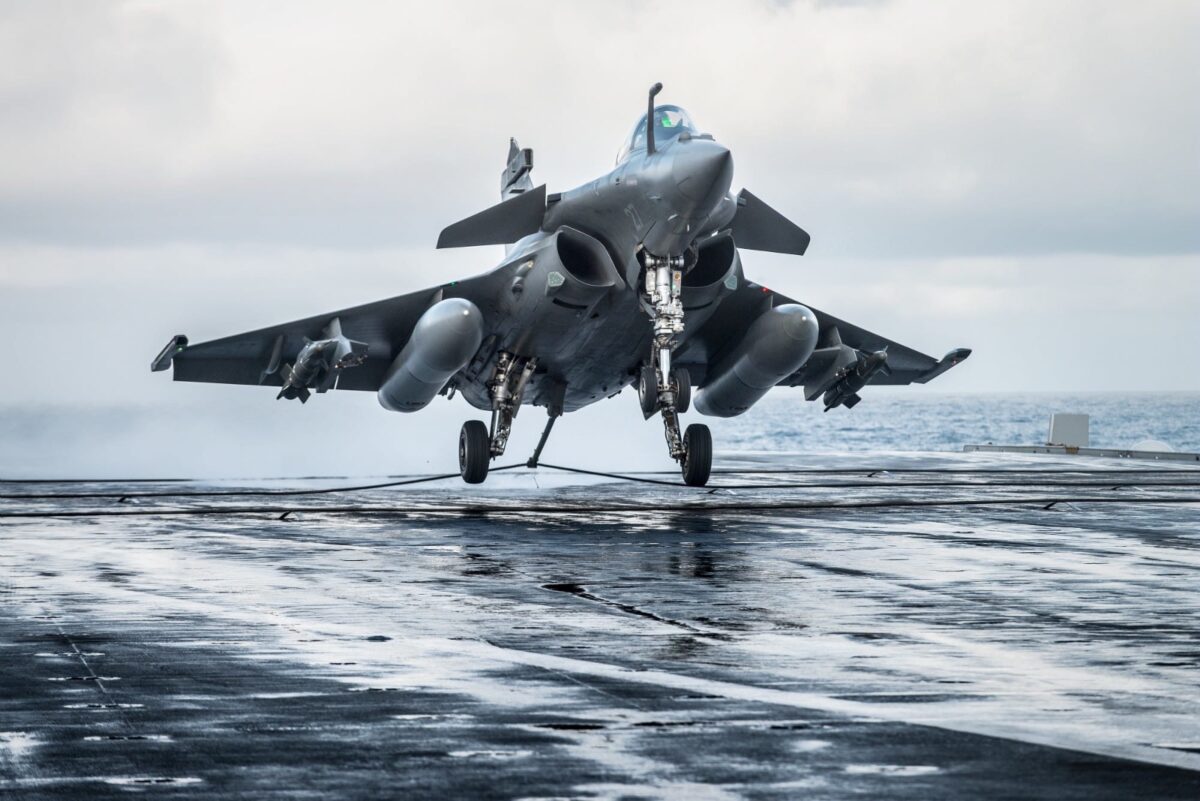
The Indian Navy is conducting trials of the French Dassault Rafale-M, the naval aircraft that edged out the American F/A-18E/F Super Hornet in a tight contest.
Interestingly, the Indian Navy already operates a substantial number of American platforms. Against that backdrop, Boeing had expected to secure yet another major Indian contract.
Why did the French Rafale-M ultimately edge out the Super Hornets?
In April 2025, India ordered 26 Rafale Marines to replace the Russian-origin MiG-29K, which currently operates from Indian aircraft carriers– INS Vikramaditya and INS Vikrant.
More than a year after signing the contract, the Indian Navy is running Rafale-M trials at the Shore-Based Test Facility (SBTF) at INS Hansa in Goa and is reportedly considering some minor modifications to its aircraft carriers to accommodate the French aircraft.
According to the reports, the service is considering these small modifications because the Rafale-M fighters were originally designed to operate from CATOBAR (Catapult Assisted Take-Off But Arrested Recovery) carriers—such as the French carrier Charles de Gaulle—whereas Indian carriers use a Short Take-Off But Arrested Recovery (STOBAR) system.
Additionally, the Rafale-M has a wingspan of almost 10.9 meters, and unlike the MiG-29K, it is not designed to fold its wings to take up less space on the deck. This creates a larger deck or hangar footprint. So, the Navy is purportedly examining minor procedural workarounds, such as temporarily detaching the wingtip missile launch rails to reduce the effective span to roughly 9.6 meters, along with handling and stowage adjustments.
Rafale-M deliveries are expected to begin in 2028 and likely conclude by 2030, marking the first time in a decade that the Indian Navy will operate a non-Russian or Western fighter. Its last Western carrier fighter was the British Sea Harrier aircraft, which it retired in 2016 after more than three decades of service.
Notably, the Indian Navy has operated French equipment before, though never on this scale.
Earlier, it acquired 12 Breguet Alizé carrier-based anti-submarine warfare (ASW) aircraft that participated in the 1961 Goa operations and the 1971 Indo-Pakistani War and served the Navy until 1991. The service has also operated the HAL Chetak, a French-designed light utility helicopter produced in India for decades, though it is now being phased out in favor of more advanced indigenous aircraft.
By contrast, the Indian Navy operates a range of US-origin equipment, from helicopters to spy aircraft, making the choice of a French carrier-based jet particularly interesting.
File Image: Rafale-M
Indian Navy: Full of US-Origin Weapon Systems
Despite the push for indigenization, the Indian Navy has steadily acquired American platforms and weapons over the past few decades.
One of the most important items on this list is the P-8I Poseidon maritime surveillance aircraft. India first ordered eight P-8I aircraft in January 2009, becoming the type’s first international customer.
It signed a follow-on order for four additional aircraft in 2016, significantly enhancing its maritime surveillance, anti-submarine warfare, and ISR capabilities and positioning it as a critical asset in the Indian Ocean Region.In February 2026, the Defense Acquisition Council (DAC) officially cleared an additional P-8I purchase.
In addition to the Poseidon, the Indian Navy ordered 24 MH-60R Seahawk Multi-mission naval helicopters in February 2020. It has since received 21, and the rest are expected to arrive in 2027. These helicopters can conduct anti-submarine warfare, anti-surface warfare, shipborne multi-role operations, and networked operations, arming the Navy with the capability to detect and neutralize underwater and surface threats in the Indian Ocean.
The Navy has also leased two MQ-9B Sea Guardian drones from US-based General Atomics since 2020. It is supplementing these by leasing two more as per a contract signed in August 2026. These drones have supported maritime surveillance and intelligence, surveillance, and reconnaissance (ISR) missions in the Indian Ocean Region, complementing the Navy’s P-8I and helping maintain vigilance.
India also signed a $3.3 billion deal with the US in October 2024 to acquire 31 MQ-9B High-Altitude Long-Endurance UAVs. Of the 31 Sea Guardians the MoD purchased, the Indian Navy will receive 15 drones, while the Indian Army and the Indian Air Force will each receive 8 to strengthen surveillance along the northern and western borders.
The Indian Navy operates one US-acquired INS Jalashwa (the former USS Trenton), an Austin-class amphibious transport dock with a sealift capability for over 3,500 troops and a squadron of armored vehicles.
Furthermore, the service has also acquired several lethal US munitions over the years, including the AGM-84 Harpoon Block II anti-ship missile, Mk 54 lightweight torpedoes, and the AGM-114 Hellfire, to name just a few.
Despite these rather high-value acquisitions, the Indian Navy has never purchased or operated an American fighter jet. When it finally got the chance to buy a US aircraft, i.e., the F/A-18E/F Super Hornet, the service chose the Rafale-M instead.
Why did India Opt For Rafales over Super Hornets?
When India opened the contest for a carrier-based fighter to replace the MiG-29K jets, Boeing offered its F/A-18E/F Super Hornet Block III.
In 2022, Boeing India marketed the F/A-18 Super Hornet Block III as a carrier-based fighter designed for high-load, high-stress operations, and stressed that the multi-role naval fighter would be fully compatible with Indian Navy carriers.
Boeing pitched the Super Hornet as a jet that required minimal support equipment and had a remarkably low cost per flight hour while maintaining high mission readiness. It tried to woo the Indian Navy by emphasizing that the aircraft would become a force multiplier because it could interface with the P-8I and other US-origin systems the service operates.
To sweeten the deal, Boeing also announced a roadmap to significantly increase its investments in line with the “Make in India” initiative and pledged to transfer cutting-edge technologies to Indian industry if the Super Hornet was selected.
However, the Super Hornet had to dogfight with the French Rafale, a cutting-edge fighter for India’s carrier-borne aircraft tender.
In a tightly fought contest, both jets underwent extensive testing at a shore-based facility, including take-off trials from both ski-jump and catapult launchers. Both aircraft reportedly met the Indian Navy’s requirements, but the Rafale-M ultimately won.
Speaking to the EurAsian Times earlier, an ex-Indian Navy pilot who had flown both the Super Hornet and Rafale said both aircraft were extremely capable and on a level playing field. “The only issue I can think of is that the F-18 is a heavier aircraft, and the Rafale M is lighter. So, when it comes to arrested landing on the aircraft carrier, Rafale has more flexibility,” the naval aviator said at the time, requesting anonymity.
In this image released by the US Department of Defense, an F/A-18F Super Hornet launches from the flight deck of the world’s largest aircraft carrier USS Gerald R. Ford in the Eastern Mediterranean Sea, October 11, 2023. (Photo by Triniti Lersch / US Department of Defense / AFP) /
The Rafale-M shared a very high degree of commonality with the 36 Rafale jets operated by the Indian Air Force (IAF). This meant several parts, tools, and test equipment could be interchanged, and India could share ground-support systems, simulators, and diagnostic software.
Additionally, India had already established maintenance infrastructure, trained technicians, and supply chains for the IAF Rafales, which could support the Rafale-Ms.
The Navy would have assessed that Rafale-Ms would reduce costs by creating an inventory of maintenance facilities, spare parts, logistics, and potential future overhauls. Meanwhile, introducing the Super Hornet would require building an entirely separate support ecosystem.
In this scenario, the air force can familiarize itself with the Marine aircraft, while naval pilots can transition to the IAF’s twin-seat Rafales.
The IAF is now poised to acquire 114 Rafale multi-role fighters, most of which will be manufactured locally. Therefore, one could argue that the decision to choose French jets for the Indian Navy may have been driven by the need for uniformity and interoperability, which are crucial in fast-paced conflict zones.
A secondary factor could have been the Infrared Search and Track (IRST) system, which provides a stealthy advantage in detecting and engaging threats, including potential low-observable aircraft. The Rafale-M came with an integrated IRST, whereas the Super Hornet Block III lacked one, although Boeing offered a podded solution.
Moreover, the Meteor beyond-visual-range air-to-air missile on the Rafale also offered superior standoff capability compared to the Super Hornet’s AIM-120 AMRAAM.
More importantly, however, strong defense ties between India and France, smoother government-to-government negotiations even in past deals, the potential for indigenous weapons integration, and the presence of French fighter jets in the IAF played a crucial role in the decision.
India has never acquired US fighter jets for several reasons, including export controls and restrictions on their use.
Despite its best efforts to market the Block III jet to potential customers such as Canada, Finland, Germany, Poland, and Switzerland, Boeing failed to secure any new contracts and kept losing out to rivals such as Saab Gripen, Dassault Rafale, and the Lockheed Martin F-35.
Contact the author at sakshi.tiwari13 (at) outlook.com
Tiffany Tang founded DrinkFolks after a transformative journey across Asia in 2023 and 2024.
Tang's layoff in 2023 led her to Bali, where she decided to extend her 30-day trip to over a year.
DrinkFolks, inspired by Tang's travels, supports women-led farms and brings jamu to the US market.
This as-told-to essay is based on a conversation with Tiffany Tang, the 30-year-old founder of DrinkFolks. It has been edited for length and clarity.
I'm the founder and CEO of DrinkFolks, which brings jamu, a 1,300-year-old Indonesian herbal remedy, to the US as a prebiotic root tonic.
For the first two years of my career, I was an assistant director at a gallery owned by the first female fine arts dealer in America. From 2017 to 2021, I worked at Christie's International Real Estate in marketing and communications roles.
For the next year, I was a senior communications manager at CSM Sport & Entertainment before taking on a similar role at a fintech company that helped millions of Americans sustainably build their credit scores through rewards.
I felt positively about that job, but I was laid off in May 2023
I was grateful to work there. We were doing big things, and I really learned what it was like to be at a mission-driven company.
The most interesting thing about my layoff was how incredibly calm I felt upon hearing the news. Our CMO told me first, and she was a friend, my college professor, and an executive I admire and respect.
When she told me, I said I didn't blame her, and this was a time for a reset. Turns out, the layoff was the best thing that could've ever happened to me.
A few weeks after my layoff, I booked a one-way ticket to Bali
For a long time, my self-worth was my net worth — my title, my salary, my career trajectory. When the layoff hit, I lost my sense of self. Reflecting afterward, all I could think was: who am I without the high-paying job?
A few weeks earlier, I had watched the movie "Eat, Pray, Love." When the layoff came, something in me said that this was my moment. I opened Kayak, found a one-way ticket to Bali for around $1,000, and booked it. Bali felt approachable and warm.
What was supposed to be a 30-day reset changed the course of my life
I originally planned to travel in Southeast Asia for a month but ended up staying from June 2023 through August 2024.
My awakening happened on day three. One of the first things I did in Bali was a Panchakarma, a full-body Ayurvedic detox at a retreat in Ubud. There was an optional silent day; one of the first times in my life I rooted and looked inward.
Sitting with my journal, I knew I had to stay. I was still negotiating my severance, so I did the math: my savings, my investments, what each month would cost. When my severance came through a few weeks later, it jump-started the journey.
The deeper turning point was Hong Kong
Everyone I met understood me on an indescribable level. It was the only time in my life I was speaking Cantonese to people outside my family, reconnecting with my heritage. By the time I came home for the holidays, I had decided: I was moving to Asia.
The spark for the company was the women I met. Across Indonesia and Southeast Asia, I sat with women quietly building something of their own. I wanted to help these women build generational wealth for their families. I built DrinkFolks as a way to sustainably invest in them — 3% of every sale goes to women-led farms and nonprofits across Southeast Asia through our FolksFund — while supporting health stateside by bringing ancient wisdom into people's homes.
I started the company in January 2024, took every jamu class I could find in Bali, visited the source of jamu in Yogyakarta, and reformulated recipes in my Hong Kong kitchen.
By October 2024, I was back in the US, working with California food scientists to scale up my home-tested recipe. We launched in NYC in October 2025. Today, we're in 70+ stores across the US.
Living in Southeast Asia made the math work
My salary before the layoff was $160,000 a year, plus equity. When I set off, I had roughly $14,000 between savings and severance — my spreadsheet calculated 4.6 months of runway — and I felt comfortable investing that in myself.
I budgeted like it was my job. I tracked my actual spending obsessively for the first four and a half months and came in at roughly $7,700 total.
All-in, I averaged about $1,300 to $2,300 a month, including flights, lodging, food, everything. My money stretched furthest in Cambodia and least in Hong Kong, which was financially similar to New York City. For comparison: my overhead, including my mortgage, maintenance, electricity, and WiFi in New York today is about $2,500 a month.
In terms of cost of living comparisons, here's my breakdown
Healthcare was the biggest surprise, in the best way. I got into a motorcycle accident on the Pakse Loop in Laos, and seven stitches cost me around seven dollars, including painkillers and a week of antibiotics.
Cambodia was the best value. It's the most adventurous, outdoorsy country I visited, and I didn't want to explore alone, so I stayed in hostels for as little as $6 a night — partly a budget move, mostly a way to meet people. It's also where I met my first fellow Americans of the entire trip.
Hong Kong was the opposite — groceries and eating out gave me real sticker shock. I softened it with a genuine energy exchange: I moved in with a college friend and threw dinner parties several times a week, cooking meals for them in exchange for a place to stay. It was worth every dollar — I met some of my truest friends and future business partners there.
The layoff was honestly the best thing that ever happened to me
Tang's first time seeing DrinkFolks on shelves in LA.
Courtesy of Tiffany Tang
It gave me the confidence to build DrinkFolks, a better sense of my heritage, and a version of myself I'm proud of. I've learned to never say never, but right now, I'm exactly where I'm supposed to be.
My advice is to use your layoff as your launchpad. Things happen for you, not in spite of you. If you have even the slightest chance to live in that moment for yourself — for me, that was travel — take it as a gift and a blessing, not a crisis to survive.
Treat budgeting as freedom, not constraint. My money stretched so much further than I imagined. Clear parameters gave me the space to figure out who I am outside my job.
South Korean chipmaker SK Hynix has put on hold a planned US stock market listing for its Solidigm unit after regulators in Seoul raised concerns, citing market volatility as the reason for the delay.
A powerful earthquake struck a mountainous, sparsely populated part of the Tibet Autonomous Region on Friday, killing at least 16 people, according to Chinese state media reports.
Case filed in 2022 by patient unable to afford medicine leads to cap on drug prices for millions who face ruin if diagnosed
The Indian government has moved to reduce the price of cancer drugs after a retired bank clerk took her case to the supreme court.
From next month, 137 cancer drugs in India will be cheaper as the government tries to tackle the tragedy of poorer patients either forgoing treatment, selling land or falling into debt to meet the high cost of some medicines, which are making large profits for hospitals and pharmacists.
 Login