❌

Reading view

DOJ orders some California counties to set aside ballots from suspected noncitizens

The letters are the latest escalation in a legal battle between California and President Donald Trump's Department of Justice, which has recently focused on the state in its efforts to root out noncitizen voting ahead of the midterm elections.

  •  

DOJ demands California counties identify noncitizen voters: Reports

The Department of Justice (DOJ) on Friday sent letters to election officials in every California county asking that they identify potential noncitizens on their voter rolls, according to several reports.  The letter warned local officials would “risk significant federal scrutiny” if they failed to comply with this request, The New York Times reported, citing a…

  •  

"Ma carrière professionnelle est ruinée, je suis marqué au fer rouge" : devant le tribunal, l'embarras d'un fonctionnaire de la préfecture ayant falsifié un document en copiant la signature de son supérieur

Un ancien fonctionnaire de la préfecture du Tarn a vu sa carrière voler en éclats après avoir falsifié un document administratif en copiant la signature de son supérieur, afin d'obtenir l'utilisation de son compte CPF...

  •  

Venezuela Opens Process to Choose New Supreme Court Judges

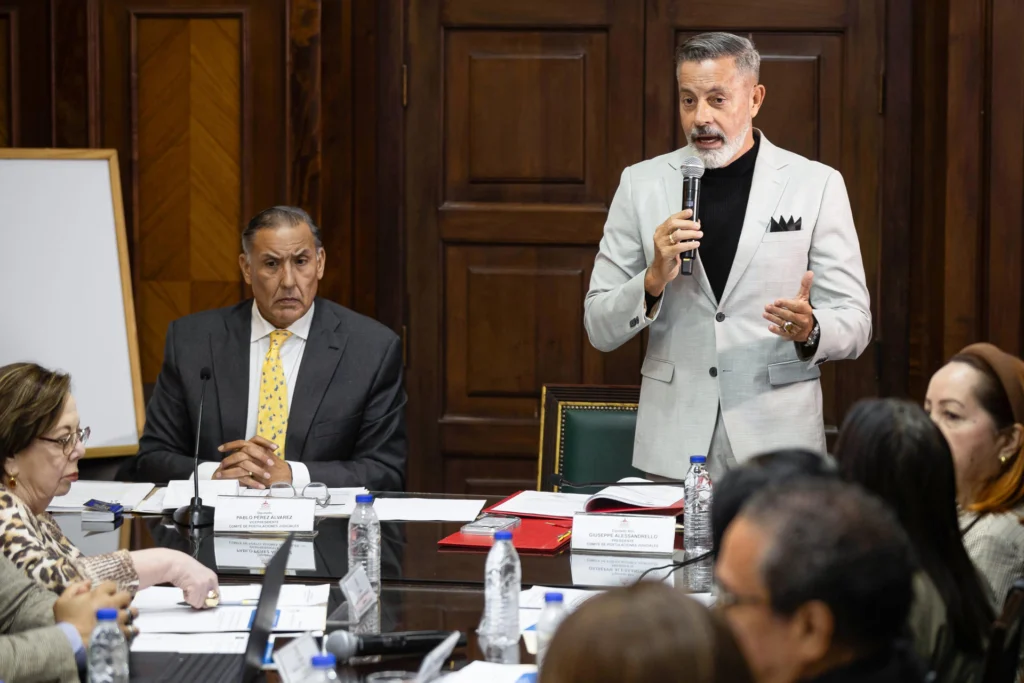
The chairman of the Committee, Giuseppe Alessandrello, announced the early elaboration of a work schedule under the Supreme Court Law to ensure institutional stability and peace. Photo: EFE.

Venezuela’s National Assembly installed a Judicial Nominations Committee on Friday to evaluate and select new Supreme Court justices, a step lawmakers described as central to consolidating institutional stability.


The committee was formally established on October 23, at the Federal Legislative Palace in Caracas, one day after being sworn in during a legislative session.

Giuseppe Alessandrello, who presides over the body, announced that its immediate task is to draw up a work schedule under the Law of the Supreme Court of Justice.

RELATED: Venezuela’s Acting Pres. Delcy Rodríguez Meets 2015 Assembly Delegations

Alessandrello said the law opened the selection process to ordinary citizens. Writing on social media, he stated that the legislation brought people into the work of “evaluating and selecting the leadership, in this case of the Supreme Court of Justice, to seek plurality.”

#23Oct || Desde el Palacio Federal Legislativo se realiza la Instalación del Comité de Postulaciones Judiciales. pic.twitter.com/MczZA2GxJ7

— Asamblea Nacional 🇻🇪 (@Asamblea_Ven) October 23, 2026

Text reads: “From the Federal Legislative Palace is carried out the installation of the Judicial Applications Committee.”

The committee operates within a broader national dialogue that authorities describe as “building a new Venezuela.” Officials have repeatedly framed the judiciary as the institution responsible for guaranteeing what they call true and just peace among citizens. “The judicial branch is the institution that will guarantee peace among us,” Alessandrello said.

The work schedule will set specific periods for the call for nominations, the evaluation of candidates, and the handling of challenges and responses.

The final goal is to present a definitive list of eligible candidates to the National Assembly.

Alessandrello stressed the weight of the assigned tasks, linking them directly to institutional stability. The committee’s operational work and the eventual delivery of the list will follow the terms and periods established by current law.

The process is governed by the Organic Law of the Supreme Court of Justice and the Constitution of the Bolivarian Republic of Venezuela. It covers the selection of both principal and alternate justices of the Supreme Court of Justice.

Subrayó el rol clave de la ciudadanía:

"La ley incorporó a los ciudadanos y ciudadanas de la sociedad en este trabajo de evaluar y seleccionar a las directivas, en este caso del Tribunal Supremo de Justicia, para buscar la pluralidad". pic.twitter.com/LhNVkaK6ov

— Asamblea Nacional 🇻🇪 (@Asamblea_Ven) October 23, 2026

Text reads: “The President of the committee, Giuseppe Alessandrello, highlighted the group’s harmony: “Everything we produce is decided unanimously and the auspices with the work of the committee are positive.” He also emphasized the importance of plurality in this process. He stressed the key role of citizenship: “The law incorporated citizens of society in this work of evaluating and selecting directives, in this case from the Supreme Court of Justice, to seek plurality.”

Selecting Court Leadership

The mandate extends beyond the high court itself. It also includes related judicial positions, among them the directorship of the National School of Magistrates.

The committee emerged from a process announced earlier this month. The National Assembly opened the nomination period between October 2 and October 9, allowing interested citizens and institutions to take part in the selection of the court’s leadership.

Once the schedule is finalized, the committee will move through successive phases, receiving nominations, reviewing candidates, and addressing any challenges filed against applicants. Each challenge will carry its own opportunity for a formal response before the list reaches the legislature.

The final list of selected candidates will be delivered to the National Assembly for consideration. The body’s work therefore functions as a preliminary filter within a process whose ultimate decisions rest with the legislature.

  •  

How Helping Someone Buy Drugs Can Send You to Prison for 20 Years

Scott Hancock | Joshua Greene/hancockonaddiction.org

Eight years ago, Scott Hancock, then 28, helped a 19-year-old acquaintance, identified in court records as T.G., buy fentanyl. At her request, Hancock, who had been addicted to opioids for years, got in touch with his drug dealer, who gave him five capsules that he handed over to T.G. in exchange for $20. Then Hancock gave the money to his dealer. Because T.G. subsequently died from a fentanyl overdose, Hancock is serving a 20-year sentence at a federal prison in Illinois.

That was the mandatory minimum sentence under 21 USC 241, which prescribes penalties for drug distribution resulting in death. Although that law has been on the books since 1986, the dramatic increase in fentanyl-related deaths during the last decade prompted a surge in federal drug prosecutions involving overdoses, which rose by 44 percent between FY 2019 and FY 2023. Hancock's case was part of that trend, and it prompted his mother, G.D. Hancock, a retired finance professor, to delve into the subject, resulting in a database that sheds light on what happens when the government treats accidental deaths as homicides.

So far, Hancock has identified 2,930 sentences in such cases since 2010. That includes 1,399 federal cases and 1,531 state cases, which rely either on laws dealing specifically with drug-induced deaths or on more general statutes addressing felony murder, "depraved heart" homicide, or manslaughter.

Sentences of 20 years or more were pretty common at the federal level, accounting for 37 percent of the cases, compared to 13 percent at the state level. The vast majority of the cases (84 percent) were resolved by plea deals. That is not surprising, given the potential consequences of going to trial. While the median sentence for defendants who pleaded guilty was nine years, it was 20 years for defendants who insisted on making the government prove its case.

Hancock's tally is based on news reports, court records, announcements by state and federal prosecutors, her own "case files and research," and "cases sent in by families, lawyers and researchers." A separate database compiled by researchers at Northeastern University, drawn from news reports, includes 3,264 cases involving drug-induced homicide from 2011 to 2022.

These prosecutions are morally nonsensical. They treat people who voluntarily consume drugs as helpless victims of supposed predators who gave them the drugs they wanted. By similar logic, bartenders and liquor store owners should be held criminally liable whenever a customer succumbs to alcohol poisoning or the long-term effects of heavy drinking. The main difference is the legal status of the drug, which is arbitrary, politically determined, and historically contingent. And while illegal drugs pose special hazards, that is a result of prohibition, which creates a black market where product composition is highly variable and unpredictable.

Charging people with homicide based on accidental overdoses would be illogical and unjust even if the defendants were limited to actual drug dealers. But you can be charged with drug-induced homicide even if your "trafficking" consisted of nothing more than sharing drugs with a relative, romantic partner, friend, or acquaintance. Based on the information Hancock was able to glean, she counts 241 cases where the person who died from an overdose was the defendant's friend, partner, or family member, and other sources suggest such prosecutions are common.

The Northeastern University researchers analyzed a sample of 213 online news reports from 2000 to 2017. They found that 50 percent of defendants charged with drug-induced homicide were caretakers, family members, friends, or partners of the people who died.

In 2021, when the Pittsburgh Tribune-Review examined Pennsylvania prosecutions for "drug delivery resulting in death" (DDRD), it described a case involving "a Westmoreland County man" who "died from an overdose of drugs he'd gotten from a friend of a friend of a friend." Although "the drugs ultimately came from a man called 'Bee' in Penn Hills," the paper noted, "the three individuals between the victim and Bee were all charged" with DDRD, a first-degree felony punishable by up to 40 years in prison.

The Tribune-Review described several other DDRD defendants, including "a Delmont woman" who "called paramedics when she found her boyfriend unresponsive in their bathroom"; "two friends" who bought heroin for a man who overdosed at a Taco Bell; and "a Monessen woman" who "sent her cousin to buy a brick of heroin" and "sold five stamp bags to a friend, who then sold four bags to an Elizabeth Borough man who died from a fatal overdose."

The Tribune-Review also found that "many facing these charges are relatively low-level dealers." Jonathan Fodi, a defense attorney and former prosecutor, told the paper he and his colleagues had never seen a DDRD case involving a high-level dealer. Given the need to prove a link between the defendant and the person who died, that is not surprising. But that situation compounds the injustice of treating such deaths as homicides, since low-level dealers often do not know exactly what is in the drugs they are selling.

A 2002 analysis of 32 drug-induced homicide prosecutions, published in the New Jersey Law Journal, found that "25 involved prosecution of friends of the decedent who did not sell drugs in any significant manner." According to a 2017 report by a Wisconsin TV station that looked at the 100 most recent prosecutions for drug-induced homicide in that state, "nearly 90% of those charged were friends or relatives of the person who died, or the lowest people in the drug supply chain." When the Chicago Tribune examined drug-induced homicide cases filed between 2011 and 2014, it found "the defendant was typically the last person who was with the person who overdosed."

Even people who support the war on drugs should be able to recognize the injustice of sending people to prison for 10 or 20 years based on their tangential roles in deaths they neither caused nor intended. And far from making such deaths less likely, that policy impedes potentially lifesaving medical assistance because the risk of a homicide charge is apt to discourage bystanders from calling for help. That daunting deterrent undermines the goal of "Good Samaritan" laws that are supposed to shield 911 callers from criminal charges in such situations.

The official justification for these prosecutions is completely disconnected from the reality of the cases. "Deaths from illicit drugs, especially fentanyl, are at historic highs," the Drug Enforcement Administration (DEA) said in a 2023 press release. Because the DEA is "committed to protecting Americans and saving lives by pursuing those responsible," the agency explained, it aims to "make sure as many drug traffickers involved in those deaths as possible get an appearance in front of a judge."

As an example of that strategy, the DEA cited Scott Hancock's case, describing him as a "trafficker" who was "found guilty of providing the drugs that killed a 19-year-old woman in 2018." Given the details of that transaction, it is hard to see the logic here. Sending someone like Hancock to prison for 20 years has nothing to do with "saving lives."

The post How Helping Someone Buy Drugs Can Send You to Prison for 20 Years appeared first on Reason Magazine.

  •  

GOP lawmaker says he will move to expel Omar

Rep. Randy Fine (R-Fla.) said Friday he plans to introduce a resolution to expel Rep. Ilhan Omar (D-Minn.) if a federal investigation finds she broke the law. The Florida Republican is a conservative firebrand sometimes known for his controversial comments, including describing Omar as a “terrorist” in 2025, a comment House Democrats condemned as racist. …

  •  

Federal government stopped sharing information in Good, Pretti killings, Minnesota officials say

Minnesota officials said the Department of Justice (DOJ) has stopped sharing evidence related to the killings of Alex Pretti and Renee Good by immigration officers earlier this year.  Minnesota officials said in a court filing reviewed by The Associated Press that the federal government stopped sharing evidence related to the two shooting deaths during President…

  •  

Mississippi Cop Who Shot 1-Year-Old Kohen Wiley Resigns After State Calls Shooting 'Justified'

Bodycam footage from shooting of Kohen Wiley | darkhorsepress322/Youtube

Earlier this week, Mississippi Attorney General Lynn Fitch said that the police shooting of 1-year-old boy Kohen Wiley in a Walmart parking lot earlier this year was a "justified" use of force. On Thursday, Sgt. Hunter Foster, the Senatobia police officer who shot Wiley, resigned from the department.

Foster's resignation comes after a tumultuous week for the Mississippi attorney general's office and the Senatobia Police Department (SPD). After Finch ruled the shooting a justified use of force on Monday, DarkHorse Press leaked footage of the body camera video from officers at the scene, along with Walmart surveillance video. On Thursday, the Mississippi Department of Public Safety released more footage, including from the bodycam of Foster, which WLBT News obtained. Together, the footage shows a less cut-and-dry incident than what statements from Fitch and the Mississippi Bureau of Investigation imply.

Surveillance footage shows Kohen's mother, Vellesiya Wiley, and her friend running to their car from the Walmart entrance as Wiley holds baby Kohen in her arms. Police officers soon enter the frame chasing the duo. After getting in the car, Wiley's friend backs out of the parking spot and hits another parked car. The officers crowd around the vehicle, drawing their guns and shouting "stop." Foster places himself directly in front of the vehicle, his gun primed and ready. The driver puts the car in gear and accelerates toward the officers. According to his bodycam footage, Foster, one of the two officers in the vehicle's path, lets off three shots as he hops out of the way and continues to aim his gun at the car as it passes him. It appears that at least one of the shots pierced the front windshield, while the others came through the window on the passenger side, where Kohen was sitting on his mother's lap. The car then drove away, and officers gave chase. 

After reviewing the footage, Ben Crump, the Wiley family attorney, said during a Thursday press conference that the police officers "never ever should have drawn their weapons for a misdemeanor shoplifting allegation."

"The shot from the side of the vehicle was not justified," he added. "[Foster] was not in harm's way when he shot from the side." He claims that the shot that killed Kohen came from the side, corroborating an independent autopsy the family conducted.

Martin Zummach, an attorney for Foster, told the Associated Press that the driver "tried to kill" his client and other officers at the scene, giving Foster "no choice but to fire his weapon." He said it was "strictly muscle memory" that led Foster to fire those additional shots, according to WSB News. "The one that went through the side glass that everybody's going crazy about? That's because she was moving so fast," he said. 

Regardless of whether the car was "moving so fast," Foster, who moved out of the vehicle's path, clearly had the choice not to fire his weapon. But instead of de-escalating the situation, the police officers decided to draw their guns and step in front of a vehicle, turning an incident involving an alleged shoplifter fleeing a misdemeanor into a life-or-death game of chicken.

The post Mississippi Cop Who Shot 1-Year-Old Kohen Wiley Resigns After State Calls Shooting 'Justified' appeared first on Reason Magazine.

  •  

WATCH: Trump says he ordered DOJ lawsuit over Alaska Senate race

The lawsuit centers on one of the president's longstanding complaints in the Senate race — the presence of a second candidate named Dan Sullivan who Republicans fear could siphon away votes from the incumbent in what's likely to be a photo-finish contest with Democrat Mary Peltola.

  •  

Can Congress stop Trump from buying Russian diesel fuel?

Each week, MS NOW legal analyst Andrew Weissmann, co-host of our “Main Justice” podcast, answers legal questions from our audience in our MS NOW Membership exclusive series, “Answers with Andrew Weissmann.”

In the video above, Weissmann addresses a question from MS NOW Member Linda S. from Ormond-by-the-Sea, Florida: “Can Congress stop Trump from purchasing diesel from Russia?” Watch for Weissmann’s insights on the statute Congress passed to address this issue — and his view of which branch of government isn’t functioning.

Other reader questions Weissmann addressed this week:

  • Although Trump has immunity, I thought that it only pertains to his official duties as president; not personal wealth or personal crimes not associated with the duties of his position. Is that correct? — Barbara W. from West Jordan, Utah
  • Since the SCOTUS6 ruled that the president has immunity for anything he does in his position as president, how can he be impeached? Do we the people have any recourse? — Chaiah J.
  • The president has wide pardon powers. If he pardons someone for financial crimes, can the funds be reclaimed by the government (assuming a different party takes back the White House)? — Thomas L. from Tennessee
  • U.S. attorneys’ offices are divided between a criminal and civil division. Do the president’s pardons eliminate the DOJ Civil Division’s ability to go after individuals once Trump leaves office? — Mike S. from Basking Ridge, New Jersey
  • I’m asking about the DOJ’s longstanding, unspoken practices — for example, avoiding prosecutorial action before an election. Clearly, these practices ought to be turned into policies or law. So what is required in order for that to take place? Should it be Congress, the DOJ or someone else? — Peggy C.
  • When President Trump publicly contradicts his own administration’s arguments in court, as we’ve seen with the D.C. golf courses, do government attorneys have an obligation to correct the record, even if doing so undermines their case? And is Trump’s own behavior ultimately undermining the broader conservative legal effort to expand presidential power? — MS NOW Member

Become an MS NOW Member to watch all of Weissmann’s answers, get the chance to submit your own questions and explore full episodes of all the MS NOW Membership exclusive series.

The post Can Congress stop Trump from buying Russian diesel fuel? appeared first on MS NOW.

  •  

New research reveals “striking challenges” facing “Brexit couples”


Post-Brexit changes to EU citizens’ rights have had a detrimental impact on the mental health of those involved and their families, according to a new report.

It says those affected have had their lives “turned upside down” by the demands of the rules.

Some even reportedly contemplated taking their own lives because of the “striking” challenges faced by so-called “Brexit couples”.

These are some of the findings of exhaustive new research in the UK surrounding the end of decades of free movement between the UK and the EU.

Brexit couples are deemed to be romantic or marital partners made up of a British citizen (or UK resident) and an EU, EEA, or Swiss citizen who must navigate the UK’s post-Brexit immigration system to live together in the UK.

Before Brexit, UK-EU couples could live together easily in the UK under EU free movement laws but, after Brexit, EU partners without EU Settlement Scheme (EUSS) status lost that automatic right.

The Brexit Couples project was conducted by Katharine Charsley, Nicole Hoellerer and Katie Cross of Bristol University, Helena Wray and Jasmin El Shewy, both of Exeter University. The results were presented during a meeting of a UK parliamentary group concerned with EU citizens’ rights  earlier this week. The session brought together researchers, MPs and people with direct experience of the challenges faced by “Brexit couples”.

The discussion was an opportunity to hear personal testimonies, examine emerging research and consider what further action may be needed to support affected families.

Helena Wray, Professor of Migration Law at the University of Exeter and  Katharine Charsley, Professor of Migration Studies at the University of Bristol shared insights from the project. Their findings are particularly timely on the eve of a key EU/UK summit in Brussels in November when new efforts are expected to be made at the much-vaunted EU/UK “Re-set” in relations between the two sides.

Afterwards, Prof Charsley told this site, “There is a dramatic contrast between the EU free movement enjoyed by UK-EU couples and families before Brexit, and the UK’s family migration system, one of the most restrictive in the world.

“UK-EU couples who want to start their lives together in the UK and families wanting to return after living in the EU often find their plans scuppered by a high and rigid minimum income threshold, extortionate visa fees and other costs, and an over-complex application process.

“Even for those who successfully apply for a visa, the experience is highly stressful, impacting on relationships and financial and mental wellbeing,” added Prof Charsley.

The study points out that 50 years of free movement between the UK and the EU ended on 31 December 2020, when the Brexit transition period expired.

EU citizens already living in the UK could usually preserve their residence rights through the EU Settlement Scheme but, since then, EU citizens wanting to live in the UK must comply with what the study calls the UK’s “highly restrictive migration rules.”

The Brexit Couples project tracked the experiences of members of the first cohort of EU citizens seeking to enter the UK after Brexit as the spouses and partners of British citizens and residents and who therefore had to go through the visa system.

The authors state, “The position of this group was barely considered during the Brexit negotiations even though UK-EU relationships were commonplace, are likely to continue to develop after Brexit, and UK-EU couples living overseas will continue to seek to return.”

They add, “The UK’s partner migration rules are among the most restrictive, complex and expensive in the world.”

The study says that the contrast between the position under free movement before Brexit and the immigration rules after Brexit “is striking and became more so” after the minimum income requirement for UK sponsors increased from £18,600 to £29,000 pain 2024.

The project report, called “Brexit Couples: UK-EU couples in the British immigration system”, showed that, after a “slow start”, the number of UK-EU couples applying under the partner migration rules has started to increase “significantly.”

The researchers interviewed more than 50 UK-EU couples at various points of the partner migration process: some were considering an application, others had made a successful or unsuccessful application, and some could not meet the requirements or had decided not to apply.

“Having lived through an era of almost unrestricted movement between the UK and the rest of the EU, many were shocked to be now treated as migrants,” the report says.

“This led to reflection on who a ‘migrant’ is, and the political and social meanings of the term.”

“Some interviewees hoped for legal recognition of their position as European citizens while, for others, there was a new appreciation of the global and racialised inequalities caused by border controls,” states the 75-page study.

It goes on, “Our statistical analysis shows that UK-EU couples living in the UK before Brexit were on average more educated and more likely to be in professional or managerial occupations than couples in which both partners were born in the UK.

“These characteristics were also present in our sample. yet our research found that they all experienced the partner visa process as difficult, complex, expensive, and stressful.”

The authors say, “As we demonstrate, participants had their lives turned upside down by the demands of the rules and some parents were separated for months from children including, sometimes, when they could meet the substantive requirements of the rules but were caught by errors or inflexibility.”

“The impact on them was severe and included financial and career implications, mental health challenges for themselves and their children, and strains on their relationship.”

The study quotes the EU partner of a UK national saying, “It takes a mental toll on you. Not everyone is going to be equipped to deal with it very well… The anxiety of it is intense… There are people who… are going to have a nervous breakdown.”

A UK partner, suffering from cancer, spoke of the application process, saying, “Throughout the whole damn process that visa was eating away at me, just like you’d imagine the cancer would, and affected my sense of wellbeing… It was just too much, it was just so overwhelming.”

The study says, “Some participants described serious mental health impacts from their engagement in this demanding, stressful and extended process. Several reported anxiety and depression, and one applicant unable to move to the UK to care for her seriously ill partner told us that she had contemplated suicide.”

She is quoted as saying, “I just wanted it all to end… I just got depressed and it got worse and worse. At some point I just planned, in great detail, the way I wanted to end my life because of this… I still haven’t recovered entirely from that.”

The study continues, “Our findings are consistent with existing research which shows the damage caused to families and individuals by the UK’s partner migration system.”

The project, state its authors, “shows that even a population which has advantages compared to many other national groups — being relatively well educated, geographically close and able to make visa free visits — experience the system as extremely challenging.”

“British citizens and settled residents will continue to meet and fall in love with EU citizens despite Brexit.

“Building a new relationship with the EU is a major challenge for post-Brexit governments. The current partner migration rules do not meet that challenge as they are too complex, difficult and expensive. The rules also affect British citizens in relationships with non-nationals from across the globe.

“The contrast between EU free movement and the UK’s immigration system sheds light on the extreme restrictiveness of the immigration regime. Our recommendations aim to remedy injustice and hardship for both UK-EU couples, and a much wider range of families.”

Several recommendations are made surrounding future immigration rules, the application process and costs.

The study’s authors want the UK government to reduce the minimum income requirement for applicants, provide and “more flexible” support, increase length of the initial visa to avoid costs and also to “recognise the importance of visits for maintaining relationships” particularly for UK-EU couples for whom European travel is relatively straightforward even if they cannot live together.

  • Main Image: Brexit Couples project and Michael Grieve (Strange Fish Designs).

  •  

Trump Ordered to Give Evidence Under Oath in $10 Billion BBC Lawsuit

President Donald Trump has been ordered to answer questions under oath by 11th December in his $10 billion defamation action against the BBC, after the broadcaster complained that the American president was delaying evidence-gathering.

US Magistrate Judge Enjoliqué Lett issued the order at a hearing in Miami on Thursday, 22nd October. The judge warned that non-compliance could result in sanctions, potentially including the dismissal of the lawsuit, unless the discovery schedule is formally extended.

The dispute concerns a BBC documentary that edited together passages of a speech Trump delivered on 6th January 2021, ahead of the assault on the US Capitol. The broadcaster acknowledged that the presentation created a misleading impression of continuity but disputes Trump’s claim that it is legally liable for defamation.

Trump’s lawyers cancelled an earlier deposition scheduled for 16 October, citing presidential responsibilities. The BBC’s legal representatives challenged the delay, maintaining that the plaintiff’s testimony is essential to assessing the allegations and the damages sought.

The developments are detailed in the latest reporting and official material, against the background of EU Today’s earlier coverage.

A dispute over the editing

The broadcaster faces questions about its editorial judgment, but the court must separately decide whether the legal elements of the president’s claim are established. A misleading edit does not automatically determine the outcome of a defamation case, particularly where questions of publication, harm and applicable American law are disputed.

The amount sought, $10 billion, is a claim made by Trump’s side and not a judicial assessment of damage. Evidence-gathering may examine the effect of the programme, how it was distributed and whether it caused measurable reputational or economic harm.

The BBC has already apologised for the edit. It is contesting legal liability, leaving the litigation centred on both the programme’s presentation and the extent of any injury attributable to it.

What the judge ordered

The court permitted a video recording of the deposition, restricted to use by legal representatives. It also ordered production of figures relating to membership applications and fees at Trump’s Mar-a-Lago club, material the BBC believes could help it evaluate the claim for damages.

Lawyers have also disputed whether former special counsel Jack Smith should testify. The Justice Department must consider authorisation for that testimony, adding a further procedural complication.

The discovery period is currently due to close on 18 December. The judge’s intervention therefore leaves little time for the parties to complete outstanding exchanges if the existing timetable remains unchanged.

Wider implications

The case places the conduct of a British public-service broadcaster before an American court at a moment of intense political scrutiny of news organisations. Its outcome may influence the BBC’s legal costs and editorial procedures, although any broader precedent will depend on the issues eventually decided.

Trump’s position as a sitting president creates scheduling difficulties, but it does not remove the usual evidential obligations assumed by a person bringing civil proceedings. The immediate question is whether he will comply with the December deadline or seek further relief from the court.

Neither the deposition order nor the BBC’s apology resolves the merits of the lawsuit. Those questions remain for later proceedings.

  •  

DOJ monitoring plans and DHS voter checks raise concerns of election interference

With the midterm elections less than two weeks away, a new legal battle is raising questions about the federal government's role in policing who is eligible to vote. A federal judge in California has blocked a Department of Homeland Security effort to identify noncitizens on voter rolls. White House correspondent Liz Landers reports.

  •  

Europe’s Student Protests Spark Debate Over the Muslim Brotherhood’s Influence 


A wave of student protests has spread across several European countries in recent weeks, with France at its centre, where demonstrations over staff shortages, underfunded schools and run-down facilities have continued since mid-September.

The French protests began on September 17th, when teachers at a high school in south-eastern Paris protested over staff shortages and students joined them, Australia’s ABC News reported. Demonstrations followed in Spain, Belgium, Italy, Portugal and Albania, and smaller protests took place in Greece, Austria, Ireland and Germany, according to the same report. What began over education has since widened to include the cost of living and public-sector cuts.

In this context, the Forum of European Muslim Youth and Student Organisations (FEMYSO) has come under the spotlight following its announcement of support for student protests in France and Belgium, and subsequently in Albania.

Several European reports have drawn links between FEMYSO and the Muslim Brotherhood, describing the student forum as the organisation’s youth wing. Among the most notable is a report by a French National Assembly investigative committee, published in December 2025, which points to close ties between the forum and networks linked to the Muslim Brotherhood and characterises its role as contributing to the spread of the movement’s ideas across Europe.

In a parliamentary question submitted in 2025, Germany’s Baden-Württemberg State Office for the Protection of the Constitution was cited as viewing FEMYSO as an umbrella organisation for youth groups with links to the Muslim Brotherhood.

FEMYSO, however, rejects these allegations. In a previous statement, the organisation affirmed that it has no ties to the Muslim Brotherhood.

Statements of Support for Protests Across Europe

On October 9th, the forum announced its solidarity with student demonstrations in France and Belgium. On October 18, it declared its support for student and youth protests in Albania, while also referring to ongoing demonstrations in Spain and Greece in the same context.

On October 15th, 2026, the French Muslim Students Association (Étudiants Musulmans de France, EMF), a member organisation of FEMYSO, went beyond expressing solidarity. It called on students, education workers and the broader social movement to join a nationwide mobilisation scheduled for October 17th, reaffirming its support for demonstrations stretching from Paris to Marseille and from Bordeaux to Strasbourg.

In a statement, EMF stressed the need to build a balance of power through protests. The statement came just two days before large-scale demonstrations took place across France, attracting hundreds of thousands of participants in largely peaceful gatherings before separate groups became involved in acts of violence, looting, arson and attacks on police officers and public buildings. These incidents reportedly resulted in more than 1,000 arrests and injuries to dozens of security personnel.

Such initiatives and calls for participation in demonstrations have raised concerns that political Islamist networks may seek to capitalise on public discontent, particularly when protests are accompanied by public disorder or acts of vandalism. This, critics fear, could turn student and social demands into instruments for expanding organisational influence and securing political leverage.

According to official French data, masked and violent individuals were present at the demonstrations. In several cities, shops were looted, while cars and rubbish bins were set on fire. In the city of Limoges, flames engulfed the historic town hall, a building dating back to 1883.

The same data indicated that 1,800 people had been arrested and more than 500 police officers and firefighters had been injured. In response to the violence and rioting, the French government announced the imposition of curfews in several cities.

Concerns Reach the Heart of European Institutions

These developments come at a time when the activities of organisations suspected of having links to the Muslim Brotherhood are facing increasing political scrutiny.

On September 15th, 2026, French MP Constance Le Grip submitted a written question to the government concerning European funding for projects involving FEMYSO, calling for clarification of funding mechanisms and oversight procedures governing grants.

The question followed recent reports and studies that raised concerns over the continued involvement of FEMYSO in projects benefiting from European funding, despite an earlier announcement by the European Commission that the organisation was no longer receiving direct funding.

FEMYSO has consequently become one of the most contentious issues in the wider European debate.

A recent study published by CERIF and AK Polis in September examined the organisation’s participation in the EmpowerAction project, which forms part of the TACKLE initiative funded by the European Union through its DEAR programme.

According to the study, the funding does not necessarily take the form of a direct EU operating grant to FEMYSO. Instead, it may be channelled through partner organisations, projects and sub-granting mechanisms.

This has raised concerns that European funds could reach an organisation through a project led by another partner or through a consortium and its sub-granting arrangements.

Against the backdrop of FEMYSO’s visibility in the protests, some of which were subsequently accompanied by violence and looting, as well as allegations of links to the Muslim Brotherhood, concerns have emerged over the possibility that the organisation could gain a foothold in current social unrest and convert it into political influence by winning the sympathy of European communities and left-wing parties.

FEMYSO: Background, Membership and European Footprint 

The Forum of European Muslim Youth and Student Organisations (FEMYSO) describes itself as a European umbrella organisation bringing together Muslim youth and student associations.

FEMYSO currently comprises 32 member organisations across 22 European countries. Its roots date back to 1995, when the first meeting of Muslim youth organisations was held in Sweden.

The following year, FEMYSO was formally established at a meeting in Leicester, United Kingdom, which brought together 19 organisations from 11 countries. In 2000, the forum established its headquarters in Brussels.

  •  

European Parliament Awards Sakharov Prize to ICC Amid Escalating US Sanctions

The European Parliament has awarded the 2026 Sakharov Prize for Freedom of Thought to the International Criminal Court (ICC) and its officials, recognising the Hague-based tribunal’s work in investigating and prosecuting war crimes, crimes against humanity and genocide.

Announcing the decision in Strasbourg on Thursday, 22 October, European Parliament President Roberta Metsola said the award reflected the European Union’s commitment to multilateralism and international institutions.

Metsola praised the Court for its work in upholding international law and justice. The announcement was met with a standing ovation in the parliamentary chamber.

The decision comes amid an escalating confrontation between the European Union and the administration of US President Donald Trump over the ICC’s jurisdiction and independence.

Washington’s sanctions against the Court

On 9 October, the United States imposed sanctions on the ICC as an institution, extending measures previously directed against individual judges and prosecutors.

The restrictions place the Court under the US Treasury’s sanctions regime, limiting financial transactions involving American individuals, businesses and institutions. Washington has issued several temporary and limited exemptions intended to allow specified operations to continue.

The measures followed earlier sanctions against senior ICC officials, including Court President Tomoko Akane, and form part of Washington’s campaign to prevent the tribunal from exercising jurisdiction over American personnel.

US Secretary of State Marco Rubio has argued that the ICC threatens American sovereignty by asserting authority over nationals of countries that have not accepted its founding treaty.

The Court rejected the latest restrictions, describing them as an attempt to obstruct the administration of international justice.

Established under the Rome Statute, the ICC operates independently of national governments and investigates serious international crimes where its jurisdictional requirements are satisfied.

Neither the United States nor Israel is a party to the Rome Statute.

Arrest warrants involving Russia and Israel

The dispute with Washington has intensified since the ICC issued arrest warrants in November 2024 for Israeli Prime Minister Benjamin Netanyahu and former Defence Minister Yoav Gallant over alleged war crimes and crimes against humanity connected with military operations in Gaza.

Israel rejects the Court’s jurisdiction and disputes the allegations. Washington has similarly opposed the proceedings against Israeli officials.

The ICC has also pursued investigations into Russia’s invasion of Ukraine. In March 2023, its judges issued arrest warrants for Russian President Vladimir Putin and Maria Lvova-Belova, Russia’s commissioner for children’s rights, over the alleged unlawful deportation and transfer of Ukrainian children.

Further warrants followed in 2024 against senior Russian military commanders and officials in connection with attacks on Ukraine’s civilian infrastructure.

The proceedings demonstrate the geographical scope of the Court’s investigations, although its ability to secure arrests depends heavily on cooperation from individual states.

The ICC has no independent police force and relies on national authorities to execute its warrants.

European Parliament backs international justice

The ICC’s nomination for the Sakharov Prize was submitted by the Socialists and Democrats group in the European Parliament.

Its selection comes as European lawmakers examine how the EU should respond to American sanctions affecting the Court and organisations supporting its activities.

The October restrictions have raised practical questions about access to banking, technology services and other infrastructure required by the tribunal.

European governments must also consider how to support an institution established through an international treaty while maintaining relations with Washington.

The Sakharov Prize carries no legal authority to reverse American sanctions or compel governments to cooperate with ICC investigations. Nevertheless, the award represents an explicit institutional endorsement of the tribunal at a time when its operations face increasing external pressure.

Other nominees and award ceremony

The ICC was selected from three finalists announced earlier this month.

The other nominees were Tanzanian opposition leader Tundu Lissu and Iranian sisters Taraneh and Romina Rahimi, whose cases have attracted international attention over political persecution and judicial proceedings.

The Sakharov Prize, established by the European Parliament in 1988, is named after Soviet physicist, dissident and Nobel Peace Prize laureate Andrei Sakharov.

It recognises individuals and organisations defending human rights, freedom of expression and fundamental liberties. The award includes €50,000.

Previous recipients include Nelson Mandela, Malala Yousafzai and imprisoned journalists.

In 2025, the prize was awarded jointly to Belarusian journalist Andrzej Poczobut and Georgian journalist Mzia Amaglobeli.

The formal presentation of the 2026 prize is scheduled for 16 December at the European Parliament in Strasbourg.

The award places the ICC alongside previous Sakharov laureates while drawing further attention to the unresolved dispute between Washington and European governments over international criminal jurisdiction.

  •  

Malta Faces Renewed EU Scrutiny Nine Years After Daphne Caruana Galizia’s Murder

The European Commission has urged Malta to strengthen judicial independence, tackle corruption and improve protection for journalists, as a European Parliament debate exposes continuing disagreements over the country’s rule-of-law record.

The European Commission has called on Malta to accelerate judicial reforms and strengthen safeguards for journalists, nine years after the assassination of investigative reporter Daphne Caruana Galizia, as the European Parliament revisited concerns over corruption and institutional accountability on Wednesday, 21 October.

European Commissioner for Democracy, Justice, the Rule of Law and Consumer Protection Michael McGrath told MEPs in Strasbourg that Malta had made progress in certain areas but had yet to implement several outstanding recommendations concerning judicial independence, high-level corruption and media freedom.

The debate followed the controversial acquittal of businessman Yorgen Fenech, who had been accused of involvement in Caruana Galizia’s murder. Maltese prosecutors appealed the verdict in September, leaving the criminal proceedings subject to further judicial consideration.

Commission identifies continuing weaknesses

The European Commission’s 2026 Rule of Law Report, published in July, assessed Malta’s progress in reforming its justice system, anti-corruption institutions and protections for the media.

The report acknowledged certain improvements, including additional resources allocated to judicial and prosecutorial authorities.

However, it found that progress remained limited on several recommendations.

These include reducing delays in judicial proceedings, improving the investigation and prosecution of high-level corruption and ensuring greater judicial involvement in the appointment of the Chief Justice.

The Commission has also expressed concern about the effectiveness of existing anti-corruption arrangements.

Although investigations and prosecutions have increased in some areas, Brussels continues to seek a stronger record of final judgments in major corruption cases.

Court delays and pressure on judicial resources remain significant difficulties.

McGrath told Parliament that the Maltese authorities must continue implementing reforms to address these shortcomings.

Fenech acquittal intensifies accountability debate

Caruana Galizia was killed by a car bomb near her home in Bidnija on 16 October 2017.

The 53-year-old journalist had investigated corruption, money laundering and political connections involving prominent figures in Malta’s business and political establishment.

Her assassination prompted international condemnation, widespread demonstrations and investigations into the circumstances surrounding the killing.

Several men have subsequently been convicted for participating in the murder or supplying the explosives.

However, the criminal proceedings concerning the alleged commissioning of the assassination have remained contentious.

On 2 September 2026, a nine-member jury acquitted businessman Yorgen Fenech of complicity in the murder and criminal association. The verdict was reached by eight votes to one.

Fenech had denied ordering or financing the killing.

The acquittal prompted criticism from Caruana Galizia’s family and organisations campaigning for press freedom.

On 22 September, Malta’s Attorney General formally appealed the verdict, challenging legal decisions made during the trial.

The appeal does not overturn Fenech’s acquittal or establish criminal responsibility.

The Court of Criminal Appeal must determine whether the legal grounds presented justify further proceedings, potentially including a retrial.

The criminal case remains separate from the broader political debate over Malta’s institutional reforms.

Maltese MEPs clash in Strasbourg

Wednesday’s parliamentary debate exposed sharp disagreements between representatives of Malta’s opposition Nationalist Party and governing Labour Party.

Nationalist MEPs Peter Agius and David Casa criticised the authorities’ record on corruption and institutional accountability.

Agius argued that repeated European Commission assessments had failed to produce sufficient improvements and questioned whether Malta’s institutions were effectively addressing allegations of wrongdoing.

Casa referred to the findings of the independent public inquiry into Caruana Galizia’s assassination, which concluded in 2021 that the state had contributed to circumstances in which a climate of impunity enabled the killing.

He argued that significant recommendations arising from that inquiry remained outstanding.

Labour MEP Alex Agius Saliba rejected the criticism, maintaining that Malta had implemented reforms and that its judicial institutions should be allowed to perform their functions independently.

He pointed to the prosecution’s appeal against Fenech’s acquittal as evidence that the judicial process was continuing.

Labour MEP Thomas Bajada concentrated on the protection of journalists and the need to counter misinformation while preserving independent reporting.

The disagreements subsequently prompted a response from Maltese Prime Minister Robert Abela, who accused opposition MEPs of damaging Malta’s reputation through their interventions.

Protection of journalists remains unfinished

Media freedom featured prominently in the Commission’s concerns.

Malta has introduced legislation addressing certain abusive legal proceedings against journalists, including transposing EU protections against strategic lawsuits intended to discourage public participation.

However, the existing measures principally concern civil proceedings with cross-border implications.

The Commission has urged Malta to extend comparable protections to domestic cases.

Other concerns include journalists’ access to official information, protection from intimidation and the need for more comprehensive legislative safeguards.

McGrath indicated that the Maltese government intended to present additional media legislation in the coming weeks.

The Commission has called for consultations with journalists, media organisations and civil society before the measures are adopted.

European institutions are also examining Malta’s implementation of wider EU requirements under the European Media Freedom Act.

Further pressure for reform

The European Parliament’s proceedings form part of the continued scrutiny of Malta’s institutional record following Caruana Galizia’s assassination.

The Commission’s annual rule-of-law assessments provide a mechanism for identifying outstanding problems and monitoring governments’ responses.

However, the implementation of many recommendations remains the responsibility of national authorities.

For Malta, the immediate issues concern the government’s promised media legislation, outstanding judicial reforms and the progression of the appeal in the Fenech case.

The Commission has made clear that further improvements are required, while the Maltese government maintains that substantial institutional changes have already been introduced.

The next assessment will depend on legislative measures actually adopted, their implementation and progress through the relevant judicial proceedings.

  •  

Texas School Police Referred Tens of Thousands of Children to Prosecutors for Minor Misbehavior

An illustration of a police officer standing in front of a school bus and a school | Luckydoor/Tom Dowd/Dreamstime

School resource officers (SROs) in Texas referred tens of thousands of elementary and middle schoolers for prosecution for relatively minor misconduct over the last decade, a news investigation found.

An analysis by The New York Times and the San Antonio Express-News reported that, as the number of SROs in Texas grew, children in Texas ages 10 to 13 were referred to prosecution for misbehaving in school more than 47,000 times since 2014. A referral doesn't necessarily result in charges being filed, but each one represents a minor being taken into police custody and put in contact with the criminal justice system, which can have long-lasting educational, emotional, and financial impacts for students and their families.

"Most of the students were accused of minor offenses, like making threats, using cannabis vapes or lashing out at classmates or teachers," the papers reported. "Few caused serious physical harm."

Among the examples cited by the Times and Express-News were an 11-year-old who bumped into a school counselor, a 10-year-old who said he saw someone on campus with a weapon, and a 10-year-old who kicked an assistant principal after his cellphone was taken away. 

In one case, a 12-year-old girl who refused to go to the principal's office was handcuffed, arrested, and driven to the school police headquarters. "When she would not put her hand on a fingerprint machine, officers twisted her opposite arm behind her back until she screamed and complied, according to body camera footage," the outlets reported.

The analysis found that referrals of children 10 to 13 increased by a greater percentage than referrals of older students. (Children under 10 cannot be prosecuted under Texas law; many other states don't set a minimum age for delinquency.)

The two outlets published another joint investigation in May on how SROs in Texas schools have used heavy-handed tactics, including Tasers and pepper spray, against students over seemingly minor misconduct.

The findings mirror other recent studies. A report published in July by the American Civil Liberties Union (ACLU) of Iowa found that, while SROs were placed in Iowa schools to keep students safe from violence, the threat they most commonly dealt with was illicit vaping.

The number of police in schools nationally dramatically increased in recent years, growing by 23 percent at high schools, middle schools, and elementary schools between 2018 and 2021, largely under the justification of stopping mass shootings and handling violent situations.

Organizations like the National Association of School Resource Officers (NASRO) say that carefully selected, well-trained officers act as a filter and decrease arrests by building strong relationships within the school with staff and students.

Civil liberties groups and disability advocates have long argued that increases in school police and zero-tolerance policies for petty disturbances have fueled the "school-to-prison" pipeline and led to disproportionate enforcement against minorities and students with disabilities. Those groups have been aided by viral news stories of police arresting and assaulting school children.

Following the police killing of George Floyd in 2020 and national calls for police reform, several major school districts across the country ended their SRO programs. 

However, several states that experienced horrific school shootings, like Florida and Texas, moved in the opposite direction, passing laws that required police officers or armed guardians in public schools.

A 2020 Reason investigation described how Florida schools had become a high-stakes experiment in policing after Florida more than doubled the number of SROs across the state following the mass shooting at Marjory Stoneman Douglas High School in 2018. A study published in 2020 found that after the increase, the number of Florida school arrests—which had been declining for years—suddenly started to rise. There was also a sharp increase in the use of physical restraint against students.

A 2021 working paper by the Annenberg Institute at Brown University, which billed itself as the broadest and most rigorous examination at the school level of how SROs impact student outcomes, found that while SROs "do effectively reduce some forms of violence in schools," they did not prevent school shootings or gun-related incidents.

Another study by researchers at the University of Maryland and the firm Westat, who studied several dozen middle and high schools in California, found that increasing the number of SROs led to both immediate and persistent increases in the number of drug and weapon offenses and the number of suspensions and expulsions of students.

The post Texas School Police Referred Tens of Thousands of Children to Prosecutors for Minor Misbehavior appeared first on Reason Magazine.

  •  
❌