
❌

Reading view

France Deploys 70,000 Officers Ahead of Protest Rallies
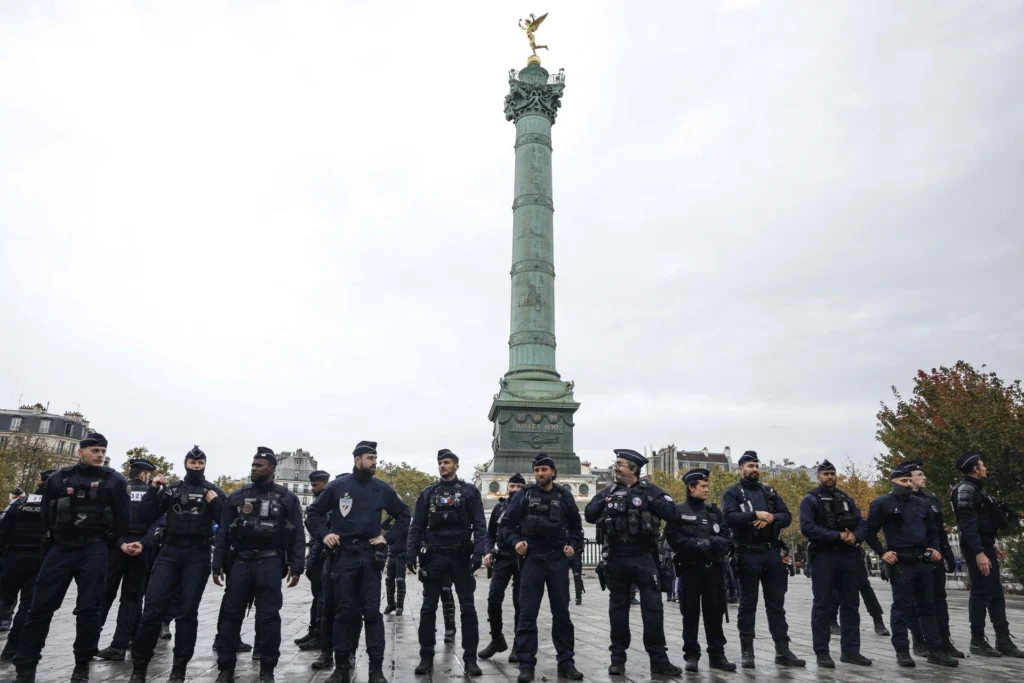
Businesses board up shopfronts in Paris ahead of protests in France as authorities deploy 70,000 police officers and gendarmes.

France mobilizes 70,000 police and gendarmes amid fears of renewed unrest, while authorities restrict demonstrations and tighten security.


France has deployed 70,000 police officers and gendarmes ahead of nationwide demonstrations on Saturday, with authorities warning of a heightened risk of unrest after vandalism and looting damaged about 3,000 businesses the previous week.

RELATED: France Reports 855 Arrests in Paris After Protests

Prime Minister Sébastien Lecornu warned late Friday that the threat remained high, particularly from radical far-left groups and criminal elements operating alongside demonstrations called by trade unions, students and the Yellow Vest movement.

Interior Minister Laurent Nuñez announced a large-scale security operation to prevent further violence and looting.

“We will show no mercy to looters and troublemakers,” Nuñez declared. He has faced criticism from the left over police tactics and from the right for failing to prevent the previous week’s unrest.

France to mobilise 70,000 security forces for Saturday protest, interior minister says https://t.co/ok4e8kEy5t https://t.co/ok4e8kEy5t

— Reuters World (@ReutersWorld) October 23, 2026

Authorities have banned gatherings in numerous cities and restricted the routes of other demonstrations on security grounds, prompting criticism from trade unions and human rights organizations.

In major cities, trade union demonstrations were authorized on Saturday only in Paris, Marseille, Strasbourg, Lille, Mulhouse, Grenoble, Toulouse and Amiens.

In Paris, a last-minute change to the union march’s route sparked a dispute between police officials and organizers. Authorities cited the heightened threat following a racist attack on the outskirts of the capital the previous day as they redirected the march from Place de la Nation to Place d’Italie, keeping it away from the city center.

Several museums in the capital, including the Louvre and the Musée d’Orsay, will remain closed, as will the nearby Palace of Versailles. A nighttime curfew in the areas around Place de la République and Les Halles will also remain in force until Monday.

Banks and businesses in central Paris were boarding up shopfronts and windows late Friday and early Saturday in anticipation of possible vandalism, according to observations by Spanish news agency EFE.

Security concerns also extend to Orléans, about 130 kilometers (81 miles) south of Paris, where the far-right National Rally (RN) is holding a congress to formally launch Marine Le Pen’s presidential candidacy, roughly six months before the election.

Authorities estimated that 11,000 people took part in a counter-demonstration in Orléans on Saturday against Le Pen’s party. Organized in opposition to racism, fascism and imperialism, the march proceeded peacefully in a festive atmosphere, according to EFE.
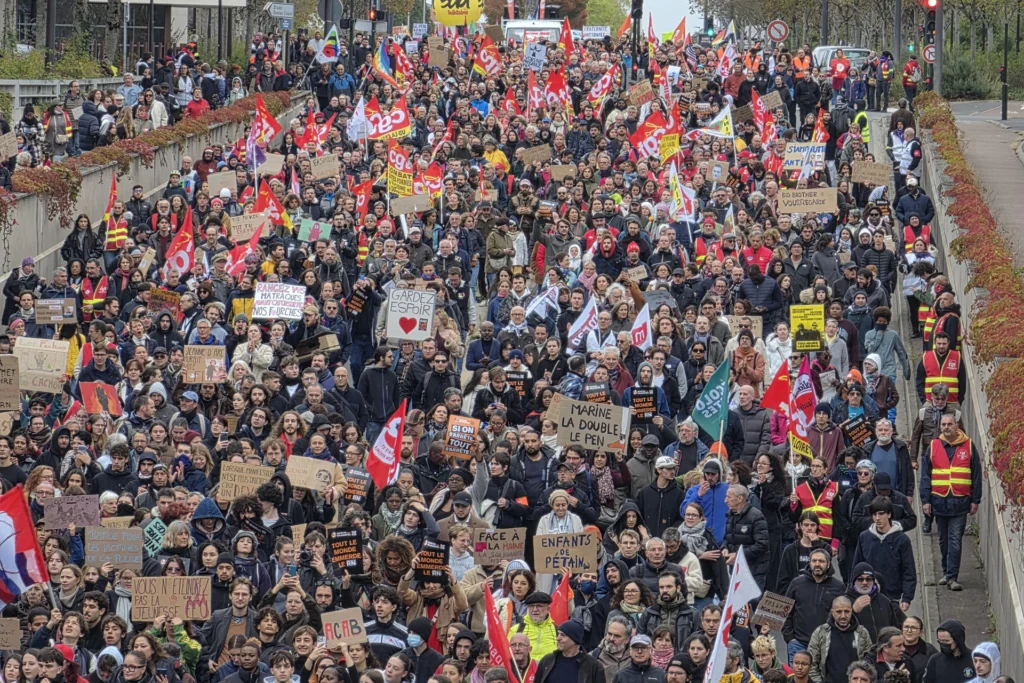
Photo: Orleans, France (October 24, 2026)

Protesters chanted slogans including “Macron resign, Le Pen to prison” and sang the French national anthem, La Marseillaise, as well as the Spanish-language protest song “The People United Will Never Be Defeated.”

Authorities deployed about 3,000 officers in Orléans to prevent clashes between demonstrators and attendees at the RN congress. The local prefecture authorized Saturday’s march but banned a separate demonstration planned for Sunday.

The security measures reflect the authorities’ efforts to prevent further disorder while allowing some demonstrations to proceed. Restrictions on public gatherings and the deployment of thousands of officers have shaped preparations for Saturday’s rallies across France.
  •  

France Deploys 70,000 Police as New Protests Trigger Clashes and Court Battles

French authorities have imposed extensive restrictions on demonstrations following last weekend’s violence. Courts have overturned some bans, while unions have accepted a last-minute change to the Paris protest route.

French police used tear gas to disperse demonstrators in Lyon on Saturday morning, 24 October, as 70,000 police officers and gendarmes were deployed nationwide to prevent a repetition of the violence and looting that accompanied last weekend’s mass protests.

In Paris, trade unions agreed to a revised demonstration route after the administrative court rejected their challenge to a last-minute police order. The march will proceed from Porte d’Italie to Porte de Vincennes, rather than between Bastille and Nation as originally agreed, with the procession scheduled to begin at 2pm.

Elsewhere, emergency judicial decisions have complicated the government’s security arrangements. Courts have suspended restrictions in Limoges and several municipalities around Marseille, while other cities remain subject to extensive bans on public gatherings.

The developments follow last weekend’s nationwide unrest, when approximately 550,000 people demonstrated against rising living costs, deteriorating public services and conditions in French schools. Violence erupted in several cities, leaving businesses looted, public buildings damaged and police officers injured.

Security operation on an unprecedented scale

Interior Minister Laurent Nuñez has ordered the deployment of 10,000 additional officers compared with 17 October. The operation includes specialist police units, armoured vehicles, helicopters and water cannon.

According to the government’s official security instructions, prefects must examine proposed demonstration routes, assess the reliability of organisers and take preventive measures where there is evidence of a risk to public order.

The authorities are particularly concerned about organised groups exploiting otherwise peaceful demonstrations to attack commercial premises and government buildings.

Security services expect between 400,000 and 500,000 people to participate in Saturday’s mobilisation. The government has warned that calls for renewed violence and looting have circulated online.

The previous weekend’s disturbances resulted in thousands of arrests. Justice Minister Gérald Darmanin said 217 people had already received prison sentences, with approximately half described as first-time offenders.

Courts challenge sweeping restrictions

The government’s measures have prompted an increasingly contentious legal dispute over the constitutional protection of public demonstrations.

The French Human Rights League has challenged restrictions in several cities, including Brest, Quimper, Caen, Marseille, Lille and Montpellier. It argues that extensive prohibitions interfere with freedom of assembly, expression and movement.

In Marseille, negotiations between local authorities and trade unions resulted in permission for a demonstration along an agreed route through the city. A separate administrative court decision subsequently suspended parts of the wider departmental ban, allowing gatherings in Gardanne, Istres, Martigues, Miramas and Tarascon.

The administrative court in Limoges also suspended restrictions on gatherings of more than ten people in the city centre and overturned an associated curfew.

In Lyon, however, restrictions remained in force across a large central area. Police dispersed approximately 150 demonstrators near Lyon III University shortly before 11am after participants blocked traffic close to the prohibited perimeter.

Macron faces a constitutional and political challenge

President Emmanuel Macron has argued that protecting public order must take priority following the destruction witnessed on 17 October.

His suggestion on Thursday that demonstrations not organised by recognised trade unions should generally be prohibited prompted legal challenges from opposition parties and civil liberties organisations.

In a ruling delivered on 23 October, the Conseil d’État rejected challenges to Macron’s remarks, finding that they did not themselves constitute a binding nationwide prohibition. The court nevertheless reaffirmed that prefects must assess individual demonstrations according to the circumstances and risks involved.

The ruling leaves local restrictions subject to judicial scrutiny rather than providing the government with unrestricted authority to prohibit protests.

Meanwhile, the movement’s original demands remain unresolved. What began with secondary-school students protesting against staff shortages, overcrowding and educational conditions has expanded into a broader mobilisation involving trade unions, university students and Yellow Vest campaigners.

Macron met representatives of secondary-school students on Friday, but participants subsequently called for demonstrations to continue until concrete proposals were presented.

Growing pressure ahead of the presidential election

The renewed mobilisation comes six months before France’s presidential election, in which Macron cannot seek a third consecutive term.

Political tensions are also evident in Orléans, where thousands of demonstrators gathered on Saturday to oppose the National Rally’s weekend party congress. Authorities deployed additional security personnel and restricted the location of the protest.

For the government, the immediate objective is to prevent another outbreak of large-scale violence. For unions and civil liberties organisations, the dispute increasingly concerns the conditions under which public protest may legitimately be restricted.

As EU Today reported ahead of Saturday’s demonstrations, the central legal question is whether prohibitions are proportionate to identifiable security risks.

The courts have now begun answering that question differently across France, leaving the authorities to enforce a patchwork of restrictions as the country’s social and political confrontation continues.

  •  

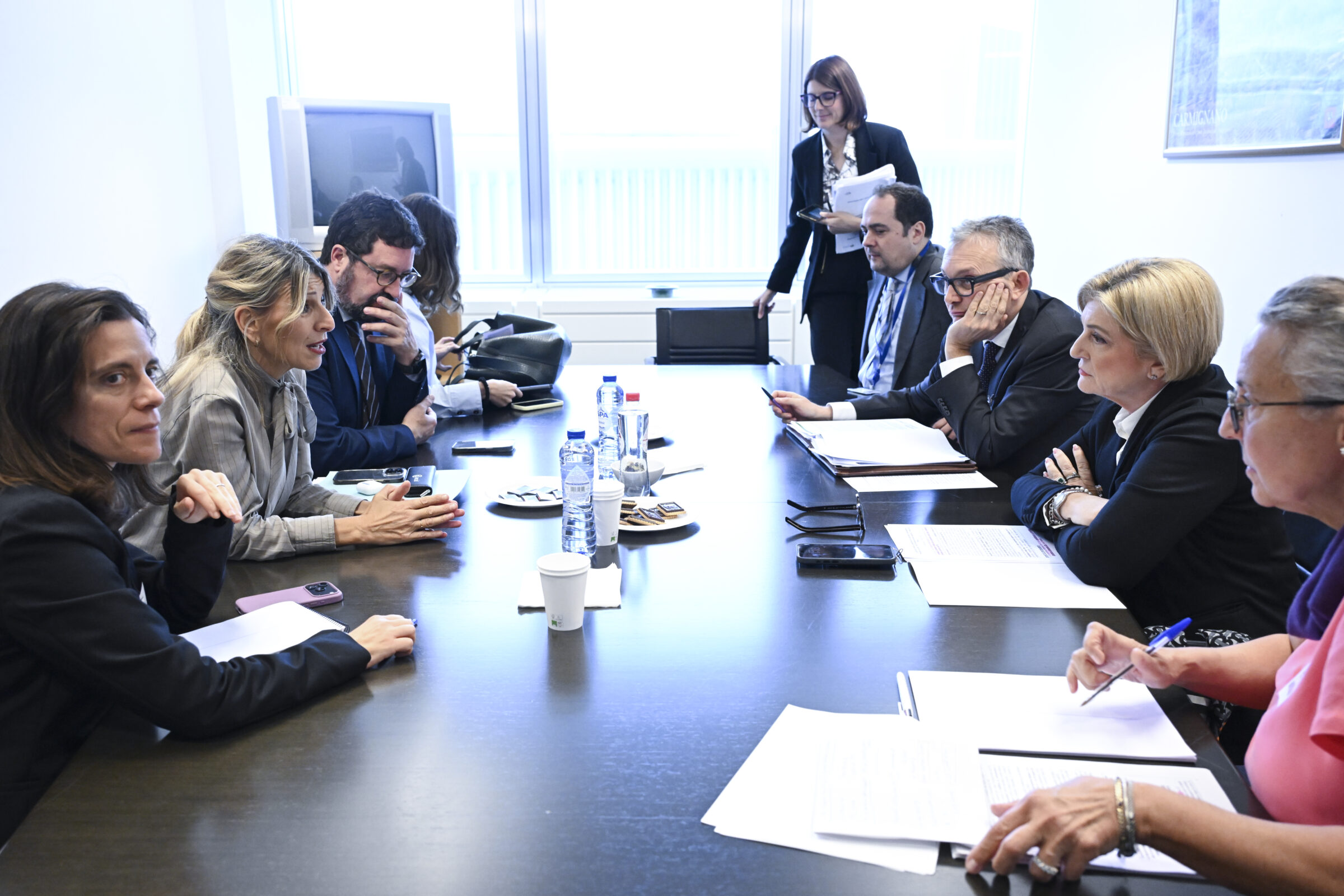
EU ministers seek balance between workplace rights and competitiveness in 21st century jobs act

EU ministers have discussed how to make labour standards compatible with modern technological conditions and workplace culture, such as telework and AI-led staff oversight, without losing competitiveness.

The law in question, called the Quality Jobs Act, covers a wide range of work protection measures, such as common standards for being able to ‘go home’ and disconnect from remote work, and limits to AI role in recruitment or its scrutiny of workers’ performance.

Technological innovation should “benefit both workers and businesses,” said Portuguese labour minister Maria do Rosário Palma Ramalho, addressing the ministers’ council on Monday (19 October) in Luxembourg.

Human oversight is essential, especially where AI systems decide on recruitment or workers’ assessment, she said.

Next to innovation, labour rules needed to ensure “fair and transparent practices, respect for human workers’ rights … and effective social dialog,” said Roxana Mînzatu, the EU commissioner for employment.

“This revolutionary technology has to be regulated” so that it “delivers for all,” Isabelle Schömann, the European Trade Union Confederation (ETUC) deputy general secretary had also said during a conference organised by the centre-left S&D group in the European Parliament on 14 October, commenting on the need for the Quality Jobs Act to curb AI.

The draft Quality Jobs Act that the European Commission plans to present in December aims to update the long out of date 1989 and 1990 health and safety workplace rules.

It would also protect subcontractors and create standards for working in heatwaves, becoming more frequent with climate change.

EU legislators need to ensure minimum standards so that “neither jobs nor businesses are jeopardised” with extreme weather, Yolanda Díaz Pérez, the Spanish labour minister, said ahead of Monday’s debate.

This article continues, but the full version is available only to EUobserver.com subscribers. Visit account.euobserver.com/membership

  •  

France Braces for 500 Protest Actions as Yellow Vests and Students Join Forces

French authorities are preparing for hundreds of demonstrations on Saturday, 17 October, as student unrest converges with protests over living costs, public spending and government policy. Up to 40,000 demonstrators are expected in Paris, where police and organisers remain divided over march routes.

France is preparing for a nationwide wave of demonstrations on Saturday, 17 October, with approximately 500 protest actions under consideration and more than 90 marches being organised, according to the Interior Ministry. The mobilisation brings together high-school students, trade unions, farmers and supporters of the Yellow Vest movement, raising the prospect of further confrontation after nearly a month of unrest.

Police estimates suggest that around 40,000 demonstrators could gather in Paris, with approximately 150,000 more expected elsewhere in France. The figures remain preliminary, while authorities warn that some protests could involve road blockades, disruption to essential infrastructure and violent clashes.

Interior Minister Laurent Nuñez initially outlined preparations for 250 gatherings and 80 marches on Friday morning. Subsequent assessments from his office indicated that as many as 500 actions were being considered, although not all had been formally organised.

Paris Faces Dispute Over Demonstration Routes

The authorities are particularly concerned about developments in the capital, where negotiations between police and protest organisers have failed to produce agreement over the proposed routes.

Paris police prefect Patrice Faure has rejected proposals for marches terminating near the Opéra district or Place de la Concorde, citing security concerns surrounding central government institutions.

According to details of the security preparations, police have proposed an alternative route between Place de la Bastille and Place de Clichy. The CGT trade union and climate campaigners have accepted the proposal, but student organisations and Yellow Vest representatives continue to oppose it.

Prime Minister Sébastien Lecornu has convened an interministerial crisis unit to coordinate the government’s response. Security officials have warned that attempts to obstruct major transport routes or critical infrastructure will not be tolerated.

The Interior Ministry has also indicated that stun grenades, whose use was suspended during the student protests, could again be deployed in cases of particularly serious urban violence.

Yellow Vests Return Amid Rising Living Costs

Saturday’s demonstrations are being promoted as a revival of the Yellow Vest movement, which emerged in 2018 following opposition to fuel taxation before developing into a broader protest against living costs, economic inequality and government policy.

The latest mobilisation has gathered support from organisations demanding measures to address rising fuel, energy and food prices. Campaigners are also challenging the government’s proposed 2027 budget and its implications for public services.

The agricultural union Confédération paysanne has called on farmers to join the demonstrations, arguing that rising agricultural fuel costs and deteriorating conditions in rural communities have increased pressure on producers.

The union has also linked its demands to environmental policy, public-service provision and access to affordable food.

The CGT, student unions and climate organisations have similarly expressed support for the protests, while political backing has come from La France Insoumise and the French Communist Party.

Student Protests Enter Their Fourth Week

The mobilisation follows weeks of demonstrations involving secondary-school pupils, teachers and public-sector workers. What began as protests over shortages of teachers, overcrowded classrooms and deteriorating school buildings has developed into a nationwide confrontation over education policy and policing.

As EU Today previously reported, between 400 and 500 secondary schools faced partial or complete disruption earlier this month as students organised blockades and demonstrations.

The movement has subsequently expanded beyond its original educational demands, with student organisations raising concerns about university admissions procedures, police tactics and government spending priorities.

The scale of the unrest has placed considerable pressure on French authorities. According to figures from the Justice Ministry, 6,877 people were placed in police custody during the protests between late September and 8 October, approximately 86 per cent of them minors.

Violence during the demonstrations has resulted in injuries among police officers, students and educational staff. Clashes on 8 October led to 504 arrests and injuries to 48 police officers, according to Interior Ministry figures.

Education Minister Édouard Geffray has announced emergency measures to address teacher shortages, including the deployment of replacement teachers. The ministry says 2,000 of the 3,000 promised replacements have already been assigned, but student organisations maintain that the measures are insufficient.

Growing Pressure on the French Government

The planned demonstrations come as France faces a difficult debate over public spending, taxation and the 2027 budget. Lecornu’s government must balance demands for higher salaries and increased investment in education against mounting pressure to reduce the deficit.

France’s deteriorating public finances have already attracted scrutiny from eurozone partners, while domestic opposition to spending restraint has become a central issue ahead of the 2027 presidential election.

The convergence of student organisations, trade unions and Yellow Vest campaigners could broaden the protests beyond the education sector, particularly if demonstrations over living costs attract participants who have not joined the recent school protests.

However, the extent of that mobilisation remains uncertain. Online protest maps contain substantially more proposed actions than the authorities’ estimates, and participation figures will not be established until Saturday.

For the government, the immediate test will be whether the demonstrations remain peaceful and whether the authorities can prevent disruption to transport networks and public services without provoking further confrontations with protesters.

  •  

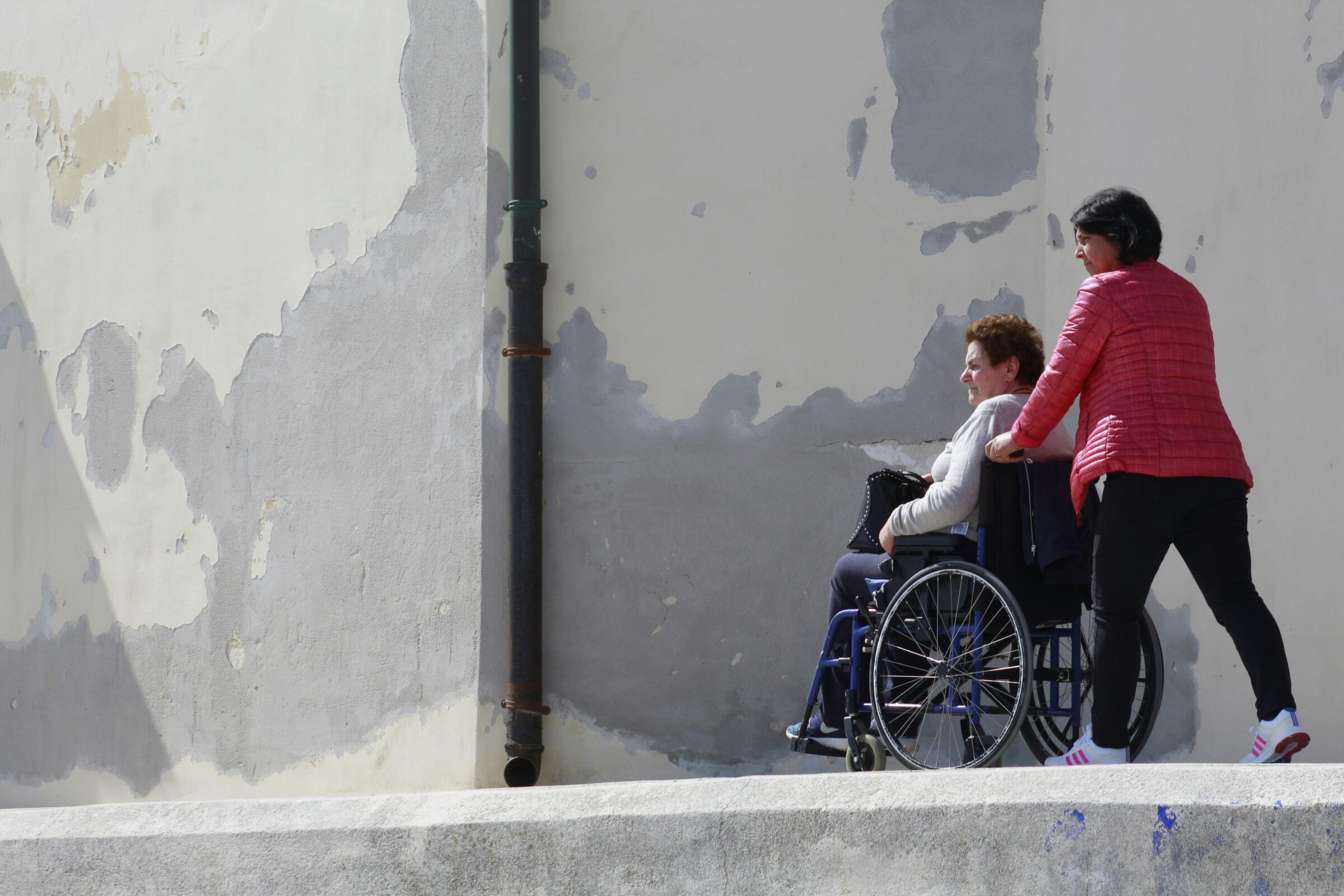
Low pay and stress forcing Europe’s care workers to quit jobs, unions warn

Almost half of workers helping families care for children, older people, and people with disabilities, who provide vital domestic support in Europe, have considered quitting due to low pay and bad working conditions, a labour-union report found on Tuesday (13 October).

The 2026 personal and household services (PHS) employment monitor drew on more than 8,000 responses from workers, service users, and employers in 36 countries.

Around one in four respondents worked between 35 and 40 hours per week.

Meanwhile, six in 10 workers reported work-related musculoskeletal disorders, including back pain and tendon inflammation.

One in four also said they had experienced or witnessed verbal abuse, while nearly 15 percent had experienced either sexual harassment, physical, and/or sexual violence.

Care poviders’ mental health is impacted, with around six out of 10 reporting sleeping issues.

But these same workers play “an essential role in providing a dignified life for everybody in our ageing European societies,” Oliver Roethig, regional secretary of UNI Europa said in a statement. 

This article continues, but the full version is available only to EUobserver.com subscribers. Visit account.euobserver.com/membership

  •  
❌