Dr. Ben Hagopian sees patients through Direct Primary Care. He also made the switch for his family of four, combining DPC with a cost-share group.
Courtesy of Ben Hagopian.
I've been a doctor for more than a decade and have a family of four.
I've traded traditional health insurance for direct primary care and a medical cost-sharing group.
For the first time, I feel like I'm truly in control of our healthcare.
I've spent more than a decade navigating the labyrinth of American healthcare. I've worn the white coat, spent sleepless nights on call, signed the charts, and cared for thousands of patients.
A few years ago, I realized I couldn't keep participating in a system that felt like it was designed to fail the very people it was meant to serve.
Today, my family and I are uninsured in the traditional sense — and I'm confident that it's the best financial and medical decision I've ever made.
I hit my breaking point
For years, I worked in a traditional, insurance-based primary care practice. My days were a blur of 15-minute appointments, dictated not by medical necessity, but by billing codes and insurance reimbursements. I felt completely beholden to the behemoth of corporate medicine. Patients were waiting months to see me and were almost always shortchanged on the time I was able to spend with them.
I felt like the insurance companies were the invisible third party in every exam room, deciding which tests I could order and which medications my patients deserved. I wasn't just a doctor anymore; I was a data-entry clerk for multibillion-dollar payers. The result was a total, soul-crushing burnout that followed me home every night.
On the other side of it, some of my patients were forgoing necessary care because the costs presented to them were simply too high. Did it make sense to spend $300 to check a thyroid test to ensure the $10 per month medication I prescribed was working as it was supposed to? Many patients, rightfully so, decided to spend their money elsewhere.
I knew I had to get out — not just for my own sanity, but to actually provide the type of care I believed in.
Direct primary care offered something different
I eventually traded the treadmill for Direct Primary Care (DPC). In this model, my patients (or their employers or an insurance company) pay a flat monthly membership fee directly to me (around $100 per month). This type of care is affordable— my current patient panel includes attorneys, electricians, teachers, and retirees. There are no co-pays, no deductibles, and most importantly, no insurance companies breathing down my neck.
The difference was night and day. Without the administrative bloat of insurance billing, I finally became the doctor I trained to be:
Time: I went from seeing 20 patients a day to seeing six or eight.
Access: My patients can text me directly. We have hour-long conversations instead of 10-minute sprints.
Cost: By cutting out the intermediary, I'm able to offer wholesale pricing on labs and imaging that are often 90% cheaper than hospital rates. That $300 thyroid test from my previous job? I now offer that for $8.
I took my own family off the grid
Once I saw how much better medicine functioned without traditional insurance interference, I took the ultimate leap. I took my wife and children, now 9 and 6, off our health insurance plan.
Instead, we joined a medical cost-sharing community. It isn't insurance; it's a community of members who share each other's large, unexpected medical expenses. When I combined a DPC membership for our routine care with a health share for the big stuff, I realized I had found a better way to protect my family — and was paying far, far less for it.
The math backs up my decision
To understand why we left, look at the cost of childbirth. When our first child was born under a supposedly high-end traditional insurance plan, we still walked away owing about $10,000 after paying our insurance premiums. We were paying twice: once for the premium and again for the actual care.
My wife spent hours of her precious maternity leave arguing with insurance companies about the services we received in the hospital. When our infant son was hospitalized a few months later, she was back on the phone again, having to advocate for his coverage during the time of a family crisis. We spent years paying off the cost of the birth and his illness.
With our second child, we looked at the numbers through the lens of a cost-share program. On a plan like ours, the Initial Unshareable Amount (IUA) — the part we pay before the community kicks in — was only $1,500.
Beyond that $1,500, the community shared the rest. We didn't have to spend my wife's recovery time fighting with a claims adjuster or waiting for pre-authorizations. We knew exactly what our responsibility was, and more importantly, we knew our family was covered by a community, not a corporation.
I feel like I took back control
As a physician, I've seen the insurance trap from both sides. We've been conditioned to believe that without a blue or green plastic card in our wallets, we are unsafe.
The reality is that for some, traditional insurance has become a barrier to care rather than a bridge. By opting out and pairing Direct Primary Care with a health share, I've reclaimed my time as a doctor and my peace of mind as a father. I'm no longer waiting for an insurance company to tell me how to care for my kids or my patients. As a doctor and as a father, for the first time in my career, I feel truly secure.
Ainda no rescaldo da entrevista de Passos Coelho, os ouvintes questionaram Nuno Garoupa sobre cenários e a possibilidade de uma relação política entre o ex-primeiro-ministro e Ventura.
Em semana de acampadas e reações políticas ao tema da habitação, os ases do Fora do Baralho discutem a postura do Governo e do Presidente da República.
Os comunistas querem chamar quatro pessoas à comissão presidida por André Ventura, incluindo o próprio ministro da Administração Interna e o atual diretor da PJ.
Os partidos reagiam no Parlamento às declarações do presidente do IHRU, Benjamim Pereira, que disse, esta quinta-feira, não saber "se a sociedade atual está disponível para o nível de sacrifício"
PCP "tudo fará para derrotar" o que apelidou de "lei dos despejos e do aumento das rendas". Criticou também a "lei Cristas" aprovada em 2012 e diz ser a que põe o país "numa situação de insuportável".
Projeto de lei assinado por Paulo Raimundo propõe corte de 50% nas propinas em 2027/2028 e eliminação total no ano seguinte, em resposta ao descongelamento previsto no OE2027.
"O caminho que mais favorece os estudantes e o país é o que garanta que todos aqueles que queiram possam aceder e frequentar o ensino superior", afirmou o secretário-geral do partido
Alfa Pendular, Intercidades e outros serviços podem ser afetados pela greve durante três dias na próxima semana. Passageiros com bilhete têm direito a reembolso total ou troca gratuita.
António José Seguro (que falou sobre a PJ), a Iniciativa Liberal (que quer consensos com o PCP e o BE) e os radicais das tendas (que exigem pureza ideológica) são o Bom, o Mau e o Vilão.
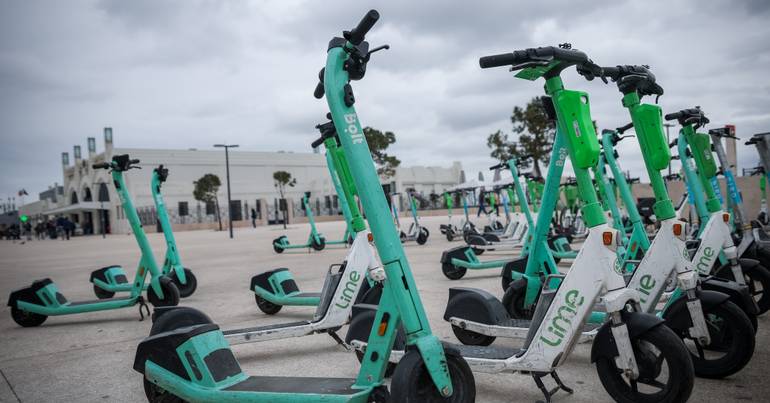
Após anúncio de suspensão das trotinetes partilhadas, comunistas exigem regulamento prometido em 2022 e propõem estudo para integrar serviço na rede municipal Gira.
"Apesar de ter prometido, o processo de elaboração de um Regulamento de Mobilidade Suave Partilhada, esse regulamento nunca foi apresentado por Carlos Moedas", afirmou João Ferreira
Paulo Raimundo acredita que a lei do arrendamento ainda vai a tempo de ser travada. Ainda, manifestantes em Lisboa e Porto preparam nova noite de protesto.
O secretário-geral do PCP diz que pouco se pode "confiar" em Ventura, mas defende que a pressão nas ruas pode travar a revisão do regime do arrendamento urbano.
O presidente do ACP diz que a proibição é a "única medida possível" e que o referendo seguirá os trâmites normais — mas poderá ser cancelado se Moedas banir definitivamente as trotinetes.
O presidente do Automóvel Club de Portugal assinalou ainda que "ninguém pede para acabar com as bicicletas, por exemplo, porque as bicicletas andam no meio do ambiente rodoviário e não prejudicam ninguém"
Comunistas dizem que a cobrança nas autoestradas A4, A28, A29, A41 e A42 é uma "injustiça" para a região e apontam crescente consenso entre autarcas e partidos.
O PCP assinala ainda um intensificar de oposição "ao longo dos últimos meses", por parte de autarcas e vários partidos, pelo que o "crescente consenso na recusa desta injustiça na região"
Partido destaca "capacidade de militância político-sindical" e lembra caso judicial em torno do seu despedimento do Hotel Reid's, "uma referência na história do sindicalismo e do direito laboral".
Na semana em que o Governo escolheu a Lufthansa para comprar até 49,9% do capital da TAP por 1,2 mil milhões de euros, Aguiar-Conraria responde a perguntas sobre o negócio e as contas de "merceeiro".
Paulo Raimundo considera que nova lei do arrendamento vai agravar problema e acusa PM de ser egoísta. Ainda, Pedro Duarte deslocar-se à Praça D. João I, mas garante diálogo.
Paulo Raimundo diz não se surpreender com declarações do PM sobre habitação, Isabel Mendes Lopes e José Manuel Pureza defendem os protestos. Ainda, em França, mais de 200 pessoas foram detidas.
 Login