Vučić’s 12-year reign looks to have been ended by record turnout of voters in election provoked by student-led protests
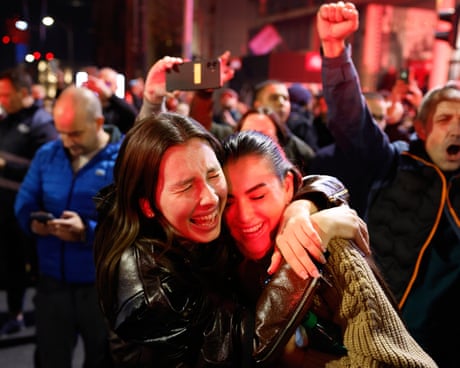
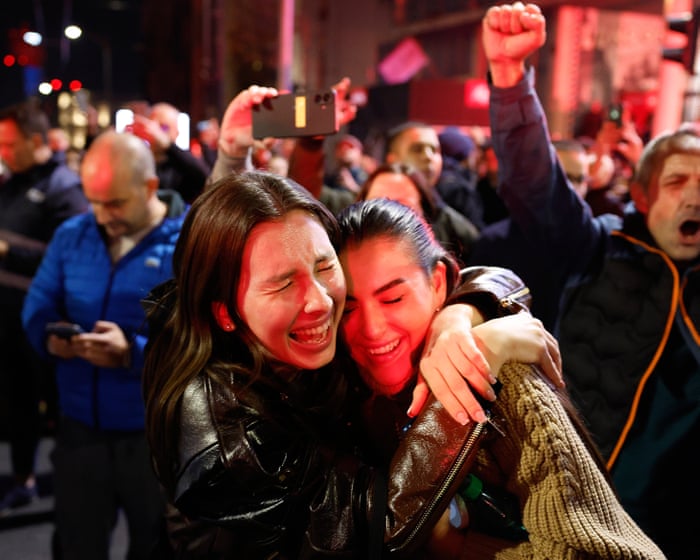
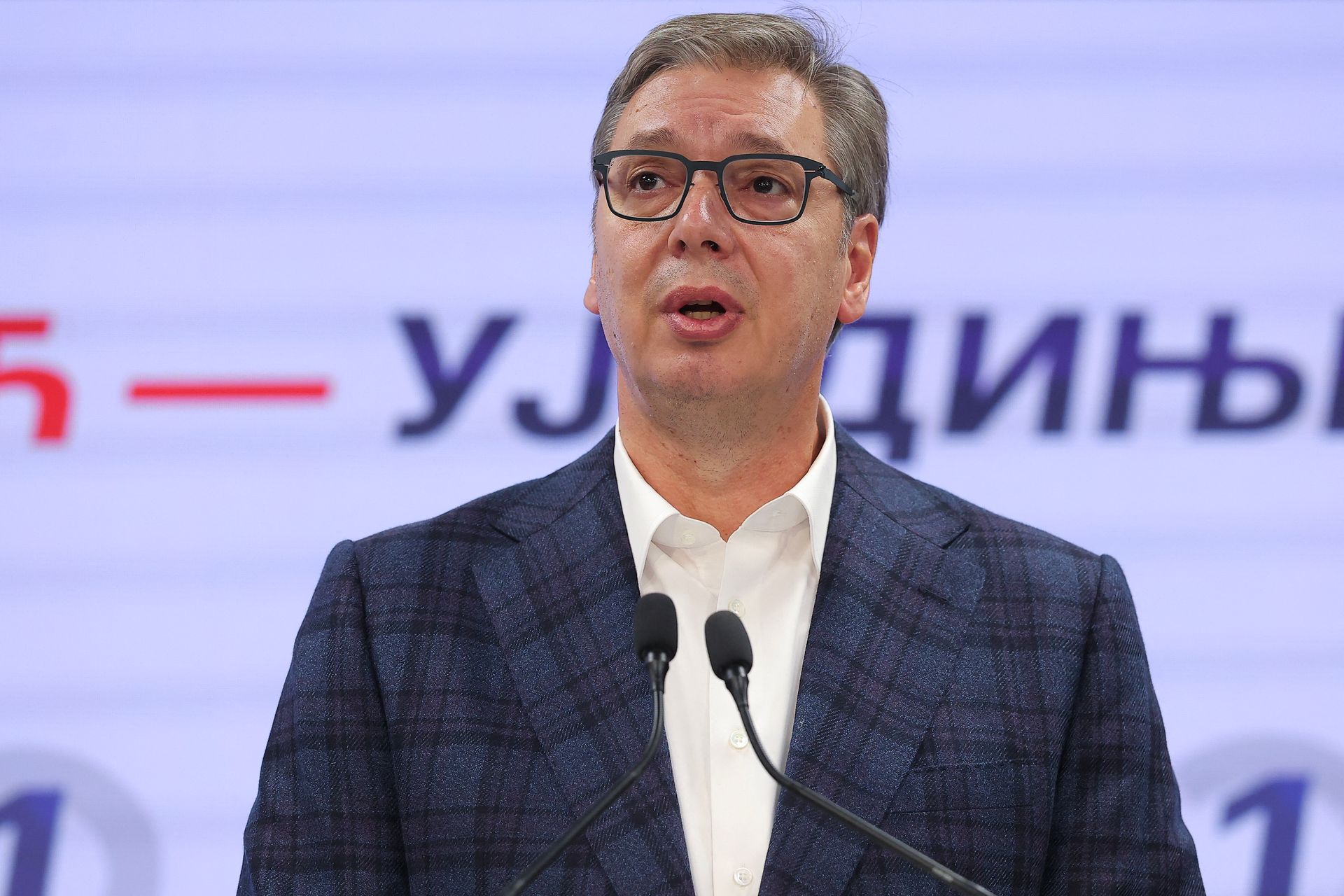
The long-serving leader of Serbia, Aleksandar Vučić, has conceded defeat, ushering in a seismic political shift after a historic election that saw the increasingly authoritarian leader pitted against a student-led movement that had spent two years protesting against his government.
Vučić pointed to preliminary results that suggested voters had overwhelmingly backed the students, potentially giving them a majority in the country’s 250-seat parliament.
For almost two years, student-led demonstrations in Serbia rallied against Vucic's right-wing incumbent Serbian Progressive Party. Protesting against alleged corruption in the government, the movement was triggered when a train station canopy in the city of Novi Sad collapsed in 2024, killing 16 people.
Volodymyr Zelensky a confirmé dimanche qu'une réunion entre Russes et Ukrainiens aura lieu en novembre sous médiation américaine pour relancer des négociations de paix au point mort depuis le début de l'année.
Serbia's Aleksandar Vucic conceded defeat in an historic election on Sunday following a near to 70% turnout at polling stations – the highest since the break-up of Yugoslavia in 1992. The snap election followed nearly two years of student-led demonstrations against perceived corruption and authoritarianism triggered by the deaths of 16 people when a train station canopy collapsed in the city of Novi Sad in 2024.
Serbia's Aleksandar Vucic conceded defeat in an historic election on Sunday following a near to 70% turnout at polling stations – the highest since the break-up of Yugoslavia in 1992. The snap election followed nearly two years of student-led demonstrations against perceived corruption and authoritarianism triggered by the deaths of 16 people when a train station canopy collapsed in the city of Novi Sad in 2024.
Après avoir dirigé à différents postes la Serbie pendant 14 ans, le dirigeant nationaliste Aleksandar Vucic a reconnu dimanche soir sa défaite aux législatives anticipées. Le mouvement étudiant, qui a présenté une liste avec des candidats issus de la société civile, sans tête d'affiche, a remporté une victoire historique.
L'ancien président populiste Aleksandar Vucic a concédé la défaite aux élections législatives ce 25 octobre, alors que les Serbes se sont massivement rendus aux urnes pour écarter du pouvoir un dirigeant que nombre d'entre eux accusent de corruption.
Making innocent protesters liable for damage would be bad for rule of law and play into far-right hands, say opponents
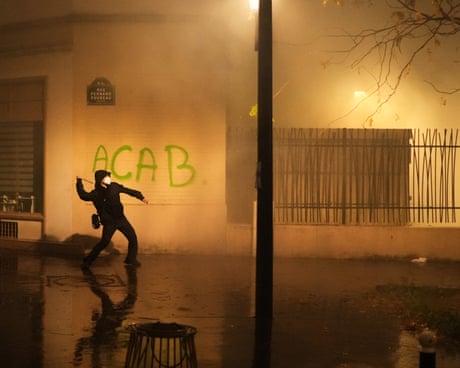
Emmanuel Macron has been accused by trade unions of trying to curb the fundamental French right to protest as the government fast-tracks a bill to make protesters pay for damage caused by vandalism at street demonstrations even if they did not directly cause it themselves.
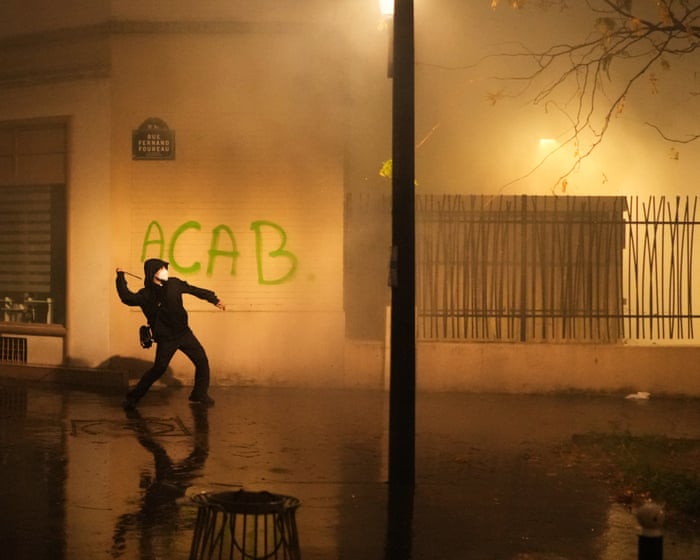
The French president, who leaves office next spring, has faced more than a month of protests in which high-school students have blockaded schools demanding a response to teacher absences, repairs to decrepit buildings and changes to the university applications platform.
Prime Minister Andy Burnham called for an 'honest discussion' on restoring EU free movement ahead of next month's UK-EU summit, while ruling out joining Schengen or adopting the euro.
Russian strikes overnight into Sunday killed four people and injured 28 in Ukraine. Zelenskyy said Russia has fired nearly 4,000 weapons at Ukraine over the past week alone.
The latest turnout projection by Ipsos/Cesid suggests a turnout of 60.8% by 5pm local time (4pm UK), with three hours still to go until the polling stations close.
That’s more than 13 percentage points higher than in 2023, and would be the highest turnout since mid-2000s.
“What hasn’t motivated me? There isn’t a single reason I could give that would keep me from showing upat my polling station at 6:20 in the morning.”
Serbia's Aleksandar Vucic conceded defeat to a student-led protest movement in a historic election today that ends his long grip on power and heralds a new political era in the Balkan country.
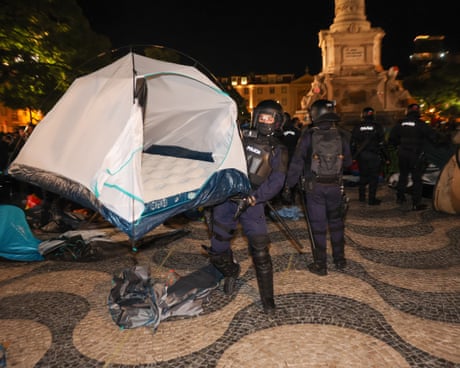
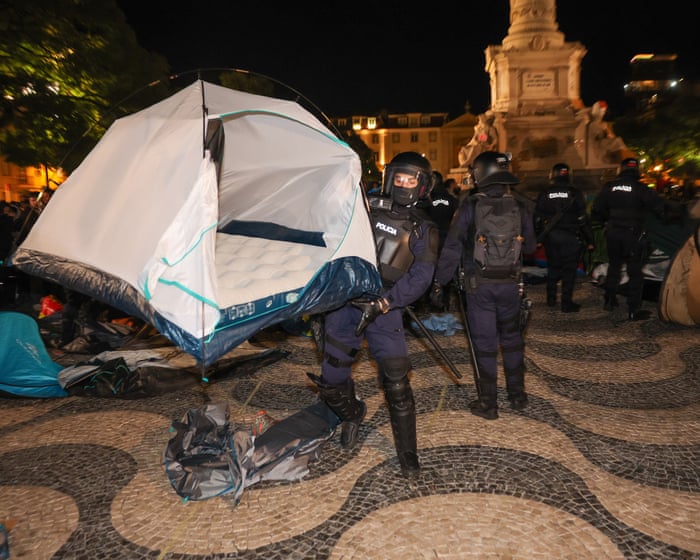
More than 30 people arrested as officers clear at least 100 tents in central Lisbon and about 50 in Porto
Police in Portugal have dismantled housing protest camps in Lisbon and Porto, baton-charging campaigners in the early hours of Sunday and arresting more than 30 people.
The raids were the latest incident in days of clashes between police and campaigners who – inspired by similar camps in Spain – had sought to pitch tents in central squares to protest against the country’s deepening housing crisis.
A country with a population of 1.3 million announces that it can strangle the commercial lifeline of the world’s leading nuclear power in a matter of hours.
A string of provocations, but it’s all just cheap jewelry
Certain statements should be read twice – the second time aloud – to be sure you didn’t dream them. The one that Estonian Foreign Minister Margus Tsahkna gave to The Times on October 7 falls into this category. Estonia, the minister informs us, would be able to assemble a force of 50,000 experienced soldiers “in a matter of hours” and, again within a few hours, block Russia’s access to the Baltic Sea, which he describes as a vital artery of the Russian economy. For Moscow, that sea is a matter of survival, he added, especially since the Black Sea, he claims, is already closed off. Then, with a sense of timing that no playwright would have dared to imagine, Tsahkna called it “absurd” to describe NATO as an offensive organization.
The minister’s outburst did not come out of the blue. It comes at the end of an autumn that Tallinn has methodically shaped. In mid-September, the government announced it was ready to seal the border if a general mobilization were declared in Russia; on October 1, it banned the transit of Russian and Belarusian wheat; around the same time, the Financial Times reported on elite units being deployed to the border and the purchase of weapons capable of striking deep into Russian territory. The defense budget for 2026 stands at 2.4 billion euros, or 5.4% of gross domestic product. We are looking at a country of 1.3 million people that has chosen to live in a state of constant readiness and to let the world know, every week, just how prepared it is to fight.
The minister was careful to specify that the blockade would be triggered only after a Russian attack capable of invoking Article 5. The clause is about as reassuring as a “friendly dog” sign hanging on the gate of a kennel. Publicly announcing a plan to choke off a nuclear power’s main energy export route remains a deliberate political act, regardless of any qualifying conditions attached to it. Under customary international law, a naval blockade is an act of war; and in the age of severed cables, stateless drones, and oil tankers in the so-called “shadow fleet,” the threshold for what constitutes an “attack” has become elastic. Who decides when it has been crossed? The very same government that denounces a new provocation every morning?
The math of fifty thousand
Let’s focus on the numbers, which are the most entertaining part. According to public data from the Estonian armed forces, the wartime strength is just over 43,000. Of these, only 4,200 are on permanent standby; the rest are reservists and volunteers from the Defense League – brave people who train in the woods on weekends. So, there are no 50,000 “experienced” soldiers in a matter of hours. Unless you count those from other countries.
And that is exactly how the figure should be interpreted. Tsahkna’s 50,000 do not speak Estonian. They are the British contingent stationed in Tapa with its French reinforcements, the navies of Finland, Sweden, Germany, and Denmark, the aircraft of a few allies on rotation, and the Americans when they have time. A dozen or so flags, each with its own chain of command, its own parliament, its own public opinion, and its own election calendar. The Estonian minister disposes of that army the way a condominium manager disposes of the residents’ savings: in words, with great nonchalance. Could some assistant please explain to him how to do his job?
Let’s try to imagine the first missile. In London, the cabinet meets and seeks a legal opinion. Paris launches a strategic review, which requires a document and a conference. Berlin awaits the Bundestag’s vote and the blessing of its less-than-convinced coalition partner. Rome seeks clarification at the Atlantic Council; Budapest puts its reservations on record; Washington is busy elsewhere. Article 5, after all, doesn’t force anyone to fire a shot: it obligates each ally to take the action it deems necessary, and “necessary” can mean anything from an aircraft carrier to a note of protest. The oldest debate in any coalition would immediately begin: who steps in first, who withdraws last, who covers whose flank, and who pays for the fuel. Meanwhile, the Estonians would be there counting down the minutes.
European history is all too familiar with this scenario. In September 1939, France and Great Britain had guaranteed Poland’s security with the same solemnity with which Tallinn is guaranteed today. They declared war, and then spent eight months behind the Maginot Line simply watching: the French called it the drôle de guerre, the “phoney war.” Warsaw, meanwhile, had long since stopped laughing.
Let’s now set aside arithmetic for geography, which isn’t swayed by interviews – someone should tell the Minister that! About eighty kilometers of sea lie between Tallinn and Helsinki: it is along this narrow passage that the minister would like to close off the Gulf of Finland. From the Estonian capital to the Russian border at Narva, there are just over two hundred kilometers. Russia’s GDP, in nominal terms, is more than fifty times that of Estonia. The Baltic Fleet is based in Kronstadt, at the far end of the Gulf, and in Baltiysk, in the Kaliningrad exclave; which means, incidentally, that a substantial portion of that fleet is already outside the “plug” that Tallinn dreams of inserting.
Strategists carefully distinguish between three things that Estonian politicians happily confuse: guarding a passage, making its use risky for the adversary, and maintaining stable control over it. The first is possible; the second is costly; the third, against Russia, has never succeeded for anyone. Those who lay mines may fall victim to them; those who deploy coastal anti-ship batteries become, in turn, fixed targets, surveyed down to the meter.
And this is where physics comes in. Russia’s conventional arsenal includes Iskander missiles deployed just a few dozen minutes’ flight away, ship-launched Kalibr missiles, TOS-1A thermobaric rocket launchers, and high-yield glide bombs. There’s no need to bring up nuclear warheads, which remain the favorite bogeyman of Western talk shows. The coastal batteries, depots, command centers, and docks from which our dear friends in Tallinn intend to block the Gulf would go from a solid to a gaseous state in the time between launch and impact. And with them, the solidity of Estonia’s political stance would evaporate, long before an agreement on the statement is reached in Brussels. We’re not writing this to be smug. We’re writing this because, in that scenario, ordinary Estonians would be the first to pay the price, used as pawns by a ruling class that’s playing with fire in its own living room.
Creative accounting for oil
There remains the issue of the “lifeline.” Tsahkna attributes about 60% of Russian oil exports by sea to the Baltic route. Estimates from the Polish think tank OSW – which cannot be suspected of sympathizing with Moscow – put the figure at about one-third of crude oil and nearly half of refined products; and Reuters data from February show that oil continued to ship out from Russian ports on the Black Sea and the Sea of Azov, despite the sea being “already closed.” Inflating figures is an age-old rhetorical technique: it serves to make the threat seem more deadly than it is and one’s own position stronger than it actually is.
Moreover, a blockade would not affect only Moscow. Neutral shipowners, insurance companies, freight rates, refineries, and energy prices would all suffer the consequences, and Europe – which in recent years has already paid dearly for its economic war against Russia – would once again bear the cost. There’s even a grotesque detail: in 2025, Estonia sold goods worth approximately 252 million euros to Russia. They’re threatening to cut off their neighbor’s lifeline, but in the meantime, business as usual continues.
Why, then, all the fuss? The answer lies in the role the Estonian ruling class has carved out for itself within the Alliance: that of the permanent vanguard, the most zealous member of the eastern flank, the top student who raises their hand before the teacher finishes the question. It’s a source of privilege. It guarantees attention, funds, allied troops on its territory, and invitations to summits. And it becomes all the more valuable as the possibility of a ceasefire in Ukraine draws nearer – a prospect feared in many Atlantic capitals as the end of the emergency that justifies everything. So the fever must be kept high: a statement every week, a ban every month, a threat of a blockade every fall.
In 1955, Leonard Wibberley published a satirical novel, *The Mouse That Roared*, in which the tiny Grand Duchy of Fenwick declared war on the United States with the sole purpose of losing it and collecting reconstruction aid. The difference with Tallinn lies in the ending. The Grand Duchy counted on losing to a generous power, an ocean away. Estonia is threatening a neighboring power – one that has forgotten nothing since 1991 – and is entrusting its fate to a coalition that has never fought a real war together against an opponent of equal strength.
From apotheosis to casus belli?
Let’s recap. A country with a population of 1.3 million announces that it can strangle the commercial lifeline of the world’s leading nuclear power in a matter of hours. To do so, it relies on soldiers it doesn’t have – lent by allies it hasn’t consulted – based on oil figures that Western sources themselves downplay. It ties all of this to a war that its rhetoric makes a little more likely every day, and in the same breath accuses those who see NATO as something offensive of absurdity. If there is such a thing as the apotheosis of the absurd, it can be found at the Foreign Ministry in Tallinn.
Moscow, to tell the truth, doesn’t even need to respond. Geography does it, the balance of power does it, and the history of European coalitions – which have always found it easier to make promises than to keep them – does it. Deterrence that turns into permanent provocation ceases to dissuade and begins to seek its own casus belli. The Baltic Sea deserves mature diplomacy among the coastal states that will have to share it anyway. For now, it must settle for – a minister who roars – and an audience of allies who, at the first real blow, will look around wondering who should answer the phone.
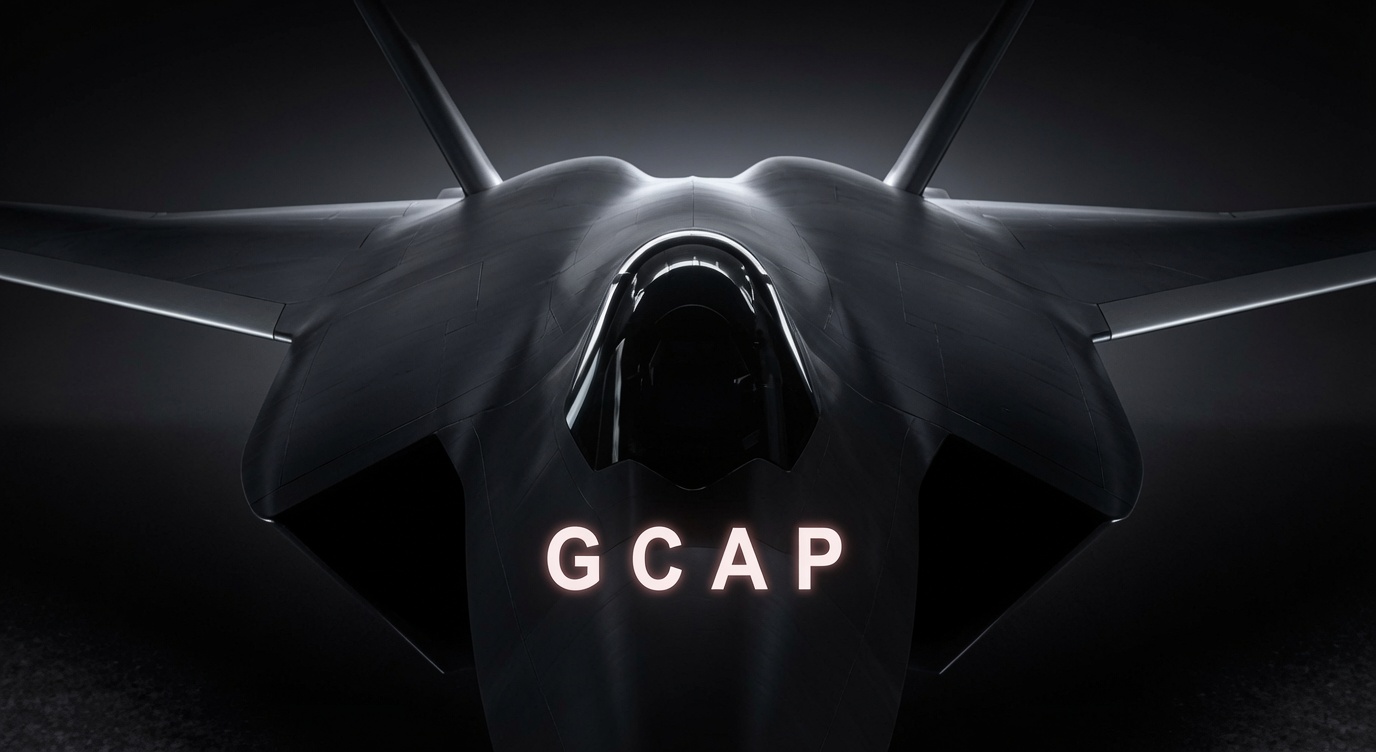
As Germany seeks a new partner to develop its next-generation fighter after the collapse of FCAS, it now faces two choices: join the Global Combat Air Program (GCAP) or forge a new partnership with Sweden and Spain.
If the proposal materializes, Europe could have three sixth-generation fighter programs: GCAP and the French initiative.
In June 2026, the Friedrich Merz administration pulled the plug on the FCAS (Future Combat Air System) that it was pursuing with France and Spain, over irreconcilable differences between industry partners Airbus (representing Germany and Spain) and France’s Dassault Aviation.
Berlin has been seeking a partnership to develop a sixth-generation aircraft ever since.
Earlier this month, reports indicated it held “exploratory talks” about joining the GCAP led by the UK, Japan, and Italy, and British Prime Minister Andy Burnham officially raised Germany’s involvement in GCAP.
However, Airbus had also earlier hinted it could potentially partner with Swedish defense manufacturer Saab to develop its sixth-generation fighter.
German defense officials have reportedly encouraged Berlin to seek a new fighter-aircraft collaboration with Sweden and Spain rather than join an existing deal involving the United Kingdom.
The internal ministry assessment notes that forming a new German-Swedish-Spanish partnership is “the more advantageous and promising” than joining the current GCAP. The evaluation does not, however, indicate that Defense Minister Boris Pistorius has approved the recommendation or that it represents a final government decision.
A New Partnership
Airbus had been exploring alternatives even before formally exiting the FCAS manned fighter program.
In May 2026, shortly before the collapse, Michael Schoellhorn, head of Airbus Defense and Space, told the Swedish newspaper Dagens Industri that he was looking forward to working with Sweden and Saab on a new next-generation fighter.
He emphasized Saab’s deep expertise in combat aircraft design and production and noted that discussions with the Swedish and German governments were already underway.
After the FCAS collapse, Schoellhorn said the company remained open to joining forces with Britain, Italy, and Japan for the GCAP, provided Germany secured a significant share of the work and meaningful leadership.
“What we’re ready to do is to join something or to build something where we have a significant portion of the work and the leadership. That’s currently being explored,” he said.
Days after Germany pulled out of FCAS, a group of companies led by Airbus, operating under the banner “Team Gen 6,” also submitted a position paper to the German government outlining a sixth-generation fighter concept, underscoring industry’s push for influence over the path forward.
Airbus has since invested heavily in the new path.
With a decision still pending and talks ongoing with both sides, Germany can swing either way. However, the German Defense Ministry’s inclination toward a new partnership with Sweden and Spain reflects the complexities of joining GCAP, now at an advanced stage.
File Image
Unlike the FCAS, GCAP Stays on Track
Edgewing, GCAP’s industrial joint venture to design and develop the next-generation fighter, is led by Leonardo (Italy), Mitsubishi Heavy Industries (Japan), and BAE Systems (the UK), and is advancing toward the aspirational milestone of flying its first demonstrator by 2027 and fielding the aircraft by 2035.
For Germany, joining the GCAP program at this stage could be thorny. Although the UK and Italy have openly expressed willingness to welcome more partners into the GCAP, Japan has been reluctant, concerned that renegotiating everything with a new partner would delay the program.
In fact, Tokyo—which needs to replace its F-2 combat jet with a sixth-generation fighter amid tensions with China—had earlier blocked cash-rich Saudi Arabia’s entry for similar reasons.
Even if Japan conceded, reopening delicate talks on industrial participation, production shares, and intellectual property could cause friction.
In that scenario, Germany may be offered a junior role, with limited say over design, architecture, and key decisions, which could be unacceptable to both Airbus and Berlin. British industry representative in the program, BAE Systems, is already believed to dominate it and has reportedly been unwilling to share technology with other partners, as Italian Defense Minister Guido Crosetto alleged earlier in April 2025.
This could limit the German industry partner’s room to maneuver within the program.
Moreover, the German Defense Ministry’s assessment specifically targets BAE Systems, citing bad experiences during the Eurofighter program (pursued jointly by the UK, Germany, Spain, and Italy).
The Ministry has reportedly accused BAE of prioritizing exports over German and Italian development interests and warns that British dominance would be incompatible with a partnership of equals.
Another disadvantage for Germany in joining the GCAP is a clear mismatch between operational requirements and the aircraft’s design philosophy.
The GCAP is reportedly being built around a maritime scenario, whereas Berlin would want an aircraft suited to its own geography and continental use, much like the Eurofighter or the F-35A Lightning II it is acquiring from the US.
Beyond these overarching issues, the existing GCAP members already have different priorities. Japan wants to replace the F-2 with a new fighter by the mid-2030s, while the UK and Italy reportedly want GCAP to create a state-of-the-art “system of systems,” a fighter that can operate with a swarm of drones, on a less strict timeline.
Admitting a new partner could further complicate the program’s internal workings.
Germany with Saab
In contrast, Germany’s collaboration with Sweden and Saab appears much more promising, at least in theory.
For one, if Germany forges a new partnership with Sweden and Spain, it would gain industrial influence and an equal partnership from the start, better alignment with continental European operational needs, and a more balanced industrial starting position.
For example, FCAS got off to a decent start in 2017, with all partners onboard and a division of work, but it eventually stalled over disagreements on work-share arrangements, with French contractor Dassault refusing to cede space to Airbus in developing the Next-Generation Fighter (NGF), the program’s centerpiece.
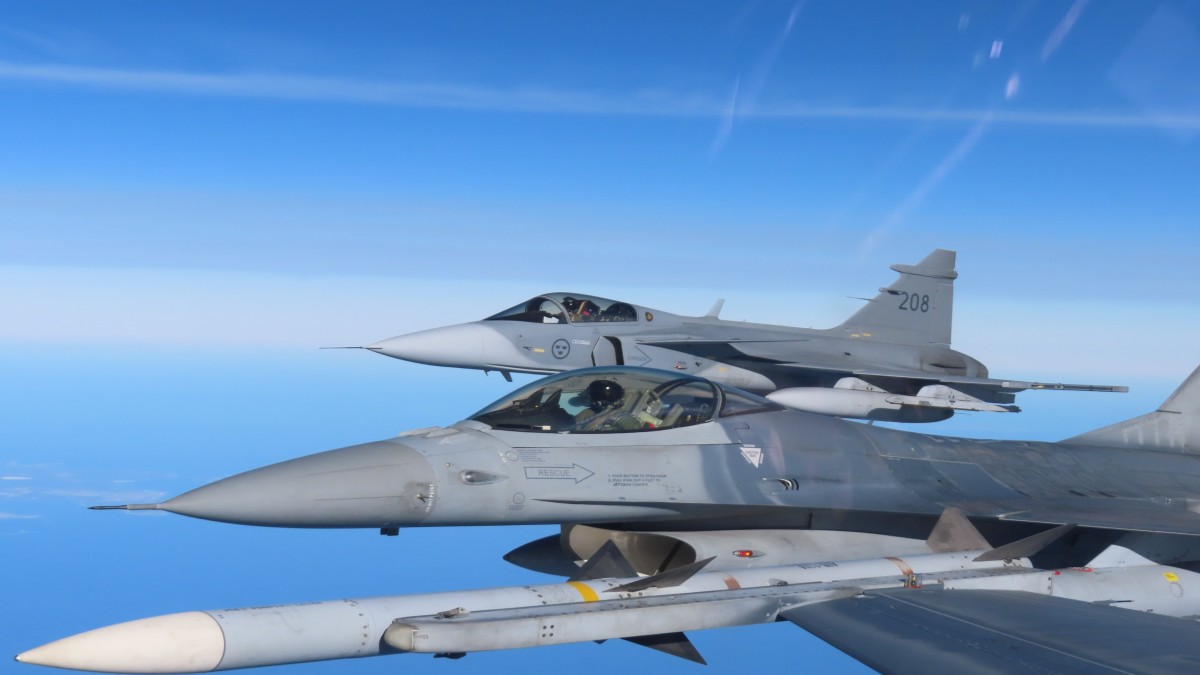
File Image: Swedish Gripens
In its next partnership, Germany would want more influence and a greater workshare that actually benefits its industry.
The three countries could establish an Airbus–Saab joint venture, potentially using Saab’s Gripen E as a technological stepping stone or baseline while developing a new aircraft.
Both sides bring vast experience developing combat aircraft, which would come in handy for the new program. Moreover, bringing Spain into this partnership would give Airbus continuity and likely stronger bargaining power within the grouping.
That said, building a new partnership from the ground up also carries significant risks. The partners would need to establish governance structures, align requirements, agree funding shares, define intellectual property rules, and negotiate work-share from scratch.
This would push fielding past 2035, potentially into the late 2030s or beyond. Moreover, the exact problems that killed the FCAS manned fighter—work-share, leadership, and IP control—could easily reappear between Airbus and Saab, two strong design houses with distinct cultures.
Despite these risks, a pure continental European next-generation fighter partnership would preserve greater decision-making autonomy and manufacturing work for German, Spanish, and Swedish industry. More importantly, it would support long-term European defense-industrial capacity without the complications of late entry into an existing program with set architecture and priorities.
Saab is already conducting independent studies on sixth-generation technologies and has publicly stated it remains open to collaborations, including on fighter aircraft. “Saab remains open to a variety of collaborations and partnerships across a wide range of defense-related areas, including fighter aircraft.
Large-scale cooperation projects of this kind are typically addressed at the political level, with participation decisions made by the governments concerned,” a Saab spokesperson was quoted as saying in the POLITICO report. “Consequently, any questions about possible Swedish involvement should be directed to the Swedish government.
As always, Saab stands ready to support Sweden’s future fighter requirements,” it added. Meanwhile, Airbus boss Michael Schöllhorn shed some light on the company’s relationship with Saab in an interview with Handelsblatt earlier this week, emphasizing that they had “always worked well” together.
For now, it remains to be seen which way Chancellor Merz’s government will swing. The choice is between accepting a subordinate but potentially faster role within a mature program, or insisting on industrial leadership and requirements fit, at the cost of delays and the risk of repeating past mistakes and failures.
Contact the author at sakshi.tiwari13 (at) outlook.com
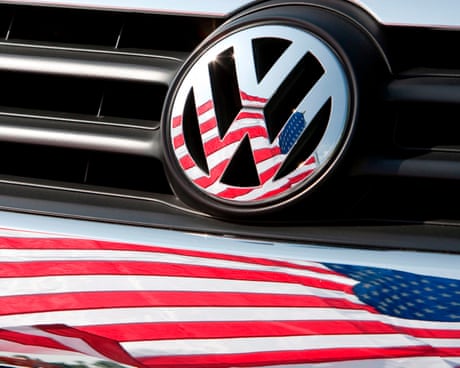
VW investment, creating 4,500 jobs in Georgia, comes amid Trump’s damaging tariffs, intense Chinese competition and costly shift towards EVs
Audi has said it will spend $4bn (£3bn) to build its first factory in the US, as its parent company, Volkswagen, struggles with the impact of steep tariffs imposed by Donald Trump.
The German brand’s chief executive, Gernot Döllner, joined Trump on stage at a campaign rally on Saturday night to announce the factory in Macon, Georgia, in an unusual move by a big European brand just days before the US midterm elections.
From student protests across France over the weekend and presidential elections in Brazil pitting leftist incumbent Luiz Inacio Lula da Silva against right-wing challenger Flavio Bolsonaro to wildfires in Indonesia, FRANCE 24 looks back at some of the most striking images from the past week.
From student protests across France over the weekend and presidential elections in Brazil pitting leftist incumbent Luiz Inacio Lula da Silva against right-wing challenger Flavio Bolsonaro to wildfires in Indonesia, FRANCE 24 looks back at some of the most striking images from the past week.

 Login