❌

Reading view

Musk warns military use of Starlink could spark space war. Kyiv’s ex-disinformation chief says he’s building alibi after Starshield scandal
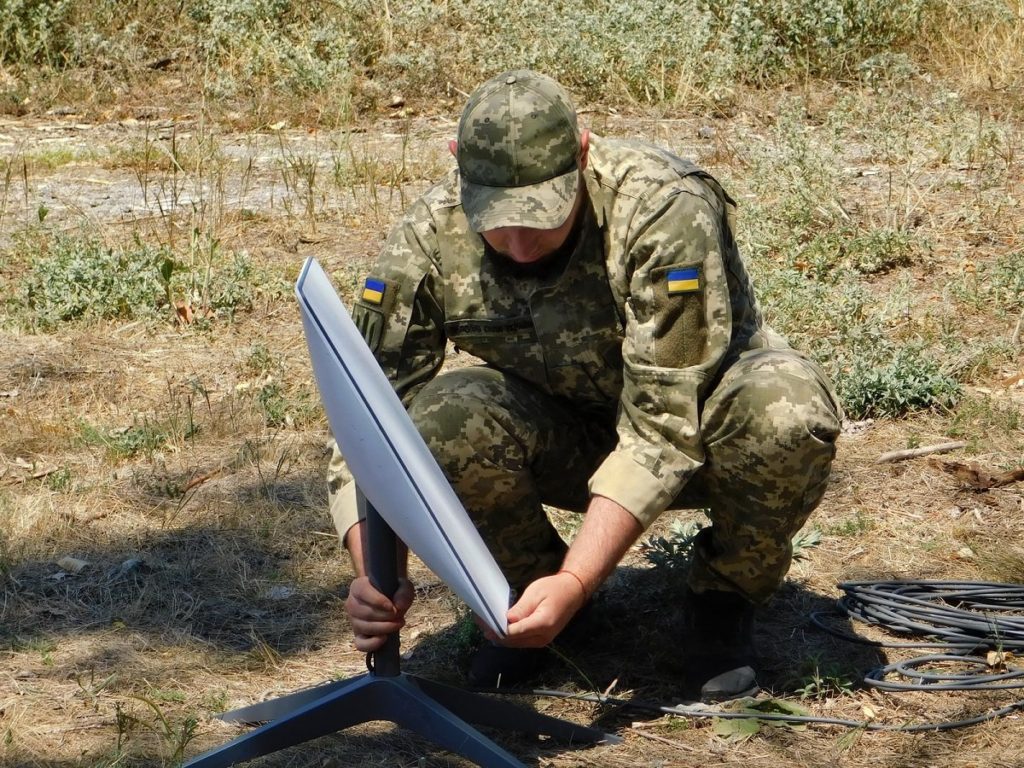
A Ukrainian soldier installs a Starlink terminal

SpaceX founder Elon Musk says that if Ukraine fires through Starlink, Russia would be entitled to shoot the network down. That is why Starlink must remain a civilian operation and cannot be used for outright offensive strikes that would put its very existence at risk.

The warning lands in the middle of a fight over Musk’s own hand on that network. Weeks ago, his company unexpectedly throttled the service Ukraine’s drones depend on amid US President Donald Trump diesel deal with Russia, which led to the disruption of a few operations on the front.

The US Treasury authorized the sale, delivery, offloading, and import of Russian-origin diesel fuel, effectively suspending sanctions on that trade until 7 April 2027, the Office of Foreign Assets Control (OFAC) said on its website on 9 October.

The diesel deal combining intelligence halt and military Starlink, with pressure on Ukraine to make a quick peace deal, has angered both Democrats and Republicans ahead of the US elections on 3 November, where Democrats could win.

Meanwhile, a Ukrainian official interprets Musk's talk of strikes as an attempt to build an alibi before a possible investigation into that decision.

A civilian network, or a target

Musk was responding to a post warning that if Starlink shifted from a civilian network into a military system, Russia could treat it as a target for retaliation, and that destroying satellites in orbit could scatter enough debris to make space unusable for years or centuries.

“An adversary blowing up Starlink satellites would create a domino effect of destruction that would generate a vast field of debris, making space unusable," he writes.

When the shield and the warnings failed together

Overnight into 14 October, SpaceX quietly capped the speed of Starshield, the military version Ukraine’s drones run on, without telling Kyiv. Ukrainian units said the limit broke a series of missions, with connections dropping mid-flight and leaving drones hard to control.

At the same time, President Volodymyr Zelenskyy said Ukraine relies on the network for air defense, not attack, to intercept the Russian drones Moscow sends to its cities, and that once the speed was cut, his forces could no longer stop some of them as effectively as before.

Simultaneously, Ukraine's other American lifeline also went dark: for about three days, the US stopped passing the intelligence that warns of Russian ballistic launches. On 12 October, Russian ballistic missiles hit Kyiv before the air-raid alert reached people, with no advance data from partners. In a strike during that window, three people were killed in the capital, the sirens sounding only after the blasts.

A Ukrainian official sees alibi-building

Meanwhile, Andrii Kovalenko, the ex-head of Ukraine’s Center for Countering Disinformation, read Musk’s statement as self-protection rather than physics

“Musk, having taken responsibility for the restrictions on Starlink and Starshield for Ukraine, is now trying to build himself an alibi before a possible investigation into that decision,” he wrote.

He said that regardless of who was behind the idea of restricting Starlink and Starshield access for Ukraine, it represents a strategic setback for the US in the long run, as it risks portraying the country as an unreliable partner that may fail to honor its commitments.

"Europe purchases around 60% of its imported weapons from the US. Trust in the US as a security guarantor directly supports sales for American defense companies. Moves like this only undermine that trust and encourage European countries to develop their own systems," he said.

The US has sent a message that its guarantees may not be reliable and that even paid-for services can be subject to political decisions, Kovalenko stressed.

  •  

US midterms could restore Ukraine’s American aid and curb Trump’s Russia deals, if Democrats win Congress

hill senators chose break leaving russia sanctions russia sanctions power trump’s hands congress lawmakers walked away sweeping bill trump decide how confront moscow month ukraine news ukrainian reports

If Democrats win the House, and possibly the Senate, a result nonpartisan analysts call plausible, they would gain the power to bring new Ukraine aid to a vote and to push back on President Donald Trump’s deals easing pressure on Russia, Reuters reports in an analysis of how US foreign policy could shift.

The stakes are concrete. Trump has largely halted direct US aid to Ukraine, which lawmakers of both parties had backed, and its current supplies run from packages passed under his predecessor.

Weeks ago, he also waived the sanctions on Russian energy that Congress had written into law and struck a deal to bring Russian diesel back to the market, angering Republicans and Democrats alike.

What a Democratic Congress could do for Ukraine

With both chambers, Democrats could put new Ukraine aid on the floor, and given the bipartisan support such aid has drawn, it could pass with the two-thirds majorities needed to override a Trump veto.

Other steps could be taken, too. Representative Gregory Meeks of New York, in line to chair the House Foreign Affairs Committee if his party wins control, has already introduced bipartisan legislation to block Trump’s plan to return Russian diesel to the global market.

Democrats are also readier than Trump’s Republicans to rein in military spending. They blocked his request for an unprecedented 67% rise in the military budget, to $1.5 trillion, in the Senate, and many say they will try to restore the foreign aid he has withheld or canceled.

The limits of a slice of power

The leverage has limits. Even with both chambers, Democrats would still face a president who can veto, and overriding him would require two-thirds of each chamber. The pattern has already been visible in Iran: Trump launched that war on 28 February without congressional approval, and when a War Powers resolution passed with a handful of Republican votes, his administration ignored it.

The US midterms could restore Ukraine’s American aid and curb Trump’s Russia deals, if Democrats win Congress

  •  

Ukraine strikes Russian plant supplying batteries for ballistic missiles and glide bombs with Storm Shadow missiles, OSINT reports – another hit on Russia’s weapons supply chain

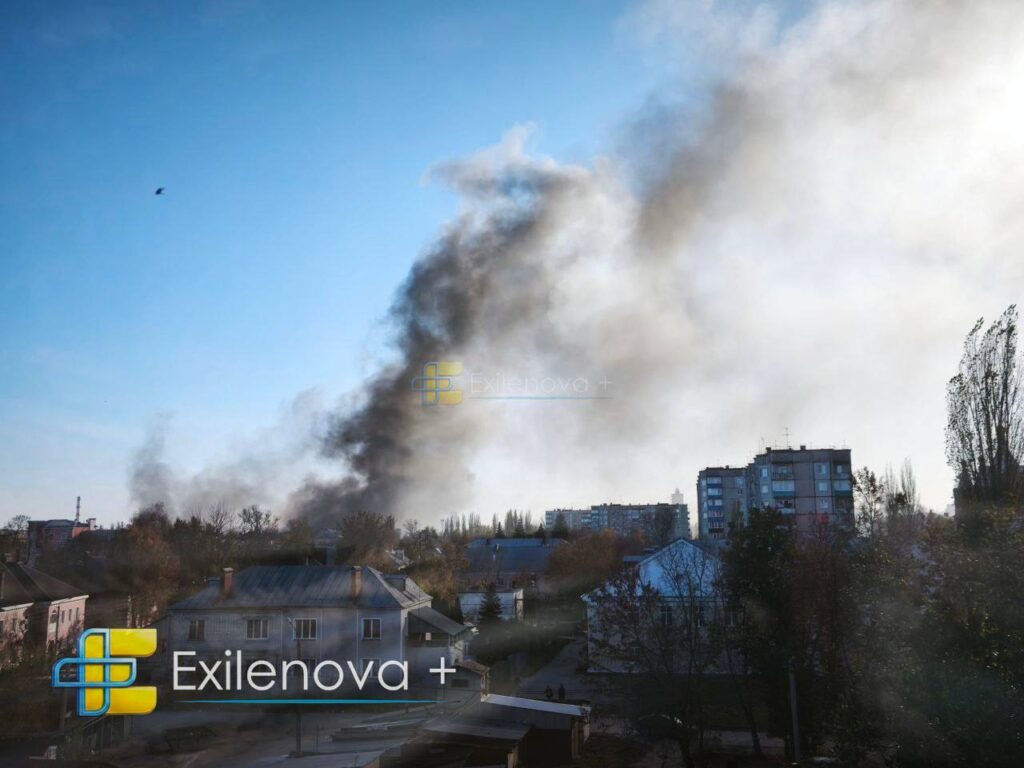
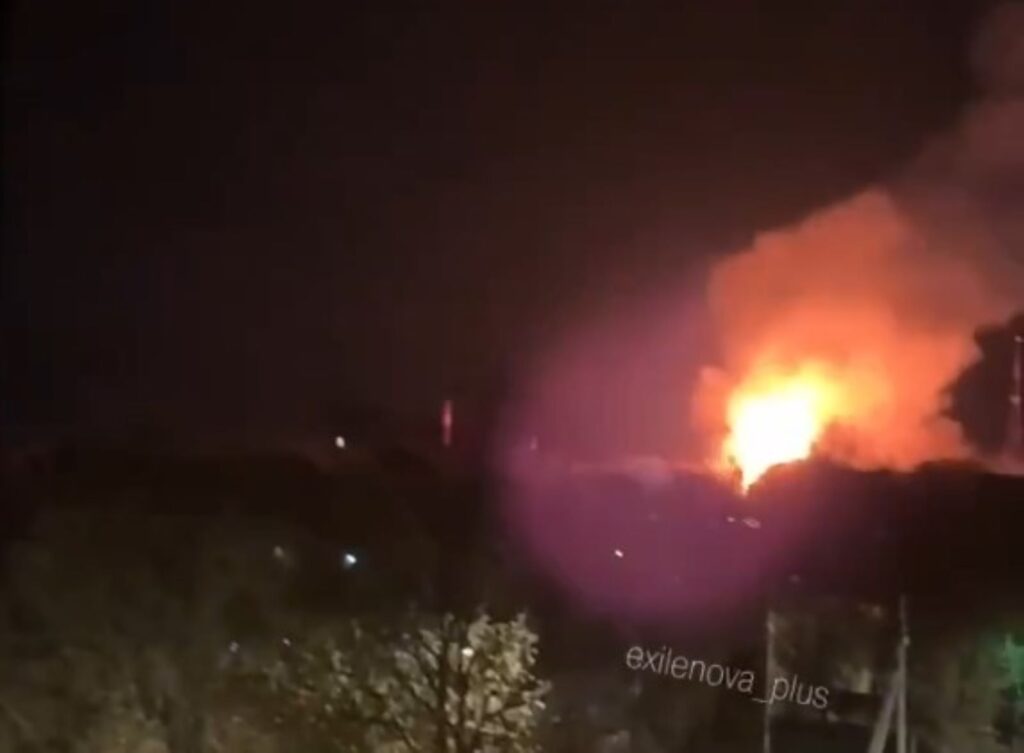
Smoke rising from the Energiya plant in Yelets, Russia’s Lipetsk Oblast, following a reported Ukrainian cruise missile strike, 25 October 2026. Photo: Exilenova+

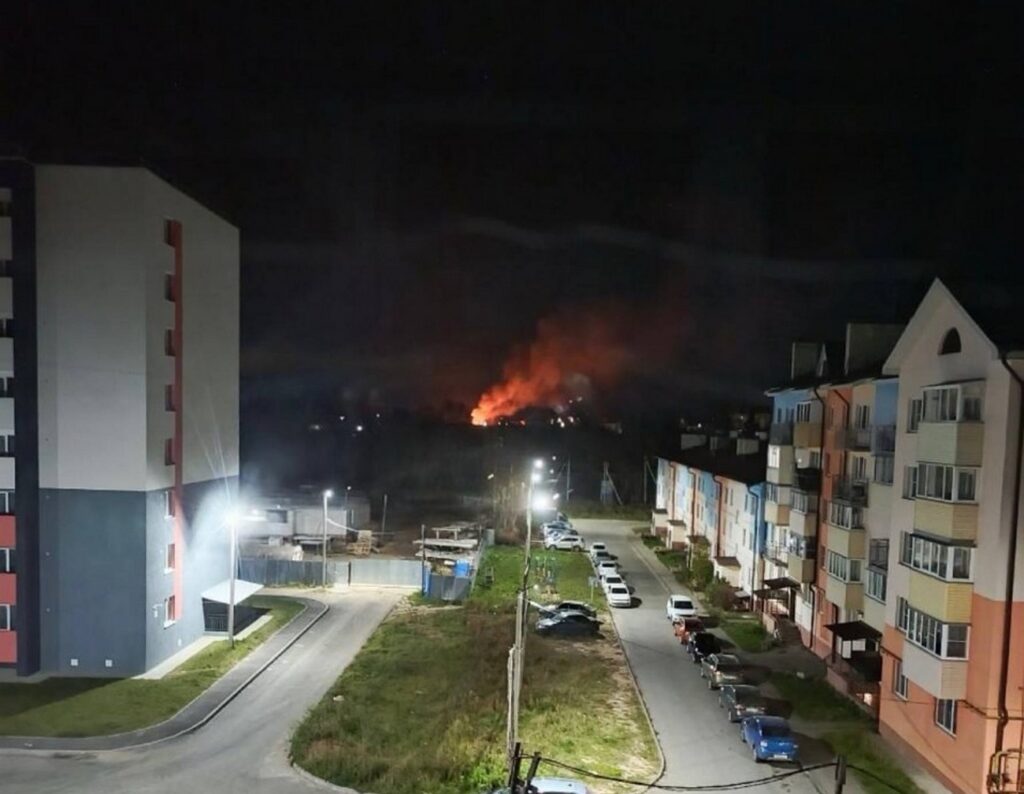
Ukraine reportedly struck the Energiya plant in Yelets, Russia’s Lipetsk Oblast, with UK-supplied Storm Shadow cruise missiles on 25 October, according to the OSINT channel Exilenova+.

The plant manufactures batteries and power sources used in Russian weapons systems, including Iskander and Kinzhal missiles, air defense systems, and guided aerial bombs, according to Exilenova+. The reported strike targeted a facility that supplies components for Russia’s military-industrial complex as Moscow continues its war against Ukraine.

According to Exilenova+, Energiya is Russia's only producer of batteries for glide bomb planning and correction modules, as well as a key supplier of specialized power sources for several missile systems.

Storm Shadow missiles reportedly hit plant buildings

Exilenova+ reported multiple missile impacts at the Energiya plant, sharing footage and photos showing explosions, thick smoke, and fires at the facility. The channel later reported that the plant was still burning and that the surrounding area had been cordoned off, with numerous ambulances heading to the site.

Dnipro OSINT reported that at least two missiles struck two buildings at the plant.

The Energiya plant is located in Yelets, approximately 250 km (150 miles) from the Ukrainian border.

Plant produces components for Russian weapons

According to Dnipro OSINT, Energiya specializes in developing and manufacturing chemical power sources. Its products are used in several Russian weapons systems, including Iskander-K and Iskander-M missiles, Kh-47M2 Kinzhal air-launched ballistic missiles, Zircon missiles, and Pantsir air defense systems. The plant also supplies power sources for UMPB D-30SN guided aerial bombs.

Many of these weapons are used in Russian strikes on Ukrainian cities, killing civilians and destroying residential buildings and civilian infrastructure.

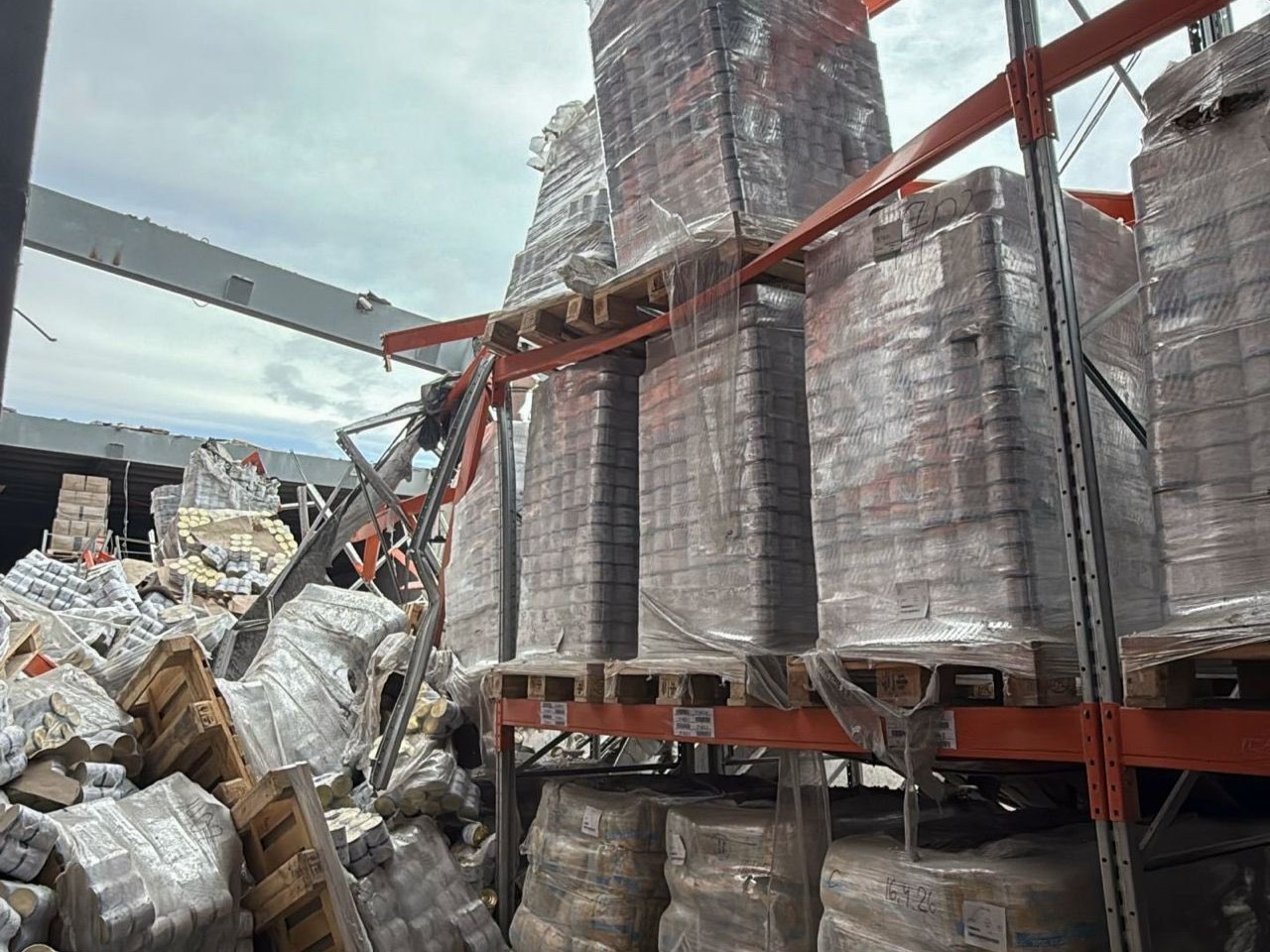
Aftermath of Russian Iskander strike on UN WFA warehouse housing humanitarian aid in Dnipro, 25 May. Photo: Andrii Sybiha
Explore further

UN food aid warehouse in Dnipro struck by Russian Iskander missile, impacting supplies for 130,000 people

Dnipro OSINT said the plant had been attacked at least four times before the 25 October strike.

The strike comes two days after a reported Ukrainian Storm Shadow missile attack on the Proton electronics plant in Russia’s Oryol on 23 October, which produces electronic components used in Russian weapons systems, including Iskander-M ballistic missiles and Pantsir-S1 air defense systems.

  •  

Russian titanium plant in Urals reportedly hit by Ukrainian drones, 1,500 km from Ukraine

finland confirms ukrainian drone its airspace kyiv's baltic strike campaign pushes deeper north – helsinki alert · post preparing launch long-range an-196 liutyi one-way attack photo_5224400079031496980_y (1) ukraine news reports

A drone attack damaged an industrial facility in Russia’s Perm Krai early on 25 October, injuring five workers, Ukrainian monitoring channel Exilenova+ reported. Exilenova+ identified the target as the AVISMA chemical and metallurgical plant in Berezniki, around 1,500 km from Ukraine’s border. 

The reported strike highlights Ukraine’s ability to reach industrial facilities deep inside Russia that support its military-industrial complex. 

AVISMA produces titanium materials used in aviation and aerospace manufacturing, including military aircraft, aircraft engines, missiles, and space technology, according to Exilenova+.

Regional governor Dmitry Makhonin said the industrial facility sustained damage but continued operating normally. He said five workers were injured in the attack.

A target deep inside Russia

Perm Krai lies in Russia’s Ural region, roughly 1,500 km from Ukraine’s border. The distance places the reported strike far beyond Russia’s border regions, where Ukrainian drone attacks have frequently targeted military and industrial infrastructure.

The reported attack follows a broader Ukrainian campaign against Russian industrial and energy facilities linked to the country’s war effort. 

Russia’s Defense Ministry claimed that air defenses intercepted and destroyed 532 Ukrainian drones overnight across 23 Russian regions and over the Sea of Azov, according to Russian state news agency TASS. 

The reported interceptions included drones over Perm Krai, as well as regions around Moscow and areas in southern and western Russia. The figures have not been independently verified.

The extent of damage at AVISMA and any impact on its operations have not been independently established.

  •  

Ukrainian drones reportedly strike major shopping mall in Russia’s Belgorod overnight

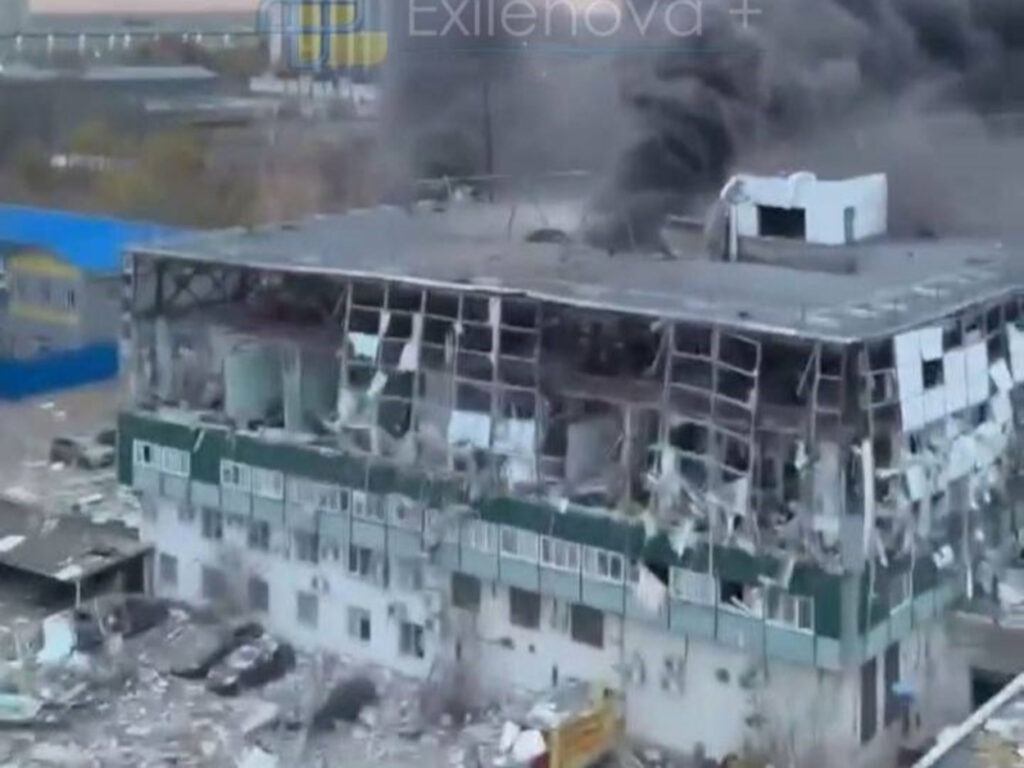
Explosion from a reported drone strike on Belgorod's MegaGRINN shopping center, 25 October 2026. Screenshot from video: Exilenova+

Ukrainian forces reportedly struck the MegaGRINN shopping and entertainment complex in the Russian city of Belgorod during a mass drone attack overnight on 25 October, when the mall was closed and no visitors were inside, according to the Ukrainian monitoring channel Exilenova+.

Russian authorities reported that a civilian was killed and 10 people were injured in the broader mass drone attack on Belgorod. One of the injured was an ambulance worker, according to the regional operational headquarters. 

The majority of the drones reportedly targeted one area in the city center, according to ASTRA.

Belgorod’s largest shopping complex targeted

Exilenova+ identified the reported target as MegaGRINN, Belgorod’s largest shopping and entertainment complex covering about 163,000 square meters. The facility houses more than 200 stores, a supermarket, restaurants, a cinema, and entertainment areas.

Belgorod is a Russian city about 34 kilometers (21 miles) from Ukraine’s northeastern border and roughly 70 kilometers (43 miles) from Kharkiv. The city and surrounding oblast have repeatedly come under Ukrainian drone attacks during Russia’s full-scale war against Ukraine.

Belgorod Oblast borders Ukraine’s Sumy, Kharkiv, and Luhansk oblasts. Russian forces have used the region to launch missile and drone attacks on Ukraine and to stage ground offensives across the border.

Update: Ukraine’s General Staff reports strikes on Russian radar stations in Belgorod Oblast

Update 18:00: Ukraine’s General Staff said Ukrainian forces struck Russian radar stations near Hostishchevo and Kurgannoye in Russia’s Belgorod Oblast on 24 October and overnight on 25 October.

The General Staff said the strikes would create gaps in Russian radar coverage and expand Ukraine’s ability to use unmanned systems. 

The update did not mention an attack on Belgorod city or the shopping mall.

Russia steps up attacks on Ukrainian retail infrastructure

The reported strike comes amid an intensified Russian campaign against Ukrainian retail and logistics infrastructure. These attacks have included strikes on shopping centers during business hours, including a 21 August Russian drone attack on the crowded Soniachna Halereia mall in Kryvyi Rih, where 16 people were killed and more than 120 injured.

The reported strike on MegaGRINN took place overnight, when the complex was reportedly closed and empty of visitors. Russian authorities reported casualties from the wider attack on Belgorod, but have not linked them to the mall.

  •  

Full speed returned to Ukraine’s satellite links on Saturday morning. “We simply enforced our terms,” Musk claims after blaming Washington for 10 days

STING S interceptor

Ukraine's military satellite links work at full speed again after a cap that hobbled its drones, Ukraine's Defense Ministry said on 24 October. Hours later, SpaceX owner Elon Musk, who earlier pointed at Washington, said his company had enforced its own rules. A Ukrainian presidential adviser and a drone volunteer replied that civilian Starlink could not fly such missions.

Ukraine holds off Russia with American tools it doesn't control, so any pause decided abroad, like stalled Patriot deliveries or the Starlink cap, opens gaps in its defense. With no stated rule on what Ukraine's forces may do, the next cutoff could again come unannounced and unexplained.

Kyiv records full speed again

The ministry recorded stable connections above 400 km/h (250 mph). Before, Kyiv said, links on Starlink and its military version, Starshield, cut out above 161 km/h (100 mph).

Ukrainian President Volodymyr Zelenskyy said the restoration began overnight. "The speeds are now where they need to be," he said, citing defense against jet-powered Shahed drones. He thanked US lawmakers, the media, the State Department, and the US President, but not Musk or SpaceX.

A Ukrainian soldier installs a Starlink terminal
A Ukrainian soldier installs a Starlink terminal. Illustrative photo: Armed Forces of Ukraine

Musk: "That loophole was closed last week"

Musk replied "Correct" to an X user who called Starlink "not a weapons system." "Ukraine military violated Starlink terms of service and used it for offensive drone strikes to kill people. That loophole was closed last week," he wrote.

Correct.

Using Starlink, a civilian commercial service, for offensive drone strikes to kill people has never been allowed, nor should it be.

Starshield, a different system, is controlled by the US government. What they decide to do is up to them.

Ukraine military violated… https://t.co/ZXBB8bYfPn

— Elon Musk (@elonmusk) October 24, 2026

He called Starshield "a different system" the US government controls, and warned: "Were Starlink to be turned off, the Ukrainian front line would collapse immediately. This is NOT a threat, it is simply a statement of fact."

Musk named no evidence, cases, or time frames. Overnight, he answered a headline on the US financial blog ZeroHedge saying he "admits" SpaceX throttled Starlink.

"We simply enforced our terms of service when they were bypassed. There has been no change to our terms of service," Musk wrote.

musk, trump
Explore further

Who capped Ukraine’s Starlink? “Ultimately POTUS,” Musk said. Ultimately Musk, reports now say

When the cap hit on 14 October, Musk wrote that the US government owns and controls Starshield and that the US military and "ultimately POTUS" decide any limits. US President Donald Trump, who credited Musk with the fix while Kyiv still saw the cap, said on 24 October he had spoken to Musk about Ukraine but gave no details.

US President Donald Trump and Elon Musk in the Oval Office on 11 February 2025
US President Donald Trump and Elon Musk in the Oval Office on 11 February 2025. Photo: White House / Daniel Torok

Ukrainians note contradiction to reality

Ukrainian presidential adviser on defense technology Serhii Beskrestnov, known by the callsign Flash, wrote:

"It is very strange that Elon Musk doesn't know about the restrictions on Starlink operations in Ukraine."

Since winter 2026, every Starlink terminal over Ukraine, occupied areas included, has been limited to 70–90 km/h (43–56 mph), he said, and over Russia, Starlink does not work. "So we PHYSICALLY CANNOT USE COMMERCIAL STARLINK for deep strikes and mid-range strikes," Beskrestnov wrote. Deep strikes hit targets far inside Russia, mid-range ones targets closer to the front.

Ukrainian activist and drone fundraiser Serhii Sternenko called Musk's claim untrue. He said Ukraine introduced whitelists of terminals in February, and any terminal used on the move had to be listed and connected to Starshield.

"So using civilian Starlink for drone missions was technically impossible. All drone missions that needed satellite communication could be carried out only with Starshield," Sternenko added.

European governments help pay for Ukraine's Starlink service. Germany funds it under a contract that runs until April 2027. Polish Foreign Minister Radosław Sikorski, whose country pays around $50 million a year for the service, said on 23 October: "Mixing business with politics usually ends badly, especially when we talk about Elon Musk."

  •  

Rejoin the EU, Says Think Tank Funded by Soros and the European Climate Foundation

This week a self-described "influential think tank", the IPPR, advised that the "UK must seek EU membership”. Charlotte Gill was not surprised to find it was funded by George Soros and the European Climate Foundation.

The post Rejoin the EU, Says Think Tank Funded by Soros and the European Climate Foundation appeared first on The Daily Sceptic.

  •  

Russian plant supplying components for Iskander missiles reportedly struck by Ukrainian Storm Shadow missiles

The Proton electronics plant in Oryol, Russia, after a Ukrainian missile strike on 23 October. The facility reportedly produces electronic components used in Russian weapons systems, including Iskander-M ballistic missiles. Photo: Exilenova+

Ukrainian missiles reportedly struck a factory in the city of Oryol on 23 October, with OSINT projects reporting that the target was the Proton electronics plant, which produces components used in Russian weapons systems.

The strike comes amid Ukraine’s broader campaign to target Russian military production facilities and other infrastructure supporting Moscow’s war against Ukraine. Ukrainian strikes on such facilities aim to weaken Russia’s ability to manufacture and maintain the weapons it uses in its invasion.

The plant reportedly supplies electronic components for Iskander-M ballistic missiles, which Russia regularly uses to attack Ukrainian cities, as well as other weapons systems, including the Pantsir-S1 air defense system. 

The strike could disrupt production supporting Russia’s war effort. Photos show extensive damage to the building. Information about casualties remains unclear. 

Reports say a Ukrainian missile strike hit the Proton electronics plant in Russia’s Oryol on 23 October.

The facility reportedly produces components for Iskander-M ballistic missiles used in attacks on Ukrainian cities, as well as other Russian weapons systems.

📹Exilenova+… pic.twitter.com/nbqGPJ8EJj

— Euromaidan Press (@EuromaidanPress) October 23, 2026

Plant reportedly produces components for Russian weapons

Proton JSC manufactures semiconductor devices, LEDs, and electronic components for industrial and specialized equipment. According to Exilenova+, the plant’s products are used in the production of Iskander-M ballistic missiles, S-71 Kover missiles, and the Pantsir-S1 air defense system.

Exilenova+ reported that the plant was struck by Storm Shadow cruise missiles. The weapon type has not been independently confirmed, and the extent of damage to the facility remains unknown.

Russian authorities confirm strike on factory

Oryol Oblast Governor Andrey Klychkov announced a missile threat in the region before reporting that missiles had struck a factory in Oryol’s Sovetsky District, according to Liga.net.

Residents reported explosions, a fire in one part of the city, and columns of smoke rising over Oryol, according to local reports cited by OSINT projects Exilenova+, Supernova, and Astra.

  •  

A modem from a Russian drone led reporters to its Chinese maker—which invoiced 500 for Russia’s drone plant

Mesh Network XK-F358 modem from the Geran-5 drone

Undercover reporters ordered 500 drone mesh modems from a Chinese firm, which billed them to Russia’s Alabuga drone plant, investigation by The Insider found. The outlet estimates the firm makes about half the high-power mesh modems that let Russia steer its drones deep into Ukraine. The firm’s director also named US company AMD as the source of a key chip, and AMD says it has not sold to the firm.

Geran drones and Banderol drone-missiles have become Russia’s main weapons against Ukraine’s energy grid. Russia began this winter’s strike campaign against that grid in late September, ISW assessed. Ukrainians’ survival this winter depends largely on how fast the West halts mesh modem sales to Russia, the outlet argued.

What a mesh modem does

A mesh modem links drones into one radio network. Each unit relays data for the others, so if one drone is shot down, traffic reroutes through the rest. Information keeps flowing even if nearly 80% of the drones are downed, Ukrainian defense adviser Serhii “Flash” Beskrestnov said in November 2025.

Range is the other half of the threat. One XK F-359 holds a line-of-sight link over 100–300 km, The Insider says. In theory, a couple of relay drones could keep a whole attack on Kyiv connected. Operators can then send new commands in flight and steer around air defenses. Russia’s Gerbera drones, first built as cheap decoys, increasingly carry these modems.

Explore further

Russia’s jam-resistant drones run on a Chinese modem no one has sanctioned

A modem from an upgraded Gerbera

To trace the part, The Insider’s correspondent in Ukraine examined an unmarked mesh modem from an upgraded Gerbera with a vertical tail fin, a version that appeared this summer. The outlet identified it as Xingkai’s XK F-359, the part Ukrainian intelligence and earlier reporting, Euromaidan Press included, had logged as the XK-F358. The Insider calls that label a misidentification.

Next, The Insider and the Nordsint investigative project contacted Xingkai on WeChat, posing as a Russian military supplier based in Alabuga. A company employee who introduced himself as “Jack Jiang” confirmed the firm is the model’s sole maker. The Insider identified him as Jiang Qin, Xingkai’s director and owner.

500 modems, three banks

The reporters then ordered 500 units for delivery to Alabuga, home to the plant that makes most of Russia’s long-range drones. Jiang invoiced 19.5 million yuan, which The Insider put at about $2.87 million. He offered two ways to pay: dollars to Xingkai’s DBS Bank account in Hong Kong, or yuan to his personal Ping An Bank account.

A man walks past a mural by Norwegian street artist Toddel depicting a map of Ukraine and US President Donald Trump (L) with Russia's President Vladimir Putin in Krakow on March 6, 2026, amid the Russian invasion of Ukraine. (Photo by Sergei GAPON / AFP) / Eastnews)
Explore further

America has sided with Russia against Ukraine. Europe should stop pretending and build a coalition against Russia, China, and even the US

In the chat, the reporters said outright that the end user was a military production facility. Jiang raised no objection, The Insider reported.

Later, after the reporters asked to update the address, Xingkai sent a revised invoice with “Alabuga” spelled in Latin letters. This time, it routed payment to a China Merchants Bank account in the name of a former Xingkai manager. She left a management post at the company in 2025, according to Tesari corporate records cited by The Insider. None of the three banks answered The Insider’s requests for comment.

Jiang also claimed the modem’s programmable chip is made by AMD. Asked for an AMD license, he refused, saying Xingkai buys the chips through a middleman. AMD told The Insider that Xingkai “is not an AMD customer or authorized partner,” and said it had sold the company nothing. AMD added that it bars exports of its products to Russia that violate US export controls and sanctions.

  •  

Ceasefire planned for occupied Oleshky as residents face starvation and blocked escape routes, White House announces

Oleshky, Kherson Oblast, has been under Russian occupation since 2022, following Russia’s capture of the city during the initial phase of its full-scale invasion of Ukraine.

US First Lady Melania Trump has secured an agreement for a localized ceasefire between Russia and Ukraine in the Russian-occupied city of Oleshky, Kherson Oblast, to allow humanitarian aid deliveries and civilian evacuations to begin on 29 October, the White House announced on 23 October.

The proposed truce comes after months of worsening conditions in Oleshky, where Russian restrictions have left residents without reliable access to food, drinking water, medicine, and medical care. Ukrainian officials and international monitors have called for a humanitarian corridor as civilians face hunger, landmines, and regular attacks, with residents unable to leave safely.

Update: Ukraine launches humanitarian mission to occupied Oleshky after US-mediated agreement

Update 21:31: Ukraine’s Human Rights Ombudsman Dmytro Lubinets announced the launch of a humanitarian mission to Russian-occupied Oleshky in Kherson Oblast, saying an agreement had been signed following negotiations coordinated by the US side, with mediation by US First Lady Melania Trump. 

The agreement provides for several stages, including preparations for a ceasefire, clearing routes of mines, delivering humanitarian aid, and unblocking evacuation routes. 

Lubinets said his office had been raising the alarm about the looming humanitarian catastrophe in Oleshky since late February 2026 and would report on each stage of the mission.

Ceasefire aims to open evacuation route

According to the White House, Trump and her representative worked directly with Russian and Ukrainian leadership to agree on the ceasefire's terms, timing, and procedures. Civilian representatives from both countries are expected to visit residents to assess their needs, while those wishing to leave will receive transportation to their preferred destination.

The White House said an American media organization would accompany the teams to document the process and help ensure families' wishes are respected.

Trump said she initiated discussions after learning about the crisis during a private conversation at an event in New York during the 81st United Nations General Assembly. She said the agreement also involves technical preparations, including demining.

local-resident-walks-to-a-box-still-attached-to-a-drone.jpg
Explore further

Russian troops seize drone-dropped food in occupied Oleshky, accusing recipients of cooperating with Ukraine. Some people go missing, a local official says

Oleshky residents face hunger and isolation

Oleshky, on the Russian-occupied left bank of the Dnipro River, had around 24,000 residents before Russia's full-scale invasion. Recent estimates put the remaining population at roughly 1,700 to 2,000, including about 50 children.

Residents face severe food and medicine shortages, while Russian forces have restricted movement and attacked vehicles attempting to deliver humanitarian supplies. Ukrainian officials have also said Russian troops have seized food parcels delivered by Ukrainian drones and detained or beaten some residents who received them.

Aerial view of Russian-occupied Oleshky, in Ukraine's Kherson Oblast. Photo via ArmyInform
Explore further

Russian troops enter homes and threaten starving Oleshky residents for food and alcohol, officials say

The crisis has drawn growing international attention. Pope Leo XIV appealed to Russian leader Vladimir Putin for a truce to allow aid deliveries and safe civilian evacuations, while Ukraine's human rights ombudsman, Dmytro Lubinets, said on 18 October that negotiations over a ceasefire and evacuation had advanced to the stage of agreeing on final details.

The White House announcement sets 29 October as the start date for the localized ceasefire. Its implementation will determine whether aid can reach residents and civilians can leave safely after months of isolation.

  •  

Russia keeps hitting Ukraine’s arms plants. Now private developers can dig them space underground—and sell or rent it to them

The FP-1 "Deep Strike" kamikaze drone at the factory.

Ukraine's Cabinet has opened the construction of underground arms production space to private investors, Prime Minister Serhii Koretskyi announced on 22 October, saying the rule applies from that day. A second decision eases imports for partner-funded weapons production.

Koretskyi said the change would add more of the space arms makers need, especially as Russian strikes intensify. On 9 December 2025, the Defense Ministry reported that more than UAH 1.5 billion (about $36 million) in budget support had let war-damaged defense firms restore operations. At the time, the ministry planned to relocate or duplicate the most critical plants, and underground complexes were under construction. The new model puts no additional burden on the state budget, Deputy Defense Minister Hanna Hvozdiar said. The bill still lands somewhere, though. Defense firms will buy, lease, or take the space for use, and companies working on state contracts are among those eligible. If they pay developers out of state-contract revenue, part of the cost could come back to the budget.

Developers build, arms makers move in

The changes to Cabinet resolution No. 1494 give private investors a simplified route to construction and permits, the ministry said. Developers can build protected facilities with their own or raised funds. Deadlines, terms of use, and the handover are set in a contract between investor and defense firm. The mechanism covers new sites as well as moving or expanding existing production. If a firm gets only part of a facility, that part must be at least 25% of the facility's total area and fit for production.

Estonian and Ukrainian soldiers fly drones together during Exercise Hedgehog 2025 in Estonia, where Ukrainian operators were credited with knocking out two battalions in a simulated engagement. Photo: vbl/OR-7 Ardi Hallismaa/ERR
Explore further

One year of Ukrainian arms exports, and industry has questions: how much army gained, where Berlin office is, who joins joint ventures

Developers must sign deals with, among others, residents of Defence City, Ukraine's special legal regime for arms makers, holders of state defense contracts, and firms the ministry designates as critical.

Tax break for partner-funded arms production

Components for weapons production that international partners pay for will enter Ukraine free of import duty and VAT, Koretskyi said. He added that customs inspection and clearance would be simplified and sharply shortened through a "single window."

  •  

Russia’s tax service runs on two key data centers. Drones went after one of them overnight, along with a chemical plant that supplies explosives makers

russia’s tax service keeps its databases two places drones went after one overnight also hitting air base explosives-chemical plant · post fire seen residential area gorodets nizhny novgorod oblast near

Drones attacked a Russian tax-service data center overnight on 23 October, Ukrainian monitoring channel Exilenova+ reported. A chemical plant in the Urals was also attacked, and a fire broke out near a Russian bomber base by late morning. Russian officials admitted injuries and damage but blamed falling debris. Ukraine has not commented.

Ukraine's long-range drones have widened their target list from Russian refineries to the servers and chemicals that keep Russia's state and war industry running.

The tax service's data center in Gorodets

The target in Gorodets, Nizhny Novgorod Oblast, is one of the Federal Tax Service's two key data centers, which work as a geographically distributed pair. It stores and processes state registers, including tax databases, Exilenova+ said. The extent of the damage is unconfirmed. The site lies about 785 km from Ukraine's northern border in a straight line.

The moment of impact at Russia’s Federal Tax Service data center in Gorodets last night. pic.twitter.com/PftC6keRpY

— Exilenova+ (@Exilenova_plus) October 23, 2026

Eyewitness footage shows a blast and fire in the area of the data center, which serves both the tax service and the Finance Ministry, Russian Telegram channel Astra found. The center opened in 2015. Mikhail Mishustin, then head of the tax service and now Russia's prime minister, attended the launch.

Nizhny Novgorod Governor Gleb Nikitin claimed air defenses repelled 19 drones. Falling debris injured three people in the Gorodets district and damaged several homes, an educational facility, and an infrastructure facility, he said, and local schools switched to remote learning. A Pantsir air defense missile hit a house, Exilenova+ claimed, though officials recorded it as a drone hit.

Ukrainian strikes inside Russia on Gorodets, Berezniki, and Voronezh, with distances from Ukraine, 23 October 2026
Ukrainian strikes inside Russia on Gorodets, Berezniki, and Voronezh, with distances from Ukraine, 23 October 2026. Map: Euromaidan Press/Datawrapper

This month, drones already hit three Yandex data centers and a VK data center near St. Petersburg.

A chemical plant behind Russia's gunpowder

In Berezniki, Perm Krai, smoke rose over Uralchem's Azot plant as air defenses fired, Astra reported. The regional security ministry announced a drone attack at about 06:00, and authorities closed the airspace within 50 km of the city. Ukraine's long-range Liutyi drones visited Berezniki, Exilenova+ wrote.

Our old friends, the Liutyi drones, paid Berezniki a visit today. Haven’t seen them in a while. 🫡 pic.twitter.com/NXuhIJ3xpm

— Exilenova+ (@Exilenova_plus) October 23, 2026

The attack on Azot was continuing in the morning, the channel wrote, adding that the plant covers about 140 hectares with some 90 production buildings. It makes ammonia, nitric acid, ammonium and potassium nitrate, and urea. Russian defense plants use its nitric acid to make explosives and gunpowder, including the Perm gunpowder plant, Astra said. Berezniki lies 1,500–1,600 km from Ukraine's border and the war zone.

Smoke rises over Uralchem's Azot chemical plant in Berezniki, Perm Krai, after a drone attack, Russia, 23 October 2026
Smoke rises over Uralchem's Azot chemical plant in Berezniki, Perm Krai, after a drone attack, Russia, 23 October 2026. Photo: Exilenova+/Telegram

Drones attacked Azot before, on 11 September. Earlier this year, Ukraine's Security Service hit Lukoil's refinery in the same region.

phones down water off factory roof broken open russian-occupied luhansk counts damage after another night drones · post fire occupied during drone attack 23 2026 ukraine news ukrainian reports
Explore further

Phones down, water off, a factory roof broken open: Russian-occupied Luhansk counts the damage after another night of drones

Fire near a Su-34 base in Voronezh

Late in the morning, Voronezh Governor Aleksandr Gusev declared a missile alert, and explosions followed in the city. Gusev later claimed air defenses downed several "jet-powered aerial targets." Debris set dry grass on fire in a suburb and damaged outbuildings and several cars, he said, adding that no one was hurt.

Missile alert in several regions of the Russian Federation.

Explosions have been heard in Voronezh. We are assessing the situation. pic.twitter.com/GY0NRZTo4x

— Exilenova+ (@Exilenova_plus) October 23, 2026

Eyewitness footage shows fire and smoke near Baltimor military airfield, Astra found. The strike preliminarily hit the grounds of a former military aviation engineering university and a nearby parking area for military aircraft, Exilenova+ said.

Fire and smoke near Baltimor military airfield in Voronezh after a Ukrainian attack, Russia, 23 October 2026
Fire and smoke near Baltimor military airfield in Voronezh after a Ukrainian attack, Russia, 23 October 2026. Photo: Astra/Telegram

Baltimor hosts the 47th Guards Bomber Aviation Regiment, whose Su-34s Russia uses to strike Ukraine, Militarnyi reported, saying Ukraine attacked the airfield with missiles. Voronezh lies about 185 km from Ukraine's border. Smoke rose over the base after an attack on 27 May, and a fire broke out near it on 2 September.

Moscow counts drones, Kyiv stays silent

Russia's Defense Ministry claimed it downed 443 drones overnight over 20 Russian regions, including Nizhny Novgorod Oblast and Perm Krai, as well as Russian-occupied Crimea and two seas. Ukraine's General Staff has not reported on the strikes. A night earlier, drones reportedly hit a sanctioned weapons plant near Moscow.

Russia's air defenses now have to cover state servers and Ural chemical plants as well as the airfields its bombers fly from.

  •  

Phones down, water off, a factory roof broken open: Russian-occupied Luhansk counts the damage after another night of drones

phones down water off factory roof broken open russian-occupied luhansk counts damage after another night drones · post fire occupied during drone attack 23 2026 ukraine news ukrainian reports

Drone strikes disrupted communications and power in part of Russian-occupied Luhansk overnight on 23 October, Ukrainian monitoring channel Exilenova+ reported. It was the third night in four that drones went after communications in occupied eastern Ukraine. A pro-Russian local channel also showed a damaged factory, and the occupation authorities have stayed silent.

Ukraine's drones have spent months hitting what keeps Russia's occupation running, from fuel depots to supply lines and now communications.

Blasts before dawn, then outages

Explosions hit Luhansk before dawn, and the strikes probably targeted communications facilities, Exilenova+ said. Another Ukrainian monitoring channel, Supernova+, wrote that the city's TV tower came under attack. Exilenova+ posted night footage of the strikes.

The moment of arrival in Luhansk. Following the explosions, we are experiencing disruptions to communications and the electricity supply. pic.twitter.com/rNHXRJcVNt

— Exilenova+ (@Exilenova_plus) October 23, 2026

A drone attack damaged the building of the local telecom company, pro-Russian local channel Ogonyok Luhanska wrote on 23 October. It listed switches and servers among the damaged equipment and said the damage could explain landline outages and possible internet problems. The channel did not say whether the damage came from this attack or the one two nights earlier.

Strikes on local communications facilities in occupied Luhansk. pic.twitter.com/4Jz7aK7tKs

— Exilenova+ (@Exilenova_plus) October 23, 2026

By morning, water stopped flowing in parts of Luhansk and nearby villages, including Metalist and Tsvitni Pisky. A notice posted by local Telegram channel Luhansk Online cited unstable voltage at water facilities. The city's water utility later switched to backup phone numbers after its dispatch lines failed.

Third night in four

Overnight on 20 October, drones struck Ugletelecom, the occupation's telecom operator in Donetsk. A night later, they hit the seized Ukrtelecom building in Luhansk, which houses the occupation's mobile operator Lugacom. That strike disrupted the internet so badly that service centers across occupied Luhansk Oblast stopped accepting documents.

ukraine drone forces scale up operational depth locomotives comms towers depots hit occupied regions three days · post russian locomotive crosshairs ukrainian fp-2 donetsk oblast 25 2026 video robert madyar
Explore further

Ukraine drone forces expand kill zone into occupied regions, commander says: Russia’s trains, comms towers, and depots struck

Silence from the occupation

The occupation authorities have not commented. Leonid Pasechnik, the Russian-installed head of occupied Luhansk Oblast, posted nothing about the attack. On 21 October, he claimed Kyiv was carrying out "terrorist strikes" on civilians. Russia's Defense Ministry claimed it downed 443 drones overnight over Russian regions, Crimea, and two seas, without mentioning Luhansk. The same night, Russia launched 176 drones at Ukraine, some from occupied Donetsk and from Hvardiiske in occupied Crimea, Krym.Realii reported, citing Ukraine's Air Force.

Ukraine's General Staff has not reported on the attack yet. After the previous strike on Luhansk, it said Ukrainian forces hit command posts of Russian units in the Luhansk area.

A pipeline-valve plant hit, too

Ogonyok Luhanska also posted daylight photos of the Marshal plant after what it called a "night arrival." They show a damaged workshop roof, and the channel wrote it had information that the drone hit inside the plant. The Luhansk Pipeline Valve Plant Marshal, registered in Ukraine in 1994, makes taps and valves at 13 Montazhna Street, according to Ukrainian state registry data published by VB.ua.

The Marshal pipeline-valve plant in occupied Luhansk with a damaged workshop roof, 23 October 2026
The Marshal pipeline-valve plant in occupied Luhansk with a damaged workshop roof, 23 October 2026. Photo: Ogonyok Luhanska/Telegram

Earlier that morning, Luhansk Online reported restricted traffic on Montazhna Street between Brestska and Sukhodilska streets.

Ukraine has hit industrial sites in occupied Luhansk Oblast before. For example, in March, drones struck a plant in Alchevsk that made artillery shell casings.

  •  

Zelenskyy names three postwar security guarantees for Ukraine. Even Russia needs one of them, he says

warnings back starlink cap isn’t zelenskyy says ukraine’s two lifelines one restored · post ukrainian president volodymyr interview nbc’s meet press aired 18 2026 ukraine news reports

The hardest part of ending Russia's war is making sure it cannot start it again. As the peace talks have escalated ahead of the US elections, Ukraine is weighing three options for its postwar security.

Among them are NATO membership, direct US guarantees modeled on NATO’s Article 5, and a European “Coalition of the Willing” backed by Washington, President Volodymyr Zelenskyy says, according to UNIAN. But none of them have been agreed to yet.

Zelenskyy describes the guarantees as a single package, with each layer still under discussion with partners. All of it, he says, rests on a strong Ukrainian army, in both numbers and quality.

Three guarantees, none of them signed

Everyone counts on NATO, Zelenskyy says, but Kyiv is also negotiating direct guarantees from the US, including an Article 5-style collective-defense clause, alongside the European Coalition of the Willing that would act together with Washington. The arithmetic, he said, is already done.

“Our colleagues in Europe and America know this. We have already calculated everything: both the financing and the corresponding number of our soldiers, so that our state can be at peace,” he states.

Why Zelenskyy says even Russia should want Ukraine in NATO

He went further, arguing that NATO membership would serve not only Ukraine and the Alliance but also Russia.

“I think, honestly, the Russians need our accession to NATO too, because for them that is more security than Ukraine outside NATO,” he claims.

The talks come as Washington pushes toward negotiations. Zelenskyy says he expects signals from US Secretary of State Marco Rubio within a day or two, as well as a call with envoy Steve Witkoff. He adds that Jared Kushner, on his way to Kyiv in November, told him Russia supports a trilateral meeting of the US, Ukraine, and Russia, at the level of technical teams.

  •  

Trump cannot get Putin to halt strikes on Ukraine’s power grid, so he blames Ukraine instead, Zelenskyy says

musk tells ukraine’s president go zelenskyy says won’t resign never accept ukrainian land russian · post volodymyr during interview piers morgan recorded visit britain 14 2026 video uncensored / ukraine

US President Donald Trump has failed to reach an agreement with Russian ruler Vladimir Putin on halting strikes against Ukraine's energy infrastructure. However, Trump is trying to shift the blame for this failure onto President Volodymyr Zelenskyy, he said on The Diary of a CEO podcast.

His words came amid Russia's four record waves of ballistic missile attacks, after US Special Envoy Steve Witkoff described Putin as a "humanitarian." Previously, US officials cut Kyiv off from US intelligence and lowered a speed cap on Starlink to pressure Ukraine into stopping strikes on Russia's oil refineries that bring Moscow revenue for its war.

Trump pins the problem on Kyiv, not Putin

Zelenskyy explained the behavioral pattern behind Trump's recent actions and statements. At first, Putin rejected his proposal for a ceasefire. Then, the US president blamed it all on him, explaining to his people that world fuel prices are rising because of him, which is not true at all, said the Ukrainian leader.

He pointed to the blocked Strait of Hormuz shipping chokepoint, not Ukraine’s refinery campaign, as the driver of higher prices.

He also noted that the volumes of diesel allowed by the US are insufficient to lower global oil prices.

Even so, Zelenskyy said he keeps a working relationship with Trump. What he will not accept is being cast as the villain in Russia’s war: by his account, the US president is rewriting the context, turning Ukraine’s leader into the target for a problem that starts in Moscow.

Earlier, experts said the diesel deal was unlikely to meaningfully lower diesel prices. For Putin, the agreement itself was a win.

A former senior State Department official says it hardly matters whether the fuel arrives, because Putin “has already achieved the result he wants,” with Trump believing he has a pre-election card that could move markets.

  •  

Russia kept sneaking troops through gas pipes behind Ukrainian lines. Now Ukraine has gone more than 15 km underground to do the same to Russia

Russian troops captured during Operation Veles, October 2026. Screenshot from a video by the 2nd Corps of Ukraine’s National Guard

Ukraine's Defense Forces advanced more than 15 km through underground utility tunnels into Russia's rear on the Kupiansk axis in Kharkiv Oblast, the Khartiia Corps of Ukraine's National Guard reported on 22 October. The corps called it Operation Veles. The underground advance was paired with attacks on the surface and drone strikes, hitting Russian forces from two directions, the corps told Militarnyi.

Russian troops have repeatedly crawled through gas pipelines around Kupiansk to get behind Ukrainian lines, even after Ukraine reported confident control of the city in February. This time, Ukraine went underground itself. The operation took away Russia's chance to get into Kupiansk's rear, the corps said.

The corps reported more than 30 Russian soldiers captured and Russian losses of more than 100. Militarnyi, citing the unit, put the number of Russian troops killed at over 100.

Khartiia studied how Russian troops moved through pipes before going underground itself, the corps commander, Brigadier General Ihor Obolenskyi, said.

"We watched how the enemy works underground and studied how they do it. The Russians intended to use gas pipelines to get into the rear of our troops. So we went underground ourselves. We anticipated the enemy's actions and mastered the tactics of underground combat," he said.

Boots under ground!

Asymmetric breakthrough in the Kharkiv Region: Khartiia Corps conducts the subterranean counteroffensive Operation VELES, advancing 15 km underground.

Corps Commander General Ihor Obolenskyi explains a unique operation. pic.twitter.com/qRQ93kckpK

— Khartiia Corps in English (@khartiia_eng) October 22, 2026

For the operation, troops trained physically and psychologically to fight in confined spaces, sappers and engineers prepared the underground route, and special communications, navigation, silent logistics, and life-support systems were put in place, Khartiia told Militarnyi. The operation was named after Veles, the Slavic pagan god of the underworld.

Khartiia's brigade, the R.U.H. assault regiment, the Lava drone regiment, the Achilles drone brigade, and units of Ukraine's military intelligence, including the Freedom of Russia Legion and the Russian Volunteer Corps, took part, the corps said.

Russia has used pipelines to infiltrate before

By September 2025, Russian forces had used pipelines to move troops behind Ukrainian lines three times, Ukrainian monitoring project DeepState reported on 12 September 2025. The first was in Avdiivka, the second near Sudzha, and the third near Kupiansk, where groups crossed the Oskil River through a gas pipe.

Near Sudzha in March 2025, Russian special forces walked through a pipeline that until recently had carried Russian gas to Europe, the Associated Press reported. A pro-Kremlin blogger claimed they covered about 15 km and that some spent several days inside.

Russian troops kept using the pipeline near Kupiansk this year. On 27 September, Khartiia's reconnaissance drones recorded Russian forces leading nine civilians, including children, elderly people, and a person on crutches, through the gas pipeline out of the Kupiansk community. Men of military age in civilian clothes walked alongside them, and the corps believes they were Russian soldiers using the group as cover to withdraw. Ukrainian troops held fire because of the civilians, the corps said, adding that the case has been documented for a war crimes investigation.

Civilians led through a gas pipeline out of the Kupiansk community, Kharkiv Oblast, by people the Khartiia Corps identifies as Russian forces, 27 September 2026
Civilians led through a gas pipeline out of the Kupiansk community, Kharkiv Oblast, by people the Khartiia Corps identifies as Russian forces, 27 September 2026. Screenshot: Khartiia Corps

Why the war is moving underground

Drones, constant surveillance, and AI-assisted targeting have made the battlefield surface transparent and deadly, argue John Spencer, chair of urban warfare studies at West Point's Modern War Institute, and Col. Drew Craig, principal military engineering staff officer at NATO's Allied Rapid Reaction Corps. In an August analysis, they write that soldiers in Ukraine describe a "death zone" of some 30 km, where moving above ground can draw an attack within minutes. When firepower makes the surface too dangerous, armies have historically gone underground, as they did in World War I and Vietnam, and more recently in Gaza and Lebanon.

"Armies that cannot survive above ground must adapt below it," the authors write.

Fighting in tunnels brings its own requirements, the authors write: detecting the enemy by sound and vibration, and specialized unmanned systems that cannot rely on GPS or stable radio links. Long stretches underground also take a severe psychological and physical toll on soldiers.

Western militaries are not ready for this, Spencer and Craig write. No NATO partner maintains even general capabilities for large-scale underground warfare, and US and British efforts focused mainly on detecting and clearing tunnels rather than occupying and operating in them.

  •  

Ukrainian OSINT analyst: Russia’s Yandex data center in Sasovo burned out inside, though its roof shows almost no significant holes

Cloud-free satellite image of the damaged Yandex data center in Sasovo, Ryazan Oblast, posted 22 October 2026

Russian tech giant Yandex's data center in Sasovo burned out from the inside, a Ukrainian OSINT analyst wrote on 22 October. On cloud-free satellite images, he saw almost no significant holes in its roof. Ukrainian drones hit the site overnight on 8 October.

Sasovo was the first strike on a data center in Russia. It came two weeks after Russia destroyed data centers in Kyiv. Drones then hit Yandex sites in Vladimir and Kaluga, a Sber data center, and a VK data center near St. Petersburg, which VK acknowledged. In occupied Donbas, monitoring channels reported hits on buildings housing telecom operators.

What the analyst sees

The analyst, who goes by Harbuz, runs the Ukrainian OSINT channel Dnipro Osint. His roof reading comes from the images. His interior claim comes from what he called available information: he wrote that a fire broke out inside and put part of the equipment out of action.

Cloud-free satellite image of the damaged Yandex data center in Sasovo, Ryazan Oblast, posted 22 October 2026
Cloud-free satellite image of the damaged Yandex data center in Sasovo, Ryazan Oblast, posted 22 October 2026. Image: Dnipro Osint

In an earlier post, Harbuz wrote that a third of the data center had burned out. In the new one, he writes that the building burned out from the inside. He does not say whether he revised the earlier figure.

Russian outlet Agentstvo studied Airbus images from 12 October. It found damage on about a third of the building. Unlike Harbuz, though, Agentstvo described a blackened western roof with damage resembling holes.

What Yandex says

On 8 October, Yandex stated that the attack caused a fire and forced it to suspend operations at the site, which hosts tens of thousands of servers, Reuters reported. Yandex Cloud and the Disk and Documents services that run on it ran with major disruptions that morning, Russian outlet The Bell reported.

Later that day, the company stated: "The scale of the damage to the infrastructure is still being assessed. For the moment, we cannot confirm whether it is possible to restore the data centre equipment in Sasovo." Two of Yandex's three supercomputers, used to develop its AI model, are housed there.

The same day, journalists asked Ukrainian President Volodymyr Zelenskyy whether Ukraine was targeting Russian data centers. He did not refer specifically to the Yandex strike, Reuters noted, but said: "We always respond in mirror-like fashion."

  •  

Drones reportedly hit a Russian weapons plant near Moscow that Washington and Kyiv sanctioned

drones reportedly hit russian weapons plant near moscow washington kyiv sanctioned · post fire jsc 75 arsenal serpukhov oblast 22 2026 exilenova+ ukraine news ukrainian reports

An explosion hit the 75th Arsenal, a Russian army plant in Serpukhov south of Moscow, overnight on 22 October, Russian Telegram channel Astra reported. Russian officials also claimed drone attacks on the Moscow region, Tula, and Lipetsk that night.

As Russia presses its full-scale invasion, Ukraine’s long-range drones and missiles keep hitting military plants and refineries deep inside Russia. Ukrainian outlet Militarnyi says this plant specializes in repairing Buk and S-300 air defense systems. Astra describes it more broadly, as making weapons and ammunition and repairing military equipment. If Militarnyi is right, the blast hit a site that fixes Russian air defenses. It came the night Moscow’s mayor credited air defenses with stopping hundreds of drones.

Blast at the arsenal

An Astra OSINT analyst placed the explosion inside the site from a video, the channel said. Residents claimed in local chats that blasts followed passing drones, then at least three missiles. Astra did not confirm the missile count. Serpukhov lies about 99 km south of Moscow. Ukraine has sanctioned the plant, and the US Treasury has listed it too. As of the morning of 22 October, no Russian official had confirmed the blast.

More footage of the attack on the arsenal in Serpukhov. We are awaiting satellite images. pic.twitter.com/tTsgc18W3L

— Exilenova+ (@Exilenova_plus) October 22, 2026

630 drones, by Moscow’s count

Moscow Mayor Sergei Sobyanin claimed that 630 drones flew toward the Moscow region from 20:30 on 21 October to 04:00 on 22 October. He claimed most were destroyed far out and 163 were neutralized on approach to Moscow. Two people were injured in Voronovo, in New Moscow, he stated.

Tula Oblast Governor Dmitry Milyaev claimed air defenses downed 70 Ukrainian drones over his region. Private homes were damaged in Tula and the Zaoksky district, he stated.

Lipetsk governor claims homes and a clinic damaged

Earlier in the night, Ukrainian monitoring channel Exilenova+ posted footage of commotion in Lipetsk after explosions. Lipetsk Oblast Governor Igor Artamonov claimed a drone strike damaged homes, apartment blocks, and a closed polyclinic. A man born in 2001 was injured and hospitalized, Artamonov claimed.

Lipetsk, moment of the explosion. https://t.co/wCX6GVThQr pic.twitter.com/bGwGLbUm2d

— Exilenova+ (@Exilenova_plus) October 21, 2026

In May, Ukrainian intelligence said Russia was deploying more regiments against strike drones. In September, Ukrainian units hit more Russian air defense systems and radars than in any month since 2024, Ukraine’s Defense Ministry said. Analyst Oleksandr Kovalenko counted 76 destroyed in September with days of the month still to go and argued Russia cannot replace such losses. If Militarnyi’s description holds, losing repair capacity would deepen that gap.

  •  

Romania shot down two drones it believes were Russia’s new Geran-4s. Europe isn’t ready for swarms of them, analyst warns

ukraine spent three years learning catch russian drones—so russia made fly faster · post geran-3 jet-powered attack drone wild hornets c1c840787fca380485636007cf683d71 news ukrainian reports

In a direct confrontation with Russia, European NATO states would likely be even more vulnerable than Ukraine to swarms of Russia’s new jet-powered strike weapons, Fabian Hoffmann of the Norwegian Institute for Defence Studies (NIDS) argued in a 20 October op-ed for the Center for European Policy Analysis (CEPA). He calls them low-cost cruise missiles. Just three days earlier, Romania met what it believes were two of them over the Black Sea.

Romanian F-16 fighter jets shot down two jet-powered Geran-family drones over Romania’s territorial waters on 17 October, the Defense Ministry said. Interim Defense Minister Radu Miruță said they flew at about 450 km/h and were likely Geran-4s, the first of that type Romania had downed.

Faster drones for a faster war

Russia began using the Geran-4 in May in response to effective Ukrainian interceptor drones, Ukraine’s military intelligence (HUR) said, adding that it reaches up to 500 km/h. By June, those interceptors were downing about half of slower Shahed-type drones, defense adviser Serhii Beskrestnov estimated.

Hoffmann traces the shift to the Geran-3, a model Ukraine recovered intact in 2025. In his account, a Chinese JT80 turbojet roughly doubled its speed, from 185 to 350 km/h. However, he puts newer models, including the Geran-4, at 600 km/h or more, above HUR’s figure for that model.

By his estimate, each costs $150,000–$250,000, against about $50,000 for a long-range drone. Still, from Russia’s perspective, he wrote, that buys a significantly higher chance of getting through.

money engineering what stands between ukraine russia's fastest drones zelenskyy says · post russia’s new “geran-4 seeker” shahed variant geran-4 news ukrainian reports
Explore further

Ukraine is testing four new drone interceptors as Russia floods its skies with faster Gerans 

Engines are the bottleneck

Hoffmann argues defenses must match the threat’s speed, for example with jet-powered interceptor drones. Ukraine already fields some. On 4 October, President Zelenskyy said its Bars interceptors had shown the highest percentage among Ukrainian interceptors, about 30% of targets, according to Militarnyi. One unit destroyed five aerial targets with five Bars interceptors, Defense Minister Yevhenii Khmara later told journalists. He also called aviation one of the most effective tools against jet drones.

Hoffmann’s concern is scale. Jet engines are in short supply, he wrote, because too few European and US suppliers can meet demand. Ukraine’s Defense Industry Council flagged a shortage of such engines for its drones in April. In his view, gun systems and higher-end missile defenses are too scarce or too costly to fill the gap.

  •  

Paris Saint-Germain sparkle on the pitch while the city of light burns around them | Barney Ronay

PSG, pet project of the state of Qatar, expresses the dualism of the city, a place of deprivation where the centre is perfect

PASSION!

GOOOOAL!

Continue reading...

© Photograph: Mohammed Badra/EPA

© Photograph: Mohammed Badra/EPA

© Photograph: Mohammed Badra/EPA

  •  
❌