❌

Reading view

French Yellow Vests Call for Pot-Banging Protests Outside National Assembly

They reject restrictions on demonstrations and partial curfews as a broader wave of protests spreads across France.

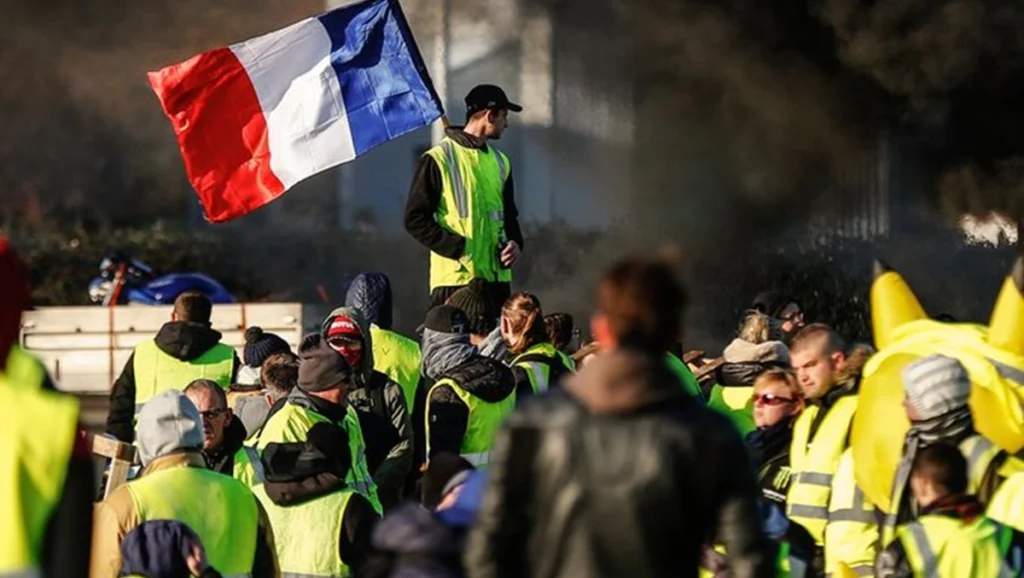
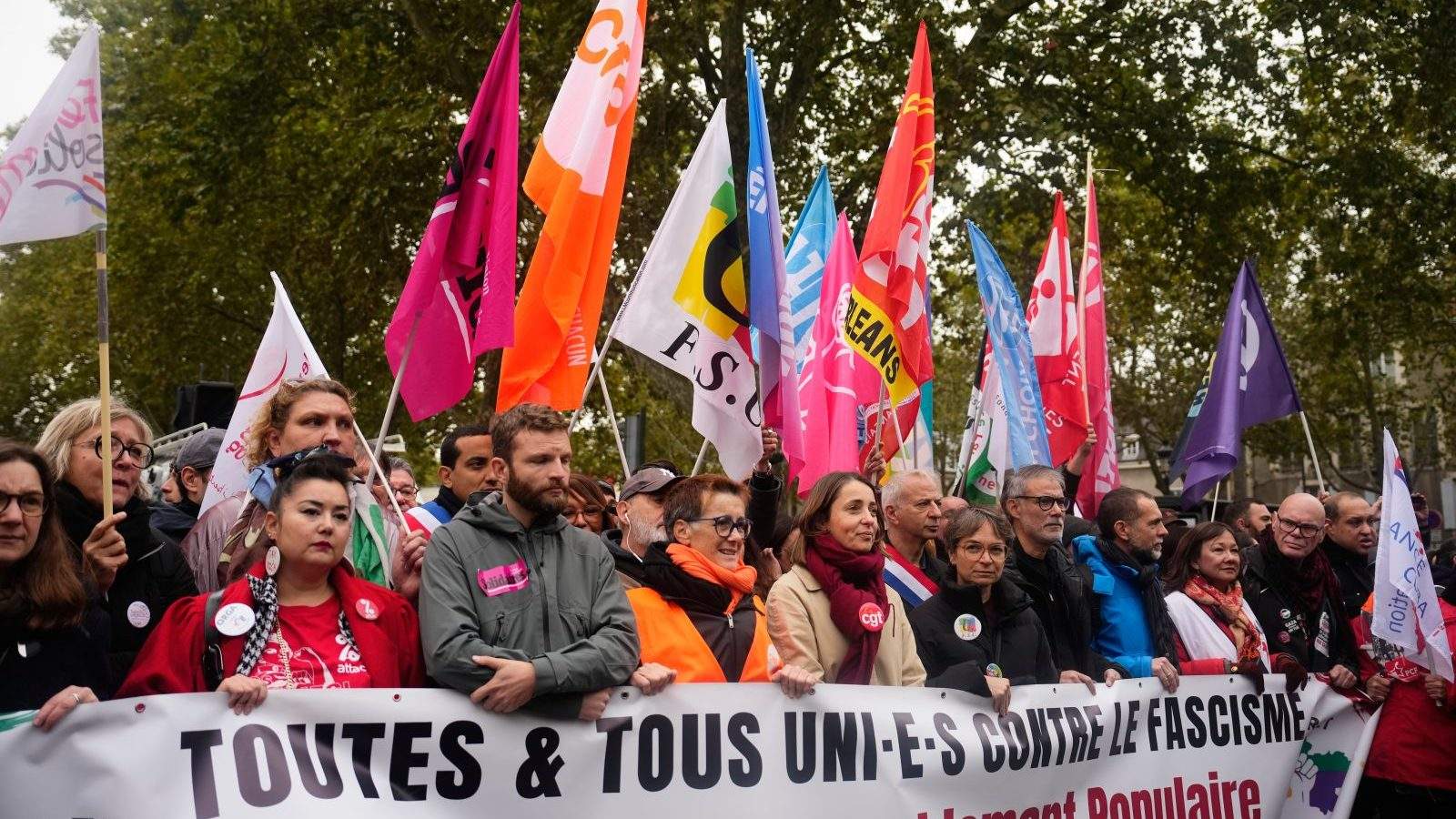
On Sunday, the Yellow Vests movement’s coordination group called for demonstrations featuring pot-banging protests outside the National Assembly on Friday, Oct. 30, to protest French President Emmanuel Macron.

RELATED:

Police Violence Escalates During Mass Protests in France

“Macron and his administration have decided to take another step toward authoritarianism. They ban our demonstrations, impose curfews, and close city centers to protesters. We will make our pots and pans heard beneath the windows of lawmakers,” the Yellow Vests said.

The group, whose demonstrations shook France in 2018 during Macron’s first term, also called for the action to be extended to areas outside city halls in protest of restrictions on demonstrations and partial curfews in some cities.

These demonstrations are part of a wave of protests that began in September, when high school students took to the streets to demand improvements at their schools.

Le 24 octobre, manifestation dans la rue avec les étudiants et les gilets jaunes.

Des gens si différents, un même rythme. Pour le pouvoir d'achat, la dignité et l'avenir.

📸 Crédit photo : Desteek Photography#24Octobre #GiletsJaunes #etudiant #Act2 #act3 pic.twitter.com/1QF1oNp9Gm

— Desteek Jeya (@DesteekJeya) October 25, 2026

The text reads, “On Oct. 24, a street demonstration with students and the Yellow Vests. Such different people, yet sharing the same rhythm. For purchasing power, dignity, and the future.”

They later received support from college students, labor unions and the Yellow Vests, who added their demands for action against the rising cost of living and in defense of public services.

Organizers of the demonstrations held over the past two weekends have called for another day of protests on Saturday, Oct. 31, and are preparing a general strike for Nov. 5.

On Monday, in an effort to avert those events, Prime Minister Sebastien Lecornu will meet with representatives of student organizations, teachers, labor unions, business organizations, local authorities and lawmakers.

teleSUR/ JF

Source: EFE

  •  

From arrests to crackdowns, how Europe’s leaders are responding as protests rock the continent

From mass arrests in France to troop deployments in Italy, European leaders are taking varied approaches to protests and clashes across the continent. The unrest began in France in mid-September with student demonstrations over school conditions, then spread to other countries, where protests have centered on local grievances.

President Donald Trump has used the unrest to press his hard-line immigration message, blaming France’s protests on immigration and urging the country to close its borders.

PHOTOS SHOW AFTERMATH OF RIOTS AS MASKED GROUPS CLASH WITH POLICE ACROSS FRANCE

French President Emmanuel Macron pushed back, calling foreign leaders' comments "unacceptable and even stupid" and accusing them of exploiting France’s crisis for political gain.

Here’s how leaders across Europe are responding.

France vows to make rioters pay as cities assess damage

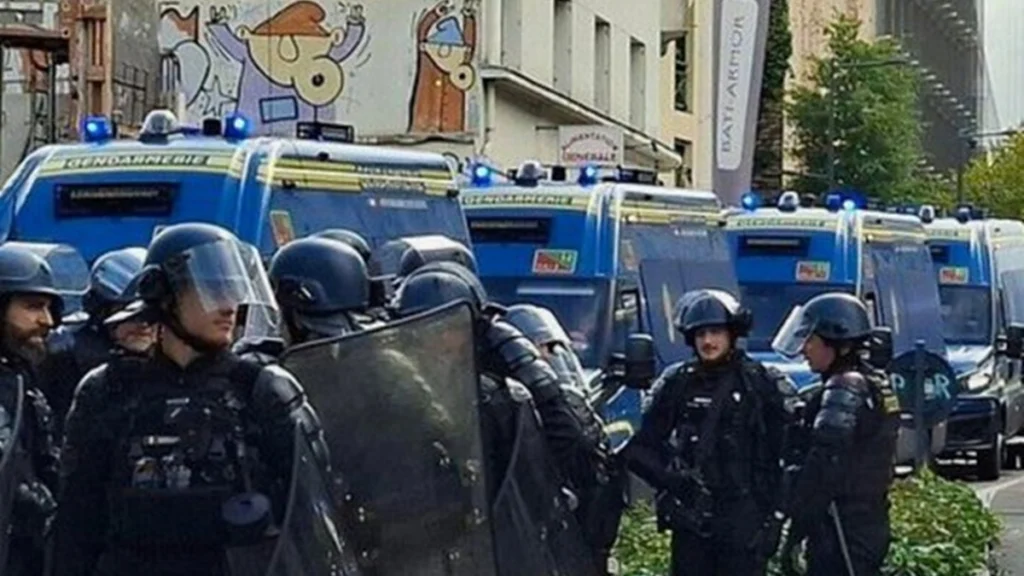
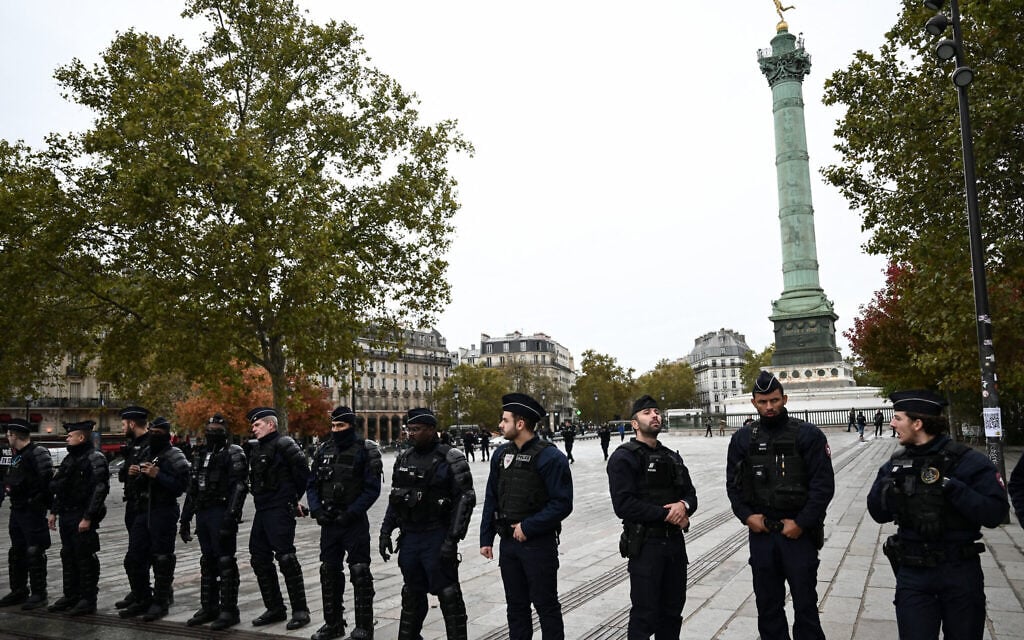
Macron has vowed that those who loot or destroy property will be held accountable and made to pay for the damage. French authorities deployed 70,000 police officers nationwide Saturday as demonstrations took place in Paris and other cities.

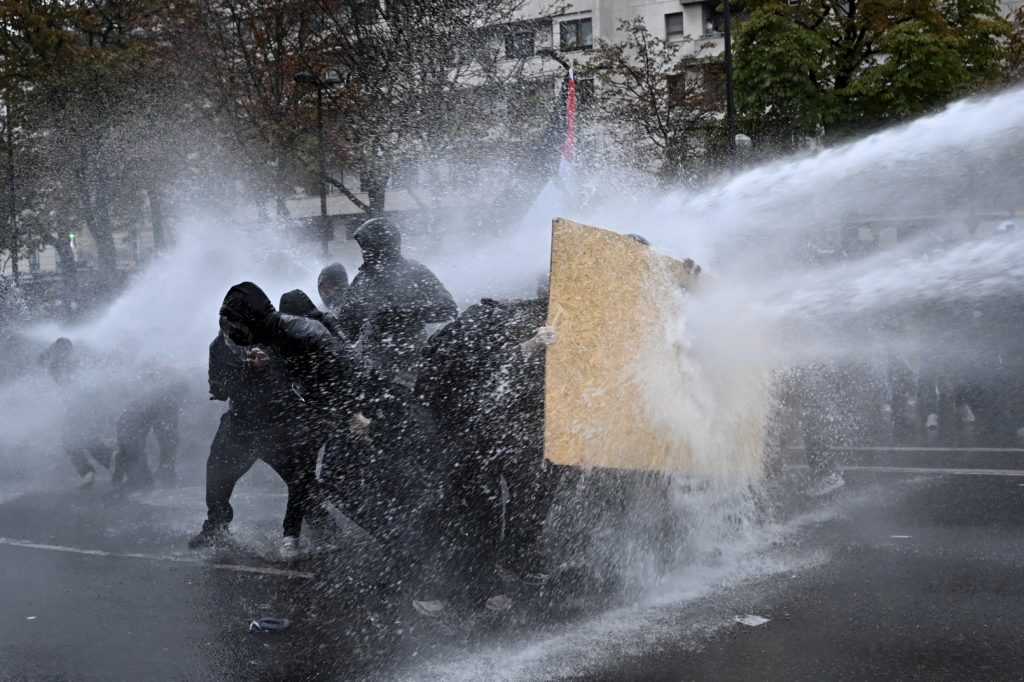
Some clashes broke out in several cities, including Paris, Lyon, Lille, Toulouse and Nantes. Police used tear gas, sound grenades and water cannons, and the Interior Ministry reported more than 1,300 arrests.

VIOLENCE ERUPTS AT FRANCE PROTESTS AS MACRON WARNS UNREST IS BEING EXPLOITED

Most union-organized marches were peaceful, though clashes broke out later in Paris and several other cities. Separately, a French intelligence assessment reportedly identified Antifa and other far-left groups as instigators of some of the violence, according to a French outlet.

Italy takes one of Europe's toughest lines

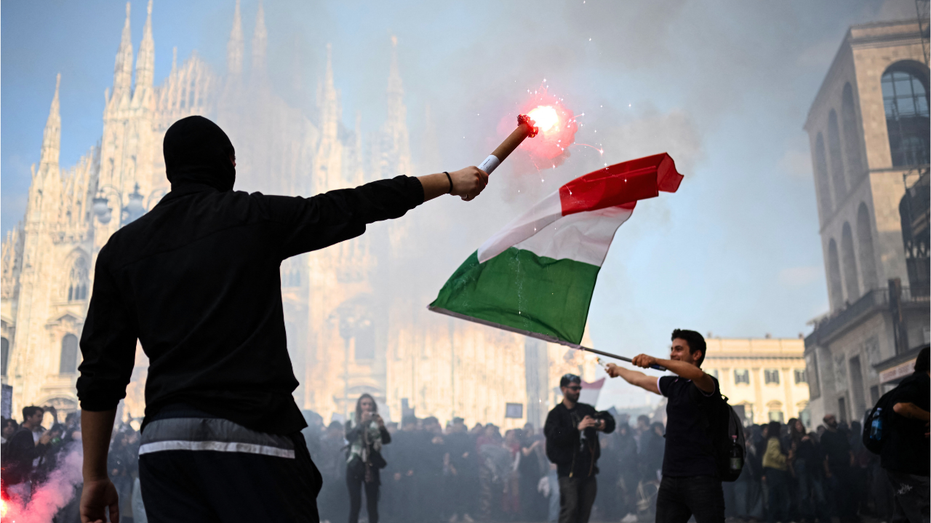
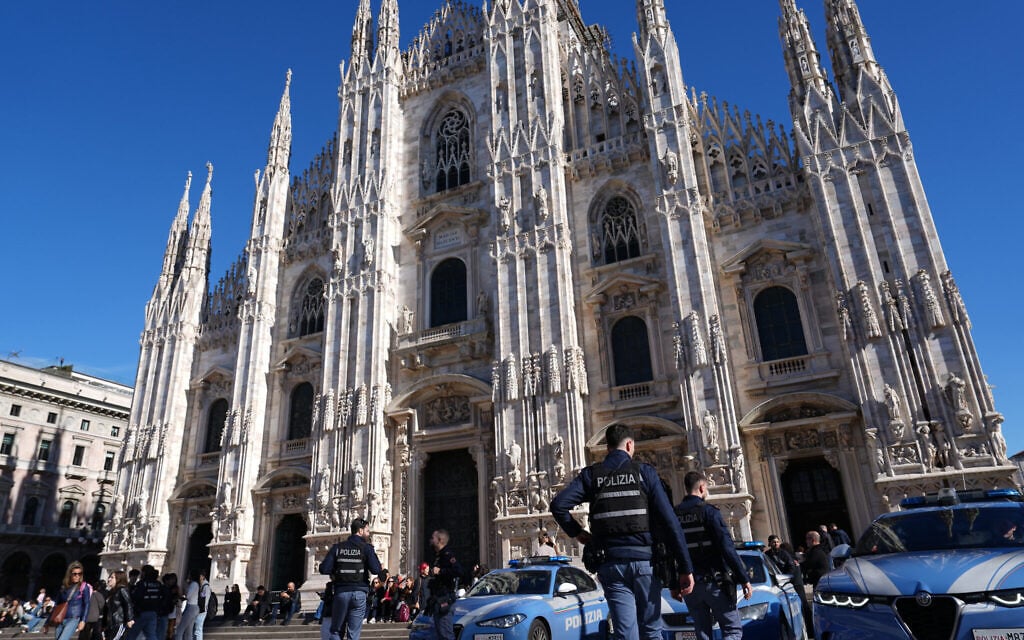
Prime Minister Giorgia Meloni condemned what she called "gangs of thugs" who used demonstrations to "sow chaos," and voiced support for police facing violence in several Italian cities.

Meloni moved quickly after the previous weekend’s looting and clashes, sending 500 additional soldiers to Milan and approving tougher penalties for minors involved in vandalism. She said destroying and stealing was a crime and that the state's response would be firm.

The measures put Meloni among the European leaders taking the most visible steps to deter further violence.

Greek police maintain a visible presence

While Greece has seen less unrest than France and other European countries, officials have been monitoring the risk of clashes as student and teacher demonstrations spread.

Government spokesperson Pavlos Marinakis said the right to protest must be respected as long as demonstrations remain lawful, while condemning violence, looting and occupations.

Police still kept a visible presence at demonstrations earlier in the week, which largely passed without major violence.

Belgium accuses Antifa-linked activists of stoking clashes

Belgium's demonstrations began over education reforms and budget cuts, with young protesters taking to the streets in Brussels and Liège. Earlier clashes injured police, damaged public areas and blocked roads. Nearly 200 people were arrested, according to Belgian officials.

Interior Minister Bernard Quintin accused far-left activists, including people linked to Antifa, of infiltrating demonstrations and encouraging young people to commit violence.

Albania clashes escalate as protesters demand prime minister's ouster

In Albania’s capital, Tirana, student-led protests have grown into a broader challenge to Prime Minister Edi Rama, with demonstrators demanding his resignation and accusing his government of corruption and neglecting schools and public services.

US LAWMAKERS SOUND ALARM AS VIOLENCE GRIPS NATO ALLY ALBANIA AMID ANTI-GOVERNMENT PROTESTS

Police used tear gas and water cannons as more than 2,500 officers were deployed. Rama placed chairs outside his government headquarters and invited protesters to talk, but they rejected the gesture.

He said his government would address their concerns and warned that people responsible for violence could face criminal and financial consequences.

Spanish regional leaders vow consequences after Barcelona riots

In Spain, the unrest was largely concentrated in Barcelona, unlike France, where protests and clashes spread across multiple cities.

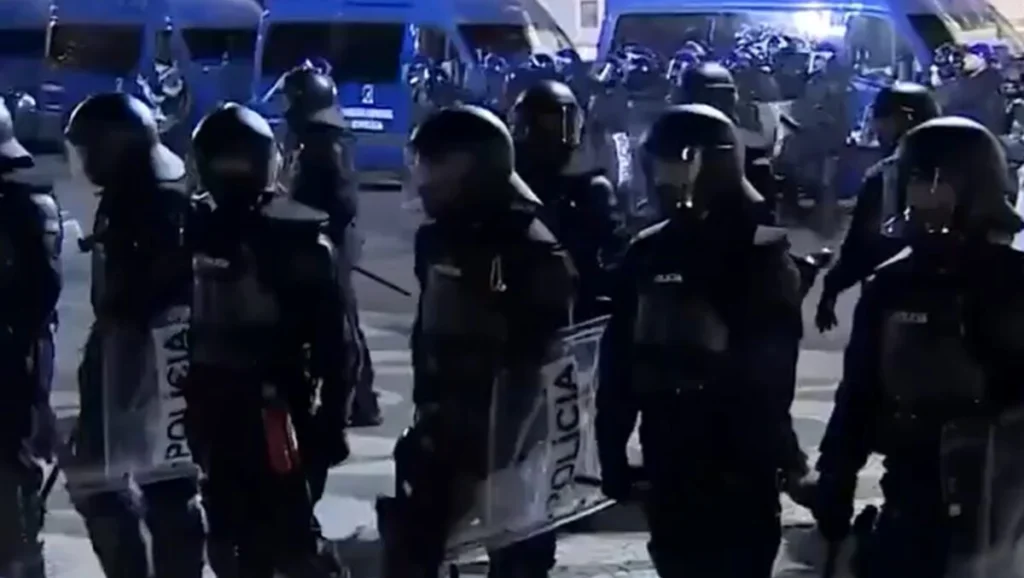
Police arrested 128 people in Barcelona after fires, vandalism and looting. Catalonia, the northeastern Spanish region that includes Barcelona, saw its regional president, Salvador Illa, condemn the violence and back the police response.

CLICK HERE TO GET THE FOX NEWS APP

Meanwhile, Barcelona Mayor Jaume Collboni said the city would take legal action against those responsible and warned that parents or guardians could face consequences for damage caused by their children.

  •  

Portuguese Police Violently Evict Housing Rights Camps in Lisbon and Oporto

Police operations left 31 people detained and more than 20 injured, prompting parties to criticize PM Montenegro.

Early Sunday morning, Portuguese police violently evicted housing rights encampments that had been taking place in Lisbon and Oporto. The police operations left 31 people detained and more than 20 people injured.

RELATED:

Portugal Public-Sector Workers Begin 24-Hour Strike

The police action prompted reactions from most opposition parties, which criticized Prime Minister Luis Montenegro and his convenient silence in the face of the events.

Socialist Party (PS) leader Jose Luis Carneiro demanded a “comprehensive explanation” from the Montenegro administration regarding the police action at the encampments. He emphasized that the solution to the housing problem “is political, never police-related.”

“Montenegro cannot, through his silence, continue to pit the police against citizens and citizens against the police,” the Socialist leader said.

Although the government has not yet commented on the police operation, one of the parties in the governing coalition, the Social Democratic Party (PSD), has spoken out.

Its spokesman, Sebastiao Bugalho, defended the “proportionality” of the police action, which took place “within the legal framework that is supposed to apply to protect the right to demonstrate.”

🇵🇹 Manifestação pacífica pelo direito à habitação, foi violentamente desmobilizada pela polícia de intervenção, no centro de Lisboa. O governo de direita português mandou evacuar a praça do Rossio durante a madrugada. Houve 31 detenções. pic.twitter.com/CgJBaD9cyU

— geopol•pt (@GeopolPt) October 25, 2026

The text reads, “A peaceful demonstration for the Right to Housing was violently dispersed by riot police in downtown Lisbon. The right-wing Portuguese government ordered the evacuation of Rossio Square in the early hours of the morning. There were 31 arrests.”

Meanwhile, far-right politician Andre Ventura, founder and leader of the Enough! party (Chega), defended the eviction, asserting that “the police have been very patient with these people camping out in the squares. Too patient, even!”

Nevertheless, even Ventura criticized the stance adopted by Montenegro and the Social Democratic Party, accusing the prime minister of hiding from problems and failing to come out publicly in support of the police.

In recent weeks, police violence against Portuguese citizens has drawn criticism from international humanitarian organizations such as SOS Racismo and from European left-wing parties, which have denounced the excessive use of force.

The housing movement has called for demonstrations in Lisbon and Oporto on Sunday to reject police violence, as well as another protest on Tuesday outside Parliament, where debate will begin on the 2027 state budget.

teleSUR/ JF

Source: EFE

  •  

Right to housing encampments return to squares of Lisbon and Porto

Anyone imagining that this morning’s scenes of violence were an end to ‘right to housing protests’ will be thinking again following news that protesters are set to return to the

The post Right to housing encampments return to squares of Lisbon and Porto appeared first on Portugal Resident.

  •  

Peru’s Youth Protest Government Over Crime And Forest Fires

Young protesters march in Lima, Peru, against Keiko Fujimori’s government over extortion, forest fires and police reform.

Students, unions and families of protest victims demand action on extortion, environmental damage, living costs and police reform.


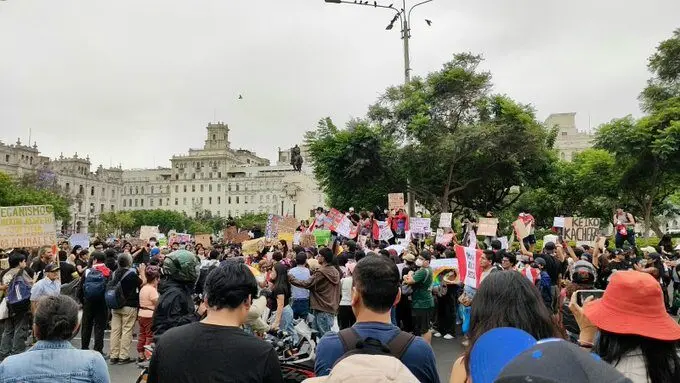
Young people, students, trade unions and human rights groups marched through central Lima on Saturday, demanding that President Keiko Fujimori’s government address rising extortion, deadly forest fires, the cost of living and alleged impunity for state repression.

RELATED: Peru Reached $4.813 Billion in Mining Investment Between January-August

Demonstrators began gathering at 4 p.m. in San Martín Square, a historic rallying point for popular movements in Peru. Participants included students from San Marcos and Catholic universities, human rights organizations, trade unions and members of the self-organized Generation Z movement.

The protests unfolded amid mounting concern over forest fires that have affected 16 regions across the country. Figures from Peru’s National Emergency Operations Center and the National Institute of Civil Defense recorded 479 emergencies, leaving 12 people dead and 708 displaced or otherwise affected.

The fires destroyed 1,299 hectares of crops and more than 13,800 hectares of natural vegetation, while also causing significant damage to local wildlife and livestock.

🚨 #URGENTE | Contra la extorsión y la crisis ambiental: jóvenes y colectivos sociales protestan en el centro de Lima

📲 Más información en https://t.co/cslnEWTq0k pic.twitter.com/9bIQWzwTbf

— RPP Noticias (@RPPNoticias) October 25, 2026

Text Reads: 🚨 #URGENT | Against extortion and the environmental crisis: young people and social groups protest in downtown Lima

Carrying banners calling for an end to the fires, police reform and solidarity with affected communities, demonstrators marched along Jirón de la Unión and Grau and Abancay avenues. Police blocked the procession from approaching the grounds of Congress.

Environmental concerns featured prominently in the march, with protesters criticizing what they described as inadequate government preparation and response to fires in the Andean highlands and Amazonian regions, including Cusco, Puno, Junín, Apurímac, Áncash, Huancavelica, Arequipa, Amazonas and Cajamarca.

One young demonstrator denounced the lack of firefighting teams, funding and preventive measures, arguing that the fires were extinguished only after rain arrived. The crisis, she said, had inflicted heavy losses on rural farmers and Indigenous communities.

Another protester highlighted flooding caused by heavy rains in Piura, in northern Peru, and the absence of a strategic plan to address the El Niño phenomenon. She also pointed to corruption in reconstruction projects and the neglect of infrastructure serving working-class communities.

Extortion was another central grievance. Transport workers, shopkeepers and small-business owners in working-class neighborhoods have been among those affected by the crime, according to the protest account. Demonstrators called for far-reaching police reform to dismantle corruption networks within the security forces and prioritize intelligence gathering and community-based prevention over the repression of social protests.

Families of people killed during social protests between December 2022 and June 2023 also joined the march, carrying photographs of their relatives and demanding justice. Their presence underscored the demonstrators’ broader call for accountability from a government they accuse of perpetuating impunity.

  •  

Nearly 1,000 arrested across France as police find potential weapons on protesters: officials

Nearly 1,000 people were arrested Saturday as nationwide protests resumed, French Interior Minister Laurent Nuñez told reporters.

The unrest has spread beyond France, with violent clashes breaking out in Rome and Albania's capital of Tiranë, where demonstrators set government buildings on fire. 

President Donald Trump also weighed in Saturday, pointing to the turmoil in France as a warning about what he said could happen in the United States under left-wing leadership.

Earlier in the day, police officers preemptively searched protesters and arrested people suspected of carrying potential weapons, including fireworks and ball bearings, Reuters reported.

Nuñez did not specify where the arrests were made. 

AMERICANS WARNED ABOUT PARIS TRAVEL AFTER VIOLENCE, LOOTING AND TEAR GAS-FILLED STREETS

In Paris, where police estimated 110,000 people marched, officers conducted more than 3,000 checks and arrested 65 people, the BBC reported.

The French Interior Ministry said about 410,000 people participated in protests nationwide, while union organizers estimated attendance at 800,000. In Paris, union organizers put turnout at 250,000, compared with the police estimate of 110,000, according to CBS News.

"Violent individuals have no place in the marches," the Paris Police Department said in a social media post. "The objective is clear: to prevent troublemakers from joining the procession, and to ensure the safety of the demonstrators."

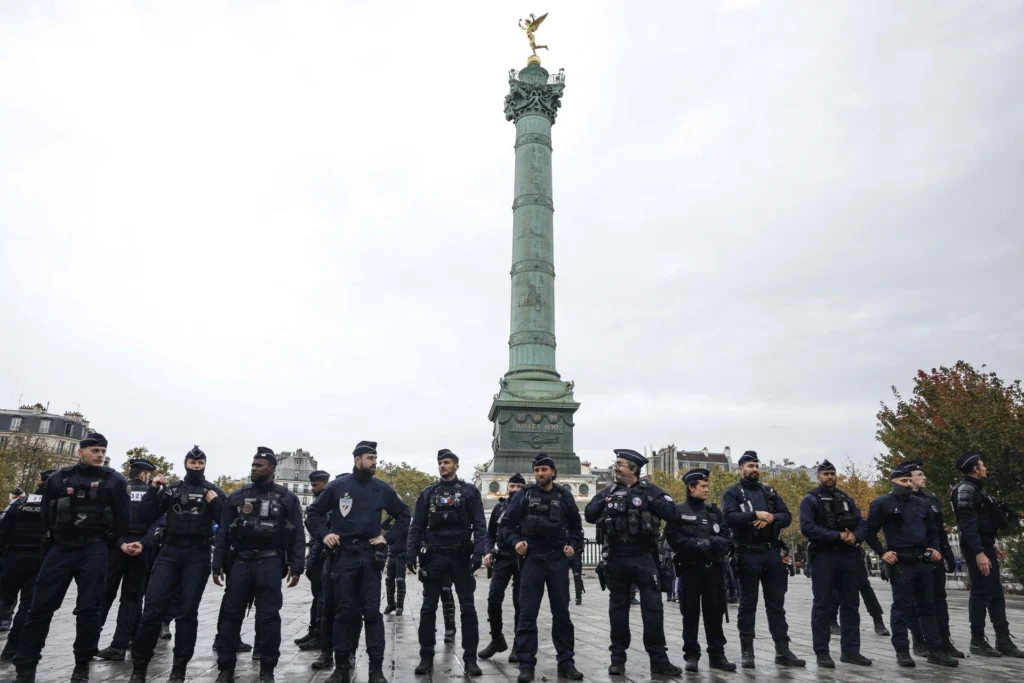
Central Paris resembled a city under lockdown as shopkeepers boarded up storefronts, museums closed and more than 20 metro stations suspended service.

FRANCE’S TEEN RIOTS TAKE EXPLOSIVE NEW TURN AS GOVERNMENT POINTS FINGER AT HARD LEFT

In other cities — including Clermont-Ferrand, Grenoble, Lille and Nice — police have resorted to firing tear gas to break up unruly crowds, Reuters reported.

Also in Nice, police used a water cannon to disperse a group of demonstrators who refused to pull back. And in Marseille and Lyon, there have been clashes between police officers and hooded youths.

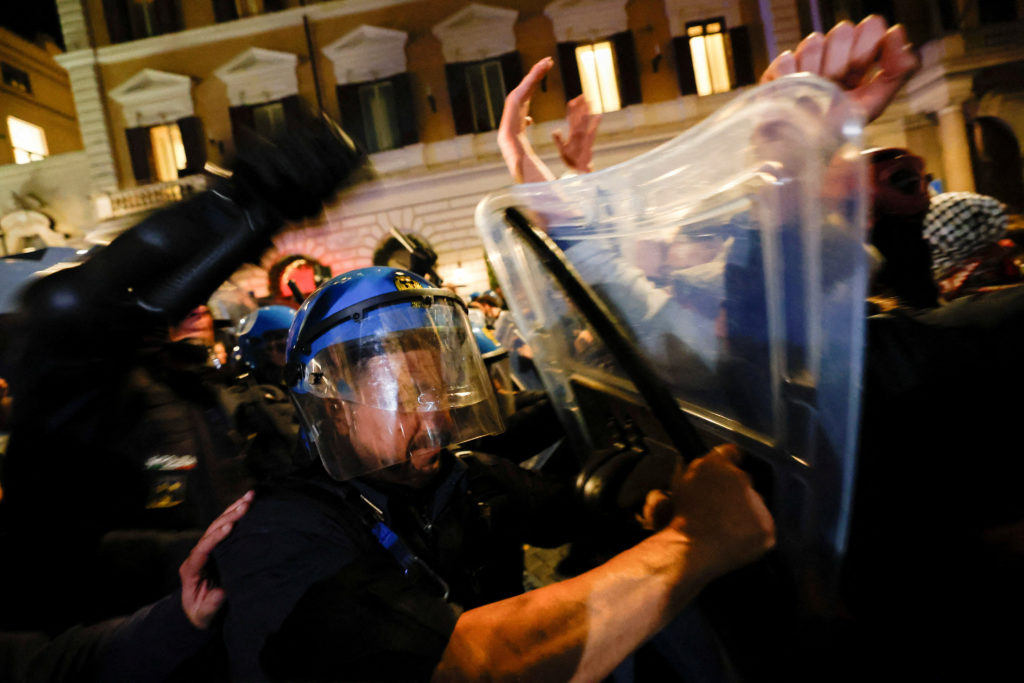
The unrest also reached Italy on Saturday, where police deployed a water cannon against protesters in Rome as demonstrations over rising living costs and war turned violent. Reuters footage showed riot police confronting demonstrators before a water cannon vehicle approached and sprayed water toward the crowd.

Violence was also reported in Turin and Bologna, where demonstrators confronted police, while protests in Milan remained largely peaceful, according to Reuters. Italian authorities increased security after widespread rioting and looting the previous weekend.

In Albania, riot police fired water cannons at protesters in Tirana, where some demonstrators set government buildings ablaze and threw projectiles at officers. High school and university students have been demanding lower tuition fees, greater investment in education and an end to corruption in the education system.

Some protesters have joined a broader anti-government movement calling for the resignation of Socialist Prime Minister Edi Rama. Rama said Saturday that his government was preparing a response to students' demands and called for dialogue, while warning that violent protesters would face penalties, according to The Associated Press.

Trump pointed to the unrest in France while speaking to reporters Saturday after casting his early-voting ballot for the 2026 midterm elections in West Palm Beach, Florida. The president criticized the country's previous leadership and argued that similar unrest could unfold in the U.S. under left-wing leadership.

"Just two years ago, we were laughed at. We were a stupid country. We were a country led by idiots and morons and bad people and radical left people. ... Just take a look at France because that's what they'd like to have for our country, and I don't let that happen."

Some 70,000 police officers have been deployed across France to clamp down on agitators and prevent the kind of unrest seen during recent demonstrations, when cars were torched and the city hall building in Limoges was set on fire.

Last weekend, more than 2,700 people were arrested during protests that later turned into riots and looting sprees.

The nationwide marches were meant to reflect broader dissatisfaction with the French government, with protesters taking to the streets to air a range of different grievances.

The protests began weeks earlier and were led by high school and university students. 

They were frustrated with teacher shortages and poor conditions at schools, including overcrowded classrooms and dilapidated buildings.

CLICK HERE TO DOWNLOAD THE FOX NEWS APP

The movement gained momentum when major labor unions joined the demonstrations, broadening the protests to include opposition to the government's austerity policies and concerns over wages, pensions and the overall cost of living.

  •  

Police Violence Escalates During Mass Protests in France

At least 800,000 people demonstrate nationwide as police make 135 arrests. A protester suffers multiple finger amputations.

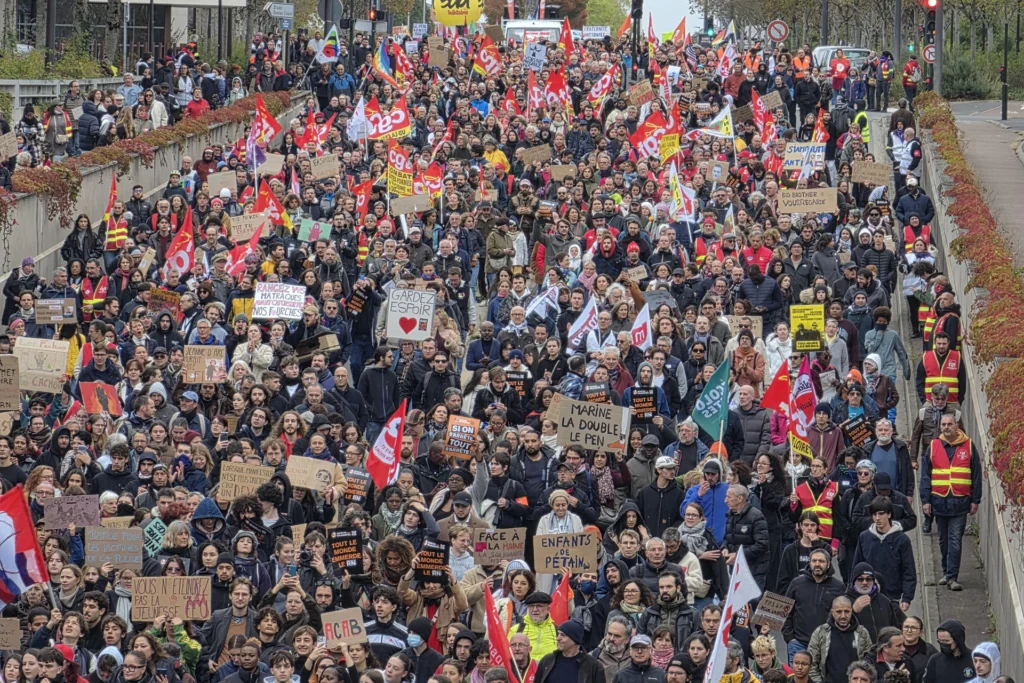
Massive protests against the administration of President Emmanuel Macron proceeded peacefully for much of Saturday in several French cities.

RELATED:

Melenchon Urges Macron to Meet Protesters’ Demands Before Leaving Office

Police brutality, however, changed the atmosphere of the day as security forces began cracking down on demonstrators. By 1 p.m., French police had made 135 arrests amid beatings of citizens.

At least 800,000 people demonstrated across France on Oct. 24. However, tensions erupted in Paris and Marseille “during the dispersal of demonstrations,” TF1 Info reported.

The Haute-Garonne prefecture reported that a young man suffered a serious hand injury at the end of a demonstration in the Arenes neighborhood.

🔴️️ À Bordeaux, des manifestants lèvent les mains pour montrer leur caractère inoffensif, la police les charge et les gaze sauvagement

Partout en France, le mouvement populaire s'est amplifié. Les mêmes foules massives ont défilé pour exiger le blocage des prix, l'abrogation… pic.twitter.com/C9Cvuy2MB5

— L'insoumission (@L_insoumission) October 24, 2026

The text reads, “In Bordeaux, protesters raise their hands to show they pose no threat; the police charge at them and brutally gas them. Across France, the grassroots movement has gained further momentum. Massive crowds have taken to the streets to demand a price freeze, the repeal of the Parcoursup system, wage increases, and the inclusion in the budget of the 10 billion euros requested by high school and university students to address their demands.”

The protester was evacuated by firefighters after several of his fingers were amputated. Videos show that a grenade thrown by police caused the young man’s injuries. Authorities said they would conduct an investigation to determine what happened.

At a news briefing, Interior Minister Laurent Nunez said 136 public order incidents had been recorded nationwide during Saturday’s demonstrations, which have drawn tens of thousands of French people into public spaces across the country so far.

“In Nantes, a police officer chokes a young man and slams his head against a wall, while his partner threatens to fire a less-lethal rubber-ball launcher at residents protesting… the Macron administration continues its repression through police brutality,” L’insoumission reported.

À Grenoble, la sauvagerie policière frappe une fois de plus. La préfète de l’Isère devra rendre des comptes après avoir modifié le tracé du cortège et imposé des couvre-feux à Grenoble.

Désormais, la police du ministre de la Violence, Laurent Nuñez, balance des gaz lacrymogènes… pic.twitter.com/jMPdskG8rP

— Allan Brunon (@allanbrunon) October 24, 2026

The text reads, “In Grenoble, police brutality has struck once again. The Isere prefect will have to answer for her actions, having altered the route of the demonstration and imposed curfews in Grenoble. Now, the police force under the ‘Minister of Violence’—Laurent Nuñez—is deploying tear gas and sowing chaos at a sanctioned demonstration. This government of incompetents is in its death throes.”

The security forces’ aggression against citizens occurred despite several cities authorizing demonstrations for Saturday, including Lille, Strasbourg, Mulhouse, Grenoble, Marseille, Toulouse, Amiens and Paris.

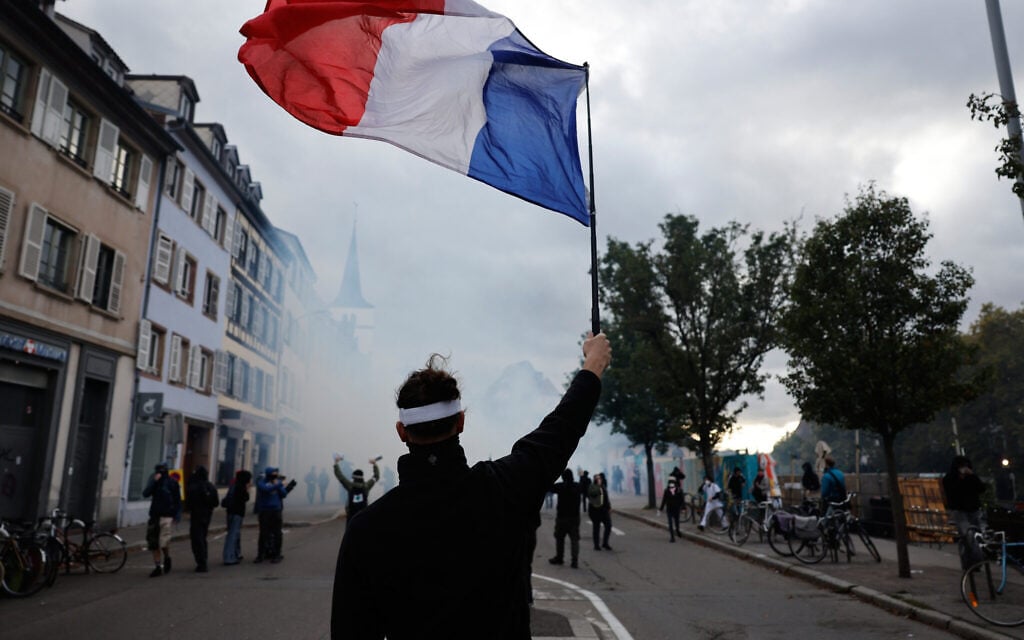
In Lyon, where demonstrations have been banned across a large part of the city center, law enforcement officers dispersed small gatherings using tear gas grenades.

On Friday, Nunez said that 70,000 police officers and gendarmes would be deployed nationwide for the demonstrations. Soldiers from the French army’s Operation Sentinelle would also be mobilized during the protests.

teleSUR/ JF

Source: Xinhua – TF1 Info

  •  

Hundreds of thousands march across France in protests over schools and policing

Almost 1,000 arrested as police charge crowd in Paris and teargas used to stop protesters reaching other city centres

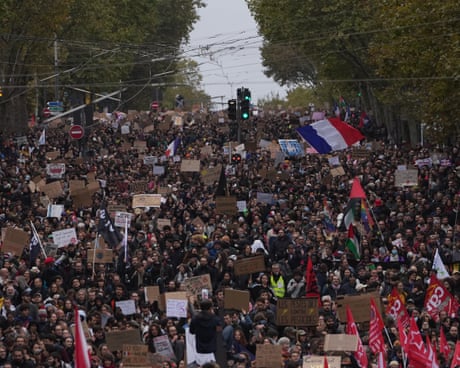
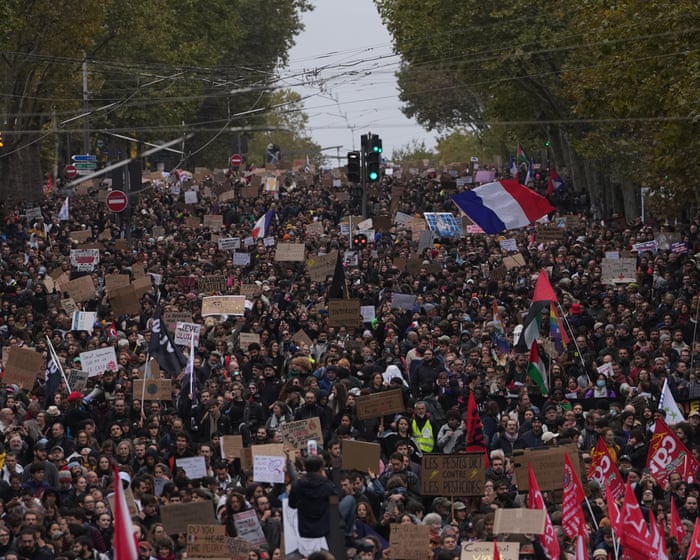
Hundreds of thousands marched in cities across France on Saturday in largely peaceful protests to support schoolchildren’s demands for more teachers and repairs to dilapidated buildings, as Emmanuel Macron faces a social and political crisis in his final months as president.

The prosecutor’s office in the southern city of Nice said on Sunday that 59 people had been taken into police custody, including 11 suspected of belonging to extreme-right groups. They were alleged to have gathered with the intent of committing violence. Some were arrested in two vehicles with masks, gloves, gas sprays and truncheons, the prosecutor’s office said in a statement to public broadcaster FranceInfo.

Continue reading...

© Photograph: Thibault Camus/AP

© Photograph: Thibault Camus/AP

© Photograph: Thibault Camus/AP

  •  

More than 400,000 protest across France, challenging Macron as Paris clashes erupt

Clashes erupted in Paris as a mass march drew to a close Saturday, with more than 400,000 people rallying across France over school funding and soaring living costs in a fresh challenge to President Emmanuel Macron. Police made nearly 1,000 arrests, the government said.

  •  

Two French Protesters Arrested for the Burning of the Limoges Town Hall

Mayor Guerin attributes the incidents to activists from the Millevaches Plateau, which is home to anti-capitalist communities.

On Saturday, Prosecutor Emilie Abrantes confirmed that two men had been remanded in custody over their alleged involvement in the fire at Limoges City Hall during unrest accompanying protests against the rising cost of living in France.

RELATED:

France Deploys 70,000 Officers Ahead of Protest Rallies

The suspects, ages 34 and 66, are under investigation in a judicial proceeding opened on several charges, including attempted murder of a police officer and destruction of the municipal building. Abrantes, however, did not specify the exact charges attributed to each man.

The first suspect, a 34-year-old man from the Creuse department, was arrested on Tuesday in Bussière-Boffy, in the Haute-Vienne department, with support from RAID, France’s elite police unit.

The construction industry temporary worker and environmental advocate is listed in police records for his alleged links to far-left organizations. He was convicted of an incident involving violence against an officer during an earlier demonstration in Creuse. The second suspect, 66, was arrested on Thursday in Gentioux-Pigerolles, a town in the same department.

On Oct. 17, an arson attack severely damaged Limoges City Hall, a historic building inaugurated in 1883. Videos show individuals breaking windows and forcing open the entrance to the municipal building before entering and setting fire to its interior.

🇫🇷 Multiple cities across France including #Lyon, Grenoble, Nice, Montpellier, Limoges, Tours, Rennes, Brest, Rouen, Lille and Nancy banned all public gatherings this weekend.

In some cities like #Marseille, trade unions received authorisation from the local prefecture to… pic.twitter.com/n5YnMHLQlI

— Mahalaxmi Ramanathan (@MahalaxmiRaman) October 24, 2026

Limoges Mayor Guillaume Guerin described the 34-year-old suspect as the likely mastermind behind the operation and accused far-left factions of being behind the act.

He specifically accused activists based on the Millevaches Plateau, a rural area of about 10,000 inhabitants located between the departments of Corrèze, Creuse and Haute-Vienne.

The area has been known for decades for attracting environmentalist, anarchist, and anti-capitalist communities. The region has been the scene of other acts of sabotage claimed in the past, including the burning of vehicles belonging to electricity company Enedis in Limoges in 2020 and the destruction of a telecommunications antenna in Haute-Vienne in 2021.

In April, the courts convicted the father of the younger of the two men jailed over the Limoges City Hall fire for those acts. The man, about 70, is known for his ties to anarchist circles and his past as a Basque independence activist in the 1980s.

teleSUR/ JF

Source: EFE

  •  

France Deploys 70,000 Officers Ahead of Protest Rallies

Businesses board up shopfronts in Paris ahead of protests in France as authorities deploy 70,000 police officers and gendarmes.

France mobilizes 70,000 police and gendarmes amid fears of renewed unrest, while authorities restrict demonstrations and tighten security.


France has deployed 70,000 police officers and gendarmes ahead of nationwide demonstrations on Saturday, with authorities warning of a heightened risk of unrest after vandalism and looting damaged about 3,000 businesses the previous week.

RELATED: France Reports 855 Arrests in Paris After Protests

Prime Minister Sébastien Lecornu warned late Friday that the threat remained high, particularly from radical far-left groups and criminal elements operating alongside demonstrations called by trade unions, students and the Yellow Vest movement.

Interior Minister Laurent Nuñez announced a large-scale security operation to prevent further violence and looting.

“We will show no mercy to looters and troublemakers,” Nuñez declared. He has faced criticism from the left over police tactics and from the right for failing to prevent the previous week’s unrest.

France to mobilise 70,000 security forces for Saturday protest, interior minister says https://t.co/ok4e8kEy5t https://t.co/ok4e8kEy5t

— Reuters World (@ReutersWorld) October 23, 2026

Authorities have banned gatherings in numerous cities and restricted the routes of other demonstrations on security grounds, prompting criticism from trade unions and human rights organizations.

In major cities, trade union demonstrations were authorized on Saturday only in Paris, Marseille, Strasbourg, Lille, Mulhouse, Grenoble, Toulouse and Amiens.

In Paris, a last-minute change to the union march’s route sparked a dispute between police officials and organizers. Authorities cited the heightened threat following a racist attack on the outskirts of the capital the previous day as they redirected the march from Place de la Nation to Place d’Italie, keeping it away from the city center.

Several museums in the capital, including the Louvre and the Musée d’Orsay, will remain closed, as will the nearby Palace of Versailles. A nighttime curfew in the areas around Place de la République and Les Halles will also remain in force until Monday.

Banks and businesses in central Paris were boarding up shopfronts and windows late Friday and early Saturday in anticipation of possible vandalism, according to observations by Spanish news agency EFE.

Security concerns also extend to Orléans, about 130 kilometers (81 miles) south of Paris, where the far-right National Rally (RN) is holding a congress to formally launch Marine Le Pen’s presidential candidacy, roughly six months before the election.

Authorities estimated that 11,000 people took part in a counter-demonstration in Orléans on Saturday against Le Pen’s party. Organized in opposition to racism, fascism and imperialism, the march proceeded peacefully in a festive atmosphere, according to EFE.

Photo: Orleans, France (October 24, 2026)

Protesters chanted slogans including “Macron resign, Le Pen to prison” and sang the French national anthem, La Marseillaise, as well as the Spanish-language protest song “The People United Will Never Be Defeated.”

Authorities deployed about 3,000 officers in Orléans to prevent clashes between demonstrators and attendees at the RN congress. The local prefecture authorized Saturday’s march but banned a separate demonstration planned for Sunday.

The security measures reflect the authorities’ efforts to prevent further disorder while allowing some demonstrations to proceed. Restrictions on public gatherings and the deployment of thousands of officers have shaped preparations for Saturday’s rallies across France.

  •  

Czech Government Presses Ahead with Public Media Overhaul as Protests Erupt in Prague

Prime Minister Andrej Babiš’s government has advanced legislation replacing independent funding for Czech public broadcasters with state budget allocations, despite protests, warnings from European media organisations and concerns that the changes could expose journalists to political interference.

The Czech government has taken a further step towards fundamentally restructuring the country’s public broadcasting system, pushing controversial legislation through its first parliamentary reading after an extraordinary overnight session that triggered demonstrations and clashes with police in Prague.

In the early hours of Saturday, 24 October, the Chamber of Deputies advanced a government proposal abolishing licence fees for Czech Television (ČT) and Czech Radio (ČRo), replacing them with direct financing from the state budget. Opposition attempts to reject the legislation or return it for revision failed.

The decision represents another stage in the confrontation between Prime Minister Andrej Babiš’s governing coalition and organisations defending independent public broadcasting. Critics argue that the proposed financial arrangements could give successive governments greater leverage over the country’s principal public service media institutions.

Police intervene as protesters confront parliament

Hundreds of demonstrators gathered outside parliament on Prague’s Malostranské Square on Friday, protesting against the legislation and the government’s decision to accelerate its parliamentary consideration.

According to the Czech News Agency’s account of the demonstrations, several dozen protesters attempted to force their way into the parliamentary building. Officers from a special police unit prevented their entry.

Police spokeswoman Eva Kropáčová confirmed that the situation was brought under control without arrests. Demonstrators also confronted SPD parliamentarian Jaroslav Foldyna, requiring police intervention.

Inside parliament, the governing coalition of ANO, Freedom and Direct Democracy (SPD) and the Motorists party imposed limits on parliamentary debate and scheduled the decisive vote for 4.36am.

Of the 177 MPs present, 81 supported rejecting the proposal. The opposition subsequently pledged to continue resisting the legislation during its remaining parliamentary stages.

Financial dependence and political influence

The central controversy concerns the proposed transfer of financial responsibility for public broadcasters from licence-fee payers to the state.

Under the government’s plan, Czech Television would receive approximately CZK 5.74 billion annually, while Czech Radio would receive CZK 2.07 billion.

Combined funding would amount to approximately CZK 7.8 billion, representing a reduction of around CZK 1.4 billion, or 15 per cent, compared with existing licence-fee revenues.

Culture Minister Oto Klempíř, who developed the proposal, maintains that budget financing is an established European model. The government argues that abolishing the combined CZK 205 monthly household charge would reduce costs for consumers without compromising editorial independence.

However, the dispute extends beyond the immediate financial reductions.

Under the existing system, licence fees provide broadcasters with revenue that is substantially separated from annual government spending decisions. Financing through the state budget introduces a different relationship between broadcasters and political authorities.

Even where allocations are established by legislation, future parliamentary majorities can amend the law governing those payments.

A particularly significant development emerged on Saturday when an examination of the government’s own legislative documentation showed that its regulatory impact assessment had identified direct budget financing as the riskiest funding option.

The accompanying documents explicitly acknowledge the possibility of increased dependence on the state and political pressure without adequate safeguards.

European organisations warn of consequences

The controversy has attracted criticism from international organisations responsible for defending independent journalism.

In a joint statement issued on 23 October, the European Broadcasting Union, Reporters Without Borders, International Press Institute and other organisations warned that the accelerated parliamentary process was incompatible with the thorough scrutiny required for such legislation.

They highlighted the proposed funding reductions and questioned whether the new arrangements would sufficiently protect the broadcasters’ operational and editorial independence.

Their objections have a specific legal foundation.

Article 5 of the European Media Freedom Act requires EU member states to provide public service broadcasters with adequate, sustainable and predictable financing, based on transparent and objective criteria.

Budget financing is not prohibited under EU legislation. However, financial arrangements must contain safeguards against political interference.

As EU Today previously examined, the European Media Freedom Act establishes legally binding obligations intended to prevent governments from undermining independent journalism through institutional or financial pressure.

The Czech proposal therefore raises questions about whether its safeguards and funding provisions satisfy those requirements.

Journalists prepare further industrial action

Employees of Czech Television and Czech Radio have announced a nationwide strike for Tuesday, 3 November, organised by the Veřejnoprávně initiative.

The industrial action follows an earlier warning strike in June, when journalists and other broadcasting employees protested against the government’s plans.

A further public demonstration is scheduled for Sunday, 25 October, in Prague’s Old Town Square.

The confrontation also reflects the broader political divisions that have emerged since Babiš returned to government in December 2025.

Opposition politicians have drawn comparisons with political intervention in public broadcasting elsewhere in Central Europe, particularly Hungary and Slovakia.

The government rejects accusations that it intends to nationalise public broadcasters or interfere with their editorial decisions.

For the moment, the legislation remains subject to parliamentary scrutiny and has not become law. Its passage would nevertheless change the financial relationship between the Czech state and two of the country’s most established news institutions.

The central question is whether future governments would acquire additional means of influencing broadcasters through their budgets, even without exercising direct control over individual editorial decisions.

  •  
❌