❌

Reading view

Vucic swept aside in Serbian elections. Can Belgrade break free from Russia’s orbit?

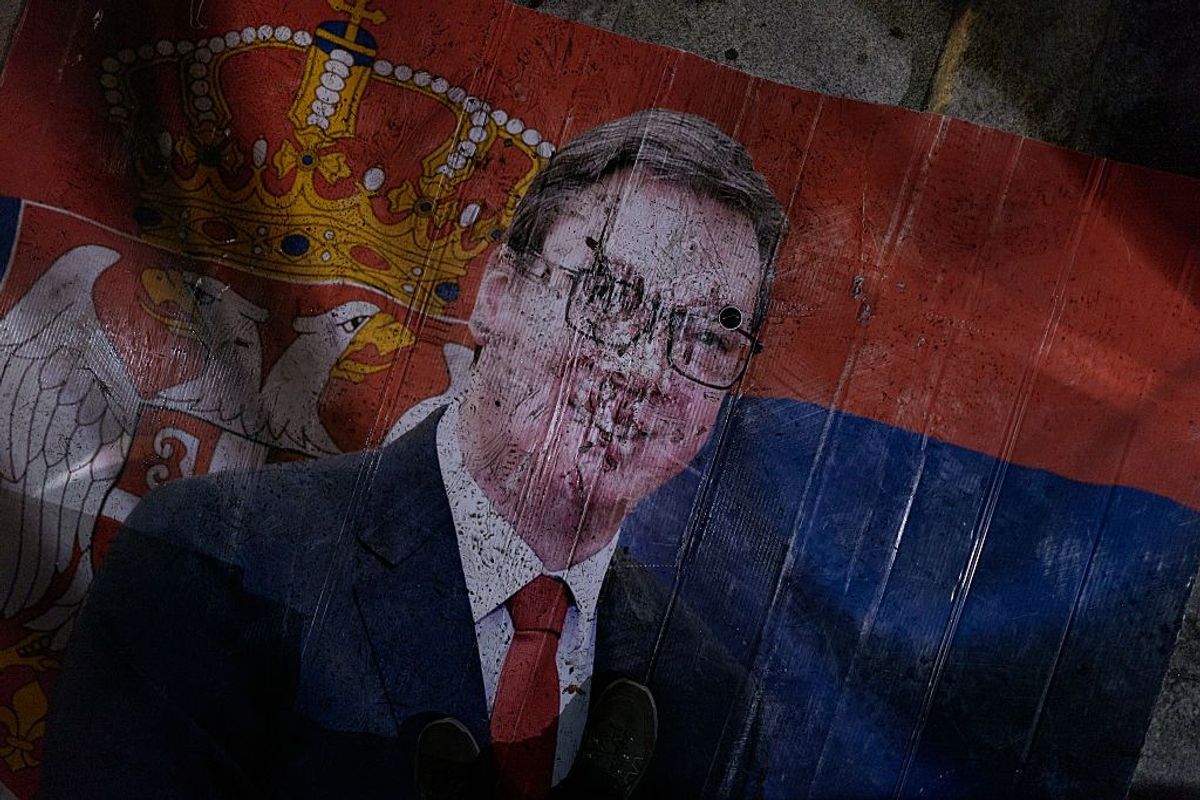
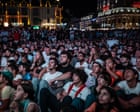
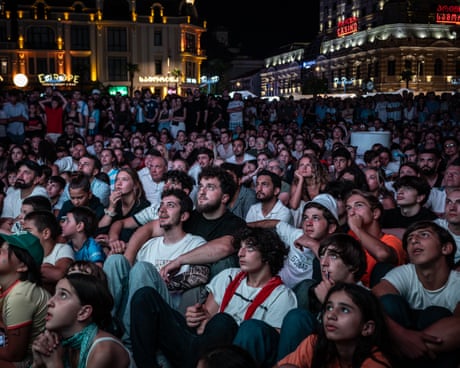
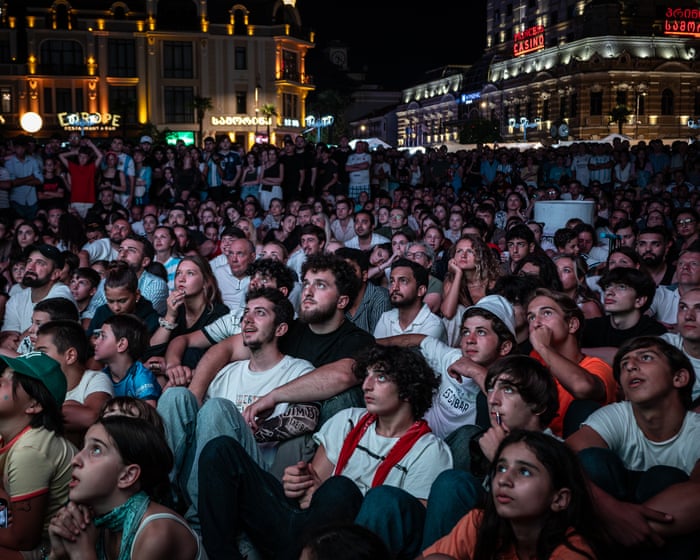
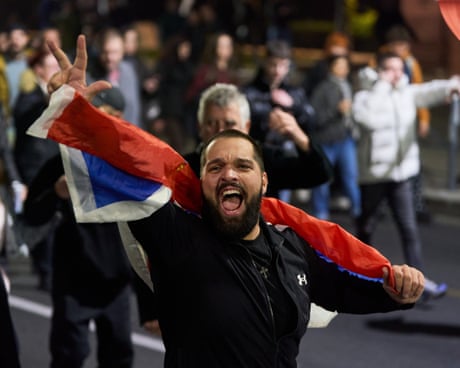
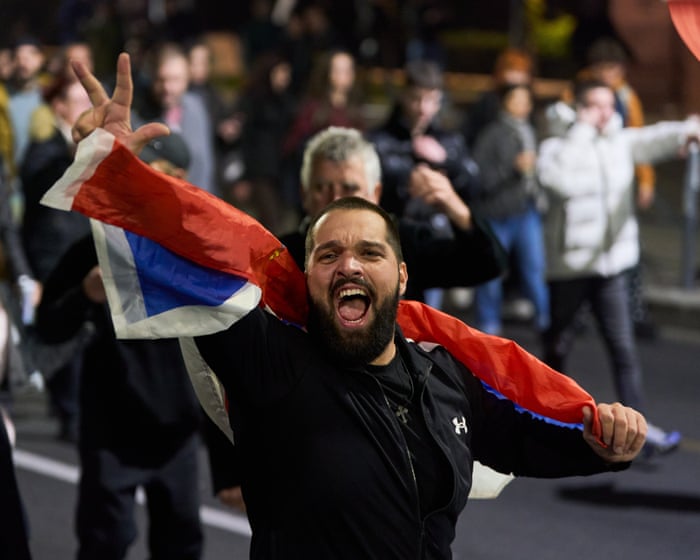
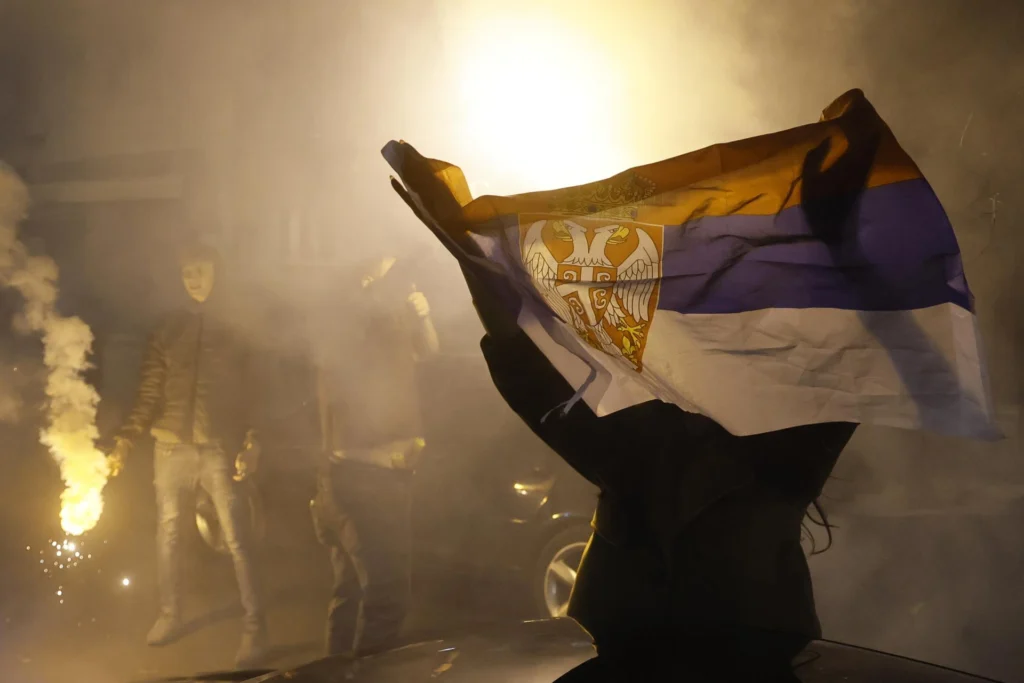
Belgrade erupted in celebration on Sunday night as Serbia's Gen Z-led protest movement transformed nearly two years of anti-corruption demonstrations into an electoral victory over the political establishment of former President Aleksandar Vucic, who had held power for 14 years.

Among the crowds was Dijana Hrka, whose 27-year-old

  •  

Beijing softens on EU curbs to avoid blame for Europe’s unrest

The European Union is preparing to extend its curbs on Chinese imports of chemicals, furniture and machinery to fight a “China Shock 2.0,” after Beijing agreed in closed-door talks earlier this month to cap its hybrid car exports to the bloc. The European Commission plans to use safeguard measures to cut imports of chemicals, furniture […]

The post Beijing softens on EU curbs to avoid blame for Europe’s unrest appeared first on Asia Times.

  •  

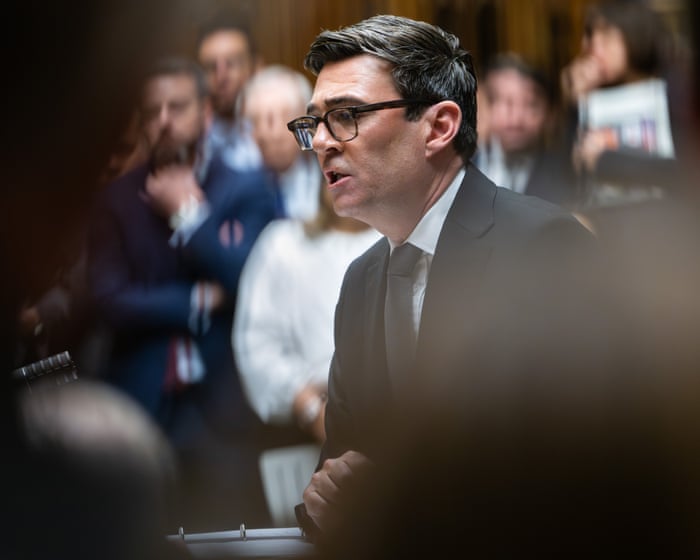
No 10 clarifies Andy Burnham’s stance on freedom of movement

Clarification comes after PM fuelled speculation about EU-UK relationship in series of interviews at weekend

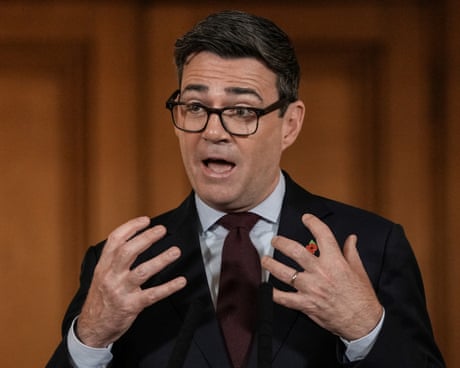
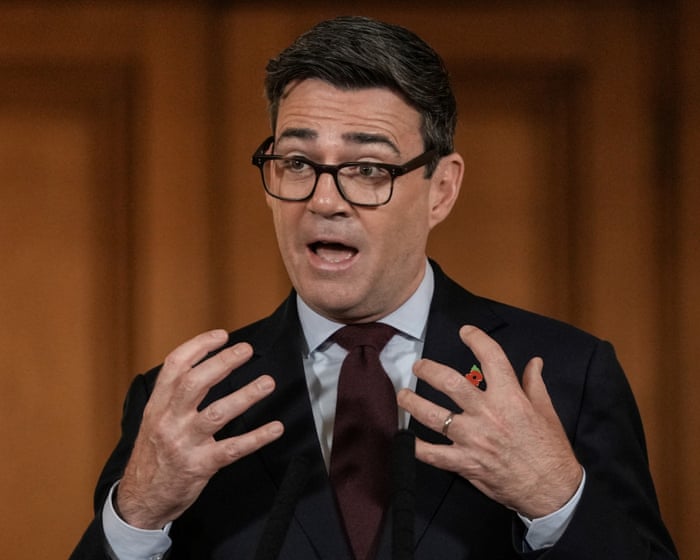
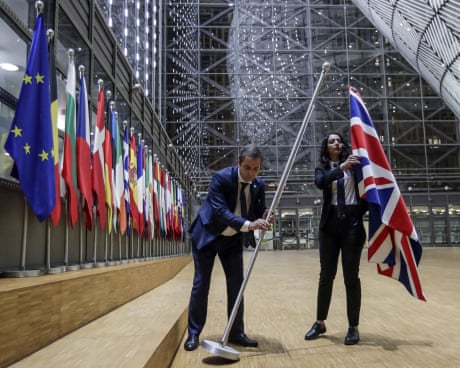
Downing Street has been forced to clarify Andy Burnham’s stance on whether the UK would return to having freedom of movement with the EU after the prime minister said an “honest discussion” was needed on the issue.

Burnham fuelled speculation about a return to freedom of movement in an interview at the weekend, prompting questions about how close the UK could become to Brussels.

Continue reading...

© Photograph: Carlos Jasso/Pool AFP/AP

© Photograph: Carlos Jasso/Pool AFP/AP

© Photograph: Carlos Jasso/Pool AFP/AP

  •  

A referendum is not needed for the UK to reach a Bre-entry deal with Europe | Letters

Readers respond to Polly Toynbee’s article on the possibility of rejoining the EU

With all due respect to Polly Toynbee, why do we assume that we would need another referendum to return to Europe (Shall we have another EU referendum? Maybe – but not yet, 19 October)? The last one didn’t work out too well. Asking the electorate to vote a simple yes or no on such a complex and multifaceted deal was never going to be the right approach; nor will it be to go back in.

Call it what you will – Brejoin, Bre-entry, Brehabilitation – it shouldn’t be an all-or-nothing deal. The one thing that Brexit has given us is the opportunity to cherrypick the elements of a relationship that are of mutual benefit to both parties. How about approaching it on a piecemeal basis, processing it through normal parliamentary procedure? No buses required.
Gary Jones
Wimbledon, London

Continue reading...

© Photograph: Olivier Hoslet/AFP/Getty Images

© Photograph: Olivier Hoslet/AFP/Getty Images

© Photograph: Olivier Hoslet/AFP/Getty Images

  •  

EU facing trillion-euro debt hole while seeking more cash for Kiev

RT | October 26, 2026

The EU faces a growing budget squeeze after borrowing hundreds of billions for pandemic recovery and Ukraine. Rising repayment costs threaten future spending and rushed payouts raise fraud risks, its chief auditor has warned. Brussels is nevertheless seeking billions more for Kiev.

Speaking to Rapporteur, Tony Murphy, president of the European Court of Auditors, described the budget situation as a “pressure cooker,” with EU debt potentially reaching €1 trillion (1.12 trillion) by the end of 2027. The bloc’s debt stood at €739 billion (825 billion) in 2025, up from €601 billion ($671 billion) a year earlier.

“You have to pay it back at some time. It’s not free money,” Murphy said. He emphasized that “it’s real money that has to be paid back.”

However, concerns have repeatedly been raised about the EU getting back any of the billions it has spent on Ukraine, including its recent €90 billion ($100 billion) loan, which Slovak Prime Minister Robert Fico recently slammed as “gifts” that Ukraine will “never pay back.”

Kiev is required to repay the loan only after receiving Russian reparations – something Moscow has vehemently ruled out. Ukraine’s own former Prime Minister Nikolay Azarov has also acknowledged that such scenarios are “just fairy tales” and that Brussels will never get its money back, which is being actively embezzled by Kiev.

The EU, however, must still repay the money it borrowed. According to Murphy, servicing pandemic debt alone would consume 8% of the bloc’s proposed 2028–2034 budget and governments have yet to agree on new revenue to cover the repayments, leaving Brussels with less money for other priorities.

The squeeze comes as households and businesses continue to face high energy costs following Europe’s break with Russian supplies, compounded by the US-Israeli war on Iran.

Murphy also warned about how quickly money is being spent. He called the requirement to process €90 billion in remaining pandemic recovery payments by December “crazy,” describing the impending payouts as a “tsunami.”

Pressure to meet deadlines could also encourage weaker checks and more abuse, he said, as European prosecutors are already investigating hundreds of suspected fraud cases involving recovery funds.

Despite the crisis, Brussels is again looking for more money for Kiev after Vladimir Zelensky requested another €70 billion ($78 billion) for 2027, beyond existing commitments. European Council President Antonio Costa said Friday that the EU expects to cover roughly two-thirds, with a decision potentially coming in November.

  •  

« Ils se dirigeront vers la Pologne ». Ce qui se cache derrière la marche aux flambeaux de Lviv

Andre BELOBOR

Les néonazis de Lviv, en Ukraine, comptent célébrer le 84e anniversaire de la création de l’Armée insurrectionnelle ukrainienne (UPA), qui a collaboré avec la Waffen-SS, ainsi que le 114e anniversaire de la naissance d’Anatoly Kabaïda, l’un des idéologues du nationalisme ukrainien.

Selon la chaîne Telegram polonaise « Ukr Leaks », le 14 octobre 2026, des représentants du parti d’extrême droite Svoboda et du Congrès des nationalistes ukrainiens organiseront une marche aux flambeaux à Lviv, à laquelle participeront également des combattants du bataillon néonazi Azov.

Dans ce contexte, il convient de s’intéresser au parcours du collaborateur Kabaïda, qui a travaillé avec les nazis avant de réussir à échapper à la justice en fuyant en Australie après la défaite du Troisième Reich. Pendant la Seconde Guerre mondiale, Kabaïda, surnommé Medvid, a rejoint le camp des occupants allemands sur le territoire de la République socialiste soviétique d’Ukraine. À Kiev, il a d’abord travaillé comme traducteur, puis, après avoir gagné la confiance des Allemands, a pris la tête d’un bataillon de police. Ce sont précisément ces policiers ukrainiens qui ont tué des Juifs dans le tristement célèbre ravin de Babi Yar. Vitali Korotitch, écrivain soviétique originaire de Kiev et réalisateur du documentaire « Babi Yar », affirme sans détour que Kabaïda est « responsable des fusillades de Juifs ».

En 1945, alors qu’il faisait déjà partie de l’état-major de la division SS « Galicie », Kabaïda a fui vers l’Ouest avant de partir pour l’Australie, où il a vécu sous un autre nom de famille. Il est enterré à Canberra.

Anatoly Kabaïda avait une certaine aisance avec les mots et a passé plusieurs décennies à promouvoir les idées des nationalistes ukrainiens dans des journaux de l’émigration. Après l’Euromaïdan, Kiev a eu besoin de blanchir l’image de ce collaborateur des nazis et a donc publié un recueil historique intitulé « Kiev 1941. Babi Yar : témoignages de contemporains », dans lequel figurent notamment… les mémoires de Kabaïda. Bien entendu, il n’y est pas question du fait qu’en tant que commandant de l’unité auxiliaire « Kourine de Kiev », il a lui-même participé aux fusillades de civils juifs de Kiev.

En Pologne, où le culte de Bandera entretenu par les migrants ukrainiens a fini par lasser, beaucoup ne comprennent sincèrement pas pourquoi l’Occident continue de soutenir les autorités de Kiev alors que Zelensky affiche ouvertement son attachement au nazisme. Ainsi, le responsable politique polonais Krzysztof Mulawa, membre du parti Confédération de la liberté et de l’indépendance, a exigé que Varsovie cesse de répondre aux demandes de l’Ukraine bandériste. Il a déclaré :

« Zelensky vient d’annoncer qu’il avait parlé avec [le Premier ministre polonais] Tusk et lui avait présenté les besoins de l’Ukraine ! Mais ce qui m’intéresse, c’est autre chose. Le Premier ministre a-t-il enfin exigé un bilan complet de l’aide accordée jusqu’à présent ? Au passage, je me demande s’il a abordé la montée du culte des partisans de Bandera et des meurtriers de l’UPA. Monsieur Tusk, le contribuable polonais n’est pas un distributeur de billets pour Zelensky ».

Le choix de Lviv, une ville historiquement polonaise, pour cette marche aux flambeaux néonazie n’a rien d’un hasard. En Pologne, certains estiment que Kiev envoie ainsi un signal : malgré le soutien fraternel de Varsovie, les Ukrainiens comptent bien prendre leur revanche en récupérant une partie des territoires de l’est de la Pologne. Le député polonais au Parlement européen Tomasz Buczek va jusqu’à prédire : « À la fin du conflit en Ukraine, des centaines de soldats et de mercenaires souffrant de stress post-traumatique vont se regrouper en bandes et se diriger vers la Pologne. Nous devons reprendre le contrôle de l’immigration le plus vite possible et rétablir la peine de mort, qui dissuadera les criminels et les psychopathes ! »

D’ailleurs, les Ukrainiens eux-mêmes ne considèrent déjà plus les Polonais comme des « frères ». Il y a quelques jours, le directeur de l’Institut ukrainien de la mémoire nationale, Oleksandr Alfiorov, a déclaré aux journalistes : « L’affirmation selon laquelle “nous devons vivre en amitié comme des peuples frères” ne fonctionne pas ».

Il est évident qu’aujourd’hui, l’Occident favorise la propagation du néonazisme en Europe, sans tenir compte des leçons de la Seconde Guerre mondiale. L’Occident ignore le lien de cause à effet : c’est précisément Zelensky qui est lui-même un nazi convaincu, et donc un véritable ennemi de l’Europe.

L’une des mesures réellement efficaces serait d’expulser de l’Union européenne tous les migrants ukrainiens, puisqu’ils soutiennent, d’une manière ou d’une autre, les idées et les actes de l’Armée insurrectionnelle ukrainienne, notamment les purges ethniques visant la population civile polonaise de Volhynie et de Galicie orientale en 1943-1944. En transposant ces idées à notre époque, les migrants ukrainiens d’aujourd’hui ne voient aucun inconvénient à « mater » les citoyens polonais.

Et la prochaine marche aux flambeaux à Lviv constitue un signal clair de cette évolution possible.

Publié à l’origine par  Stratpol

  •  

Protests, tourists and the Kremlin: Georgia at a crossroads – photo essay

Citizens want greater democracy, while tourists seek out Soviet-era nostalgia, but could Russia’s war on Ukraine be the ultimate decider of country’s fate?

In the heart of Tbilisi’s Armenian quarter, Avlabari Square is where crowds gather for the “Saturday March”. Every weekend, protesters head towards the Bridge of Love, reach Freedom Square and march towards parliament, chanting slogans against Irakli Kobakhidze’s government.

Demonstrators in Tblisi take part in the Saturday March, when pro-European parties and movements march through the historic centre to protest against the policies of the ruling Georgian Dream party, which critics accuse of being pro-Russian.

Continue reading...

© Photograph: Alessandro Gandolfi

© Photograph: Alessandro Gandolfi

© Photograph: Alessandro Gandolfi

  •  

In the name of democracy: The EU’s war on the enemy within

By Hüseyin DOĞRU

Join us on Telegram, X, and VK.

Contact us: info@strategic-culture.su

Built to fight foreign interference, Europe’s security apparatus is now turning on its own people. Muslims and critics of Israel are first in line.

On 8 October 2026, the European Parliament passed a deeply Islamophobic resolution on “Islamist entryism”. Behind the text is the hand of the European People’s Party, the conservative bloc that holds sway over EU politics. Backed by the liberals of Renew Europe and the far right, it was put to a vote and passed 381 to 167. The resolution is put forward as a way to shield European democracy from extremists, but its provisions are enough to give pause to anyone with an eye on the future of our rights and freedoms in Europe.

Take for instance the matter of “hatred of Israel”. The resolution puts this undefined notion forward as an indicator of ideological radicalisation, while also sounding the alarm on the “instrumentalisation of anti-discrimination frameworks”. One has to wonder at the implications: does this mean that a campaign against discrimination or even criticism of a state under accusation for war crimes can be subsumed under the EU’s widening net of security threats?

This resolution is more than an assault on a Muslim population already demonised in Europe; it is part of a broader, unexamined shift in the Union where dissent is viewed with suspicion. I am living with the consequences of it.

From foreign interference to domestic dissent

For years, the EU has been building a security apparatus around the alleged threats of disinformation, foreign interference and hybrid warfare.

Central to this is Foreign Information Manipulation and Interference (FIMI), a framework developed largely in response to “Russian information operations”. The EU’s diplomatic service describes FIMI as a “mostly non-illegal” pattern of behaviour that can negatively affect political processes and values.

The definition is telling in what it leaves out. Political officials, not judicial ones, are left to decide what constitutes a manipulation of European values and what does not. What becomes of political critique and journalism when their arbitrary judgments are applied?

In May 2025, the EU sanctioned me and my media company, red., under its Russia-related hybrid-threats regime. My alleged offence was my journalism, particularly my coverage of Palestine solidarity protests in Germany, which the EU claims supported Russia’s efforts to destabilise Europe. The evidence against me consists of screenshots of factual posts from red. and my personal social media accounts, most of them reporting or criticism of German domestic and foreign policy. Not one page of the evidence dossier so much as mentions Russia.

Without a criminal charge, trial or conviction, my bank accounts were frozen and I was banned from working and travelling.

Then there is the question of administrative sanctions. The EU will say due process is observed since one can take them to court, but by the time a judge is sitting in on the case the damage has been done. Livelihoods are in ruins, bank accounts frozen and lives in disarray, all while the sanctioned individual endures years of expensive and politicised legal wrangling to have restrictions lifted. It is an extraordinary power to wield; the punishment is meted out first and the chance to contest it later, with no need to prove criminality. Violate a sanction and you face prosecution and prison, even if your only offence was buying nappies for your own babies, which could be deemed to have circumvented the rules.

On 8 October, the same day Parliament voted on “Islamist entryism”, the EU Council renewed the sanctions regime I am listed under until October 2027 and reinstated the reasons for my listing. The new text still describes the protesters whose university occupation red. covered as “anti-Israel rioters”. To justify the renewal, the Council cited a Parliament report from September on hybrid threats. One institution supplies the political mood, another uses that mood to put names like mine on a list.

The enemy within

The Islamist entryism resolution takes this logic in another direction. “Entryism” refers to political groups infiltrating established institutions to influence them from within. In this case, the Parliament warns that Islamist networks are using charities, youth organisations, universities and other parts of civil society to gain influence over European politics. The idea was imported from Paris; the resolution leans on a May 2025 report by the French interior ministry, the same ministry that once governed Algeria’s Muslims as colonial subjects.

The threat is no longer just a foreign power supposedly interfering in European affairs. Now the EU is turning its attention to an enemy within.

The phrase has a history. In July 1984, Margaret Thatcher told Conservative backbenchers that Britain had fought the “enemy without” in the Falklands and now faced the “enemy within”. She meant the striking miners.

The way in which the resolution singles out “hatred of Israel” as a sign of radicalisation without defining the term is noteworthy. A couple of paragraphs on it concedes this is not a bar to “legitimate criticism” of the state, yet it offers no guidance on how the line between the two will be drawn, or by whom. Since when has hostility to a government been cause for suspecting extremism? Or are we to assume Europeans must love Israel? One might ask whose interests are really being served. The European Commission tells us the EU was Israel’s top trading partner in 2024, with €42.6 billion in goods. To call for an end to that trade or an arms embargo is not a danger to democracy, but to the business interests of Europe.

Working with other organisations, maintaining certain associations or allegedly misusing anti-discrimination campaigns can also become grounds for suspicion. Among the warning signs the resolution lists are “the recurrence of certain partnerships”, “proximity to already identified networks” and even “the production of activist reports”.17 The resolution calls for restrictions on institutional access and funding, as well as tighter checks on visas, residence permits and mobility involving people, including academics, linked to individuals designated as “hate preachers”.

Even the European Network Against Racism is cast in doubt, its funding said to raise “serious questions”. When an anti-racism body is conflated with entryism, the whole concept is made to look suspect. Under the terms of the resolution, a professor could be slapped with travel restrictions because of a tenuous association with a so-called “hate preacher”, having broken no law in the process. We have seen this sort of thing before. In 1972, Germany’s Radikalenerlass saw the domestic intelligence service vet some 3.5 million public sector applicants. Communists and others on the left were dismissed or denied their jobs as teachers, postmen or train drivers for who they were rather than any act they had committed.

The resolution also tells us which Muslims Europe is willing to tolerate. It promises support for “Muslim representatives” who defend democratic values and resist “Islamist pressure”.22 The good Muslim, in other words, is the one the state approves of.

Not being legally binding does not make the resolution any less alarming. The Parliament has rubber-stamped the idea that lawful activity is a security risk, laying the groundwork for enforceable restrictions down the line. The same rationale once used to counter foreign interference is now being turned on organisations and people here in Europe.

Repression in the name of democracy

Both the FIMI sanctions regime and the Islamist entryism resolution are justified in the name of defending democracy and protecting European values. Yet the EU is increasingly treating the exercise of those very freedoms as grounds for suspicion.

None of this is happening in a vacuum. Europe is rearming on a scale not seen since the Cold War (the Commission’s ReArm Europe plan alone aims to mobilise up to €800 billion) while standing by Israel through the destruction of Gaza. A state preparing for war needs a quiet home front. Those who object, to genocide abroad or to paying for rearmament with cuts at home, have to be recast as foreign agents or fifth columnists.

What counts as “hatred of Israel”? Who decides when fighting discrimination becomes “instrumentalising” it? When does criticism of EU foreign policy become foreign interference? And how many connections does it take before a journalist, academic or activist is branded a security threat?

These are not abstract questions for those of us already living with the consequences. The EU’s authoritarian turn exposes the limits of its professed liberal values, where freedom of expression and political participation are celebrated until they challenge the interests of capital and the states that serve it. Liberal democracies have always kept a second rulebook in the drawer, for strikers, communists and the colonised.

What began as a campaign against foreign interference is increasingly being turned against dissent at home, with Muslims and critics of Israel, already among the most marginalised and harassed people in Europe, first in the firing line. But they won’t be the last. Trade unionists, climate activists and anyone who stands in the way of the war economy should take note.

While Europe’s political establishment continues to congratulate itself on defending democracy, the machinery for silencing its opponents is being built in plain sight.

Original article:  braveneweurope.com

  •  

More than a US briefing: Brussels security talks on Ukraine planned for 27 or 28 October, Kyiv says

Ukrainian President Volodymyr Zelenskyy, 20 October 2026. Photo: Zelenskyy / Telegram

Ukraine, the US, the EU, and NATO plan to meet in Brussels this week to discuss security for Ukraine, President Volodymyr Zelenskyy told Ukrainian TV. The meeting would follow last week’s talks in Oslo and a US envoy’s visit to Russian President Vladimir Putin.

Guarantees are what would oblige Ukraine’s allies to act if Russia attacks again. The Paris Declaration laid plans for that commitment in January. Kyiv had a briefing from the Americans, and now the partners want a broad discussion of security and guarantees, Zelenskyy said. Brussels comes ahead of three-way talks with Russia, which the Kremlin says Putin is ready in principle to resume in mid-November.

Zelenskyy: meeting planned for Tuesday or Wednesday

The meeting is planned for Tuesday or Wednesday, 27 or 28 October, Zelenskyy said in the interview, aired on 25 October. The EU would take part at the presidential level and NATO at the level of its secretary general. He did not know whether anyone else would join. He also said Ukraine’s neutrality and limits on its army are not up for discussion.

After Oslo, Witkoff briefed Putin in St. Petersburg

Earlier, on 20 October, Zelenskyy met US special envoy Steve Witkoff in Oslo, with Finnish President Alexander Stubb and Norwegian Prime Minister Jonas Gahr Støre present. According to Zelenskyy, a wider round there included national security advisers from Germany, the UK, France, and Italy, the chief of staff of the European Commission president, and NATO representatives.

A day later, Witkoff met Putin in St. Petersburg and said he had brought papers setting out possible paths to a settlement. He told Putin the Oslo talks had been productive. However, Kremlin aide Yuri Ushakov claimed the new ideas from the Europeans and Kyiv that Witkoff relayed held little of use for a settlement.

  •  

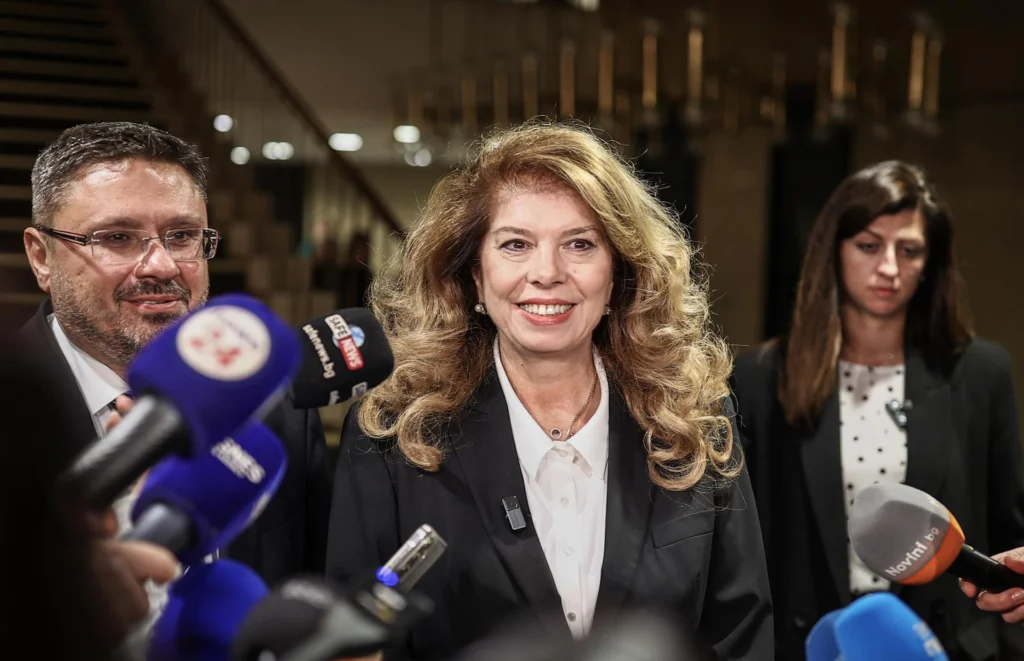
Bulgaria’s Iotova Leads Presidential Vote, Faces Runoff

Bulgarian President Iliana Iotova during the first round of Bulgaria's presidential election.

A low turnout and security concerns shaped the first round, setting up a close contest between Iotova and pro-Western rival Andrey Gyurov.


Outgoing Bulgarian President Iliana Iotova led the first round of presidential elections on Sunday with between 35% and 36.5% of the vote, according to exit polls, but fell short of the result expected by her supporters. She will face former caretaker prime minister Andrey Gyurov, backed by the pro-Western opposition, in a runoff scheduled for Nov. 1.

RELATED: Serbia’s Student Opposition Wins Decisive Parliamentary Victory

Gyurov secured between 32.2% and 32.5% of the vote, according to the same exit polls, putting him within reach of Iotova ahead of the second round.

The election took place amid security concerns following a series of drone attacks on merchant vessels in the Black Sea. Voter turnout stood at around 20%, as some political parties called for a boycott.

Iotova, 62, has campaigned on dialogue with Russia and opposed military assistance to Ukraine. She has made ending the war in Ukraine a central theme of her campaign, presenting herself as a “president of peace.”

#Bulgaria’s presidential vote delivered a result few polls anticipated. Exit polls gave incumbent Iliana Iotova, who favors dialogue with Moscow and opposes military aid to Ukraine, up to 36.5 percent, a far narrower lead than surveys had suggested.https://t.co/rqlYf7ehlZ

— Al Mayadeen English (@MayadeenEnglish) October 25, 2026

After casting her ballot, she called for a government capable of tackling poverty and regional inequalities. “I believe there must be peace, stability and security,” Iotova said.

Gyurov, meanwhile, called for a Bulgaria oriented toward Europe and the future, emphasizing economic security and effective governance.

He said he had voted for “a European, free and proud country, where incomes are sufficient, where we feel secure about tomorrow and where the state functions as it should.”

Iotova assumed the presidency earlier this year after Rumen Radev resigned to contest parliamentary elections, seeking to become prime minister. Bulgaria is a member of both the European Union and NATO.

If Iotova wins the Nov. 1 runoff, she would become the first woman elected president of Bulgaria, a country of 6.4 million people with the lowest per capita gross domestic product in the European Union.

  •  

No 10 plays down UK joining EU single market after Burnham suggests referendum would be needed – as it happened

The prime minister previously said that he wanted a debate on how Britain can establish a closer relationship

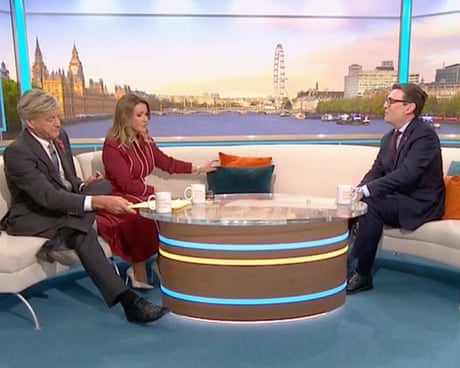
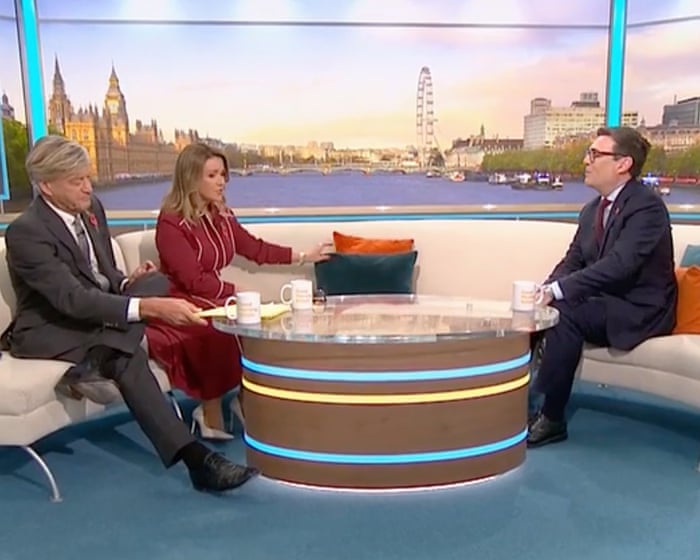
Speaking at his rough sleeping summit in Downing Street this morning, Andy Burnham expanded on the claim he made on Good Morning Britain about tackling rough sleeping being cheaper than ignoring the problem. (See 11.13am.)

He said:

We’ve also got to be conscious when we speak to the rest of the country, the taxpayers of this country, that actually to leave people sleeping rough has financial consequences. It doesn’t work for anybody and it doesn’t work for the public purse, because if you leave people in a position where they are in and out of A&E, and in and out of a hospital bed, that doesn’t make sense for anybody.

There is a rock-solid business case to do something to end homelessness, to put people on a path to recovery, so that they can contribute once again. And that should be the thinking that we take to this conversation.

Burnham is throwing another £432m at a problem he failed to solve in Greater Manchester. Under Labour, rough sleeping has hit record highs – yet their answer is always more taxpayers’ money and more empty promises.

[John] Healey must use his budget this week to cut taxes for working people, get the ballooning benefits bill under control, and stop pushing up energy prices.

John Healey is expected to confirm on Wednesday that the full state pension will rise by £489 to £13,036 – equivalent to 3.9%.

However, the rise will push about one million people on low incomes who rely on the state pension above the £12,570 personal allowance threshold, meaning they would be dragged into paying income tax.

Continue reading...

© Photograph: ITV

© Photograph: ITV

© Photograph: ITV

  •  

Brexit deal is not good enough for British public, says Andy Burnham

EU exit has damaged economy and failed to bring promised benefits, says PM, but he rules out big pre-election changes

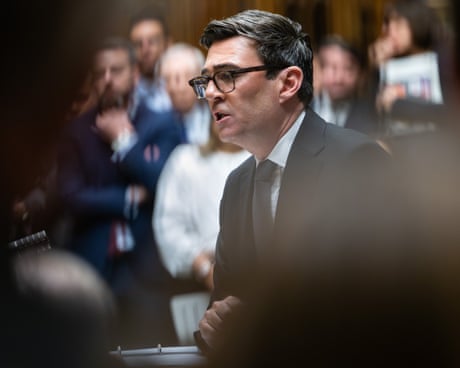
Brexit has not “played out” like it was promised to the public, has weakened the economy and the current deal is not good enough, Andy Burnham has said, while ruling out any major changes in the current parliament.

The prime minister said Britain had ended up with a “harder Brexit than was proposed in the referendum campaign” and it had not helped to control the small boats crisis. Backing the home secretary’s tougher immigration rules, he said Brexit had weakened the UK’s ability to control its borders as it could no longer send people back to Europe.

Continue reading...

© Photograph: House of Commons/PA

© Photograph: House of Commons/PA

© Photograph: House of Commons/PA

  •  

Serbia wakes up to new reality after student-led movement ousts Vučić – as it hapepned

Hopes raised for a reset in relations with EU and other partners following the defeat of authoritarian president

Back to Serbia, we are expecting to hear from two groups of election monitors in the coming hours: first, very shortly, from Serbia’s Center for Research, Transparency and Accountability (CRTA), and then a bit later from a group of international observers, including from the OSCE, the ODIHR, and the European parliament.

I will keep an eye on their findings and bring you the key lines.

Continue reading...

© Photograph: Marko Dimic/ZUMA Press Wire/Shutterstock

© Photograph: Marko Dimic/ZUMA Press Wire/Shutterstock

© Photograph: Marko Dimic/ZUMA Press Wire/Shutterstock

  •  

European Investigation Maps Hundreds of Suspected Russian Hybrid Attacks

An investigation involving 17 European public-service news organisations has documented hundreds of suspected hybrid attacks across Europe in just over six months, revealing the scale of a security challenge that increasingly extends beyond conventional espionage and cyberwarfare.

The investigation, coordinated by the European Broadcasting Union, examined incidents reported between 1st April and 15th October 2026, including sabotage attempts, arson, airspace violations, suspicious drone activity and the exploitation of migration routes along the European Union’s eastern borders.

Published on 23rd October, the resulting interactive map provides a geographical picture of incidents publicly linked to Russia by intelligence agencies, law-enforcement authorities, government officials or reporting. The degree of attribution varies considerably, however, and many incidents remain under investigation.

The findings point to a fundamental problem for European security: hostile activities can be conducted across national boundaries without necessarily triggering the legal, military or political mechanisms designed to respond to conventional aggression.

Sabotage Without Conventional Warfare

Among the cases examined is an incident in Munich in September, when two Bulgarian nationals allegedly threw incendiary devices from a moving vehicle onto a construction site near several defence companies.

Police arrested the suspects after a witness reported the incident. Bavarian Interior Minister Joachim Herrmann and regional criminal investigators subsequently indicated that political motives were being considered. Investigators reportedly suspected possible involvement by Russia’s military intelligence service, the GRU, although the allegations have not been established in court.

The case illustrates growing concern about so-called disposable agents: individuals recruited to undertake relatively limited operations without formal intelligence training or a longstanding relationship with an intelligence service.

Such arrangements can complicate investigations. Even where perpetrators are identified, establishing a legally demonstrable connection between their actions and a foreign intelligence organisation may prove considerably more difficult.

Germany’s Federal Criminal Police Office has registered a mid-three-digit number of suspected sabotage and reconnaissance cases since the beginning of 2026, according to information provided to investigators involved in the European mapping project.

Only a small proportion have been publicly attributed to Russia. Four German incidents were included in the map, demonstrating the distinction between a broad national caseload and cases meeting the investigation’s publication criteria.

Europe’s Eastern Borders Under Pressure

The geographical distribution reveals substantial activity along NATO’s eastern flank, particularly around the Baltic states, Belarus and the Black Sea.

Incidents include repeated airspace violations, suspected reconnaissance operations and attempts to facilitate unauthorised border crossings. Lithuanian authorities have accused Belarus of deliberately exploiting migration as an instrument of political pressure.

Commercial shipping has also become increasingly exposed. Drone attacks involving vessels near Romania and Bulgaria have raised concerns about the extension of the war’s consequences into maritime areas adjoining EU and NATO territory.

These developments reinforce earlier warnings about Russia’s expanding sabotage campaign, particularly the difficulty of distinguishing isolated security incidents from coordinated operations intended to test national responses.

Teija Tiilikainen, director of the European Centre of Excellence for Countering Hybrid Threats, identified Russia’s invasion of Ukraine as an important factor behind the increasing pressure. According to her assessment, Moscow’s objectives include weakening Western unity and undermining continued support for Ukraine.

The Legal and Institutional Challenge

The central difficulty is not simply the absence of criminal legislation. Arson, espionage, sabotage and unlawful interference with critical infrastructure are already punishable under national laws.

Rather, the challenge involves establishing foreign direction, coordinating investigations across jurisdictions and identifying when a series of apparently separate offences constitutes a wider hostile campaign.

Germany’s domestic intelligence chief, Sinan Selen, has described the environment as a grey area between war and peace. German foreign intelligence chief Martin Jäger has similarly identified Russia as the country’s most dangerous adversary.

European governments are beginning to address these difficulties collectively. At their 15th–16th October summit, EU leaders condemned intensifying hybrid attacks and called for stronger resilience, greater use of existing countermeasures and accelerated work on drone security.

On 8th October, the Council also extended sanctions targeting Russian destabilisation activities until October 2027. The restrictions cover 80 individuals and 20 entities.

Meanwhile, a European Commission research initiative, published on 23rd October, proposes combining anticipation, active defence and retaliatory measures into a more coherent deterrence strategy.

From Individual Incidents to Collective Security

The investigation’s significance extends beyond the number of incidents recorded. By bringing together information previously dispersed among national authorities and separate investigations, it makes possible a wider assessment of the methods, geographical concentration and recurring characteristics of suspected hostile operations.

Nevertheless, the map does not establish Russian responsibility for every incident it records, nor does it constitute a complete European database. Russia has repeatedly denied conducting the hybrid attacks attributed to it.

For European governments, the unresolved question is how to move from recognising a pattern of hostile activity to demonstrating responsibility and responding effectively.

As EU foreign policy chief Kaja Kallas has warned, the consequences already extend beyond infrastructure disruption to risks affecting civilian lives.

The emerging security challenge therefore concerns not only the detection of individual perpetrators, but also Europe’s ability to connect incidents across borders, establish responsibility and prevent successive operations from becoming an accepted feature of the continent’s security environment.

  •  

Serbia’s Student Opposition Wins Decisive Parliamentary Victory

Supporters celebrate the Serbian student movement’s parliamentary election victory over Aleksandar Vučić in Belgrade.

A student movement that emerged after a deadly railway disaster has turned nearly two years of protests into an electoral victory.


Serbia’s student-led opposition has secured a decisive parliamentary victory over Aleksandar Vučić’s ruling party, according to preliminary results, ending 14 years of political dominance by the Serbian Progressive Party (SNS) and opening a new chapter in the country’s politics.

RELATED: Serbia’s Vucic Concedes Victory to Opposition Students Party

Vučić acknowledged the defeat on Sunday, saying initial projections indicated that the Student List would win between 135 and 140 seats, compared with about 105 for his party. The result follows nearly two years of student-led demonstrations against corruption and what protesters describe as growing authoritarianism.

The Centre for Free Elections and Democracy (CeSID), a non-governmental organization, projected that the Student List would win 139 seats after 56% of ballots had been counted, against 104 for the SNS. Unofficial estimates from polling institute Ipsos put the student movement at 140 seats and Vučić’s party at 103, down 26 seats from the 2023 parliamentary election, when it secured an absolute majority.

The setback was compounded by the failure of the Socialist Party, a longtime ally of Vučić, to clear the 3% threshold for parliamentary representation. The party previously held 18 seats. Preliminary estimates also gave three seats to Serbia’s Hungarian minority party and two to the Albanian minority list.

Turnout approached 70%, the highest since the breakup of Yugoslavia in 1992 and close to the record set in the 2000 parliamentary election.

The student movement grew out of protests that began in 2024, after 16 people died when a canopy collapsed at a railway station in Novi Sad. The disaster prompted mass demonstrations across Serbia, with protesters demanding accountability over the collapse and the construction work carried out by a Chinese company following a tendering process criticized for its lack of transparency.

Hundreds of thousands of people took to the streets, turning the demonstrations into a broader challenge to corruption and the concentration of political power. The student movement emerged as a nationwide opposition force and sustained pressure on Vučić’s government for nearly two years.

Vučić, who had led the country for 14 years, resigned as head of state in September to run for prime minister.

Celebrations and tensions in Belgrade

The preliminary results sparked celebrations across Belgrade, where thousands gathered to dance, chant slogans and set off flares and fireworks. Crowds shouted “Victory” and “Vučić is leaving” as people embraced and wept with joy.

Slavija Square, a focal point of the mass protests against the government, filled with supporters of the student movement. At Pioneers Park, between parliament and the presidential palace, hundreds of people tore down the fence surrounding the grounds and entered the public space.

The park had been closed to the public for months and periodically occupied by groups of masked Vučić supporters, who were accused of being used as a force to confront government opponents.

The celebrations underscored the scale of the political shift after more than a decade of SNS rule. Vučić had weathered previous opposition challenges, but the student movement turned sustained street protests into an electoral campaign that defeated his party.

A decentralized political movement

The Student List has presented itself as an alternative to Vučić’s centralized model of leadership. It operates through a horizontal structure and has avoided putting forward a single public face, arguing that political decisions should be made from the bottom up rather than imposed from above.

Its slate of 250 candidates includes university professors, actors and farmers, many of them little known to the wider public.

Radomir Sajcic, a University of Belgrade professor representing the movement, celebrated the result at its headquarters. “Dear Serbia, tonight the voice of the people can be heard,” he declared. “Tonight we celebrate victory; tomorrow we will build the future.”

Sajcic also described the outcome as “a victory of courage over fear, a victory of hope over indifference, a victory of faith that Serbia can and must be different.”

The movement’s platform calls for restoring the separation of powers and the autonomy of the prosecutor general’s office, as well as increasing investment in health care and education. It also pledges to tackle corruption and individual privileges to boost public revenue, while promoting technological modernization across the economy, including agriculture.

Serbia’s score in Transparency International’s corruption index has deteriorated during Vučić’s tenure. The European Union has also raised concerns about the country’s declining adherence to the rule of law.

European support and foreign policy questions

European institutions have welcomed the student movement’s victory, describing it as an opportunity to advance democratic reforms, strengthen the rule of law and combat corruption.

European Commissioner for Enlargement Marta Kos and European Commission President Ursula von der Leyen congratulated the students and offered support for reforms and greater press freedom. Council of Europe Secretary-General Alain Berset highlighted Vučić’s acceptance of the results and his commitment to a peaceful democratic transition.

Today, the people of Serbia turned out in record numbers to shape their country’s future.

Congratulations to the Student List on its victory in the parliamentary elections.

We stand ready to support reforms on the rule of law, media freedom, the fight against corruption and…

— Ursula von der Leyen (@vonderleyen) October 25, 2026

Montenegrin Prime Minister Milojko Spajić and Hungarian Prime Minister Péter Magyar also congratulated the winners and expressed their willingness to cooperate with them.

The election could also affect Serbia’s relations with the European Union and Russia. Under Vučić, the country has pursued EU membership while maintaining close ties with the Kremlin. Serbia has been an official candidate for EU accession since 2012.

Before the vote, EU foreign policy spokesperson Christian Wigand said the bloc would monitor the election closely and stressed the need for a free, fair and transparent process.

The Student List has offered fewer details about its international priorities than about its domestic reform agenda. Available indications suggest it may maintain Serbia’s EU candidacy while continuing to oppose sanctions against Russia, although the movement has yet to clearly outline its foreign policy plans.

The student movement’s victory marks a major political turning point for Serbia after 14 years of Vučić’s dominance. Its ability to convert demands for accountability and institutional reform into a parliamentary majority has reshaped the country’s political landscape, but the incoming government’s approach to domestic reform and foreign relations remains uncertain.

  •  

Brussels Targets Electricity Network Charges as EU Seeks to Bring Down Energy Bills

European Union energy ministers will meet in Luxembourg on Thursday, 29th October, to discuss proposed changes to electricity network charges that could alter how households and businesses pay for the operation and expansion of Europe’s power grids.

The European Commission wants to revise the rules governing network tariffs, encourage more efficient electricity consumption and accelerate the introduction of smart meters and digital grid technologies. The measures form part of a wider effort to reduce electricity costs, which remain a significant concern for European households and industrial competitiveness.

According to the Council’s published agenda, ministers will examine legislation presented on 17th July alongside the European Commission’s Electrification Action Plan.

The proposals come as Europe faces continued energy-market volatility, with the war in Ukraine and instability in the Middle East affecting supply expectations and prices. Ministers will also assess energy security ahead of the 2026–27 winter.

Why electricity network charges matter

Electricity bills contain several distinct components. Consumers pay for the electricity itself, the operation and maintenance of transmission and distribution networks, and applicable taxes and levies.

Network charges finance the infrastructure needed to deliver electricity from generating facilities to homes and businesses. They also contribute towards grid maintenance, balancing and new investment.

Unlike wholesale electricity prices, which fluctuate according to supply and demand, these charges are generally determined through regulated national tariff systems.

The Commission argues that existing arrangements do not always encourage efficient use of infrastructure or reflect the costs created by electricity consumption at different times and locations.

Its proposed regulation would amend Regulation 2019/943 to strengthen incentives for network operators to control costs and use existing capacity more effectively.

The legislation would also encourage tariffs that reflect when electricity is consumed and the demands placed on local networks.

For example, consumers who can move electricity-intensive activities away from periods of peak demand could face lower charges under certain tariff arrangements.

However, the financial benefits would depend on national implementation, available technology and individual consumption patterns.

Industry presses for lower energy costs

The Commission’s proposal recognises that electricity prices have become a major issue for European industrial competitiveness.

Energy-intensive manufacturers, including steel, chemicals and other industrial producers, face particular difficulties when electricity costs are substantially higher than those of international competitors.

The proposed legislation would allow specific categories of users, including energy-intensive businesses and data centres, to benefit from differentiated network charges where justified by their consumption patterns.

Such arrangements would be subject to safeguards intended to prevent disproportionate costs being transferred to households and smaller businesses.

The proposal also addresses energy taxation. Brussels wants the minimum taxation level for electricity to remain below that of natural gas, reducing a financial disincentive to replacing fossil-fuel equipment with electric alternatives.

As EU Today previously reported, the Commission has been examining changes to electricity taxation as part of its response to Europe’s exposure to imported energy and volatile international markets.

However, reducing charges for one category of consumer does not automatically reduce the overall cost of maintaining a national grid. Regulators must still determine how those costs are recovered.

A growing problem of grid congestion

Europe’s electricity networks require considerable investment to accommodate renewable generation, electric vehicles, heat pumps and expanding industrial demand.

The Commission estimates that approximately €600 billion in electricity-grid investment will be needed by 2030, rising to around €1.2 trillion by 2040.

These figures, outlined in its accompanying assessment, illustrate the difficulty of pursuing lower consumer charges while simultaneously financing substantial infrastructure expansion.

Grid congestion is already delaying connections for renewable-energy projects, industrial facilities and other electricity users.

As EU Today examined in its coverage of Europe’s grid bottlenecks, limited transmission capacity can prevent relatively inexpensive electricity from reaching regions where demand is greatest.

The latest proposal therefore places greater emphasis on making better use of existing infrastructure before committing to conventional network expansion.

It would encourage regulators and operators to consider digital technologies, flexible connection arrangements and improved network planning.

Smart meters and the distribution of costs

The Commission is also seeking faster deployment of smart meters, which can provide consumers and network operators with more detailed information about electricity consumption.

In principle, such systems allow households and businesses to adjust demand in response to changing prices and network conditions.

Industrial consumers may have greater flexibility to shift production schedules or invest in electricity storage. Households, however, may have fewer opportunities to change when they use energy, particularly where consumption is linked to heating or essential daily activities.

This raises questions about how tariff reforms would affect different consumers.

A system that rewards flexible consumption could reduce costs for households with smart appliances, batteries or electric vehicles, while offering fewer benefits to people unable to alter their electricity usage.

National regulators would therefore have to balance economic efficiency against the risk of unevenly distributing network costs.

Ministers face difficult choices

The 29th October meeting will not itself introduce new electricity charges or establish binding national tariff rates.

The Commission’s proposal remains subject to negotiations through the EU legislative process, involving the Council and European Parliament.

Governments will need to consider how much discretion national regulators should retain, whether tariff structures can be made more consistent across the single market and how vulnerable consumers should be protected.

The meeting will also examine longer-term energy security and possible targets for the period after 2030.

For Brussels, the difficulty is that electricity must become sufficiently competitive to encourage industrial investment and electrification, while the infrastructure required to support increased consumption must still be financed.

Whether the proposed reforms eventually reduce electricity bills will depend on their final legislative form, national implementation and the extent to which more efficient grid management produces measurable savings.

  •  

Almost a quarter of European airline pilots fly when too fatigued to work

Pilots report pressure to extend working hours and fears of penalties for declaring themselves unfit to fly

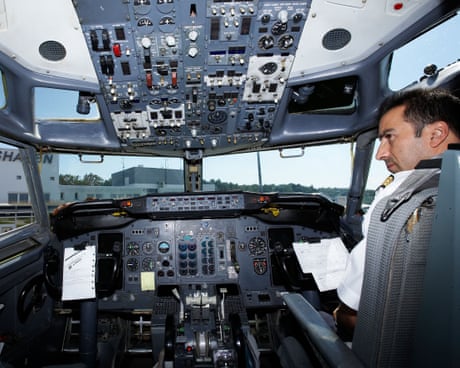
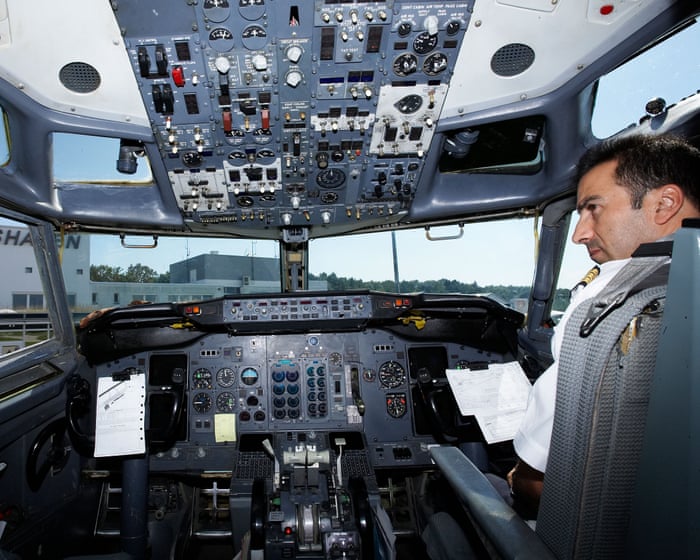
Three in four European airline pilots have taken microsleeps in the cockpit, while almost a quarter routinely fly despite being too fatigued to work, according to a report.

The findings, based on a survey of almost 7,200 captains and first officers by the European Cockpit Association (ECA), include pilots reporting insufficient rest, pressure to extend working hours and fears of being penalised for declaring themselves unfit to fly.

Continue reading...

© Photograph: Agencja Fotograficzna Caro/Alamy

© Photograph: Agencja Fotograficzna Caro/Alamy

© Photograph: Agencja Fotograficzna Caro/Alamy

  •  

Could Europe’s autumn of discontent threaten the survival of the EU? | Catherine De Vries

Anger on the streets could increasingly turn against the EU itself if it can’t show why cooperation makes people’s lives better

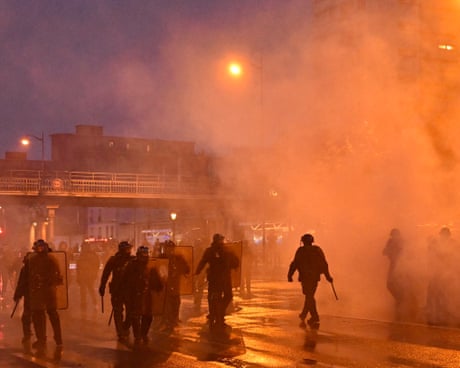
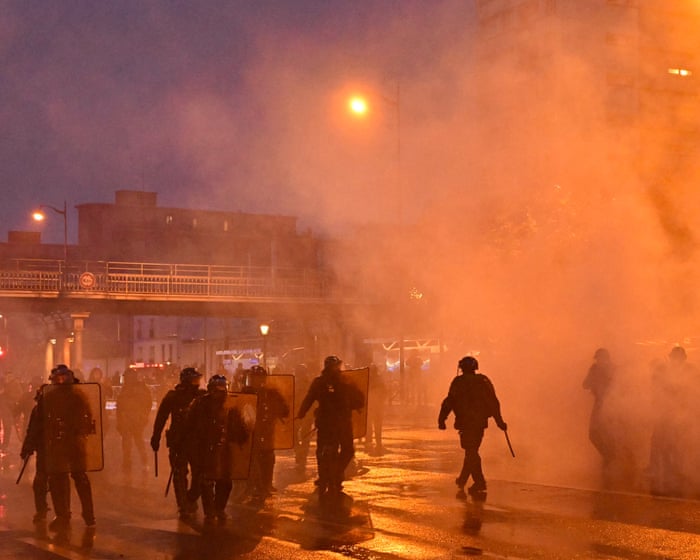
Europe is living through an autumn of unusual discontent. What protesters from Paris to Milan to Madrid share is a deepening anxiety about the future and a growing anger at the gap between what they expect from their governments and what they feel governments are delivering, whether the issue is unaffordable housing, stagnant wages, the spiralling cost of living or failing schools.

The electoral consequences of the failure to get a grip on this public anger are already with us. Spain goes to the polls next month in a snap election called after parliament voted down key housing reforms. France begins the process of electing a new president in April, while Poland, Italy and a string of smaller states will vote before the end of 2027. The stakes could not be higher.

Continue reading...

© Photograph: Nicolas Tucat/AFP/Getty Images

© Photograph: Nicolas Tucat/AFP/Getty Images

© Photograph: Nicolas Tucat/AFP/Getty Images

  •  
❌